A Review of “What Is Left” By Bunkong Tuon

Shawn Pavey Reviews

What is Left

By Bunkong Tuon

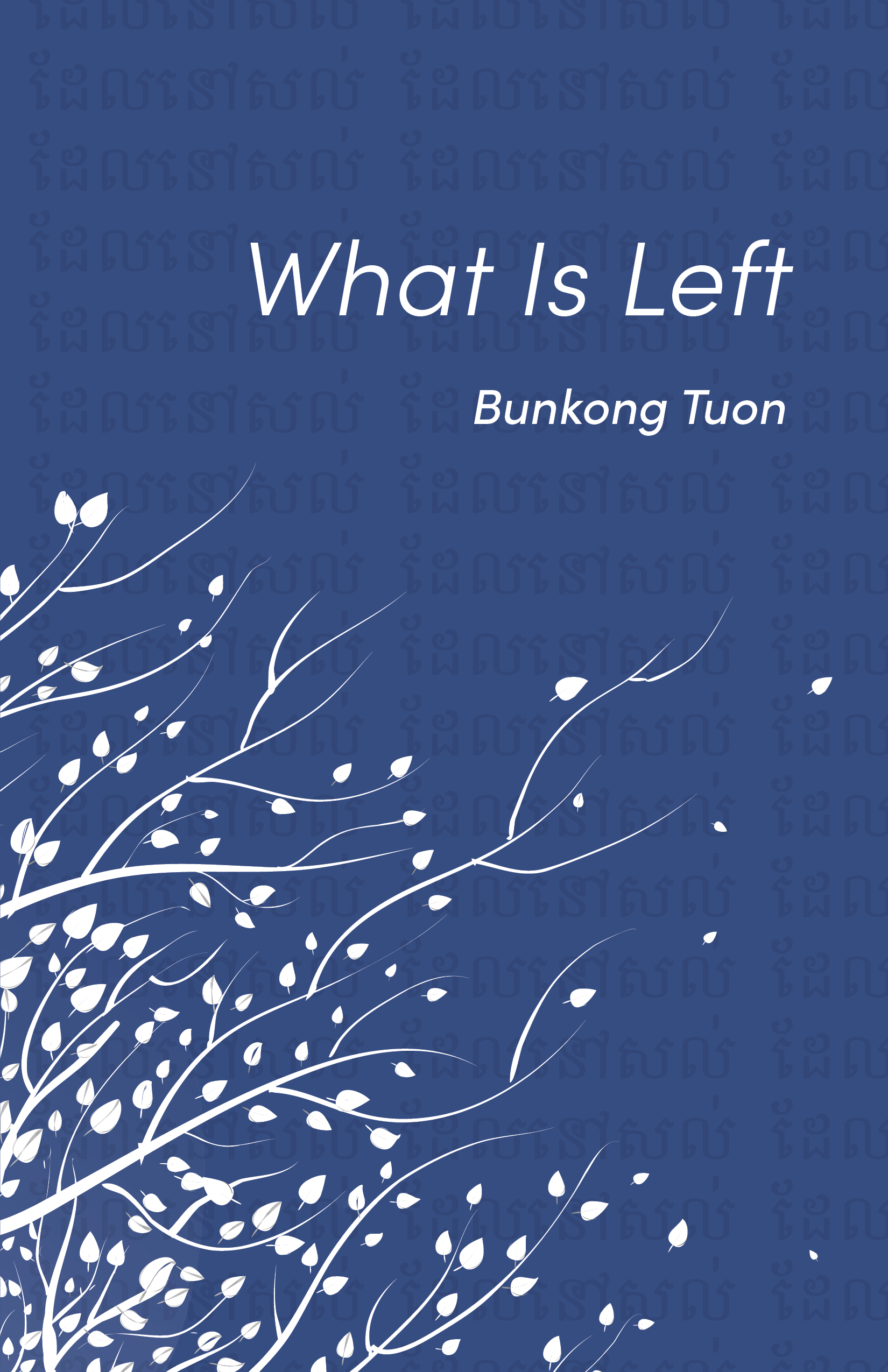
In What Is Left, part of Jacar Press’ “Greatest Hits” chapbook series, Bunkong Tuon brings us on his personal journey as a child refugee of the Khmer Rouge’s atrocities in his homeland of Cambodia. As David Rigsby states in his insightful foreword, “Bunkong Tuon’s childhood took place in a country whose national life in the 1970s underwent unimaginable depredation at the hands of the Khmer Rouge: slaughter, torture, starvation, and the forceful smashing and separation of families.”

To set the tone for the entire collection, the titular opening poem, recently announced as a winner of the 2024 Pushcart Prize, begins:

What is left after war is the gratitude for what is left.
My dreams are filled with ghosts looking for home.
The dead speak to the living through my poetry.
Each time I write, I rebuild. Retrieve what was stolen.

Tuon, while being open about struggle and loss and deep, deep pain, infuses each of these poems with an almost incessant sense of hope. This is one of the most surprising aspects of this work: how Tuon navigates the telling of his story yet, somehow, gives the reader a sense that the life he leads now is both unexpected and a joy. However, as this first poem continues, Tuon, soberly, informs the reader:

Nothing is dead until I let it. English is not the language
Of my birth. It is the language of death. More bombs
Dropped on Cambodia's countryside than in Hiroshima
And Nagasaki. I was bombarded by this language.

I had no choice but to use it.

Tuon references, of course, the covert bombing of Cambodia by the United States from 1969 to 1973 designed to minimize the capabilities of the People’s Army of Vietnam. Tuon as a small child knows America as bombs, destruction, and death. During the reign of the Khmer Rouge, more than a million people were executed – more than 13% of the country’s total population. Families were shattered and much of the country’s population fled the atrocities as refugees.

This is the historical backdrop for Tuon’s poems. The second poem, Under the Tamarind Tree, Tuon reveals a memory of sitting on the lap of an aunt – a child herself – witnessing the funereal rites performed by monks for his mother.

The tree stands still, quiet, 
indifferent. The house sways 
on stilts. 

Monks in saffron robes
and nuns with shaved heads,
lips darkened with betel-nut stain, 

sit chanting prayers 
for the child’s mother. 
Incense perfumes the hot dry air.

The image is heartbreaking but the true marvel is Tuon’s sparse yet musical language. He writes these poems with an almost journalistic detachment, avoiding the temptation to overwrite the emotional vulnerability. Tuon shows us, with his carefully chosen lexicon, the sheer tragedy and loss of this moment experienced by a child in the care of a slightly older aunt. The poem concludes:

Each time the child hears prayers
coming from the house, he cries;
each time he cries, the aunt, a girl herself, 
pinches the boy’s thigh.

It is that last line that shares with the reader the absolute cruelty of the moment. The funeral is witnessed as a result of institutional cruelty, but that tiny act of violence, the thigh-pinch of the aunt on the crying boy’s thigh shows that in that moment, there was little time to grieve. Survival of what lies ahead will require its own toughness.

The next few poems detail Tuon’s refugee journey. In “The Carrying,” he gives us a glimpse of their long journey – on foot – as his grandmother carried the small boy on her back to the refugee camp. In the poem “Gruel,” Tuon recalls a conversation with his uncle about survival.

“When you were young,
we had nothing to eat.
Your grandmother saved for you
the thickest part of her rice gruel.
Tasting that cloudy mixture
of salt, water, and grain, you cried out,
‘This is better than beef curry.’”

All my life I told myself I never knew
suffering under the regime, only love.
This is still true.

The last two lines of this poem may be the true heart of this collection. What carried Tuon through all of this tragedy and trauma was knowing he was loved by extended family members who gave him this, the only thing they had left to their names, this love and this belonging in love, desperate as it was. Tuon’s poem “Debt” shows us a glimpse of his father begging the Khmer Rouge, after they slaughtered children and cut open the bodies to eat the livers.

My father got down
on his knees,
clasped hands over head,
and begged them
for a sliver of a victim’s liver
so that I would not starve.
While everyone was sleeping
my father snuck into the kitchen,
stole a branch of coconuts,
and buried them in the woods.
Each time I cried from hunger
he disappeared into the night,
dug up a coconut,
gave me the juice to drink
and with dirt-encrusted fingers
spooned out the flesh
for me, his only child.

This terrible memory ends the poems specifically about fleeing terror. The following poems in the book deal with how Tuon built a life and is, in a way, relaying his experience to his children but, also, to the readers. There is a poem about how air conditioning in a library hurts to breathe after fleeing jungles. There are poems to his daughter and son. There are poems trying to find purpose in living and moving on from unspeakable loss.

And there is so very much hope.

This hope, deeply ingrained in every single poem, drives this collection. These poems are intimate, they are deeply personal, they reveal the vilest atrocities, and these poems do all that while holding tightly to hope and love and never once slip into maudlin self-pity. While these poems, at least on the surface, could be considered confessional, they never feel like confessional poems. Autobiographical, certainly, which is a type of confessionalism, but they avoid writing about emotion in favor of stark imagery. Tuon shows us the horror and despair and struggle of living through and in spite of the Khmer Rouge. He shows us the life he built because of the sacrifice of the family members who kept him alive. And, ultimately, Tuon shows us the joy that life can hold in contrast to experienced evil.

What Is Left 
by Bunkong Tuon,
2024, Jacar Press.
ISBN: 978-0-936481-56-2,
28 pages.

About the Author: Shawn Pavey is the author of Talking to Shadows (Main Street Rag Press, 2008), Nobody Steals the Towels From a Motel 6 (Spartan Press, 2015), and Survival Tips for the Pending Apocalypse (2019, Spartan Press) which was 1st runner up for the 2020 Thorpe Menn Literary Excellence Award. He co-founded The Main Street Rag Literary Journal and served as an Associate Editor. Recently, he was featured in the second anthology by THE NU PROFIT$ OF P/O/E/T/I/C/ DI$CHORD entitled, And Even If We Did, So What!? from OAC Books. His infrequently updated blog is at http://www.shawnpavey.com.
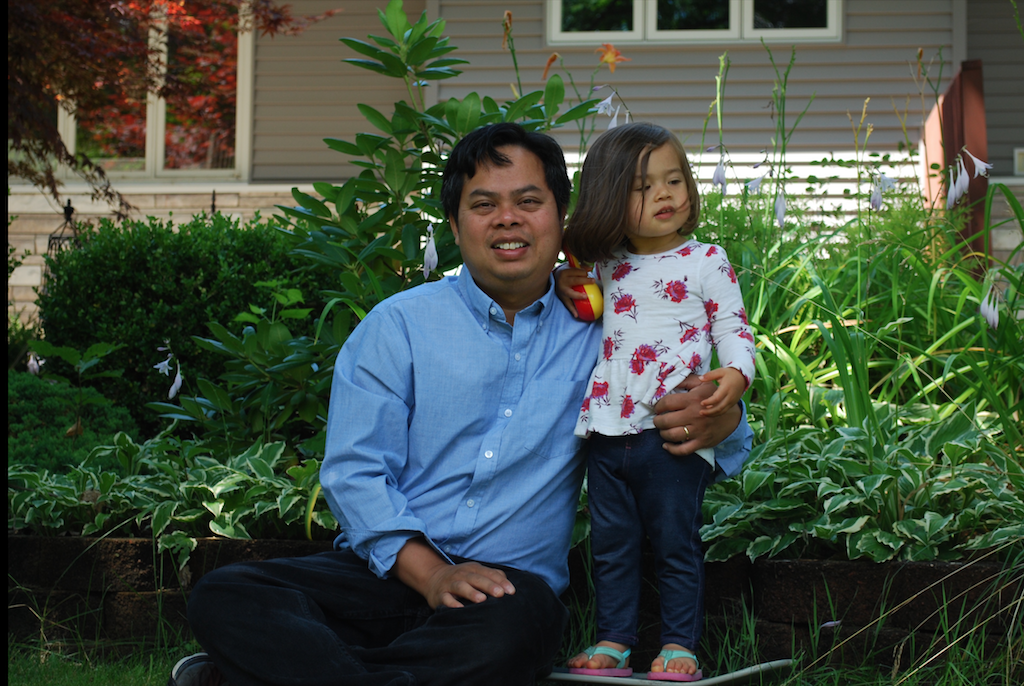


	

Poetry Soundbite: A Reading and Interview with Bunkong Tuon


Welcome to AIOTB Magazine’s second Poetry Soundbite, an on-going series of poetry readings and interviews. For this edition, we welcome Bunkong Tuon, a Cambodian-American writer and critic. He is the author of GruelAnd So I Was Blessed (both published by NYQ Books), The Doctor Will Fix It (Shabda Press), and Dead Tongue (a chapbook with Joanna C. Valente, Yes Poetry). He teaches at Union College, in Schenectady, NY. He tweets @BunkongTuon

Below the video, you can find links to the poems from Tuon’s reading.


From Bunkong Tuon’s reading:

“Our Neighborhood in Revere, MA”

“Snow Day”

“Tightrope Dancer”

“Women’s March in Albany”

“My Mother on Her Deathbed”

Revisiting 2020: Our 50 Most Popular Posts of the Year


Dear As It Ought To Be Readers,


Despite everything 2020 threw at us, AIOTB Magazine was fortunate to receive so many brilliant poems, essays, interviews, and book reviews from writers around the world. Below, I have assembled the 50 most popular posts of the year based on the amount of hits they received. I know that few people will look back at 2020 with fondness, but maybe reviewing these posts from the year is a reminder of the resilience people have to continue to create in a crisis, and to channel the anxiety of the world into writing that connects us.

AIOTB Magazine was perhaps the only constant I had in 2020 that began and ended the year exactly the same, and completely intact. I have all of you contributors and readers to thank for that. Thanks for keeping me sane and connected to a community of writers when I most needed stability, creativity, and human connection in my life.

I have no idea what 2021 will look like, but if you keep reading and supporting each other’s work, you’ll at least have three new pieces a week on AIOTB Magazine to count on.


-Chase Dimock
Managing Editor


Poetry

Omobolanle Alashe:

Jason Baldinger:

Rusty Barnes:

Jean Biegun:

Victor Clevenger:

John Dorsey:

Ajah Henry Ekene:

Loisa Fenichell:

Jeff Hardin:

John Haugh:

Mike James:

Jennifer R. Lloyd:

John Macker:

Tessah Melamed:

THE NU PROFIT$ OF P/O/E/T/I/C DI$CHORD:

Hilary Otto:

Dan Overgaard:

Rob Plath:

Daniel Romo:

Diana Rosen:

Damian Rucci:

Leslie M. Rupracht:

Anna Saunders:

Sheila Saunders:

Alan Semerdjian:

Delora Sales Simbajon:

Nathanael Stolte:

Timothy Tarkelly

William Taylor Jr.:

Bunkong Tuon:

Peggy Turnbull:

Brian Chander Wiora:


Reviews

Chase Dimock:

Mike James:

Arthur Hoyle:


Interviews

Chase Dimock:


Nonfiction

Brian Connor:

Cody Sexton:


Micro Fiction

Meg Pokrass:

Announcing AIOTB Magazine’s Pushcart Nominees


As It Ought To Be Magazine is proud to announce our nominees for this year’s Pushcart Prize


Mike James: “Saint Jayne Mansfield”

Hilary Otto: “Show Don’t Tell”

Diana Rosen: “Hollywood Freeway”

Ronnie Sirmans: “Sloughing Words”

Bunkong Tuon: “Lisel Mueller Died at 96”

Agnes Vojta: “Everybody Loves the Person Who Brings Muffins”


Congratulations to our nominees and a big thanks to all the writers who shared their work with AIOTB Magazine this year!


-Chase Dimock
Managing Editor


Image Credit: Chase Dimock “Grover Beach Sunset” (2020)

Bunkong Tuon: “Song I Sing”


Song I Sing

America, you were brave once,
decent, almost pure, but never quite
the myths you tell yourself.
Is this the karma from centuries of bloodshed,
lands pilfered, women raped, men murdered,
lynching, assassinations, race riots, class inequality?
You name it, we have it.
You want Coca Cola? You want heroin?
You want coke? Me love you long time.
What’s a little bit of sex, drugs, rock ‘n roll,
legalized murders and colonialism in the name
of democracy, which is just a fancy name
for imposing our definitions on those
with a different set of definitions.
A war is a war however you name it,
just like a murder is a murder however
you spin it. Thus anger screams for justice
on the streets of Los Angeles,
Chicago and Minneapolis,
the fire of unfulfilled dreams burning
across your once great land.
Meanwhile the pandemic death toll reaches
100,000 and counting.
They say bodies pile as high
as the flag, not enough plastic bags,
lying against walls of mobile mortuaries,
not enough space in local cemeteries.
There’s talk of making burial grounds
in local parks where children used to play..
There’s talk of reopening the economy,
money valued over human life,
business as usual, the old American way.
Is America going mad or am I going crazy?
I’m tired of reading the news these days.
I’d rather take my daughter to the park,
ride swings with our feet against
the bright burning sun, go down slides
and scream our hearts out, laugh
like the little children we all are.
I want to smoke hash with Allen Ginsberg,
grocery shopping in search of Whitman,
talk poetry, Buddhism, and God,
all of which are the same thing, a celebration
of the human Godhead, the human breath,
the Atman in all of us. Love
ourselves. Take good care.
America, I love you even when you spit
at my Asian brothers and sisters,
throw rocks at their cars, accuse
them of carrying the “Wuhan virus.”
When I speak, you don’t hear.
Some don’t believe that I should be here,
a place at the table, where professors
profess, poets sing, students evaluate.
I have no wisdom here. Only this.
The birds soar high in the bright blue sky.
Everything is blue, crystal clear.
The air is clean. Those birds,
they are singing their songs again.
Oh, I love you all. In spite of it.
I love you all. I just can’t do otherwise.


About the Author: Bunkong Tuon is a Cambodian-American writer and critic. He is the author of Gruel, And So I Was Blessed (both published by NYQ Books), The Doctor Will Fix It (Shabda Press), and Dead Tongue (a chapbook with Joanna C. Valente, Yes Poetry). He teaches at Union College, in Schenectady, NY. He tweets @BunkongTuon


More By Bunkong Tuon:

Gender Danger

Lies I Told About Father

Fishing for Trey Platoo


Image Credit: “American Flag” Harris and Ewing [between 1915 and 1923] The Library of Congress

Bunkong Tuon: “Lisel Mueller Died at 96”


Lisel Mueller Died at 96 
After O’Hara’s “Lana Turner Has Collapsed!”

There are papers to grade
& classes to prepare
and they continue to pile up
high over my head as
I drink coffee and scroll
through Twitter and Facebook.
Oh no, Lisel Mueller’s passed away
this past Friday! The poet
who escaped the Nazis and found
a new language for her voice.
The poet who gave me permission
to put “grief in the mouth of language”
without embarrassment or shame.
Oh, I’m ashamed it’s taking me
this long to grade these papers.
My four-year-old is yanking
at my arm, “I’m the daddy
and you can be my boy daughter.”
“And what’s a boy daughter?”
I ask. And she says, “Silly Daddy.
That’s when you’re born a boy
but you’re actually a girl.”
So we play while the papers
pile high and Lisel Mueller’s poetry
is shared and loved all over again.
And isn’t that what all of us
(refugees and non-refugees alike)
want from this precious world?


About the Author: Bunkong Tuon is a Cambodian-American writer and critic. He is the author of Gruel, And So I Was Blessed (both published by NYQ Books), The Doctor Will Fix It (Shabda Press), and Dead Tongue (a chapbook with Joanna C. Valente, Yes Poetry). He teaches at Union College, in Schenectady, NY. He tweets @BunkongTuon


More By Bunkong Tuon:

Gender Danger

Lies I Told About Father

Fishing for Trey Platoo


Image Credit: James Abbott McNeil Whistler “Nocturne in Black and Gold The Falling Rocket” (c. 1874 – 1875) Public Domain

Revisiting 2019: Our 50 Most Popular Posts of the Year


Dear As It Ought To Be Magazine Readers,

As we enter the next decade, I want to thank all of the writers and readers who have made our tenth year so successful. I take enormous pride in working with so many talented and inspiring writers. Without your brilliance and generosity of spirit and intellect, none of this would be possible. It has been a great privilege to publish your work on our site, and I hope to continue featuring diverse perspectives, challenging ideas, and unique voices for years to come. As a way to look back on what we accomplished in 2019, I have complied the 50 most popular posts of the year based on internet traffic and clicks.

Thank you again to everyone who wrote for, read, and promoted AIOTB Magazine in 2019. Let the 20s roar again!

Chase Dimock
Managing Editor


Poetry

Jason Baldinger:

Ishrat Bashir:

Jai Hamid Bashir:

Luis Cuauhtémoc Berriozábal:

Jeffrey Betcher:

Ace Boggess:

Daniel Crocker:

John Dorsey:

Ryan Quinn Flanagan:

Tony Gloeggler:

Nathan Graziano:

Cord Moreski:

Jeanette Powers:

Stephen Roger Powers:

Jonathan K. Rice:

Kevin Ridgeway:

Damian Rucci:

Anna Saunders:

Larry Smith:

Nick Soluri:

William Taylor Jr.:

Alice Teeter:

Tiffany Troy:

Bunkong Tuon:

Agnes Vojta:

Kory Wells:

Brian Chander Wiora:

Dameion Wagner:


Nonfiction

Daniel Crocker:

Nathan Graziano:

John Guzlowski:

Cody Sexton:

Carrie Thompson:


Reviews 

Chase Dimock:

Mike James:


Photo Credit: Fire Works At New Year’s Eve via Wikimedia Commons, Public Domain

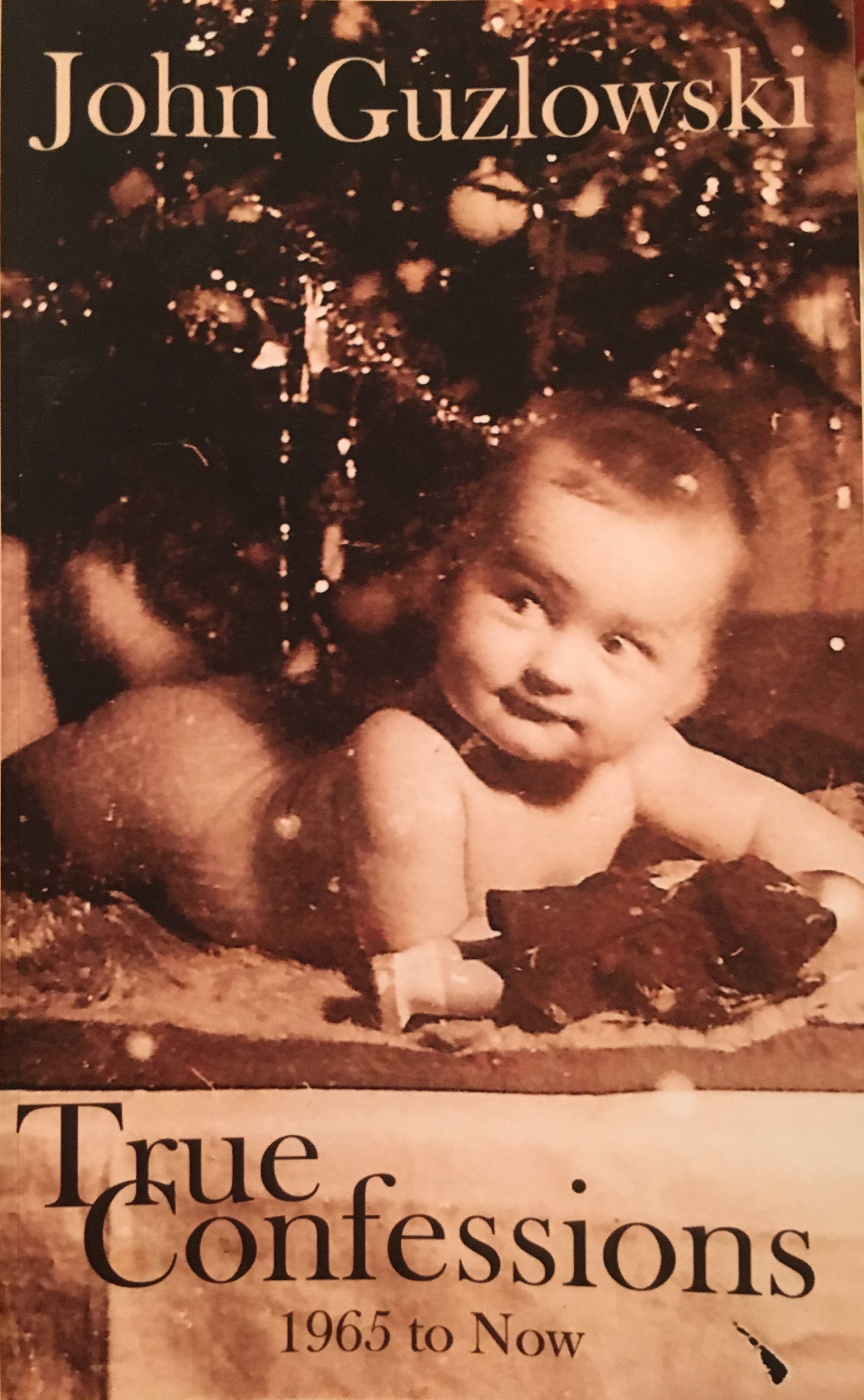
Bunkong Tuon: A Review of True Confessions: 1965 to Now By John Guzlowski


True Confessions: 1965 to Now
John Guzlowski

Paperback: 151 pages
Publisher: Darkhouse (March 13, 2019)
ISBN-13: 978-1945467172

John Guzlowski’s True Confessions: 1965 to Now is an autobiography in verse. Ranging from lyric to narrative, sonnet to free verse, elegiac to humorous, the poems have a central “I” that takes the reader into six decades of the poet’s life. They explore topics such as drugs, booze, and rock n’ roll, love (from the young and reckless to the more mature kind), teaching, parenting, Americana, the arts of poetry, and, ultimately, death. His mother and father who survived German work camps during WWII also make their appearance here as an elderly couple re-living the horrors of the Nazis in the blazing heat of Arizona.

Guzlowski writes with such honesty, humor, wit, sadness, and hope. Above all, he writes with clarity, truth, and humility. Take, for example, the poem “Grieving.”  

Robert Frost’s poem “Home Burial” moves me,
but some of my students are freaked
by the thought of the baby’s coffin in the parlor,
the mom in the poem who mourns too long.

“Get over it,” they say. 

Get over it?

On his death bed, my dad was still grieving
for his mom who died when he was five,
and I’m still grieving for him ten years
after his death. Grieving doesn’t stop
like a TV drama you can turn off.

Forgive me for telling and now showing
but this pain I feel for my dad and the pain
he felt for his mom are what connects us all,
as sure as the turning of the earth.

No apology is necessary here. His poem simply works in spite of the fact that (or maybe because) Guzlowski admits breaking the “show-don’t-tell” commandment for writing. The poem’s honesty, emotion, and heartfelt conviction in truth propel it forward and bring readers to an understanding of grief that connects us in our humanity.

Like his forebears (which include Whitman, Ginsberg, Kerouac, Frost, with some Dickinson, Eliot, Bellow and Faulkner thrown in), Guzlowski’s voice is that of the common man, one that invites readers into his world and entrusts us with his heart and soul. That’s the power and beauty of Guzlowski’s poetry: stripped of linguistic experimentation and the artifacts of academic theory, his poetry brings us to real and genuine human connections: love, hurt, anger, loss, joy, silliness, absurdity, hope, acceptance, and more. 

If you haven’t read Guzlowski, buy this book; you will be in for one wild joyride. John’s energy is vast, imaginative, and liberating. Afterward, buy his other books, especially those about his parents, particularly Echoes of Tattered Tongues and Lightning and Ashes. Those books are raw, unflinching, and so very full of love (the love of a child for his refugee parents).


About The Author: Bunkong Tuon is a Cambodian-American writer, critic, and teacher. He is the author of three poetry collections: Gruel (NYQ Books, 2015), And So I Was Blessed (NYQ Books, 2017), and The Doctor Will Fix It (Shabda Press, 2019)His poetry recently won the 2019 Nasiona Nonfiction Poetry Prize. He teaches at Union College in Schenectady, NY.

As It Ought To Be Magazine’s Nominees for the 2019 Best of the Net Anthology


As It Ought To Be Magazine is proud to announce our nominees for Sundress Publications’ 2019 Best of the Net Anthology.


Poetry

Ruth Bavetta “A Murder”

John Dorsey “Anthony Bourdain Crosses the River of the Dead”

Mike James “Grace”

Rebecca Schumejda “i don’t want this poem to be about the death penalty, but it is”

Bunkong Tuon “Gender Danger”

Kory Wells “Untold Story”


Nonfiction

Daniel Crocker “Mania Makes Me a Better Poet”

Nathan Graziano “The Misery of Fun”


Congratulations to our nominees and thank you to all of the writers and readers who have supported As It Ought To Be Magazine.


Image Credit: Henry Pointer “The Attentive Pupil” (1865) Digitally Enhanced. Digital image courtesy of the Getty’s Open Content Program

“My Mother on Her Deathbed” by Bunkong Tuon


This is the sixth in a series of poems from a forthcoming poetry collection about raising a biracial daughter in contemporary America, during this polarizing time of political and cultural upheavals where sexual harassment allegations abound, where a wall, literal and figurative, threatens to keep out immigrants like the narrator, a former refugee and child survivor of the Cambodian Genocide. You can find links to the full series of poems on As It Ought To Be Magazine below.


My Mother on Her Deathbed

Withered away in pus,
knowing that she’d leave
me, her only child.
My uncle’s body crouched in
fetal position on the red
dirt of the refugee camp,
heavy boots of Thai soldiers
thundering on his head,
back and stomach.  
Grandmother weeps
at night
for all her children,
alive and dead,
for her orphaned grandson,
for all parents haunted
by helplessness.
In America
I was the new kid,
a reminder of a war
that tore families apart.  
Saliva clung
to my tear-stained cheeks
and stuck to my hair.
Stephanie  
my first crush said,
“It’s nothing personal.”
But these memories
are wiped clean.
All is forgiven.
A flower blooms
in the desert
when my daughter
hugs me.


About the Author: Bunkong Tuon is the author of Gruel (2015) and And So I Was Blessed (2017), both poetry collections published by NYQ Books, and a regular contributor to Cultural Weekly  He is also an associate professor of English and Asian Studies at Union College, in Schenectady, NY.


Bunkong Tuon’s series of poems on raising a biracial daughter in contemporary America:

Ice Cream

Gender Danger

The Bite

Tightrope Dancer

Women’s March in Albany

My Mother on Her Deathbed


Image Credit: Charles Aubry “Still Life Arrangement” (1864) Digital image courtesy of the Getty’s Open Content Program.