SATURDAY POETRY SERIES PRESENTS: SHARON SUZUKI-MARTINEZ

ssm author pic

By Sharon Suzuki-Martinez:


ONE HUNDRED BRIDGES

1.

One day
I gave myself a gift certificate
because who knows what I want?

One night
without thinking
I traded it for one hundred bridges.

2.

We turn the house upside-down
in search of our passports.

A century passes
before we find them in the pages
of our children.

3.

Too many bridges to cross.

Paths like rotting smiles, rat-kissed
tatters swinging loose
in the maw of some river god.

4.

It has always been this way–only
your voice carries me to the other side.


GOODBYE ISLAND

Then Marie said, “I’m in love with a man
who is an island.” Of course,

many of us had our doubts.
This did sound familiar.

We said, “Which of our legs
are you trying to pull?”

She stared at us like we were insects
from the future.

Our metaphysical existence
(vis-à-vis Marie)

grew negligible: tenuous, at best.
Further on down the road, we saw the man

for ourselves. We couldn’t help but
admire his thick vegetation,

his long languid beaches, his centuries
of blue-eyed solitude.

We desperately wanted to bear his young,
even the males among us.

Thus we engulfed
his shores with sweet lingering visits.

Soon, Marie saw the man
was no longer her own.

Sadly thereafter, she realized he never was.


“One Hundred Bridges” originally appeared in CURA and “Goodbye Island” originally appeared in Spooky Boyfriend. These poems appear here today with permission from the poet.


Sharon Suzuki-Martinez is the author of The Way of All Flux (New Rivers Press, 2012). She grew up in Hawaii and now lives in Tempe, Arizona where she created/curates the music/poetry website, The Poet’s Playlist and blogs about strange animals and the even stranger poet’s life at Sharon Planet.

Editor’s Note: Today’s poems are thinking poems. We are asked to slow down, to be present, and to really consider the ideas and imaginings the poet has carefully crafted for our contemplation. “One day / I gave myself a gift certificate / because who knows what I want?” “We turn the house upside-down / in search of our passports. // A century passes / before we find them in the pages / of our children.” I could read these lines again and again and meditate on the depths of their meaning.

In “Goodbye Island,” the poet pushes the boundaries of metaphor, painting us a picture of what a man might look like if he really were an island: “We couldn’t help but / admire his thick vegetation, // his long languid beaches, his centuries / of blue-eyed solitude.” As if this is not enough, she takes us a step further, deep into reflecting upon what it is to love a man who is an island: “Marie saw the man / was no longer her own. // Sadly thereafter, she realized he never was.”

Want to read more by Sharon Suzuki-Martinez?
The Poet’s Playlist
Sharon Planet

SATURDAY POETRY SERIES PRESENTS: JOANNA FUHRMAN AND TONI SIMON

Screen Shot 2014-07-25 at 2.52.06 PM


By Joanna Fuhrman and Toni Simon:

from FRIEND OF THE DEAD


Screen Shot 2014-07-25 at 2.55.05 PM


Screen Shot 2014-07-25 at 2.54.49 PM


Screen Shot 2014-07-25 at 2.53.53 PM


from HOW MANY TIMES DO I HAVE TO TELL YOU?


Screen Shot 2014-07-25 at 3.06.29 PM


Screen Shot 2014-07-25 at 3.06.12 PM


from THE RULER OF RUSTED KNEES


Screen Shot 2014-07-25 at 3.03.57 PM


Screen Shot 2014-07-25 at 3.11.21 PM


Selections from “Friend of the Dead” originally appeared in Paperbag, selections from “How Many Times Do I Have to Tell You” originally appeared in Talisman, and selections from “The Ruler of Rusted Knees” originally appeared in Posit. These selections appear here today with permission from the poet.


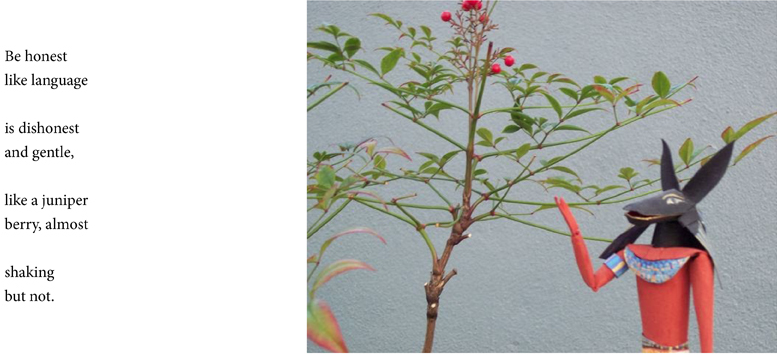
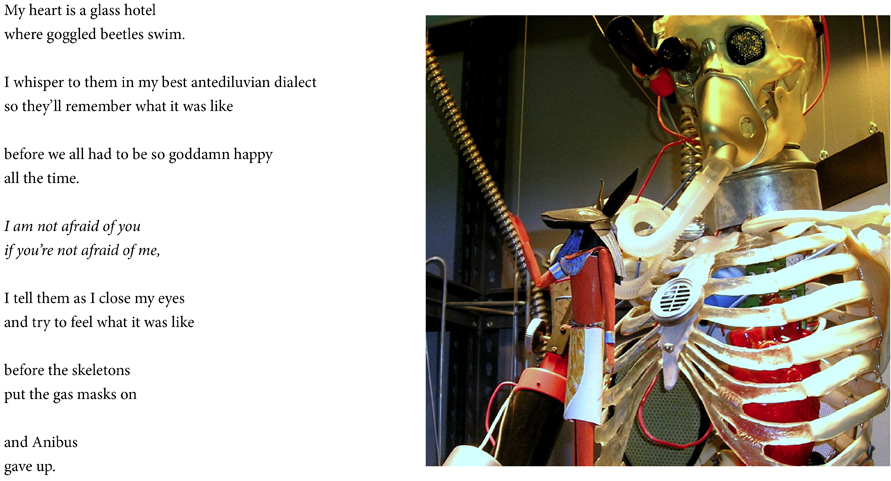
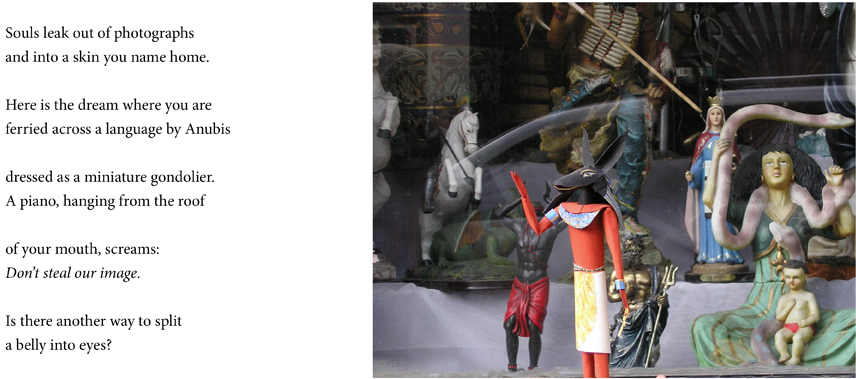
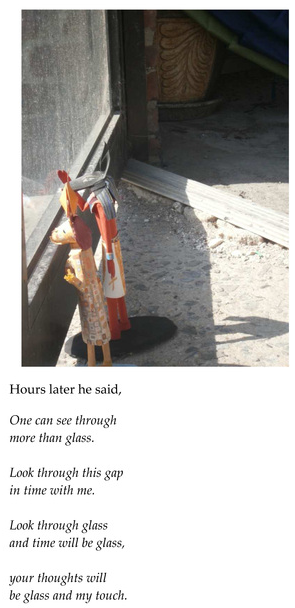
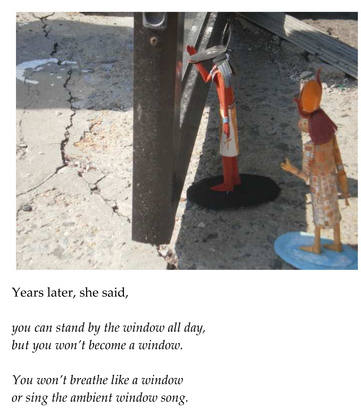
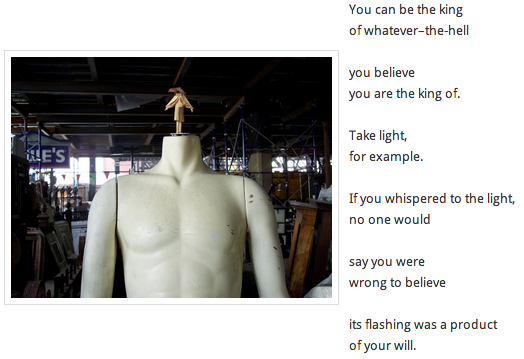
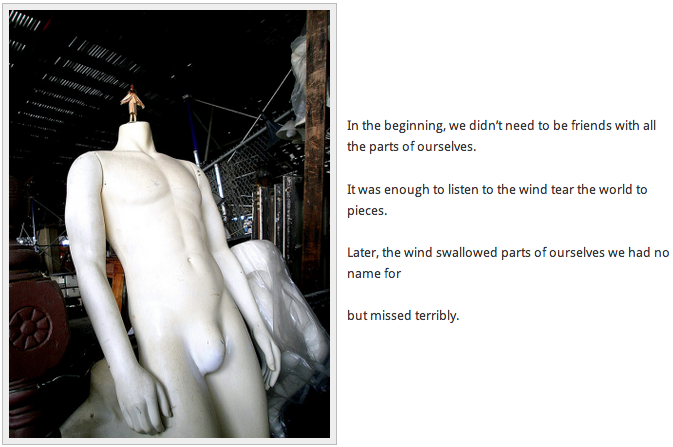
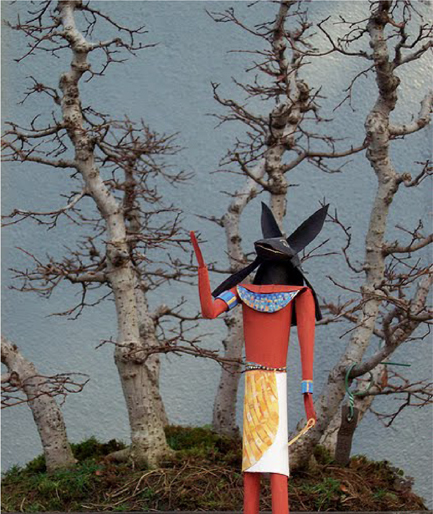
Artists’ Statement: In our mixed-media literary project, Egyptian gods, stripped of their context and role, wander various New York City neighborhoods trying to figure out where they belong, how to make sense of what they have lost, and how to get along with one another.

In the first step of our project, Toni Simon constructs three-dimensional, small-scale figurines out of paper, modeled on Egyptian gods. She then paints them with abstract, graphic details. We then take the little gods out into different neighborhoods and take hundreds of photographs of them. We select eight to ten images, which become the basis for a series of poems written by Joanna Fuhrman.

So far, we have created picture/poem serial combinations in Park Slope, Windsor Terrace, Chinatown, the Reversible Destiny Studio, Red Hook and Gowanus. Parts of the project have appeared online in Paperbag, Talisman, and Posit, and in print in the 100th issue of Hanging Loose.


Joanna Fuhrman is the author of four books of poetry, most recently Pageant (Alice James Books 2009). Her fifth book, The Year of Yellow Butterflies, is forthcoming from Hanging Loose Press in 2015. Recent poems appear in The Believer, Court Green, The Brooklyn Rail, and Puerto del Sol. In 2011, Least Weasel published a beautifully printed chapbook, The Emotive Function. She teaches poetry writing at Rutgers, SLC Writer’s Village and in private workshops. Her essays on teaching appear regularly in Teachers & Writers Magazine.


Toni Simon is a multimedia artist living in Brooklyn. Her illustrated book of prose poetry, Earth After Earth, was published by Lunar Chandelier Press in 2012. Over 80 of her illustrations appear in Contradicta: Aphorisms (Green Integer, 2010) by Nick Piombino. She has exhibited her drawings at the Drawing Center and at the AIR Gallery in NYC.


Editor’s Note: What’s not to love? Two stellar artists in collaboration, pairing visual art and poetry. Egyptian gods wandering the streets of New York, searching for life’s meaning. Unique, hand-crafted images. And the words. Yes. The words. After all, this is the Saturday Poetry Series, and as unique as this concept is, it would not be here if it weren’t for the words. “Be honest / like language // is dishonest.” “I am not afraid of you / if you’re not afraid of me.” “One can see through / more than glass.” “You can stand by the window all day, / but you won’t become a window.” “In the beginning, we didn’t need to be friends with all / the parts of ourselves.” These reflections, offered in the guise of meditations of fallen gods, are truly a reflection of ourselves.


Want to read more by Joanna Fuhrman and Toni Simon?
Joanna Fuhrman Official Website
Toni Simon Official Blog
Paperbag
Posit
Talisman

A Review of Carrie Oeding’s Our List of Solutions

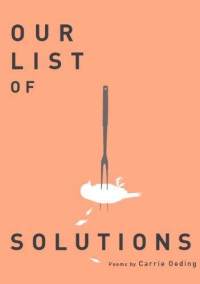
Carrie Oeding Our List of SolutionsA Review of Carrie Oeding’s Our List of Solutions

by Angie Mazakis

In a January 2010 blog post at HTMLGIANT, Elisa Gabbert, with the help of Mike Young*, cataloged popular “moves” in contemporary poetry, and the list, which is singular and far-reaching, is veracious in its deconstruction of the recent (and nearly-recent) ways in which poets’ work has attempted a unique voice. The list was undoubtedly welcomed by poetry’s readers and writers, corroborating our suspicions that certain repeated current devices may have become gimmick, especially if they are vulnerable to a collection of several examples and labeled as “moves.” At the same time, the list is somewhat dispiriting―all our word tricks exposed in one bill of misfare. (See #34 on Gabbert’s list: “Clipping or altering a cliché.”)

Carrie Oeding’s poems in Our List of Solutions, winner of the inaugural 42 Miles Press Poetry Award, transcend reliance on any of the devices delineated in Gabbert’s list, which, even to a minor extent, can be found in most current poetry. Oeding has achieved an exceptionally distinct voice that stands out among the assemblage of blossoming contemporary camps and persuasions by creating personae in her poems that illuminate the incidental, that offer hyper-awareness through witty, appealingly and truly unique voices. Oeding’s poems are a refreshing shift from imposture or imitation.

Though readers may find the speakers in Our List of Solutions alone on a dance floor or navigating a barbeque in a way that is more meditative and remote than social, they aren’t easily categorized as the standard introvert and socially isolated ingenues they may seem to represent at first glance; they belong to a social category of cool outside observers that has transcended the vagrant cynic; they’ve replaced aloofness with sensitive observation, have deflected incuriosity with perspicacity. They’re appealing because readers will want to participate in their unique perceptions, in the exclusivity of their rare appreciations (their own nice ears, for example). We feel their anxiety and envy it for its accuracy.

Their intimations of detachment often seem either accepted or self-invoked–they know too much about social normalcy (“Don’t wait for me to point out how people work”; “They all do what they’re only made to”). They are furtive and unbending at once, deliberate introverts who make directive statements while retaining their vulnerability. They are the solitary who do not want/need to be found (“Someone find someone who wants to find anyone/ and tell them no one wants to be found”). They are speakers who’ve resolutely jilted the stars (“Sandy Says No More! To Just About Everything”). They seem less anxious about their aloneness than they do about their advertent observations of the world and the people living in it. In “Sandy’s Beauty,” the speaker’s exposure of the social obligation of flattery creates a response that is both hilarious and touching at once:

One of my neighbors said, You’re beautiful!
As if she discovered Beautiful for me…

Hello Beautiful.
What do you like? It’s almost winter.

Frankly Beautiful,
I have always had a feeling about myself.

Sandy personifies the superfluous “beauty,” sits it down and deconstructs and talks to it, having been given something she already had.

Despite the shy authority of these voices, the solitary inwardness of many of the speakers does not lose its moving, heartbreaking quality:

and I’ll make my own table too.
Better, without chairs.

—from “Amy Wears Blue Shirts Every Day, Too”

The voice of “we” weaves in and out of the book, dispensing instruction or exerting a warning (“We all know what happened to Dean”) or acting as a collective speaker of the poem (“Do you whisper, I can do this better,/ Susanna? Funny how we knew that. / We’ve already done better.”) Though it seems that the voice of “we” in Oeding’s poems is caricatured, the collective voice has desires or tastes that act so singularly readers will feel as though the we’s assertion is something they should have already felt or considered along with them. The voice is so convincing that we’re left wishing we were part of the group. It is also another avenue through which humor is used in the collection. (“We’re going to stop. We have a date. You understand.”)

When we think Oeding’s speakers are going to indulge in “description by negation,” (number 36 in Gabbert’s list of “moves”), even then they surprise by turning the negation further, so that there is still something unexpected around a corner we hadn’t anticipated.

After six whiskeys he can’t tell which neighbor can see through him.
Without seven he can’t tell the night what he doesn’t see.

—from “His List of Solutions”

Oeding does this another time as a kind of hyperbolic way of criticizing a prescriptive approach to finding love:

Don’t just like the lack of choice
in who you could really love, like all the choices
you could make to avoid love in hopes of finding love.

—from “We Like Steve and Louise’s Love”

The line break after “choices” creates an unexpected turn in the directive as well as in the negative indicators don’t, lack, and avoid, which oppose the positive could, could, and in hopes. This works to create surprise and subversion while deconstructing the meaning of the word “choice” and considering the various possibilities of choices.

Another way that Oeding impresses through the unexpected is by asking an ordinary question and then asking the relevant question readers likely wouldn’t think to ask—one that, in the following lines, makes up an inquiry concerning fundamental desire that beautifully, achingly resonates:

I wish it wasn’t dancing that gave me joy—

Can’t there be something besides dancing?
or maybe can’t there be something besides joy?
Oh, can’t there be something besides joy?

—from “Joy”

Another technical way Oeding uses language inventively is when she returns to a minor word, phrase, or idea soon after it has escaped the reader’s attention in a pleasing and unexpected reintroduction. This is done in a way that makes the reader surprised at the technique and surprised that he or she didn’t expect it. In “Storm’s A’Comin’,” we’re told there’s “a story about Dean and one about a funny hat, a favorite hat flying off in the wind.” Two lines later, when the wind seems to have ordinarily passed, “Someone’s mom has gout or goat―it’s hard to hear above the wind.” The phrase “asking for trouble” comes up again, wearing a new layer of meaning, as well as “pineapple”―just when we thought the case on the pineapple was closed.

One of the delights of Our List of Solutions is in the way that Oeding illuminates the minutiae. In “Lullaby for a Barrette,” the single act of pulling back hair is illuminated and examined, as is the act of sending a package in “Packages Under Our Control,” but illumination of the seemingly negligible and forgotten is a quiet strength throughout each of the poems, whether for its own sake or to create the rare, exquisite impressions that singularize unforgettable speakers. Carrie Oeding exposes the hidden sides―the felt but unexpressed, the loudly perceived but unsaid, and in the act of saying illuminates them, “each sequin getting its moment to be seen.”

Carrie Oeding, Our List of Solutions. 42 Mile Press, 2012: $14.25

*Correction: This review originally misattributed Elisa Gabbert’s article as being primarily written by Mike Young.

***

Angie Mazakis’s poems have appeared in The New Republic, Boston Review, Narrative Magazine, Best New Poets 2008, Drunken BoatNew Ohio Review, Everyday Genius, and other journals. She has received a Dorothy Sargent Rosenberg Prize and prizes from New Letters, New Ohio Review, and Smartish Pace.

 

SATURDAY POETRY SERIES PRESENTS: KATIE WOODZICK

Flirting_with_Danger


YEARNING
By Katie Woodzick

She delivers my sloe gin fizz
and her slim hips testify
to an ecstasy that has
not yet been experienced.

I want to trace
the subtle protuberances
of her hip bones
(ghost-like, merely a suggestion
of bone pressing against her tender skin)

I sip my gin
instead of
tracing her hips.

Because she is forbidden.
Because my jaw locks.
Because I don’t know how.


“Yearning” originally appeared in woodzickwrites, and appears here today with permission from the poet.


Katie Woodzick is a writer, actress, director, feminist and External Relations Manager for Hedgebrook. She considers herself a smattering of Rogue from X-Men, Mae West and Tina Fey, among others. She holds a strong belief that leopard print is a neutral. Publications include Floating Bridge Press (Fall 2014 Issue) and Writer’s Digest Short Short Story contest (7th place, 2012 competition.)

Editor’s Note: Ahhhh… alliteration. The “sloe gin fizz,” the “slim hips,” the “ecstasy… not yet… experienced.” And the joyous interplay of alliteration and content! That we, the reader, are treated to gratification and pleasure with this sensual alliteration, and yet the words themselves insist that ecstasy has not been experienced. While the playful nature of the poem’s acoustics arouses our senses, the poem’s narrative unfolds, equally alluring. And in the end we are treated to a glimmer of honesty an introspection, even defeat. Despite all the attraction, all the fantasy, in the end, “I sip my gin / instead of / tracing her hips.” Why? “Because I don’t know how.”

Want to read more by Katie Woodzick?
Katie Woodzick – Theatrical Mustang
woodzickwrites – At the intersection of theatre and poetry
Floating Bridge
Whidbey Life Magazine

SATURDAY POETRY SERIES PRESENTS: RACHEL MENNIES

alisonsteve02327c

By Rachel Mennies:


AMIDAH FOR TEENAGE GIRLS

We said it Friday nights in unison: blessed
is Abraham, Isaac, patriarchs whose weight
we felt against our chests, Jacob, whose brother

filled his mouth with the sand of hate,
who split sisters with his body
of patience. The God of History, reads

the Siddur, nothing more dangerous
than this sort of God. Any good girl
will tell you so: ask Leah, who watched

as her betrothed tilled fields in agony,
rutted at her nightly, his pious bride, as he dreamed
for seven years of younger Rachel’s face. God,

our brute teacher. God, whom we thank
and thank for these big men. You are mighty forever,
my Lord. You resurrect the dead. My Lord, open

my lips, that my mouth may declare
Your praise.
Imagine the shock, that first boy
or man inside us for mere seconds, the tremor

of realization — some smaller God at our clavicle
thrumming in awareness. The creator of all things. And so
when I lie with him, my body already knows what to do

while he shifts his weight, moves his hips. You cause
the wind to blow and the rain to fall.
The hard ram’s horn,
the arms thrust high, parting a sea of salt. The open mouth

of incantation. O King, helper, savior and shield. And what of our
pleasure, that quiet subtext, that patient search against
our partners’ sweaty brows, near to finished? We already

know the phrase: bestow, bestow.


BUMPER CROP

Wet pink shock of a sliced-open
peach, pit hard between our teeth,
reached in a liquid, honest hurry.
Peach in the fingers of a certain lover’s hand.
Peach juice sliding down the wrist of a man
with assertive hungers. Peach, bringer
of rapture: the climax, but not
the fall. Peach sky rising up and up, free
of consequence. Impossible, but for
our chase of it. Peach in the crisper drawer,
softening. We hear stories of the pastor
and his book, so certain of fire, his biblical
calculus. Peach hot, sugared in an oven.
The mouth of red around the brain-
shaped, dumbstruck stone. Peach the very taste
of sin. Peach that sends the crows circling,
rapture here and gone. Peach God, rapt for carrion,
turning above us in the heavens, waiting for
us, ripening, to satisfy ourselves;
come to him pitted, come to him
finished, made rotten by
your sweet time in his sun.


“Amidah for Teenage Girls” was originally published in Witness, and “Bumper” was originally published in Linebreak. These poems appear in the collection The Glad Hand of God Points Backwards (Texas Tech University Press 2014) and appear here today with permission from the poet.


Rachel Mennies is the author of The Glad Hand of God Points Backwards, winner of the Walt McDonald First-Book Prize in Poetry (Texas Tech University Press, 2014), and the chapbook No Silence in the Fields (Blue Hour Press, 2012). Her poems have appeared in Hayden’s Ferry Review, Poet Lore, The Journal, and elsewhere, and have been reprinted at Poetry Daily. She teaches in the First-Year Writing Program at Carnegie Mellon University.

Editor’s Note: I really love today’s poems. Discretely and in conjunction. For the ways they press against the same themes, and for the ways they diverge. “Amidah for Teenage Girls” had me at “patriarchs whose weight / we felt against our chests,” and held me there, exalting, with “Jacob, whose brother // filled his mouth with the sand of hate, / who split sisters with his body / of patience.” Yes. Yes and yes. I could write pages about the first two stanzas of this poem alone. Instead, I urge you to read and reread it, to savor what stews and what simmers.

When I think of peaches and poems, I think of Li-Young Lee. And while “Bumper Crops” and “From Blossoms” each make their own unique contribution to the poetic landscape, I think Li-Young Lee would meditate along with Rachel Mennies on God and humanity, and that he would relish the poem’s sweet sensuality. As, I believe, would Anya Silver and Rabbi Rachel Barenblat, whose “French Toast” and “Sufganiyot” would, along with Mennies’ peaches, make up a picnic that would give Fifty Shades of Grey a good blush.

Want to read more by Rachel Mennies?
Rachel Mennies – Official Website
Buy The Glad Hand of God Points Backwards from Texas Tech University Press
Buy The Glad Hand of God Points Backwards from Amazon
Poetry Daily
Sixth Finch

SATURDAY POETRY SERIES PRESENTS: LAURA E. DAVIS

LEDavis-2014

By Laura E. Davis:


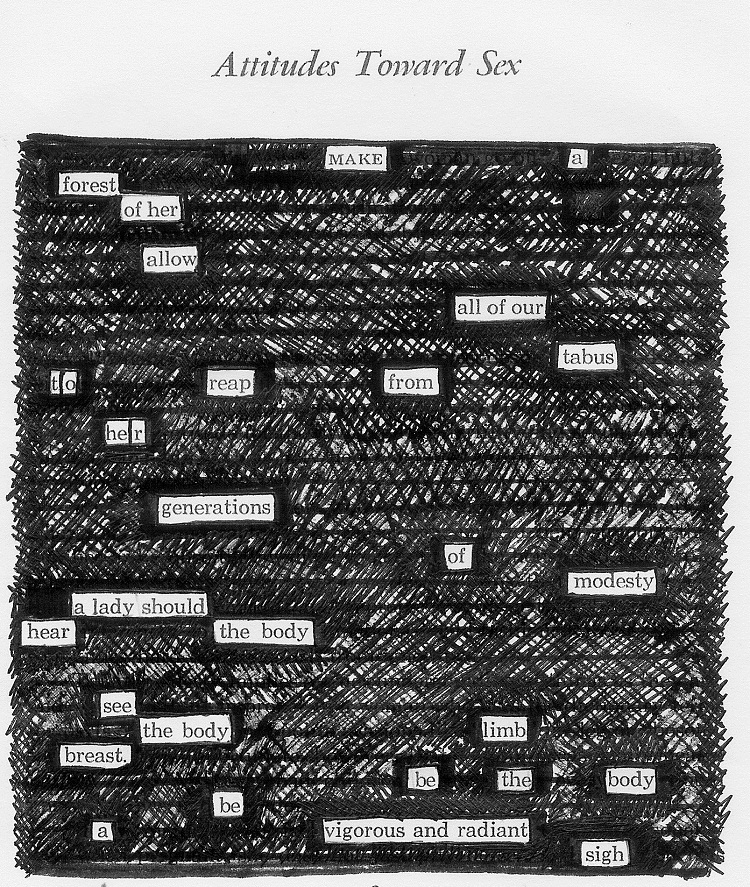
ATTITUDES TOWARD SEX

attitudestowardsex.small


THE BOYS ARE ALWAYS TALKING

about their cocks, naming
names—Rebecca, Elizabeth,
Ashley—we see these girls
all lined up, waiting to admire

the boys’ cocks. And the boys
talk about size of their cocks,
seven inches becomes ten, then
thirteen. They tell us how

they measured their cocks
after their first wet dream: they
woke up sweaty, quick-covered,
got their cocks hard again, pulled

out the ruler. Boys and cocks
everywhere. A boy shows his
cock to a girl on the playground.
Another boy watches girls from

a parked car while he touches
his cock. On the subway, boys
unzip their pants, put cocks
on display. Baby boys discover

their tiny cocks during every
diaper change. I didn’t see
my own clit was until I was
twenty-three. I had to hold

a mirror just to see it rise
like slow-motion stalagmite.
Had to hold back my own skin
just to show it to myself.


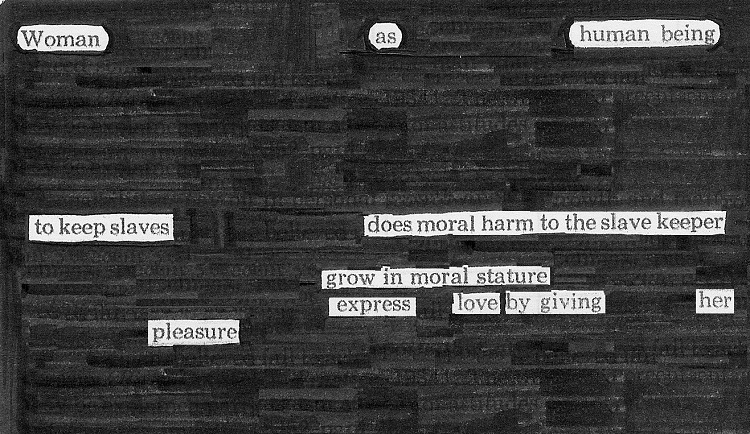
WOMAN AS HUMAN BEING

woman as human being.smaller


“Attitudes Toward Sex” was originally published in iARTistas. “The Boys Are Always Talking” was originally published in Muzzle. “Woman as Human Being” was originally published in Toad Journal. These poems appear here today with permission from the poet.


Laura E. Davis is the author of Braiding the Storm (Finishing Line, 2012), founding editor of Weave Magazine, and founder of Submission Bombers. Her poems are featured or forthcoming in Toad, Stirring, Corium Magazine, So to Speak, Muzzle, and others. Laura teaches for Poetry Inside Out, a K-12 a bilingual poetry program in San Francisco, where she lives with her partner, Sal.

Editor’s Note: This week I had the honor of working with an artist to create an artistic response to the Hobby Lobby Supreme Court decision. I have already written an editorial response to the ruling, but I wanted to speak out against this injustice in many ways, through many voices.

Today’s poems speak for womankind. They speak for our bodies, for our vantage point within a man’s world. When read together today, they are meant to be a shout from the rooftops. That no one exercises control over our bodies but ourselves. That we are human beings whose rights are superior to the rights of corporations. Yes, that we are human beings. Beautiful, complex, powerful human beings who are as capable of a battle cry as we are of “a vigorous and radiant sigh.”

Want to read more by Laura E. Davis?
Dear Outer Space – Laura E. Davis’ Blog
“Quiet Lightning” on Youtube
Buy Braiding the Storm from Finishing Line Press
“Relics” in Sundress
“Vessels” and “Red Storm” in The Doctor T. J. Eckleburg Review

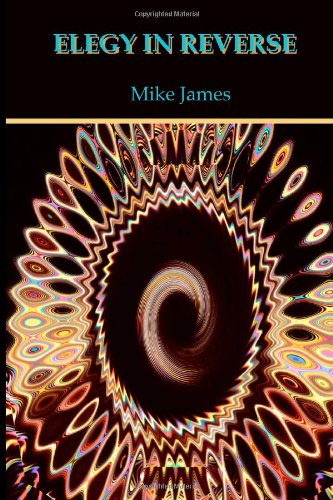
A Review of Mike James’s Elegy in Reverse

Mike James Elegy in Reverse

A Review of Mike James’s Elegy in Reverse

By J. Andrew Goodman

Elegy in Reverse is a tense poetry collection exploring how loss and absence manifest. Family, friends, lovers, talents, and faith are shadows made measurable by experience and reverence in Mike James’s eighth collection, released by Aldrich Press earlier this year. James’s verse reminds us that what we hold dear is perishable and that words are often not enough to hold these things accountable for leaving. His poetry is plainspoken but evocative, fully rendering the familiarity of longing and grief for that which has a propensity toward leaving. Amid such an exodus, James captivates readers with his rapturous voice.

The characters of James’s past are made tangible by his written memory. In the early pages of his collection, readers are introduced to his mother and his alcoholic father; the latter is deceased and the former presumably so. In “Jailbird,” his father invents a dance, “the prison shuffle,” that the son enjoys, but his mother refuses to join:

when i was with your father
i had enough dancing
to do me
until cows or jesus
came home

she always
laughed
when she said that
as if she were saying it
for the first time

In economic verse, James details the family situation of his childhood: His father goes or returns to prison. His mother hopes to prevent her son from making similar choices. She makes light of her husband’s antics, yet reveals in doses the continuity of the past, her worry refreshed.

His mother appears sparingly throughout the collection, despite James’s apparent fondness of her, while his father returns frequently. The collection contains a number of heartbreaking poems about his father’s alcoholism, which “cost him a sense of direction,” ultimately turning him away from his family. The son is left only with his memory, piecemeal and bitter. James seems to believe he has inherited such transience. Or, possibly, he recognizes this as a feature of human nature, the human condition. He expresses “a sad anger” toward most loss or abandonment, writing in a poem later in the collection that “an old friend says leaving is contagious.” This sets a precedent for the remainder of the book.

Despite his ability to make good use of them, James recognizes that words often escape or fail us as well. In “Message at Babel,” James alludes to the biblical account of God confounding the human language. As part of a short series of poems within the collection that questions the necessity of disparity in faith, James explores through a lens of mourning what it means that Eve was possibly judged “before she even chewed,” that Job’s wife was silenced by her children’s “faces / so stiff in death.”

Still, James shows us clearly that language and voice help diffuse the power of death and grief. Our memories become stories, become physical. “I don’t know what to make / of the language / of grace” James writes in a poem about refusing to offer a prayer before a meal with his wife. The litany and ritual of biblical language are not as significant or endearing to him as experience itself:

those words / don’t cling to me / the way a blanket does / on mid-winter / mornings / / or the way we cling / to one another / at night / as we swim / across the ocean of our bodies / past the edge of our wants / / the night sky full of stars / mariners used / for passage/ their breath filling sails / with a word / that can be a taunt / a promise / or something close to grace / / home

James’s refusal isn’t a rejection of faith, but of its language, poor in its appraisal of our desires and necessities. He suggests silence is its own grace in “However Bright the Sun” and “Wild Apples.” In labor, we work through our grief and unpleasantness. We forget our losses, even though their accumulation manifests into a shadow, “some days . . .  into a taste.”

The dichotomy of what is unreal as it exists in reality is essential to James’s collection. He is visited by his father’s ghost, and they converse. Eden’s inhabitants are capricious, envious of Eve’s taste. James even defines an elegy as “a love poem to an abstraction / once touched.” It seems, then, that with poetry James is enabled to seek the abstraction through language, to define absence by its bounty. The way the monk in “The Monk’s Dream” seeks God’s face during sleep or contemplation but can think only of hawk’s feathers and an empty bowl is how we, with James, seek the unreal through the limitations of the real.

More than a reconciliation of grief, Elegy in Reverse is a love poem to language and the surprising result of what happens when we’re able to say the right thing. Even when describing that which is fleeting, Mike James’s voice is nascent, emerging. He is never at a loss for words.

Mike James, Elegy in Reverse. Aldrich Press, 2014: $16.00

***

J. Andrew Goodman is a graduate of Murray State University’s MFA program and an intern for the independent literary publisher, White Pine Press. He currently lives and works in Louisville, Kentucky.

SATURDAY POETRY SERIES PRESENTS: JENNY SADRE-ORAFAI

Sadre-Orafai

KARAJ
By Jenny Sadre-Orafai

When I miss her, I open my popout map.
I spill my face into the streets of Tehran.
I hide in Laleh Park. I read street names
aloud, like I’m reporting to someone.
I pretend I see things no one else can─
who took the Peacock Throne, how the burnt
city fell. I say Karaj like I’m telling you your future.


Today’s poem was originally published in Thrush Poetry Journal and appears here today with permission from the poet.


Jenny Sadre-Orafai is the author of four chapbooks. Her first collection Paper, Cotton, Leather will be published this fall by Press 53. Recent poetry has appeared in Redivider, Thrush Poetry Journal, PANK, Rhino, Sixth Finch, ILK, iO: A Journal of New American Poetry, and Poemeleon. Recent prose has appeared in The Rumpus, The Toast, and Delirious Hem. She is co-founding editor of Josephine Quarterly and an Associate Professor of English at Kennesaw State University.

Editor’s Note: I fell in love with today’s poem because it so intimately and distinctly tells the poet’s story, and yet, this is not her story. I have my own Karaj, and anyone who has ever loved a city that lies on the other side of the world—anyone who has ever loved a city by way of memory and longing—speaks the language of this poem. I am reminded, too, of Danusha Laméris’ beautiful poem, “Arabic,” of the ways in which love—of a language, of a people, of a place—remain with us across the span of distance and time. When Jenny Sadre-Orafai leaves us with her (killer!) end-line, I know what my future holds. I know what city waits for me on distant shores.

Want to read more by Jenny Sadre-Orafai?
Official Website
Two poems with audio in PANK
Creative nonfiction essay with audio in The Rumpus

Lyn Lifshin: A Micro-Interview and Three Poems

lyn

Lyn Lifshin: A Micro-Interview and Three Poems

by

Okla Elliott and Lyn Lifshin

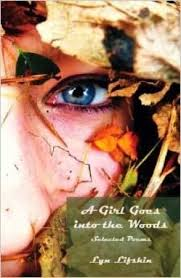
Okla Elliott: You organized A Girl Goes into the Woods by themed sections (autobiography, relationships, family, war poems, and so forth). How did you decide on these particular themes, and how did poems that might fit in more than one section end up where they did? Also, if poems were written years apart yet fit the same theme, what differences did you find in your own thinking on the theme?

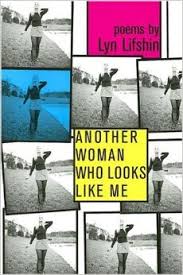
lyn2Lyn Lifshin: Though I hadn’t thought of it until you asked the question, it seems many of my books (all three Black Sparrow books—Cold Comfort, Before It’s Light, and Another Woman Who Looks Like Me—as well as Persephone) are arranged in a similar way with similar themes. In contrast, are the many books that focus on one theme—all the equine books: my just published Secretariat: The Red Freak, The Miracle; The Licorice Daughter; My Year with Ruffian; and Barbaro: Beyond Broken. And many other books are one theme: Malala; Knife Edge & Absinthe: The Tango Poems; Tangled as the Alphabet; Blue Tattoo; Marilyn Monroe; The Doctor Poems; etc. Actually I had not realized until looking thru some titles how the one theme book is so prevalent!

As for how I decided on these particular themes: when I first started writing, I wrote mostly political poems and was referred to as Mr. Lifshin. Later I wanted to show the variety of my work, not just political poems but erotica, family poems, nature poems, love poems, poems of place and of course, mother and daughter poems. (I had written no mother and daughter poems when I edited Tangled Vines, a mother and daughter anthology that stayed in print in various printings and versions for about 20 years—but from that time, it became an obsession for many years) Some poems were triggered by requests by editors doing anthologies: Richard Peabody ‘s Marilyn Monroe and Barbie anthology, got me going on poems that turned into my own books, as did the request for poems about Malala, Joni Mitchell, Dick for a Day, requests for poems about an earthly Jesus—a request for poems about Obama led to a series, as did requests for poems about September 11.

Sometimes I’ve wanted to do a collection of new poems but often the editor/publisher wants to do a best of. For A Girl Goes into the Woods I selected what I thought were the best and strongest poems whether they were new or old. It’s hard to say what difference I found in new and old poems on the same subject. I know sometimes when I read old poems, I change the language but it’s hard to make any generalizations. It’s true some poems could have fit in more than one section but mostly I think they are where they should be! I’m not sure I can give a true answer about how I may feel differently about a certain theme when I wrote it in the past and now am writing about it again. I think it would vary too much from poem to poem.

OE: Your poems “Barbie Wonders about Buying a Coffin” and “Thirty Miles West of Chicago” both touch on childhood and death in quite different ways—the former by playfully personifying a child’s dolls, the latter with a dark and heart-wrenching heaviness. Tell us a bit about these two poems, how you came to write them, and maybe discuss the wildly different styles employed.

LL: As I mentioned, when Richard Peabody asked for Barbie poems, I did intenselyn3 Barbie research not ever having a Barbie doll myself and just imagined her in a variety of situations— enough to do a whole book of Barbie poems. I don’t really remember when or what mood I was in when I wrote “Thirty Miles West of Chicago.” At different times of my life and in different places I seem to write at different times of the day. Somehow I remember when I first began, I stood at the kitchen counter. More recently, I write on the D.C. Metro going to ballet, an hour metro ride going and coming back, or in a cove in the living room in an apartment rented in DC with Janet Reno on one side, a drug dealer across the hall and the owners of the Fifth Column, a night club—they always came back about 3 am, loudly. Always thought they were selling drugs too—but it was income tax evasion or something like that. I wish I remembered the circumstances—I just don’t.

OE: What’s your current project? What can readers look forward to in the near future?

LL: After publishing 5 books this past year and having some of the most stressful experiences in and out of publishing, I planned to take a real break and just dance—Argentine Tango, ballroom. But some road blocks there. But I did get back and took a private class this week. In the shelf above my desk, I have about 60 spiral notebooks—I still write poems by hand and then am always way behind typing them up—now they are howling, waiting for me. Some of them go back to the early nineties…so that is a huge enormous undertaking and not a lot of fun since it’s hard to read my handwriting and the references. But forthcoming in July is Luminous Women: Enheduanna, Scheherazade and Nefertiti, a totally different kind of theme for me. It started off as a project with a painter—selecting women thru history who left an indelible stamp but the plan never materialized and I was left with poems about these three women (and also Pachamama—so I suppose that could be a book on its own) and another small book due in the fall, Moving Thru Stained Glass: The Maple Poems.

***

Thirty Miles West of Chicago

paint chips slowly.
It’s so still you
can almost hear it
pull from a porch.

Cold grass claws
like fingers in a
wolf moon. A man
stands in corn bristles

listening, watching
as if something
could grow from
putting a dead child

in the ground.

***

All Night the Night Has Been

lightening with moths

white behind the walnuts

If a woman couldn’t sleep
and came to this window
in this light her skin
would glow like bones

Clouds over the full moon
even with the wind

What would have been nuts
look like limes
on the white stones,

it sounds like some-
one tapping on a glass
coffin. It sounds

like someone tapping
from within the tree

***

Taking My Mother to the Bathroom

I lead her, a
child waking up
from a nightmare,
dazed by light.
She lags, hurries
then, half cranky,
half grateful.
She wants the
door shut, then
says open it,
wants my hands
the right way,
wash in between
my fingers. She
says the wash-
cloth is too
wet, too cold,
too soapy. The
towels are too
heavy. You don’t,
she spits, cover
your mouth. Go
home, you should
not be here to
see me like this.

***

Lyn Lifshin is the author of over 100 books, and her work has appeared in such journals as American Poetry Review, Another Chicago Magazine, Georgia Review, Iowa Review, The Literary Review, New York Quarterly, and Ploughshares, among many others. The above poems are included in A Girl Goes into the Woods: Selected Poems and are reprinted here by permission of the author.

SATURDAY POETRY SERIES PRESENTS: SPLIT

30m0dbb


from SPLIT
By Cathy Linh Che:


THE FUTURE THERAPIST ASKS ABOUT RAPE

This morning, I watched a woman shatter
the thin ice on the pavement. I made the bed,
tucked in the sheets, and in the window,
I saw reflected my mother’s face.

Men in my life walked in and out of the rooms,
tramping snow. My mother shushed me,
and my father with his powder keg hands
pulled up a pair of clean black socks.

It isn’t what you think.
My father was a soldier.
He taught me nothing about men.

They are an empty barrel.
You’re not supposed to look into
a gun you dismantle

to try and see its parts.


HOME VIDEO

There are flowers on this bed, an elbow planted by an ear.
No, you cannot touch this breast. No darkness, no shatter,
and no, no pendulum. The past is a blood clot lodged inside
your lung.

                                                  *

In the living room, shapes move against the wall. You are
wearing a thin dress. You watch Beetlejuice while he moves
his fingers over your white underwear. You watch the screen
and see his fingers. Your brothers are in the room, but they
never seem to notice.

                                                  *

Behind the lens is the father. Mother offstage calls, Con gai
nay
. On the phone, Con gai thuoi, which means, This girl. This
girl’s rotten. This girl like swollen fruit. She cuts off the
bruises. She teaches me to cut.

                                                  *

He rises to the surf. It detonates with a sheering crash.
Inside each wave is a barrel. In each barrel is a vacuum that can suck
you in, spin you round, snap your bones if you tumble the
wrong way.

                                                  *

If I say, I have been touched. If I say, by my cousin, then, a
neighbor boy and then another. If I say no, I didn’t want it
from my first boyfriend. There was blood and membrane
and he didn’t believe me. If my body can be a box. If I can
close it up. If it has to be open. Who will touch me again?


POMEGRANATE

I open my chest and birds flock out.
In my mother’s garden, the roses flare
toward the sun, but I am an arrow

pointing back.
I am Persephone,
a virgin abducted.

In the Underworld,
I starve a season
while the world wilts

into the ghost
of a summer backyard.
My hunger open and raw.

I lay next to a man
who did not love me—
my body a performance,

his body a single eye,
a director watching an actress,
commanding her

to scintillate.

I was the clumsy acrobat.
When he came, I cracked open
like a pomegranate

and ate six ruddy seeds.

I was the whipping boy.
I was thorny, barbed wire
wound around a muscular heart.


Today’s poems are from Split, published by Alice James Books, copyright © 2014 by Cathy Linh Che, and appear here today with permission from the poet.


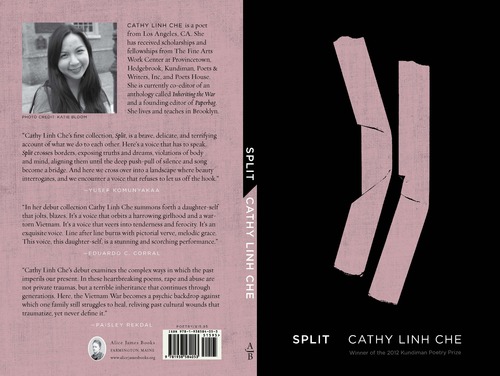
SPLIT: “Che effectively weaves the trauma of the Vietnam War into her own personal trauma, making herself a war victim—only her war is not against enemy combatants, but against her past.” —The Philadelphia Review of Books

“Cathy Linh Che’s first collection, Split, is a brave, delicate, and terrifying account of what we do to each other. Here’s a voice that has to speak. Split crosses borders, exposing truths and dreams, violations of body and mind, aligning them until the deep push-pull of silence and song become a bridge. And here we cross over into a landscape where beauty interrogates, and we encounter a voice that refuses to let us off the hook.” —Yusef Komunyakaa


Cathy Linh Che is the author of Split (Alice James, 2014), winner of the 2012 Kundiman Poetry Prize. She has been awarded fellowships and residencies from Poets & Writers, Poets House, The Lower Manhattan Cultural Council’s Workspace Residency, and the Jerome Foundation.


Editor’s Note: Words—my words—seem ineffective here. But I was deeply moved by this poet, by this book, and so I will try. Split is a sacrifice; raw and unrelenting. It is blood and memory and gasoline. It is the truth no one wants to hear, that we all need to hear. But it is more than the phoenix choking on ash, thrashing to be free. It is lineage and heritage, truth offered up in the name of a history, a family, a self. This is a stunning book by a bold and dedicated poet, a book that dares us to look, listen, and speak up.


Want to see more from Cathy Linh Che?
Official Website
Buy Split from Alice James Books
Fireside: A Kundiman Blog
Hyphen
Poets.org