SATURDAY POETRY SERIES PRESENTS: JENNY SADRE-ORAFAI

Sadre-Orafai

KARAJ
By Jenny Sadre-Orafai

When I miss her, I open my popout map.
I spill my face into the streets of Tehran.
I hide in Laleh Park. I read street names
aloud, like I’m reporting to someone.
I pretend I see things no one else can─
who took the Peacock Throne, how the burnt
city fell. I say Karaj like I’m telling you your future.


Today’s poem was originally published in Thrush Poetry Journal and appears here today with permission from the poet.


Jenny Sadre-Orafai is the author of four chapbooks. Her first collection Paper, Cotton, Leather will be published this fall by Press 53. Recent poetry has appeared in Redivider, Thrush Poetry Journal, PANK, Rhino, Sixth Finch, ILK, iO: A Journal of New American Poetry, and Poemeleon. Recent prose has appeared in The Rumpus, The Toast, and Delirious Hem. She is co-founding editor of Josephine Quarterly and an Associate Professor of English at Kennesaw State University.

Editor’s Note: I fell in love with today’s poem because it so intimately and distinctly tells the poet’s story, and yet, this is not her story. I have my own Karaj, and anyone who has ever loved a city that lies on the other side of the world—anyone who has ever loved a city by way of memory and longing—speaks the language of this poem. I am reminded, too, of Danusha Laméris’ beautiful poem, “Arabic,” of the ways in which love—of a language, of a people, of a place—remain with us across the span of distance and time. When Jenny Sadre-Orafai leaves us with her (killer!) end-line, I know what my future holds. I know what city waits for me on distant shores.

Want to read more by Jenny Sadre-Orafai?
Official Website
Two poems with audio in PANK
Creative nonfiction essay with audio in The Rumpus

Lyn Lifshin: A Micro-Interview and Three Poems

lyn

Lyn Lifshin: A Micro-Interview and Three Poems

by

Okla Elliott and Lyn Lifshin

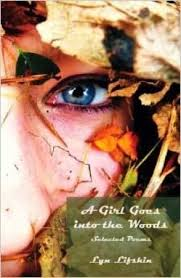
Okla Elliott: You organized A Girl Goes into the Woods by themed sections (autobiography, relationships, family, war poems, and so forth). How did you decide on these particular themes, and how did poems that might fit in more than one section end up where they did? Also, if poems were written years apart yet fit the same theme, what differences did you find in your own thinking on the theme?
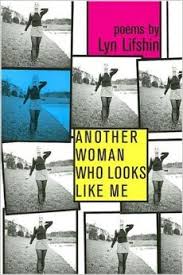
lyn2Lyn Lifshin: Though I hadn’t thought of it until you asked the question, it seems many of my books (all three Black Sparrow books—Cold Comfort, Before It’s Light, and Another Woman Who Looks Like Me—as well as Persephone) are arranged in a similar way with similar themes. In contrast, are the many books that focus on one theme—all the equine books: my just published Secretariat: The Red Freak, The Miracle; The Licorice Daughter; My Year with Ruffian; and Barbaro: Beyond Broken. And many other books are one theme: Malala; Knife Edge & Absinthe: The Tango Poems; Tangled as the Alphabet; Blue Tattoo; Marilyn Monroe; The Doctor Poems; etc. Actually I had not realized until looking thru some titles how the one theme book is so prevalent!

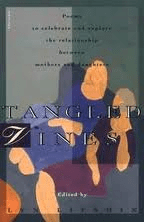
As for how I decided on these particular themes: when I first started writing, I wrote mostly political poems and was referred to as Mr. Lifshin. Later I wanted to show the variety of my work, not just political poems but erotica, family poems, nature poems, love poems, poems of place and of course, mother and daughter poems. (I had written no mother and daughter poems when I edited Tangled Vines, a mother and daughter anthology that stayed in print in various printings and versions for about 20 years—but from that time, it became an obsession for many years) Some poems were triggered by requests by editors doing anthologies: Richard Peabody ‘s Marilyn Monroe and Barbie anthology, got me going on poems that turned into my own books, as did the request for poems about Malala, Joni Mitchell, Dick for a Day, requests for poems about an earthly Jesus—a request for poems about Obama led to a series, as did requests for poems about September 11.

Sometimes I’ve wanted to do a collection of new poems but often the editor/publisher wants to do a best of. For A Girl Goes into the Woods I selected what I thought were the best and strongest poems whether they were new or old. It’s hard to say what difference I found in new and old poems on the same subject. I know sometimes when I read old poems, I change the language but it’s hard to make any generalizations. It’s true some poems could have fit in more than one section but mostly I think they are where they should be! I’m not sure I can give a true answer about how I may feel differently about a certain theme when I wrote it in the past and now am writing about it again. I think it would vary too much from poem to poem.

OE: Your poems “Barbie Wonders about Buying a Coffin” and “Thirty Miles West of Chicago” both touch on childhood and death in quite different ways—the former by playfully personifying a child’s dolls, the latter with a dark and heart-wrenching heaviness. Tell us a bit about these two poems, how you came to write them, and maybe discuss the wildly different styles employed.

LL: As I mentioned, when Richard Peabody asked for Barbie poems, I did intenselyn3 Barbie research not ever having a Barbie doll myself and just imagined her in a variety of situations— enough to do a whole book of Barbie poems. I don’t really remember when or what mood I was in when I wrote “Thirty Miles West of Chicago.” At different times of my life and in different places I seem to write at different times of the day. Somehow I remember when I first began, I stood at the kitchen counter. More recently, I write on the D.C. Metro going to ballet, an hour metro ride going and coming back, or in a cove in the living room in an apartment rented in DC with Janet Reno on one side, a drug dealer across the hall and the owners of the Fifth Column, a night club—they always came back about 3 am, loudly. Always thought they were selling drugs too—but it was income tax evasion or something like that. I wish I remembered the circumstances—I just don’t.
OE: What’s your current project? What can readers look forward to in the near future?

LL: After publishing 5 books this past year and having some of the most stressful experiences in and out of publishing, I planned to take a real break and just dance—Argentine Tango, ballroom. But some road blocks there. But I did get back and took a private class this week. In the shelf above my desk, I have about 60 spiral notebooks—I still write poems by hand and then am always way behind typing them up—now they are howling, waiting for me. Some of them go back to the early nineties…so that is a huge enormous undertaking and not a lot of fun since it’s hard to read my handwriting and the references. But forthcoming in July is Luminous Women: Enheduanna, Scheherazade and Nefertiti, a totally different kind of theme for me. It started off as a project with a painter—selecting women thru history who left an indelible stamp but the plan never materialized and I was left with poems about these three women (and also Pachamama—so I suppose that could be a book on its own) and another small book due in the fall, Moving Thru Stained Glass: The Maple Poems.

***

Thirty Miles West of Chicago

paint chips slowly.
It’s so still you
can almost hear it
pull from a porch.

Cold grass claws
like fingers in a
wolf moon. A man
stands in corn bristles

listening, watching
as if something
could grow from
putting a dead child

in the ground.

***

All Night the Night Has Been

lightening with moths

white behind the walnuts

If a woman couldn’t sleep
and came to this window
in this light her skin
would glow like bones

Clouds over the full moon
even with the wind

What would have been nuts
look like limes
on the white stones,

it sounds like some-
one tapping on a glass
coffin. It sounds

like someone tapping
from within the tree

***

Taking My Mother to the Bathroom

I lead her, a
child waking up
from a nightmare,
dazed by light.
She lags, hurries
then, half cranky,
half grateful.
She wants the
door shut, then
says open it,
wants my hands
the right way,
wash in between
my fingers. She
says the wash-
cloth is too
wet, too cold,
too soapy. The
towels are too
heavy. You don’t,
she spits, cover
your mouth. Go
home, you should
not be here to
see me like this.

***

Lyn Lifshin is the author of over 100 books, and her work has appeared in such journals as American Poetry Review, Another Chicago Magazine, Georgia Review, Iowa Review, The Literary Review, New York Quarterly, and Ploughshares, among many others. The above poems are included in A Girl Goes into the Woods: Selected Poems and are reprinted here by permission of the author.

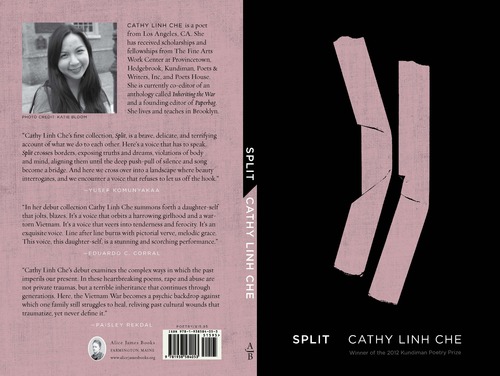
SATURDAY POETRY SERIES PRESENTS: SPLIT

30m0dbb


from SPLIT
By Cathy Linh Che:


THE FUTURE THERAPIST ASKS ABOUT RAPE

This morning, I watched a woman shatter
the thin ice on the pavement. I made the bed,
tucked in the sheets, and in the window,
I saw reflected my mother’s face.

Men in my life walked in and out of the rooms,
tramping snow. My mother shushed me,
and my father with his powder keg hands
pulled up a pair of clean black socks.

It isn’t what you think.
My father was a soldier.
He taught me nothing about men.

They are an empty barrel.
You’re not supposed to look into
a gun you dismantle

to try and see its parts.


HOME VIDEO

There are flowers on this bed, an elbow planted by an ear.
No, you cannot touch this breast. No darkness, no shatter,
and no, no pendulum. The past is a blood clot lodged inside
your lung.

                                                  *

In the living room, shapes move against the wall. You are
wearing a thin dress. You watch Beetlejuice while he moves
his fingers over your white underwear. You watch the screen
and see his fingers. Your brothers are in the room, but they
never seem to notice.

                                                  *

Behind the lens is the father. Mother offstage calls, Con gai
nay
. On the phone, Con gai thuoi, which means, This girl. This
girl’s rotten. This girl like swollen fruit. She cuts off the
bruises. She teaches me to cut.

                                                  *

He rises to the surf. It detonates with a sheering crash.
Inside each wave is a barrel. In each barrel is a vacuum that can suck
you in, spin you round, snap your bones if you tumble the
wrong way.

                                                  *

If I say, I have been touched. If I say, by my cousin, then, a
neighbor boy and then another. If I say no, I didn’t want it
from my first boyfriend. There was blood and membrane
and he didn’t believe me. If my body can be a box. If I can
close it up. If it has to be open. Who will touch me again?


POMEGRANATE

I open my chest and birds flock out.
In my mother’s garden, the roses flare
toward the sun, but I am an arrow

pointing back.
I am Persephone,
a virgin abducted.

In the Underworld,
I starve a season
while the world wilts

into the ghost
of a summer backyard.
My hunger open and raw.

I lay next to a man
who did not love me—
my body a performance,

his body a single eye,
a director watching an actress,
commanding her

to scintillate.

I was the clumsy acrobat.
When he came, I cracked open
like a pomegranate

and ate six ruddy seeds.

I was the whipping boy.
I was thorny, barbed wire
wound around a muscular heart.


Today’s poems are from Split, published by Alice James Books, copyright © 2014 by Cathy Linh Che, and appear here today with permission from the poet.


SPLIT: “Che effectively weaves the trauma of the Vietnam War into her own personal trauma, making herself a war victim—only her war is not against enemy combatants, but against her past.” —The Philadelphia Review of Books

“Cathy Linh Che’s first collection, Split, is a brave, delicate, and terrifying account of what we do to each other. Here’s a voice that has to speak. Split crosses borders, exposing truths and dreams, violations of body and mind, aligning them until the deep push-pull of silence and song become a bridge. And here we cross over into a landscape where beauty interrogates, and we encounter a voice that refuses to let us off the hook.” —Yusef Komunyakaa


Cathy Linh Che is the author of Split (Alice James, 2014), winner of the 2012 Kundiman Poetry Prize. She has been awarded fellowships and residencies from Poets & Writers, Poets House, The Lower Manhattan Cultural Council’s Workspace Residency, and the Jerome Foundation.


Editor’s Note: Words—my words—seem ineffective here. But I was deeply moved by this poet, by this book, and so I will try. Split is a sacrifice; raw and unrelenting. It is blood and memory and gasoline. It is the truth no one wants to hear, that we all need to hear. But it is more than the phoenix choking on ash, thrashing to be free. It is lineage and heritage, truth offered up in the name of a history, a family, a self. This is a stunning book by a bold and dedicated poet, a book that dares us to look, listen, and speak up.


Want to see more from Cathy Linh Che?
Official Website
Buy Split from Alice James Books
Fireside: A Kundiman Blog
Hyphen
Poets.org

Signage

hannah-8-1

Signage

by Hannah Stephenson

Stores die with the same velocity as bugs.
One day, humming, clicking. Shiny doors
parting like beetle wings. And then, gone.
Emptied out. A shell. The sudden voicelessness
of the SupeRx, its sign darkened and waiting
to be pried from the building. The town talks
about it. This is how they mourn. And when
the people of the town encounter those
they know working a till at the grocery store,
or behind bank glass, SupeRx gets stuffed
into the quiet between them. Always Did you
hear about the SupeRx, mmhmm, isn’t it
a shame. That a strange, new business
can rise to its feet in a body not belonging
to it. Blue signage plastered over yellow.
Shameful, the brutal reincarnation
of buildings. It’s a pharmacy again within
the month, sentenced to revisiting sickness,
the earnestness with which we fix ourselves.

***

Hannah Stephenson is a poet, editor, and instructor living in Columbus, Ohio (where she also runs a monthly literary event series called Paging Columbus). Her writing has appeared in The Atlantic, The Huffington Post, Hobart, Poetry Daily, and The Nervous Breakdown; her collection, In the Kettle, the Shriek, is now available from Gold Wake Press. Recently, she served as Editor for The Ides of March: An Anthology of of Ohio Poets (Columbus Creative Cooperative), and she is co-editor (with Okla Elliott) of the biannual anthology New Poetry from the Midwest (New American Press). You can visit her online at The Storialist (www.thestorialist.com).

[The above poem is from In the Kettle, the Shriek and is reprinted here with permission of the author.]

SATURDAY POETRY SERIES PRESENTS: UNDRESSING

tumblr_n0v0y0a0Vq1rxylgxo1_1280
from UNDRESSING
By Nicole Steinberg


BEAUTY

is a ritual, passed
along in slow drags
of the fingers—foundation
swept across cheekbones
in runny smears, stark
beige until it blends.
Salt, pepper, and ashtrays;
we keep the kitchen
warm with smoke and
sweet, still-wet hair.
A silver lipstick tube
rolls ribbed between us.
One day I’ll carry
your bones in sacks.
I’ll remember cotton
pressed into your eyes
and up your nostrils. I’ll be
sorry they ever listened,
when I said I wanted
to see you that way.
You switch to violet
lips after some years,
which clash with your
bleached hair. I miss
the old burgundy outline.
Draw lines to prevent
bleeding, you once explained.
Hold back the color
of your mouth and
every careless thing
it wants to say.


MY DARK, SEMITIC WILES

I took my dark, Semitic wiles on the road.
The train was empty and that was lovely,
everywhere an open space. En route to Berlin,
I held the bathroom mirror and spoke
to my mother, foreign leaves of foreign trees
and the conductor’s garbled nothings
blurred above my head. She thinks I’m going
to get myself killed. Lost forever. I remember
a straight-haired little girl at the kindergarten
table with eyeglasses as petite as her pink
Polly Pocket. I crushed them in my fat hand,
arranged the lozenge lenses next to the legs,
purple plastic bird femurs. Like chicken,
I picked it apart. My fellow passengers,
the unwed Jewess rides among you, come
to tour your capital of tragedy. Love me
out of guilt like an unborn sister, a mother’s
final scowl before death, the very nose
on your face you’d hack off just to belong.


THERE IS NO ROMANTIC

Truly, everything is monstrous,
even wild horses and especially
their heads. The tree trunk necks
of boys who finish sandwiches
in three bites and the impatient
lumps that harden in their freshly
bleached briefs. We’re all so warm
and pink, it’s obscene. I don’t want any
part of it. It took me years to learn
simple tasks: how to snap my fingers,
tie my shoes. My mother’s early gaze
full of worry that love would escape
me, too. If I peel back my breast, I’ll find her
passport heart, stamps still smeared
from all the quailing in Queens, the tears
in Tel Aviv. She taught me this: the way
a woman travels, under a moving
shadow of small panic; all too aware
that even a plane about to crash,
for one bright, myopic moment,
will fill completely with the sun.


Today’s poems are from Undressing, published by dancing girl press, copyright © 2014 by Nicole Steinberg, and appear here today with permission from the poet. “There is No Romantic” previously appeared via 30 x Lace, and “My Dark, Semitic Wiles” previously appeared via Leveler.


Nicole Steinberg is the author of Getting Lucky, now available from Spooky Girlfriend Press, Birds of Tokyo (dancing girl press, 2011), and two new chapbooks in 2014: Undressing from dancing girl press and Clever Little Gang from Furniture Press, winner of the 4X4 Chapbook Award. She is also the editor of an anthology, Forgotten Borough: Writers Come to Terms with Queens (SUNY Press, 2011).

Editor’s Note: I love chapbooks. And small presses. And books that are little works of art to hold in your hands, open, and immerse yourself in. Undressing is such a book; one of 200+ books made to date by dancing girl press, which publishes titles “by emerging women poets in delectable open-run handmade editions.” Delectable. Yes. From its beautiful cover art to its textured binding and hand-cut pages, this is the kind of creation that can never be replaced by an ebook.

Within its pages, Undressing is just that. The poet sheds her veils like Salome, stripping off not only clothes, but skin, revealing the raw bits of flesh and bone, organ and memory, that comprise an inner life. At times Nicole Steinberg looks at herself critically, as a woman does when considering her reflection in a mirror, her point of view filtered through a smog of American cultural misogyny. At other times Steinberg puts on the dress of her mother, of illness and loss, of the guilt and introspection and distortion that remains.

Amidst a maelstrom of pop culture, feminism, religion, sex, relationships, and memory, there is something hectic in these poems, like the pile of clothes at the foot of a bed. But amidst the torrent there are moments in which the poet forces us to slow down and face the reality she unveils head on. There are lines so poignant they wash over their more topical surroundings, forcing us to breathe and remember we are engaged with an artifact: “Draw lines to prevent / bleeding, you once explained. / Hold back the color / of your mouth and / every careless thing / it wants to say.” “She taught me this: the way / a woman travels, under a moving / shadow of small panic; all too aware / that even a plane about to crash, for one bright, myopic moment, / will fill completely with the sun.”

Want to see more from Nicole Steinberg?
Nicole Steinberg’s Official Blog
Buy Undressing and Birds of Tokyo from dancing girl press
Buy Forgotten Borough: Writers Come to Terms with Queens on Amazon

Taking Shade with Buddha

markm

Taking Shade with Buddha

by Mark Murphy

Of all the dense vegetation in this wild country
I have come to take shade with Buddha
(though he is equally at ease in sun or shadow)
under the bent branches of the Bodhi tree.

Frankly, it is not the best spot to make camp,
break the night’s fast,
or break the habits of a life-time
but Buddha seems at home, like a man who has lived

irreverent aeons alone – he makes a welcome as only he can –
confident of my comings and goings, naked
as one new born, sure that living is its own answer,
he offers figs for my hunger.

Slowly then, Buddha savours the morning air
as though it were sustenance enough
while the first light bakes the land
and each man and beast in the field is busy with the crop.

Already, I am in at the deep-end with my questions:
what if the knowledge of trees is no knowledge at all –
and if the trees should support the sky no more,
and the deliberate hush in the night really is the end, then what?

But Buddha is having none of it. And indeed, why should he trouble,
being at one, as he is, with forest, sky and the hallowed ground.
And by and by a talkative brook bothers the shadows
and Buddha is smiling – pleased at the sound of water on stone.

For an instant, he is like a child who has found his mother’s hand
in some crowded place and then a moment later
he is old all over again like a being who has lived many lives.
Buddha breathes deeply. He breathes in the universe.


***

Mark A. Murphy is the author of two chapbooks, Tin Cat Alley and Our Little Bit of Immortality. Murphy’s poems have been published in over 100 magazines and ezines in 17 different countries world wide. His first full length collection, Night-watch Man & Muse was published in November 2013 from Salmon Poetry (Eire). He is currently working on a new play, Lenny’s Wake for which he is looking for a publisher.

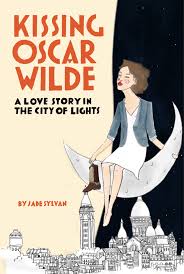
A Review of Jade Sylvan’s Kissing Oscar Wilde

Slyvan_Kissing Oscar Wilde

A Review of Jade Sylvan’s Kissing Oscar Wilde

By Ashley Paul

Kissing Oscar Wilde by Jade Sylvan is a collection of essays that will cause readers to lose their breath in wide-eyed expression. in particular because of Sylvan’s excellent use of tongue-in-cheek writing within each piece in this collection.

The essays in Kissing Oscar Wilde detail Sylvan’s life after college and the reading of her written work at various clubs and cafés across Europe. The essays create a visual of crashing couches at the home of new friends along with the progression of Sylvan as an artist. What is the allure of artists leaving the Midwest? A question most curious because of Sylvan’s Midwestern roots and inspiration to travel the world to immerse herself in what is being offered. A question also answered in her search to attain creative ability.

Whether delivered in the form of poetry, play, or prose, each essay is well written and showcases Slyvan’s unique voice. The poems are a stream of consciousness pulled deep from her mind. She does not have an airy approach to life and is more of artistic, experimental, thrill-seeker alongside friends Caleb and Thade, who are integral parts of each essay.

In the prose piece, “We’ll Always Have Paris,” contemporary meets modern. Internet. Nicholas Chauvin. Casablanca. Patti Smith. In the piece, Sylvan talks of her need to leave the Midwest and her conservative parents who said she was “confusingly artistic at the best of times and embarrassingly perverse at the worst.” She would sit with Caleb under a graffitied bridge and talk about their fears and every artist’s doom: having to work a 9-5. It was there, under the bridge, that she gained the desire to visit “different famous people’s graves.”

Sylvan’s awkwardness is beguiling, leaving the reader with an image of Sylvan shrugging her shoulders as she tells her stories, of telling us, “Eff it.” But spirits can’t be much more free than Sylvan’s. These essays become the words of an older sister telling us what or what not to do, which mistakes we want to make. Her words are a comfort, too, because maybe we’ve already been there.

Sylvan is not shy in disclosing to readers her fear of becoming suffocated by not being able to create art. Plenty of people can look back on their twenties and tell the same stories, but the decisions Sylvan makes and recounts for readers here present a twist on that recognizable narrative, an inspiration for trying something new. In “Halloween 2011, Boston,” Sylvan goes on a semi-rant after losing a job she never wanted. She does not even tell us what the job was, but she explains the context of her disappointment in this way: “Because I’d woken up again sweating bourbon into unwashed sheets in my ten-foot by ten-foot occupation in a house rented to me dirt-cheap by an entrepreneurial acquaintance out of pity/patronage….” Sylvan writes here with hardly any punctuation, showing readers the unfiltered fluidity of her thoughts that lead to her eventual decision to take half of her $1500 savings and buy a plane ticket to France, where she goes on to read most of her written work.

The essays have the commonality of not being rooted in plot. There is a reflection that comes through where the work does not follow the standard of fashioned essay writing. Her footnotes are an afterthought to a life well experienced. The essays detail everything from Patti Smith to how to be a “proper slut,” where Sylvan’s writing crescendos to worldly living. Patti Smith was of inspiration because of her book Just Kids and Sylvan’s subsequent emotional response. Sylvan writes of a joke between her and her friend Caleb that she was the Patti Smith to his Robert Mapplethorpe. Sylvan even brings her idolization into her physical appearance, with a “shoulder-length Patti Smith-inspired shag.”

Sylvan, who founded a group for queer artists in Bloomington during her college years, writes of her pansexual history and gender nonconformity as a vehicle that highlights her growth as an artist. In “An Epically-Abridged Catalogue of the Author’s Major Romances, Revealing the Young Midwestern Author’s Odyssey Through Fluid Sexuality,” Sylvan memorably shares her intimate experiences within the context of how her own identity is thus established.

Sylvan explains her connection to Oscar Wilde through the kisses people have put on his grave. Later in the collection, she writes of her own experience with kissing the grave. Sylvan delves even more into these ideas with “The Poem I Wrote For Louis and Later Gave To Adelaide,” as well as with the poem “Kissing Oscar Wilde.” The title of the collection does not quite compliment the corresponding essay, but maybe there is an irony to that. The title is romantic, a side-step from the tone of the essays themselves.

With in an intriguing title illuminating a work of nonfiction that fits fantasy and downright rearranges all forms of comedy, primarily sarcasm, readers will find many spontaneous moments of laughter make the lungs feel harmonious. This book could be finished in a single sitting, but readers will want to savor each word, marinating in the details. The chronology of Jade Sylvan’s story hits in small ripples that are uniquely brushed with tender attention, asking readers to lend that same attention as they take in her excellent work.

Jade Sylvan, Kissing Oscar Wilde. Write Bloody Publishing, 2013: $15.00.

***

Ashley Paul lives for a dried ink pen. Her blog, Harvey Dntd The Milk, details her love of film in all its glory. She is passionate about working with students on their personal development through education. Soon to begin pursuing a Master’s in School Counseling at New York University, Paul currently happily volunteers to help first graders spell “home” and third graders tackle shapes. Through 826LA, a non-profit writing organization, Paul works with high school students in under-resourced schools to help individuals develop reading-comprehension and writing-expression skills, and it makes her feel spectacular.

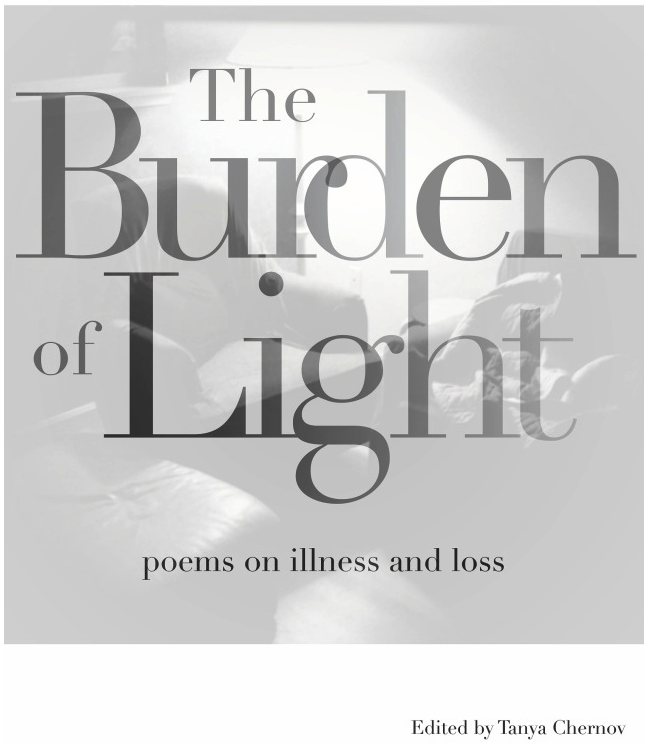
SATURDAY POETRY SERIES PRESENTS: THE BURDEN OF LIGHT

Picture 1


from THE BURDEN OF LIGHT: POEMS ON ILLNESS AND LOSS
Edited by Tanya Chernov
Selected Poems From the Anthology By Sivan Butler-Rotholz:


ELEGY FOR THE STILL LIVING:
FATHER CANNOT STAND STILL

[My father taught me] every time you breathe in,
say thank you. Every time you breathe out, say goodbye.

                                                                             —Li-Young Lee

The thing about my father is I wear my sadness like the inside of a jar.
How can you not see inside of it? How the slightest bit of air destroys me.
How I love him so much          I struggle

                           to love him

                                                                    at all.


GENESIS

i. The thing is, XXXXXXXXXXXXXXXXXXXXXXXXXXXXXXXXXXXXXXXXXXXXXX
XXXXXXXXXXXXXXXXXXXXXXXXXXX and in this way the world was created.

ii. Definitions

“Wife”:           The person I love most
                         in the world.

“Death”:         He is not here
                         in this hole
                         in the ground
                         piled with dirt
                         and seashells.

“Mother”:       Inlaid tongue.

“Wedding”:    When I was young I liked to play ‘wedding’ and my father would walk me                          down the aisle and it’s a good thing he did then because
                         Flowers are like that.

“How”:            We go on

“Flowers”:      Are not stones.

“One God”:     Let us make human beings in our image, to be like us.


Today’s poems are from The Burden of Light: Poems on Illness and Loss, available by donation on Smashwords and Amazon. These poems appear here today with permission from the poet.


The Burden of Light: Part poetry anthology, part field guide, part multimedia art collection, The Burden of Light offers its readers companionship through the darkest days. With work by artists who have confronted serious illness or grief in their own lives, the poems and artwork in these pages hold the power to touch the heart, stir the mind, and heal the spirit, each in its own way. These pieces illuminate the vital force of our humanity, while encouraging us to reach out to others in need.

With 100% of the proceeds benefiting the National Colorectal Cancer Research Alliance, even a small donation from one has the power to affect change when added to the contributions of others. Colorectal cancer is the second leading cause of cancer-related deaths in America, yet this cancer is largely preventable when detected early. By supporting the groundbreaking work of the NCCRA, we’re all helping to promote regular medical screening and fund the research needed to develop better tests, treatments, and ultimately, a cure. Just as The Burden of Light is designed to help readers move forward from trauma, so too will donations help those currently experiencing serious illness.


Editor’s Note: Yes, yes, today’s poems are a first here on the Saturday Poetry Series in that they are written by your faithful editor. I am honored to be featured in this anthology alongside a plethora of talented artists, including SPS-beloved poet Peggy Shumaker. But beyond sharing a little of my own work with you here for the first time, I wanted to share with you this important collection.

Whether you purchase it for your Kindle or download it as a PDF, you get to decide how much you want to pay for this anthology, and 100% of the proceeds benefit the National Colorectal Cancer Research Alliance. Via the Kindle edition or PDF you will find links to listen to the poets read their poems aloud, for an added layer of experience and immersion. This is a thoughtful, powerful, philanthropic endeavor with the power to both move the reader and effectuate change.

Check out the full anthology for more poems by yours truly and many more talented poets writing through their own experiences with illness and grief. Please donate what you can, and then go forth and read!


Want more from The Burden of Light?
Download the PDF via Smashwords
Purchase the Kindle edition from Amazon
Listen to “Elegy for the Still Living: Father Cannot Stand Still”
Listen to “Genesis”

SATURDAY POETRY SERIES PRESENTS: MEGAN MORIARTY


Moriarty Author Photo

LOOKING AT US LIVING
By Megan Moriarty

Through the binoculars, we saw us
moving through the foliage.

The world was on rewind:
a herd of horses ran
backwards across a field.

Yellow leaves kept climbing back
to their branches.

“What’s the opposite of fall?” I said,
and he said “Spring.”

Then it was August, then July,
then June. The sun kept
leaving and coming back

like a boomerang that no one
ever had to throw.

Snow appeared
on the ground, then it started
unsnowing, the flakes
travelling upwards.

I knew that soon
we wouldn’t know each other

so I asked him
what the opposite
of stay is.

He stood there,
his hands on his hips, thinking.


Today’s poem was published in the Summer 2011 issue of Rattle, and appears here today with permission from the poet.


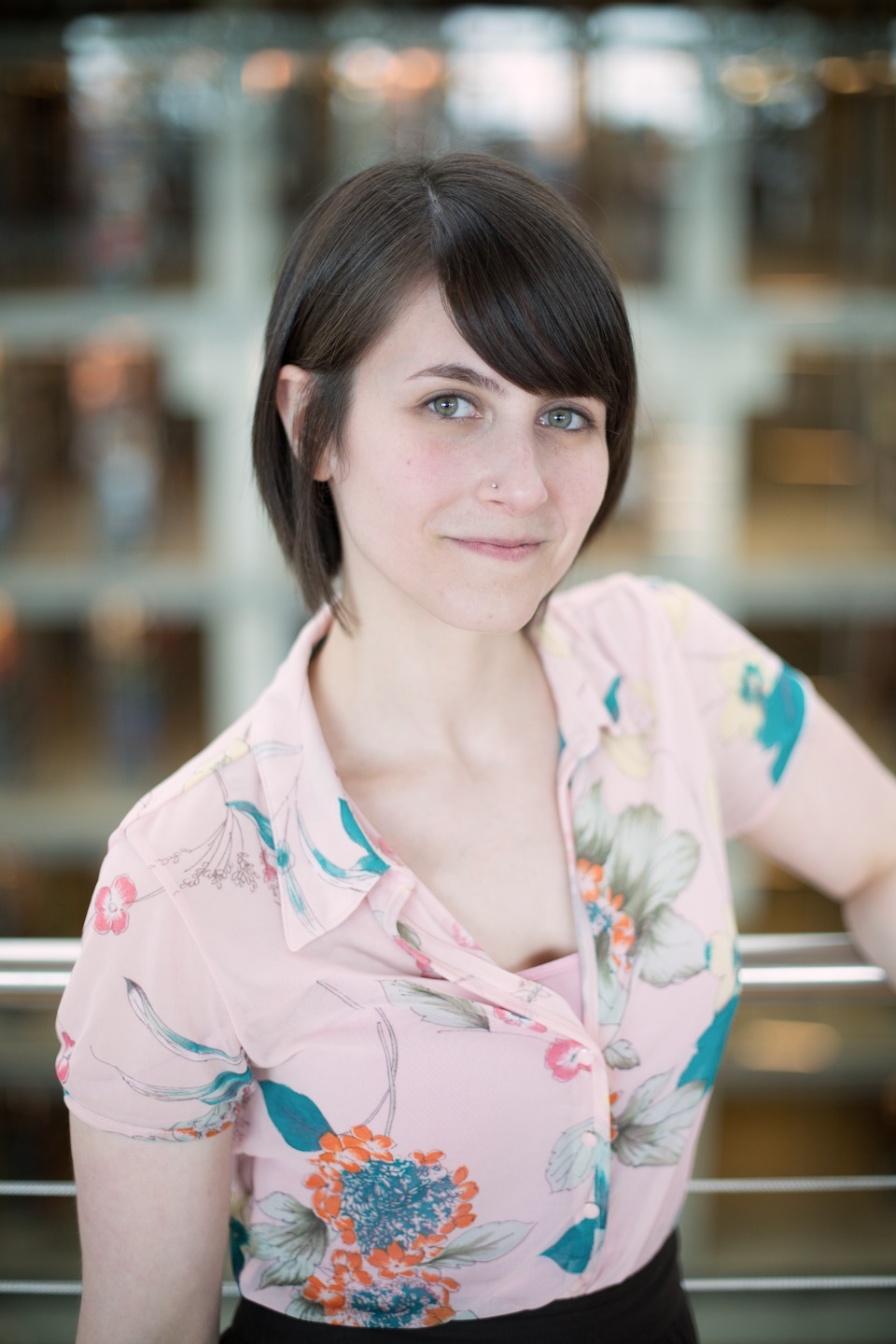
Megan Moriarty grew up surrounded by water in Staten Island, New York and currently finds herself surrounded by mountains in Hillsboro, West Virginia. She holds an MFA in poetry from Virginia Tech and is the author of From the Dictionary of Living Things, a collection of dictionary definition poems.

Editor’s Note: Today’s poem is magic, full of fantastical invention and a vivid, playful story life. I am reminded of the work of Nicolas Destino, a beloved poet here on As It Ought To Be. What wonder, what imagination, what playfulness of concept, what love of ideas mirrored in the written word.

Want to read more by Megan Moriarty?
Buy From the Dictionary of Living Things from Finishing Line Press
Indiana Review
Vinyl Poetry
Jointed Autumn

SATURDAY POETRY SERIES PRESENTS: LOUISE MATHIAS

Louise Desert headshot

THE PROBLEM OF HANDS
By Louise Mathias

And how to fill them
is the problem of cigarettes and paint.

First time I felt my undoing
was in front of

a painting—Sam Francis, I believe.

Oh, his bloomed out, Xanax-ed California.

I liked the word guard, but you know

we made each other
nervous, standing too close

for everyone concerned. All art being

a form of violence
as a peony
is violence.

Here you come

with your open hands.


Today’s poem previously appeared via the Academy of American Poets and appears here today with permission from the poet.


Louise Mathias grew up in England and Los Angeles. She is the author of two books of poems, Lark Apprentice, which won the New Issues Poetry Prize, and The Traps, released in 2013 from Four Way Books. She lives in Joshua Tree, a small town in California’s Mojave Desert.

Editor’s Note: As my faithful readers of this series know, I am a sucker for a poem with a killer ending. In today’s piece, it is the penultimate moment that takes my breath away: “All art being // a form of violence / as a peony / is violence.” What a stunning phrase. Followed by the gift of release, of promise: “Here you come // with your open hands.”

Once again I have Dr. Poet Jenny Stella to thank for bringing today’s poem to my attention. Viva la poesia!

Want to read more by Louise Mathias?
Verse Daily
The Traps from Four Way Books
The Rumpus
The Offending Adam
Everyday Genius