John Dorsey: “Poem for Curtis Hayes”


Poem for Curtis Hayes

you say that everything we can see here
was once a strawberry field
& talk about a girl
who once had a baby in the bathroom
that now has a busted sink
as we sit beside your empty swimming pool 
sipping gin & tonics in the sun

the past is a young man’s game
its bones good & strong

runaway birds in our infancy
we all make strange sounds
that pass for stories

before we fly away.


About the Author: John Dorsey lived for several years in Toledo, Ohio. He is the author of several collections of poetry, including Teaching the Dead to Sing: The Outlaw’s Prayer (Rose of Sharon Press, 2006), Sodomy is a City in New Jersey (American Mettle Books, 2010), Tombstone Factory, (Epic Rites Press, 2013), Appalachian Frankenstein (GTK Press, 2015) Being the Fire (Tangerine Press, 2016) and Shoot the Messenger (Red Flag Press, 2017) and Your Daughter’s Country (Blue Horse Press, 2019). His work has been nominated for the Pushcart Prize, Best of the Net, and the Stanley Hanks Memorial Poetry Prize. He was the winner of the 2019 Terri Award given out at the Poetry Rendezvous. He may be reached at archerevans@yahoo.com.


More By John Dorsey

Creatures of Our Better Nature

The Mark Twain Speech

Punk Rock at 45


Image Credit: Carol M. Highsmith “Used bathtubs and sinks, on display and for sale, along a road between Oxford and Batesville in Lee County, Mississippi” (2016) The Library of Congress

Alex Z. Salinas: “Pen Dream”


Pen dream

I dreamt I was a silver pen strangled by
T.S. Eliot / caressed by Pablo Neruda / left
Alone by Philip Levine / dipped in salsa by
Juan Felipe Herrera / stuck between 
Terrance Hayes’ lips like his last cigarette 
For the night / not once did anyone’s hand 
Grip my body / slide it across fresh paper / 
Gwendolyn Brooks, mama bear and auntie
Of poets, was the only one who came downstairs 
And whispered a promise in my ear / suddenly 
The party ended / I woke with a huge headache /
Realized the throbbing was actually in my heart /
That I longed to be an object of desire and, resist
As I might / be smashed like dirt clung to my feet.


About the Author: Alex Z. Salinas lives in San Antonio, Texas. He serves as poetry editor of the San Antonio Review. His debut feature-length book of poems, Warbles, will be released by Hekate Publishing in fall 2019.


More By Alex Z. Salinas:

The Great Thing About Driving With A Crack In Your Windshield


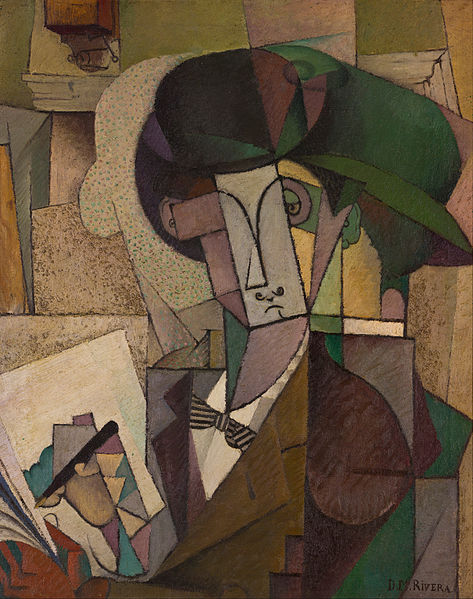
Image Credit: Diego Rivera “Young Man with a Fountain Pen” (1914) Public Domain

Martina Reisz Newberry: “Dietmar And I Talk Of Angels”


DIETMAR AND I TALK OF ANGELS

“Cherubim,” he said, “are your typical
angels–one set of wings–like people with
wings. Primary purpose? Delivering notes
from God to Creation and back again.”

He clenched his teeth and fists. “Now,” he said, “The
Seraphim are awesome, frightening. They
are tough. Picture your old Uncle Otto
(determination etched into his face)

with 6 pairs of wings and you’ve got it right.”
His eyes sparked and he lowered his voice to
a mutter. “Seraphim are indurate.
They are the bikers of the angel ranks.

They show their teeth and growl when they set down.
Some of them have spears and some have arrows
and some have stamped AK-47s.
Their bodies burn so hot you can barely

look at them straight on and you can’t touch them.”
I thought of old Uncle Otto whose face
sweated so much he carried several
handkerchiefs on his person (maybe six

of them like white angel wings), who swore so
much he was invited out on the porch
so the kids wouldn’t hear him, who ate horse
radish on his boiled eggs with beets, who had

a collection of silver dollars in
a locked box for just-in-case. He drove a
Lincoln Continental and kept a KA-
BAR knife in the glove compartment. We were

afraid of him. My mother said he had
a huge heart and that’s what finally killed him.
I wondered if an angel could be a
Cherubim and a Seraphim at the

same time. Like maybe if they wanted to
spy on each other or something. “Of course
they could,” said Dietmar. “Just depends on the
circumstances.” What circumstances, I

wanted to know. “Well, I think they might trade
places if the world blew up. Or maybe
if the Cherubim were being too soft
on sins. Something like that could get messy.”


About the Author: Martina Reisz Newberry’s newest collection, Blues for French Roast with Chicory is due for publication from Deerbrook Editions in late fall, 2019. Her latest book is: Never Completely Awake (Available from Deerbrook Editions). Her work has been widely published in the U.S. and abroad. She lives in Los Angeles with her husband, Brian Newberry, a Media Creative.


More By Martina Reisz Newberry:

Venerating the Transitory


Image Credit: Master of Sir John Fastolf “Saint Francis” (1430-1440) Digital image courtesy of the Getty’s Open Content Program.

Mike Acker: “Ex”


ex

is said with such ease, such nonchalance
when what’s meant is the once beloved
the once esteemed once revered

before the universe decided to test the bond
and the bond failed, before the tear, the rip
sometimes terse, often sustained

regardless, the ex, a two-letter word
packed tight like a small, thick scar
long after the slash


.
About the Author: Mike Acker lives in Vancouver, British Columbia. He has lived in various parts of the world; his early education was in German and French. While living in California, he worked as a professional translator. Mike enjoys writing short poetry, especially with the intent of exploring the possibilities latent in a single image.

.
More By Mike Acker:
.
.
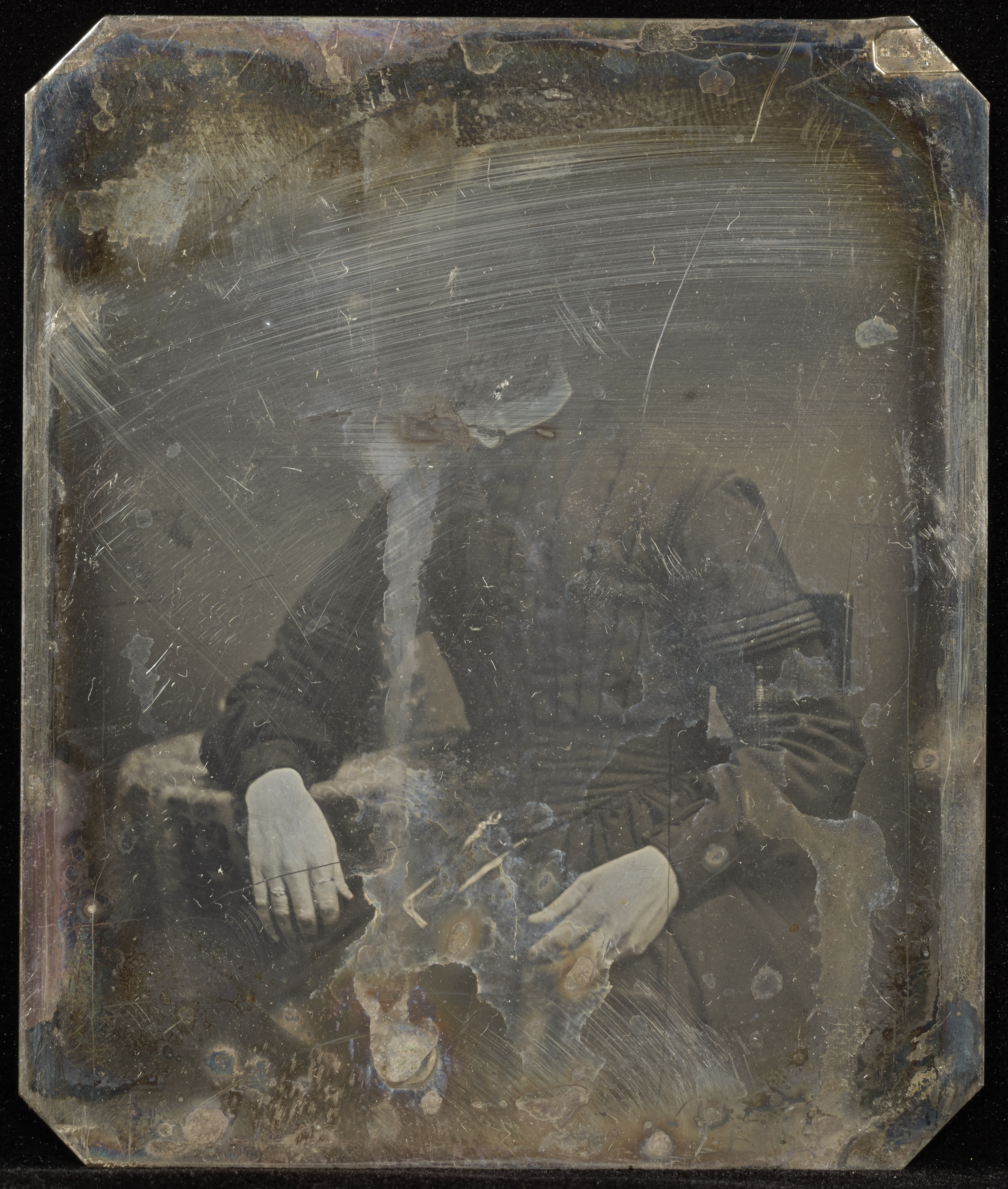
Image Credit: Jacob Byerly “Portrait of a Woman” (1852) Digital image courtesy of the Getty’s Open Content Program.

Cord Moreski: “Understudy”

.

Understudy 

Margery always loved theater.
In fact, she was an understudy
at the local playhouse on Clark Street.
From time to time, she’d fill in
as Kim MacAfee from Bye Bye Birdie,
or Sophie Sheridan from Mama Mia,
Dr. Frank-N-Furter from The Rocky Horror
Picture Show, or the several other parts
she played for whenever she got the call.

At home, it was a different situation.
From day to day, she’d fill in
as the provider of the house by working
extra shifts waitressing after her mother
got lung cancer, and the keeper for her
five-year-old brother, Cade, who had
just learned how to write the alphabet
in his kindergarten class, the protagonist
to her drunk father who appeared
at her front door each night
despite his restraining order,
and the several other parts she mastered
at the ripe old age of twenty.

She always dreamed of some big break
that would get her out of this town
and into the lights and life of Manhattan.
But one day the cancer closed the curtain
on her mother, so Margery left
the understudy life behind
to take on a more permanent role.

.

About the Author: Cord Moreski is a writer from New Jersey. His work has been previously featured in Silver Birch Press, The Pangolin Review, Philosophical Idiot, The Rye Whiskey Review, In Between Hangovers, and several other publications. He is the author of the chapbook Shaking Hands with Time (Indigent Press, 2018) and is currently working on a new project for 2020. You can follow Cord here: https://www.cordmoreski.com

.

More by Cord Moreski: 

Aubrie

Someday

.

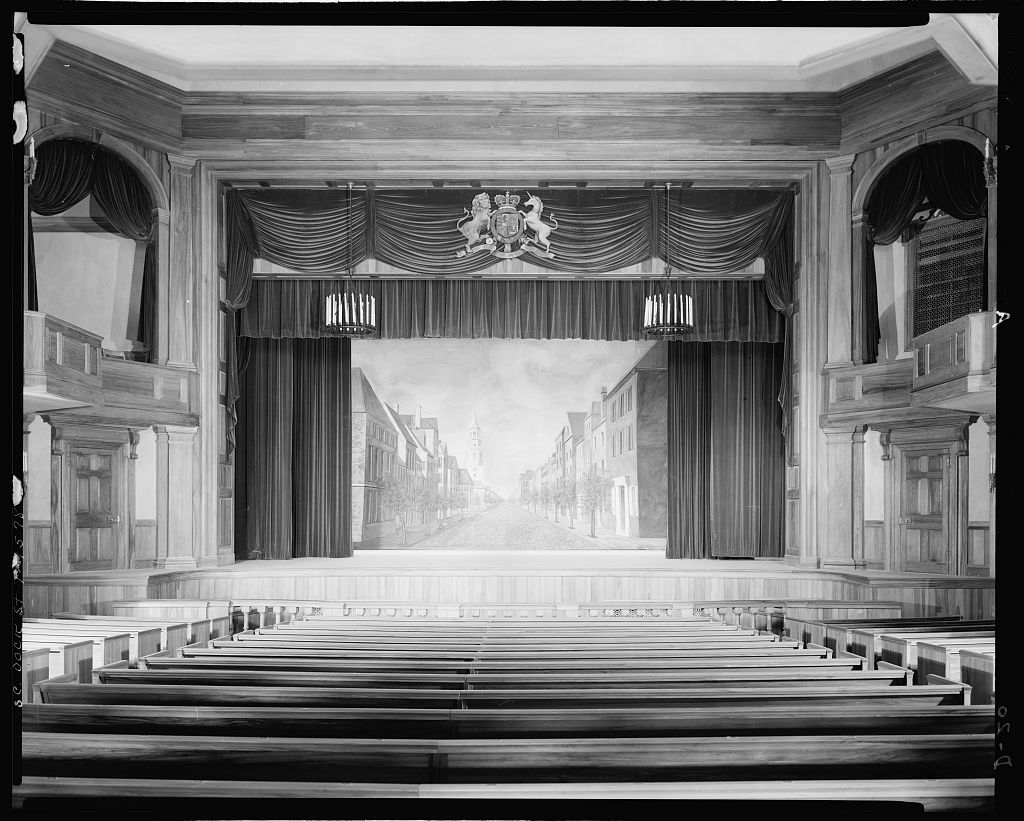
Image Credit: Frances Benjamin Johnson “Dock Street Theatre, Charleston, Charleston County, South Carolina” (1936) The Library of Congress

Lynn White: “We Should Have Seen It Coming”


We Should Have Seen It Coming

To begin with the dark parts were small
tiny black squares in the brightness,
we should have seen it growing
recognised its full potential
noticed the blurred edges
allowing it to creep
outwards
imperceptibly
almost invisibly.
And now
there’s hardly a space between the black parts
and little space for brightness around them.
Even the red no longer looks dangerous
however vibrantly it tries to intervene
the darkness is winning
slowly but 
exponentially
covering it all.
We should have seen it coming.
How did we not see it?
I think it’s too late
to halt it
now.


About the Author: Lynn White lives in north Wales. Her work is influenced by issues of social justice and events, places and people she has known or imagined. She is especially interested in exploring the boundaries of dream, fantasy. She was shortlisted in the Theatre Cloud ‘War Poetry for Today’ competition and has been nominated for a Pushcart Prize and a Rhysling Award. Her poetry has appeared in many publications including: Apogee, Firewords, Peach Velvet, Light Journal and So It Goes. Find Lynn at: https://lynnwhitepoetry.blogspot.com and https://www.facebook.com/Lynn-White-Poetry-1603675983213077/


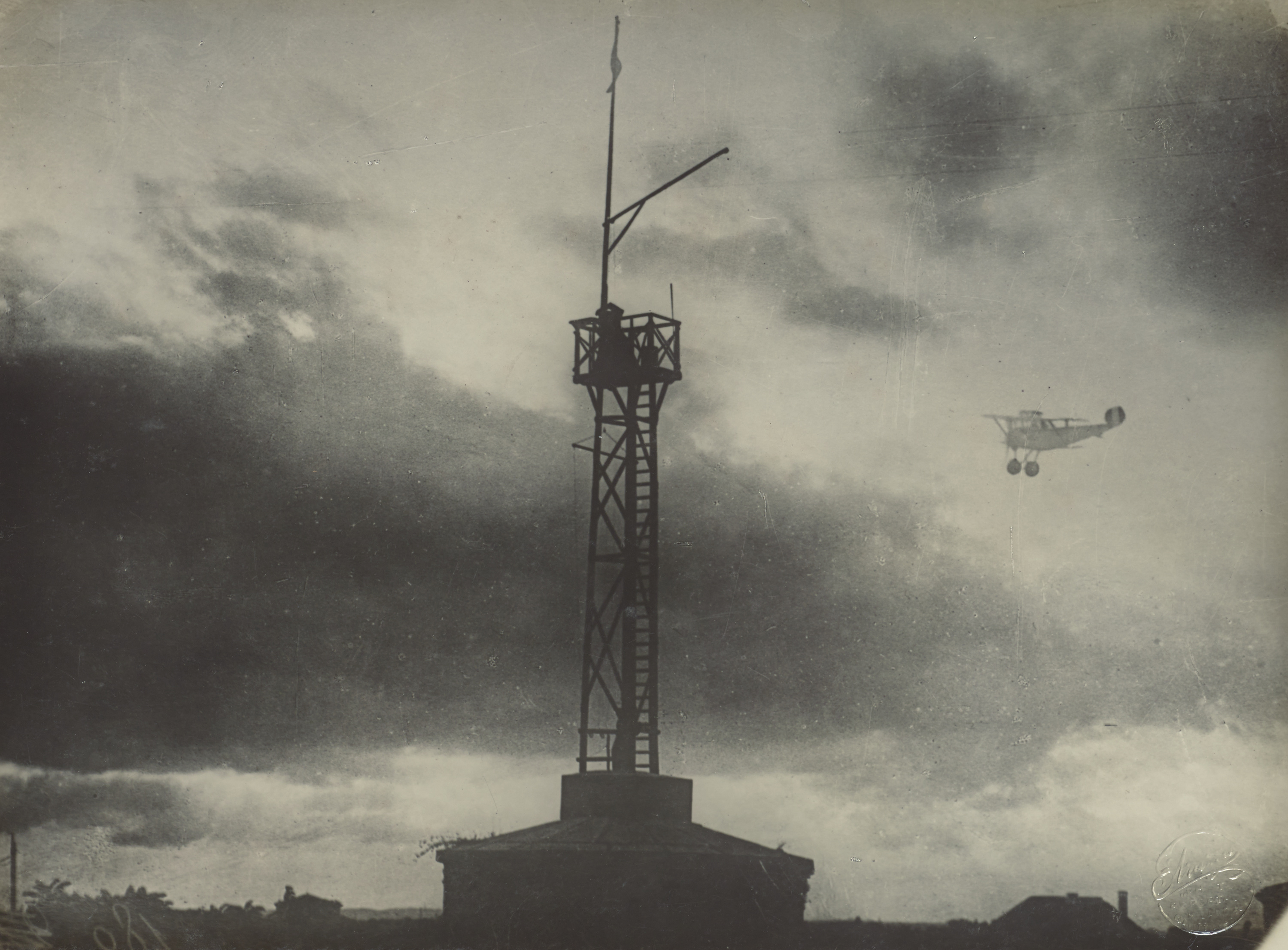
Image Credit: Fédèle Azari “Airplane and signal tower” Digital image courtesy of the Getty’s Open Content Program.

Geoffrey Heptonstall: “Changing Viewing, Passing”


CHANGING VIEWING, PASSING

This much is known of art:
in the gallery a book of imaginings
reads the world as shape and colour.
It surely is the wisest counsel
that water is drawn from the well.
All else elaborates the earth-bound
fact of roots found somewhere down
Art has a life of shade and light,
seen to change at every viewing,
like landscapes in their seasons
where life resides at source.
All shall be found within
arabesques of experience,
original but human.
And there begins time passing.
That much is known, but not well.


About the Author: Geoffrey Heptonstall has published a novel, Heaven’s Invention [Black Wolf 2017]. Recent poetry appeared in The Drunken Llama, La Piccioletta Barca and Runcible Spoon.


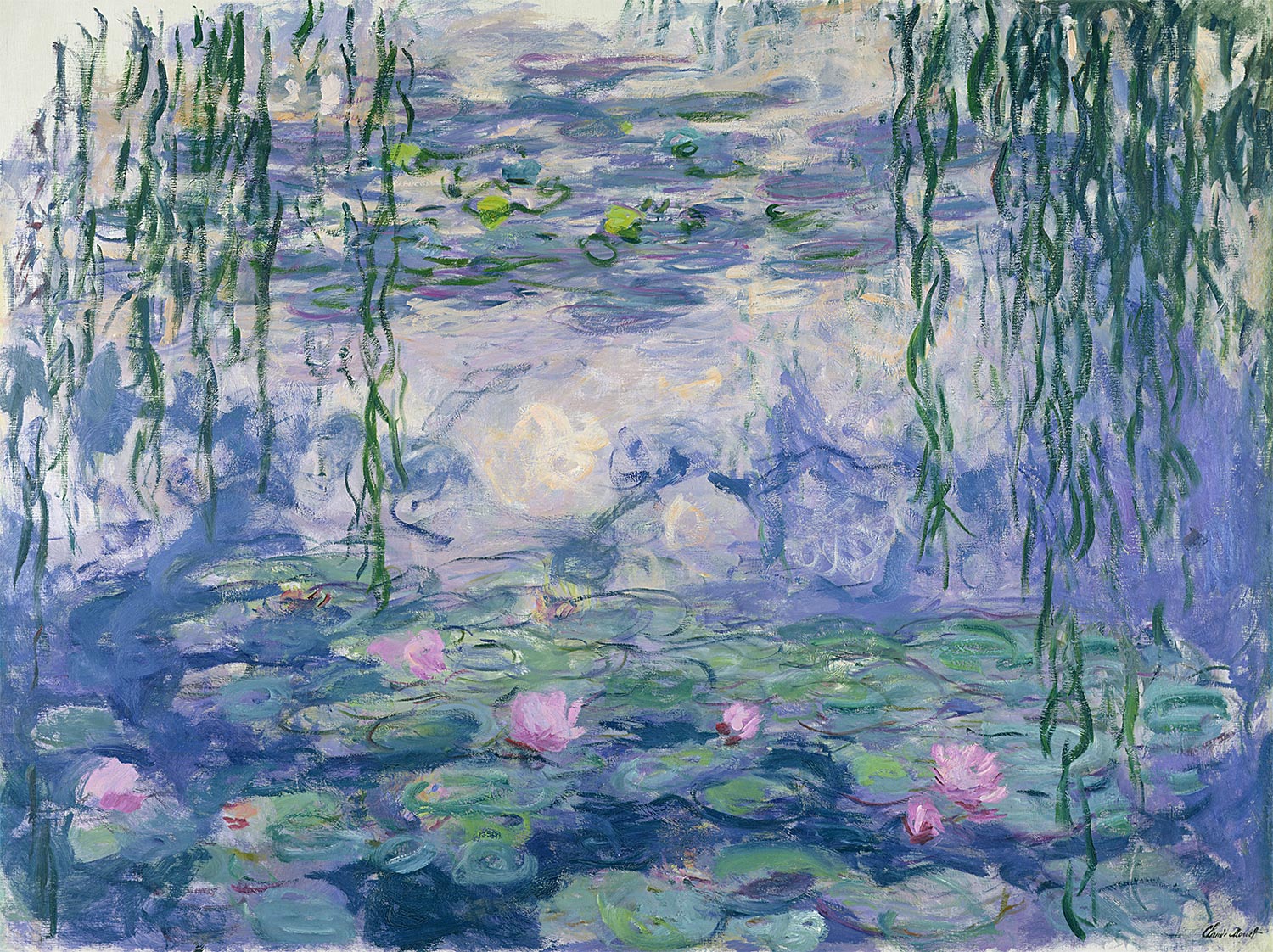
Image Credit: Claude Monet “Nymphéas” Public Domain

“Different From the Others: LGBT History Month and the Century-Old Legacy of an Early Gay Rights Film” By Chase Dimock

A still from Anders Als die Andern (1919)

Different From the Others:

LGBT History Month and the Century-Old Legacy

of an Early Gay Rights Film

By Chase Dimock

October is LGBT History Month, and this year it is as important as ever to study our past. With all of our recently won civil rights and our dramatically increased visibility in society, the LGBT community sometimes assumes that the features of our culture and the values of our politics are recent inventions. Conversely, sometimes we make the opposite mistake and assume that LGBT people of the past (even before the terms gay, lesbian, bisexual, and transgender first came about) thought of themselves and the community exactly as we do today.

These misconceptions are primarily due to the fact that American culture has closeted LGBT history for so long. We learned little to nothing about the history of the LGBT community in school and have thus been denied the benefit that comes with studying history or even being aware that we have a history. I remember, as a teenager, reading gay poet A E Housman in my English textbook, not knowing that his poems written about his male “friends” were actually addressed to the men he loved romantically. It was more important for those who created the curriculum and standards for our education to lead us into misunderstanding the material than to risk admitting to young people that men could love other men in the 19th century or today for that matter.

Having a history is an essential part of having a cultural identity. A history explains where we are in the present and allows us greater insight into the direction in which we are heading. It reminds us that ideas, values, and expressions do not materialize out of nothing; they are the product of the collective communal action of the people over time. This history is always evolving and our story is never finished being told because we are constantly discovering more about it. Finally, knowing our history cautions us against the uncritical belief in a progress narrative. It is easy to assume that we live in the most civilized and enlightened of times and that progress inevitably arcs toward justice. In reality, civil rights are often a cycle of advancement and blow back. Social action is usually greeted by an even greater and opposite repressive reaction. We cannot afford to presume that our current social standing is permanent or that it will naturally improve in the future.

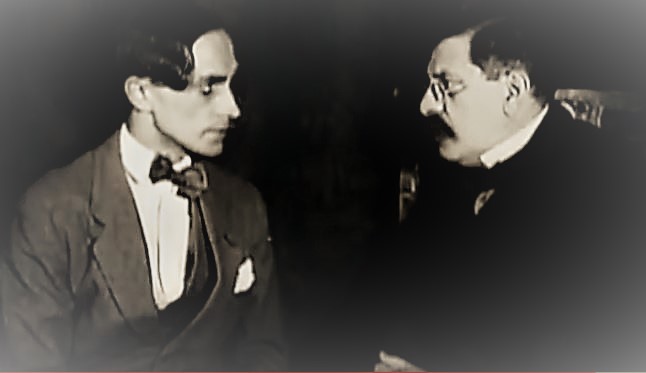
This insight that studying LGBT History grants us is featured in the first film to seriously discuss LGBT identity, Anders Als die Andern(Different From the Others) made in Germany in 1919. Directed by Richard Oswald and co-written by and co-starring legendary sexologist Magnus Hirschfeld, the silent film tells the story of a music teacher in love with an adult student. He falls victim to blackmail and in despair, he looks for answers. A quack offers a cure through hypnotherapy, but when that fails, he seeks out Dr. Hirschfeld’s advice. Hirschfeld assures him that his inclinations are normal and that it is not homosexuality that is shameful, but rather, it is our intolerant society that deserves scrutiny. I don’t want to go too far into the plot because I would rather you watch it for yourself. 

One reason why this film is an important part of our cultural legacy is that it reminds us that many of the same basic issues we confront today were part of the same struggle 100 years ago. Grappling with a culturally enforced notion of “difference,” dealing with the disproportionate rate of depression and suicide among LGBT people, and finding access to queer friendly counsel and health care are still difficult parts of the coming out process. Yet, much has changed since Hirschfeld’s time. The idea of sexuality as distinct from gender identity was still evolving. Most psychologists still subscribed to the inversion model of the homosexual man as “a woman on the inside” and a homosexual woman as a “man on the inside.” Hirschfeld himself proposed the idea of the homosexual as a “third sex,” though he later revised that idea after further work with his associates. Continue reading ““Different From the Others: LGBT History Month and the Century-Old Legacy of an Early Gay Rights Film” By Chase Dimock”

Matt Duggan: “The Remains”


The Remains

Come walk with us down lanes of dirty hemlock
where the hands of car wrecks reach out from the earth
like metal statues with glass made cheeks

Follow the midnight light in short hours of the lost
listen to the movements of mechanical ghosts –
along lime and sand pathways of verge;

They have not yet mastered the darkness levels at night
as we spend our daytime mostly dazed
our eyes stretched out like fragile rocks
clinging to the foundations of white cliffs;

Kingdoms will always believe that they can wear
a battledress with pride – though the rest of the world can see
that the seams have long ago been cut and unthreaded;
placed inside an old sewing box labelled dangerous and obsolete.


About the Author: Matt Duggan was born in 1971 and lives in Bristol in the U.K. with his partner Kelly and their dog Alfie, his poems have appeared in many journals across the world such as Osiris Poetry Journal, Ink, Sweat, and Tears, The Blue Nib, Into the Void, The Journal, The Dawntreader, Midnight Lane Boutique, Anti—Heroin Chic Journal, The High Window, A Restricted View from Under the Hedge, Ghost City Review, Laldy Literary Journal, L’ Ephemere Review, Carillion, Lakeview International Literary Journal, Levure Litteraire, erbacce journal, The Stray Branch, Prole, Black Light Engine Room, Militant Thistles, Matt won the Erbacce Prize for Poetry in 2015 with his first full collection of poems Dystopia 38.10 and became one of five core members at Erbacce-Press, where Matt interviews poets for the erbacce-journal, organises events and reads with the other members for the annual erbacce prize.

 In 2017 Matt won the Into the Void Poetry Prize with his poem Elegy for Magdalene, and read his work across the east – coast of the U.S.A. with readings at the prestigious Cambridge Public Library Poetry Series in Boston, a guest poet appearance at The Parkside Lounge and Sip This in New York, Matt read at his first U.S. book launch in Philadelphia and has two new chapbooks available One Million Tiny Cuts (Clare Song Birds Publishing House) and A Season in Another World (Thirty West Publishing House) plus a small limited edition booklet The Feeding ( Rum Do Press) Venice and London. He has read his work across the world including The Poetry on the Lake Festival in Orta, Italy, the Poetry Café in London, and in Paxos in Greece and at various venues across the U.K.


Image Credit: “Auto Accident” (1922) The Library of Congress

Jeffrey Betcher: “Billy Dew Meadow”


This is the second in a series of posts remembering the work of poet and activist Jeffrey Betcher (1960-2017).


Preface: Left “believing in the pack mentality of strays,” the poetry of Jeffrey Betcher speaks from the entire collective of American queer stray culture, that very lost-and-found narrative of reinvention on the docks of survival. These docks, being the green-heeled sanctuary of San Francisco from 1986-2016, these docks gave birth to an examination and liberation of meaning, as wildly honest and true-to-mirror as every queer breath weʼve danced. From this collection of Jeffrey Betcherʼs poems, “The Fucking Seasons, Selected Poems 1986 to 2016,” we hear the journeys into witness, touch the lips of knowing “love has been here. Hungry footsteps, breath released, and touch can change the land forever.” A San Franciscan born of rural Ohio, Jeffrey Betcherʼs poetry informs the landscape of nature, saying simply, “Iʼm a witness. Love has been here.”

– Toussaint St. Negritude,
Poet, bass clarinetist, composer


Billy Dew Meadow

Mountain meadow,
sonant place (and
I thought of love, of
wanting it so) that
only the locals

know. The pass: im-
passible, Barbara and
Robert, old lovers,
say. But they like us,
four wheel drive us

over the folded
earth, along the
tree-toothed grin of
grass. We laugh as
everything is young, or

time doesn’t mean much.
Named for a miner. “A
frenchman.” Ah, then
Dieu, perhaps. Billy, dear,
What is your name? What 

man amongst men were
you? And where are you
buried? With whose lock of
hair? Here’s history un
kempt. Fir shacks sagging. Mer-

ci, Billy, from friends at
play in your sweet
meadow. Jim lying
stoned in grass, and
me perched ready to

fly through men, their
names and touches and
fields and shag of
beard where a stream
presses the center of

story scorched by
prairie-fire, orange
yellow and purple
rods and golden
faces bristling with repro-

duction as dragonflies
swarm. My shadow,
standing on shadow
rock: I’m shirtless and
could be twelve or

Icarus. Expectation
winging long as
afternoon, backlit 
ass on fire! A
halo you may re-

call, dear Billy.
Above the wooded
ridge: it’s blue sky
moon, Billy. Vastly over a
century old. Still,

find my billet-
doux tomorrow, Billy,
find your meadow
tomorrow in every
shaven face.

      -July 25, 1996, Fish Camp, California


(C) 2017 Jeffrey L. Betcher Living Trust


About the Author: Jeffrey Betcher donned many hats over more than 30 years in San Francisco, yet maintained an integrity of purpose. A writer, an educator, an advocate for the prevention of violence against women and children, and a grassroots community organizer, he gained national attention as a leader in the “guerrilla gardening” movement, helping transform his crime-ridden street in the Bayview neighborhood into an urban oasis. His intimate poetry was also cultivated over the decades, exploring survival and engagement, and the labyrinth of the heart. Though he dodged the HIV bullet in the plague-torn years, a terminal bout of cancer cut his life short in 2017. In addition to his chapbook of Selected Poems (1986-2016), he completed an epic sonnet, Whistling Through, an odyssey into the cancer machine and death itself


More By Jeffrey Betcher:

Dear Allen Ginsberg


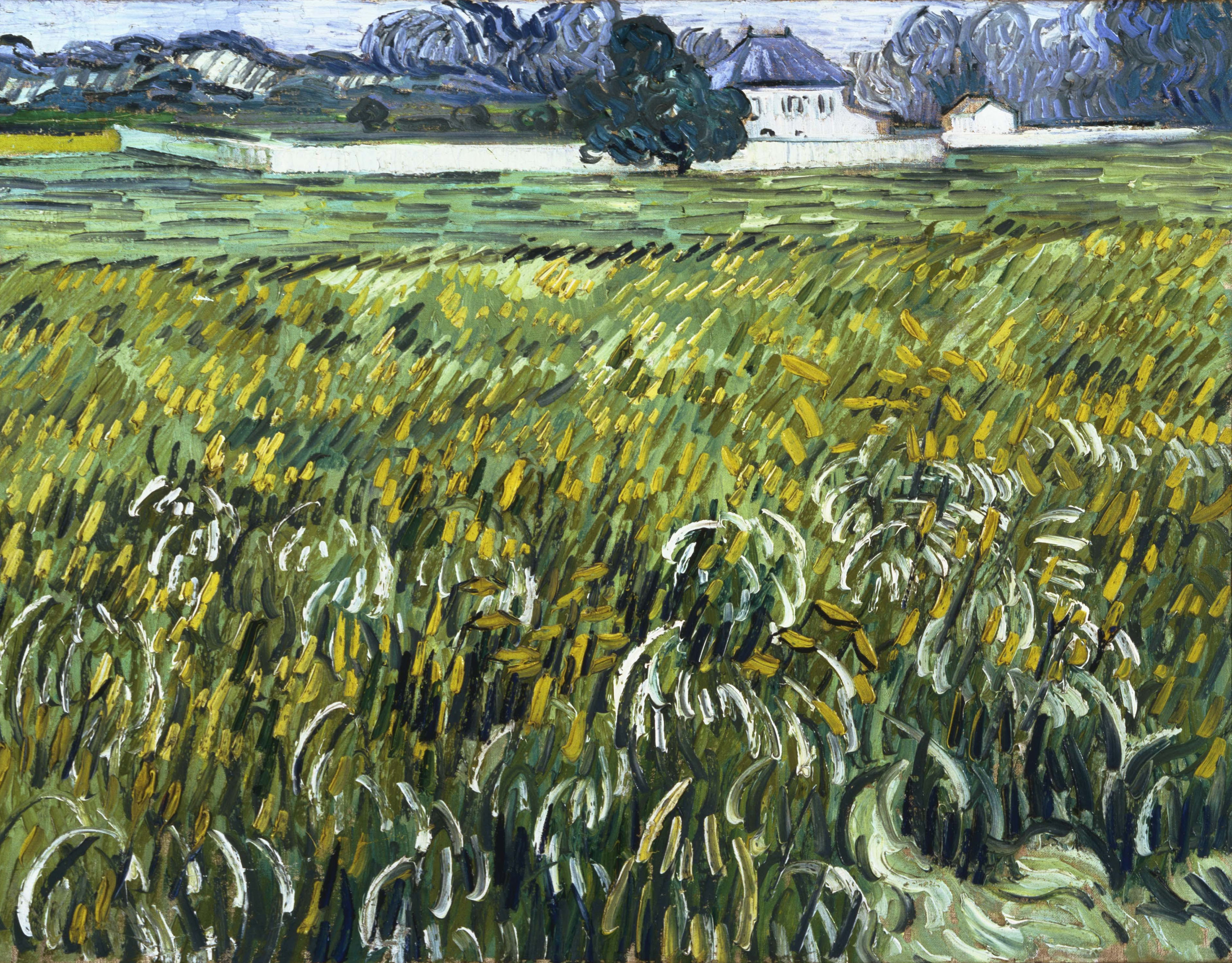
Image Credit: Vincent Van Gogh “Wheat Field at Auvers with White House” (1890) Public Domain