Jeffrey Betcher: “Billy Dew Meadow”


This is the second in a series of posts remembering the work of poet and activist Jeffrey Betcher (1960-2017).


Preface: Left “believing in the pack mentality of strays,” the poetry of Jeffrey Betcher speaks from the entire collective of American queer stray culture, that very lost-and-found narrative of reinvention on the docks of survival. These docks, being the green-heeled sanctuary of San Francisco from 1986-2016, these docks gave birth to an examination and liberation of meaning, as wildly honest and true-to-mirror as every queer breath weʼve danced. From this collection of Jeffrey Betcherʼs poems, “The Fucking Seasons, Selected Poems 1986 to 2016,” we hear the journeys into witness, touch the lips of knowing “love has been here. Hungry footsteps, breath released, and touch can change the land forever.” A San Franciscan born of rural Ohio, Jeffrey Betcherʼs poetry informs the landscape of nature, saying simply, “Iʼm a witness. Love has been here.”

– Toussaint St. Negritude,
Poet, bass clarinetist, composer


Billy Dew Meadow

Mountain meadow,
sonant place (and
I thought of love, of
wanting it so) that
only the locals

know. The pass: im-
passible, Barbara and
Robert, old lovers,
say. But they like us,
four wheel drive us

over the folded
earth, along the
tree-toothed grin of
grass. We laugh as
everything is young, or

time doesn’t mean much.
Named for a miner. “A
frenchman.” Ah, then
Dieu, perhaps. Billy, dear,
What is your name? What 

man amongst men were
you? And where are you
buried? With whose lock of
hair? Here’s history un
kempt. Fir shacks sagging. Mer-

ci, Billy, from friends at
play in your sweet
meadow. Jim lying
stoned in grass, and
me perched ready to

fly through men, their
names and touches and
fields and shag of
beard where a stream
presses the center of

story scorched by
prairie-fire, orange
yellow and purple
rods and golden
faces bristling with repro-

duction as dragonflies
swarm. My shadow,
standing on shadow
rock: I’m shirtless and
could be twelve or

Icarus. Expectation
winging long as
afternoon, backlit 
ass on fire! A
halo you may re-

call, dear Billy.
Above the wooded
ridge: it’s blue sky
moon, Billy. Vastly over a
century old. Still,

find my billet-
doux tomorrow, Billy,
find your meadow
tomorrow in every
shaven face.

      -July 25, 1996, Fish Camp, California


(C) 2017 Jeffrey L. Betcher Living Trust


About the Author: Jeffrey Betcher donned many hats over more than 30 years in San Francisco, yet maintained an integrity of purpose. A writer, an educator, an advocate for the prevention of violence against women and children, and a grassroots community organizer, he gained national attention as a leader in the “guerrilla gardening” movement, helping transform his crime-ridden street in the Bayview neighborhood into an urban oasis. His intimate poetry was also cultivated over the decades, exploring survival and engagement, and the labyrinth of the heart. Though he dodged the HIV bullet in the plague-torn years, a terminal bout of cancer cut his life short in 2017. In addition to his chapbook of Selected Poems (1986-2016), he completed an epic sonnet, Whistling Through, an odyssey into the cancer machine and death itself


More By Jeffrey Betcher:

Dear Allen Ginsberg


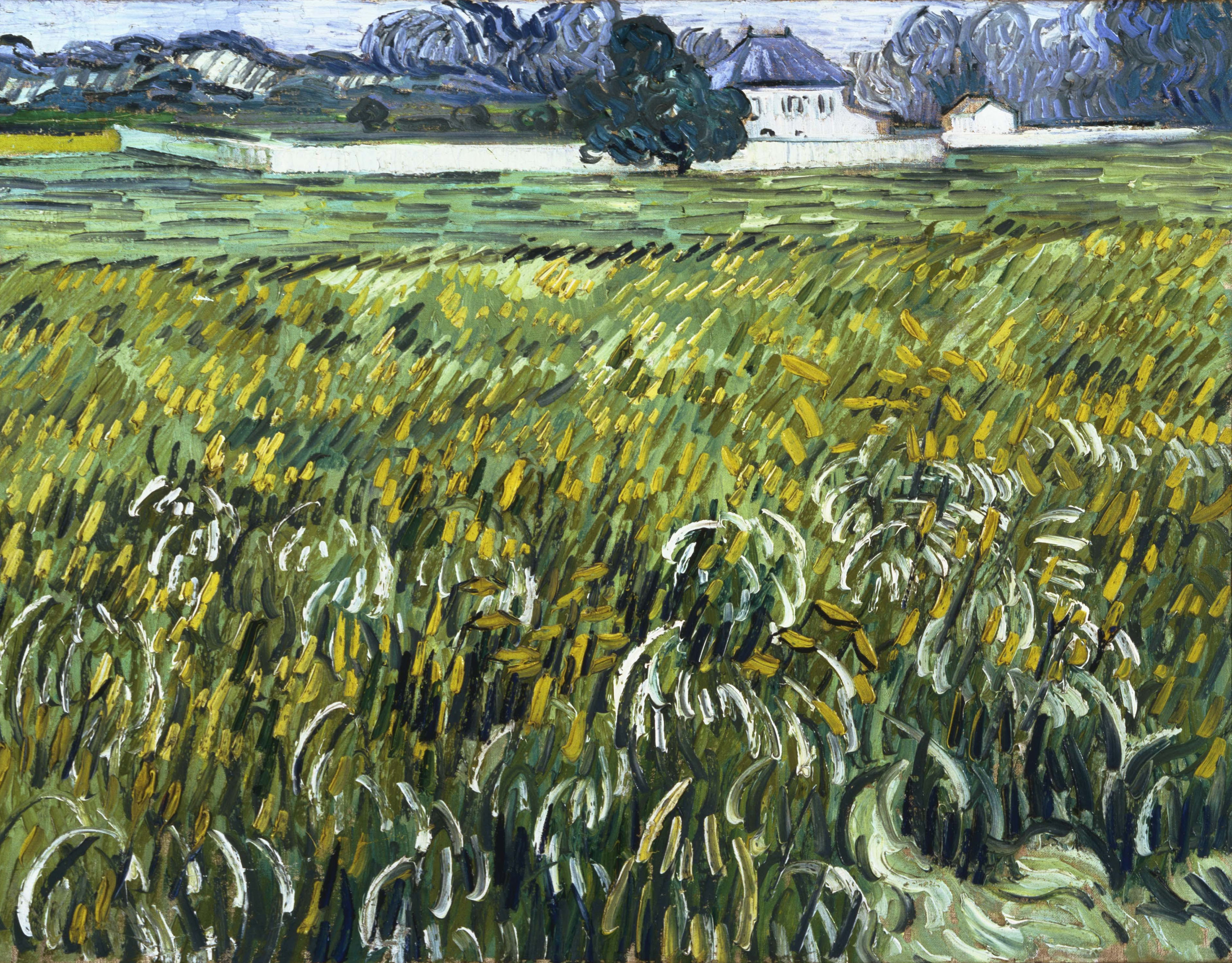
Image Credit: Vincent Van Gogh “Wheat Field at Auvers with White House” (1890) Public Domain

Cody Sexton: “The Body of Shirley Ann Sexton”


36596601 (1).jpg


The Body of Shirley Ann Sexton

.

She was no longer a person.

She was death. Staring back at me from a hospital bed.

The death of my Aunt was my first experience with death and dying, it was also one of my first experiences with cancer, which, as it turns out, ended up playing a recurring role in a number of deaths in my family.

I can’t recall my age at the time of her death or really anything else about my Aunt, but I will never forget walking into that room and seeing her reduced to flesh stretched across white bone, completely hairless, and yet so happy to see me.

She was living back with her parent’s at the end and hospice had her setup in the living room. She was married to my Uncle, my Dad’s brother, and I guess her father had wanted her to be home at the end, I’m not sure. Perhaps my Uncle was either incapable or even unwilling to care for her. My Uncle, I had always assumed, had by that time moved on anyway, their lives diverging. Hers toward oblivion and his towards a life without her.

I can never forgive people who choose to move on. Even if it’s at the bequest of the dying. I have always found the notion that one should simply move on with their lives after they have suffered through the loss of a loved one silly, but it also appears as if it is inevitable. Time unfortunately does heal all wounds. So it becomes a constant battle to maintain the memory of the value of what you lost. Which is why mourning is active. Grief comes later and if you’re lucky, never at all. Grief is ultimately all we are left with. I am told that she used to babysit me every chance she could. I am told that she loved me very much. I am told that she had wanted children of her own but those plans had been halted by a capricious evolutionary process. A process that cares little for the wants and wishes of its hosts.

But I will always remember her smile as we entered her room that final time, the last time I would see her alive.

Actually that same smile would later go on to shatter my understanding of the natural world all together and she passed not much longer after that visit.

At her funeral I remember listening to the ridiculous things people say about the recently deceased.

“She looks good.”

“She’s not in pain anymore.”

Or my personal favorite,

“She’s in a better place now.”

At the time I didn’t understand what place that even meant and even now that I do I still can’t think of it as a better place. And I doubt anyone else really does either, otherwise funerals would be a celebratory event instead of a somber one.

During her viewing she seemed unreal to me. The whole experience seemed unreal. How could someone who was once alive now be dead? I couldn’t wrap my head around it. I refused to believe that what was presented to me in this casket had ever been alive. She looked to me as if she were a doll. A plaster cast of someone I once knew. They even had her dressed in a wig on account of the chemo, in a fruitless attempt to present her here as she was in life, even though now no life existed within her.

Embalming, if you think about it, is really a cruel joke in my opinion. I don’t know which is worse, to have your loved one bloated and decomposing or to have them looking as if they could just be shaken out of a deep sleep. At least if they were rotting you could believe that they were dead. The embalmers job is to enhance the ‘memory picture’, which is a psychologically dubious concept to begin with, supposedly compromising the bereaved’s last glimpse of the deceased. But in reality it’s just a callous trick. So there she laid. A corpse. Displayed in a funeral parlor for all to see. Anyone off the street could have walked in, and people, family and friends, were mingling and conversing with one another as of it wasn’t there. People so determined to avoid any inappropriate response, whether it be tears, anger, or even helpless laughter that they would talk about anything to avoid the reality of this room, the reality that would soon be a burden, something akin to trash that would need to be disposed of before it started to stink.

And yet, her appearance, before the funeral, while in the process of dying, is now the face that I will forever attach to any abstract idea I have of death. Her face is now what I picture when I imagine death on a pale horse riding toward Armageddon. The memory of her body while alive, poised on the eve of a great journey, has made a lifelong impression.

Her death has actually come to mean more to me than any other, not because I was particularly close to her, I was very young at the time, but because it showed me that death is always present, embedded in every moment. Her death taught me about man’s fruitless attempt to find meaning in a world where no meaning exists.

But why was she smiling, I have always wondered. How could she possibly be smiling knowing that nothing may very well lay ahead of her? It’s a courage or stupidity that I will one day come to know.

My god, why was she smiling?

I still wonder.


About the Author: Cody Sexton is a book critic/reviewer and lead writer at athinsliceofanxiety.com where he chronicles his lifelong obsession with the written word. He has also been featured at theindieview.com and Writer Shed Stories and has won several blogging awards such as The Versatile Blogger Award, The Sunshine Blogger Award, The Mystery Blogger Award, and a Blogger Recognition Award.


Image Credit: Dorothea Lange “Funeral Cortege, End of an Era in a Small Valley Town, California” (1938) Digital image courtesy of the Getty’s Open Content Program.

36596601 (1)

Connor Stratman: “Doug at My Age”


Doug at My Age 

Good Luck is chained to the bow,
frontlining this plow through the flood. 
Ay (yes), we’re singing and dancing
under the moon that draws
scythes and staples night to the air,
the fortune of lightless pastures.
Crickets and owls crow in and out
of the dreams of everyone else.
I’m glad to be gone from here, the tide
that’s always one with its own border. 
Reading the stream again, this one’s mine. 
Hydrated leaves take the water taxi
and here is some childhood again, 
borne on the backs of jagged rocks
and plenty of ivy. Again, years go
and then this thicket of solitude 
pops up again, in pictures I didn’t take. 
My shed cells are the corpse of memory. 
Lost against the gentlest possible tide, 
there’s a kiss, a game of army, broken
tractor motors, and that tunnel they say
some kid in the nineties disappeared up. 


About the Author: Connor Stratman lives in Dallas, TX. His books and chapbooks include Some Were Awake (plumberries, 2011), Volcano (2011/2017, Writing Knights), and An Early Scratch (Erbacce, 2010). His work has appeared in journals such as Ditch, Counterexample Poetics, Earl of Plaid, Etcetera, Backlash, Moria, Dead Snakes, and Otoliths.


Image Credit: “Head of a Roman Boy” second half of 2nd century A.D. Digital image courtesy of the Getty’s Open Content Program.

Larry Smith: “The Story of Rugs”


The Story of Rugs

They cover holes in the earth
we walk upon when all else
has let us down.  
Woven by elders from the 
hair of sheep fresh shorn
their faces kiss our feet.
For days at a time 
the old sit in silence
peddling and bobbing
to continue our line.

And so, their deaths
move us closer to the time
when no rugs are spread before us,
and their faces are worn through,
when empty spaces
fill our hearts.


.

About the Author: Larry Smith is a poet, fiction writer, and editor-publisher of Bottom Dog Press in Ohio where they feature a Working Lives and an Appalachian Writing Series. He is also the biographer of Kenneth Patchen and Lawrence Ferlinghetti. He lives in Huron, Ohio, along the shores of Lake Erie.


More By Larry Smith:

Forget Math and Science

Wages

No Walls


Image Credit: “Two women making rugs on porch” The Library of Congress

Martina Reisz Newberry: “Venerating the Transitory”


VENERATING THE TRANSITORY

Further up on the trail is
the smell of toasted tree trunks
and a damp cold. It’s lovely.

The spontaneous nature
of fire in this area last year
was its inborn reckoning,

then, a little later, loss and
pain—their tie, a “given” by
all that breathes. Tell this: which of

our multiple mouths is the
most intimate? Is this some
thing we have to decide? I

have found there are too many
endorsements for most questions.
Further up this trail, there are

still some patches of clean snow
holding on to that singed smell.
My body recalls the smells,

the tastes, forgets the events.
Wind licks at the aspens, some
kind of birds form a cloud and

pass over. It is clear they
have a fixed destination.
Along this path are vagrant

insects and animals. The
silence is so pronounced that
I hear rocks speaking many

languages. Everything bathed
in shades of pekoe, pink,
singe, an absurd excess.


About the Author: Martina Reisz Newberry’s newest collection, Blues for French Roast with Chicory is due for publication from Deerbrook Editions in late fall, 2019. Her latest book is: Never Completely Awake (Available from Deerbrook Editions). Her work has been widely published in the U.S. and abroad. She lives in Los Angeles with her husband, Brian Newberry, a Media Creative.


Image Credit: “Oregon National Forest. Effect of fire” The Library of Congress

Cord Moreski: “Someday”

.

Someday  

Someday, I hope this poem finds you—
clocking out of a dead-end job,
or during a television commercial
when you’re slouched on the sofa,
between sips of burnt coffee
at the diner when you’re feeling lonely,
or after gazing at the stars outside
your bedroom window because something
keeps you from falling asleep at night—
to let you know that it’d be nice
for you to finish that manuscript
kept hostage in your desk drawer
after all these years, to paint that canvas
cooped up in your attic collecting time,
to take that road trip you swore
would save your life, to find that smile
that used to appear naturally
before it had to be forced.
Wherever you are. Whatever it was.
Someday, I hope this poem finds you.

.

About the Author: Cord Moreski is a writer from New Jersey. His work has been previously featured in Silver Birch Press, The Pangolin Review, Philosophical Idiot, The Rye Whiskey Review, In Between Hangovers, and several other publications. He is the author of the chapbook Shaking Hands with Time (Indigent Press, 2018) and is currently working on a new project for 2020. You can follow Cord here: https://www.cordmoreski.com

.

More By Cord Moreski:

Aubrie

.

Image Credit:

Digital Photo by Chase Dimock

Bunkong Tuon: A Review of True Confessions: 1965 to Now By John Guzlowski


True Confessions: 1965 to Now
John Guzlowski

Paperback: 151 pages
Publisher: Darkhouse (March 13, 2019)
ISBN-13: 978-1945467172

John Guzlowski’s True Confessions: 1965 to Now is an autobiography in verse. Ranging from lyric to narrative, sonnet to free verse, elegiac to humorous, the poems have a central “I” that takes the reader into six decades of the poet’s life. They explore topics such as drugs, booze, and rock n’ roll, love (from the young and reckless to the more mature kind), teaching, parenting, Americana, the arts of poetry, and, ultimately, death. His mother and father who survived German work camps during WWII also make their appearance here as an elderly couple re-living the horrors of the Nazis in the blazing heat of Arizona.

Guzlowski writes with such honesty, humor, wit, sadness, and hope. Above all, he writes with clarity, truth, and humility. Take, for example, the poem “Grieving.”  

Robert Frost’s poem “Home Burial” moves me,
but some of my students are freaked
by the thought of the baby’s coffin in the parlor,
the mom in the poem who mourns too long.

“Get over it,” they say. 

Get over it?

On his death bed, my dad was still grieving
for his mom who died when he was five,
and I’m still grieving for him ten years
after his death. Grieving doesn’t stop
like a TV drama you can turn off.

Forgive me for telling and now showing
but this pain I feel for my dad and the pain
he felt for his mom are what connects us all,
as sure as the turning of the earth.

No apology is necessary here. His poem simply works in spite of the fact that (or maybe because) Guzlowski admits breaking the “show-don’t-tell” commandment for writing. The poem’s honesty, emotion, and heartfelt conviction in truth propel it forward and bring readers to an understanding of grief that connects us in our humanity.

Like his forebears (which include Whitman, Ginsberg, Kerouac, Frost, with some Dickinson, Eliot, Bellow and Faulkner thrown in), Guzlowski’s voice is that of the common man, one that invites readers into his world and entrusts us with his heart and soul. That’s the power and beauty of Guzlowski’s poetry: stripped of linguistic experimentation and the artifacts of academic theory, his poetry brings us to real and genuine human connections: love, hurt, anger, loss, joy, silliness, absurdity, hope, acceptance, and more. 

If you haven’t read Guzlowski, buy this book; you will be in for one wild joyride. John’s energy is vast, imaginative, and liberating. Afterward, buy his other books, especially those about his parents, particularly Echoes of Tattered Tongues and Lightning and Ashes. Those books are raw, unflinching, and so very full of love (the love of a child for his refugee parents).


About The Author: Bunkong Tuon is a Cambodian-American writer, critic, and teacher. He is the author of three poetry collections: Gruel (NYQ Books, 2015), And So I Was Blessed (NYQ Books, 2017), and The Doctor Will Fix It (Shabda Press, 2019)His poetry recently won the 2019 Nasiona Nonfiction Poetry Prize. He teaches at Union College in Schenectady, NY.

Chase Dimock: A Review of All Seats Fifty Cents, by Stephen Roger Powers


Although Stephen Roger Powers’ latest book All Seats Fifty Cents contains some poems that aren’t about Dolly Parton, once she enters your mind, she commands your imagination like the stage at the Grand Ole Opry. So, it’s impossible to begin this review in any other way but to marvel over Powers’ many Dolly meditations. And, it’s a good place to start because the Dolly Parton poems are a microcosm of Powers’ overall vision of the inalienable relationship between popular culture and personal identity in the American 20th and 21st centuries.

The story of Dolly Parton’s evolution as a pop icon is simultaneously Powers’ own coming of age narrative illuminated by the televised glow of Dolly’s radiant blonde. In a section titled “Burst My Bubbles,” Powers recalls the moment Dolly captured his adolescent fantasy:

I credit Dolly Parton in a bubble bath
for popping my Catholic cornfield bubble
I was hating my Sunday altar boy costume
and sore knees from all that kneeling

Like for so many other young people in the 70s and 80s, Dolly Parton’s television appearances in conservative households snuck in a vision of an alternative to the American culture of repression and limited ambition. For Powers, this is an erotic, but not objectifying awakening:

Sunday night, the 27th of September, 1987-
lather, bare shoulders, and a great big smile

Parton speaks directly to Powers from a bathtub, alluding to the promise of a world of something more glamorous and desirable than the duties of the Catholic altar boy.

While it’s doubtless that millions of adolescent boys had certain new stirrings when first seeing Dolly’s farm girl charm, luxurious appeal, and ample bosom, for Powers, this is not a story about a typical pin up object of desire. Rather, his fixation on Dolly is about how her transcendent talent and creative vision offer a lifestyle that breaks through gender and class barriers in ways few celebrities allowed in the conservative world could. In “Step It Up a Little,” Powers testifies to the appeal of Dolly’s agency, “Every man should learn to walk in stilettos as high as Dolly Parton’s.” It is refreshing to hear a straight man praise a female artist as something he aspires to be like. Dolly is a gay icon like Judy, Liza, Cher, Diana, Joan and Bette, all strong women who forged the steel of femininity. Yet, the appeal is universal, and what gay men got out of modeling themselves after these women is what straight men have long needed and have recently become more comfortable in expressing. That’s the power of Dolly Parton; she radiates universal qualities we all admire, and yet we all feel as though we have uniquely intimate relationships with her art.


Powers’ Dolly poems understand how we craft our identities through the complexities of the celebrity/fan relationship. There have been plenty of odes to heroes in the history of poetry, but not as many about the nuances of 21st century fan culture. Beyond the scope of Dolly as an idol to worship, Powers’ poems also explore how she is a lifestyle to live and a commodity to purchase. Dolly is not just a singer and celebrity; she’s also a businesswoman with her own themepark, Dollywood, where the fan can live in a world of her own design.  In “Dolly Floats,” first published here on As It Ought To Be Magazine, Powers writes a year by year chronicle of Dolly’s appearances in parades at the Dollywood theme park, accompanied by annotations about his personal life:

2015

Dreams come true when Dolly, garnished in red
with gold trim, jack-in-the-boxed from cake,
her great big yellow wig a flaming candle.

With the majestic vision of Dolly, always as much fantasy as she is human, Powers own humanity and flesh, as prone to weakness as all us other mortals, comes between him and Dolly:

2017

Antibiotics pinholed my right hip.
“If I take it easy do you think I could
go to Pigeon Forge on Friday
for Dolly’s annual parade?”
“No.”
Steroids picked my left hip.
“But you don’t understand–”
“Absolutely not.”

Powers most powerfully juxtaposes the goddess with the mere mortal in his poem “Never Let the Truth Get in the Way of a Good Story.” Here, he recounts a brief encounter with Dolly in her Dollywood dreamland, known as the “sausage story.” He gives us first a mundane version in which he merely sees her walk by, and then this version “unshackled from the truth” that may be fiction, but better expresses the impact of seeing her while eating a sausage.

the greasy peppers and onions slid.
the moment the reigning queen of Nashville
graced all us fans standing around waiting
in the Dollywood devilry she gave us.
She was so sunny and funny
she hollered to her bodyguard to pour
club soda on me before the stain set.

Powers builds a connection with Parton through mythologization. We retell stories until the facts of the story transform into the meaning it holds for the teller. Powers further explores how celebrities do the same, and because their words are recorded, we can actually track this phenomena. He unpacks the story behind Jolene’s evolution from mere fan to vixen along side the multiple retellings and revisions of his sausage story:

Dolly lets her stories take
on a life of their own like this too…

Listen to Dolly tell it now–
Jolene is a fiery-headed hussy
at the bank who tried to steal
her husband one day when he cashed
a royalty check for
“I Will Always Love You.”

A celebrity is always a collaborative mythology created between the woman beneath the wig and the collective imagination of the audience. In these poems, we see Dolly as she is, and as she is imagined. Both of these Dollys are equally real.

I hope Powers will Parton me (get it???) for obsessing over Dolly in my review as much as he does in his poems. This American icon who my grandmother proudly refers to as “your grandfather’s secret girlfriend” cannot ever not be the focus of any media she graces. That said, the balance of Powers poems achieves equally brilliant insights into the relationship between pop culture and individual/family identity through considerations of other televised spectacles. In a poem about Lou Ferrigno’s feet, Powers writes:

My brother and his strawberry Kool Aid mustache
peeked out just in time to see
the hulk’s green slippers–unedited, overlooked,
unraveled illusion impossible to un-see–slap
the concrete, slow motion run away.
The Hulk wears green slippers
It wasn’t long before I learned trust
means different things to children and adults.
Even now I can’t un-see Challenger crumbling
in the sky like a clump of wet sand.

In the past few years, Hollywood seems to have kept itself afloat by repackaging 80s and 90s nostalgia to those who lived through it. Without a critical eye, or more social relevance than giving the heroes smartphones, this nostalgic regurgitation has been more of a security blanket roof over a couch cushion fort than any artistic tribute or reimagination. This is why I appreciate Powers’ pop culture poems so much. While they touch on nostalgia, they avoid the uncritical sentimentality of nostalgia that takes shots of Crystal Pepsi until you can’t hear the news about climate change anymore. Powers’ poems are not an escape from reality; rather, they detail the sad ache of nostalgia and the beauty of somehow knowing, even in one’s golden years, that the tarnish is inevitable and possibly already there. Nostalgia, as Powers engages with it, can be a powerful and informative way to trace the origins of our values and explore how we became who we are.

Everyone in a Dolly Parton concert has sausage stains and arthritic hips. Powers shows that Dolly’s presence doesn’t change this reality, but with her Backwoods Barbie persona, she knows Club Soda is a miracle potion and that the sparkle of her sequins is majestic, and on sale at Joann Fabrics.


All Seats Fifty Cents is available via Salmon Poetry


About the Author: Chase Dimock is the Managing Editor of As It Ought To Be Magazine. He holds a PhD in Comparative Literature from the University of Illinois and his scholarship has appeared in College LiteratureWestern American Literature, and numerous edited anthologies. His works of literary criticism have appeared in Mayday MagazineThe Lambda Literary ReviewModern American Poetry, and Dissertation Reviews. His poetry has appeared in Waccamaw, New Mexico Review, Faultline, Hot Metal Bridge, Saw Palm, and San Pedro River Review among othersFor more of his work, check out ChaseDimock.com.


More by Chase Dimock: 

A Review of John Dorsey’s Your Daughter’s Country

A Review of Jumping Bridges in Technicolor by Mike James

Leadwood: A Conversation With Poet Daniel Crocker

Kevin Ridgeway: “Good Timing”


Good Timing

It’s too late
for inappropriate
cannabis fueled laughter
in dive bars
eyes glued to the brights,
reds, blues, greens and oranges
of Gilligan’s Island
on the flat screen
It’s too late
to argue the artistic merit
of Gilligan’s Island

It’s too late
to drink Listerine
and play shoot-em-up video games
in an unbroken trance
It’s too late
to listen to angry teenage music
and mosh against stuffed animals
in a lonesome haze

It’s too late
to borrow money from mom and pop
and blow it all on a
Collector’s Edition Star Trek play set
It’s too late to huff nitrous oxide
and encourage
a budding figurine romance
between Captain Kirk and Mr. Spock

It’s too late
to officiate feline-canine
civil unions
fueled by
White Lightning and No-Doze
It’s too late
for waking up in a galaxy
of uneaten French fries,
an obscene underground movie
playing an endless loop
while you’ve been in slumber

But it’s too early
for many other things:
spastic colon, arthritis,
dementia, gingivitis
and incontinence.

The present mid-morning
headache,
misgivings about the
past and future
and discovery of
T.S. Eliot are all
right on time. 

(originally appeared in Side B Magazine, 2011)


About the Author: Kevin Ridgeway is the author of Too Young to Know (Stubborn Mule Press). Recent work has appeared in Slipstream, Chiron Review, Nerve Cowboy, Main Street Rag, Cultural Weekly, Gasconade Review, The American Journal of Poetry and So it Goes:  The Literary Journal of the Kurt Vonnegut Memorial Library, among others.  A Pushcart Prize and Best of the Net nominee, he lives and writes in Long Beach, CA.


More By Kevin Ridgeway:

Fake Dad

500 Channels and Nothing On

Sally with the Accent


Image Credit: Adrien Alban Tournachon “Dog Smoking a Pipe” (1860) Digital image courtesy of the Getty’s Open Content Program.

Kory Wells: “The Assistant Marshal Makes an Error in Judgment”


The Assistant Marshal Makes an Error in Judgment
—From the Ninth United States Census, June 18, 1870, Macon County, North Carolina

Even though he has read and reread
best he can the instructions
sent direct from Washington;

even though he employs
a sturdy portable inkstand,
quality ink he blots dry
with unpracticed diligence
on strictly confidential,
wide white sheets;

even though important scientific
results depend upon his questionable
Rs and too-short Ls, tedious
recording of Name, Age, Occupation,
and Color;

Assistant Marshal J.T. Reeves, who some call
carpetbagger, now sits amiably on the porch
with one Willis Guy, farmer, age 59,
and reads back to Mr. Guy
all he has written, so mistakes may be
corrected on the spot. The marshal is not
from around these parts, and Mr. Guy, 

previously known as
Mulatto, previous to that known as
Free Colored Person, if asked would claim
Catawba, Cherokee, even the dark Porterghee,
but figures it best to keep his silence
at the government man’s ditto of Column 6. Like that,
Mr. Guy and all his kin become
White. Mr. Guy would admit he isn’t
as good at letters as his children,
but squinting sideways at the marshal’s ledger,
he knows the unmistakable difference between W and M.


About the Author: Kory Wells is a poet, writer, storyteller, and advocate for the arts, democracy, afternoon naps, and other good causes. In 2017 she was named the inaugural poet laureate of Murfreesboro, Tennessee, where she also founded and manages a reading series. Her poetry collection Sugar Fix is available from Terrapin Books as of September 2019. Read more of her work at korywells.com.


More by Kory Wells: 

Untold Story

When the Watched Pot Boils


Image Credit: “Harrison’s Columbian inks, black, scarlet, red, blue” (1846) The Library of Congress