“It’s a girl I can tell, we’ve had nothing but trouble” By Ryan Quinn Flanagan


“It’s a girl I can tell, we’ve had nothing but trouble”

They had only just found out a few months before.
The mother was happy, if apprehensive.
The father was accepting.
And I remember him saying to me
with the mother out of earshot:
“it’s a girl I can tell, we’ve had nothing but trouble.”
And I thought to myself what kind of trouble
can a tiny blob in a belly make?
He gave me that if you only knew face
that parents of children give to those without children.
Then the mother called him over and he
put his hand over her belly as though he were
trying to keep something from escaping.
I smiled to the mother who really did have
a strange glow about her.


About the Author: Ryan Quinn Flanagan is a Canadian-born author residing in Elliot Lake, Ontario, Canada with his wife and many mounds of snow.  His work can be found both in print and online in such places as: Evergreen Review, The New York Quarterly, Cultural Weekly, In Between Hangovers, Red Fez, and The Oklahoma Review.


More By Ryan Quinn Flanagan:

“Robbie the Owl”

“He Brought His Canvases Over”

“Before Evening Med Pass”


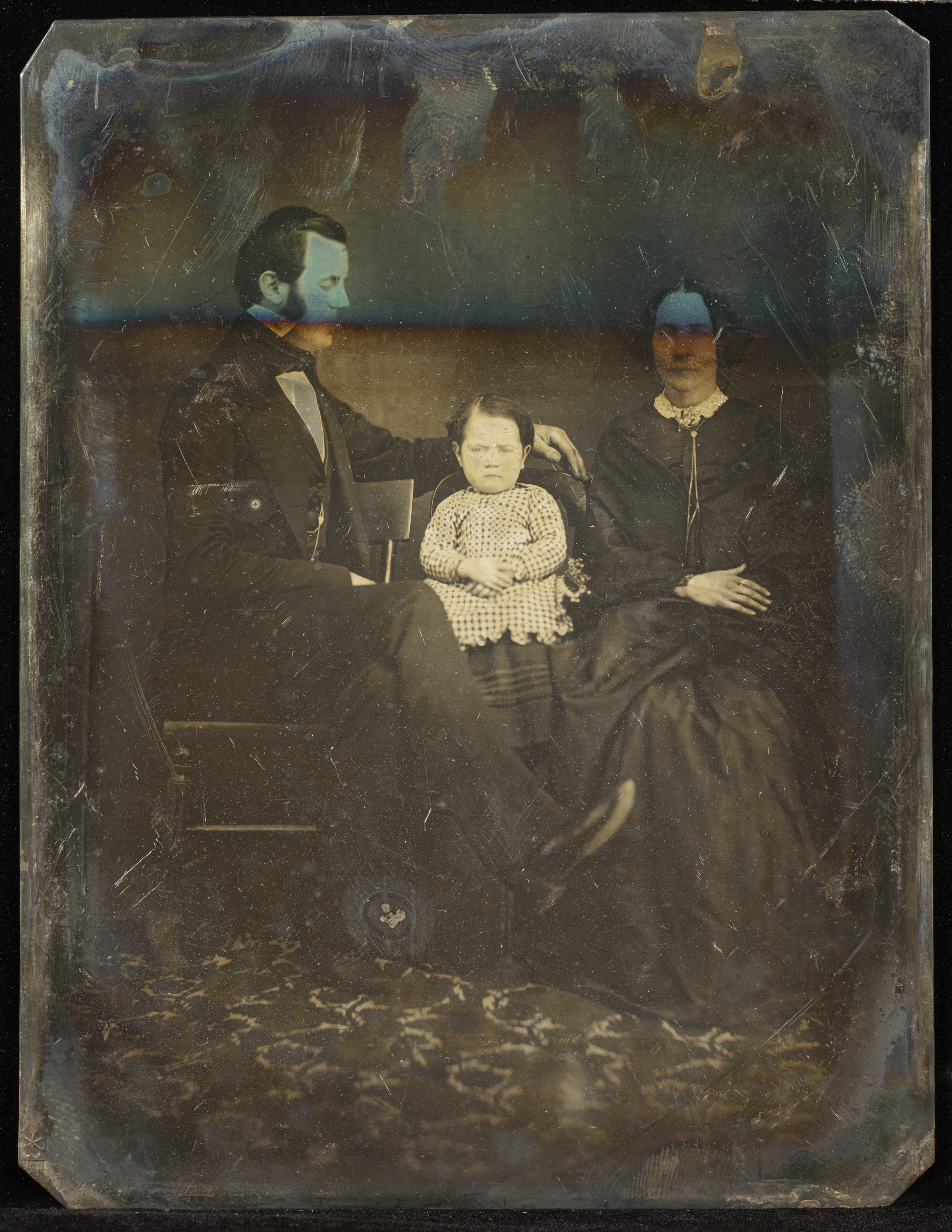
Image Credit: Jacob Byerly “Family Portrait” (1855) Digital image courtesy of the Getty’s Open Content Program.


Bunkong Tuon: “The Bite”


This is the third in a series of poems from a forthcoming poetry collection about raising a biracial daughter in Contemporary America, during this polarizing time of political and cultural upheavals where sexual harassment allegations abound, where a wall, literal and figurative, threatens to keep out immigrants like the narrator, a former refugee and child survivor of the Cambodian Genocide. You can find the full series of poems below.


The Bite

We pay it no attention
until the bite becomes a rash
spreading like a spider web
on the back of Chanda’s leg.
Our minds burn like wild fire.
Google becomes our hated
guide as we navigate WebMD,
Mayo Clinic, and CDC.
We study online images,
whisper symptoms like
bad secrets, and compare notes.
We gather contradictions,
argue. Nothing is certain,
only more questions.
We text friends and family.
Is it too late for antibiotics?
What is Lyme disease?
Will this affect our daughter
for the rest of her life?
We wake up the next morning
clutching each other,
sweat drenched our pillows.


About the Author: Bunkong Tuon is the author of Gruel (2015) and And So I Was Blessed (2017), both poetry collections published by NYQ Books, and a regular contributor to Cultural Weekly  He is also an associate professor of English and Asian Studies at Union College, in Schenectady, NY.


Bunkong Tuon’s series of poems on raising a biracial daughter in contemporary America:

Ice Cream

Gender Danger

The Bite

Tightrope Dancer

Women’s March in Albany

My Mother on Her Deathbed


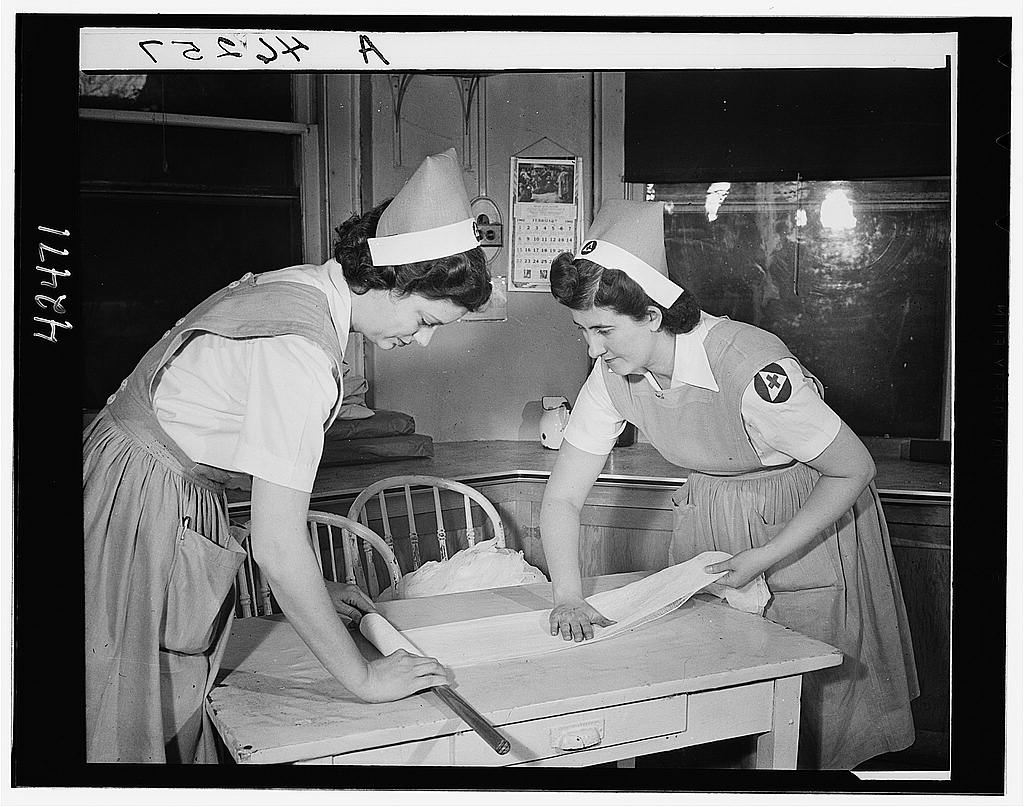
Image Credit: “Red Cross nurses’ aides preparing surgical bandages” The Library of Congress

“Jhelum Is Disappearing” By Ishrat Bashir


Jhelum Is Disappearing

Jhelum is disappearing
Like the maer* that ran
Through the heart of Srinagar,
My mother used to play
By its embankments.
The touch of water has a memory,
Memory of a dream in which the
World comes to an end.
Jhelum is disappearing.
Now that, you and me, have lost our language,
Our happy roads to each other
Let us promise to share our dreams
In all their incongruity and dissonance,
Each piece of darkness
And each shadow that the moon casts
As we turn our back on it;
Even the one in which you see yourself
Fettered to yourself
At the tips of your toes;
And the one in which we’d wash
Our hands together with soap
Watching the sullied water
Dripping from tips of our soiled fingers
Accompanied by useless words
Gurgling with our laughter
That made others laugh at us.
And the ones in which we wandered
through wild pine woods
With our pieces of jigsaw, lost to each other.
Jhelum is disappearing
And the jigsaw lies incomplete
On the table in the house
That we had planned to built.
That house still holds us together
In the life that has lost us
To the posh colonies of Hyderpora
And narrow stinking alleys of downtown.
One day when both of us are free
And long for rest, we may return,
To that table with our pieces.
But on that day, when it happens,
You must bring that ring of smile
And I shall bring my old mirror.
Poems like waves are reckless
You cannot pitch up your tent
On their shores.
But we must not die, we must
Keep the connection even if
Only at the tips of our toes.

*Canal


About the Author: Ishrat Bashir is an Assistant Professor, at the Department of English, Central University of Kashmir. She teaches Short Story, Contemporary Literary Theory and British Drama in the department. She has also worked as Assistant Professor in English in the Department of Higher Education and the South Campus of the University of Kashmir. Her area of interest includes Contemporary Literary Theory, Translation Studies, Arabic literature in translation and Kashmiri literature. She writes poetry and short fiction.


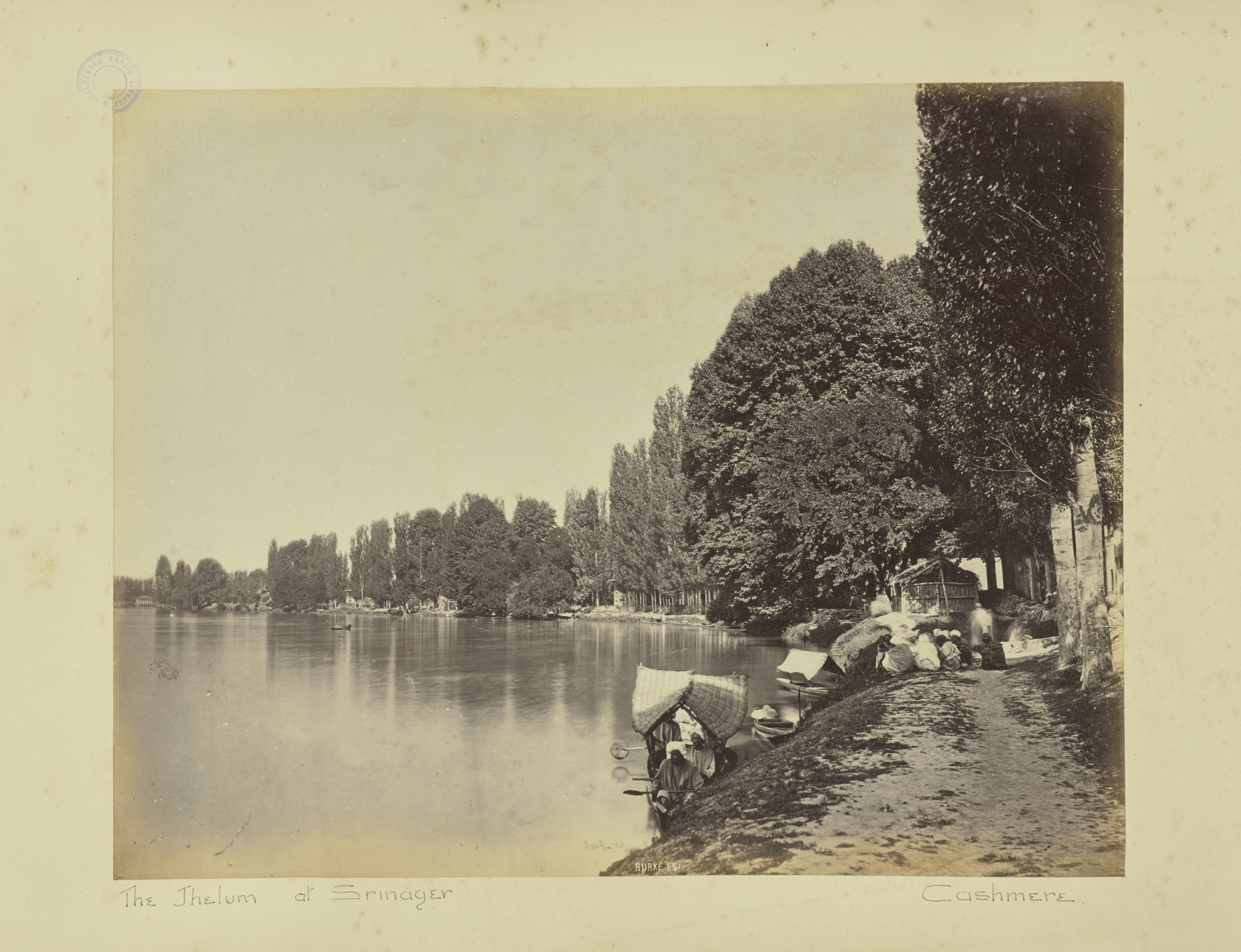
Image Credit: John Burke, photographer (Irish, about 1843 – 1900); William H. Baker, photographer (British, about 1829 – 1880), The Jhelum at Srinager. Digital image courtesy of the Getty’s Open Content Program.

“Mementos” by Nick Soluri


Mementos

There is a way we remember,
and the way we want to remember.

There is the way grandmothers tie scarves
around their grandchild’s necks,
and there is holding the memento
in your hands wishing hers
could wrap it softly again.

We will die before the
things in our pockets will,
those live forever, in the
boxes in attics, on desks,
alone or with company.

Do not worry, they will
not feel bad when they get
dusty and cold,
they have each other.

And when you come back to them,
and feel their sweet touches again,
they will feel the same way
they always did.
But it is you that has shed your skin,
a new body in a lake of stasis
and old wooden splinters.


About the Author: Nick Soluri is a writer from New York.  His words have appeared in Five:2:One Magazine, Boston Accent, Ghost City Review, Selcouth Station, Occulum, Anti-Heroin Chic Magazine, and others.  He tweets @nerkcelery


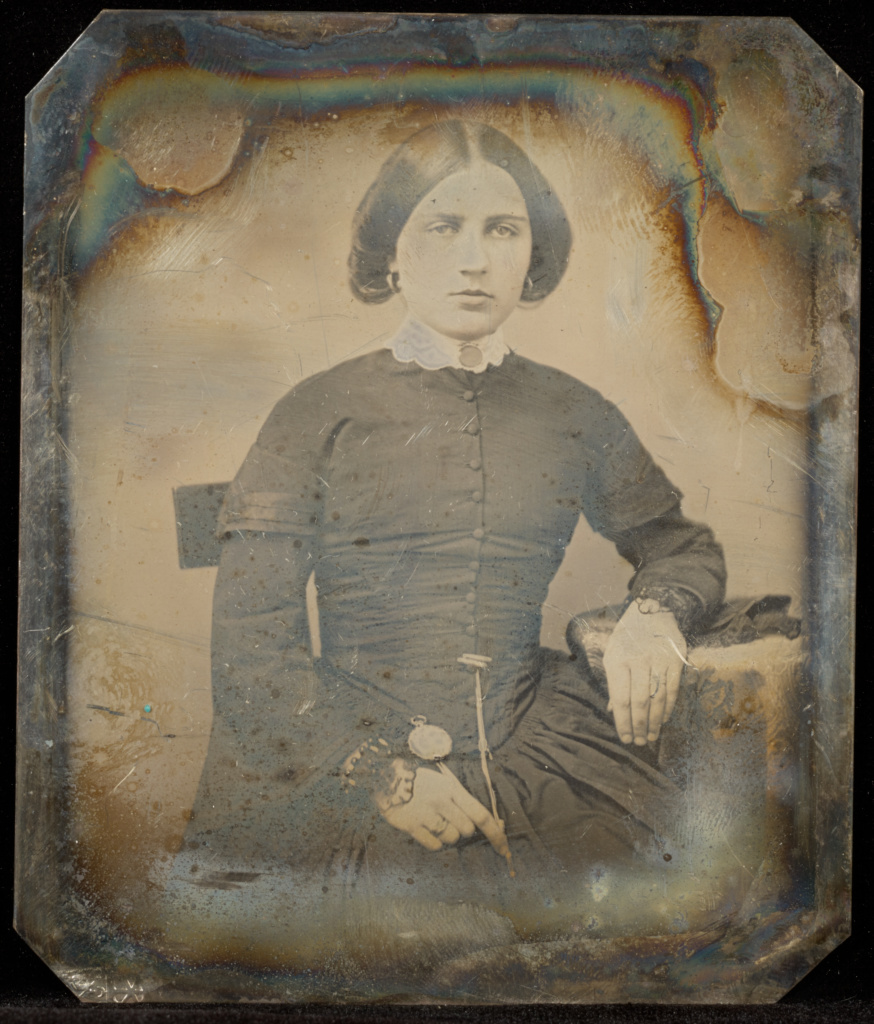
Image Credit: Joseph Byerly “Portrait of a Woman” (1855) Digital image courtesy of the Getty’s Open Content Program.

“Me, and the Hecate” By Margaret Crocker


ME,
AND THE HECATE

Ariadne,
in the mechanical bed,
bound by stuffed mittens,
breathing by beeping hose,
her pulse rate, heart rate, brain rhythms and lung capacities
a constellation around us in the darkened room.
There are stars, Ariadne,
Look!

Ariadne,
your webs.

Ariadne,
your unrequited love.

You were our lives,
Ariadne,
and your webs our ties with you,
you the weaver,
you the hanged man,
you the Hecate,
the maid, mother and crone all in one
a white, fragile web in the dark
while machines give you breath and life
in force,
as you would have none on your own.

Ariadne,
what do you weave there,
where no one can see?

You wake hoarse,
confused,
and tangled in all your knitting.
You see me
and don’t remember.
But I will always remember these days, my sisters.

When Ariadne began to sew,
and faltered.


About the Author: Margaret Crocker is an artist, writer, wife, mother, daughter, sister and thief. She collects stray animals and has this weird fantasy of being on The Great British Baking Show, despite the fact she uses a bread machine. She knows little but proclaims much. There is much we don’t know about her.


More By Margaret Crocker

“My Joints Hurt and Other Fascinating Topics of Conversation”

“The Art of Acquiescence”

“Earth, Air, and Lynda Carter”

“Mental Health Portraits”


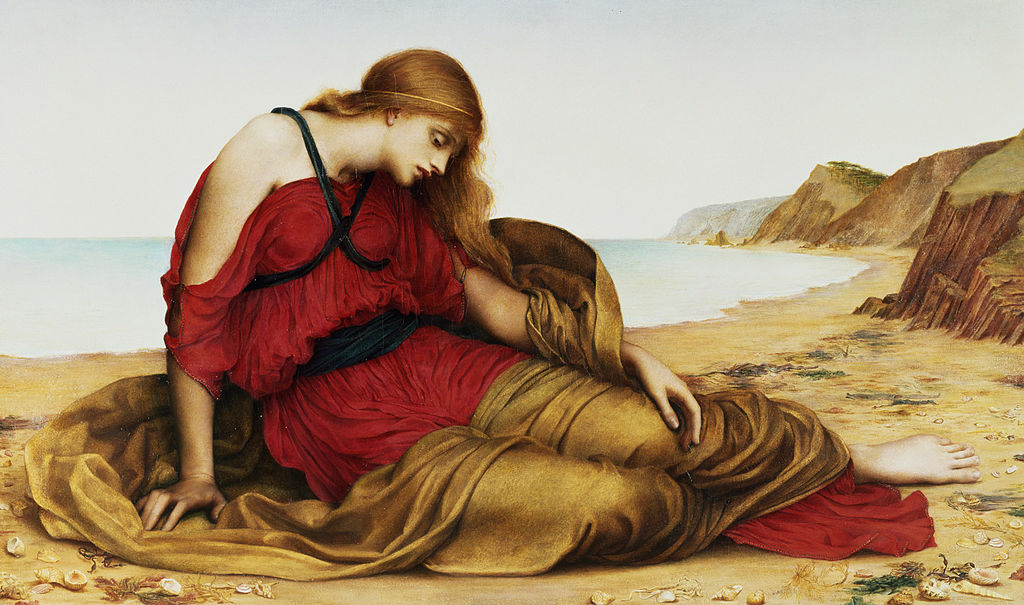
Image Credit: “Ariadne in Naxos” by Evelyn de Morgan (1877)

“The Social and Spiritual Possibilities of Lent” By Okla Elliott

The Social and Spiritual Possibilities of Lent

by Okla Elliott

Editor’s Note: Our late Managing Editor, Okla Elliott, originally posted this article two years ago. It was his final post before he passed away. We are republishing this article in his memory. In the final year of his life, Okla took a deep interest in exploring spirituality, theology, and Catholic teachings. This article is a prime example of his great ability to investigate new ideas and understand their capacity for better expressing and illuminating his core values and principles.

.We do not generally conceive of Lent as a political or social matter. Its central purpose is a personal and spiritual one, but as the well-worn phrase instructs us, the personal is political. I therefore want to invite us all to think of how we might combine the personal and spiritual aspects of Lent with potential social gains.

According to a 2016 article in The Independent, the three most common things given up for Lent are chocolate, social media, and alcohol—in that order. And a 2015 TIME article offers similar findings. These are all personal sacrifices that do not have much of a social or political dimension. Giving up certain popular items such as meat does have a notable social impact. The environmental gains of giving up meat are significant, since the factory-farming livestock industry has several negative impacts on the environment, from inefficiency of food production to detrimental waste products.

I offer here a list of five options for what we might give up for Lent that can merge spiritual growth and social betterment.

1) I would strongly suggest the aforementioned meat option, since it has such a prominent place in tradition and can have such a positive social impact.

2) If possible, give up driving and use public transit instead. This will have a positive environmental impact, obviously, but it will also allow you to see the people of your city whom you might otherwise never encounter. Of course, this is perhaps an option only for those who live in certain areas, but you might be surprised how elaborate your city’s public transit is if you’ve never looked into it.

3) Give up eating out. At first this might not seem social at all, or even the opposite of a social option, but if you conceive of Lent as not only a negative notion of giving up, but also a positive notion of doing something good with what you gain by giving up things, then you will see that the several hundred dollars you save by not eating out can be used in myriad ways for social good. I would suggest donating to non-profits or your church’s efforts to help the poor. You could also use the money saved to do nice things for friends and family, which will strengthen your social community at the closest level.

4) Give up the convenience of plastic bags. Make the extra effort to bring a canvas bag with you when you shop, or if you’ve only purchased one or two items, don’t ask for a plastic bag. With an estimated 8 million metric tons of plastic entering our oceans every year, to say nothing of the millions of tons in our landfills, reducing unnecessary use of plastic is of paramount importance.

5) Give up self-reinforcing thought. This one is a bit more abstract, but it is no less important. What I mean here is that if you’re a staunch Democrat, make yourself read several issues of a conservative magazine not with an eye for criticism but rather an urge to understand and empathize. And do the same if you’re a diehard Republican. Read some classics of liberal thought and really try to hear the concerns mentioned. The point is to bridge divides and to prevent hatreds between humans. If we can force ourselves to develop the habits of mind that reduce prejudice and living in our echo chambers, we have a much better chance of curing the ills of the world.

What makes the above choices good ideas is that the social impact in no way reduces the spiritual impact. Giving up driving to work in favor of taking the bus, for example, is a personal sacrifice just as much as giving up social media would be, yet it helps society more broadly in addition to the spiritual gains associated with the sacrifice.

And there is no need to limit yourself to the five options I offer here. Get creative and make your own list that suits your personal and social concerns. There are many ways to improve ourselves and the world around us, and doing one does not preclude doing the other.

[This piece originally appeared at PennLive.com and was syndicated to several other venues in 2017.]


About the Author: Okla Elliott was the co-founder and Managing Editor of As It Ought To Be from its inception until his passing in 2017. For more about his life and work, visit our memorial page. 


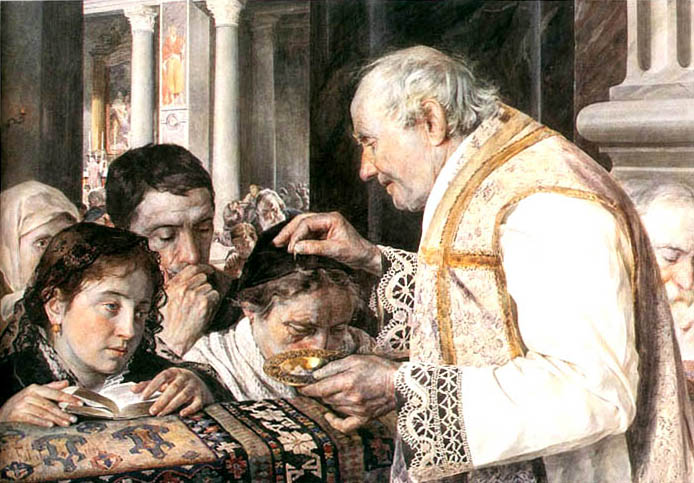
Image Credit: “Ash Wednesday” Julian Falat (1881)
“Dracula” by Luis Cuauhtémoc Berriozábal


Dracula

Dracula is in charge of the blood bank.
His bloody mouth smile sickens me.
His lips make sucking motions.
Sometimes they appear to tremble.
He’s like a kid in a candy store; I can’t
imagine how such things can happen.
The sinking feeling has sunk in.
I see him swallowing blood as if
blood was going out of existence.
I cannot believe my eyes. I cannot 
believe the things they see, Old
Dracula at the blood bank, eyes
looking up at the sky where the moon
reflects his shadow as blood spills
from his lips. He imagines that’s how
dreams should be. He has painted
his face and feet red with the blood
of men and women just declared dead,
from the suddenly wounded, even children.
Old Dracula does not care how small they are.
Sometimes he sleeps. Sometimes he’s up all day.
When the sun rises he remains in the blood bank.
I see him covered with blood. He is always covered
with blood. He is a mosquito addicted to blood.
It must be a curse to have such horrible thirst 
and never feel full.


About the Author: Luis Cuauhtémoc Berriozábal, born in Mexico, lives in California and works in the mental health field in Los Angeles. His first book of poems, Raw Materials, was published by Pygmy Forest Press. His poetry has been published by Alternating Current Press, Blue Collar Review, Counterpunch, Deadbeat Press, New Polish Beat, Poet’s Democracy, and Ten Pages Press. His latest chapbook, Make the Light Mine, was published by Kendra Steiner Editions.


More by Luis Cuauhtémoc Berriozábal:

“When I Was a Child”


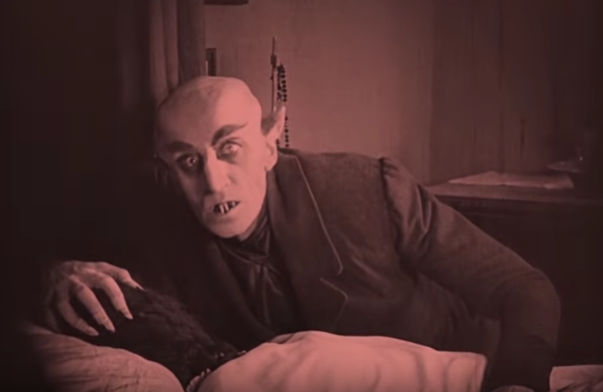
Image Credit: Still from Nosferatu (1922)

“Crossing” By Tony Gloeggler


CROSSING

Larry turned eighteen
in May. He knows
what red and green mean,
walks to the corner
and looks both ways.
Today, he’s on his own
for the first time.
He walks out the door.
I count to thirty, follow.
Hidden behind the stoop,
I watch him. Head down,
hands deep in pockets,
he drags his feet,
twirls on one foot
every twenty steps,
then bends and pulls up
his socks. He turns
the corner. I run down
the block, duck behind
a black Cadillac.
When he reaches the curb,
I sneak closer, crouch
in the hardware store’s
doorway. Larry lifts
his head, sees a red
light. His lips quiver,
right hand karate chops
his open left palm.
I recognize the sign
for stop, whisper
“Good.” Larry looks up
and the light’s green.
His right fist winds
around his clenched left
hand, tells him to walk.
He checks for cars, half
runs across Bergen Street.
Safe, Larry pirouettes
and faces me. He bows
at the waist, straightens
up, yells “Okay Tony”
and laughs out loud.


This poem first appeared in Mudfish


About Tony Gloeggler: I am a life-long resident of New York City and have managed group homes for the mentally challenged for over 35 years. My work has appeared in Columbia Poetry Review, Rattle, The Examined Life Journal, Raleigh Review, New Ohio Review, Stirring and The NY Times. My full length books include One Wish Left (Pavement Saw Press 2002) and Until The Last Light Leaves (NYQ Books 2015) which focused on my job and the autistic son of a former girlfriend. My next book, What Kind Of Man, will be published by NYQ Books in 2019.


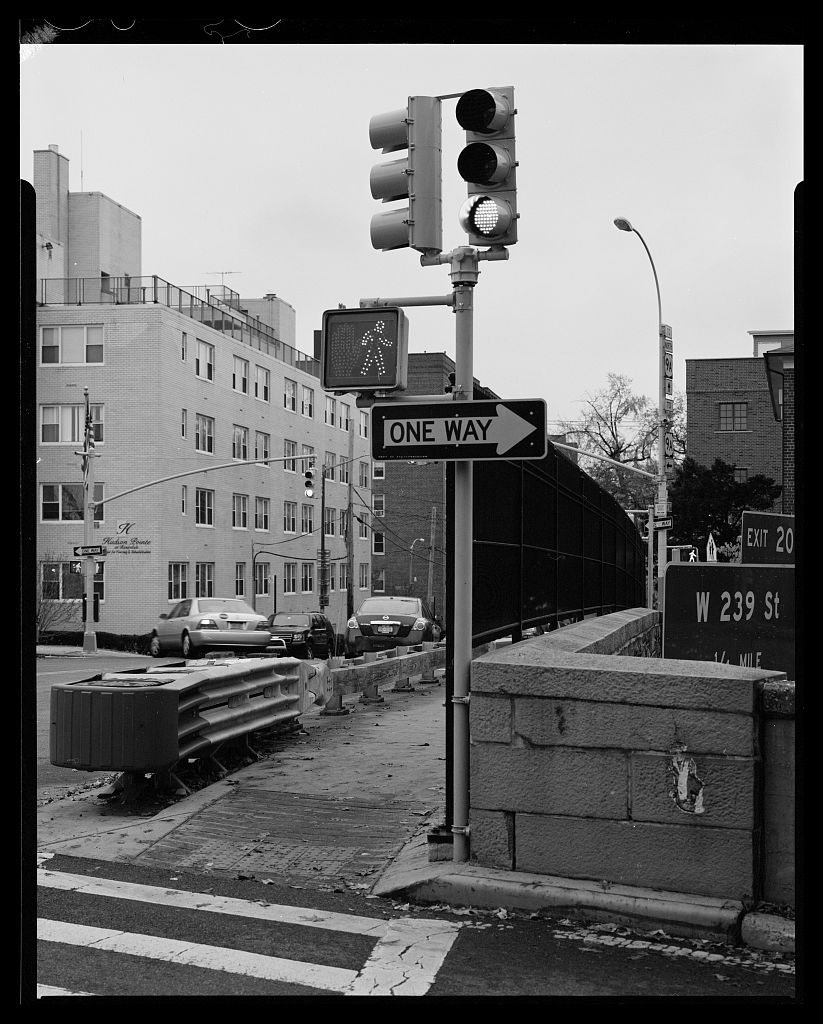
Image Credit: photo by Renee Bieretz, from The Library of Congress

“The Word with the Schwa that’s Really a Short U” By Ronnie Sirmans


THE WORD WITH THE SCHWA THAT’S REALLY A SHORT U

My new friend’s from Boise,
and I remember: as a boy
reading the word and mis-
pronouncing it as “Boys.”  
Some words seem to say
themselves to us. Like love.  
Has anyone moved lips
and tongue with a long o
to whisper to their true “loave”?  
Instincts may shape the syllable,
from inaudible caul, borne by
fluid breath like spoken words.
The pronunciation, its middle is u,
but not mouthed as “you,” but rather
the sound of our uncertainty, “uh”
— announcing our confusion over
how to grasp the word’s meanings,
a rainbowed fish still in the currents,
that we can’t catch with our bare hands
but need strong jaws like the bear
or a hook that snags the mouth
and lips, causing a bloody wound.


About the Author: Ronnie Sirmans is a digital editor for a print newspaper in Atlanta, and his poems have appeared in Gargoyle, The South Carolina Review, Tar River Poetry, BlazeVOX, The American Journal of Poetry, Deep South Magazine, and elsewhere.


More By Ronnie Sirmans:

“Remembering the Great Flood in the Frozen Food Aisle”


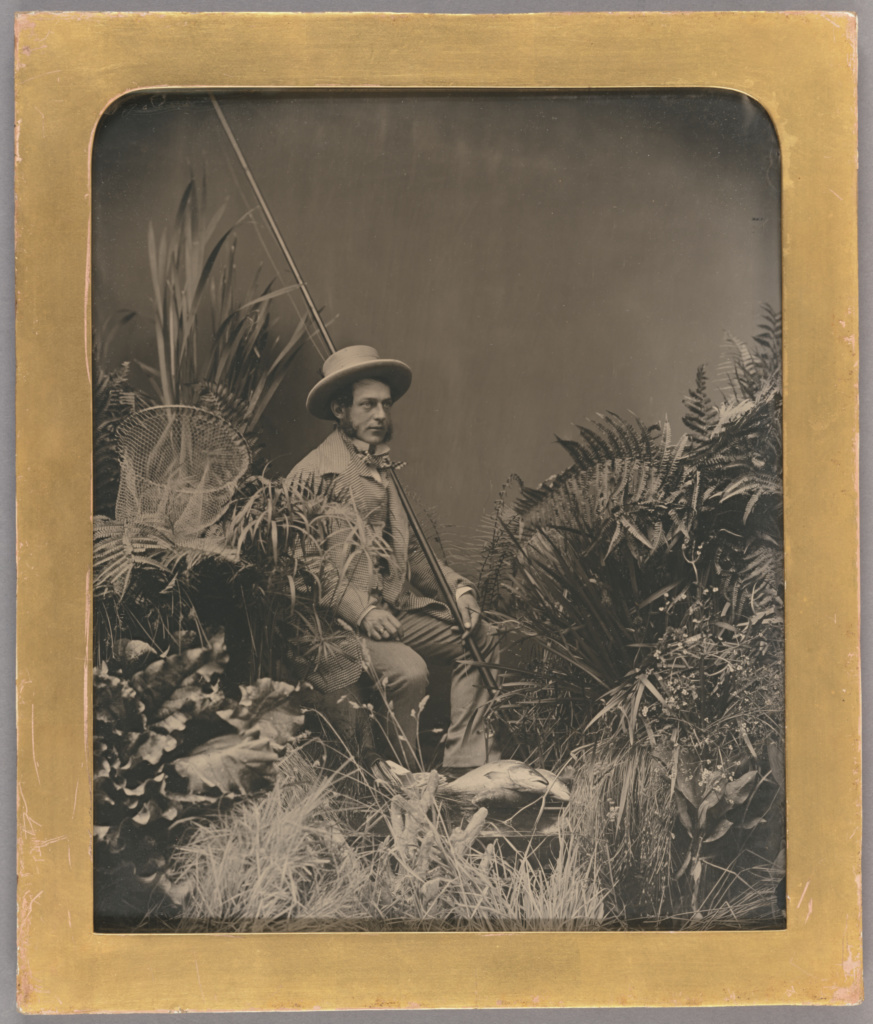
Image Credit: “Studio Portrait of a Man Posed with Fishing Gear / The Fisherman” Artist Unknown.  Digital image courtesy of the Getty’s Open Content Program

“The Misery of Fun” By Nathan Graziano


The Misery of Fun


I was holed up, purposefully, in my basement—the place where I hermit when I’m not obligated by work or another adult responsibility to leave and confront the outside world—when my wife came down the stairs, her heels clacking against the hardwood. She was holding her phone, staring at the screen. “So,” she said.

I knew that “so” and something was coming that I wasn’t going to enjoy hearing. “What is it?”

So my dad texted me, and they’re planning a trip for next April and inviting us and the kids,” she said.

“Tell me it’s not Disney World.”

“Disney World isn’t that bad,” she said with a lilt in her voice. “It’ll be fun.”

My head dropped into my hands. My wife was going to use the kids, who are now teenagers, to try to convince me into willfully entering the lost circle of Dante’s Hell.

And all of this would be done in the name of “prescribed fun.”    

At the risk of sounding like a curmudgeon—-which I probably am—-the idea of Disney World…hell, state of Florida alone, is enough to induce an anxiety attack. I’d rather be strung up by my toes and beaten with a broomstick than to stand in a 45 minute line next to a family of sunburned and overstuffed Midwesterners. There will be thousands of people with the same expectation: to have “fun” on the boat trip through It’s a Small World. Hop on, everybody, it will be a blast, everything you’ve waited to experience, so much fucking fun that you’ll pop like a fun-sucking tick.

“I’m not going,” I told my wife. “I don’t have enough Ativan to make it through a week there.” Continue reading ““The Misery of Fun” By Nathan Graziano”