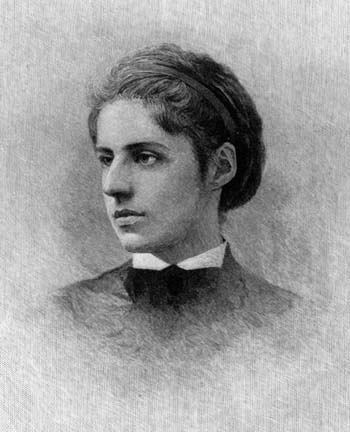
SATURDAY POETRY SERIES PRESENTS: EMMA LAZARUS


Emma_Lazarus


1492
By Emma Lazarus

Thou two-faced year, Mother of Change and Fate,
Didst weep when Spain cast forth with flaming sword,
The children of the prophets of the Lord,
Prince, priest, and people, spurned by zealot hate.
Hounded from sea to sea, from state to state,
The West refused them, and the East abhorred.
No anchorage the known world could afford,
Close-locked was every port, barred every gate.
Then smiling, thou unveil’dst, O two-faced year,
A virgin world where doors of sunset part,
Saying, “Ho, all who weary, enter here!
There falls each ancient barrier that the art
Of race or creed or rank devised, to rear
Grim bulwarked hatred between heart and heart!”


Today poem is in the public domain, belongs to the masses, and appears here accordingly.


Emma Lazarus (1849 – 1887): A descendant of Sephardic Jews who immigrated to the United States from Portugal around the time of the American Revolution, Emma Lazarus was born in New York City on July 22, 1849. Before Lazarus, the only Jewish poets published in the United States were humor and hymnal writers. Her book Songs of a Semite was the first collection of poetry to explore Jewish-American identity while struggling with the problems of modern poetics. (Annotated biography courtesy of The Academy of American Poets.)


Editor’s Note: I wanted to share with you today a poem for Rosh Hashanah, the Jewish New Year. Rosh Hashanah is a celebration of newness, ushered in by sweet wishes of the year to come. But we spend the days that follow in contemplation of those regrets we have from the year past, in asking for forgiveness, and in letting go. When I came across today’s poem I thought of the Syrian refugees, of how the plight of exile has plagued my own people in the past, and how others are suffering from it today.

5776, the Jewish year that begins at sundown on Sunday September 13th, will be a “two-faced year, Mother of Change and Fate” for countless Syrian refugees. That fate that my own people have suffered in the past is today their reality: “The West refused them, and the East abhorred. / No anchorage the known world could afford, / Close-locked was every port, barred every gate.”

Emma Lazarus is most famous for penning the words that appear at the base of the Statue of Liberty, wherein the “Mother of Exiles” declares, “Give me your tired, your poor, / Your huddled masses yearning to breathe free, / The wretched refuse of your teeming shore. / Send these, the homeless, tempest-tossed to me, / I lift my lamp beside the golden door!” As we celebrate a new year, may the words of the Mother of Exiles find their way into the hearts and minds of ports and borders across Europe and throughout the world, “Saying, ‘Ho, all who weary, enter here!'”


Want to read more by and about Emma Lazarus?
The Academy of American Poets
Jewish Women’s Archive
The Poetry Foundation

SATURDAY POETRY SERIES PRESENTS: PATRICK PHILLIPS

Photo by Marion Ettlinger


HEAVEN
By Patrick Phillips

It will be the past
and we’ll live there together.

Not as it was to live
but as it is remembered.

It will be the past.
We’ll all go back together.

Everyone we ever loved,
and lost, and must remember.

It will be the past.
And it will last forever.


Today’s poem is from the collection Boy (The University of Georgia Press, 2008, © Patrick Phillips), and appears here today with permission from the poet.


Patrick PhillipsElegy for a Broken Machine was published in 2015 by Alfred A. Knopf. A recent Guggenheim and National Endowment for the Arts fellow in poetry, he is the author of two earlier collections, Boy and Chattahoochee, and translator of When We Leave Each Other: Selected Poems of Henrik Nordbrandt. His work has appeared in many magazines, including Poetry, Ploughshares, and The Nation, and his honors include the Kate Tufts Discovery Award, a Pushcart Prize, and the Lyric Poetry Award from the Poetry Society of America. He lives in Brooklyn and teaches at Drew University.

Editor’s Note: I came across today’s poem on the New York subway as part of the MTA/Poetry Society of America collaboration, “Poetry in Motion.” Whenever I see a poem on the subway I read it. Of course I do. How often does one come across poetry in public spaces in America these days? But not since I came across Reznikoff’s “If There is a Scheme” on the PATH train has a poem in a public space so moved me.

What is so wonderful about today’s poem? Is it the way it plays with time, making the future of the past? “It will be the past / and we’ll live there together.” Is it the subtle way the poet uses rhyme and repetition, as if the poem were a lullaby — “together / remembered / together / remember / forever”? Or is it the promise of the poem? That within our future lies our past, that heaven is where we might relive our memories over and over, that we will be reunited there with everyone we ever loved, “And it will last forever.”

Want more from Patrick Phillips?
Buy Elegy for a Broken Machine from Amazon
Patrick Phillips’ Official Website

SATURDAY POETRY SERIES PRESENTS: AMORAK HUEY

IMG_3503

By Amorak Huey:


THE POND IN THE CORNER OF THE YARD

It seems so important that I get this right—

memory choked with algae,
memory dried to nothing in the summer,

memory’s post-dawn sky already fevered with desire,
memory’s grass grabbing wet at my hungry ankles.

I remain the same lonely child I was,

never having learned the rules of prayer. Instead I offer
this uncurling body, this frog-song,
tornado-spike, voice-from-the-trees:

the word green
the word green
the word green
.


THE CORN IN THE VALLEY

A sea of silk, a sky of stalk, a sun of ear and song.

There is a season for planting,
a season for harvest,

a moon-color for the storms between.

The lightning has something to do with nourishment,
something to do with need.


THE DOGWOOD AT THE CORNER OF THE PORCH

By our presence we alter the shape of the tree,

crook its looping limbs to suit our prayers,
our psalms and songs,
our cautionary tales.

It’s not the tree asking forgiveness
for its part in our most thoughtless acts—

our blossom-burst and leaf-turn,
our self-inflicted separations.


“The Pond in the Corner of the Yard” originally appeared in Thrush. Today’s poems appear here today with permission from the poet.


Amorak Huey is author of the chapbook The Insomniac Circus (Hyacinth Girl Press, 2014) and the forthcoming poetry collection Ha Ha Ha Thump (Sundress Publications, 2015). A former newspaper editor and reporter, he teaches writing at Grand Valley State University in Michigan. His poems appear in The Best American Poetry 2012, The Cincinnati Review, The Southern Review, The Collagist, Menacing Hedge, and many other print and online journals. Follow him on Twitter: @amorak.

Editor’s Note: I have had the pleasure of featuring Amorak Huey here on the Saturday Poetry Series before, and I am as struck by his poetry today as I was when I encountered it all those years ago. Is it the way he infuses the everyday with a touch of magic? Is it the fine line he conjures between nature and spirit and prayer? Perhaps it is the world he harvests, words sprouting from the earth as if from seeds, the quiet calm of the farm balanced by the weight of repetition, alliteration, form. It is as if you could part the corn stalks and encounter the poem. As if the poem could be turned over like earth, fertile ground for all the words that have yet to be planted.

Want more from Amorak Huey?
“Self-Portrait Following a Trail of Reese’s Pieces” in Radar
“When They Serialize My Life They’re Going to Have a Problem with 1993” in disquieting muses quarterly
“The Fathers at the Little League Field” in Hobart
“Melon Heads” in Stirring from Sundress Publications

SATURDAY POETRY SERIES PRESENTS: SARA BIGGS CHANEY

BiggsChaneyauthor

ST. EUGENIA DECLARES HER ALLEGIANCES
By Sara Biggs Chaney

The girl said: I am not skin,
but sackcloth.

She said: I am not spoke,
but symphony.

My rib bones, how they burn
for the Son.

For Him, I will suffer
this harmonic ache–

I will pin my maiden head,
a moth wing,

I will bear the shames
of a thousand men,

I will wear the hands
of a healer.


Today’s poem was originally published in Thrush and appears here today with permission from the poet.


Sara Biggs Chaney received her Ph.D. in English in 2008 and currently teaches first-year and upper-level writing in Dartmouth’s Institute for Writing and Rhetoric. Her most recent chapbook, Ann Coulter’s Letter to the Young Poets, was released from dancing girl press in November, 2014. Sara’s poems have recently appeared or are forthcoming in RHINO, Sugar House Review, [PANK], Juked, and elsewhere. You can catch up with Sara at sarabiggschaney.com.

Editor’s Note: Today’s poem, like the famous Walt Whitman quote, contains multitudes. Relaying an epic history in a few swift couplets, the interplay between referentiality and alliteration is as precise as it appears effortless. Discreet moments—brilliant vignettes—are carefully pieced together to reveal the story of a life: “The girl said: I am not skin, / but sackcloth;” “I will bear the shames / of a thousand men, // I will wear the hands / of a healer.” As readers, we are as transported by the world of the poem as we are transformed.

Want more from Sara Biggs Chaney?
“St. Barbara, Locked Away” in Atticus Review
“St. Theodora in the Brothel” in Tinderbox Poetry

SATURDAY POETRY SERIES PRESENTS: MIRIAM’S SONG

Feuerbach_Mirjam_2

“Miriam the prophetess” by Anselm Feuerbach. Public Domain image.


“Miriam the prophetess… took the tambourine in her hand; and all the women followed her with tambourines and dances. And Miriam called to them: Sing…” (Exodus 15:20-21)


Editor’s Note: The most important thing that has happened to Passover this year is the Notorious RBG’s decree that when we remember the Exodus, we need to remember the women. First and foremost among them, for me, is Miriam. The unsung hero of what is usually thought of as “Moses’ story,” Miriam is responsible for everything from Moses’ birth to his survival to providing water for the Israelites throughout their forty-year-sovereign in the desert. The first person in the Bible to be called a prophet, Miriam was beloved by her people but less-loved by her creator, who struck her down with leprosy to teach her the consequences of a woman voicing her opinion.

Song is one of the oldest forms of poetry, and the poetry of the Bible is one of the oldest written records of poetry we have. Sadly, all that remains of Miriam’s song in the Bible is a call to action: “And Miriam called to them: Sing…”

We are lucky, therefore, that Debbie Friedman (1951-2011) picked up this mantle. In “Miriam’s Song” she joins her voice with a new generation of women to remember and celebrate the heroine of the Passover story, responding to the prophetess’ call to action: “Sing.” Beloved by women and men alike all the world over, Debbie Friedman and “Miriam’s Song” are the kinds of modern Passover traditions we need. Inclusive and powerful, shedding new light on ancient traditions. For, as Debbie Friedman reminds us, “The more our voices are heard in song, the more we become our lyrics, our prayers, and our convictions.”

Want more Miriam, Debbie Friedman, and Feminist Passover?
Read the lyrics to “Miriam’s Song” by Debbie Friedman on Ritualwell
Debbie Friedman via the Jewish Women’s Archive
Miriam via the Jewish Women’s Archive
Buy The Journey Continues: The Ma’yan Passover Haggadah on Amazon

SATURDAY POETRY SERIES PRESENTS: RICHARD D’ABATE

photo (5)

By Richard D’Abate:


THE SADNESS OF YOUNG MOTHERS

Because we’re at the beach today our sadness
knows itself,

Between the sinking sand and slowly measured
falling waves.

Not long ago time was arrow-tipped and
ravenous.

It found its mark before the god of love had
even stirred.

It filled our bones to bursting, era of the second
self begun.

Now every gesture mirrors gestures of a
smaller one.

They raise their arms, we raise our arms, they wobble
toward the sea

Like turtle hatchlings, thoughtless prey, and
so do we.

We match the steps of half-formed beings—
tender, new—

Ourselves, our future selves, alive but always
cut in two.

We are afraid. The burning sun devours
little bones.

Their little mouths will gulp the tangled weed, the
sliding foam.

We run, we start to run, but time has a thickness
all its own,

And half of half of half is motion’s rule or
none at all,

As when the cresting tops of glittering breakers
do not fall,

Or when in dreams we hear, but do not hear, our
children call.


Today’s poem was originally published by AGNI and appears here today with permission from the poet.


Richard D’Abate is the author of a poetry collection, To Keep the House From Falling In (Ithaca House Press), as well as stories and poems in Epoch, Apple and other magazines. His most recent work appears in Agni Online. A native of New York City, his professional life has been focused in Maine: as a professor of English literature, an advocate for the public humanities, and director of the Maine Historical Society, a statewide cultural agency and research center. His scholarly essays have appeared in various publications, including American Beginnings (University of Nebraska Press), on New World exploration, encounter, and cartography. He now lives and writes in Wells, Maine.

Editor’s Note: As a reader and a card-carrying feminist, I was as taken aback by today’s poem for its stunning lyric as I was by the (male) poet’s ability to capture the way mothers worry for their children. (Fathers do as well, of course, but today’s poem is about the experience of young mothers, specifically.) How audacious to take on this persona! And how effortlessly and accurately the poet has captured this unique viewpoint that is not his own. Haters gonna hate, and there are those who feel that a male writing from a female perspective is a patriarchal act of establishing dominion over a realm that is not theirs to control. But the other half of that debate is that of being empathetic, of trying to understand the other from within the other’s shoes, of being sensitive to those from outside our own gender, and Richard D’Abate has done this with today’s honest and heartbreaking work.

The poet has given breathtaking form to the parental experience, naming it the “era of the second self,” calling children “our future selves,” who, through a mother’s eyes, are “alive but always / cut in two.” Even more palpable is the mother’s fear for her children: “they wobble / toward the sea // Like turtle hatchlings, thoughtless prey, and / so do we,” “We are afraid. The burning sun devours / little bones. // Their little mouths will gulp the tangled weed, the / sliding foam. // We run, we start to run, but time has a thickness / all its own … [as] when in dreams we hear, but do not hear, our / children call.” By the skilled hand of the poet the fear and helplessness mothers feel for their children is brought to life through a vivid imagery and lyric beauty so chilling we feel it as if it were our own.

Want more from Richard D’Abate?
Buy To Keep the House from Falling In on Amazon
The Richard D’Abate Lectures: Conversations About History, Art, and Literature
Maine Historical Society: Richard D’Abate Endowment Fund for Scholarship & Special Programs

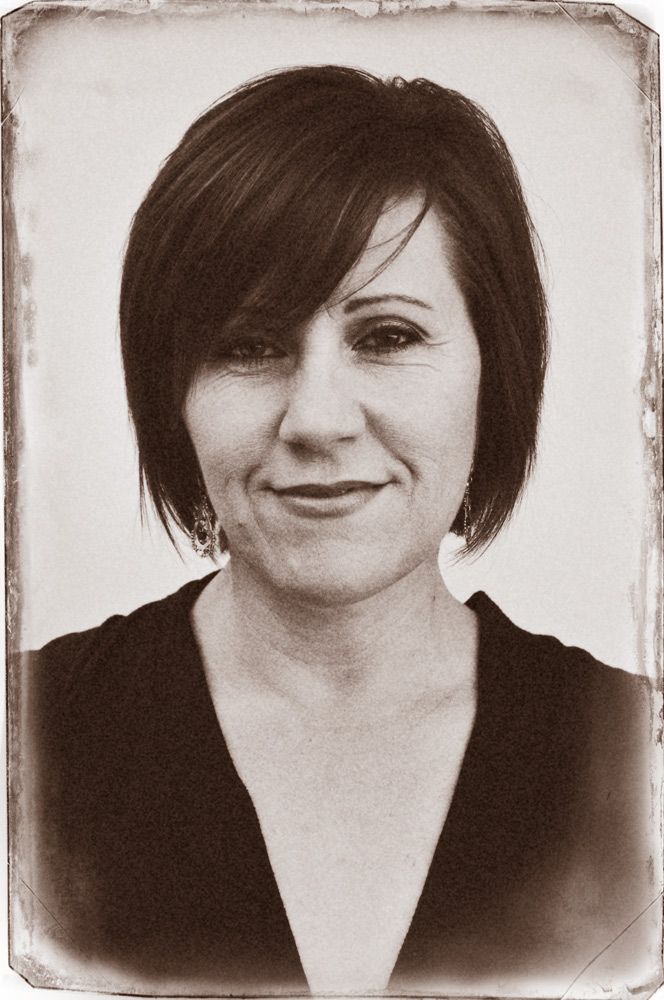
SATURDAY POETRY SERIES PRESENTS: STACEY ZISOOK ROBINSON

me

By Stacey Zisook Robinson:


THE BOOK OF ESTHER

That blush on my cheek?
It’s paint,
And I have glittered my eyes
And robed myself in the finery
of silk and gossamer,
lapis and gold–
And whored myself for your salvation.

You asked for no thoughts.
You merely offered my body
to the king–
My life forfeit
If my beauty failed.

You asked for no ideas
And I gave you none,
Though I had a thousand,
And ten thousand more.

Diplomacy was played on the field of my body,
The battle won in the curve of my hip
And the satin of my skin,
Fevered dreams of lust
And redemption.

That blush on my cheeks?
It is the stain of victory
And of my shame.


Today’s poem was originally published on Stumbling Towards Meaning and appears here today with permission from the poet.


Stacey Zisook Robinson is a single mom. She sings whenever she can. She writes, even when she can’t. She worked in Corporate America for a long time. Now she works at her writing and looks for God and grace, meaning, connection, and a perfect cup of coffee, not necessarily in that order. Stacey has been published in the Summer 2013 issue of Lilith Magazine and in several anthologies including The Hope (Menachem Creditor, ed) and In Transit (BorderTown Press, Daniel MacFadyen, ed). Watch for her book, Dancing in the Palm of God’s Hand, forthcoming from Hadasah Word Press. Stacey has recently launched a Poet in Residence program designed to work with both adults and kids in a Jewish setting to explore the connection between poetry and prayer as a way to build a bridge to a deepened Jewish identity and faith.

Editor’s Note: This week we celebrated Purim, a Jewish holiday that commemorates Queen Esther (5th c. B.C.E.) saving Persian Jews from genocide. Esther’s rise to power, however, was problematic. Her predecessor, Queen Vashti, was summoned to appear in her crown, ordered to display her beauty before the king and his nobles. The implication, according to many scholars, is that Queen Vashti was ordered to appear wearing only her crown. She refused, and it was suggested that she should be de-throned and replaced by a “worthier woman” so that “all wives [would] henceforth bow to the authority of their husbands, high and low alike” (Esther 1:19-20).

And there’s your daily dose of female oppression, Bible style.

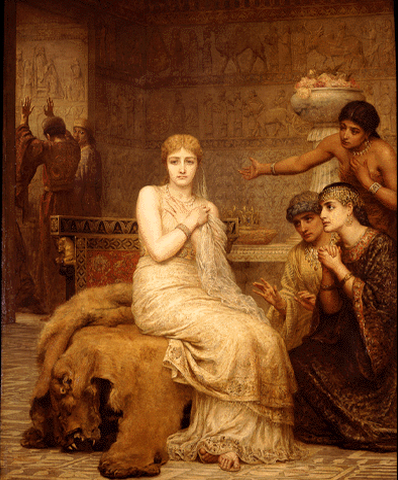
"Vashti Refuses the King's Summons" by Edwin Long (1879). Public Domain image.
“Vashti Refuses the King’s Summons” by Edwin Long (1879). Public Domain image.


A search began for beautiful young virgins. Those who made the cut were subjected to twelve months of beauty treatments before the king would even deign to lay eyes on them. The hopefuls then appeared before the king, who did not see any of them ever again “unless he was particularly pleased by her” (Esther 2:12-14). King Xerxes liked Esther best of all the young virgins displayed before him, and crowned her queen in Vashti’s stead. Plot twist: the king did not know that Esther was Jewish, for she had deliberately kept that fact from him. In the end Esther was able to use her beauty to bend the king to her will, and when one of his henchmen sought to have all the Jews in the kingdom annihilated, Esther stood up for her people and they were spared.

While it is this end-result that is remembered and celebrated each year at Purim, it is Esther’s degrading rise to the throne—and what it cost her to to save her people—that is the subject of today’s poem.

To come to power, Esther had to take the rightful queen’s place and become the poster child for the idea that “all wives [should] bow to the authority of their husbands.” To catch the king’s eye she had to strip away her personhood until nothing was left but her physical beauty. “That blush on my cheek? / It’s paint, / And I have glittered my eyes / And robed myself in the finery / of silk and gossamer, / lapis and gold.” It was not her devotion to her people that allowed her to save them, but that she “whored [her]self for [their] salvation.” Nor did her people care who she was beneath her beauty, or whether she survived her attempt to save them: “You asked for no thoughts. / You merely offered my body / to the king– / My life forfeit / If my beauty failed.”

"Queen Esther" by Edwin Long (1878). Public Domain image.
“Queen Esther” by Edwin Long (1878). Public Domain image.


Queen Esther was a pawn in men’s games, as women of history have too often been. “Diplomacy was played on the field of my body, / The battle won in the curve of my hip.” She used her beauty and her sexual allure because, as a woman of her time and place, they were the only instruments of power available to her. But if she were given a voice, she might speak of inner conflict. She might tell us what it feels like to lack the ability to either refuse or consent. Queen Esther was a hero, but what did it cost her to package and sell herself in the name of the greater good? “That blush on my cheeks? / It is the stain of victory / And of my shame.”

Today’s poem does what all great feminist biblical interpretation and midrashot do: it examines, deconstructs, and reconstructs androcentric assumptions, biases, and perspectives in biblical literature, placing women, gender, and sexuality at the center of reinterpretation.

In a time when the Bible is still being used to justify the oppression of women, we need much more of the important work Stacey Zisook Robinson is doing with “The Book of Esther.”

Want more from Stacey Zisook Robinson?
Stacey Zisook Robinson’s Blog
Stacey Zisook Robinson’s Official Website
Personal Essays and Opinion Pieces on iPinion
ReformJudaism.org

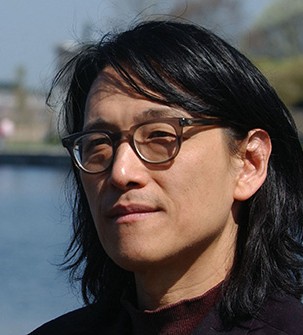
SATURDAY POETRY SERIES PRESENTS: LI-YOUNG LEE

lee_si-303x335


By Li-Young Lee:


from ALWAYS A ROSE

Not for the golden pears, rotten on the ground—
their sweetness their secret—not for the scent
of their dying did I go back to my father’s house. Not for the grass
grown wild as his beard in his lasts months,
nor for the hard, little apples that littered the yard,
and vines, rampant on the porch, tying the door shut,
did I stand there, late, rain arriving.
The rain came. And where there is rain
there is time, and memory, and sometimes sweetness.
Where there is a son there is a father.
And if there is love there is
no forgetting, but regret rending
two shaggy hearts.
I said good-bye to the forsythia, flowerless for years.
I turned from the hive-laden pine.
Then, I saw it—you, actually.
Past the choked rhododendrons,
behind the perishing gladiolas, there
in the far corner of the yard, you, my rose,
lovely for nothing, lonely for no one,
stunning the afternoon
with your single flower ablaze.
I left that place, I let the rain
mediate on the brilliance of one blossom
quivering in the beginning downpour.


VISIONS AND INTERPRETATIONS

Because this graveyard is a hill,
I must climb up to see my dead,
stopping once midway to rest
beside this tree.

It was here, between the anticipation
of exhaustion, and exhaustion,
between vale and peak,
my father came down to me

and we climbed arm in arm to the top.
He cradled the bouquet I’d brought,
and I, a good son, never mentioned his grave,
erect like a door behind him.

And it was here, one summer day, I sat down
to read an old book. When I looked up
from the noon-lit page, I saw a vision
of a world about to come, and a world about to go.

Truth is, I’ve not seen my father
since he died, and, no, the dead
do not walk arm in arm with me.

If I carry flowers to them, I do so without their help,
the blossoms not always bright, torch-like,
but often heavy as sodden newspaper.

Truth is, I came here with my son one day,
and we rested against this tree,
and I fell asleep, and dreamed

a dream which, upon my boy waking me, I told.
Neither of us understood.
Then we went up.

Even this is not accurate.
Let me begin again:

Between two griefs, a tree.
Between my hands, white chrysanthemums, yellow
      chrysanthemums.

The old book I finished reading
I’ve since read again and again.

And what was far grows near,
and what is near grows more dear,

and all of my visions and interpretations
depend on what I see,

and between my eyes is always
the rain, the migrant rain.


Today’s poems were published in Rose (BOA Editions, 1986) and appear here with permission from the poet.


Li-Young Lee is the author of four books of poetry, including, most recently, Behind My Eyes. His earlier collections are Book of My Nights; Rose, winner of the Delmore Schwartz Memorial Award; The City in Which I Love You, the 1990 Lamont Poetry Selection; and a memoir entitled The Winged Seed: A Remembrance, which received an American Book Award from the Before Columbus Foundation and will be reissued by BOA Editions in 2012. Lee’s honors include fellowships from the National Endowment for the Arts, The Lannan Foundation, and the John Simon Guggenheim Memorial Foundation, as well as grants from the Illinois Arts Council, the Commonwealth of Pennsylvania, and the Pennsylvania Council on the Arts.

Editor’s Note: Because it has been three years since my father died. Because three years ago, Li-Young Lee’s Rose was the labyrinth I walked to access my grief. Because “Truth is, I’ve not seen my father / since he died.” And while rereading this collection forces me to confront this reality, it also reminds me that “if there is love there is / no forgetting.”

Want more from Li-Young Lee?
Blue Flower Arts
The Poetry Foundation
Academy of American Poets

SATURDAY POETRY SERIES PRESENTS: MARCI CALABRETTA

MarciCalabretta


By Marci Calabretta:


CATERPILLAR SEASON

Wild strawberries were blooming
as we ambled toward the cottonwood shade.

You were examining the prophecy of snowfall
in the measurements of woolly caterpillars

and I asked your opinion on the nature of happiness,
perhaps because you called me sister

or because I called you brother and stranger.
Tiger-banded dragonflies skimmed the grass.

Fern and myrtle, downy brown and black.
You laid the larvae on my palms without speaking.

I never knew you had such silences.
Overhead, wires heavy with starlings or crows―

I couldn’t tell against the steel sky. But I remember
later that night, the steam from our tea

curling above us and into our mouths, as though
the answer could last us a whole season of snow.


BROTHER RETURNS AS CHRYSANTHEMUM

Didn’t we think we were more than this―
little suns unfurling above the earth?

We thought we were constellations
in soil, entire galaxies anchored to dust.

Ravenous, we believed our thousand
arms could hoard the horizon―

eclipsing ourselves even as we waned,
bereft of all but shadow.


Today’s poems were originally published in Thrush Poetry Journal, and appear here with permission from the poet.


Marci Calabretta is the recipient of poetry fellowships from Kundiman and the John S. and James L. Knight Foundation. Her work has appeared most recently in Thrush, Lunch Ticket, American Letters & Commentary, and Chautauqua. Her chapbook, Last Train to the Midnight Market, was published by Finishing Line Press. She is co-founder and managing editor for Print-Oriented Bastards, an assistant editor for Jai-Alai Magazine, and a contributing editor for Florida Book Review.

Editor’s Note: Today’s poems are wildly vivid and pleasantly unexpected. In “Caterpillar Season,” the poet couples the lush of wild strawberries with the oracular act of “examining the prophecy of snowfall.” The poem is like a parable in which the nature of happiness might be gleaned from the wonders of a nature so vibrant it feels at times as if it might fly or blossom from the page. “Brother Returns as Chrysanthemum” is anchored in the metaphysical, grappling with human existence and our role in the universe. The culmination of the poem, “eclipsing ourselves even as we waned, / bereft of all but shadow,” is a gorgeous finale that grounds us in the observable while inviting us to contemplation. Both poems indulge in delicious alliteration, fervently celebrating language and the poetic act.

Want more from Marci Calabretta?
Marci Calabretta’s official website
Lunch Ticket
Purchase Last Train to the Midnight Market from Finishing Line Press
Co-founder and managing editor for Print-Oriented Bastards

SATURDAY POETRY SERIES PRESENTS: NORMA LILIANA VALDEZ

NLValdez head shot


By Norma Liliana Valdez:


UNACCOMPANIED

Everything is happening now. Everything is present tense. The horses. The running.

The losing. This operation is a well-oiled machine. All is slow motion until dusk. After

dusk come the icy furrows. Overnight temperatures the kind of cold that enters marrow.

There is so much winter in the eyes. From here the only lights: the moon and Chula

Vista. After the ice, the running. Ravine. Huizache. Thorns. The hiding. A Cadillac.

There is a gun in the glove compartment. There are two boys in the trunk. Two other

boys contort their bodies on the back seat floor, legs entwined. Face down. Face down.

He is the one balled on the front passenger floor because he is the smallest. He is bones

and destiny.


HUMMINGBIRD

every breath you exhaled

a blanket of hosannas

each hand like prayer, like

unfettered music

you were night, naked

shoulders in moonlight

I lost my breath

beneath your gravity

your touch slid along the arc

of every whisper

I inhaled greedily

filled every room

filled every empty space

inside of me

you must have known my anthem

when you left

urgent as an animal


“Unaccompanied” was the poetry winner of the 2015 San Miguel Writers’ Conference Writing Contest, and “Hummingbird” is an original feature on the Saturday Poetry Series on As It Ought To Be. Both poems appear here today with permission from the poet.


Norma Liliana Valdez is an alumna of the VONA/Voices Writing Workshop, the Writing Program at UC Berkeley Extension, and a 2014 Hedgebrook writer-in-residence. Her poems have appeared in Calyx Journal, The Acentos Review, As It Ought To Be, La Bloga, and Dismantle: An Anthology of Writing from the VONA/Voices Writing Workshop. She is the poetry winner of the 2015 San Miguel Writers’ Conference Writing Contest. Additional work is forthcoming in Poetry of Resistance: A Multicultural Anthology by University of Arizona Press. She lives and works in the San Francisco Bay Area.

Editor’s Note: Over the years Norma Liliana Valdez’s writing has grown much in the way bougainvillea grows. Along earth-toned buildings in warm places. A steady, fertile spread erupting in vibrant blossoms. Like the sight of bright and blooming bougainvillea, today’s poems take my breath away.

“Unaccompanied,” winner of the 2015 San Miguel Writers’ Conference Writing Contest in poetry, is a work of art. The title is evocative, deftly making its mark. The narrative envelopes us in a gripping and heart-wrenching tale that speaks as much to the experience of the few as to the dreams and suffering of the masses. This work is vocal, political, and brave. Brimming with stunning lyric, we feel “the kind of cold that enters marrow,” see how “there is so much winter in the eyes,” and are left with what reads like a told fortune: “He is bones / and destiny.”

While “Unaccompanied” is yin-like—covert and treacherous—”Hummingbird” is like the yang—in relief, open, belonging to this world. The energy is sensual and intense, with “each hand like prayer.” And while both poems end spectacularly, “Hummingbird” is volta-like in its finale, confessing that “you must have known my anthem / when you left / urgent as an animal.”

This is the poet’s third Saturday Poetry Series feature. Three is a sacred number. The Holy Trinity. Maiden, Mother, Crone. The Triple Bodhi. The Trimurti. Which is fitting, as the poet divines poems that are alchemical. Spiritual. Faithfully wrought and nearly religious in their lyricism. Evocative of a humanity made palpable through poetry.

Want to read more by Norma Liliana Valdez?
Saturday Poetry Series feature, As It Ought To Be, 2011
Saturday Poetry Series feature, As It Ought To Be, 2010
Winners of the 2015 San Miguel Writers’ Conference Writing Contest
Spiral Orb
The Acentos Review