“My Nephew and I Escape from Prison” By Kevin Ridgeway


My Nephew and I Escape from Prison

he’s technically inclined enough
at just six years old
to operate most tools 
building things like a filthy
Frank Lloyd Wright
obsessed with the idiosyncrasies
of each claw machine
he intends to break ground with
a shovel and begin digging
his hand like one of his
beloved blue print envisioned
crayola claws until there is a hole
big enough for us both to get
to the other side where I’ll be
charged with explaining to
people that we are prisoners
of a psychological spectrum
we refuse to serve needless
time we could spend building
things, writing poems and on
parole from the menace of
social stigma we are too
distracted by our gifted
obsessions to waste time
paying attention to as
we find the miracles in
the attics of our minds,
minds no one quite has
like the two of us.


About the Author: Kevin Ridgeway is the author of Too Young to Know (Stubborn Mule Press).  Recent work can be found in Slipstream, Chiron Review, Nerve Cowboy, Main Street Rag, The American Journal of Poetry, Big Hammer, Trailer Park Quarterly and So it Goes:  The Literary Journal of the Kurt Vonnegut Memorial Library.


More By Kevin Ridgeway:

Sally with the Accent

Five Hundred Channels and Nothing On


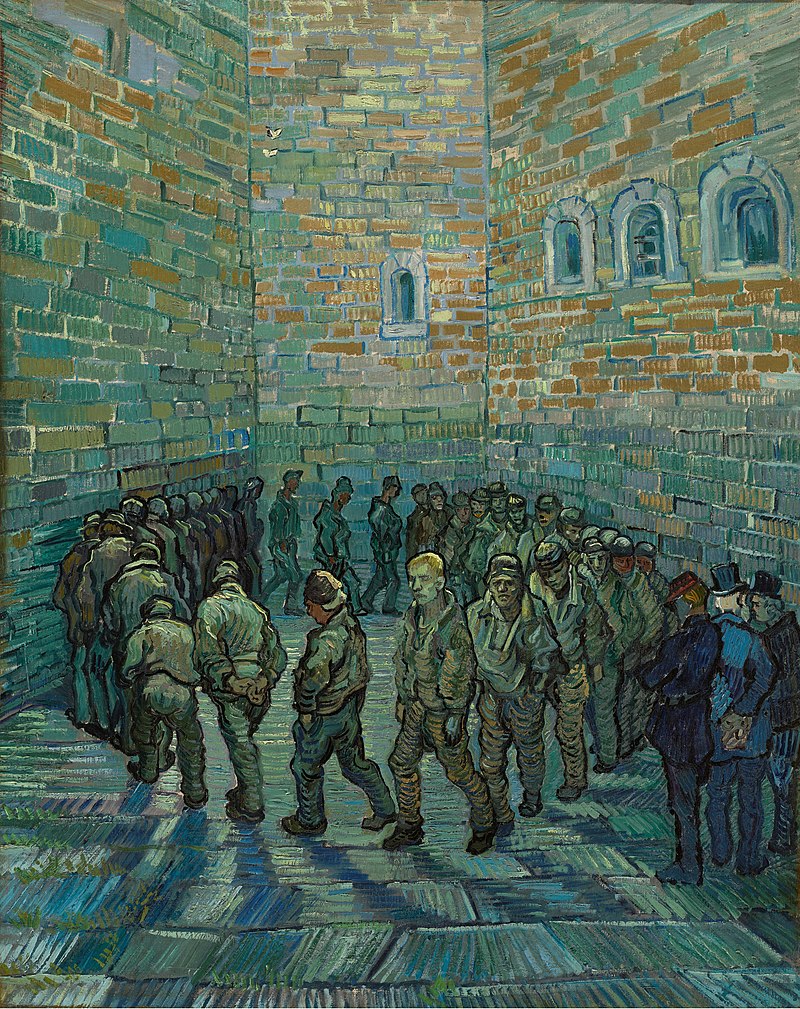
Image Credit: Vincent Van Gogh “Prisoners Exercising” (1890)


“Remainders” By Marc Frazier


Remainders

Aunt Bertha’s thick ankles tucked in orthopedic shoes.
She stirs water into flour for chicken gravy paste.

The soon-to-be-closed eyes of my father
stare at the dog planter on the window ledge.

Mother’s hands run fabric under the jumpy needle,
the machine’s drone luring me to love.

The voice of great-uncle John’s deep bass
volleys with Esther’s small, squeaky refrains.

Nicks on Sergio’s perfect face
held like a calla between my flowering palms.

The smell of Sunday’s roast with onions
potatoes and carrots waft through register vents.

Grandfather’s sad, wrinkled red face
dozes alone in the paneled TV room.

David of the Espanola Valley places his hand over mine
as I look above the table at New Mexican stars.

I cannot recall her last smile here beside the unplugged
body as the doctor says, “She’s passed.”


About the Author: Marc Frazier has widely published poetry in journals including The Spoon River Poetry Review, ACM, Good Men Project, f(r)iction, The Gay and Lesbian ReviewSlant, Permafrost, Plainsongs, and Poet Lore. Marc is the recipient of an Illinois Arts Council Award for poetry and has been nominated for a Pushcart Prize and a “best of the net.” His book The Way Here and his two chapbooks are available on Amazon as well as his second full-length collection Each Thing TouchesWillingly, his third poetry book, will be published by Adelaide Books New York in 2019. His website is http://www.marcfrazier.org.


More by Marc Frazier: 

Sent My Way


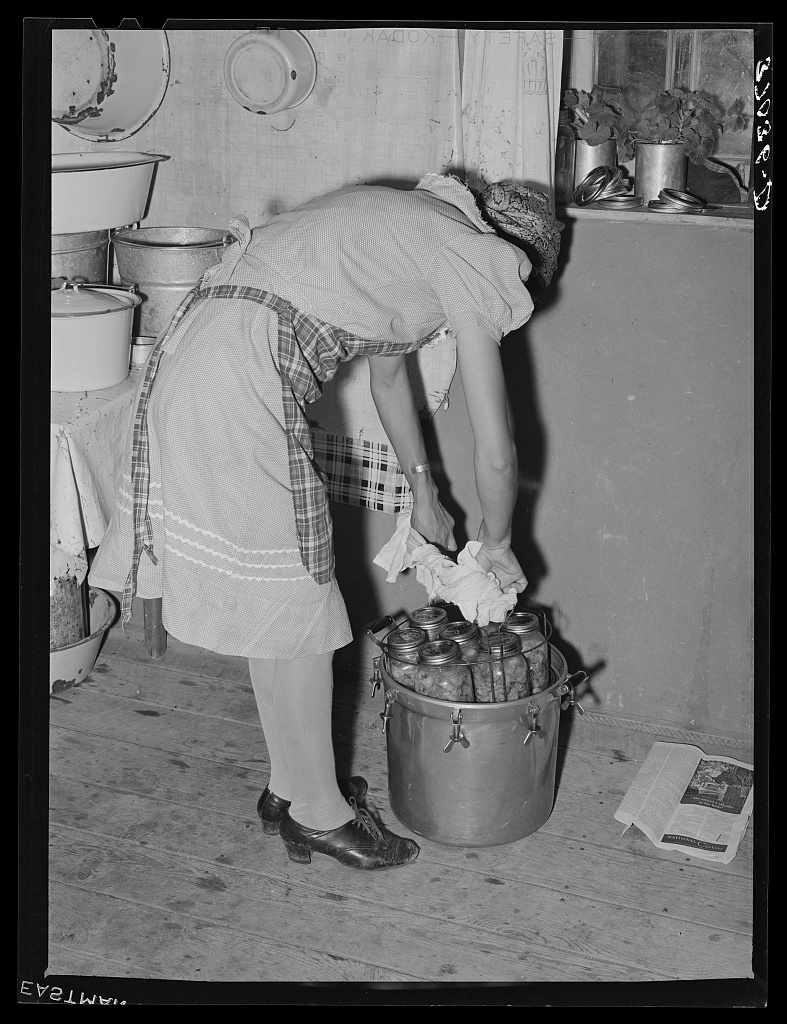
Image Credit: Russell Lee “Removing jars of canned fruit from pressure cooker. Chamisal, New Mexico” (1940) Library of Congress

“Wages” By Larry Smith


Wages

Payday comes in from the cold
and sets a bag down in the hallway.
She finds her place at the table
where we are dressed in our good clothes.
Mom is already drinking wine
and Dad is telling funny work stories.
Payday laughs like coins falling on a metal tray.
We pass her the pork chops
and watch her fork not one but two—
“One for later,” she grins at us.
Like always we pretend to smile.

By the time the sun has set
we’ve said good-bye to our Payday
and a silence fills the room.
When I break a plate, Mom cries,
“Oh shit. Look what you’ve done.”
You can hear the sound of wind.
Then Mom hands Dad a fist full of bills,
and we kids go off to our rooms.
Tomorrow will mean our old clothes again
and the counting of our coins.


About the Author: Larry Smith is a poet, fiction writer, and editor-publisher of Bottom Dog Press in Ohio where they feature a Working Lives and an Appalachian Writing Series. He is also the biographer of Kenneth Patchen and Lawrence Ferlinghetti. He lives in Huron, Ohio, along the shores of Lake Erie.


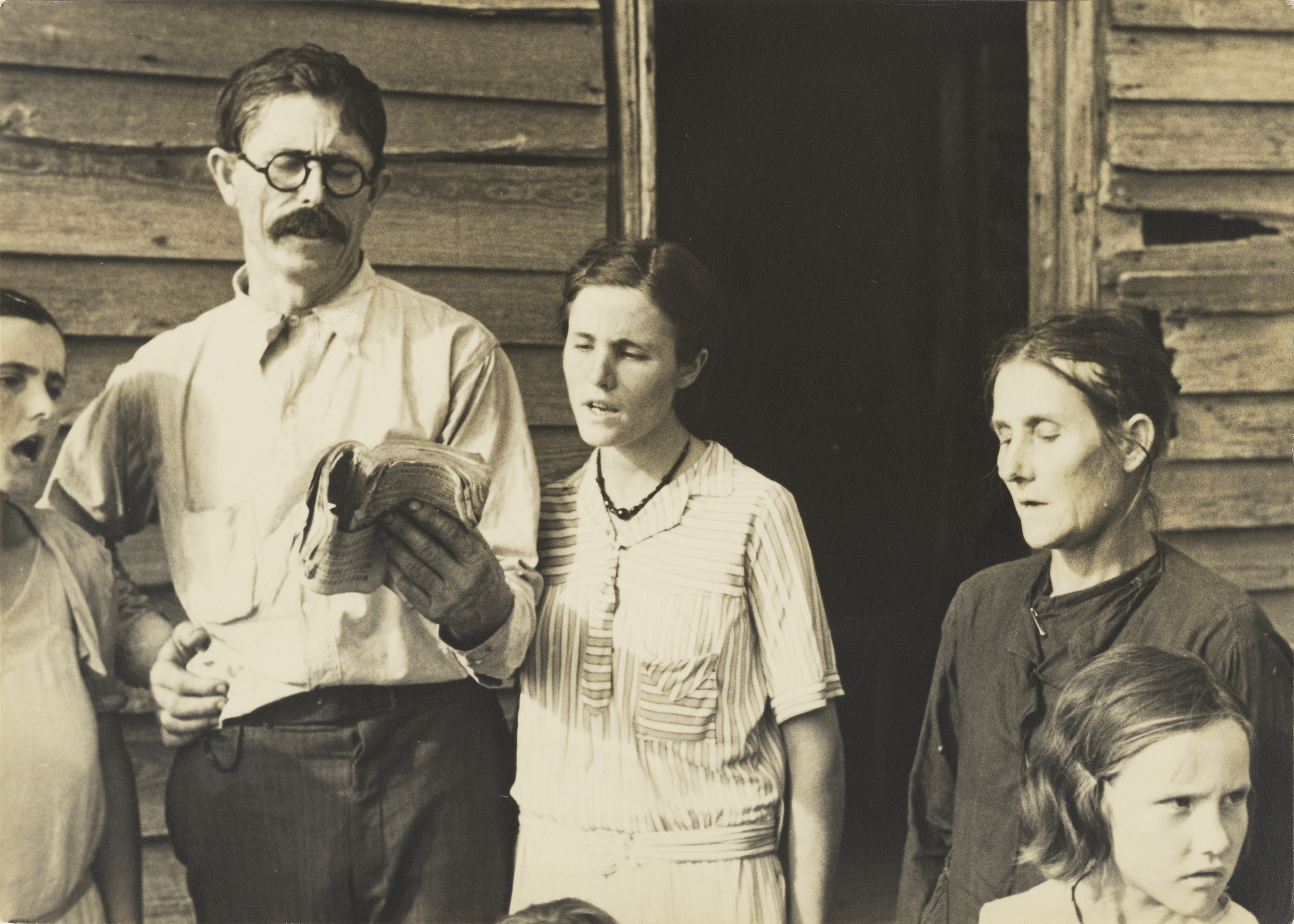
Image Credit: “Alabama Tenant Farmer Family Singing Hymns” Walker Evans (1936) Digital image courtesy of the Getty’s Open Content Program.

“It’s a girl I can tell, we’ve had nothing but trouble” By Ryan Quinn Flanagan


“It’s a girl I can tell, we’ve had nothing but trouble”

They had only just found out a few months before.
The mother was happy, if apprehensive.
The father was accepting.
And I remember him saying to me
with the mother out of earshot:
“it’s a girl I can tell, we’ve had nothing but trouble.”
And I thought to myself what kind of trouble
can a tiny blob in a belly make?
He gave me that if you only knew face
that parents of children give to those without children.
Then the mother called him over and he
put his hand over her belly as though he were
trying to keep something from escaping.
I smiled to the mother who really did have
a strange glow about her.


About the Author: Ryan Quinn Flanagan is a Canadian-born author residing in Elliot Lake, Ontario, Canada with his wife and many mounds of snow.  His work can be found both in print and online in such places as: Evergreen Review, The New York Quarterly, Cultural Weekly, In Between Hangovers, Red Fez, and The Oklahoma Review.


More By Ryan Quinn Flanagan:

“Robbie the Owl”

“He Brought His Canvases Over”

“Before Evening Med Pass”


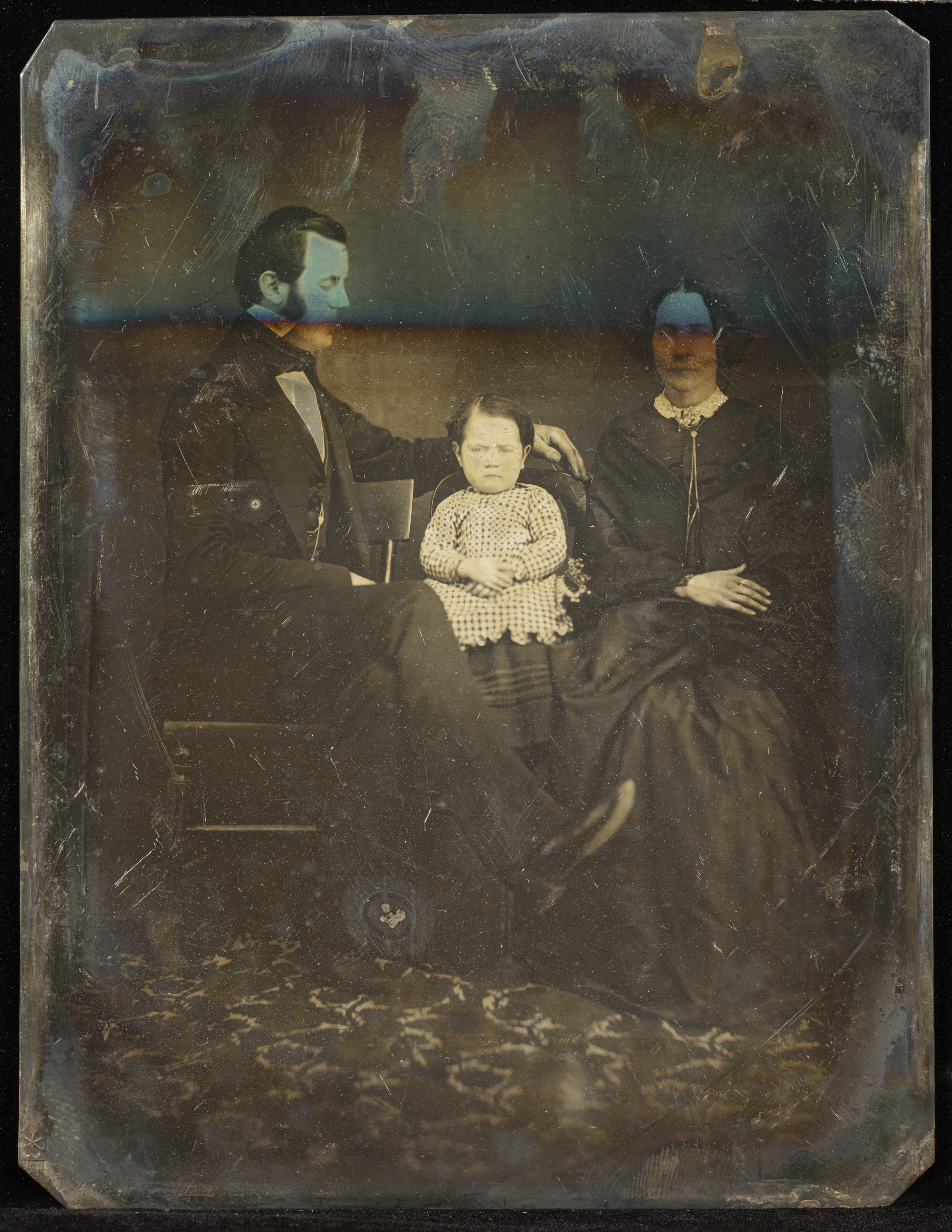
Image Credit: Jacob Byerly “Family Portrait” (1855) Digital image courtesy of the Getty’s Open Content Program.


Bunkong Tuon: “The Bite”


This is the third in a series of poems from a forthcoming poetry collection about raising a biracial daughter in Contemporary America, during this polarizing time of political and cultural upheavals where sexual harassment allegations abound, where a wall, literal and figurative, threatens to keep out immigrants like the narrator, a former refugee and child survivor of the Cambodian Genocide. You can find the full series of poems below.


The Bite

We pay it no attention
until the bite becomes a rash
spreading like a spider web
on the back of Chanda’s leg.
Our minds burn like wild fire.
Google becomes our hated
guide as we navigate WebMD,
Mayo Clinic, and CDC.
We study online images,
whisper symptoms like
bad secrets, and compare notes.
We gather contradictions,
argue. Nothing is certain,
only more questions.
We text friends and family.
Is it too late for antibiotics?
What is Lyme disease?
Will this affect our daughter
for the rest of her life?
We wake up the next morning
clutching each other,
sweat drenched our pillows.


About the Author: Bunkong Tuon is the author of Gruel (2015) and And So I Was Blessed (2017), both poetry collections published by NYQ Books, and a regular contributor to Cultural Weekly  He is also an associate professor of English and Asian Studies at Union College, in Schenectady, NY.


Bunkong Tuon’s series of poems on raising a biracial daughter in contemporary America:

Ice Cream

Gender Danger

The Bite

Tightrope Dancer

Women’s March in Albany

My Mother on Her Deathbed


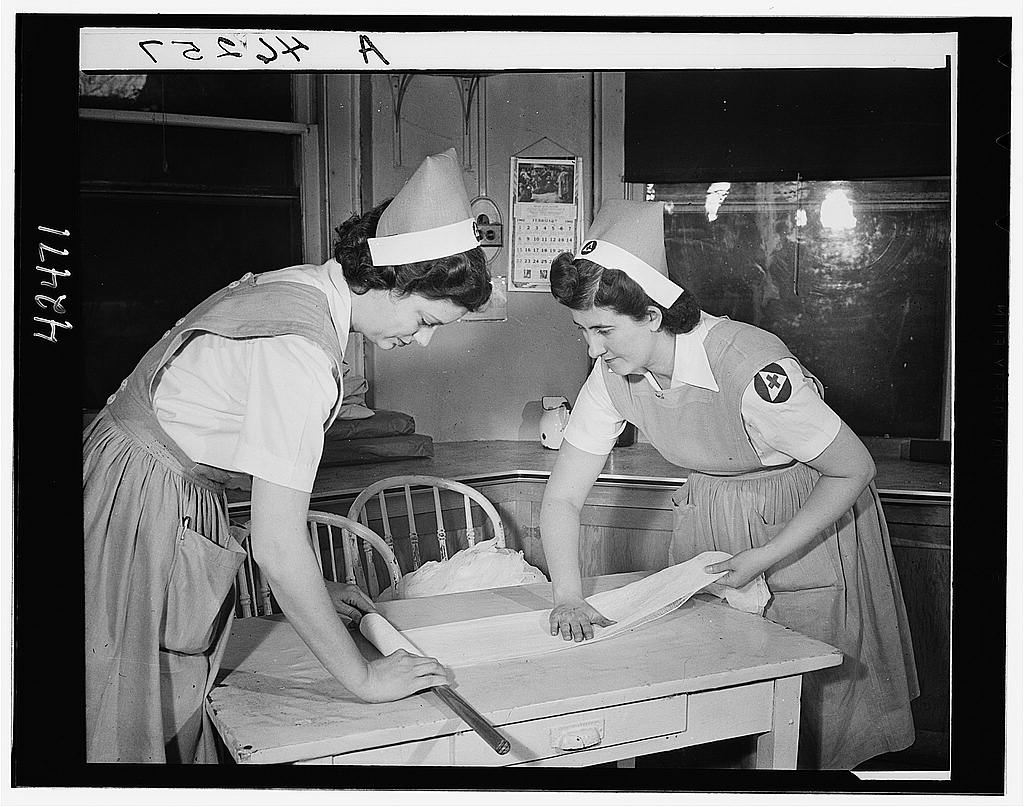
Image Credit: “Red Cross nurses’ aides preparing surgical bandages” The Library of Congress

“Jhelum Is Disappearing” By Ishrat Bashir


Jhelum Is Disappearing

Jhelum is disappearing
Like the maer* that ran
Through the heart of Srinagar,
My mother used to play
By its embankments.
The touch of water has a memory,
Memory of a dream in which the
World comes to an end.
Jhelum is disappearing.
Now that, you and me, have lost our language,
Our happy roads to each other
Let us promise to share our dreams
In all their incongruity and dissonance,
Each piece of darkness
And each shadow that the moon casts
As we turn our back on it;
Even the one in which you see yourself
Fettered to yourself
At the tips of your toes;
And the one in which we’d wash
Our hands together with soap
Watching the sullied water
Dripping from tips of our soiled fingers
Accompanied by useless words
Gurgling with our laughter
That made others laugh at us.
And the ones in which we wandered
through wild pine woods
With our pieces of jigsaw, lost to each other.
Jhelum is disappearing
And the jigsaw lies incomplete
On the table in the house
That we had planned to built.
That house still holds us together
In the life that has lost us
To the posh colonies of Hyderpora
And narrow stinking alleys of downtown.
One day when both of us are free
And long for rest, we may return,
To that table with our pieces.
But on that day, when it happens,
You must bring that ring of smile
And I shall bring my old mirror.
Poems like waves are reckless
You cannot pitch up your tent
On their shores.
But we must not die, we must
Keep the connection even if
Only at the tips of our toes.

*Canal


About the Author: Ishrat Bashir is an Assistant Professor, at the Department of English, Central University of Kashmir. She teaches Short Story, Contemporary Literary Theory and British Drama in the department. She has also worked as Assistant Professor in English in the Department of Higher Education and the South Campus of the University of Kashmir. Her area of interest includes Contemporary Literary Theory, Translation Studies, Arabic literature in translation and Kashmiri literature. She writes poetry and short fiction.


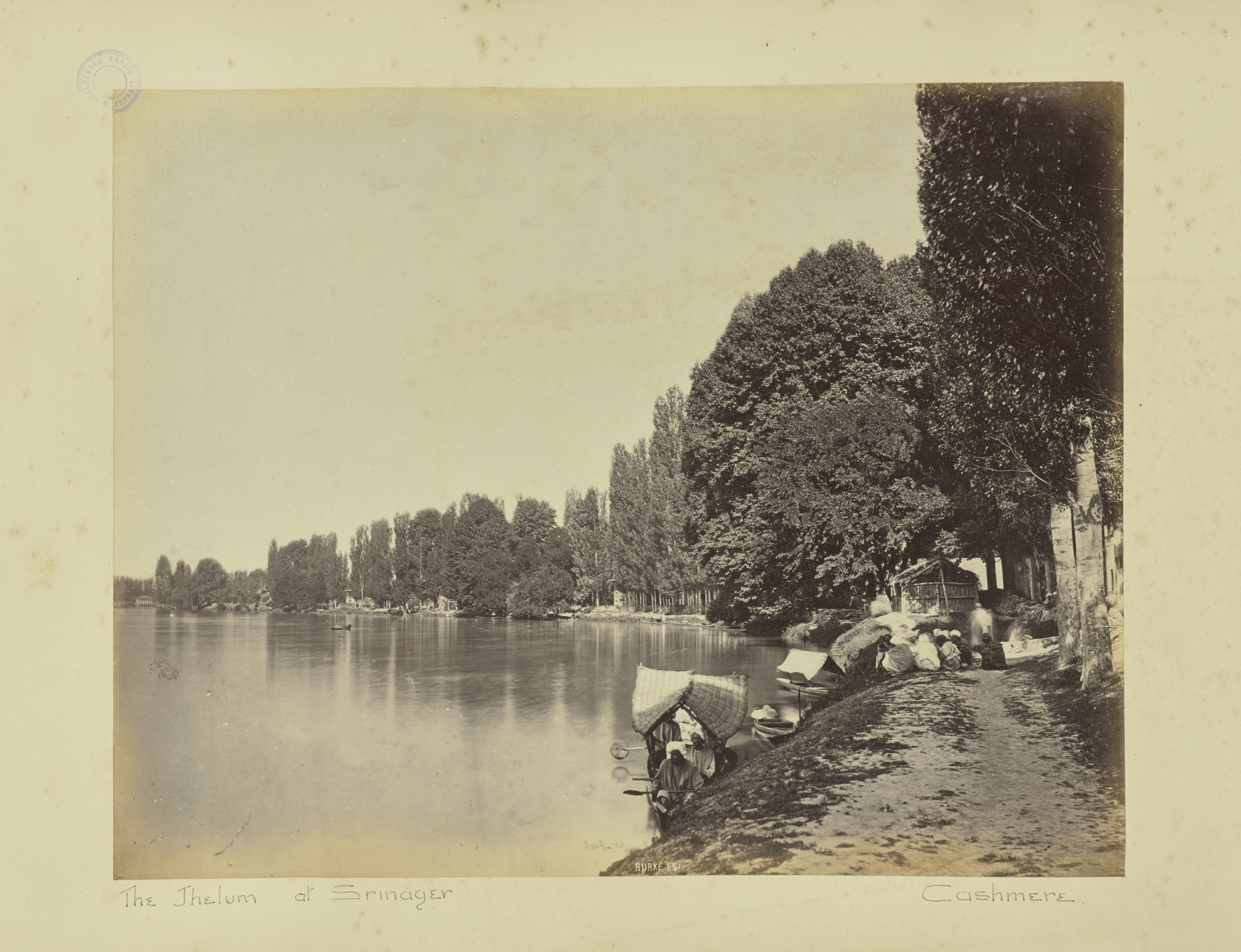
Image Credit: John Burke, photographer (Irish, about 1843 – 1900); William H. Baker, photographer (British, about 1829 – 1880), The Jhelum at Srinager. Digital image courtesy of the Getty’s Open Content Program.

“Mementos” by Nick Soluri


Mementos

There is a way we remember,
and the way we want to remember.

There is the way grandmothers tie scarves
around their grandchild’s necks,
and there is holding the memento
in your hands wishing hers
could wrap it softly again.

We will die before the
things in our pockets will,
those live forever, in the
boxes in attics, on desks,
alone or with company.

Do not worry, they will
not feel bad when they get
dusty and cold,
they have each other.

And when you come back to them,
and feel their sweet touches again,
they will feel the same way
they always did.
But it is you that has shed your skin,
a new body in a lake of stasis
and old wooden splinters.


About the Author: Nick Soluri is a writer from New York.  His words have appeared in Five:2:One Magazine, Boston Accent, Ghost City Review, Selcouth Station, Occulum, Anti-Heroin Chic Magazine, and others.  He tweets @nerkcelery


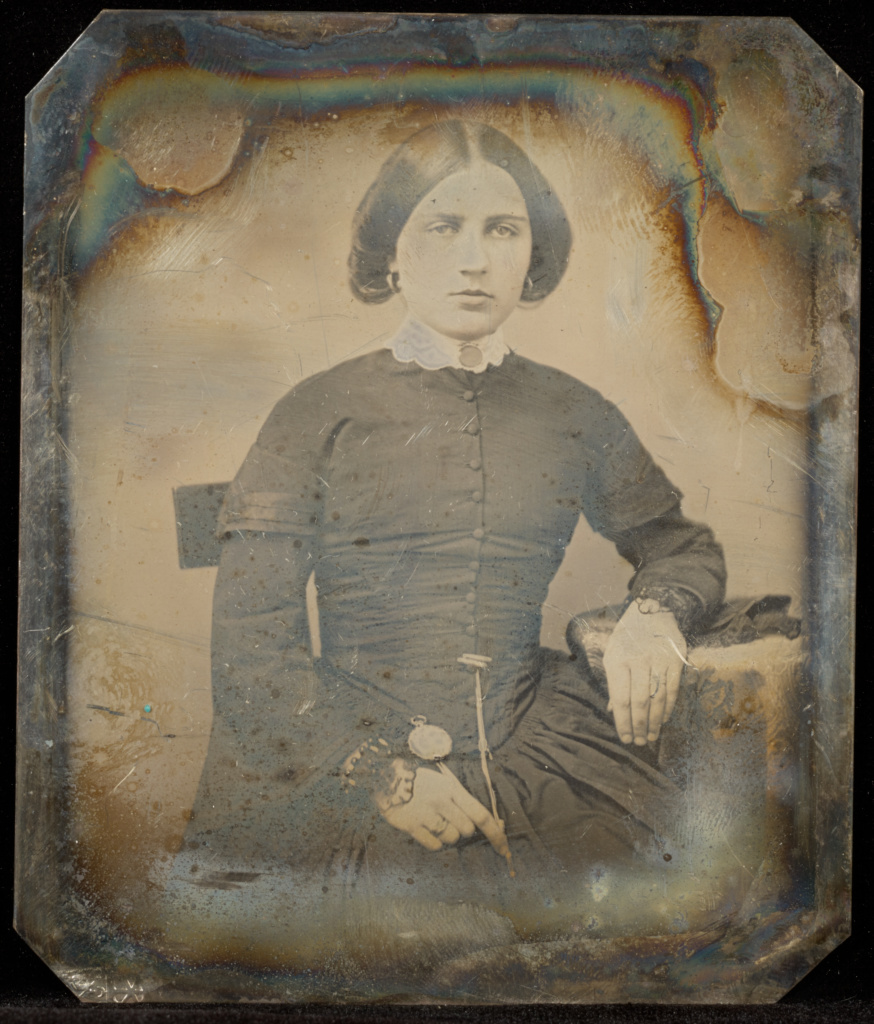
Image Credit: Joseph Byerly “Portrait of a Woman” (1855) Digital image courtesy of the Getty’s Open Content Program.

SATURDAY POETRY SERIES PRESENTS: F. E. CLARK

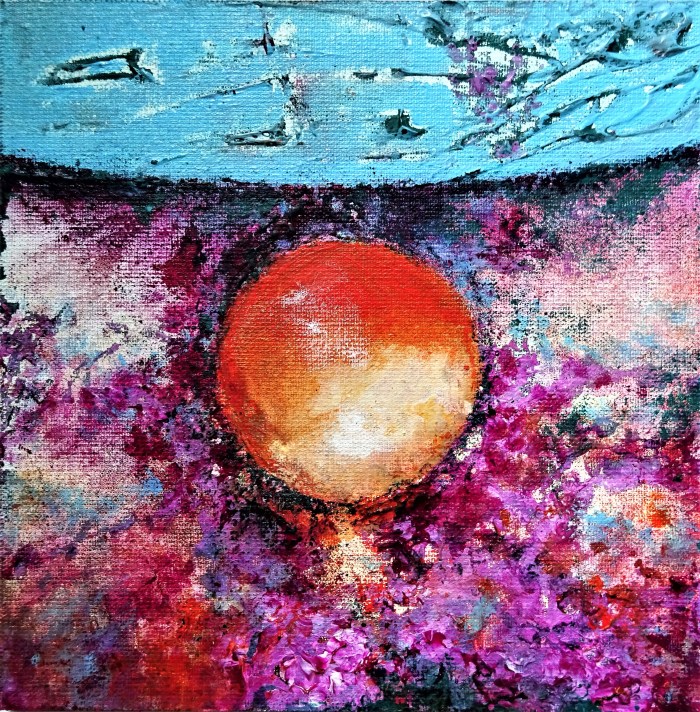
“Daily Painting, 12th June 2017” by F. E. Clark


By F. E. Clark:


MYOPIA

We lost the far away from our eyes
peering at our precious tiny screens.
Addicted to the chatter in the blue light
we spat and growled at the slam, slam, slam,
of constant crisis, constant cries.
We marched figuratively through our newsfeeds,
wound tighter and tighter—blinded,
to that which was not inside our screens.
And all the while the earth was turning,
away, away, away.
Until we could see her
no more, and we were gone.


TO BRING THE SKY DOWN

A scared flame of violet – burnt from a found bone,

The indigo of your first lover’s jeans,

High sky blue of a day in spring when the larks sung,

Green fired algae from the dead pond’s ditch

Yellow of the belly of the one who cowers,

Orange from the fungi that grows under the dead fox,

The red of a berry that poisons.

Plait the rainbow – red over orange, yellow over green, blue over indigo,

Tie with violet at the deepest hour of black,

Make sure you bind the rainbow’s ends tight,

When required, cast from a clifftop on a dark moon night.


“Myopia” previously appeared in Burning House Review, and “To Bring the Sky Down” previously appeared in Luna Luna Magazine. These poems appear here today with permission from the poet.


F. E. Clark lives in Scotland. She writes, paints, and takes photographs—inspired by nature in all its forms. A Pushcart, Best of the Net, and Best Small Fictions nominee, her poetry, flash-fiction, and short stories can be found in anthologies and literary magazines.

Contributing Editor’s Note: In “Myopia,” F. E. Clark takes an existential view of what has become second nature to all of us: looking at our phones while ignoring the world around us. The poem is written in the past tense and reveals the sad outcome of having lived our lives through a few inches of screen. She exposes the profound sadness when, “We lose the far away from our eyes” and are exposed to “constant crisis, constant cries” as we respond and read social media and news feeds, while the world continues its routing rotating When we “away, away, away.” And at the same time turning its back on us. Her dystopic conclusion is that the less we participate in the world, the less we ourselves exists.

Clark regains her vision of what life can be in her poem, “To Bring the Sky Down.” Her remedy for the blindness she encountered in “Myopia” is keen observation reinforced by incantatory rhythms. What she sees when she looks closely at the world around her is remarkable. Clark finds antidotes in vivid technicolor, among the discarded, “The indigo from your first lover’s jeans”; the decayed, “Orange from the fungi that grows under the dead fox”; and the dead, “Green fired algae from the dead pond’s pitch”. She collects strands of color, plaiting them into a rainbow for eventual use in the darkest times.

Want to read more by F. E. Clark?
F. E. Clark’s Official Website
Twitter: @feclarkart
Umbel & Panicle
Mojave Heart Review
Luna Luna Magazine


Contributing Editor Alan Toltzis is the author of The Last Commandment. Recent work has appeared in print and online publications including Hummingbird, Right Hand Pointing, IthacaLit, r.k.v.r.y. Quarterly, and Cold Noon. Find him online at alantoltzis.com.


A NOTE FROM THE MANAGING EDITOR:

After nearly ten years as Contributing Editor of this series, it is an honor and a unique opportunity to share this space with a number of contributing editors, including the one featured here today. I am thrilled to usher in an era of new voices in poetry as the Managing Editor of this series.

Viva la poesia!
Sivan Butler-Rotholz, Managing Editor
Saturday Poetry Series, AIOTB
 

“Me, and the Hecate” By Margaret Crocker


ME,
AND THE HECATE

Ariadne,
in the mechanical bed,
bound by stuffed mittens,
breathing by beeping hose,
her pulse rate, heart rate, brain rhythms and lung capacities
a constellation around us in the darkened room.
There are stars, Ariadne,
Look!

Ariadne,
your webs.

Ariadne,
your unrequited love.

You were our lives,
Ariadne,
and your webs our ties with you,
you the weaver,
you the hanged man,
you the Hecate,
the maid, mother and crone all in one
a white, fragile web in the dark
while machines give you breath and life
in force,
as you would have none on your own.

Ariadne,
what do you weave there,
where no one can see?

You wake hoarse,
confused,
and tangled in all your knitting.
You see me
and don’t remember.
But I will always remember these days, my sisters.

When Ariadne began to sew,
and faltered.


About the Author: Margaret Crocker is an artist, writer, wife, mother, daughter, sister and thief. She collects stray animals and has this weird fantasy of being on The Great British Baking Show, despite the fact she uses a bread machine. She knows little but proclaims much. There is much we don’t know about her.


More By Margaret Crocker

“My Joints Hurt and Other Fascinating Topics of Conversation”

“The Art of Acquiescence”

“Earth, Air, and Lynda Carter”

“Mental Health Portraits”


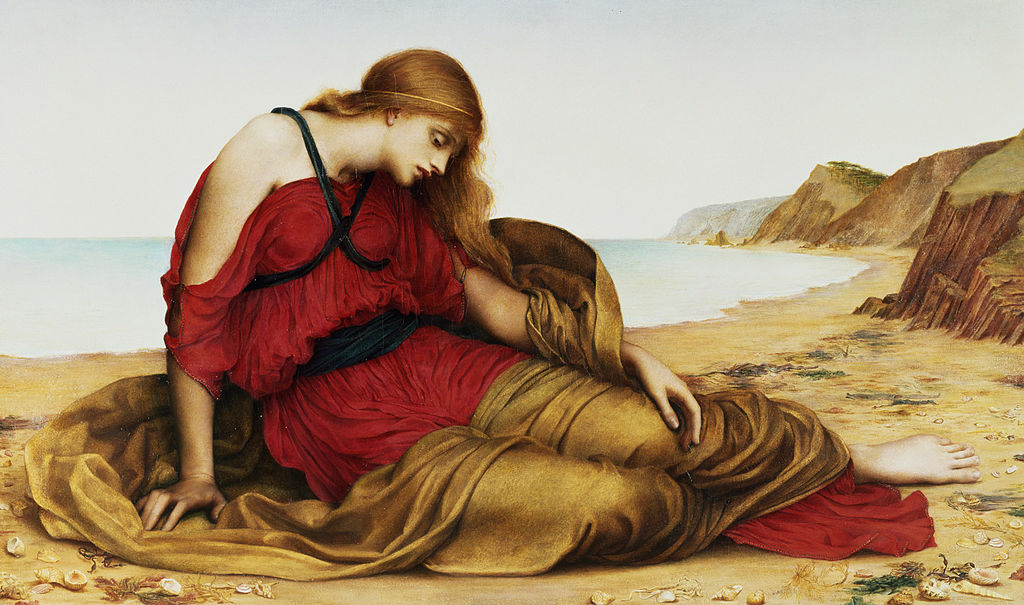
Image Credit: “Ariadne in Naxos” by Evelyn de Morgan (1877)

“Dracula” by Luis Cuauhtémoc Berriozábal


Dracula

Dracula is in charge of the blood bank.
His bloody mouth smile sickens me.
His lips make sucking motions.
Sometimes they appear to tremble.
He’s like a kid in a candy store; I can’t
imagine how such things can happen.
The sinking feeling has sunk in.
I see him swallowing blood as if
blood was going out of existence.
I cannot believe my eyes. I cannot 
believe the things they see, Old
Dracula at the blood bank, eyes
looking up at the sky where the moon
reflects his shadow as blood spills
from his lips. He imagines that’s how
dreams should be. He has painted
his face and feet red with the blood
of men and women just declared dead,
from the suddenly wounded, even children.
Old Dracula does not care how small they are.
Sometimes he sleeps. Sometimes he’s up all day.
When the sun rises he remains in the blood bank.
I see him covered with blood. He is always covered
with blood. He is a mosquito addicted to blood.
It must be a curse to have such horrible thirst 
and never feel full.


About the Author: Luis Cuauhtémoc Berriozábal, born in Mexico, lives in California and works in the mental health field in Los Angeles. His first book of poems, Raw Materials, was published by Pygmy Forest Press. His poetry has been published by Alternating Current Press, Blue Collar Review, Counterpunch, Deadbeat Press, New Polish Beat, Poet’s Democracy, and Ten Pages Press. His latest chapbook, Make the Light Mine, was published by Kendra Steiner Editions.


More by Luis Cuauhtémoc Berriozábal:

“When I Was a Child”


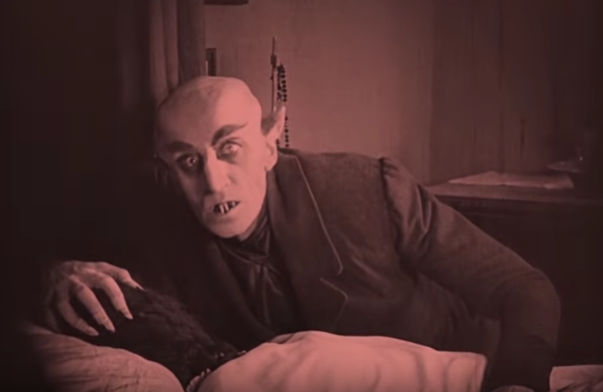
Image Credit: Still from Nosferatu (1922)