William Doreski: “A Letter to Hart Crane”


A Letter to Hart Crane

Dear Hart: two saltwater-sodden 
bundles of newsprint arrived
today, all that remains of you
after your interrupted voyage.
I scan the headlines: MAN -EATING 
SHARK exclaims one front page; SHARK-
EATING MAN reads the other.

Whoever sent me these bundles
expects me to make a papier
mâché mannequin of you 
from this briny muddle of news
from the Twenties when you roamed
waterfront bars with Emile,
the love of your lovelorn life.

No one in this grizzled town
reads poetry except pale women
recently smitten with Robert Frost. 
The mannequin will represent you
as Walker Evans portrayed you—
serious, almost sober enough
to challenge small-town rhetoric.

You can shout everyone down
by working consonants so hard
they crack underfoot like snails.
You can describe your drowning
in the most vulgar terms and earn
the pity of men who served in wars
and had lonely sex in foxholes.

Not that a sculpted paste statue
is likely to speak loudly enough
for everyone to appreciate. 
But you and I will converse
in sundown colors too subtle
to impress anyone who hasn’t 
lived a long time under the sea.


About the Author: William Doreski has published three critical studies and several collections of poetry. His poetry, essays, fiction, and reviews have appeared in many print and online journals. He has taught writing and literature at Emerson, Goddard, Boston University, and Keene State College. His most recent books are A Black River, A Dark Fall and Train to Providence. He has a blog at williamdoreski.blogspot.com.


More by William Doreski:
Remind Me What We Believe


John Dorsey: “Picker”


Picker

that’s what they called him
a finger buried deep in his nose
as a way to cope 
with a flabby stomach
& a face covered with so much acne
that it was about as baby soft
as the surface of mars

that was before everyone had anxiety
when ptsd was reserved for people with real problems
when kids threw lit matches at anyone
they couldn’t just burn at the stake 
when we ate pop rocks & pepsi
because we wanted to spontaneously combust
as if daring god to give it his best shot

his sister sat in the back of the bus
hiding from her own bloodline
denying his existence 
to sit next to cheerleaders
who would shoot spitballs  
into her greasy black hair
when she wasn’t looking

she would just laugh
as if she was in on the joke
saving her tears for after supper
when she could write it all down
in a secondhand trapper keeper
with a wrinkled picture 
of mary lou retton 
taped to the front

they used to jump rope
in their front yard
with these same kids  

their mother used to tell them 
they could be whatever they wanted

but she never had to carry 
their books in the snow
heavy with the weight of hours

when silence greeted them
in crowded halls

& blood seemed thicker
than almost anything.


About the Author: John Dorsey lived for several years in Toledo, Ohio. He is the author of several collections of poetry, including Teaching the Dead to Sing: The Outlaw’s Prayer (Rose of Sharon Press, 2006), Sodomy is a City in New Jersey (American Mettle Books, 2010), Tombstone Factory, (Epic Rites Press, 2013), Appalachian Frankenstein (GTK Press, 2015) Being the Fire (Tangerine Press, 2016) and Shoot the Messenger (Red Flag Press, 2017) and Your Daughter’s Country (Blue Horse Press, 2019). His work has been nominated for the Pushcart Prize, Best of the Net, and the Stanley Hanks Memorial Poetry Prize. He was the winner of the 2019 Terri Award given out at the Poetry Rendezvous. He may be reached at archerevans@yahoo.com.


More By John Dorsey

Creatures of Our Better Nature

The Mark Twain Speech

Punk Rock at 45

Poem for Curtis Hayes


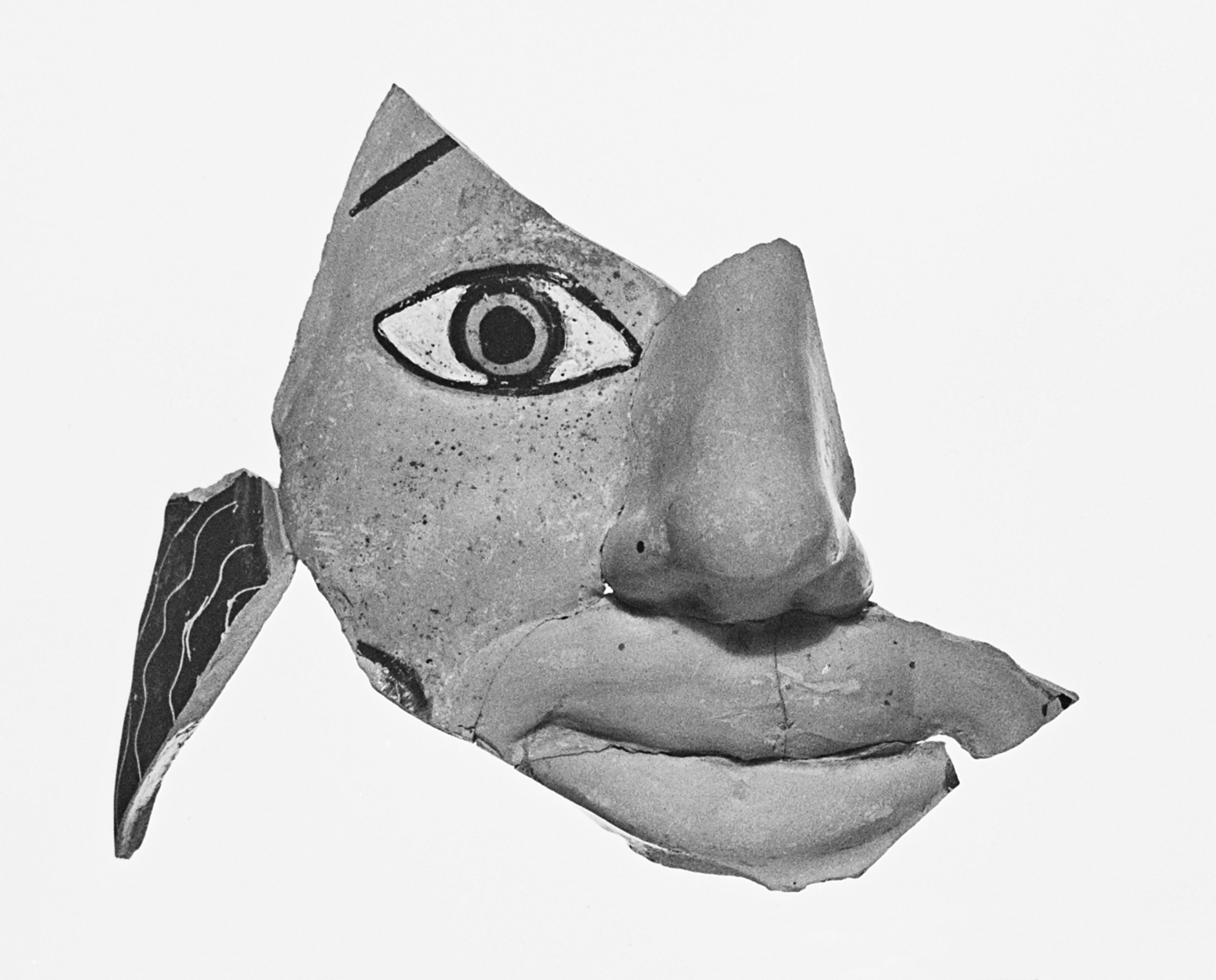
Image Credit: Attic Red-Figure Janiform Kantharos Fragment. Attributed to Onesimos, painter (Greek (Attic), active 500 – 480 B.C.) Attributed to Euphronios, potter (Greek (Attic), active 520 – 480 B.C.) Digital image courtesy of the Getty’s Open Content Program.

Dolores Mildred Batten: “A Review of WARBLES, by Alex Z. Salinas”


Dolores Mildred Batten:

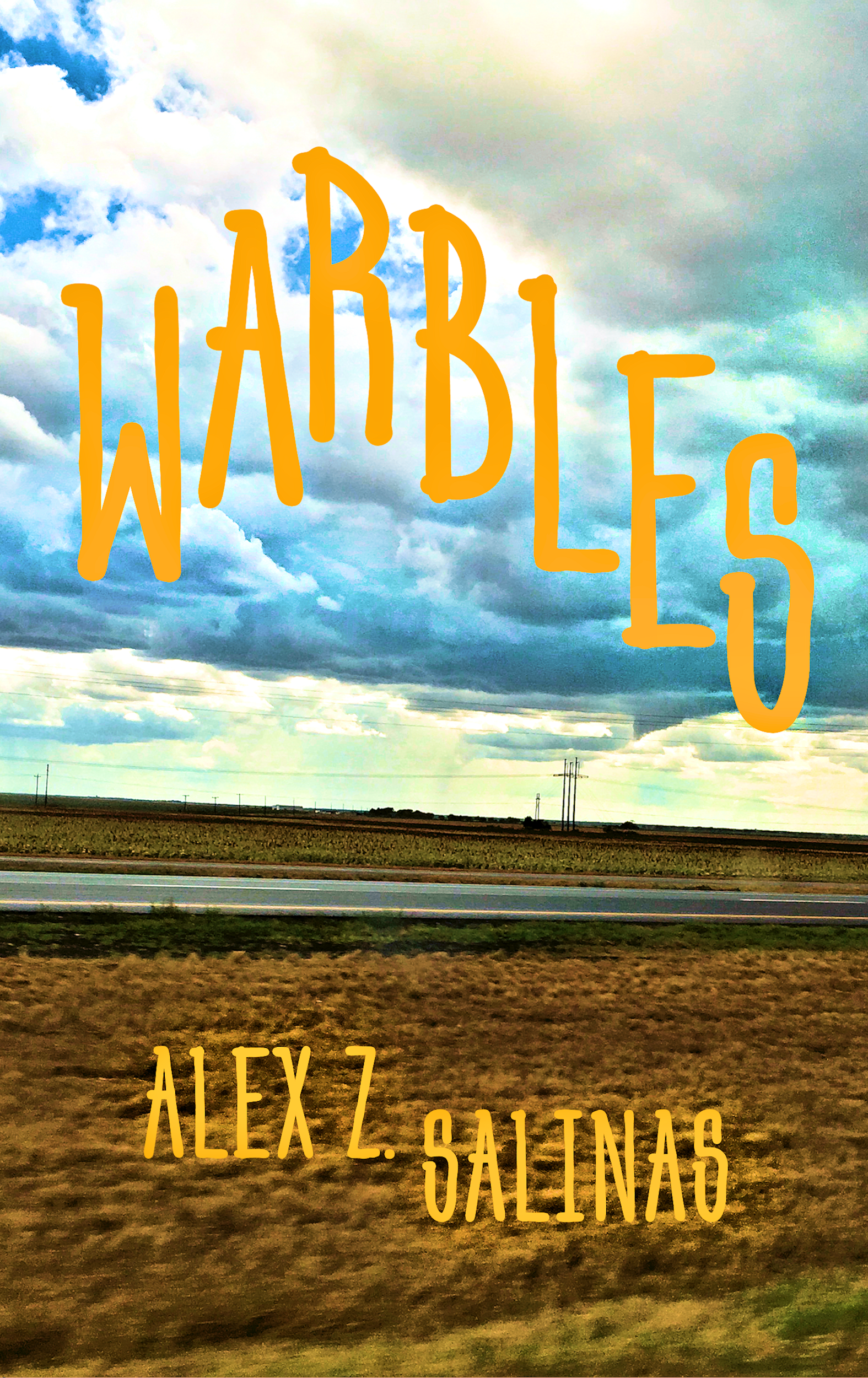
A Review of WARBLES, by Alex Z. Salinas 


The making of poetry is a painstaking process. The writer, soul bared in blood on print or papyrus pages, places their words into the cosmos of the book; the universe of the IMMENSE contained in the small, on the off chance that someone might get “it”: both the medium and the message (McLuhan, Understanding Media: The Extensions of Man). That is the impulse behind writing: the Promethean promise of both creation and destruction (“Mountain smoke”, 12)—in words, at once both solemn and unapologetic, that rip through your heart strings—what makes you smile, makes you angry. Makes you feel. So, if in this review, you are looking for an explication into the worlds of literary criticism and critical theorem that can be applied to Alex Z. Salinas’s words, you will not find it “hear” (read that again: this point is correctly spelled). What you will find, however, is a reviewer who is in awe, a fellow human who is in yearning, and a fellow writer who is taken aback, absorbed in Alex’s warbling work into the crevices that people do not usually dig, because “we all seek warmth / in old footsteps” (“Needles”, 19; 7:18-19); a promise buried under the rocks that people seldomly overturn.

This is the journey that author Alex Z. Salinas’ poetry collection, WARBLES, takes you on, like a Kerouac-esque trail of tears and tears (pronounced tares). It is a disjointed look inside the soul of the tortured and talented poet, and it is one that deserves our attention.

And that’s the real feat. As the poetry editor of the San Antonio Review, Alex’s job is to read, reject, and revise several authors’ words. I, too, as the essay editor of Plath Profiles, the only journal in the world specifically dedicated to the poetry and prose of Sylvia Plath, know this position well. But in that respect, I have always been of the school of thought that it is not for the editor of an academic journal, webzine, or a newspaper, for that matter, to judge another’s writing, but for the writer of the work to write, and re-write, and then write some more, or as Alex would say, “Do it. Do it every day. Every hour. Every half-hour. Every second, in your head” (“21 tips to better writing”, 55; 1: 1-2). Though you may not be taken with every poem from the writ of Alex’s hand, that is simply because, that one there—it was not meant for you. Soaking the salt of our wounds (“Salt”, 9), seeing sports as more authentic than religion (“TV religion”, 21-22), even speaking to specters in “Apparition” (14), you, the reader, are invited to eavesdrop in on his special world; take what you want, and leave the rest. Thus, Alex Z. Salinas makes a name for himself as a seasoned writer and a newcomer to the compilation poetry book scene, by breaking the boundaries of what poetry “looks like” and forcing us to confront the “warbles” which lie and lie within ourselves. Continue reading “Dolores Mildred Batten: “A Review of WARBLES, by Alex Z. Salinas””

Jason Baldinger: “getting any feed for your chickens”


28708v


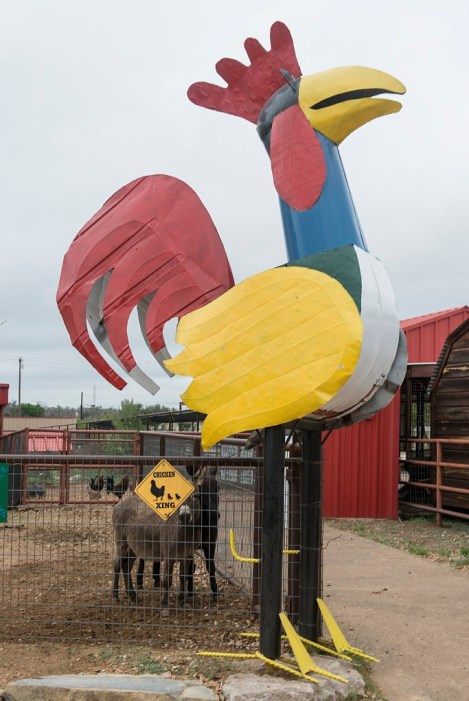
getting any feed for your chickens

it’s raining on Kansas Boulevard
city drains into warehouses
three tacos sit on the front seat
I find a parking lot, smother
them in spicy salsa
chase them with horchata
wait out the rain

eight hundred miles
through grasslands
riding on the ghost of buffalo
there’s a diner with a green
chile cheeseburger waiting

this is closing in on some
twisted truckers hymn
six years on the road
I’m gonna eat well tonight
hey we can’t all be Dave Dudley

Shawn you’re right, we’re shaved apes
poets shambling nowhere
crawling on our stomachs

there’s been many nights
I’ve been within seconds
of jumping in my car
pedal down non-stop
until three days later
I find myself in the desert

usually in that moment
whoever I’m with realizes
I’m serious, starts to talk me down

you know brother, unemployment
warps one’s mind, it should be
about finding yourself, instead
it’s all pressure, inadequacy
redefining yourself by work
I’ve said it before
you are free, we all are

if you ever hear the phone ring
at six a.m. you find my voice
saying you got five hours
pack a bag, we’re going
to Albuquerque, you’ll know
it’s fucking serious, there’s
cheeseburgers and chilies waiting
all we gotta do is get gone


About the Author: Jason Baldinger is a poet from Pittsburgh, Pennsylvania.  He was recently a Writer in Residence at Osage Arts Community, and is founder and co-director of The Bridge Series. He has multiple books available including the soon to be released The Better Angels of our Nature (Kung Fu Treachery) and the split books The Ugly Side of the Lake with John Dorsey (Night Ballet Press) as well as Little Fires Hiding with James Benger (Kung Fu Treachery Press). His work has been published widely in print journals and online. You can listen to him read his work on Bandcamp on lps by the bands Theremonster and The Gotobeds.


More by Jason Baldinger:

“I forgot the earth and heaven”

“When Cancer Come to Evansville, Indiana”

“blind into leaving”


Photo Credit: Carol M. Highsmith “Large metal chickens for sale at the Pottery Ranch pottery store in Marble Falls, Texas. Such chicken yard art is quite popular throughout Texas” (2014) The Library of Congress

Jeffrey Betcher: “Golden Gate”


This is the fourth in a series of posts remembering the work of poet and activist Jeffrey Betcher (1960-2017)


Preface: Left “believing in the pack mentality of strays,” the poetry of Jeffrey Betcher speaks from the entire collective of American queer stray culture, that very lost-and-found narrative of reinvention on the docks of survival. These docks, being the green-heeled sanctuary of San Francisco from 1986-2016, these docks gave birth to an examination and liberation of meaning, as wildly honest and true-to-mirror as every queer breath weʼve danced. From this collection of Jeffrey Betcherʼs poems, “The Fucking Seasons, Selected Poems 1986 to 2016,” we hear the journeys into witness, touch the lips of knowing “love has been here. Hungry footsteps, breath released, and touch can change the land forever.” A San Franciscan born of rural Ohio, Jeffrey Betcherʼs poetry informs the landscape of nature, saying simply, “Iʼm a witness. Love has been here.”

– Toussaint St. Negritude,
Poet, bass clarinetist, composer


Golden Gate 

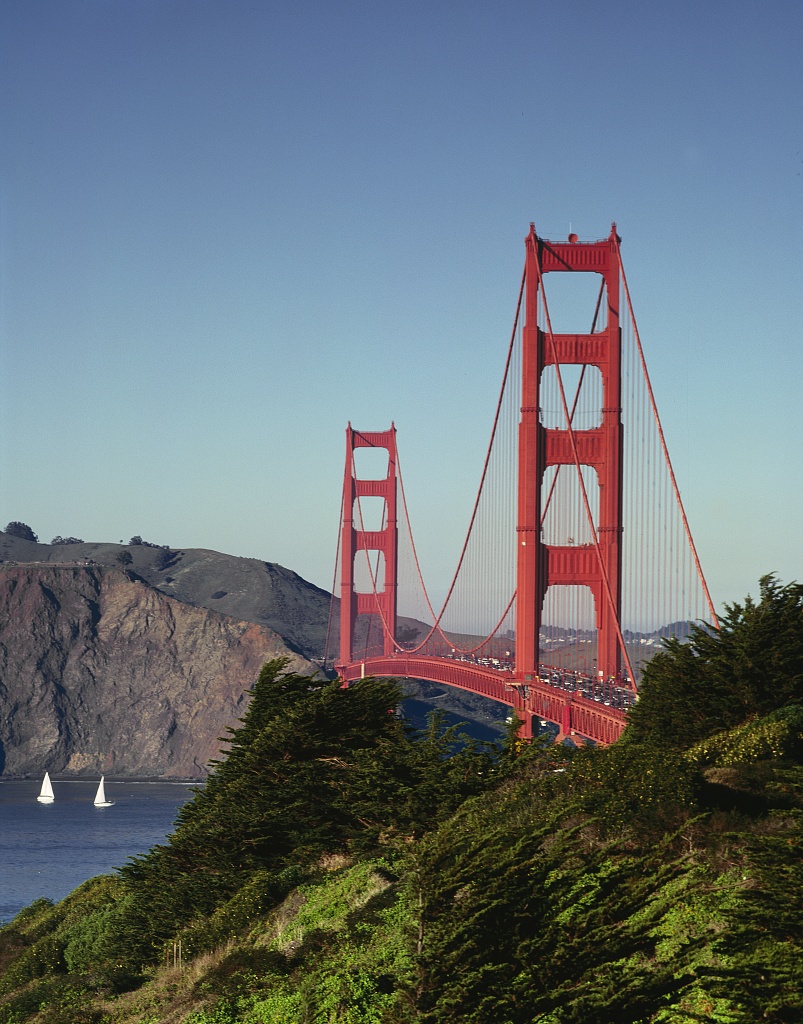
standing above the golden gate
screaming at ocean waves that 
weave beyond the mouth and 
at buried rocks’ teasing tips and 
at the sun somewhere in the 
sky as it is daytime and the fog 
is hidden in the rhythm of 
meandering scenes that rebuke 
sense, i am noticing the 
desertion of the bridge by gull 
man and machine and all 
around the city and bay the 
familiar art of ancient astronauts 
and a whisper of function 
louder than my yell from the 
center about something the 
tourists and natives forgot. 

– November 20, 1991, San Francisco


(C) 2017 Jeffrey L. Betcher Living Trust


About the Author: Jeffrey Betcher donned many hats over more than 30 years in San Francisco, yet maintained an integrity of purpose. A writer, an educator, an advocate for the prevention of violence against women and children, and a grassroots community organizer, he gained national attention as a leader in the “guerrilla gardening” movement, helping transform his crime-ridden street in the Bayview neighborhood into an urban oasis. His intimate poetry was also cultivated over the decades, exploring survival and engagement, and the labyrinth of the heart. Though he dodged the HIV bullet in the plague-torn years, a terminal bout of cancer cut his life short in 2017. In addition to his chapbook of Selected Poems (1986-2016), he completed an epic sonnet, Whistling Through, an odyssey into the cancer machine and death itself


More By Jeffrey Betcher:

Dear Allen Ginsberg

Billy Dew Meadow

Kezar Pavilion


Image Credit: Carol Highsmith “Golden Gate Bridge, San Francisco, California” The Library of Congress

Avignon Marr: “Siouxsie Sioux Poster”


SIOUXSIE SIOUX POSTER

That monochrome poster on your wall
The one with Siouxsie Sioux on it
I could have sworn the lips were black
And yet as I sit on your bed
In my father’s oversized suit
Her lips are surely a shade of crimson
It matches the carnation I brought
And though tasteful
The splash of color is unfamiliar
And I could swear it smudged
As my thumb ran across it
And come to think of it
It looks just like the lipstick you wear
Perhaps I’ll ask you about it later
While your parents drive us home.
From that sweaty, awful dance


About the Author: Avignon Marr is the pseudonym of an anonymous writer and artist currently based in the Czech Republic. They are a co-founder of the Encino Grayscale Project, which features abstract digital artwork from a small group of anonymous musicians, poets, and filmmakers.


Image Credit: Digital Rendering of a public domain photo.

Gale Acuff: “Rub”


Rub

One day when I’m dead I won’t be, I’ll be
alive, they say, in Heaven or Hell, and
I’ll go to one or the other depend
-ing on how I behave on Earth, either
way I get eternal life but to get
it I’ve got to die, there’s the rub, that’s what
the Bible says or maybe Shakespeare or
Stan Lee or Stephen King or some kids-books
authors but anyway for ten years old
I’m pretty awful, if I died right now
I’d go to Hell and you’d never get to
finish this poem, lucky you, ha ha, I
mean finish reading it, of course you might
finish writing it for me and then you
go to Hell, too, like I will, then again
I could wind up in Heaven, a mistake
made by God’s accounts, say, you can show me
how you completed this poem and if you
didn’t care for the lines I wrote before
I croaked you can help me revise ’em, I’m
pretty easy that way, and besides I’ll
be dead and so will you, if eternal
-ly dead but anyway what can I do
in Heaven at least to wreak revenge and
as for Hell it might be neat to have folks
torture one another instead of Old
Scratch having all the fun for himself so
be gentle, you can’t get much more vulner
-able than dead, I think, you’re pretty weak
then, even a baby’s stronger, even
if you can’t be touched, or maybe you’re both
weak and strong. You might as well be living.

.

.

About the Author: Gale Acuff has had poetry published in Ascent, Chiron Review, McNeese Review, Adirondack Review, Weber, Florida Review, South Carolina Review, Carolina Quarterly, Arkansas Review, Poem, South Dakota Review, and many other journals. He has authored three books of poetry: Buffalo Nickel (BrickHouse Press, 2004), The Weight of the World (BrickHouse, 2006), and The Story of My Lives (BrickHouse, 2008).

Gale has taught university English in the US, China, and the Palestinian West Bank.

.

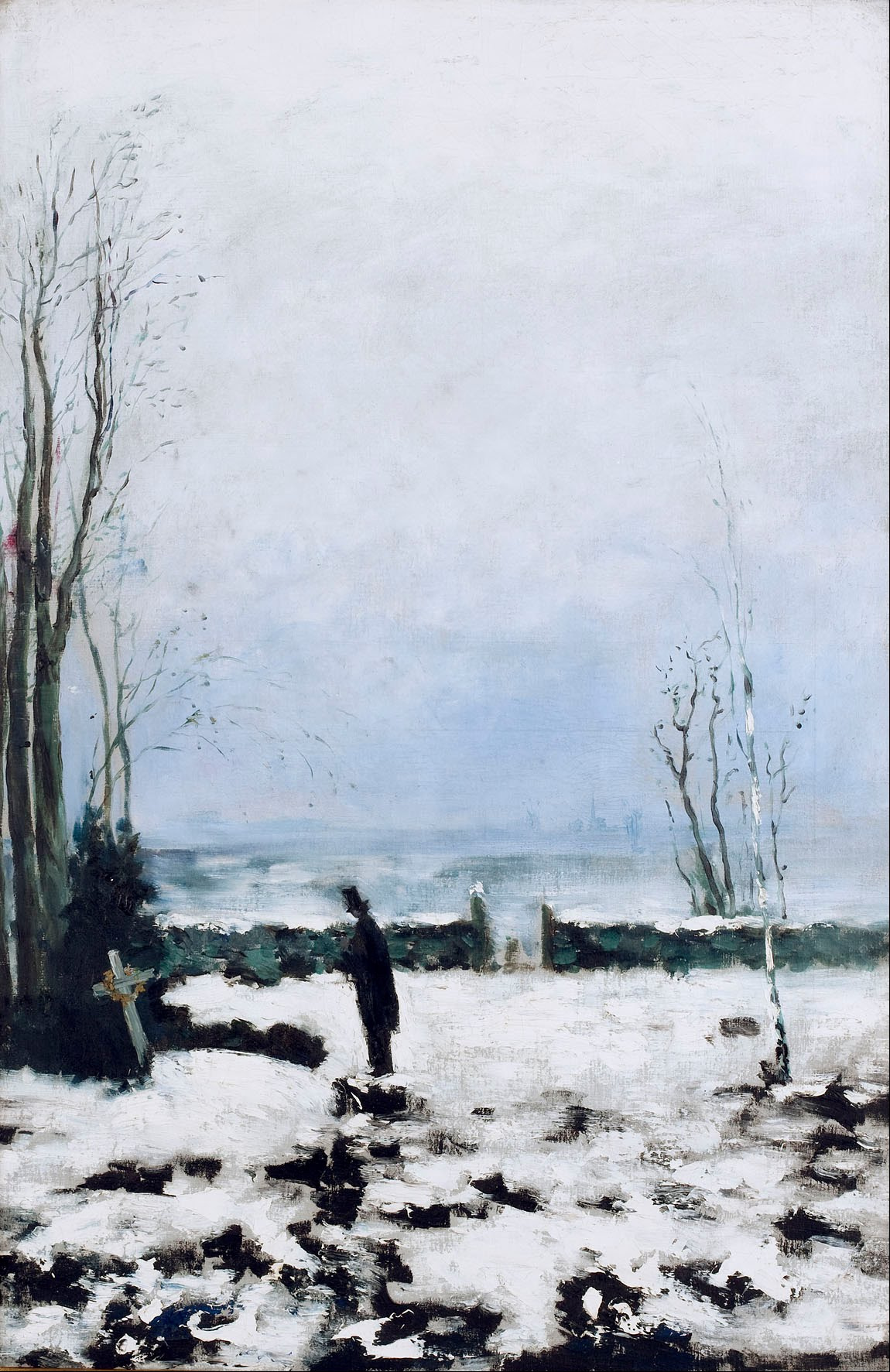
Image Credit: Carl Fredrik Hill “The Cemetary” (1877) Public Domain


John Grochalski: “grape drink and snuff”


grape drink and snuff

once as a kid

i made jackson pollock 
splatters of purple chunks
on the hot pavement

i made getting sick an art

walking home in a daze
under the blistering sun

throwing up
throwing up

the latch key kid of the avant garde 

half a dozen cartons of grape juice
and a bottom lip full of mint-flavored snuff

for lunch

as the neighbor lady asked me if i was all right

and i wanted to tell her
that those free summer camp kids
who thought they had my fat boy number

those prince and princesses
of this tin-shack suburb

could never tell me that i wasn’t solid
that i didn’t live up to my potential

that i was art
as royal as they came

but instead
i spewed up my genius
in violet hues

all over the concrete again.


About the Author: John Grochalski is the author of the poetry collections, The Noose Doesn’t Get Any Looser After You Punch Out (Six Gallery Press 2008), Glass City (Low Ghost Press, 2010), In The Year of Everything Dying (Camel Saloon, 2012), Starting with the Last Name Grochalski (Coleridge Street Books, 2014), and The Philosopher’s Ship (Alien Buddha Press, 2018). He is also the author of the novels, The Librarian (Six Gallery Press 2013), and Wine Clerk (Six Gallery Press 2016).  Grochalski currently lives in Brooklyn, New York, in the part that voted for Trump, so may God have mercy on his soul.


More by John Grochalski:

“to abby wherever you are”


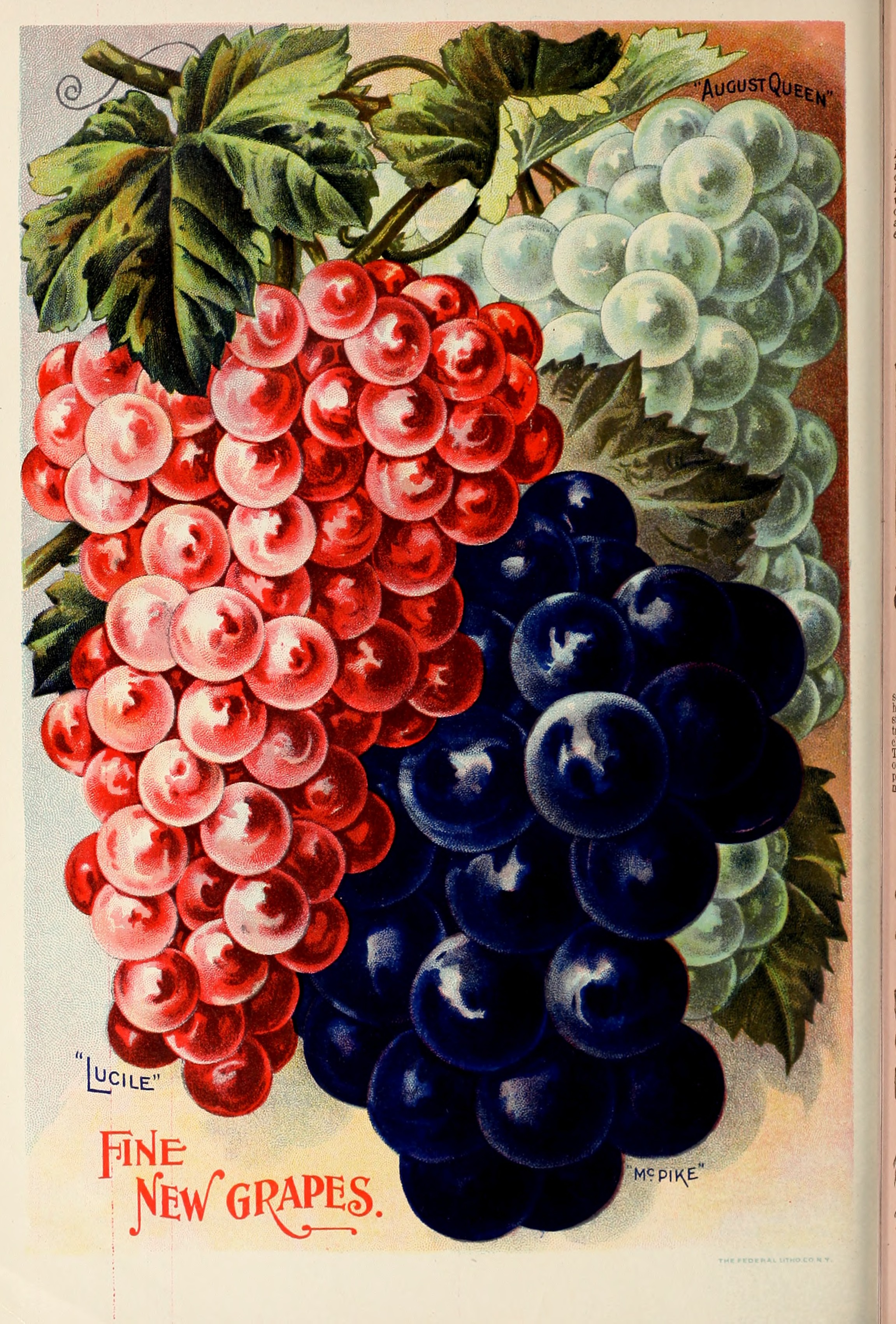
Image Credit: “Childs’ rare flowers, vegetables, & fruits” (1902) Public Domain

Martina Reisz Newberry: “74th BIRTHDAY”


74th BIRTHDAY 

This was the birthday I began to clean out, examine, scan,
re-read. Each place I looked were those “what if” items:
What if the boys were to come for a visit? What if
daughter and hus- band should want to stop in? What if
in-laws or old friends or new friends should come to call?
These red dessert plates might come in handy then. This
marked- up book of recipes might be something my
daughter might treasure (though she’s not asked for it).
This wooden tray can hold 5 tall glasses of iced tea or
soda even if it is a bit scraped up. This old drawing by my
college roommatea drawing 56 years oldand the frame
still is good, still sturdy, though the drawing looks nothing
like me anymore. I thought I’d thrown out the meat patty
maker when we stopped eating meat, but here it is, faded
plastic taking up space and maybe the neighbor (who only
eats fast food) would like it. Birthday done. The box I
brought up from the basement is so full I can barely lift it.
I put the lid on and, through small holes and dings, the
foxfire, the glint, the flare of wealth that never was shows
through.


About the Author: Martina Reisz Newberry’s newest collection, Blues for French Roast with Chicory is due for publication from Deerbrook Editions in late fall, 2019. Her latest book is: Never Completely Awake (Available from Deerbrook Editions). Her work has been widely published in the U.S. and abroad. She lives in Los Angeles with her husband, Brian Newberry, a Media Creative.


More By Martina Reisz Newberry:

Venerating the Transitory

Dietmar and I Talk of Angels


Image Credit: Harry Whittier Frees “The birthday cake” (1914) The Library of Congress

Kevin Ridgeway: “Son of the Late Bloomer Bandit”


Son of the Late Bloomer Bandit

The cops raided our house
and my parents were both taken 
to jail.  I had no choice but to 
identify my father 
in surveillance videos.
I was subpoenaed 
by the district attorney.  
I sat in the echoing marble halls
of the courthouse 
across from the young bank tellers 
he terrorized, both of them girls 
my age who glared at me 
when they recognized 
his sinister face in mine. 
My testimony helped
send my father to prison 
for the rest of his life.
It’s been ten years 
and now my mother 
is dead and no longer held 
captive in the epic misery, 
of his fiendish lifelong search
for a chemical escape.
He said heroin made him 
closer and unafraid of death, 
numb to his own doom.  
They announced his 
life sentence on the front page
of the local newspaper, my 
name was never mentioned.
They did not want to believe 
he had a son who 
was more dangerous 
to them with deep wounds 
gone unhealed.  I will kidnap 
their fathers if I ever decide 
to return to claim 
what they all robbed 
from me.  I will be 
reunited with 
my father in prison, 
where we will start 
a massive riot to burn 
the walls down,  He 
and I will escape from 
the smoking rubble
back into a world 
where people tried
to throw us all away.


About the Author: Kevin Ridgeway is the author of Too Young to Know (Stubborn Mule Press). Recent work has appeared in Slipstream, Chiron Review, Nerve Cowboy, Main Street Rag, Cultural Weekly, Gasconade Review, The American Journal of Poetry and So it Goes:  The Literary Journal of the Kurt Vonnegut Memorial Library, among others.  A Pushcart Prize and Best of the Net nominee, he lives and writes in Long Beach, CA.


More By Kevin Ridgeway:

Fake Dad

500 Channels and Nothing On

Sally with the Accent

Good Timing


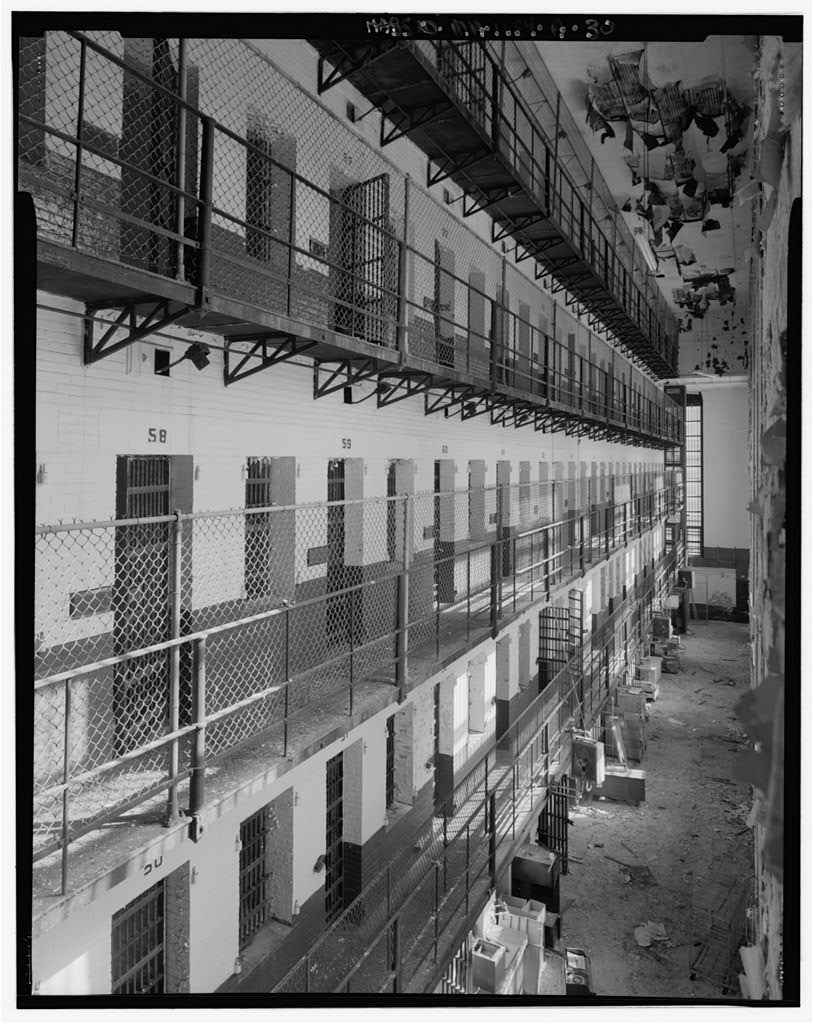
Image Credit: Charles Street Jail Complex, Jail, 215 Charles Street, Boston, Suffolk County, MA. The Library of Congress