Andres Cordoba: “The Summer The Apricot Tree Died”


the summer the apricot tree died

I had been asked to tend to the still ripening
apricots that hung as small green bulbs
from the branches of a young tree
in its first flower.

Sown two falls ago.

Father pat the earth with hesitance
as he first lay the seeds to rest.
He smiled before pressing up his glasses
with a dirt covered finger tip.
It then began to rain.

Steady mercies.


About the Author: Andres Cordoba is a Massachusetts born writer. He has received honors such as the Ginny Wray Poetry prize, the Thayer Fellowship For the Arts, the Patricia Kerr Ross Award, and was named a 2019 Breakout 8 Writer in poetry by Epiphany: A Literary Journal. His work has appeared in Italics Mine, The Gandy Dancer, Gravitas, and Epiphany Journal. A real self-starter, a go-getter– a team player, if you will– his mother refers to him as the Michael Jordan of mutual losses.


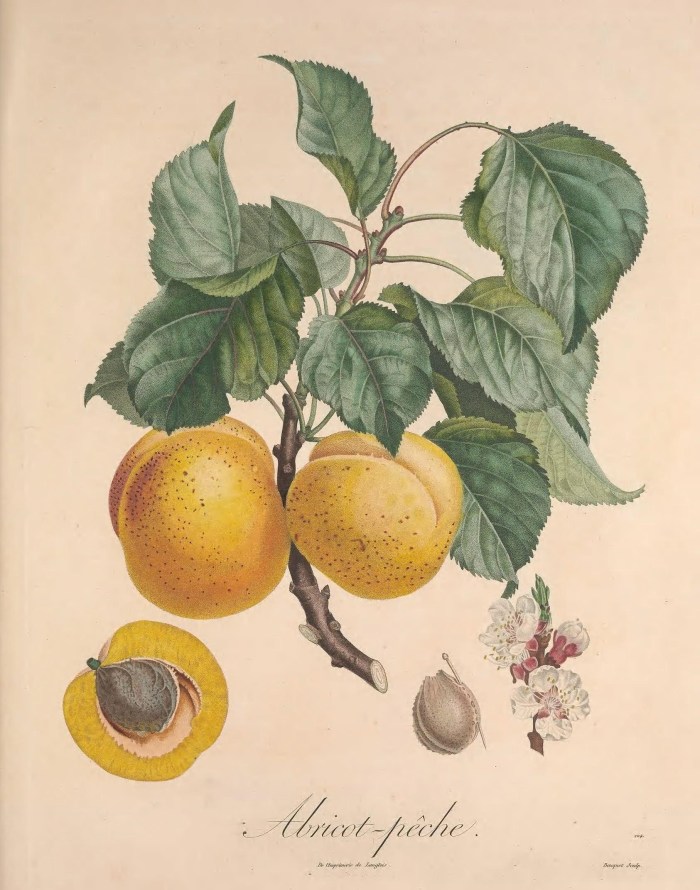
Image Credit: Pomologie française: Paris, Langlois et Leclercq,1846. (Public Domain) Image courtesy of the Biodiversity Heritage Library

Delora Sales Simbajon: “Wednesday Eve at the Doughnut Shop”


Wednesday Eve at the Doughnut Shop

One has to grip the glass first
before he can throw it,
he tells me as he moves his hand

towards our shared glass.
Far from our table,
a couple is wrapped

in their murmurs.
Now and then balloons
of laughter float around them

as their eyes mirror mist
for no other reason.
They’re having buttered

doughnuts, I conclude.
Far from their thoughts
but before them, I presume,

might be glasses with chipped edges.
He does not see
them, his eyes fastened

on our own glass. He firmly
holds it while I stroke his hand.


*This poem first appeared in Philippine Panorama, 1997


About the Author: Delora Sales Simbajon writes poetry from Mindanao, Philippines where she is based with her husband, Daryl. Some of her works have appeared online, in magazines and in anthologies: In Time Passing, There are Things; Brown Child: The Best of Faigao Poetry and Fiction 1984-2012; femi.nest: History and Poems of the Women in Literary Arts, among others. She is a recipient of the Home Life Magazine poetry award (Philippines). She works in communications but is also a certified life coach. She looks forward to publishing her poetry collection soon.


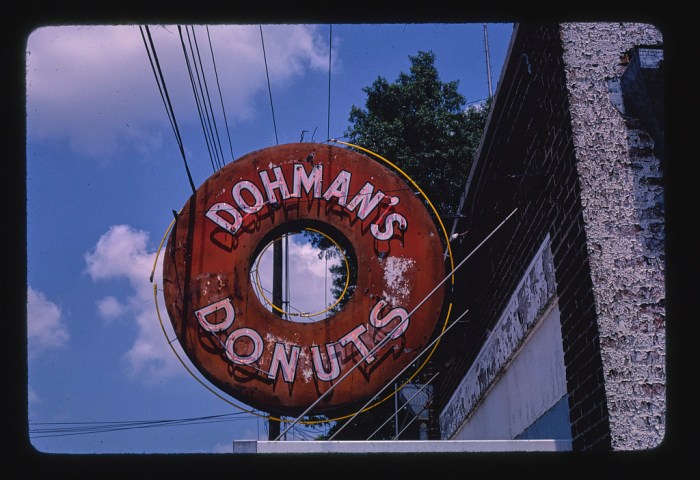
Image Credit: John Margolies “Dohman’s Donuts sign, Vicksburg, Mississippi” (1982) The Library of Congress


Jon Bennett: “Roundabout”


Roundabout

He was looking at a traffic map
thinking about his son
“Put a roundabout here,” he said
An anarchist in college
he read about the Paris Commune,
Mutual Aid, a lot of George Orwell
Then he had kids
“…those roundabouts take
some getting used to…”
and his son was named
after Jack London, but
now he was a Republican
a good kid though
He bought a house
and had a mortgage,
and was often
almost satisfied
“…in the end
it will work out better
for everyone.”


About the Author: Jon Bennett writes and plays music in San Francisco’s Tenderloin neighborhood. You can find more of his work on Pandora, Spotify and other streaming websites, or by connecting with him on Facebook at http://www.facebook.com/jon.bennett.967.


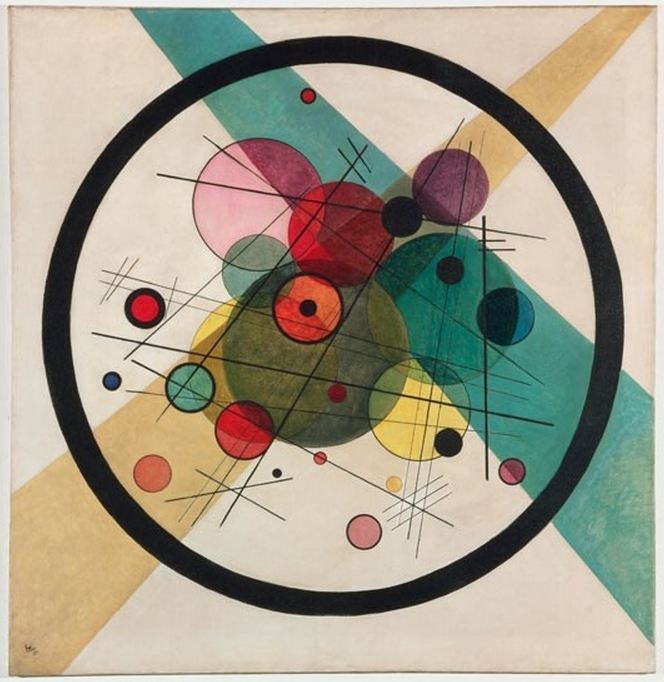
Image Credit: Wassily Kandinsky: “Circles in a Circle” (1923) public domain

Diana Rosen: “Hollywood Freeway”


Hollywood Freeway

Jazz transports from the John Anson Ford stage,
crowds entertain from their seats, everyday angst
dissipates on every downbeat. No recluses, no
agoraphobics, no shy people in the audience, just
lovers of this pure American music. Danger
accompanies me after the concert as I cross
the concrete overpass, stories high above
this strip of the Hollywood Freeway with racing
crayolas of cars seen in splatters through open slats
in walls shorter than I am. Purple wildflowers wave
from the western hillside, shout, Go Now! No, Wait.
Go Now. I gauge the speed of traffic. Are the drivers
alert? No, not now, too many, too fast. Now! Now!
I run faster than I know I can, jump like Joyner, land
like Lewis on the indifferent sidewalk, run downhill
without stopping til I reach the crowded Hollywood Bowl
bus stop with people oblivious, full of Mahler. I stand
nonchalant, hunt for exact change, cradle the coins
in my hand, step up into the Number 20 where I collapse
into the cracked leatherette seat scratching my thighs
hello. I say a thank you to the God of Errant Jaywalkers
and, yes, the Ray Brown bass solo was totally worth it.


About the Author: Diana Rosen writes flash, poetry, and essays with recent published flash and poems in Existere Art & Literature Journal (Canada), Potato Soup Journal, and WildforWords (UK) and an essay in “Far Villages”, an anthology from Black Lawrence Press. She lives and writes in Los Angeles. To view her work, please visit www.authory.com/dianarosen


More by Diana Rosen:

Dinner at Six


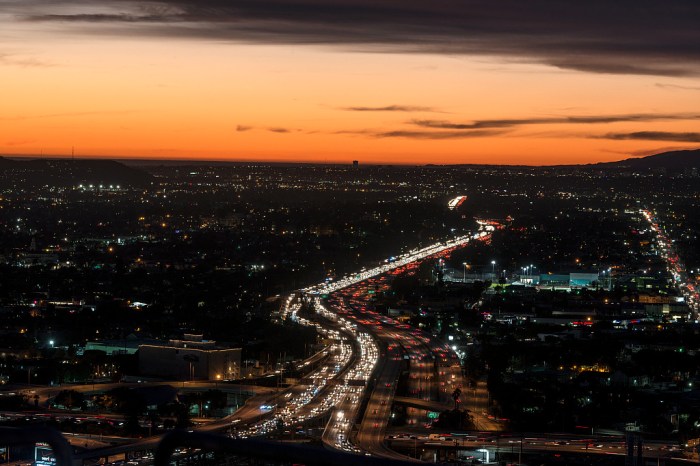
Image Credit: Carol M. Highsmith “Nightime skyline view of Los Angeles, California, looking north over the U.S. 101 (Hollywood) Freeway” (2013) The Library of Congress”

Dan Overgaard: “Drifting Off”


Drifting Off

Years later, I was trying to describe
the way mom lost and left us, how she died
in tiny slips that carried her away
while we were watching. Where the image came
from, I don’t know—we never had a boat—
but I could see the way she drifted off
was like a rowboat, gently rocking in
a very light but cool, persistent breeze.
The line that held her to the dock had frayed
and slackened, as she slowly edged around
to face the open lake, and not the dock.

I said it, and it seemed like I could feel
the ripples of confusion blowing in.
We couldn’t reach the rope, or pull her back.
Another little gust, don’t know which one,
showed how she’d finally finished with the dock.
We couldn’t hear the splash, but she was gone.

Some shadows cross a lake that’s growing dark.
A breeze has pushed an old rowboat away.
It’s not a memory, but it carries me.


About the Author: Dan Overgaard was born and raised in Thailand. He attended Westmont College, dropped out, moved to Seattle, became a transit operator, then managed transit technology projects and programs. He’s now retired and catching up on reading. His poems have appeared in Canary Lit Mag, Shot Glass Journal, Allegro Poetry, Sweet, Triggerfish Critical Review, Poets Reading The News, The High Window and elsewhere. Read more at: danovergaard.com.


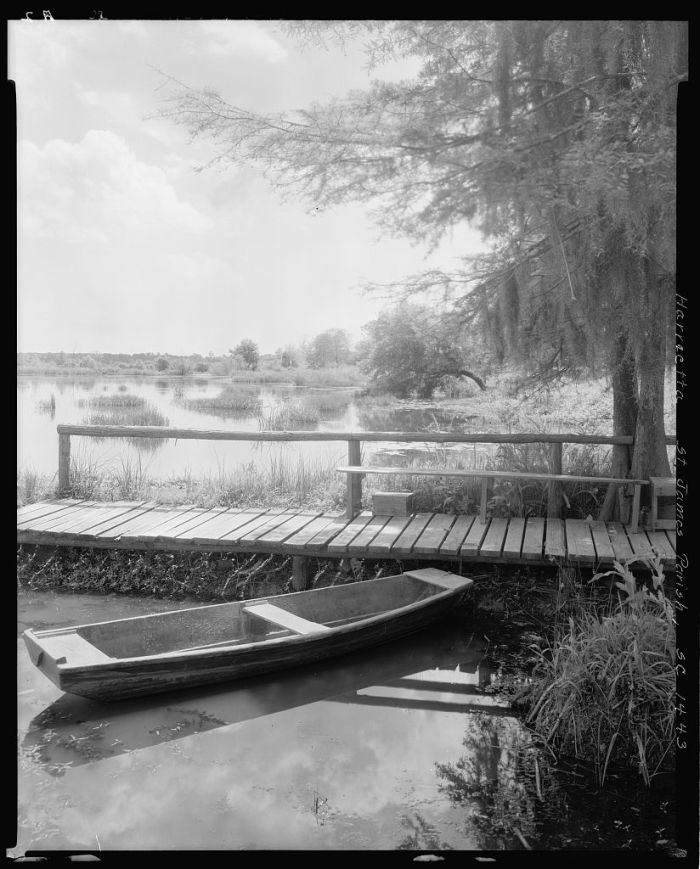
Image Credit: Frances Benjamin Johnston “Harrietta, McClellanville vic., Charleston County, South Carolina” (1938) The Library of Congress

Brian Chander Wiora: “So Together, So Soon”


So Together, So Soon

In this era of our apart,
I have learned how to live alone.
Breakfast with a single piece of toast, without
the small red promises
that only survive on the widths of our lips.
On the phone, I speak
in the language of tomorrow,
where meaning is made
from imagined mountains, hypothetical dogs
we would walk around forest and peak.
There is not enough vodka
to grab life from the vanquished backs
of old anguishes, not properly drank.
I experience my skin as a terrible ache,
an always pain, under my ribcage
where your armprint fades, remembered.
When we confess, we already know.
Water must lie flat on its stomach.
Exclusively, our conversation sways
into love and the expanses
of our most enormous cathedral.
And yet, when you tell me
of your dreams, even your dreams
punish me with possibilities.


About the Author: Brian Chander Wiora is an Indian-American poet from Dallas, Texas. His work has appeared or is forthcoming in The American Literary Review, The McNeese Review, The Florida Review, Gulf Stream Magazine, and other places. He graduated with an MFA in Poetry from Columbia University in 2020, where he received the Creative Writing Teaching Fellowship.


More By Brian Chander Wiora:

We Might Have Existed

The Oysters


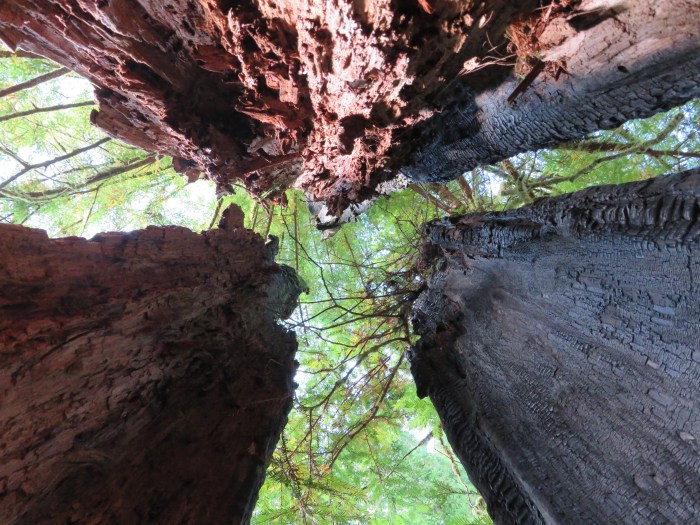
Image Credit: Chase Dimock “Burned Redwood” (2020)

Jennifer R. Lloyd: “Hill Hours”


About the Author: Jennifer R. Lloyd is a former journalist and longtime logophile. No longer churning words into newsprint on the daily, she sweats out the demons in South Texas or purges them onto the page. In her spare time, she explores poetry, flash fiction and magazine writing. Her poetry has been published in the San Antonio Review and her flash fiction by 101 Words and Zeroflash.


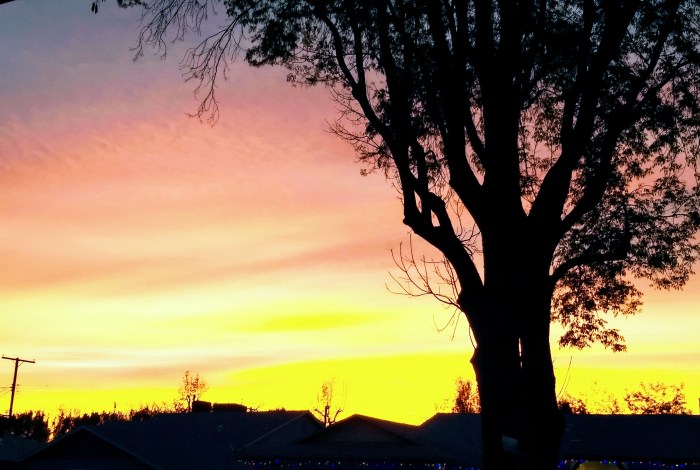
Image Credit: Chase Dimock “Sunset in the Valley” (2018)

Timothy Tarkelly: “Neil’s Dad”

.

.

Neil’s Dad

I knew a man in Titusville
who had everything.
He gutted the house
when he first bought it.
replaced every old thing
with something built to shimmer.
A garage door for every crisis,
but mostly parked out front.
Kitchen counters carved
from Italy’s earthen crust,
but most nights, he ordered in.
Had his walls painted
with the fruits of ancient labor
but lacked the rigor
to turn the lights on.

.

.

About the Author: Timothy Tarkelly’s work has appeared in From the Depths, Philosophical IdiotBack Patio PressRusty TruckCauldron Anthology, and other magazines, online journals, etc. He has had two books of poetry published by Spartan Press: Luckhound (2020) and Gently in Manner, Strongly in Deed: Poems on Eisenhower (2019). He also runs Roaring Junior Press, a chapbook publisher that specializes in small runs of sci-fi/fantasy, horror, and pop-culture infused poetry. When he’s not writing and publishing, he teaches in Southeast Kansas.

.

More by Timothy Tarkelly:

Hastings: A Remembrance

.

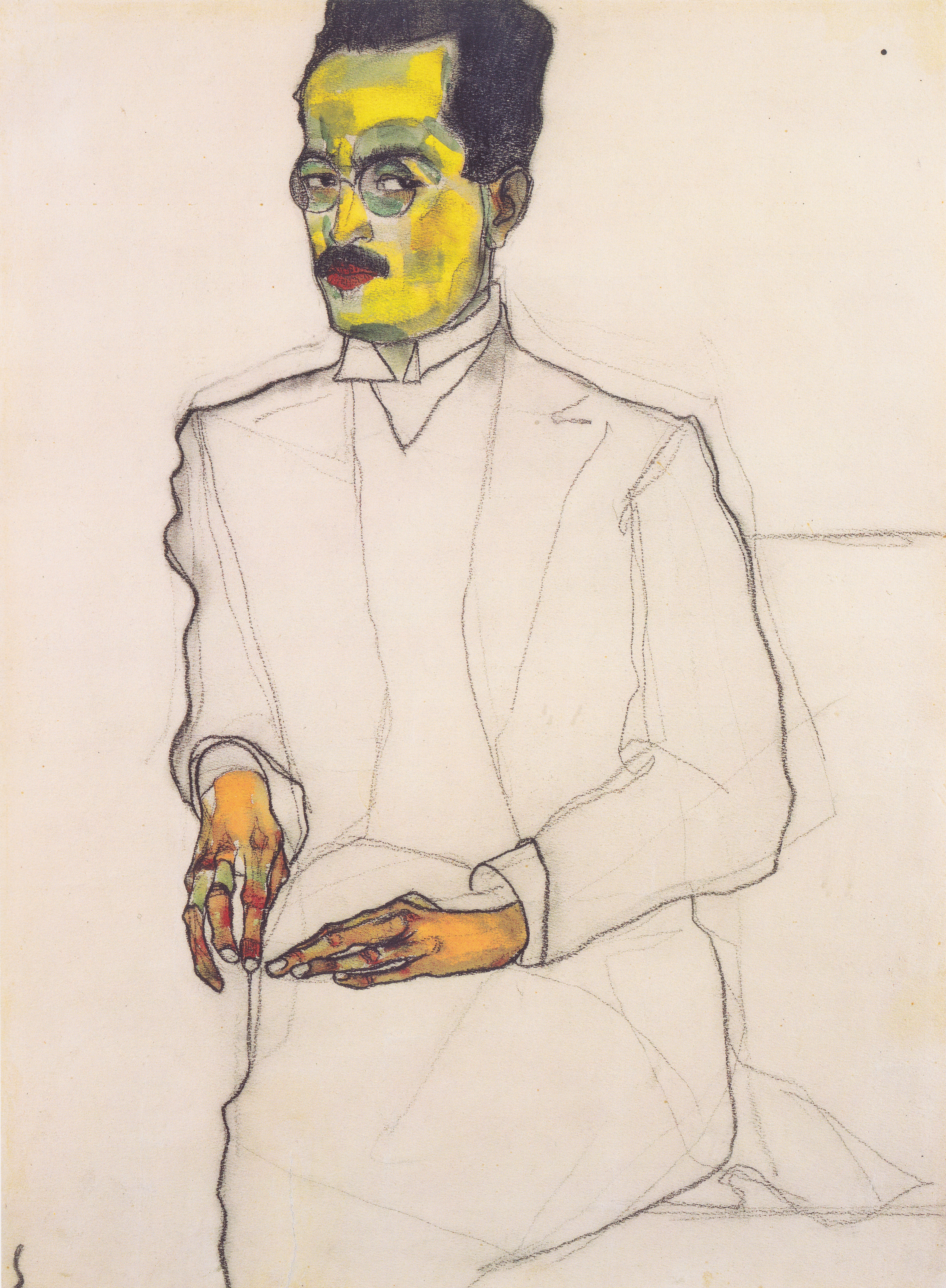
Image Credit: Egon Schiele “Porträt eines Herren” (1910) Public Domain

.

Tessah Melamed: “And Other Drugs”

.

.

.

And Other Drugs

His sheets smell
Like smoke and sweat and sex
Like someone else’s perfume
Like the kind of shampoo that makes men feel like men
Like a last meal on death row
Like the pain of failure and the reluctance of letting go
A worst case scenario,
Black ice on the parkway,
The last drop of vodka sliding down a swollen throat,
Ten minutes before last call,
A complication, the exception to the rule
Two cracks in a sidewalk met with an Oedipal shoe
The distinct taste of a relit joint,
The stale regret she recognizes as her own.
Her sheets smell
Like smoke and sweat and sex
Like the last petal of a pink rose
Like sleep on a rainy Sunday
Cocaine and Pabst Blue Ribbon
Someone’s best friend screaming through a closed door
Like running away
Like driving drunk
Creating a home beneath unwilling skin
A 711 parking lot at 3am
The moon and all her secrets
A string of pearls ripped off the neck with a shaking hand
A slight fear of falling
And the hurt he placed under her pillow for the fairies to find.


About the Author: Tessah Melamed is a writer from New Jersey. She wants you to know that nothing she does is fun, but you can follow her on Twitter @wherestessah if you insist.

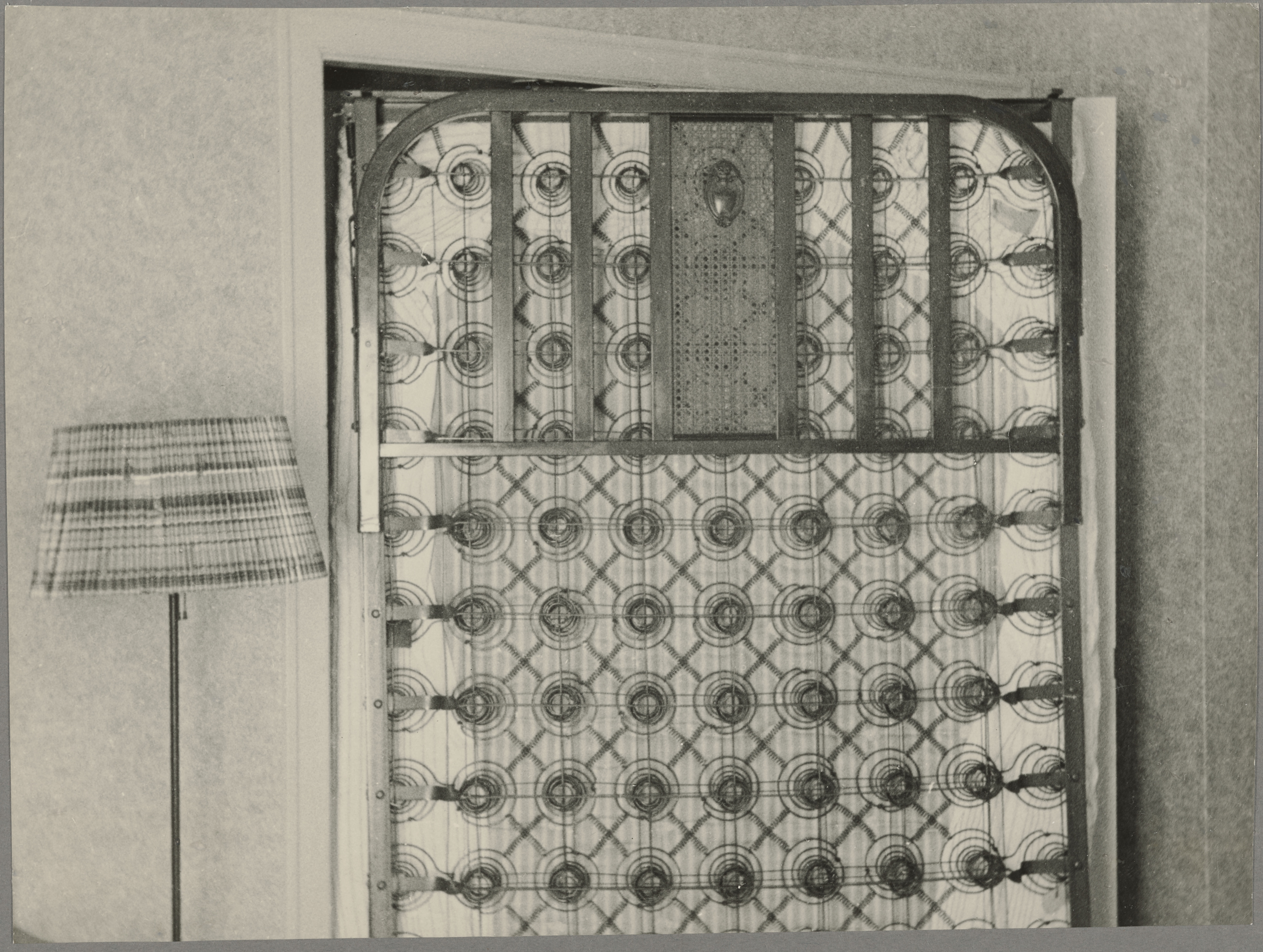
Image Credit: Erich Salomon “Murphy Bed” (1935) Digital image courtesy of the Getty’s Open Content Program.


Alan Semerdjian: “The Politics”


THE POLITICS

So many voices in the room
all missing each other

like a laser beam circus
or the part in the movie

where the thief needs
to infiltrate the stash’s safe

or get the remaining pearls
but the zig zag of red

lines is in the way (he mustn’t
touch the line in his routine

or else all hell will break
loose in the form of sirens

and bells, cutaways and fades
to possibly a sprinkler

system about to go off as well);
we are those obliqued lines

in hot pursuit of anything
but each other, too electric

to touch or embrace for long
or extend the figure of a

shoulder out for a head to lay
on, to cry on, and/or while

the thief steps over us—too
easily, now that we think about

it—and gets to what he must,
inevitably, get to, which is,

of course, whatever is behind
that goddamn unforsaken door.


About the Author: Award-winning writer, musician, and educator Alan Semerdjian’s writing has appeared in several notable print and online publications and anthologies over the years including Adbusters, The Brooklyn Rail, and Diagram. He released a chapbook of poems called An Improvised Device (Lock n Load Press) in 2005 and his first full-length book In the Architecture of Bone (GenPop Books) in 2009, which Pulitzer Prize winner Peter Balakian called “well worth your reading.” His most recent work, The Serpent and the Crane, which is a collaboration of poetry and music focused on The Armenian Genocide with guitarist/composer Aram Bajakian, was released this past April.


Image Credit: Chase Dimock “Red Light” (2020)