Loisa Fenichell: “I know now I did not fabricate the sky”


I know now I did not fabricate the sky 

Or how sunset grows in resemblance to a child’s
arm. In one home, a boy learns to walk like his grandfather.
Outside, the Elephant Tree strengthens itself out over
the desert: all people are not lost: water spreads little here;
when it does, citizens remember to celebrate. I walk
with fingers peeled apart, to gaze with care at the goodness
of the wren alighted atop the Saguaro. I imagine it to be
protecting its eggs, like how I know I must protect my
own infant, though she is still only a fragment
of my imaginings: how well daughters protect daughters,
the lines of heritage a woven sea; flocks of sandhill cranes
moving to Nebraska. In my own home, I still drink tea —
honey-less, unlike my mother. I have learned that the best
form of prayer is to wait as the tea steeps, gentle, with
the knowledge that the liquid stays liquid. Later I sleep,
clothed in darkness, recalling my obsession with myth,
the looks I once gave to the mirror, when I felt my stomach
had not obeyed my own narrative. Yet I am here, trusting
in all I cannot see, cannot fathom, to blow out the dustings
I for so long allowed to rest atop my bureau: photographs
of ancestors who believed in a God, & saw that even when
all seemed to wane, great fields still existed with care.


About the Author: Loisa Fenichell holds a BA from SUNY Purchase College, where she studied Creative Writing and Literature. Her work has been featured or is forthcoming in various publications, such as The Winter Tangerine Review, The Rising Phoenix Review, No Contact Mag, and The Nervous Breakdown. Her debut collection, ‘all these urban fields,’ was published by nothing to say press. She is currently an MFA candidate at Saint Mary’s College of California.


Image Credit: Carol M. Highsmith “Saguaro Cactus near Tucson, Arizona” (2008) The Library of Congress

Mickey J. Corrigan: “Welcome to Paradise”


Welcome to Paradise

Tired of treading
deep water,
tight-roping
your stretched thin life?
Move south,
then keep going.

Welcome to hell.

Weather report:
brutally sunny
today
and every day.

There are so many ways
to get lost
in this town.

Here we speak the language
of shore birds,
the word for yesterday
the same
as tomorrow.

Enter the brightness:
it is not
as you expected.
Now your new life
begins.

Listen to the
scrtich scratch scritch
of the fresh dirt
on the closed lid
of your casket.

Note that you shine
in the moonlight
less and less
than you will ever
be
again.

No worries:
everyone you know
is here.


About the Author: Originally from Boston, Mickey J. Corrigan writes Florida noir with a dark humor. Poetry has appeared in Fourth & Sycamore, Flatbush Review, Penny Ante Feud, ink sweat and tears, r.kv.r.y quarterly literary journal, New Verse News, Dissident Voice, Synchronized Chaos, Mobius: The Journal of Social Change, The Rye Whiskey Review, and elsewhere. Chapbooks include Final Arrangements (Prolific Press, 2019) and the disappearing self (Kelsay Books, 2020). Newest novels: Project XX, satire about a school shooting (Salt Publishing UK, 2017) and What I Did for Love, a spoof of Lolita (Bloodhound Books UK, 2019).


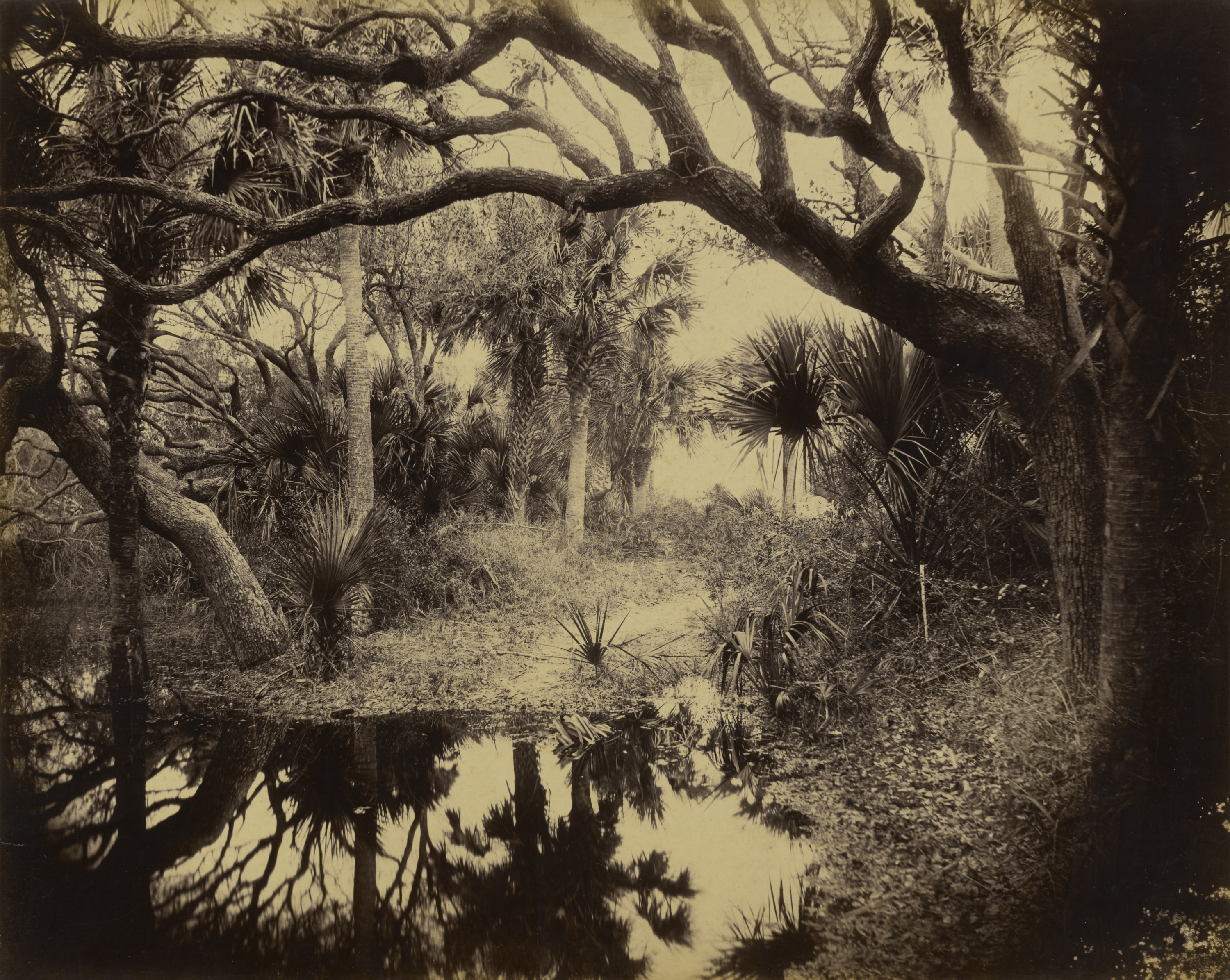
Image Credit: George Barker “Live Oaks and Palmetto, Everglades, Florida” (1886) Digital image courtesy of the Getty’s Open Content Program.


Peggy Turnbull: “Night Ferry”


Night Ferry 

We left his father on the other side
in a mahogany casket, his back at last
unbent, his face free of pain.
After ninety-seven years:
repose.

We huddle in the ferry’s bow.
Its steel walls, for now, protect us
from a raw, wet wind.

As it intensifies, we grope
towards warmth and light,
find them on the upper deck.
My husband drags four chairs
into a row and falls asleep,
as spent as a child.

I cover him with my pink raincoat,
keep silent watch while we cross
above the murky remains
of shipwrecks and other losses,
the engine’s shuddering pulse
our consolation.


About the Author: Peggy Turnbull is an academic librarian turned poet who makes her home in the Great Lakes ecoregion of the U.S./Canada. Kelsay Press recently published her first chapbook, The Joy of Their Holiness. She has poems in recent issues of Poppy Road Review, Bluepepper, Mad Swirl, and Writing In a Woman’s Voice. Her favorite hobby is to take long walks.


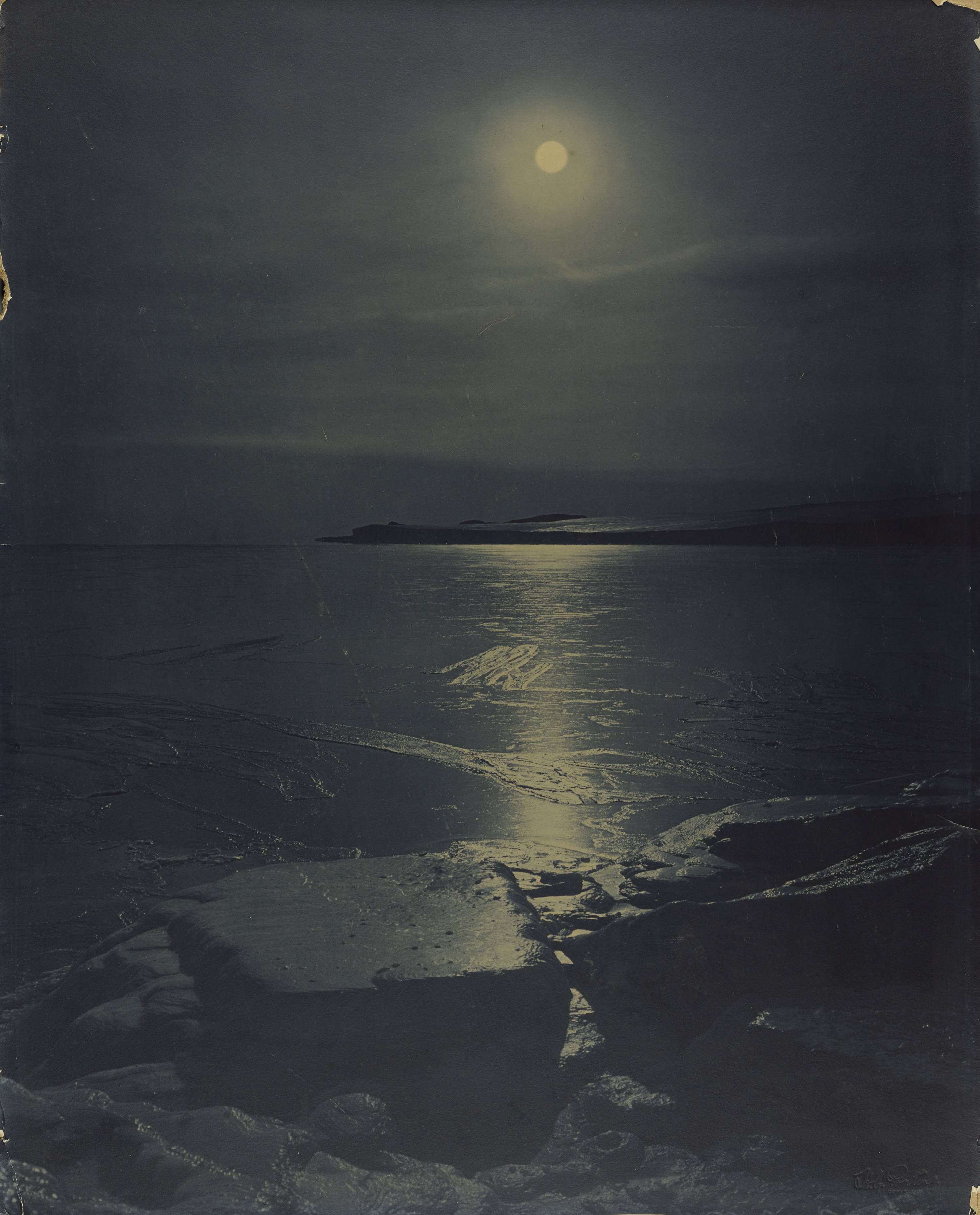
Image Credit: Herbert G. Ponting “The Freezing of the Sea” (1911) Digital image courtesy of the Getty’s Open Content Program.

Sheena Bradley: “After Another Deluge”


After Another Deluge

Rays of morning sun
glisten on the wet leaves
of ornamental olive trees
as they enjoy unseasonal warmth.

Once a warm terracotta,
driveways of tessellated bricks
are now stained black and grey
by engine oil and city acid.

Fire moss carpets the crevices,
elfin setae curving upward
offer capsules of microscopic spores
to the summer sun.

In front of every double garage
sits a Porsche or Discovery,
the pampered gods of suburbia,
discord of traffic assaults the ears.

Nearby in the meadow, spearwort,
cow-parsley, poppies, and dandelions
abound – until the planned
new road becomes reality.

Below, in the valley,
people slump on brooms, stare
listless, or drag sodden sandbags
from their doorsteps, once more.


About the Author: Sheena is Irish but has lived in Nottingham for almost forty years. Following retirement, she began writing and now has an MA in Creative Writing from Trent University. She has been published in The Beacon, Reach, Sarasvati, Dawntreader and Orbis. Twitter: @weesheenanigan


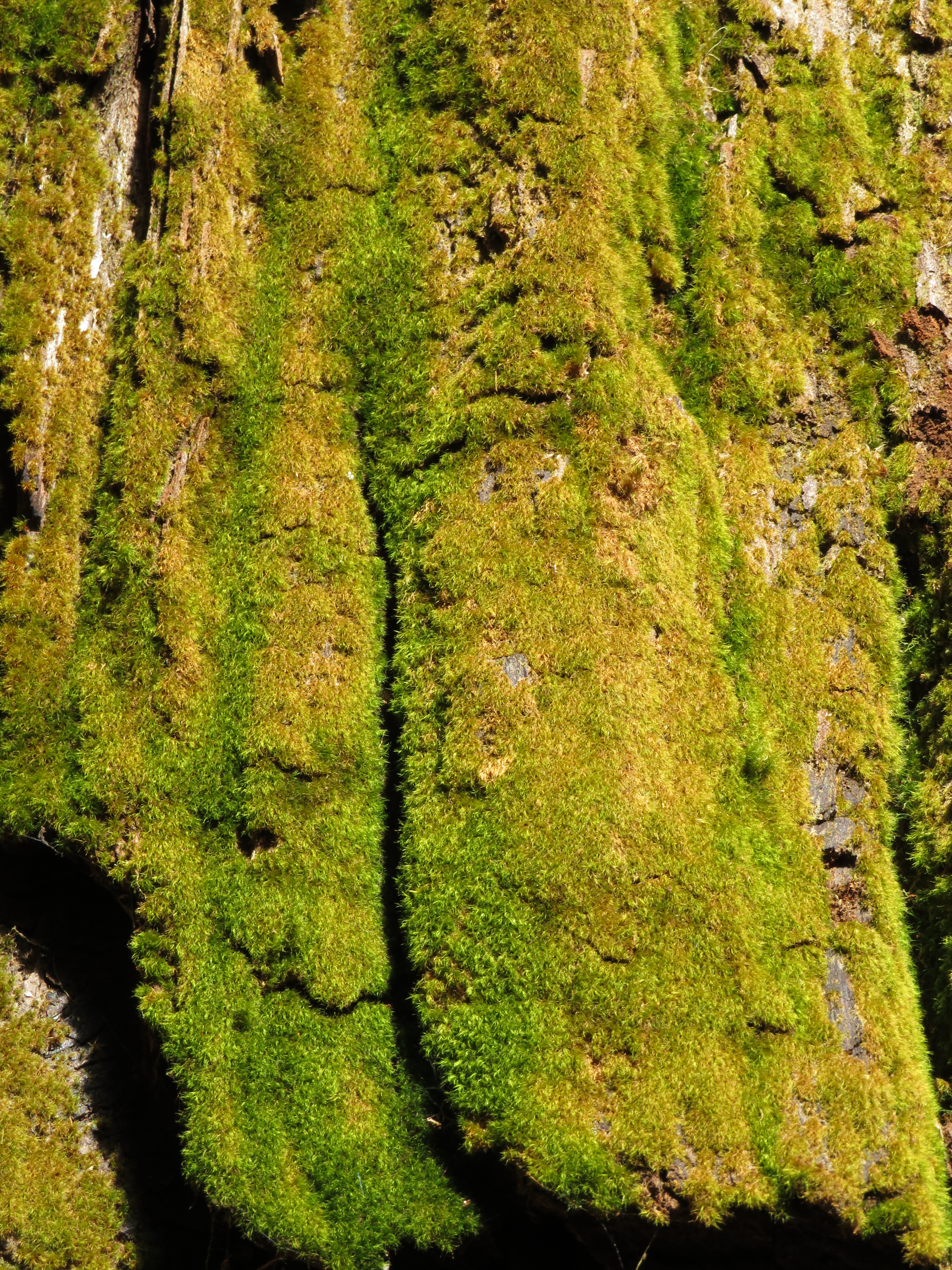
Image Credit: Chase Dimock “Moss on a Redwood” (2020)

William Taylor Jr. “Mr. Sanchez”


Mr. Sanchez

Mr. Sanchez was my hospital roommate for three days
when I had to go and have my aortic valve replaced.

He was 83 years old, deaf in one ear,
and scheduled for a triple bypass.

He had near constant minor pains
and was always pressing the nurse call button
and describing his current level of discomfort:

It’s a one, now…or a two…wait…three…definitely a three…

A nurse would come and give him handfuls
of little pills that dissolved beneath his tongue.

Oh…it’s back down to a two, now…one…zero, it’s zero now, thank you…

The nurse would go away and within a few minutes
Mr. Sanchez would be pressing at the button again.

Nurse, it’s back to a two…maybe two and a half…

The nurse would return with more little pills
and it went on like this throughout the day.

Whenever the nurses changed shifts
the new nurse would have to check Mr. Sanchez’ vitals
and ask him the same series of questions:

Did you used to smoke, Mr. Sanchez?

Oh yes, too much.

For how many years did you smoke?

I started at 16, so about 60 years I guess.
I usta smoke about 3 packs a day.

Really?

Oh yes, I was a merchant marine, and that’s what we did –
smoke and drink, smoke and drink…

You have a tattoo, Mr. Sanchez?

I sure as hell do.

Mr. Sanchez  pushed up the sleeve of his gown
to reveal the face of a pretty young woman
and a faded name scrawled beneath.

I got this in Okinawa in 1963.

Mr. Sanchez sat up and started
to tell the story of the woman’s face
upon his arm but the nurses only
wanted to know what color of jello
he preferred for lunch.

He always asked for red
but they only had yellow
or green.


About the Author: William Taylor Jr. lives and writes in the Tenderloin neighborhood of San Francisco.  He is the author of numerous books of poetry, and a volume of fiction. His work has been published widely in journals across the globe, including Rattle, The New York Quarterly, and The American Journal of Poetry. He is a five time Pushcart Prize nominee and was a recipient of the 2013 Kathy Acker Award. Pretty Words to Say, (Six Ft. Swells Press, 2020) is his latest collection of poetry.


More by William Taylor Jr.

“The Fire of Now”

“One of Pessoa’s Ghosts”


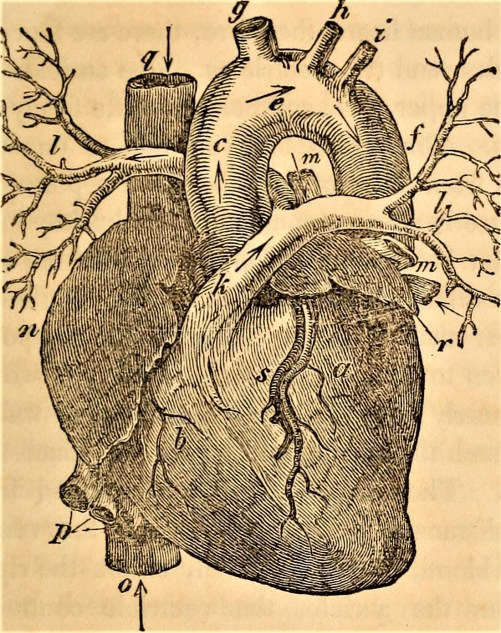
Image Credit: drawing from Outlines of Human Physiology by George Hayward (1834) public domain

Jason Baldinger: “this ghostly ambience”


this ghostly ambience

stop me if you’ve heard the one
about the pregnant waitress
and the zamboni driver

yeah, I can’t think of the punchline
either

what would you expect, holding
my breath and drinking a beer
at the same time is a new skill
like spiritualism, I practice it sparingly

I’m trying not to think about the soul
of the prime rib in front of me
or to notice past myself waiting
at the bar, another beer
and a photo of an illuminated
zippo sign before I shuffle
up to buffalo, catch a predator

ever wonder if leon czolgosz
got into heaven?

I overhear the pregnant waitress
say she still hopes they’re here
in twenty years, the sentence
was innocent in her mind
now it’s dead on the floor

I would go through the stacks
for another conversation piece
but fuck all, sometimes
it’s best to leave it there

dead. I’ve got my mask
there’s a sunset out there
where american flags
outnumber people
I should strike up conversation
with my addled sense of wonder instead

pregnant waitress returns
offers me another beer
suddenly dusk is nonsense
suddenly american flags are nonsense

I missed this ghostly ambiance
mask off, yes to beer
i suppose I spend more time than
I thought talking to the dead


About the Author: Jason Baldinger is a poet from Pittsburgh, Pennsylvania and  former Writer in Residence at Osage Arts Community. He has multiple books available including the chapbook Blind Into Leaving (Analog Submission Press) as well as the forthcoming Afterlife is a Hangover (Stubborn Mule Press) & A Threadbare Universe (Kung Fu Treachery). His work has been published widely in print journals and online. You can listen to him read his work on Bandcamp and on lps by the bands Theremonster and The Gotobeds.


More Poetry by Jason Baldinger:

When Cancer Comes to Evansville, Indiana

It was a Golden Time

Beauty is a Rare Thing


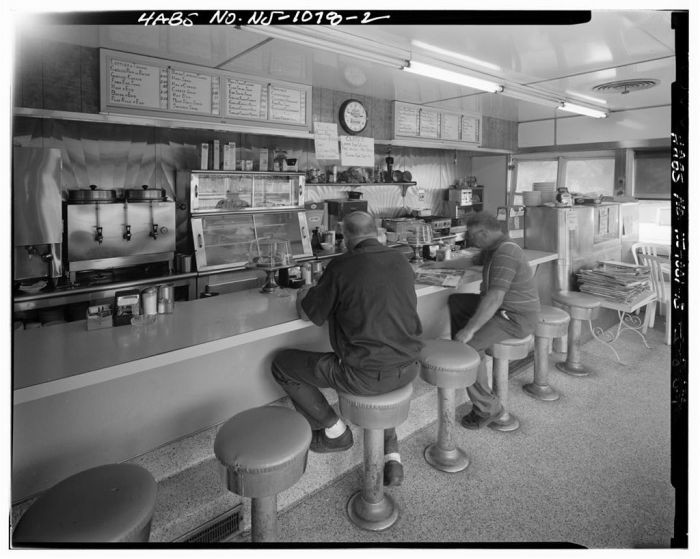
Image Credit: ” INTERIOR VIEW LOOKING EAST – White Crystal Diner, 20 Center Avenue, Atlantic Highlands, Monmouth County, NJ” The Library of Congress (public domain)


Allison Grayhurst: “Prometheus Speaks”


Prometheus Speaks

Prometheus speaks
from my bathroom tiles, wailing
his defiance and fiery nightingale burning
with his tongue still unrooted
and his limbs bound to the rock, spread
like wings – Titan of the windfall, humanity’s
hope and champion, more brilliant than
his dumb and primitive siblings, more committed
than their arrogant and willful offspring.

Prometheus in the shower curtain, dripping
liquid fire down the drain, plunging
into the underworld depths
then up for a greater torment to meet the predator bird,
dispelling all screams and ghosts and holding tight
to his suffering-throne and his compassion
for such a flawed creation.

Prometheus finally rescued
as the warm water exerts itself from on high,
– strong Herculean flow –
the wounded centaur accepting his fate.
Flow Prometheus,
trustworthy, burning, speaking
your conquering gospel,
the first crucifixion
the first flame ignited
before love’s great inception.


About the Author: Allison Grayhurst is a member of the League of Canadian Poets. Five times nominated for “Best of the Net”, 2015/2017/2018, she has over 1250 poems published in over 485 international journals. She has 21 published books of poetry, six collections and six chapbooks. She lives in Toronto with her family. She also sculpts, working with clay; www.allisongrayhurst.com


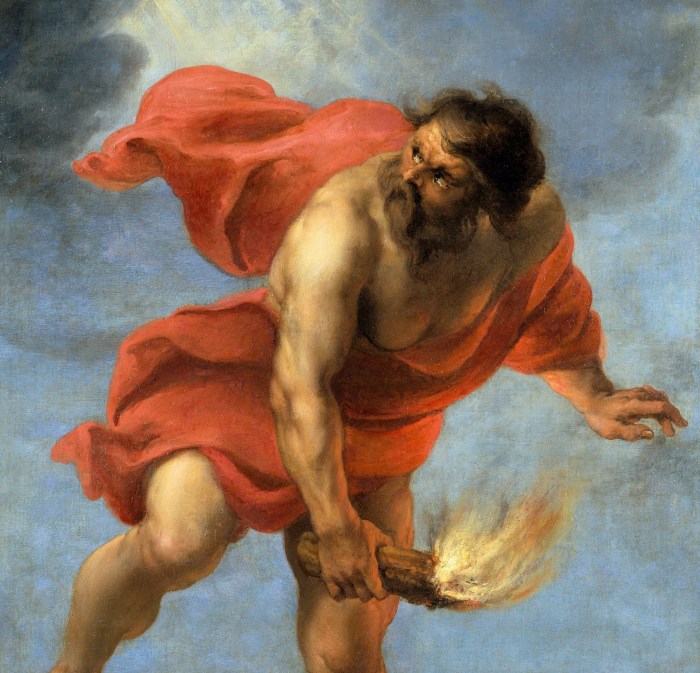
Image Credit: Jan Cossiers “Prometheus Carrying Fire” (1638) Public Domain

The Eden of Perhaps: An Interview Between Poet Agnes Vojta and Chase Dimock


The Eden of Perhaps: An Interview

Between Agnes Vojta and Chase Dimock


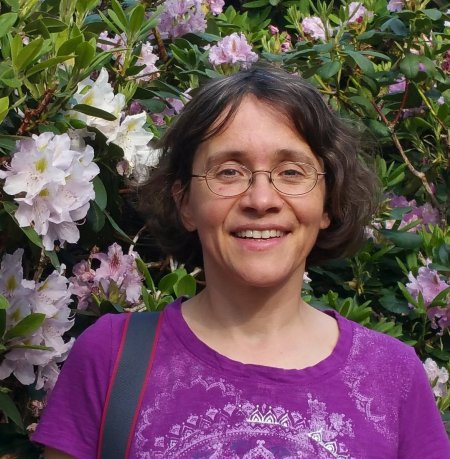
The genius of Agnes Vojta’s poetry is in its simplicity. In just a few neatly composed short stanzas, she can contain entire ecosystems of thought. Never overstated or garish, her work bears the influence of her background as a physicist.The poems have their own neatly defined gravity; poems in motion stay in motion. She can sketch a mountainscape in the Ozarks with the same topographical precision as the folds and crevasses in the human mind.

I want to call her poetry objective, but the depth and rush of human feeling in her lines makes that word misleading. It’s more that her work is authentic, like you’re reading a 1 to 1 ratio of her perspective translated into stanzas. After a few pages, you feel like you really know Agnes Vojta, not because she is easy to interpret, but because you can feel each word is her exact truth.


***


Chase Dimock: Your title, The Eden of Perhaps, recalls the Garden of Eden, a mythological moment in mankind’s history of existing peacefully in an unspoiled natural world. There is an abundance of nature poems throughout your collection, and I know from your facebook you’re an avid hiker and student of nature. What do you hope to express about your relationship with nature in your poems? Do you go on hikes looking to find subjects for your poetry and/or the peace of mind to reflect poetically on nature?

Agnes Vojta: I have been hiking for decades and need it for my physical and mental health. Even in times of greatest stress, one day of the weekend is sacred and I must spend it in the woods. Hiking is also a spiritual practice for me, my way of meditating. On an easy trail, you can let the thoughts wander and percolate; difficult terrain requires intense concentration that forces you to be completely in the moment in a way few other experiences do. Getting away from the chatter of civilization and connecting with nature grounds me and puts everything into perspective. The forest, the rivers, and the mountains speak a deep truth that surpasses what we try to grasp intellectually, and when I can hear those voices, I feel balanced, connected, and at peace.

When I write about nature, sometimes I simply want to share these feelings and my sense of wonder; I wish everybody could experience what I do. But I don’t write to get people to go out into the woods – for that purpose, I run a hiking website and facebook page. Nature often gives me the metaphor that expresses what I cannot otherwise put into words, teaches me lessons that extend into other areas of life, and mirrors my interior landscape. In my first collection Porous Land, a seasonal arc of nature poems reflects an internal journey from loss to acceptance. Nature has to be experienced directly, not through abstract linear thinking. So one might say, trying to put these experiences into words is paradoxical, but the words are not there to explain and analyze – they try to recapture an impression, a feeling that then creates understanding that goes beyond words.

I do not set out on my hikes with the intention to write or look for poetic subjects, but I often get ideas for phrases and poems, and I carry a little notebook. It is always a surprise what I will find, and in which way nature weaves into my thoughts and feelings. The key is to remain open and receptive. Conversely, writing has affected the way I see. After my emigration from Germany, I was unable to write poetry for ten years, and when I resumed writing, I found myself observing more closely and being more attentive – being a poet has enriched my hiking experience.


Chase Dimock: The “Eden” in your title also recalls mythology. Some of your poems contain allusions to classical mythology, including the muses, Sisyphus, and Persephone whose pomegranate spreads its seeds across your book cover. You also invoke fairy tales like Rapunzel and Sleeping Beauty. What is it about these enduring tales and archetypes that draws you in as a poet? What do you hope to add to these stories and characters with your poems?

Agnes Vojta: I grew up an avid reader in a house filled with books; Grimm’s fairy tales and Greek and Norse mythology were the stories of my childhood. Invoking those tales taps into the powerful symbolism of the mythological figures: Sisyphus epitomizes human struggle; Ariadne’s thread evokes the navigation of a labyrinth with a monster lurking at the center.

Grimm’s fairy tales abound with archaic gender stereotypes. I enjoyed subverting the story of helpless Sleeping Beauty and, instead of letting her wake from the prince’s kiss, giving her agency: she awakes on her own and chooses to defy expected gender roles. I let Rapunzel cut off her hair, the symbol of her femininity and her most defining characteristic; she is no longer willing to play her old role. Awakening, rebellion, and the questioning of dichotomies and gendered expectations are recurring themes in my collection.

On an underlying layer, both poems that reference Sisyphus allude to Albert Camus’ essay The Myth of Sisyphus which deals with humans’ search for meaning in the face of an absurd world, a topic deeply connected to the themes I was wrestling with.

Continue reading “The Eden of Perhaps: An Interview Between Poet Agnes Vojta and Chase Dimock”

Stew Jorgenson: “Dead Books”


Dead Books

Eventually

the past moves offshore

and memories blear

in the sad vermilion of history

like a dream

you almost remember

as it passes by

the legacy of besmirched heroes

covered in hearsay’s

ancient dirt

transmogrified

in dead books

unsung forgotten tongues

tarred

feathered

and on the run

in a country where

Emerson is a foreign language

no one speaks anymore.


About the Author: Stew Jorgenson is a part-time wordsmith who has more words than he knows what to do with. Sometimes he uses the extras for poetry, celestial navigation, or target practice. He has worked on farms, fishing boats, and in factories. He’s skilled at mistakes, guilty by association, and suffers from occasional bouts of inspiration. He is working on a cure.


More by Stew Jorgenson:

5 Geezus

Ryan Quinn Flanagan: Movies with “Momo”


Movies with “Momo”

Sam Giancana
would start the projector
and watch the same movie
with his wife every night.

Always in my Heart,
starring Kay Francis
and Walter Huston.

In that very same Chicago basement
he would later be killed in
cooking sausage and peppers
for those he thought were his friends.

But decades earlier,
the basement was where he and his wife
would watch Always in my Heart.

And after his wife died,
“Momo” still retired down to the basement
each night.

That empty chair beside him,
Sam would start up the projector
and sit and watch in silence.


About the Author: Ryan Quinn Flanagan is a Canadian-born author residing in Elliot Lake, Ontario, Canada with his wife and many mounds of snow.  His work can be found both in print and online in such places as: Evergreen Review, As It Ought To Be Magazine The New York Quarterly, Cultural Weekly, In Between Hangovers, Red Fez, and The Oklahoma Review.


More by Ryan Quinn Flanagan:

Artisanal Birds

Before Evening Med Pass

He Brought His Canvases Over


Image Credit: Still from “Always in My Heart”