Emalisa Rose: “that stuff that gets passed down that no one wants anyhow”


that stuff that gets passed down
that no one wants anyhow

housed in those boxes
were half scribbled love
letters, the fine china cups
from Grandmother Jean
with chips in Virginia’s ridge
mountains, Lena’s acceptance
speech, the silver plate baby
shoes that mother passed
on from her mother..etc..an
old school monopoly board,
sixteen scrubbed silver dollars
and endless embroidered
purple rose parasols, plus Uncle
Nate’s war stamps collection

the memoirs you fear to throw
out..the stuff that’s passed
third cousin hands and fourth
generation aunts that you never
met anyhow..all kinds of trinkets
and wrinkled up memories that
no one had wall space for, or felt
any urge to put in a curio that
they’d have to go out and purchase.


About the Author: Emalisa Rose is a poet, macrame artist and animal rescue volunteer.  She lives by a beach town, which provides much of the inspiration for her art.  Her current passion is birding, which looks forward to weaving into her work.


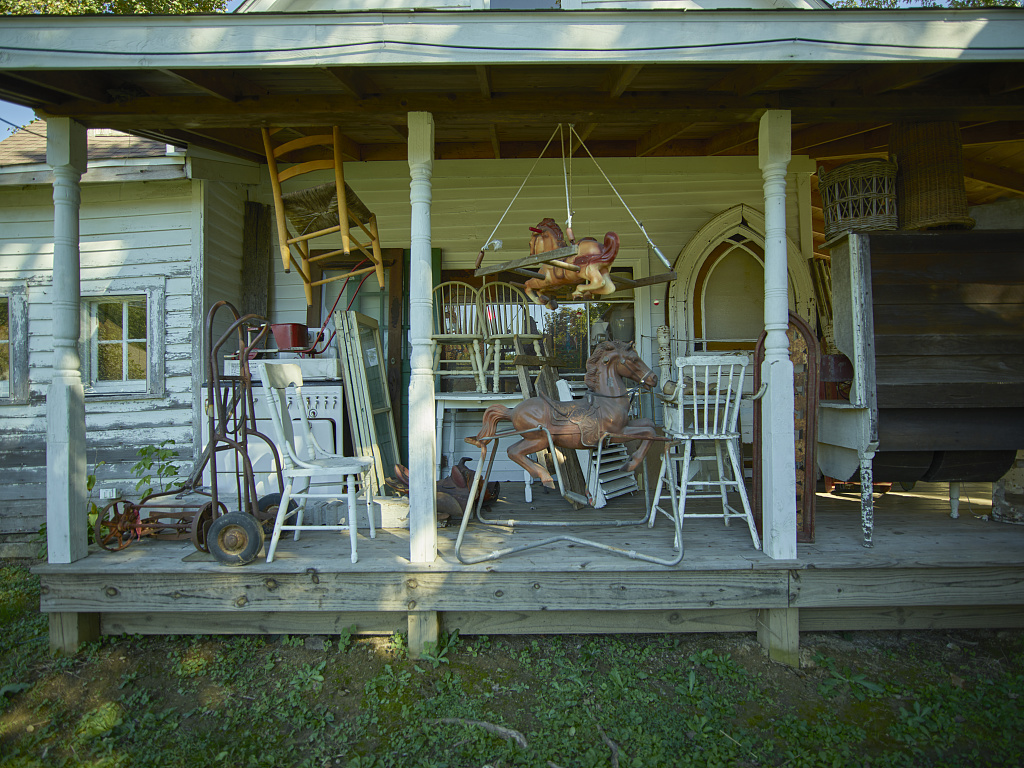
Image Credit: Carol M. Highsmith “The porch that confirms the premesis’s name, Old Stuff Antiques, in Nashville, a small south-central Indiana city with a growing reputation as an art and collectibles center” (2016) The Library of Congress

R.T. Castleberry: “Stopping to Leave”


Stopping to Leave

Dire drift, the afternoon lurks—
flood forecast, prayers rising
from upraised hands, open text.
Rain passes over,
seedlings, oak and elm stirred
by South Coast wind.
Cell phone walkers stretch a crosswalk light.
Food trucks pack for dinner destination.
Pocket park slowly closes—
cigarettes smoked, office lunches done.
Coming off the bridge,
an Audi slips left lane to right,
driver dreaming at the wheel.
Yellow vest workmen scuff
to Ram and Silverado,
helmets and coolers thumping at hips.
Parking lots empty to open arid space,
to painted white lines and chain link.
Captured bags flutter like half-mast flags.
Metal doors and lights lowered,
we are locking down to leave.


About the Author: R.T. Castleberry is a widely published poet and critic. His work has appeared in Roanoke Review, Trajectory, Blue Collar Review, White Wall Review, The Alembic and Visitant. Internationally, Castleberry’s work has been published in Canada, Wales, Ireland, Scotland, New Zealand and Antarctica. Mr. Castleberry’s work has been featured in the anthologies, Travois-An Anthology of Texas Poetry, The Weight of Addition, Anthem: A Tribute to Leonard Cohen and You Can Hear the Ocean: An Anthology of Classic and Current Poetry.


More By R.T. Castleberry:

Down Cold Lanes

July, Roadhouse Dinner


Image Credit: “Detail of east side of overpass, showing spandrel beam, piers, roadway and guardrails. View to southwest. – 86th Street Overpass, Spanning Interstate 35 & 80 at Northwest Eighty-sixth Street, Urbandale, Polk County, IA ” The Library of Congress

Announcing AIOTB Magazine’s Pushcart Nominees


As It Ought To Be Magazine is proud to announce our nominees for this year’s Pushcart Prize


Mike James: “Saint Jayne Mansfield”

Hilary Otto: “Show Don’t Tell”

Diana Rosen: “Hollywood Freeway”

Ronnie Sirmans: “Sloughing Words”

Bunkong Tuon: “Lisel Mueller Died at 96”

Agnes Vojta: “Everybody Loves the Person Who Brings Muffins”


Congratulations to our nominees and a big thanks to all the writers who shared their work with AIOTB Magazine this year!


-Chase Dimock
Managing Editor


Image Credit: Chase Dimock “Grover Beach Sunset” (2020)

Ten Big Things to Know About Roy Bentley: A Review of My Mother’s Red Ford: New & Selected Poems, 1986-2020  By Mike James

Ten Big Things to Know About Roy Bentley:

A Review of

My Mother’s Red Ford: New & Selected Poems, 1986-2020 

By Mike James


1.

Roy Bentley started out as a poet concerned with his own life and his Appalachian and Ohio upbringing. In those early poems about his fire-lipped mama buying a car and an uncle who joined the navy when his wife sent him out to purchase bread, he wrote like a great and natural conversationalist. Those early poems are handled with subtlety, humor, and clear-eyed toughness.


2.

At some point, Bentley decided he could write about anything. As the book progresses from the earliest work, Bentley’s subjects broaden while he deepens his skill. He has poems about Jim Morrison, Robert E. Lee, and F. Scott Fitzgerald. He has a poem about losing his virginity in a whorehouse and a poem about listening to a boxing match on the radio. Whenever he is writing about a subject he fully occupies it. He’s not a poet who believes in sprinkling. He is a poet of submersion.


3.

Roy Bentley knows how to end a poem. Here are a few random last lines. “The only rising we do is out of the body.” “That awful need to believe in God or nothing at all.” “The hardest part is living without hope.” “Something a boy says to no one in the night.” “Even shadows want to leave here.” (It’s good to be able to quote lines which speak for themselves and need neither footnotes nor back stories.)


4.

His last lines can wallop or kiss, but he never takes short cuts to get there. Bentley might be a good guy to play cards with because he doesn’t seem to know how to cheat.


5.

He is an Ohio poet. There must be something good in the Ohio water. Other Ohio poets include Kenneth Patchen, Rita Dove, Larry Smith, James Wright, Sherwood Anderson, Jeff Gundy, Hart Crane, Paul Laurence Dunbar, Mary Oliver, Paul Zimmer, and George Starbuck. That’s a partial list. There must be something in the Ohio water.


6.

This is poetry without pose. His beer poems and pharmaceutical poems are matter-of-fact. He follows the poem wherever it takes him. He never sounds like anyone other than himself. His voice is distinct and only muddied when he is gargling with river water.


7.

Filmmaker genius/artist/raconteur Jack Smith once wrote, “The title is 50% of the work.”

Based on that, Bentley’s poems are half-way successful at the start since he never provides boring or lazy titles. Some invoke curiosity about happenings, such as “Why William Earl “Bill” Hagerman Carried the Casket” or “Coal Town Saturday Night.”  Some place the reader in a landscape, such as “Body of a Deer by a Creek in Summer.” Others are more musical like, “Eggs and Butter and Milk and Cheese.” (Do you notice how that title starts and ends on the “e” sound? Do you notice how a grocery list becomes a short litany a child might chant to her mother as she helps put groceries away?)


8.

Most of these poems either relate or create an anecdote for the reader. To call them narratives might indicate they are longer than they are. (His average length is one or two pages.) Some don’t so much tell a story as create a scene where a story might take place. Think of an Appalachian David Lynch driving through small towns, past closed drive-ins.


9.

Bentley’s references are wide ranging and fun. He loves Jerry Lee Lewis as much as he loves Salvador Dali. He likes Walt Whitman and Arthur Rimbaud. He loves Elvis (who doesn’t?) and Batman and zombies. Did I mention strippers? He loves those too.


10.

Bentley has not only grown more skillful with age, but also more productive. Six years passed between his first and second books. Then fourteen between his second and third. Then seven more to the next. Then only five passed to the next two! And now this robust selected appears two years after the last two collections. Bentley is bending time in his direction these days with his well-told reckonings and his joyful, verbal leaps.


My Mother’s Red Ford: New & Selected Poems, 1986-2020
Lost Horse Press, 2020
Poetry, $24


About the Author: Mike James makes his home outside Nashville, Tennessee. He has published in numerous magazines throughout the country in such places as Plainsongs, Gargoyle, Birmingham Poetry Review, and Chiron Review. His fifteen poetry collections include: Journeyman’s Suitcase (Luchador), Parades (Alien Buddha), Jumping Drawbridges in Technicolor (Blue Horse), First-Hand Accounts from Made-Up Places (Stubborn Mule), Crows in the Jukebox (Bottom Dog), My Favorite Houseguest (FutureCycle), and Peddler’s Blues (Main Street Rag.) He served as an associate editor of The Kentucky Review and currently serves as an associate editor of Unbroken.


More Reviews by Mike James:

Mike James reviews Mingo Town & Memories by Larry Smith

Mike James reviews “Dead Letter Office: Selected Poems” By Marko Pogacar

Mike James reviews Beautiful Aliens: A Steve Abbott Reader and Have You Seen This Man? The Castro Poems of Karl Tierney
Peggy Turnbull: “The River’s Gift”


The River’s Gift

Once a girl found her way
in the evening, down a grassy path
that sloped and stopped beneath a bridge,
where she kneeled
on a beam of concrete shaped
like a mother’s apron
and dipped a jar
into the river’s mouth.

When her sample revealed
its pig-sty aroma,
the boys in seventh grade science
crowned her their goddess of gross,
admiring her
for the rest of the period
as she leaned to her notebook and microscope.

That was enough.
What did she care about adoration?
She’d just discovered microbes.


About the Author: Peggy Turnbull is an academic librarian turned poet who makes her home in the Great Lakes ecoregion of the U.S./Canada. Kelsay Press recently published her first chapbook, The Joy of Their Holiness. She has poems in recent issues of Poppy Road Review, Bluepepper, Mad Swirl, and Writing In a Woman’s Voice. Her favorite hobby is to take long walks.


More by Peggy Turnbull:

Night Ferry


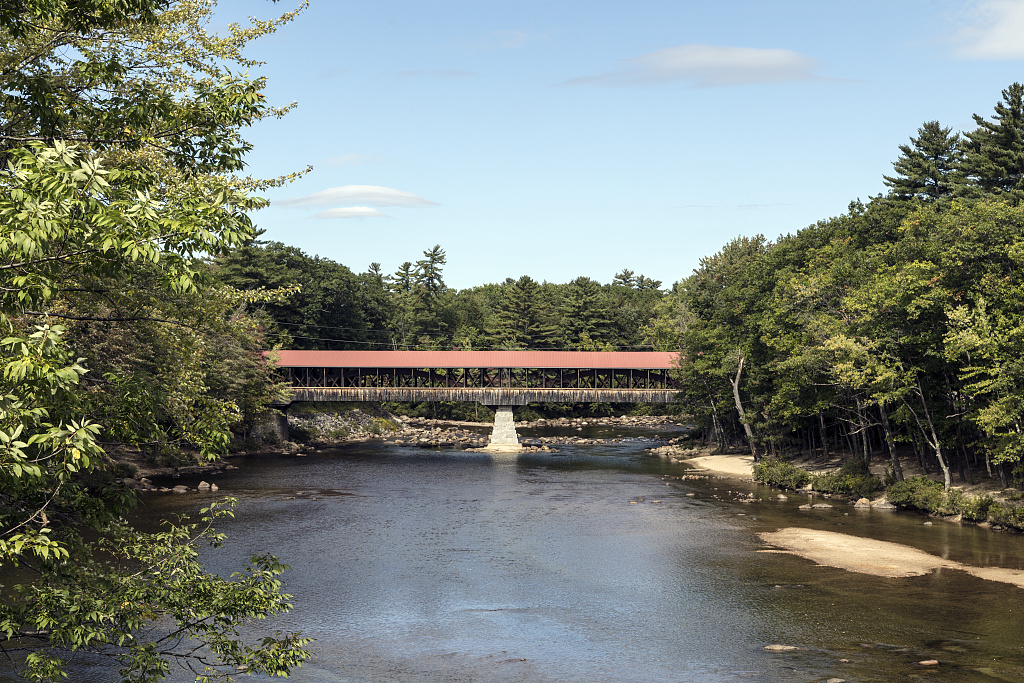
Image Credit: Carol Highsmith: “The 225-foot-long Saco River Bridge, a covered bridge over the Saco River in Conway, New Hampshire. Built in 1890, the Paddleford-style truss bridge includes added arches and has a posted six-ton limit for crossing vehicles.” (2017) The Library of Congress

John Grochalski: “ridiculous male bravado”


ridiculous male bravado

boys
used to have these standoffs
in high school

we’d go to some undisclosed location
like a bus stop or the park

the combatants would stand face to face
glare and try to look hard

maybe one pushed the other
and the other pushed back

to tell the truth they looked scared
like they didn’t want to hurt anyone or get hurt

but were caught up in this ridiculous male bravado

kill or be killed in america

there were never any girls there
they were off being told a different kind of lie

after about fifteen minutes of this sideshow
all the hoopla began to die down

the fighters couldn’t remember
what they were mad about anyway

and one by one
we walked away from the stalled melee

slinking back into our own
little internal dramas

pacifists anew.


About the Author: John Grochalski is the author of the poetry collections, The Noose Doesn’t Get Any Looser After You Punch Out (Six Gallery Press 2008), Glass City (Low Ghost Press, 2010), In The Year of Everything Dying (Camel Saloon, 2012), Starting with the Last Name Grochalski (Coleridge Street Books, 2014), and The Philosopher’s Ship (Alien Buddha Press, 2018). He is also the author of the novels, The Librarian (Six Gallery Press 2013), and Wine Clerk (Six Gallery Press 2016).  Grochalski currently lives in Brooklyn, New York, in the part that voted for Trump, so may God have mercy on his soul.


More By John Grochalski:

grape drink and snuff

to abby wherever you are


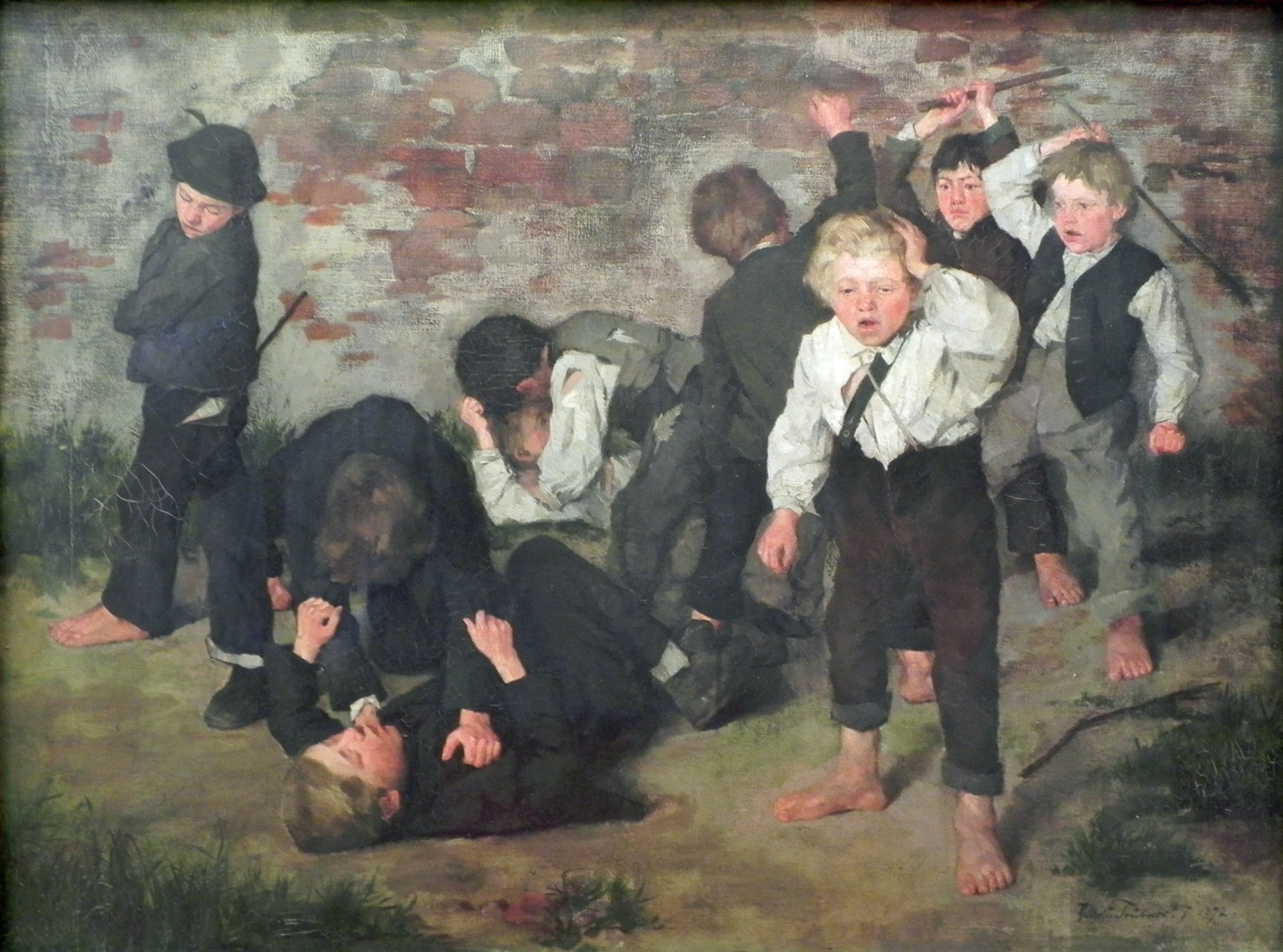
Image Credit: Wilhelm Trübner Scuffling Boys” (1872) Public Domain

Jason Baldinger: “where are you now benny santiago?”


where are you now benny santiago?
(for tony gloeggler)

improbable opening day
the swelter of july
the fate of the season
the fate of the country
hangs suspended
in this unsafe air

it’s been years since
I made it to an opening day
last one so cold
the stadium universally
voted a campfire
as between eighth
inning entertainment

previous year was shirt sleeves
forty year old benny santiago
whacked a triple
even from the upper deck
you could see his eyes wide
digging for second, spare
parts strewn across the diamond
he slides winded into third

I wasn’t thirty yet
I already knew
what that run meant
how each stride felt
benny retired the next day

I look over this year’s opening
day roster, selfish I know
the ‘rona cost a chance
to see a historically
bad pirates team lose
over a hundred games

I’ve sat through seasons
like that before
listening every night
to a roster of aaaa players
not looking for wins
hoping for attrition

I don’t think this season
will ever finish, suspended
in an open ledger like’ 94
no boys of october
the crisp of autumn
ushered in without ceremony

tonight stallings
the backup catcher
drops a single, brings in two
the bucs never catch
the cards though

they need magic
come the ninth
with a couple runners
on, only one out
they get lightning instead

harmless double play ball
game ends, soon forgotten
stadium lights blink out
the dustbin of minutia

I turn off the radio
settle back into a book
breathing water in humid night
sometimes it’s attrition

where are you now benny santiago?


About the Author: Jason Baldinger is a poet from Pittsburgh, Pennsylvania and  former Writer in Residence at Osage Arts Community. He has multiple books available including the chapbook Blind Into Leaving (Analog Submission Press) as well as the forthcoming Afterlife is a Hangover (Stubborn Mule Press) & A Threadbare Universe (Kung Fu Treachery). His work has been published widely in print journals and online. You can listen to him read his work on Bandcamp and on lps by the bands Theremonster and The Gotobeds.


More Poetry by Jason Baldinger:

This Ghostly Ambience

It was a Golden Time

Beauty is a Rare Thing


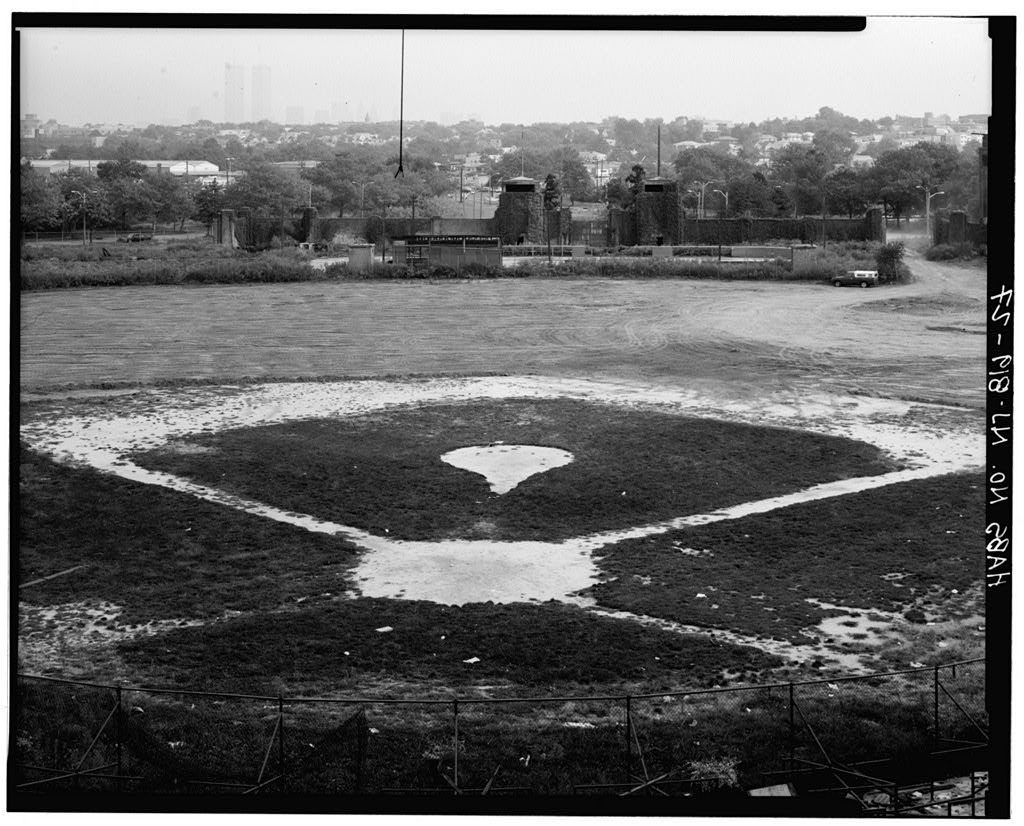
Image Credit: “BASEBALL DIAMOND, LOOKING EAST – Roosevelt Stadium, State Route 440 & Danforth Avenue, Jersey City, Hudson County, NJ” The Library of Congress (public domain)

Ariel Beller “ad interim”


ad interim

the birds went quiet
and the air became static and ticks
all it wanted was to get inside
the shadows began to flutter in panic
and the core swelled shut
a blue jay guided the moon reflected in several kitchen knives
                and this old deep couch
which fits me sideways like a hacked apart machine
became
unfixed
                I put my cigarette out in a pistachio shell
look around
everything changed
everything the same


About the Author: Ariel Beller was born in Portland, Oregon in 1976.  His work has appeared in The Bicycle Review, Driftwood Press, Amsterdam Quarterly, Luna Luna, Tears in the Fence, Queen Mobs Teahouse, Gobbet, The Wolf, Exquisite Corpse, and many other places.  He currently resides in New Orleans.


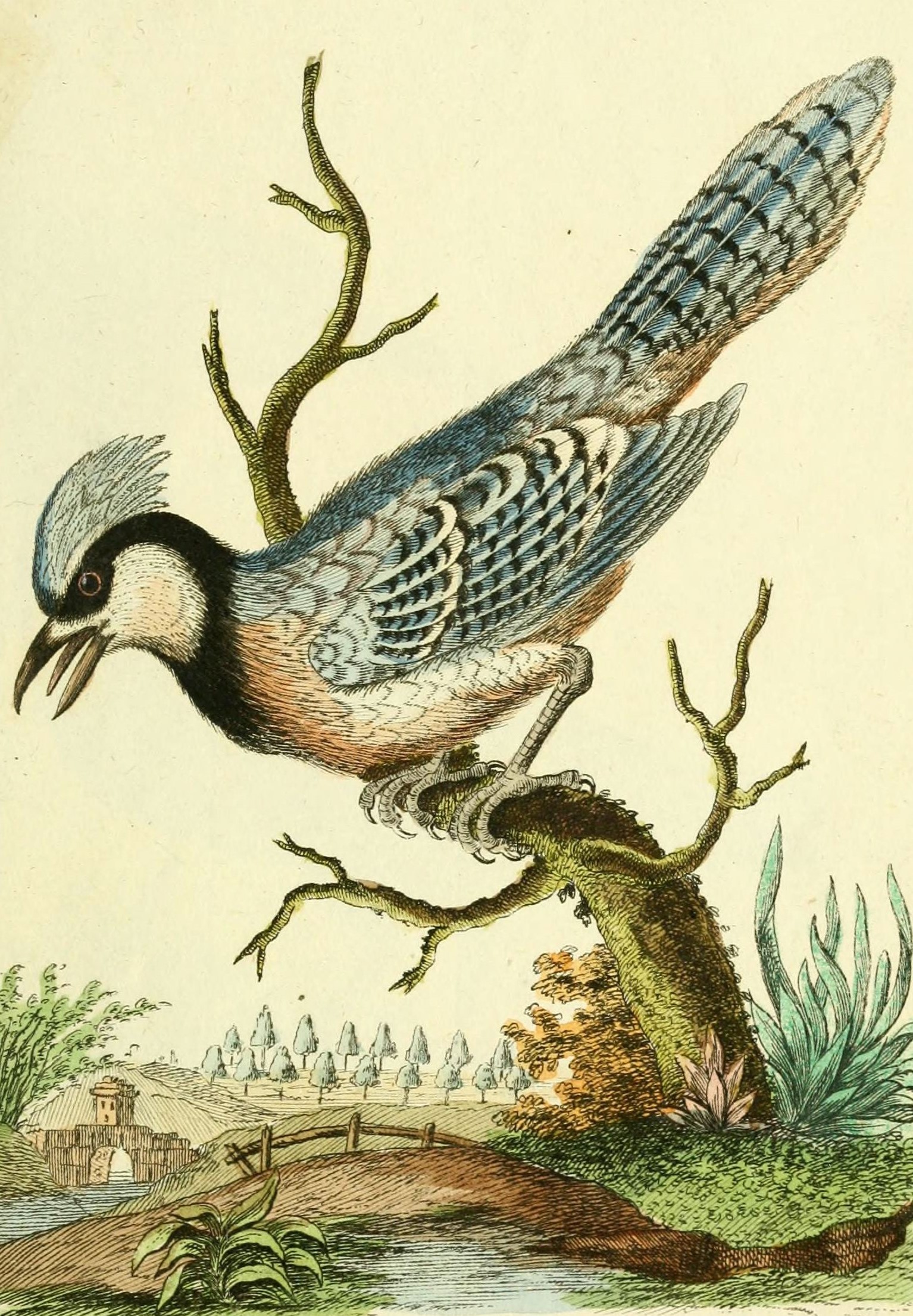
Image Credit: Gemeinnüzzige Naturgeschichte des Thierreichs, Gottlieb August Lange,1780-1789. Courtesy of the Biodiversity Heritage Library

Sheena Bradley: “Child Migrant”


Child Migrant

I don’t remember leaving Ireland,
only arriving, as if just born, off the boat.
Jelly legs find earth unsteady
after weeks aboard the Empress of France.
Parents speak rapidly
with smiling voices,
emigrants to a New World

Quebec is light, colour, noise
and swooshing cars with glossy names,
Chevrolet, Chrysler, Oldsmobile.
My new half-brother
speeds us in his Pontiac
through pine forest tang,
green trees go on forever.
Already wide, the Petawawa River
opens to the Ottawa, songs
lilting in their names.

This white house is just for us, we four –
and that scary Jesus picture,
shipped all the way from home, flashing
his fiery heart and follow-you eyes.

Big brother, home from school, teaches me,
Van Der Berg, Kinosha, Hoffmann,
Schultz, twisting my tongue, compared
to Kelly, Mc Guigan, Hegarty and O’Brien.

Featureless fading snowmen last
for months, then summer’s melting heat,
sticky hands, damp clingy sheets.
On our way to picnic by a lake,
the car skids on a million mashed caterpillars.
I swim on Uncle’s back, squealing,
squealing, listening for echoes.

Barbecue smoke clings to hair
and clothes as we ride home singing
O Canada, our home and native land.


About the Author: Sheena is Irish but has lived in Nottingham for almost forty years. Following retirement, she began writing and now has an MA in Creative Writing from Trent University. She has been published in The Beacon, Reach, Sarasvati, Dawntreader and Orbis. Twitter: @weesheenanigan


More by Sheena Bradley:

After Another Deluge


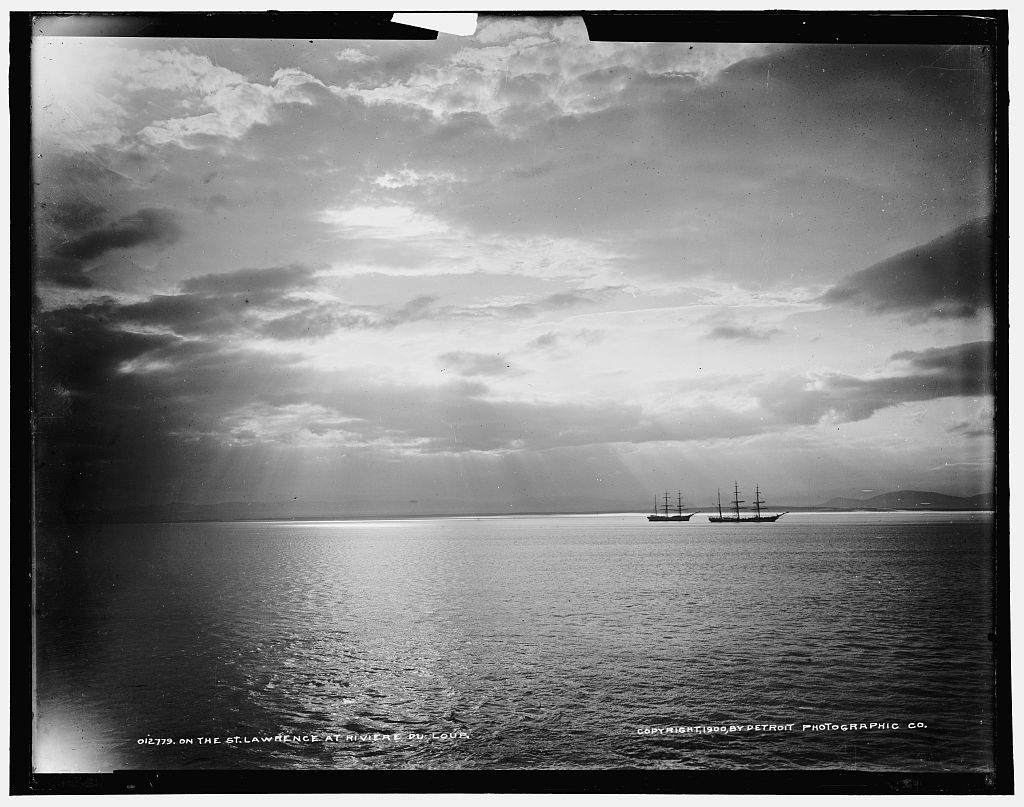
Image Credit: “On the St. Lawrence River at Riviere du Loup” (1900) Public Domain: The Library of Congress

Tim Peeler: “Drive-in 21”


Drive-in 21

Through the pounding thunderstorm,
They endured blue lightning flashes,
Great drops of steaming rain,
And on the screen, the first of
A double feature, Invasion
Of the Blood Farmers,
A film shot so poorly
That day and night shots
Were jumbled together;
So cheap, the actors were paid
With six packs of beer
To play blood-seeking druids
On a mission to save their queen.
They gritted their teeth
As their wipers slashed,
The speaker crackled, and
The parking lot emptied
Of all but the stoners
And the crazies awaiting
The second feature,
Shriek of the Mutilated,
Wherein grad students
Undertake a field trip
To Boot Island in search of Yeti,
And the hardcores were rewarded
When the summer skies cleared
And fell silent as the hairy
Beast began his carnage.


About the Author: A past winner of the Jim Harrison Award for contributions to baseball literature, Tim Peeler has also twice been a Casey Award Finalist (baseball book of the year) and a finalist for the SIBA Award. He lives with his wife, Penny in Hickory, North Carolina, where he directs the academic assistance programs at Catawba Valley Community College. He has published close to a thousand poems, stories, essays, and reviews in magazines, journals, and anthologies and has written sixteen books and three chapbooks. He has five books in the permanent collection at the Baseball Hall of Fame Library in Cooperstown, NY. His recent books include Rough Beast, an Appalachian verse novel about a southern gangster named Larry Ledbetter, Henry River: An American Ruin, poems about an abandoned mill town and film site for The Hunger Games, and Wild in the Strike Zone: Baseball Poems, his third volume of baseball-related poems.


More By Tim Peeler:

Modernist Hay Making

Paramnesia 2

Ballers 2, the Star’s Monologue 3


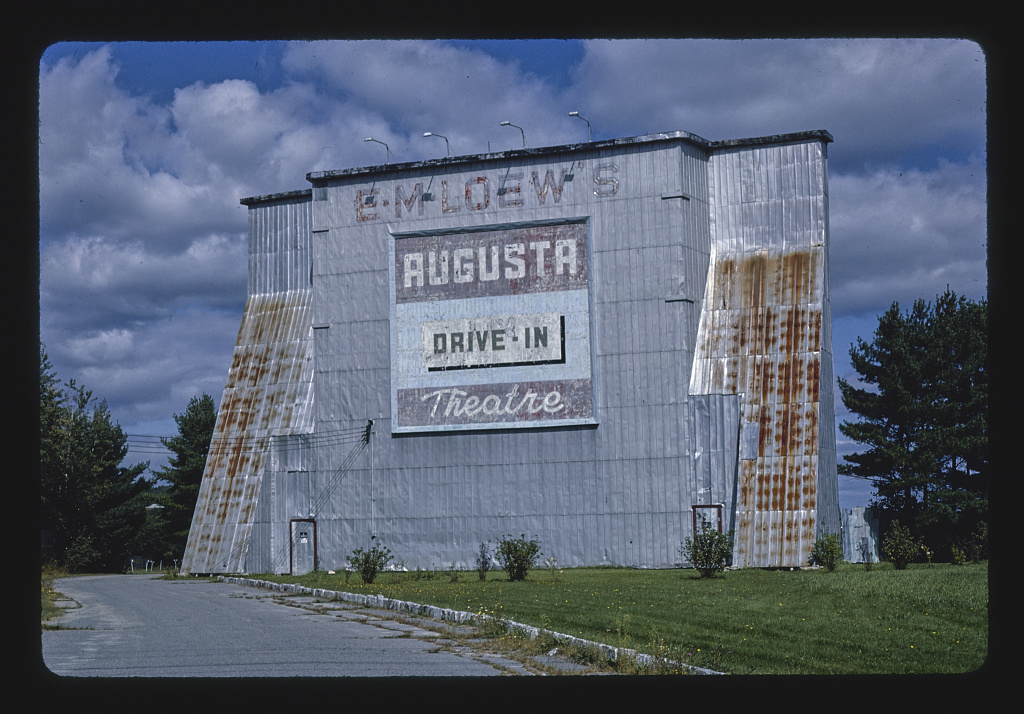
Image Credit: John Margolies “Augusta Drive-in Theater, Route 11, Augusta, Maine” (1984) The Library of Congress