SATURDAY POETRY SERIES PRESENTS: POETS HOUSE

Editor’s Note: Every once in a while on this series I like to give a shout out to an organization that is furthering poetry in contemporary America, and today is one of those days. Located in New York, Poets House “is a national poetry library and literary center that invites poets and the public to step into the living tradition of poetry.” Some poets inhabit this space daily and consider it their office. For me, it is my church. A space where I go to worship at the alter of poetry. Whether I am reading a book of poetry from their extensive library of approximately 50,000 books, writing poetry of my own within sanctified walls, or attending a reading or lecture, when I am within the walls of Poets House I am dedicated to nothing but poetry, and that is a truly unique and beautiful thing.

If you live in New York, head downtown and partake in the milk and honey. If you live elsewhere, I would argue that Poets House alone is worth a visit to New York City. No matter where you are, if you are an advocate for and supporter of poetry, please support this institution that is a rare gem in today’s Capitalist world economy.

Want to read more about Poet’s House?
poetshouse.org

SATURDAY POETRY SERIES PRESENTS: PAUL LEGAULT

MADELEINE AS WHITE COUNTRY
By Paul Legault

At least
you can sleep by
the American names for loneliness:
Iowa, Nebraska, Memphis, like snow
that we had to talk about
when it refused to go away.
Give it names,
names for names’ sake:
ashes, the winter, the white earth.

To build a man up from it
is to want for him
to rid us from what he is made of
by leaving on a horse of snow

into spring, even now.
The land exists. Ruin.
Snow. He will stay.
The patterns of milk, of place

like a fluid, snowmen that know nothing
of competition, of men made
of red and not water,
of blood that keeps through summer.

You may as well make him a home by now
from snow and a wife
of sorts from snow and a mouth,
because they will make a name for themselves
from snow and the means to wait
from ice, from carrots and coal,
their wide language derived from the weather
without a single word for you,
ten for the sea,
nothing for the cold.


(Today’s poem originally appeared in The Madeleine Poems (Omnidawn 2010), and appears here today with permission from the poet.)


Paul Legault was born in Ontario and raised in Tennessee. He holds an M.F.A. in Creative Writing from the University of Virginia and a B.F.A. in Screenwriting from the University of Southern California. He is the author of two books of poetry, The Madeleine Poems (Omnidawn, 2010, winner of the 2009 Omnidawn First/Second Book Award) and The Other Poems which is forthcoming from Fence Books in 2011. He co-founded and co-edits the translation press Telephone Books.

Editor’s Note: I had the pleasure of seeing Paul Legault read last night, for the second time. He did not disappoint. I owe my initial exposure to Mr. Legault to Ms. Lezlie Mayers, editor of this site’s “Friday Poetry Series,” where Mr. Legault first came onto my radar. Since the initial exposure, it’s been nothing but good times had by all.

Of today’s poem I will say only that it is brilliant in its subtle manipulation of language, that you as the reader are being manipulated and you don’t even know it, and that if you do, you are saying “thank you” and asking for more. When I spoke with him at his reading last night, Paul told me that he would be judging me based on the poem I chose to share today, to which I say “bring it on;” I stand enthusiastically by my choice.

For a good read, order a copy of The Madeleine Poems. For a multi-pleasurable experience, pre-order a copy of The Other Poems. You will not be disappointed.

Want to see more by and about Paul Legault?
Paul Legault’s Official Blog
Buy The Madeleine Poems
Bomblog: The Madeleine Poems interview
Pre-Order The Other Poems
Boston Review: Selections from The Other Poems
The Other Poems trailer (youtube)

Robert McAlmon: A Lost Voice of the Lost Generation

Robert McAlmon: A Lost Voice of the Lost Generation

By Chase Dimock

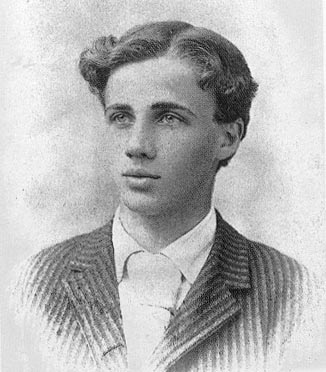
A writer, publisher, and a connoisseur of the Parisian nightlife, Robert McAlmon was a fixture of the Lost Generation’s expatriate community in Paris in the 20s and 30s. McAlmon took Hemingway out to the bullfights in Spain that he would immortalize in The Sun Also Rises. He typed proofs of James Joyce’s monumental novel Ulysses, and due to the convoluted system of notes and addendums in Joyce’s manuscript, the voice of Molly Bloom that the first generation of readers received was actually McAlmon’s interpretation of Joyce’s. Through his publishing company Contact Editions, he was the first to publish works by such luminaries of the modernist movement as Gertrude Stein, Ernest Hemingway, William Carlos Williams, Djuna Barnes, H.D., and Nathanael West. Yet, his own reputation as a writer never reached the heights of those that he helped.

In past couple of decades, a few scholars have begun to rediscover McAlmon’s work and wrest it from the dusty margins of the archives. Three of his works of fiction (Village, Post-Adolescence, and Miss Knight) were republished in 1991 for the first time since the 20s and accompanied with a forward by Gore Vidal. McAlmon grew up with Vidal’s father in the Midwest and subtly hinted in the semi-autobiographical Village that he had an adolescent attraction to him. McAlmon’s memoir Being Geniuses Together and the newly rediscovered novel The Nightinghouls of Paris provide new insight, caustic commentary, and fresh gossip into the lives of the icons of the expatriate community. McAlmon was an avid gossiper and twice got into fights with Hemingway and F. Scott Fitzgerald for spreading rumors that they were pansies. McAlmon himself was a bisexual and although he never declared this side of his sexuality in his work, he nonetheless had brief flings with writers like John Glassco and Claude McKay among others.

Beyond the gossip, McAlmon’s work provides a rare glimpse into the lives of gay and lesbian writers and artists in the 20s. In The Nightinghouls of Paris, he portrays the relationship between Glassco and Graeme Taylor as the two young Canadian writers struggled to understand their attraction to one another in a culture that had not yet developed the vocabulary we have today for expressing and realizing these queer desires. He also fictionalizes the stormy relationship between Djuna Barnes and Thelma Wood, who was the inspiration for Robin Vote in Nightwood. Wood also makes an appearance as “Steve Rath” along with Marsden Hartley, and Dan Mahoney (the inspiration for Dr. Matthew O’Connor in Nightwood) in McAlmon’s collection of short stories Distinguished Air: Grim Fairy Tales, which chronicles the underground, queer cabaret culture of Berlin in the early twenties. McAlmon’s Berlin stories predate those of Christopher Isherwood by a decade and go much deeper into lurid details about drugs, prostitution, and the sexual dissidence of the expatriates who emigrated there to find a space in which their persecuted desires could flourish.

Below, I have included a few poems from McAlmon’s 1921 collection Explorations. In McAlmon’s first book, we see the young writer experiment with modernist techniques and themes. He revels in innovation, irreverence, and liberation from the stuffy verses and bourgeois sensibilities of the American tradition. In the first poem, McAlmon finds all three themes trumpeted through the chaotic notes of Jazz music. For McAlmon and his contemporaries, the Jazz Age was the post-war generation’s moment to radically reinvent American culture, even if they had to do it from inside the bars and bistros of Montmartre. In “Jazz Opera Americano”, McAlmon turns to stream of consciousness writing to keep pace with the frantic tones and rhythms of jazz music. For modernists like McAlmon, Jazz music was part of a wide-sweeping interest in primitivism—an artistic fascination with reinvigorating the west’s long repressed primal urges by appropriating non-western art to inspire cubism, surrealism, and other non-realist expressions. While well intentioned, this interest in the primitive came at the cost of stereotypical constructions of minority cultures, even though these artists thought they were promoting these cultures and saw their patronage of the Harlem clubs and the racially integrated bars of Paris as a sign of their racial inclusiveness. Though splintery with immaturity, these lines of poetry capture the urgency of the Jazz Age and the Lost Generation’s mantra to “make it new”.

Jazz Opera Americano

Come now, come now.   For Gawd’s sake, shiver your spine.
Syncopate  the  spectrum. French  horn  blast, potato
whistle shriek.

One ancestor was a boar tusked dog wolf who howled mad
bayings at the moon—a lonely wolf—a vicious hound—a
sad brute—but a hell hound for noise :

Show us how you spend the money, spend the money.
God, man, feel my pulse, dear God—I’m a liar—it is
spurting Semitic Blood. Niagara rush in my veins with
Semitic caution. Show me how the money is spent. Magnifi-
cently gorgeously. Highcolors. Peacocks, humming-birds,
pheasants?  Nature, bah!  Spend big money.

In the line was a bull moose who bellowed mating calls
forever and ever, mate or no mate, he still had hungers deep
an impalpability not to be torn from him however he
bellowed—tom tom, a hunter’s horn, with a high yodel and
the rattle of a string of missionary teeth—all in the high
wind shriek and the moon splintered to white and ver-
milion orange dripping, green swirling and a dizzy spectrum
and I fainting but never fainted in a swirling vortex of
colored rhythms, uneven dissonant and tragic—wild, wild,
wild man, why are you shouting wild man?  Dance jazzo,
swirl me—my legs are buoys on an unsteady ocean of sound.

Young, young—hell no, not youth but energy, and what,
sweet blood tattooed Jesus, do we do with energy ?  Strong
rushing red blood—whatt’hell’s to be done with it ?  Desire ?
Growing sophisticated ? . . .  My thoughts will not be sup-
pressed however.  Set that to music, kid.  Reality.  Give
it a shivery tune.  Jewish, Chinese, East Indian.  Shakety
shake, shakety shake—Jazz, Jazz, whirl, wild women,
whirl.

Sucked into sound—thrilled voluptuous—and the waves of
rhythm carry me away, lap sensuous rhythm tongues about
me  soul-body-mind,  push me,  seduce me.  And I am
willing—anxious for the seduction, Jazzo, Jazzo swirled
and swung into the vermilion, the purple, swinging, sway-
ing, bending, tones—not in the feet moving, not in the body
bending, but in the blood leaping to a syncopated rhythm.
High recklessness. What comes after what comes after ?
Be careless. Sensible cautious—damnfoolishness—with a
half pint bottle for six—O yo ho—O yo ho—my ancestors
were savage brute vicious ones—the line’s diluted—
Crack—crackle—lights out—the bulls.

Obsequy

There is inestimable companionship in graveyards
Where the unavailing gestures of impotent hopes
Are sealed in earth overset with rock, and many dead
No longer fret and fume, but rest ;  while the knowledge
Of the life their corpses once have housed
Is breathing on the granite and the marble slabs
When the atmosphere about is conscious, if with vainest grief.

History Professor

“Now, in the interests of scholarships—uh huh—yes—
in the interests of scholarship” he’d lecture, asking for
bibliography, collateral reading, and annotations, which
requests never interfered with students’ thoughts on
Saturday night dances, or Monday night drunk ons.

It’s a shame, kiddo, I’ll tell you it’s a shame that jazzy
people like Alexander, Cleopatra, Hannibal, and Henry
the Eighth should be annotated thus by a male pedagogue
who wears his winter underwear through June, and uses a
Pinkham pill for a laxative twice a week to keep his system
in order.

Burial

Geometry is a perfect religion,
Axiom after axiom :
One proves a way into infinity
And logic makes obeisance at command.

Outside of the triangle, cubes, and polystructures
There is restless pummeling, pounding and taunting.
The end is diffused into channels
Every step into eternity—and steps are endless.

Versailles Guide

He told me historic scandals :
Of how various queen-wives
Died of broken hearts
Because their kings
Had so many mistresses,
That Louis XIV. and that the XV.
He spoke of Le Duc Phillippe
Who painted his cheeks—
Also his eyebrows—
And rode in the streets
Regardful only of men,
Who poisoned his wife
Or in somewise rid himself of her.

If the guide would only be contemporary
With his scandalous information
He would not need to be a guide.

But he had rosy cheeks himself,
And perhaps a romantic nature.

SATURDAY POETRY SERIES PRESENTS: JOHNATHON WILLIAMS

By Johnathon Williams:

ANNIVERSARY SONNET

We fought all night, all morning, so I treat
myself to breakfast down at Common Grounds,
a Fayetteville thing to do. A regular pounds
the dregs of a Bloody Mary, and the heat
at 10 is already too much. It’s all
too much: the water bill, my promises,
her steady, undefeatable love. She says
no change can fault the way she feels or call

to question time — now thirteen years. But time
is the whole problem, its relentless march
away from that high school lunchroom, the boy
taunting the poor retarded kid in line
and her calling him out. Jesus, the arch
of her back. Her fists and hair. My shame and joy.


SOLILOQUY TO THE PEEPHOLE OF APARTMENT 9
         with lines from Ovid and Goethe

The night is slipping away. Throw back the bolt.
I’ve no excuse, no right, no hope to soothe
these midnight consternations. Yes, I’m married:
She’s sleeping six doors down — you met last Tuesday.
You borrowed our detergent in the laundry.
And when she left to lay the baby down,
you and I, we sat, not talking not moving
our breath alone to meter that conspicuous
lack of manners and the half-inch remove
of your arm from mine. I’m sorry. I know
I shouldn’t be here, but you were reading Goethe
(Goethe in a laundry mat, who does that?)
so I’ve come to say I do not know myself
and God forbid I should
, I’ve come to say
a useless life is an early death, I’ve come
to say this morning I went for a run
around the lake. It was still dark. And mist
swallowed my whole life every dozen paces.
Have you ever done such a thing? Have you
watched your own breath condense, take shape, then clear,
rejoiced in that unleavened vanishing?
You’re thinking man is made by his belief,
thinking love can do much but duty more,
thinking how long you leaned your knee on mine.
The night is slipping away. And Goethe dead.
The night is slipping away. Throw back the bolt.


(Today’s poems previously appeared in The Offending Adam, and appear here today with permission from the poet.)


Johnathon Williams works as a writer and web developer from his home in Fayetteville, Arkansas. He’s a founding editor of the online magazine Linebreak and the co-editor of Two Weeks, a digital anthology of contemporary poetry.

Editor’s Note: Every now and then, as a reader, you simply fall in love with a poem at first encounter. Today’s poems had me at word one. Is it their effortless way of manipulating and conveying narrative? Is it that they speak to those shameful hidden human thoughts, urges, and actions that haunt many—if not all—of us? Or is it those instances of language that still the world for a moment? “the water bill, my promises, her steady, undefeatable love” “Jesus, the arch of her back. Her fists and hair. My shame and joy.” With love at first sight, the answers are not important. You may simply indulge.

Want to see more by and about Johnathon Williams?
The Morning News – Poem, “Leveling Up”
The Morning News – Article, “A Taste for Flesh”
Pebble Lake Review, “Conversations With Imaginary Women”
Pebble Lake Review, “Dirge”
The Rumpus, “Single Lane Bridge”
Unsplendid, “Sapphics for a Dead Porn Star”

SATURDAY POETRY SERIES PRESENTS: ROBERT FROST

THE ROAD NOT TAKEN
by Robert Frost

Two roads diverged in a yellow wood,
And sorry I could not travel both
And be one traveler, long I stood
And looked down one as far as I could
To where it bent in the undergrowth;

Then took the other, as just as fair,
And having perhaps the better claim,
Because it was grassy and wanted wear;
Though as for that the passing there
Had worn them really about the same,

And both that morning equally lay
In leaves no step had trodden black.
Oh, I kept the first for another day!
Yet knowing how way leads on to way,
I doubted if I should ever come back.

I shall be telling this with a sigh
Somewhere ages and ages hence:
Two roads diverged in a wood, and I—
I took the one less travelled by,
And that has made all the difference.


(This work is in the public domain in the United States because it was published before January 1, 1923.)


Robert Frost (March 26, 1874 – January 29, 1963) was an American poet. He is highly regarded for his realistic depictions of rural life and his command of American colloquial speech. His work frequently employed settings from rural life in New England in the early twentieth century, using them to examine complex social and philosophical themes. A popular and often-quoted poet, Frost was honored frequently during his lifetime, receiving four Pulitzer Prizes for Poetry. (Annotated biography of Robert Frost courtesy of Wikipedia.)

Editor’s Note: Every once in a while it’s good to look back to the traditions and literary greats that are the roots of modern American poetry. Today is one of those days.

A class I TA for recently did a close reading of today’s poem. It was one of the best close reading experiences I’ve engaged in to date, and it inspired today’s post.

We began with the reading the poem appears to offer on its face, the idea that choosing the road less traveled in life is the better choice. On a second reading, and after hearing the poem read aloud by Frost, students offered that the poem has a tone of regret. Finally, after much debate, the class reached a consensus that the speaker in the poem is looking toward an unknown future, knowing only that one day he’ll see the choice he made in taking one path over the other as the choice that made all the difference in his life.

I see genius in the very fact that a reader might garner one meaning on a cursory reading, that the poem might then inspire debate among readers, and that, in the end, the group might conclude that the poem was always meant to be open to multiple interpretations. After all, when we look into our own future and contemplate what we’ll one day say when recalling our past, what do we really know at all?

Want to see more by and about Robert Frost?
Hear “The Road Not Taken” Read Aloud by Robert Frost
Poets.org
The Poetry Foundation
Famous Poets and Poems

Landscape’s Influence: An Interview with Kathy Fagan

Landscape’s Influence: An Interview with Kathy Fagan

by Sean Karns

Kathy Fagan is the author of four books of poems: The Raft (Dutton, 1985), a National Poetry Series selection; Moving & St Rage (Univ. of North Texas Press, 1999), winner of the Vassar Miller Prize for Poetry; The Charm (Zoo Press, 2002), and Lip (Eastern Washington Univ. Press, 2009). She is a professor of English at Ohio State University, where she co-edits The Journal.

Sean Karns: How has moving to the Midwest changed your perspective? And how has it influenced your poetry?

Kathy Fagan: I lived many places growing up and going to school, so it wasn’t a shock to move to the Midwest. I grew used to reserving judgment, and just went where I had to go for my family or for my education and, later, for my own jobs. What was shocking were the circumstances under which I was suddenly, being fully employed, able to live when I moved to central Ohio. In a house, for example. A large 130-year-old former farmhouse, a house that was in many ways the house I wished I’d grown up in. And the house was in a small town north of Columbus, which was also, for me, a native New Yorker, enormously weird and appealing. I got to playhouse really, attending the neighborhood movie theater for a couple bucks a show, eating in the neighborhood burger and beer joint for cheap, going to the county fair, etc. I lived in that house for sixteen years, longer than I’ve ever lived anywhere. I wrote about it in the new book, Lip, in a poem called “Nostophobia.” I love that house as if it were a person, and when I left it I knew I could never go back. Maybe that’s one way that the Midwest has changed my perspective: the land is flat, you can see the horizon everywhere. I’ve become someone for whom a tree or a hill or a house can be seen as a singular significant entity. Anything of beauty can flare up and throttle you: a cardinal in snow, sycamore trees in sunlight, a redbud in bloom, a child in her father’s arms. They’re all set off in high relief in the Midwest. Likewise, I look to poems, and to my own poems in particular, for something decidedly unflat: music, energetic syntax, images that radiate outward, creating light and shadow and color; I try to shape lines that will make a composition vivid, to use language that allows for emotional complexity and permits aural/oral pleasures simultaneously. Maybe I’d require all that of poems if I lived in Hawaii or Paris instead of here, but I don’t think I’m overstating landscape’s influence on one’s work and life.

SK: Do you think that the Midwest has a distinct aesthetic?

KF: I don’t have any freakin’ idea. I’ve lived here for nearly twenty years and I’m still surprised every day by it. What I think is that, on the one hand, the Midwest is one of the least provincial places I’ve ever lived. I think it’s a good place to make art—or to be a reader or writer or stilt-dancer or whatever—because nobody cares, and if they do they don’t mention it. I’ve never met people who keep to themselves as much as Midwesterners do. There’s a national perception that the Midwest is a place where it’s still the 1950s, that people go to church on Sundays and vote Republican and drive American-made cars and have abysmal eating habits; there’s some truth to that. But I have also met the most progressive and eccentric and creative people in Ohio and the Midwest, people who lead interesting lives, people who work hard and live fruitfully.

All that said, I’m not sure there is, beyond the Protestant plainness and simplicity one sees in the buildings and homes of Midwestern cities and towns, an aesthetic. I think most Midwesterners would scoff at the notion of aesthetics. It used to pain me that Columbus, for instance, wasn’t more forward-thinking about saving its landmarks and historical sites. It worries me that we don’t have a lightrail, that we build shit-malls and shit-houses where there once were natural habitats for deer and owls. There’s plenty that’s butt-ugly around here, but I’ve seen butt-ugly everywhere. We live in a climate of disposability, in this country and others, and in a disposable society the word “aesthetic,” if it exists at all, is an extremely fluid word at best, corrupt at worst. The Midwest has a little bit of an inferiority complex, I think. I think it feels insecure. When it quits feeling second- or third-best, and I think it is, slowly, doing that, it will flourish as a green, intellectual, and artistic part of the country. For my part, I see incredibly diverse work being written across the Midwest, by natives and non-natives alike. It would feel wrong to try to group that work under the heading of a single controlling aesthetic or sensibility.

SK: How would you characterize your poetry?

KF: I don’t characterize my poetry. I don’t subscribe to schools or categories or movements. I love to read poems that wake me to something in myself. I hope I write that kind of poem for other readers.

SK: Do you find any pattern ideas recurring in your poetry?

KF: I see patterns of thought and image echoed and expanded on in the poems, if not actual ideas. And some poetic obsessions or fetishes recur, of course. In the new book, Lip, I extend my ongoing work with persona, which I’ve been interested in for over twenty-five years. Maybe it’s the frustrated novelist in me, maybe it’s the fact that a single point of view never satisfies me, maybe it’s a love of voice, of many voices, that continues to motivate me to find those poems to write. I think, looking over the past four books and now into the fifth, that persona and structure, the voice speaking the poem and the vessel in which the spoken word is delivered, are absolutely central to my project, so if that’s the kind of pattern you’re talking about, well then, it’s there in spades. Making a song of a poem is more important to me than making a story. I wish for the music and texture of the language to say as much as the sentences do. And I do so love sentences and all they’re capable of, but I love the line even more. Littler fetishes of mine include the alphabet, the dictionary, the Bible, the saints, field guides, graveyards, a handful of artists, and miniatures of all kinds, which explains my affinity for children and birds.

SK: How do you manage being the poetry editor of The Journal, teaching, and writing?

KF: In the past it seemed to me that teaching and editing and life in general always came before writing. In as much as humanly possible, that is no longer true for me. I try to put writing first now, and sometimes I succeed. I started teaching to pay the rent and quickly discovered that I became invested in my students, in their lives and their learning processes. As a student myself, I worked on literary magazines and realized that that, in addition to teaching, was the best way for me to interact with other poets. I’m not much of a social butterfly, so engagement with poets in the classroom and in magazine correspondence are the primary ways I meet poets and get to know their work. I’ve made more friends over the years through teaching and The Journal than I ever did in writing programs, at conferences, or at colonies. But that’s another subject altogether. My point is that the three activities, teaching, editing, and writing, have become very interconnected, especially in the past ten years or so. At worst, I can feel like a poetry machine, churning forward for no good reason; at best, like someone who’s holding a little lantern in the dark. But I can’t imagine not writing, teaching, and editing—I wouldn’t refuse some time off, but I think the balance is just about as right as I can get it at this moment.

______

Sean Karns’s poetry has appeared or is forthcoming in RATTLE, Pleiades, Los Angeles Review, Cold Mountain Review, Folio, Mayday Magazine, and elsewhere.  His chapbook, Witnessing the World (New American Press), will be released in late 2012.

[The above interview was originally published by Ninth Letter and is reprinted here with permission of the author.]

SATURDAY POETRY SERIES PRESENTS: SARAH SHELLOW

by Sarah Shellow:

FULL MOON IN THE SUBURBS
For Gary Snyder

The full moon announces itself to this night
a specter chiseled by branches and leaves.
And the honeyed air loiters in the dark particles of day’s exhaustion,
remembering the difficult work of re-creation. 

How this suburb longs to be wild with the neighboring woods,
with slatted moonbeams drawn across its forested face. 

But these shiny lit facades of houses startled by street lamps
give us no place to
obscure ourselves.

Return, to masted quarry,
Reach, through obstructing leaves,
and feel the lick of this moon’s silvery tongue
cool your cheeks
hot from running
home.


DAY’S LINE OF REASONING

funny: The purple feather on my dash flew out the window. What do I know?

                  1. television:

                  The spicebush swallowtail caterpillar has false eyes

               you cannot tell when it is walking away 

               2. grocery:


               A bar code swiped

               identifies a package by its

               contents


               Who is there?


The cotton in my ears must have arrived in my sleep. I couldn’t hear by morning.


By midday, curious, the silence was louder than the noise of petals falling.


Dreamed pieces clack and slide in auricular tubing against hammer, anvil, stirrup


noise

no one can hear

but me


I took my knowing

down by the river,

washed it, and let it go


3. she hung in silks across my path

tangled and free,

like me,

not you.

me.


breakfast: it was too late to eat dinner, so I ate breakfast.


no margarine


               4. a sunrise.


(Today’s poems appear here today with permission from the poet.)


Sarah Shellow lives in Bethesda, Maryland. Her short fiction, short stories, and reviews have appeared in The Pitkin Review and The Atticus Review. She was a critical commentary editor for The Pitkin Review and presently serves as an associate editor for the Potomac Review. She has taught creative writing for sixteen years to third grade through graduate-level students, and she works as a literacy educator for first-year public school teachers at Center for Inspired Teaching in Washington, D.C. She blogs at http://www.sarahshellow.blogspot.com.

Editor’s Note: When I sought out a submission for this series from Sarah Shellow, she sent me a wide array of poems. I read and re-read them. I vacillated. There were so many things I loved in each, yet each was so different. Should I share the more traditional poem or the more experimental? What do my readers want to be exposed to? In the end, I decided her work, and your eyes, deserved a sampling of both ends of the spectrum. With “Full Moon in the Suburbs,” the poet shares something more familiar in its style and use of imagery, and mirrors the layout and language of the poem with the subject matter itself. In “A Day’s Line of Reasoning” she treats us instead to an exploration of the other, in both the way the poem interacts with the page and in the varied, sometimes nonsensical narrative. I think, for a reader, it is important to be exposed to both, and that it is particularly interesting to see how one poet’s work can encompass such vast and varying planes.

Want to see more by and about Sarah Shellow?
Sarah Shellow Official Blog
The Atticus Review

SATURDAY POETRY SERIES PRESENTS: BILL RECTOR

BLACK BAG
by Bill Rector

Where, William Carlos Williams,
are your patients?

How in the world, the words,
did you escape

them? Erase
them? In

stanzas succinct
as prescriptions

wouldn’t a few
more fit? Between curved

blades of obstetric
forceps, the book of birth

and death certificates?
White as the door

are they still
there? Waiting

on the heart’s rapid knock,
the hoped-for answer?

Why is your first name
also your last?


(Today’s poem previously appeared in The Offending Adam and appears here today with permission from the poet.)


Bill Rector is a physician practicing in Denver whose poetry has been published in a variety of journals, including Field, Prairie Schooner, The Denver Quarterly, and Hotel Amerika. His book, bill, was published in 2006 by Proem Press.

Editor’s Note: Today’s post is dedicated to Jenny Stella, who, like Dr. Rector and William Carlos Williams, shares her life with both poetry and medicine. Having been at once a poet and a lawyer, I understand what it is to live a life that is both shared and divided in this way. Jenny Stella and I have spent many hours contemplating what it means to inhabit two demanding arenas in life; how an artist can give themselves fully to a professional practice, and how a professional can give enough of themselves to their art. What today’s poem explores is where the medicine itself shows, or does not show, its face in poetry.

Want to see more by and about Bill Rector?
Proem Press
Bill Rector is Poetry Editor of The Yale Journal for Humanities in Medicine
Buy Bill Rector’s book, bill

SATURDAY POETRY SERIES PRESENTS: JILLIAN WEISE


HERE IS THE ANGER ANDREW ASKED FOR*
by Jillian Weise

when he gave me the latest issue of P-Queue.
“I want the poems where you’re angry,”

he said. I read the magazine and I can tell
I’m not his type. What a luxury it must be

to not need sense. It must be like you already
have your civil rights and at least one friend

to call when your leg dies, except wait . . .
your leg never dies, does it?

Your leg never loses a charge. Last week
a girl, fifteen, in Abercrombie & Fitch

was thrown out because she has cerebral
palsy and her sister went in the dressing

room to help her try on a pair of jeans and
that’s against store policy.

If I wanted to write the poem for P-Queue,
I’d write it like this—

a dressing room / a girl / a sister
a try on / a messed up / thrown out
() () () () () () () () () () () () () () () ()
with Fitch / in against / its clothes
Abercrombie body / of was to
help her

–and while I agree the last line is not bad,
is that because it makes sense?

And do you think I’m naive for wanting
store policy change through poetry?

If not change, then just one electrical socket
attached by wire to one charger glowing

green attached by wire to one girl’s leg
(it doesn’t have to be my leg)

in at least one poem in the English language?
Look. The girl with her leg plugged in.

She’s in a poem now. She must exist.
The girl from the Abercrombie news clip

is not that store’s type. Maybe because
that girl never existed in a poem.

She hasn’t been poetry’s type. But I’m not
angry, Andrew. This isn’t anger.

This is a debate. I didn’t get angry until
I read just now in P-Queue this poem

by Divya Victor:

“When the thighs are taken away, one is stumped. One can only / totter away; a stumbledum, a tumbler brimming with demand. / Dimly, one is the witnesses to an / uroboric outpour of bored / bodies. Herein, the harkening of the sound of knock-kneed,
one-legged pirating of a floor plan drawn to the scale of the / bourgeois body.”

Andrew—What is this? Did you pick it?
Am I a stumbledum? Will you ask Divya

if she thinks I’m a stumbledum? Here is this
from Divya’s Artist Statement

on the site Just Buffalo: “To write poetry
[…] is to accept our responsibilities of

making possible positive change.” Is this
positive change, Andrew? Divya?

_____

* This poem was accepted for publication by Andrew Rippeon while he was editor of P-Queue. He discussed the poem with Divya Victor who wanted to write a response. Months later, the poem was dropped for publication.


Jillian Weise is the author of the poetry collection The Amputee’s Guide to Sex (Soft Skull Press, 2007) and the novel The Colony (Counterpoint/Soft Skull Press, 2010). Her work was selected for the film series Poetry Everywhere, produced by PBS and the Poetry Foundation. Her essay, “Going Cyborg,” appeared in The New York Times. Recent work is forthcoming in the anthology Beauty Is a Verb: The New Poetry of Disability. Occasionally, she makes movie poems. (Today’s poem originally appeared in the first issue of the brand new journal Catch Up and is reprinted by permission of the poet.)

Editor’s Note: Recently I’ve been thinking about poetry that is doing something larger than itself. Poetry that matters beyond its beautiful language, music, and imagery. Today’s entry in this series is just such a poem. With “Here Is the Anger Andrew Asked For,” and the background and dialogue that have become a part of the poem itself, Weise is speaking up and out for what she as an artist and a human believes in. Her politics about disability, and her disagreement with some other poets about the use of degrading imagery around disability, become a part of the life of the poem itself. By pushing onward and getting the word out there about her battle, Weise is using poetry to reach off the page, beyond the world of art, and into a larger, more meaningful dialogue.

Want to see more by and about Jillian Weise?
The Colony
The Amputee’s Guide to Sex
Beauty Is a Verb: The New Poetry of Disability

SATURDAY POETRY SERIES PRESENTS: EDGAR RINCÓN LUNA

THE ENCLOSURE
By Edgar Rincón Luna
Translation by Anthony Seidman

At a certain moment
after having left home
you thought that you had forgotten something
an object
something uncertain
and that it was necessary to turn back

Once in particular
while in the middle of childish games and glee
a word took you by surprise
and you turned your gaze elsewhere in search of it

Then with undeniable fear
a voice surprised you while you spoke
another voice
simple another

And when the vast and
traversable night offered herself to you
you became aware how
between the dust and the city
for us
poetry was building an enclosure


EL CERCO
Por Edgar Rincón Luna
En el español original

En algún momento
después de haber salido de casa
pensaste que algo se te había olvidado
un objeto
algo desconocido
y que era necesario regresar

Alguna vez
en medio del juego infantil y la risa
una palabra te tomó por sorpresa
y volviste tus ojos a otro sitio buscándola

Entonces entre el miedo innegable
una voz te soprendió mientras hablabas
otra
simplemente otra

Y cuando la noche se te ofreció vasta
recorrible
te diste cuenta
de cómo entre el polvo y la ciudad
la poesía se nos fue levantando un cerco


(Today’s poem is taken from the collection Aquí empieza la noche interminable (Tierra Adentro; Mexico City). Different versions of today’s poem appeared in Hunger Magazine (2003) and The Bitter Oleander (2010). “El Cerco” and this translation appear here today with permission from both the poet and the translator.)


Edgar Rincón Luna is a poet from Ciudad Juárez, Mexico. He is the author of several collections including Aquí empieza la noche interminable (Tierra Adentro) and Puño de Whiskey (Ediciones sin nombre). His poetry has appeared in dozens of journals in Mexico, Spain, and the United States, including Reverso, Beyond Baroque, Hunger, and The Bitter Oleander.

Editor’s Note: Inherent in the words, imagery, and meter of today’s poem, simplicity dances with vastness in a way that at once lulls me and keeps me alert. Simple, elegant, beautiful; culminating in a final stanza that is as lovely and evanescent as the dust it’s built upon.

Want to see more by and about Edgar Rincón Luna?
las afinidades electivas / las elecciones afectivas