SATURDAY POETRY SERIES PRESENTS: MARIANNE KUNKEL

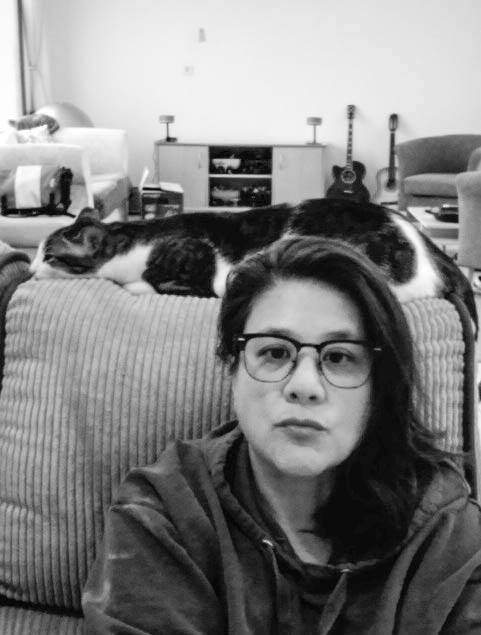
Kunkel photo
By Marianne Kunkel:

A SLOTH FIRST HEARS ITS NAME

But why should it care? It munches
a cecropia leaf. It probes the air
with its blunt snout, detecting
a waft of sour coconut. It lumbers to a branch,
grabs hold with its claws, drops,
dangling upside down like a knapsack.
It doesn’t know to feel ashamed
that its name means lazy and sinful.
Like my little sister
after her abortion, when our father
changed her name from Molly to Molly.


Today’s poem originally appeared in Rattle and appears here today with permission from the poet.


Marianne Kunkel is the author of the chapbook The Laughing Game (Finishing Line Press), as well as many poems that have appeared in Hayden’s Ferry Review, Notre Dame Review, Columbia Poetry Review, Poet Lore, and elsewhere. A former managing editor of Prairie Schooner, she is an assistant professor of creative writing and publishing at Missouri Western State University, where she edits the undergraduate literary journal The Mochila Review. Follow her on Twitter @mariannekunkel.

Editor’s Note: Today’s poem is awesome for a myriad of reasons. Because it is about sloths (sort of). Because it is about words, about labels, about judgment and ignorant bliss. Because it vibrant both with images and with sound. Because it houses epic proportions in eleven short lines. Because its advocacy relies on neither a soap box nor a sense of superiority. But what is most striking about today’s poem, perhaps, is its volta. The way it turns the world of the poem on its head. The way it leaves the reader staggering, contemplative, changed.

Want more from Marianne Kunkel?
Verse Daily
“To Pee or not to Pee,” Portland Review
“Keep Away,” Portland Review
Phoebe
Rattle

SATURDAY POETRY SERIES PRESENTS: DEVIN KELLY


DSC_0759


FEAR OF
By Devin Kelly

We are discussing the roots of things. How phobia
means fear of, and we make them up. Bookaphobia.
Classroomaphobia. Girlaphobia. I say there will be
a quiz. They laugh. It is evening in a small room
in Queens where the desks are miniatures
of the things they should be and the children
sitting in them too close to me and my coffee
so soon done. Then I ask them if they are afraid.
Then I ask them of what. The word penis. Spiders.
The people who hate me for my name. How a moment
turning stills to a moment stilled. How silence,
even in silence, breathes. Their pages of homework
loiter upon their desks. Fifteen words they had
never seen before, and fifteen meanings, written out
beside. Benevolent. Ailurophile. I spoke, upon the hearing,
of opposites, to think of words as people, rooted,
experimenting with different prefixes. To think of words
as lovers, hungry for what it might be they want.
What is her name? It lingers a moment before
it hassles its way out of my mouth. The shape it takes,
unfamiliar, awkward. A word I have never spoken before.
And her skin brown. How she taught me the way
to count to ten in Arabic. The people who hate me
for my name. The people who hate me. The people.
Across an ocean, a man kneeling does not see the hand
that holds the gun that fires the bullet that splits
his head in two. Across an ocean, someone laughs
at a fence of severed heads. I do not know
what to teach anymore. Graphophobia. Philophobia.
Fear of writing, fear of love. And all these children
who do not have a name for their sorrow. At night,
in bed, I turn her name for the hundredth time
and find its beauty. The soft grace of wanting
to be held. A child, scared, moving in dark
from room to room to find the mother who named her,
the father, too, and their reasons why.


Today’s poem originally appeared in Rattle and appears here today with permission from the poet.


Devin Kelly earned his MFA from Sarah Lawrence College. His collaborative chapbook with Melissa Smyth, This Cup of Absence, is forthcoming from Anchor & Plume Press. His poetry, fiction, and essays have appeared or are forthcoming in Gigantic Sequins, Armchair/Shotgun, Post Road, RATTLE, The Millions, Appalachian Heritage, Midwestern Gothic, The Adirondack Review, and more, and his essay “Love Innings” was recently nominated for a Pushcart Prize. He co-hosts the Dead Rabbits Reading Series in Manhattan, teaches Creative Writing and English classes to high schoolers in Queens, and lives in Harlem. You can find him on twitter @themoneyiowe.

Editor’s Note: June 26, 2015 was a day of imperative progress in American history. A day of change. A day when love triumphed. I celebrated this historic event in the most wonderful way I could have imagined, at the wedding of two women whose love is beshert. But when one of the brides gave her speech, she reminded us that there is still more to be done. “Today we celebrate,” she said, “but tomorrow, we keep fighting.” Even amidst a joy so great she shared it with the entire country, the blushing bride reminded us that we can—and should—always be working to make the world a better place.

Today’s poem was written in response to Islamophobia. A Muslim girl in a classroom. What is she afraid of? “The people who hate me for my name.” The families of the victims of a racist hate crime—a terrorist act—in Charleston, SC have what to teach us about love and forgiveness. But what are they truly the victims of? “The people who hate me. The people.” We speak words today that carry with them the chalk outlines of the hatred that flows from fear: Black Lives Matter; I can’t breathe. “I do not know / what to teach anymore,” writes the poet, but he knows “all these children / who do not have a name for their sorrow.”

Let us shout our joy from the rooftops and dance in the streets because yesterday love won. And today, tomorrow, and in the days to come, let us fight until love triumphs over fear and hatred, until there is justice and equality for all.

Want more from Devin Kelly?
The Adirondack Review
District Lit
Little Fiction
Warscapes
Devin Kelly – Published Work

SATURDAY POETRY SERIES PRESENTS: PATTY PAINE

10259779_10152027363561933_7567284404520260511_n copy

ANTIPHONY
By Patty Paine

Go back to that stream, touch
your lips to the cold, clear quivering,
draw into yourself a time when it was simple
as this to be quenched, to draw in what was
needed. Walk back over the dewed grass
of your past, past the water tower you filled
with dark imaginings, feel
the air crisp & clean on your skin, call
this hope, and carry it
to these moments when a photograph
can send you spiraling, your husband
now six months gone, waiting at the bottom
of an escalator in some airport
or another, everyone hurrying to be somewhere
else, except for this one man, waiting
for you to descend. How a face can be
indelible, yet fade so quickly, is an alchemy
best left unknowable. Hold that sting
of hope, and call out
the name of one who ministered
to you, over & over, until from the dark
you hear your own name return
to you, wild, and rising and clear.


Today’s poem originally appeared in Thrush and appears here today with permission from the poet.


Patty Paine is the author of Grief & Other Animals (Accents Publishing), The Sounding Machine (Accents Publishing), Feral (Imaginary Friend Press), Elegy & Collapse (Finishing Line Press), and co-editor of Gathering the Tide: An Anthology of Contemporary Arabian Gulf Poetry (Garnet Publishing & Ithaca Press) and The Donkey Lady and Other Tales from the Gulf (Berkshire Academic Press). Her poems, reviews, and interviews have appeared in Blackbird, Verse Daily, The Atlanta Review, Gulf Stream, The Journal and many other publications. She is the founding editor of diode poetry journal and Diode Editions. She is an Assistant Professor of English at Virginia Commonwealth University in Qatar where she teaches writing and literature, and is Interim Director of Liberal Arts & Sciences.

Editor’s Note: Today’s poem is one I encourage you to read over and over. For each reading is like opening the next layer of a Russian doll, and there is always more waiting to be discovered within. While one reading simply does not do the poem justice, you honor yourself, dear reader, each time you slip deeper into these words.

Start in media res. Start in motion. Begin not at the beginning, but by turning back. The world of the poem is visceral. Go on, touch the stream, feel the “cold, clear quivering.” Go deeper now. “[D]raw into yourself a time when it was simple / as this to be quenched, to draw in what was / needed.” Move backwards; a poem—a life—in rewind. Let the story unfold in this way—cinematic, emotive, devastating. Let the reverse motion be what propels you forward. You are Lot’s Wife. You are Orpheus. There is only looking back, but looking back leaves you alone in the dark, “hear[ing] your own name return / to you, wild, and rising and clear.”

What a fraught landscape, yes, but what a gift to have been taken on such a journey by such a guide.

Want more from Patty Paine?
Buy The Sounding Machine from Amazon
Buy Feral from Imaginary Friend Press
diode poetry journal
Diode Editions
Interview on The Best American Poetry blog

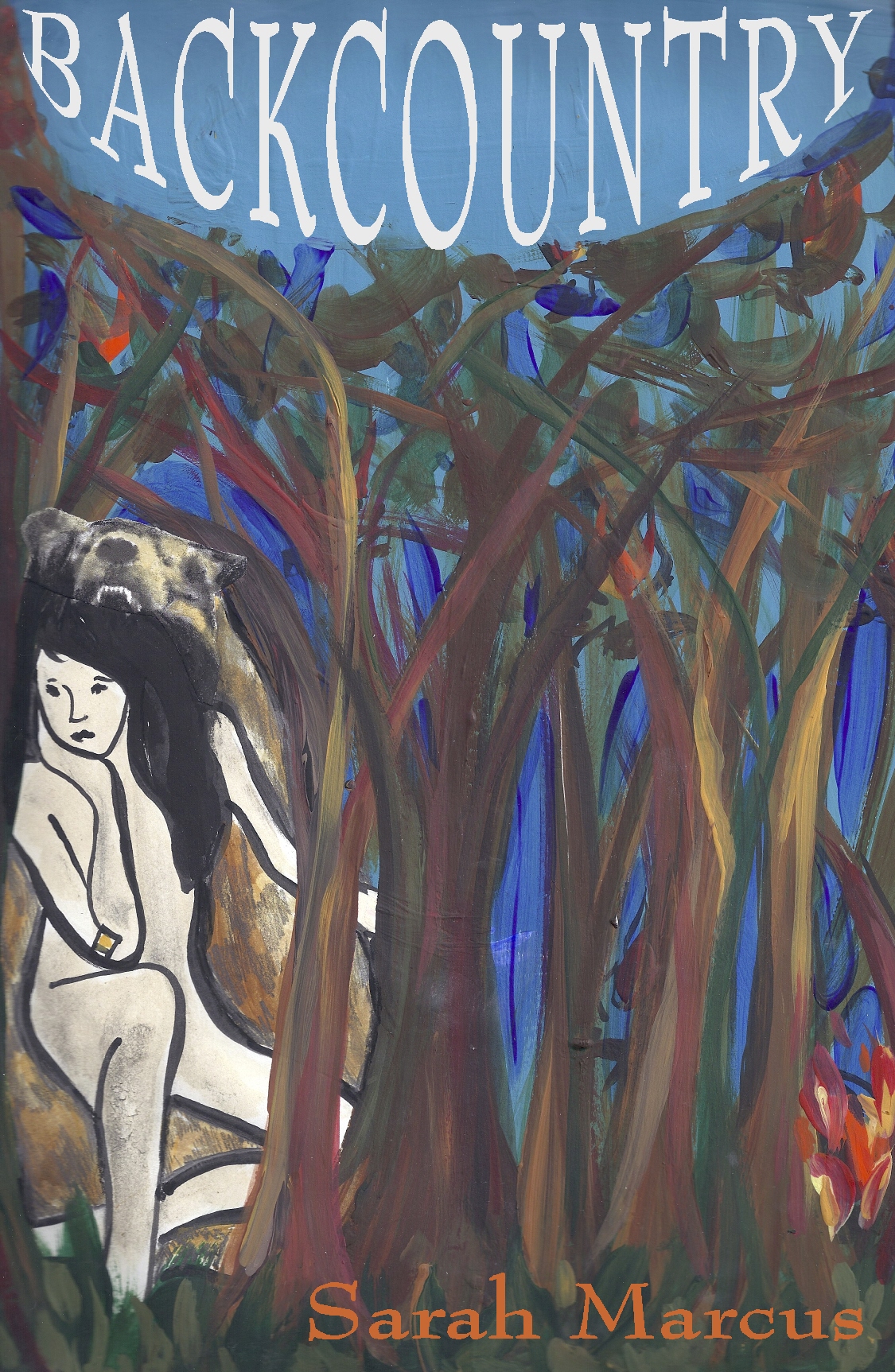
A Review of Sarah Marcus’s Backcountry

Sarah Marcus Backcountry

A Review of Sarah Marcus’s Backcountry

by Karen Skolfield

In my review copy of Sarah Marcus’s chapbook from Finishing Line Press, Marcus includes a friendly, cheerful handwritten note to me which she signs “Love & Bears.” Love – a not-unusual sign off, and she knew my gender, so it’s the salutation between two women writers, but bears? And I look at the title: Backcountry. Of course. Where there are bears.

Turns out, in the backcountry there’s also plenty of love, so Marcus was giving me a succinct preview of her book. There’s love and its near-opposite, a couple we see struggling in their relationship, their lives. By placing the couple so often in the outdoors, the usual trappings of domesticity disappear: no one’s fixing the indoor plumbing as a sign the romance has gone out of the relationship, no one’s passive aggressively leaving dishes in the sink. Instead, they’re looking at maps, watching for storms, telling stories and dreaming, building a fire, building a fire again, that deep symbol of made and shared warmth, the collapse into coals, and is that good or bad? – Marcus lets us answer that question ourselves, even as this couple cycles through unhealthy behavior that may or may not be healthier than the lives they lived without each other.

The couple flashes in and out of the backcountry and a more urban and expected life, both offering their unique dangers. The way a simple rain can turn into a flash flood, “how water steals faces but leaves bodies.” A car rusting in a driveway as the woman contemplates the relationship. What a boat’s spinning propeller can do. When a coyote follows the woman and the couple take up a gun and bow, it’s clear this is not a real coyote but the specter of the relationship’s disintegration they’re warding off.

We hear that howl. We wish the couple well.

I should say: We sort of wish them well. This is a couple we sense shouldn’t be. Still, if this invented couple were all prairie paintbrush and squeaking marmots, all fireweed – the flower that blooms prolifically and purple after wildfire has scarred the landscape black – we’d be disappointed. We need their struggles and their troubles. We know those troubles, and hope we’re mostly beyond them, or won’t stumble into them again. We’ve been the man, telling her “not to make this more difficult than it needs to be.” We’ve been the woman saying everything’s fine, but “annoyed they’ve hiked all these miles to have the same conversation they’ve had at their kitchen table hundreds of times before.” We’re the looming need for rehab, the possibility of prison or a psych ward, the needle scars, the parent dying, the waste of looking for completion through another person instead of through the self.

Though I’m spending time telling the stories, that’s not to say it’s the only reason to keep reading. The narrative arc is pleasing, no doubt, but it’s the fineness of the poems and the finesse of language that makes each poem worthwhile. Like a tracker, I follow Marcus’s language, looking for the misstep in the mudbank – the classic mistake of a creature not wanting to be noticed – but there are no missteps here. Marcus’s chap is the literary equivalent of walking on rocks, each line firm and carefully placed. The endings are an absolute pleasure, never forced, and when I go back through and read them I notice that all but three or four of them end on the woman’s actions or point of view, and maybe this shouldn’t be surprising but I’m enormously pleased by this. Toward the end of the book, the softer third person switches to first person, the hammer of it – there’s been a major shift in the relationship – and it’s dizzying and perfect, both sad and triumphant.

And not to give too many spoilers, but there are bears, though not, perhaps, the bears you might expect. Take a woman and a man. Add some hardships and addiction. Have the adults deal with those things again and again. Now add bears – see how the wildest things go on and live or die without us, see how they move on, as in dreams? That’s how it is, Marcus tells us, for good or ill. That’s what happens in the backcountry.

Sarah Marcus, Backcountry. Finishing Line Press, 2013: $14

***

Karen Skolfield is the author of FROST IN THE LOW AREAS (Zone 3 Press, 2013). She lives in Massachusetts with her husband and two kids. She teaches technical writing at the University of Massachusetts Amherst, where she also earned her MFA. She is a contributing editor at Bateau Press and the literary magazine Stirring, and her poems have appeared in 2011 Best of the Net Anthology, Cave Wall, Memorious, Painted Bride Quarterly, Rattle, Tar River Poetry, Verse DailyWest Branch, and others.


SATURDAY POETRY SERIES PRESENTS: AMORAK HUEY

IMG_3503

By Amorak Huey:


THE POND IN THE CORNER OF THE YARD

It seems so important that I get this right—

memory choked with algae,
memory dried to nothing in the summer,

memory’s post-dawn sky already fevered with desire,
memory’s grass grabbing wet at my hungry ankles.

I remain the same lonely child I was,

never having learned the rules of prayer. Instead I offer
this uncurling body, this frog-song,
tornado-spike, voice-from-the-trees:

the word green
the word green
the word green
.


THE CORN IN THE VALLEY

A sea of silk, a sky of stalk, a sun of ear and song.

There is a season for planting,
a season for harvest,

a moon-color for the storms between.

The lightning has something to do with nourishment,
something to do with need.


THE DOGWOOD AT THE CORNER OF THE PORCH

By our presence we alter the shape of the tree,

crook its looping limbs to suit our prayers,
our psalms and songs,
our cautionary tales.

It’s not the tree asking forgiveness
for its part in our most thoughtless acts—

our blossom-burst and leaf-turn,
our self-inflicted separations.


“The Pond in the Corner of the Yard” originally appeared in Thrush. Today’s poems appear here today with permission from the poet.


Amorak Huey is author of the chapbook The Insomniac Circus (Hyacinth Girl Press, 2014) and the forthcoming poetry collection Ha Ha Ha Thump (Sundress Publications, 2015). A former newspaper editor and reporter, he teaches writing at Grand Valley State University in Michigan. His poems appear in The Best American Poetry 2012, The Cincinnati Review, The Southern Review, The Collagist, Menacing Hedge, and many other print and online journals. Follow him on Twitter: @amorak.

Editor’s Note: I have had the pleasure of featuring Amorak Huey here on the Saturday Poetry Series before, and I am as struck by his poetry today as I was when I encountered it all those years ago. Is it the way he infuses the everyday with a touch of magic? Is it the fine line he conjures between nature and spirit and prayer? Perhaps it is the world he harvests, words sprouting from the earth as if from seeds, the quiet calm of the farm balanced by the weight of repetition, alliteration, form. It is as if you could part the corn stalks and encounter the poem. As if the poem could be turned over like earth, fertile ground for all the words that have yet to be planted.

Want more from Amorak Huey?
“Self-Portrait Following a Trail of Reese’s Pieces” in Radar
“When They Serialize My Life They’re Going to Have a Problem with 1993” in disquieting muses quarterly
“The Fathers at the Little League Field” in Hobart
“Melon Heads” in Stirring from Sundress Publications

SATURDAY POETRY SERIES PRESENTS: SARA BIGGS CHANEY

BiggsChaneyauthor

ST. EUGENIA DECLARES HER ALLEGIANCES
By Sara Biggs Chaney

The girl said: I am not skin,
but sackcloth.

She said: I am not spoke,
but symphony.

My rib bones, how they burn
for the Son.

For Him, I will suffer
this harmonic ache–

I will pin my maiden head,
a moth wing,

I will bear the shames
of a thousand men,

I will wear the hands
of a healer.


Today’s poem was originally published in Thrush and appears here today with permission from the poet.


Sara Biggs Chaney received her Ph.D. in English in 2008 and currently teaches first-year and upper-level writing in Dartmouth’s Institute for Writing and Rhetoric. Her most recent chapbook, Ann Coulter’s Letter to the Young Poets, was released from dancing girl press in November, 2014. Sara’s poems have recently appeared or are forthcoming in RHINO, Sugar House Review, [PANK], Juked, and elsewhere. You can catch up with Sara at sarabiggschaney.com.

Editor’s Note: Today’s poem, like the famous Walt Whitman quote, contains multitudes. Relaying an epic history in a few swift couplets, the interplay between referentiality and alliteration is as precise as it appears effortless. Discreet moments—brilliant vignettes—are carefully pieced together to reveal the story of a life: “The girl said: I am not skin, / but sackcloth;” “I will bear the shames / of a thousand men, // I will wear the hands / of a healer.” As readers, we are as transported by the world of the poem as we are transformed.

Want more from Sara Biggs Chaney?
“St. Barbara, Locked Away” in Atticus Review
“St. Theodora in the Brothel” in Tinderbox Poetry

SATURDAY POETRY SERIES PRESENTS: HEMISPHERE

hemisphere


From HEMISPHERE
By Ellen Hagan:


RIVER. WOMAN.

I.
Downriver is always long
& always flailing, finding

where our lives begin,
intersect?  You, your bones

the humped slope of nose
browned skin of home.

You, sand. You, ocean.
You, bending & me.

How many nights we sleep
alone, our bodies rising—

what it means to miss you.
What it means to expand.
What it means to be birthed.
What it means to be sacred.
What it means to go home.

Place of birth, birthing
ground. Ground that is sacred.
You that is sacred.

Bones that hold together.  Bind.
Bound to you.  My mother.

II.
Me
I am bound to you.  My mother.
You stitch me from inside.  Hollowed.
your split sheath of self, your letters
the slow cursive of your language,
can’t I hear your voice, always?

Her
Lock the doors.  Latch the locks.
Shut the windows.  Close the blinds.
Cover up.  Clean your room.  Do
the dishes.  Wash the clothes.  Behind
your ears, yourself.  Clean the floor.  
Scrub.  Mop the remains every day
is one that you can use to erase all
the mistakes.  Blemish free.
Shine the doorknobs, pine, every
crease of space.  Cabinets.  Don’t leave
food out.  Food brings mice.  Mice
bring disease.  You will die.  You could 
die.  Don’t die.  Don’t ever die.  You 
stitch me from inside.  I am bound
to you.  Can’t you always hear
my voice?


LESSONS ON SPELLING

Bring the snakes in their skins, sly
& surrender. Simple bodies of grass
& clover, their slithering and sleuth-ness.
& the earth & the dusty fisherman
in from their boats, bobbing. Bring
piano, bring pain. That yellow skirt
pocked w/ fuchsia & the halter
of your mother’s pixie 60’s ways.
Let out the hems from your dresses,
the vertebrae in your back, body
forget skeleton—be loose, let it be dirty.
Get there. Call the black cat promenade,
lazy through the streets. Let your hair
down. Let it crawl, crowd the length
of your back. Bring soca & fiddle,
that record player your father bought
your mother in 1974. Bring all the days
from 1974 & on because time is a revolver.
A bag of limes on your back porch
squeezed & bitter & neon & orbiting
over you. Is your neighbor calling.
Is satsumas bursting on your tongue.
Bring your shiny shoes & arched soles
for the flapping pageant of second line
parade, the 100 parades from now until.
Autumnal. Hymns. Prayers.
Ways to say yes. Bring with you
your rope of hide, your many rings
of muscle & the washcloth
for your stomach, your feet
for the laying nape of your neck.
Bring danger & ways to hold your lips,
your lips, bring them too.
Spanning the whole of you.
You become.


WATER SIGN

Already a lullaby inside.
Your palms to belly, breath
on hip.  You are changing,
beginning. Too.  And you,
baby girl, or boy. Or two.
Are just gills. Still. Heart in
mouth. Red burst of newness.
Fins.  Fish or fowl. Shrimp
are larger than you.

Still, you are breaking me
apart. Him too. Our hearts
and lungs, and gills. Bursting 
You are stretching all,
all of us. Open.


Today’s poems are from Hemisphere, published by TriQuarterly Press/Northwestern University Press, copyright © 2015 by Ellen Hagan, and appear here today with permission from the poet.


Hemisphere: The poems in Hemisphere explore what it means to be a daughter and what it means to bear new life. Ellen Hagan investigates the world historical hemispheres of a family legacy from around the globe and moves down to the most intimate hemisphere of impending motherhood. Her poems reclaim the female body from the violence, both literal and literary, done to it over the years. Hagan acknowledges the changing body of a mother from the strains of birth from the growing body of a child, to the scars left most visibly by a C-section €”as well as the changes wrought by age and, too often, abuse. The existence of a hemisphere implies a part seeking a whole, and as a collection, Hemisphere is a coherent and cogent journey toward reclamation and wholeness. —TriQuarterly Press/Northwestern University Press


Ellen Hagan is a writer, performer, and educator. Her latest collection of poetry, Hemisphere, was released by Northwestern University Press in Spring 2015. Ellen’s poems and essays can be found in the pages of Creative Nonfiction, Underwired Magazine, She Walks in Beauty (edited by Caroline Kennedy), Huizache, Small Batch, and Southern Sin. Her first collection of poetry, Crowned, was published by Sawyer House Press in 2010. Ellen’s performance work has been showcased at The New York International Fringe and Los Angeles Women’s Theater Festival. She is the recipient of the 2013 NoMAA Creative Arts Grant and received grants from the Kentucky Foundation for Women and the Kentucky Governor’s School for the Arts. National arts residencies include The Hopscotch House and Louisiana Arts Works. Ellen recently joined the po­etry faculty at West Virginia Wesleyan in their low-residency MFA program. She teaches Memoir, Poetry & Nature, and co-leads the Alice Hoffman Young Writer’s Retreat at Adelphi University. She is Poetry Chair of the DreamYard Project and a regular guest artist at the Kentucky Governor’s School for the Arts.


Editor’s Note: I fell in love with the poems in Ellen Hagan’s Hemisphere for their language: earthy, sensual, gritty. Unafraid of blood and birth, of mud and heat, of nature, of relationship, of what is real and lush and vivid, of what is primal and complex. I am reminded of the swamp, of the first creatures that dragged themselves forth from the murky depths, crawling forward, always, evolving for the sake of life. I am reminded, also, of witchcraft, of alchemy, of drawing down the moon. Of things my mother taught me, of that which has been handed down from woman to woman through the ages.

Today’s poems were meant to be, here, today. Because they are about the twin experience of birth—both as child and mother. Because much of this book is about the relationship between mother and daughter, the circle of life as only mother and daughter experience it: “where our lives begin, / intersect;” “what it means to miss you. / What it means to expand. / What it means to be birthed. / What it means to be sacred. / What it means to go home.”

In honor of Mother’s Day, and of the magic that grows from the rich soil of today’s poems, today’s feature is dedicated to my mother, the water sign, from your daughter, the water sign. “You that is sacred… I am bound to you. My mother.”


Want to see more from Ellen Hagan?
Ellen Hagan’s Official Website
Ellen Hagan’s Blog
Duende
Drunken Boat
Buy Hemisphere from Indie Bound

SATURDAY POETRY SERIES PRESENTS: EARTH VOICES FOR SPRING

Public Domain image.


EARTH VOICES
By Bliss Carman

I

I heard the spring wind whisper
Above the brushwood fire,
“The world is made forever
Of transport and desire.

“I am the breath of being,
The primal urge of things;
I am the whirl of star dust,
I am the lift of wings.

“I am the splendid impulse
That comes before the thought,
The joy and exaltation
Wherein the life is caught.

“Across the sleeping furrows
I call the buried seed,
And blade and bud and blossom
Awaken at my need.

“Within the dying ashes
I blow the sacred spark,
And make the hearts of lovers
To leap against the dark.”

II

I heard the spring light whisper
Above the dancing stream,
“The world is made forever
In likeness of a dream.

“I am the law of planets,
I am the guide of man;
The evening and the morning
Are fashioned to my plan.

“I tint the dawn with crimson,
I tinge the sea with blue;
My track is in the desert,
My trail is in the dew.

“I paint the hills with color,
And in my magic dome
I light the star of evening
To steer the traveller home.

“Within the house of being,
I feed the lamp of truth
With tales of ancient wisdom
And prophecies of youth.”

III

I heard the spring rain murmur
Above the roadside flower,
“The world is made forever
In melody and power.

“I keep the rhythmic measure
That marks the steps of time,
And all my toil is fashioned
To symmetry and rhyme.

“I plow the untilled upland,
I ripe the seeding grass,
And fill the leafy forest
With music as I pass.

“I hew the raw, rough granite
To loveliness of line,
And when my work is finished,
Behold, it is divine!

“I am the master-builder
In whom the ages trust.
I lift the lost perfection
To blossom from the dust.”

IV

Then Earth to them made answer,
As with a slow refrain
Born of the blended voices
Of wind and sun and rain,

“This is the law of being
That links the threefold chain:
The life we give to beauty
Returns to us again.”


(Today’s poem is in the public domain, belongs to the masses, and appears here today accordingly.)


Bliss Carman FRSC (1861–1929) was a Canadian poet who lived most of his life in the United States, where he achieved international fame, and was acclaimed as Canada’s poet laureate during his later years. (Annotated bio courtesy of Wikipedia, with edits.)

Editor’s Note: Each year around this time I become so excited by the fact that winter is finally over that I must celebrate the birth of spring through poetry. The sun is shining, the crocuses and tulips are rising, the spring blossoms are in bloom. The cold and darkness that are just behind us are quickly forgotten by the promise of all that is warm and beautiful and worthy of rejoicing. So it has been since the days of Demeter and Persephone, and so it shall be until humankind destroys the natural balance of the world with climate change.

Today’s poem calls upon the “Earth Voices”—the spring wind, the spring light, the spring rain, and the Earth herself—to tell a story of the rebuilding of the world at springtime. The voices of spring speak of the newness they create: “Across the sleeping furrows / I call the buried seed, / And blade and bud and blossom / Awaken at my need.” “I am the master-builder / In whom the ages trust. / I lift the lost perfection / To blossom from the dust.” And the voice of Earth answers, calling upon the ancient power of three, reminding us, as spring does, that what is buried beneath winter “Returns to us again.”

Want to read more Spring Poetry?
SATURDAY POETRY SERIES PRESENTS: SPRING! (2014)
SATURDAY POETRY SERIES PRESENTS: LIZZIE LAWSON ON SPRING
SATURDAY POETRY SERIES PRESENTS: SPRING! (2013)
The Poetry Foundation – Spring Poems

SATURDAY POETRY SERIES PRESENTS: ELIZABETH LANGEMAK

LangemakPhoto

By Elizabeth Langemak:

A PHOTOGRAPH OF HER SHOWERING

                                          As passionless, burned-out, dusty shells, we dislike love poems . . . As [one of our editors] says, why not “text me a photograph of her showering”?

I am enclosing, as text, the photo
you ask for. Though my husband

refuses, I make this in secret
and print it black over white. Though

the angles and lighting are tough
to nail down, and the process

makes my whole body a long face
for tears as the spray breaks over

my scalp and rolls down.
Though my right hand withers,

as I rake damp hair into rows.
Though the cheap curtain cleaves

to my thigh, I peel it off like a rind
teased from its fruit in one strip.

You thought I was dusty, a shell.
You said I was burned out,

but now my skin is slapping and slick,
the camera demanding more arch

and frontal. When I read your note
I was spitting with anger. I could

not get your eyes off my nipples,
my breasts, but now I make you

this square handful of edges,
a black-and-white chip where my ass

hangs over tan lines like a sun
without set, where stretch marks

like fault lines ride over each thigh
and a pocked scar stabs into my shoulder.

Once I knew men like you and tried
to be sexy but in the shower

I only got soaked. On the bed
where I practiced I only looked

posed. In cabins on nights with your jars
full of scotch I hoped you might

see past what you saw and fuck me,
but now it seems we have both changed

our minds. Here I am. In a poem,
just breath-long, I am perfect.

I send you this picture because
a photo of showering is just wet

and sex, but the poem lays down
its camera and hands me a towel,

knows the route I send it
over my calves, over my nape

and around. How many
flashes and clicks turn a love poem

around into only a woman to
fuck you? Fuck you.

Today’s poem was originally published in AGNI and appears here today with permission from the poet.

Elizabeth Langemak lives in Philadelphia, Pennsylvania.

Editor’s Note: Today’s poem is one of resistance. In response to the editors who called love poems “burned-out, dusty shells” and said, why not “text me a photograph of her showering,” Elizabeth Langemak speaks out against the objectification of women’s bodies and the misogyny rearing its ugly head in a still-patriarchal society. Frankly feminist, exquisitely lyric, and commendably unabashed, today’s poet answers the question “Why not text me a photograph of her showering?” with the only response needed: “Fuck you.”

Want more from Elizabeth Langemak?
Elizabeth Langemak’s Official Website

SATURDAY POETRY SERIES PRESENTS: RICHARD D’ABATE

photo (5)

By Richard D’Abate:


THE SADNESS OF YOUNG MOTHERS

Because we’re at the beach today our sadness
knows itself,

Between the sinking sand and slowly measured
falling waves.

Not long ago time was arrow-tipped and
ravenous.

It found its mark before the god of love had
even stirred.

It filled our bones to bursting, era of the second
self begun.

Now every gesture mirrors gestures of a
smaller one.

They raise their arms, we raise our arms, they wobble
toward the sea

Like turtle hatchlings, thoughtless prey, and
so do we.

We match the steps of half-formed beings—
tender, new—

Ourselves, our future selves, alive but always
cut in two.

We are afraid. The burning sun devours
little bones.

Their little mouths will gulp the tangled weed, the
sliding foam.

We run, we start to run, but time has a thickness
all its own,

And half of half of half is motion’s rule or
none at all,

As when the cresting tops of glittering breakers
do not fall,

Or when in dreams we hear, but do not hear, our
children call.


Today’s poem was originally published by AGNI and appears here today with permission from the poet.


Richard D’Abate is the author of a poetry collection, To Keep the House From Falling In (Ithaca House Press), as well as stories and poems in Epoch, Apple and other magazines. His most recent work appears in Agni Online. A native of New York City, his professional life has been focused in Maine: as a professor of English literature, an advocate for the public humanities, and director of the Maine Historical Society, a statewide cultural agency and research center. His scholarly essays have appeared in various publications, including American Beginnings (University of Nebraska Press), on New World exploration, encounter, and cartography. He now lives and writes in Wells, Maine.

Editor’s Note: As a reader and a card-carrying feminist, I was as taken aback by today’s poem for its stunning lyric as I was by the (male) poet’s ability to capture the way mothers worry for their children. (Fathers do as well, of course, but today’s poem is about the experience of young mothers, specifically.) How audacious to take on this persona! And how effortlessly and accurately the poet has captured this unique viewpoint that is not his own. Haters gonna hate, and there are those who feel that a male writing from a female perspective is a patriarchal act of establishing dominion over a realm that is not theirs to control. But the other half of that debate is that of being empathetic, of trying to understand the other from within the other’s shoes, of being sensitive to those from outside our own gender, and Richard D’Abate has done this with today’s honest and heartbreaking work.

The poet has given breathtaking form to the parental experience, naming it the “era of the second self,” calling children “our future selves,” who, through a mother’s eyes, are “alive but always / cut in two.” Even more palpable is the mother’s fear for her children: “they wobble / toward the sea // Like turtle hatchlings, thoughtless prey, and / so do we,” “We are afraid. The burning sun devours / little bones. // Their little mouths will gulp the tangled weed, the / sliding foam. // We run, we start to run, but time has a thickness / all its own … [as] when in dreams we hear, but do not hear, our / children call.” By the skilled hand of the poet the fear and helplessness mothers feel for their children is brought to life through a vivid imagery and lyric beauty so chilling we feel it as if it were our own.

Want more from Richard D’Abate?
Buy To Keep the House from Falling In on Amazon
The Richard D’Abate Lectures: Conversations About History, Art, and Literature
Maine Historical Society: Richard D’Abate Endowment Fund for Scholarship & Special Programs