SATURDAY POETRY SERIES PRESENTS: WASN’T THAT A MIGHTY STORM

WASN’T THAT A MIGHTY STORM
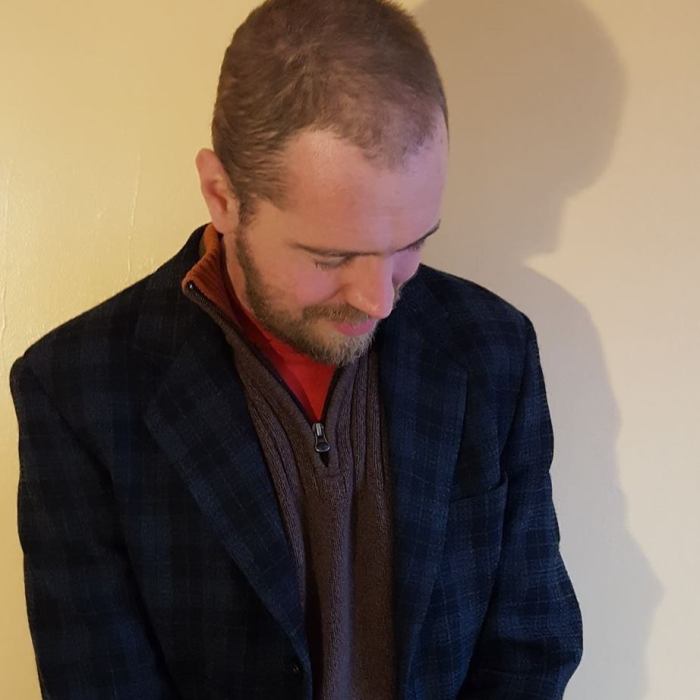
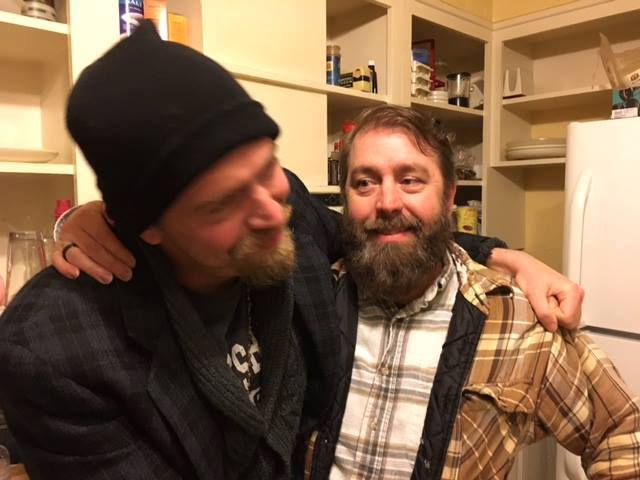
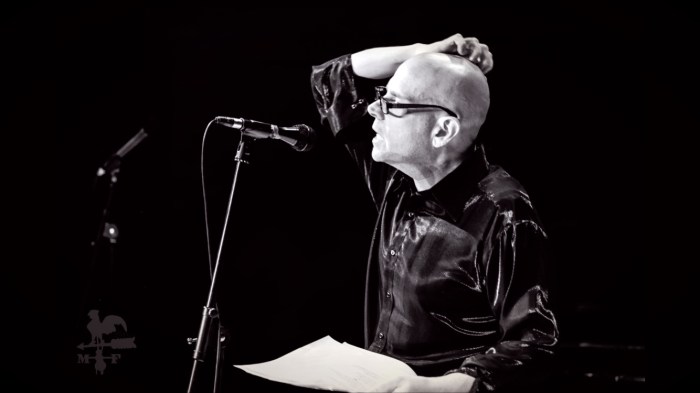
Performed by Rolf Cahn and Eric Von Schmidt

Editor’s Note: I have been reading Isaac’s Storm by Erik Larson, which tells of the Great Storm of 1900. That Category 4 hurricane decimated the town of Galveston, Texas, killing between six and twelve thousand people, making it the deadliest natural disaster in U.S. history. I was reading this book as Hurricane Harvey ravaged Houston and beyond. I am reading it now, still, as Hurricane Irma sweeps over the Caribbean and heads for the U.S. mainland. I am thinking of those who are fleeing and those who are staying put to weather the storm. Of those who have lost everything. Of those who have lost their lives. I am thinking of global warming and our current regime of climate change deniers. I am thinking of the fires that are burning in the west. I am thinking of friends and their families, and of those who are my kin because of our shared humanity. I am thinking of how history repeats itself and of the lessons we fail to learn from the before time.

Today’s poem is a folk song that remembers the Great Storm of 1900, and dedicated to those who are now suffering, who have suffered, who will suffer still.

SATURDAY POETRY SERIES PRESENTS: JANET R. KIRCHHEIMER

Wonder Beans
By Janet Kirchheimer

My father went each morning to his garden.
He taught me to smell the soil to see if it was good,
to feel the dirt slide across my hands, to never
wear gloves, to stay in the middle of the row when planting seeds.
We’d look for work to do in the garden,
and sometimes there was nothing more to do
than watch the garden grow, wait for the harvest.
He thought that haricot vert were the dumbest thing he’d ever seen–
he liked his Kentucky Wonder beans, big and bursting with seeds, leaving
them to grow in the summer sun as long as possible.
Last winter he told me we couldn’t save
the parsley from the snow and ice, even though
we put blankets over it.
He got pneumonia in February.
In April, he asked me if I thought he’d get to his garden, and I told him yes.
By the end of May I brought him
cherry tomato plants to keep on the deck.
He no longer had the strength to pick
the first tomatoes that ripened in June.
August: I bring dirt from the garden
to his grave and scatter grass seed.


“Wonder Beans” previously appeared on String Poet and appears here today with permission from the poet.

Janet R. Kirchheimer is the author of How to Spot One of Us, (Clal, 2007). A Pushcart Prize nominee, her work has appeared in several journals including Young Ravens Literary Review, Atlanta Review, String Poet, Connecticut Review, Kalliope, Common Ground Review, and several anthologies and online journals. Currently, she is producing a poetry performance documentary, After, exploring poetry written about the Holocaust.

Editor’s Note: Today’s poem is a celebration of life and a poignant reminder that one day we may be remembered by what we love. Through a daughter’s eyes we see a father, watch him plant and grow, watch him love and tend the earth. Through the poet we know what it is for this daughter to love her father, and what it is to lose him. How touching her remembrance, how bittersweet the sting at poem’s end when father is returned to earth.

Want to read more by and about Janet Kirchheimer?
After – A Poetry Film
Young Ravens Literary Review
Collegeville Institute
Podium Literary Journal
Forward’s Schmooze

SATURDAY POETRY SERIES PRESENTS: HOLLY KARAPETKOVA

Song of the Exiles
By Holly Karapetkova

There never was a garden
only a leaving:
miles and miles
of footprints in the dirt.

In the beginning–
the shattered sun, the wind,
and nothing left but our shadows
sifting through the dust behind us.

When we turned
we did not turn to salt.
When we turned
there was nothing behind us to burn,

nothing to return to,
though who could blame us for turning
with only the long days ahead,
tongues tripping in the dirt.

They said we didn’t belong.
They blamed us
for leaving the garden
which never was or would be.

Where could we go,
we who had come from nowhere
and hence could not
return?


“Song of the Exiles” previously appeared via Split This Rock and appears here today with permission from the poet.

Holly Karapetkova’s poetry, prose, and translations from the Bulgarian have appeared recently in Alaska Quarterly Review, Prairie Schooner, North American Review, Drunken Boat, and many other places. Her second book, Towline, won the Vern Rutsala Poetry Contest and is just out from Cloudbank Books.

Editor’s Note: After a moment of silence following the loss of AIOTB’s Managing Editor, the Saturday Poetry Series returns this week with a poem worth breaking silence for. Holly Karapetkova’s “Song of the Exiles” begins in Eden. At once biblical and real, this Eden is a “garden / which never was or would be.” In this world we are storyteller and reader, mythological figure and landless refugee. This is world news, this is human interest story, this is myth in the truest sense of the word. And this, above all, is poetry. Expertly crafted, delicately wrought, brilliant poetry. “When we turned / we did not turn to salt. / When we turned / there was nothing behind us to burn.”

Want to read more by and about Holly Karapetkova?
Holly Karapetkova’s Official Website

SATURDAY POETRY SERIES REMEMBERS OKLA ELLIOT WITH JOHN GUZLOWSKI

By John Guzlowski:


LISTENING TO DEATH

How do we listen to death?

We listen to the sound of death
The way we listen to the sound of the sea
To the message the waves pound against the shore
Their soft rush of foam upon the sand

We hear the things we forgot to tell the dead
The questions we forgot to ask them
The enigmatic dreams they will never explain
The useless arguments we will neither win nor lose
The mutual misunderstandings
That will never be clarified
The lies for which we forgot to ask forgiveness
The problems death defers
The unresolved quarrels with the dead

And what can we do in the face of death?

We can leave this house
And keep going
Never to return

We will not even take
The things that have meant
The most to us, our books
The plants we have nursed
The children we have raised
Punished and praised
The clothes (the dark
Blue ties, the tweed jackets
The rakish wool caps)
That make us look
More the man
More the woman
More the hero
More the young lover
Searching for love

We can leave this house
And keep going
Never to return

And what is death?

It is the hand of God
The meal prepared with love
Flowers from the pierced breast
Of the Blessed Virgin
The shore that smells of widows
Studying the foam

And should we fear death?

No, we shouldn’t fear death
We should fear the loud man’s coming

The pain of cancer
That does this or that
To the body

That pain that is longer than sorrow
Stronger than love

The tumor that grows like
A child who then learns
To hate you

A child who will not take
The love and joy you give her

What is as difficult as death?

Nothing

Nothing

Nothing


POET’S NOTE: I met Okla on Facebook.

One day maybe 7 years ago, I got a friend request from him. I didn’t know a thing about him. He was just another fellow asking to be my friend. I said sure.

I’ve never been sorry I did.

Reading Okla’s posts, his status updates, his responses to other people has always been inspiring. What he wrote was smart and funny and engaging. Sometimes he sounded like Jean Paul Sartre, and sometimes he sounded like a kid in love with literature and life and friendship and thinking and dreaming. Both Oklas were wonderful.

And even more wonderful was the Okla I discovered when I started reading his poems and his essays and his fiction.

Okla was the real thing.

He was all the writers I ever admired, and he was right there with me on Facebook.

When I heard he was dead, I couldn’t believe it. He was too filled with life, too good, too dreaming, to be dead.

But he was dead.

But I will not let go of him.

Here [above] is a poem for Okla.


ONLINE MEMORIALS AND TRIBUTES
As It Ought To Be Mourns the Loss of Our Founder
“Some testimonies to Okla Elliott, 1 May 1977 – 19 March 2017” – Days and Memory
“Requiescat in pace: poet, novelist, translator Okla Elliott, 1977-2017” – Book Haven
“Go Read Okla Elliott’s Stuff, Please. (A Remembrance)” – Great Writers Steal
“Remembering Okla Elliott” – Mildred Barya’s House of Life


REMEMBER OKLA WITH AS IT OUGHT TO BE
As It Ought To Be welcomes art and writing in Okla’s memory. Please email sivan.sf [at] gmail [dot] com with your submissions.


SATURDAY POETRY SERIES REMEMBERS OKLA ELLIOT WITH PAUL CRENSHAW

Photo Credit: Brandon Pierce

By Paul Crenshaw:

FOR OKLA

All that late-night talk of light, and life,
all those words, which became like worlds.
Which we both know were.
If you even need words anymore,
wherever you are, what world
you find yourself in.

Let me just say I hope there’s light.
Let me say I want to send this to you
so you know all the poetry was enough.
That the porch light is still on
in my mind. That the windows are open,
and the songs from inside the house still play.
You are still sitting in the overstuffed chair.
You are still smiling. Let me say
the lighting of a cigarette or
clink of ice in a glass is as much poetry
as anything we ever said.
Let me remind myself I remember all the words,
even if I’ve forgotten how to say them.


ONLINE MEMORIALS AND TRIBUTES
As It Ought To Be Mourns the Loss of Our Founder
“Some testimonies to Okla Elliott, 1 May 1977 – 19 March 2017” – Days and Memory
“Requiescat in pace: poet, novelist, translator Okla Elliott, 1977-2017” – Book Haven
“Go Read Okla Elliott’s Stuff, Please. (A Remembrance)” – Great Writers Steal
“Remembering Okla Elliott” – Mildred Barya’s House of Life


REMEMBER OKLA WITH AS IT OUGHT TO BE
As It Ought To Be welcomes art and writing in Okla’s memory. Please email sivan.sf [at] gmail [dot] com with your submissions.


SATURDAY POETRY SERIES REMEMBERS OKLA ELLIOTT

A version of this post was featured on this series in December of 2010. It is being shared here today as As It Ought To Be mourns the loss of our founder.


By Okla Elliott:

THE IDIOT’S FAITH

Three lanterns floated in the dream she told him, but he didn’t want to hear about lanterns. He wanted factories unbuilt, windows smashed open. He wanted libertine wailings. She denied being a builder of factories, but he knew her reputation. A wind blew in from Montreal, or she said it was from Montreal, said she could smell the bars of Rue St Laurent. He was skeptical but didn’t want to argue. What good are arguments on a Saturday night? What good are arguments at all? She told him again about her love of the French language, and he thought maybe they were getting somewhere. The modern sunset outside her window was spilled wine tinged with pollution. They went down the mountain to town, found the trouble she had decided they wanted. She called a homeless man a fallen Chinese god, and they mourned his sad descent, forgetting (almost) their own. That is the power of generosity, one use of our idiot faith in human love.


THE LIGHT HERE

It sets a mood
of clownish tragedy,
of ecstatic failure waiting to happen.

It is not a static blue light
nor the throb of a strobe.

It is not a light to read by
nor to be naked in,
unless you are desperate
or barbarously horny.

I would use it to look for you
in a cave or catacomb
or an ossuary crowded by the famous dead–
that is, if you were in such a place,
I would use this light to find you.

It is a light that yellows the periphery.
It is not a light that brightens the center.

It is mixed from an overcast morning
and the electric urban dusk.

It is a light I could live in
if I came to terms with certain failings
in my character
and the character of others.

I know you have light where you are,
better light even,
but I wanted you to know
about the light here.

 
Okla Elliott (1977 – 2017) passed away in his sleep last weekend. The Misicordia University professor, a prolific novelist, poet, short fiction writer, and translator, would have turned 40 this year. Those of us who knew him – and his circle of acquaintance and friendship was very wide indeed – are in shock from this wholly unanticipated death. He was kind, generous with his time, and indefatigable in his writing. He was much loved.

His work appeared in Harvard Review, The Literary Review, New Ohio Review, Prairie Schooner, A Public Space, Cincinnati Review, Indiana Review, Subtropics, and elsewhere, as well as being included as a “notable essay” in Best American Essays 2015. His books included From the Crooked Timber (short fiction), The Cartographer’s Ink (poetry), The Doors You Mark Are Your Own (a novel), Blackbirds in September: Selected Shorter Poems of Jürgen Becker (translation), Pope Francis: The Essential Guide (nonfiction), and Pope Francis: The Essential Guide (nonfiction, forthcoming). — David Bowen, The Book Haven (with edits)


Editor’s Note: Today I am honored to present to you the work of As It Ought To Be‘s managing editor. His work speaks for itself, as does the significant body of publications in which his work has appeared. Okla is an impressive scholar, a fearless leader, and a wonderful person to know in the writing world. He believes strongly in the idea of building and sustaining a community of writers, and I am honored to be a member of that community. Regarding today’s pieces I will say that Mr. Elliott effortlessly combines vignettes of straightforward narrative with crisp images and moments of simple yet brilliant language such as “What good are arguments on a Saturday night? What good are arguments at all,” “if you were in such a place, I would use this light to find you,” and this kicker of an ending, “It is a light I could live in / if I came to terms with certain failings / in my character / and the character of others. / I know you have light where you are, / better light even, / but I wanted you to know / about the light here.” Simple. Elegant. Stunning.

UPDATE: “The Light Here” appeared on the back cover of Okla’s memorial liturgy booklet at his funeral held at Misicordia University on Friday March 24, 2017.


ONLINE MEMORIALS AND TRIBUTES
As It Ought To Be Mourns the Loss of Our Founder
“Some testimonies to Okla Elliott, 1 May 1977 – 19 March 2017” – Days and Memory
“Requiescat in pace: poet, novelist, translator Okla Elliott, 1977-2017” – Book Haven
“Go Read Okla Elliott’s Stuff, Please. (A Remembrance)” – Great Writers Steal
“Remembering Okla Elliott” – Mildred Barya’s House of Life

SATURDAY POETRY SERIES PRESENTS: STACY R. NIGLIAZZO


By Stacy R. Nigliazzo:


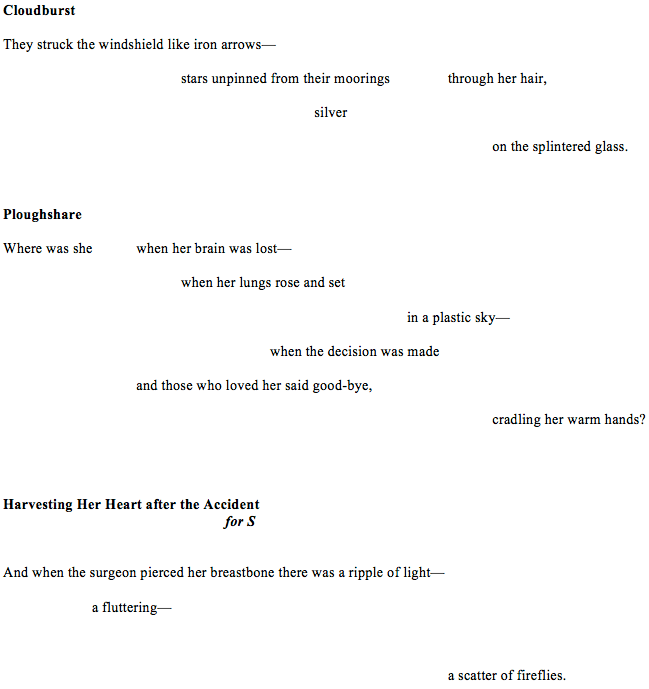
“Harvesting Her Heart after the Accident” first appeared in The Journal of Compressed Creative Arts/Matter Press. All other pieces are previously unpublished. Today’s poems appear here today with permission from the poet.

Stacy R. Nigliazzo‘s debut poetry collection Scissored Moon was published in 2013 by Press 53. It was named Book of the Year by the American Journal of Nursing. It was also short-listed as a finalist for the Julie Suk Poetry Prize (Jacar Press) and the Texas Institute of Letters First Book Award for Poetry/Bob Bush Award. She is co-editor of Red Sky, an anthology addressing the global epidemic of violence against women.

Editor’s Note: Stacy R. Nigliazzo imagines the unimaginable, writes those words which cannot be spoken. An emergency room nurse, it is when her personal losses make their way to the page that her experience becomes poetry, and that poetry becomes an act of healing for poet and reader alike. How visual her imagery, how visceral her grief. And yet her poems leave us not in darkness, but with the necessary reminder that even in our darkest hour there is a “ripple of light.”

Want to read more by and about Stacy R. Nigliazzo?
Stacy Nigliazzo’s Official Website

SATURDAY POETRY SERIES PRESENTS: IN THE ABSENCE


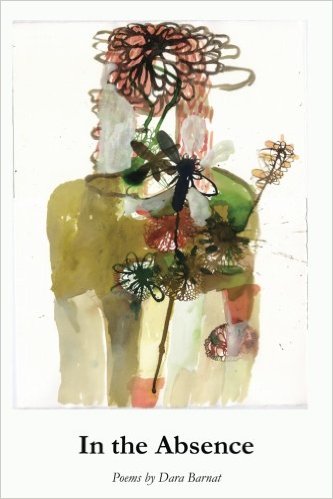
41b9wuq1vzl-_sx331_bo1204203200_


From IN THE ABSENCE
By Dara Barnat:


IMPRINT

I hear you’re gone and I fall with you.

In that place part of me stays,

like a hand in clay,

even as I make rice for dinner, boil water,

measure the grains,

pour wine, set out flowers with all their petals.

The imprint holds the loss of everything.

It holds what we thought was joy.


IN THE ABSENCE

              Dark is just dark–

rooms and all we’ve built are nothing.

Chairs with their backs, tables with their legs, beds with their heads.

Outside, trees with their leaves.

I can’t write that wood into a vessel

that will carry us to a place

where life is a river never not flowing.

I close my hand around a filament of sun as it filters

through the window, try to catch
              its meaning,

              but light is just light.


PRAYER I DO NOT KNOW

There’s no one here, but me
alone. I close

my eyes and try
to remember your face,

its light, your
fingers, their light

touch, your laugh,
the lightness. I say a prayer

that is my own:
May we live

a thousand years together,
in another life.


Today’s poems are from In the Absence (Turning Point Books, 2016), copyright © 2016 by Dara Barnat, and appear here today with permission from the poet.


In the Absence: Dara Barnat’s In the Absence evokes a yearning of the spirit so strong that it becomes presence, its light unstopped.


Dara Barnat is the author of the poetry collection In the Absence (Turning Point, 2016), as well as Headwind Migration, a chapbook (Pudding House, 2009). She also writes critical essays on poetry and translates poetry from Hebrew. Her research explores Walt Whitman’s influence on Jewish American poetry. Dara holds a Ph.D. from The School of Cultural Studies at Tel Aviv University. She currently teaches at Tel Aviv University and Queens College, CUNY.


Editor’s Note: Dara Barnat’s first full-length collection begins by declaring that “Dark is just dark.” But the assertion casts a shadow question: Is dark just dark? For it is light that is at the heart of this work: “I close my hand around a filament of sun as it filters / through the window, try to catch / its meaning, / but light is just light.”

But “light is just light” is no more the truth of these poems — and the poet’s journey that unfolds across them — than “dark is just dark.” This work is neither a book of questions nor of answers. Instead, In the Absence is an honest experience of grief that explores the inevitable, never-ending pilgrimage inherent within loss: “I hear you’re gone and I fall with you. / In that place part of me stays, / like a hand in clay.”

Not since Li-Young Lee’s Rose have I been so slain by a book of mourning. Like Rose, In the Absence mourns the loss of a father while acknowledging that such a loss is anything but simple, that the complications of life remain a reckoning for the living. “The imprint holds the loss of everything. / It holds what we thought was joy.”

Held close within this incredibly moving and painstakingly wrought collection is a poem titled “Walt Whitman.” I had the honor of featuring this poem here on the Saturday Poetry Series in 2013 as I marked my father’s first yahrzeit (Jewish death anniversary). Tomorrow will be five years since my father’s death. What at one year could be commemorated with a single poem, five years later needs an entire book. Such is the nature of grief — it does not diminish; it grows. And in its growing it becomes more painful and more beautiful all at once.

In the Absence transforms the poet’s personal grief into communion. I will re-read this book tomorrow as I remember my father on his five-year yahrzeit, and I will grieve. But, more than that, I will say a prayer that is the poet’s and is my own: “May we live / a thousand years together, / in another life.”


Want more from Dara Barnat?
Buy In the Absence from IndieBound
Buy In the Absence on Amazon
Poems in YEW
Poems in diode
Interview in Poet Lore
Dara Barnat’s Official Website

SATURDAY POETRY SERIES PRESENTS: THE NEEDS OF THE MANY BY BRENDAN CONSTANTINE

Photo Credit: Michelle Felix


THE NEEDS OF THE MANY
by Brendan Constantine

On the days when we wept—
and they were many—we did it
over the sound of a television
or radio, or the many engines
of the sky. It was rarely so quiet
we could hear just our sadness,
the smallness of it
that is merely the sound of wind
and water between the many pages
of the lungs. Many afternoons
we left the house still crying
and drove to a café or the movies,
or back to the hospital where we sat
dumb under the many eyes
of Paul Klee. There were many
umbrellas, days when it refused
to rain, cups of tea ignored. We
washed them all in the sink,
dry eyed. It’s been a while,
we’re cried out. We collect pauses
and have taken to reading actual
books again. We go through them
like yellow lights, like tunnels
or reunions, we forget which;
the older you are the more similes,
the more pangs per hour. Indeed,
this is how we break one hour into
many, how healing wounds time
in return. And though we know
there will always be crying to do,
just as there’s always that song,
always a leaf somewhere in the car,
this may be the only sweetness left,
to have a few griefs we cherish
against the others, which are many.


Today’s poem first appeared via The Academy of American Poets’ ‘Poem A Day’ series, was then published in the collection Dementia, My Darling (2016 Red Hen Press), and appears here today with permission from the poet.


Brendan Constantine‘s work has appeared in Prairie Schooner, FIELD, Ploughshares, Virginia Quarterly, and Hotel Amerika, among other journals. His most recent collection is Dementia, My Darling (2016 Red Hen Press). He has received grants and commissions from the Getty Museum, James Irvine Foundation, and the National Endowment for the Arts. He currently teaches poetry at the Windward School and regularly offers classes to hospitals, foster homes, veterans, and the elderly.

Editor’s Note: I’m just going to come out and say it: You need this poem. Right now. At this moment. In the wake of tragedies too hard to hold and too heavy to bear. You have watched the sky fall. You have been broken by the debris of what you thought to be true, of what has and has not been shattered. All that you know in your heart about what is right and what is wrong, about human kindness and decency, about the kind of country you want to live and raise your children and grow old in, the kind of world you want this to be. It’s all fallen apart. And that sadness you feel? That resistance to getting out of bed in the morning? Those spontaneous tears you find yourself bursting into? You are not alone. You. Are. Not. Alone.

But this poem. This poem! This poem knows our suffering. This poem knows our shared grief. This poem knows that “On the days when we wept— / and they were many—we did it / over the sound of a television.” This poem knows that “Many afternoons / we left the house still crying.” And this poem knows, too, that there is a time beyond this time — for better or worse — that the day will come when we are cried out, when we will read books again and reach milestones, and yet. And yet this poem knows that some griefs we will carry with us. Held fast by markers like where you were when Kennedy was shot or when 9/11 happened. This poem knows that there are “a few griefs we cherish / against the others, which are many.” And we know that this moment in American history is one of those griefs we will cherish against the others, which will be many.

Want to see more from Brendan Constantine?
The LA Review of Books on Dementia, My Darling
Muzzle Magazine
The BlueShift Journal
Betty Sargent for Publisher’s Weekly
Video by Sarah Jensen, winner of Write Bloody’s Best Poetry Video award, 2013

SATURDAY POETRY SERIES PRESENTS: MANISHA SHARMA

sharma-image


Millions of girls continue to vanish pre-birth in India simply because they are girls. The following poems imagine these vanished girls.


DEAR DAUGHTER

In my mind I cradled you in my arms
            I didn’t cage you
you latched onto my breasts
             I didn’t siphon life into you
you mumbled bilabial sounds, m…p
yet my ears did not hear you speak
I know you exist
              waiting to be reborn as my son
then, I will cradle you in my arms
              let you latch onto my breasts
              siphon life into you
              hear you mumble Ma, Pa
              welcome you as the heir
              who will carry your father’s name


WOULD YOU STILL BLAME ME?

You were like circles of incense
It wasn’t that we couldn’t feed another mouth
It was the kind of feeding we would do
For every roti soaked in ghee for your brother
You would get only one not soaked
Every glass of milk that went down his throat
You would drink chai with a hint of milk
Every pair of new clothes he would get each month
You would only get one pair a year
He would utter complex phrases in English
You would say soft words in Hindi and the local tongue
He would earn fancy degrees to do something great
You would master fine skills to please others
He would walk with his head held high
You would walk with your head bent
For you are leased property
Returned to its rightful owner in two decades


Today’s poems appear here today with permission from the poet.


Manisha Sharma: Born and raised in India, Manisha Sharma earned an MFA in Creative Writing from Virginia Tech. A graduate of the Bread Loaf Writers’ Conference, she was a Spring 2016 poetry mentee in AWP’s mentorship program, where Shikha Malaviya mentored her. Her recent poetry and writing has appeared in or is forthcoming from TAB, a journal of poetry and poetics, New Asian Writing, The Bombay Review and The Huffington Post. More of her work can be seen at www.genderedarrangements.com.

Editor’s Note: Between 2000 and 2011 seven-to-ten million girls in India were prevented from being born simply because they were girls. With her important poetry and collaborations, Manisha Sharma tells research-based stories of these girls-who-never-were. Her work goes a step beyond giving voice to the voiceless. Sharma literally gives life — through her art — to those who never came into being because of their sex.

In today’s poems Sharma imagines these “vanished girls” from the perspective of the mothers who carried, but never birthed them. “I know you exist,” one such mother reflects, “waiting to be reborn as my son.” Another considers the gender inequity she wanted to spare her would-be-daughter: “It wasn’t that we couldn’t feed another mouth / It was the kind of feeding we would do/ For every roti soaked in ghee for your brother / You would get only one not soaked / Every glass of milk that went down his throat / You would drink chai with a hint of milk.”

It is heartbreaking to think of the lost souls whose sex alone prevented them from having a chance at life. But it is perhaps more challenging to consider the mothers who conceived, who carried the seeds of life inside them, and who made the choice — if they were given a choice at all — to terminate their pregnancies when they discovered they were carrying girls. One mother harbors no illusions as to the kind of life a girl child in India would have had to lead, while the other acknowledges that, despite the choice made, she suffered a great loss: “In my mind I cradled you in my arms.”

Want to see more from Manisha Sharma?
Gendered Arrangements
“Indian Girl Crumbling” in New Asian Writing
“#17”, “#18”, “#22”, “#23”, and “#25” in The Bombay Review