
SATURDAY POETRY SERIES PRESENTS: GERARD MANLEY HOPKINS


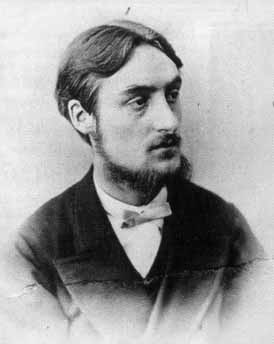
Gerard_Manley_Hopkins


MOONRISE
By Gerard Manley Hopkins

I awoke in the Midsummer not to call night, in the white and the walk of the morning:
The moon, dwindled and thinned to the fringe of a finger-nail held to the candle,
Or paring of paradisaïcal fruit, lovely in waning but lustreless,
Stepped from the stool, drew back from the barrow, of dark Maenefa the mountain;
A cusp still clasped him, a fluke yet fanged him, entangled him, not quit utterly.
This was the prized, the desirable sight, unsought, presented so easily,
Parted me leaf and leaf, divided me, eyelid and eyelid of slumber.


(Today’s poem is in the public domain, belongs to the masses, and appears here today accordingly.)


Gerard Manley Hopkins (1844 – 1889) was an English poet, Roman Catholic convert, and a Jesuit priest, whose posthumous fame established him among the leading Victorian poets. His experimental explorations in prosody (especially sprung rhythm) and his use of imagery established him as a daring innovator in a period of largely traditional verse. (Annotated biography of Gerard Manley Hopkins courtesy of Wikipedia.)

Editor’s Note: Today’s poem appears here on the recommendation of my mother, a faithful reader of this series. As this coming Monday is her birthday, and the moon her ruling planet, I wanted to share this poem with you today in her honor. Happy Birthday, Mama! May you forever shine as brightly as the moon.

Want to read more by and about Gerard Manley Hopkins?
The Poetry Foundation
Academy of American Poets
Bartleby.com

SATURDAY POETRY SERIES PRESENTS: AMORAK HUEY

IMG_3503

By Amorak Huey:


THE POND IN THE CORNER OF THE YARD

It seems so important that I get this right—

memory choked with algae,
memory dried to nothing in the summer,

memory’s post-dawn sky already fevered with desire,
memory’s grass grabbing wet at my hungry ankles.

I remain the same lonely child I was,

never having learned the rules of prayer. Instead I offer
this uncurling body, this frog-song,
tornado-spike, voice-from-the-trees:

the word green
the word green
the word green
.


THE CORN IN THE VALLEY

A sea of silk, a sky of stalk, a sun of ear and song.

There is a season for planting,
a season for harvest,

a moon-color for the storms between.

The lightning has something to do with nourishment,
something to do with need.


THE DOGWOOD AT THE CORNER OF THE PORCH

By our presence we alter the shape of the tree,

crook its looping limbs to suit our prayers,
our psalms and songs,
our cautionary tales.

It’s not the tree asking forgiveness
for its part in our most thoughtless acts—

our blossom-burst and leaf-turn,
our self-inflicted separations.


“The Pond in the Corner of the Yard” originally appeared in Thrush. Today’s poems appear here today with permission from the poet.


Amorak Huey is author of the chapbook The Insomniac Circus (Hyacinth Girl Press, 2014) and the forthcoming poetry collection Ha Ha Ha Thump (Sundress Publications, 2015). A former newspaper editor and reporter, he teaches writing at Grand Valley State University in Michigan. His poems appear in The Best American Poetry 2012, The Cincinnati Review, The Southern Review, The Collagist, Menacing Hedge, and many other print and online journals. Follow him on Twitter: @amorak.

Editor’s Note: I have had the pleasure of featuring Amorak Huey here on the Saturday Poetry Series before, and I am as struck by his poetry today as I was when I encountered it all those years ago. Is it the way he infuses the everyday with a touch of magic? Is it the fine line he conjures between nature and spirit and prayer? Perhaps it is the world he harvests, words sprouting from the earth as if from seeds, the quiet calm of the farm balanced by the weight of repetition, alliteration, form. It is as if you could part the corn stalks and encounter the poem. As if the poem could be turned over like earth, fertile ground for all the words that have yet to be planted.

Want more from Amorak Huey?
“Self-Portrait Following a Trail of Reese’s Pieces” in Radar
“When They Serialize My Life They’re Going to Have a Problem with 1993” in disquieting muses quarterly
“The Fathers at the Little League Field” in Hobart
“Melon Heads” in Stirring from Sundress Publications

SATURDAY POETRY SERIES PRESENTS: EARTH VOICES FOR SPRING

Public Domain image.


EARTH VOICES
By Bliss Carman

I

I heard the spring wind whisper
Above the brushwood fire,
“The world is made forever
Of transport and desire.

“I am the breath of being,
The primal urge of things;
I am the whirl of star dust,
I am the lift of wings.

“I am the splendid impulse
That comes before the thought,
The joy and exaltation
Wherein the life is caught.

“Across the sleeping furrows
I call the buried seed,
And blade and bud and blossom
Awaken at my need.

“Within the dying ashes
I blow the sacred spark,
And make the hearts of lovers
To leap against the dark.”

II

I heard the spring light whisper
Above the dancing stream,
“The world is made forever
In likeness of a dream.

“I am the law of planets,
I am the guide of man;
The evening and the morning
Are fashioned to my plan.

“I tint the dawn with crimson,
I tinge the sea with blue;
My track is in the desert,
My trail is in the dew.

“I paint the hills with color,
And in my magic dome
I light the star of evening
To steer the traveller home.

“Within the house of being,
I feed the lamp of truth
With tales of ancient wisdom
And prophecies of youth.”

III

I heard the spring rain murmur
Above the roadside flower,
“The world is made forever
In melody and power.

“I keep the rhythmic measure
That marks the steps of time,
And all my toil is fashioned
To symmetry and rhyme.

“I plow the untilled upland,
I ripe the seeding grass,
And fill the leafy forest
With music as I pass.

“I hew the raw, rough granite
To loveliness of line,
And when my work is finished,
Behold, it is divine!

“I am the master-builder
In whom the ages trust.
I lift the lost perfection
To blossom from the dust.”

IV

Then Earth to them made answer,
As with a slow refrain
Born of the blended voices
Of wind and sun and rain,

“This is the law of being
That links the threefold chain:
The life we give to beauty
Returns to us again.”


(Today’s poem is in the public domain, belongs to the masses, and appears here today accordingly.)


Bliss Carman FRSC (1861–1929) was a Canadian poet who lived most of his life in the United States, where he achieved international fame, and was acclaimed as Canada’s poet laureate during his later years. (Annotated bio courtesy of Wikipedia, with edits.)

Editor’s Note: Each year around this time I become so excited by the fact that winter is finally over that I must celebrate the birth of spring through poetry. The sun is shining, the crocuses and tulips are rising, the spring blossoms are in bloom. The cold and darkness that are just behind us are quickly forgotten by the promise of all that is warm and beautiful and worthy of rejoicing. So it has been since the days of Demeter and Persephone, and so it shall be until humankind destroys the natural balance of the world with climate change.

Today’s poem calls upon the “Earth Voices”—the spring wind, the spring light, the spring rain, and the Earth herself—to tell a story of the rebuilding of the world at springtime. The voices of spring speak of the newness they create: “Across the sleeping furrows / I call the buried seed, / And blade and bud and blossom / Awaken at my need.” “I am the master-builder / In whom the ages trust. / I lift the lost perfection / To blossom from the dust.” And the voice of Earth answers, calling upon the ancient power of three, reminding us, as spring does, that what is buried beneath winter “Returns to us again.”

Want to read more Spring Poetry?
SATURDAY POETRY SERIES PRESENTS: SPRING! (2014)
SATURDAY POETRY SERIES PRESENTS: LIZZIE LAWSON ON SPRING
SATURDAY POETRY SERIES PRESENTS: SPRING! (2013)
The Poetry Foundation – Spring Poems

SATURDAY POETRY SERIES PRESENTS: MARCI CALABRETTA

MarciCalabretta


By Marci Calabretta:


CATERPILLAR SEASON

Wild strawberries were blooming
as we ambled toward the cottonwood shade.

You were examining the prophecy of snowfall
in the measurements of woolly caterpillars

and I asked your opinion on the nature of happiness,
perhaps because you called me sister

or because I called you brother and stranger.
Tiger-banded dragonflies skimmed the grass.

Fern and myrtle, downy brown and black.
You laid the larvae on my palms without speaking.

I never knew you had such silences.
Overhead, wires heavy with starlings or crows―

I couldn’t tell against the steel sky. But I remember
later that night, the steam from our tea

curling above us and into our mouths, as though
the answer could last us a whole season of snow.


BROTHER RETURNS AS CHRYSANTHEMUM

Didn’t we think we were more than this―
little suns unfurling above the earth?

We thought we were constellations
in soil, entire galaxies anchored to dust.

Ravenous, we believed our thousand
arms could hoard the horizon―

eclipsing ourselves even as we waned,
bereft of all but shadow.


Today’s poems were originally published in Thrush Poetry Journal, and appear here with permission from the poet.


Marci Calabretta is the recipient of poetry fellowships from Kundiman and the John S. and James L. Knight Foundation. Her work has appeared most recently in Thrush, Lunch Ticket, American Letters & Commentary, and Chautauqua. Her chapbook, Last Train to the Midnight Market, was published by Finishing Line Press. She is co-founder and managing editor for Print-Oriented Bastards, an assistant editor for Jai-Alai Magazine, and a contributing editor for Florida Book Review.

Editor’s Note: Today’s poems are wildly vivid and pleasantly unexpected. In “Caterpillar Season,” the poet couples the lush of wild strawberries with the oracular act of “examining the prophecy of snowfall.” The poem is like a parable in which the nature of happiness might be gleaned from the wonders of a nature so vibrant it feels at times as if it might fly or blossom from the page. “Brother Returns as Chrysanthemum” is anchored in the metaphysical, grappling with human existence and our role in the universe. The culmination of the poem, “eclipsing ourselves even as we waned, / bereft of all but shadow,” is a gorgeous finale that grounds us in the observable while inviting us to contemplation. Both poems indulge in delicious alliteration, fervently celebrating language and the poetic act.

Want more from Marci Calabretta?
Marci Calabretta’s official website
Lunch Ticket
Purchase Last Train to the Midnight Market from Finishing Line Press
Co-founder and managing editor for Print-Oriented Bastards

SATURDAY POETRY SERIES PRESENTS: STEVE MUESKE

SteveMueske


By Steve Mueske:


TO ALL THE FROGS

who sleep in the mud,
who cling to the trees and sing me
to sleep each night: I confess
a love for your instrument.
Your throats fill like instant bellows
with enough air for those
profundo lows: quick clench
of muscle that needs
the whole body, the Baby,-
I’m-Your-Man muscle, the muscle
that coils all the way down
to your toes. Then gone:
a belching horn blast of a note
that blows across the pond.
I love to listen to your ethereal choir –
your basses and altos, tenors
and sopranos – through my window
after making love, when you sing
of all the world’s loneliness,
and I lie sweaty on the sheets,
nerves jangling like a hotwired Yes.
“I love that sound,” my wife says,
her voice dreamy and slow;
I listen to the flavor of the dark,
its mosses, its mud and still water –
the insects, the leaves breathing –
as my body cools, and I feel
the drowsy tendrils of sleep
bring me down easy, so easy.


“To All the Frogs” was originally published in Thrush Poetry Journal and appears here with permission from the poet.


Steve Mueske is an electronic musician and the author of a chapbook and two full collections of poetry, most recently Slower Than Stars. His poems have been published in The Massachusetts Review, Crazyhorse, Crab Orchard Review, Third Coast, Court Green, Hotel Amerika, CURA, Water-Stone Review, Best New Poets, and elsewhere, with work forthcoming in The Georgetown Review. His music is available on Bandcamp. He can be reached on Facebook or Twitter @SteveMueske.

Editor’s Note: Today’s poem pays homage to the wonder of the frog and the glory of its song. The appreciation is inspired: “I confess / a love for your instrument,” while the poem is humid, steamy, evoking earth and water, sweat and music. “I love to listen to your ethereal choir…through my window / after making love… I listen to the flavor of the dark, / its mosses, its mud and still water – / the insects, the leaves breathing.”

Want more from Steve Mueske?
CURA
Linebreak
Buy Slower Than Stars from Ravenna Press
Buy Slower Than Stars from Amazon
Steve Mueske – Bandcamp
Steve Mueske – Soundcloud

SATURDAY POETRY SERIES PRESENTS: NICOLE ROLLENDER

_59A1171-Edit


THE FORMS OF SEEKING
By Nicole Rollender

Behind my father’s house, the lake is stained
with floating water lilies, where deep marsh grass smells

like want. Where we’re always returning. Swan wings extended,
a flash of white and water. My father, now blind in one eye,

doesn’t know what chartless world he’ll enter tomorrow.
These flowers, here now, will die by week’s end. I understand why at night

they close so slowly, sinking under moon drift and leaf fall. He watches
a snapping turtle cross the lake, a slow, even trailing – its weighted body

knows how to cross waters, unsinking. Yet, my father’s journey
still ripens. Unmoored, he walks the yard, seeking the self

who has already walked up the mountain path toward a village,
its gate festooned with red flags and bells. And a woman holding a wash

basin filled with oil and flowers, a bread basket. He creates and creates
these streets, hung with paper lanterns, windows open, fountains flowing

with the passage of time. From the gates, what man will emerge?
Will he always wonder how his life was chosen for him?

Underwater, the lilies’ stalks will curl up, submerging and holding
the pollinated flower heads. As something beautiful dies,

it makes another kind of rapture: From bees’ flight, the flower petals
browning into thick seed pods (oh, the memory of their fragrance) will burst

into the lake, the old lily falling apart and drifting. His chance
for survival is remembered joy: Live your life as if pulling from a well

inside yourself. For you are alone, and within you is all of your past
and all of what will come. Live your depths over and over with gratitude.

Behind the shed, he finds a deer skull resting on moss, stippled
with evening light, and then rain. Here now, he’s swept away,

swept away.


“The Forms of Seeking” appears here with permission from the poet.


Nicole Rollender is the author of the poetry chapbooks Absence of Stars (forthcoming July 2015, dancing girl press & studio), Little Deaths (forthcoming November 2015, ELJ Publications) and Arrangement of Desire (Pudding House Publications). She is the recipient of CALYX Journal’s 2014 Lois Cranston Memorial Prize, the 2012 Princemere Journal Poetry Prize, and Ruminate Magazine’s 2012 Janet B. McCabe Poetry Prize for her Pushcart Prize-nominated poem “Necessary Work,” chosen by Li-Young Lee. Her poetry, nonfiction and projects have been published or are forthcoming in The Adroit Journal, Alaska Quarterly Review, Creative Nonfiction, Radar Poetry, Ruminate Magazine, PANK, Salt Hill Journal and THRUSH Poetry Journal, among others. She received her MFA from The Pennsylvania State University, and currently serves as media director for Minerva Rising Literary Journal and editor of Stitches Magazine, which recently won a Jesse H. Neal Award.

Editor’s Note: I suggest you curl up with today’s poem as you would with a good book. Read and reread until its thick layers enfold you. Read once for sound. For music and alliteration. Read once for story. For the father and the momentary windows that open into his life. Read once for structure. For form. Then read several times for beauty. Because “As something beautiful dies, // it makes another kind of rapture.” Because this poem wants you to “Live your life as if pulling from a well // inside yourself.” Give this poem enough of yourself to discover all that it offers in return. Then go forth and “Live your depths over and over with gratitude.”

Want more from Nicole Rollender?
Nicole Rolldener’s Official Website
CALYX
Heron Tree
Thrush
Quail Bell Magazine
Hermeneutic Chaos

SATURDAY POETRY SERIES PRESENTS: ALEXIS KIENLEN

alexiskienlen

By Alexis Kienlen:


HOW TO PICK AN APPLE

find a ripe specimen,

gaze at its perfection,

cup it in your hand,

turn the bottom star to the sky.

show the end of the apple to heaven,

let it fall.


“How to Pick an Apple” appears here today with permission from the poet.


Alexis Kienlen is the author of two collections of poetry, 13 and She Dreams in Red. She’s also the author of a biography of a Sikh civil rights activist called Truth, love, non-violence; The story of Gurcharan Singh Bhatia. Alexis lives in Edmonton, Alberta, Canada where she works as an agricultural reporter for a newspaper called Alberta Farmer. From 2001-2006, she was the Literary Editor for Ricepaper magazine, a Vancouver based Asian Canadian arts and culture magazine. She currently writes a weekly literary column for The Grande Prairie Daily Herald Tribune. Her poetry, fiction and journalism pieces have appeared in numerous publications across Canada and online. She’s currently working on a novel and a new collection of poetry.

Editor’s Note: Today’s poem is vivid and whimsical and whisks the reader away on a brief yet epic journey. Placing us, at first, in the everyday pleasure of picking an apple, the poem turns on the word “turn” in the fourth line. From there we are shifted upward, toward the stars and the sky and the heavens, and are transported from the orchard into the realm of the spiritual, the mystical, the otherworldly. The last line echoes what has been biblically ingrained in the western apple, the fall.

Today’s poem is dedicated to my friend Luis, a faithful reader of this series and a man who knows and loves a good apple.

Want more from Alexis Kienlen?
Alexis Kienlen’s Official Website
Buy 13 and She Dreams in Red from Frontenac House
Buy Alexis Kienlen’s books from Amazon
Blue Skies Poetry
Alberta Farmer Express

SATURDAY POETRY SERIES PRESENTS: HILA RATZABI


By Hila Ratzabi:


"Sedna the Arctic Sea Goddess" broadside, designed by poet and visual artist MaryAnn Miller
“Sedna the Arctic Sea Goddess” broadside, designed by poet and visual artist MaryAnn Miller.


SEDNA IN SPACE

             “Our newly discovered object is the coldest most distant place known in the solar
             system, so we feel it is appropriate to name it in honor of Sedna, the Inuit goddess of
             the sea, who is thought to live at the bottom of the frigid arctic ocean.”
                                                                                                                     ––Mike Brown, astronomer

Now you’re nothing
but a dwarf planet at the edge
of the asteroid formerly known as Pluto,

neighbor to demoted planet,
atmosphere-less,
stunted.

When the scientists ran out of Greek and Roman gods
they settled on you, “Big Bad Woman,”
as one tribe puts it.

You are made of water,
methane, nitrogen ice,
frozen all over.

It takes you
more than ten thousand years
to orbit the Sun.

I want to place a blanket
around your shivering surface,
tuck you in surrounded by stars.

Where I’m from, we’ve released
so much heat into the sky
it’s burning us back.

But I can’t turn up the heat
at your edge of the solar system,
can’t drag you any closer to the Sun.

From your corner the Sun
Is a wink of a star, so small
you could block it out

with the head of a pin.
Just look what a nothing it is
next to you, big girl.


“Sedna the Arctic Sea Goddess” was previously published in Alaska Quarterly Review and “Sedna in Space” was previously published in Narrative. These poems appear here today with permission from the poet.


Hila Ratzabi was selected by Adrienne Rich as a recipient of a National Writers Union Poetry Prize and has been nominated for a Pushcart Prize. She is the author of the chapbook The Apparatus of Visible Things (Finishing Line Press). Her poetry is published or forthcoming in The Bloomsbury Anthology of Contemporary Jewish American Poetry, Narrative, Alaska Quarterly Review, Drunken Boat, About Place, The Normal School, H_NGM_N, Cortland Review, and others. She holds an MFA from Sarah Lawrence College, and lives in Philadelphia where she founded the Red Sofa Salon & Poetry Workshop.


Editor’s Note: In Hila Ratzabi’s Sedna poems the Inuit goddess becomes a symbol of the trauma of climate crisis as explored through the lens of feminist response.

In “Sedna the Arctic Sea Goddess” we are introduced to Sedna’s creation myth. So, too, are we introduced to the misogyny and violence inherent in her tale. She is a “bitch goddess” whose father throws her to the sea and then cuts of her fingers when she tries to save herself.

In “Sedna in Space” we see Sedna rise again when a dwarf planet is discovered and named for her, but still she is “nothing / but a dwarf planet at the edge / of the asteroid formerly known as Pluto, // neighbor to demoted planet, / atmosphere-less, / stunted.” Through poetry, Ratzabi seeks to reclaim Sedna, to save her from the grips of oppression: “I want to place a blanket / around your shivering surface, / tuck you in surrounded by stars.” By shifting perspective, the poet empowers Sedna, making her grander than the sun: “From your corner the Sun / Is a wink of a star, so small / you could block it out // with the head of a pin. / Just look what a nothing it is / next to you, big girl.”


Want to read more by Hila Ratzabi?
Read recently published poems on climate change by Hila Ratzabi in About Place and Drunken Boat.
Learn about Hila’s poetry workshops in Philadelphia at The Red Sofa Salon & Poetry Workshop.
Purchase “Sedna the Arctic Sea Goddess” broadside (pictured above).
Purchase “Sedna in Space” broadside (poem above).
Purchase The Apparatus of Visible Things chapbook.

SATURDAY POETRY SERIES PRESENTS: ALLIE MARINI BATTS

Allie Back_Photo

By Allie Marini Batts:


breeding, trumpet flowers out of the dead ash


a cautious unfurling, petals, these fragile fingers,

extended through layers of silt and salt,

the battle-blown lands where once a city stood.

these vines, they labor furiously,


expanding and dividing beneath the dust of nations

nightshades in mitosis, their toxins lovely, bright and narrow

set against a land destroyed.


likewise myself and my skin,

a playground for dead things

and invasive plants to rise from,

a phoenix, in botany.


the mythology of the night skies


you were once a man

square but bright

incense in the dark


your story, told by Greeks

naïve, the way we

lit sticks of incense and prayed


wantonly to false hopes and square gods

and stars, naïve offerings

and devotions meant to keep us safe


protections and punishments

remembered in the

rotations of the planet


naïve, how we thought

you loved us

and would keep us safe


“breeding, trumpet flowers out of the dead ash” previously appeared in quarter after and “the mythology of the night skies” previously appeared in Symmetry Pebbles. These poems appear here today with permission from the poet.


Allie Marini Batts holds degrees from both Antioch University of Los Angeles and New College of Florida, meaning she can explain deconstructionism, but cannot perform simple math. Her work has been a finalist for Best of the Net and nominated for the Pushcart Prize. She is managing editor for the NonBinary Review and Zoetic Press, and has previously served on the masthead for Lunch Ticket, Spry Literary Journal, The Weekenders Magazine, Mojave River Review & Press, and The Bookshelf Bombshells. Allie is the author of the poetry chapbooks, You Might Curse Before You Bless (ELJ Publications, 2013) Unmade & Other Poems, (Beautysleep Press, 2013) and This Is How We End (forthcoming 2014, Bitterzoet.)

Editor’s Note: “breeding, trumpet flowers out of the dead ash” is so stunning that the poem speaks for itself. I am loathe to feature a favorite line in the face of so many beautifully wrought images emerging one after another. The subject matter is as rich as the soil the poem’s flowers rise from. The world revealed is post apocalyptic, brimming with nature’s resilience and with death nurturing new life, “a phoenix, in botany.”

“the mythology of the night skies” turns our eyes upward to the heavens and our minds to the gods. While pressing against the idea of worship in antiquity, the poem’s echo seems to question deity worship altogether. “naïve, how we thought / you loved us / and would keep us safe.”

Want more from Allie Marini Batts?
Find her on the web
Follow her on Twitter @kiddeternity

SATURDAY POETRY SERIES PRESENTS: MEGAN MORIARTY


Moriarty Author Photo

LOOKING AT US LIVING
By Megan Moriarty

Through the binoculars, we saw us
moving through the foliage.

The world was on rewind:
a herd of horses ran
backwards across a field.

Yellow leaves kept climbing back
to their branches.

“What’s the opposite of fall?” I said,
and he said “Spring.”

Then it was August, then July,
then June. The sun kept
leaving and coming back

like a boomerang that no one
ever had to throw.

Snow appeared
on the ground, then it started
unsnowing, the flakes
travelling upwards.

I knew that soon
we wouldn’t know each other

so I asked him
what the opposite
of stay is.

He stood there,
his hands on his hips, thinking.


Today’s poem was published in the Summer 2011 issue of Rattle, and appears here today with permission from the poet.


Megan Moriarty grew up surrounded by water in Staten Island, New York and currently finds herself surrounded by mountains in Hillsboro, West Virginia. She holds an MFA in poetry from Virginia Tech and is the author of From the Dictionary of Living Things, a collection of dictionary definition poems.

Editor’s Note: Today’s poem is magic, full of fantastical invention and a vivid, playful story life. I am reminded of the work of Nicolas Destino, a beloved poet here on As It Ought To Be. What wonder, what imagination, what playfulness of concept, what love of ideas mirrored in the written word.

Want to read more by Megan Moriarty?
Buy From the Dictionary of Living Things from Finishing Line Press
Indiana Review
Vinyl Poetry
Jointed Autumn