SATURDAY POETRY SERIES PRESENTS: ALLIE MORENO

photo (1)

TOO MUCH OF A GOOD THING
By Allie Moreno

I have been stretched like
skin to dry in the sun
I am a blanket
I’m a tightrope
a staircase
a palace of forgotten
photographs
a sandcastle exposed in the wind
I love and
cover you

I have filled all the glasses
on the table
I have eaten what is
left on every plate
to be free of it

I have swallowed your
skeletons on cue
I should probably apologize
for complaining
but I’m the parade and the rain


“Too Much of a Good Thing” appears here today with permission from the poet.


Allie Moreno spends her daytime hours writing for a large tech company in the San Diego area. She received an MFA in Writing from UC San Diego and sometimes writes poetry from the confines of her cubicle. Allie tends to write about identity, belonging, and her experience as a trans-racial adoptee.

Editor’s Note: Simple, straightforward, and full of evocative imagery, today’s poem takes us inside the world of one who has lived for another. Stretched tight, walked upon, now disappearing grain by grain, “a sandcastle exposed in the wind.” To give love is not enough, when in so doing we give too much of ourselves. In end end we are almost left with a woman’s tendency to apologize for herself, but instead we are left with a counterweight. A provocative image slightly obscured. What is a woman when she is “the parade and the rain”?

Want to read more by Allie Moreno?
Allie Moreno’s Blog
Interview: Allie Moreno’s Adoption Experience

SATURDAY POETRY SERIES PRESENTS: SHARON SUZUKI-MARTINEZ

ssm author pic

By Sharon Suzuki-Martinez:


ONE HUNDRED BRIDGES

1.

One day
I gave myself a gift certificate
because who knows what I want?

One night
without thinking
I traded it for one hundred bridges.

2.

We turn the house upside-down
in search of our passports.

A century passes
before we find them in the pages
of our children.

3.

Too many bridges to cross.

Paths like rotting smiles, rat-kissed
tatters swinging loose
in the maw of some river god.

4.

It has always been this way–only
your voice carries me to the other side.


GOODBYE ISLAND

Then Marie said, “I’m in love with a man
who is an island.” Of course,

many of us had our doubts.
This did sound familiar.

We said, “Which of our legs
are you trying to pull?”

She stared at us like we were insects
from the future.

Our metaphysical existence
(vis-à-vis Marie)

grew negligible: tenuous, at best.
Further on down the road, we saw the man

for ourselves. We couldn’t help but
admire his thick vegetation,

his long languid beaches, his centuries
of blue-eyed solitude.

We desperately wanted to bear his young,
even the males among us.

Thus we engulfed
his shores with sweet lingering visits.

Soon, Marie saw the man
was no longer her own.

Sadly thereafter, she realized he never was.


“One Hundred Bridges” originally appeared in CURA and “Goodbye Island” originally appeared in Spooky Boyfriend. These poems appear here today with permission from the poet.


Sharon Suzuki-Martinez is the author of The Way of All Flux (New Rivers Press, 2012). She grew up in Hawaii and now lives in Tempe, Arizona where she created/curates the music/poetry website, The Poet’s Playlist and blogs about strange animals and the even stranger poet’s life at Sharon Planet.

Editor’s Note: Today’s poems are thinking poems. We are asked to slow down, to be present, and to really consider the ideas and imaginings the poet has carefully crafted for our contemplation. “One day / I gave myself a gift certificate / because who knows what I want?” “We turn the house upside-down / in search of our passports. // A century passes / before we find them in the pages / of our children.” I could read these lines again and again and meditate on the depths of their meaning.

In “Goodbye Island,” the poet pushes the boundaries of metaphor, painting us a picture of what a man might look like if he really were an island: “We couldn’t help but / admire his thick vegetation, // his long languid beaches, his centuries / of blue-eyed solitude.” As if this is not enough, she takes us a step further, deep into reflecting upon what it is to love a man who is an island: “Marie saw the man / was no longer her own. // Sadly thereafter, she realized he never was.”

Want to read more by Sharon Suzuki-Martinez?
The Poet’s Playlist
Sharon Planet

SATURDAY POETRY SERIES PRESENTS: KATIE WOODZICK

Flirting_with_Danger


YEARNING
By Katie Woodzick

She delivers my sloe gin fizz
and her slim hips testify
to an ecstasy that has
not yet been experienced.

I want to trace
the subtle protuberances
of her hip bones
(ghost-like, merely a suggestion
of bone pressing against her tender skin)

I sip my gin
instead of
tracing her hips.

Because she is forbidden.
Because my jaw locks.
Because I don’t know how.


“Yearning” originally appeared in woodzickwrites, and appears here today with permission from the poet.


Katie Woodzick is a writer, actress, director, feminist and External Relations Manager for Hedgebrook. She considers herself a smattering of Rogue from X-Men, Mae West and Tina Fey, among others. She holds a strong belief that leopard print is a neutral. Publications include Floating Bridge Press (Fall 2014 Issue) and Writer’s Digest Short Short Story contest (7th place, 2012 competition.)

Editor’s Note: Ahhhh… alliteration. The “sloe gin fizz,” the “slim hips,” the “ecstasy… not yet… experienced.” And the joyous interplay of alliteration and content! That we, the reader, are treated to gratification and pleasure with this sensual alliteration, and yet the words themselves insist that ecstasy has not been experienced. While the playful nature of the poem’s acoustics arouses our senses, the poem’s narrative unfolds, equally alluring. And in the end we are treated to a glimmer of honesty an introspection, even defeat. Despite all the attraction, all the fantasy, in the end, “I sip my gin / instead of / tracing her hips.” Why? “Because I don’t know how.”

Want to read more by Katie Woodzick?
Katie Woodzick – Theatrical Mustang
woodzickwrites – At the intersection of theatre and poetry
Floating Bridge
Whidbey Life Magazine

SATURDAY POETRY SERIES PRESENTS: RACHEL MENNIES

alisonsteve02327c

By Rachel Mennies:


AMIDAH FOR TEENAGE GIRLS

We said it Friday nights in unison: blessed
is Abraham, Isaac, patriarchs whose weight
we felt against our chests, Jacob, whose brother

filled his mouth with the sand of hate,
who split sisters with his body
of patience. The God of History, reads

the Siddur, nothing more dangerous
than this sort of God. Any good girl
will tell you so: ask Leah, who watched

as her betrothed tilled fields in agony,
rutted at her nightly, his pious bride, as he dreamed
for seven years of younger Rachel’s face. God,

our brute teacher. God, whom we thank
and thank for these big men. You are mighty forever,
my Lord. You resurrect the dead. My Lord, open

my lips, that my mouth may declare
Your praise.
Imagine the shock, that first boy
or man inside us for mere seconds, the tremor

of realization — some smaller God at our clavicle
thrumming in awareness. The creator of all things. And so
when I lie with him, my body already knows what to do

while he shifts his weight, moves his hips. You cause
the wind to blow and the rain to fall.
The hard ram’s horn,
the arms thrust high, parting a sea of salt. The open mouth

of incantation. O King, helper, savior and shield. And what of our
pleasure, that quiet subtext, that patient search against
our partners’ sweaty brows, near to finished? We already

know the phrase: bestow, bestow.


BUMPER CROP

Wet pink shock of a sliced-open
peach, pit hard between our teeth,
reached in a liquid, honest hurry.
Peach in the fingers of a certain lover’s hand.
Peach juice sliding down the wrist of a man
with assertive hungers. Peach, bringer
of rapture: the climax, but not
the fall. Peach sky rising up and up, free
of consequence. Impossible, but for
our chase of it. Peach in the crisper drawer,
softening. We hear stories of the pastor
and his book, so certain of fire, his biblical
calculus. Peach hot, sugared in an oven.
The mouth of red around the brain-
shaped, dumbstruck stone. Peach the very taste
of sin. Peach that sends the crows circling,
rapture here and gone. Peach God, rapt for carrion,
turning above us in the heavens, waiting for
us, ripening, to satisfy ourselves;
come to him pitted, come to him
finished, made rotten by
your sweet time in his sun.


“Amidah for Teenage Girls” was originally published in Witness, and “Bumper” was originally published in Linebreak. These poems appear in the collection The Glad Hand of God Points Backwards (Texas Tech University Press 2014) and appear here today with permission from the poet.


Rachel Mennies is the author of The Glad Hand of God Points Backwards, winner of the Walt McDonald First-Book Prize in Poetry (Texas Tech University Press, 2014), and the chapbook No Silence in the Fields (Blue Hour Press, 2012). Her poems have appeared in Hayden’s Ferry Review, Poet Lore, The Journal, and elsewhere, and have been reprinted at Poetry Daily. She teaches in the First-Year Writing Program at Carnegie Mellon University.

Editor’s Note: I really love today’s poems. Discretely and in conjunction. For the ways they press against the same themes, and for the ways they diverge. “Amidah for Teenage Girls” had me at “patriarchs whose weight / we felt against our chests,” and held me there, exalting, with “Jacob, whose brother // filled his mouth with the sand of hate, / who split sisters with his body / of patience.” Yes. Yes and yes. I could write pages about the first two stanzas of this poem alone. Instead, I urge you to read and reread it, to savor what stews and what simmers.

When I think of peaches and poems, I think of Li-Young Lee. And while “Bumper Crops” and “From Blossoms” each make their own unique contribution to the poetic landscape, I think Li-Young Lee would meditate along with Rachel Mennies on God and humanity, and that he would relish the poem’s sweet sensuality. As, I believe, would Anya Silver and Rabbi Rachel Barenblat, whose “French Toast” and “Sufganiyot” would, along with Mennies’ peaches, make up a picnic that would give Fifty Shades of Grey a good blush.

Want to read more by Rachel Mennies?
Rachel Mennies – Official Website
Buy The Glad Hand of God Points Backwards from Texas Tech University Press
Buy The Glad Hand of God Points Backwards from Amazon
Poetry Daily
Sixth Finch

SATURDAY POETRY SERIES PRESENTS: LAURA E. DAVIS

LEDavis-2014

By Laura E. Davis:


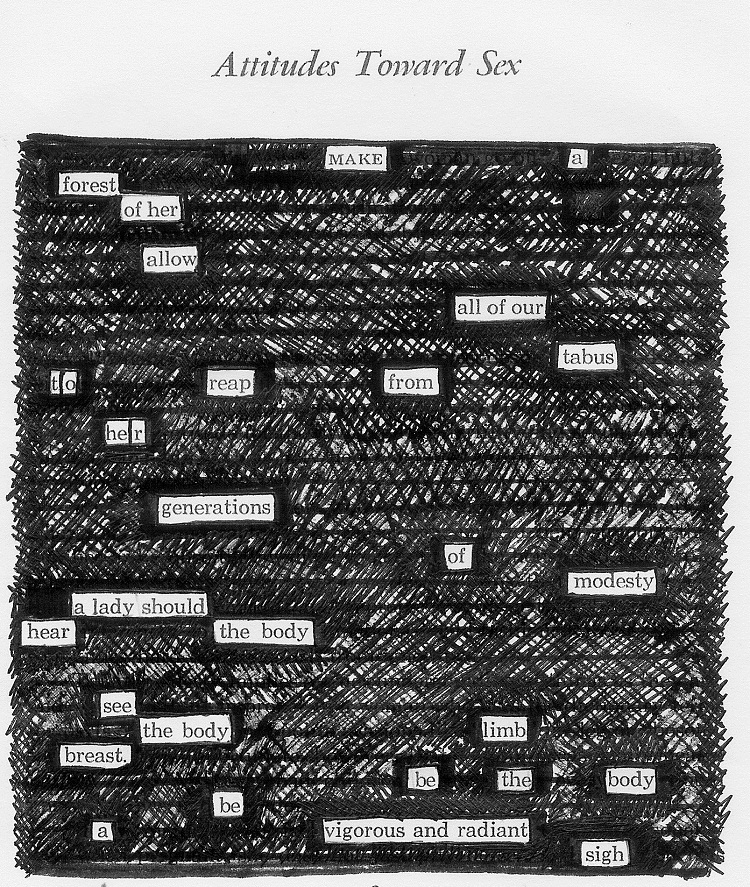
ATTITUDES TOWARD SEX

attitudestowardsex.small


THE BOYS ARE ALWAYS TALKING

about their cocks, naming
names—Rebecca, Elizabeth,
Ashley—we see these girls
all lined up, waiting to admire

the boys’ cocks. And the boys
talk about size of their cocks,
seven inches becomes ten, then
thirteen. They tell us how

they measured their cocks
after their first wet dream: they
woke up sweaty, quick-covered,
got their cocks hard again, pulled

out the ruler. Boys and cocks
everywhere. A boy shows his
cock to a girl on the playground.
Another boy watches girls from

a parked car while he touches
his cock. On the subway, boys
unzip their pants, put cocks
on display. Baby boys discover

their tiny cocks during every
diaper change. I didn’t see
my own clit was until I was
twenty-three. I had to hold

a mirror just to see it rise
like slow-motion stalagmite.
Had to hold back my own skin
just to show it to myself.


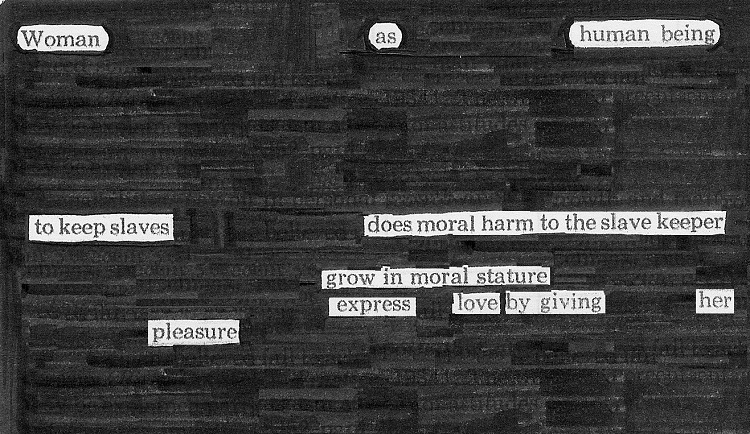
WOMAN AS HUMAN BEING

woman as human being.smaller


“Attitudes Toward Sex” was originally published in iARTistas. “The Boys Are Always Talking” was originally published in Muzzle. “Woman as Human Being” was originally published in Toad Journal. These poems appear here today with permission from the poet.


Laura E. Davis is the author of Braiding the Storm (Finishing Line, 2012), founding editor of Weave Magazine, and founder of Submission Bombers. Her poems are featured or forthcoming in Toad, Stirring, Corium Magazine, So to Speak, Muzzle, and others. Laura teaches for Poetry Inside Out, a K-12 a bilingual poetry program in San Francisco, where she lives with her partner, Sal.

Editor’s Note: This week I had the honor of working with an artist to create an artistic response to the Hobby Lobby Supreme Court decision. I have already written an editorial response to the ruling, but I wanted to speak out against this injustice in many ways, through many voices.

Today’s poems speak for womankind. They speak for our bodies, for our vantage point within a man’s world. When read together today, they are meant to be a shout from the rooftops. That no one exercises control over our bodies but ourselves. That we are human beings whose rights are superior to the rights of corporations. Yes, that we are human beings. Beautiful, complex, powerful human beings who are as capable of a battle cry as we are of “a vigorous and radiant sigh.”

Want to read more by Laura E. Davis?
Dear Outer Space – Laura E. Davis’ Blog
“Quiet Lightning” on Youtube
Buy Braiding the Storm from Finishing Line Press
“Relics” in Sundress
“Vessels” and “Red Storm” in The Doctor T. J. Eckleburg Review

SATURDAY POETRY SERIES PRESENTS: JENNY SADRE-ORAFAI

Sadre-Orafai

KARAJ
By Jenny Sadre-Orafai

When I miss her, I open my popout map.
I spill my face into the streets of Tehran.
I hide in Laleh Park. I read street names
aloud, like I’m reporting to someone.
I pretend I see things no one else can─
who took the Peacock Throne, how the burnt
city fell. I say Karaj like I’m telling you your future.


Today’s poem was originally published in Thrush Poetry Journal and appears here today with permission from the poet.


Jenny Sadre-Orafai is the author of four chapbooks. Her first collection Paper, Cotton, Leather will be published this fall by Press 53. Recent poetry has appeared in Redivider, Thrush Poetry Journal, PANK, Rhino, Sixth Finch, ILK, iO: A Journal of New American Poetry, and Poemeleon. Recent prose has appeared in The Rumpus, The Toast, and Delirious Hem. She is co-founding editor of Josephine Quarterly and an Associate Professor of English at Kennesaw State University.

Editor’s Note: I fell in love with today’s poem because it so intimately and distinctly tells the poet’s story, and yet, this is not her story. I have my own Karaj, and anyone who has ever loved a city that lies on the other side of the world—anyone who has ever loved a city by way of memory and longing—speaks the language of this poem. I am reminded, too, of Danusha Laméris’ beautiful poem, “Arabic,” of the ways in which love—of a language, of a people, of a place—remain with us across the span of distance and time. When Jenny Sadre-Orafai leaves us with her (killer!) end-line, I know what my future holds. I know what city waits for me on distant shores.

Want to read more by Jenny Sadre-Orafai?
Official Website
Two poems with audio in PANK
Creative nonfiction essay with audio in The Rumpus

SATURDAY POETRY SERIES PRESENTS: SPLIT

30m0dbb


from SPLIT
By Cathy Linh Che:


THE FUTURE THERAPIST ASKS ABOUT RAPE

This morning, I watched a woman shatter
the thin ice on the pavement. I made the bed,
tucked in the sheets, and in the window,
I saw reflected my mother’s face.

Men in my life walked in and out of the rooms,
tramping snow. My mother shushed me,
and my father with his powder keg hands
pulled up a pair of clean black socks.

It isn’t what you think.
My father was a soldier.
He taught me nothing about men.

They are an empty barrel.
You’re not supposed to look into
a gun you dismantle

to try and see its parts.


HOME VIDEO

There are flowers on this bed, an elbow planted by an ear.
No, you cannot touch this breast. No darkness, no shatter,
and no, no pendulum. The past is a blood clot lodged inside
your lung.

                                                  *

In the living room, shapes move against the wall. You are
wearing a thin dress. You watch Beetlejuice while he moves
his fingers over your white underwear. You watch the screen
and see his fingers. Your brothers are in the room, but they
never seem to notice.

                                                  *

Behind the lens is the father. Mother offstage calls, Con gai
nay
. On the phone, Con gai thuoi, which means, This girl. This
girl’s rotten. This girl like swollen fruit. She cuts off the
bruises. She teaches me to cut.

                                                  *

He rises to the surf. It detonates with a sheering crash.
Inside each wave is a barrel. In each barrel is a vacuum that can suck
you in, spin you round, snap your bones if you tumble the
wrong way.

                                                  *

If I say, I have been touched. If I say, by my cousin, then, a
neighbor boy and then another. If I say no, I didn’t want it
from my first boyfriend. There was blood and membrane
and he didn’t believe me. If my body can be a box. If I can
close it up. If it has to be open. Who will touch me again?


POMEGRANATE

I open my chest and birds flock out.
In my mother’s garden, the roses flare
toward the sun, but I am an arrow

pointing back.
I am Persephone,
a virgin abducted.

In the Underworld,
I starve a season
while the world wilts

into the ghost
of a summer backyard.
My hunger open and raw.

I lay next to a man
who did not love me—
my body a performance,

his body a single eye,
a director watching an actress,
commanding her

to scintillate.

I was the clumsy acrobat.
When he came, I cracked open
like a pomegranate

and ate six ruddy seeds.

I was the whipping boy.
I was thorny, barbed wire
wound around a muscular heart.


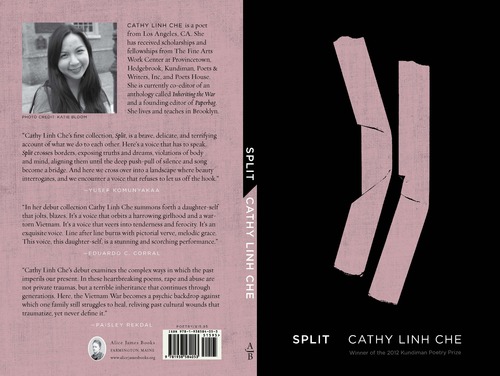
Today’s poems are from Split, published by Alice James Books, copyright © 2014 by Cathy Linh Che, and appear here today with permission from the poet.


SPLIT: “Che effectively weaves the trauma of the Vietnam War into her own personal trauma, making herself a war victim—only her war is not against enemy combatants, but against her past.” —The Philadelphia Review of Books

“Cathy Linh Che’s first collection, Split, is a brave, delicate, and terrifying account of what we do to each other. Here’s a voice that has to speak. Split crosses borders, exposing truths and dreams, violations of body and mind, aligning them until the deep push-pull of silence and song become a bridge. And here we cross over into a landscape where beauty interrogates, and we encounter a voice that refuses to let us off the hook.” —Yusef Komunyakaa


Cathy Linh Che is the author of Split (Alice James, 2014), winner of the 2012 Kundiman Poetry Prize. She has been awarded fellowships and residencies from Poets & Writers, Poets House, The Lower Manhattan Cultural Council’s Workspace Residency, and the Jerome Foundation.


Editor’s Note: Words—my words—seem ineffective here. But I was deeply moved by this poet, by this book, and so I will try. Split is a sacrifice; raw and unrelenting. It is blood and memory and gasoline. It is the truth no one wants to hear, that we all need to hear. But it is more than the phoenix choking on ash, thrashing to be free. It is lineage and heritage, truth offered up in the name of a history, a family, a self. This is a stunning book by a bold and dedicated poet, a book that dares us to look, listen, and speak up.


Want to see more from Cathy Linh Che?
Official Website
Buy Split from Alice James Books
Fireside: A Kundiman Blog
Hyphen
Poets.org

SATURDAY POETRY SERIES PRESENTS: MEGAN MORIARTY


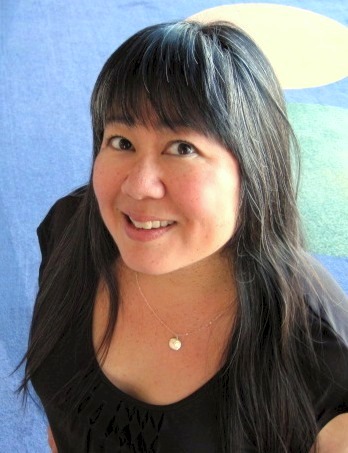
Moriarty Author Photo

LOOKING AT US LIVING
By Megan Moriarty

Through the binoculars, we saw us
moving through the foliage.

The world was on rewind:
a herd of horses ran
backwards across a field.

Yellow leaves kept climbing back
to their branches.

“What’s the opposite of fall?” I said,
and he said “Spring.”

Then it was August, then July,
then June. The sun kept
leaving and coming back

like a boomerang that no one
ever had to throw.

Snow appeared
on the ground, then it started
unsnowing, the flakes
travelling upwards.

I knew that soon
we wouldn’t know each other

so I asked him
what the opposite
of stay is.

He stood there,
his hands on his hips, thinking.


Today’s poem was published in the Summer 2011 issue of Rattle, and appears here today with permission from the poet.


Megan Moriarty grew up surrounded by water in Staten Island, New York and currently finds herself surrounded by mountains in Hillsboro, West Virginia. She holds an MFA in poetry from Virginia Tech and is the author of From the Dictionary of Living Things, a collection of dictionary definition poems.

Editor’s Note: Today’s poem is magic, full of fantastical invention and a vivid, playful story life. I am reminded of the work of Nicolas Destino, a beloved poet here on As It Ought To Be. What wonder, what imagination, what playfulness of concept, what love of ideas mirrored in the written word.

Want to read more by Megan Moriarty?
Buy From the Dictionary of Living Things from Finishing Line Press
Indiana Review
Vinyl Poetry
Jointed Autumn

SATURDAY POETRY SERIES PRESENTS: JENNA LE

Jenna Le photo

By Jenna Le:


MOM’S COCKS

Mom grew up beside the Perfume River in Vietnam,
in a brick house overrun by chickens.
Those horny-footed fowl were always
rubbing their feather-padded genitals
against sofa legs and children’s shoes
as if they were fit to burst. Mom laughs

as she tells me how they ground
their pelvises against her leather sandal,
stuporous with misdirected lust—
How strange that she
is talking to me about sex
in this casual way. She’s returning to her roots

as a child who lived among
unmannered beasts. And I, through hearing her words,
am returning there with her: I
am the aggressive rooster; I’m the hens
cowering behind the outhouse; I’m the much-abased,
much-abraded, Size Four shoe.


THREE SHORT POEMS ON A COMMON THEME

1.

Staring at you across the room, my body seemed composed
of nothing but eyes.

Even my mouth
watered, like an eye.

2.

I couldn’t sleep a wink all night: my brain agitated its solitude
like a washing machine

filled with copies
of your immaculate white shirt.

3.

In the morning, I went out and bought a book of your poems.
It’s a poor substitute for a straightedge, it’s true,

but you won’t
sell me your curves for any price.


Today’s poems are from Six Rivers, published by NYQ Books, copyright © 2011 by Jenna Le, and appear here today with permission from the poet.


Jenna Le was born in Minneapolis, Minnesota, a daughter of two Vietnam War refugees. She received a B.A. in mathematics from Harvard University and an M.D. from Columbia University. She has worked as a physician in Flushing, New York, and the Bronx, New York. Her full-length poetry collection, Six Rivers (NYQ Books, 2011), was a Small Press Distribution Poetry Bestseller. Her poetry, fiction, essays, book criticism, and translations of French poetry have appeared or are forthcoming in journals such as AGNI Online, Barrow Street, Bellevue Literary Review, Massachusetts Review, Measure, Pleiades, and 32 Poems.

Editor’s Note: Lyric, narrative, accessible, and unafraid, Jenna Le’s Six Rivers opens along the banks of the Perfume River, in a scene that pairs mother with sex and “horny-footed fowl.” The relationships—between mother and daughter, between ‘here’ and ‘there’—are rich and complex, with the poet embodying her mother’s past, her roots, and the “much-abased, much-abraded, Size Four shoe.” Throughout the book love and sex, personal, familial, and cultural history, healing and death are all explored as we travel with the poet along the six rivers of her life. Le allows herself to be vulnerable and imperfect, and so we relate to her, root for her, are drawn into her vivid world. A keen seer and a captivating reporter, it is no wonder that, at times, the poet feels she is “composed of nothing but eyes.” Hungry for life, hungry for love, it is no wonder that “Even [her] mouth watered, like an eye.”

Want to read more by and about Jenna Le?
NYQ Poets
Mascara Literary Review
The Nervous Breakdown
The Toronto Quarterly
Sycamore Review

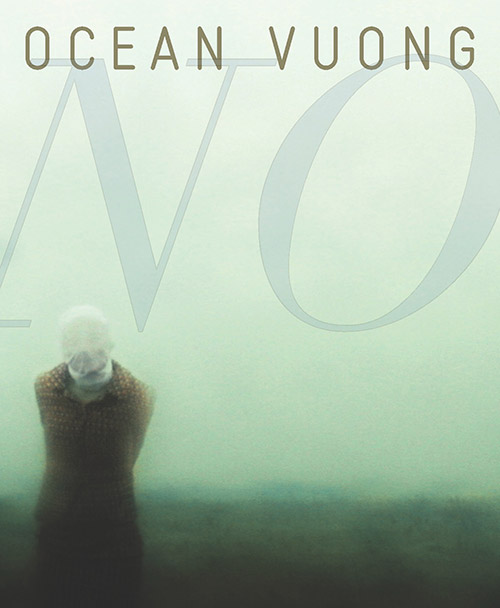
SATURDAY POETRY SERIES PRESENTS: NO

no


from NO
By Ocean Vuong


TORSO OF AIR

Suppose you do change your life.
& the body is more than

a portion of night—sealed
with bruises. Suppose you woke

& found your shadow replaced
by a black wolf. The boy, beautiful

and gone. So you take the knife to the wall
instead. You carve & carve.

Until a coin of light appears
& you get to look in, for once,

on happiness. The eye
staring back from the other side—

waiting.


HOME WRECKER

And this is how we danced: with our mothers’
white dresses spilling from our feet, late August

turning our hands dark red. And this is how we loved:
a fifth of vodka and an afternoon in the attic, your fingers

sweeping though my hair—my hair a wildfire.
We covered our ears and your father’s tantrum turned

into heartbeats. When our lips touched the day closed
into a coffin. In the museum of the heart

there are two headless people building a burning house.
There was always the shotgun above the fireplace.

Always another hour to kill—only to beg some god
to give it back. If not the attic, the car. If not the car,

the dream. If not the boy, his clothes. If not alive,
put down the phone. Because the year is a distance

we’ve traveled in circles. Which is to say: this is how
we danced: alone in sleeping bodies. Which is to say:

This is how we loved: a knife on the tongue turning
into a tongue.


Today’s poems are from NO, published by Yes Yes Books, copyright © 2013 by Ocean Vuong. “Torso of Air” previously appeared in BODY Literature, and “Home Wrecker” previously appeared in Linebreak. These poems appear here today with permission from the poet.


NO: Anyone who has already sensed that “hope is a feathered thing that dies in the Lord’s mouth,” should get their hands on NO. Honest, intimate, and brimming with lyric intensity, these stunning poems come of age with a fifth of vodka and an afternoon in an attic, with a record stuck on please, with starlight on a falling bomb. Even as Vuong leads you through every pleasure a body deserves and all the ensuing grief, these poems restore you with hope, that godforsaken thing—alive, singing along to the radio, suddenly sufficient. —Traci Brimhall, Our Lady of the Ruins


Ocean Vuong is a recipient of a 2013 Pushcart Prize as well as fellowships from Kundiman, Poets House, and The Saltonstall Foundation for the Arts. Poems appear in Poetry, The Nation, Beloit Poetry Journal, Passages North, Quarterly West, Denver Quarterly, and American Poetry Review, which awarded him the 2012 Stanley Kunitz Prize for Younger Poets. He lives in Queens, NY.


Editor’s Note: I’m just going to come right out and say this: Ocean Vuong is one of the best and most important poets writing in America today. I have not been so moved as I am by Vuong’s words since I first read Li-Young Lee. This poet has changed my life. He has renewed my belief in American poetry. That it can be emotional and heartbreaking. That is can be beautiful and full of hope. That modern American poetry can—and does—matter. In my humble opinion your poetry collection is simply not complete unless it houses both Vuong’s groundbreaking chapbook, Burnings, and his newest release from Yes Yes Books, NO.

NO is a surprisingly experimental collection, yet Vuong remains dedicated to the lyric and the narrative, guiding us through its formal twists and turns through emotive language and evocative imagery. Throughout its pages the poet intimately explores themes of love, sexuality, and belonging against a backdrop of devastating loss. It is a brilliant and beautiful collection, a true heartbreaking work of staggering genius. As the book’s publisher did when reading through the manuscript for the first time, when Ocean Vuong says NO to you, be prepared to say “Yes Yes!”


Want to see more from Ocean Vuong?
Buy NO from Yes Yes
The Poetry Foundation
Interview in The Well & Often Reader
Ben Lerner on mentoring Ocean Vuong, Brooklyn College