Dan Overgaard: “The crack of the bat”

The crack of the bat

met my forehead, is what I remember,
and I went down, strange red tears running
across my left eye, and I got six stitches,
after, somehow, reaching a doctor in white.
I was about six, in Pennsylvania then,
and didn’t know anything about baseball
or the Fourth of July, but we had gone
to a parade in the neighboring town
and there were all these cars parked in thick grass,
and teams of horses following flags
and bugles, wagons and drums. I have no
idea now, what all I saw or what I’m
remembering, except for the deep grass
and the sunlight, then finding this broken bat
by the empty field, and taking it home,
how my friend Benny was thrilled by
a free bat, even if it was split, and wanted
to hit some rocks, pretending to be big leagues.
But I didn’t know about them, or batting—
how a marvelous swing could come around
full circle, with such power, after a rock.
I know I can say, for sure, that I saw the light.

About the Author: Dan Overgaard was born and raised in Thailand. He attended Westmont College, dropped out, moved to Seattle, became a transit operator, then managed transit technology projects and programs. He’s now retired, and probably gardening or catching up on reading. His poems have appeared in Mobius, Santa Clara Review, Across The Margin, The Galway Review, pioneertown, Poets Reading the News, Sweet Lit, The High Window and elsewhere. Read more at: danovergaard.com.

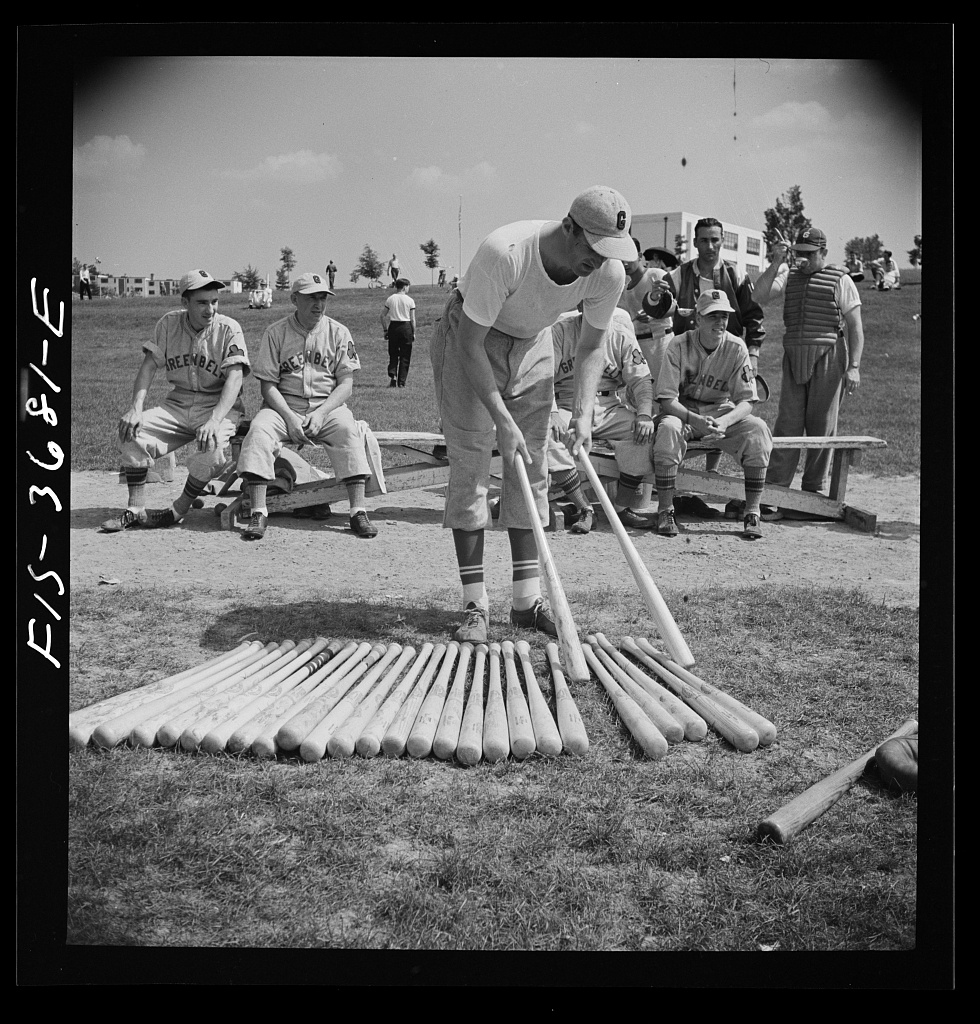
Image Credit: Marjory Collins “Greenbelt, Maryland. Member of the Greenbelt baseball team picking out a bat. On Sunday the team plays that of a neighboring town” (1942) Public domain image courtesy of the Library of Congress

Meg Freer: “Every Day Is a Bleak Day in the Towing Yard”

Every Day Is a Bleak Day in the Towing Yard


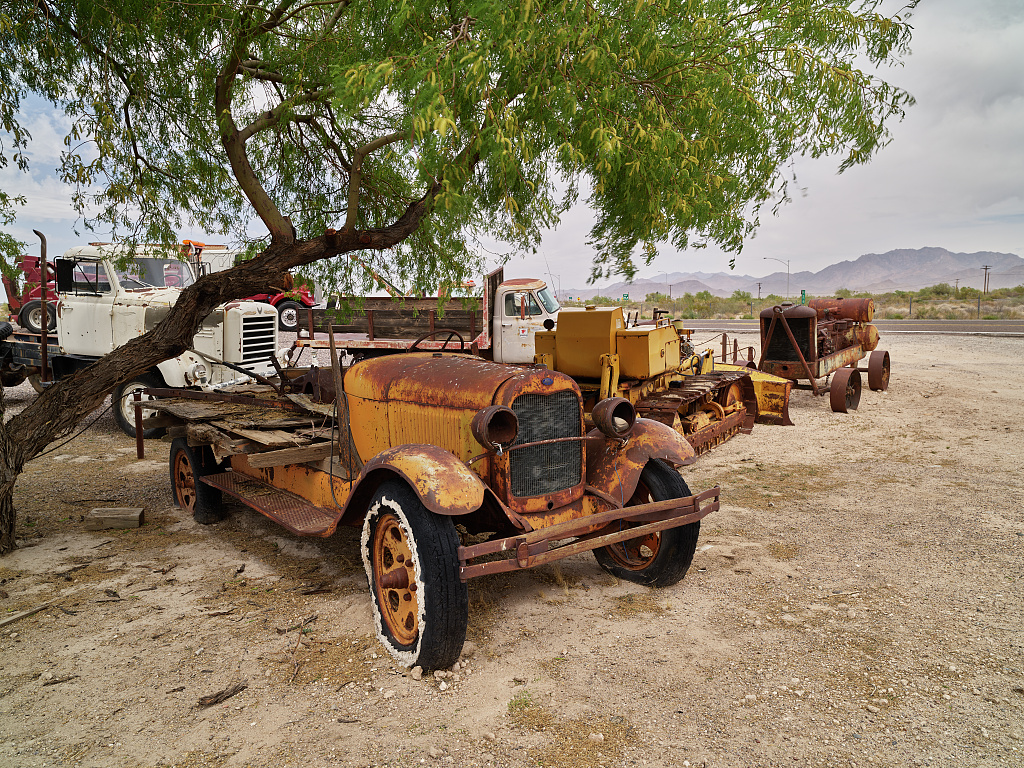
Stuffed animals crowd the dashboard
of a crumpled minivan at the towing yard,
not the usual assortment of tiny ones,
but large bears and dogs doomed to fade
in the sun under the watchful eyes
of the hawk who cruises the area.
No one cared enough, or didn’t get a chance
to remove them after the accident.
One day a new car shows up
whose vanity plate reads GR33NDAY,
not exactly an experience of itself
in this gravel field of smashed hopes.

About the Author: Meg Freer grew up in Montana and lives in Ontario, where she writes and teaches piano. Her work has appeared in RuminateArc Poetry, Rat’s Ass ReviewEastern Iowa Review, and many other journals. She is co-author of a chapbook, Serve the Sorrowing World with Joy (Woodpecker Lane Press, 2020) as well as author of A Man of Integrity (Alien Buddha Press, 2022). She holds a Graduate Certificate in Creative Writing with Distinction from Humber School of Writers.

Image Credit: Carol M. Highsmith “Rusted relics in an “automobile graveyard” near Kingman, Arizona” (2018) Public domain image courtesy of the Library of Congress

In Memory of Mike James

As It Ought Be is mourning the loss of a great writer and friend, Mike James. When I took over as Managing Editor six years ago after the passing of AIOTB founder Okla Elliott, Mike reached out and contributed both his own work and his connections in the literary world to generate submissions. This gave the new AIOTB instant credibility, and it gave me the confidence and encouragement I needed to step into this new role. I’ve had the honor of working with and publishing countless brilliant writers because of Mike’s support. His talent as a poet is surpassed only by his talent for using poetry to build community and bring people together.

When Mike complimented publishers, editors, and other writers who used their platforms to showcase the works of others, he often liked to call them “a force for good.” It’s one of the highest compliments AIOTB has ever received.

Mike James, you were a force for good.

.

Below is a catalog of Mike James’ work on AIOTB from the past six years. It was always an honor to feature his work. In addition to poetry, Mike wrote many book reviews and essays that championed the work of the poets he admired. He was a model citizen of the literary world.

.

Poems

“Andy Says…”

“Questions and Answers”

“Code Names”

“Quotations”

“Consequences of Elections” 

“Supporting Characters” 

“Almost Autumn and Time to Go”

“Saint Jayne Mansfield” 

“Two Prose Poems”

“Gutter Angels”

“Moving Again” 

“Grace”

“Two Ghazals” 

“Paul Lynde”

“That One Singer”

“Beyond the Land of Misfit Toys”

“Oh Daddy, Give Me a Quarter for the Time Machine”

“Rebel, Rebel” 

.

Book Reviews and Poet Appreciations

Tim Peeler and the Life of the Poem

Howie Good’s Path of Most Resistance: An Appreciation

James Dickey: A Literary Life

Erotic by Alexis Rhone Fancher

Wave If You Can See Me by Susan Ludvigson

Once Upon a Twin by Raymond Luczak and New York Diary by Tim Dlugos

Beautiful Aliens: A Steve Abbott Reader and Have You Seen This Man? The Castro Poems of Karl Tierney

My Mother’s Red Ford: New & Selected Poems, 1986-2020 by Roy Bentley

Mingo Town & Memories by Larry Smith

“Dead Letter Office: Selected Poems” By Marko Pogacar

I love you and miss you, Mike.

Chase Dimock
Managing Editor
As It Ought To Be

John Dorsey: “Poem After Listening to Philip Levine”

Poem After Listening to Philip Levine


after this
everything becomes a grease stain
in a field of tired hands
caught in the rain
where the paradise of youth
just boxes you in
until you can’t breathe
you lick memories from your fingers
to fill your stomach in the late afternoon
until the blood from a day’s work tastes like honey
until flowers that should be sweet
just seem flawed
& that’s exactly
what you like about them.

About the Author: John Dorsey is the former poet laureate of Belle, Missouri and the author of Pocatello Wildflower. He may be reached at archerevans@yahoo.com.

Image Credit: Chase Dimock “Yellow Daisies” (2023)

John Dorroh: “Exhausted on the Way Down Front to the Altar: How We Loved Dr. Mike”

Exhausted on the Way Down Front to the Altar: How We Loved Dr. Mike

His ginger hair an acceptable mess,
spectacles on one of those pendant/chains,
long enough to reach into a pant pocket,
too short to reach Saturn’s rings.

I love the mystery in his tone, the way
he pauses at the end of most sentences,
cliffhangers, inviting climbers to peer

around each wall for some sort of clue.
Sermons, religious outcrops, invitations
to come to the front, receive the cup

& take a sip, hold it next to one’s heart,
swish, spit or swallow, residual specks &
morsels lingering long after the lecture

has put itself to bed.

About the Author: John Dorroh may have taught high school science for a few decades. Whether he did is still being discussed. Four of his poems were nominated for Best of the Net. Others have been published in over 100 journals, including Feral, El Portal, North Dakota Quarterly, and River Heron. He had two chapbooks published in 2022.

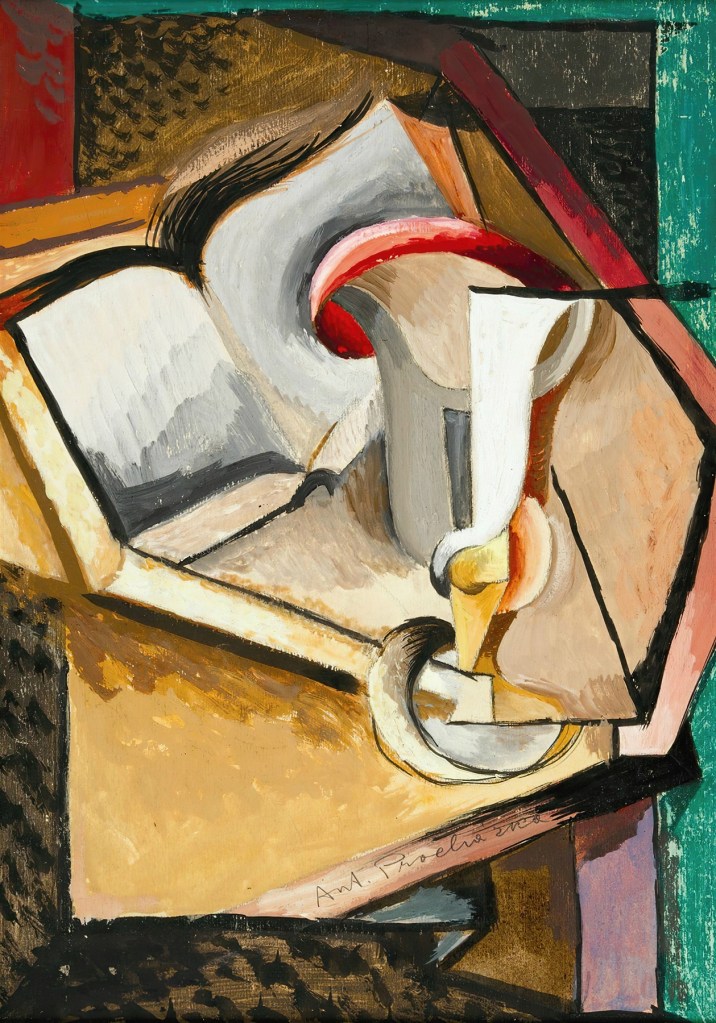
Image Credit: Antonin Procházka “Still Life with Cup and Book” (1915) Public domain image courtesy of Artvee

Ruth Bavetta: “The Moon Illusion”

The Moon Illusion

Near Earth's horizon the moon looms large,
threatening to break loose
from its place in the sky and plunge to earth.

With its wan and pockmarked face it dwarfs my world.
I can see but little else, my eyes filled
to overflowing by its presence.

Your death filled my life to overflowing.
For years I measured all events
against its shadow. But the heavens revolve,

the earth persists in its ellipse, and my loss diminished
proportional to the orbit of my years.
And as the night spins slowly by,

the moon floats on high, a thin, worn silver dime
on the dealer's dusty velvet,
worth whatever price the collector is willing to pay.

About the Author: Ruth Bavetta’s poems have appeared in North American Review, Nimrod, Rattle, Slant, American Journal of Poetry, Atlanta Review, Tar River Poetry and many other journals and anthologies. Her fifth book, What’s Left Over, won the FutureCycle Poetry Book Prize for 2022.

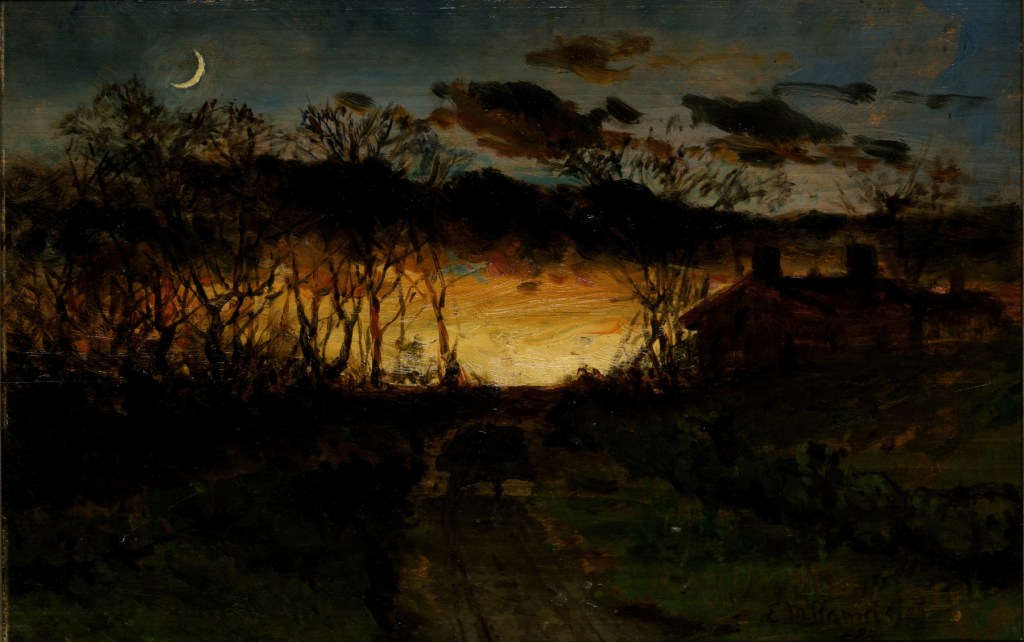
Image Credit: Edward Mitchell Bannister “Untitled” (1883) Public domain image courtesy of Artvee

Cord Moreski: “The Songbird of Brinley Avenue”

The Songbird of Brinley Avenue 
for John Dorsey

If she were a songbird
I wonder which one
I’d compare her to—

Dolores, the elderly widow
from a few doors down,
starts to sing as I get dressed
for another workday—

maybe a mourning dove
or a mockingbird
a house sparrow
or even a starling

regardless I don’t think
any of them can top
a tune to her when she performs
with her record player.

Last week
it was Billie Holiday
and some Frankie Valli
yesterday
a little Tina Turner
and some Jackson 5

but today
it’s something fierce
something that means business
for a Monday morning

so I leave a few records
by her front door—
some Misfits,
Clash and Ramones—
just in case.

About the Author: Cord Moreski is a poet from the Jersey Shore. Moreski is the author of Apartment Poems (Between Shadows Press, 2022), Confined Spaces (Two Key Customs, 2022), The News Around Town (Maverick Duck Press, 2020), and Shaking Hands with Time (Indigent Press, 2018). When he is not writing, Cord waits tables for a living and teaches middle school children that poetry is awesome. You can follow Cord here: www.cordmoreski.com

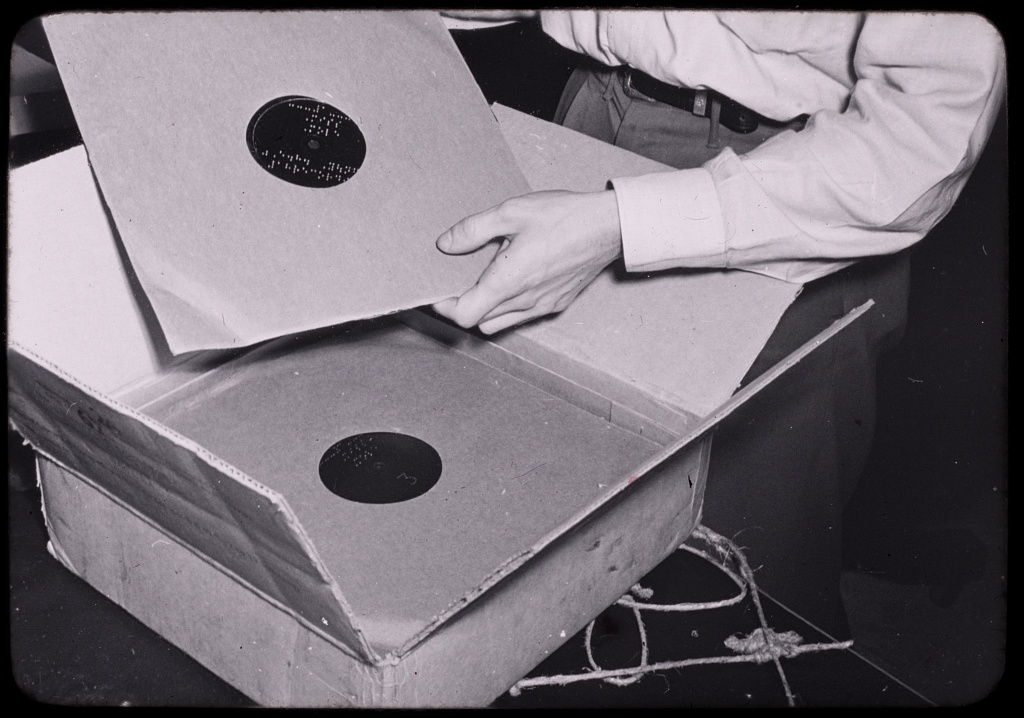
Image Credit: “A man holds up a vinyl recording disc from a box of discs at the Library of Congress, Washington, D.C” (1949) Public domain image courtesy of The Library of Congress

Susan Cossette: “Waiting for Cremation”

Waiting for Cremation


There is no perfection in death.

This is not the final picture of me,
the Greek chorus that was my family,
gazing down, hissing—

adulteress, lousy mother, heretic.

False poses, opaque makeup,
stiff hands coaxed loose by the mortician,
pink rosary beads strung in mute prayer
through pale wax fingers.

Florid lilies and heaps of hydrangeas
stand watch, alongside cheerful tulips.

I am visited, prayed over.
My head propped on a satin pillow,
the double chins more prominent,
the red lips stitched shut.

This is what everyone wanted.
I am finally mute.

Son, I tell you this while I still breathe--

Place the rough grey gravel shards of me
into a hummingbird-adorned urn,
into the damp warm earth, alongside my mother.

About the Author: Susan Cossette lives and writes in Minneapolis, Minnesota. The Author of Peggy Sue Messed Up, she is a recipient of the University of Connecticut’s Wallace Stevens Poetry Prize. A two-time Pushcart Prize nominee, her work has appeared or is forthcoming in Rust and MothThe New York QuarterlyONE ART, As it Ought to Be, Anti-Heroin Chic, Crow & Cross Keys, The Eunoia Review, and in the anthologies Fast Fallen Women (Woodhall Press) and Tuesdays at Curley’s (Yuganta Press).

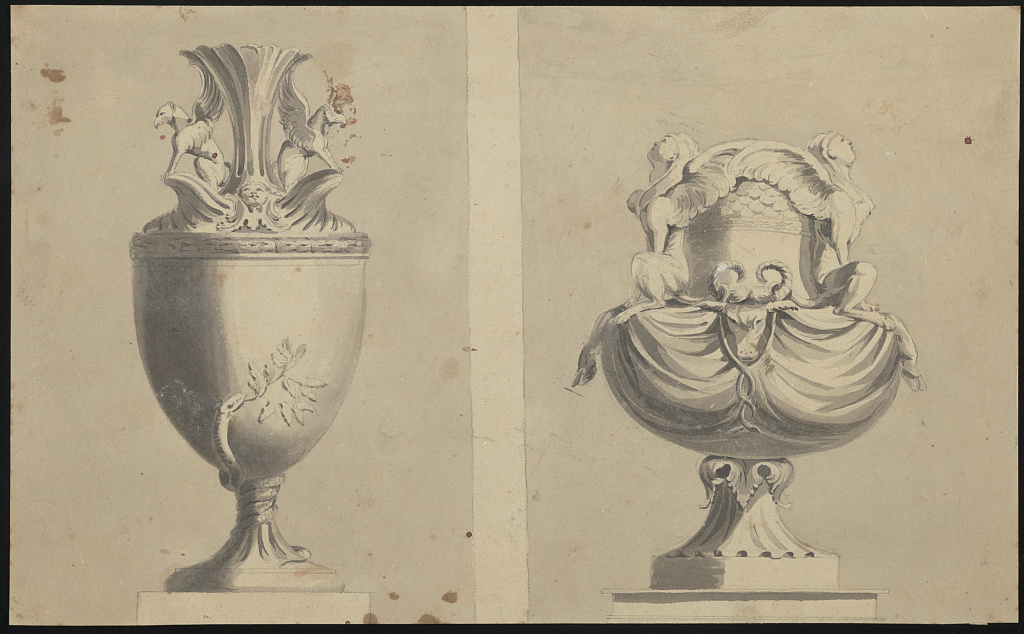
Image Credit: John Rubens Smith “Two ornamental urns” Public domain image courtesy of the Library of Congress
Mike James: “tim Peeler and the Life of the Poem”

Tim Peeler and the Life of the Poem

By Mike James

Frank Bidart once commented in an interview that an emphasis on voice isn’t fashionable
in contemporary poetry. That idea might go a long way towards explaining the lack of
appreciation for Tim Peeler’s work since Peeler’s poetry is emphatically about southern
voices and southern characters. Peeler is more original than fashionable. He is of the
DIY, autodidact, mountain bred, and baseball referencing, fried bologna school of
American poetry. He is also the only member.


Some books don’t fit into categories. And some poets don’t. For a number of years now,
Tim Peeler has been creating unique, character driven poetry sequences about folks who
are neither proud nor ashamed of their poverty. Peeler doesn’t make a fetish of the blue
collar. Poverty and wealth are just reference points. Economics is part of what defines his
characters, but it is not the whole definition.


The emphasis on character is why Peeler is so hard to categorize. Though he is as
southern as moonshine, pine trees, and molasses, his character-driven writing is closer to
Chekhov than Dickey. He begins and ends with a person in a specific situation. There
may not be a problem to solve, but there is definitely an incident to examine.


There is a texture to Peeler’s poetry which comes from his deep knowledge and
appreciation of vernacular. He can use words like “whatnot” and “fixin” and make them
an integral part of the poem without drawing attention. He is not a flashy poet, but a
subtle one. He draws the reader in and pulls rabbits out of every hat he comes across. He
does this while making the reader care for characters who are often either left out of
poetry or reduced to stereotypes. There are no “types” in Peeler’s poetry. There are only
people.


Many poets are addicted to the idea of the blazing line. They are in love with anthology
pieces. Tim Peeler is not that type of poet. In his work, poetry happens as part of the
everyday. It seems to be dictated from characters at a diner, rather than created by a
solitary individual. This is not to say that the accessibility of Peeler’s sleight-of-hand
poetics is easy. He simply makes it look that way. His poems are as clear as mountain air
and just as easy to take in.


About the Author: Mike James makes his home outside Nashville, Tennessee. He has published in numerous magazines, large and small, throughout the country. His poetry collections include: Leftover Distances (Luchador), Parades (Alien Buddha), Jumping Drawbridges in Technicolor (Blue Horse), and Crows in the Jukebox (Bottom Dog.) In April, Red Hawk published his 20th collection, Portable Light: Poems 1991-2021.

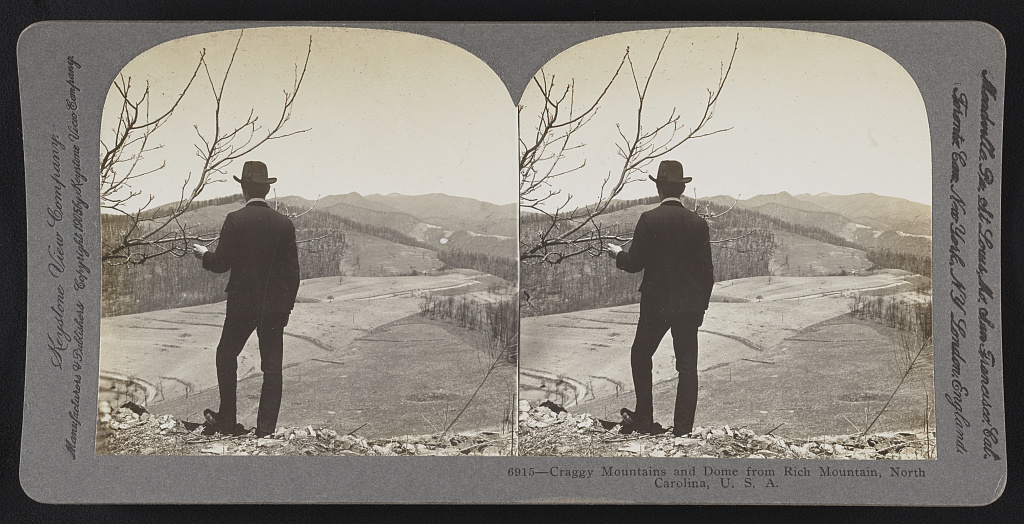
Image Credit: “Craggy mountains and Dome from Rich Mountain, North Carolina, U. S. A.” (1905) public domain image courtesy of the Library of Congress
Madeira Miller: “On Ownership”

On Ownership

My hair has always been mine
and my clothes were always
equal parts mine and my sister’s;
my glasses are mine, even though
I don’t wear them often these days.
They are mine nonetheless.
But when you ask me,
‘to whom does your body belong?’
I can only recite the names
of a handful of people
whom I cannot look in the eye:
a trusted adult, a classmate
from a few years back,
the guy at the bar who didn’t
bother to ask my name, or
really any questions before
placing his hands on my
body-that-isn’t-quite-mine
and I laughed it off to my
friends because that’s just
what you do when a weird guy
does weird shit: you laugh
it off and then you go home.
Home, to me, is an apartment
with a lock that still hasn’t been
fixed and walls I can’t paint
because, even though I pay
my rent on time, it’s not really
mine. Is anything really mine
if my own flesh isn’t mine?
The first man I ever loved
and allowed access to this
body-that-isn’t-quite-mine
did not return my call when
I told him about a pregnancy
test that I had to take in the
Freudenberger Residence Hall
communal bathroom, alone.
In that moment, this trembling
body-that-isn’t-quite-mine
was a thing that he no longer
wanted to claim, as if it now
belonged to someone else
with a heartbeat just like the
pounding one in my chest, which
didn’t feel like my own. That was
four years ago, back when
I at least had the option to make a
difficult choice regarding this
body-that-isn’t-quite-mine,
and I still do not know how to reclaim
the bodily autonomy that
has been stolen from me
time and time again since I
was a little girl on the playground,
a frightened teenager in a dorm,
a tired adult watching the news.
Now, when you ask me,
‘to whom does your body belong?’
I will recite the names
of nine Supreme Court Justices.

About the Author: Madeira Miller is a writer and poet seeking a creative writing degree at Missouri State University. Her work appears in ‘Dreamstones of Summer’ by WinglessDreamer, ‘Praised by December’ by WinglessDreamer, Every Day Fiction Online Magazine, F3LL Digital Magazine, The Gateway Review Literary Magazine, ‘My Cityline by WinglessDreamer,’ The Bookends Review Creative Arts Journal, ‘Sea or Seashore’ by WinglessDreamer, Bridge Eight Press, In Parentheses Literary Magazine, Dipity Literary Magazine, Abstract Literary Magazine, Academy of the Heart and Mind Literary Magazine, and New Note Poetry Magazine.

Image Credit: Helene Schjerfbeck “Girl with Orange, The Baker’s Daughter” (1908) Public domain image courtesy of Artvee.