SATURDAY POETRY SERIES PRESENTS: A ROSH HASHANAH POEM BY SARAH MARCUS

12027738_10102555892782248_2229857784916307758_n

By Sarah Marcus:


ROSH HASHANAH, 5774

The moon was a sliver of itself
the first night I thought of you
combing a new year’s honey
through our hair.

We are taught to repent, but
it’s a poor translation,
for Teshuvah is to return
to ourselves,
to come back to who we really are,
to return
to an original state

where we have nothing
but possibility laid before us.

And it is written
as everything will be:

someone’s grandmother’s hands
smelling of cinnamon and clove,
a testament to a world
created as an expression
of limitless love,
of refinement.

The Rabbi says that when you share your words
you are sharing a part of your soul. Each moment
has the potential to be deeply spiritual, my children,
stand in the hugeness of it all.

Autumn has lingered years
for your arrival,
each leaf turned
in anticipation,
even the branches
held their breath

              waiting for us to ask the right questions,
                      for us to stop looking to the sky.


Today’s poem originally appeared in the Green Briar Review and appears here today with permission from the poet.


Sarah Marcus is the author of Nothing Good Ever Happens After Midnight (2016, GTK Press) and the chapbooks BACKCOUNTRY (2013) and Every Bird, To You (2013). Her next book, They Were Bears, is forthcoming from Sundress Publications in 2017. She is an editor at Gazing Grain Press, a spirited VIDA: Women in Literary Arts volunteer, and the Series Editor for As Is Ought To Be’s High School Poetry Series: Gender, Identity, & Race. Find her at sarahannmarcus.com.

Editor’s Note: But this is so much more than a Rosh Hashanah poem. This is a poem of the sacred and the secular. Of belief and being. Of awareness and action. This is the moment when memory becomes contemplation, when contemplation becomes questioning, when questioning demands more from us. Yes, this poem is stunning in its imagery and lyric. Yes, it is evocative and moving. Yes it is visceral and philosophical and spiritual. But it is so much more than that. For while “we have nothing / but possibility laid before us,” the very leaves hold their breath “waiting for us to ask the right questions, // for us to stop looking to the sky.”

Shanah Tovah u’Metukah to you, the faithful readers of this series. May the new year be sweet, and may you be the change you want to see in the world.

Want to see more from Sarah Marcus?
Spork Press
Booth
Nashville Review
The EstablishmentHuffington Post

SATURDAY POETRY SERIES PRESENTS: ABRIANA JETTÉ


abeheadshotphtocredchrisjette


LIES OUR MOTHER TOLD US
By Abriana Jetté


I do not believe in the story of the virgin
but in the value of the human: the body —

because no matter what you were told
that soul is not yours. But the body,

the body is yours. The slight round
of the breast like the sun or the depth of your

toes to your crown: these are the ways
we measure ourselves. I do not want to

believe she was a vehicle. Tell me
there was pleasure; there were moans.

Tell me when she was fully grown
she remembered a wave a release an ecstasy

that entered her, that she could feel it in her
teeth. Motherhood means you are no longer

maiden but Queen. Tell me the story of the one
who smiled at the rustling of her sheets.


Today’s poem was published in the The Journal for Compressed Creative Arts, Spring 2015, and appears here today with permission from the poet.


Abriana Jetté: Born and raised in Brooklyn, New York Abriana Jetté is an internationally published poet and essayist and educator. Her anthology 50 Whispers: Poems by Extraordinary Women debuted as a #1 best seller on Amazon, and her work has appeared or is forthcoming in The Seneca Review, River Teeth, Barrelhouse, The Moth, and many other places. She teaches for St. John’s University, for the College of Staten Island, and for the nonprofit organization Sponsors for Educational Opportunity.

Editor’s Note: And then there was the poet who reimagined the Virgin Mary. Not as virgin, but as human, as woman, capable of “a wave a release an ecstasy // that entered her, that she could feel it in her / teeth.” Advocating for agency, the poet insisted, “I do not want to // believe she was a vehicle.” Reverent of the woman’s transformation, she taught us that “Motherhood means you are no longer // maiden but Queen.” And we saw her as the poet saw her. And it was good.

Want to see more from Abriana Jetté?
Hermeneutic Chaos Journal
Truthdig
Abriana Jetté’s Official Website
Stay Thirsty Publishing
Barrelhouse Mag

SATURDAY POETRY SERIES PRESENTS: SUSAN RICH

susan-rich-cropped

MOHAMUD AT THE MOSQUE
By Susan Rich

                  ~ for my student upon his graduation

And some time later in the lingering
blaze of summer, in the first days
after September 11th you phoned –

if I don’t tell anyone my name I’ll
pass for an African American.

And suddenly, this seemed a sensible solution –

the best protection: to be a black man
born in America, more invisible than
Somali, Muslim, asylum seeker –

Others stayed away that first Friday
but your uncle insisted that you pray.
How fortunes change so swiftly

I hear you say. And as you parallel
park across from the Tukwila
mosque, a young woman cries out –

her fears unfurling beside your battered car
go back where you came from!
You stand, both of you, dazzling there

in the mid-day light, her pavement
facing off along your parking strip.
You tell me she is only trying

to protect her lawn, her trees,
her untended heart – already
alarmed by its directive.

And when the neighborhood
policeman appears, asks
you, asks her, asks all the others –

So what seems to be the problem?
He actually expects an answer,
as if any of us could name it –

as if perhaps your prayers
chanted as this cop stands guard
watching over your windshield

during the entire service
might hold back the world
we did not want to know.


Today’s poem was published in the collection Cures Include Travel (White Pine Press, 2006), and appears here today with permission from the poet.


Susan Rich is the author of four poetry collections including Cloud Pharmacy, recently shortlisted for the Julie Suk Poetry Prize and the Indi Fab Award. Other books include the The Alchemist’s Kitchen, a Finalist for the Washington Book Prize, Cures Include Travel, and The Cartographer’s Tongue: Poems of the World (White Pine). She is a co-editor of an essay collection, The Strangest of Theatres: Poets Crossing Borders published by The Poetry Foundation and McSweeney’s. Susan’s poems have been published in 50 States and 1 District including journals such as New England Review, The Gettysburg Review, Poetry International, and World Literature Today.

Editor’s Note: Today’s poem is a stunning and moving commentary on racism in America today. A thoughtful reflection, now, with the 15th anniversary of September 11th this past weekend. How far have we come in moving past anti-Islamic sentiment in America? In the world? And how many steps backward have we taken in America’s racism against black men? What of the poem’s notion that “the best protection” is “to be a black man / born in America, more invisible than / Somali, Muslim, asylum seeker”? And what of those asylum seekers? How, in a country whose emblem bears the words “Give me your tired, your poor, your huddled masses yearning to breathe free,” have we opened our doors to Syrian refugees? And what of those Americans who are threatening to vote for a man whose response to our neighbors is to build a wall to keep them out?

Today, as much as it did when it was written, this poem asks: Who are we, America? Who are we, and how do we treat our fellow human? I, for one, fear that this America–this world–is “the world / we did not want to know.”

Want to see more from Susan Rich?
Buy Cloud Pharmacy from The Elliot Bay Book Company
Susan Rich’s Official Website
The Alchemist’s Kitchen – Susan Rich’s Blog
Twitter: @susanrichpoet
Facebook Author Page

SATURDAY POETRY SERIES PRESENTS: ELIZABETH O’CONNELL-THOMPSON

bw-headshot

INVITATION ONLY
By Elizabeth O’Connell-Thompson


When they come knocking,
I take them by the hand that had been a fist moments before
and show them something beautiful—
                                                                              a black creek in the woods,
                                                                              a doe’s skull in the field.
I lead them just far enough away that they can still see the house,
but not say if it is made of straw or stone.

While they are dipping their feet in the water
or watching how the sun sets on bone, I walk back
to bolt the door and light a fire,
holding myself as they had offered to do.


Today’s poem first appeared in Banshee, and appears here today with permission from the poet.


Elizabeth O’Connell-Thompson is a Chicago-based poet. She is the Literary Coordinator for the CHIPRC, where she leads the Wasted Pages Writers’ Workshop Series. Her work has been featured in RHINO, Banshee, and The Wax Paper, among others. Please send your truest thoughts and spookiest chainmail to EOTwrites.com.

Editor’s Note: Today’s poem is the perfect blend of beauty and mystery. Taking us by the hand, the poem leads us through its vivid imagery, while leaving us to imagine who–or what–is the poem’s subject. The sense of the unknown becomes a character in the poem, leaving the reader with the same chill the causes the narrator to “bolt the door and light a fire, / holding myself as they had offered to do.”

Want to see more from Elizabeth O’Connell-Thompson?
Elizabeth O’Connell-Thompson’s official website
‘Invitation Only’ in Banshee
Wasted Pages Writers’ Workshop
CHIPRC

SATURDAY POETRY SERIES PRESENTS: STEPHANIE WELLEN LEVINE

unnamed

HOPE, TRUTH, FEAR, AND MY SPIRITUAL QUEST. YES!
By Stephanie Wellen Levine


Yes, I’m on a quest for truth, but only IF.
IF there’s a story behind the stories I see, I want to know.
A line of meaning running behind them.
A beam of concern.
Something.

The man in the grimy wheelchair begging for money by the Harvard Square subway
Pushing himself right up to people with his one leg, as if to ask:
Could YOU hold a job if you had a sawed-off leg
And eyes that watered from the slightest hint of sun?

The woman staring at her cappuccino at Crema Café
Laughing at the creamy heart added by the barista.
She touches the heart with her pinky
So lightly, making sure she doesn’t ruin it
And then takes out a book called On Losing a Child.

Even the little girl in the T-shirt covered with clowns
On the first warm day of the season
Running through the sprinkler in front of her house
Again and again
Happy at first, screaming: “This is so fun!”
Each time the water sprays her face.
And then looking around
Scanning her yard, then the street
As if to ask: “Isn’t there more?”

Well, isn’t there?
That’s my question —
Hokey, grandiose, absurd, and unanswerable.
Or maybe answerable.
But do I want the answer?

Um, wow. I swear I’m not making this up.
I just saved this document and the title shocked me.
I didn’t choose it; I was being careless.
The title is yes.
Just plain yes.
Not the first several words of line one
Like it usually is when I’m careless about saving.
Just yes, no “if.”
No “but only.”

A happier, simpler person might rejoice now.
Isn’t there more?
Yes. Yes!
I got my answer, the one I wanted
In the guise of a word processing glitch.

Before this happened, I was going to say
That “yes” is the only answer I can handle.
The only one I seek.

“Yes” carries many possibilities.
God, like in the Torah.
Or an organizing energy uncapturable by any existing religion.
Or the dazzling power of individual and collective consciousness
Creating the world as we know it
Like some physicists believe
And some New Age types.

Or all of the above
Or something else entirely.
Or, or, or.

On one level, the details don’t matter
As long as “yes” is unmistakable.
As long as there’s something beyond the people in the street
Hurrying to their destinations while checking their phones
Not thinking, not once, that one day they won’t be well enough to hurry
And another day, later on, no one in any street, anywhere,
Will remember them
Or care whether they reached their appointments on time
Or even that someone cried after reading their poem.

Now, let me add a caveat, since I’m self-centered like that.
The details of “yes” don’t matter
As long as they include immortality for my consciousness
And the consciousness of everyone I love.
(And I love everyone who isn’t mean.)
I’m just not a “self pales in the face of the all” kind of soul.

But what if the true answer is “no”
Like many of the most brilliant minds insist?
No, there’s nothing mystical, or magical, or godlike, or transcendently loving.
Nothing beyond what we ourselves can do for each other, and for the earth.
The beauty of one soul reaching out to another
Doing their work, growing their passions
And then their time is up
And it’s time for a new generation.

No, there’s nothing “beyond”
No side door in the sky
No world hiding within the air
No time beyond the clock’s harsh tick
No heart beyond our smashed and battered hearts.

What if all my diligent searching brought me there
To “no”?
Would I want to realize that?
To remove all doubt?
If the actual, capital “T” truth is “no,”
Do I want to know?

NO.
No, no, no.
Some would say: Yes! Yes, of course!
Let me seize every moment with the fullness of infinity.
If that’s all I have, let me know, and savor all I can, now.
Because now is the prize, and that’s OK.
Now is good.

For me, now is only good if it carries at least a hope of then, or after.
Something else, something beyond.
Just plain now is horrifying.
It’s the man in the café rubbing his face until it bleeds
Because he’s nervous.
Because now is everything and nothing.

So why do I search?
What is my quest
If I want no part of a real possibility?

Why am I not one of those who leap and sing
At every piece of evidence,
Who embrace all those pride-filled spiritual leaders
High-fiving them and joining their circles?
Why am I the one who sits in the corner
Stewing, questioning, finding holes in all their answers
Alienating myself from all the peaceful souls?

I want the truth that I want
But I want it to actually be the truth.
I want to cross-examine and put it through a million paces
And then I want to smile. And know.

I’ll take the “yes” I received today as a hint.
Not proof. That would be crazy.
But a hint. A piece of hope.
It’s not the first I’ve received.
All those slices of hope add up to something.
Not proof, not peace, not joy
But a real thing
As real as, say, your memory of the wind against your face
On a warm night, at a barbecue, while your aunt told you tales
Of her first year at college.

Was the wind actually cool like you remember it?
Was your aunt really eating a chicken thigh and laughing about her roommate
While you battled a bee that came dangerously close to your plate?
Maybe. Maybe not.
Regardless, there’s truth in the overall flavor your mind creates
As it conjures the scene.

Hope is like that.
It carries a kind of truth.
Not provable. Not logical.
But sane and even precious.

Hope is the wind that carries my dreams
Even in the harshest weather.


Today’s poem previously appeared in Hevria, and appears here today with permission from the poet.


Stephanie Wellen Levine is the author of Mystics, Mavericks, And Merrymakers: An Intimate Journey Among Hasidic Girls: winner of the Moment Magazine Emerging Writer Book Award. She contributes regularly to the online magazines Hevria and The Wisdom Daily. Stephanie brings lifelong passion to her current book project, which explores her spiritual quest. She teaches at Tufts University and lives in Cambridge, MA, but she misses NYC more and more.

Editor’s Note: Today’s poem is an honest inquisition, probing into the depths of existence while admitting there is only so much we are willing to know, to learn, to hear. I am particularly taken in by the vignette stanzas early in the poem, the vivid little moments that so clearly illustrate how human it is to wonder, in life, whether there is more than this. The poet’s inquiry is urgent, insistent; “Isn’t there more?”

Want more Stephanie Wellen Levine?
Buy Mystics, Mavericks, and Merrymakers: An Intimate Journey among Hasidic Girls from Amazon
Hevria
The Wisdom Daily
Facebook

SATURDAY POETRY SERIES PRESENTS: JANET R. KIRCHHEIMER

Janet

THE NATURE OF THINGS
By Janet R. Kirchheimer


I was eleven the spring my father singed his eyebrows off
while burning down pear trees.

Anne Carson says dirt is a minor thing.
This is not true.

Perhaps she has not seen a string bean pushing
its way up through the dirt.

The Rabbis say that Adam gave names to all the animals,
but do not say who named the trees.

These are some of the plant names I love:
Joseph’s coat, Persian shield, Silver shrub, African mallow.

Once in January, my father woke me at four o’clock in the morning
to help cover the parsley in our garden with blankets.

Frost was on the ground.
Stars, so bright at that time of the year, lit the garden.

In June, I call home to ask my father about the gladiolas.
He says some are coming, some are going.

The Talmud says occasionally rain falls because of the merit
of one man, the merit of one blade of grass, of one field.


Today’s poem was was previously published by the Institute for Jewish Ideas and Ideals, and appears here today with permission from the poet.


Janet R. Kirchheimer is the author of How to Spot One of Us. She is currently producing a documentary, “After,” about poetry of the Holocaust then and now, and is a teaching fellow at Clal-The National Jewish Center for Learning and Leadership.

Editor’s Note: Unearth the humble offerings of today’s poem and discover what grows from its rich soil. What love, what relationship, what sage advice about life. This is a poem as intimate as tending one’s own garden, and as universal as studying scripture. How wise, how simple, how sage. How lovely today’s poem, with all its offerings.

Want to read more by and about Janet R. Kirchheimer?
Buy How to Spot One of Us on Amazon
Writing Without Paper
Best American Poetry
CLAL
Collegeville Institute

SATURDAY POETRY SERIES PRESENTS: THE HEART OF A WOMAN

We_Can_Do_It!
THE HEART OF A WOMAN
By Georgia Douglas Johnson

The heart of a woman goes forth with the dawn,
As a lone bird, soft winging, so restlessly on,
Afar o’er life’s turrets and vales does it roam
In the wake of those echoes the heart calls home.

The heart of a woman falls back with the night,
And enters some alien cage in its plight,
And tries to forget it has dreamed of the stars
While it breaks, breaks, breaks on the sheltering bars.


(Today’s poem is in the public domain, belongs to the masses, and appears here today accordingly.)


Editor’s Note: No matter who you voted for in the primaries nor who you plan to vote for come November, there is no denying that this was an historic week in American history.

In this vein, I dedicate today’s poem–written by a black woman in a white age–to Michelle Obama, a black woman running the White House who reminded us this week that: “I wake up every morning in a house that was built by slaves. And I watch my daughters, two beautiful, intelligent black young women, playing with their dogs on the White House lawn.” And I dedicate this poem to the fact that, for the first time in American history, a woman has been nominated by a major party to run for President of the United States of America.

Any (reasonable) reservations you (or I) may have about Hillary Clinton and our two-party system aside, this is a moment to pause and marvel, to appreciate what we have accomplished and to believe that this can–and should–be just the beginning of progressive progress. This is a moment to celebrate that the heart of a woman need not try “to forget it has dreamed of the stars,” for it need not break, break, break “on the sheltering bars.”

Georgia Douglas Johnson: A member of the Harlem Renaissance, Georgia Douglas Johnson wrote plays, a syndicated newspaper column, and four collections of poetry: The Heart of a Woman (1918), Bronze (1922), An Autumn Love Cycle (1928), and Share My World (1962). (Annotated biography courtesy of The Poetry Foundation.)

SATURDAY POETRY SERIES PRESENTS: BLACK LIVES MATTER POETRY


“It is not necessary that you believe that the officer who choked Eric Garner set out that day to destroy a body. All you need to understand is that the officer carries with him the power of the American state and the weight of an American legacy, and they necessitate that of the bodies destroyed every year, some wild and disproportionate number of them will be black.” ― Ta-Nehisi Coates


Editor’s Note: Every word I have attempted to write here has been wholly inadequate. I can only offer you poetry written by those who have lived an experience that I have only witnessed from the sidelines, in abject horror.


BLACK LIVES MATTER POETRY:

“Standing In Courage” by Jacinta V. White

“The All Black Penguin Speaks” by Roger Bonair-Agard

“Black Woman” by Georgia Douglas Johnson

#BlackPoetsSpeakOut

Black Lives Matter: A Roundup of Worthy Reads – The Poetry Foundaton

10 Artists of the Black Lives Matter Movement – Sojourners

Poets for Ferguson

Black Lives Matter – Renee Mitchell Speaks

‘Black Lives Matter’: A Poem by Nikkita Oliver

Anthony McPherson – “All Lives Matter: 1800s Edition”

Black Lives Matter/Freddie Gray Poem


SATURDAY POETRY SERIES PRESENTS: TWO MERMAID POEMS


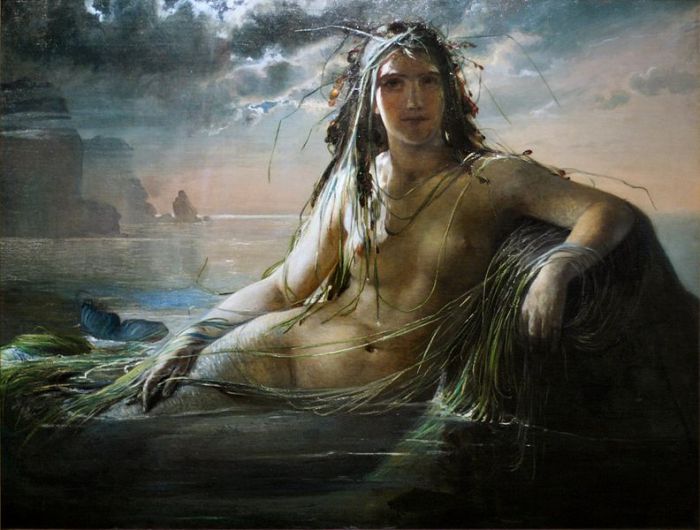
792px-Elisabeth_Jerichau_Baumann_havfruen


Editor’s Note: In response to last week’s feature, Saturday Poetry Series favorites Erin Lyndal Martin and Elana Bell introduced me to two more fabulous mermaid poems. These poems have been swimming through my mind all week, and are too fantastic not to share. Get a taste here, then follow the links below to read each of these stunning poems in full.


from FABLE OF THE MERMAID AND THE DRUNKS
By Pablo Neruda, Translated by Paul Weinfield

But having come from the river, she understood nothing
She was a mermaid and was lost
Their insults flowed down her perfect, smooth flesh
Their filth enveloped her golden breasts
But not knowing tears, she did not weep tears


(Read the complete poem as translated by Paul Weinfield.)


from LATE SUNDAY MORNING
By Elana Bell

I kiss

the puckered lips, taste
ocean breath and remember

myself, slippery and long
under sun-slanted depths, swaying

to the whine of boats overhead.
I did not need you then, my scales

shining in their pristine sea.


(Read the entire poem in Winter Tangerine.)


Want to read more?
“Sunday Morning” in Winter Tangerine
“Fable of the Mermaid and the Drunks” as translated by Paul Weinfeild
“Fable of the Mermaid and the Drunks” in English and Spanish via Susan’s Place
“Fable of the Mermaid and the Drunks” on youtube, as read by Ethan Hawke


Today’s selections appear via Fair Use.

SATURDAY POETRY SERIES PRESENTS: TWO SUMMER POEMS

"England - English Summer Woods" courtesy of Jacopo Werther via Creative Commons: http://bit.ly/1qRZ81t
“England – English Summer Woods” courtesy of Jacopo Werther via Creative Commons: http://bit.ly/1qRZ81t


LILY-BELL AND THISTLEDOWN SONG
By Louisa May Alcott

Awake! Awake! for the earliest gleam 

Of golden sunlight shines 

On the rippling waves, that brightly flow 

Beneath the flowering vines. 

Awake! Awake! for the low, sweet chant 

Of the wild-birds’ morning hymn
Comes floating by on the fragrant air, 

Through the forest cool and dim; 

Then spread each wing, 

And work, and sing, 

Through the long, bright sunny hours; 

O’er the pleasant earth 

We journey forth, 

For a day among the flowers.

Awake! Awake! for the summer wind 

Hath bidden the blossoms unclose, 

Hath opened the violet’s soft blue eye, 

And awakened the sleeping rose. 

And lightly they wave on their slender stems 

Fragrant, and fresh, and fair, 

Waiting for us, as we singing come 

To gather our honey-dew there. 

Then spread each wing, 

And work, and sing, 

Through the long, bright sunny hours; 

O’er the pleasant earth 

We journey forth, 

For a day among the flowers.


SUMMER RAIN
By Fannie Isabel Sherrick

Oh, what is so pure as the glad summer rain,
That falls on the grass where the sunlight has lain?
And what is so fair as the flowers that lie
All bathed in the tears of the soft summer sky?

The blue of the heavens is dimmed by the rain
That wears away sorrow and washes out pain;
But we know that the flowers we cherish would die
Were it not for the tears of the cloud-laden sky.

The rose is the sweeter when kissed by the rain,
And hearts are the dearer where sorrow has lain;
The sky is the fairer that rain-clouds have swept,
And no eyes are so bright as the eyes that have wept.

Oh, they are so happy, these flowers that die,
They laugh in the sunshine, oh, why cannot I?
They droop in the shadow, they smile in the sun,
Yet they die in the winter when summer is done.

The lily is lovely, and fragrant her breath,
But the beauty she wears is the emblem of death;
The rain is so fair as it falls on the flowers,
But the clouds are the shadows of sunnier hours.

Why laugh in the sunshine, why smile in the rain?
The world is a shadow and life is a pain;
Why live in the summer, why dream in the sun,
To die in the winter, when summer is done?

Oh, there is the truth that each life underlies,
That baffles the poets and sages so wise;
Ah! there is the bitter that lies in the sweet
As we gather the roses that bloom at our feet.

Oh, flowers forgive me, I’m willful to-day,
Oh, take back the lesson you gave me I pray;
For I slept in the sunshine, I woke in the rain
And it banished forever my sorrow and pain.


(Today’s poems are in the public domain, belong to the masses, and appear here today accordingly.)


Louisa May Alcott: (1832-1888) was an American novelist and poet best known as the author of the novel Little Women (1868). Raised by her transcendentalist parents, Abigail May and Amos Bronson Alcott in New England, she grew up among many of the well-known intellectuals of her day. (Annotated biography of Louisa May Alcott courtesy of Wikipedia, with edits.)

Fannie Isabel Sherrick: (Lived circa mid-to-late 19th c.) was a native of St. Louis. Much of her early life was spent in California and Colorado, where many of her best productions in verse were written. Her collected poems were published in 1888, in a volume entitled Star Dust. Poor health caused her–at least temporarily–to give up literary endeavors. (Annotated biography of Fannie Isabel Sherrick courtesy of Evenings with Colorado Poets: an Anthology of Colorado Verse, with edits.)

Editor’s Note: Technically summer is not for another month yet, but here in New York the sun is shining, and Memorial Day weekend is the official start of our summer season, so “O’er the pleasant earth 
/ We journey forth, 
/ For a day among the flowers.” And, while summer rain was not a common occurrence in California–from whence I came–here in New York the sky opens up to quench the grasses, the flowers, the rivers and streams, all summer long: “Oh, what is so pure as the glad summer rain, / That falls on the grass where the sunlight has lain? / And what is so fair as the flowers that lie / All bathed in the tears of the soft summer sky?”

Want to read more summer poetry?
The Poetry Foundation