“Flotsam” By Agnes Vojta


Flotsam

I shipped my past to this continent
in a box I open rarely. In it,

my mother’s amber necklace
and my grandmother’s silver cross,

a dried flower from my prom bouquet,
ribboned letters from old lovers,

notebooks with poems written
thirty years ago in another tongue,

a brass key that opens no lock I know,
a photograph of the house on the hill

that stands now empty, where my voice
still echoes, unheard,
five thousand miles away.


About the Author: Agnes Vojta grew up in Germany and now lives in Rolla, Missouri where she teaches physics at Missouri S&T. She is the author of Porous Land (Spartan Press, 2019). Her poems recently appeared in Gasconade Review, Thimble Literary Magazine, Trailer Park Quarterly, Poetry Quarterly, and elsewhere.


Image Credit: Marion Post Wolcott “Child bringing home suitcase on sled, Franconia, New Hampshire” (1939) The Library of Congress
“Visitor’s Day at the Group Home” By Tony Gloeggler


VISITOR’S DAY AT THE GROUP HOME

Robert, twenty-one yesterday,
walks down stairs carefully.
Both hands clench rails. Head
down, he watches each foot land.
Reaching bottom, he claps twice,
sees her and smiles. He mumbles
and she knows he’s saying mommy.
She hugs him close. Drool slides
down the back of her neck. “Mommy
missed Robert so much.” He digs
into the shopping bag of gifts,
finds a Walkman. She clamps
the headphones on him. He bobs
like a spastic puppet to the Supremes
Greatest Hits. She opens a pint
of rice pudding, starts to spoon it
into his mouth. I pass her a handful
of napkins. Later, she lays his head
in her lap, sings Happy Birthday
and lights matchsticks to wish on.
I place a coloring book, his special
extra thick crayons on the table.
He scribbles interlocking spirals
while his eyes track her movements.
A car horn sounds and she steps
to the window, motions ‘just
a moment’ with her hand.
She bends, kisses Robert’s
forehead.  “See you next week
sweetheart.” We nod goodbye
as she pushes open the door.
Robert throws a blue crayon
across the room, crumples
the scribbled page. He stands,
climbs up the stairs and fits
into his bed, his clothes still on.


This poem first appeared in Wordgathering


About Tony Gloeggler: I am a life-long resident of New York City and have managed group homes for the mentally challenged for over 35 years. My work has appeared in Columbia Poetry Review, Rattle, The Examined Life Journal, Raleigh Review, New Ohio Review, Stirring and The NY Times. My full length books include One Wish Left(Pavement Saw Press 2002) and Until The Last Light Leaves (NYQ Books 2015) which focused on my job and the autistic son of a former girlfriend. My next book, What Kind Of Man, will be published by NYQ Books in 2019.


More By Tony Gloeggler

“Crossing”


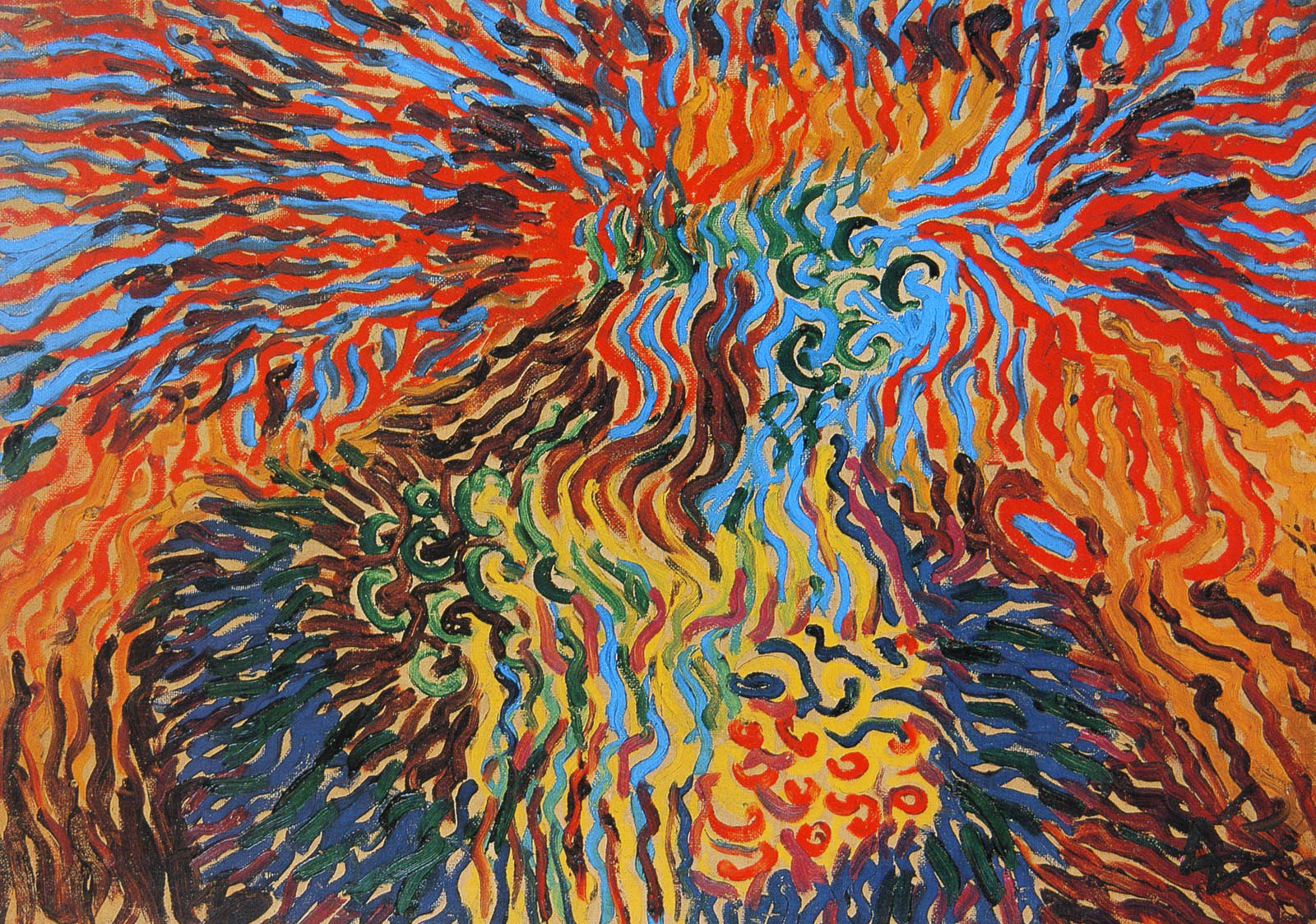
Image Credit: “Astrale Komposition XI” by Wilhelm Morgner (1911) Public Domain

“Frankly, I’m Not Doing Well” By Daniel Crocker


Frankly, I’m Not Doing Well

By Daniel Crocker


    A week ago, a little after 3am,  I stood up from my laptop, pulled off my robe, took off my shirt, grabbed the scissors that had been calling to me from my desk for weeks, and  I cut my upper left arm exactly twenty times. It was the first time I’d cut in years, and as far as self-harm goes, it wasn’t so bad. In my early twenties,  I would cut myself over 100 times—arms, legs, torso. This time I got away with twenty. Not my best work by any means. Nothing that would leave a scar. Not really.

    A week ago, cutting was an orgasm. The keen edge of a blade brought me back to the here and now. It’s private. That’s why I cut in places no one can see—until they do.

   Early in our marriage, Margaret found my stash of bloody paper towels.

   What is this? She wanted to know.  What could I say? I rolled up my sleeves and showed her. She cried, and I didn’t cut again for years.

    A week ago, I told Margaret that I thought I needed to go to the hospital. I was shaking and on the verge of tears. I’m not much of a crier. It got her attention. I was standing in my bathrobe and Pikachu hat that tends to reduce my anxiety by a minuscule amount.

    I think I need to go to the hospital, I said. Margaret stood there a moment, taking me in. Thinking.

    All they’ll do, she said, is keep you full of drugs for three days and let you out. She had a point.

    Maybe you start back on your meds and call your shrink on Monday.

    Okay, I said. Later that night, I went through rapid, severe mood swings—mania, rage, euphoria, depression and back again. That night, I cut myself twenty times on my upper left arm. Continue reading ““Frankly, I’m Not Doing Well” By Daniel Crocker”

“My Nephew and I Escape from Prison” By Kevin Ridgeway


My Nephew and I Escape from Prison

he’s technically inclined enough
at just six years old
to operate most tools 
building things like a filthy
Frank Lloyd Wright
obsessed with the idiosyncrasies
of each claw machine
he intends to break ground with
a shovel and begin digging
his hand like one of his
beloved blue print envisioned
crayola claws until there is a hole
big enough for us both to get
to the other side where I’ll be
charged with explaining to
people that we are prisoners
of a psychological spectrum
we refuse to serve needless
time we could spend building
things, writing poems and on
parole from the menace of
social stigma we are too
distracted by our gifted
obsessions to waste time
paying attention to as
we find the miracles in
the attics of our minds,
minds no one quite has
like the two of us.


About the Author: Kevin Ridgeway is the author of Too Young to Know (Stubborn Mule Press).  Recent work can be found in Slipstream, Chiron Review, Nerve Cowboy, Main Street Rag, The American Journal of Poetry, Big Hammer, Trailer Park Quarterly and So it Goes:  The Literary Journal of the Kurt Vonnegut Memorial Library.


More By Kevin Ridgeway:

Sally with the Accent

Five Hundred Channels and Nothing On


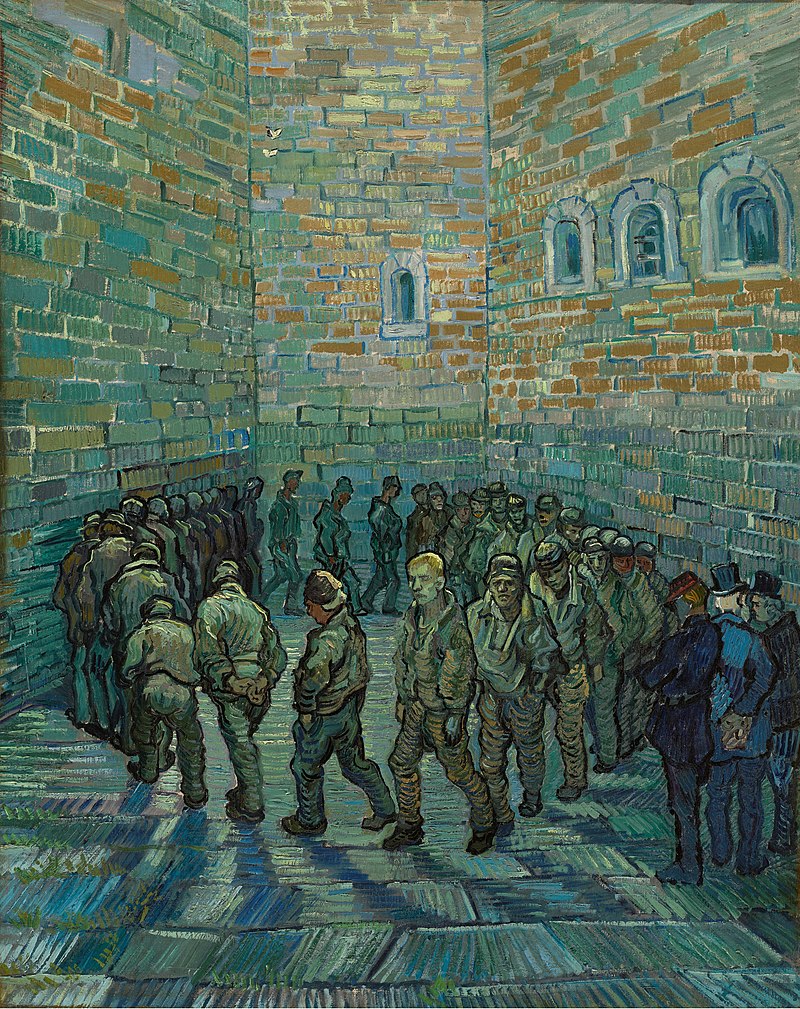
Image Credit: Vincent Van Gogh “Prisoners Exercising” (1890)


“Remainders” By Marc Frazier


Remainders

Aunt Bertha’s thick ankles tucked in orthopedic shoes.
She stirs water into flour for chicken gravy paste.

The soon-to-be-closed eyes of my father
stare at the dog planter on the window ledge.

Mother’s hands run fabric under the jumpy needle,
the machine’s drone luring me to love.

The voice of great-uncle John’s deep bass
volleys with Esther’s small, squeaky refrains.

Nicks on Sergio’s perfect face
held like a calla between my flowering palms.

The smell of Sunday’s roast with onions
potatoes and carrots waft through register vents.

Grandfather’s sad, wrinkled red face
dozes alone in the paneled TV room.

David of the Espanola Valley places his hand over mine
as I look above the table at New Mexican stars.

I cannot recall her last smile here beside the unplugged
body as the doctor says, “She’s passed.”


About the Author: Marc Frazier has widely published poetry in journals including The Spoon River Poetry Review, ACM, Good Men Project, f(r)iction, The Gay and Lesbian ReviewSlant, Permafrost, Plainsongs, and Poet Lore. Marc is the recipient of an Illinois Arts Council Award for poetry and has been nominated for a Pushcart Prize and a “best of the net.” His book The Way Here and his two chapbooks are available on Amazon as well as his second full-length collection Each Thing TouchesWillingly, his third poetry book, will be published by Adelaide Books New York in 2019. His website is http://www.marcfrazier.org.


More by Marc Frazier: 

Sent My Way


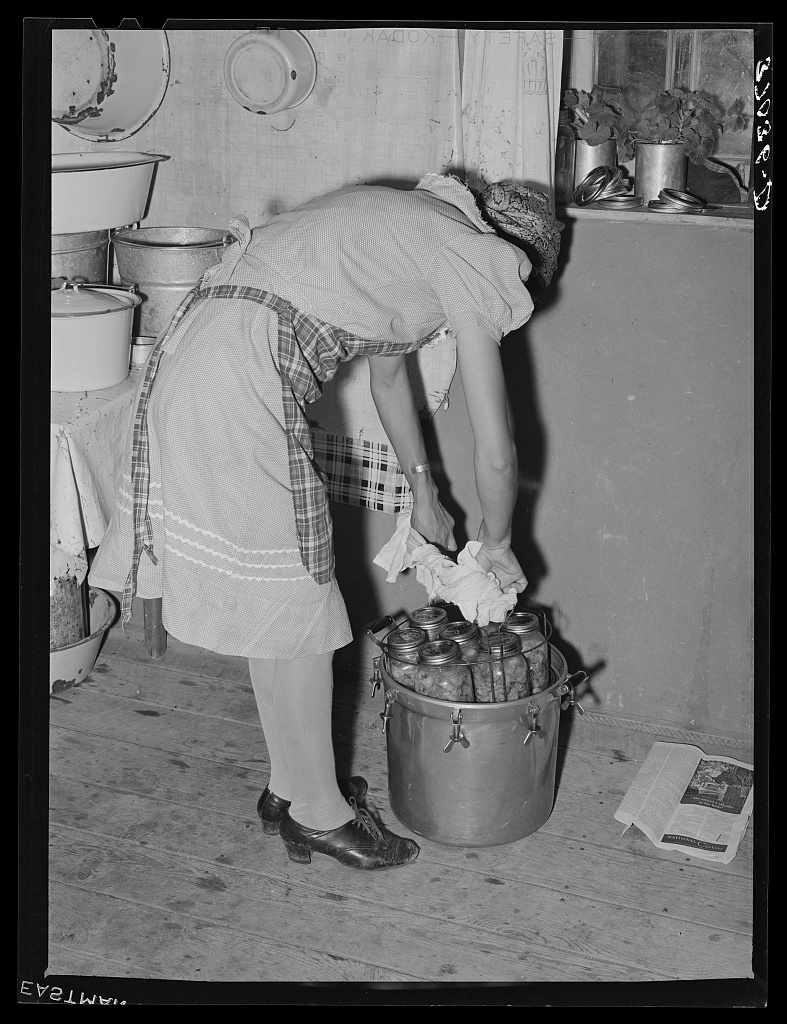
Image Credit: Russell Lee “Removing jars of canned fruit from pressure cooker. Chamisal, New Mexico” (1940) Library of Congress

“Wages” By Larry Smith


Wages

Payday comes in from the cold
and sets a bag down in the hallway.
She finds her place at the table
where we are dressed in our good clothes.
Mom is already drinking wine
and Dad is telling funny work stories.
Payday laughs like coins falling on a metal tray.
We pass her the pork chops
and watch her fork not one but two—
“One for later,” she grins at us.
Like always we pretend to smile.

By the time the sun has set
we’ve said good-bye to our Payday
and a silence fills the room.
When I break a plate, Mom cries,
“Oh shit. Look what you’ve done.”
You can hear the sound of wind.
Then Mom hands Dad a fist full of bills,
and we kids go off to our rooms.
Tomorrow will mean our old clothes again
and the counting of our coins.


About the Author: Larry Smith is a poet, fiction writer, and editor-publisher of Bottom Dog Press in Ohio where they feature a Working Lives and an Appalachian Writing Series. He is also the biographer of Kenneth Patchen and Lawrence Ferlinghetti. He lives in Huron, Ohio, along the shores of Lake Erie.


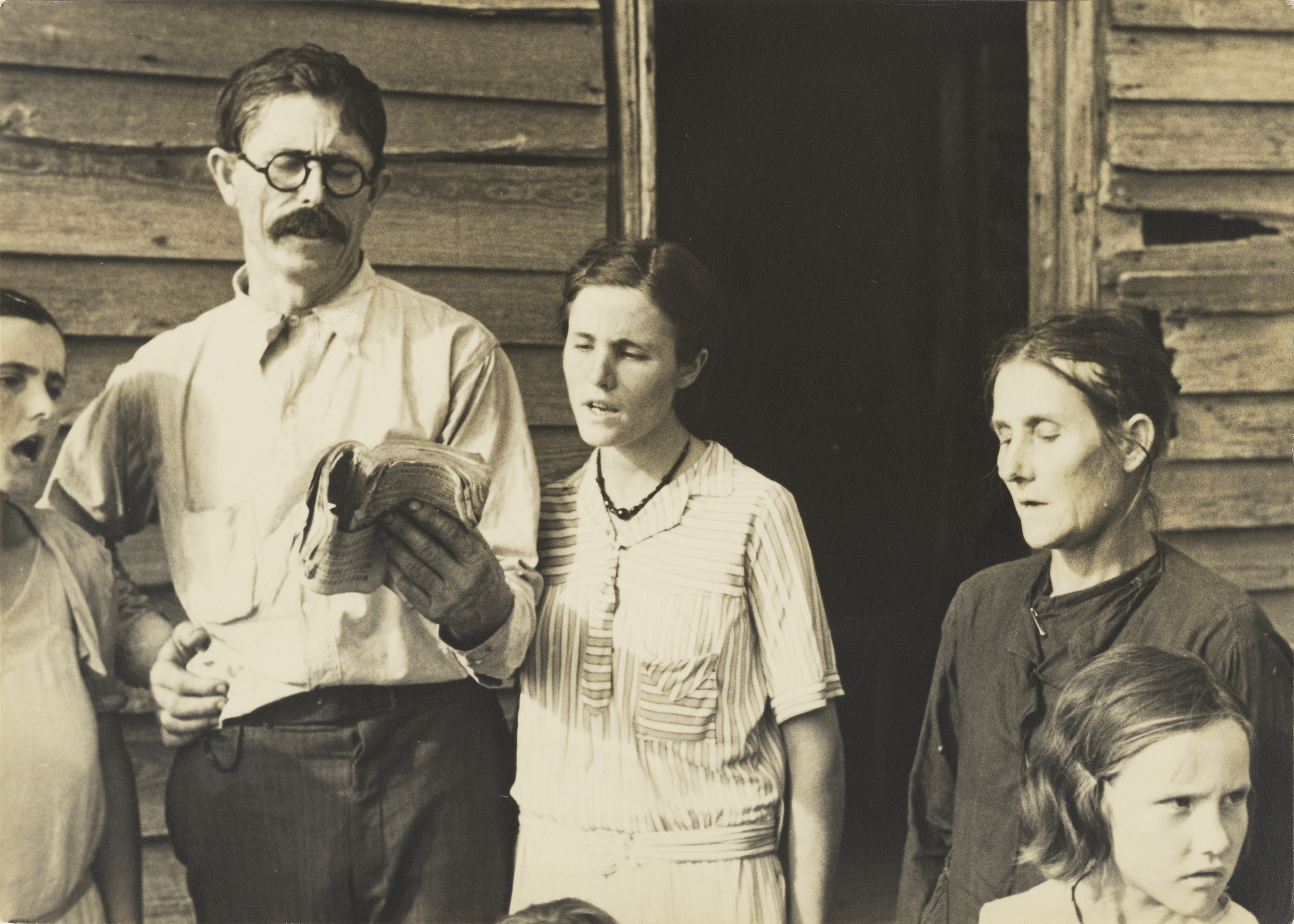
Image Credit: “Alabama Tenant Farmer Family Singing Hymns” Walker Evans (1936) Digital image courtesy of the Getty’s Open Content Program.

Bunkong Tuon: “The Bite”


This is the third in a series of poems from a forthcoming poetry collection about raising a biracial daughter in Contemporary America, during this polarizing time of political and cultural upheavals where sexual harassment allegations abound, where a wall, literal and figurative, threatens to keep out immigrants like the narrator, a former refugee and child survivor of the Cambodian Genocide. You can find the full series of poems below.


The Bite

We pay it no attention
until the bite becomes a rash
spreading like a spider web
on the back of Chanda’s leg.
Our minds burn like wild fire.
Google becomes our hated
guide as we navigate WebMD,
Mayo Clinic, and CDC.
We study online images,
whisper symptoms like
bad secrets, and compare notes.
We gather contradictions,
argue. Nothing is certain,
only more questions.
We text friends and family.
Is it too late for antibiotics?
What is Lyme disease?
Will this affect our daughter
for the rest of her life?
We wake up the next morning
clutching each other,
sweat drenched our pillows.


About the Author: Bunkong Tuon is the author of Gruel (2015) and And So I Was Blessed (2017), both poetry collections published by NYQ Books, and a regular contributor to Cultural Weekly  He is also an associate professor of English and Asian Studies at Union College, in Schenectady, NY.


Bunkong Tuon’s series of poems on raising a biracial daughter in contemporary America:

Ice Cream

Gender Danger

The Bite

Tightrope Dancer

Women’s March in Albany

My Mother on Her Deathbed


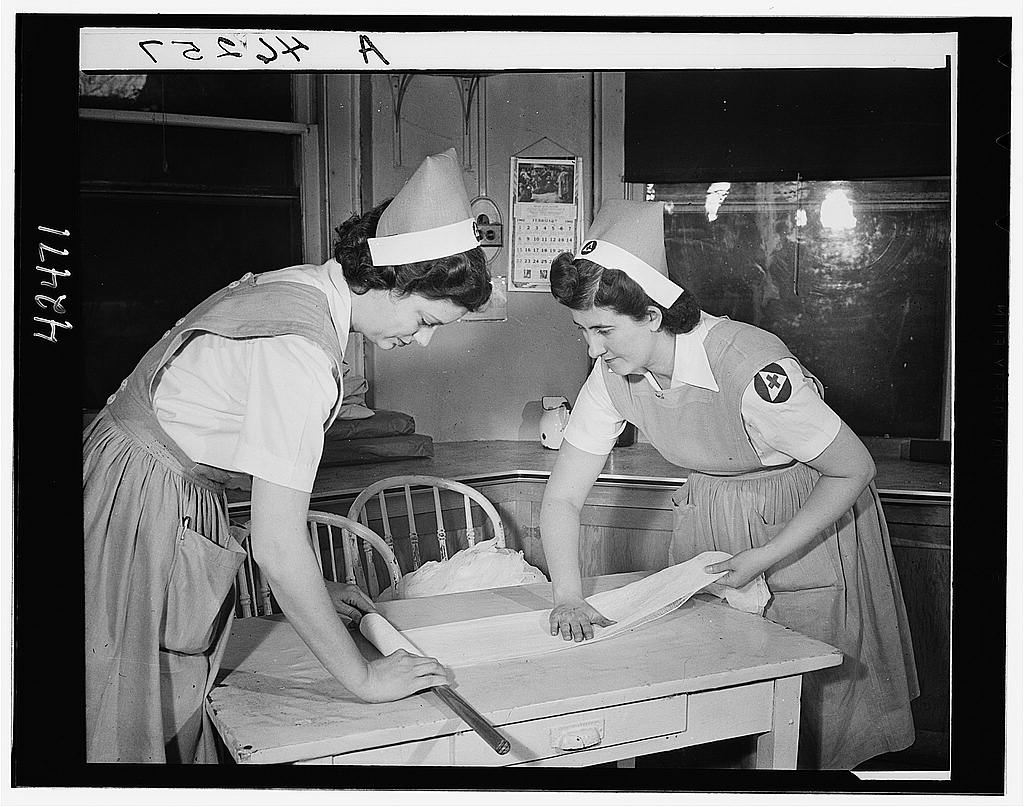
Image Credit: “Red Cross nurses’ aides preparing surgical bandages” The Library of Congress

“Mementos” by Nick Soluri


Mementos

There is a way we remember,
and the way we want to remember.

There is the way grandmothers tie scarves
around their grandchild’s necks,
and there is holding the memento
in your hands wishing hers
could wrap it softly again.

We will die before the
things in our pockets will,
those live forever, in the
boxes in attics, on desks,
alone or with company.

Do not worry, they will
not feel bad when they get
dusty and cold,
they have each other.

And when you come back to them,
and feel their sweet touches again,
they will feel the same way
they always did.
But it is you that has shed your skin,
a new body in a lake of stasis
and old wooden splinters.


About the Author: Nick Soluri is a writer from New York.  His words have appeared in Five:2:One Magazine, Boston Accent, Ghost City Review, Selcouth Station, Occulum, Anti-Heroin Chic Magazine, and others.  He tweets @nerkcelery


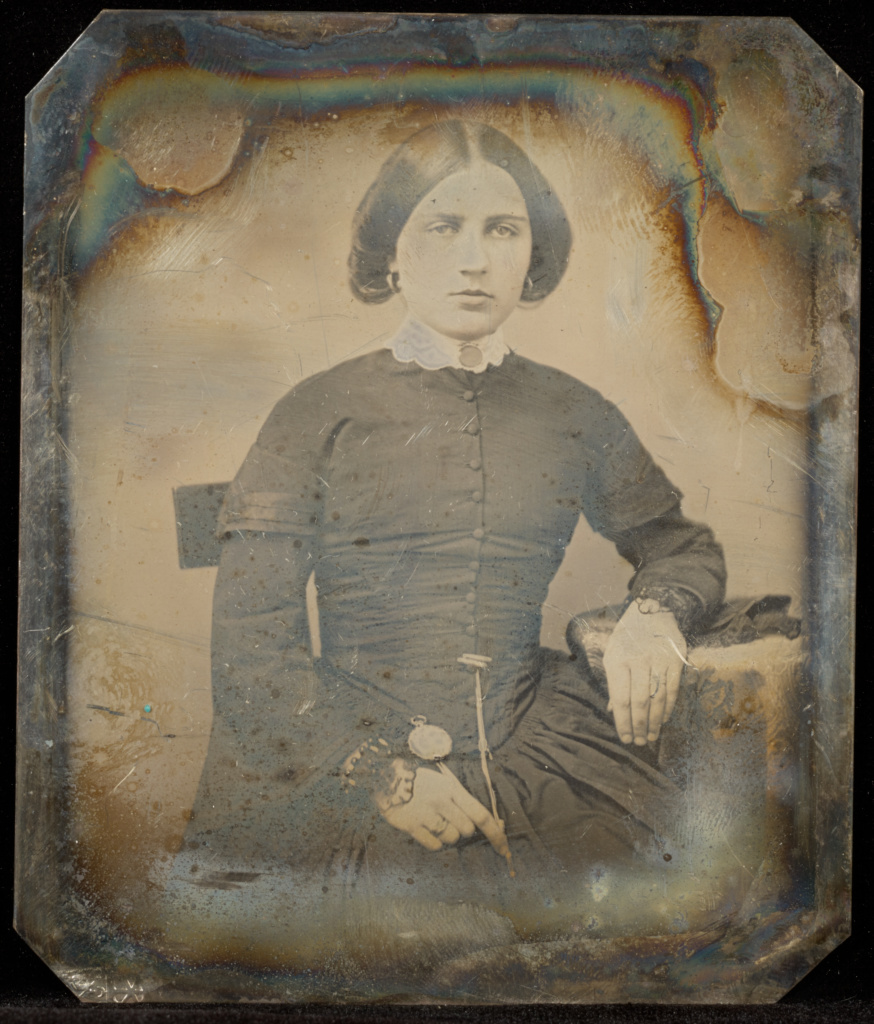
Image Credit: Joseph Byerly “Portrait of a Woman” (1855) Digital image courtesy of the Getty’s Open Content Program.

“Me, and the Hecate” By Margaret Crocker


ME,
AND THE HECATE

Ariadne,
in the mechanical bed,
bound by stuffed mittens,
breathing by beeping hose,
her pulse rate, heart rate, brain rhythms and lung capacities
a constellation around us in the darkened room.
There are stars, Ariadne,
Look!

Ariadne,
your webs.

Ariadne,
your unrequited love.

You were our lives,
Ariadne,
and your webs our ties with you,
you the weaver,
you the hanged man,
you the Hecate,
the maid, mother and crone all in one
a white, fragile web in the dark
while machines give you breath and life
in force,
as you would have none on your own.

Ariadne,
what do you weave there,
where no one can see?

You wake hoarse,
confused,
and tangled in all your knitting.
You see me
and don’t remember.
But I will always remember these days, my sisters.

When Ariadne began to sew,
and faltered.


About the Author: Margaret Crocker is an artist, writer, wife, mother, daughter, sister and thief. She collects stray animals and has this weird fantasy of being on The Great British Baking Show, despite the fact she uses a bread machine. She knows little but proclaims much. There is much we don’t know about her.


More By Margaret Crocker

“My Joints Hurt and Other Fascinating Topics of Conversation”

“The Art of Acquiescence”

“Earth, Air, and Lynda Carter”

“Mental Health Portraits”


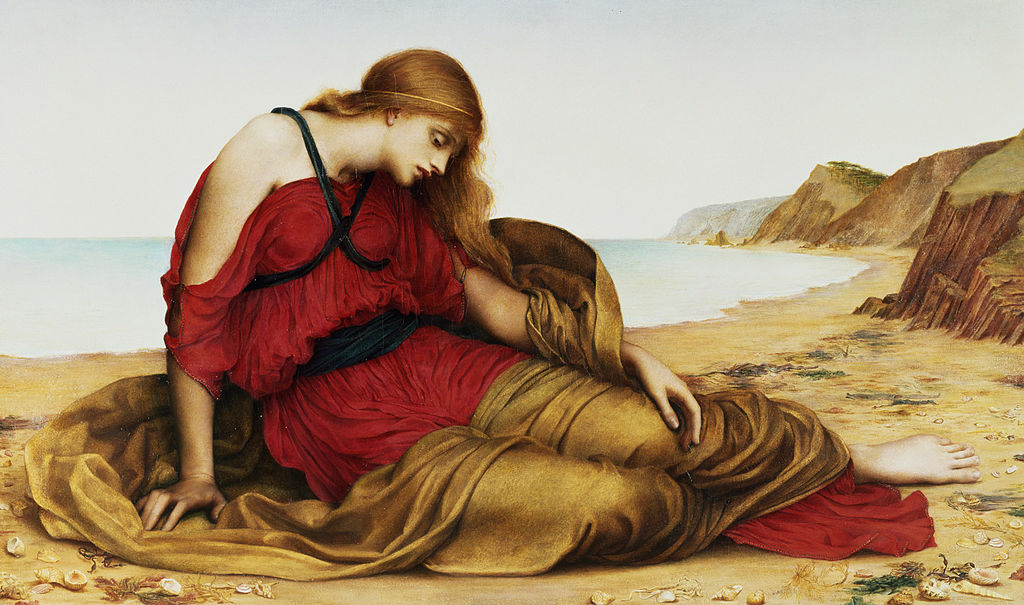
Image Credit: “Ariadne in Naxos” by Evelyn de Morgan (1877)

“Crossing” By Tony Gloeggler


CROSSING

Larry turned eighteen
in May. He knows
what red and green mean,
walks to the corner
and looks both ways.
Today, he’s on his own
for the first time.
He walks out the door.
I count to thirty, follow.
Hidden behind the stoop,
I watch him. Head down,
hands deep in pockets,
he drags his feet,
twirls on one foot
every twenty steps,
then bends and pulls up
his socks. He turns
the corner. I run down
the block, duck behind
a black Cadillac.
When he reaches the curb,
I sneak closer, crouch
in the hardware store’s
doorway. Larry lifts
his head, sees a red
light. His lips quiver,
right hand karate chops
his open left palm.
I recognize the sign
for stop, whisper
“Good.” Larry looks up
and the light’s green.
His right fist winds
around his clenched left
hand, tells him to walk.
He checks for cars, half
runs across Bergen Street.
Safe, Larry pirouettes
and faces me. He bows
at the waist, straightens
up, yells “Okay Tony”
and laughs out loud.


This poem first appeared in Mudfish


About Tony Gloeggler: I am a life-long resident of New York City and have managed group homes for the mentally challenged for over 35 years. My work has appeared in Columbia Poetry Review, Rattle, The Examined Life Journal, Raleigh Review, New Ohio Review, Stirring and The NY Times. My full length books include One Wish Left (Pavement Saw Press 2002) and Until The Last Light Leaves (NYQ Books 2015) which focused on my job and the autistic son of a former girlfriend. My next book, What Kind Of Man, will be published by NYQ Books in 2019.


Image Credit: photo by Renee Bieretz, from The Library of Congress