Bunkong Tuon: “Dancing Fu Manchu Master”

Dancing Fu Manchu Master

By Bunkong Tuon


Editor’s Note: This is the third post in a series of poems about the immigrant experience in America. Our late Managing Editor, Okla Elliott, featured Bunkong Tuon’s work on As It Ought To Be back in January of 2017. Okla was particularly concerned about the anti-immigration rhetoric heating up in America and he hoped to showcase the voices of immigrants on our site. In honor of Okla’s memory, Tuon has allowed us to feature more of his poetry about his experience as an immigrant from Cambodia in the United States. The full series of poems is available below.

.


Dancing Fu Manchu Master

One day, walking home

by myself, a blue plastic backpack slung

over my shoulders, a Christmas gift

from our sponsor, I noticed three boys

watching me from the convenience store

down the corner near an apartment complex.
The leader, a short, red-haired, chubby kid,
stepped out of the shadow, and called out,
“Ching Chong, are you from Hong Kong?”

I quickened my pace pretending

to hear my Grandmother calling me.

“Hey, can you help me with my math homework?”
They burst out laughing.

Seeing me walk firmly away, they slurred out

a slew of hurtful words.

“Why don’t you go back to China?”

“Do you eat dogs where you come from?”

“You use grass and leaves to wipe your ass, right?”
“Do you know Kung Fu?”

With this last question saliva,

warm and gooey, hit my neck.

I closed my eyes, counted my steps,
mindful of my breath, my heart slowed.
I jumped and turned,

thirty feet straight into the air,

took out my sword, with a flick

of the wrist, saw heads roll,

tumbling away down the sidewalk,
bodies slumped behind:

red blossoming concrete.

Trained in the mysterious arts

of Dr. Fu Manchu, I made myself
disappear before the police arrived.

.


About the Author: Bunkong Tuon is the author of Gruel (2015) and And So I Was Blessed (2017), both poetry collections published by NYQ Books, and a regular contributor to Cultural Weekly  He is also an associate professor of English and Asian Studies at Union College, in Schenectady, NY.


Previous poems from Bunkong Tuon’s series on the immigrant experience in America:

Our Neighborhood in Revere, MA

Snow Day

An Elegy for a Fellow Cambodian

Halloween, 1985

Dancing Fu Manchu Master

Fishing for Trey Platoo

Lies I Told About Father

SATURDAY POETRY SERIES PRESENTS: LYNN POWELL


By Lynn Powell:


THE MOON RISING

Sly old guru, Rorschach moon,
you’re calling me again with your round riddle,
your paradox of Ohm and moan.
All day the sun was up on its soapbox, a Pollyanna
casting out the darkness in everybody else.
Now we’re back at the window where we started—
me with my midnight weakness, and you
with your sleight-of-silver ministry
to anyone unguarded and alone.

Slow moon, you’ve lingered near the cloister and the dance hall,
laid your soft law down on wide and narrow beds.
You’ve faced yourself in ponds, thrown yourself
on the mercy of a moody sea. You’ve been the slick
Houdini of horizons, sliding out of each tight spot
the night has tried to trap you in.
What’s left for me to misconstrue?

I’m tired of my mind and its whitewash,
tired of your low-light revelations.
And how will I find the dark forest if you keep
murmuring silky nothings to the trees?

Cold moon, unmake me
in your image. Pare me down
to the bleak beatitude, the black sum
of all you know for sure.


AT THE EQUINOX

             Has the rain a father, or who has begotten the drops of dew?
                                                                         —Job 38:28

From the car window, after the fog lifts,
the autumn fields flash with sudden flowers—

              like filigrees of mirror, like alloys of lace and light.

A weird miracle? Some brilliant, manic manna?
Until, of course, it’s only spiders—ten thousand

              that have worked the dark with rigs of silk

to snag a fly and then, surprising themselves,
have step-fathered the dew.

              And so, for an odd hour, hunger

glistens in galaxies, sieved
from passing thoughts of lake and air.


Today’s poems are from the collection Season of the Second Thought (University of Wisconsin Press, 2017), copyright Lynn Powell, and appear here today with permission from the poet.

Lynn Powell has published three books of poetry: Season of the Second Thought (winner of the 2017 Felix Pollak Prize), The Zones of Paradise, and Old & New Testaments. Her nonfiction book Framing Innocence won the Studs & Ida Terkel Award from The New Press in 2010. A native of East Tennessee, Powell teaches in the Creative Writing Program of Oberlin College.

Guest Editor’s Note: Lynn Powell’s work is reminiscent of “The Parable of the Sunfish” in Ezra Pound’s ABC of Reading. Powell is a poet who gains deep understanding and insight into her subjects, examining them over and over from unique angles until she has observed their essence. In “The Moon Rising,” for instance, the moon is a “Sly, old guru” a “Rorschach,” a “slick/Houdini of the horizons.” It possesses a “slight of hand ministry” or can lay its “soft law down on wide and narrow beds.”

Throughout her collection Seasons of the Second Thought, line by line Powell examines, prods, and dissects until she has mastered her subject, rewarding her readers with an intimacy and understanding that is both profound and revealing. In “At the Equinox,” she observes the world with such intensity that she is able to see the creators of the miracle she is viewing not as their mundane selves — “only spiders—ten thousand” — but as creatures that “have step-fathered the dew.” Powell’s work is an enlightenment that allows the reader to see the world for what it can be when observed fully.

Want to read more by and about Lynn Powell?
Buy Seasons of the Second Thought from University of Wisconsin Press
POETRY Magazine
Bellingham Review
Shenandoah
American Literary Review


Guest Editor Alan Toltzis is the author of The Last Commandment. Recent work has appeared in print and online publications including Hummingbird, Right Hand Pointing, IthacaLit, r.k.v.r.y. Quarterly, and Cold Noon. Find him online at alantoltzis.com.

A NOTE FROM THE MANAGING EDITOR:

After nearly ten years as Contributing Editor of this series, it is an honor and a unique opportunity to share this space with a number of guest editors, including the editor featured here today. I am thrilled to usher in an era of new voices in poetry as the Managing Editor of this series.

Viva la poesia!
Sivan, Managing Editor
Saturday Poetry Series, AIOTB


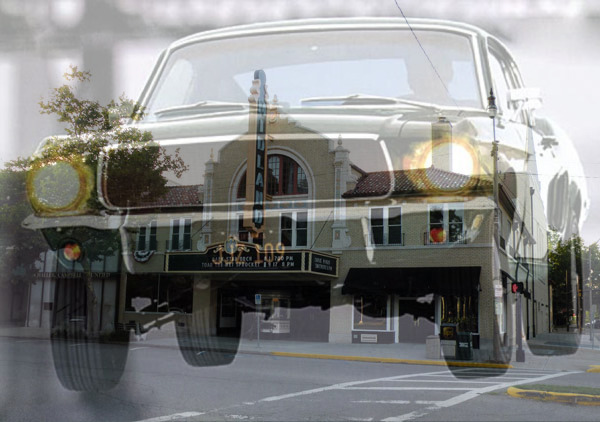
Saturday Afternoon at The Midland Theatre in Newark, Ohio

Montage of a scene from Bullitt and a photo by Leepaxton at en.wikipedia, CC BY-SA 4.0,


Saturday Afternoon at The Midland Theatre in Newark, Ohio

By Roy Bentley

.

Slouched in a theater seat and watching Bullitt for the third time, a look I
get from an usher might best be described as granting a general amnesty
and full pardon for my having shelled out only the one admission price.
There’s the balcony with its blue and red curved seat backs. By a door to the
upstairs men’s room a framed likeness of the Civil War drummer boy, Johnny
Clem, whose baby-faced looks and sudden-dark hair remind me of a young
Italian, then Sal Mineo in Rebel Without a Cause. There’s that angels-in-the-
architecture grand gesture of a ceiling, the wall of drapes of eloquently
pleated purple. And there’s the screen framed in its filigree of gold and silver.
The usher is accommodating me by simply not noticing—I’m on my third
popcorn, third enormous Coca-Cola, second box of Milk Duds, when I realize
I’m happy. Elated. In Ohio at fourteen you’re disappointed most of the
time. So I want to tell Frank Bullitt just how it feels to be from Dayton and
new here, a fat-kid eighth grader at Fulton Middle School. But then, Steve
McQueen is French-kissing Jacqueline Bisset good-morning. Strapping on
a shoulder holster and .38 pistol. Now he’s stopped at the corner of Clay and
Taylor, searching the pockets of his trench coat/suit coat for change. I’ve loved
that look all afternoon. The usher reacts as if that says it, that fuck-the-world
expression of Frank Bullitt as he gives up and bangs the cover and steals a
newspaper. Turns out, 1968 isn’t for the faint of heart. You need a Mustang
GT 390. Ice water for a blood type. A tolerance for the visages of the dead
you made dead, slaughtering out of that old American purity of motive
that dissolves into a communion of terrific car chases wherein thunderous
algorithms of horsepower rule.

This poem first appeared in The Southern Review


About the Author: Roy Bentley has published five books of poems, including Walking with Eve in the Loved City, which was selected as a finalist for the 2018 Miller Williams Poetry Prize and is available from the University of Arkansas Press or at Amazon. Bentley’s poems have appeared in Able Muse, Rattle, Blackbird, Shenandoah, Prairie Schooner, The Southern Review, and elsewhere. He is the recipient of a Creative Writing Fellowship in Poetry from the National Endowment for the Arts, as well as fellowships from the Florida Division of Cultural Affairs and the Ohio Arts Council.

Three Poems by Bunkong Tuon


Three Poems

By Bunkong Tuon

.


Editor’s Note: This is the second post in a series of poems about the immigrant experience in America. Our late Managing Editor, Okla Elliott, featured Bunkong Tuon’s work on As It Ought To Be back in January of 2017. Okla was particularly concerned about the anti-immigration rhetoric heating up in America and he hoped to showcase the voices of immigrants on our site. In honor of Okla’s memory, Tuon has allowed us to feature more of his poetry about his experience as an immigrant from Cambodia to the United States. The full series of links can be found below.

.


Snow Day

Silent as night

the morning snow covered

the school, the playground.

A ghost town in this city near the beach.
But no one told this refugee child
about such a day. No one said

to turn on the TV. No one called.

He walked in the white field

looking up to the sky, raising his hands,
letting his brown body fall backward
into the white landscape.

His eyes closed,

each flake gently caressing

his cheeks.

.


An Elegy for a Fellow Cambodian

The reason Vannark got into that fight

  was because Rob had called him a dog-eater.

.


Halloween, 1985

The saliva on your face
(for all the world to see!).

A lifetime of desire, a daily prayer
for death, a return to the beginning,
a place of warmth and affection,

a desire to be with Mother.

.


About the Author: Bunkong Tuon is the author of Gruel (2015) and And So I Was Blessed (2017), both poetry collections published by NYQ Books, and a regular contributor to Cultural Weekly  He is also an associate professor of English and Asian Studies at Union College, in Schenectady, NY.


Previous poems from Bunkong Tuon’s series on the immigrant experience in America:

Our Neighborhood in Revere, MA

Snow Day

An Elegy for a Fellow Cambodian

Halloween, 1985

Dancing Fu Manchu Master

Fishing for Trey Platoo

Lies I Told About Father


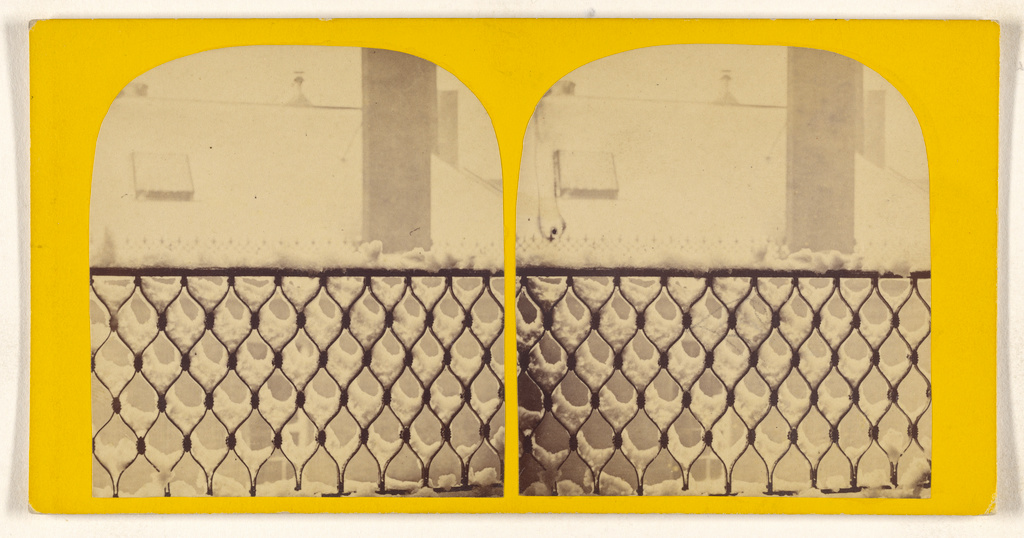
Image Credit: “Snow on Fence” Artist: Unknown, Digital image courtesy of the Getty’s Open Content Program.

SATURDAY POETRY SERIES PRESENTS: HEATHER WHITED

A MAY EVENING, EVERYTHING IS OK
By Heather Whited


A pink and white bloom
Split open
splayed to look
like a pair
Of lungs breathing
on the sidewalk.
All cars
are diamonds
in glittering rows.
It is the sun
tonight;
It is the
lift
of my dog’s ears.


Today’s poem first appeared in the winter 2018 issue of The Broke Bohemian and appears here today with permission from the poet.

Heather Whited graduated from Western Kentucky University in 2006 with a BA in creative writing. She lived in Japan and Ireland before returning to her hometown of Nashville, Tennessee to get her graduate degree. She now lives in Portland, Oregon. She has been published in the literary magazines Straylight, Lingerpost, The Timberline Review, A Door is Ajar, Allegro, Foliate Oak, Adelaide Literary Magazine, Windmill; The Hofstra Journal of Art and Literature, Chantwood Literary Magazine, Cricket, Storm CellarForge, Gravel, and soon The Hungry Chimera and The Broke Bohemian. In 2015, she was an honorable mention in Gemini Magazine’s annual short story contest. She is a contributor to The Drunken Odyssey podcast and Secondhand Stories Podcast.

Guest Editor’s Note: Matthew Zapruder in Why Poetry writes, “A poem, literally, makes a space to move through. To read a poem is to move through that constructed space of ideas and thinking.” Whited has constructed such a space with short lines packed with sensory impressions of air, heat, color, and light. The speaker takes the lead from a position of sharpened perceptions of what someone else might pass by without noticing. Sound plays a significant role too, and the words progress in a softness: “Split… splayed… sidewalk… sun.” These and the ending s’s of the plural nouns make walking through this poem’s space a spontaneous and instinctive experience.

Reminiscent of H.D., imagery breathes through every line. Whited guides readers through familiar visuals, such as “A pink and white bloom” and “diamonds/ in glittering rows,” that in combination instruct a post-spring feeling following the discovery of a flower forgotten on a sidewalk. Simile and metaphor arrive smoothly in succession like a warm breeze at sunset. The speaker appears only at the end, and the final effect is far reaching.

Want to read more by and about Heather Whited?
Storm Cellar
The Timberline Review


Guest Editor Anne Graue is the author of Fig Tree in Winter (Dancing Girl Press, 2017), and has published poems in literary journals and anthologies, including The Book of Donuts (Terrapin Books), the Plath Poetry Project, One Sentence Poems, and Rivet Journal.

A NOTE FROM THE MANAGING EDITOR:

After nearly ten years as Contributing Editor of this series, the time has come for change. I am thrilled to expand my role to Managing Editor and provide the opportunity for fresh voices to contribute to this ongoing dialogue. It is an honor and a unique opportunity to share this series with a number of guest editors, including the editor featured here today.

Viva la poesia!
Sivan, Managing Editor
Saturday Poetry Series, AIOTB


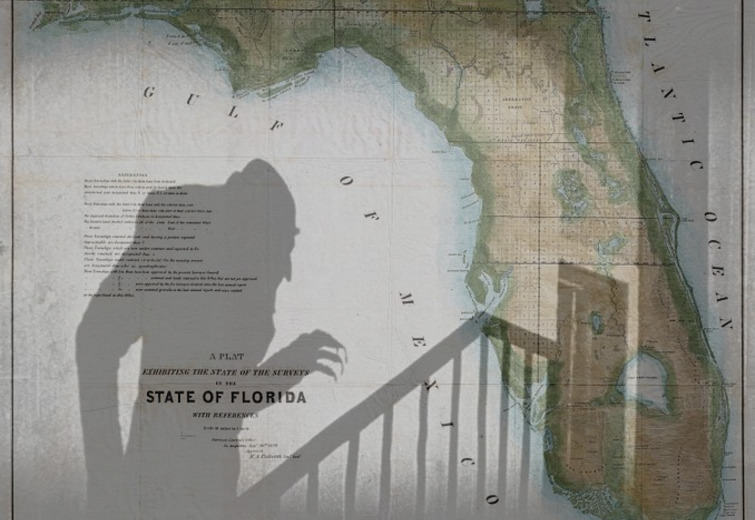
Nosferatu in Florida

Nosferatu in Florida

By Roy Bentley

.

Maybe vampires hear an annunciatory trumpet solo.
Maybe they gather at the customary tourist traps
like a blanket of pink flamingos plating a lake
and lake shore by the tens of thousands to drink.
The whole, tacky blood circus is theme-park stuff
and as Disneyesque as lifting the lid on a casket
to flit about sampling the inexhaustible offerings
of O Positive like the Sunday brunch at IHOP.
But if you had a booming, amphitheatrical voice
and had been recently rescued from the grave—
if you wore the republic of the dark like a cape
at Halloween, all bets would be off by the signage
for Paradise Tire & Service, a neon-green royal palm.
Bela Lugosi could materialize on a trailer-park lawn
and the locals would miss it, though lap dogs howled
as kingdoms rose and fell. You could say a kingdom
of fangs glows and drips red by the broken temples
and wide, well-lit aisles of Best Buy and Wal-Mart.
By the shadowed homeless holding up placards
hand-lettered in English, as if the kind-hearted
of the nations of the world spoke one language
and could be counted on to forgive misspellings,
bad syntax that announces one life is never enough.
The resurrection of the body is tough everywhere.
In the Sunshine State, despite eons to shake off loss,
a body carries the added burden of perpetual labor
and cyclical, inescapable debt. The dead know this.

(This poem first appeared in Shenandoah)

.

About the Author: Roy Bentley has published five books of poems, including Walking with Eve in the Loved City, which was selected as a finalist for the 2018 Miller Williams Poetry Prize and is available from the University of Arkansas Press or at Amazon. Bentley’s poems have appeared in Able Muse, Rattle, Blackbird, Shenandoah, Prairie Schooner, The Southern Review, and elsewhere. He is the recipient of a Creative Writing Fellowship in Poetry from the National Endowment for the Arts, as well as fellowships from the Florida Division of Cultural Affairs and the Ohio Arts Council.

Bunkong Tuon: “Our Neighborhood in Revere, MA”

Our Neighborhood in Revere, MA

By Bunkong Tuon

.


Editor’s Note: This is the first of a series of poems about the immigrant experience in America. Our late Managing Editor, Okla Elliott, featured Bunkong Tuon’s work on As It Ought To Be back in January of 2017. Okla was particularly concerned about the anti-immigration rhetoric heating up in America and he hoped to showcase the voices of immigrants on our site. In honor of Okla’s memory, Tuon has allowed us to feature more of his poetry about his experience as an immigrant from Cambodia to the United States. The full series can be found below.

.


Our Neighborhood in Revere, MA
(circa 1984 and 2008)

Listen, you have seen it before
in countless movies and TV shows.
No matter which city it is,
the markers are the same:

The sneakers on telephone wires,
the cracked sidewalks, the potholes
you try so hard to avoid
you almost hit the double-parked cars,
the graffiti on street signs and public buildings,
the apartment complex and family houses slumped
so close together that you can smell
your neighbor’s fried pork with rice,
where you can taste the lemongrass, fish sauce,
red chilies, and brown golden garlic,
as if your grandmother is cooking next door.
Houses where English is not spoken,
and the first image greeting you might not be Christ,
where you need to lift up the reservoir’s lid and pull
the string to flush the toilet,
where young men hang out on the front porch
with broken windows and no future.
An air conditioner sits on the brown grass.
A mother walks down the sidewalk,
with some of her children running ahead of her,
a baby in only a diaper, cradled to her chest.

You have seen it on the local news.
A young reporter staring wide-eyed
speaking with anxiety and concern
about a shooting that claimed the lives
of young bystanders, about a drug bust
where police found some untold
amount of coke, and you’re shaking
your head, wondering what the world
has come to, now that these foreigners
are ruining our America.

I was in the old neighborhood the other day
with my fiancée. Fresh from graduate school
studying postcolonial literature and theory
we went there to pick up some curry.
I scanned, trying to get a sense of the scene,
making sure the car doors are locked.
The streets, the smells, the sights reminded
me of the old days, the markers were all there,
but the people that I knew were gone.
Now there were Middle Easterners.
I guess the United States was no longer at war
with Southeast Asia.

.


About the Author: Bunkong Tuon is the author of Gruel (2015) and And So I Was Blessed (2017), both poetry collections published by NYQ Books, and a regular contributor to Cultural Weekly  He is also an associate professor of English and Asian Studies at Union College, in Schenectady, NY.


Previous poems from Bunkong Tuon’s series on the immigrant experience in America:

Our Neighborhood in Revere, MA
Snow Day

An Elegy for a Fellow Cambodian

Halloween, 1985

Dancing Fu Manchu Master

Fishing for Trey Platoo

Lies I Told About Father

SATURDAY POETRY SERIES PRESENTS: RACHEL HEIMOWITZ


REFRESH
By Rachel Heimowitz

We raise them in lemons, in buttercream, in cornmeal,
we cut the crust off every loaf and serve blueberries
to those who can’t abide the crumbs. We let them

ride our arms like cowboys, and when their imaginations
cry elephants, we give them elephants, thick skinned
and wrinkled, but theirs. We sail them off due west,

into the froth of their own desires, tell them their lives
will roll like the hills behind the hills behind the hills
into a mist the color of tamarind and smoke. Lovely

parenthood, open and bright, sunlight through a window,
a hand smoothing sheets, Lego basketed in a corner.
The refresh button under my index finger, set to the local news site

pressed over and over and over to discover
if my child has gone to war.


Today’s poem previously appeared in the Winter 2017 issue of Prairie Schooner (Volume 91 Number 4) and appears here today with permission from the poet.

Rachel Heimowitz is the author of the chapbook, What the Light Reveals (Tebot Bach Press, 2014.) Her work has appeared or is forthcoming in Crab Orchard Review, Spillway, Prairie Schooner and Georgia Review. She was recently a finalist for the COR Richard Peterson Prize, winner of the Passenger Prize and she has been nominated for The Pushcart Prize. Rachel received her MFA from Pacific University in Spring 2015 and is currently a doctoral candidate at the University of Southern California.

Guest Editor’s Note: This is a poem of immense restraint, power, and impact. How we are lulled by its lyric, set softly adrift amid its imagery, then gutted by its simple, brutal truth. How effortless the poet makes it appear to live this unbearable life, to write this poem.

Today’s poem is dedicated to the children’s lives lost to gun violence. It is offered as a battle cry as we take to the streets today with the #NeverAgain movement to save our children, to march for their lives. So that the next time this poem is written it does not end: “The refresh button under my index finger, set to the local news site // pressed over and over and over to discover / if my child has died at school.”

Want to read more by and about Rachel Heimowitz?
Rachel Heimowitz Official Website
Buy What the Light Reveals from Amazon
Atticus Review
Twyckenham Notes
Tinderbox Poetry Journal
Cutthroat
The Missing Slate


A NOTE FROM THE MANAGING EDITOR:

After nearly ten years as Contributing Editor of this series, I am thrilled to expand my role to Managing Editor and provide the opportunity for fresh voices to contribute to this ongoing dialogue. It is an honor and a unique opportunity to now share this series with a number of guest editors, and we’ll be hearing more from them in the coming weeks. Today’s feature, however, is a labor of love from yours truly.

Viva la poesia!
Sivan, Managing Editor
Saturday Poetry Series, AIOTB


In the Mental Architecture of the Deceased

In the Mental Architecture of the Deceased

By Chase Dimock

.

Five years ago, my father, grandfather, and I remodeled the bathroom in our family cabin. This was no luxury ski chalet or time share condo masquerading as a cabin. My great-grandfather built it himself in the 30s with the help of his five daughters and the boy scout troop he lead. Great-grandpa was not a master carpenter or plumber, so as we tore away the rotting drywall and jackhammered the cracked cement floor, we discovered an unexpected and unconventional layout of pipes. It was a map of kludges, improvisations, and applications of sheer brute force.

The more Dad and Grandpa studied how the pipes were fashioned and connected, the more it became clear that the success of the remodeling job became dependent on interpreting Great-Grandpa’s plumbing choices, and then predicting where the pipes would take us. They had to think like Great-Grandpa, and in the process, his cognition and imagination became reanimated. The pipes were a network of thought like the neural pathway of synapses in his mind. Debates between Dad and Grandpa over the next step in the project evolved into nostalgic appreciations of Great-Grandpa’s resourcefulness. They were once again enveloped in the creative vision of a man who built his own carnival rides and managed to keep a citrus grove thriving during the severe rationing of WWII.

If you clicked over here from Facebook or Twitter, you are probably wondering why I am beginning a remembrance of Okla Elliott with an anecdote about plumbing. My Great-Grandpa died well before I was born, so the experience of a man’s resurrection through exploring his handiwork was only secondhand. I could see it in Dad’s and Grandpa’s faces, but I could not feel it directly. Last August, when I took over As It Ought To Be following Okla’s untimely passing, I finally experienced this phenomena first hand.

As the new Managing Editor, I have been combing through nearly a decade of articles on As It Ought To Be. This has meant figuring out formatting, style, and organization as Okla had established them, and charting how he evolved in these ways. I’ve read through all of the posts Okla authored from the beginning of the site to his final article about Lent and its political and social possibilities posted just weeks before he unexpectedly passed. Just as the plumbing revived the spirit of Great-Grandpa for my father and grandfather, so too has editing and organizing As It Ought To Be kept Okla’s voice as a writer and thinker perpetually resonant in my mind.

Although I have known Okla since right around the founding of As It Ought To Be, one tends to forget how people were when you first knew them. You don’t always remember them as they ended either. Rather, you remember people for their established role in your life and you preserve them in that stance. You build a home for them in the structure of your existence, and when they die, that’s where they stay, beautifully enshrined in your memory as a witness and an ally. This would be the Okla of 2010-2014, when we were grad students drinking Bushmills, debating Sartre, and geeking out over the genius of Professor Cary Nelson. Like so many published here on As It Ought To Be and in many of his other creative endeavors, he encouraged me to expand my mind, amplify my voice, and apply my sense of reason and empathy toward engaging with the world’s social issues and political problems. Continue reading “In the Mental Architecture of the Deceased”

SATURDAY POETRY SERIES PRESENTS: HALA ALYAN


IN JERUSALEM
By Hala Alyan

Forgetting something doesn’t change it.
In Jerusalem a man blocked the door in front of a hostel

to tell me to unpin my hair. I did,
but then kept the story from anyone for years.

There are times I can see the bus stops clear as day,
the jasmine soap I bought from the Armenian quarter,

how I rewatched an episode of The Wire in bed
the first night, afraid if I left my room I would lose it.

That summer I was lousy with photographs—
church pews, skinny trees. A single one

of myself, peeking into a mirror. My hair over one eye.
Sometimes I wonder if the man even asked,

if I am misremembering, whether I am the culprit
of my own fear. But then I remember the two pairs of shoes

I wore through the soles that trip, how I finally walked barefoot
down the Mount of Olives until a cab stopped for me,

speaking in English first, then Arabic,
asking if I’d like to see photographs of his granddaughter,

telling me to write a story about him. The city was all men.
But he was kind and eager and me ka’ak

to eat, calling me asfoura when I picked it apart
with my fingers. Bird. You eat like one.

What should I name you in the story, I asked.
Land remembers like a body does. A city full of men

still has a mother. I told myself I disliked Jerusalem
but that was code for couldn’t shake it. I was capable of too much.

I cursed the heat and cried on the way to the airport.
There never was another story. When I got back home,

I cut my hair, then dreamt I buried my grandmother
under Al-Aqsa mosque, but she hadn’t even died yet.


Today’s poem first appeared in Thrush Poetry Journal and appears here today with permission from the poet.


Hala Alyan is a Palestinian American writer and clinical psychologist whose work has appeared in The New York Times, Guernica and elsewhere. Her poetry collections have won the Arab American Book Award and the Crab Orchard Series. Her debut novel, SALT HOUSES, was published by Houghton Mifflin Harcourt in 2017, and was longlisted for the Aspen Words Literary Prize.


Guest Editor’s Note: Hala Alyan’s “In Jerusalem” begins with a maxim: “Forgetting something doesn’t change it,” laying the groundwork for what is to come. In this poem of place, the poet sets out assured that she knows where she is going, and in the cascade of couplets, following her steps through her narrative seems natural and the conclusions the speaker draws instinctive. Cultural conflicts filled with contradiction arise in “A city full of men,” in which the traveler wonders “whether I am the culprit/of my own fear,” creating a distinctive turn and shift to a slight difference in tone and purpose for the reader and the speaker, ending with a dream of an act of preservation that could leave evidence that she had been there and remembered things as they really happened. She tells us that “Land remembers like a body does,” and her wish to bury her grandmother under the Al-Aqsa mosque is her way of wanting to add to the land’s memory what she knows to be true, that “A city full of men/ still has a mother.” Sensory imagery contributes to the veracity of the speaker’s recollections and to an understanding of her conclusions drawn from the experiences that, like most human experiences, are filled with conflict and uncertainty, ripe for introspection.


Want to read more by and about Hala Alyan?
Hala Alyan’s Official Website


Guest Editor Anne Graue is the author of Fig Tree in Winter (Dancing Girl Press, 2017), and has published poems in literary journals and anthologies, including The Book of Donuts (Terrapin Books), the Plath Poetry Project, One Sentence Poems, and Rivet Journal.


A NOTE FROM THE MANAGING EDITOR:

After nearly ten years as Contributing Editor of this series, the time has come for change. I am thrilled to expand my role to Managing Editor and provide the opportunity for fresh voices to contribute to this ongoing dialogue. It is an honor and a unique opportunity to share this series with a number of guest editors, including the editor featured here today.

Viva la poesia!
Sivan, Managing Editor
Saturday Poetry Series, AIOTB