“The Oysters” By Brian Chander Wiora


The Oysters

The better oysters on this plate are smoked, 
then dried, the abundant bivalves brought
from dugout canoes. We sit by the only window
lessened by blue curtains, never loosened. 

The shadow of the cubicle, you say, 
was too always for you, as if the sun
pushed itself away. On your long walks home, 
you would step through people’s breaths

just to feel the heat. An occasional candle
decorates each table. A small vase contains
a smaller flower, its yellow wilting. 
If only the oysters could shell you inside,

shield you from horse drawn ice plow, 
Hudson Iron, anthracite coal. 
Watch hemlock brick tan into leather, 
quite accidentally, just as it happens. 

This restaurant is crowded, therefore endless. 
Each table is its own bottomless moment.
We speak as though the long ago 
occurred yesterday, as if it became

pregnant with every imagined memory
of us. In May, when the mollusks harvest, 
when we would have cut our own hair 
and revel in its distance. The waves roll over

soil erosion, raw sewage, the resistance
of living from being alive. 
“The ravages of the axe are daily increasing”
said Thomas Cole, but he forgot about how

we open each oyster with our tiny utensils, 
bringing forth a single bite. Hunger is so vigilant. 
Find a bowl that’s not filled up, 
as in this room of which a later room

might be formed, as in a catch of oysters
lost in their own banks, bartered
for trade, their shells carved for knives. 
If we look quickly, they will be moving.


About the Author: Brian Chander Wiora teaches poetry at Columbia University, where he is an MFA candidate. His poems have appeared in RattleGulf Stream MagazineThe New Mexico ReviewAlexandria Quarterly and other places. Besides poetry, he enjoys listening to classic rock music and performing stand up comedy.


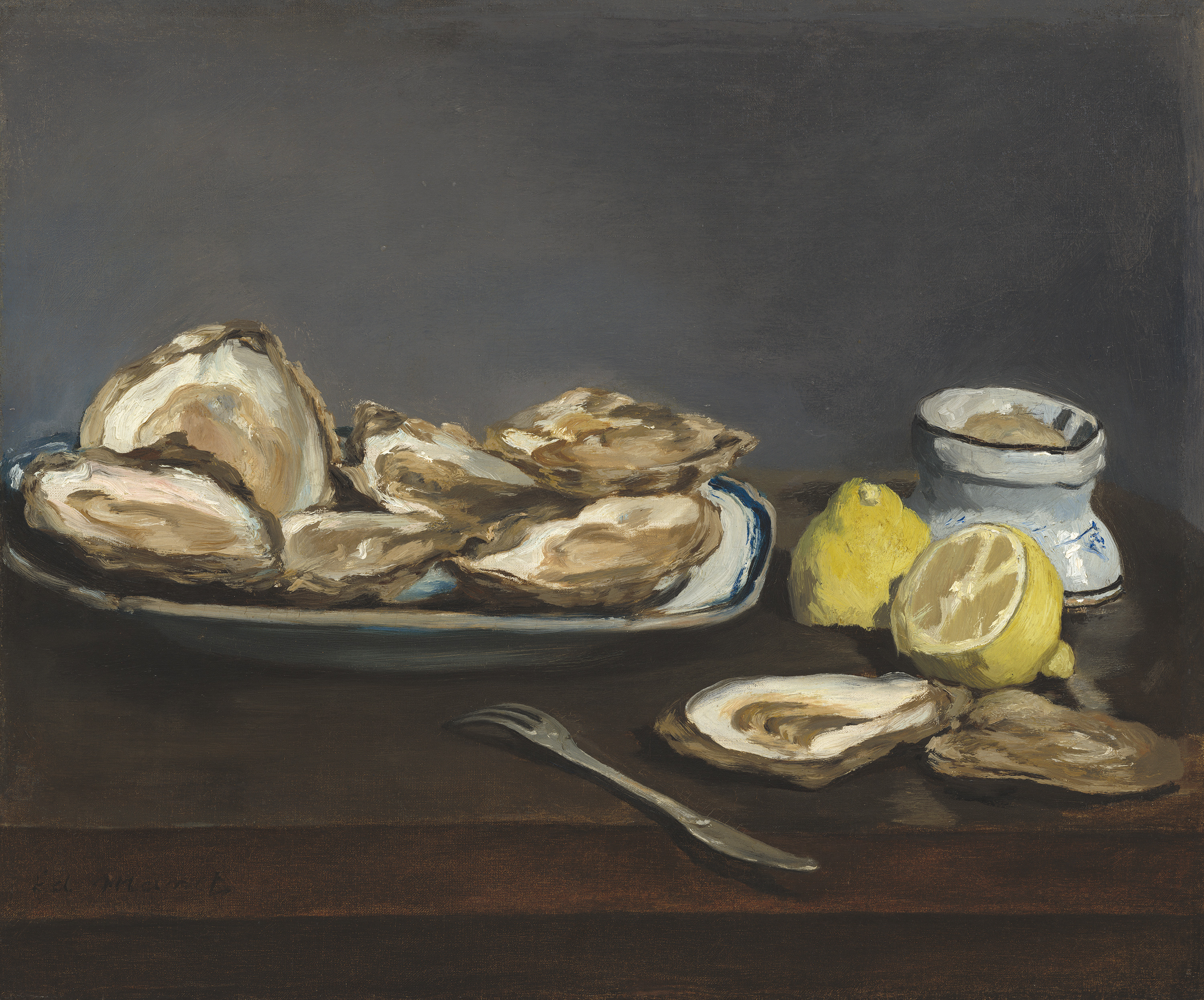
Image Credit: Édouard Manet “Oysters” (1862)

Ryan Quinn Flanagan: “Artisanal Birds”


Artisanal Birds 

Zeddie stood in the middle of the concourse.
Spinning in circles with outstretched arms.
The busy crowds maneuvering to get around him.

Some made faces.
Zeddie did not care to see their faces.
Arching his neck to look skyward at a flock
of artisanal birds just under the glass enclosure.

Suspended by cords that were largely invisible.
Zeddie loved to fly with the birds above the crowds.
They had accepted him as one of their own.
Even though he was not a bird.

Zeddie knew as much.
He figured the birds knew it as well.
But they were gracious in his presence 
and marvelous animals.

When the officers arrived, Zeddie was pulled 
down out of the sky by officer Hablo.
He was glad to see officer Hablo and went 
with him for a ride in his car.

Catching up on all Zeddie had missed 
migrating down south and then 
back again.

Officer Hablo wanted to know about the birds.
Zeddie told him they were marvelous 
animals.


About the Author: Ryan Quinn Flanagan is a Canadian-born author residing in Elliot Lake, Ontario, Canada with his wife and many mounds of snow.  His work can be found both in print and online in such places as: Evergreen Review, The New York Quarterly, Cultural Weekly, In Between Hangovers, Red Fez, and The Oklahoma Review.


More By Ryan Quinn Flanagan:

“Robbie the Owl”

“He Brought His Canvases Over”

“Before Evening Med Pass”

“It’s a girl I can tell, we’ve had nothing but trouble”

“Why Answers are Never the Answer”

“Double Downriver” By Scott Silsbe


Double Downriver

I grew up on a dead end in the shadow of a trash dump.
It was not exempt from its own kind of magic though.

The dead end of the street gave way to an open field,
which led to a stand of trees bordering a skinny creek.
Bikes had forged a dirt path from the street to the creek
and there was an old cement culvert and old rope-swing
back among the trees a ways if you knew where to look. 

On most Friday nights, we could all hear this great roar 
of many car engines revving up down at the dragway, 
even though it was a good two miles away from us.

When it would thunderstorm in the middle of the night,
we would wake up in the morning with booming heads,
lightning in our eyes, and all of the streets wiped clean.
The gulls squawking over the bulldozers on the dump.


About the Author: Scott Silsbe was born in Detroit. He now lives in Pittsburgh. His poems have been collected in three books—Unattended FireThe River Underneath the City, and Muskrat Friday Dinner. He is also an assistant editor at Low Ghost Press.


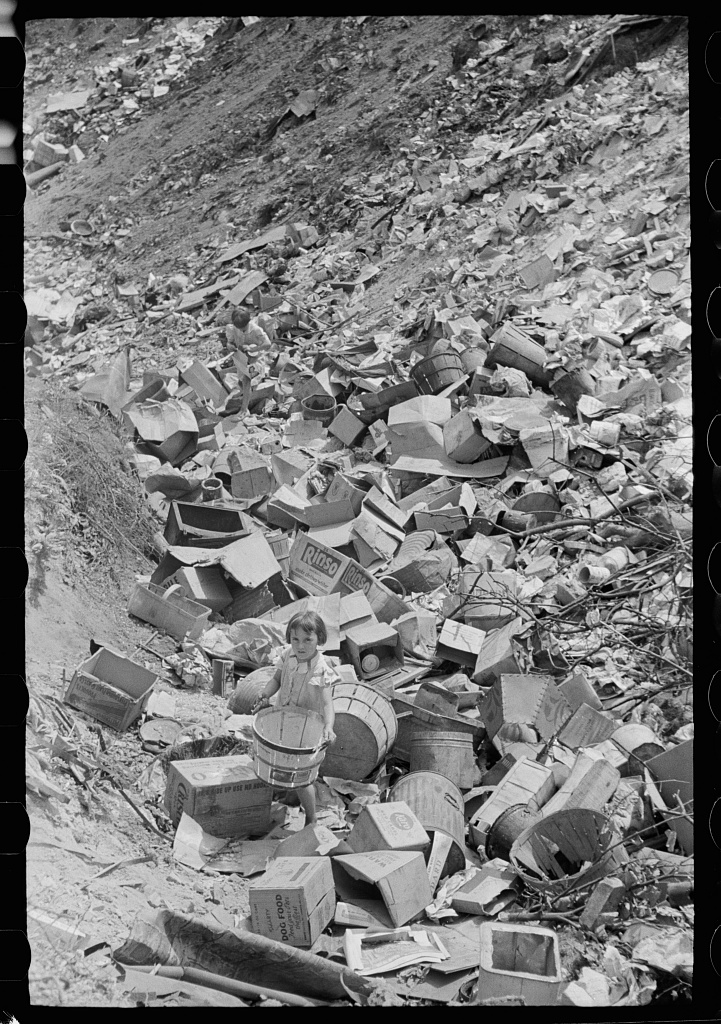
Image Credit: Arthur Rothstein “Untitled photo, possibly related to: Children at city dump, Ambridge, Pennsylvania” (1938) from The Library of Congress

Two Prose Poems By Howie Good


Flying Coffins

My zayde kept begging me not to leave him there. I tried to reassure him, told him there wasn’t always that great a difference between a funeral and a carnival. Even as I spoke, crows were gathering on the headstones, just a few at first, then maybe a couple of dozen. Child, child, the crows cried, you can’t kill what’s already dead. It got me wondering if sunshine was an overrated virtue. I couldn’t decide one way or the other. Since then, where my dog is, that’s where home is, and that’s not bad, that’s about as good as anything.


The Deluge

“By three things is the world sustained,” the rabbi said. Then he asked me, in his morbidly conscientious way, to name at least two that laid end to end would stretch from London to Paris, about 300 miles. While I was working out how to respond, the congregation started to yell, “No! No!” as if there needed to be some sort of machine that could detect all things with value that had been taken by the water. It’s why now when my children hear sounds at night, they think the rain is coming back, and even I’m scared to sleep.


About the Author: Howie Good is the author of three recent collections, I’m Not a Robot from Tolsun Books, A Room at the Heartbreak Hotel from Analog Submission Press, and The Titanic Sails at Dawn from Alien Buddha Press.


More by Howie Good:

“Maiden Voyage”

“Spy Culture”

“The Anxiety of Influence”


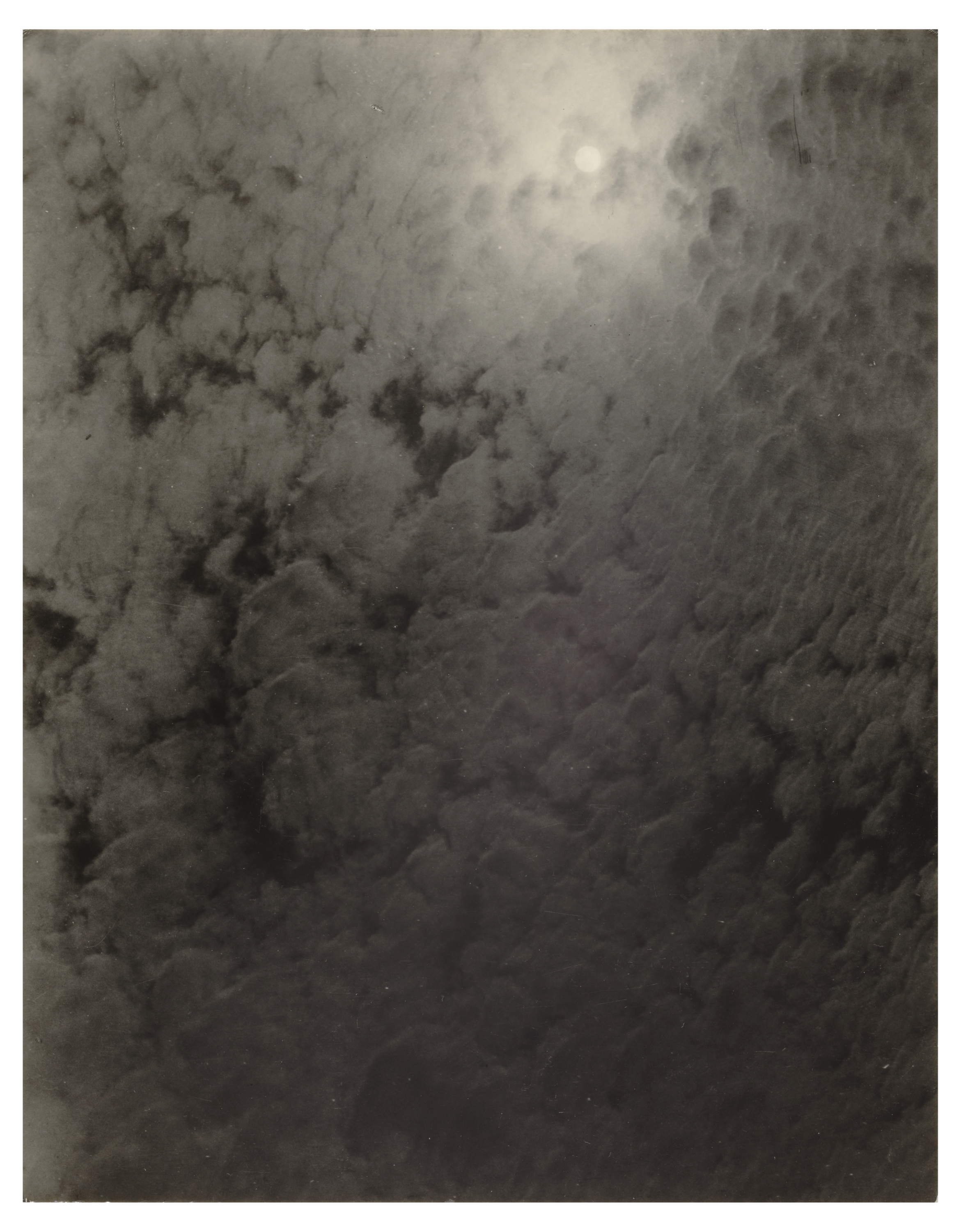
Image Credit: Alfred Stieglitz “Equivalent, A3 of Series A1″ (1926)  Digital image courtesy of the Getty’s Open Content Program

“I Never Lack Conviction” By John Patrick Robbins


             I Never Lack Conviction

Maybe it’s just me and the page from here on out.

A loveless relationship, I understand and have been well groomed for over the years.

I cannot linger for a dim light and a setting sun pass all the same.

And dreaming of empty promises will only turn the young heart to a bitter soul.

I won’t bleed for tomorrow for tomorrow is uncertain at best.

Toast the demons that chase you to the grave.
And invite all the wrong ones in.

Its last call and I’m taking requests.


About the Author: John Patrick Robbins is the editor of the Rye Whiskey Review and Under The Bleachers. He is also the author of Smoking At The Gas Pumps from Soma Publishing and Sex Drugs & Poetry from Whiskey City Press. His work has been published in The San Pedro River Review, The Mojave River Review, Ariel Chart, Punk Noir Magazine,  Red Fez, Blognostics, Piker Press, Blue Pepper, Rasputin A Poetry Thread, Beatnik Cowboy, and Fixator Press. His work is always unfiltered.


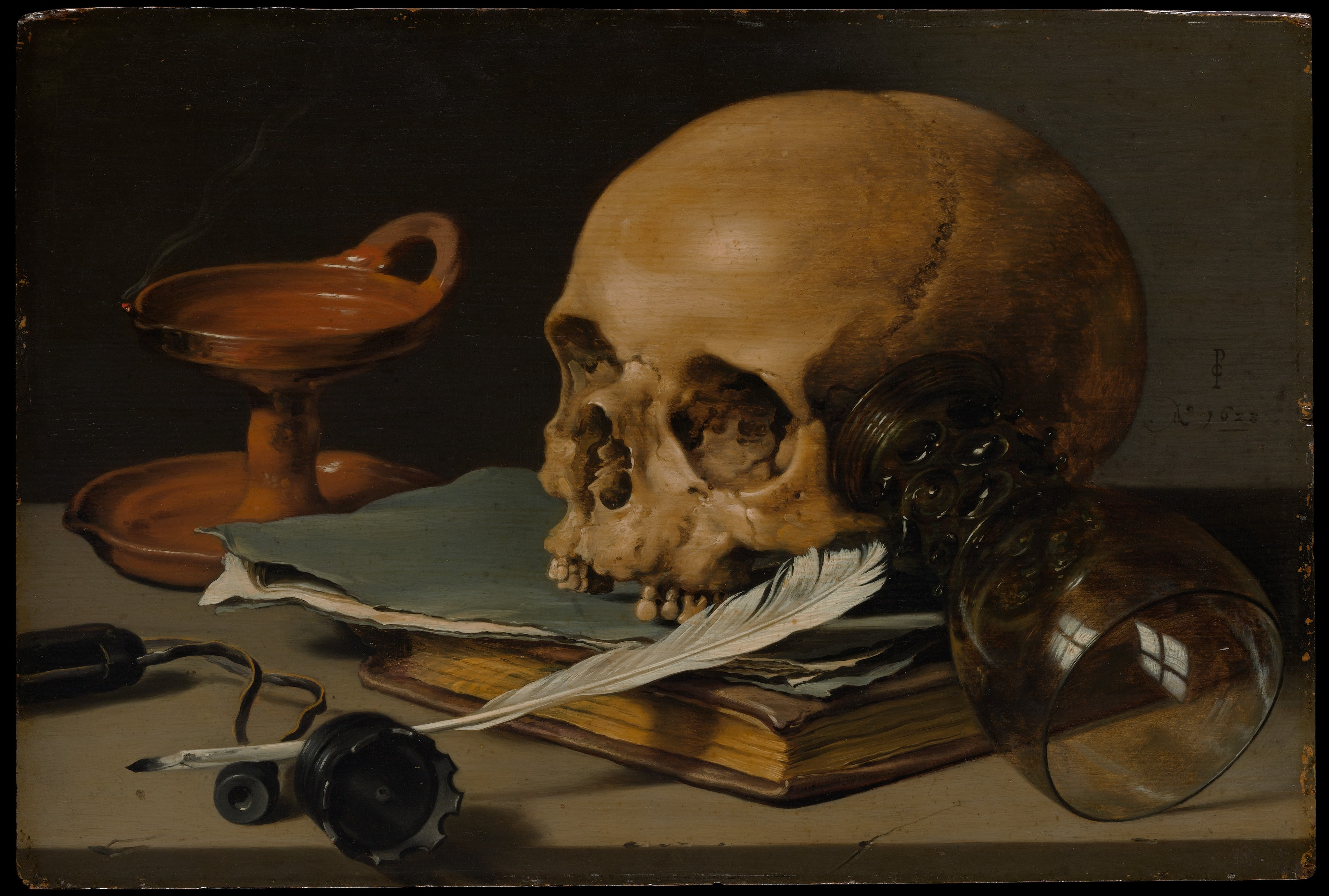
Image Credit: “Still Life With A Skull And A Writing Quill” Pieter Claesz (1628) image courtesy of the Metropolitan Museum of Art’s Open Access program. 

“Are Your Emotions More or Less Intense?” By Ace Boggess


“Are Your Emotions More or Less Intense?”
                                    [rehab workbook]

I went to a psychic, & she told me I have an old soul,
says the Starbucks barista who resembles Cameron
Diaz, who’ll never be an old soul because she’s caught on film,

childlike. I want to reply with a trite line,
but what comes out is Thanks for the latte,
my thoughts too cluttered for quantum entanglements &

small talk. At eight, I was old, my eyes calculating
trajectories of escape, scanning my slightly-
feminine watch to figure out how long I had to wait.

My brain made other plans rather than commit
to now. Mind-weary, head-worn, terrified
back then. Emotions stop aging for an addict,

according to the texts, as long as drugs
maintain their grip: if true, I’m in my twenties—
anxious, desperate for attention, happy for strange words

from the woman who makes hot drinks, despite
how I answer: hesitant, uncertain, my hand reaching
for the steel grip of the door more than half a room away.


About the Author: Ace Boggess is author of four books of poetry, most recently I Have Lost the Art of Dreaming It So (Unsolicited Press, 2018). His writing appears in Notre Dame Review, Rhino, North Dakota Quarterly, Rattle, and many other journals. He received a fellowship from the West Virginia Commission on the Arts and spent five years in a West Virginia prison. He lives in Charleston, West Virginia.


More By Ace Boggess:

“Why Did You Try to Sober Up?”


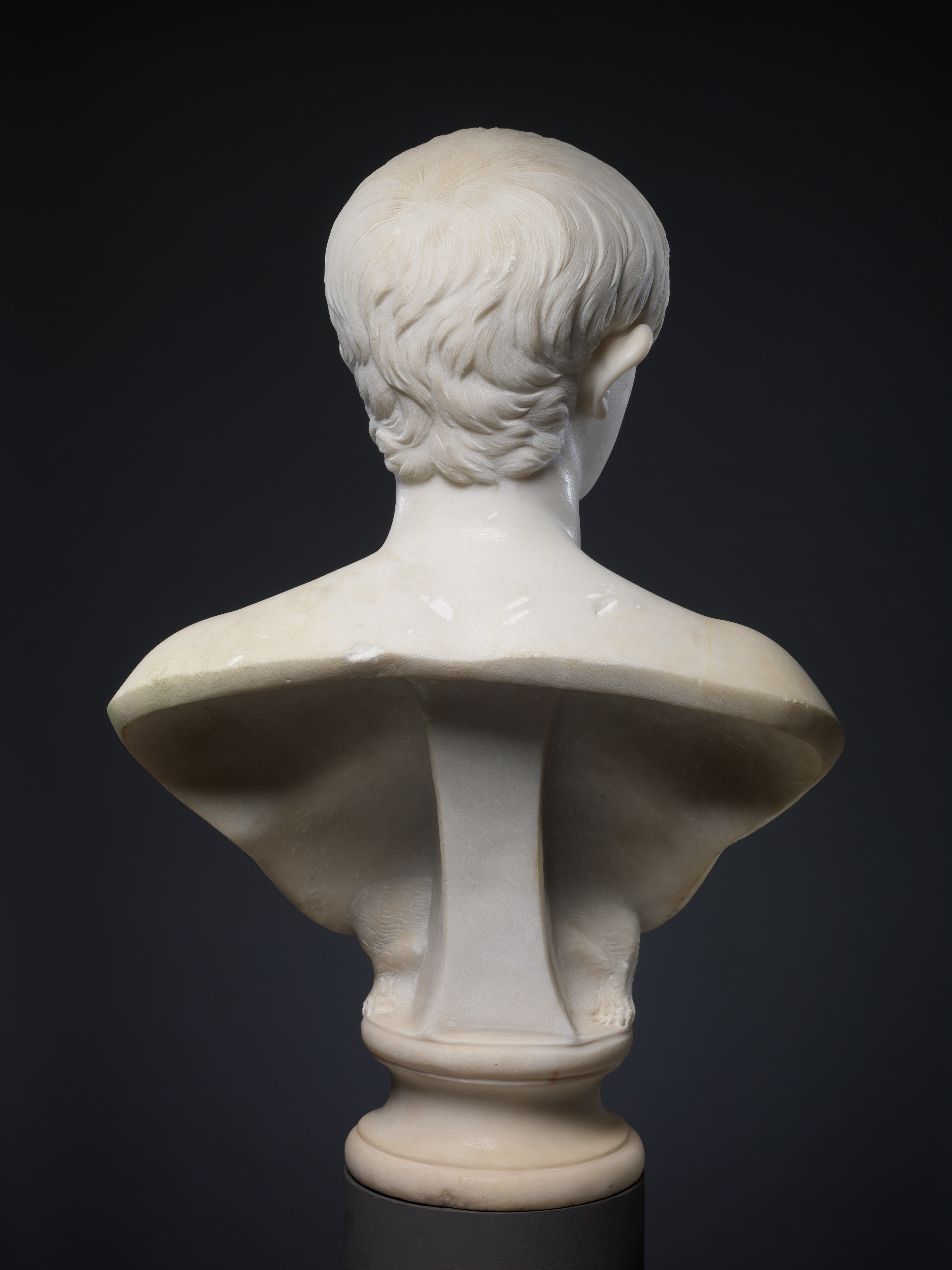
Image Credit: The Metropolitan Museum of Art, New York: “Marble Bust of a Youth” (140 AD)

“Aubrie” By Cord Moreski

.

Aubrie
for Andrew Moreski  

My parents had just killed their bedroom lights
when I decided to sit on the porch after supper
listening to Let It Be by The Replacements
and sipping on Fat Tire in a broken beach chair.
It was September and all that was left
in this shore town were locals
and the subtle hints of autumn in the ocean air.
That was when my little brother Andy came out
of the house and introduced me to Aubrie.

He told me as he took a seat that he met her
when he was six years old. Andy snuck
into our older sister’s bedroom
and saw Aubrie’s reflection in posters
of Ginger Spice and Belinda Carlisle,
in palettes of eye shadow and lipstick,
and in the array of powder brushes and bags
scattered like treasure along our sister’s vanity.

They continued to talk in high school.
He wrote love poems for her
during eighth-period composition class
repeating the mantra LOVE HAS NO IDENTITY!  

Then they moved to Astoria together
after college. She told him to grow his hair
past his ears and down his shoulders
to drown out the sound of gossip
that would be about him, to paint
his fingernails blacker than the looks
he would receive, to wear
his thrift store dresses and stilettos
better than any woman he would ever know.

“One day,” Andy told me as we clinked
our beers together, “I’m going to introduce her
to Mom and Dad. But that’s whenever she’s ready.”


.

About the Author: Cord Moreski is a writer from New Jersey. His work has been previously featured in Silver Birch Press, The Pangolin Review, Philosophical Idiot, The Rye Whiskey Review, In Between Hangovers, and several other publications. He is the author of the chapbook Shaking Hands with Time (Indigent Press, 2018) and is currently working on his first full length (2020). You can follow Cord here: https://www.cordmoreski.com

.

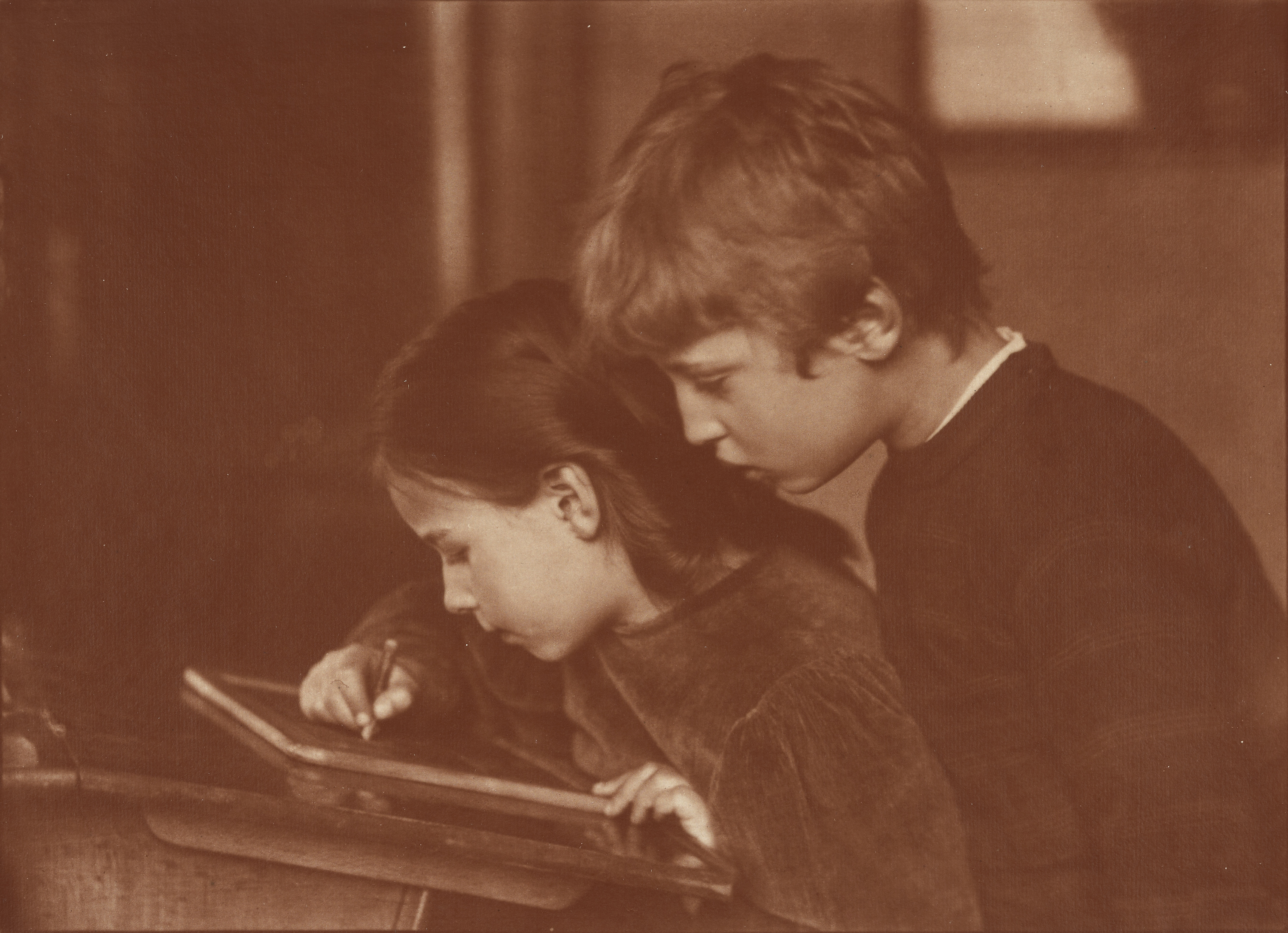
Image Credit: Heinrich Kühn “Brother and Sister” (1906) Digital image courtesy of the Getty’s Open Content Program.

“A Man, His Family Killed by the War, Returns to Aleppo” By Steven Croft

Embed from Getty Images


A Man, His Family Killed by the War,
Returns to Aleppo

In mornings I am despair.  I rise
and walk out to the balcony, its ruined
wall missing like my life, like townspeople
buried in the city’s uncleared debris.
Thanks be to Allah the days send no bombs
now.  But at night they still wake me sweating
and screaming into the sudden quiet
for the dead I’ve abandoned again
and again.

In mornings my neighbor’s daughter still
misses her leg.  “Every time I give her a doll,
she cuts off its leg,” her mother says.

In mornings, below me, younger men rebuild
the insides of houses, clear the street’s rubble
for cars while motorcycles weave through them.
Below me, I smell bread baking, hear laughter,
like an unknown language, its beauty alien
to my life, to my ear, its sound impossible
like my wife has come calling
my name.

.
About the Author: Steven Croft is the author of two poetry chapbooks, Coastal Scenes (2002) and Moment and Time (2015), both published by The Saltmarsh Press. He has published poems recently in Politics/Letters Live and Sky Island Journal. He works for The Marshes of Glynn Libraries in Brunswick, Georgia.

.

Image Credit: Photo courtesy of Getty Images‘ embedded photo program


“Acetylene Sunsets: Edward Dorn’s Recollections of Gran Apacheria” By John Macker


Acetylene Sunsets:

Edward Dorn’s Recollections of Gran Apacheria

By John Macker

“In the internal resistance of his thought, Dorn has been able to understand the American Indian more deeply perhaps than any recent writer, scholarly or poetic, who is not himself an Indian. In these works, as in the larger body of his writing, Dorn makes marginal figures, as they resist external authority with an indivisible spirit of self, land and history, morally central to the inner life of American Culture.”

                                                                                                         – Paul Dresman


I dug Ed Dorn because he wd rather
Make you his enemy
Than lie
           – Amiri Baraka


I first encountered Ed Dorn at a reading I did with him and Linda Hogan in Denver in the spring of 1983, at Muddy’s Coffee House in the Slightly Off Center Theatre on 15th street. I was a young, green poet and it was my first major reading with a theatre full of people, most of whom I didn’t know. I remember being anxious, pacing as I read, almost stalking the words as they came from my mouth. In contrast, Dorn was seated for his reading and read from Hello, La Jolla, or, possibly, Yellow Lola, late 1970’s works that, in contrast to the wild-crafted, rhythmic surrealism of his Gunslinger series of books, seemed arrestingly aphoristic. I knew of Ed Dorn — he was teaching at the University of Colorado — but it would be some years before I began reading all of his works and concluding, along with many others, that his was a distinctive, uncompromising and wildly original American voice and, as his friend the late Amiri Baraka described him, “Thin straight blonde Cowboy/movie looking white guy with the mind/of a saw.”

    Fact is, I didn’t appreciate him as much in those days. And that was as much due to my immaturity and insecurity as it was my inability to recognize great writing character when I was in the same room with it. He was particularly generous to my wife and I and after the reading we spent some time together talking about Denver — he was interested in it as a collection of characters in a landscape, its roots as well as its contemporaneous presence as a major metropolis. He was intrigued by its straight, cosmopolitan, newly corporate cow town development vibe verses the academic/counter-culture exoticism of post-hippie mountain town Boulder. At that time, Naropa Institute was sucking much of the literary air out of the room. Allen Ginsberg and Anne Waldman had conceived the Jack Kerouac School of Disembodied Poetics there, and Trungpa Rimpoche’s hijinks were becoming legend. (I attended the summer poetics program in 1978, so, guilty.)

    After a brief summer teaching stint there in 1977, Dorn evidently wanted no further part of it. In fact, he eschewed the authoritarian implication of all labels and categories: definitions, belonging to a particular school or group of writers. He disdained being classified as Beat, outlaw, academic or avant-garde or belonging to any particular “movement”; as for his primary poetic education with Charles Olson and Robert Creeley at Black Mountain College in North Carolina, as Lisa Jarnot put it, “the formidable constellation of Black Mountain poetics”, it was a transformative experience that would transcend all manner of category or label. In fact, his appearance in Donald Allen’s seminal 1960 anthology of non-academic, avant-garde writing, The New American Poetry, where his work appeared with the greatest poetic minds of his generation, would be as close as he came to belonging to any group. Continue reading ““Acetylene Sunsets: Edward Dorn’s Recollections of Gran Apacheria” By John Macker”

“to abby wherever you are” by John Grochalski


to abby wherever you are

i watch the little girl
sitting across from me

she is four years old
and is as impatient
with this stalling subway train as i am

she kicks her legs
and squirms in her seat
and complains to her mother
in impatient little kid whines

mama’s reaction is a mantra of shushes
and the impatient bark of her name, abby

mom has a fussy infant to attend to as well

i wish that i could act out like abby
kick my legs and squirm in my seat

impatiently whine to my wife
about infrastructure and the decline
of american ingenuity

but i’d end up in divorce court

i wish i could tell abby
that in thirty minutes
we will all reach the end
of this horrible saga together

that i will gallantly carry
her brother’s stroller up two flights of steep steps
as her mother offers many thank yous

and abby leads us up and up
toward the light of the quickly moving city

where the big tall buildings
aren’t always big tall lies

and a taste of the american dream
is as delicious as an ice cream cone.


About the Author: John Grochalski is the author of the poetry collections, The Noose Doesn’t Get Any Looser After You Punch Out (Six Gallery Press 2008), Glass City (Low Ghost Press, 2010), In The Year of Everything Dying (Camel Saloon, 2012), Starting with the Last Name Grochalski (Coleridge Street Books, 2014), and The Philosopher’s Ship (Alien Buddha Press, 2018). He is also the author of the novels, The Librarian (Six Gallery Press 2013), and Wine Clerk (Six Gallery Press 2016).  Grochalski currently lives in Brooklyn, New York, where the garbage can smell like roses if you wish on it hard enough.


Image Credit: “116TH STREET/COLUMBIA UNIVERSITY STATION. PLATFORM AND STAIRS TO MEZZANINE. – Interborough Rapid Transit Subway (Original Line), New York County, NY” The Library of Congress