“Punchline” By Nathan Graziano


Punchline

Here’s a joke in a loose poetic form.
Let’s be honest, people like reading
jokes more than they like reading poems.
In my older age, I’m becoming a realist,
like my father warned, only he used
the word “conservative.” Which I’m not.
At one time, I sat at this same desk
and believed that a poem could touch
the world and make the smallest dent
in whatever armor protects us from us.

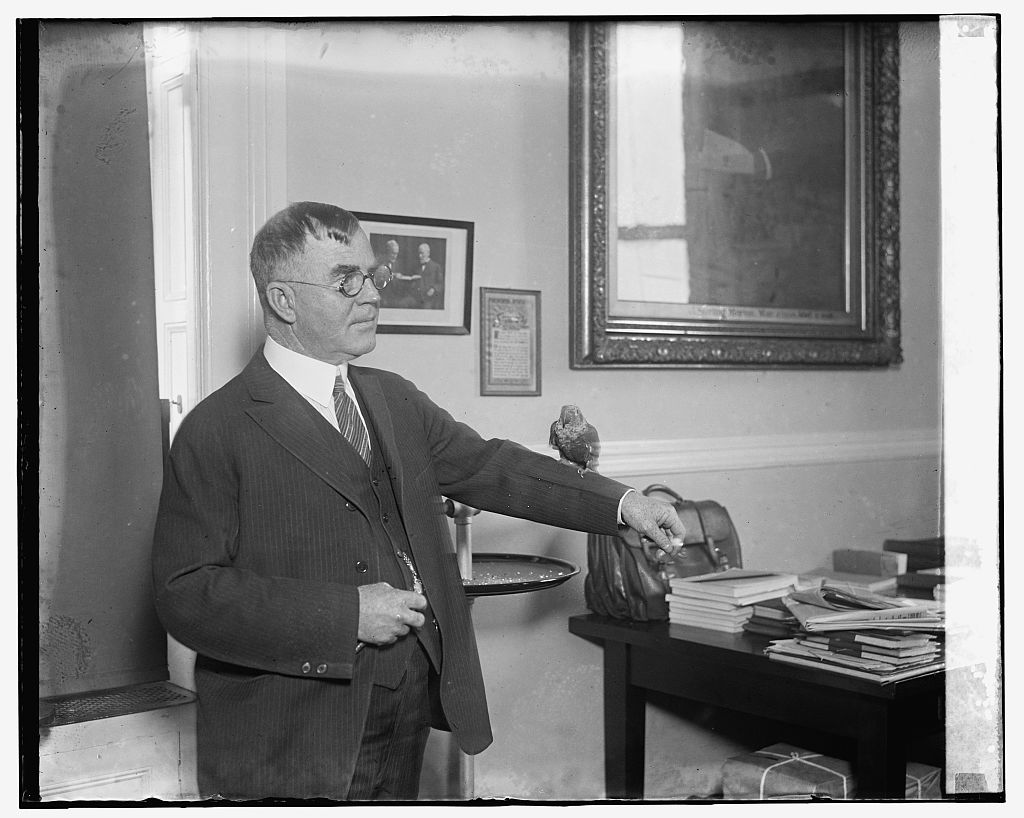
So a poet walks into a bar with a parrot
on his shoulder, and the bartender says,
“Hey, where did you get that thing, bub?’
And the parrot says, “Starbucks. There’s
a ton of them.” Funny how that turned.   


About the Author: Nathan Graziano lives in Manchester, New Hampshire, with his wife and kids. His books include Teaching Metaphors (Sunnyoutside Press), After the Honeymoon (Sunnyoutside Press) Hangover Breakfasts (Bottle of Smoke Press in 2012), Sort Some Sort of Ugly (Marginalia Publishing in 2013), and My Next Bad Decision (Artistically Declined Press, 2014), Almost Christmas, a collection of short prose pieces, was recently published by Redneck Press. Graziano writes a baseball column for Dirty Water Media in Boston. For more information, visit his website: www.nathangraziano.com.


More By Nathan Graziano:

Explaining Depression To My Cousin


Image Credit: “Wallace & parrot, 2/29/24” (1924) Library of Congress

“War? Rumors of War?” “By John Guzlowski

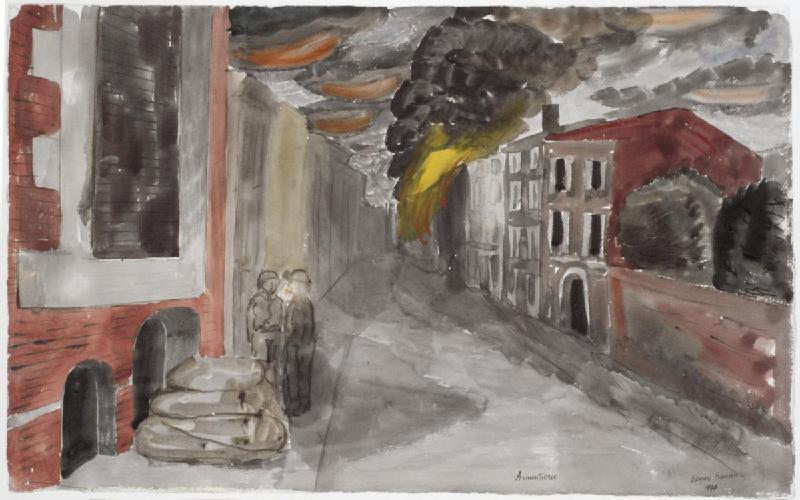
Armentieres_after_Bombing,_May_1940_Art.IWMARTLD175


War? Rumors of War?     


     There’s been a lot of talk in the news about the possibility of war in Iran and the Middle East.  Some people are talking about why we need to go to war with Iran, and some are talking about why war with Iran is a mistake.  

     I’m tired of war.

     I’ve lived through the Korean war, the Vietnam War, the first Gulf War, the second Gulf War, the war on Terror, the Afghan War, and the Iraq War. And this list doesn’t include all the little bitty wars I’ve lived through, like Panama, Grenada, Lebanon, and it doesn’t include all those other little bitty wars I’ve forgotten about and that only the dead remember.

     War is a terrible thing.  I think that’s one of the things I’ve learned from my mother and father and from writing about their lives and the experience of other Poles in World War II.

     In my poem “Landscape with Dead Horses,” I talk about the way the war began in Poland on September 1, 1939.  Here’s what I say:

War comes down like a hammer, heavy and hard
flattening the earth and killing the soft things:
horses and children, flowers and hope, love
and the smell of the farmers’ earth, the coolness
of the creek, the look of trees as they unfurl
their leaves in late March and early April.

     This is war for me.  This is the way I see war. There’s nothing pretty about war, nothing heroic, nothing epic or Homeric.  50 million civilians died in World War II. And you can bet that not one of those deaths was peaceful, not one was a death you would want to wish on your own mother or your father or your children.

     And what I hate to admit about war – but I have to – is that sometimes war is necessary.

     I’m glad that the US went to war against Hitler and dragged him and his soldiers and followers down and tried to bury every single one of them in an unmarked and unmourned grave.

     War, as I see it, was terrible and it was necessary, but the thing I can’t ever forget is that the Germans who fought for Hitler also thought the war was necessary and justified.

    That’s one of the problems with war.

     What brings us together finally – brings together those who don’t want war and those who want war – is that we all end up scratching our heads and grieving over the chaos and the loss.


About the Author: John Guzlowski’s writing appears in Rattle, North American Review, and other journals.  Echoes of Tattered Tongues, his memoir about his parents’ experiences as slave laborers in Nazi Germany, won the Benjamin Franklin Poetry Award and the Eric Hoffer/Montaigne Award.  He is the author of the Hank and Marvin mystery novels and True Confessions, a memoir in poems.


More By John Guzlowski:

Language and Loss

From the Ashes: An Interview With John Guzlowski


Image Credit: Edward Bawden “Armentieres after Bombing, May 1940″ Public Domain


“And on the Seventh Day” By Agnes Vojta


And on the Seventh Day

God had finished his work and thought
a rest day would be a nice change.
But he didn’t have anybody to play golf with,
because Satan was busy.
After the thrill of creating,
He wondered
what to do to amuse Himself.

So He figured,
let’s give those humans free will
and see what they do with it. Perhaps
watching them will be
a fun pastime.

And He settled down to watch
civilizations rise and fall
and humans slaughter each other,
and when the same stories played out
over and over again,
He became bored and
wandered off to
create another universe.

This time, He thought,
I’ll make one
without people.


About the Author: Agnes Vojta grew up in Germany and now lives in Rolla, Missouri where she teaches physics at Missouri S&T. She is the author of Porous Land (Spartan Press, 2019). Her poems recently appeared in Gasconade Review, Thimble Literary MagazineTrailer Park QuarterlyPoetry Quarterly, and elsewhere.


More By Agnes Vojta:

Flotsam


Image Credit: William Blake “Ancient of Days” (1794)

“My Mother on Her Deathbed” by Bunkong Tuon


This is the sixth in a series of poems from a forthcoming poetry collection about raising a biracial daughter in contemporary America, during this polarizing time of political and cultural upheavals where sexual harassment allegations abound, where a wall, literal and figurative, threatens to keep out immigrants like the narrator, a former refugee and child survivor of the Cambodian Genocide. You can find links to the full series of poems on As It Ought To Be Magazine below.


My Mother on Her Deathbed

Withered away in pus,
knowing that she’d leave
me, her only child.
My uncle’s body crouched in
fetal position on the red
dirt of the refugee camp,
heavy boots of Thai soldiers
thundering on his head,
back and stomach.  
Grandmother weeps
at night
for all her children,
alive and dead,
for her orphaned grandson,
for all parents haunted
by helplessness.
In America
I was the new kid,
a reminder of a war
that tore families apart.  
Saliva clung
to my tear-stained cheeks
and stuck to my hair.
Stephanie  
my first crush said,
“It’s nothing personal.”
But these memories
are wiped clean.
All is forgiven.
A flower blooms
in the desert
when my daughter
hugs me.


About the Author: Bunkong Tuon is the author of Gruel (2015) and And So I Was Blessed (2017), both poetry collections published by NYQ Books, and a regular contributor to Cultural Weekly  He is also an associate professor of English and Asian Studies at Union College, in Schenectady, NY.


Bunkong Tuon’s series of poems on raising a biracial daughter in contemporary America:

Ice Cream

Gender Danger

The Bite

Tightrope Dancer

Women’s March in Albany

My Mother on Her Deathbed


Image Credit: Charles Aubry “Still Life Arrangement” (1864) Digital image courtesy of the Getty’s Open Content Program.

“Eat Rain” By Luis Cuauhtémoc Berriozábal


Eat Rain

We can eat rain
when our teeth fall
out; Mexican
beer from the bar.

The sky will be
the food mart; the 
sea as well. We
can eat a tear.

No one will care.
Not Washington,
not the food banks,
and not the clouds.

We can’t eat fire.
New teeth won’t grow.
Ice cubes are
hard. This I know.

I have eaten
up my own sweat,
a pool of tears.
I am human.

I get quite starved.
I love the clouds.
The rain they drop.
I wait under.

And I eat rain,
and I eat rain,
fabulous rain,
clear, falling rain.


About the Author: Luis Cuauhtémoc Berriozábal, born in Mexico, lives in Southern California, and works in the mental health field in Los Angeles, CA. His latest poems will appear in Fearless, Former People, Piker Press, Right Hand Pointing, Winamop, and Yellow Mama Magazine.


Also By Luis Cuauhtémoc Berriozábal:

Dracula

When I was a Child


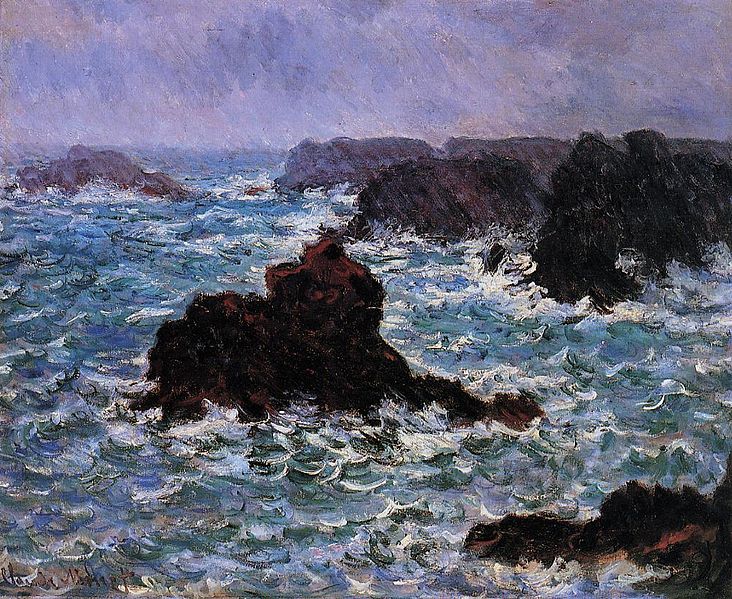
Image Credit: Claude Monet “Belle-Ile, Rain Effect” (1886) public domain

“Cycles of Grief Go On and On” By Jeanette Powers


Cycles of Grief Go On and On

In no good world is it right
for a mother to leave behind
two young boys when she dies
or for the family to fight
over her crumbs, her car
the paint by number of a white horse
the hand-painted sculpture
of a monkey, hanging
from a real rope
the raining oil lamp
with the naked woman inside
there’s no justice
in fighting over her wedding ring
while those two boys
sit in pews praying
for their mom.

There is no kindness in giving
your queer granddaughter
a bible for graduation
after fifteen years of her
hiding behind the pulpit
knowing she can’t be baptized
into the faith of her family
and cutting off her college fund
when she’s caught red-handed
with a woman at the movie theater
then sending her out into the world
without a safety net
unable to pray without
remembering being cast away.

For the abandoned
it feels like everyone
is beating on them for their whole lives
and they are the only ones paying the price
it seems like everyone
is just getting away with so much cruelty
dressed up as the Christian thing to do
and we, abandoned through grief,
loss, through being different
find our own solace
and too often in razor blades,
another dozen bottles
always bashing our heads
in prayer against a wall
we can’t find our way out from behind.

Are we raising a generation
of hungry ghosts, sleeping
with clenched fists, ready to punch back
at first waking, unable to be given
an apology they can hear
every reason just an excuse
always believing everyone
is going to be right at our throats
the second we show our self
our rage an impacted tooth
our memory a suppurating ulcer
the only cheek turned, always our own?


About the Author: Jeanette Powers: poet, painter, philosopher, professional party dancer and working class, anarchist, non-binary queer. Here to be radically peaceful, they are a founding member of Kansas City’s annual small press poetry fest, FountainVerse. Powers is also the brawn behind Stubborn Mule Press. They have seven full length poetry books and have been published often online and  print journals. Find more at jeanettepowers.com and @novel_cliche


More By Jeanette Powers:

Reflections in the Windows of Your First Car


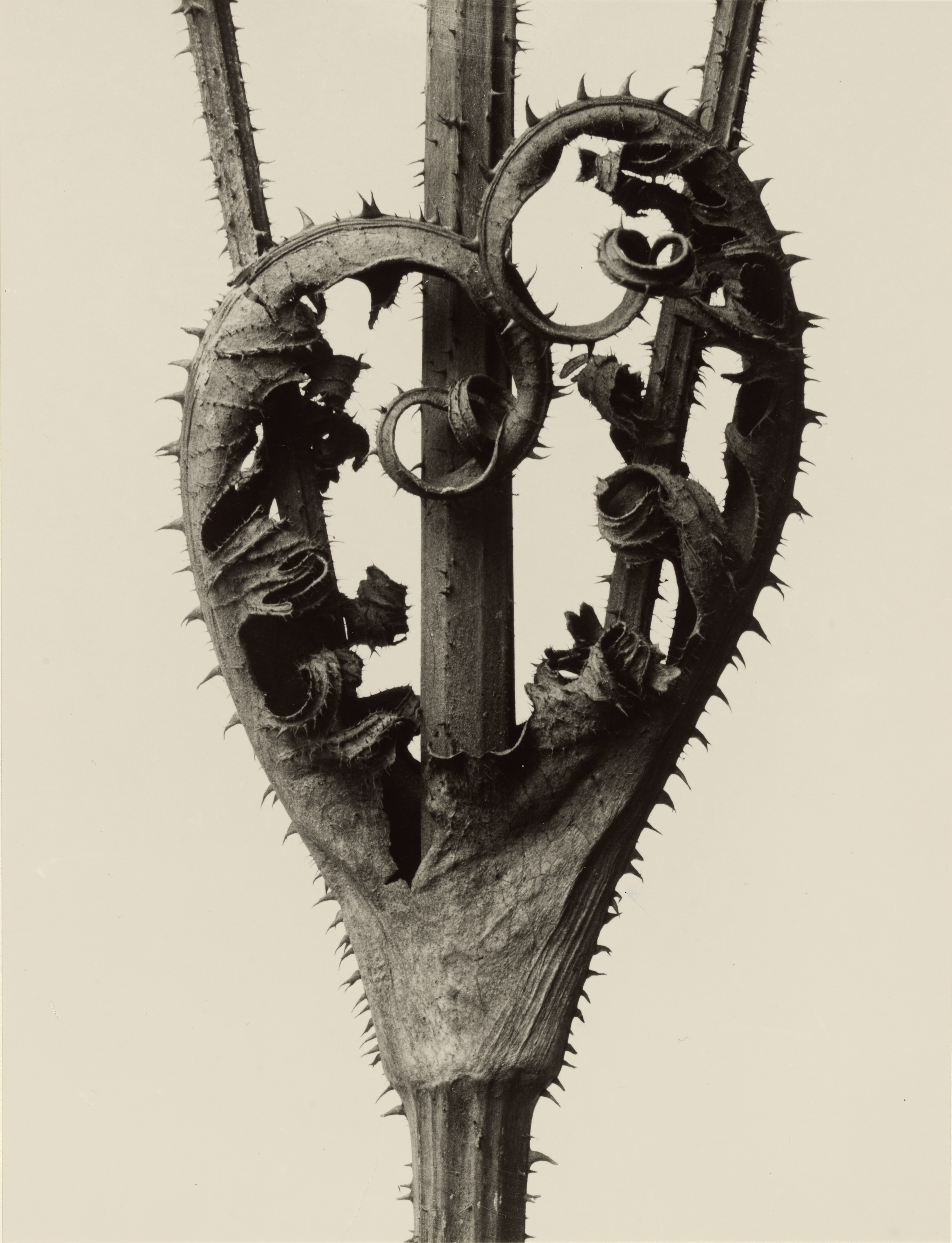
Image Credit: Karl Blossfeldt “Dipsacus laciniatus” (1928) Digital image courtesy of the Getty’s Open Content Program.

“When the Watched Pot Boils” By Kory Wells


When the Watched Pot Boils

You know time is getting by,
and you try to remember
all she told you:

Use both dark meat and white.
Save bone and skin and gristle
for the cat. Roll the dough thin
as a paper sack. Slice it into strips
no wider than your thumb.
You’d give up sweets for a month
to hold again her wood-handled knife,
its old blade so often sharpened
it was almost gone.

You think of these things
as you stand at the stove,
the kettle’s broth rolling.
Think of the stories she told.
That time a door-to-door peddler
tried to snatch her youngest.
That hot night she and her lover
broke every dish in the house.
That Sunday the kids ate
their own pet rooster for lunch.
Reminding you,
chicken and dumplings need
plenty of salt. You taste

that name passed down to her,
Tennessee,
and she is with you,
barefoot, stirring the pot,
one eyebrow raised.
That hard T, that soft S,
the irony she was born
in Georgia and lies now
all too soon, in Alabama soil.

Some things are never right.
Some things are not better with time.
But maybe her name was perfect.
After all, how many of the stories
she told had a happy ending?


About the Author: Kory Wells is a poet, writer, storyteller, and advocate for the arts, democracy, afternoon naps, and other good causes. In 2017 she was named the inaugural poet laureate of Murfreesboro, Tennessee, where she also founded and manages a reading series. Her poetry collection Sugar Fix is forthcoming from Terrapin Books. Read more of her work at korywells.com.


More By Kory Wells:

Untold Story


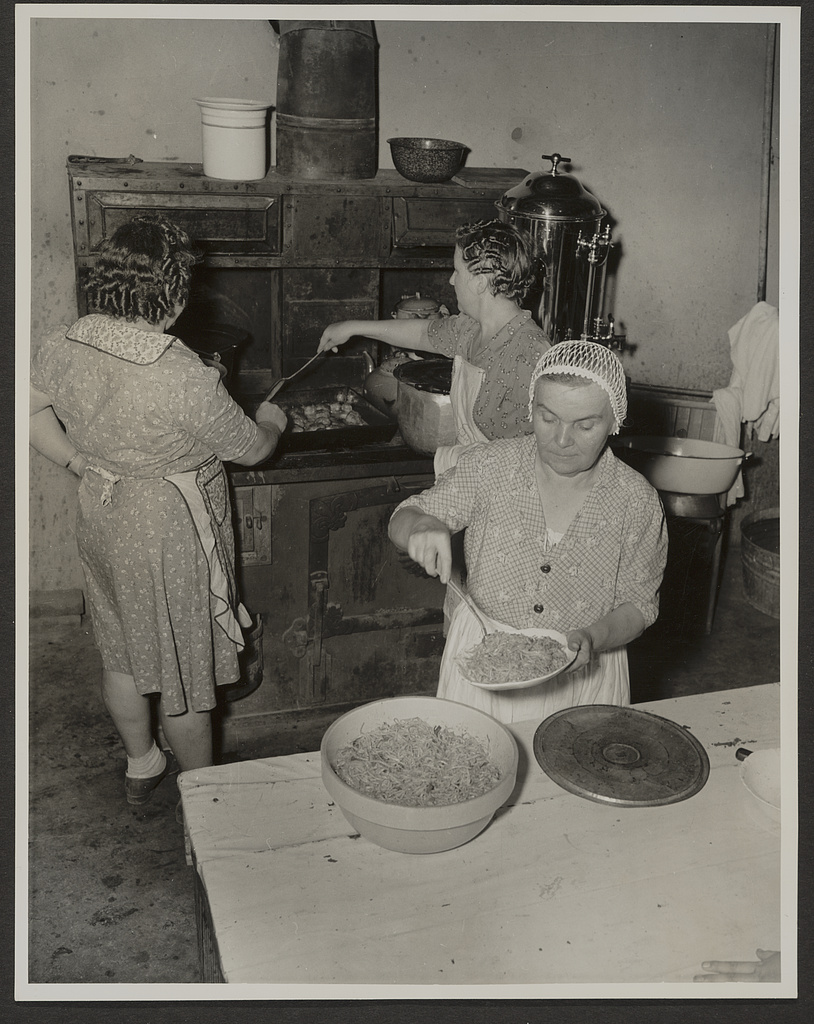
Image Credit: “Cooking spaghetti and frying chicken for a spaghetti supper at Grape Festival, Tontitown, Arkansas” (1941) The Library of Congress


Two Prose Poems by Mike James


Things I Hate

Things I hate mainly start with u. Things like newly upholstered umbrellas taking umbrage at the rain for doing what it does. Any ordinary person or day declaring herself unique. Special and different are matter-of-fact fine, but unique seems untucked from what is.

Of course, I make exceptions. I’m fine with whatever is ungainly. Even prefer it. And I have nothing against unicorns of saddled or unsaddled variety. If I were Ezra Pound, I would complain about usury. But I’m not. So I don’t. Borrowings don’t make me think of interest. Instead I think of theft. What starts as a favor, ends as a complaint. Such things don’t happen in utopias, but only princes live there. The plain world gets upturned more than twice a day. At any moment the sky might crack open with a new birth of tears.


Tribulations Down the Street From the Quickie Mart

So, the Four Horsemen of the Apocalypse ride into town and what are you doing, Mr. Sunshine, except licking a vanilla ice-cream cone and digging through your neighbor’s trash? Yesterday you were talking about all the things you wanted to do in the Falklands once winter vacation arrived. You planned to watch penguins and begin each day rousing your companion by singing God Save the Queen in the key of Sid Vicious. Now, all that will have to be postponed. And all the Horsemen have noisy and glittery spurs. It would be foolish to think they wouldn’t. And why is one playing a harmonica? And why does another have your name tattooed, with John Hancock style flourish, right above his heart? Each is busy doing what they came to do. And each is pretty good at it. Despite it all, that ice-cream is still delicious.


About the Author: Mike James has been widely published in magazines, large and small, throughout the country. His thirteen poetry collections include: Jumping Drawbridges in Technicolor (Blue Horse), First-Hand Accounts from Made-Up Places (Stubborn Mule), Crows in the Jukebox (Bottom Dog), My Favorite Houseguest (FutureCycle), and Peddler’s Blues (Main Street Rag.) He has served as an associate editor for the Kentucky Review and Autumn House Press, as well as the publisher of the now defunct Yellow Pepper Press. He makes his home outside Nashville, Tennessee. More information can be found on his website at mikejamespoetry.com.


More By Mike James:

Grace

Paul Lynde


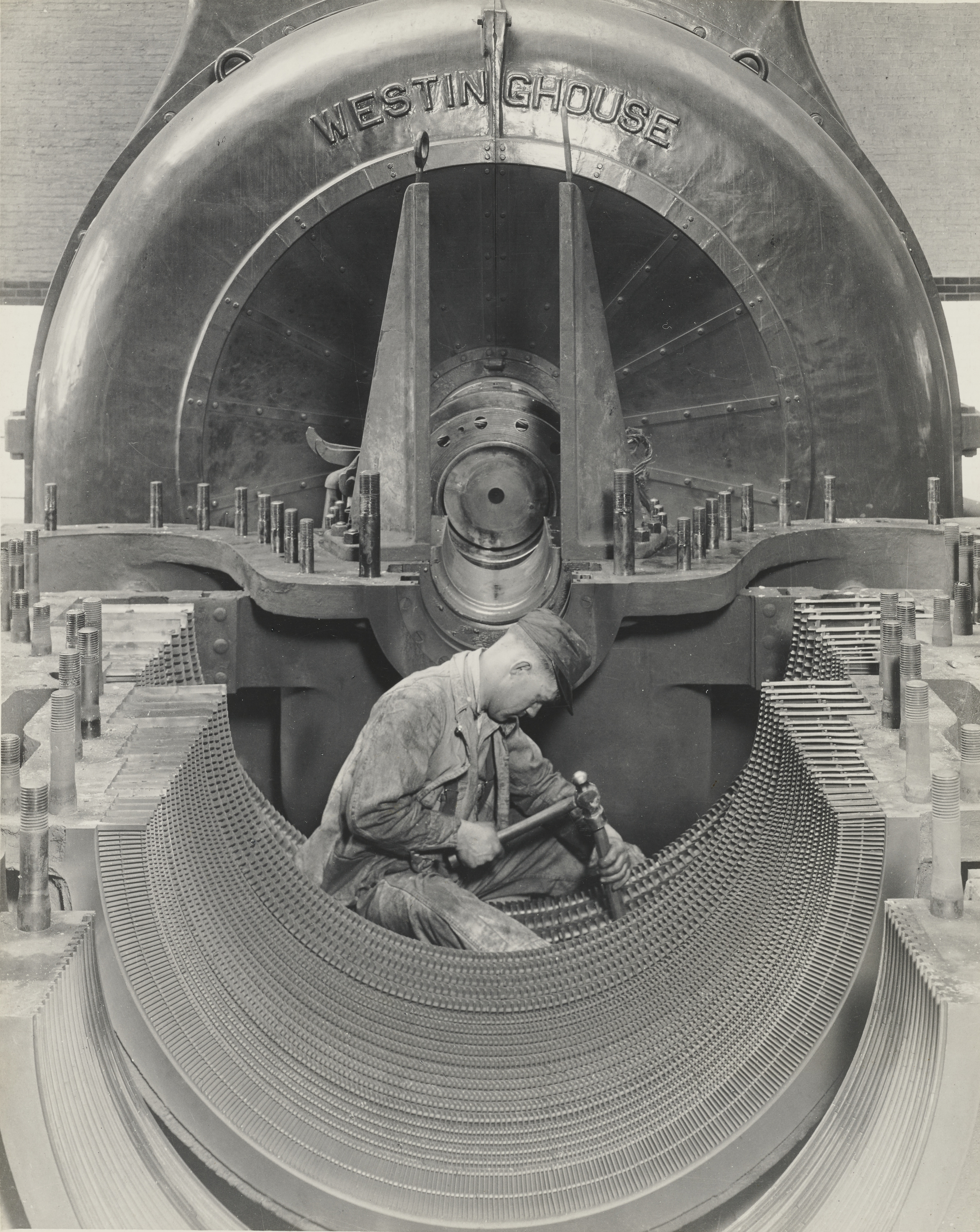
Image Credit:Heart of the Turbine” Lewis W. Hine (1930) Digital image courtesy of the Getty’s Open Content Program


“A Good Bad Day” By Tony Gloeggler


A GOOD BAD DAY

John walks slowly up the stairs
to my office every day. Between
four and four-thirty, after the bus
brings him home from day program
and after he uses the bathroom,
he says, “Oh, hello, Tony,” as if
he’s surprised to find me
sitting at my desk. He says
he had a good day, stands
by a chair, and after six years
of living at the residence,
his home, he still hesitates,
wonders if he needs permission
to sit down. I don’t give it,
wait until he sits on his own.
He tells me if he read or painted,
exercised or sang today and I ask
questions as if I was his mother.
Maybe he went to a park, a store,
the library. All along he wears
this pleasant, half smiling,
perfectly balanced, zen-like gaze
across his Fred Flintstone face
and I don’t know if I’m stressed
or bored, mean, or just a smart-ass
acting like we are friends;
but when he asks me about my day
sometimes I tell him the truth.

Uselessly endless meetings, piles
of paper work, asshole administrators.
Not enough sleep. Girlfriend trouble.
Yesterday, I told him that a woman
I loved is getting married on a boat
in September and I wished
I owned a torpedo. He didn’t say
anything, just sat there smiling
and I’m sorry, but I couldn’t help it
I had to ask him if he ever
had a bad day. When he said no,
none that he could remember,
I said are you sure. He said
I don’t think so and looked like
he was thinking hard. I leaned
forward, said that I felt very sad
when my father died and I wondered
how he felt when his mom and dad
passed away. John jutted out his chin,
looked beyond me and said yeah
that was a bad day. When I asked
if he missed them, he chewed
on his lips, said sometimes,
and I said I know what you mean.


(This poem first appeared in Rattle)


About Tony Gloeggler: I am a life-long resident of New York City and have managed group homes for the mentally challenged for over 35 years. My work has appeared in Columbia Poetry Review, Rattle, The Examined Life Journal, Raleigh Review, New Ohio Review, Stirring and The NY Times. My full length books include One Wish Left (Pavement Saw Press 2002) and Until The Last Light Leaves (NYQ Books 2015) which focused on my job and the autistic son of a former girlfriend. My next book, What Kind Of Man, will be published by NYQ Books in 2019.


More By Tony Gloeggler

“Crossing”

“Visitor’s Day at the Group Home”

“In the Building”


Image Credit: Paul Klee “Senecio” (1922) Public Domain

“Melancholy & The Afterglow” By Damian Rucci


Melancholy & The Afterglow

You can throw all the rocks
from here to Norwood Avenue
up to heaven but they’ll find
home again in the earth

maybe in different places, maybe
find new homes down the road
in the silk grasses of privilege
but they’ll always be covered in dirt

then why do we mourn dawn
hold on to the black skies
of transcendence as light rays
remind us we’re still ourselves?

They remind us that any
enlightenment that comes in a baggy
is another layer we hide truth behind

after all the higher you climb
the worse it hurts falling back down

.

About the Author: Damian Rucci’s work has recently appeared in Cultural Weekly, Beatdom, Big Hammer, and coffee shops and basements across the country. He is an author of three chapbooks and a split Former Lives of Saints with Ezhno Martin. Damian hosted the Poetry in the Port reading series, currently hosts the Belle Ringer Open Mic and is a poet in residence at the Osage Arts Community in Belle, Missouri. He can be reached at damian.rucci@gmail.com

Image Credit: Walker Evans “Houses and Cemetery, Birmingham, Alabama” (1936) Digital image courtesy of the Getty’s Open Content Program.