Ace Boggess: “Holy”


Holy

Don’t recall which day pills
began to count me among their followers.

Old enough to make better choices,
too young to understand fear controlled them

as if I were a scrawny mutt trained to cower.
There are gods others worship &

gods they hide behind
like holy drywall harboring mice.

Which were mine? I bowed to them,
bent, broke, sacrificed while I muttered pleas.

My gods wanted nothing from me
except everything.


About the Author: Ace Boggess is author of five books of poetry—MisadventureI Have Lost the Art of Dreaming It SoUltra Deep Field, The Prisoners, and The Beautiful Girl Whose Wish Was Not Fulfilled—and the novels States of Mercy and A Song Without a Melody. His writing has appeared in Harvard Review, Notre Dame Review, Mid-American Review, Rattle, River Styx, and many other journals. He received a fellowship from the West Virginia Commission on the Arts and spent five years in a West Virginia prison. He lives in Charleston, West Virginia. His sixth collection, Escape Envy, is forthcoming from Brick Road Poetry Press in 2021.


More by Ace Boggess:

Rock Garden

And Why Am I A Free Man?

Why Did You Try To Sober Up?


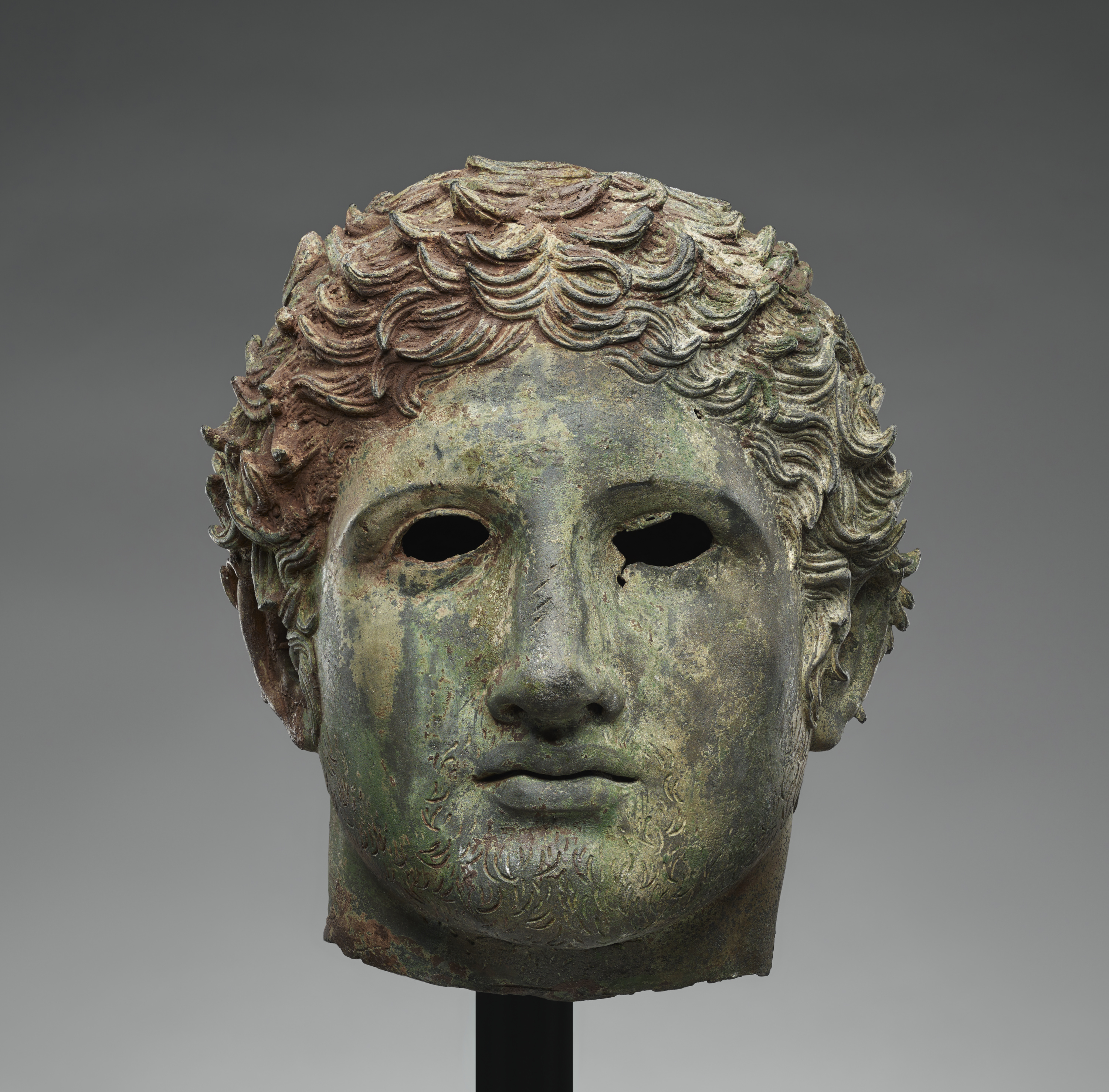
Image Credit: “Head from a Statue of a Youth” Roman 100 B.C.–A.D. 100, Digital image courtesy of the Getty’s Open Content Program.
Lynn White: “Imagination’s Real”


Imagination’s Real

Back in the day
before elderly women
preferred to become blonde,
grey turning to blue was common.
“Look at that lady there, she’s got blue hair.
Look, mummy!” he said loudly,
“I don’t like blue hair, do you!”
as she squirmed with embarrassment.

Blue was a dead give away

of aged artifice
as, unlike blonde
natural hair can never be blue,
it doesn’t bend the light like feathers
to make that specialist refraction
of reality.

So it was a dead give away

of pretense
or fantasy,
of unreality,
or imagination.
But sometimes that’s perfect,
perfectly fit for purpose.
“Look at the horses in that painting.
they’ve got blue hair!
Look, mummy, look” he shouted,
“I like their blue hair, don’t you?
It makes my imagination real!”
She laughed in agreement
and thought there was an artist in the making.


About the Author: Lynn White lives in north Wales. Her work is influenced by issues of social justice and events, places and people she has known or imagined. She is especially interested in exploring the boundaries of dream, fantasy. She was shortlisted in the Theatre Cloud ‘War Poetry for Today’ competition and has been nominated for a Pushcart Prize and a Rhysling Award. Her poetry has appeared in many publications including: Apogee, Firewords, Peach Velvet, Light Journal and So It Goes. Find Lynn at: https://lynnwhitepoetry.blogspot.com and https://www.facebook.com/LynnWhite-Poetry-1603675983213077/


More by Lynn White:

“We Should Have Seen It Coming”


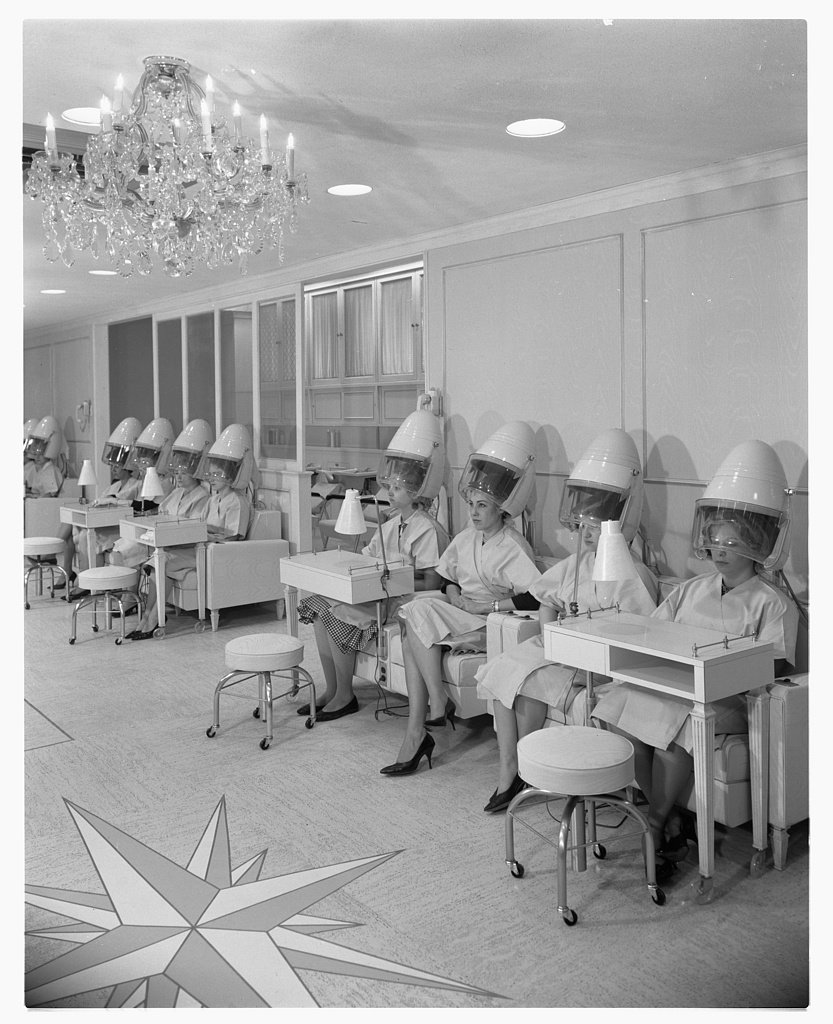
Image Credit: Samuel Gottscho “Helena Rubinstein, 655 5th Ave. Hair dryers” (1961) The Library of Congress (public domain)

Revisiting 2020: Our 50 Most Popular Posts of the Year


Dear As It Ought To Be Readers,


Despite everything 2020 threw at us, AIOTB Magazine was fortunate to receive so many brilliant poems, essays, interviews, and book reviews from writers around the world. Below, I have assembled the 50 most popular posts of the year based on the amount of hits they received. I know that few people will look back at 2020 with fondness, but maybe reviewing these posts from the year is a reminder of the resilience people have to continue to create in a crisis, and to channel the anxiety of the world into writing that connects us.

AIOTB Magazine was perhaps the only constant I had in 2020 that began and ended the year exactly the same, and completely intact. I have all of you contributors and readers to thank for that. Thanks for keeping me sane and connected to a community of writers when I most needed stability, creativity, and human connection in my life.

I have no idea what 2021 will look like, but if you keep reading and supporting each other’s work, you’ll at least have three new pieces a week on AIOTB Magazine to count on.


-Chase Dimock
Managing Editor


Poetry

Omobolanle Alashe:

Jason Baldinger:

Rusty Barnes:

Jean Biegun:

Victor Clevenger:

John Dorsey:

Ajah Henry Ekene:

Loisa Fenichell:

Jeff Hardin:

John Haugh:

Mike James:

Jennifer R. Lloyd:

John Macker:

Tessah Melamed:

THE NU PROFIT$ OF P/O/E/T/I/C DI$CHORD:

Hilary Otto:

Dan Overgaard:

Rob Plath:

Daniel Romo:

Diana Rosen:

Damian Rucci:

Leslie M. Rupracht:

Anna Saunders:

Sheila Saunders:

Alan Semerdjian:

Delora Sales Simbajon:

Nathanael Stolte:

Timothy Tarkelly

William Taylor Jr.:

Bunkong Tuon:

Peggy Turnbull:

Brian Chander Wiora:


Reviews

Chase Dimock:

Mike James:

Arthur Hoyle:


Interviews

Chase Dimock:


Nonfiction

Brian Connor:

Cody Sexton:


Micro Fiction

Meg Pokrass:

Bryan D. Price: “Progress”


Progress

I like to imagine that from out of the blue
people from my past will come over to our house
and I will be sweeping the floor as barefoot as a nymph
and everything will be turned right side up in the yard
and I will be all sober—listening to “How I Wrote
Elastic Man” and in the backyard the tomatoes
will not be wasting on the bush and we will walk and talk
about straight things like the curry plant Claire put
next to the sage that turned out to be a fraud
and they will be impressed with all my progress


About the Author: Bryan D. Price‘s poetry has appeared or is forthcoming in Posit, the UCity Review, Diagram, and others. He lives in San Diego with his wife, a dog, and a cat named after Pina Bausch.


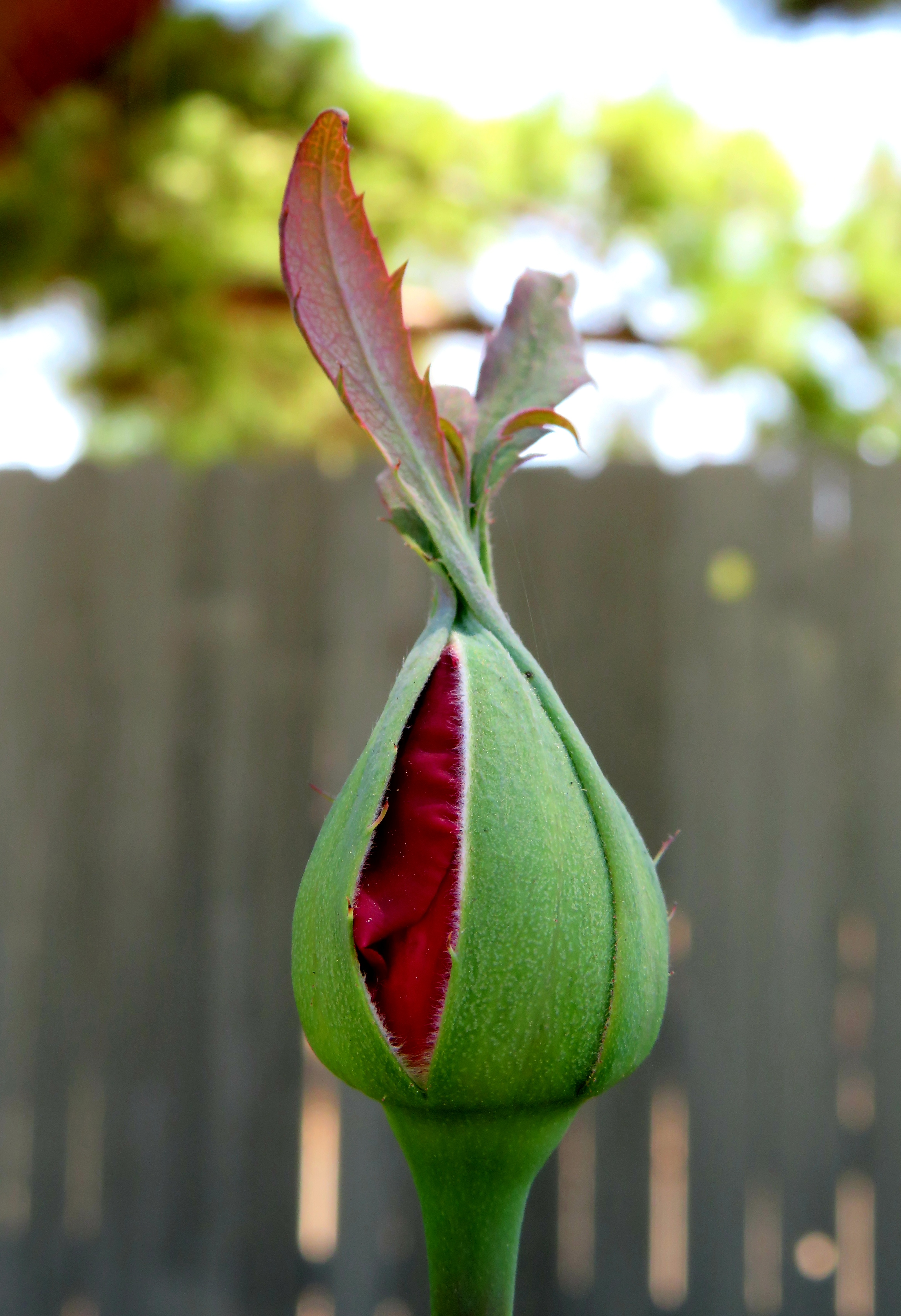
Image Credit: Chase Dimock “Rosebud Opening” (2020)

M.P. Powers: “A Room Forever”


A Room Forever     

Lying in an almost palpable silence,
the only thing he can hear is the blood
pulsing softly round his ears and the thin
noise that roused him from his sleep,

a noise like a lever-shaped door handle
turning, or an overturned automobile
on a pre-dawn highway, its wheels
spinning like silk. He rolls over on his side,

faces the empty wall. He can almost hear
the furniture breathing. He can almost feel
ghosts passing through him. He’s been
awake in this room for years, for years,

his mind charged with electricity,
something inside him reaching out of him
every night, anxious to become a sleeping lion,
a tree on a mountainside, a falling leaf.

He lay there listening as the coral-pink

light of dawn bleeds through
the underside of the curtains.


About the Author: M.P. Powers lives with one foot in Berlin, Germany, and the other in South Florida, where he rents out construction equipment. He is the editor of 11 Mag Berlin, and has been published recently in Red Fez, Chiron Review, Slipstream, Neuro Logical and others. His blog can be found here: https://mppowers.wordpress.com/ 


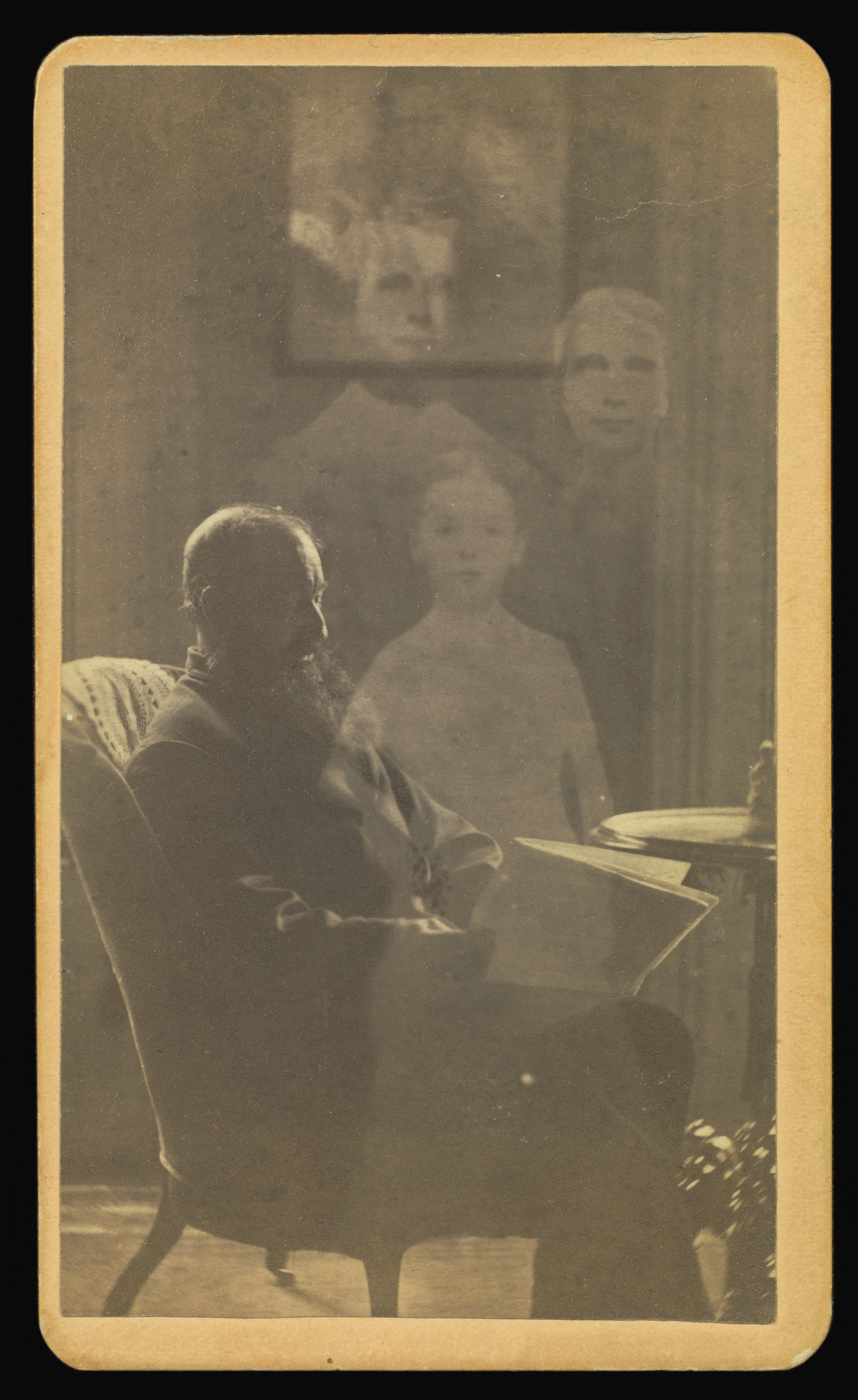
Image Credit: William H. Mumler “Unidentified man with a long beard seated with three “spirits” (1862) Digital image courtesy of the Getty’s Open Content Program.
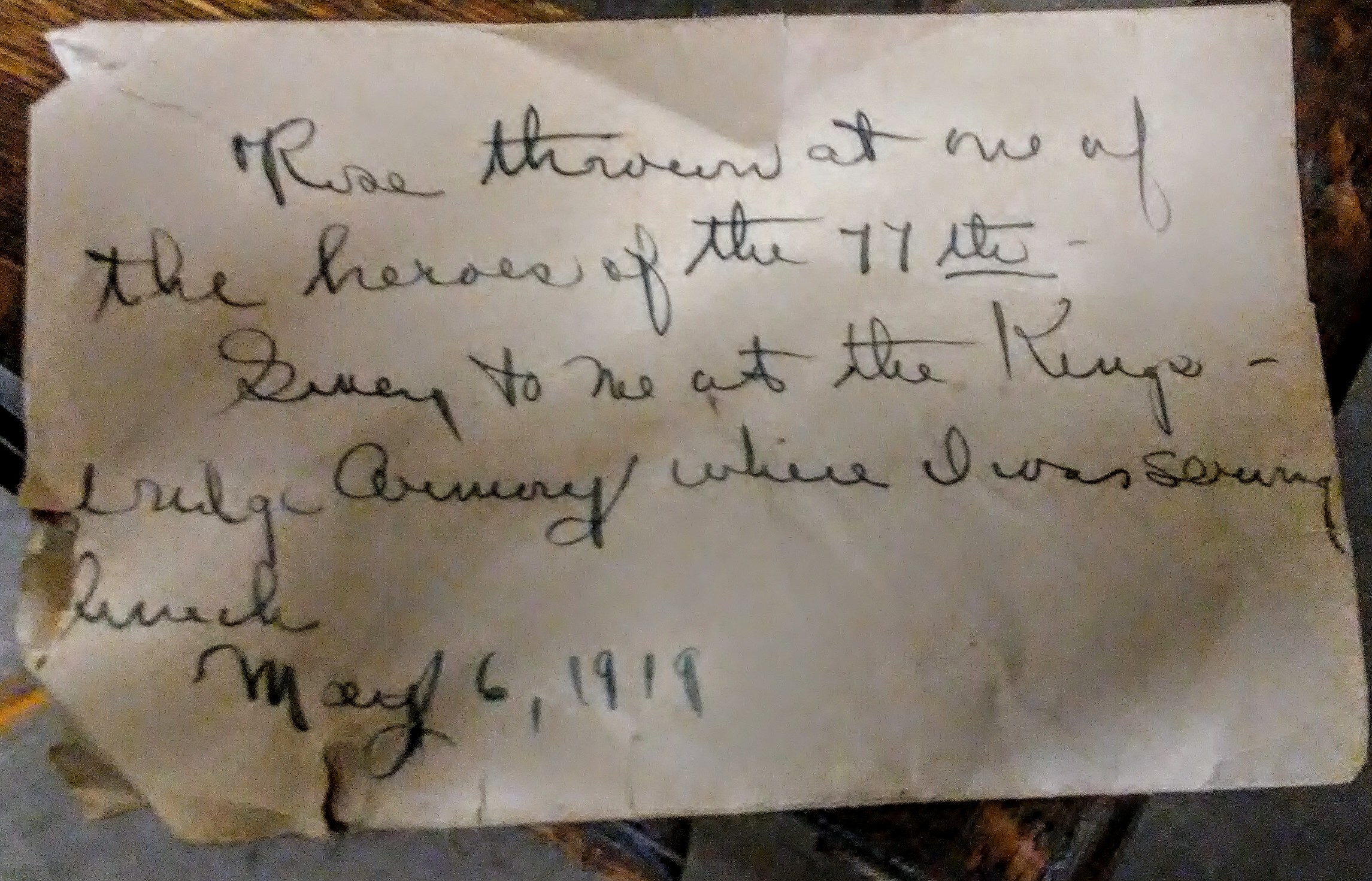
Jason Baldinger: “Kings Bridge Armory May 6 1919”


Kings Bridge Armory May 6 1919

we were so bloody tired
we could barely conjure emotion
the soldiers would pass
silver trays, ashen faces
we were machines
spooning food
little talk

visions of the dead
reflect in their eyes
light of their souls
barely strobe
perhaps this is all
perhaps this is all that’s left

he wasn’t gone
little more light
if only a little
the look on his face
maybe a crumbled smile

a red rose in the button
of his pocket. I, shocked
alive for a moment
some color in drab time
very possible I blush
suddenly exposed
suddenly acutely aware
of feeling once again
as if I forgot
we were human
for a second

this still life

my eyes drawn to color
his voice recognizes, gaunt
they were showered
in roses yesterday
everyone in the village
wanted to kiss
the heroes of the 77th
who were they to argue

I didn’t see his hands
until now, the rose
materialized there
slight of hand
magic of an actual smile
eyes shaking
he passed it to me


About the Author: Jason Baldinger is a poet from Pittsburgh, Pennsylvania and  former Writer in Residence at Osage Arts Community. He has multiple books available including the chapbook Blind Into Leaving (Analog Submission Press) as well as the forthcoming Afterlife is a Hangover (Stubborn Mule Press) & A Threadbare Universe (Kung Fu Treachery). His work has been published widely in print journals and online. You can listen to him read his work on Bandcamp and on lps by the bands Theremonster and The Gotobeds.


More Poetry by Jason Baldinger:

This Ghostly Ambience

It was a Golden Time

Beauty is a Rare Thing

Paul Jones: “Something Wonderful”


Something Wonderful

“Let me mention something wonderful,”
she said, “Bats eat darkness.”

“I see them shadowing the streetlight,”
I said, “diving to feed.
Like hungry fish in a small light pool,
they leap out of darkness
as if breaking the water’s surface,
as if, for a moment,
that alien world, that other, was their home.
Bats feed as darkness breaks.”

“No, bats break into darkness to feed.
Light warns them ‘you can’t stay!’
Think fireflies at the end of the day.
Their lights shine bats away.”

“But aren’t those lights a begging to breed?
Not just a sign of bitter taste?”

“As with passion, they say ‘Come here’
and ‘Keep apart’ for now.”

“Right now, bats break the darkness to feed.
Fireflies flash to breed.”

“Each rules their own kingdom—darkness
makes a boundary to break.
Some dive, some flash to mark the edge.
To transgress is to bless
the penumbra, the lie of difference.
Don’t we rise from earth?
Isn’t our time soaring in this life
a flash, a hope for love?
We see the lures, but know we must
be feed by darkness and
are born in a taste the bitter light,
The sweet then bitter light.”


About the Author: Paul Jones has published poetry in many journals including Poetry, 2 River View, Red Fez, River Heron Review as well as in cookbooks, in travel anthologies, in a collection about passion (What Matters?), in a collection about love (…and love…), and in The Best American Erotic Poems: 1800 – Present (from Scribner). Recently, he was nominated for two Pushcart Prizes and two Best of the Web Awards. His chapbook is What the Welsh and Chinese Have in Common.

A manuscript of his poems crashed on the moon’s surface April 11, 2019 as part of Arch Mission’s Lunar Library delivered by SpaceIL’s Beresheet lander.

Image Credit: Illustration from Natural history of the animal kingdom for the use of young people Brighton :E. & J.B. Young and Co.,1889. Public domain image courtesy of The Biodiversity Heritage Library

Brian Rihlmann: “And I Call Myself A Poet”


And I Call Myself A Poet

if you have a lot of online friends,
eventually you reach a point
where every day, it seems
someone’s waiting on results—
a biopsy or blood test
a mammogram
a nasal swab
while someone else
receives them
and yet another dies
mothers, fathers
sometimes teenagers
sometimes younger

and those left behind
show us all their red, raw,
angry, sad amputation scars
as we scramble for the right words
but there’s nothing there—
no right words
nothing but cliches
teary-eyed emoticons
and pixilated hearts

I stare at this carnage
a confused and helpless child
my fingertips hover
above the pale glow
of this flat earth screen
like a rescue helicopter
without a rope


About the Author: Brian Rihlmann was born in New Jersey and currently resides in Reno, Nevada. He writes free verse poetry, and has been published in The Rye Whiskey Review, Slipstream, Chiron Review, The Main Street Rag and others. His latest poetry collection, “Night At My Throat” (2020) was published by Pony One Dog Press.


More By Brian Rihlmann:

The Whole Point of the Game

Unknown Soldiers

Certainty


Image Credit: Chase Dimock “Crescent City Driftwood” (2020)

Troy Schoultz: “The Art of Manliness”


The Art of Manliness

I never plunged a sledgehammer into drywall, never
Tore apart a motor with scarred, blackened hands.
I never slit a slain buck from throat to balls, the steaming guts
Spilling onto November snowfall, antlers mounted on a cabin wall.
What I learned about manhood at an early age was rage,
Voices that startled like early morning thunder from the garage,
The basement work area. Dad and grandpa unleashing
Their inherited frustration. The wrong socket, a dropped screwdriver,
The flashlight’s beam aimed at the wrong side of the engine compartment.
You cry too easy, be a man, toughen up, be more like your cousin…
Rage poisoned us when you taught me. Maybe
That’s why I pounded down my first beer at eleven, refused
To vomit up the swallowed chewing tobacco, tried working
The night shift in suicide factories. I needed to understand what “tough” was.

Alcohol stopped working for me, so I took a walk away.
Two last rites in three years. Dad, grandfather,
Ancestral ghosts one and all,
Have you ever come this close to death before fifty?
Am I tough enough for you now? Am I worthy of throwing tools
In fits of anger in a way that only makes sense to you?
God forgive me
And bless the sons I never had.


About the Author: Troy Schoultz’s poems, stories, and reviews have appeared in Seattle Review, Rattle, Slipstream, Chiron Review, Word Riot, Fish Drum, The Great American Poetry Show, Steel Toe Review, Midwestern Gothic and many others since 1997.  He’s the author of two chapbooks and two full length collections: A Field of Bonfires Sings (Wolf Angel Press, 1999) and Good Friday (Tamafyr Mountain Poetry 2005), Biographies of Runaway Dogs (Vegetarian Alcoholic Press 2016), and No More Quiet Entrances (Luchador Press 2020).


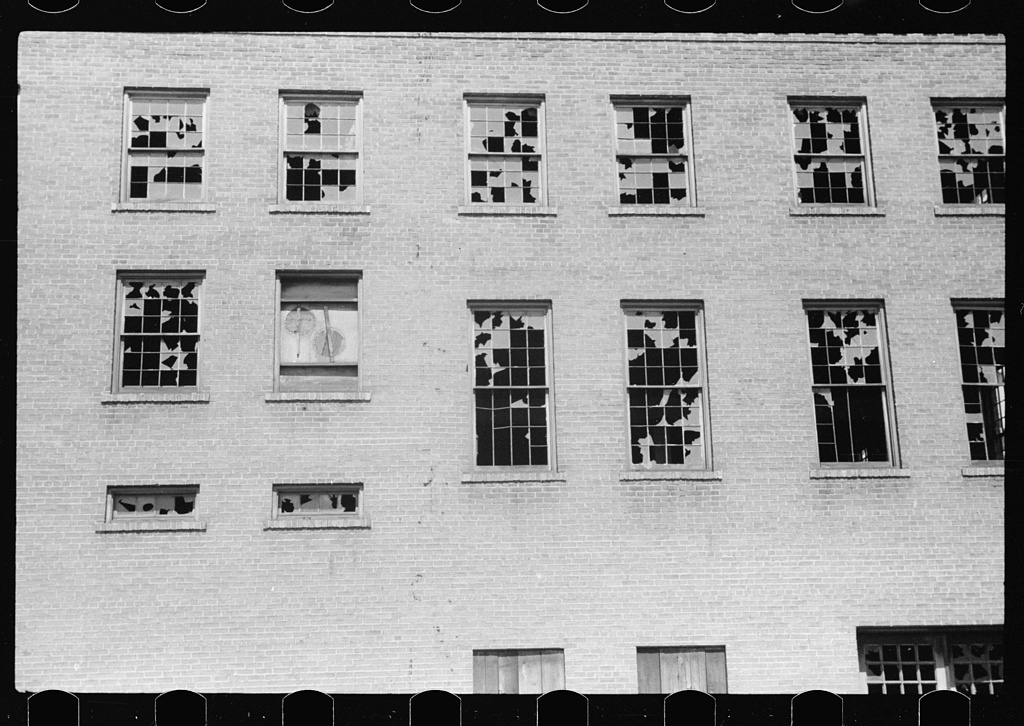
Image Credit: John Vachon “Abandoned casket factory, Dubuque, Iowa” (1940) The Library of Congress

Scott Silsbe: “I Wish I Hadn’t”


I Wish I Hadn’t

I hear it in the quieter moments of the night.
When all of the sirens have been put to bed
and there aren’t any smoke detectors chirping
out my window and the world’s still in its quiet
self-isolation. I hear it when the silent faces in
the darkness approach or else stare at me from
a distance, though even in the dark and without
my glasses on, I can still tell they are staring.
I can still tell that they are out there. Though
maybe they’re not there. Maybe I’m hearing
things again. But I believe that it’s something.
Something I can’t ignore. A noise. A voice.
And I think that it’s telling me to move on.


About the Author: Scott Silsbe was born in Detroit. He now lives in Pittsburgh. His poems have been collected in three books—Unattended Fire, The River Underneath the City, and Muskrat Friday Dinner. He is also an assistant editor at Low Ghost Press.


More By Scott Silsbe:

Double Downriver

Reading Rich Gegick’s Greasy Handshakes at Neighbors Tavern in Jeannette, Pennsylvania


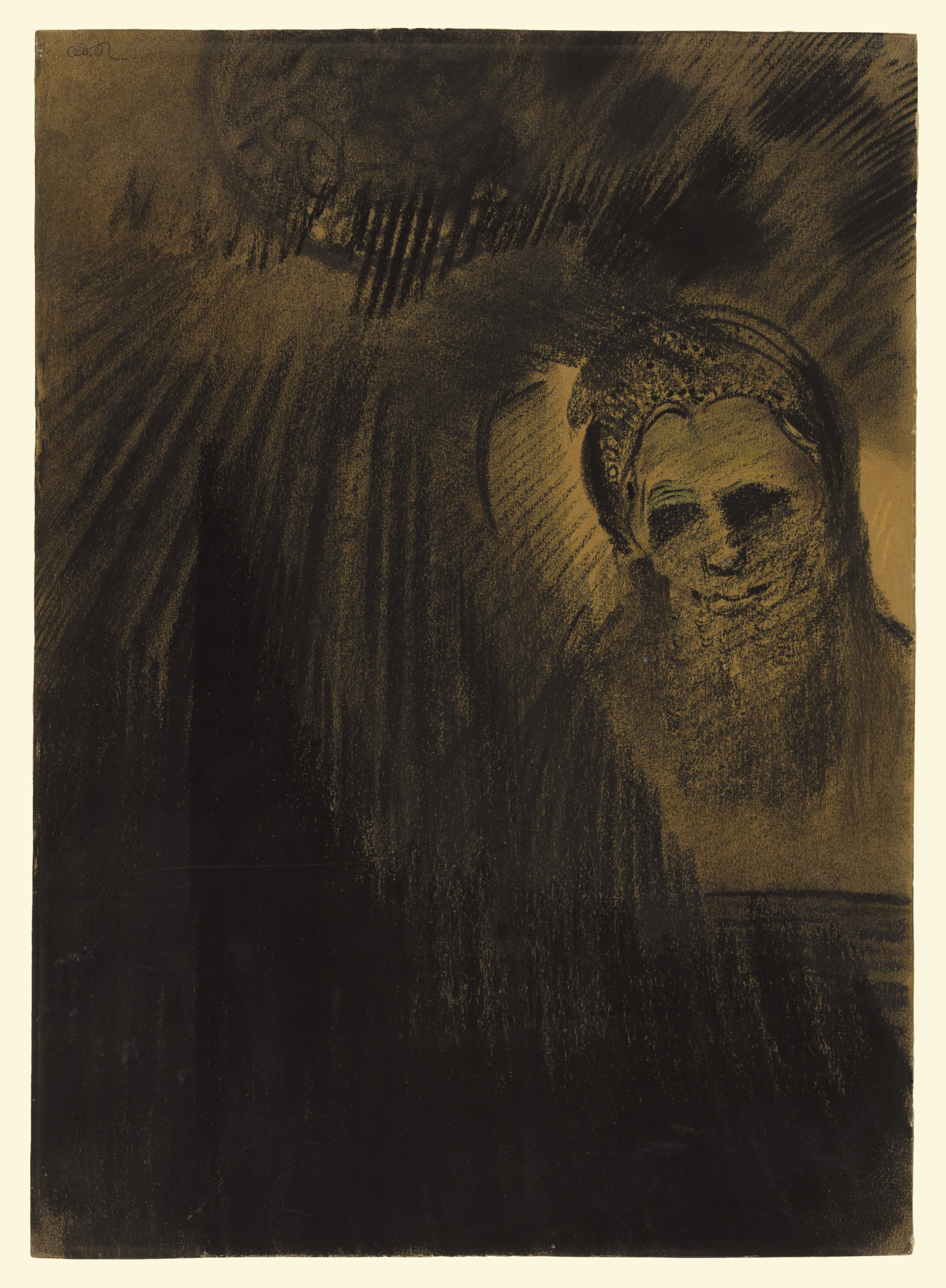
Image Credit: Odilon Redon “Apparition” Digital image courtesy of the Getty’s Open Content Program.