SATURDAY POETRY SERIES PRESENTS: RESURRECTION PARTY

resurrection_cover


From RESURRECTION PARTY
By Michalle Gould:


SELF-PORTRAIT AS A SERIES OF PREPARATORY STUDIES FOR A NUDE BY MATISSE

The breasts hang low like fruit hoping
to be picked yet still on the branch,
While the body largely reclines, a letter K
lain on its side and slightly bent,
or in a less common pose, my back faces the viewer
so I resemble a pushed in O, my arms and legs drawn in,
like a turtle withdrawing far into its shell
to escape some predator that has come to suck;
We are become a rock. Our hearts lie hidden far
Below its skin. The artist scrapes my flesh onto his brush
but cannot touch what lies beneath, whatever he thinks—
nor can you, my dear, even as you read me.


SELF-PORTRAIT AS THE MAIDEN OF ATHENS

That day, I went forth to kill the Minotaur.
Since Theseus, they sent us all naked;
I had no ball of string; I had no sword.
For tools, instead, I had only the instruments
of my body: my nails for daggers, my hair for thread.
I had heard of his legendary cruelty;
I had heard how he killed without a word.
Then I came to the center and saw him.
His strong arms beckoned—and I cut the cord.


SELF-PORTRAIT AS A PAIR OF LOVEBIRDS

Opening their beaks, they thrust
their tongues out for one last kiss
before the long journey south—
like worms they each intend to drop
into the other’s hungry waiting mouth.


Today’s poems are from Resurrection Party, published by Silver Birch Press, copyright © 2014 by Michalle Gould, and appear here today with permission from the poet.


RESURRECTION PARTY concerns itself, almost to the point of obsession, with the question of how the imagination grapples with the fear of death. The collection intertwines religious and mythical subjects and themes with more fleshly concerns about the body and decay, presence and absence. It has been described as containing poems of “almost exquisite refinement, illuminated by the taut glow of sensuous prosody and imagery” and as “a deeply meditative collection at once intelligent, tender, and utterly human.” (From the Silver Birch Press website.)


Michalle Gould has been working on the poems that constitute Resurrection Party for almost 15 years. In that time, her poems and short stories have appeared in Slate, New England Review, Poetry, American Literary Review, The Texas Observer, and other journals. She currently lives in Los Angeles, where she works as a librarian, and is in the process of researching and writing a novel set in the North of England during the 1930s.


Editor’s Note: Michalle Gould has a deep and fearless understanding of the self. In her quest to write poems that grapple with life’s big questions—life and death, self-awareness, relationships—she is bold and unafraid. She views her own body as honestly as an artist would. Yet she understands truths about the self that no other can reveal: “The artist scrapes my flesh onto his brush / but cannot touch what lies beneath, whatever he thinks— / nor can you, my dear, even as you read me.”

In “Self Portrait as the Maiden of Athens” the poet re-examines the Greek myth of the minotaur from a female perspective. Here she notes that, unlike the male hero in the story, when the maiden faces the beast, “I had no sword. / For tools, instead, I had only the instruments / of my body: my nails for daggers, my hair for thread.” This concept translates into the larger role of women in the world, and the question of what few tools and resources we have traditionally been allowed.

SPS-beloved poet Louise Mathias writes that the terrain of Resurrection Party “is somewhere between body and spirit, life and death, intimacy and solitude, elegance and intuition. Possessing a sly humor coupled with a laser sharp awareness and assertion of how all is ephemeral, Resurrection Party accomplishes the rare: it makes even the big questions fresh.”


Want to see more from Michalle Gould?
Michalle Gould Official Website
Buy Resurrection Party from Amazon
Resurrection Party on Goodreads
More Excerpts from Resurrection Party

SATURDAY POETRY SERIES PRESENTS: JEN CAMPBELL

Jen Campbell


Vaginaland
By Jen Campbell


Screen Shot 2014-09-19 at 10.59.02 PM
Screen Shot 2014-09-19 at 10.59.16 PM
Screen Shot 2014-09-19 at 11.00.21 PM


“Vaginaland” was previously published in English Pen “Poems for Pussy Riot” and appears here today with permission from the poet.


Jen Campbell is an award-winning poet and short story writer. She’s also the author of the bestselling Weird Things Customers Say in Bookshops Series. Her poetry collection, The Hungry Ghost Festival, is published by The Rialto and her latest book, The Bookshop Book, will be published in October by Little, Brown.


Editor’s Note: What is a girl? What is her mouth, her body, her words? Who is that girl when the world tries to hold her down and shut her up? When “She has been baked / as a blackberry pie and / now everyone wants a piece / of her”?

“Vaginaland” was originally published by English PEN as a political act. In an act of solidarity. In support of three members of the Russian punk band Pussy Riot, who were then in prison for their outspoken feminism, LGBT advocacy, and opposition to the policies of Russian President Vladimir Putin.

Who — and what — does a girl become when she stands up, breaks free, and fires out the words that are deep inside of her? When those words are political? When her voice is political? When “She says: this is the capital of me”?


Want to read more by Jen Campbell?
Jen Campbell Official Website
The Hungry Ghost Festival
The Prose-Poem Project
Jane Martin Poetry Prize 2013
The Plough Prize

Gordon Massman: An Interview and Four Poems

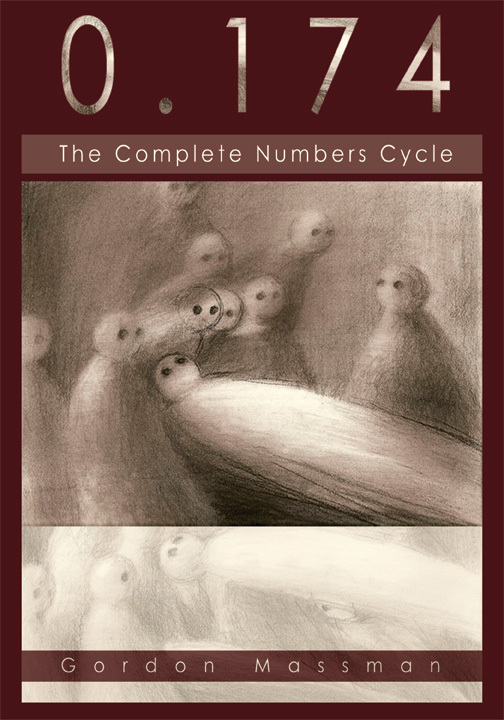
0.174

Gordon Massman is the author, mostly recently, of the companion volumes Death and Love, both out from NYQ Books this year. His work has appeared in Antioch Review, Another Chicago Magazine, Georgia Review, Harvard Review, The Literary Review, and RATTLE, among others. He teaches writing and literature at The Massachusetts College of Liberal Arts. The poems below are reprinted from 0.174: The Complete Numbers Cycle (NYQ Books, 2011) with permission of the author.

***

Okla Elliott: 0.174: The Complete Numbers Cycle represents over twenty years of working on a single project. How did the project present itself to you? How did it mutate and grow over the years? And, with a project like this, I have to wonder how you can know when it’s done. The numbers could literally go on ad infinitum.

Gordon Massman: I was around forty when I lost faith in formal titles which to me monumentalize a work into a monolith, looping the last line up to the title in a never-ending closed circle, removing the work from relationship with past or future pieces. Freeing the work of the conventional title in favor of numbering it in the order written among cohorts places it in a context and continuum—as a step in an evolutionary process. So, this project presented itself, consciously and philosophically, through an intellectual callisthenic. Suddenly I liberated my pieces from standing alone and allowed them to be part of something larger than themselves. I think of 0.174: The Complete Numbers Cycle as a single—I hesitate to use the word for reasons stated below—poem.

Spiritually my subject—making visible my subconscious longings, urges, fantasies in naked, visceral, glaring terms—came to me in the way a seed is naturally programmed to become a tree of its species. I was a hyper-sensitive child in the hands of monsters who compressed me into a certain kind of seed programmed to blossom into a raging twisted tree. I did not select my lineage; my lineage selected me. During and for ten years following an emotional crisis which occurred at age thirty-five, I pursued Freudian and Jungian psychoanalysis which opened a crucial field of examination—the subconscious. I felt then that my writing, heretofore consisting of stale programmable subjects was derivative and lacking. To my mind, all frontiers had been written by past masters to perfection save one: the human interior turned inside-out. In this, there are few, in any, antecedents. (Only Ted Hughes’ magnificent book Crow comes to mind with Anne Sexton, John Berryman, and Robert Lowell, wonderful writers though they were, following tepidly behind.)

All that remained for me–the most difficult part of this project–was to find the courage to strike genuine ore regardless the consequences. The mutation you speak of is the mutation of gazing more and more deeply, bringing up in particularized imagery that which drives me, and presumably, what drives most human males. Oddly, women like my work more than men as I think it confirms what women have always known about men, but which men want to deny.

The four hundred pages of 0.174 represent a handful of the entire project which is over three-thousand pages. It could, indeed, go on ad infinitum as you suggest, and I think that I will take it up again after I finish the third volume in a trilogy of books NYQ is publishing (Love, Death, and God.) I would like this numbers cycle to extend into late middle and old age—I am sixty-five—to record what maturity brings.

OE: I see an affinity between your poems and the fiction of William H. Gass. Both are experimental and postmodern in certain ways, and both seem interested in delving into the uglier and more uncomfortable or untoward aspects of human life and thought. What drew you to the formal aspects and contents of these poems?

GM: This is a core question and forces a hand. The term “formal aspects” implies non-porous walls between genres, a concept I reject for my own writing. The truth is that I do not believe in the concept of poetry distinct from prose as if each contained a separate circulatory system, an exclusive blood flow. I believe that “poetry” and “prose” are the same being named writing, and that some writing is more powerful than other writing. Some writing which we commonly call prose is the highest order of what we commonly call poetry I have ever read—Virginia Woolf, George Konrad, Hermann Broch, William Faulkner, Victor Hugo, come to mind. While some writing which we commonly call poetry is the lowest order of prose I have ever read, sanitized—I won’t name names. I consider myself a writer, not a poet, who formalizes on an instinctual level and who believes more in the power of words than in the power of form. Honesty will design and occupy its own vessel. We have evolved past what once served us well: strict academic boundaries. We are past the notion of fortress identity. The messages in 0.174 made square brick-like formations that cracked off lines jarringly to maintain smooth edges. They just wanted it that way for no rational reason.

I dislike labels such as “experimental” or “postmodern” because they imply the critical world’s lack of imagination. Writing is experimental or postmodern only because the reader/critic before encountering it could not imagine it. The terms essentially arise out of a failure in the public imagination and are irrelevant to the creating artist.

Likewise, what are untoward and ugly but a culture’s failure to include them in what they want to believe beautiful in human existence. Rage is beautiful. Envy is beautiful. Self-hatred is beautiful. Shame is beautiful. These terms “ugly”, “untoward”, “uncomfortable” and the like, (“vulgar”) accept as justifiable a mass lack of imagination, an unwillingness to accept as intrinsically valuable, even beautiful, the many facets within us. I am not speaking, of course, of what causes harm to others, of psychopathologies, but of the commonplace and universal egotisms which rampage through all.

I am, therefore, comfortable making visible and owning publicly that I possess these turbulent virtues which drive me and interest me more than the placid ones. By doing so, I reason, I can baptize and make them legitimate upstanding citizens. To closet and cloak them in shame is to deny fundamental truths about one’s self and to create a flammable pressure in the heart.

OE: Your newly released companion volumes, Love and Death, are also a large project. Could you tell us a bit about them and how they came about?

GM: One of my legs is filled with death, the other love. When I walk they flash and cut like scissors. Death was easy. Since an early age I’ve hated the reality of death and every day I awake with its heaviness on my chest. A few years ago within the span of nine months both my parents died with me standing helplessly bed-side. When death has one’s throat death is implacable. A few months after the second death the poems poured forth, immediate present tense snapshots and long contemplative incantations, the final being a twenty page rock riff. Death required from me this exorcism. During this process my psychotherapist dared me to write a book on love, romantic and otherwise. But being heavily invested in despair I balked for a long time until finally grudgingly writing a love poem, then grudgingly writing another, then grudgingly another until an avalanche happened and I found myself mirroring death with love: immediate present tense snapshots and long rock riff incantations. The two books were published as companions, or perhaps as scissoring legs. On the rare occasion I do a reading I alternate death with love, love with death until the two blur into a single experience, which they are. Each compressed the other into a rich and tragic existence.

I am now finishing the third book making this project not twins but triplets, this last one titled God. Now I have three legs, or perhaps, more accurately, two legs with that smaller one in the middle!

***

43
Am I more like steel or fruit inside? If you drilled deep
through me would I fi nally break your bit or ooze pear-meat
and weep like a godless Jesus of Nazareth? I want to know.
Drill me to the core. Screw out big chunks of me in your deep
steel grooves and spit me free, you with your blindness and
vulnerability. Make me spasm and curl with your all-nighters
and narcomania my teenage son. Find my vanadium or peachpear-
plum blood. You have drilled through my fl esh, it fl ew
apart like a burn, and several inches into the beams in my
bones, but I’m still steadily beating. Push hard on your tool.
Drill through my collar past my lungs into my heart pushing
with all your weight, feet off the ground, grinding out meat;
fi nd what’s there. Get to my mettle. Drop out. Coke up.
Fuck the syringe. Find your own gore in vehicular winter. Am
I cold? Am I mechanical? Can I walk through closed windows?
If you peel back my surfaces do I glisten? This is your mission.
Let me see from a distance the crack pusher’s wing fold
over your shoulder and usher you forward, your two backs
fusing. Let me witness dissolution. It is the father’s privilege. To
strip off my sirloin like meat off a prey to fi nd what’s lying
inside my cage. Let me see graphically what your brain isn’t
getting: high school teacher’s spittle, orange lunch room chile,
that geeky conventional gangly camaraderie, auditorium pep
rallies, an appropriate foreign language, stupidity, time, time, time.

***

56
And this little piggy squealed “no,no,no,no,” all the way home.
And then all the toes were accounted for: the big, the middle, the
nondescript, nondescript’s neighbor to the East, the itty-bitty
which made baby laugh like a nautilus. And then the toes blinked
out like a disappearing photograph, and baby went on a miniature
vacation to Puerto Vallarta where a lion almost devoured
him like a fortune cookie, but he escaped and wind rattled the
blinds like dangling bones, and he whimpered and whispered a
prayer-precursor to the Divine Death Overture, something about
soft protrusions and blue rain. And baby Carroll decided he
was having none of it and shattered two panes in the living
room belonging to Daddy and his entourage one of whom played
the Ace of Spades and raked in the kitty while on the artery a
fl ying mechanical scream engulfed horizontal human moans
in a white steel cube smudged with a red intersection and far,
far away two events happened simultaneously: an imaginary
Holstein jumped over an idiot moon keeping constant vigil on
the continuous catastrophe, and in the silo accompanied by
secret platoons of yellow arthropods Jack fi nally found Jill’s
gooey ooze representing nucleic acid’s undeniable invincibility.

***

134
Testimony of the best pig in the sty. I’m king mounter. I
shove it in. Gertrude craves me. Matilda moans for me.
I grunt and eat slops pushing away others. I get mash.
Dark splotchy pink, stout nose, neckless, number 77
tagged to left ear, luckiest number around. Rump like
a cement mixer nobody kicks, squiggly fi rm tail, blood
to tip. Super Pig, pig literati, nineteen hundred twenty
six pounds, hog literally, the Indiana hogs, borne of
Chester and Duchess, Chester Iowa State Fair Champion
Derby Hog, Duchess six hundred pound 4-H Purebred
Champion, daddy shot me into her like a roman
candle. I burst forth like Ben Hur. Sunburnt from so
much fucking, out from mud, into mud, ear tag jangling
like revolutionary, Illini nights reclining under
stars, contemplatively smoking, pink eyelids, lavish
lashes, back legs crossed, I love everything, fences,
twigs, friendship, water trough, soft breezes drawing
across skin, the smell of piss, I, Davy Crockett pig,
adventuresome, undaunted, courageous, proud, out
to farthest post, to gate, scratching along wire, sniffi
ng earth-untrodden, snorting intoxication-liberation,
left-and-right pig, pig of The Nation and The New
Republic, chest-out puffed-up herd-guardian wise
warrior pig, pugnacious purple irremovable squealer.

***

247
The whole thing goes kablooy, hypochondria torments sister;
dementia creams Daddy; mortality frightens but cruelty
out Mother’s skin; forty years of tolerance collapse under
Larry; BDD splinters me in circus mirrors; preemie lungs
asphyxiate Kevin; Depakote sloshes Bradley’s brain; Hep
C like a rabbit nibbles cabbage of Allan’s liver; genocides
cook and serve severed leg; have another chilled eclair,
sweaty chocolate, chewy shell; oh baby; testicles strike
like factory workers, tongues fall mute; rocks clog urethra,
plaque arteries; well, smasheroo; brisket, lamb, claw, stew
slide off table into Magical Mystery Tour performed by
nutcases at Unity Church; refugees land in black fog of
dereliction and fl ies bite beautiful faces near McFadden’s;
Witcomb crawls into death’s bomb shelter everything rips
through: guilt, shame, dejection, despair, paralysis, rage.

SATURDAY POETRY SERIES PRESENTS: ALLIE MARINI BATTS

Allie Back_Photo

By Allie Marini Batts:


breeding, trumpet flowers out of the dead ash


a cautious unfurling, petals, these fragile fingers,

extended through layers of silt and salt,

the battle-blown lands where once a city stood.

these vines, they labor furiously,


expanding and dividing beneath the dust of nations

nightshades in mitosis, their toxins lovely, bright and narrow

set against a land destroyed.


likewise myself and my skin,

a playground for dead things

and invasive plants to rise from,

a phoenix, in botany.


the mythology of the night skies


you were once a man

square but bright

incense in the dark


your story, told by Greeks

naïve, the way we

lit sticks of incense and prayed


wantonly to false hopes and square gods

and stars, naïve offerings

and devotions meant to keep us safe


protections and punishments

remembered in the

rotations of the planet


naïve, how we thought

you loved us

and would keep us safe


“breeding, trumpet flowers out of the dead ash” previously appeared in quarter after and “the mythology of the night skies” previously appeared in Symmetry Pebbles. These poems appear here today with permission from the poet.


Allie Marini Batts holds degrees from both Antioch University of Los Angeles and New College of Florida, meaning she can explain deconstructionism, but cannot perform simple math. Her work has been a finalist for Best of the Net and nominated for the Pushcart Prize. She is managing editor for the NonBinary Review and Zoetic Press, and has previously served on the masthead for Lunch Ticket, Spry Literary Journal, The Weekenders Magazine, Mojave River Review & Press, and The Bookshelf Bombshells. Allie is the author of the poetry chapbooks, You Might Curse Before You Bless (ELJ Publications, 2013) Unmade & Other Poems, (Beautysleep Press, 2013) and This Is How We End (forthcoming 2014, Bitterzoet.)

Editor’s Note: “breeding, trumpet flowers out of the dead ash” is so stunning that the poem speaks for itself. I am loathe to feature a favorite line in the face of so many beautifully wrought images emerging one after another. The subject matter is as rich as the soil the poem’s flowers rise from. The world revealed is post apocalyptic, brimming with nature’s resilience and with death nurturing new life, “a phoenix, in botany.”

“the mythology of the night skies” turns our eyes upward to the heavens and our minds to the gods. While pressing against the idea of worship in antiquity, the poem’s echo seems to question deity worship altogether. “naïve, how we thought / you loved us / and would keep us safe.”

Want more from Allie Marini Batts?
Find her on the web
Follow her on Twitter @kiddeternity

SATURDAY POETRY SERIES PRESENTS: PAPER COTTON LEATHER

Paper_Cotton_Leather_cover


From PAPER COTTON LEATHER
By Jenny Sadre-Orafai:


RETRACT OR RECANT

This accordion love expands or exhales,
retracts or recants. It is only as much
as we allow. It squeezes out warnings
of cardboard walls closing in.

Its wheezing fills a willful tide
with dread. I turn to this gone
love. I was taught curve into the slide
when spinning on frozen road.


CUTTING YOUR HAIR

When I was done, a ring of hair
or a halo curved your hunched
shoulders. Your broad back didn’t
flinch when the scissors’ legs twitched,
when I wanted to cut more than you mimed.


PREMATURE OBITUARY

I pretend you’re dead.
I don’t let them say your name.
I was taught it’s impolite
to talk behind a dead man’s back.

I wear black four months and ten days.

I smell your clothes before
hand washing, bagging,
and then giving them away.
I don’t give your mother a thing.

I pray for what’s left of you.

I stack the wedding ring, all the rings
you gave me on my right hand,
my proclamation that you are no longer
with us or like us, the living, listening.

I tell myself what I tell myself
to keep from going back.


Today’s poems are from Paper, Cotton, Leather, published by Press 53, copyright © 2014 by Jenny Sadre-Orafai, and appear here today with permission from the poet.


PAPER COTTON LEATHER: “The specter of divorce haunts Sadre-Orafai’s debut, although Paper, Cotton, Leather is much more than a lyrical response to loss. Paper, Cotton, Leather is an instruction manual for the amateur anthropologist, the domestic ghost-hunter, and the doomsday prepper. In ‘Retract or Recant,’ Sadre-Orafai writes: ‘I was taught curve into the slide/when spinning on frozen road.’ This is exactly what Paper, Cotton, Leather can teach us: how to navigate the heart’s switchbacks, how to survive a spin-out on its loneliest back roads.” —Shelley Puhak, author of Guinevere in Baltimore (From the Press 53 website.)


Jenny Sadre-Orafai is the author of four poetry chapbooks—Weed Over Flower (Finishing Line Press), What Her Hair Says About Her (H_NGM_N Books), Dressing the Throat Plate (Finishing Line Press), and Avoid Disaster (Dancing Girl Press). Her poetry has appeared in H_NGM_N, Gargoyle, Rhino, Redivider, PANK, Mount Hope, Sixth Finch, iO: A Journal of New American Poetry, and other journals. Her creative nonfiction has been published in The Los Angeles Review, South Loop Review, and The Rumpus. She co-founded and co-edits the literary journal Josephine Quarterly. She lives in Atlanta and is an Associate Professor of English at Kennesaw State University.


Editor’s Note: Reading Paper, Cotton, Leather is like reading a diary written in achingly executed lyric. The compact, controlled poems function almost ironically; tiny scaffolding straining beneath the pressure of massive weight and breadth. The poems are honest. Fiercely, unapologetically honest. Surely it took no small amount of courage for the poet to sift through the wreckage of her failed marriage and catalogue its failures for us in verse.

In the poem “Fortune,” Sadre-Orafai writes, “Our pictures live in a box marked / THE PAST in my parents’ garage.” Each poem reads like its own discreet picture from that box. Vignettes of trying, failing, moving on, and learning to let go. Together those pictures—these poems—tell a story. This book is carefully held by a narrative arc that gives the illusion that we might piece together the end of this marriage like a puzzle. And yet, You know nothing, Jon Snow. This is an expertly crafted book of poems, not a memoir. We are left only with what the poet chooses to reveal. With what poetry is perhaps best at conveying. A selection of life’s moments as if through lens and shutter. Emotion. Regret and loss and heartache. Experience that finds a kindred spirit in the reader. This is a book that one reads to remember that life’s trials are universal, that we are not alone.

We are not alone. So many of us know, or have known, love like an accordion, squeezing out warnings, wheezing and transforming into gone love. “Cutting Your Hair” recalls Delilah, in all her power, destroying her lover. So, too, does that recollection call forth Regina Spektor (who is quoted in one of the book’s epigrams) in her song “Sampson”: “I cut his hair myself one night, a pair of dull scissors in the yellow light.” In this manner one can read Paper, Cotton, Leather like an archaeologist, dusting away layers to discern history, or, as Shelley Puhak suggests, like an anthropologist, observing humanity, past and present. So how does the poet pick herself up, dust herself off, and move into the future? In the most human way imaginable: striving and imperfect. “I pretend you’re dead. / I don’t let them say your name.” “I smell your clothes before / hand washing, bagging, / and then giving them away.” “I tell myself what I tell myself / to keep from going back.”


Want to see more from Jenny Sadre-Orafai?
Buy Paper, Cotton, Leather from Press 53
Jenny Sadre-Orafai’s Official Website
Jenny Sadre-Orafai on As It Ought To Be

Daniela Olszewska: A Micro-Interview and Three Poems

citizen-j-small

Okla Elliott: What difficulties did you encounter writing a book entirely centered around one character?

Daniela Olszewska: I started making the poems that became Citizen J while I was an undergraduate at Columbia College Chicago (so, somewhere around 2005). Originally, the character of J was known as Jane Doe and she was an autobiographical-ish twentysomething who lived in Chicago. As I became older and (slightly) less solipsistic, I became more interested in making Jane/J less a reflection of myself and more of an Etch-a-Sketchable character I could ab/use to show off the images in my head associated with my concerns over gender, sexuality, citizenship, careerism, and terrorism. Poetry gave me the permission to ignore linear narratives; it allowed me to essentially re-write the character of J whenever I wanted. This story had to be in poem form; I could not have showed all the things I want to show if I was trapped in a novel.


OE: Did your Polish heritage play into the creation of Citizen J? Did it inspire the Soviet-style atmosphere of the book?

DO: Absolutely. I was born in Wrocław, but I was raised in Chicago by my American mom. Growing up, I would see my Polish father and his maniac  ex-Solidarity nationalist friends 3-4x a month. This was just enough exposure to ingrain some sense of the horrors of Soviet Satellite Statehood, and these terrors have definitely stayed with me in adulthood and spilled into most of my writing. Also, while I was in the process of writing Citizen J, I had this misfortunate notion that I should get a masters degree in Slavic Languages and Literature, so I was also consuming a shit ton of Soviet-era media during the writing of these poems. After finishing Citizen J, I became aware of the work by this Russian fashion designer named Ulyana Sergeenko. Her Fall 2012 collection is basically Citizen J in couture form: http://www.style.com/fashionshows/complete/F2012CTR-ULYANA I wish I had known about her while I was writing the book; I would have tried to include pictures of her dresses at the start of each new chapter.


OE: What current projects are you working on or that are forthcoming?

DO: I’ve been doing a lot of writing with/about/against the Internet. In June, I had an e-chap come out from NAP. Its name is THIRTEENZ and it chronicles my attempts to run my favorite parts of Emily Dickinson through an LOLCats translator.  Interested and/or concerned citizens can find it here: http://napnapnaps.com/post/88325873183/thirteenz.

Last month, a book of prose poems  I co-wrote with the awesomepants Carol Guess came out from Black Lawrence Press. The book is called How To Feel Confident With Your Special Talents and its writings are inspired by articles from the user-generated content advice site, WikiHow. Curious citizens can trade their dollars for a hard copy of the book by going here: http://www.spdbooks.org/Producte/9781625579041/default.aspx.

I’m currently working on two projects. One is a small collection of confessional-ish poems about a bad break-up (groundbreaking territory for a poet…). The poems are formatted to look as if they have been written in Tumblr’s text post box and I’ve been having a lot of fun coming up with hashtags for each of the pieces. I am also working on a collection of short fictions “narrated” by various Men’s Rights Activists (it’s a comedy…).

***

from CITIZEN J

in the midst of dressing
up to go messing up

the magistrate’s new
motorcade, j takes to

the motion that the insides
of her toasters are miked.

she goes to consult her pet
magic mirror, but he looks

miked too—wired to heads
that can store more than

the traditional three minutes’
worth of incriminating

soundbite. thus, j resolves
to take distance, to make

haste w/ignition
+ several cans of firewerks.

***

from CITIZEN J

we caught j w/the help
of earnest accessory,

we made certain to make

eye contact. when j saw
the sheriffs ranging down

in zealously-patterned
ties, she tossed
her free lunch +++

++=instructed the fire
escape part of her

brain to shrink
to a little bigger

than miniature,
a little bigger       than cell.

***

from CITIZEN J

j rendezvouses with him in public restroom and mid-sized luxury sedans. he is all gussied in ascot and champagne cork heel. speciously complimenting j’s proliferation skills as he slides a stirrup around her hot hot holster. nobody is giving anybody a heaveho tonight. casually, j twists his loose mammal skin into a party favor shape. an heir to a tin can telephone empire, he has always been an expert at getting his people to the front of the breadline. they have so many levels and layers in common. tenderly, he suggests they hire someone to hold her hair back while she’s working. it was never nothing personal. yet j aspires to one day be on his side of the business. she wants ambulances to chase her for a change. she wants, she says, to be able to act as if she is at least as infamous as him.

Rebekah Just When the Drought Was Ending by Justin Hamm

hamm-justin-full-cover-bp-may-9-3-page-001

Rebekah Just When the Drought Was Ending

by Justin Hamm

But the best thing about Rebekah
was the way she floated always
beneath the scent of woodburn
and dusty Middle America,
her keen ranch-queen convictions
slicing deep and deeper into
the tiniest of daily miseries
with skepticism, demanding always
some proof before she’d concede
this life He pieced together for us
cell by cell with ever shakier Godfingers
contained even one malignancy.

Every bow-legged young bull rider,
every sunburnt farmer of someday
who stopped by to mend a fence
or just to offer genteel salutations
would see her backlit by sunset,
dream her into his own mother
and pray to the essence of the prairie
to do what old bones could not.

And it worked. She survived well enough
to give of herself four more seasons
among luckless kinfolk who every one
drank greedily the blood she squeezed
and felt the cracked lips of dry times less.
As long as there was some great need
into which she could empty herself
she could will the heart to continue
and none of the rules of dying applied.

But she must’ve seen that the new rain
wasn’t baptismal or meant for her restoration.
When those stormclouds finally swelled
and burst into fat miracle drumbeats
she must’ve felt the change was coming on.
Why else open the windows so wide
with no thought for the evening chill?
Why else cut a hundred wildflowers
and arrange them into fiery clusters
but pour no water into their vases?

***

Originally from the flatlands of central Illinois, Justin Hamm now lives near Twain territory in Missouri. He is the founding editor of the museum of americana and the author of a full-length collection of poems, Lessons in Ruin ( Aldrich Press), as well as two poetry chapbooks, Illinois, My Apologies (RockSaw Press) and The Everyday Parade/Alone With Turntable, Old Records (Crisis Chronicles Press). His poems or stories have appeared, or will soon appear, in Nimrod, The New York Quarterly, Cream City Review, Punchnel’s, Hobart, Sugar House Review, and a host of other publications. Recent work has also been selected for the Bob Dylan-themed anthology The Captain’s Tower, New Poetry from the Midwest 2014, and the Stanley Hanks Memorial Poetry Prize from the St. Louis Poetry Center.

(The poem above first appeared in Nimrod and is included in Lessons in Ruin.)

SATURDAY POETRY SERIES PRESENTS: GLOSSOLALIA

GLOSSOLALIACOVER


from GLOSSOLALIA
By Marita Dachsel:


PATTY BARTLETT SESSIONS

I

I was 17, newly married
when I first put a woman to bed,
her new babe in arms.

Awaiting death, I’ve tallied,
attended 3977 births. Midwife,
my eminent title.

Pride is a sin,
but I think I will be forgiven
for the surge I feel
when I consider my record.


II

47 did not feel old,
but looked ancient to him.
A month after my daughter,
me. Sexless, righteous.
Virtuous. Finished.


III

I became a Mother in Israel,
coaxing young women
into the new covenant.

We were Sarah & Hagar. Rachel & Leah.

But I was wrong about polygamy.

Lust, envy & wrath are sins,
& I know I will never be forgiven
for being the zealous handmaiden
to this difficult life.


IV

I have lost four children. Heartache
is my chronic companion,
chafing the every day.

But my dear husband David
took a second wife
& I will tell you
what the others won’t admit:

There is no other earthly pain,
constant, raw & rending,
like sharing your man
with a younger wife.


V

I am a practical woman:
I can heal with herbs & my hands,
I brew my own beer, sew, knit,
& speak in tongues.

After birth, I would show
the mother the slick placenta,
raised up, a stretched orb.
An offering.

It carries the tree of life.
Rough, ropey. Red,
the colour of strawberry jam
boiling low on the stove.


VI

Being the first hand
to touch a life
is a powerful thing.

I have wondered
what imprint
I have left

& what has been
left on me.


AFTER THE MARTYRDOM

The men, they surged
from their homes,
from their women,
a confluence
in search of
their Galilee.

They shuffled, they scuffed
dirt across the land,
a hand of a crone.

The men, they fished.
Eyes skimmed the shore
for a stranger they would know.
Hope bobbed in their throats.
Loss, a lure, caught
shredding what they once knew true.

The women, they were left
with the children,
the dead.
The scriptures gave no guide
for wives at a time like this.


Today’s poems are from Glossolalia, published by Anvil Press, copyright © 2013 by Marita Dachsel, and appear here today with permission from the poet.


GLOSSOLALIA is an unflinching exploration of sisterhood, motherhood, and sexuality as told in a series of poetic monologues spoken by the thirty-four polygamous wives of Joseph Smith, founder of The Church of Jesus Christ of Latter-day Saints. In Marita Dachsel’s second full-length collection, the self-avowed agnostic feminist uses mid-nineteenth century Mormon America as a microcosm for the universal emotions of love, jealousy, loneliness, pride, despair, and passion. Glossolalia is an extraordinary, often funny, and deeply human examination of what it means to be a wife and a woman through the lens of religion and history. (From the Anvil Press website.)


Marita Dachsel is the author of Glossolalia, Eliza Roxcy Snow, and All Things Said & Done. Her poetry has been shortlisted for the Robert Kroetsch Award for Innovative Poetry and the ReLit Prize and has appeared in many literary journals and anthologies. Her play Initiation Trilogy was produced by Electric Company Theatre, was featured at the 2012 Vancouver International Writers Fest, and was nominated for the Jessie Richardson Award for Outstanding New Script. She is the 2013/2014 Artist in Residence at UVic’s Centre for Studies in Religion and Society.


Editor’s Note: In this collection Marita Dachsel has taken on no small task. By seeking to reclaim women’s stories from the polygamous world of Joseph Smith, the poet gives voice to the voiceless, the unknown, the lost and forgotten. Their stories come to life, their lives become known history. In “Patty Bartlett Sessions,” polygamous wife Patty Bartlett converts other women to the Mormon faith, “coaxing young women / into the new covenant.” But when she realizes the insurmountable trials of polygamy, she knows she “will never be forgiven / for being the zealous handmaiden / to this difficult life.” Instead she finds inspiration and fulfillment in her work as a midwife, for “Being the first hand / to touch a life / is a powerful thing.” In “After the Marytrdom” Dachsel speaks for a chorus of wives left by husbands seeking a divine experience, noting ruefully that “The scriptures gave no guide / for wives at a time like this.”


Want to see more from Marita Dachsel?
All Things Said & Done – Marita Dachsel’s Official Blog
Canadian Poetries
The Rusty Toque
The Barnstormer
Youtube: Too True: The poetry of four acclaimed BC poets

Renée Ashley: A Micro-Interview and Three Poems

Because%20I%20am%20the%20shore

Renée Ashley is the author of five volumes of poetry and a novel. Her awards include a Great Lakes Colleges Association New Writers Award, a Pushcart Prize, a Kenyon Review Award for Literary Excellence, the Charles Angoff Award from The Literary Review, an American Literary Review Poetry Prize, The Robert Watson Literary Prize in Poetry from Greensboro Review, a Black Warrior Review Poetry Award, the Chelsea Poetry Award, The Open Voice Award in Poetry from the Writers Voice, West Side Y, NY, NY, and the Robert H. Winner Award and the Ruth Lake Memorial Award from the Poetry Society of America. She has been a fellow at the MacDowell Colony, Yaddo, the Vermont Studio Center, and the Virginia Center for the Creative Arts, and has received fellowships in both poetry and prose from New Jersey State Council on the Arts as well as a fellowship in poetry from the National Endowment of the Arts. She teaches in Fairleigh Dickinson University’s MFA in Creative Writing and the MA in Creative Writing and Literature for Educators.

The poems reprinted below are from Because I am the Short I Want to Be the Sea, published by Subito Press.

***

Okla Elliott: The poems in Because I Am the Shore I Want to Be the Sea are largely prose poems, with a few pieces that break into lineation of a sort. The syntax and punctuation for the poems are idiosyncratic to this project as well. How did you happen upon or decide on these formal aspects of the book?
Renée Ashley: I’d been wanting to write prose poems for a couple of years and couldn’t make a go of it. It took me a long time to figure out what worked for me. Conventional punctuation gave the poems too many stops, too much air, too many moments for the reader to think and/or react. I wanted a feeling of claustrophobia, of speed trapped inside a sealed vessel—as though the reader were locked inside my head with me. So, over time, terminal punctuation, except for question marks and exclamation points, was done away with, and I imposed an extreme sort of compression on the poems. I needed pressure on both the breath and the meting out of sound and content to achieve a sense of profluence, but also one of embeddedness, density, and restraint, all of those at the same time—meaning I wanted the sound and content to press outwardly against the rigid margins but then be visually forced back again at the point at which each poem’s real estate abruptly ended. Whether or not I achieved what I was after, I don’t know. But that was the ideal I had in mind.

OE: The vast majority of the poems have a similar structure and the same titling tactic, along with several other similarities, yet the book remains fresh throughout. What little tricks or tactics did you use to create variation between the poems?
RA: I’m so glad you think the pieces remain fresh–what a disaster if they hadn’t! It wasn’t something I consciously considered—well, no more than I would for any other gathering of my poems. Each poem or poem section has its own engine (an image, a rhythm) that drives it forward and conjures association and consequence. I’m very aware that my thematic issues are few, so I try to let image and angle of approach propel the flow of the articulation. I did fiddle with title tactics a lot and titles-as-titles didn’t work; they were too loud, too directive. Too there. The combination of the brackets and lower case seemed to hush them, make them seem tacked-on rather than an integral part of the working bodies of the poems; that’s what I wanted, a sort of whisper, a suggestion softly heard.

OE: Okay, I’m going to go lofty and abstract here. If there were one thing you could change about the current literary landscape, what would it be? Imagine you have total power and no limitations for this wish.
RA: Ah, bigger than a breadbox! You must understand that a big issue for me is deciding whether or not to use a semicolon… or whether or not to get out of bed on any given day.
But the first thing that comes to mind is that all really great writing could find a suitable venue for publication. (And, selfishly, that I would have time to read it—but, I know: that’s two wishes.) It’s a good wish, huge, really, though also small, I admit, in the face of the power you’ve offered me. But as I said, I’m not a thinker-in-grand-scales. I’m a punctuation-sized-thinker or open-my-eyes-sized-thinker. I’d make a terrible politician. Wait … wait … Maybe my wish should be that great writers aren’t beaten down by circumstances that discourage them so that they would keep writing and reach some ultimate work they might not have otherwise achieved … but then again that difficulty and/or discouragement that I relieve them of may have turned out to be the exact source of push-back that would have powered their definitive articulation. Never mind. I probably shouldn’t dabble in others’ affairs anyway; I can barely manage my own. We’ll all do what we do. I’m going to have to go with door number one.

***

[once quickly (quietly)]

The rough black sky then the lid of morning opens There’s a pure yellow light buried in the toad’s eye and the mute swan’s plodding through shallow water The snake is dangling from his myrtle tree and the sun rests—curled like a gilded cat—on the ledge of the sky The wild collation begins again Moon and the syntax of stars The turning on their silver pivots But the blades overhead are dividing the air And the light remains whole despite that There can be nothing ordinary about the ordinary Monstrous when the dark thing takes its place Then approaching that one grain of joy on the tongue: that place of beginning of all things able to climb the ladder named Assumption And all that was dead is dead again The horrible dreams return We are the restless unlovliest animal Hours of penitence Hours of rain like a beating Two instants of holy permutation Things come to you and you use them

***

[café des quatres vents]

It’s only a postcard Nothing about the wind knocking debris to the curb No hint about the heart We are the act of consequence – figure and profile Every thing is fatal and we suffer the world and its waters Somebody will always object and we grieve for those living hard amidst these shifting miracles Right now is when I love you That world is only darkness Our place is in those small lights It’s best to be clear

***

[I run to the sad man in the white car and]

This is a different gun reader than you have heard about before From me This is a different tragedy The man in the white car is weary of sorrow weary the way a woman becomes weary of a man Or of her life (Or of a satchel which might contain the whole history a whole of sorrow’s vestige) This man is learning the gun: singed wing orphan rare bird Sorrow can fly and a gun can fly and a shot And time. But time is simply metaphor here & hardly a metaphor at all Not flying Dragging a busted wing dragging its bitter (Like a satchel) Dragging its stark and dragging its bleak dragging its heavy its carcass its blasted-out carrion heart

SATURDAY POETRY SERIES PRESENTS: JACKIE TREIBER

Jackie Trieber


from ‘A DANCER’
By Jackie Treiber


And from eternal life found in the eyes came the truth: she was one witch. She was from Atzlan. Of Avar, wore the bridal relic, sat at the heels of mother fire. Mary A. of Massachusetts, little unclear Mary. Celine of Normandy, sick on milk. Joan of Arc. Strega. Lost in the woods in her red shoes. Caught in the rain at the base of a mountain. No survivor of death, survivor of transcendence. Torched, entombed, excised. Acrid climate, cupidity, war, drought. In lieu of an oral lineage, in lieu of explanations, there came the gift of death to her. When death was collective, she was anonymous. When death became individual, she died with little handfuls of dirt on her chest, thrown with purpose and care. Her conclusion was more than physical death now, and her body nothing more than a reed carved to sing its masterful song. This is why she stood resolute—she had known a thousand floods of death. This, out of all of them, was nothing.


Today’s excerpt appears here with permission from the author.


Jackie Treiber writes, reads and edits in Portland, Oregon. She is drawn to conflicted and damaged characters. Dualities such as profane/magical, masculine/feminine and stability/chaos thrill and inspire her. Her poems will be published in an anthology of Kansas City poets in Spring 2015 (UnHoly Day Press). Her most recent work was featured in Smalldoggies Reading Series Chapbook (2011).

Editor’s Note: Today’s excerpt is part of a larger work of fiction, though it stands on its own as a poem, blurring the line between prose and prose poetry. From within its almost choral narration (despite its third person narrative perspective) emerges one woman who is also every woman. She is a witch, a bride, Joan of Arc. She is our collective suffering, our recurring death. And yet her story is epiphanous. Because she has suffered, she knows that she can rise above. She has lived—and died—often enough to know that death is nothing more than metamorphosis.

Want to read more by Jackie Treiber?
Work poems
How Do We Look?
#23
#11 Socially Acceptable Cannibalism
We burned John Wayne’s favorite yacht