Revisiting 2020: Our 50 Most Popular Posts of the Year


Dear As It Ought To Be Readers,


Despite everything 2020 threw at us, AIOTB Magazine was fortunate to receive so many brilliant poems, essays, interviews, and book reviews from writers around the world. Below, I have assembled the 50 most popular posts of the year based on the amount of hits they received. I know that few people will look back at 2020 with fondness, but maybe reviewing these posts from the year is a reminder of the resilience people have to continue to create in a crisis, and to channel the anxiety of the world into writing that connects us.

AIOTB Magazine was perhaps the only constant I had in 2020 that began and ended the year exactly the same, and completely intact. I have all of you contributors and readers to thank for that. Thanks for keeping me sane and connected to a community of writers when I most needed stability, creativity, and human connection in my life.

I have no idea what 2021 will look like, but if you keep reading and supporting each other’s work, you’ll at least have three new pieces a week on AIOTB Magazine to count on.


-Chase Dimock
Managing Editor


Poetry

Omobolanle Alashe:

Jason Baldinger:

Rusty Barnes:

Jean Biegun:

Victor Clevenger:

John Dorsey:

Ajah Henry Ekene:

Loisa Fenichell:

Jeff Hardin:

John Haugh:

Mike James:

Jennifer R. Lloyd:

John Macker:

Tessah Melamed:

THE NU PROFIT$ OF P/O/E/T/I/C DI$CHORD:

Hilary Otto:

Dan Overgaard:

Rob Plath:

Daniel Romo:

Diana Rosen:

Damian Rucci:

Leslie M. Rupracht:

Anna Saunders:

Sheila Saunders:

Alan Semerdjian:

Delora Sales Simbajon:

Nathanael Stolte:

Timothy Tarkelly

William Taylor Jr.:

Bunkong Tuon:

Peggy Turnbull:

Brian Chander Wiora:


Reviews

Chase Dimock:

Mike James:

Arthur Hoyle:


Interviews

Chase Dimock:


Nonfiction

Brian Connor:

Cody Sexton:


Micro Fiction

Meg Pokrass:

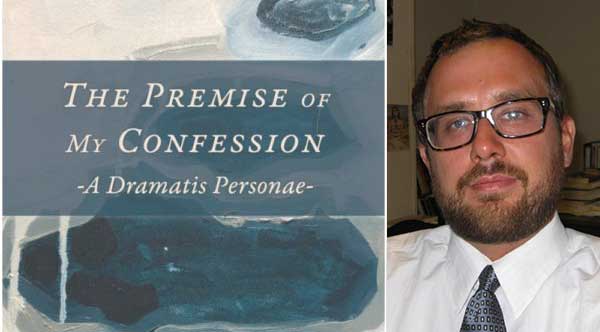
Chase Dimock reviews “The Premise of My Confession: A Dramatis Personae” By Sean Karns


Chase Dimock reviews

The Premise of My Confession: A Dramatis Personae

By Sean Karns


Many times, I have sat next to a random, drunk stranger at a bar, and he used the chance meeting to stammer and slur his words through his life’s story, the dizzying heights and crushing defeats. He has used my expressionless face as a sounding board for his ill-defined philosophies, raging impotently at foes he never really explained, pining for lost joys whose sweetness I couldn’t smell over his beer breath. He has seen a reflection of a younger self in my eyes, and tried to warn himself about the agonies of the future in which he lives.

Many times, that random drunk stranger at the bar was me. 

Maybe it’s because the bourbon has washed away all the specific contents of these tavern confessions, but I don’t remember any of them coming close to the philosophical depth and poetic craft of Sean Karns’ new book, The Premise of My Confession: A Dramatis Personae. 

The premise of this chapbook is simple. A retired magician meets an nameless stand-in for the reader at a bar and in 25 pages, we hear the rise and fall of a magician addicted to and debilitated by his craft and the audience’s adoration of his spectacle. The longform poem is set up like a dramatic play, though the only other character who speaks and breaks up the magician’s monologue is a nameless narrator who addresses you, the reader, to provide exposition. Yet, the narrator does not just describe the scene and plot; he also tells you how you feel and react while listening to the magician:

You impatiently shift in your barstool
And stare at your hands and pick at your nails.
You have no clear exit strategy

Perhaps I am in the minority here, but this voice of a narrator explaining my own actions to myself replicates my experience of drinking and remaining silent as others prattle on.

Karns’ chapbook follows a tradition of random encounters with monologuing, philosophical drunks in literature. As I read the magician’s story, I thought about Crime and Punishment and The Fall. Raskolnikov listens to the drunken laments of barflies who squandered their family’s savings and reputation as Dostoevsky explores what he called “the present question of drunkeness.” In The Fall Camus places the reader in an Amsterdam bar. You are the unlikely recipient of the confession of a once prominent and respected defense attorney whose fall from grace came from the paralyzing realization he did not authentically believe in the values he championed in court.

Karns’ Magician is somewhere between the drunken oblivion of Mameladov and the weary introspection of Clemence. Like both Dostoevsky and Camus, Karns’ perspective is existential. All the world’s a stage, and that is where the crisis of authenticity opens the void, or as the Magician explains, a wound:

When you’re a spectacle, you can’t be something else.
There are consequences for acknowledging

There is an absence. I didn’t want to be
A lonely spectacle…how’re we spectacles,

You ask? Why so dismissive? The Wound will
Let you know what you are or aren’t.

We’re formed by a collection of the Wound’s 
Memories, and through these memories,

We become a spectacle, a viewing pleasure
For others, especially for the Wound.

Here, I feel as though I am under the gaze of Jean-Paul Sartre, thinking of how we internalize the gaze of others and become not a being in of itself, but a being for others. When how we perform for others pleases the other, we internalize that role and mistake it for an authentic self. As the magician puts it “While performing a pointless trick/ Perhaps our real selves are locked in trunks.” 

As a young queer scholar, a short passage from Sartre’s Being and Nothingness redefined my understanding of my own identity. To illustrate the problems with authenticity, Sartre presents a scenario in which a homosexual man refuses to come out to another person who believes he has the right to urge him out of the closet. The homosexual man is in a bind here. If he were to lie about homosexual desires, he would be inauthentic with his true desires. But, if he were to confess, he would would be accepting the definition and expectations of sexuality that the other man holds, which the homosexual man does not agree with. He can’t deny himself, but he also can’t validate the flawed thinking of others that would place a label and category on him that doesn’t come from himself.

Karns’ Magician presents a similar problem with authenticity and being turned into a being for others:

As a spectacle, for it was all
I knew, and I knew I’d regret it.

Hypnotize, I’d regret it. Don’t,
I’d regret it. Disappear and relocate

An audience member, I’d regret it.
Don’t I’d regret it. Unknowingly

The audience follows the spectacle
Into ocean bound trunks.

Like Sartre’s example of the closeted homosexual, you regret staying in the trunk and hiding, but you also regret pantomiming the expectations of the crowd on stage. Even celebrated figures like famous magicians become bound by the persona needed to achieve applause. I wonder if those 80s and 90s bands, well past their glory years, that you see playing county fairs every summer ever feel this way. Could you find the guy from Smash Mouth sitting next to you at the funnel cake stand, confessing that he’d rather lock himself in the mic trunk than sing “All Star” one more time?

But here’s the inherent problem with confessions that the Magician, the homosexual man in Sartre’s story, and maybe even the Smash Mouth guy knows: they are always given to someone who does not possess the power to forgive them. As the Magician says: 

And I longed for forgiveness for years
Of deception, but the Wound ignores confessions

And redemptions–the Wound requires you
To absolve your guilt, alone.

Since in this poem, the person receiving this statement is “you,” I wonder if this means that the magician knows this barroom confession is invalid since he is not alone and “you” cannot absolve his guilt, like some people assume priests can. Maybe this confession is as much a performance for an audience as any of his magic tricks.

Or, maybe this is why “you” do not speak in this poem, and why he speaks to a random stranger. Even though you’re there to hear him, he’s still alone in the bar.


The Premise of My Confession: A Dramatis Personae is available via Finishing Line Press


About the Author: Chase Dimock is the Managing Editor of As It Ought To Be Magazine. He holds a PhD in Comparative Literature from the University of Illinois and his scholarship has appeared in College LiteratureWestern American Literature, and numerous edited anthologies. His works of literary criticism have appeared in Mayday MagazineThe Lambda Literary ReviewModern American Poetry, and Dissertation Reviews. His poetry has appeared in Waccamaw, New Mexico Review, Faultline, Hot Metal Bridge, Saw Palm, Flyway, and San Pedro River Review among othersFor more of his work, check out ChaseDimock.com.


More Reviews By Chase Dimock:

A Review of All Seats Fifty Cents by Stephen Roger Powers

A Review of Willingly by Marc Frazier

A Review of Your Daughter’s Country by John Dorsey

From a Tree Limb

Jean-Baptiste Oudry “A Deer Attacked by Dogs” (1725)

From a Tree Limb

By Sean Karns


Outside my house, a gutted buck dangles
from a tree limb.  Two men pull the buck’s hide
like tugging on a bell rope in a tower.
Their children swing on the swing set.
I’ve never seen a deer slaughtered,
never seen many things slaughtered.

I once saw my father gut a squirrel.
Doesn’t smell right, he said.  He put the squirrel
an inch away from my face.
Sniff it, he said. I smelled it, sucked in the odor
like my last breath and shrugged my shoulders
not knowing what I was sniffing for.
He dug a hole in the yard.
You got to dig the hole deep enough,
he said. So the dogs can’t smell it and dig it up.

I wonder where the heart is,
where the spleen is,
if the men will leave the buck
disemboweled in two locations.

I press my face to the screen door.
A child pets the hide splayed over
the laundry line, the other watches
the hacking off of hooves.

.

“From a Tree Limb” first appeared in Pleiades and is in Jar of Pennies. 

.

About the Author: Sean Karns has an MFA in creative writing from the University of Illinois and a BA from The Ohio State University. He is the author of a collection of poetry, Jar of Pennies, and his poetry has appeared in the Birmingham Poetry Review, Hobart, Rattle, Pleiades, Los Angeles Review, Cold Mountain Review, Folio, and elsewhere; and his poetry has been anthologized in New Poetry from the Midwest. He is currently the poetry editor at Mayday Magazine.

“Fish Performance” By Sean Karns


Fish Performance

                        After Viewing a Lida Aboul photograph

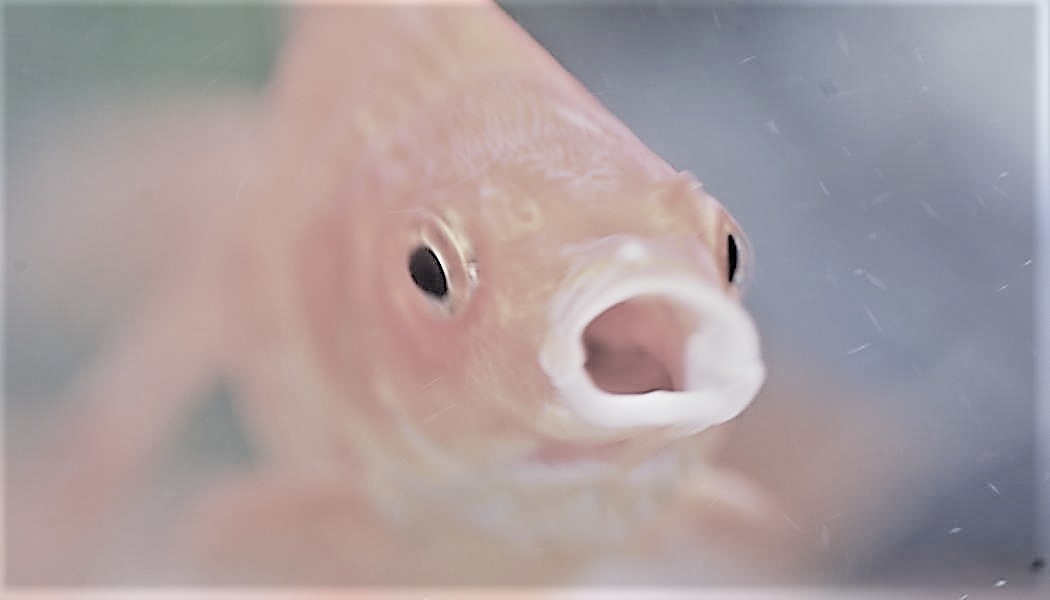
You place the fishbowl in the freezer.  You sit on the couch and knit gloves, though it does not take long for the goldfish to freeze.  The poor goldfish, when removed from the freezer, it has a permanent O shaped mouth, and the fins are held in motion.  You chisel the goldfish into a novelty ice cube.  You raise the goldfish to your mouth; hold it in your palm as if lifting a child’s face and place a wishful kiss.  A little secret kept to yourself, and I can only think of your childhood: too many goldfish flushed.  Now you hold your memories in ice.  I look at your lips, wanting to be your strange ritual.

.

“Fish Performance” first appeared in the Los Angeles Review and is featured in the book Jar of Pennies.

.

About the Author: Sean Karns has an MFA in creative writing from the University of Illinois and a BA from The Ohio State University. He is the author of a collection of poetry, Jar of Pennies, and his poetry has appeared in the Birmingham Poetry Review, Hobart, Rattle, Pleiades, Los Angeles Review, Cold Mountain Review, Folio, and elsewhere; and his poetry has been anthologized in New Poetry from the Midwest. He is currently the poetry editor at Mayday Magazine.


More By Sean Karns:

From a Tree Limb

Outside the Bedroom

My Father’s Potato Death


Two Poems By Sean Karns

Tina Modotti “Hands Resting on Tools”  from the Getty’s Open Content Program.

Two Poems

By Sean Karns


The Man of Dirt Toils in the Laughter of His Wayward World

A long way off, the Man of Dirt heard something.
He has been diluted by his design for years.

He took a moment to understand the commotion.
It has been a while. Once upon a time,

It is said, he walked away. Everything I have designed
Has been a disappointment, he contemplated.   

On all fours he placed his ear to his dirt.
Buried under his dirt, laughter.

Not that pat-your-back kind of laughter,
But the kind of laughter when all that is left

Is the sunken world. Work to be done.
A lot of dirt to dig through to bring light

To those laughs, he thought. He gazed at his dirty,
Chapped hands—brittle and old like a kid’s

Digging stick. He massaged his hands and remembered
When he was young and ambitious.

I had my whole world ahead of me, he somberly
Declared to no one particular.   

This is the last time, the last time, he bemoaned.
Those words, like words in an echo-chamber,

Caused laughter; so loud the laughter, the dirt
Murmured. He stumbled and cracked a rib

On an elbow protruded through dirt.
Ah, I get it. A little elbow ribbing, he snickered.

He began, again, as always, the digging.
He tunneled toward the laughter.

So sinister, so alive the dark laughter.
Blinded by the dark, he toiled in the laughter

.

The Son Witnesses

The son asks his father how the world works. The father looks at the car grease under his nails and cleans them with his front teeth. He pulls the globe out of the closet and selects a serrated knife, then sits. His knife feels familiar in his hand as he shows his son how to cut the globe. The son watches over his father’s shoulder, wanting to know. The father hands the knife to his fellow worker. But the son is nervous, like the first time he walked around his neighborhood block alone. The son cuts the globe; it feels like cutting into a tree branch. The plastic shards fall. The father stands; his hand is on his son’s back as pieces of the ocean and countries, unknown to both, fall.


“The Man of Dirt Toils in the Laughter of his Wayward World” originally appeared in the Birmingham Poetry Review.

“The Son Witnesses” originally appeared in Cold Mountain Review and is published in Jar of Pennies.

.

About the Author: 

Sean Karns has an MFA in creative writing from the University of Illinois and a BA from The Ohio State University. He is the author of a collection of poetry, Jar of Pennies, and his poetry has appeared in the Birmingham Poetry Review, Hobart, Rattle, Pleiades, Los Angeles Review, Cold Mountain Review, Folio, and elsewhere; and his poetry has been anthologized in New Poetry from the Midwest. He is currently the poetry editor at Mayday Magazine and teaches at Wittenberg University.

SATURDAY POETRY SERIES PRESENTS: SEAN KARNS

CUTTING DOWN THE PROPERTY LINE
By Sean Karns

1. Tire Swing

He hacks at the thicket, grabs hold
of the blackberry canes,
bloodies his hands;
blackens them with juices.
He looks at his hands,
sees labor: a future in tearing
down. There are children swinging
on a swinging tire. He wants to join them.
He feels a stare; his father sits
on the porch; it’s mid-day and hot.
The yard is dry grass and dirt.
He feels the thorny sting
to take away
what is in the house
that keeps him hacking.
There’s a silk scarf
his mother left under his pillow.
The tire swing creaks.
A swing that creaks
like a deranged mosquito
singing in his ear.
They swing, seeing
how far the lake.
He rubs the blackness
from his hands,
looks at the house, its tilted porch
and chipped paint.
The dark tree-line
and forgetting the clink
of the doorknob.

2. Woods

He goes farther into the woods;
his father stares—
faces in the bark of every tree.
He wants to drop a match
on the everywhere leaves.
And then the twisting
of the bronze door knob.
He hides his face with the scarf
from the footsteps and the black
polished boots under the bed.
He gathers the sturdiest tree
limbs he can pull
with his thirteen years of strength.
With a hatchet, he cuts the limbs
into logs and hammers
them around a tree.
He stole rope
from his father’s work-shed.

3. Fortress

He peeks out of the hollow
of the oak tree.
He slips on the dewy ground.
His father’s dream-weight
pushes down on him. He swipes the mud
from his lips. The insects
sound like the twist
of a door knob. So do the branches
falling. He throws
the rope over the tree limb,
dollies up his scarf, hatchet and hammer.
There’s no higher place
for him to throw his rope.


(“Cutting Down the Property Line” previously appeared in Mayday Magazine and is reprinted here today with permission from the poet.)

Sean Karns’ work has appeared or is forthcoming in Cold Mountain Review, Folio, Los Angeles Review, Ninth Letter, Mayday Magazine, Pleiades, and elsewhere.

Editor’s Note: There is a weight to the aural nature of the words in today’s piece that alludes to a corresponding heaviness of subject matter. A narrative poem, the story is not neatly laid out for the reader, but instead consonants become palpable, and the story oozes from the language, thick like syrup forcibly drained from a tree deep in the woods.

Want more by and about Sean Karns?
Mayday Magazine (1)
Mayday Magazine (3)
Sean Karns reads his poem “A Rural Weekend”

“Outside the Bedroom” by Sean Karns

Outside the Bedroom

1.

You slouch in the car seat

and mumble ich will nicht ausserhalb vom Schlafzimmer.

I believe it’s about the long red light

blocks from your husband’s home.

There is a pressure outside

the bedroom as potential witnesses

bike the crosswalk.

You cover your eyes

like your three-year-old daughter

scared of seeing something awful.


2.

I stand on the balcony

as you pedal away.

I want to pedal next to you

and do ordinary things—

casual walks, Café Apropos

and the Columbus museum.

But you pedal faster.

When you’re gone,

I find weeks of your hair.


3.

We can go onto the balcony.

It’s getting cooler.  I want to show you

the large oak tree.  It will hide us.

I have bread we can roll

into pebbles and toss onto the yard

to occupy the robins.

The neighbors are at work.

We have this place to ourselves.


4.

Getting used to using each other—

I watch you put your clothes

back on and leave.

In the morning,

there’s a pleasure

smell of you,

two sets of earrings

on the nightstand,

artifacts under dust.


Sean Karns is a poet living in Illinois. His work has appeared in various national literary journals. The above poem originally appeared in Folio and is reprinted here by permission of the author.

“My Father’s Potato Death” by Sean Karns

“Bedrohlich” by Anke Merzbach


MY FATHER’S POTATO DEATH

The Irish weather demands
a black umbrella, but I prefer green
over black. I see green in ways
the morning light comes up over
the green tree divide that separates
the city from green-plastic-
covered potato mounds.

Being a crop inspector is serious
business. There’s been a few cropped
heads because men with hatchets
remember days of potato scares. My father
was on duty protecting the crops,
when I found him headless holding
an umbrella. His death reminds
me of the economics of a potato.
Potato vodka for Russians
or competing with them Idahoans.
Those fancy red rich people potatoes;
all fortified by hatchet men.

I took up the post in honor
of my father, and I will bleed out
the men who steal my potatoes.
I’ll use their blood to fertilize crops.
I will tuck them in a makeshift plastic
greenhouse and plant their heads,
call them head mounds.

I eat fried potatoes in memoriam
of the headless. I fire a twenty-one
potato gun salute into the green
haze released from the potato factory.


Sean Karns‘s work appears in several journals, including Folio, Ninth Letter, and Mayday, where the above poem originally appeared.