Poetry: April 2025

Rose Mary Boehm: “Boil them”

Rebecca Clifford: “Climatic Divinations”

Sam Hendrian: “Magazine Ads”

Paul Ilechko: “A Clock Is Ticking”

Tricia Knoll: “Next Time You Interview a Unicorn Prepare Better Questions”

H.K.G. Lowery: “Villa Diodati”

Samuel Prestridge: “Why I’ve Not Cut Down The Yes Ma’am Bush”

Tamarah Rockwood: “Persephone’s first day out”

Jason Ryberg: “No Great Hurry”

Matthew Ussia: “Home Improvement Advice for Anyone Owning a House More Than One Hundred Years Old”

Jason Ryberg: “The Calm Before”


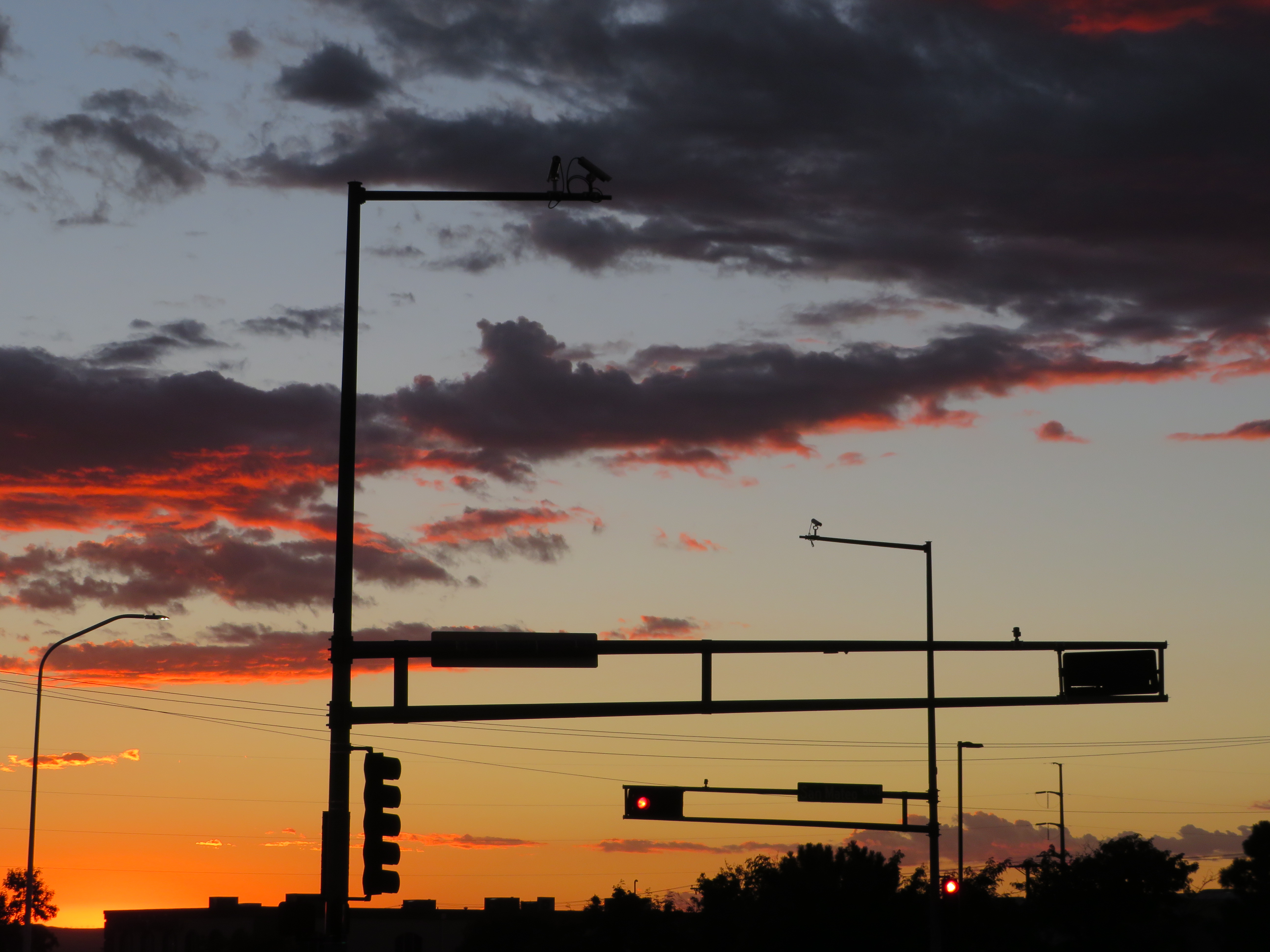
The Calm Before


It’s been another long and perilous week
but we’ve finally come around
to the relative calm of another Sunday afternoon.

And the sun has just now slipped away
behind a slate-grey bank of clouds
and the wind is still rolling around
in its dream-soaked sleep
over in the vacant, weed-clotted lot
across the street.

But the traffic ‘round town
churns and lurches
and then suddenly stalls,
lurches and stalls,
lurches and stalls
all with the passive-aggressive demeanor
of massive schools of tropical fish.

And so far,
it’s been another one of those
barren, bombed-out type of Sundays
wherein nothing really happens
and the weather and the time
fight a cold civil war of attrition
for a mere toehold on the day,
one of those days
when you just can’t seem
to get your bearings
or screw your head on straight
or locate your proper place
in a world full of places
where you don’t want to be,
people you don’t want to meet
and useless things you don’t need.

And all your meager thoughts
and sentences are randomly sprouting wings
(the very second they come into being, it seems)
and, somehow, the very likely likelihood
of (what in all likelihood would be)
some seriously white-hot sex is... no big thing,

and even Miles and Mingus and Monk
have, unprecedentedly,
misplaced their swing (surely
the problem couldn’t be
with you or me?).

Hell, it could only mean one thing:
the clouds,
the wind,
the traffic racing aimlessly around town,
the slow stalagmitization of seconds
into minutes into hours,

otherwise known as our Indentured Servitude
to Time (otherwise known as this Post-
Post-Modern Life of Ours),

they’re all larger parts of the sum
of the numb, melancholy calm
swelling before the storm
of Monday morning
comes rudely blundering in:

that vaguely ominous,
imminent negative
like an approaching tunnel
out of which
will eventually,
inevitably,
inescapably roar

a runaway freight train
haulin’ in nothin’
for you, baby,

but bills,
bad attitude
and diminished expectations

of everything.

About the Author: Jason Ryberg is the author of eighteen books of poetry, six screenplays, a few short stories, a box full of folders, notebooks and scraps of paper that could one day be  (loosely) construed as a novel, and, a couple of angry  letters to various magazine and newspaper editors.  He is currently an artist-in-residence at both  The Prospero Institute of Disquieted P/o/e/t/i/c/s  and the Osage Arts Community, and is an editor and designer at Spartan Books. His latest collection of poems is Fence Post Blues (River Dog Press, 2023). He lives part-time in Kansas City, MO with a rooster named Little Red and a Billy-goat named Giuseppe and part-time somewhere in the Ozarks, near the Gasconade River, where there are also many strange and wonderful woodland critters. 

Image Credit: Chase Dimock “New Mexico Intersection” (2021)

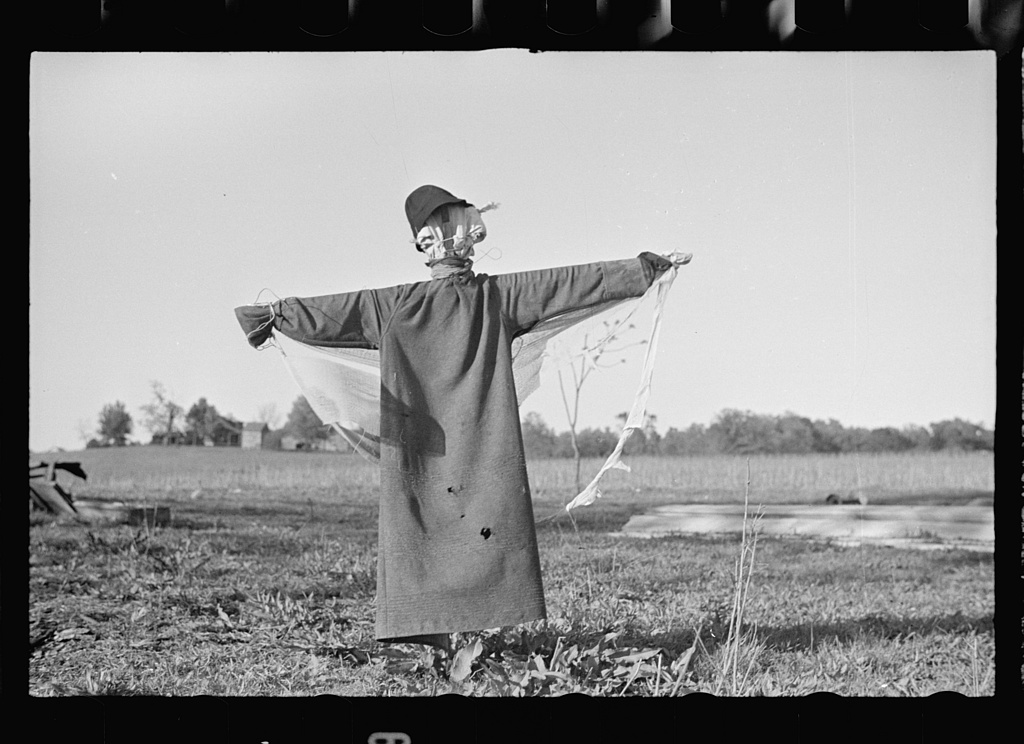
Jason Ryberg: “Scarecrow Standing at a Crossroads”

Scarecrow Standing at a Crossroads

There’s a blackbird between the shadows
of two white houses,

the midnight train is a silver river
of moonlight,

the cornfield is now a haunted forest
of skeletal husks,

and it would appear that the old, madcap,
vaudeville, soft-shoe dancer of a scarecrow,
who, one day who knows how many years ago,
just seemed to have showed-up, out there,
outta nowhere,

has moved on, now

(his past finally
catching up with him, I guess).

About the Author: Jason Ryberg is the author of eighteen books of poetry, six screenplays, a few short stories, a box full of folders, notebooks and scraps of paper that could one day be (loosely) construed as a novel, and, a couple of angry letters to various magazine and newspaper editors. He is currently an artist-in-residence at both The Prospero Institute of Disquieted P/o/e/t/i/c/s and the Osage Arts Community, and is an editor and designer at Spartan Books. His latest collection of poems is The Great American Pyramid Scheme (co-authored with W.E. Leathem, Tim Tarkelly and Mack Thorn, OAC Books, 2022). He lives part-time in Kansas City, MO with a rooster named Little Red and a billygoat named Giuseppe and part-time somewhere in the Ozarks, near the Gasconade River, where there are also many strange and wonderful woodland critters.

Image Credit: John Vachon “Scarecrow, North Carolina” (1938) Public domain image courtesy of the Library of Congress

Jason Ryberg: “Passion Flowers and Puzzle Boxes”

Passion Flowers and Puzzle Boxes


Scientists and poets alike have yet to find 
whether certain experimental hybridizations 
of radio waves and silver go-go boots in any way
affects the erratic trajectories of UFOs.

Though, they now know that the geometry of fireflies 
may have some influence over the delicate symbiosis 
of communication satellites, train yards 
and Blue Turtle migrations.

However, despite recent controversial reports
there has been no independent confirmation
on whether the random arrangement
of orange blossoms on a city sidewalk, 
slick with rain, has any more relation 
to the performance of a North Korean 
featherweight in the 9th than 
a performance of Beethoven’s 9th
by the South Korean Philharmonic does
to the discovery of designs 
for a steam-driven engine 
written on papyrus.

But, one doesn’t need a steady diet
of coral calcium deposits or subterranean
cold-storage of arcane information
to see that a cracked engine block
is bound, cosmically, 
to a crack-baby found
behind a dumpster in an alley
(alive and doing well we’re told),

that beauty-parlor patter is richly infused
with important information regarding escape artistry,
living in the desert, the number “0” AND, 
stealing household appliances 
(specifically, toaster-ovens, it seems)

and, most importantly, 
that a strangely warm winter-breeze
witnessed stirring a light bulb
hanging on the end of a string
will eventually result in a brilliant idea
unfolding like a passionflower or 
Chinese puzzle box of infinite digression 
somewhere down the integer line 

of an, as yet, undetermined causal chain.

About the Author: Jason Ryberg is the author of eighteen books of poetry, six screenplays, a few short stories, a box full of folders, notebooks and scraps of paper that could one day be (loosely) construed as a novel, and, a couple of angry letters to various magazine and newspaper editors. He is currently an artist-in-residence at both 
The Prospero Institute of Disquieted P/o/e/t/i/c/s and the Osage Arts Community, and is an editor and designer at Spartan Books. His latest collection of poems is The Great American Pyramid Scheme (co-authored with W.E. Leathem, Tim Tarkelly and Mack Thorn, OAC Books, 2022). He lives part-time in Kansas City, MO with a rooster named Little Red and a billygoat named Giuseppe and part-time somewhere in the Ozarks, near the Gasconade River, where there are also many strange and wonderful woodland critters.

Image Credit: The American flora. v.1 New York :Hull & Spencer,1855. Image courtesy of the Biodiversity Heritage Library

Jason Ryberg: “Dreams of Empty Houses”

.

service-pnp-habshaer-ca-ca2200-ca2263-photos-182931pv

.

.

Dreams of Empty Houses

Time is always calling
or dropping by (without calling)
at all the wrong goddamn times,

always unexpectedly just coming around
and turning up at the absolutely most
inconvenient and inappropriate moments,

inviting itself in and over-staying its welcome,
bumming all your cigarettes and beers,
using up the minutes on your phone and finally

leaving you, this time, with nothing but
a useless ring of keys, a head full of
crack-pot schemes, a vague sense of having
forgotten or misplaced something, and,

for some strange reason, dreams of empty
houses and apartments where you just can’t
be sure you’ve ever been in, let alone
maybe even lived once.

.

.

About the Author: Jason Ryberg is the author of thirteen books of poetry, six screenplays, a few short stories, a box full of folders, notebooks and scraps of paper that could one day be (loosely) construed as a novel, and, a couple of angry letters to various magazine and newspaper editors. He is currently an artist-in-residence at both The Prospero Institute of Disquieted P/o/e/t/i/c/s and the Osage Arts Community, and is an editor and designer at Spartan Books. His latest collection of poems is The Ghosts of Our Words Will Be Heroes in Hell (co-authored with Damian Rucci, John Dorsey, and Victor Clevenger, OAC Books, 2020). He lives part-time in Salina, KS with a rooster named Little Red and a billygoat named Giuseppe and part-time somewhere in the Ozarks, near the Gasconade River, where there are also many strange and wonderful woodland critters.

.

More by Jason Ryberg:

Beef, It’s What’s for Dinner

Sometimes the Moon is Nothing More than the Moon

All of the Above

.

Image Credit: Robert Hicks “VIEW OF BUILDING 54. BEDROOM. FACING NORTH. – Winehaven, Rectangular Three-Bedroom-Plan Residence, Point Molate Naval Fuel Depot, Richmond, Contra Costa County, CA” (1996) The Library of Congress

Jason Ryberg: “Never Enough to Go Around”

.

.

.


Never Enough to Go Around

6am, and the world is just about
to fire up again and

over across the way
there’s a black dog straining at its chain,
barking and barking at a starless black sky,

black sky fading to a sheet metal grey,
then, a pale powder blue,

hot black coffee starting to cool,

sixteen Redwing Blackbirds
sitting on a wire,

right above a rusted-out pick-up
that’s missing its front driver’s side tire.

A shoebox full of unopened letters,

a black pleather cowboy boot
sprouting yellow flowers,

a piece of notebook paper,
found in a copy of Don Quixote;
a long list of “things to do, Summer 2002
(#14- finish Don Quixote).”

And here, at the center of it all,
an old-school, wind-up alarm clock
chopping out our meager allotments of time
with a tiny, relentless, insectile sound.

Time;
just never enough of it to go around.

.

.

About the Author: Jason Ryberg is the author of thirteen books of poetry, six screenplays, a few short stories, a box full of folders, notebooks and scraps of paper that could one day be (loosely) construed as a novel, and, a couple of angry letters to various magazine and newspaper editors. He is currently an artist-in-residence at both The Prospero Institute of Disquieted P/o/e/t/i/c/s and the Osage Arts Community, and is an editor and designer at Spartan Books. His latest collection of poems is The Ghosts of Our Words Will Be Heroes in Hell (co-authored with Damian Rucci, John Dorsey, and Victor Clevenger, OAC Books, 2020). He lives part-time in Salina, KS with a rooster named Little Red and a billygoat named Giuseppe and part-time somewhere in the Ozarks, near the Gasconade River, where there are also many strange and wonderful woodland critters. 

.

More by Jason Ryberg:

Beef, It’s What’s for Dinner

Sometimes the Moon is Nothing More than the Moon

All of the Above

.

Image Credit: Chase Dimock “Fleener Chimneys, Lava Beds National Park” (2020)

Revisiting 2020: Our 50 Most Popular Posts of the Year


Dear As It Ought To Be Readers,


Despite everything 2020 threw at us, AIOTB Magazine was fortunate to receive so many brilliant poems, essays, interviews, and book reviews from writers around the world. Below, I have assembled the 50 most popular posts of the year based on the amount of hits they received. I know that few people will look back at 2020 with fondness, but maybe reviewing these posts from the year is a reminder of the resilience people have to continue to create in a crisis, and to channel the anxiety of the world into writing that connects us.

AIOTB Magazine was perhaps the only constant I had in 2020 that began and ended the year exactly the same, and completely intact. I have all of you contributors and readers to thank for that. Thanks for keeping me sane and connected to a community of writers when I most needed stability, creativity, and human connection in my life.

I have no idea what 2021 will look like, but if you keep reading and supporting each other’s work, you’ll at least have three new pieces a week on AIOTB Magazine to count on.


-Chase Dimock
Managing Editor


Poetry

Omobolanle Alashe:

Jason Baldinger:

Rusty Barnes:

Jean Biegun:

Victor Clevenger:

John Dorsey:

Ajah Henry Ekene:

Loisa Fenichell:

Jeff Hardin:

John Haugh:

Mike James:

Jennifer R. Lloyd:

John Macker:

Tessah Melamed:

THE NU PROFIT$ OF P/O/E/T/I/C DI$CHORD:

Hilary Otto:

Dan Overgaard:

Rob Plath:

Daniel Romo:

Diana Rosen:

Damian Rucci:

Leslie M. Rupracht:

Anna Saunders:

Sheila Saunders:

Alan Semerdjian:

Delora Sales Simbajon:

Nathanael Stolte:

Timothy Tarkelly

William Taylor Jr.:

Bunkong Tuon:

Peggy Turnbull:

Brian Chander Wiora:


Reviews

Chase Dimock:

Mike James:

Arthur Hoyle:


Interviews

Chase Dimock:


Nonfiction

Brian Connor:

Cody Sexton:


Micro Fiction

Meg Pokrass:

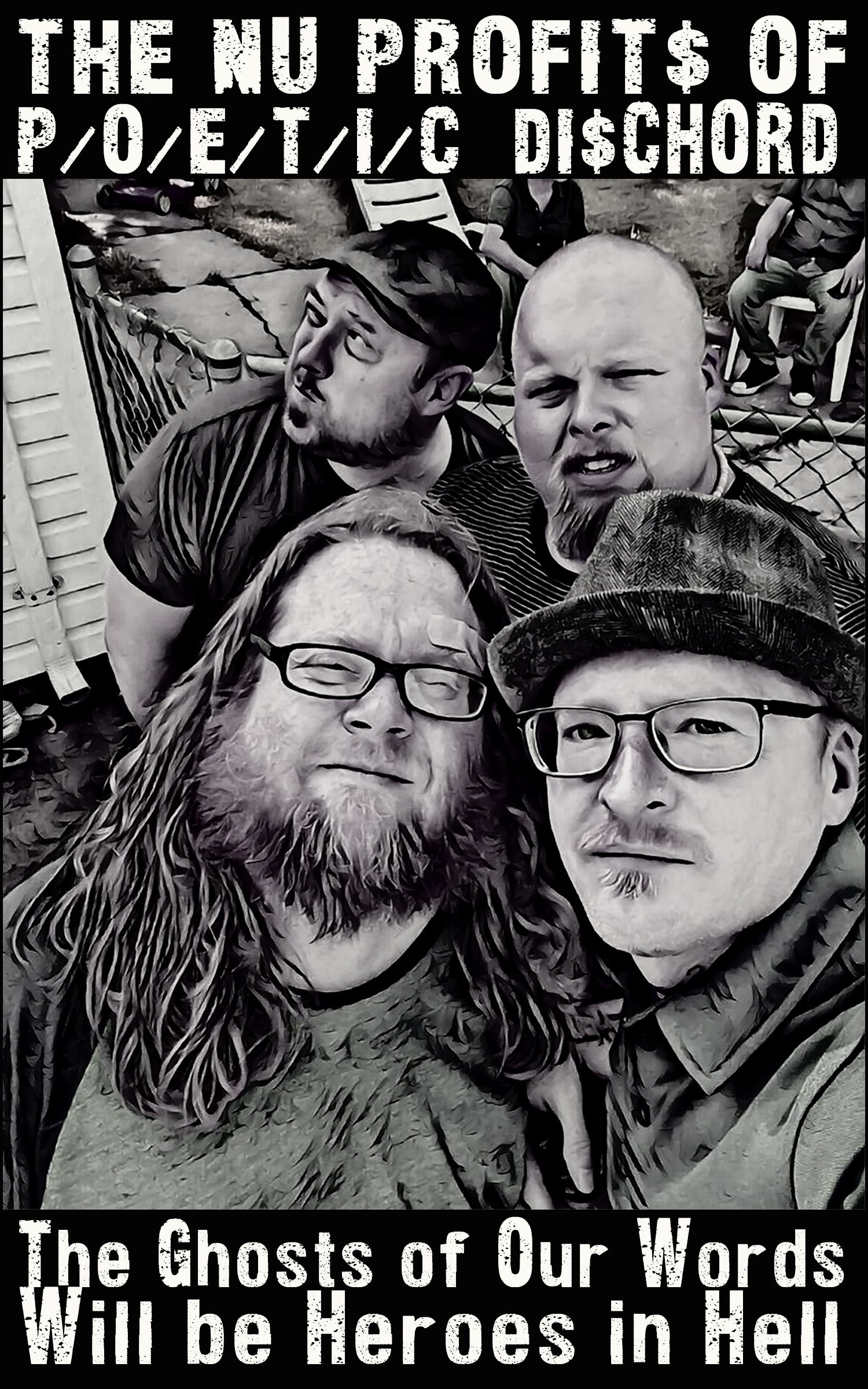
THE NU PROFIT$ OF P/O/E/T/I/C DI$CHORD


Some choice cuts from

The Ghosts of Our Words Will be Heroes in Hell,

the latest book project by

THE NU PROFIT$ OF P/O/E/T/I/C DI$CHORD


Beef, It’s What’s for Dinner!  /  Jason Ryberg

The wind is whipping up
little cyclones of dust and leaves
in the ditch by the side of Old 40 HWY,

and there’s a star-shine gleam
to the chrome ball-hitch
of the pick-up truck in front of me,

and there’s road-side fences to the future,
telephone poles to the past,

and the sun, like a cyclop’s murder-red eye
is climbing up from behind the horizon
and right into my driver’s-side
rear-view mirror,

and Walk, Don’t Run by the Ventures
is playing now on the radio

and there, above it all,
a lone falcon or hawk sits, calmly,
surveying its little fiefdom from the top
of a billboard sign that reads,

Beef, it’s what’s for dinner!

You got that right, pal.


When You’re Poor  /  Damian Rucci

when you’re poor
you’re always fucking
or fighting

always fucking because there
is never anything to do
but thrust & moan

when that’s done
then you’re fighting
fighting to keep the lights on

fighting to keep the bills paid
fighting to find change to do the laundry
& fighting with the landlord
about that fifty bucks
he’s still missing

but it could be worse
you could always be waiting again
waiting for the electricity company
to finally kill the lights

waiting for that check to hit
the mail box
waiting for the winds to blow
luck your way for once


The Finger Has Got to Come Off  /  John Dorsey

crazy mark crushes his finger
in the back of a dump truck

instead of going to the hospital
he examines the bone

each angle
like the rings on a tree

each crack
a ridge of undiscovered country

clues to a past
that even he can’t quite recall

weeks go by
and the skin
just won’t heal

he says he’ll have to
cut the meat off himself
before it starts to stink
like a dying animal
left to rot
in the woods.


Lost Man’s Candle / Victor Clevenger

standing at the end of a cold day
we think about how it is always here
in some form good for a glow
hanging from a rope
tied to a breeze

it’s a lost man’s candle
the moon

creating the dull between the trees
branch’s shadows like arms reaching out
for a waist to grasp in dance
& we’re near

but there is no melody left in our breath
tonight     & there is no whistle
from the lips of the wind either

just the random cries of wild animals
that we’ve all heard
a thousand times before

as we stood there like fools

too fucking stubborn
to just find

a good path back home


The Ghosts of Our Words Will Be Heroes in Hell is available from OAC Books, and can be ordered via spartanpresskc@gmail.com or by contacting any of the poets on Facebook.


About the Authors:

Jason Ryberg is the author of thirteen books of poetry, six screenplays, a few short stories, a box full of folders, notebooks and scraps of paper that could one day be  (loosely) construed as a novel, and, a couple of angry  letters to various magazine and newspaper editors. He is currently an artist-in-residence at both The Prospero Institute of Disquieted P/o/e/t/i/c/s and the Osage Arts Community, and is an editor and designer at Spartan Books. His latest collection of poems is Standing at the Intersection of Critical Mass and Event Horizon (Luchador Press, 2019). He lives part-time in Salina, KS with a rooster named  Little Red and a billygoat named Giuseppe and part-time somewhere in the Ozarks, near the Gasconade River, where there are also many strange and wonderful woodland critters.

Damian Rucci is a writer and author of five poetry books including his latest Don’t Call it a Relapse (Punk Provincial Press 2019), founder of the Poetry in the Port reading series, and was a Poet in Residence at the Osage Arts Community in Belle, Missouri. He can be contacted at @damianrucci on Twitter and damian.rucci@gmail.com

John Dorsey lived for several years in Toledo, Ohio. He is the author of several collections of poetry, including Teaching the Dead to Sing: The Outlaw’s Prayer (Rose of Sharon Press, 2006), Sodomy is a City in New Jersey (American Mettle Books, 2010), Tombstone Factory, (Epic Rites Press, 2013), Appalachian Frankenstein (GTK Press, 2015) Being the Fire (Tangerine Press, 2016) and Shoot the Messenger (Red Flag Press, 2017) and Your Daughter’s Country (Blue Horse Press, 2019). His work has been nominated for the Pushcart Prize, Best of the Net, and the Stanley Hanks Memorial Poetry Prize.He was the winner of the 2019 Terri Award given out at the Poetry Rendezvous. He may be reached at archerevans@yahoo.com.

Victor Clevenger spends his days in a Madhouse and his nights writing poetry. Selected pieces of his work have appeared in print magazines and journals around the world. He is the author of several collections of poetry including Sandpaper Lovin’ (Crisis Chronicles Press, 2017), A Finger in the Hornets’ Nest (Red Flag Poetry, 2018), and Corned Beef Hash By Candlelight (Luchador Press, 2019). Together with American poet John Dorsey, they run River Dog.

All of the Above

“The Bad Book” Unknown Artist, Digital image courtesy of the Getty’s Open Content Program


All of the Above

By Jason Ryberg


All of the Above

A book of poems is
a family photo album
for a spectacularly dysfunctional family,

a scrapbook of newspaper clippings,
wedding announcements, obituaries
and concert ticket stubs,

a file cabinet full of classified documents,
elaborately detailed conspiracy theories
and jealously guarded recipes.

A book of poems is
a jelly jar full of fortune cookie fortunes,

an ancient tome of forbidden knowledge,

a grimoire of (otherwise) benign
spells, hexes, hoodoos and charms.

A book of poems is (at least)
equal parts scrapyard and curio shop,
(bus station at 2am  / country crossroads at midnight),

a shoebox full of old post cards
and love letters,

a rolodex of dead or merely
recommissioned phone numbers
(I’m sorry, who were you looking for?)

A book of poems is an estate sale for a wealthy,
eccentric hoarder who has been missing
and presumed dead for nearly a decade.

an operator’s manual for a machine
that hasn’t been invented yet,

a road atlas for a lost continent.

A book of poems is …

all of the above.

.

About the Author: Jason Ryberg is the author of twelve books of poetry, six screenplays, a few short stories, a box full of folders, notebooks and scraps of paper that could one day be (loosely) construed as a novel, and, a couple of angry  letters to various magazine and newspaper editors. He is currently an artist-in-residence at both The Prospero Institute of Disquieted P/o/e/t/i/c/s and the Osage Arts Community, and is an editor and designer at Spartan Books. His latest collections of poems are Zeus-X-Mechanica (Spartan Press, 2017) and A Secret History of the Nighttime World (39 West Press, 2017). He lives part-time in Kansas City with a rooster named Little Red and a billygoat named Giuseppe and part-time somewhere in the Ozarks, near the Gasconade River, where there are also many strange and wonderful woodland critters. 

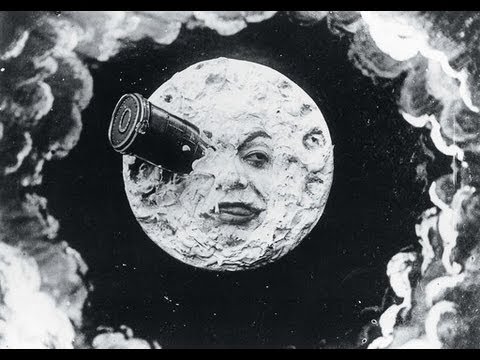
“Sometimes the Moon is Nothing More Than the Moon” By Jason Ryberg


Sometimes the Moon is Nothing
More Than the Moon

Sometimes the moon comes down
(if she happens to be in town)
from her royal couch of clouds
to drink with us (my shadow
and me) when no one else will.

Sometimes the moon rings like a temple bell
on a brittle, breathless, freeze-dried night,
signaling the beginning (or maybe the end)
of something important and radiates
with a halo of steam like a luminous
ball of dry ice.

Sometimes the moon is a curved dagger
that some Bedouin bandit prince
might have brandished in the blue and grainy
late, late show of my childhood dreams.

Sometimes the moon is a white rose
that drunken fools inevitably try
to shoot arrows and poems at,
knowing full-well that both return
to Earth with potentially dangerous results.

Sometimes the moon is a pallid face
peering in at us through a Winter window scene
while the radio begins to glow with a moody
Ellington Indigo and a car down on the street
is struggling to clear the early frost from its throat.

Sometimes the moon is a cop’s
flashlight cutting a cautious path                                                                                                          through film-noir ghosts of gutter steam.

Sometimes the moon is a 60-watt bulb
shining from the back porch,
out into the sweaty, firefly-infused,
backyard jungle nights of long ago.

Sometimes the moon is a guard tower spot,
always trying to catch us with its magic lasso
whenever we make our midnight raids, over the walls,
into the Garden of Earthly Delights.

Sometimes the moon is a silver dollar
that’s been sheared in two by a dull
and rusty pair of tin snips.

Sometimes the moon is a shiny dime
flattened on a railroad track,
in which, if one looks just right,
a semblance of Roosevelt’s confident
and reassuring smirk can still be seen.
Sometimes the moon is a fat, blue
androgynous Buddha, grinning out
at the universe in every direction at once.

Sometimes the moon is a single bright eye
of a dark god of the ancient world,
peering down at us through a hole torn
in the top of a circus tent of clouds,
or up from an inversely alternate underworld
through the dimensional portal
of a swollen, marshy pond.

Sometimes the moon is nothing more
than the moon.

No.

That’s never true.


.

About the Author: Jason Ryberg is the author of twelve books of poetry, six screenplays, a few short stories, a box full of folders, notebooks and scraps of paper that could one day be (loosely) construed as a novel, and, a couple of angry  letters to various magazine and newspaper editors. He is currently an artist-in-residence at both The Prospero Institute of Disquieted P/o/e/t/i/c/s and the Osage Arts Community, and is an editor and designer at Spartan Books. His latest collections of poems are Zeus-X-Mechanica (Spartan Press, 2017) and A Secret History of the Nighttime World (39 West Press, 2017). He lives part-time in Kansas City with a rooster named Little Red and a billygoat named Giuseppe and part-time somewhere in the Ozarks, near the Gasconade River, where there are also many strange and wonderful woodland critters.