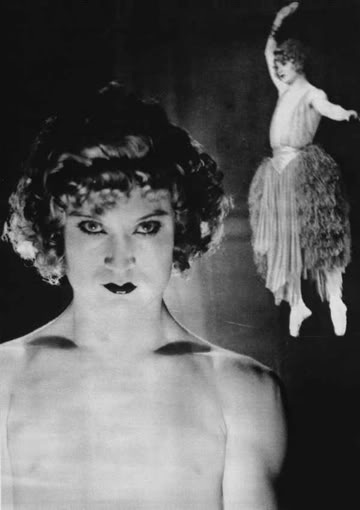
The Very Southern Pronunciation Still Rings In My Ears: A Conversation With Poet Mike James

.

The Very Southern Pronunciation Still Rings In My Ears:

A Conversation With Poet Mike James

By Chase Dimock

.

Keats had his nightingale, Shelley had his skylark, Poe had his raven, Stevens had 13 ways of looking at a blackbird, and Mike James has a jukebox full of crows. While fans of poems about birds will not be disappointed, Crows in the Jukebox is just as much about the jukebox as it is about the crows. James’s book reads like the playlist of an old jukebox in a roadside, greasy spoon diner. There are folk songs that retell old family lore, slow ballads that honestly and sweetly pay tribute to his love, and melancholic memories of a self-destructive father on par with any country tune sung by Loretta Lynn or Tammy Wynette. You can hear the drawl in his words, but James is not constrained by the clichés or expectations of his background in the Carolinas. His poetry is, as the crow flies, direct in its route and positioned with a vision that can muse on the specific while connecting it to a wider, areal view.

.

Chase Dimock: Crows pop up as the subject of several poems in your book, Crows in the Jukebox. In “The Crows,” you write that you “love those damned birds for what they aren’t” and in “Poem” you declare that “crows are good at waiting, much better than we are with our alphabet of needs.” What is it about crows that makes them such a fertile subject for poems? How does your interest in crows connect with some of the other ideas and themes in your work?


Mike James:  I’ve always loved crows. They are, with pigeons, my favorite birds.  Part of what I like about them is their intelligence, but I also love the fact that they exist at the margins. No one goes to the zoo to see crows. They are always around, watching and plotting survival. Many people have a real aversion to them. That marginality probably interests me as much as anything since I think the best writing comes from working against dominant culture, of getting by at the margins. So many of “the great dead” I admire worked actively outside of the mainstream.  (I’m thinking of poets like Stephen Jonas, Bill Knott, Jack Spicer, Lorine Niedecker, and Mbembe Milton Smith.) I don’t make a conscious decision to work around any specific themes; however, I have a real love for the decayed, the failing, and the decrepit. In so many ways I am in love with ruination. Give me the choice between walking through a mansion and walking through a closed factory and I will choose the factory on every occasion.


Chase Dimock: Let’s talk more about your interest in marginality and resisting the dominant culture. I feel that one way writers cultivate a unique voice and resist the dominant culture in their work is through identifying with the unique region and culture in which they live and write. Steinbeck had Monterrey Bay and Faulkner had rural Mississippi. You were born in the Carolinas, and you currently live in Chapel Hill. A number of your poems make references to places in the South, including a town in the poem “Off Interstate 95” where “people hope for jury duty ’cause it’s a job.” How does living in this region inform your poetry and influence your feeling of marginality?


Mike James: It’s easy for a southerner to relate to marginalized cultures because the south has always been either looked down upon or romanticized in an unhealthy and non-useful way.  Coming from a blue collar background, as I do, presents two choices:  Either accept the dominant culture imposed by wealth and commercialism and forget your origins or stand slightly outside the mainstream and question basic assumptions. Good writing, for me, is all about questioning assumptions.

I’ve been very determined to never lose my, fairly thick, southern accent.  My voice identifies my birth region.  So many people have negative views of southerners.  Once, at a training seminar for my job, the instructor, who I had not spoken with, mentioned her hatred for southern accents because, she said, southerners do not sound educated.  When I questioned her, she asked, “Honestly, don’t you ever think you sound like a hillbilly?” I replied, “No.  I think I sound like William Faulkner and Reynolds Price and Tennessee Williams.”

One way the south definitely influenced me was through the orality of the culture I grew up in.  During my childhood, my relatives gathered on an almost nightly basis and told stories. Even though I’m not a narrative poet, that spoken tradition still informs my work. And the very southern pronunciation still rings in my ears. It’s only in the south that tired and hard can come off like off-rhymes. (You can hear that rhyme in Loretta Lynn’s “Coal Miner’s Daughter.”)

All that being said, I really don’t consider myself a southern writer. James Dickey and Everette Maddox are, probably, the only two southern poets I can definitely say have influenced me and those are two wildly disparate voices.  Most of the poets I read and relate to are from places outside of the south.

Continue reading “The Very Southern Pronunciation Still Rings In My Ears: A Conversation With Poet Mike James”

Letting the Meat Rest: A Conversation With Poet John Dorsey

Letting the Meat Rest:

A Conversation With Poet John Dorsey

By Chase Dimock

.

If you pick up a copy of Letting the Meat Rest, hoping to find tips for juicy pork chops, luckily, John Dorsey’s got you covered:

a pork chop sizzles in a pan
for six minutes tops
any longer & you’ll let the imagination
bleed out all over your plate
& escape into the woods
like magic.

Yet, Dorsey’s subject matter extends beyond pork products. Reading Letting the Meat Rest is like rummaging through a friend’s box of old Polaroids. You want to learn more about these people and moments captured in time. Some snapshots are brief, impressionistic prints of a person frozen in a sliver of life, while others have their detailed history scrawled on the back. These vignettes present us with visions of addiction, poverty, and trauma, but also optimistic moments of youthful ambition, rebellion, and intimate friendship. No matter what Dorsey depicts, whether it’s a full portrait or a quick sketch, it’s always crafted with deep humanity

.

Chase Dimock: I first became acquainted with your work when a mutual friend of ours told me he was driving up to Central Missouri to pick up the Poet Laureate of Belle, MO. At that moment I learned a few things: 1. That a town named Belle, MO exists 2. That a town of less than 2,000 people in rural Missouri has a Poet Laureate, and 3. That the Poet Laureate of Belle, MO is John Dorsey. Having lived for a few years in Cape Girardeau myself, I know there are quite a few cultural gems to be found in rural Missouri. How did you become the Poet Laureate of Belle, MO and what has that experience been like? I saw one poem in Letting the Meat Rest depicting the appropriately named Dinner Belle restaurant in town, so I am curious to know how this experience in Belle has impacted your writing.

John Dorsey: Well, to make a short story long, Chase,  I ended up in Belle at the end of 2015, from Wisconsin, after being awarded a residency at the Osage Arts Community and through that connection, in particular with the Executive Director Mark McClane, I started to meet more people in town,  including Mayor Steve Vogt, who seeing all of the work I had done and was continuing to do, offered me the appointment as Poet Laureate, I’m actually the first Poet Laureate the town of Belle has ever had. Since my appointment we’ve opened a Non-Profit used bookstore, Barb’s Books, and I founded, and Co-Edit, with Jason Ryberg, a literary journal, the Gasconade Review, which received grant funding through the Friends of the Belle Library, from Kingsford/Clorox. As far as the impact on my work, the first full book I finished here was Being the Fire, which was 80 new poems, written in my first two months here, and published by Tangerine Press in London in Fall of 2016. Since I’ve been here I’d say I’ve written between 300-400 poems, which have gone into 6 or 7 different books or chapbooks and have written a full length feature film, Missouri Loves Company, which was produced by Paladin Knight Pictures out of New Jersey, on a budget of around $60,000, which was shot on the East Coast and here in town, and is currently being edited. In terms of my poetry, I’d say that at least half of everything since I’ve been here has to do with Belle itself, so the impact has been significant. Continue reading “Letting the Meat Rest: A Conversation With Poet John Dorsey”

Snuffleupagus as Depression: A Conversation with Poet Daniel Crocker

Snuffleupagus as Depression:

A Conversation with Poet Daniel Crocker

By Chase Dimock


If you ask Daniel Crocker how to get to Sesame Street, he’d point you toward a twisting road of manic depression, frustrated desires, and existential malaise. In his latest book, Shit House Rat, Crocker’s poetry reimagines the furry childhood icons of Sesame Street embodying torments and foibles as adult and human as the people whose hands are lodged up their muppet behinds. Cookie Monster is an addict, Big Bird has mania, Snuffy is the haunting specter of depression, and Grover’s anxiety led to a hell of a divorce. But, Sesame Street is only the starting point. Shit House Rat takes the reader to Leadwood, Missouri, Crocker’s rural, predictably lead polluted hometown, where he engages themes from his childhood to his adulthood, including mental illness, queer sexuality, poverty, and small town conservativism. I got a chance to ask Crocker about the appeal of dark humor in poetry, the struggle of growing up bipolar and bisexual in rural America, and most importantly, what exactly a “shit house rat” is.  


Chase Dimock: The first thing your readers will notice about your new book will obviously be the title, Shit House Rat. I know that as you were working on this collection, you had some trepidations about how the title might be perceived by your audience. Where did you get the idea for this title and why did you ultimately decide to use it?


Daniel Crocker: I have trepidation when it comes to just about anything, so I try not to let it worry me too much as a writer. I really put myself out there, especially in this new book, and there’s always a lot of anxiety that comes with that. I did have some specific concerns about the title though. I got the idea from the old saying, “Crazy as a shithouse rat.’ I don’t know if it’s a Midwestern or southern thing, but I’ve heard it a lot growing up and even now. It’s a nice turn of phrase, really. So, I just took the last half of  the saying (kind of like I did with Like a Fish) and used it. My worry is that it’s a real putdown to people, like me, with a mental illness. I don’t want anyone with a mental illness to think I’m making fun of them at all. My hope is to take the phrase and subvert it. Own it.


Chase Dimock: I think it will be clear to anyone who reads your poetry that your goal isn’t to make fun of the mentally ill, but to use humor to explore the experience of mental illness. A lot of your poems are funny, and I mean literally laugh out loud funny, which is pretty rare for modern poetry. (Robert Lowell wasn’t much of a yuckster) Why are you drawn to using humor in your work? What does using humor reveal about the experience of mental illness?


Daniel Crocker: A lot of my early work is pretty dark and without a lot of humor. I don’t like a lot of that early work either (some of it still holds up). But, I always like humor. I thought I was funny. Eventually, I wrote a short story or two for Do Not Look Directly Into Me that were funny, and I quickly found that I loved doing it. I haven’t written fiction in a while, and it’s pretty clear to me now that I’m mainly a poet. However, once humor started seeping its way into my poems it was like a creative flood. I guess it was me finally finding a voice that was all my own. As Steve Barthelme one said to me, it has to be more than just funny though. I think that’s true. For me, the perfect poem of mine is something that makes people laugh when they first read or hear it, but then they find they are still thinking about it later because there was something deeper and darker in it as well. Which I guess if you think about it, it’s the two extremes of bipolar disorder mixed together.

I can’t say what dealing with mental health issues with humor means for anyone else, but for me humor is just a way I deal with a lot of things. When you have mental health issues, every day can be a struggle. With my own particular diagnoses–bipolar, anxiety, OCD, probably PTSD, I worry about a lot of things. I’m doing well on medication right now, but when I wasn’t little things like planning an extra ten minutes before work just to get out of the house just in case there was something you needed to check over and over. You never really know what kind of mood you’re going to wake up in, what your anxiety level for the day is going to be, etc. If you’re going to be successful in any way, you have to plan ahead for just about anything. It’s tough to commit to anything in the future because you don’t know where you’re head space is going to be on that day. Or, before medication for me, I might commit to a ton of stuff while manic and then regret it while depressed. I guess this is a long way of saying if you don’t have a sense of humor about things they can become overwhelming. At least that’s my go to stress relief. Jokes.

The good thing about writing funny poems is everyone usually likes them. The worry is if they are going to take them seriously or not. In Shit House Rat I’m using Big Bird as a symbol for mania and Snuffleupagus as depression. Will people buy it? I dunno.

Continue reading “Snuffleupagus as Depression: A Conversation with Poet Daniel Crocker”

Bernie Sanders’ Gay Pride Day Proclamation and the History of LGBT Advocacy

12525196_10154492439517908_3947354483536840679_o (1)

Bernie Sanders’ Gay Pride Day Proclamation and the History of LGBT Advocacy

by Chase Dimock

The above image is of Bernie’s declaration of a “Gay Pride Day” in Burlington, VT in 1985. I was born in 1985, which means that this man has been advocating for my civil rights my entire life. As we near the democratic primaries, I believe it is important for the LGBT community to consider the value of such a long history of support. I don’t want to vote for a candidate that only chose to recognize my humanity when it became politically expedient. I want to vote for a candidate who has been standing up for me since day one.

To fully understand what these 30 years of advocacy mean to me, it’s important to contextualize what standing up for LGBT rights entailed in the 80s. In 1985, the LGBT community was struggling through one of its great tragedies, the AIDS epidemic. In the four years since its first documented case in 1981 (then called the “gay cancer” and later “Gay Related Immune Deficiency”) AIDS ravaged the community and claimed thousands of lives. The AIDS epidemic spurred a public panic. Little was known about the disease or its transmission other than its association with gay men as its principal victims. Just days after Bernie Sanders signed this proclamation of a “Gay Pride Day”, Ryan White, a teenager from Indiana who contracted the virus from a contaminated blood treatment, was expelled from his school due to fears he could be contagious.

While the American people’s fears stirred into a frenzy, the government’s response to help those affected by AIDS was notoriously slow. Despite thousands dead, President Reagan did not even mention AIDS until months after Bernie’s proclamation. The modern Gay Rights Movement born in the late 60s had achieved some small victories for LGBT rights through the 70s, but the AIDS epidemic threatened to erase their advances and reinforce the bigoted view of the gay man as both mentally and physically ill. Advocating for the humanity and dignity of LGBT people in the middle of the AIDS crisis meant standing against an overwhelming surge of hate, ignorance, and fear. While I applaud all allies who today advocate for LGBT liberties as courageous individuals, I must say that to do so in a time when gay men were stigmatized as plague rats and evangelists referred to AIDS as a gay punishment, required not just courage, but a bold, almost radical commitment to the belief in the principle of equality.

Yet Sanders’ statement went beyond simply stressing the humanity of these men and women. Sanders asserts “lesbians and gay men are making important contributions to the improvement of the quality of life in our city, state, and nation.” To Sanders, they were not just victims to pity, but integral members of a society that was being diminished by the great loss of LGBT talent and leadership due to AIDS. We preach tolerance in America, but mere tolerance is insufficient to deliver equality. Tolerance is just the act of allowing someone to exist. The AIDS epidemic could never be conquered through tolerance; it required compassion and an appreciation of the lives of those touched by it.

Though one could contend that the stakes of supporting LGBT rights for a mayor in Vermont were considerably lower than for a higher profile politician, it’s important to note that Sanders faced considerable opposition to his proclamation. When Sanders signed a letter of support for Burlington’s first Gay Pride celebration in 1983, the measure was met with protest. According to Paul Heinz:

Opponents, such as Alderman Diane Gallagher, a Ward 6 Republican, questioned why the march required official recognition.

“Can’t you just go out and have your party and enjoy yourselves and make your point without asking the city to have a proclamation?” she asked.  (Seven Days)

Letters to the editor were less cordial in their disapproval:

Some of them went after Sanders — particularly in letters to the editor published in the Free Press.

The mayor’s “support for ‘gay rights’ and the city’s support is giving this town a bad name,” Burlington’s Patrick McCown wrote. Essex Center’s Stephen Gons questioned why the city wouldn’t designate a day for Nazis if it was willing to do so for gays. (Seven Days)

Along with his 1985 proclamation of a Gay Pride Day, Sanders and the Board of Aldermen passed a housing non-discrimination ordinance. In a letter to the community, Sanders explained his support:

“It is my very strong view that a society which proclaims human freedom as its goal, as the United States does, must work unceasingly to end discrimination against all people.

I am happy to say that this past year, in Burlington, we have made some important progress by adopting an ordinance which prohibits discrimination in housing. This law will give legal protection not only to welfare recipients, and families with children, the elderly and the handicapped — but to the gay community as well.” (Scribd)

It is this kind of thinking about LGBT rights- the ability to see how issues like housing that are not directly related to sexuality or gender still uniquely affect LGBT individuals- that makes Sanders such a promising candidate. The LGBT community is intersectional, meaning that its members are affected by all of the other forms of discrimination present in our society. LGBT people come from all walks of life, thus issues about race, social class, immigration, and religion among many others are LGBT issues. It is crucial to understand how issues not specific to gender or sexual identity affect the cause of LGBT equality. LGBT people need access to education, health care, and a living wage. The right to marry a partner of the same sex is important, but LGBT people struggling with poverty need leadership committed to vision of social justice that sees us as whole individuals affected by all aspects of American politics and not just as an interest group defined by a single cause.

Recently, The Human Rights Campaign, the most influential LGBT organization in Washington, formally announced the endorsement of Hillary Clinton over Bernie Sanders in the race for the democratic nomination. For those who have long followed the HRC, this was of little surprise because they have a history of supporting the establishment and focusing on a narrow view of LGBT issues. In 2011, The HRC awarded Goldman Sachs their “Workplace Equality Innovation Award.” (Huffington Post) In doing so, the HRC sent a clear message that their advocacy was aimed only at the interests of the most privileged of LGBT people. In praising the protections given to the handful of LGBT people who participated in Goldman Sachs’ predations on the American economy, they ignored the thousands of LGBT people who lost their jobs and homes due to the irresponsible greed of poorly regulated investment banks.

The HRC-Goldman Sachs-Clinton relationship represents a disturbing turn in LGBT politics toward the interests of the privileged over those of the community’s most vulnerable members. Goldman Sachs and other corporations used LGBT protections like domestic partner benefits to maintain the veneer of benevolence and progressiveness in the hopes that we ignore how their corporate greed has undermined many of our other civil liberties.

When I hear Sanders explaining his arguments about issues like overhauling the regulation of our financial institutions, I hear someone who is opening a space for my liberties as an LGBT person. When Sanders criticizes Citizens United and argues against the influence of big donors on the political process, I see someone who is committed to making our representatives more accountable to us. LGBT issues will be better heard and addressed when our voices aren’t drowned out by the Koch Brothers and the Sheldon Adelsons of the world. When Sanders argues for better access to education and free admission to college, I envision a better educated population less prey to the bigotry that often accompanies ignorance.

Sanders’ support for a Gay Pride Day in the 80s is just one small part of an overall philosophy of government attentive to the complicated ways in which different populations are affected by political decisions. It is one thing to voice one’s support of LGBT people, but it is quite another to demonstrate an understanding of how LGBT inequalities are generated by our political system and how they uniquely affect our community, especially when it means criticizing entrenched economic behemoths. It’s the difference between condemning an evil versus studying the roots of what causes that evil to develop. Marriage Inequality did not create homophobia, but rather marriage inequality was a symptom of homophobia caused by a nation living in an unequal system. It is Sanders’ commitment to addressing the economic, political, and social roots of inequality that will most benefit the future of LGBT rights.

Saint Turing: A Few Reflections on Gay Iconography and Martyrdom on the Occasion of Alan Turing’s 100th Birthday

Saint Turing:

A Few Reflections on Gay Iconography and Martyrdom

on the Occasion of Alan Turing’s 100th Birthday

By Chase Dimock


This weekend marks the 100th anniversary of British mathematician Alan Turing’s birth. In celebration of his enormous contributions to the fields of mathematics, computational science, cryptology, and artificial intelligence, the scientific community has dubbed 2012 the “Alan Turing Year”, commemorating the occasion with numerous conferences, museum exhibitions, a series of articles on his life in the Guardian and BBC, a Google doodle, and even a functional model of his famous Turing Machine made of Legos. By his mid 20s Turing developed his theory of the “Universal Machine”, thus ushering in the age of modern computer science. A decade later, Turing devoted his studies in cryptology toward cracking the German naval enigma. By developing machines known as “bombes” that could decrypt the messages the Nazis relayed to their U-boats, Turing’s intelligence gathering re-shaped World War II. Historians have argued that cracking the Nazi code shortened the war by two years and saved millions of lives.

Such accolades coming 58 years after his death evidence not only his importance as a historical figure, but also how his ideas continue to influence contemporary research and debate on computer science in our increasingly digitized society. As the “Father of Artificial Intelligence”, Turing’s 1950 article “Computing Machinery and Intelligence” foresaw how rapid advances in information science would produce a future in which the line between human intelligence and artificial intelligence would become blurred. Asking, “can machines think”, Turing postulated that ultimately the true mark of artificial intelligence would be whether or not one could tell the difference between communication with a human versus a machine. Turing’s standards for evaluating artificial intelligence have not only framed the scholarly and ethical debate in the scientific community for the past six decades, but they have also proven to be a prophesy of daily life in the 21st century. Living amongst automated phone banks, internet chatterboxes, GPS navigators, and Apple’s Siri app, everyday life has become a series of Turing tests as we increasingly rely upon forms of artificial intelligence and speak to it as if it were real.

Yet, less emphasis has been placed on the tragedy of his untimely death. In 1952, Turing was arrested and convicted of gross indecency for a consensual sexual relationship with another man, the same 1885 statute under which Oscar Wilde was imprisoned more than half a century earlier. Instead of serving prison time, Turing chose to undergo an experimental hormonal treatment prescribed by the British government. While this chemical castration via a synthetic oestrogen hormone curbed his sex-drive, it had dire side effects. Turing began to grow breasts and developed a deep depression. His conviction also caused him to lose his security clearance, thus barring him from continuing to work with the British intelligence agencies. The man who did as much from inside a laboratory to defeat the Nazis as any general did on the battlefield was now considered a threat to national security solely by virtue of his sexuality. Two years later, on June 8th, 1954, Turing took a few bites from a cyanide-laced apple–an elaborate end designed to let his mother believe that his suicide was actually an accident due to careless storage of laboratory chemicals. In 2009, British Prime Minister Gordon Brown issued an official apology for Turing’s “appalling” treatment, but a 2011 petition to pardon Turing’s conviction was officially denied by the British Government.

While infinitely more qualified scientific minds have written amazing tributes to Turing’s contributions to computer science and mathematics this year, I am interested in what Turing’s life and legacy mean to gay history and queer thought. I first heard of Alan Turing when I was 14 years old and just starting to reconcile my sexuality with the images and stereotypes of gay men in the media. He was mentioned in Time Magazine’s list of the “100 Persons of the Century” and with just a brief blurb on his life and death my concept of what a gay man could achieve and contribute to the world was forever changed. I came of age in an era of unprecedented gay visibility, but the Elton John and “Will and Grace” imagery of an ostentatious, campy gay world did not seem to fit my shy, nerdy bookishness. Although I never excelled in math and science, Turing became one of my first gay heroes because he proved to me that a gay man—a nerdy man, can change the world through the power of his intellect, invent the future, defeat the Nazis, and stand up for his rights.

This brings me to the first of my appeals for Turing’s importance to the modern gay rights movement: Gay nerds deserve a gay icon. In this month of June, the month of LGBT pride, I am reminded of our community’s production of iconography. From Mae West to Lady Gaga, we have been inspired by strong, sexually transgressive women that challenge gender roles and have supported their gay followers. Entertainers have Freddie Mercury, Ian McKellen, and a new generation of young talent like Neil Patrick Harris to look up to. Literary gays like me have Oscar Wilde. Gus Van Sant’s film Milk sold Hollywood on the idea that Harvey Milk was the gay Martin Luther King Jr. and Dan Savage’s “It Gets Better” campaign has launched him as the digital gay guidance counselor for queer teenagers. Yet, no place in the world of gay iconography has been carved for Alan Turing.

As I stood two weeks ago and watched a heavily commercialized gay pride parade trumpet reality TV stars, shill major beer companies, and celebrate banks that crashed our economy, I realized that the notion of gay pride has become more about celebrating the materialism of the present than honoring the past and galvanizing the community toward the cause of social justice for all individuals. This is not to say that we should cut down on the frivolity, merriment, and general debauchery of Pride. One of the most important liberties that the LGBT movement has helped to realize is an expanded right of the individual over the use of his or her own body, including pleasure and bodily expression. Rather, I am arguing for the de-commodification of pleasure (i.e.: using sex to sell) and the integration of the intellectual into sexual. If knowledge is power, and power is sexy, then we must renew our focus on how sexuality informs the genius of an individual like Turing. What made Turing gay and what made Turing a brilliant scientist were not exclusive or accidental traits; they informed and nurtured one another. It is not an accident that the defining essay on artificial intelligence was written by a man who inhabited a human mind that some psychologists and biologists would have deemed degenerate or corrupted by human vice. Rather, it is outsider status—the ability to demystify the “normal” as a gay man, as a nerdy man, that fortified Turing’s genius.

For the balance of this essay I have four arguments for the importance of Turing as a gay icon. The first two are from his biography, what we can learn historically from his persecution as a gay man, and the second two are ways in which his philosophy of determining artificial intelligence have prophesized issues of gender and sexuality in the 21st century. In short, Alan Turing is part martyr, part theorist and an inspiration beyond the sum of those parts.

Turing’s Hormonal Treatment and Sexual Orientation

As mentioned earlier, Turing opted to take hormonal injections as a treatment for his homosexuality in order to avoid a prison sentence. Although the injections curtailed his sex-drive because they amounted to a chemical castration, they did nothing to treat the real root of his homosexuality. The rationale behind the injections conflates homosexual acts with homosexual identity, assuming that annihilating the libidinal desire for sex somehow freed the individual of the effects of homosexuality. In the 1950s, the concept of a sexual orientation independent of all other behaviors was still yet to become universal knowledge. Previously, homosexuality was widely considered a gender disorder. Gender identity was so tied to desire for the opposite sex that it was naturally assumed that a man who would desire another man would have to somehow be a woman on the inside. Homosexuals were often called “inverts”, individuals with the body of a man, but the soul of a woman. Turing, was by most accounts, not particularly feminine and thus he was not legibly homosexual according to the standards of his era. His guilty plea to gross indecency came as a surprise to many because he did not fit the accepted profile of the homosexual.

What we understand today is that a homosexual orientation is more than just an act or an urge. While we know that there is a biological component that predestines most to a proclivity toward attraction to the same sex, gay identity also includes one’s individual history. Same sex desire may be in-born, but the way in which that desire is channeled, what types of men, what kinds of acts, how one thinks of one’s self in relation to other men, and all of the infinite characteristics of our sexuality are products of attachments and affects that we develop over the course of our lives. While the injections may have curbed Turing’s interest in a sexual act, they did nothing to reverse his attachment to men as figures of desire that informed his sense of self and world around him. Turing’s case is a reminder of both the resilience and malleability of sexual orientation and the dehumanization that ensues when we reduce the human mind to a mere organ running on hormones.

Cold War Paranoia and the Problems of Queer Citizenship

Due to his conviction, Turing was stripped of his security clearance and thus he was barred from his work on cryptography with the British intelligence agencies with which he collaborated during World War Two. This revocation of his clearance was not due to having a criminal record, but instead because of fear that his homosexual identity would make him easily corruptible. It is important to remember that Turing’s conviction happened at the dawn of the Cold War. The British government worried that Soviet spies could easily blackmail government agents with shady personal lives. This fear was not unfounded, at least not as a fact. Turing’s conviction came on the heels of the discovery of Guy Burgess and Donald MacLean (both gay) as spies for the KGB. This paranoia was echoed in America with the Red Scare ushered in by the McCarthy hearings and the House Committee on Un-American Activities that sought to root out communists from government positions, the media, and Hollywood. The Red Scare was paralleled by what David K. Johnson terms “The Lavender Scare”, characterized by a series of purges of homosexuals from government offices and renewed enforcement of sodomy laws. Johnson writes:

In popular discourse, communists and homosexuals were often conflated. Both groups were perceived as hidden subcultures with their own meeting places, literature, cultural codes, and bonds of loyalty. Both groups were thought to recruit to their ranks the psychologically weak or disturbed. And both groups were considered immoral and godless. Many people believed that the two groups were working together to undermine the government.

During the Cold War, to be homosexual was not just contrary to social standards or vice laws, but many considered it treason. The homosexual’s morality and physiology had always been in question and now his very citizenship was questioned as well.

Turing’s descent from war hero to potential traitor in less than a decade solely on the basis of his sexual identity dramatically illustrates how deeply society had come to see sexual practices as constitutive of one’s essential identity. Homosexuality signified the complete break from any moral fortitude, leaving the individual not only susceptible to, but also craving of corruption and destruction of all forms, including treason. Turing’s treatment during the Cold War also sheds light on why the modern gay rights movement that developed 15 years after his death was perceived as so radical. If the homosexual’s allegiance to his own nation was in doubt, then seeing gay men exercise their civil liberties as a citizen seemed to be a radical departure from the accepted image of the homosexual. Harvey Milk’s “radical” gay activism, which consisted of public gatherings and running for elected office appeared radical because he was using classic, democratic measures protected by the constitution in order to campaign for civil rights. Turing’s story reminds us that not long ago, the question was not if homosexuals should be granted equal rights to marriage, adoptions, etc., but whether or not they could even be considered loyal citizens.

Gender, Closeting, and Online Communication

In an article from 2010, I used the Turing Test as a way to make sense of a job I once had posing as a female sales agent on an online retail store. What I found fascinating was how when customers typed their questions to me, they conducted their own Turing test to determine if I was real or just a computer program. The fact

that my chats were accompanied by the image of a blonde woman named Jessica attempted to use gender to not only assure them of my humanity, but to use femininity to “soften” internet retail. In reality, “Jessica” was a real person, a marketing ploy, and a computer program all rolled into one. What Turing’s essay on artificial intelligence made me realize is that the difficulty of telling the difference between man and machine resides in the fact that so much of our human responses are practically mechanical—rehashed clichés, talking points, and stereotypes that we employ to make our ideal self legible to and validated by others. Humans try just as hard as machines and in equally artificial ways to prove our humanity. “Jessica” ultimately signifies the co-operation of human and machine to prove “human” to others so as to seem trustworthy and to ease the consumer on the other end into purchasing a product.

Turing’s inspiration for his determination of artificial intelligence was based on a parlor game called “The Imitation Game” in which individuals guess the gender of a hidden individual based on responses to questions. Turing defines it by the following:

“It is played with three people, a man (A), a woman (B), and an interrogator(C) who may be of either sex. The interrogator stays in a room apart from the other two. The object of the game for the interrogator is to determine which of the other two is the man and which is the woman. He knows them by labels X and Y, and at the end of the game he says either ‘X is A and Y is B’ or ‘X is B and Y is A. The interrogator is allowed to put questions to A and B thus:

C: Will X please tell me the length of his or her hair?

Now suppose X is actually A, then A must answer. It is A’s object in the game to try and cause C to make the wrong identification. His answer might therefore be:

“My hair is shingled, and the longest strands are about nine inches long.”

In order that tones of voice may not help the interrogator the answers should be written, or better still, typewritten. The ideal arrangement is to have a teleprinter communicating between the two rooms. Alternatively the question and answers can be repeated by an intermediary. The object of the game for the third player (B) is to help the interrogator. The best strategy for her is probably to give truthful answers. She can add such things as “I am the woman, don’t listen to him!” to her answers, but it will avail nothing as the man can make  similar remarks”.

Turing’s model relies upon the subject of speculation being closeted. This closet, which can be seen by the interrogator, presupposes the content of either a female body, a male body, or in the case of the AI test, a machine or computer of some sort. The ability to detect the contents of the closet depends on the player’s ability to visualize a presence, knowing that something must be there to send the notes. Even when the machine is nothing but a box that can produce a tickertape, we project our sense of agency upon it. Because the mind works with sound images and visual signifiers, we cannot possibly imagine pure information without a visualization of authorship or some origin of the words. Therefore, we must attribute some sense of our selves via personification onto the product that produces the information in order to understand it

With the goal of the game as to fool as many people as possible, gender performativity becomes the ultimate modus operandi for victory. Without the context of voice or handwriting due to a neutral individual or teleprinter reading the responses, the only way to prove gender results from the content and phrasing of the information given. Per Turing’s example, if a woman were to have short hair, it would be in her best interest to lie and talk of long hair if she believes that the audience would expect a woman to have long hair. Therefore, the actual woman may not be bodily woman enough to correspond the signifier of woman formulated in the mind of the interrogator and must perform to what the interrogator pictures as a woman so as to prove her own authenticity

Just as artificial intelligence uses repeated programmed responses contoured around the expectations of the user to appear natural, so too does a woman’s gender appear natural as it countlessly repeats the same gestures and affects that we have come to associate with authentic femininity. The more a gesture is repeated, the more natural it feels until that gesture becomes ingrained in the unconscious as instinctual when it is in fact learned behavior. Thus, gender performance is both an unconscious involuntary process and a tactical employment of signifying acts of masquerade

As a final point, what I find additionally fascinating about the Turing test and the gender imitation game that inspired it is how closely it resembles the forms of online communication that we use to meet others on social networking sites. This is especially true for gay men because we increasingly use gay-targeted sites to meet other gays due to the stigma of meeting in public. Just as the gender imitation game occurs in a closet, so too do chats on a gay social networking site happen in a digital closet. We must make our ideal ego (or at least what we think the other man may want) legible and attractive via online communication. We can send textual descriptions, pictures, and even live chat via Skype, but the interaction we have is always managed to present the self in the most flattering light possible and supported by various forms of (soft) artificial intelligence such as the computer programs that broadcast us and the digital manipulation of photos. The person in Turing’s gender imitation game must prove he is male. In the online game of cyber courtship, we must prove through technology that we are a specific type of male that the other would want.

Turing’s Onion Model and the Queer Mind

One of Turing’s most startling, yet overlooked arguments in the aforementioned article “Computing Machinery and Intelligence” is his questioning of how we define human intelligence and the human mind in opposition to artificial intelligence:

In considering the functions of the mind or the brain we find certain operations that we can explain in purely mechanical terms. This we say does not correspond to the real mind: it is a sort of skin that we must strip off if we are to find the real mind. But then in what remains we find a further skin to be stripped off, and so on. Proceeding in this way do we ever come to the “real” mind, or do we eventually come to the skin which has nothing in it? In the latter case the whole mind is mechanical.

Here, Turing creates a distinction between the anatomy of the brain and its compartmentalized functions and what we may call the “mind” as the psychology of the individual composed of thoughts, emotions, memories, etc. The mechanical functions of the brain resemble the capacities of information storage and the mechanical operations of a machine like a computer. Just like how we know which parts of the brain control certain motor functions, so to do we know the role of each part of a machine and where information is stored on it. Yet “the mind”, which we presume a machine not to have, is not merely the sum of these motor functions and stored information in the brain. The mind is metaphysical; it is a social construction, a product of individual consciousness, and a subjective experience. The mind is an onion because it has no true core; just mutually informing layers of consciousness.

What I am arguing here is that Turing justifies his subjective model of determining artificial intelligence by reminding us that the “mind” that we all have that separates us from the artificial is itself a mysterious, socially constructed concept. The brain is naturally organic, but the mind is as artificial as the language, ideology, and various embodied states of subjective consciousness that we use to understand it and inhabit it. In this process, Turing “queers” the mind. Turing reminds us that there is no such thing as a normal or stable mind that we can access or locate if we just peel away the layers of subjectivity. Instead, this subjectivity defines the mind itself and defines our humanity.

For a gay individual, the demystification of a “normal” or a “real” mind is the key toward dismantling the notion that heterosexuality is the natural state of human sexuality and that homosexuality is an unnatural degeneration. As a function of the mind, homosexuality is as much of an invention of the cultural as heterosexuality (both words that did not exist prior to 1869) and thus both are “artificial” or “unnatural” because they are categories we fabricated to describe and categorize human psychology. To call one man’s mind natural and the other unnatural is to attempt to take human constructions and concepts and somehow force the rules of nature to comply with ideology. In featuring subjective judgment as the determining factor between artificial intelligence and human intelligence, Turing opens the door for an argument that all forms of intelligence and all faculties of the human mind including sexuality are products of subjective reasoning and individual consciousness.


“From the Same Source as Her Power: A Threnody for Adrienne Rich” By Chase Dimock

.

imgonline-com-ua-andy-warhol-tCDVFwF5nIhj

.

How do we account for and preserve a writer’s power after she dies? At the Bibliothèque Nationale in Paris, any researcher who wants to access the lab books and notes of the legendary scientist Marie Curie must first sign a waiver acknowledging the danger of leafing through her papers. Over a hundred years after Curie’s discovery of radium and polonium, her lab book is still radioactive enough to set off a Geiger counter. Perhaps this is why when I heard of Adrienne Rich’s passing last month, I immediately thought of her 1974 poem “Power” about Marie Curie. Just as Curie’s words literally radiate from her pages with the physical properties of the power that she discovered, so too does Rich’s six decades of poetry continue to empower the reader with her social critique and introspection.

.

The Poetical is the Political

.

In the past few weeks, several obituaries and memorials have been written to commemorate the life of Adrienne Rich after she passed away from rheumatoid arthritis at age 82. In every remembrance, Rich’s status as a “feminist poet” comes to the forefront and in the process of assembling a biography, the age-old rift between politics and poetics, art for art’s sake versus art for raising social consciousness, is still being waged over Rich’s death. Most of Rich’s critics and detractors over the course of her career dismissed her work as overly polemical, accusing her of sacrificing poetics for politics, as if these are somehow mutually exclusive entities. As Rich herself once said, “One man said my politics trivialized my poetry…. I don’t think politics is trivial — it’s not trivial for me. And what is this thing called literature? It’s writing. It’s writing by all kinds of people. Including me.” For Rich and other feminists who came of age under the belief that “the personal is the political”, it was impossible for the deep introspection of poetry to not find the political oppression of gender and sexual non-conformists as inextricably determinative of one’s psyche and soul.  Rather, Rich would contend that to believe poetry could be written outside of the political is to naturalize one’s worldview and political privilege. Being “apolitical” is the privilege of those who have power.

The poetical is the political, but according to Rich, the poetical needed protection from the political. In 1997, Rich refused the National Medal for the Arts as a protest against the House of Representatives’ vote to end the National Endowment for the Arts. She argued that ”the very meaning of art, as I understand it, is incompatible with the cynical politics of this administration,” adding that art ”means nothing if it simply decorates the dinner-table of power which holds it hostage.” While Rich believed in poetry’s ability to illuminate the political, she was unwilling to allow politics to use her poetry as a token gesture to feign interest in women’s issues while camouflaging the growing disparity of power in the nation and the fact that, as Rich put it, “democracy in this country has been in decline”.

Rich did write political essays as well, including the seminal “Compulsory Heterosexuality and Lesbian Experience” in 1980, which predicted the anti-normative analysis of queer theory that would be pioneered by Judith Butler and Eve Sedgwick a decade later. Her essay identified the power of heterosexuality in our culture to define and naturalize standards for acceptable social and sexual practices and to marginalize and pathologize those who did not comply. She contended that this power not only harmed lesbians, but all women because it reinforced a sex-segregated delegation of social obligations that denigrated the power of women to pursue their own desires. Rich declared that all women should think of themselves as part of a “lesbian continuum”, which valorizes all same-sex bonds from the platonic to the erotic in order to create new practices and knowledges outside the constraints of patriarchy. It is in this respect that I understand Adrienne Rich’s power to be more than being a poet: she was a theorist on the very nature of power itself, scribing in verse and lyric what Michel Foucault wrote in volumes of philosophy.

.

Excavating Power

.

When Adrienne Rich wrote her landmark poem “Power” in 1974, the concept of Women’s History, the study of women’s historically marginalized contributions to society and the experience of women living under patriarchy, was still taking form during the second wave of feminism. “Power” performs much of the work that the study of Women’s History has done in the past four decades. Rich does not just call attention to Marie Curie’s contributions to science, but she also examines the social context of her work in the male-dominated world of scientific inquiry at the turn of the century and how her status as a woman and her research on radioactivity created a mutually informing, and ultimately fatal relationship. Her research on radioactivity granted Curie the worldwide fame and prestige in the academy that few women had ever enjoyed; yet as radioactivity empowered her social being, it weakened her physical being as it ate away at her body and slowly consumed her. Writing in the great rising of feminist consciousness, Rich updates Christopher Marlowe’s famous maxim “quod me nutrit me destruit” (that which nourishes me destroys me) for a generation of women challenging patriarchy’s Faustian pact that offers material comfort at the cost of social agency.

Rich frames her poem as an excavation of that which is “Living in the earth-deposits of our history”. This sets us up for a reconciliation of two aspects of history, its socially constructed aspect built on master narratives and received knowledges and its material aspect composed of the actual artifacts left behind and the impact it had in shaping the present . Both aspects mutually inform each other to create a palimpsest of discourse and knowledges, both conceptual and as material as the very ground in which we bury the past and build the future upon. The privilege of excavating this past and to reconcile it with present cultural narratives and mythologies is the power to create knowledge and truth.

In the first full stanza, Rich burrows into a material engagement with the historical palimpsest: “Today a backhoe divulged out of a crumbling flank of earth/ one bottle amber perfect a hundred-year-old/ cure for fever or melancholy a tonic/ for living on this earth in the winters of this climate”. This bottle found in the ground would seem neutral enough just as a mere object, yet when placed in its historical context, it becomes a clue toward illuminating the lived-experience of women a century in the past. As Christopher T. Hamilton writes:

“the bottle of tonic is likely a symbolic reference to quackery, an indirect analogy to charlatans who looked for opportunities to exploit others for financial gain, and ultimately for power…A common feature in many towns in the 1870s was a type of male “doctor” who preyed on the sick, capitalizing on their vulnerabilities to make a quick reputation and a quick dollar before moving on to extort more money in other towns and cities.”

I also add that the 19th century was a time of renewed interest in the physiology and psychology of women and that a tonic that could cure melancholy may also be a reference to hysteria, a now discredited feminine psychological disorder or catchall diagnosis that lumped together depression, anxiety, and other nervous constitutions as one overall condition that stemmed from the perceived inferiority of the woman’s body. These symptoms of depression that very well could have resulted from unhappiness under patriarchal control were treated as a disease with tonics, dietary restrictions, and even electrical vibrators by doctors who believed women’s unhappiness was the result of sexual dysfunction. In short, the rise of interest in women’s health in the 19th century was guided by the patriarchal bias of feminine inferiority that attempted to naturalize the subjugation of women through pathologizing their anatomy. For Rich, it is not enough to just preserve artifacts of the past; we must also preserve the social context of the artifact in order to become literate readers of history as determinative of the present.

.

The Toxic Remnants of Power Exercised on the Body of the Earth

.

Before I move to Rich’s address of Marie Curie in the next stanza, I want to draw a parallel between the perfectly preserved amber bottle of tonic and the still present radiation in Curie’s lab books. Last weekend, I had the privilege to hear an excellent talk by Phillip Dickinson of the University of Toronto at the American Comparative Literature Association Conference on Michael Madsen’s documentary “Into Eternity” about the Onkalo nuclear waste facility in Finland. The film documents the construction of a deep geological repository for nuclear waste, which will seal drums of radioactive material 2,000 feet into solid bedrock “into eternity” and take until next century to fill. The repository will not be safe for human entry for another 10,000 years, and accordingly, the film raises questions about how we will warn generations thousands of years into the future about the radioactive danger we have buried for them, given the fact that no human structure has ever existed for that long and that human civilization could be radically different from our present state, just like it was at the dawn of recorded history 5,000 years ago. How do we both bury and warn the future about the damage our generation has done when we ourselves can barely understand the social conditions of history from only 100 years ago, let alone thousands of years ago? How do we preserve our present social context for future generations when we seem so inclined toward always burying and concealing the unpleasant aftermath, the toxic spillover of our civilization?

I believe that Rich’s poem is addressing a similar issue in trying to investigate and preserve the social context of found artifacts and historical discourse for women. Just as we may fear that generations thousands of years from now may find Onkalo, the refuse of our ability to produce power, and think it may be a historical treasure akin to our “discovery” of the tomb of King Tut, so too does Rich reiterate that the bottle is not some benign novelty, but evidence of the damage that the power of a generation had inflicted on the bodies and minds from a century ago. Unlike the nuclear waste, the contents of the bottle were chemically benign, but the social politics built around it were oppressive and, like a radioactive fall-out, we have yet to experience the half-life of the damage that it has wrought on the future.

In this context, the radioactive properties of Marie Curie’s lab book become sadly ironic. Shifting from the amber bottle to the biography of Marie Curie, Rich’s poem at first gives us the illusion of a stark contrast between a scene of women’s oppression at the hands of science and a scene of a woman empowered by science whose work would revolutionize the practice of medicine. Yet, as she further investigates Curie, we see that even in the hands of a genius, power (both in the social sense and in the scientific sense of the term) is a complicated relationship between forces without any possible mastery. Rich writes: She must have known she suffered from radiation sickness/her body bombarded for years by the element/ she had purified/ It seems she denied to the end/ the source of the cataracts on her eyes/ the cracked and suppurating skin of her finger-ends/ till she could no longer hold a test-tube or a pencil”.

Curie’s discovery challenged the 19th century law of the conservation of energy, and her resulting fame challenged the laws of the land that subjugated women. Curie discovered power in its very material essence–the power that would be refined into running the engine of 20th century civilization through its nuclear power plants and fight its conflicts when dropped from the heavens to annihilate entire populations.

This intellectual power to discover physical power made her a woman of nearly unparalleled fame and power, yet as Foucault reminds us in philosophy and Rich reminds us in poetics, power is not something one can possess, but it is instead a relationship between entities that determines knowledge, discourse, and constitutes our identities and social realities. We can direct and influence power, but we cannot control it. Curie discovered the effects of radioactivity and helped to channel its use toward productive means, but she herself could not control it or keep it from infecting her. For Rich, these relationships of power are inherent in patriarchy. Patriarchy builds civilization, but its cost has been the subjugation of billions of gender, racial, class, and sexual minorities, generation after generation. Civilization has harnessed the generative powers of radioactivity for medicine and for energy production, but it comes at the cost of nuclear waste that will outlive us and scar the planet for thousands of years.

.

Denying our Wounds

.

Ultimately, we, like Curie at the end of the poem are left denying our wounds, denying our wounds came from the same source as our power. We bear the scars of civilization’s oppressive foundation, but we powder over them with talk of democracy, humanitarianism, and spirituality—preferring to dwell on the powers it has given us instead of those that have been taken away. Yet, I do not believe that Adrienne Rich set out to make Marie Curie a tragic or pathetic figure. Rather, she makes it clear she believes that Curie, “must have known she suffered from radiation sickness”, meaning that she was fully aware that the source of her power was killing her, but that she decided to pursue her research regardless.

Writing from after the advent of queer theory, which owes much to Rich’s work, I have to think that Curie becomes “queered” toward the end of the poem. Her orientation toward futurity and self-preservation inherent to normative heterosexuality becomes deferred in favor of the pursuit of knowledge and a devotion to her research that will ultimately kill her. She chooses a truncated, but brilliant and fulfilling existence, to channel and exercise a power that she understands will cripple her. According to Rich, this is not just the fate of Curie, but of all women rising up during the second wave of feminism in the 60s and 70s who understood that the same institutions of empowerment guaranteed to them by liberal democracy to articulate themselves and redress their grievances will also be used against them by state authorities to silence and intimidate them. Rich saw in the 60s that freedom of speech and public assembly would greeted by the state with riot gear, fire hoses, and police dogs.

Yet, Rich knew that these wounds came from the same source as one’s power and by speaking back to these institutions, like the state and patriarchy that grant us freedoms on paper but endeavor to restrain us in practice, Rich articulated the inner-workings of power and revealed that power relations exercised by social institutions work because they operate from within. We internalize them, shape ourselves by their imperatives, then deny the violence that they wreak inside us. Rich’s greatest revelation is this denial—and that this act of denying is in of itself an exercise of power.

.

.

About the Author: Chase Dimock is the Managing Editor of As It Ought To Be Magazine. He holds a PhD in Comparative Literature from the University of Illinois and his scholarship has appeared in College LiteratureWestern American Literature, and numerous edited anthologies. His works of literary criticism have appeared in Mayday MagazineThe Lambda Literary ReviewModern American Poetry, and Dissertation Reviews. His poetry has appeared in Waccamaw, Saw Palm, Hot Metal Bridge, The San Pedro River Review, and Trailer Park Quarterly. For more of his work, check out ChaseDimock.com.

.

More By Chase Dimock:

“In the Mental Architecture of the Deceased”

“Removed from Society: The Prison System and the Geography of Nowhere”

“Growing Up on the Island of Misfit Toys”

“Different From the Others: LGBT History Month and the Almost Century-Old Legacy of an Early Gay Rights Film”

.

.

All images in the public domain

Robert McAlmon’s Psychoanalyzed Girl and the Popularization of Psychoanalysis in America


Robert McAlmon’s “Psychoanalyzed Girl”

and the Popularization of Psychoanalysis in America

by Chase Dimock

Last fall, I wrote an article for this journal that argued for renewed interest in the life and works of American expatriate author Robert McAlmon. As a writer, publisher, and connoisseur of the Parisian nightlife and artistic community, McAlmon was at the center of most of the lives and works of the now romanticized era of the Lost Generation in Paris. Yet, for those of you who (like I) enjoyed Woody Allen’s nostalgic ode to these artists in Midnight in Paris, you will notice that McAlmon does not make an appearance in the film. While Woody Allen’s vision of the expatriate community gilds the bars and bistros of Montparnasse as a golden age, McAlmon’s own contemporaneous literary renditions of the era are pessimistic, dark, and cynical. For McAlmon, the Lost Generation was truly lost–morally, psychologically, philosophically, sexually lost artists who managed to brilliantly wring out their despair onto canvases and into novels between bouts of boozing, fighting, and crying.

Early in his period of expatriation, McAlmon wrote “The Psychoanalyzed Girl” as one of several collected vignettes on the characters he met on the streets of Montparnasse.  The story below comes from McAlmon’s first book of fiction, A Hasty Bunch. James Joyce himself suggested the title to McAlmon, commenting on the speed with which he wrote the stories and their roughness. By reading just a few sentences of the story, it is apparent that Joyce’s judgment is well justified. “The Psychoanalyzed Girl” should be considered part of McAlmon’s juvenilia as its awkward phrasings search for the more polished voice of ironic detachment and sardonic wit that would come with his later, more mature work.

Nonetheless what I find fascinating about this piece is its place as a cultural artifact of the influence of psychoanalysis on the Lost Generation of American writers. McAlmon’s opinion in this story is none too favorable. He satirizes the hyperawareness and self-centeredness that psychoanalytic therapy causes in his friend Dania, depicting her as perpetually self-analyzing and becoming progressively more alienated from her own reality as she obsesses over self-knowledge at the expense of self-experience.

Written in 1922, McAlmon’s short story testifies to the sudden rise in popularity of psychoanalysis in America in the 20’s. Freud made his first visit to America along with Carl Jung and others in 1909 and gave a series of five lectures at Clark University to both academic and lay audiences. The fact that psychoanalysis would become widely adopted in America in just over a decade after his visit wildly exceeded what Freud and his contemporaries thought was possible. As Sanford Gifford writes:

“Freud had an abiding distaste for America and a mistrust of Americans. He attributed this, half whimsically, to the effect of American food on his digestion. But his real fears were based on the American propensity for popularization, for  the dilution of analysis with the base metal of psychotherapy and for American opposition to lay analysis.” (631)

Furthermore, Freud initially doubted that psychoanalysis would catch on in America due to its lingering history of Puritanism. In January of 1909, Freud wrote to Jung in a letter “I also think that once [the Americans] discover the sexual core of our psychological theories they will drop us. Their prudery and their material dependence on the public are too great.” (as cited by Benjamin 124)

What Freud could not have predicted back in 1909 was the great cultural shift that would take place in America shortly after World War One that would produce the Jazz Age and the Lost Generation of the 20s. Nathan Hale explains:

“In America, rebellious intellectuals supplied an important sustaining agent in the spread of psychoanalysis—an enthusiastic clientele. The writers in the group were the first to publicize psychoanalysis…the Great War provoked a disillusioned turn to their rebellion against traditional American culture…[they] launched attacks on the entrenched American faith in morality and the superiority of Anglo-Saxon race and culture… [and emphasized] the importance of the sexual instinct and the  evils of repression” (Hale as quoted by Benjamin 124).

In the wake of a devastating war that killed millions, the young artists and intellectuals of the 20s questioned the traditional values of nationalism, capitalism, and religion that led to such bloodshed. Psychoanalysis’ anti-moralistic penetration into the repressed regions of the human psyche proved to be a valuable method for understanding the en masse brutality of WWI and imagining alternative social and political structures. Cultural revolution could come from a revolution of the self.

Yet, while some thinkers and writers explored Freud’s theories for the sake of these more noble pursuits, for the majority of Americans, Freud’s scandalous discovery of the sexual libido as the root of all human endeavors was met with a sensationalism that overshadowed the intricacies of his method. Not only did Freud’s fear of American popularization come true by the mid-20s, but he himself became a part of the American popular culture as well. Daniel Akst writes:

“During the 1924 murder trial of Leopold and Loeb, Chicago Tribune publisher Col. Robert McCormack cabled Freud with an offer of $25,000 or, as he put it in telegraphese, “anything he name,” to come to Chicago and psychoanalyze the killers. Later that year the movie producer Samuel Goldwyn (who called Freud “the greatest love specialist in the world”) offered him $100,000 to write for the screen or work as a consultant in Hollywood.”

Freud rapidly became known as the guru of all things sexual at a time when American popular culture was entering an age of sexual liberation. These attempts to commodify psychoanalysis for popular entertainment only served to reinforce Freud’s conviction that America was savagely materialistic and that its people sublimated their libido through money.

Beyond the fascination with the scandalous, psychoanalysis also gained popularity because its individualizing attention catered to the focus on the self that the rebels of the Jazz Age wished to cultivate. This revolution of the self with an infinitely explorable unconscious gave the individual’s naturally narcissistic sense of self-involvement a wholly new dimension of self to devote attention to that could be justified as the noble pursuit of mental health. There was now more self to fixate upon with varying degrees of fascinated self-love or loathing. McAlmon’s story mocks the results of the American popularization of psychoanalysis with Dania’s claim that she has “the mother, and brother complex.” This phrasing suggests the dilution of the psychoanalytic method that Freud feared where structural analysis of the psyche is replaced with the unqualified diagnosis of a few “complexes” that sound clinical, but ultimately mean nothing.

The young McAlmon recognizes the roots of pop-psychology, in which psychoanalysis would be progressively reduced to a few simple, memorable phrases for one’s own self-diagnosis and self-fascination. This was the “selling” of psychoanalysis in America via the reification of method and analysis into portable vocabulary. Under the belief that constant self-analysis is helping her to know herself intimately, Dania is instead presented as becoming more estranged from herself. Replying to Dania’s complaint that she cannot compel herself to pursue a handsome man that she sees everyday, the narrator states,  “Why stand on the threshold of ‘experience’ eternally saying that you don’t live, but merely exist? You must set Rome afire if you’re going to sit watching the flames with enjoyment.” McAlmon calls attention to how constant self-analysis creates a substitute for one’s own existence. Instead of the risk of participating in her own life, she settles for the pleasure of commenting on herself from a distance. Pop-psychology satisfies the basic human will to knowledge, in which the satisfaction of having neatly identified and labeled our “complexes” is confused for the real benefit of actually working through them. She “enjoys her unhappiness”. McAlmon’s psychoanalyzed girl is the alienated subject of modernity who fetishizes her estrangement from her own existence at the expense of her ability to act upon it. Whether or not he knew it, McAlmon’s story in truth satirizes Freud’s nightmare of popularization and not the true psychoanalytic method itself.


The Psychoanalyzed Girl

By Robert McAlmon


Dania wasn’t in the room five minutes before she was telling whoever it was that sat near her that, “I am all tangled up psychologically. I have the mother, and brother complex.”

She was a strange girl, Dania, that is to a person not used to strange girls, and people who live in “Bohemian Quarters”. In Paris she could be seen walking about the Montparnasse district with a Paisley shawl thrown over her shoulders, a many-colored beribboned hat, mauve stockings, or pale green—some exotic colour always—and the skirt that showed beneath her coat made of Paisley shawl was generally a corded silk one with red, white, and green, broad and thread, stripes.

Needless to say people noticed her as she went by. They might have noticed her anyway, had she dressed quietly, because her eyes were soft brow, shaded with impossibly long eyelashes; her skin was bronze olive, and days when it might look sallow, Dania knew just how much rouge to put on to give her cheeks a warm glowing appearance. Very narrow shoulders she had drawn up within herself usually. She contradicted her own manner, giving alternately a quiet, mouselike impression, a hard embitteredly sophisticated one, and again an impression of confused, wounded naive childishness.

“I don’t know how to be happy, that’s me; don’t know how to have a good time, and when all these Americans here want me to go around I can’t find any pleasure in the noisy things they do”, she said, one day as I walked down the Boulevard Raspail with her. “There! That’s me. Analyzing myself again. Why can’t I leave myself alone?”

“You are suffering from life rather than from sickness, Dania”, I commented. “Don’t look so hard for happiness, and stay away from the Bohemians at the Rotonde who are neither labourers, artists, nor intelligent—only moping incompetents, scavengers of the art world.”

One day Dania hailed me from across the street, so we joined each other and when walking down the street together. It wasn’t till afterwards that I remembered how artfully Dania managed to stop and ask a direction of a young Frenchman, who was a helper about a piano van-wagon.

After talking about where a certain street was for five minutes, very conscious that his eyes were admiring her with open curiosity and desire in them, she came on saying: “Ain’t he the handsome devil though.”

“There you are, Dania; you say you want experience. He’ll take you on. Look back. His eyes are following you yet.”

The young Frenchman was a swarthy, black-eyed being; with lithe energy. He was wearing a red shirt, and had a red scarf bound about his waist making a corsage for him. Except for Dania, he’d simply have been part of the local colour of the quarter for me. Now I wondered whether he was from the South of France, or of Spanish or Italian descent. There’d been boldness, respect too, in his attitude towards Dania. He must have been Paris bred not to have had some shyness in him.

Another day I ran into Dania, and we passed the young Frenchman again, loading furniture into a van. He looked at Dania, and an expectant look came into his eyes. Dania was returning his glance from under her long eyelashes, and flickered a tiny smile at him, whereupon his entire set of straight teeth showed in a smile.

“He always smiles at me now”, Dania said.

“You pass him often do you?”

“O yes, I usually manage to come down this street at about the same time everyday, when he’s coming in on the van to the storage house to put up the truck…Isn’t it ridiculous though. He catches my fancy, but of course I couldn’t.”

“Rats, Dania, take a chance. Start something with him, if he doesn’t with you; and he will if you’ll bat your eye the right way. Why stand on the threshold of ‘experience’ eternally saying that you don’t live, but merely exist. You must set Rome afire if you’re going to sit watching the flames with enjoyment.”

It was useless for me to remark however. The last time I saw Dania, two months after that day, she said, “I’ll have to go back to New York and get psychoanalyzed. I must find out why I can’t have average emotions, and enjoy life just a little bit.”

“Tut, tut, woman. Some of them there will be telling you again that you’re setting out to hurt yourself because of perverse instinct in you when you slip on a wet floor because of new shoes.”

If one could be sure that Dania enjoyed her unhappiness as the only thing she dared permit to give importance to her egotism…But there she is—in Paris—Dania.


Image: Freud (far left seated) and Jung (far right, seated) at Clark University in 1909

Robert McAlmon: A Lost Voice of the Lost Generation

Robert McAlmon: A Lost Voice of the Lost Generation

By Chase Dimock

A writer, publisher, and a connoisseur of the Parisian nightlife, Robert McAlmon was a fixture of the Lost Generation’s expatriate community in Paris in the 20s and 30s. McAlmon took Hemingway out to the bullfights in Spain that he would immortalize in The Sun Also Rises. He typed proofs of James Joyce’s monumental novel Ulysses, and due to the convoluted system of notes and addendums in Joyce’s manuscript, the voice of Molly Bloom that the first generation of readers received was actually McAlmon’s interpretation of Joyce’s. Through his publishing company Contact Editions, he was the first to publish works by such luminaries of the modernist movement as Gertrude Stein, Ernest Hemingway, William Carlos Williams, Djuna Barnes, H.D., and Nathanael West. Yet, his own reputation as a writer never reached the heights of those that he helped.

In past couple of decades, a few scholars have begun to rediscover McAlmon’s work and wrest it from the dusty margins of the archives. Three of his works of fiction (Village, Post-Adolescence, and Miss Knight) were republished in 1991 for the first time since the 20s and accompanied with a forward by Gore Vidal. McAlmon grew up with Vidal’s father in the Midwest and subtly hinted in the semi-autobiographical Village that he had an adolescent attraction to him. McAlmon’s memoir Being Geniuses Together and the newly rediscovered novel The Nightinghouls of Paris provide new insight, caustic commentary, and fresh gossip into the lives of the icons of the expatriate community. McAlmon was an avid gossiper and twice got into fights with Hemingway and F. Scott Fitzgerald for spreading rumors that they were pansies. McAlmon himself was a bisexual and although he never declared this side of his sexuality in his work, he nonetheless had brief flings with writers like John Glassco and Claude McKay among others.

Beyond the gossip, McAlmon’s work provides a rare glimpse into the lives of gay and lesbian writers and artists in the 20s. In The Nightinghouls of Paris, he portrays the relationship between Glassco and Graeme Taylor as the two young Canadian writers struggled to understand their attraction to one another in a culture that had not yet developed the vocabulary we have today for expressing and realizing these queer desires. He also fictionalizes the stormy relationship between Djuna Barnes and Thelma Wood, who was the inspiration for Robin Vote in Nightwood. Wood also makes an appearance as “Steve Rath” along with Marsden Hartley, and Dan Mahoney (the inspiration for Dr. Matthew O’Connor in Nightwood) in McAlmon’s collection of short stories Distinguished Air: Grim Fairy Tales, which chronicles the underground, queer cabaret culture of Berlin in the early twenties. McAlmon’s Berlin stories predate those of Christopher Isherwood by a decade and go much deeper into lurid details about drugs, prostitution, and the sexual dissidence of the expatriates who emigrated there to find a space in which their persecuted desires could flourish.

Below, I have included a few poems from McAlmon’s 1921 collection Explorations. In McAlmon’s first book, we see the young writer experiment with modernist techniques and themes. He revels in innovation, irreverence, and liberation from the stuffy verses and bourgeois sensibilities of the American tradition. In the first poem, McAlmon finds all three themes trumpeted through the chaotic notes of Jazz music. For McAlmon and his contemporaries, the Jazz Age was the post-war generation’s moment to radically reinvent American culture, even if they had to do it from inside the bars and bistros of Montmartre. In “Jazz Opera Americano”, McAlmon turns to stream of consciousness writing to keep pace with the frantic tones and rhythms of jazz music. For modernists like McAlmon, Jazz music was part of a wide-sweeping interest in primitivism—an artistic fascination with reinvigorating the west’s long repressed primal urges by appropriating non-western art to inspire cubism, surrealism, and other non-realist expressions. While well intentioned, this interest in the primitive came at the cost of stereotypical constructions of minority cultures, even though these artists thought they were promoting these cultures and saw their patronage of the Harlem clubs and the racially integrated bars of Paris as a sign of their racial inclusiveness. Though splintery with immaturity, these lines of poetry capture the urgency of the Jazz Age and the Lost Generation’s mantra to “make it new”.

Jazz Opera Americano

Come now, come now.   For Gawd’s sake, shiver your spine.
Syncopate  the  spectrum. French  horn  blast, potato
whistle shriek.

One ancestor was a boar tusked dog wolf who howled mad
bayings at the moon—a lonely wolf—a vicious hound—a
sad brute—but a hell hound for noise :

Show us how you spend the money, spend the money.
God, man, feel my pulse, dear God—I’m a liar—it is
spurting Semitic Blood. Niagara rush in my veins with
Semitic caution. Show me how the money is spent. Magnifi-
cently gorgeously. Highcolors. Peacocks, humming-birds,
pheasants?  Nature, bah!  Spend big money.

In the line was a bull moose who bellowed mating calls
forever and ever, mate or no mate, he still had hungers deep
an impalpability not to be torn from him however he
bellowed—tom tom, a hunter’s horn, with a high yodel and
the rattle of a string of missionary teeth—all in the high
wind shriek and the moon splintered to white and ver-
milion orange dripping, green swirling and a dizzy spectrum
and I fainting but never fainted in a swirling vortex of
colored rhythms, uneven dissonant and tragic—wild, wild,
wild man, why are you shouting wild man?  Dance jazzo,
swirl me—my legs are buoys on an unsteady ocean of sound.

Young, young—hell no, not youth but energy, and what,
sweet blood tattooed Jesus, do we do with energy ?  Strong
rushing red blood—whatt’hell’s to be done with it ?  Desire ?
Growing sophisticated ? . . .  My thoughts will not be sup-
pressed however.  Set that to music, kid.  Reality.  Give
it a shivery tune.  Jewish, Chinese, East Indian.  Shakety
shake, shakety shake—Jazz, Jazz, whirl, wild women,
whirl.

Sucked into sound—thrilled voluptuous—and the waves of
rhythm carry me away, lap sensuous rhythm tongues about
me  soul-body-mind,  push me,  seduce me.  And I am
willing—anxious for the seduction, Jazzo, Jazzo swirled
and swung into the vermilion, the purple, swinging, sway-
ing, bending, tones—not in the feet moving, not in the body
bending, but in the blood leaping to a syncopated rhythm.
High recklessness. What comes after what comes after ?
Be careless. Sensible cautious—damnfoolishness—with a
half pint bottle for six—O yo ho—O yo ho—my ancestors
were savage brute vicious ones—the line’s diluted—
Crack—crackle—lights out—the bulls.

Obsequy

There is inestimable companionship in graveyards
Where the unavailing gestures of impotent hopes
Are sealed in earth overset with rock, and many dead
No longer fret and fume, but rest ;  while the knowledge
Of the life their corpses once have housed
Is breathing on the granite and the marble slabs
When the atmosphere about is conscious, if with vainest grief.

History Professor

“Now, in the interests of scholarships—uh huh—yes—
in the interests of scholarship” he’d lecture, asking for
bibliography, collateral reading, and annotations, which
requests never interfered with students’ thoughts on
Saturday night dances, or Monday night drunk ons.

It’s a shame, kiddo, I’ll tell you it’s a shame that jazzy
people like Alexander, Cleopatra, Hannibal, and Henry
the Eighth should be annotated thus by a male pedagogue
who wears his winter underwear through June, and uses a
Pinkham pill for a laxative twice a week to keep his system
in order.

Burial

Geometry is a perfect religion,
Axiom after axiom :
One proves a way into infinity
And logic makes obeisance at command.

Outside of the triangle, cubes, and polystructures
There is restless pummeling, pounding and taunting.
The end is diffused into channels
Every step into eternity—and steps are endless.

Versailles Guide

He told me historic scandals :
Of how various queen-wives
Died of broken hearts
Because their kings
Had so many mistresses,
That Louis XIV. and that the XV.
He spoke of Le Duc Phillippe
Who painted his cheeks—
Also his eyebrows—
And rode in the streets
Regardful only of men,
Who poisoned his wife
Or in somewise rid himself of her.

If the guide would only be contemporary
With his scandalous information
He would not need to be a guide.

But he had rosy cheeks himself,
And perhaps a romantic nature.

“The Surreal Sex of Beauty: Jean Cocteau and Man Ray’s “Le Numéro Barbette” By Chase Dimock


The Surreal Sex of Beauty:

Jean Cocteau and Man Ray’s “Le Numéro Barbette”

By Chase Dimock


In 1923, the American acrobat Vander Clyde better known by his stage name “Barbette” made his theater debut in Paris at the famed Moulin Rouge and the Folies Bergère and captivated the French artistic community with his show. Yet, his success was not merely due to his death defying high wire or trapeze acts. What built his reputation and fame was his uncanny female impersonation as he performed his stunts. Most who saw Barbette for the first time were completely unaware of his true sex, but as Barbette’s renown grew in Paris, audiences poured in knowing they were witnessing the feminine graces of a man, yet they were captivated by how willingly they bought into the artful deception. During his days on the American Vaudeville circuit, Barbette’s revelation of his male gender at the end of his show may have shocked the audience, perhaps with laughter and the occasional moral offense, but in Paris, his act transcended the carnival aesthetic of oddities and shock value and was understood more as an art akin to ballet.

This appreciation for Barbette’s artistic sensibilities came as it was embraced by the Parisian avant-garde and explored in the works of two surrealist artists, the French writer Jean Cocteau and the American photographer Man Ray. In 1926, Cocteau commissioned Man Ray to take a set of photographs chronicling Vander Clyde’s physical transformation into Barbette before a performance. In these photos, Man Ray presents Barbette in a stage half-way between average man and the over the top show girl outfit that completed Barbette as a character. Barbette’s wig is on and his face is made up, but his chest is bare and unmistakably a man’s. For Jean Cocteau, this state in between genders, sexes, and identities constitutes the essence of Barbette as neither a man impersonating or transformed into a woman, but instead as a being that takes advantage of the fluidity of aesthetics and theatrics to render gender and sex amorphous, constantly in a state of movement. Through the pen of Cocteau and the lens of Ray, surrealism supplied a poetics of language and an aesthetics of vision for expressing Barbette’s play of gender and the repressed queer dimensions of the unconscious his act revealed.

Vander Clyde was born in 1904 in Texas where he first saw trapeze artists in the circus and as an adolescent began to recreate their acts on his mother’s clothesline. By his teenage years, he was already touring with the circus, most notably as a replacement for one of the “World Famous Arial Queens”, the Alfaretta Sisters after one of them had died. It was as a member of this act that Vander Clyde first performed dressed as a woman. Later, as Vander Clyde developed his solo act, he chose the name “Barbette” because it sounded exotic and could be a first or a last name and thus also could signify both genders. By the time Barbette had achieved international fame and had taken his act to Paris in the 1920s, his performance appeared generally as Frank Cullen describes it in his entry on Barbette in his encyclopedia of Vaudeville,

“In his glory days of the 1920s, he entered the vaudeville stage or circus ring like a Ziegfield showgirl, swathed in ostrich feathers, stunningly gowned, bejeweled and bewigged. He then removed his headdress, cape and gown, and garbed in as little as possible to suggest near nudity but not run afoul of the law, Barbette began the acrobatic part of his act. He walked a tight wire, slack wire, and performed on the rings and the trapeze. He was a master of the dramatic, seeming to fall only to catch himself by a last second hook of his foot. He kept his audience aghast and amazed until he left the stage. When he returned to acknowledge the sustained applause, he doffed his wig, revealing his bald head and reminding all that they had marveled at a man playing a woman.”

In an interview with Francis Steegmuller as an old man retired to his native Texas, Barbette explained the impetus for inventing the character, “I’d always read a lot of Shakespeare…and thinking that those marvelous heroines of his were played by men and boys made me feel that I could turn my specialty into something unique. I wanted an act that would be a thing of beauty—of course it would have to be a strange beauty”. This “strange beauty” Barbette speaks of might translate today as a desire to create a queer aesthetics on stage. Though we do not have any definitive proof of what he would consider his gender or sexual identity by today’s terms, Barbette did have homosexual relationships. He was kicked out of London’s Palladium after he was discovered in intimate embrace with another man, which caused him to never again be able to receive a work visa to perform in England, and Barbette even had a brief romance with Cocteau himself. Barbette was more than a character portrayed on a stage; she was a tactical use of the conventions of theater in which the audience implicitly embraces the breaking of conventions of gender. Like so many queer people of the era, it was beneath the limelight where he could realize and enact elements of his own identity prohibited to him off stage.


The Surnaturel Sex of Beauty


Early in his famous 1926 essay Le Numéro Barbette published in the Nouvelle Revue Française, Cocteau likens the transformation into Barbette to both a Jekyll and Hyde construction and the metamorphoses of people into flora found in Greek and Roman literature. While some criticisms of Cocteau’s writing have seized upon these metaphors as evidence that he saw gender in terms of a binary, I read these more as acknowledgements of how we have as a western culture theorized the notion of a transition between states of being in order to prepare the reader for a more radical concept of gender. Cocteau understood that Barbette’s act was more than a mere circus act or cheap exploitation; it illuminated the possibilities of thinking gender, sex, and sexuality outside of conventional binaries through aesthetic and theatrical innovation. He argues that the reason for Barbette’s success is that “he pleases those who see in him woman and those who perceive in him man, yet to others, their souls are moved by the supernatural (surnaturel) sex of beauty.” Barbette satisfies the drive of the audience to gender and sex him both as male and female, and at the same time for others, Barbette reaches a higher sex “above or beyond nature” legible only through an aesthetic practice of beauty that comes alive through theatrics. Cocteau thus takes the “strange beauty” that Barbette appropriated and modernized from Shakespeare and places it within the modern scientific discourse of sexuality which in the 20s was dominated the model of the “invert” as the chief paradigm for understanding homosexuality. This idea of a separate sex also borrows from the concept of a “third sex”, which contemporaneous researchers in sexology used to categorize the invert as neither man nor woman, but a distinctly different sex.  The “invert” model perceived the homosexual as simply being a woman trapped inside the body of a man. It would appear that Barbette fits this description perfectly, but the more we read into Barbette’s performance and Cocteau’s analysis, the more it becomes apparent that Barbette was neither a woman trapped in a man nor a man parodying a woman, but a figure of grace, agility, and beauty interested in challenging how we gender these concepts.


Cocteau’s invention of a third, surnaturel sex of beauty marries Immanuel Kant’s concept of the beautiful from Critique of Judgment with the aesthetic and philosophical practices of surrealism. Barbette as a character created by Vander Clyde meets Kant’s most important requirement for “the beautiful”—that the object pleases us because it is beautiful and not that we deem it beautiful simply because it pleases us. For Kant, the beautiful exists as pure form and design and retains its universal quality of beauty irrespective of subjective taste. While Barbette initially lures the desire of those drawn in by his pleasing make up and costuming, he is still able to retain the beauty of femininity after removing these items. Therefore, the attraction of Barbette is deeper than the pleasing veneer of femininity that he wears; it comes from an attraction to the pure form of beauty that he realizes through his acrobatic stunts and graceful movements. If Barbette could sustain his feminine form after all of the socially constructed signifiers of femininity had been stripped from his body, then it stands that Barbette had discovered some universally attractive structure of beauty that kindles desire irrespective of gender constructs.

This is where the influence of surrealism on Cocteau’s work comes in to inform this surnaturel sex of beauty. Although Cocteau was not a member of the surrealist movement, he nonetheless frequently collaborated with surrealists such as Man Ray and was a “fellow traveler” of their philosophical and artistic endeavors. The surrealists who were at their peak of popularity and innovation at the same time as Cocteau wrote this essay, based their work on the exploration of the unconscious and worked through literature, art, and film to render it legible to the public. Just as Cocteau’s use of the term “sur-naturel” speaks to that which is above or beyond nature, the “sur-real” addresses that which is on, above, or beyond reality, namely, the effect of unconscious drives and associations that inform our knowledge of self and the world around us. In their mission to unlock the creative potential of the unfettered unconscious the surrealists paid close attention to the role of desire as Freud and the psychoanalysts stipulated that all human drives are invested in libidinal desires. Sexual drives work in and through our unconscious associations and suture together objects, images, emotions and imbue them with libidinal impulses. Barbette’s prediscursive beauty spawns from this unconscious nature of desire. The aesthetics of his beauty elicits a desire that becomes gendered and sexed once the viewer becomes conscious of that desire and tries to fix it on appropriate objects and repress it from inappropriate objects.

Yet, once it is revealed that Barbette is a man and not a woman, is this desire determined to be a fraud? to be mistaken? Freud’s disciple Jacques Lacan, who wrote his doctoral thesis while associating with and finding inspiration in the ideas of the surrealists, would respond that all forms of desire are in fact “genuine” in so far as all desire, once it becomes conscious, is manipulated around our imaginary relationship with the outside world. Lacan’s theory leads us to understand that desire in of itself is neither gendered nor compliant with a sexual orientation, it is a pure drive that becomes cathexed onto an object of desire upon which social constructions of heterosexual and homosexual have been affixed. To bring back Kant into the conversation, a key element of “the beautiful” as he defined it is that it would be universally recognized outside of subjective interest. To this question of the universal quality of “the beautiful”, I add the universality of desire as understood by Freud and Lacan. All individuals regardless of their identities or subjective tastes are universally driven by their capacity to desire. Thus, what Cocteau earlier identifies as Barbette’s success, his ability to seem masculine or feminine according to what the individual wishes to perceive, gives him a universality that becomes in of itself a distinct form of sex through beauty. Just as desire exists before it is fixed on a gendered object, Barbette’s supernatural sex of beauty exists before it can be gendered according to social construction.


Barbette Shocks the Masters of Shock


Despite surrealism’s stated goal to shock bourgeois society by representing the unrestrained unconscious in its most ruthless forms, the movement nonetheless reproduced some sexist and homophobic thinking. Some of the most iconic images of surrealism present the woman as an object on which the sexual desire of the male artist and spectator performs violence. Some examples include Dali and Bunuel’s slicing of a woman’s eyeball in Un Chien Andalou  and surrealism’s founder André Breton’s novel Nadja in which he has an affair with a mentally disturbed prostitute for whom he pursues no psychiatric help, but instead praises as a “true surrealist”. Although one may argue that such disturbing images come as a result of the startling concoctions that the truly unfiltered unconscious may provide, the surrealist canon of art consists of few images that consider a male body and subject in these ways. The absence of such images indicates a certain reluctance or fear of the largely male and heterosexual movement to cede the mastery and privilege of the artist and become the object overtaken by their unconscious that surrealism was supposed to achieve.

Breton voiced specifically homophobic sentiments. In a series of transcribed discussions from 1928 among Breton and other surrealists on the subject of sex published in their journal La Revolution Surrealist, he accuses “homosexuals of confronting human tolerance with a mental and moral deficiency which tends to turn itself into a system and paralyze every enterprise I respect”. In the second session held four days later, Breton accused the new attendees of the “promotion of homosexuality” and threatened to disband the discussion altogether. Breton was particularly intolerant of Cocteau. Fellow gay surrealist poet Charles Henri Ford stated that Breton thought of Cocteau as a “sexual propagandist” and resented him for the mainstream popularity he achieved. Considering Breton tolerated both Ford and gay French novelist René Crevel in his movement, Breton’s homophobia could very well have been specifically targeted at Cocteau who not only employed the language and imagery of surrealism without allegiance to Breton’s philosophy, but also used it to openly theorize a queer eroticism through it.

Despite some surrealists’ sexism and homophobia, Barbette was not the first drag figure to emerge from surrealist aesthetics and theory. The earlier Dadaist and later surrealist artist Marcel Duchamp (best known for exhibiting a urinal in an art gallery and calling it “the fountain”) created a female alter ego for himself called “Rrose Sélavy” that he used as a pseudonym for some of his works. The name Rrose Sélavy is intended to be a pun, sounding like “Eros” and “c’est la vie” (Love…that’s life!) or “arroser, c’est la vie”, the verb “arroser” referring to the notion of toasting something, thus a toast to life. In 1921, Duchamp posed for a series of photographs dressed as Rrose Sélavy taken by Man Ray. Duchamp used some of these photos in a series of readymades in which he pasted the photo over an existing bottle of perfume he renamed Belle Haleine, Eau de Voilette, which translates as “beautiful breath” and by replacing the t in “eau de toilette” toilet becomes “veil”.

Rrose Sélavy, like Barbette, plays with the notion of uncannily hiding one’s self beneath a “veil” of another gender. Yet, Duchamp’s character is meant to be transparent, shabbily female so that Duchamp is recognizable beneath it. Rrose Sélavy is parodic of gender; Barbette is transcendent. This is most apparent via the different methods Man Ray used to photograph Rrose Sélavy and Barbette. Although Rrose Sélavy is adorned completely in women’s clothing while Barbette betrays his womanly identity with a bare male chest, Barbette nonetheless appears more legibly female while Duchamp’s decidedly masculine features draw attention to the man situated awkwardly behind a sloping wig and haphazard makeup.

Contrasting with Duchamp’s fairly incompetent attempt at drag, Man Ray accentuates Barbette’s aptitude at applying make up and a wig, using a backlight to give Barbette the surreal appearance of being haloed and glowing–supernatural. The viewer is drawn to the immaculately feminine facial features, an angelic apparition so perfect that we accept it despite the equally luminous, pale white chest of a man upon which it sits. Bathed in luminescence, the flesh of the man’s chest becomes a canvas upon which the feminine radiance of the face is projected and the flat musculature becomes feminine too, yet not unmanly and not womanly as it lacks curves and retains the form of a man.

Through the aesthetics of surrealism, Man Ray achieves the vision of making the desire of the unconscious that knows nothing of the biological impossibilities or social prohibitions that would forbid this seamless fusion of the male and female. While Man Ray positions Rrose Sélavy a figure of camp aesthetics where we mock conventions by reading the obvious masculinity beneath the wig, Barbette’s photos defy the violence or subjugation of the female body common to surrealism and presents femininity’s agency over the sensibilities and desires of the viewer.


Barbette Shifting the Aesthetics of Modernity


In his essay, Cocteau uses Barbette’s performance as a harbinger of change in the artistic world of modernism. Cocteau borrows surrealism’s analysis of dreamscapes for conceptualizing the space of Barbette’s stage, “Barbette moves in silence. Despite the orchestra that accompanies his saunter, his graces and perilous exercises, his number seems to be from far away, performed in the streets of a dream, in a place from where sounds cannot be heard, being carried there by a telescope or by a dream”. The space of the theater allows for the same suspension of reality and logic allowed in a dream where mutually exclusive constructs of distances, sounds, and shapes can coexist. “When Barbette enters, he throws dust in our eyes. He throws it with such violence so that he can concentrate solely on his acrobatic work. From then, his masculine gestures serve him instead of giving him away”. Barbette’s dust is whatever phenomenon in the theater that suspends reason and shifts out perception, allowing the viewer to seamlessly integrate what logic may deem disjunctive. Like in the dreams the surrealists represented in painting and writing that spoke to the inner workings of the unconscious, Barbette’s dust clouds objective viewership, allowing for the unconscious to take reign. Cocteau thus conceives of Barbette’s body like a piece of modernist art come to life:

“Cinema has dethroned realist sculpture. The personas of marble, their grand, pale heads their volumes of shadows, their superb illuminations, all this abstract humanity, this silent inhumanity replaces what the eye had demanded of statues. Barbette relieves these statues that move. Even when one is aware of him, he does not lose his mystery. He lives in a model of plaster, a wax model, a living bust that sings on a pedestal of velour.”

Barbette’s persona is a synthesis of the classical forms of sculpture that become animated and alive through modern innovation. A sculpture presents us not with real bodies, but the ideal form of real bodies. Barbette’s surnaturel sex of beauty animates this form. Cinematography presents us also not with real bodies but with the range of motions bodies can take as illuminated, projected shadows of film. Barbette is the opposite of film. Film captures reality and makes it a flat aesthetic. Barbette takes the conceptual forms of aesthetics and makes them come alive.

Commenting on the final leg of the performance in which Barbette reveals himself to be a man, Cocteau argues that Barbette “rebecomes a man”, stating roughly that he indicates the truth of his sex through the same acts through which she crafts the lie. Cocteau writes: “Barbette, immediately after removing his wig ‘interprets the role of a man, rolls his shoulders, spreads out his hands, and exaggerates the athletic motion of a golf player.” Barbette does not simply reveal his male identity and return to his true self, instead, he pantomimes and performs the masculinity supposedly revealed by removing his wig. His male sexed body and its expected postures and actions are revealed to be as much a product of artifice and performance as the female persona he adopts on stage. As the curtain closes, Cocteau adds that Barbette knowingly blinks, hops on one leg and does a childish, coquettish dance, taunting the audience with his ability to turn the persona on and off at will regardless of the way he is dressed. It is revealed at this final moment that the clothes, make up, and wig were all in of themselves a ruse, a decoy that lead the spectator to invest desire into the form and motion of Barbette’s body that cannot be divested once its powder puff camouflage is removed.

Although he spends the bulk of the essay zoomed in on Barbette’s body, the theater space, and theories of aesthetics Cocteau expands the enigma of Barbette to encompass questions of national identity and politics in his final paragraph:

“All the souls in distress, sick, desperate, worn out by the forces that plague us in and outside of death, find rest in the silhouette. After some years of Americanism, the wave where the Capital of the United States hypnotized us like a revolver, le numéro Barbette finally shows me the real New York with the ostrich plumes of its sea and its factories, its buildings in tulle, its precision, its siren’s voice, its finery, its electric aigrettes.”

By the term “Americanism”, Cocteau refers to the wave of American artists, performers, musicians, and athletes that came over to France in the post WWI years and whetted an appetite in the French public for American culture and products. The most famous of these American luminaries and perhaps the most influential on the public reception of Barbette was the African-American entertainer Josephine Baker, who performed erotically charged dances in the same French concert halls as Barbette just a few months prior to the publication of Cocteau’s essay.

I have chosen above an image of Baker in her infamous banana costume, which in a way manipulates images of male and female sexuality in the opposite fashion as Barbette. While Barbette commands the audience as man concealing his manhood, Baker appropriates manhood in the shape of the banana, suggesting that her magnetism as a performer commands and appropriates power over the viewer as she reveals (in a Lacanian way) that she as a woman possesses the phallus.

Yet, Cocteau’s quote seems to suggest that while Baker’s popularity came from France’s interest in primitivism, which was always already a colonial fantasy of exotic otherness, Barbette reveals the “true” America because his act is self consciously about the production of fantasy as the reality of human desire. Although Baker’s aesthetic is just as consciously constructed to perform a specific fantasy of feminine sexuality, those that ascribed to the primitivist movement (like Picasso who was influenced by African masks) did so under the illusion that the movement reacquainted them with the authentic “primitive” origin of human expression. Perhaps then, Barbette rang more true to Cocteau simply because his artifice was more apparent and not because either artist was more skilled at manipulating the semiotics of femininity. In this surreal synthesis of the delicately feminine and brutishly industrial imagery, Cocteau extends the scope of Barbette as a character to something uniquely a product of American culture and industry. His showgirl ostrich plumes and jewelry now adorn the factories and buildings that produce modern American industry. Just as the dazzling array of consumer products on the market disguise the means of their production, Barbette’s feminine finery conceals the production of her gender. However, revealing the real means of production does not make Barbette or any other commodity any less beguiling or desirable. Rather, as Cocteau has been arguing the whole time, artifice is the reality of beauty and far more compelling than the “natural” because the natural has always already been a human construct.


I Was a Male Chat-bot: The Turing Test, Artificial Intelligence, and Gender Online


Three summers ago, I made ten dollars an hour plus commission portraying “Jessica”, an online shopping assistant program designed by InQ serving the WhiteFence.com website. On WhiteFence.com, a customer can purchase phone, cable, internet service, and other products specific to their address. If any questions about the products or ordering procedure were to arise, the customer could initiate an online chat with Jessica simply by clicking on her picture in the upper right hand of the page. Jessica looked the part of an intelligent and congenial assistant with blond hair pulled back, a collared white shirt, and a pair of stylish librarian glasses. However, this image of Jessica rarely resembled the individual who answers questions as Jessica. In fact, in the first two months of the WhiteFence.com account, all of the agents working as Jessica were males of ages 20-40. The InQ office was filled with Jessicas working on different websites such as bellsouth.com, sprint.com and vonage.com, all corresponding to roughly similar pictures of the blond, attractive woman ready to answer all your questions. As agents, we were encouraged to maintain our “Jessica” identity at all times. Jessica provided a human face for the website, a form of branding which personalizes an online experience usually marked by anonymity. The overwhelming majority of customers fully bought into the Jessica masquerade, often typing personal testimonies of their trials and tribulations in trying to get their phone connected and appealing to Jessica’s implied sense of personal concern and warmth. Jessica was always sympathetic, but she was also a saleswoman, trained to guide customers to the latest long distance plans and rebates so she could make a fifty cent commission on each sale.

The way that the customers personally related to and trusted Jessica’s authenticity consistently astounded me as I sometimes lost sight of the avatar I impersonated only to be reminded by the femininity they projected upon me. Some customers so thoroughly believed this domestication of the internet, that they contributed their only gestures of intimacy, sometimes  referring to me as “Jessie” in their conversations or even as “Miss Jessica”. Other individuals continued to chat with me long after their purchase was completed, including one notable individual who asked me on a date after a long story about needing to purchase internet service for his new apartment now that his girlfriend kicked him out. Other lonely hearts have been more forward as Jessica has seen her share of lewd comments, come-ons, and outright sexual harassment. Although not a woman in real life, I nonetheless felt than just a sense of disgust in principle, but felt an affect of violation at these comments as if she has become an extension of myself. While my mind fell in and out of the mode of gender impersonation, any customers who seized upon gendered power assymmetries in the conversation immediately interpolated me as a subject into Jessica’s body and I felt the sense of degradation that a real Jessica should have felt, and no doubt, what millions of real women experience regularly in their jobs.

Conscious of the fact that not only am I not truly “Jessica”, but I am also not even a female, this experience raised questions about how age-old conventions of gender performance have been infused into online communication . While most customers fully trusted the fact that that blond-haired woman named Jessica was on the other end of the conversation, a small percentage doubted not only my identity, but my reality as well. Jessica is given a set “script” of answers to frequently asked questions and detailed product descriptions to send that one could obviously not be able to improvise on the spot. In this sense, Jessica is a collaborative artificial intelligence where the intelligence of the individual and the programmed information of the computer merge. This shift from the discourse markers of corporate language and my own personal construction of phrases raises suspicion in the eyes of the customer, who frequently demanded to know if I am real before they allowed me to help them. While most customers were content to just have the answers to their questions, a good-sized portion insisted upon verifying my identity (and sometimes proving I was an American and not in an Indian call center) before they would allow me to help them. Performing as Jessica, I was burdened with having to prove my reality as a human or an American while still masquerading as a female. For these customers, interactions with Jessica took on the properties of a 21st century Turing test in which they felt compelled determine both my gender and humanity through only my responses online so as to determine whether or not the entity on the other end possessed a legitimate and trustworthy store of knowledge on cable TV and internet service.

In 1950, British Mathematician and cryptologist Alan Turing published the paper “Computing Machinery and Intelligence” which has since become the cornerstone in the modern scholarly discourse on Artificial Intelligence. Turing begins his paper around the hotly debated question “can machines think?”. He is notably reluctant to define what it is to “think”, wishing to avoid providing a definition that could either be used as an inflexible referent that gains credibility on the strength of his reputation alone or initiating a semantics battle over the definition which would obscure the point of the paper. Turing instead proposes a hypothetical model for determining the intelligence of the machine without debate over the essentials of thought and consciousness, which has subsequently come to be termed the “Turing Test”. In this model, which has been proposed in many variations, usually consists of an individual who is placed in a room where he is to give questions and commands to an entity placed in another room. The entity in the other room, which could be a human or machine, sends back answers to the questions that are first interpreted by a human test conductor and given back to the one who wrote the questions. After several rounds of questions and conversation, the interrogator is then asked to determine whether or not he has been communicating to a machine or a person. In some versions, both a machine and an individual can answer the questions at the same time and thus a comparison can be made. If the individual who asks the questions cannot determine if he is talking to a machine or not, then Turing concludes that the machine could be termed intelligent. For Turing, intelligence in this context is not evaluated in of itself, but instead as far as it relates to the subjective judgment of the individual. A machine possesses intelligence as far as the individual cannot tell it apart from the intelligence of a human being.

I will not make the error that many scholars in the humanities make by attempting to enter into a debate in the sciences for which they are ill-equipped. Instead, my primary interest in Turing’s model is in how questions of gender identity informed his test of Artificial Intelligence and how his theory understood how intelligence and knowledge becomes an embodied phenomenon Turing’s inspiration for his theory was based on a parlor game called “The Imitation Game” in which individuals guess the gender of a hidden individual based on responses to questions. Turing defines it by the following:

“It is played with three people, a man (A), a woman (B), and an interrogator(C) who may be of either sex. The interrogator stays in a room apart from the other two. The object of the game for the interrogator is to determine which of the other two is the man and which is the woman. He knows them by labels X and Y, and at the end of the game he says either ‘X is A and Y is B’ or ‘X is B and Y is A. The interrogator is allowed to put questions to A and B thus:

C: Will X please tell me the length of his or her hair?

Now suppose X is actually A, then A must answer. It is A’s object in the game to try and cause C to make the wrong identification. His answer might therefore be:

“My hair is shingled, and the longest strands are about nine inches long.”

In order that tones of voice may not help the interrogator the answers should be written, or better still, typewritten. The ideal arrangement is to have a teleprinter communicating between the two rooms. Alternatively the question and answers can be repeated by an intermediary. The object of the game for the third player (B) is to help the interrogator. The best strategy for her is probably to give truthful answers. She can add such things as “I am the woman, don’t listen to him!” to her answers, but it will avail nothing as the man can make  similar remarks”.

Turing’s model relies upon the subject of speculation being closeted. This closet, which can be seen by the interrogator, presupposes the content of either a female body, a male body, or in the case of the AI test, a machine or computer of some sort. The ability to detect the contents of the closet depends on the player’s ability to visualize a presence, knowing that something must be there to send the notes. Even when the machine is nothing but a box that can produce a tickertape, we project our sense of agency upon it. Because the mind works with sound images and visual signifiers, we cannot possibly imagine pure information without a visualization of authorship or some origin of the words. Therefore, we must attribute some sense of our selves via personification onto the product that produces the information in order to understand it

With the goal of the game as to fool as many people as possible, gender performativity becomes the ultimate modus operandi for victory. Without the context of voice or handwriting due to a neutral individual or teleprinter reading the responses, the only way to prove gender results from the content and phrasing of the information given. Per Turing’s example, if a woman were to have short hair, it would be in her best interest to lie and talk of long hair if she believes that the audience would expect a woman to have long hair. Therefore, the actual woman may not be bodily woman enough to correspond the signifier of woman formulated in the mind of the interrogator and must perform to what the interrogator pictures as a woman so as to prove her own authenticity

Just as Artificial Intelligence uses repeated programmed responses contoured around the expectations of the user to appear natural, so too does a woman’s gender appear natural as it countlessly repeats the same gestures and affects that we have come to associate with authentic femininity. The more a gesture is repeated, the more natural it feels until that gesture becomes ingrained in the unconscious as instinctual when it is in fact learned behavior. Thus, gender performance is both an unconscious involuntary process and a tactical employment of signifying acts of masquerade as advanced by the early psychoanalyst Joan Riviere in her essay “Womanliness as Masquerade”:

“Womanliness therefore could be assumed and worn as a mask, both to hide the possession of masculinity and to avert the reprisals expected if she was found to possess it — much as a thief will turn out his pockets and ask to be searched to prove that he has not the stolen goods” (36).

Under this definition, the woman performs the gender of femininity in order not to call attention to how her actions may disrupt or threaten the masculine agency of the man she addresses. In this dynamic, the woman is defined as “the Other”, a collection of undefined qualities that are merely the opposite of what the male associates with his sense of agency. There is thus no definition for woman as a genuine, independently define identity, only the false masquerade of typical feminine acts that covers this otherness with familiar gestures. In a similar dynamic, technology and computers occupy a roughly concept of otherness. Just as woman in a simple binary is situated as the opposite of “man” as we think of mankind as masculine, so too do we pose the machine as the other of man. Although we like to believe we have referential qualities for what “man” signifies in opposition to “machine”, the definition of machine lacks its own signifiers that would signify it in its own right other than the lack of humanity. Therefore, there is no “machine” outside of “man” just as there is no “woman” outside of her relationship with “man”. The technology of intelligence employed by the woman and the machine both becomes technologies of masquerade under which there is no authentic face but the expected face projected by the masculine subject onto the veneer of the mask itself. In this relationship, woman and machine are united in the category of “Other” and must perform themselves to the expectations of the assumed male spectator. Thus, the imitation game provides a model for which we can see that the process of signifying intelligence implies a masquerade and that the test for machine intelligence and gender intelligence is the same exact test. There is no difference in the Turing Test between the two imitation games; they are the same test of successfully covering one’s otherness to appeal to the spectator’s expectations of what entails intelligence.

The performance of Jessica online represents not only a contemporary reconceptualizing of Turing’s Test, but that it also constitutes the reality of signifying artificial intelligence and gender intelligence online as the same process in the same body. In other words, Jessica can be viewed as half a gender performance and half a performance of humanity. Because these are not separate performances, but that instead the performance of gender is always already a performance of humanity, I was constantly reminded of the works of Donna Harraway and her Cyborg Manifesto. For Harraway, the cyborg represents a deconstruction of the binaries present in gender relations, specifically the binary of control and lack of control over one’s body. Harraway argues that “Late twentieth-century machines have made thoroughly ambiguous the difference between natural and artificial, mind and body, self-developing and externally designed, and many other distinctions that used to apply to organisms and machines” (34). The cyborg represents the way in which modern technology has not only influenced the evolution of the individual and society, but also how it has now become inseparable from the human, a melding of DNA and binary code in which we cannot conceptualize our selves without the intervention of technology. The cyborg is formulated when an individual has incorporated technology into their body and the day to day functioning of the body so depends on this technology that it feels as though it is a natural appendage of the body complete with its own circulation and nerves. The body starts to feel through technology This can take the form of physical prostheses like contact lenses or surgical implants, technologies we use supplement the capacity of our bodies, or even technologies of bodily depiction like the use of Photoshop to retouch pictures where our standards for the bodily strength and beauty become distorted by our ability to create biologically impossible but natural-appearing images of the body.

Under this reading, Jessica can be partially interpreted as a cyborg. While my co-workers and I all joked about being Jessica and pretending to be a woman, it was clear that nobody actually thought of themselves as Jessica nor did they change their behavior to perform consciously what they would consider gendered speech. Instead, Jessica is best seen as a collaboration between the computer program of Jessica and the individual agent logs into her identity when they receive chats. As part Artificial Intelligence, Jessica the computer program is designed to pop up on the screen of a customer who has stayed on a single page beyond five minutes as well as remain a seductive icon of help that one can click on, on the upper right of the web page. The agent portraying Jessica had no ability to initiate chat at all; it is only Jessica as AI that could initiate chat with a prerecorded offer of help under the guise of having been initiated by a live person. Once the customer responds, the agent is then notified of the request and can begin to click Jessica’s pre-typed script and FAQs to send to the customer as well as free type responses on their own. Through the combination of pre-programmed script and improvised answers, the agent and the program mutually collaborate to create the intelligence of Jessica. On a rudimentary level, Jessica may be considered a cyborg so far as she as presented to the consumer as neither wholly a person nor wholly a computer program but instead a technology of artificial and human intelligence stamped with an attractive blond face as to pose as purely a product of human intelligence. Neither Jessica the computer program nor the operator logged on as Jessica can do their job without one another; they inhabit one virtual body composed of human flesh and binary code. The cyborg body of Jessica is composed a technology of gender which projects the picture of Jessica on the screen into the mind of the customer to constitute an image of whoever chats with them on the other end of the conversation. The pixels of the computer image of Jessica takes over the DNA of the real chat operator who becomes infused with the elements of Jessica in the mind of the consumer.

However, Jessica proves somewhat unsatisfactory as a cyborg in that her identity as a cyborg is only comprehended by the agents who portray her. For the customer, Jessica is designed specifically to erase the potentially threatening notion of artificial intelligence of technology and to allay consumers’ fears of shopping online in a world obsessed about identity fraud and scams.  Posing specifically as a gendered human, Jessica represents how individuals online ignore the how technology has pervaded our existence and rendered us all cyborgs. The consumer clings to and insists upon knowledge of “real” existence of Jessica so as to verify the veracity of the information they are given, somehow suggesting that if it had come from the program and not Jessica herself, that somehow the computer had developed the ability to formulate it without someone first having given the computer that information. Thus, there is a fear of technology having too much agency that the image of Jessica assures them has been tamed and domesticated.

The privileging of “real” biological identity offline transports the Turing Test to the 21st century in which individuals determine intelligence based on the information broadcast over the internet by an individual performing identity. This Turing Test of determination of true identity through the use of language is further complicated in Jessica’s interactions with customers. In the dynamic established in chat exchanges between Jessica and the customer, a slightly modified version of the Turing Test is realized. The main adaptation comes with the ever-increasing role played cyberspace in the model (thus the machine) as both the means of conversation and thus the moderator. In the original Turing test, the interpreter of the information submitted from the closet is a human being, yet in this model, the machine is the moderator. The machine is both the moderator and possibly the object submitting information from the closet at the exact same time. While the customer must still necessarily visualize the source of the information that he is fed, he is already conscious of the presence of machines as he is communicating through a computer. Therefore, the customer himself must rely upon a certain level of artificial intelligence in the form of his computer so as to be able to access the information in the first place. Despite the lack of consciousness in the part of the customer, the interaction between Jessica and himself cannot be defined a man talking to man, or machine talking to man, but instead cyborg communicating to cyborg. As I have spoken of earlier, internet communication inherently changes the way in which we communicate because we cannot express certain ideas in words or merely lack written proficiency. Just as gender is affected through online communication as performance, so too is the humanity of the individual typing.  Customers often find typing to be cumbersome or they feel unable to express their questions and thus they frequently ask to speak to Jessica on the phone. There is some element of their own humanity that they feel becomes depersonalized or incommunicable through the computer-mediated communication.

The presence of Jessica’s picture helps to alleviate this anxiety as she is employed to make it appear as though the customer is talking directly to a human being instead of sending their words out into the anonymity and incomprehensibility of cyberspace. The Turing Test’s set-up is realized in the interaction as the customer is presented with the possibility of a jovial woman being in the closet sending him the information instead of some anonymous machine. However, despite the fact that all of the WhiteFence.com Jessicas were men, there was no premium placed by the supervisors on the agents to perform a feminine language. Instead, the standardization of the language came from the scripts on products and ordering procedure formulated by the supervisors. Instead of being consciously gendered, the scripts were imbued with salesman-type phrasing, attempting to make the products appeal to as broad of an audience as possible. The use of language centered on an ultimate tone of neutrality and diction at the level of the average consumer that one could easily read and understand through text alone.  Yet, at the same time, very few customers ever doubted Jessica’s femininity despite the relative neutrality of scripted answers and the males supplying the free-scripted answers. The only context of femininity provided for the chat is the little aforementioned picture of Jessica on the screen and the prefacing of every piece of information with “Jessica says”. This consistency of iteration results first from the use of scripts. Because the tone of the scripts are carefully processed and edited, there is a consistent tone of salesmanship that overrides any feminine or masculine tone. Secondly, the consistency is also derived from the mere repetition of the name Jessica before every piece of information submitted. Every time Jessica speaks, the program gendered the statement by reminding the customer that it came from Jessica. Thus, the language use becomes gendered not by any inherent quality, but merely by the customer expecting to read inflections of gender in it and in the process producing them himself.

This acceptance of the gender of Jessica raises the question of why the female gender is preferable to the male for representing the company and why individual customers trust her information. As I have alluded to beforehand, Jessica functions as a sort of brand name for the website on which she is featured. Jessica provides and image that humanizes a product such as a website which is composed of complex computer science of which the average consumer lacks knowledge. The employment of a female face to personify a section of cyberspace refers back to the act of masquerade. The female who has been labeled as an “other” shares a relationship with cyberspace as “other”. Otherness in this context can be especially threatening for the customer as the computer functions in ways it cannot comprehend. While Jessica functions to answer questions that the consumer could very well look up in the FAQ page, Jessica’s feminine gender represents the masquerade of difference that masks the feared otherness of technology and woman. The feminine gender is already imbued with the process of masking otherness through performances of sensitivity and empathy rooted subconsciously in the mind of the customer. Here, the otherness of machine is hidden under the same mask of gender in order to familiarize what cannot be fully understood. As a brand, Jessica as woman inherits a lineage of female icons adorning products and familiarizing them to the consumer. Just like an Aunt Jemima, Betty Crocker, or Mrs. Butterworth, Jessica infuses a touch of femininity into the website that she adorns. These corporate icons suggest personification of a product that consists of little more than a bag of flour and sugar. The image of the completed pancake on the box is not enough to simplify the abstraction of the product before it is cooked. The end product must have an author, a genial, motherly cook whose know-how produces delicious pancakes that you too can make. In this same way, Jessica’s simulacra of bodily presence of the website seizes upon the need for the customer to see embodiment online.

The privileging of the situatedness of intelligence through gender in the eyes of the consumer is evidenced by the one account in the company that does not use the Jessica moniker. InQ’s account with Gamefly.com, a website like Netflix for video games uses the name “Mike” for its employees. While most of the Gamefly.com agents were in fact men, the customers reacted negatively to and doubted Jessica’s advice because they assumed that a female would not know enough about video games. Jessica was subsequently fired and replaced by Mike who proved much more effective with the customers despite the fact that the scripts remained the same and the account used the same exact chat agents. The only change in the dissemination of information was changing Jessica’s name to Mike and removing her picture. The Turing Test set up of customer and agent is reflected here as the customer situates intelligence through “masculine know-how”. The customer determines the intelligence of the information he is given based on his own criteria for intelligence. He necessarily presupposes a man in the closet on the other end of cyberspace as the signifier of intelligence. Once he is presented with the suspicion of femininity, the information no longer qualifies as “intelligence” and is thus branded artificial, or in this case, female. For the customer, intelligence is an embodied phenomenon where the presence of the body indicates an understanding beyond mere instruction. As a male is presupposed to “know how” to play video games, (the complicated sequencing of pushing buttons) his bodily presence signifies this know-how that corresponds to the signifier of video-game intelligence in the consumer’s mind. Despite the fact that this process of video game playing cannot be communicated online, its know-how is symbolized by the name Mike and thus anything he recommends on the website carries an authenticity that a woman who delivers the same advice cannot signify.

Jessica extends the common yet unfortunate practice of using attractive women in customer service positions so as to seduce the wandering eye of the male consumer and lure him into a power dynamic where he thinks he is in control due to his perception of superiority over women. This practice is merged with cyberspace that is imbued with connotations of the frontier, a wild yet virginal area prime for the conquering male to insert himself. The presence of Jessica as an attractive female further raises the sexualization of the cyberspace frontier, putting a human face on unconscious sexual drive. The presence of Jessica allows the customer to trust the information he is given in that her intelligence is validated through this masquerade of self and machine as woman. Such a process is evident with the sheer amount of sexual harassment that the average Jessica must fend off. Yet, this sexual power dynamic is a mere mask on the actual power dynamic at place which feminizes the consumer through the monopolistic economic control of the cable and phone companies over the individual which are sold on the site. Jessica thus softens and sexualizes the monstrous nature of technology’s power over the consumer.