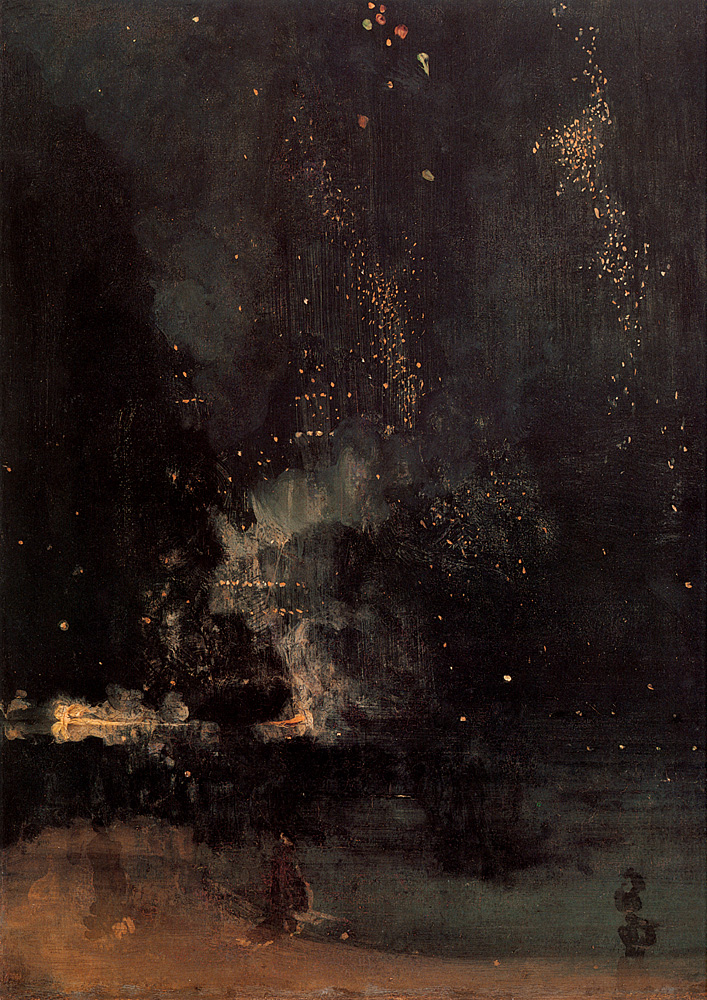
Michael T. Smith: “Revolution in a Dress”


Revolution in a Dress

The revolution was not begun to be new.
It was not meant to be a treatise 
between word and vigor,
dripped onto the page from a drooling pen.
It was not what your parents had known.
It was not giving a damn, left to kill itself by day’s end,
nor was it a dress meant to appear flattering.
It was – full stop, was in every sense of ‘to be,’
‘to have been,’ for it was more architectural
than a mere wisp of the abstract,
sorting a foundation of the clouds we wish we
were upon.
Living in a perpetual concussion,
the masses have looked up
and finally turned their eyes back onto themselves to say
‘beautiful.’


About the Author: Michael T. Smith is an Assistant Professor of English who teaches both writing and film courses.  He has published over 100 pieces (poetry and prose) in over 50 different journals.  He loves to travel.


Image Credit: Blanche L. Anish “Sewing” (1937) The Library of Congress

John Dorsey: “Belle, Missouri, During the Pandemic on a Wednesday”


Belle, Missouri, During the Pandemic on a Wednesday 

here nothing has changed
everyone thinks we’re overreacting 
angry parents talk about the prom 
& missed school trips

young lovers have always died for pageantry 

but the truth is 
kids will still make babies 
in the back of parked cars without 
all of the ceremony

the news is a reminder that
the atomic bomb didn’t exist 
until we built it

someone says
if we can survive that
we’ll certainly 
get through this

with or without toilet paper.


About the Author: John Dorsey lived for several years in Toledo, Ohio. He is the author of several collections of poetry, including Teaching the Dead to Sing: The Outlaw’s Prayer (Rose of Sharon Press, 2006), Sodomy is a City in New Jersey (American Mettle Books, 2010), Tombstone Factory, (Epic Rites Press, 2013), Appalachian Frankenstein (GTK Press, 2015) Being the Fire (Tangerine Press, 2016) and Shoot the Messenger (Red Flag Press, 2017) and Your Daughter’s Country (Blue Horse Press, 2019). His work has been nominated for the Pushcart Prize, Best of the Net, and the Stanley Hanks Memorial Poetry Prize.He was the winner of the 2019 Terri Award given out at the Poetry Rendezvous. He may be reached at archerevans@yahoo.com.


More By John Dorsey:

Anthony Bourdain Crosses the River of the Dead

Punk Rock at 45

Perpetual Motion


Image Credit: Carol M. Highsmith “Jalopy that has seen better days” The Library of Congress. Photographs in the Carol M. Highsmith Archive, Library of Congress, Prints and Photographs Division.

Leslie M. Rupracht: “Hess Trucks and the End of the Double Standard”


Hess Trucks and the End of the Double Standard

Dad’s inner child 
drove him to the Hess Gas Station 
weeks before Christmas. It was his yearly 
excursion to buy his son a toy truck—

the kelly-green-and-white kind that takes two C’s, 
double-A’s or 9-volt to set head- and taillights flashing, 
sirens wailing, and guarantee a young boy’s delight 
with Santa’s perfect selection. 

The son collected an array of models 
with varying numbers of axles for a few years 
before his older sister received her first.
“I thought it only fair,” 

explained Dad to his daughter 
on that milestone Christmas—she, 
old enough to know about Women’s Lib, 
Equal Rights, and seventy cents on the dollar, 

and he, thinking she’d want a Hess model truck 
over Breyer model horses or a bright orange 
Easy Bake Oven. Three decades later, 
in a long distance call, 

Dad tells her he just visited Hess, bought 
the special 40th anniversary edition truck 
for her brother—sibling equity 
now a notion forgotten. 

Only weeks before, 
he proudly announced buying collectible 
model cars for his four grandkids—
all sons of his son.


About the Author: Leslie M. Rupracht is an editor, poet, writer, and visual artist living in the Charlotte/Lake Norman region of North Carolina since 1997. Her words and artwork appear in various journals (most recently Gargoyle), anthologies, group exhibits, and a chapbook, Splintered Memories (Main Street Rag, 2012). Longtime senior associate editor of now-retired Iodine Poetry Journal, Rupracht also edited NC Poetry Society’s 2017 and 2018 Pinesong anthology. Swearing off a corporate work relapse, Rupracht co-founded and hosts Waterbean Poetry Night at the Mic in Huntersville, NC.


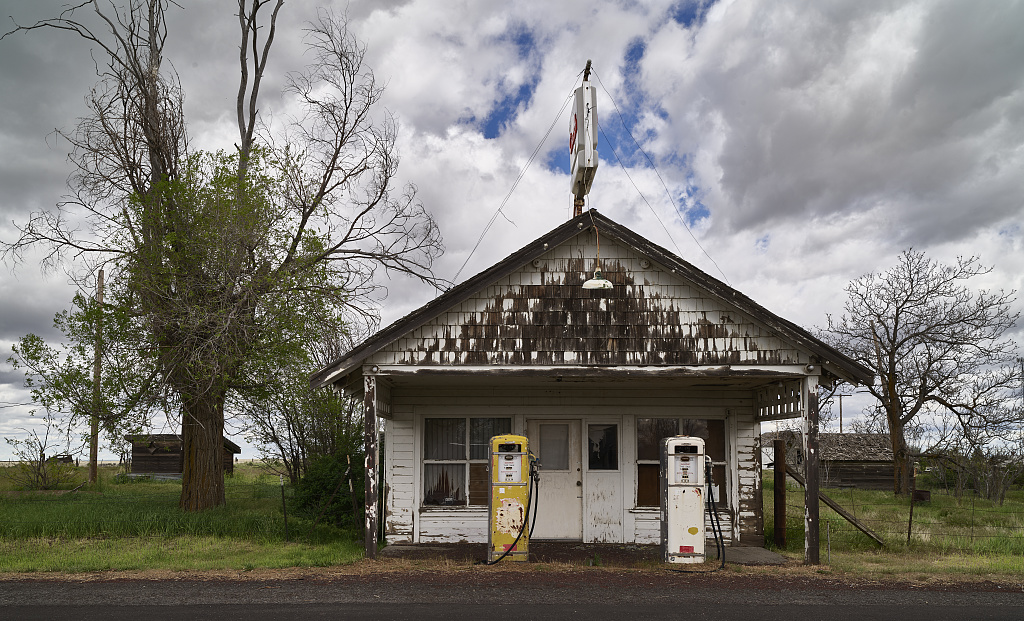
Image Credit: Carol M. Highsmith “Old gas station and pumps outside tiny Kent in Central Oregon” (2018) The Library of Congress

Victor Clevenger: “$5.00 Wok”


Editor’s Note: This is the 2nd in a series of poems by Victor Clevenger about his son, nicknamed “The Milkman”


$5.00 Wok

a $5.00 wok was a helluva steal
an after christmas deal

sitting over the flame 
for the first time 
on new year’s morning

it’s the milkman’s birthday breakfast

three pounds of pork sausage
browned crumbled glistening in grease

i antique it with flour
stir it until coated 

reach over 
take the eggs off the griddle

biscuits out the oven 

grab the milk &
dump two cups on the meat

goddammit!

white liquid hit the bottom
& as soon as the plastic spoon 
made its first clockwise rotation
the black coating on the pan
floated in flakes to the top
goddammit! 

black flakes now bigger
than sausage crumbles

i call the milkman to the kitchen
& show him the gravy

whatcha gonna do he asks
& i think about it

then tell him
it’s like the ol’ sayings

. . . . like a turd in a punchbowl
                        or
. . . . like a trump in the white house

some things just aren’t salvageable

so i guess 

we throw it out 

            & begin again


About the Author: When not traveling on highways across America, Victor Clevenger spends his days in a Madhouse and his nights writing poetry.  He lives with his second ex-wife, and together they raise children in a small town northeast of Kansas City, MO.  Selected pieces of his work have appeared in print magazines and journals around the world, as well as at a variety of places online.  He is the author of several collections of poetry including Sandpaper Lovin’ (Crisis Chronicles Press, 2017), A Finger in the Hornets’ Nest (Red Flag Poetry, 2018), and Corned Beef Hash By Candlelight (Luchador Press, 2019).


More By Victor Clevenger:

Milkman’s Mustache


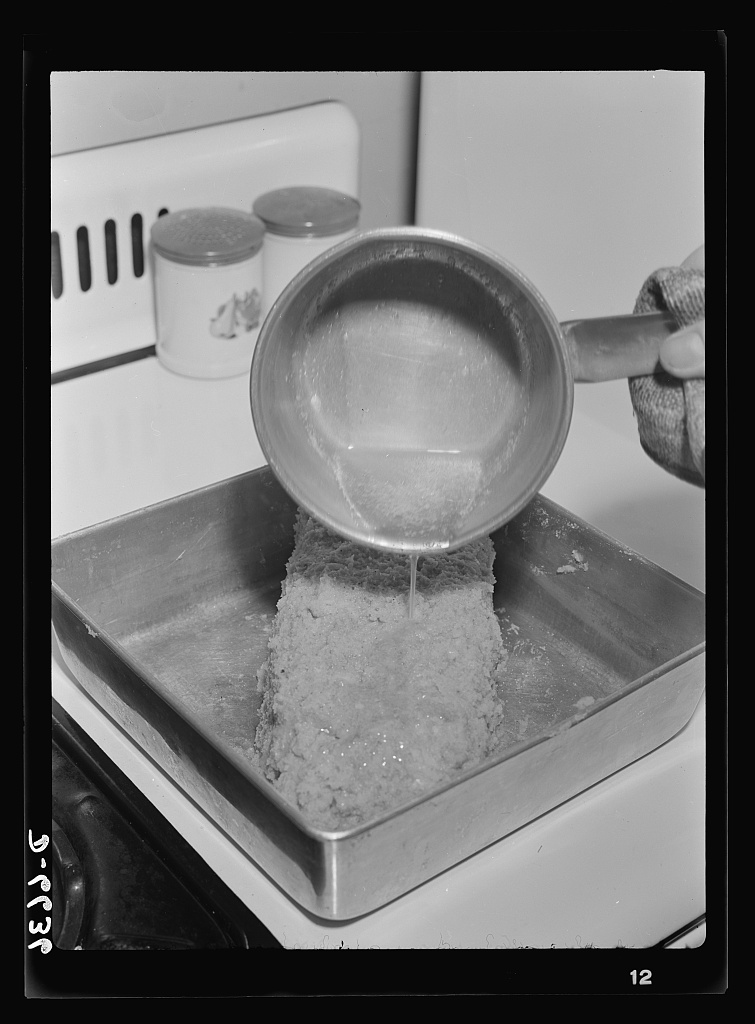
Image Credit: Ann Rosener “”Share The Meat” recipes. Baked bean loaf.” (1942) The Library of Congress

Ronnie Sirmans: “Sloughing Words”


SLOUGHING WORDS

They say a single pencil
can write about 45,000 words. 
When I was a kid and wanted
to sharpen a pencil at home, 
I would always turn to Daddy  
and his handy pocket knife.
I didn’t realize each sloughing 
meant words falling to the floor.
Synonyms, antonyms, homonyms
drifting among the dusty motes.
I had persuaded my parents 
to buy a Crayola big box
with the built-in sharpener—
which didn’t work on pencils, 
I would discover while I marveled
at the 64 colors before they dulled.
I was the kid who would wear out 
burnt sienna, maize, peach, mahogany,
goldenrod, bittersweet, and even silver 
for use as flesh tones when I colored. 
I stayed dutiful with homework,
numerals in addition to words, 
and so I’d often ask Daddy
(that’s what I called him at first
before trying synonyms like Father,
palindromes Dad and Pop, finally 
settling on Pa, as utilitarian as pi or po) 
to sharpen, unblunt, dedull my pencil. 
If you’re more a geometer rather
than a wordsmith, did you know
a pencil can draw a 35-mile line?
I could never make it that far:
Daddy’s small blade conjured gray dust,
infinite points falling off a straight course.


About the Author: Ronnie Sirmans is a digital editor at an Atlanta print newspaper, and his poems have appeared in The South Carolina Review, Tar River Poetry, Deep South Magazine, The American Journal of Poetry, Sojourners, America, and elsewhere.


More By Ronnie Sirmans: 

The Word with the Schwa that’s Really a Short U

Remembering the Great Flood in the Frozen Food Aisle


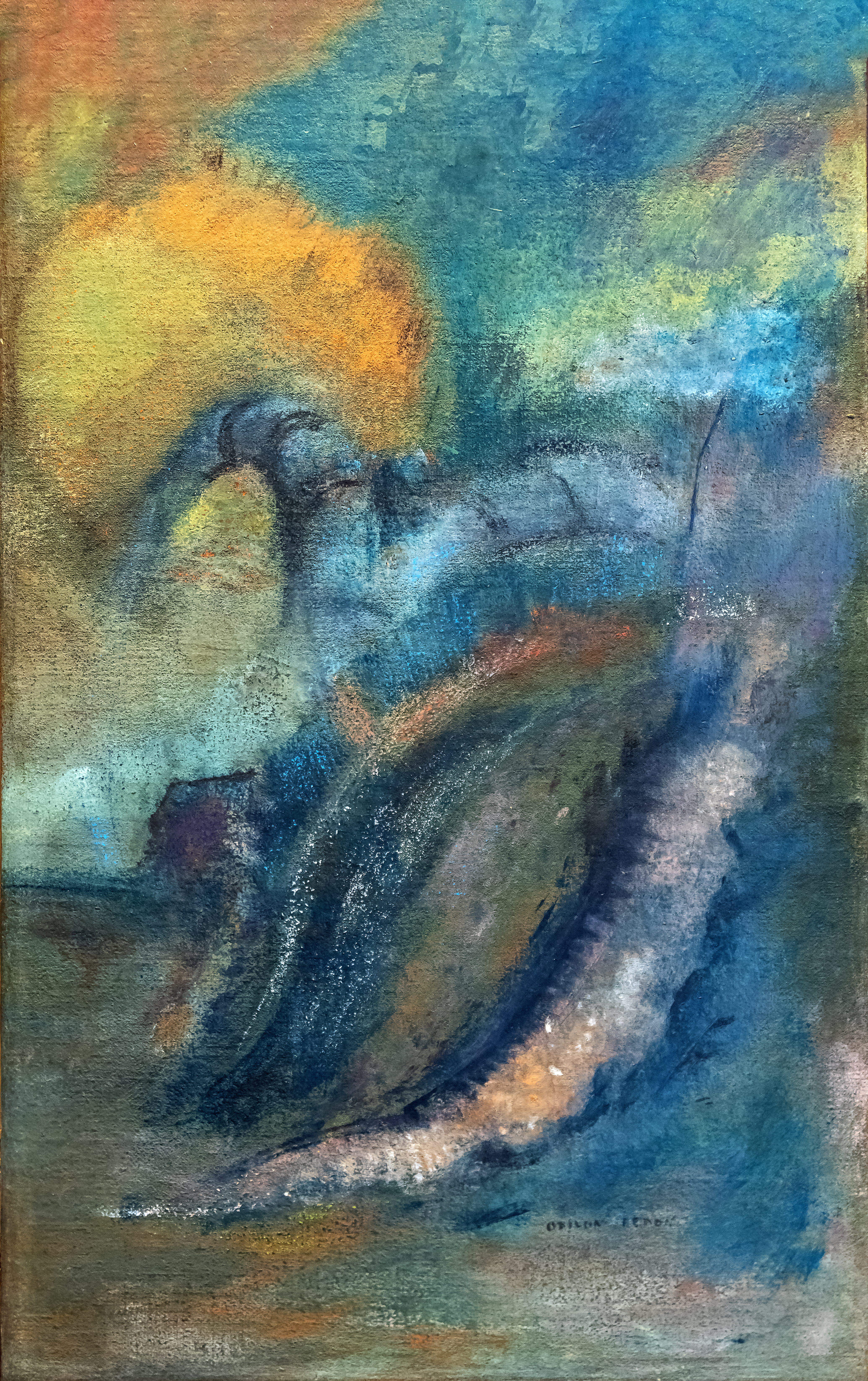
Image Credit: Odilon Redon “Conque marine” Public Domain


cropped-as-it-ought-to-be-magazine-4.png

Sheila Saunders: “April Visitor”


April visitor 

High water but now calm.
A gentle Irish Sea pushes in 
halted by jumbled rocks of alien limestone
holding long dead  sea-lilies and shelled creatures
marooned  here.

And  now – the first wheatear
motionless
sharp-suited in black, white
and the purest of greys

flaunting his visibility and etched lines 
just a momentary breeze 
lifting  peach breast feathers.

Rested, after flight of oceans and continents
leaving,  swift as his coming
for inland moors

to startle with ‘whee-chak’ from drystone walls,
tail flicking, never still.    


About the Author, Sheila Saunders: An Oxford graduate in English Language and Literature, Sheila worked on local newspapers and after marriage to fellow reporter Peter, while bringing up their three children, turned to feature and freelance writing. She has always been involved in community activities, and addicted to novels, music, art and theatre. Her poetry is especially inspired by her love of natural history, and life on the Wirral coast in Hoylake.


Image Credit: Page from Naturgeschichte der Vögel Mitteleuropas, courtesy of the Biodiversity Heritage Library

Gwil James Thomas: “Passing by Polloe/A Slice of Life”


Passing by Polloe/A Slice of Life. 

On the top of the hill  
crickets hop and chirp   
around the entrance of Polloe,
emulating miniature guard dogs –
their barks sounding as silence 
when the living stroll by.  

Strong but naive spring flowers 
rise up through the cracks 
in the concrete. 

Etched into the sturdy sandstone 
entrance of Polloe Cemetery 
a message in Spanish roughly 
translates to:  
‘Soon they will say about you 
what they say about us – 
they died!’

Sometimes it feels like the dead 
are as talkative 
as the living –
but if you talk to the dead enough, 
after a while you’ll only 
hear them say one thing – 
live. 

Come lunch warm aromas 
are carried up the hill 
from the pizzeria and each day 
they only serve one pizza, 
but each day also 
brings a totally different pizza.

Some slices may contain 
traces of déjà vu.


About the Author: Gwil James Thomas is a novelist, poet and inept musician originally from Bristol, England. He’s recently been published in The Bees are Dead, GOB zine, Expat Press, Paper & Ink and The Dope Fiend Daily. His sixth poetry chapbook Cocoon Transitions is available here. He currently lives in San Sebastián, Northern Spain.’


More By Gwil James Thomas:

Blend


Image Credit: Willoughby Wallace Hooper “Cemetery, Secunderabad” (1870) Digital image courtesy of the Getty’s Open Content Program.


R.T. Castleberry: “Down Cold Lanes”


DOWN COLD LANES

Ending a blue-sky day–
serrated winter clouds edging into dusk,
the car’s engine responds, slips shaded curves, 
raked leaves trailing into gutters, 
veiling macadam and asphalt tar.
I follow lanes of eroding light,
high, flowing bayou stream 
glimmering to the west.
Five white SUVs break traffic laws,
speed and refuse to yield.
King’s guitar on CD stings the people’s chord,
vibrato loud from open windows.
Aromas from family dinners, scents of
burning pine or oak silt the air.
I remember laughter, her hands 
sorting music for the road, 
remember warming each other 
walking from the car.
At end of chilly days, smoky cat
never answers greetings.
Longing and memory never cease.


About the Author: R.T. Castleberry is a widely published poet and critic. His work has appeared in Roanoke Review, Trajectory, Blue Collar Review, White Wall Review, The Alembic and Visitant. Internationally, Castleberry’s work has been published in Canada, Wales, Ireland, Scotland, New Zealand and Antarctica. Mr. Castleberry’s work has been featured in the anthologies, Travois-An Anthology of Texas Poetry, The Weight of Addition, Anthem: A Tribute to Leonard Cohen and You Can Hear the Ocean: An Anthology of Classic and Current Poetry.


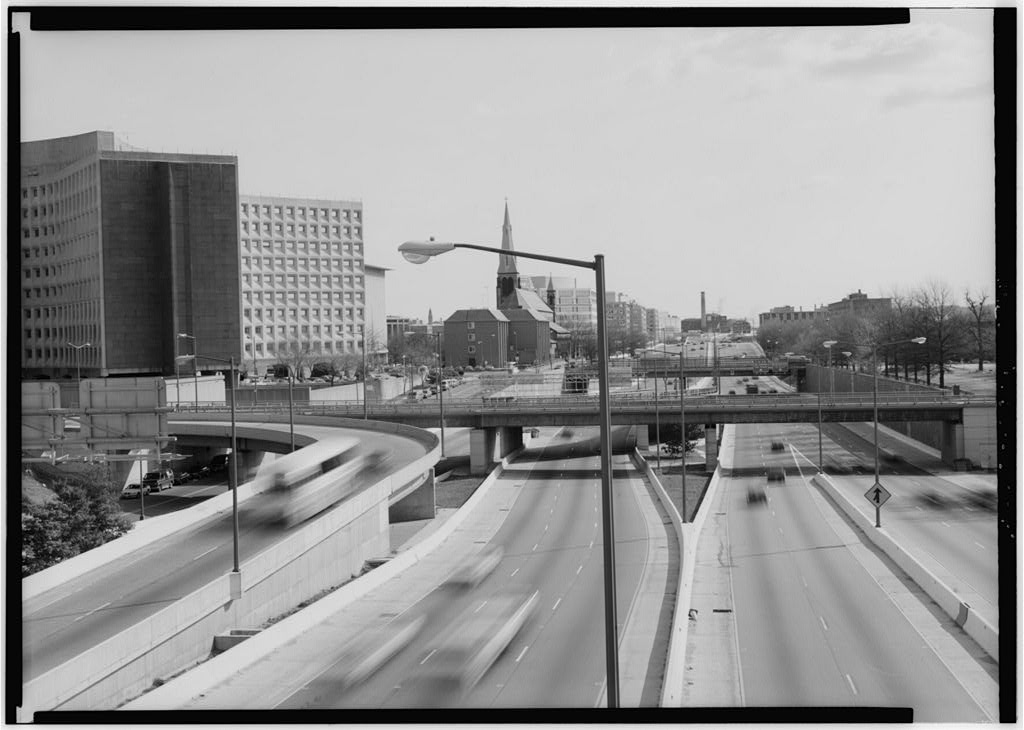
Image Credit: John McWilliams “VIEW EAST ON THE SOUTHEAST/SOUTHWEST FREEWAY (IN THE HISTORIC F STREET CORRIDOR) FROM THE TENTH STREET PROMENADE, SW – L’Enfant-McMillan Plan of Washington, DC, Washington, District of Columbia, DC” Library of Congress

M.J. Arcangelini: “A Few Random Thoughts”


A FEW RANDOM THOUGHTS
 (after “My Favorite Houseguest” by Mike James)

Gertrude Stein
In Paris I ate in a restaurant where she and Alice took Samuel
Steward when he would visit them. A wall of mirrors, echoes.
Small stones cover her grave at Pere Lachaise and a jar of pens. 

Bette Davis
She brought a dignity to Baby Jane that Joan Crawford could never
muster, though she might have thought she could. I love her best
when she is being bad, but still keep watching All About Eve

Self-Portrait, In Movies
They’re all Swedish. 

Andy Kaufman
Fascinated me, but never sure why. I watched him whenever the
chance arose. He was hairy, which always gets my attention, but I
would not have had a beer with him. He’d have squished this bug.

Marilyn Monroe
She died just before I turned 10 but even I knew about the pills. I 
loved her from Monkey Business and River of No Return. My Diva,
her sadness kisses the world. Bright red lipstick.

Orson Welles
Brilliance is not enough. One is required by success to learn
compromise, absent which creation becomes difficult. Not
impossible, but difficult and costly to both body and soul

J.R. Ewing
I could never get over expecting Jeannie to appear at some
inconvenient time in the drama. Or thinking about his mother
flying around a stage on wires, pretending to be a young boy.

Billy Strayhorn
Always in shadow, that is where his type had to live then. The
shadow beneath Duke’s piano, the shadows of alleys and bushes
after closing time. Today he’d be a star casting his own shadows.

Steve McQueen
Sullen and sexy. Eventually sullen won out. Whether riding a
motorcycle or a horse he always seemed in cold control. In the
living room he feels impatient, not really wanting to be there.

Sal Mineo
I knew he had the hots for Dean, everyone knew that, but I
couldn’t say it. Dean knew too, and didn’t send him away.
Somehow that made it OK for me to feel it, but still not say it.

John Wayne
(for Jason Baldinger)
He had his shtick, repeating it in nearly every film. John Ford
knew what to do with him the same way he knew how to use
Monument Valley. Marion was always watching, just off-camera.

Nixon
Throwing Agnew under the wheels didn’t help. Nor the secret plan
to end the war. Nor did China. Checkers. Sweltering under studio
lights. From out of his ashes emerged government as a business.

Warren Zevon
The world twists in ways we seldom anticipate but with which he
seemed intimate. His songs charted for other people, which kept
checks coming in until his shit got fucked up and he checked out.

John Ritter
I had a crush on him but hated that sitcom character: straight actor
playing a straight man mincing around as gay for cheap rent. I’d
watch occasionally, hoping he’d take his shirt off. Never saw it.

David Wojnarowicz
Played rough along the edges of American culture and America
played back, rougher. Waterfronts, alleys, aging sleazy movie
houses, backrooms. Broken streetlights in the urban world night.

Lou Reed
A belligerent interviewee, he took no prisoners. Knew Delmore
Schwartz. Married Laurie Anderson and started meditating. Died
when even his transplanted liver gave up. The music. The music.


About the Author: M.J. (Michael Joseph) Arcangelini was born 1952 in western Pennsylvania, grew up there & in Cleveland, Ohio.  He’s resided in northern California since 1979. He began writing poetry at age 11. His work has been published in magazines, online journals, over a dozen anthologies, & four books: “With Fingers at the Tips of My Words” 2002, Beautiful Dreamer Press; the chapbooks “Room Enough” 2016, and “Waiting for the Wind to Rise” 2018, both from NightBallet Press; & “What the Night Keeps” 2019, Stubborn Mule Press. In 2018 he was nominated for a Pushcart Prize.


Image Credit: Collage of Gertrude Stein based off the photo “Gertrude Stein sitting on a sofa in her Paris studio”

Bunkong Tuon: “Lisel Mueller Died at 96”


Lisel Mueller Died at 96 
After O’Hara’s “Lana Turner Has Collapsed!”

There are papers to grade
& classes to prepare
and they continue to pile up
high over my head as
I drink coffee and scroll
through Twitter and Facebook.
Oh no, Lisel Mueller’s passed away
this past Friday! The poet
who escaped the Nazis and found
a new language for her voice.
The poet who gave me permission
to put “grief in the mouth of language”
without embarrassment or shame.
Oh, I’m ashamed it’s taking me
this long to grade these papers.
My four-year-old is yanking
at my arm, “I’m the daddy
and you can be my boy daughter.”
“And what’s a boy daughter?”
I ask. And she says, “Silly Daddy.
That’s when you’re born a boy
but you’re actually a girl.”
So we play while the papers
pile high and Lisel Mueller’s poetry
is shared and loved all over again.
And isn’t that what all of us
(refugees and non-refugees alike)
want from this precious world?


About the Author: Bunkong Tuon is a Cambodian-American writer and critic. He is the author of Gruel, And So I Was Blessed (both published by NYQ Books), The Doctor Will Fix It (Shabda Press), and Dead Tongue (a chapbook with Joanna C. Valente, Yes Poetry). He teaches at Union College, in Schenectady, NY. He tweets @BunkongTuon


More By Bunkong Tuon:

Gender Danger

Lies I Told About Father

Fishing for Trey Platoo


Image Credit: James Abbott McNeil Whistler “Nocturne in Black and Gold The Falling Rocket” (c. 1874 – 1875) Public Domain