I am a rose of Sharon, As a lily among brambles, As an apple tree among the trees of the wood, The voice of my beloved! My beloved speaks and says to me: My beloved is mine and I am his, The Song of Songs, also known as the “Song of Solomon” or “Canticles,” is one of the megillot (scrolls) found in the last section of the Tanakh, known as the Ketuvim (or “Writings”), a book of the Old Testament/Hebrew Bible. The Song of Songs is unique within the Hebrew Bible: it shows no interest in Law or Covenant or the God of Israel; instead, it seems to celebrate sexual love. It gives “the voices of two lovers, praising each other, yearning for each other, proffering invitations to enjoy.” The two are in harmony, each desiring the other and rejoicing in sexual intimacy. (Annotated biography of King Solomon courtesy of Wikipedia.org, with edits.) Editor’s Note: In honor of Valentine’s Day, the Saturday Poetry Series offers you a good old fashioned love poem, emphasis on the old. An anomaly among the fire and brimstone, monotheistic propaganda, and general prescription of the Bible, the illicit sexual nature and unbridled romance of The Song of Songs has baffled scholars for centuries. Believed to have been written some time between the tenth and second centuries BCE, there is no authoritative agreement regarding the poem’s authorship, inception, or setting. The subject matter of the poem itself has long been heatedly debated, with some scholars embracing the titillating nature of this epic poem, while others insist it is a metaphor for man’s love of God. While its milder language is often quoted in the context of weddings, showcasing a true love with ancient roots, when one sits down and reads this masterpiece from beginning to end—with eyes wide open—they encounter a hot and steamy poem that gives Fifty Shades of Grey a real run for its money. Want to read more about Biblical poetry? Depiction of Solomon and Pharaoh’s daughter reciting the Song of Solomon.
This image is in the public domain.
From THE SONG OF SONGS
From the Hebrew Bible
a lily of the valleys.
so is my love among maidens.
so is my beloved among young men.
With great delight I sat in his shadow,
and his fruit was sweet to my taste.
He brought me to the banqueting house,
and his banner over me was love.
Sustain me with raisins,
refresh me with apples;
for I am sick with love.
O that his left hand were under my head,
and that his right hand embraced me!
I adjure you, O daughters of Jerusalem,
by the gazelles or the hinds of the field,
that you stir not up nor awaken love until it please.
Behold, he comes,
leaping upon the mountains,
bounding over the hills.
My beloved is like a gazelle,
or a young stag.
Behold, there he stands
behind our wall,
gazing in at the windows,
looking through the lattice.
“Arise, my love, my fair one,
and come away;
for lo, the winter is past,
the rain is over and gone.
The flowers appear on the earth,
the time of singing has come,
and the voice of the turtledove
is heard in our land.
The fig tree puts forth its figs,
and the vines are in blossom;
they give forth fragrance.
Arise, my love, my fair one,
and come away.
O my dove, in the clefts of the rock,
in the covert of the cliff,
let me see your face,
let me hear your voice,
for your voice is sweet,
and your face is comely.
Catch us the foxes,
the little foxes,
that spoil the vineyards,
for our vineyards are in blossom.”
he pastures his flock among the lilies.
Until the day breathes
and the shadows flee,
turn, my beloved, be like a gazelle,
or a young stag upon rugged mountains.
(Today’s poem is in the public domain, belongs to the masses, and appears here today accordingly.)
Wikipedia
Author: asitoughttobemagazine
Women Are “Just More Emotional”
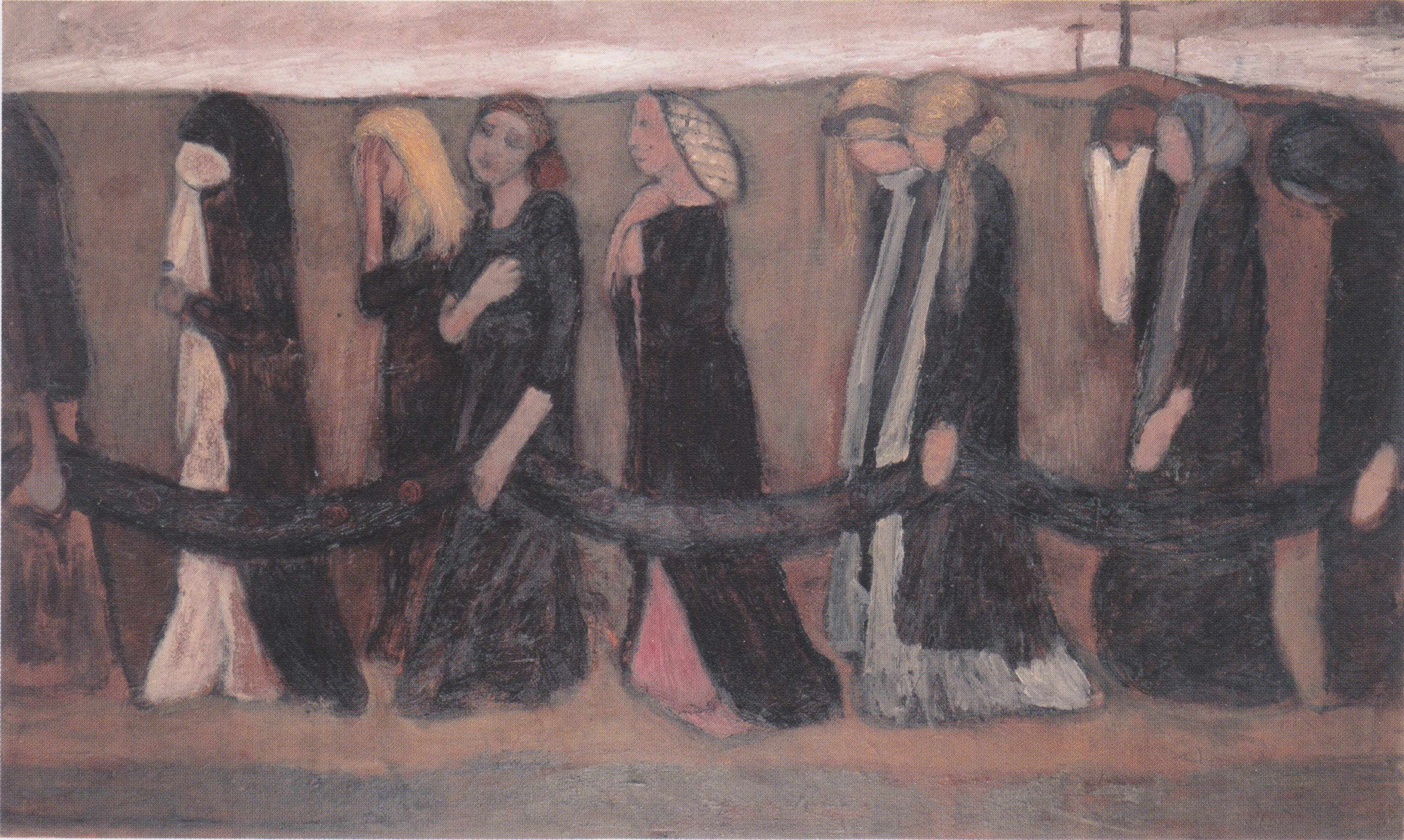
Women Are “Just More Emotional”
By Sarah Marcus
“Hey, the 1950s called, they want their stereotype back,” I said during a somewhat intense debate last night. I was asking a new friend, let’s call him Adam, what he thought of Garance Franke-Ruta’s recent article in The Atlantic called “Why Isn’t Better Education Giving Women More Power?”
If I’m being honest, I probably already knew his response; I just really wanted it to be different, because… I like him. The article is basically about how even though women are generally more successful in school, the same behaviors and tools that helped them to succeed in the academic arena don’t necessarily translate into the workforce. The article gives statistics on the disparity between genders and points out that studies show women in the workplace are criticized more, make less money, and are generally judged more negatively. But the most important piece of this essay, and the part that I am most interested in, deals with the root of the problem:
The university system aside, I suspect there is another, deeply ingrained set of behaviors that also undermine women: the habits they pick up—or don’t pick up—in the dating world. Men learn early that to woo women, they must risk rejection and be persistent. Straight women, for their part, learn from their earliest years that they must wait to be courted. The professional world does not reward the second approach. No one is going to ask someone out professionally if she just makes herself attractive enough. I suspect this is why people who put together discussion panels and solicit op‑eds always tell me the same thing: it’s harder to get women to say yes than men. Well, duh. To be female in our culture is to be trained from puberty in the art of rebuffing—rebuffing gazes, comments, touches, propositions, and proposals.
Bingo. This makes total sense to me. I am a woman. I have all too well mastered the art of rebuffing. It’s March: Women’s History Month. There are signs in stores that are supposed to be “celebrating” women. They read: 60% of our employees are women! But, it’s a party trick. “Hey, look over here!” Because when you look at upper management, it’s only 4% female. Now, Adam’s initial response to this article was to also look at the numbers. He’s very logical. He’s very smart. I like him. He would like to see the holistic ratio of employees in business. He’s had a 50/50 ratio of male to female bosses. Then, he gives me a word problem: If there are 100 employees in the office and 10 are women, and there are 10 spots to move up from that 100, then 1/9 women should be promoted and 9/90 men should be, too. His point being that no one thinks about the actual numbers, they only look straight to the top and see that there are 9 male bosses and 1 female boss. I acknowledge that he is speaking from a place of privilege, and in my mind, this isn’t the problem either.
The problem is much deeper; it’s much bigger. The problem is that there are only 10 women who are employees going after that promotion in the first place. The problem is that we (women) have been taught all of our lives to accept our position, to be submissive, and to self-objectify. These behaviors and states of being are so deeply ingrained that sometimes I’m not even aware that I’m participating in this dynamic. From a very early age, we lose belief in our own political and social efficacy. We learn to see ourselves and value ourselves how the media and the collective consciousness see us.
Still, the real problem is even more insidious and subtly woven into our social makeup. The REAL problem is that we still exist in a time and place that perpetuates an accepted culture of violence against women. At some point in our debate, Adam says that men and women ARE different, right? He brings up the obvious difference: our physical traits. This is the in. Yes, I think, herein lies the issue at the core of our patriarchal power dynamic. Our physical traits have been held against us and kept us repressed since the beginning of time. This is usually where I lose my male readers. They hear sexual assault/domestic violence and distance themselves, because they would never do that, so this part doesn’t apply to them. This is where we’re all wrong. Let me give you a scenario that most of the women in my life can relate to:
I am joking around with my boyfriend. Maybe there’s a mutual nudge or a thrown pillow (all in good fun—remember, we are being hilarious and having a great time). Then, he holds me down by the wrists (not maliciously, still joking around, maybe even in an effort to transition into something more intimate). But, I have a moment of panic. Being held down, in that split second, I am utterly terrified when I realize that I am completely helpless, physically. He is still laughing, and when I suddenly say, “let go,” and he (of course) does, he is caught completely off guard by my reaction. He asks, “What’s wrong?” and says, “I was just joking around.” AND he was just joking around… and he didn’t do anything wrong, but what I realize in that moment is that he will (hopefully) never feel that specific kind of complete helplessness. He doesn’t get it. He doesn’t know what that violation feels like. He doesn’t understand that even the threat, the possibility of violation, is intimidating. He doesn’t know how to empathize. We MUST have these conversations. If we don’t talk about it, if we don’t express the legitimate danger, then people (and men, specifically) simply don’t think about what’s actually at stake here. What feels like small, insignificant attitudes and actions are actually monumental in this way.
Circling back to my debate with Adam, he says, “Women take things more personally than men do.” I have a heart palpitation, and I want to call him out on it, but I make a joke instead. He says, “Women are more sensitive by nature.” I use that 1950s line, and then I urge him to read the fabulous piece on emotional gaslighting by Yashar Ali, “A Message to Women From a Man: You Are Not ‘Crazy’.”
This article essentially explains that “it’s a whole lot easier to emotionally manipulate someone who has been conditioned by our society to accept it. We continue to burden women because they don’t refuse our burdens as easily. It’s the ultimate cowardice.” Ali also argues that he doesn’t “think this idea that women are ‘crazy,’ is based in some sort of massive conspiracy,” but rather that this idea is instead “connected to the slow and steady drumbeat of women being undermined and dismissed, on a daily basis. And gaslighting is one of many reasons why we are dealing with this public construction of women as ‘crazy.’”
He goes on to talk about how men are conditioned to feel uncomfortable with emotional expression, because they are discouraged from emotional expression from an early age. Ali’s conclusion is in the form of a question. He asks: “Isn’t the issue of gaslighting ultimately about whether we are conditioned to believe that women’s opinions don’t hold as much weight as ours? That what women have to say, what they feel, isn’t quite as legitimate?” I think, yes.
Adam reads the article, but I am still met with more defensiveness, and I realize as we go back and forth that we are essentially having two completely different conversations. Adam initially interprets the article as an accusation. When he reads Ali’s plea to stop telling women that they are “crazy” or “too sensitive,” Adam thinks back to that one time with that one woman who said/did that super crazy thing and he “rightly” told her she was acting crazy. He feels like the message is: “Don’t do that. You’re wrong.” I see this interpretation/reaction all the time. My students, my friends, my family, most people do this. I realize then that Ali’s audience is “the choir.” He is essentially speaking to women who can already relate or men who already know not to do this, and this problem doesn’t exist in a vacuum.
As a teacher, a daughter, a friend, and a potential partner, the question for me has now become this: How can we enter into this conversation from a place of empathy? I have this hope that my attitude will inspire empathy in those who have a difficult time relating (coming from a place of privilege, or lack of exposure/experience) to the women who are being gaslighted. How do I talk to Adam?
Firstly, we need to recognize that men and women are taught to act and react differently. It is so important to take these kinds of articles and suggestions seriously, because I believe that this basic common respect, and our ability to value each other as equals, is the only way we will eradicate our culture of violence against women. This is how we stop victim blaming. This is how we end rape culture. This is how we become better humans, partners, family members, etc. We have to teach men not to violate women. We have to unlearn what we already know so well. This, as Adam points out to me, is essentially the Golden Rule: treat others the way you want to be treated. He asks, “What can I do that would be acceptable in the context of this article?” This is exactly what we all should be asking ourselves.
I think about Adam: He is a good human with a good heart… did I mention that I actually like him? So, what do I need to change about the way I am approaching this conversion? It dawns on me that we are all universally connected. We all have mothers, and sisters, and daughters, and friends. We all only have control over one thing in this world: our behavior. I try to shift our conversation towards this focus: “Don’t you want your partner/mother/sister/friend to feel valued? Shouldn’t we all (men and women) strive to put ourselves above emotional manipulation?” And the answer is obviously, yes. But Ali is also pointing out that we even enter this conversation on unequal footing.
The incredible documentary film, MissRepresentation, points out:
“Little boys and little girls, when they’re 7 years old, in equal number want to be president of the United States when they grow up. But then you ask the same question when they’re 15, and you see this massive gap emerging.”
Undeniably, there is a hierarchical structure of power in our society, and women are not at the top.
Our conversation shifts back to us as individuals, and Adam starts to talk about what he can do about the “problem.” So, in the context of raising a family, and in the workplace, and in relationships, he says that he’s been taught, harshly, to take responsibility for his actions, period. That he should own up to his mistakes and not make excuses. He’s been taught (like so many of us) that everyone is the same, and that it’s important to surround yourself with people that make you better regardless of their sex, race, or sexual orientation. He then asks, if he is operating under that fundamental mentality, in the way that he should, then what should he do differently within the context of his everyday life? This is an awesome question; one that I think about constantly.
My response is something that I have to work on every single day of my life. It’s what I am working on in this moment: even when I believe that someone is being too sensitive or emotional, I try to listen with an open heart. Instead of poking holes in a belief or argument, I try to look for ways to be helpful and to empower people who feel as though they have lost efficacy. And then, Adam says something really powerful. He says that “in reality, if someone is being too sensitive, I listen to them, and I ‘empathize’ as you’d say. The only time that I say [the] things [in the article] is when I am at the end of my rope in a relationship and acting out. It’s my actions that cause it; I realize that. The good thing to do would be to cut it off or to not say those things at all.” While what Adam is saying seems so very simple, it is in practice, truly profound. It’s hard to act well, especially when our social instincts feel like they’re being threatened, and when we’re taught that vulnerability is “bad,” it’s no wonder we get so uncomfortable when people express themselves so directly.
All roads lead back to compassion. How do we teach and inspire compassion? I’m not saying that women shouldn’t be angry. I am furious. Everyone should be furious about violence against women. This is an issue that impacts all of us. Most of the men I know seem to be unaware, even, that 1 in 4 women in their lives have been sexually assaulted or an attempted assault has been made on them. Or maybe they (we) hear these numbers but can’t connect them to ourselves?
I imagine that our lack of information is primarily due to the fact that assault is difficult to talk about and difficult to hear about. We don’t really have safe spaces (especially in the public opinion arena) to talk about such things. We tend to retruamatize survivors. I want to know how we can express our anger in a way that doesn’t shut people down.
It is a travesty that there’s so much negativity connected with the Women’s Rights Movement. People are terrified to be a part of the feminist community, to call themselves FEMINISTS. I’m scared, too. I know, it’s hard to believe with my incessant facebook posting and boycotting and protesting that I feel scared, but I am human. I care about being judged just like everyone else. I wonder, because of the negative connotations surrounding the “F” word, whether I will “scare” off a potential partner or friends. I’m afraid it will scare Adam. What will my future employers think? These thoughts are persistent, though I have learned to move past that fear and do what I think is right regardless of how I feel.
Still, it’s important to continue thinking about and asking how feminism and the feminist community can become more inclusive. If a feminist is “anyone who recognizes the equality and full humanity of women and men,” then we should certainly all call ourselves feminists. If not, I think we have a whole lot of explaining to do to our wives, daughters, sisters, and friends.
A version of this article originally appeared in So to Speak. It has been reprinted here with permission from the author.
***
Sarah Marcus is the author of BACKCOUNTRY (2013, Finishing Line Press) and Every Bird, To You (2013, Crisis Chronicles Press). She is also a Count Coordinator for VIDA: Women in Literary Arts. You can read some more things about her at sarahannmarcus.com.
Hell Yes, I’m Intolerant
Hell Yes, I’m Intolerant
By Joanna Schroeder
The other day on Facebook a friend of mine shared his thoughts on the Coca Cola ad set to the song “America the Beautiful.” My friend’s status said, “If this bothered you… I don’t even know what to say to you. Get a brain.”
This seems like an obvious sentiment. If you’re bothered by “America the Beautiful” being sung in other languages or by images of happy people doing fun things while being unapologetically whatever race or religion they are, then you do need a brain.
I don’t think anyone was surprised by the fact that some people hated the ad. Racism is alive and well, and it’s something people of color experience all the time, in all sorts of ways. Hating “America the Beautiful” because it portrayed America the Diverse is par for the course in a nation peppered with intolerant bigots.
But what did surprise me were the people who commented on my friend’s status by saying (paraphrased), “I don’t agree with the people who were angry about the ad. But it doesn’t bother me that they hated it. Why should I care?”
I had to stop and do a double-take at this.
Really? It doesn’t bother you that people are being racist? Not at all?
It was hard for me to resist typing, “You are a moron and I hope you fall in a deep, deep hole.” Instead, I said, “Of course it doesn’t bother you that people are racist. You are white. Why would it bother you that people don’t like non-white people?”
The response that I got was fascinating (again, paraphrasing).
“No,” said one racist-who-thinks-she’s-not, “I, unlike you, am not intolerant of other people’s opinions.”
This forced me to consider whether I was, in fact, being intolerant.
I am most certainly sometimes stupid, and quite often blind to the realities that people of color (or other marginalized groups) face on a day-to-day basis, primarily because no matter how hard I try, my privileges can make it hard for me to see outside of my own experience. I work hard to simply keep my mouth shut and listen so as to avoid being stupid and perpetuating more stupid… But I don’t think of myself as “intolerant”.
But then I thought about the actual meaning of that word and I realized that, YES, I am intolerant.
From Merriam-Webster:
in·tol·er·ant
adjective -rənt
: not willing to allow or accept something
: not willing to allow some people to have equality, freedom, or other social rights
See what she did there? She took a word that is contextually understood to mean one thing (essentially, bigoted or racist) and twisted it around so that she could sound righteous by exploiting the fact that it also means, basically, “not putting up with your stupid shit.”
I suspected that this must have a Fox News origin, and so I went digging. I Googled “leftist intolerance” and found a lot of really amazingly terrible clips wherein Fox News pundits call liberals hypocrites because we, the liberals, are the ones who are intolerant of them and their racism and anti-gay agendas.
Here’s one really painful example, though I have to warn you before you click through that it is a clip of five (not one, not two, but FIVE) white people talking about the NAACP and US Senator Tim Scott (who is Black), and how generally terrible they think the NAACP is to Black people. I’m not embedding it for obvious reasons.
After all of that, I realized that yes, I am intolerant and I’m proud of it!
I’m intolerant of white people being assholes about “America the Beautiful” being sung in non-English languages. I’m intolerant of people who say that people of color or non-Christian folks don’t represent our nation.
I’m intolerant of people who say that our LGBTQ+ brethren don’t deserve equal treatment under a Constitution and Bill of Rights that affords all people the same rights.
I’m intolerant of people referring to young Black men as thugs when they, themselves, are the ones who think gunning down unarmed boys, girls, women, and men who aren’t committing any crimes (or even trying to commit crimes) is an okay and legal thing to do. I’m intolerant of your racist thuggery, racist white people.
I’m intolerant of a lot, really. I’m intolerant of people who abuse children, of people who commit rape, and of people who deny the reality of how often rape and sexual violence happens in this nation to men, women, boys, girls and everyone else.
I’m intolerant of people who think that being transgender is something we can just tell people to stop being and that it will magically work. I’m intolerant of those who choose to mis-gender someone who very clearly has told you that she is a woman.
I’m intolerant of the parents and teachers who think it’s okay to let kids say “f*g” or “pussy” or “queer” to kids like the boy who likes My Little Pony and is now on life support after trying to take his own life. I’m intolerant of the adults who modeled that hate to their children. Yes, shaming kids who don’t conform to the strictest gender binary is hate. Pure and simple. And it is killing kids.
I’m intolerant of the people who tell my friend’s daughter that her gorgeous natural hair is a problem for them. I’m intolerant of the toy companies that don’t offer enough dolls that look like all the kids in the world, so that each child can have a baby doll that represents an image she or he can relate to (I’m looking at you, American Girl).
I’m intolerant of people who perpetuate myths about the nature of Islam, and I’m intolerant of the people who scrawled racist graffiti across the gorgeous GAP ad featuring Sikh-American Waris Ahluwahlia, implying he and anyone else in a turban is a terrorist.
I’m intolerant of people who refuse to see the pain and disrespect brought to Native Americans by the unauthorized use of Native mascots, names and iconography. I’m intolerant of the white folks who think they have some right to Wahoo the Indian or the name “Redsk*ns“.
I’m intolerant of this nation of bullies that gets off on thinking that the only real way to be American is to be white, non-poor, Christian, educated, able-bodied, cis-gendered, un-scarred by emotional or physical abuse, and straight. And I’m intolerant of all of you who think that it’s okay to say absolutely nothing to the people in your life who are harming others through any sort of racism, abuse or bigotry.
Hell yes, I’m intolerant of your willingness to tolerate others’ hate.
This article originally appeared at The Good Men Project and is reprinted here with permission of the publisher.
***
Joanna Schroeder is the type of working mom who opens her car door and junk spills out all over the ground. She serves as Executive Editor of The Good Men Project and is a freelance writer whose work has appeared on sites like xoJane, hlntv.com, and The Huffington Post. Schroeder loves playing with her sons, skateboarding with her husband, and hanging out with friends. Her dream is to someday finish her almost-done novel and get some sleep. Follow her shenanigans on Twitter.
SATURDAY POETRY SERIES PRESENTS: RON KOLM

WALT WHITMAN
By Ron Kolm
You,
Walt
Whitman,
Like
God,
Are
Everywhere
All
At
Once.
(Today’s poem originally appeared via Brevitas, was published in the poetry collection Divine Comedy, and appears here today with permission from the poet.)
Ron Kolm is a member of the Unbearables, and an editor of several of their anthologies; most recently The Unbearables Big Book of Sex! Ron is a contributing editor of Sensitive Skin magazine and the editor of the Evergreen Review. He is the author of The Plastic Factory and, with Jim Feast, the novel Neo Phobe. A new collection of his poems, Divine Comedy, has just been published by Steve Cannon’s Fly By Night Press. He’s had work published in the Outlaw Bible of American Poetry, Live Mag! and the Poetry Super Highway. Kolm’s papers were purchased by the New York University library, where they’ve been catalogued in the Fales Collection as part of the Downtown Writers Group.
Editor’s Note: At a recent reading in Brooklyn featuring SPS-beloved poet Leah Umansky, a man walked up to me believing we’d met at another poetry event. I told him I did not believe that we had, and in response he gave me a copy of his most recent poetry collection. This is poetry. Community. Going to readings and meeting artists whose work you love. Books given as gifts because poetry is connectivity; poetry is love.
I read Divine Comedy from cover to cover on my way home on the train that night. Gritty, blunt, and overtly sexual, it is not a book for the faint of heart. But what I found was that the backdrop of harsh reality made the book’s quieter moments shine more brightly. Today’s poem was found within those pages, a peaceful and meditative beacon of calm amidst an ocean of neon lights, graffiti, and chaos. There is room for all of this in poetry, of course, but I am a sucker for the beautiful, for the contemplative, and, of course, for Walt Whitman. Whitman who, as Ron Kolm so simply and eloquently points out, “Like God,” is “everywhere all at once.”
Want to read more by and about Ron Kolm?
MungBeing
Sensitive Skin magazine launch reading – Youtube
The Villager
Poetry Superhighway
Urban Graffiti
SATURDAY POETRY SERIES PRESENTS: GILI HAIMOVICH

By Gili Haimovich:
*
My Hebrew is going to get hurt.
So how will she continue to adorn me?
Through my attachment to her
she multiplies,
as if allowing me more time to lament.
*
הָעִבְרִית שֶׁלִּי תֵּכֶף תִּפָּצַע
?אָז אֵיךְ תַּמְשִׁיךְ לְיַפּוֹת אוֹתִי
דֶּרֶךְ הַהִקָּשְׁרוּת שֶׁלִּי אֵלֶיהָ
הִיא הוֹלֶכֶת וּמִתְרַבָּה
.כְּמוֹ לְהַסְפִּיק שֶׁאַסְפּיד יוֹתֵר
Translated from Hebrew by Dara Barnat. Poem originally appeared via The Bakery and appears here today with permission from the poet.
The Dragonfly
I’m ashamed to say it but
The wings of the dragonfly I was
Were made of glass.
Her delicate but roachy body buzzed
In a pleasant yet mechanical way.
I’m ashamed to look at her because I believe it’s still possible
to see her there.
Between you and me,
what blew her cover were the wings attached to her small body
not the bolt,
but the usual flesh and bones and muscles
flapping with the energy of a female.
Poem originally appeared in Recours au Poeme and ARC and appears here today with permission from the poet.
Gili Haimovich is an internationally published poet and translator. In North America she had published the chapbook Living on a Blank Page (Blue Angel Press 2009) and in Hebrew she has four volumes of poetry. Her work appears or are forthcoming in numerous journals and anthologies such as: The International Poetry Review, LRC – The Literary Review of Canada, TOK1: Writing the New Toronto, Asymptote, Ezra Magazine, Lilith, Bridges: A Jewish Feminist Journal, Cahoots Magazine, Stellar Showcase Journal, Women in Judaism, Recours au Poème (English and Hebrew with French translations) and The Bakery as well as Israeli ones. Gili also works as a Writing Focused Expressive Arts therapist, educator and workshops facilitator.
Editor’s Note: Today’s poems are the closing of a circle. There is no longer beginning or end, only the far reaches, the impact, the power of poetry. What began with my featuring Dara Barnat’s poem “Walt Whitman” became a magic carpet ride within the Holy Land and its many languages. During my sabbatical in Israel I featured so many amazing poets and translators on this series, and now that I have returned to more familiar pastures I am paying homage to all of them with today’s entry. This will not be the last time I feature Hebrew writers in translation or English writers living in Israel, but it is a bookend on a time and a place that forever changed me and for which I am forever grateful. If I am afraid that “my Hebrew is going to get hurt,” I trust that the amazing poets I have shared here with you throughout my journey will work like invisible threads binding me to a language and a country, always.
Want to read more by and about Gili Haimovich?
PoetryOn
Recours au Poem
Asymptote
The Bakery
A Review of Heather Cousins’s Something in the Potato Room

A Review of Heather Cousins’s Something in the Potato Room
by Jennifer Dane Clements
Something in the Potato Room, the book-length poem that won Heather Cousins the Kore Press First Book Award, is an unexpected ars poetica. It is about many things, but ultimately about moments that surprise and redefine us. The constraints that birth new freedoms.
These constraints stripe each page: lines or coffins or boundaries, asking the reader to look beyond. Boredom. Routine. Depression. Sometimes—adulthood. Stillness is a rope, solitude a tether. We enter this book with an unnamed character bound by each of these things, exhausted by the details of her own routine:
“A pot of
paperwhites. A green
mug. A bottle of ibuprofen
and a sheet of Sudafed, the
little red gems sealed in foil.”
It is a dead boy, emerging from the basement earth, that breaks from his own hiding place and ultimately pulls the unnamed character from hers. Sometimes you are the skeleton buried in the basement of a newly purchased home. Sometimes you are the homeowner buried in the minutia of a tedious job and a solitary life. The unexpected makes you feel suddenly “pink/and full of skin.”
Sometimes a poem is a constraint. Sometimes a book. Mutual exclusivity can have that feeling too—the entrapment of either/or. We feel it for the unnamed character, and for Cousins too—for her poem that won’t be tucked in to notions of brevity, for her anthropologist’s eye for charts and medical illustrations and the things they only suggest.
We see the tidy boxes, squares and rectangles of text on the page, holding in what needs to be suppressed.
And we see the things that emerge from constraint. A discovery, an adventure. An excuse not to dress and go to work. A skeleton in the basement of a house. Death reimagined into life—and this doesn’t just mean the skeleton. The book, too, emerges from the brevity and smallness expected from the word poem. The book is a poem, the poem is a book, and the bones of a dead boy swim through layers of basement dirt to the surface to insist these constraints are all imagined.
“It seemed as if it hurt—
the coming-back-to-life.
Like frozen toes in hot
water. The ache and
shiver of blood breaking
from its sluggish sleep.”
The skeleton is dead, then reborn through imagined story. The unnamed character is alive without playing a part in her own existence. That thing that we expect, that very simple fulfillment of definition, is shut down and broken apart.
“Life
doesn’t stay still, and
death doesn’t stay still ei-
ther”
And here, still, are the things that can be made whole from the dirt, from the seeming emptiness of an unsatisfying routine. Here is a poem that was made a book, the skeleton made flesh through Cousins’s imagining.
Heather Cousins, Something in the Potato Room, Kore Press, 2009: $12.99.
***
Jennifer Dane Clements received her MFA in creative writing from George Mason University, where she served as Editor-in-Chief of So to Speak: A Feminist Journal of Language & Art. A writer of prose and plays, she has been published in WordRiot, Nerve, and Psychopomp (forthcoming) and has had plays produced by Capital Repertory Theatre (Albany, NY), Creative Cauldron (Falls Church, VA), and others. Clements currently works at a theatre-service organization and serves as a prose editor for ink&coda. jennifer-dane-clements.com.
SATURDAY POETRY SERIES PRESENTS: ACE BOGGESS

PROPERTY
By Ace Boggess

(Today’s poem originally appeared in Rattle and appears here today with permission from the poet.)
Ace Boggess is the author of two books of poetry: The Prisoners (Brick Road Poetry Press, 2014) and The Beautiful Girl Whose Wish Was Not Fulfilled (Highwire Press, 2003). He earned his B.A. from Marshall University and his J.D. from the West Virginia University College of Law. His writing has appeared in Harvard Review, Mid-American Review, Atlanta Review, RATTLE, River Styx, Southern Humanities Review and many other journals. He currently resides in Charleston, West Virginia.
Editor’s Note: Today’s post contemplates the notion of ownership, stretching the reaches of that idea to love, to possession, to art and life. I know what it is to live a life in which “All I own fits in a box & a bag,” in which “For want of a dollar I’d insert one poem / into a vending machine for peanuts,” but “the mechanism / washes it back as counterfeit.” Press against this capitalist world, this material existence—where we are weened on ideas of ownership and worship of the Almighty Dollar—and you will discover that what really matters cannot be measured by these false gods. Take a moment to wonder—with me, with today’s poet— “How would it be to possess an interest in the sun” or “a lien on [your] lover’s breast,” and remember that “There’s so much nothing in the world: a man can’t even own that / without acquiring something in the loss.”
Want to read more by and about Ace Boggess?
Valparaiso Poetry Review
Blood Orange Review
The Aurora Review
Red Booth Review
Coe Review
A Review of Molly Beth Griffin’s Silhouette of a Sparrow

A Review of Molly Beth Griffin’s
Silhouette of a Sparrow
by Jeff Moscaritolo
On your next trip to a bookstore, check out the YA section (if you weren’t already planning to), and conduct the following experiment: Find the books targeting female readers. You may notice a pattern—covers that feature female figures, dressed fashionably (sometimes in fantasy/period garb), with long, windblown, straightened-then-curled hair. Their bodies are thin and seductively posed, sometimes alone, sometimes alongside a dashing male figure, sometimes almost-kissing said male. Oh, the toils of needing boys. In many cases, these attractive female bodies are effectively faceless—their faces are turned away or hidden in shadow or cropped out entirely—and when they do have faces, the lips are plump, the eyes seductive, and floating near them are saucy captions like Love will kill us all or Is true love worth the ultimate sacrifice? Now, these books may well contain progressive, non-problematic messages—admittedly, I don’t tend to read them—but perhaps a book design pattern this blatant points toward a problem in (some) YA literature: Female readers being told how to be sexy for men.
For this reason, novels like Molly Beth Griffin’s Silhouette of a Sparrow are especially important. The story, set in 1920s Minnesota, follows sixteen-year-old Garnet who, while spending the summer with relatives in the resort town of Excelsior, encounters a vibrant and impulsive flapper. They become fast friends, and Garnet, a proper, rule-abiding young lady, soon finds herself lying to her aunt and cousin and sneaking out to spend time with Isabella.
Though Silhouette of a Sparrow is “meant” for young adult readers, its relevance and lyricism make it a poignant read for adults as well. By juxtaposing Garnet’s family life—that of postwar wealth and Victorian-esque stifling of female independence—against her growing romance with Isabella, Griffin weaves a coming-of-age story that is as nuanced as it is poignant. Her hero glimmers with youthful wisdom and honesty, and her lyricism leaps from the page. The book opens:
I was born blue. Life ripped me early from my safe place and thrust me into the world. It was all so astonishing that I forgot to breathe.
This is a character who, from birth, has been acted upon forcibly by “life.” Yet as her dramatic summer unfolds, Garnet begins to claim her own agency—“I was free from the confinement of ‘home,’ free from idle hours and dull company and mundane work”—and, in doing so, realizes the impact agency has on her self-understanding (a struggle that is, of course, deeply rooted in sexuality).
Throughout all this, Griffin engages the symbolic imagination through Garnet’s hobby—making cut-outs of the many birds she sees. When describing her silhouette-cutting process to Isabella, Garnet says it’s about seeing and deconstructing boundaries. “You have to see it differently. You have to follow its edges and know that it’s an egret only because it isn’t water or sky or beach.”
This is one of those books that entices and involves while simultaneously having real potential to do some good in the world. Floating casually among books with simplistic, privilege-reinforcing romances, this LGBT young adult novel asks the sophisticated questions: “Do we all change when we try to attract a lover? Do we all try to be more beautiful, or more bold, or more intelligent, or just more brilliantly ourselves?”
Molly Beth Griffin, Silhouette of a Sparrow, Milkweed Editions (winner of the Milkweed Prize for Children’s Literature), 2012: $16.95.
***
Jeff Moscaritolo holds an MFA from George Mason University. His short fiction has been published in Paper Darts, Carve, and Indiana Review (forthcoming). He lives and writes in Lincoln, Nebraska.
“Morning Glories Sensing Noon Or: When Your Student Dies During the Semester” By Angie Mazakis
Morning Glories Sensing Noon
Or: When Your Student Dies During the Semester
By Angie Mazakis
Before class, already you know that you are going to teach how the complications of humor and death in this story—the writer’s careful balance of these disparate emotional territories—make good writing, and you want to point out the specific piercing details too, you will go through and point out every metaphor (“they are all drawing their mouths in, bluish and tight—morning glories sensing noon,” the rhythm of “morning glories sensing noon”—three trochees—sang in your head all weekend), and then right before class, you’re in the bathroom three minutes before, and a student comes in and says, “I had to find you,” and you laugh because, it’s three minutes before class, and you were just in your office for three-and-a-half hours, and Couldn’t you have just waited until I got there is what your laugh is saying, but it’s also forgiving, because either way questions in the bathroom are funny, and you like every student in this class, you already know it is one of those classes you will remember—your one laugh is saying all that, and she laughs a tiny nervous laugh in response, and says, “You know A in our class, who sits by me? He died.” And you cover your mouth in shock, because your student, a student in the class you are going to teach in three, now two, minutes died and will not be sitting at his desk, and she starts to cry, and says, “I just had to find you and tell you, because I couldn’t bear to hear you call out his name.” Couldn’t bear is what she said, and you’ve never heard anything more fragile, perforating right through you, from a student in any of your classes ever, not even in writing, let alone out loud to you in the bathroom in her sweet voice and tears, and you precipitously cry for her, with her, for just a minute, because it’s time for class, and all crying should now stop, and the short walk to class with her gives you time to feel transiently embarrassed about how facilely and involuntarily your tears materialize, and you go teach the Lorrie Moore story that is really in the end about death, but saturated with humor, and you meant to defend that humor, because in the other classes students thought that the humor was inappropriate in a story about children and death, but that’s “how I would respond as well” with that same dark wit in the face of death, you know (think) you would, at least ostensibly (you think later), and also you had already planned to read this passage, so you read it very slowly, because your voice could break at any one of the words, even though you didn’t even really know this kid, it’s only been three weeks, you barely knew him, but you had already planned to read it, particularly for how devastating, and therefore beautiful it is, but now with devastating being a reality in the room, the beautiful doesn’t seem as beautiful or beauty actually doesn’t seem relevant at all, or seems kind of very beside the point, but still, you read to them, “…he begins to cry, but cry silently, without motion or noise. She has never seen a baby cry without motion or noise. It is the crying of an old person; silent, beyond opinion, shattered.” You can barely get out the word “shattered,” which seemed to fall apart on its own. But you do. And then after class, the female student who stopped you in the bathroom is the last one after everyone has left, and you say, “This wasn’t the easiest story to talk about today,” and she says, “Actually, it helped,” and you are profoundly puzzled, one, that anything could help so immediately in class and not years from now when an image or a line comes to a student arbitrarily at the grocery store or while picking up their kids from school, but also that this story is so darkly humorous, and most students don’t seem to embrace its complications even when those complications seem eclipsed by the unequivocalness of a death that just happened, but she says, “because there’s the part where the narrator is talking to the ‘manager’ and he says (and she quotes it exactly without looking at it, here in the third week of class; she’s brilliant), ‘To know the narrative in advance is to turn yourself into a machine.’” And then you frantically look for that portion of the story, because you just taught it—three times today—but you didn’t go over that part in class, and you don’t even remember that part, and you read what continues, “What makes humans human is precisely that they do not know the future. …There might be things people get away with. And not just motel towels. There might be great illicit loves, enduring joy, faith-shaking accidents with farm machinery. But you have to not know in order to see what stories your life’s efforts bring you. The mystery is all.” And you can’t believe you have a student so smart that she can apply the very literature we are reading today in class so instantaneously to the very consequential event that has so spontaneously happened, and has literature ever been so functional? You don’t think it has, and she should probably teach this class instead of you. And all you know about teaching is how you’ve been taught to teach or what you’ve learned from what others teach, and this kid who died, of course he is the kid who stayed after the first class to ask you more questions about yourself, of course, and was looking right at you eagerly or smiling every time you looked up in the few classes you’ve had so far this semester, and of course no one ever said, “When your student dies during the semester…” or explained how to maybe wait one more week (you’d already waited two weeks for all the drops and adds) to write their names into the grade book in ink, because now you’ll have to mark the absence forever.
About the Author: Angie Mazakis’s poems have appeared in The New Republic, Boston Review, Narrative Magazine, Best New Poets 2008, Drunken Boat, New Ohio Review, Everyday Genius, and other journals. She has received a Dorothy Sargent Rosenberg Prize and prizes from New Letters, New Ohio Review, and Smartish Pace.
SATURDAY POETRY SERIES PRESENTS: MARK NEPO

BREAKING SURFACE
By Mark Nepo
Let no one keep you from your journey,
no rabbi or priest, no mother
who wants you to dig for treasures
she misplaced, no father
who won’t let one life be enough,
no lover who measures their worth
by what you might give up,
no voice that tells you in the night
it can’t be done.
Let nothing dissuade you
from seeing what you see
or feeling the winds that make you
want to dance alone
or go where no one
has yet to go.
You are the only explorer.
Your heart, the unreadable compass.
Your soul, the shore of a promise
too great to be ignored.
(Today’s poem originally appeared via Mark Nepo’s Official Website and appears here today with permission from the poet.)
Mark Nepo is a poet and philosopher who has taught in the fields of poetry and spirituality for forty years. A New York Times #1 bestselling author, he has published fourteen books and recorded eight audio projects. Recent work includes: Reduced to Joy (2013), Seven Thousand Ways to Listen which won the 2012 Books for a Better Life Award, Staying Awake (2012), Holding Nothing Back (2012), As Far As the Heart Can See (2011), Finding Inner Courage (2011), and Surviving Has Made Me Crazy (2007), as well as audio books of The Book of Awakening, Finding Inner Courage, and As Far As the Heart Can See (2011). As a cancer survivor, Mark devotes his writing and teaching to the journey of inner transformation and the life of relationship.
Editor’s Note: Today Mark Nepo blesses us with a poem that celebrates all that each of us are capable of achieving. Poetry has historically been a source of inspiration, and “Breaking Surface” takes part in this age-old tradition, speaking straight to the heart, and imploring us to “Let nothing dissuade you from … [going] where no one has yet to go.”
Today’s piece is dedicated to Virginia Wilcox, herself a constant source of inspiration and a reminder of all that we are capable of when equipped with the right outlook and a willingness to seek out inspiration in the world.
Want to read more by and about Mark Nepo?
Mark Nepo’s Official Website
 As It Ought To Be