Eric Burgoyne: “Witnessing the Arrival”

.

.

21

.

Witnessing the Arrival

My wife sleeps alone as
the meandering breeze
rustles palm fronds framing
a gibbous moon.

Across the road, gazing
into anthracite sea, I stand
on the beach listening
to instant echoes of the

Soft crunch and shatter of
waves meeting the reef
forty yards offshore, reflecting
on the beauty of life.

Those waves survived thousands
of miles punished by unrelenting
winds before transcending
the Hawaiian Trench.

Reaching our resting island
in the middle of the night
relieved someone is present to
witness their arrival.

Thinning lunar light leaves
faint shadows on the sand
as I walk home to my wife
in her relieved repose.

Reunited after our years apart.
As a lost wave gratefully
reaching solid ground, anxious to
embrace and caress its warmth.

.

.

About the Author: Eric Burgoyne is a poet living in Haleiwa, Hawaii. His degrees are from Reading University, Berkshire, England, and the University of Utah. Later this year he completes a master’s degree in Creative Writing from Teesside University, Middlesbrough, England. When not writing and reading he’s surfing, motorcycling, or chasing his grandchildren.

.

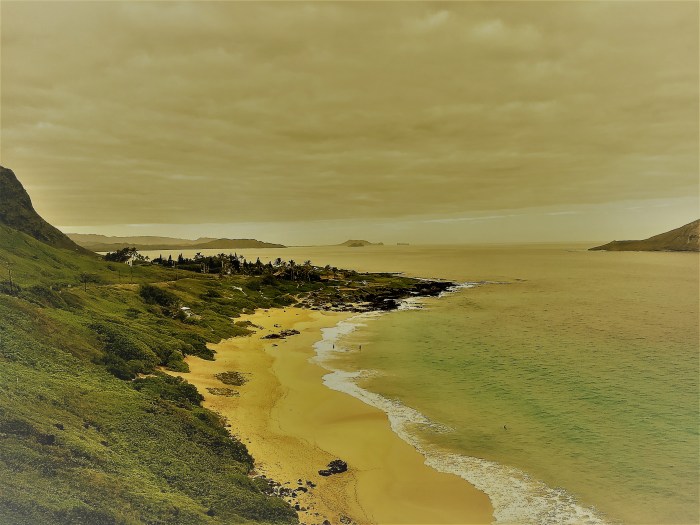
Image Credit: Chase Dimock “Hawaiian Waves” 2019

Melody Wang: “All That My Mother Cultivates”

.

35021810922_0207f22b0a_o

.

.

All That My Mother Cultivates  

On the morning of his death, my mother: a lone
cypress, statuesque in her mourning
even as rising smoke clouded her vision

Plum blossoms cast downward, she morphed
into a resolute blackthorn boasting branches
bursting with tales of courage amid darkness

Autumn crept in and she invited the lost
to harvest her fruit as the fading world
oscillated between darkness and light

She teaches me how to forage wild fennel
and radish greens — the spiced aroma of anise waltzes
with a subtle mustard melody of earth-warmed resilience

Umbel flowers extend proud heads upward,
amber brilliance quivering over parched land.
We delight in spotting whimsical wood sorrel

Heart-shaped leaflets grouped in threes
fold up at night and unfurl again
with the sleepy smile of dawn

As golden hour illuminates the first buds
of magnolia, sporadic blooms appear,
eager to take in the first rains of June

Amid the deserts of Southern California,
an unmistakable fragrance permeates
the night air, not soon to be forgotten.

.

.

About the Author: Melody Wang currently resides in sunny Southern California with her dear husband. In her free time, she dabbles in piano composition and also enjoys hiking, baking, and playing with her dogs. She can be found on Twitter @MelodyOfMusings.

.

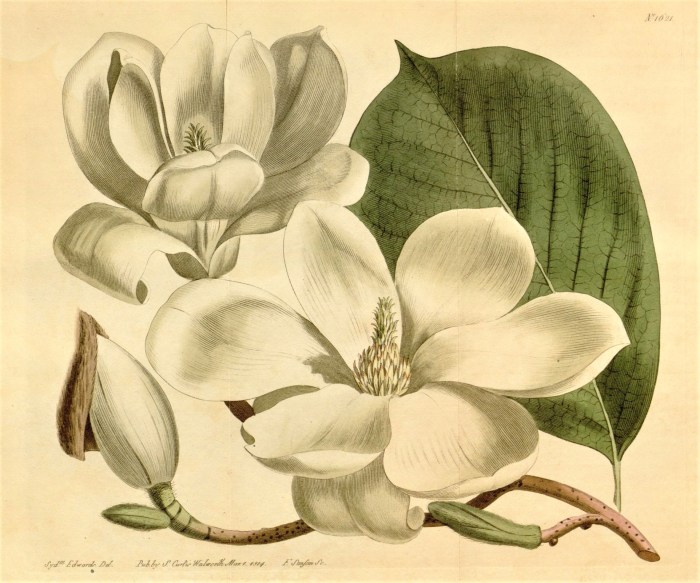
Image Credit: Digitally enhanced image of a Magnolia from Curtis’s Botanical magazine. London ; New York [etc.]  Academic Press [etc.]. Courtesy of the Biodiversity Heritage Library. Creative Commons License 2.0.

Kerry Trautman: “Context”

.

.

.

.

Context
“Different musics respond to knocked-on silences”  –Sarah Gridley

Outside air becomes glass when
Spring’s first red-wing

blackbird shudders its voice
into the chilled void—

the song to be lost
come July with its

humid white-noise
of crickets, honeybees

and cardinals.
My toddler’s

cry of no-no ping-pongs
off midnight bedroom

walls in small eruptions
of panicked confusion,

and just as I wake
enough to step from quilts,

I know already
nothing is there.

.

.

About the Author, Kerry Trautman: I am a poetry editor for Red Fez, and my work has appeared in various anthologies and in journals, including The Fourth River, Gasconade Review, Midwestern Gothic, Paper & Ink, Third Wednesday, and Think Journal. My poetry books are, Things That Come in Boxes (Kingcraft Press 2012,) To Have Hoped (Finishing Line Press 2015,) Artifacts (NightBallet Press 2017,) and To Be Nonchalantly Alive (Kelsay Books 2020.)

.

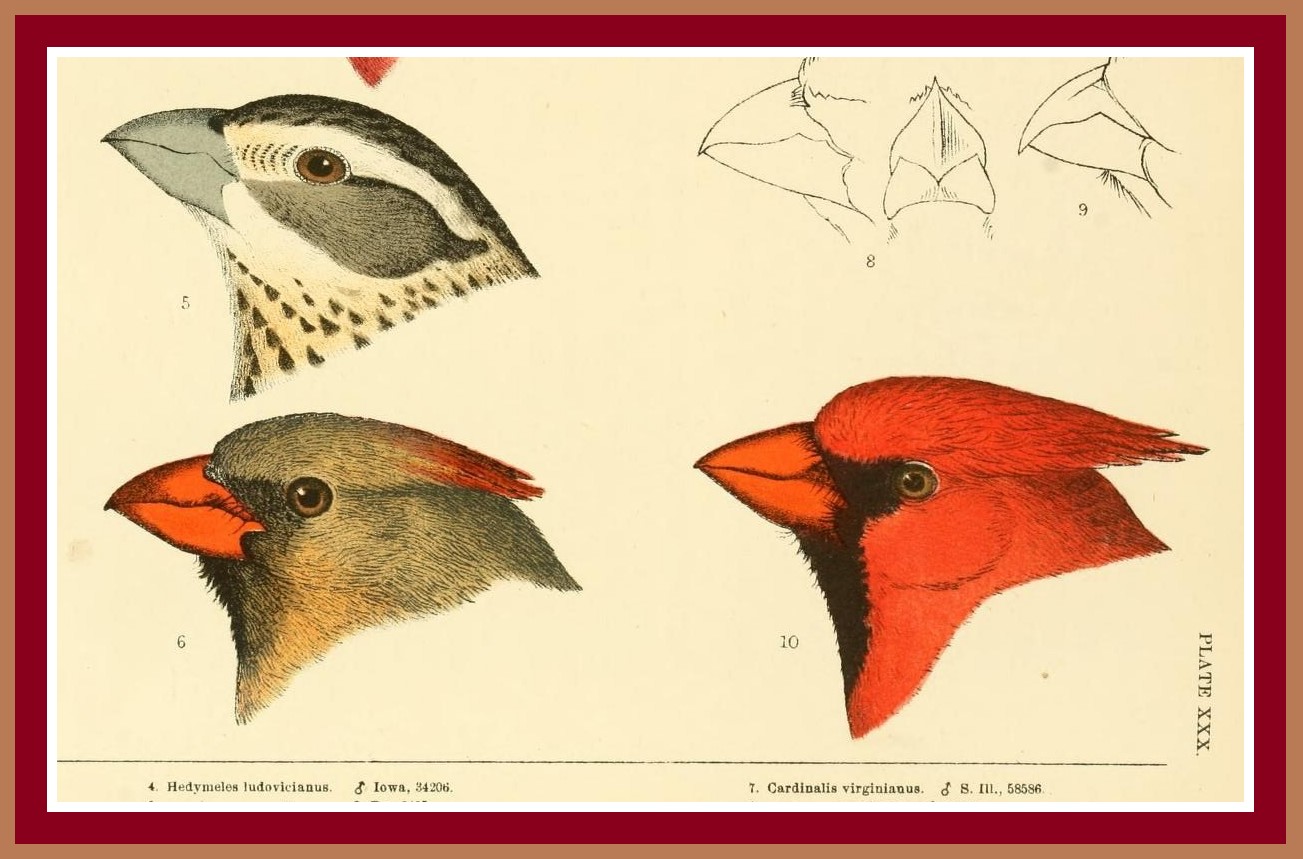
Image Credit: Digital remixing of an illustration from A History of North American Birds. Boston :Little, Brown,1905. biodiversitylibrary.org/page/12887556. Creative Commons License 2.0.

Joe Milazzo: “absolute clearance”

.

service-pnp-habshaer-ks-ks0000-ks0093-photos-069825pv

.

.

absolute clearance

one crewman is singing
as he sucks the old cellulose
(basically paper one contractor tells
me as if balancing the enormous sphere
of his expertise on the tip of this detail)
out of the attic so his buddies
(so I assume) can start
doing their remediation for us

later I hear him laughing
the laugh of a thin man
pitched high but languid
the space between each “ha”
a left foot working the sostenuto
almost as if he were laughing
at the reflex itself (maybe all the
involuntary stuff sardined
in the rising and falling of a chest) (maybe
the deus ex machina dancing
behind laughter’s stunts)

their day is done once
they’ve blown in new snow
drifts of fiberglass to hide
our home’s irregularities and
obstructions and penetrations
waiting for the crew chief
(one of those chummy guys
covered in pale orange fur who
we’ve never seen not
wearing shorts) to come
and inspect their work their talk
turns theological at least I hear
them talking about god as if
they know him (or it) or maybe
they’re gossiping about a pastor
who fleeced a woman of her
powerball jackpot but I think
their conversation is less a matter
of bullshitting and more one
of apologetics or anagnorisis (shut
doors sheetrock that needs to be
depopcorned and my own Sisyphean
posturing crossing up any interpretation)
but I think someone is under some
pretty terrible conviction
maybe the thin laugher has strayed
or keeps aligning himself with
error and his friends are endeavoring
to steer him from perdition baptizing
him in the mold and rodent pheromones
(shit and piss) that as briefly
ago as this morning (before
these men showed up on our doorstep)
were hanging above our jitters
our foreplay our role-playing our time
in front of the TV and now
to pad their hours they’re sweeping
out of our garage into the alley
and from there who knows where

.

.

About the Author: Joe Milazzo is the author of the novel Crepuscule W/ Nellie, two volumes of poetry — The Habiliments and Of All Places In This Place Of All Places — and several chapbooks (most recently, @p_roblem_s). He is an Associate Editor for Southwest Review and the Founder/Editor-In-Chief of Surveyor Books. Joe lives and works in Dallas, TX, and his virtual location is http://www.joe-milazzo.com.

.

Image Credit: Mike Whye ” ATTIC, SOUTHEAST POST AND THREE BEAMS IN CENTER AREA OF ATTIC, LOOKING SOUTHEAST. – Fort Leavenworth, Building No. 17, 20-22 Sumner Place, Leavenworth, Leavenworth County, KS”  Image courtesy of the Library of Congress

Daniel Vollaro: “Riot of the Fiftysomethings”

.

Embed from Getty Images

.

Riot of the Fiftysomethings

By Daniel Vollaro

.

When I watched the news footage of the Capitol insurrection in January, my first thought was “there are a lot of people around my age out there.”

I am 56 years old, born two weeks before the Baby Boom officially ended and Gen X began, right on the cusp of a new generation but unable to claim membership in either. Maybe because of this generational liminality, I could not help noticing that many of the insurrectionists who broke into the U.S. Capitol, stole stuff, took selfies, chased down and beat cops, built a noose outside, and trashed the place were white men “of a certain age,” in their late forties, fifties, and early sixties. Someday, researchers will pin down the demographics of that riotous mob, but for now, I will trust my powers of observation when I say that it was not a young crowd.

What were they doing out there, so many lost souls from my age cohort?

Full disclosure: I have never identified with Trumpism—not even a little, not even in jest. He sounded like a fascist when he descended those escalator steps in 2015 and he went out like a fascist five years later by summoning his brownshirts to sack the U.S. Capitol. I have always believed he was a con man and a person of low character, and I have never understood his appeal—the meanness, the trolling, the compulsive lying. I want to believe that my opinion of the man is shared by others who possess a rational perspective on the world, yet I have watched smart, well-educated people around my age tumble down the MAGA, QAnon, and “Plandemic” rabbit holes, descending into unfathomable depths of irrationality.

Like so many other Americans, I wonder how the insurrection could have happened. Some of the causes are obvious. The insurrectionists had been lied to and manipulated by powerful people in government, including President Trump. And there were the militias and hate groups and keyboard warriors who whipped up the crowd, in some cases organizing small groups to break into the building itself. Racism was another ingredient in the toxic mixture that day. Some white people, when the chips are down, fall backwards into believing that being white is a zero sum game, with winners and losers. Trump is a master manipulator of their sense of racial grievance.

But there is more to it. The anger, frustration, and alienation evidenced in that crowd is shared by many late middle-aged Americans who would never have gone near that demonstration. Despite the MAGA hats and the politically charged context, the Capitol riot felt to me more like the symptom of a spiritual crisis than a political one. And if a “spiritual” crisis sounds too fuzzy and granola for you, think of it instead as a crisis of meaning. A crisis of meaning revolves around existential questions: Where do I fit into this world order? Economy? Society? Culture? What is my life worth? My children’s lives? Like I said, I despise Trump and Trumpism, but I feel like I have lived inside of that kind of spiritual crisis for most of my life. Continue reading “Daniel Vollaro: “Riot of the Fiftysomethings””

Lorraine Caputo: “Weekend’s End”

.

.

.

WEEKEND’S END

When the sun
is six fingers from
the western horizon

The waves of high tide
break faster, the surfers
pack their boards home

Partiers pay their bills
take a last slug of beer
& leave, sand skirting around
pick-up tires & music

Moto-taxis wait
at the malecón crossroads
for town-bound fares

Some families
yet bathe in the
silvered waters

Along the grey-sand beach
a neighbor farmer
herds his cattle
to evening pasture

The sun, now five fingers
from that horizon
slips behind a cloud,
the breeze rises

Four fingers from that horizon
a long moto-rickshaw loads up
a family’s plastic chairs,
cooler, inflatable boat
& heads up the road

Two fingers
The beach now
nearly deserted,
the high tide’s flotsam foam
wavers & sand castles crumble
in the breeze

One finger, the sun grows
& deepens to a brilliant orange,
its rays coloring the
receding tide

& now the sun deepens
to coral, sinking
beyond dulled waters

until it disappears
the pale rose clouds fading

as dusk closes in

.

.

About the Author: Wandering troubadour Lorraine Caputo is a documentary poet, translator and travel writer. Her works appear in over 250 journals on six continents; and 18 collections of poetry – including On Galápagos Shores (dancing girl press, 2019) and Escape to the Sea (Origami Poems Project, 2021). She also authors travel narratives, articles and guidebooks. Caputo has done literary readings from Alaska to the Patagonia. She journeys through Latin America with her faithful travel companion, Rocinante (that is, her knapsack), listening to the voices of the pueblos and Earth. Follow her travels at: www.facebook.com/lorrainecaputo.wanderer or https://latinamericawanderer.wordpress.com.

.

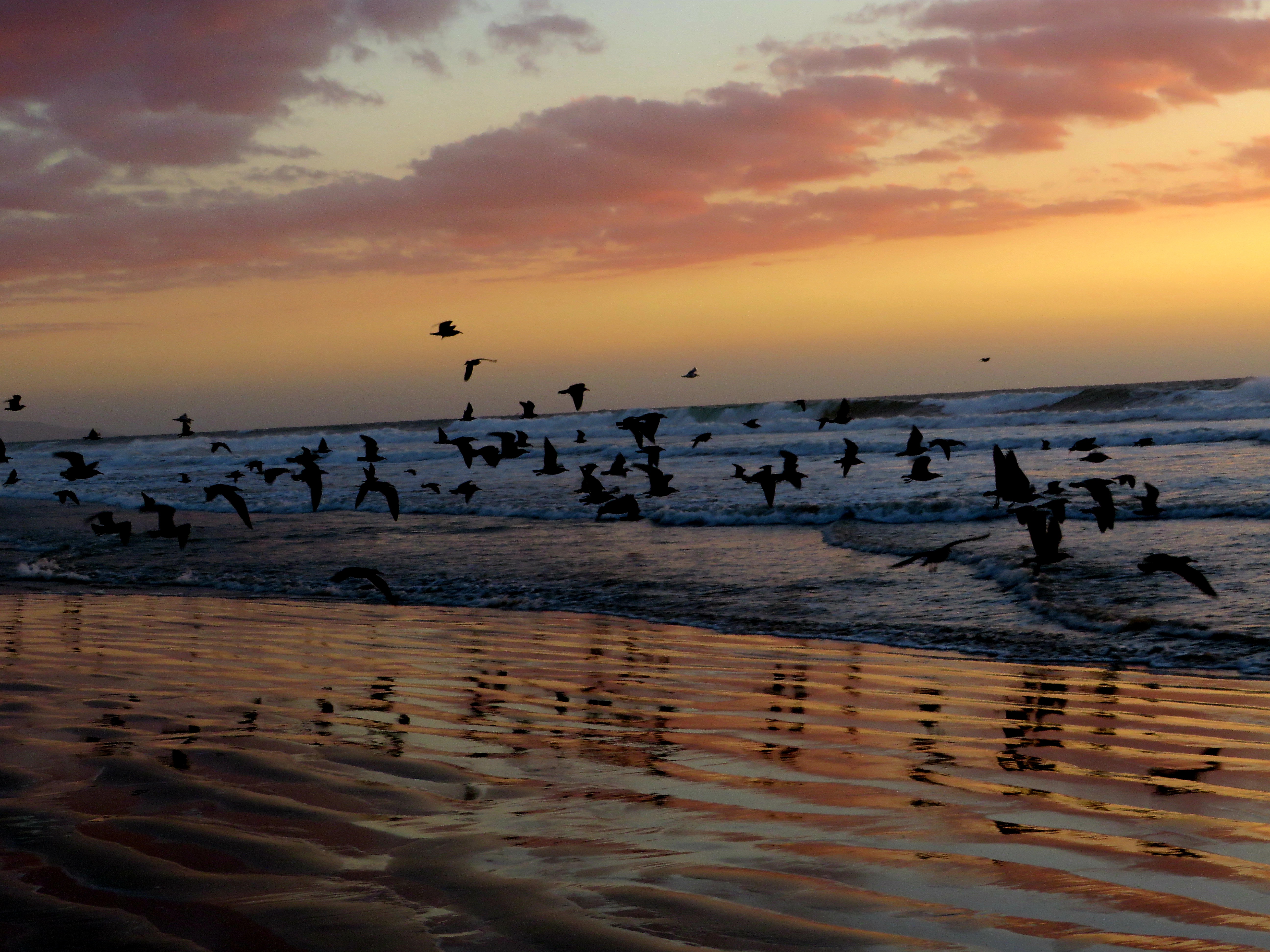
Image Credit: Chase Dimock “Beach Sunset” 2020

Mike James “Generations Apart: Two Poets on One Theme”

.

Charles_demuth_zinnias093342)

.

Generations Apart: Two Poets on One Theme

A Review of Once Upon a Twin, by Raymond Luczak

and New York Diary, by Tim Dlugos

.

Here are two books (one poetry, one prose) which cover similar material in different ways. The approaches are informed as much by generational shifts in attitude and sense of self as they are by genre.

Tim Dlugos is one of the many poets, artists, and musicians who died from AIDS. (The list is too long for one article, but Jack Smith, Jim Brodey, Karl Tierney, and Klaus Nomi are among the not-often-mentioned-enough.)

Dlugos was in the generation right after Ted Berrigan’s and his work often has a similar chatty, try-anything feel. David Trinidad, who edited New York Diary, also edited A Fast Life: The Collected Poems of Tim Dlugos. That book is a must-have for anyone who loves poetry or for anyone interested in that era. (Beautiful Aliens: A Steve Abbott Reader is another key and recent text.)

New York Diary serves as a sort of appendix to A Fast Life. The diary chronicles the summer and fall of 1976 when the twenty-something Dlugos moves to New York City. He’s appearing in magazines. He’s already published one small collection. He’s helping with readings and presses. Most importantly (to the diary and to a lesser extent the poems), he’s living. He’s flirting with the famous and the near famous and having anonymous sex with the unknown.

There are two audiences for New York Diary. The first is Dlugos completest. His fans are not legion, but they are devoted and passionate. This book will not disappoint them because it shows Dlugos working on his poems of “spontaneous goofs, flights, body motions” while also tracking his day-to-day.

It would be wrong to state that New York Diary should be read only by scholars and devoted fans. The book is enjoyable for any fan of poetry gossip because Dlugos is such a wonderful line-by-line writer. His entries can be notational, but he sketches out the ambience of his time in quick, jagged, and jazzy lines. Here are a few entries which can be read without context:

“Reminds me of a nun, without the saving gutsiness.” “In middle of a dance-floor sound bombardment, I discovered S&M component of disco.” “Clean, salt-water taste of his body.” “So much time still taken up w/ indecision.” “Phone booth has been put up outside front door. I haven’t sunbathed in a week.”

As much in his diary as in his so-necessary poetry, Dlugos is joyfully quotable. Within ten lines he can be graceful, funny, sad, and catty. On rare occasions he can be all at once.

Raymond Luczak is from the generation after Dlugos. He is a queer, deaf poet who is very much alive. He is as concerned with recording his life in his poetry as Dlugos was with recording it in his Diary. Maybe more so, since Luczak never seems to draw a line in regards to what he is willing to share with his readers. The only adjustments he makes are the adjustments of craft. Luczak is a skilled craftsman and this collection shows him operating within a variety of syntactical styles. The poems are all autobiographical, but he speaks in many voices.

It’s often dangerous to suppose that a poet’s work is autobiographical. Rimbaud and ten thousand poets since have made it clear that “I is another.” Luczak, however, confirms the autobiographical nature of these poems in a brief and interesting afterward. Instead of muddying the poems with explanations, he provides context for the catalysts behind his writing life.

Luczak’s skill is shown throughout, but he especially excels in small, subtle touches. The longest title in the collection has the fewest words. It’s a list poem called, “the easiest words to lipread in a school yard (even if you’re not deaf.)” Here are the last five words to the poem: “sicko / showoff / stupid / you girlie.” The additional word in the last line surprises the reader and frames the collection. The poet is not only deaf. He is queer. And he is Catholic. And then he is a foster child. His life unfolds and the hits keep coming.

He weaves his themes together throughout in poems where “anything forbidden / becomes even more desired.” The collection shows his growth from being a timid and clumsy child into a “serpent tongue of hiss” with a “catalog of grievances.” All the while, Once Upon a Twin may or may not be a false narrative. The memories are real, but stories and the lens they are viewed through change over time.

One of the many striking things about this collection, as well as Luczak’s poetry in general, is the immediacy and directness. He is not a poet who hints. He is a poet who reports. In Once Upon a Twin he has submerged a diving bell into his memory. He makes his readers grateful for the inventory he brings back.

.

Books Reviewed:

Once Upon a Twin, by Raymond Luczak
Gallaudet University Press, 2021
Poetry, $15.95

New York Diary by Tim Dlugos
Edited by David Trinidad
Sibling Rivalry Press, 2021
Prose, $15.95

.

.

About the Author: Mike James makes his home outside Nashville, Tennessee. He has published in numerous magazines, large and small, throughout the country. His 18 poetry collections include: Leftover Distances (Luchador), Parades (Alien Buddha), Jumping Drawbridges in Technicolor (Blue Horse), and Crows in the Jukebox (Bottom Dog), He has received multiple Pushcart and Best of the Net nominations.

.

More Reviews by Mike James:

Mike James reviews Mingo Town & Memories by Larry Smith

Mike James reviews “Dead Letter Office: Selected Poems” By Marko Pogacar

Mike James reviews Beautiful Aliens: A Steve Abbott Reader and Have You Seen This Man? The Castro Poems of Karl Tierney

.

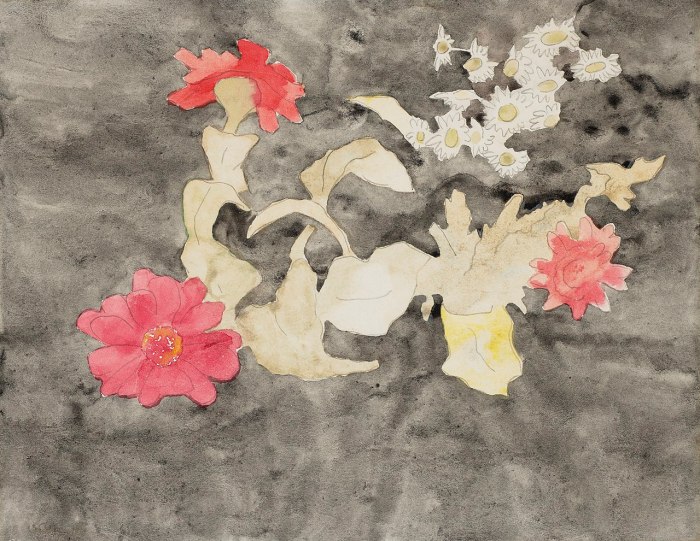
Image Credit: Charles Demuth “Zinnias” (1915) Public Domain
Alex Z. Salinas: “Auditorium”

.

service-pnp-habshaer-ca-ca2600-ca2669-photos-327108pv

.

.

Auditorium 

I dreamt I was invited to Vladimir Nabokov’s
Auditorium to read some poems & impart
One piece of advice to his advanced English
Students—as in, they all possessed diverse
British accents—& I was jittery, butterflies in
My stomach, my face oleaginous (an adjective
My geology professor friend once used to de-
Scribe that vampiric doofus Ted Cruz) & upon
Conclusion of my reading, Nabokov cleared his
Throat as if to say, Now onto the business about
The 1 piece of advice, Salinas, & all I could
Muster in all my oleaginous splendor was,
“People suckle on doom & gloom’s teat less
Pleasurably than you think”—less so advice &
More so self-help spewed into a mirror,
Refracted as a monochrome rainbow—to
Which Nabokov’s students stood & clapped
Thunderously, whistled, wanted more, begged
“Encore! Encore!” & it was clear I was finally
Accepted by academia, I’d punctured the dubious
Membrane of the ivory tower, & then I glanced at
Nabokov who sipped from a bottle of Diet Coke,
The flesh around his eyes slack & bored, an un-
Tended mausoleum sculpted from an iceberg.

.

.

About the Author: Alex Z. Salinas is the author of two full-length poetry collections from Hekate Publishing: WARBLES and DREAMT, or The Lingering Phantoms of Equinox. He holds an M.A. in English Literature and Language from St. Mary’s University. He lives in San Antonio, Texas.

.

More by Alex Z. Salinas:

Pen Dream

Neruda in Six Haikus

.

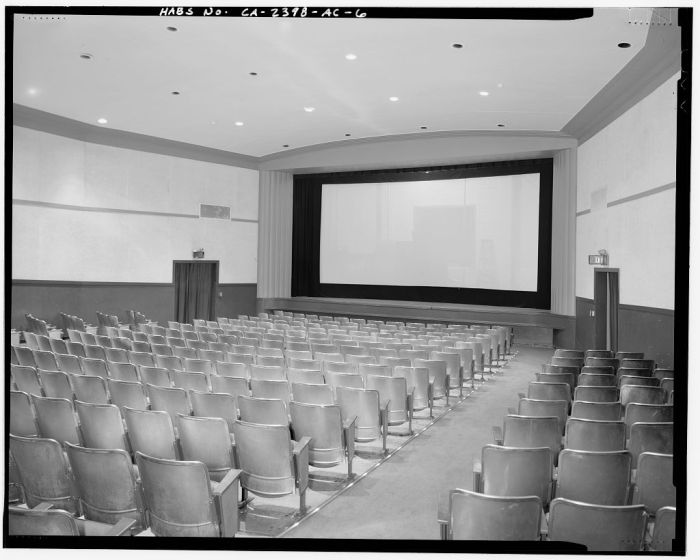
Image Credit: “AUDITORIUM, LOOKING TO SCREEN – Hamilton Field, War Department Theater, Between Main Entrance Road & North Oakwood Drive, Novato, Marin County, CA ” The Library of Congress

Maryfrances Wagner: “Dreaming Through Covid”

.

50402460188_a050fa2bfe_o

.

.

Dreaming Through Covid

Most nights I dream of the dead,
my mother telling me, my father agreeing,

that we all feel afraid sometimes.
That’s what the counselors tell us.

I rescued a dog but she bit my friend.
Someone is dreaming about her daughter.

I want my mother to come back
to dream about me.

I stand in a crowd and everyone offers me
caviar, wine, and crisp crusts with smoked salmon.

Will someone come to get me when I die?
Today my nephew called to say he dreamed

about his Nonny and Papa, about going
to their house on Sunday, but I wasn’t there.

He said that he didn’t want me to die
until I gave him Nonny’s red sauce recipe.

Today the peace plant unfurled two new
cupped white heads, shiny and perfect.

Only two days ago, I considered, its leaves
tiresome, moving it downstairs.

.

.

About the Author: Maryfrances Wagner’s books include Salvatore’s Daughter, Light Subtracts Itself, Red Silk (Thorpe Menn Book Award for Literary Excellence), Dioramas, Pouf, The Silence of Red Glass, and The Immigrants’ New Camera. Poems have appeared in New Letters, Midwest Quarterly, Laurel Review, Natural Bridge, Voices in Italian Americana, Unsettling America: An Anthology of Contemporary Multicultural Poetry (Penguin Books), Literature Across Cultures (Pearson/Longman), Bearing Witness, The Dream Book, An Anthology of Writings by Italian American Women (American Book Award from the Before Columbus Foundation), et.al. She co-edits I-70 Review and served as Missouri’s Individual Artist of the Year for 2020.

.

Image Credit: Digitally enhanced illustration excerpted from the Biodiversity Heritage Library. South African botany London, Longmans, Green,1922. biodiversitylibrary.org/page/37736321 Creative Commons License 2.0.

Damian Rucci: “For the Parking Lot Kids”

.

.

.

For the Parking Lot Kids

Don’t listen to what they say;
you know the ones, the beautiful,
the clean faced, the scornful eyed
yuppies whose parent’s blood money
bought them a lease on the good life.

Their path was never meant for you,
their bridges are made with gold,
their teeth are porcelain, their homes are warm,
they have never met the world as a stranger.
But you’re still out there, in that parking lot,

burying your dreams with pitchers of disbelief—
doing the same shit with the same people
like you weren’t meant to cast a shadow,
living a life that you never agreed to
makes you greet death as nothing but a fool.

Even grains of sand are lifted by the wind,
even bad seeds can grow in fertile soil,
even the damned can be forgiven—
but you’ll let another day pass, won’t you?
Tell yourself you’ll start tomorrow?
Tell yourself that you need a plan?
You don’t make your appointment with destiny
you just make sure that you show up.

The only thing worse than fear is regret,
sitting on the fence your whole life just leaves you sore
there’s a world beyond this damn parking lot
hell is already filled with men who have never tried
there’s a fire in your belly, so what’s stopping you?

.

.

About the Author: Damian Rucci is the unofficial poet laureate of every 711 in New Jersey. His work has recently appeared on gas station bathroom stalls throughout the Midwest. He is probably banned from your local bar but you can find him on Twitter @damianrucci or at damian.rucci@gmail.com

.

More By Damian Rucci:

One For Cory

Hound Speak

Melancholy and the Afterglow

.

Image Credit: John Margolies “The Barrel, 6th Avenue, Devils Lake, North Dakota” (1980) The Library of Congress (public domain)