Eternities before the first-born day,
Or ere the first sun fledged his wings of flame,
Calm Night, the everlasting and the same,
A brooding mother over chaos lay.
And whirling suns shall blaze and then decay,
Shall run their fiery courses and then claim
The haven of the darkness whence they came;
Back to Nirvanic peace shall grope their way.
So when my feeble sun of life burns out,
And sounded is the hour for my long sleep,
I shall, full weary of the feverish light,
Welcome the darkness without fear or doubt,
And heavy-lidded, I shall softly creep
Into the quiet bosom of the Night.
(Today’s poem is in the public domain, belongs to the masses, and appears here today accordingly.)
James Weldon Johnson (1871-1938) was an American author, educator, lawyer, diplomat, songwriter, and civil rights activist. In addition to being known for his leadership of the NAACP, Johnson was known during the Harlem Renaissance for his poems, novels, and anthologies collecting both poems and spirituals of black culture. (Annotated biography of James Weldon Johnson courtesy of Wikipedia, with edits.)
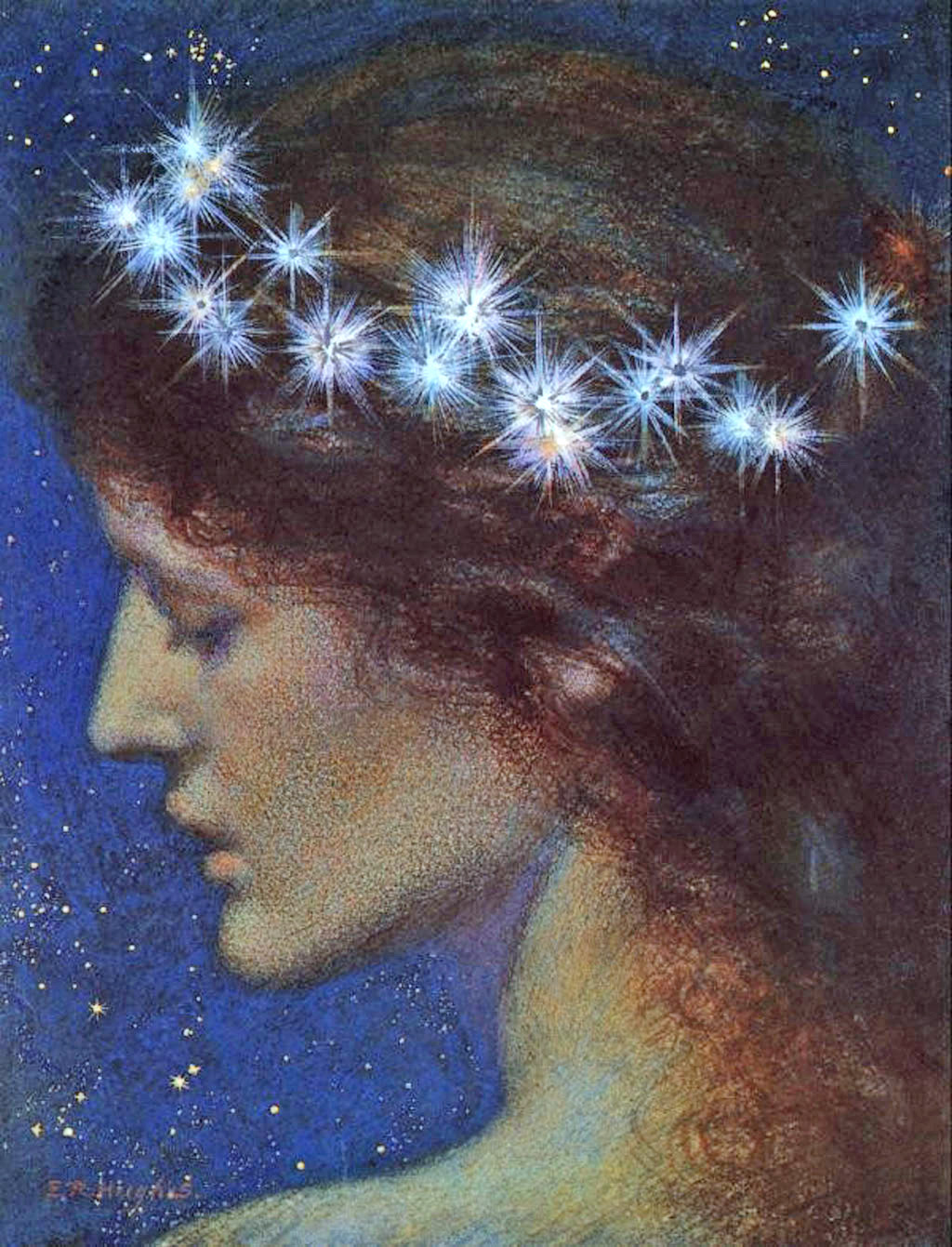
Editor’s Note: This Yuletide season I have been thinking—and writing—about ancient holiday traditions that we still practice, and how we received them. So when I came across today’s poem I was struck by the homage it seems to pay to the ancient festival of Mothers’ Night. This winter celebration was held on the eve of Yule, and celebrated The Mothers (goddesses) giving birth to the sun and the new year.
Beyond its title, today’s poem is rich with images of this ancient holiday: the night of labor, the birth of the sun, and the cycle of a year, when “whirling suns shall blaze and then decay.” Yet just as winter is a kind of death, in the second stanza the poet turns “Mother Night” into a metaphor for his own eventual death, imagining that when his time comes he will “Welcome the darkness without fear or doubt” and “softly creep / Into the quiet bosom of the Night.”
From THE GLAD HAND OF GOD POINTS BACKWARDS By Rachel Mennies:
HOW GRANDMOTHER PAID HER PASSAGE TO NEW YORK
One by one her mother sold her silver spoons
and heirloom bracelets; goodbye, porcelain bear,
silk blouses, patent-leather Mary Janes, the scarves
and stud earrings for newly pierced ears, the red wool coat
spotted walking on another tiny body’s shoulders
down Wittenbergplatz. Goodbye, books bound
in leather, bone china, even the hangers, the goblets
and cabinets; goodbye to the Torah buried in the backyard,
the neighbors, the schoolmates, the mothers dressed so well
at services, the men with businesses who stayed behind
one week, two weeks more. What stylish
objects they became: the coins from fillings
and wedding rings, the soap, the wigs, lamp
after lamp to light a thousand decorated homes.
PHILADELPHIA WOMAN
The old sisters spoke with the wild gestures of trapped birds, snared or
cooped, their wings working toward an impossible escape. They stood
on street corners in Germantown and gesticulated the full span of their
arms. They argued over coffee, over books, over the dinner table, food
chilled to the temperature of the air. They hewed their beliefs for the
sake of debate. Soft-handed and pale-skinned, they lived mostly inside.
They took the trolley to Center City when they were in their twenties,
living in Logan with the rest of the refugee Jews. They told wild stories
of their childhoods, never explored or questioned. They worked as
bookkeepers, secretaries. They went to Girls’ High School, classrooms
filled with young women speaking foreign tongues, caught and released,
caught and released each day, back when men and women were kept
separately until marriage, fine china and daily dishware.
The oldest of the three married a soldier (never explored) who loved her
dearly (never questioned). When he died his mouth made words that
opened her chest like shrapnel. Tell them whatever you want, he said, but I need you to know. I need you to know. Her hands stayed slack at her
side. Her name was. It was. She left his bedside and paced a block of Old
York Road, north and south, east and west, as if a cage around her kept
her close.
YAHRZEIT
Here the eye of God opens, unblinking,
at the throats of our grandmothers. The small pale
candle flickers on the windowsill, making
constellations of all our deaths.
How long a wick, how short a year. And here,
the family site, the only real estate
that’s mine—how clever, the way earth
makes us into mud—how heavy
the feet of our commemorators, how white
the knuckles that clasp their books of prayer.
The Glad Hand of God Points Backwards: In her first poetry collection, Rachel Mennies chronicles a young woman’s relationship with a complicated God, crafting a nuanced world that reckons with its past as much as it yearns for a new and different future. These poems celebrate ritual, love, and female sexuality; they bear witness to a dark history, and introduce us to “our God, the / collector of stories / and bodies,” a force somehow responsible for both death and liberation. Here, Mennies examines survival, assimilation, and intermarriage, subjects bound together by complex, if sometimes compromised, ties to the speaker’s Judaism. Through wit and careful prosody, The Glad Hand of God Points Backwards lays bare the struggles and triumphs experienced through a teenage girl’s coming of age, showing the reader what it means to become—and remain—a Jewish woman in America. —TTUP
Rachel Mennies is the author of The Glad Hand of God Points Backwards, winner of the Walt McDonald First-Book Prize in Poetry (Texas Tech University Press, 2014), and the chapbook No Silence in the Fields (Blue Hour Press, 2012). Her poems have appeared in Hayden’s Ferry Review, Poet Lore, The Journal, and elsewhere, and have been reprinted at Poetry Daily. She teaches in the First-Year Writing Program at Carnegie Mellon University.
Editor’s Note:The Glad Hand of God Points Backwards is an absolutely stunning collection. It is that rare breed of poetry book that you cannot help but read cover to cover, knowing all the while that you will return to it again and again. There is magic in this work. Ritual. Tradition. Its stories rise from the page in painstaking detail—vivid, emotive, and all too real. History is both honored and excavated; bones and memories are buried in the backyard. Time is not linear, but fifth dimensional; the past, present, and future unfold more like a snowflake than a line. The soundscape is rich and evocative, the themes resonant and deeply lyric, the entirety layered and striking.
And then there are these moments. These perfect, brilliant, heartbreaking moments. Reveals like the volta in “How Grandmother Paid Her Passage to New York,” when we discover what became of “the men with businesses who stayed behind / one week, two weeks more.” Lines like “When he died his mouth made words that / opened her chest like shrapnel.” Like every freakin’ moment of “Yahrzeit.”
Easy to invest in, the rewards of The Glad Hand of God Points Backwards are “as numerous as the stars in the sky and the sand on the seashore.”
Behind my father’s house, the lake is stained
with floating water lilies, where deep marsh grass smells
like want. Where we’re always returning. Swan wings extended,
a flash of white and water. My father, now blind in one eye,
doesn’t know what chartless world he’ll enter tomorrow.
These flowers, here now, will die by week’s end. I understand why at night
they close so slowly, sinking under moon drift and leaf fall. He watches
a snapping turtle cross the lake, a slow, even trailing – its weighted body
knows how to cross waters, unsinking. Yet, my father’s journey
still ripens. Unmoored, he walks the yard, seeking the self
who has already walked up the mountain path toward a village,
its gate festooned with red flags and bells. And a woman holding a wash
basin filled with oil and flowers, a bread basket. He creates and creates
these streets, hung with paper lanterns, windows open, fountains flowing
with the passage of time. From the gates, what man will emerge?
Will he always wonder how his life was chosen for him?
Underwater, the lilies’ stalks will curl up, submerging and holding
the pollinated flower heads. As something beautiful dies,
it makes another kind of rapture: From bees’ flight, the flower petals
browning into thick seed pods (oh, the memory of their fragrance) will burst
into the lake, the old lily falling apart and drifting. His chance
for survival is remembered joy: Live your life as if pulling from a well
inside yourself. For you are alone, and within you is all of your past
and all of what will come. Live your depths over and over with gratitude.
Behind the shed, he finds a deer skull resting on moss, stippled
with evening light, and then rain. Here now, he’s swept away,
swept away.
“The Forms of Seeking” appears here with permission from the poet.
Nicole Rollender is the author of the poetry chapbooks Absence of Stars (forthcoming July 2015, dancing girl press & studio), Little Deaths (forthcoming November 2015, ELJ Publications) and Arrangement of Desire (Pudding House Publications). She is the recipient of CALYX Journal’s 2014 Lois Cranston Memorial Prize, the 2012 Princemere Journal Poetry Prize, and Ruminate Magazine’s 2012 Janet B. McCabe Poetry Prize for her Pushcart Prize-nominated poem “Necessary Work,” chosen by Li-Young Lee. Her poetry, nonfiction and projects have been published or are forthcoming in The Adroit Journal, Alaska Quarterly Review, Creative Nonfiction, Radar Poetry, Ruminate Magazine, PANK, Salt Hill Journal and THRUSH Poetry Journal, among others. She received her MFA from The Pennsylvania State University, and currently serves as media director for Minerva Rising Literary Journal and editor of Stitches Magazine, which recently won a Jesse H. Neal Award.
Editor’s Note: I suggest you curl up with today’s poem as you would with a good book. Read and reread until its thick layers enfold you. Read once for sound. For music and alliteration. Read once for story. For the father and the momentary windows that open into his life. Read once for structure. For form. Then read several times for beauty. Because “As something beautiful dies, // it makes another kind of rapture.” Because this poem wants you to “Live your life as if pulling from a well // inside yourself.” Give this poem enough of yourself to discover all that it offers in return. Then go forth and “Live your depths over and over with gratitude.”
“How to Pick an Apple” appears here today with permission from the poet.
Alexis Kienlen is the author of two collections of poetry, 13 and She Dreams in Red. She’s also the author of a biography of a Sikh civil rights activist called Truth, love, non-violence; The story of Gurcharan Singh Bhatia. Alexis lives in Edmonton, Alberta, Canada where she works as an agricultural reporter for a newspaper called Alberta Farmer. From 2001-2006, she was the Literary Editor for Ricepaper magazine, a Vancouver based Asian Canadian arts and culture magazine. She currently writes a weekly literary column for The Grande Prairie Daily Herald Tribune. Her poetry, fiction and journalism pieces have appeared in numerous publications across Canada and online. She’s currently working on a novel and a new collection of poetry.
Editor’s Note: Today’s poem is vivid and whimsical and whisks the reader away on a brief yet epic journey. Placing us, at first, in the everyday pleasure of picking an apple, the poem turns on the word “turn” in the fourth line. From there we are shifted upward, toward the stars and the sky and the heavens, and are transported from the orchard into the realm of the spiritual, the mystical, the otherworldly. The last line echoes what has been biblically ingrained in the western apple, the fall.
Today’s poem is dedicated to my friend Luis, a faithful reader of this series and a man who knows and loves a good apple.
Last evening, I placed fresh towels on both dog beds
heard scratching and rearranging in the night.
This morning, each dog lay curled
into a circle of towel
like a bird’s nest.
How life loves
a circle:
the sun
cups of tea
pizza, roses, embraces
wedding rings, cathedral domes, bells
with notes radiating like ripples from skipped stones
the egg, the womb, the opening, downy heads
suckling mouths, breasts, eyes filled
with delight for bubbles
and bouncing balls.
Why do we box ourselves into corners
put our babies into rectangular cribs
build square houses and boxy buildings
drive cars to perpendicular crossroads
stare at newspapers, monitors, dollars
go to our rest in hard-edged coffins
slowly lowered into matching graves?
It’s a comfort
to imagine our rounded bones
becoming round bits of the globe
our spirits rising to orbit among spiral galaxies
joining those who completed the circle before us.
TEACHING MOZART IN STONE MOUNTAIN PRISON
I didn’t know what crimes they committed,
didn’t want to: those 12 guys glaring at me,
wondering what I had in store.
No female had taught there before
so I wore a calf-length, shapeless dress;
no make up; tortoise shell glasses instead of contacts.
Twice a week, iron gates banged behind me,
paperwork shuffled, an armed guard took me down
a warren of halls. He stationed himself by my door.
I needn’t have worried–soon knew, just as told,
if one prisoner caused trouble, he’d be jumped
by the others grateful for the chance of a college degree.
This was music appreciation. None knew the classics,
but one had played William Tell Overture in band.
All began to embrace opera, symphony, sonata—
I think the music transported them, comforted
even as they struggled to study in noisy rows of bunks.
One evaluation stays with me 30 years later,
Thanks be to God for blessing us with Mrs. Holmes.
But I felt blessed early in the semester:
We arrived at Mozart Piano Concerto Number 21.
Their books covered just the first movement, yet
I left the record playing into the second, saying, You’ve got to hear a bit of the andante.
Muted violins conjured the ethereal melody while
repeated notes in the violas mesmerized.
After the pianist took up the solo for several bars,
I reached out to lift the needle… Twelve students
—no longer thief, mugger, murderer—
sang out in unison, No, leave it on!
“Drawn into Circles” was first published in Poetry East and appears in the collection Untying the Knot (Aldrich Press, 2014), and “Teaching Mozart in Stone Mountain Prison” was first published in POEM. These poems appear here today with permission from the poet.
Karen Paul Holmes is the author of the poetry collection, Untying the Knot (Aldrich Press, 2014), which tells a story of loss and healing “with grace, humor, self-awareness and without a dollop of self-pity,” according to Poet Thomas Lux. Karen received an Elizabeth George Foundation emerging writer grant in 2012. Publishing credits include Poetry East, Atlanta Review, Caesura, POEM, The Sow’s Ear Poetry Review, Every Day Poems, The Southern Poetry Anthology Vol 5: Georgia, and the forthcoming anthology of Georgia poets from Negative Capability Press.
Editor’s Note: Today’s poems shed new light on existence, demanding that we reconsider our human condition. “Drawn into Circles” deftly considers both the concept of the ‘circle of life’ and the roundness of nature versus the right angles of the man-made world. “How life loves / a circle: / the sun… the egg, the womb, the opening.” So “[w]hy do we box ourselves into corners / put our babies into rectangular cribs / build square houses and boxy buildings”? “It’s a comfort / to imagine our rounded bones… joining those who completed the circle before us.” While “Teaching Mozart in Stone Mountain Prison” engrosses us in a moving narrative that forces us to forfeit our assumptions and accept the beauty of being human. Both poems demand a second read, and a third, and neither poem leaves us quite the same as we were before we encountered them.
Thy soul shall find itself alone
’Mid dark thoughts of the grey tomb-stone;
Not one, of all the crowd, to pry
Into thine hour of secrecy.
Be silent in that solitude,
Which is not loneliness — for then
The spirits of the dead, who stood
In life before thee, are again
In death around thee, and their will
Shall overshadow thee; be still.
The night, though clear, shall frown,
And the stars shall not look down
From their high thrones in the Heaven
With light like hope to mortals given,
But their red orbs, without beam,
To thy weariness shall seem
As a burning and a fever
Which would cling to thee for ever.
Now are thoughts thou shalt not banish,
Now are visions ne’er to vanish;
From thy spirit shall they pass
No more, like dew-drop from the grass.
The breeze, the breath of God, is still,
And the mist upon the hill
Shadowy, shadowy, yet unbroken,
Is a symbol and a token.
How it hangs upon the trees,
A mystery of mysteries!
THE RAVEN
Once upon a midnight dreary, while I pondered, weak and weary,
Over many a quaint and curious volume of forgotten lore—
While I nodded, nearly napping, suddenly there came a tapping,
As of some one gently rapping, rapping at my chamber door.
“ ’Tis some visiter,” I muttered, “tapping at my chamber door—
Only this and nothing more.”
Ah, distinctly I remember it was in the bleak December,
And each separate dying ember wrought its ghost upon the floor.
Eagerly I wished the morrow;—vainly I had sought to borrow
From my books surcease of sorrow—sorrow for the lost Lenore—
For the rare and radiant maiden whom the angels name Lenore—
Nameless here for evermore.
And the silken sad uncertain rustling of each purple curtain
Thrilled me—filled me with fantastic terrors never felt before;
So that now, to still the beating of my heart, I stood repeating
“ ’Tis some visiter entreating entrance at my chamber door—
Some late visiter entreating entrance at my chamber door;
This it is and nothing more.”
Presently my soul grew stronger; hesitating then no longer,
“Sir,” said I, “or Madam, truly your forgiveness I implore;
But the fact is I was napping, and so gently you came rapping,
And so faintly you came tapping, tapping at my chamber door,
That I scarce was sure I heard you”—here I opened wide the door;—
Darkness there and nothing more.
Deep into that darkness peering, long I stood there wondering, fearing,
Doubting, dreaming dreams no mortals ever dared to dream before;
But the silence was unbroken, and the darkness gave no token,
And the only word there spoken was the whispered word, “Lenore!”
This I whispered, and an echo murmured back the word, “Lenore!”—
Merely this, and nothing more.
Back into the chamber turning, all my soul within me burning,
Soon I heard again a tapping somewhat louder than before.
“Surely,” said I, “surely that is something at my window lattice;
Let me see, then, what thereat is, and this mystery explore—
Let my heart be still a moment and this mystery explore;—
“Tis the wind and nothing more!”
Open here I flung the shutter, when, with many a flirt and flutter,
In there stepped a stately Raven of the saintly days of yore;
Not the least obeisance made he; not an instant stopped or stayed he;
But, with mien of lord or lady, perched above my chamber door—
Perched upon a bust of Pallas just above my chamber door—
Perched, and sat, and nothing more.
Then this ebony bird beguiling my sad fancy into smiling,
By the grave and stern decorum of the countenance it wore,
“Though thy crest be shorn and shaven, thou,” I said, “art sure no craven,
Ghastly grim and ancient raven wandering from the Nightly shore—
Tell me what thy lordly name is on the Night’s Plutonian shore!”
Quoth the Raven “Nevermore.”
Much I marvelled this ungainly fowl to hear discourse so plainly,
Though its answer little meaning—little relevancy bore;
For we cannot help agreeing that no living human being
Ever yet was blessed with seeing bird above his chamber door—
Bird or beast upon the sculptured bust above his chamber door,
With such name as “Nevermore.”
But the Raven, sitting lonely on the placid bust, spoke only
That one word, as if his soul in that one word he did outpour.
Nothing farther then he uttered—not a feather then he fluttered—
Till I scarcely more than muttered “Other friends have flown before—
On the morrow he will leave me, as my hopes have flown before.”
Then the bird said “Nevermore.”
Startled at the stillness broken by reply so aptly spoken,
“Doubtless,” said I, “what it utters is its only stock and store
Caught from some unhappy master whom unmerciful Disaster
Followed fast and followed faster till his songs one burden bore—
Till the dirges of his Hope that melancholy burden bore
Of “Never—nevermore.”
But the raven still beguiling all my sad soul into smiling,
Straight I wheeled a cushioned seat in front of bird, and bust and door;
Then, upon the velvet sinking, I betook myself to linking
Fancy unto fancy, thinking what this ominous bird of yore—
What this grim, ungainly, ghastly, gaunt and ominous bird of yore
Meant in croaking “Nevermore.”
This I sat engaged in guessing, but no syllable expressing
To the fowl whose fiery eyes now burned into my bosom’s core;
This and more I sat divining, with my head at ease reclining
On the cushion’s velvet lining that the lamplght gloated o’er,
But whose velvet violet lining with the lamplight gloating o’er,
She shall press, ah, nevermore!
Then, methought, the air grew denser, perfumed from an unseen censer
Swung by Angels whose faint foot-falls tinkled on the tufted floor.
“Wretch,” I cried, “thy God hath lent thee—by these angels he hath sent thee
Respite—respite and nepenthe from thy memories of Lenore;
Quaff, oh quaff this kind nepenthe and forget this lost Lenore!”
Quoth the Raven, “Nevermore.”
“Prophet!” said I, “thing of evil!—prophet still, if bird or devil!—
Whether Tempter sent, or whether tempest tossed thee here ashore,
Desolate yet all undaunted, on this desert land enchanted—
On this home by Horror haunted—tell me truly, I implore—
Is there—is there balm in Gilead?—tell me—tell me, I implore!”
Quoth the Raven, “Nevermore.”
“Prophet!” said I, “thing of evil—prophet still, if bird or devil!
By that Heaven that bends above us—by that God we both adore—
Tell this soul with sorrow laden if, within the distant Aidenn,
It shall clasp a sainted maiden whom the angels name Lenore—
Clasp a rare and radiant maiden whom the angels name Lenore.”
Quoth the Raven, “Nevermore.”
“Be that word our sign of parting, bird or fiend!” I shrieked, upstarting—
“Get thee back into the tempest and the Night’s Plutonian shore!
Leave no black plume as a token of that lie thy soul hath spoken!
Leave my loneliness unbroken!—quit the bust above my door!
Take thy beak from out my heart, and take thy form from off my door!”
Quoth the Raven, “Nevermore.”
And the Raven, never flitting, still is sitting, still is sitting
On the pallid bust of Pallas just above my chamber door;
And his eyes have all the seeming of a demon’s that is dreaming,
And the lamp-light o’er him streaming throws his shadow on the floor;
And my soul from out that shadow that lies floating on the floor
Shall be lifted—nevermore!
(Today’s poems are in the public domain, belong to the masses, and appear here today accordingly.)
Edgar Allan Poe (1809 – 1849) was an American author, poet, editor, and literary critic, considered part of the American Romantic Movement. Best known for his tales of mystery and the macabre, Poe was one of the earliest American practitioners of the short story, and is generally considered the inventor of the detective fiction genre. He is further credited with contributing to the emerging genre of science fiction. (Annotated biography of Edgar Allan Poe courtesy of Wikipedia.)
Editor’s Note: Your faithful editor of this Saturday Poetry Series is a HUGE fan of Halloween. This year I’ve decided to celebrate with poetry! “The Raven” is a classic poem of the macabre, and as such is a perfect nod to All Hallow’s Eve. I am particularly partial to this rendition by the Simpsons, because Halloween should have both tricks and treats involved. In addition to “The Raven,” well-known and beloved, I was pleasantly surprised to find “Spirits of the Dead,” a poem that calls out to Dia de los Muertos, when the veils thin between the worlds of the living and the dead and we welcome the spirits of those who came before us. “[F]or then / The spirits of the dead, who stood / In life before thee, are again / In death around thee, and their will / Shall overshadow thee; be still.” Happy Halloween!
The war scenario has: [vegetables stalls], [roaming animals],
and [people] in it. The people speak
the language of the country we
are trying to make into a kinder country.
Some of the people over there are good
others evil others circumstantially
bad some only want cash some
just want their family to not
die. The game says figure
out which
are which.
WHAT IS GROWING IN THESE WOODS
Green in here, gleaming like
being inside a fable but with
stalls of fruit you can’t eat.
To go home, leave crumbs.
When the wood circles you
back here instead, let the lost
and the impossible ripen in
you, ripen and go.
US AND THEM
“I would make love to one of our
whores before I
would fuck one of their
bourgeoisie.” There was a proverb,
like this: Don’t trust a if
he becomes a even though
he remains a for
forty years. And the sister opposite
proverb: Don’t trust a even
though he has been in the grave
for forty years. It was a difficult day,
a bomb had spun open
a bus, and children
had been crushed down by
a machine. Each wondered if he was born
too soon, if later would have been better, if 40
Nomi Stone is the author of the poetry collection Stranger’s Notebook (TriQuarterly, 2008), a PhD Candidate in Cultural Anthropology at Columbia University, and an MFA Candidate in Poetry at Warren Wilson. She previously earned a Masters in Modern Middle Eastern Studies from Oxford and was a Creative Writing Fulbright scholar in Tunisia. Her poems have been published or are forthcoming in Poetry Northwest, Memorious, The Painted Bride Quarterly, The Bloomsbury Anthology of Contemporary Jewish Poetry, at The Poetry Foundation, and elsewhere. She is currently researching and writing a book of poetry as well as a book of non-fiction about combat simulations in mock Middle Eastern villages erected by the US military across America.
Editor’s Note: Nomi Stone’s poetry is a veritable minefield of experience. Politics, war, violence, history, proverbs, culture, peoplehood, nationality, borders, mythology, folklore, fairy tales, and biblical referentiality lie in wait for the keen and unsuspecting reader alike. The unsaid is as present and powerful as what is written, so that her poetry echoes the Bible’s black fire written on white fire. This is a poetry rich and blooming. Thick with the sights and smells of Near Eastern markets, yet heavy with human tragedy. Herein lies the old world. Herein lies the Levant. Herein lies the wild woods of our imagination set against the all-too-real world of war. If you cannot find your way out, “let the lost / and the impossible ripen in / you, ripen and go.”
Pride is a sin,
but I think I will be forgiven
for the surge I feel
when I consider my record.
II
47 did not feel old,
but looked ancient to him.
A month after my daughter,
me. Sexless, righteous.
Virtuous. Finished.
III
I became a Mother in Israel,
coaxing young women
into the new covenant.
We were Sarah & Hagar. Rachel & Leah.
But I was wrong about polygamy.
Lust, envy & wrath are sins,
& I know I will never be forgiven
for being the zealous handmaiden
to this difficult life.
IV
I have lost four children. Heartache
is my chronic companion,
chafing the every day.
But my dear husband David
took a second wife
& I will tell you
what the others won’t admit:
There is no other earthly pain,
constant, raw & rending,
like sharing your man
with a younger wife.
V
I am a practical woman:
I can heal with herbs & my hands,
I brew my own beer, sew, knit,
& speak in tongues.
After birth, I would show
the mother the slick placenta,
raised up, a stretched orb.
An offering.
It carries the tree of life.
Rough, ropey. Red,
the colour of strawberry jam
boiling low on the stove.
VI
Being the first hand
to touch a life
is a powerful thing.
I have wondered
what imprint
I have left
& what has been
left on me.
AFTER THE MARTYRDOM
The men, they surged
from their homes,
from their women,
a confluence
in search of
their Galilee.
They shuffled, they scuffed
dirt across the land,
a hand of a crone.
The men, they fished.
Eyes skimmed the shore
for a stranger they would know.
Hope bobbed in their throats.
Loss, a lure, caught
shredding what they once knew true.
The women, they were left
with the children,
the dead.
The scriptures gave no guide
for wives at a time like this.
GLOSSOLALIA is an unflinching exploration of sisterhood, motherhood, and sexuality as told in a series of poetic monologues spoken by the thirty-four polygamous wives of Joseph Smith, founder of The Church of Jesus Christ of Latter-day Saints. In Marita Dachsel’s second full-length collection, the self-avowed agnostic feminist uses mid-nineteenth century Mormon America as a microcosm for the universal emotions of love, jealousy, loneliness, pride, despair, and passion. Glossolalia is an extraordinary, often funny, and deeply human examination of what it means to be a wife and a woman through the lens of religion and history. (From the Anvil Press website.)
Marita Dachsel is the author of Glossolalia, Eliza Roxcy Snow, and All Things Said & Done. Her poetry has been shortlisted for the Robert Kroetsch Award for Innovative Poetry and the ReLit Prize and has appeared in many literary journals and anthologies. Her play Initiation Trilogy was produced by Electric Company Theatre, was featured at the 2012 Vancouver International Writers Fest, and was nominated for the Jessie Richardson Award for Outstanding New Script. She is the 2013/2014 Artist in Residence at UVic’s Centre for Studies in Religion and Society.
Editor’s Note: In this collection Marita Dachsel has taken on no small task. By seeking to reclaim women’s stories from the polygamous world of Joseph Smith, the poet gives voice to the voiceless, the unknown, the lost and forgotten. Their stories come to life, their lives become known history. In “Patty Bartlett Sessions,” polygamous wife Patty Bartlett converts other women to the Mormon faith, “coaxing young women / into the new covenant.” But when she realizes the insurmountable trials of polygamy, she knows she “will never be forgiven / for being the zealous handmaiden / to this difficult life.” Instead she finds inspiration and fulfillment in her work as a midwife, for “Being the first hand / to touch a life / is a powerful thing.” In “After the Marytrdom” Dachsel speaks for a chorus of wives left by husbands seeking a divine experience, noting ruefully that “The scriptures gave no guide / for wives at a time like this.”
We said it Friday nights in unison: blessed
is Abraham, Isaac, patriarchs whose weight
we felt against our chests, Jacob, whose brother
filled his mouth with the sand of hate,
who split sisters with his body
of patience. The God of History, reads
the Siddur, nothing more dangerous
than this sort of God. Any good girl
will tell you so: ask Leah, who watched
as her betrothed tilled fields in agony,
rutted at her nightly, his pious bride, as he dreamed
for seven years of younger Rachel’s face. God,
our brute teacher. God, whom we thank
and thank for these big men. You are mighty forever,
my Lord. You resurrect the dead. My Lord, open
my lips, that my mouth may declare
Your praise. Imagine the shock, that first boy
or man inside us for mere seconds, the tremor
of realization — some smaller God at our clavicle
thrumming in awareness. The creator of all things. And so
when I lie with him, my body already knows what to do
while he shifts his weight, moves his hips. You cause
the wind to blow and the rain to fall. The hard ram’s horn,
the arms thrust high, parting a sea of salt. The open mouth
of incantation. O King, helper, savior and shield. And what of our
pleasure, that quiet subtext, that patient search against
our partners’ sweaty brows, near to finished? We already
know the phrase: bestow, bestow.
BUMPER CROP
Wet pink shock of a sliced-open
peach, pit hard between our teeth,
reached in a liquid, honest hurry.
Peach in the fingers of a certain lover’s hand.
Peach juice sliding down the wrist of a man
with assertive hungers. Peach, bringer
of rapture: the climax, but not
the fall. Peach sky rising up and up, free
of consequence. Impossible, but for
our chase of it. Peach in the crisper drawer,
softening. We hear stories of the pastor
and his book, so certain of fire, his biblical
calculus. Peach hot, sugared in an oven.
The mouth of red around the brain-
shaped, dumbstruck stone. Peach the very taste
of sin. Peach that sends the crows circling,
rapture here and gone. Peach God, rapt for carrion,
turning above us in the heavens, waiting for
us, ripening, to satisfy ourselves;
come to him pitted, come to him
finished, made rotten by
your sweet time in his sun.
“Amidah for Teenage Girls” was originally published in Witness, and “Bumper” was originally published in Linebreak. These poems appear in the collection The Glad Hand of God Points Backwards (Texas Tech University Press 2014) and appear here today with permission from the poet.
Rachel Mennies is the author of The Glad Hand of God Points Backwards, winner of the Walt McDonald First-Book Prize in Poetry (Texas Tech University Press, 2014), and the chapbook No Silence in the Fields (Blue Hour Press, 2012). Her poems have appeared in Hayden’s Ferry Review, Poet Lore, The Journal, and elsewhere, and have been reprinted at Poetry Daily. She teaches in the First-Year Writing Program at Carnegie Mellon University.
Editor’s Note: I really love today’s poems. Discretely and in conjunction. For the ways they press against the same themes, and for the ways they diverge. “Amidah for Teenage Girls” had me at “patriarchs whose weight / we felt against our chests,” and held me there, exalting, with “Jacob, whose brother // filled his mouth with the sand of hate, / who split sisters with his body / of patience.” Yes. Yes and yes. I could write pages about the first two stanzas of this poem alone. Instead, I urge you to read and reread it, to savor what stews and what simmers.
When I think of peaches and poems, I think of Li-Young Lee. And while “Bumper Crops” and “From Blossoms” each make their own unique contribution to the poetic landscape, I think Li-Young Lee would meditate along with Rachel Mennies on God and humanity, and that he would relish the poem’s sweet sensuality. As, I believe, would Anya Silver and Rabbi Rachel Barenblat, whose “French Toast” and “Sufganiyot” would, along with Mennies’ peaches, make up a picnic that would give Fifty Shades of Grey a good blush.
As April mist blew chill against the rocky beach,
the wishing pines, the trembling birch and cedars
leaned out as if to catch a glimpse of Mary Lake’s
ice petticoat swept to shore on last night’s tempest.
Divining rod in hand, stem pointing at the lake,
Y hugging at my hips, I felt no tug;
I thought the misty air, the soggy forest floor
must be too drenched to dowse a single source.
But when I looked again and saw the leaning birches
reach out their limbs, each one a pair of arms
held out to greet the lake, I turned the stem to point
toward me and felt the tug as it divined a hidden spring.
Today’s poem appears here today with permission from the poet.
Rose Nielsen is a writer, poet, musician, and a physical therapist in a small mountain town in British Columbia, Canada. She also teaches biology and English at the local community college. She recently received her MFA in Creative Writing from the University of British Columbia. Her work has appeared or will be appearing in RiverLit and CV2; and she is working on a novel and on a collection of poems about water and the bonds humans hold with it.
Editor’s Note: Rose Nielsen’s poetry reminds me of Alaska’s Poet Laureate, Peggy Shumaker, a favorite here on this series. These poets share a love of the interconnectivity of nature and the written word. Simple, yet rich, and working on the micro level, with sounds lulling and inspiring us, with images clear as if painted by brushstroke.
As tomorrow is Mother’s Day, I dedicate today’s selection to my Mama. The woman who taught me the wonders of water, witchcraft, nature, and poetry alike. For my mother, and for Mother Earth, the Great Mother of us all.




 As It Ought To Be