Melissa Studdard: A Micro-Interview and Three Poems

cosmos

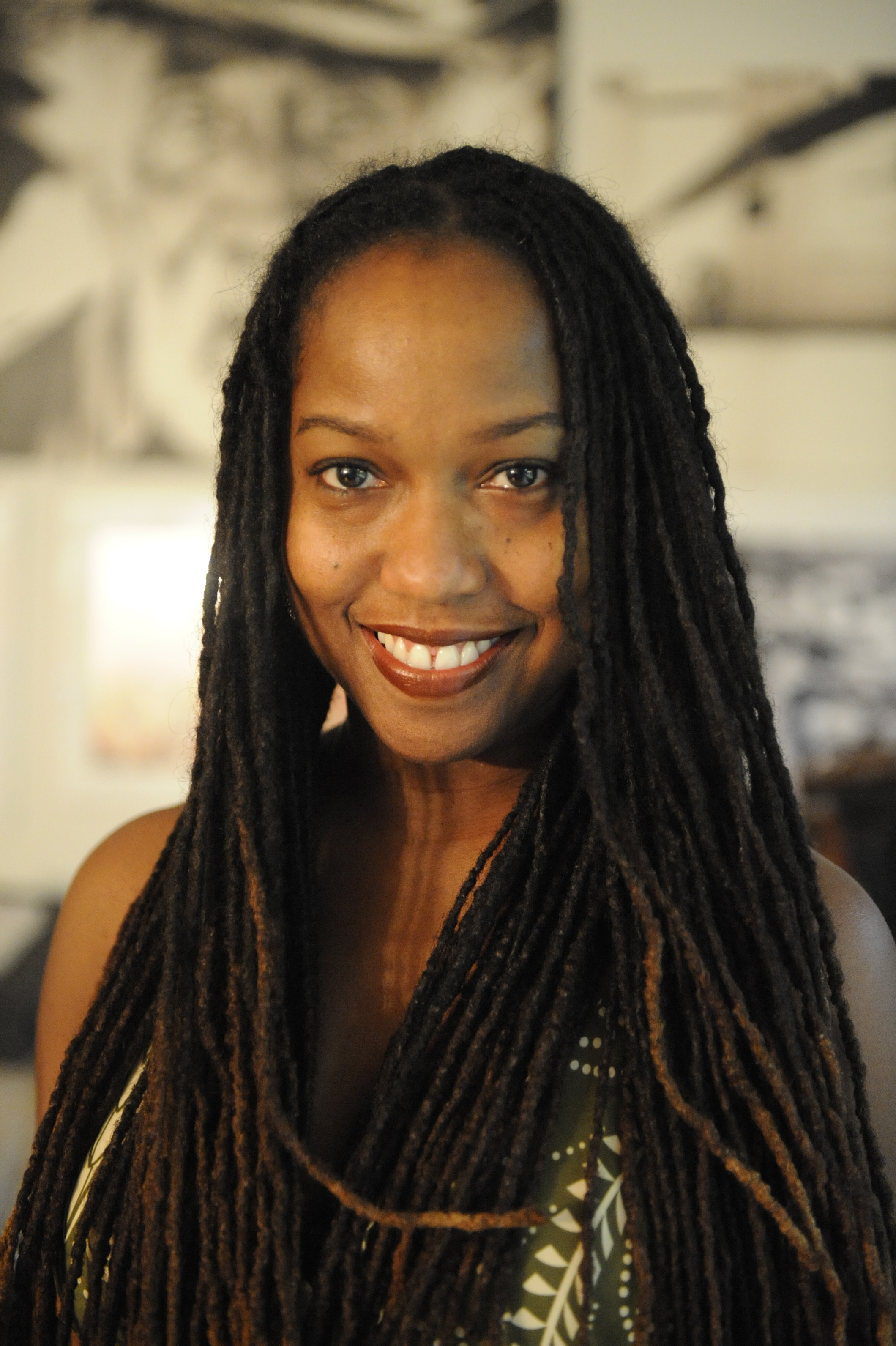
Melissa Studdard’s debut poetry collection, I Ate the Cosmos for Breakfast, was recently released by Saint Julian Press. She is also the author of the best­selling novel Six Weeks to Yehidah; its companion journal, My Yehidah (both on All Things That Matter Press); and The Tiferet Talk Interviews. Her awards include the Forward National Literature Award, the International Book Award, the Readers’ Favorite Award, and two Pinnacle Book Achievement Awards.

Melissa’s poetry, fiction, essays, reviews, and articles have appeared in dozens of journals and anthologies, including Boulevard, Connecticut Review, Pleiades, and Poets & Writers. In addition to writing, Melissa serves as editorial advisor for The Criterion and a host for Tiferet Talk radio. She received her MFA from Sarah Lawrence college and is a professor for the Lone Star College System and a teaching artist for The Rooster Moans Poetry Cooperative.

***

Okla Elliott: Your work engages with politics and philosophy without ever becoming pedantic or didactic. What role does poetry play in these larger cultural matters? (And feel free to answer either for yourself personally or for the culture at large or both.)

Melissa Studdard: Thanks for the compliment, Okla. So many of the things I’ve avoided in order to have time to make poetry, it turns out, are the things that make poetry. I tend towards solitude, meditation, and quiet communion with the keyboard. Like many poets, I often feel compelled to cloister myself in cave of words—and though that cave may be where the breath of poetry originates, it is not where the body of poetry moves. The body of poetry wants to kneel in the temple, protest in the streets, ramble through open-air markets, dance in clubs, and serve lunch at soup kitchens.
Even the most private-seeming poems are not truly private, but, rather, bottled messages sent from the island of self to the world. They say, “I’m here! I understand you.”

Because I enjoy writing so much, I used to think it was a self-indulgent waste of time. I thought there were more important contributions I could make. But all it takes is hearing an elegy recited at one funeral to know that poetry matters. It only takes one inaugural poem to see that poetry works a magic plain language cannot. Poetry lights the world on fire, whether in lament of a broken heart or in calling voters to the booth. It enacts an enchantment that touches the deepest place of care in us and lingers. It opens people to awareness and concern, without telling them to care. So—the more engaged culture and politics are with poetry, and the more engaged poetry is with culture and politics, the better.

OE: Since we know each other and each other’s work due to being friends on Facebook, and given that so many publishers and publicists are fixated on social media these days, I wonder if you have some thoughts about the good and the bad that the online literary community has brought about in the past decade or so. How has it helped independent publishers and authors? What have we lost because of it?

MS: In short, we’ve lost a little depth and gained a lot of breadth. There’s so much more of everything, but it’s harder to sort through and engage with in a deeply sustained way. Our attention is pulled in many directions at the same time. The good news is we now have access to information, people, organizations, works, and platforms that we did not have access to before. This is terrific, especially, for people who would not have been able to make these connections otherwise. I’ve learned about authors I probably would not have discovered any other way. In this sense, social media is a fantastic vehicle for small-budget publicity, which is, of course, a boon to indie publishers and authors.

However, the expectations set by online publicity are spreading some writers too thin. So much is demanded of authors that it’s hard for many to find time to write. We’re to be cheerleaders for our own work, yet for many of us, promotion does not come naturally, nor is it how we want to spend our time. I spoke above about poetry’s essential place within culture at large, but I am a firm believer in balance—and writers do need time in the cave—to simply be, observe, and reflect.

Driving back from the bank today, I noticed a thin strip of clouds in the pink sky, and I felt hungry for that sky and those clouds—not a picture of the sky, not a sky meme with an inspirational quote, not a YouTube video of drifting clouds. I was hungry to plop down in the grass and watch real clouds for hours, as I did when I was a kid. Much of life has become virtual, and I wonder how that will impact language and imagery in the long run. This does feel like a loss.

As well, many of us look to others regarding matters for which we should be looking inside. For a while, I was waking up and rolling over to my phone to text, email, and instant message before I even got out of bed. I’ve had to remind myself to write in my journal and meditate and look at the clouds and walk in nature. I’ve had to remind myself to write down my dreams and connect to my subconscious mind before connecting to the Internet. Lately, I’m trying to write in my journal, meditate, or read an actual, physical book last thing before bed and first thing in the morning. I feel so much more at peace.

Yet, despite the fact that I feel we need to remember to call on our internal resources first, I do believe the online literary community has fostered an amazing kinship among writers. I’ve made great friends through social media, as I know you and many other have. Writing can be a lonely occupation. It’s easy to feel isolated. Through the Internet, we can connect with others at all times of the day or night. And that can be an extraordinarily beautiful thing.

OE: Okay, now for the obligatory process question. How do poems happen in Melissa Studdard’s world? How do you revise? Do you research for your poems or just gather data organically and let it filter into the work as it will?

MS: I think I must mate with a different muse for each poem. It seems every poem is born from a new process. Some are hard-wrought, and others spring onto the page nearly fully formed in a matter of minutes. What I do know is that the poems that come easily ride in the wake of the poems that did not come easily. After struggling with a poem for weeks, I can be almost certain that within days of finishing it, one or more poems will flow quickly after. I don’t mind struggling with difficult poems to get to easy ones, either. The only thing that breaks my heart is not writing at all.

There is one pattern I sometimes repeat though, and which I love, and that is starting a poem in my journal and then carrying it to the computer once I see it’s really headed somewhere. Starting in the journal feels less formal and allows for a sort of raw expression I cannot quite achieve at the computer. The fluid movement of my hand across the page elicits an organic, intimate utterance that can later be sculpted through the facility of editing, revising and moving passages on the screen. Without both the keyboard and the pen as very different sorts of tools working together, I feel that many of my poems would have been different.

The research question is an interesting one. I follow my passions in life—reading about and engaging in the things that interest me. In that sense, my “research” is organic. However, if I am writing about something and need more information, I will seek it out—sometimes going back and forth between composition and research, and sometimes waiting until the first draft is done.

***

Creation Myth

So there God lay, with her legs splayed,
birthing this screaming world

from her red velvet cleft, her thighs
cut holy with love

for all things, both big and small,
that crept from her womb like an army

of ants on a sugar-coated thoroughfare.
It wasn’t just pebbles and boulders

and patches of sky, but the soul of sunlight,
the spirit of moon. She bore litters

of stars that glistened like puppies,
purring galaxies

robed in celestial fur, and galactic
clusters dusted with the scent of infinity.

It was her moment of victory:
the unveiling of seven billion milky breasts,

and she glowed—like a woman
in love with her own making, infatuated

with all corners of the blemished universe,
smitten with every imperfect thing:

splotchy, red-faced & wailing—
flawless in her omniscient eyes.

***

I Ate the Cosmos for Breakfast

after Thich Nhat Hanh

It looked like a pancake,
but it was creation flattened out—
the fist of God on a head of wheat,
milk, the unborn child of an unsuspecting
chicken—all beaten to batter
and drizzled into a pan.
I brewed some tea and closed my eyes
while I ate the sun, the air, the rain,
photosynthesis on a plate.
I ate the time it took that chicken
to bear and lay her egg
and the energy a cow takes
to lactate a cup of milk.
I thought of the farmers, the truck drivers,
the grocers, the people
who made the bag that stored the wheat,
and my labor over the stove seemed short,
and the pancake tasted good,
and I was thankful.

***

When You Do That

It feels like millions of tiny
harps are playing inside my body
and all the extinct animals
that ever were
are again
running into you
inside me
their hooves and claws
burning on the unexpected
asphalt
their tongues alive
with the ministry of light

SATURDAY POETRY SERIES PRESENTS: NICOLE ROLLENDER

_59A1171-Edit


THE FORMS OF SEEKING
By Nicole Rollender

Behind my father’s house, the lake is stained
with floating water lilies, where deep marsh grass smells

like want. Where we’re always returning. Swan wings extended,
a flash of white and water. My father, now blind in one eye,

doesn’t know what chartless world he’ll enter tomorrow.
These flowers, here now, will die by week’s end. I understand why at night

they close so slowly, sinking under moon drift and leaf fall. He watches
a snapping turtle cross the lake, a slow, even trailing – its weighted body

knows how to cross waters, unsinking. Yet, my father’s journey
still ripens. Unmoored, he walks the yard, seeking the self

who has already walked up the mountain path toward a village,
its gate festooned with red flags and bells. And a woman holding a wash

basin filled with oil and flowers, a bread basket. He creates and creates
these streets, hung with paper lanterns, windows open, fountains flowing

with the passage of time. From the gates, what man will emerge?
Will he always wonder how his life was chosen for him?

Underwater, the lilies’ stalks will curl up, submerging and holding
the pollinated flower heads. As something beautiful dies,

it makes another kind of rapture: From bees’ flight, the flower petals
browning into thick seed pods (oh, the memory of their fragrance) will burst

into the lake, the old lily falling apart and drifting. His chance
for survival is remembered joy: Live your life as if pulling from a well

inside yourself. For you are alone, and within you is all of your past
and all of what will come. Live your depths over and over with gratitude.

Behind the shed, he finds a deer skull resting on moss, stippled
with evening light, and then rain. Here now, he’s swept away,

swept away.


“The Forms of Seeking” appears here with permission from the poet.


Nicole Rollender is the author of the poetry chapbooks Absence of Stars (forthcoming July 2015, dancing girl press & studio), Little Deaths (forthcoming November 2015, ELJ Publications) and Arrangement of Desire (Pudding House Publications). She is the recipient of CALYX Journal’s 2014 Lois Cranston Memorial Prize, the 2012 Princemere Journal Poetry Prize, and Ruminate Magazine’s 2012 Janet B. McCabe Poetry Prize for her Pushcart Prize-nominated poem “Necessary Work,” chosen by Li-Young Lee. Her poetry, nonfiction and projects have been published or are forthcoming in The Adroit Journal, Alaska Quarterly Review, Creative Nonfiction, Radar Poetry, Ruminate Magazine, PANK, Salt Hill Journal and THRUSH Poetry Journal, among others. She received her MFA from The Pennsylvania State University, and currently serves as media director for Minerva Rising Literary Journal and editor of Stitches Magazine, which recently won a Jesse H. Neal Award.

Editor’s Note: I suggest you curl up with today’s poem as you would with a good book. Read and reread until its thick layers enfold you. Read once for sound. For music and alliteration. Read once for story. For the father and the momentary windows that open into his life. Read once for structure. For form. Then read several times for beauty. Because “As something beautiful dies, // it makes another kind of rapture.” Because this poem wants you to “Live your life as if pulling from a well // inside yourself.” Give this poem enough of yourself to discover all that it offers in return. Then go forth and “Live your depths over and over with gratitude.”

Want more from Nicole Rollender?
Nicole Rolldener’s Official Website
CALYX
Heron Tree
Thrush
Quail Bell Magazine
Hermeneutic Chaos

SATURDAY POETRY SERIES PRESENTS: ALEXIS KIENLEN

alexiskienlen

By Alexis Kienlen:


HOW TO PICK AN APPLE

find a ripe specimen,

gaze at its perfection,

cup it in your hand,

turn the bottom star to the sky.

show the end of the apple to heaven,

let it fall.


“How to Pick an Apple” appears here today with permission from the poet.


Alexis Kienlen is the author of two collections of poetry, 13 and She Dreams in Red. She’s also the author of a biography of a Sikh civil rights activist called Truth, love, non-violence; The story of Gurcharan Singh Bhatia. Alexis lives in Edmonton, Alberta, Canada where she works as an agricultural reporter for a newspaper called Alberta Farmer. From 2001-2006, she was the Literary Editor for Ricepaper magazine, a Vancouver based Asian Canadian arts and culture magazine. She currently writes a weekly literary column for The Grande Prairie Daily Herald Tribune. Her poetry, fiction and journalism pieces have appeared in numerous publications across Canada and online. She’s currently working on a novel and a new collection of poetry.

Editor’s Note: Today’s poem is vivid and whimsical and whisks the reader away on a brief yet epic journey. Placing us, at first, in the everyday pleasure of picking an apple, the poem turns on the word “turn” in the fourth line. From there we are shifted upward, toward the stars and the sky and the heavens, and are transported from the orchard into the realm of the spiritual, the mystical, the otherworldly. The last line echoes what has been biblically ingrained in the western apple, the fall.

Today’s poem is dedicated to my friend Luis, a faithful reader of this series and a man who knows and loves a good apple.

Want more from Alexis Kienlen?
Alexis Kienlen’s Official Website
Buy 13 and She Dreams in Red from Frontenac House
Buy Alexis Kienlen’s books from Amazon
Blue Skies Poetry
Alberta Farmer Express

SATURDAY POETRY SERIES PRESENTS: KAREN PAUL HOLMES

Karen Paul Holmes with roses

By Karen Paul Holmes:


DRAWN INTO CIRCLES

Last evening, I placed fresh towels on both dog beds
heard scratching and rearranging in the night.
This morning, each dog lay curled
into a circle of towel
like a bird’s nest.

How life loves
a circle:
the sun
cups of tea
pizza, roses, embraces
wedding rings, cathedral domes, bells
with notes radiating like ripples from skipped stones
the egg, the womb, the opening, downy heads
suckling mouths, breasts, eyes filled
with delight for bubbles
and bouncing balls.

Why do we box ourselves into corners
put our babies into rectangular cribs
build square houses and boxy buildings
drive cars to perpendicular crossroads
stare at newspapers, monitors, dollars
go to our rest in hard-edged coffins
slowly lowered into matching graves?

It’s a comfort
to imagine our rounded bones
becoming round bits of the globe
our spirits rising to orbit among spiral galaxies
joining those who completed the circle before us.


TEACHING MOZART IN STONE MOUNTAIN PRISON

I didn’t know what crimes they committed,
didn’t want to: those 12 guys glaring at me,
wondering what I had in store.

No female had taught there before
so I wore a calf-length, shapeless dress;
no make up; tortoise shell glasses instead of contacts.

Twice a week, iron gates banged behind me,
paperwork shuffled, an armed guard took me down
a warren of halls. He stationed himself by my door.

I needn’t have worried–soon knew, just as told,
if one prisoner caused trouble, he’d be jumped
by the others grateful for the chance of a college degree.

This was music appreciation. None knew the classics,
but one had played William Tell Overture in band.
All began to embrace opera, symphony, sonata—

I think the music transported them, comforted
even as they struggled to study in noisy rows of bunks.
One evaluation stays with me 30 years later,

Thanks be to God for blessing us with Mrs. Holmes.
But I felt blessed early in the semester:
We arrived at Mozart Piano Concerto Number 21.

Their books covered just the first movement, yet
I left the record playing into the second, saying,
You’ve got to hear a bit of the andante.

Muted violins conjured the ethereal melody while
repeated notes in the violas mesmerized.
After the pianist took up the solo for several bars,

I reached out to lift the needle… Twelve students
—no longer thief, mugger, murderer—
sang out in unison, No, leave it on!


“Drawn into Circles” was first published in Poetry East and appears in the collection Untying the Knot (Aldrich Press, 2014), and “Teaching Mozart in Stone Mountain Prison” was first published in POEM. These poems appear here today with permission from the poet.


Karen Paul Holmes is the author of the poetry collection, Untying the Knot (Aldrich Press, 2014), which tells a story of loss and healing “with grace, humor, self-awareness and without a dollop of self-pity,” according to Poet Thomas Lux. Karen received an Elizabeth George Foundation emerging writer grant in 2012. Publishing credits include Poetry East, Atlanta Review, Caesura, POEM, The Sow’s Ear Poetry Review, Every Day Poems, The Southern Poetry Anthology Vol 5: Georgia, and the forthcoming anthology of Georgia poets from Negative Capability Press.

Editor’s Note: Today’s poems shed new light on existence, demanding that we reconsider our human condition. “Drawn into Circles” deftly considers both the concept of the ‘circle of life’ and the roundness of nature versus the right angles of the man-made world. “How life loves / a circle: / the sun… the egg, the womb, the opening.” So “[w]hy do we box ourselves into corners / put our babies into rectangular cribs / build square houses and boxy buildings”? “It’s a comfort / to imagine our rounded bones… joining those who completed the circle before us.” While “Teaching Mozart in Stone Mountain Prison” engrosses us in a moving narrative that forces us to forfeit our assumptions and accept the beauty of being human. Both poems demand a second read, and a third, and neither poem leaves us quite the same as we were before we encountered them.

Want more from Karen Paul Holmes?
Buy Untying the Knot from Amazon
simply communicated, inc.
Interview with Karen Holmes on NetWest Writers
Reality Show: Save This Marriage on SoundCloud
Kentucky Review

SATURDAY POETRY SERIES PRESENTS: JACINTA V. WHITE

JVW by John H. White

STANDING IN COURAGE
By Jacinta V. White

Dangerous, wanted
Endangered, hunted
             Majestic
Beauty protected
Enraged
             You, young
                          Black man
Stand in courage
             In love
             In honor
                          Resurrected
             In glory
Forget put upon shame
Young man stand
             In beauty
             In strength
             In dignity
Stripped and threatened
Generations down
                                       Hands down
Young black man
             Brother, father, husband, son
Stand in your weariness
Stand in your strength
             In your courage
             In your truth
             In your faith
Stand knee high in the depths of your passion
                          Take your crown, young black man
             Wear your crown
Young black man


“Standing in Courage” was originally published by New Verse News and appears here today with permission from the poet.


Jacinta V. White is a NC Arts Council Teaching Artist and the founder of The Word Project. Her chapbook, broken ritual, was published by Finishing Line Press in 2012. Most recently, she has had poems published in Typoetic.us, Prime Number Magazine, and What Matters, an anthology published by Jacar Press.

Editor’s Note: “A wild patience has taken me this far…and when freedom is the question it is always time to begin.” So says Adrienne Rich, and your faithful editor agrees. It is time to begin. Speaking up. Speaking out. For freedom, and against injustice.

There is a rich history of poetry in social justice. Of outcries from the poetic heart of humanity for human rights. Since time immemorial poets have used their words to demand equality, whether based on race or class or gender, and from time to time they have even been heard.

Today’s poem takes part in this critical tradition, demanding the world pay attention and that the world order be reversed. It cries out for the oppressed to rise up, not in violent retribution, but in glory. It requires us to admit and to remember, while allowing us our outrage, our grief, and a new hope alike.

Want more from Jacinta V. White?
Jacinta White’s Official Website
Typoetic.us
Prime Numbers Magazine
The Word Project
Jacinta White on Facebook

SATURDAY POETRY SERIES PRESENTS: EDGAR ALLAN POE FOR HALLOWEEN AND DIA DE LOS MUERTOS

Edgar Allan Poe (public domain)


By Edgar Allan Poe:

SPIRITS OF THE DEAD

Thy soul shall find itself alone
’Mid dark thoughts of the grey tomb-stone;
Not one, of all the crowd, to pry
Into thine hour of secrecy.

Be silent in that solitude,
Which is not loneliness — for then
The spirits of the dead, who stood
In life before thee, are again
In death around thee, and their will
Shall overshadow thee; be still.

The night, though clear, shall frown,
And the stars shall not look down
From their high thrones in the Heaven
With light like hope to mortals given,
But their red orbs, without beam,
To thy weariness shall seem
As a burning and a fever
Which would cling to thee for ever.

Now are thoughts thou shalt not banish,
Now are visions ne’er to vanish;
From thy spirit shall they pass
No more, like dew-drop from the grass.

The breeze, the breath of God, is still,
And the mist upon the hill
Shadowy, shadowy, yet unbroken,
Is a symbol and a token.
How it hangs upon the trees,
A mystery of mysteries!

THE RAVEN

Once upon a midnight dreary, while I pondered, weak and weary,
Over many a quaint and curious volume of forgotten lore—
While I nodded, nearly napping, suddenly there came a tapping,
As of some one gently rapping, rapping at my chamber door.
“ ’Tis some visiter,” I muttered, “tapping at my chamber door—
Only this and nothing more.”

Ah, distinctly I remember it was in the bleak December,
And each separate dying ember wrought its ghost upon the floor.
Eagerly I wished the morrow;—vainly I had sought to borrow
From my books surcease of sorrow—sorrow for the lost Lenore—
For the rare and radiant maiden whom the angels name Lenore—
Nameless here for evermore.

And the silken sad uncertain rustling of each purple curtain
Thrilled me—filled me with fantastic terrors never felt before;
So that now, to still the beating of my heart, I stood repeating
“ ’Tis some visiter entreating entrance at my chamber door—
Some late visiter entreating entrance at my chamber door;
This it is and nothing more.”

Presently my soul grew stronger; hesitating then no longer,
“Sir,” said I, “or Madam, truly your forgiveness I implore;
But the fact is I was napping, and so gently you came rapping,
And so faintly you came tapping, tapping at my chamber door,
That I scarce was sure I heard you”—here I opened wide the door;—
Darkness there and nothing more.

Deep into that darkness peering, long I stood there wondering, fearing,
Doubting, dreaming dreams no mortals ever dared to dream before;
But the silence was unbroken, and the darkness gave no token,
And the only word there spoken was the whispered word, “Lenore!”
This I whispered, and an echo murmured back the word, “Lenore!”—
Merely this, and nothing more.

Back into the chamber turning, all my soul within me burning,
Soon I heard again a tapping somewhat louder than before.
“Surely,” said I, “surely that is something at my window lattice;
Let me see, then, what thereat is, and this mystery explore—
Let my heart be still a moment and this mystery explore;—
“Tis the wind and nothing more!”

Open here I flung the shutter, when, with many a flirt and flutter,
In there stepped a stately Raven of the saintly days of yore;
Not the least obeisance made he; not an instant stopped or stayed he;
But, with mien of lord or lady, perched above my chamber door—
Perched upon a bust of Pallas just above my chamber door—
Perched, and sat, and nothing more.

Then this ebony bird beguiling my sad fancy into smiling,
By the grave and stern decorum of the countenance it wore,
“Though thy crest be shorn and shaven, thou,” I said, “art sure no craven,
Ghastly grim and ancient raven wandering from the Nightly shore—
Tell me what thy lordly name is on the Night’s Plutonian shore!”
Quoth the Raven “Nevermore.”

Much I marvelled this ungainly fowl to hear discourse so plainly,
Though its answer little meaning—little relevancy bore;
For we cannot help agreeing that no living human being
Ever yet was blessed with seeing bird above his chamber door—
Bird or beast upon the sculptured bust above his chamber door,
With such name as “Nevermore.”

But the Raven, sitting lonely on the placid bust, spoke only
That one word, as if his soul in that one word he did outpour.
Nothing farther then he uttered—not a feather then he fluttered—
Till I scarcely more than muttered “Other friends have flown before—
On the morrow he will leave me, as my hopes have flown before.”
Then the bird said “Nevermore.”

Startled at the stillness broken by reply so aptly spoken,
“Doubtless,” said I, “what it utters is its only stock and store
Caught from some unhappy master whom unmerciful Disaster
Followed fast and followed faster till his songs one burden bore—
Till the dirges of his Hope that melancholy burden bore
Of “Never—nevermore.”

But the raven still beguiling all my sad soul into smiling,
Straight I wheeled a cushioned seat in front of bird, and bust and door;
Then, upon the velvet sinking, I betook myself to linking
Fancy unto fancy, thinking what this ominous bird of yore—
What this grim, ungainly, ghastly, gaunt and ominous bird of yore
Meant in croaking “Nevermore.”

This I sat engaged in guessing, but no syllable expressing
To the fowl whose fiery eyes now burned into my bosom’s core;
This and more I sat divining, with my head at ease reclining
On the cushion’s velvet lining that the lamplght gloated o’er,
But whose velvet violet lining with the lamplight gloating o’er,
She shall press, ah, nevermore!

Then, methought, the air grew denser, perfumed from an unseen censer
Swung by Angels whose faint foot-falls tinkled on the tufted floor.
“Wretch,” I cried, “thy God hath lent thee—by these angels he hath sent thee
Respite—respite and nepenthe from thy memories of Lenore;
Quaff, oh quaff this kind nepenthe and forget this lost Lenore!”
Quoth the Raven, “Nevermore.”

“Prophet!” said I, “thing of evil!—prophet still, if bird or devil!—
Whether Tempter sent, or whether tempest tossed thee here ashore,
Desolate yet all undaunted, on this desert land enchanted—
On this home by Horror haunted—tell me truly, I implore—
Is there—is there balm in Gilead?—tell me—tell me, I implore!”
Quoth the Raven, “Nevermore.”

“Prophet!” said I, “thing of evil—prophet still, if bird or devil!
By that Heaven that bends above us—by that God we both adore—
Tell this soul with sorrow laden if, within the distant Aidenn,
It shall clasp a sainted maiden whom the angels name Lenore—
Clasp a rare and radiant maiden whom the angels name Lenore.”
Quoth the Raven, “Nevermore.”

“Be that word our sign of parting, bird or fiend!” I shrieked, upstarting—
“Get thee back into the tempest and the Night’s Plutonian shore!
Leave no black plume as a token of that lie thy soul hath spoken!
Leave my loneliness unbroken!—quit the bust above my door!
Take thy beak from out my heart, and take thy form from off my door!”
Quoth the Raven, “Nevermore.”

And the Raven, never flitting, still is sitting, still is sitting
On the pallid bust of Pallas just above my chamber door;
And his eyes have all the seeming of a demon’s that is dreaming,
And the lamp-light o’er him streaming throws his shadow on the floor;
And my soul from out that shadow that lies floating on the floor
Shall be lifted—nevermore!

(Today’s poems are in the public domain, belong to the masses, and appear here today accordingly.)

Edgar Allan Poe (1809 – 1849) was an American author, poet, editor, and literary critic, considered part of the American Romantic Movement. Best known for his tales of mystery and the macabre, Poe was one of the earliest American practitioners of the short story, and is generally considered the inventor of the detective fiction genre. He is further credited with contributing to the emerging genre of science fiction. (Annotated biography of Edgar Allan Poe courtesy of Wikipedia.)

Editor’s Note: Your faithful editor of this Saturday Poetry Series is a HUGE fan of Halloween. This year I’ve decided to celebrate with poetry! “The Raven” is a classic poem of the macabre, and as such is a perfect nod to All Hallow’s Eve. I am particularly partial to this rendition by the Simpsons, because Halloween should have both tricks and treats involved. In addition to “The Raven,” well-known and beloved, I was pleasantly surprised to find “Spirits of the Dead,” a poem that calls out to Dia de los Muertos, when the veils thin between the worlds of the living and the dead and we welcome the spirits of those who came before us. “[F]or then / The spirits of the dead, who stood / In life before thee, are again / In death around thee, and their will / Shall overshadow thee; be still.” Happy Halloween!

Want to read more by and about Edgar Allan Poe?
PoeStories
The Poetry Foundation
Academy of American Poets
Poe Museum

SATURDAY POETRY SERIES PRESENTS: DIANE LOCKWARD

Lockward-headshot

By Diane Lockward:


SERVICE FOR THE MURDERED BOY

                           In Tibet they lay their dead
                           on the side of a mountain.

All night I dream of the murdered boy
decomposing in the Himalayas,
laid out under a Banyan tree.
No monsoon of grief in this unarable land,
only mountains rumbling
with footsteps of tigers, snow leopards,
and moon bears. A hundred vultures fill the sky.
All circle in, nuzzle the boy with snouts and beaks,
and devour him until nothing’s left but bones
and a skull, resting on stones hard as fists.

I dream a mission of monks, roaming
the desert, spinning prayer wheels,
and searching peasant villages for the right
boy, the one birthed at the exact moment
of death. They lift the born-again buddha
and carry him home.

But my dream lasts only as long as the night.
Morning brings echoes of Ave Maria.

The father’s wearing a red jacket
with white leather sleeves, the kind
boys wear when they make the varsity team.
He leans into the mic and says,
“I don’t want to talk about the future,
or games that won’t get played,
or the boy who shot him. I want to talk
about songs that were sung.”
Then he breaks down, turns to his son
still smiling in the blown up photograph.

I don’t want church music, soft and mournful.
I want hard rock, heavy metal,
music all bass and treble, cranked up full blast,
the kind that blares out windows of cars
driven by boys, the kind that rocks
the ground and trembles the earth with their songs.


A MURMURATION OF STARLINGS

                     It was raining dead birds.
                              —Mayor Brian Levine, The Star-Ledger, 1/27/09

Starlings dropped from the sky,
mid-flight, like balloons suddenly deflated.

No time to spread their wings and glide on air,
and, synchronized, to soar and dive.

No time to close their wings, to wrap
themselves in shrouds of feathers, and sleep.

They fell like water balloons tossed blindly
from dormitory windows.

They fell like rocks dumped from the unlatched
rear end of a construction truck.

They fell like bombs, like stars, like fallen angels,
they fell like dead starlings.

Hundreds plummeted from the sky
on cars, porches, and snow-covered lawns.

They’d taken the poisoned bait
and, headfirst, dreamed one last time of England.

Birds who’d once disturbed a king’s sleep
with cries of Mortimer, Mortimer.

Memento mori, forcing us to contemplate
unexpected death.

Do we not already think of the fallen,
earth’s fields littered with corpses?

Dark vision made real,
their glistening bodies, silent now and still.

Birds who’d sung their own song
and wooed their mates with lavender and thistle.


“Service for the Murdered Boy” is from the collection Eve’s Red Dress (Wind Publication, 2003) and “A Murmuration of Starlings” is from the collection Temptation by Water (Wind Publications, 2010). These poems appear here today with permission from the poet.


Diane Lockward is the author of The Crafty Poet: A Portable Workshop (Wind Publications, 2013) and three poetry books, most recently Temptation by Water. Her previous books are What Feeds Us, which received the 2006 Quentin R. Howard Poetry Prize, and Eve’s Red Dress. Her poems have been included in such anthologies as Poetry Daily: 360 Poems from the World’s Most Popular Poetry Website and Garrison Keillor’s Good Poems for Hard Times, and in such journals as Harvard Review, Spoon River Poetry Review, and Prairie Schooner. Her work has also been featured on Poetry Daily, Verse Daily, Gwarlingo, and The Writer’s Almanac.

Editor’s Note: Today’s poems are, sadly, incredibly timely. I was originally drawn to “Service for the Murdered Boy” with thoughts of Michael Brown, but now both poems cry out in response to yesterday’s school shooting in Washington. Written years ago, the mourning and meditations of these poems are heartbreakingly timeless. There is a still and quiet beauty in their language and imagery, a slowing down of time that enables us to grieve. These mindful pieces reflect upon both today’s atrocities and the mourning songs that are as ancient as poetry itself. So, too, do these poems turn in upon themselves, questioning the very act of contemplating death: “Do we not already think of the fallen, / earth’s fields littered with corpses? // Dark vision made real, / their glistening bodies, silent now and still.” And they speak in chorus with those who have lost their children, to those who seek only to remember: “I don’t want to talk about the future, / or games that won’t get played, or the boy who shot him. I want to talk / about songs that were sung.”

Want more from Diane Lockward?
Buy The Crafty Poet: A Portable Workshop from Amazon
Diane Lockward’s Official Website
Diane Lockward’s Blog
Sign up for the poet’s free monthly Poetry Newsletter

SATURDAY POETRY SERIES PRESENTS: NOMI STONE

Stone headshot

By Nomi Stone:


WAR GAME, AMERICA

The war scenario has: [vegetables stalls], [roaming animals],
and [people] in it. The people speak

the language of the country we
are trying to make into a kinder country.
Some of the people over there are good
others evil others circumstantially

bad some only want cash some
just want their family to not
die. The game says figure

out which
are which.


WHAT IS GROWING IN THESE WOODS

Green in here, gleaming like
being inside a fable but with
stalls of fruit you can’t eat.
To go home, leave crumbs.
When the wood circles you
back here instead, let the lost
and the impossible ripen in
you, ripen and go.


US AND THEM

“I would make love to one of our

whores before I
would fuck one of their
bourgeoisie.” There was a proverb,

like this: Don’t trust a         if
he becomes a         even though
he remains a       for

forty years. And the sister opposite
proverb: Don’t trust a       even
though he has been in the grave

for forty years. It was a difficult day,
a bomb had spun open
a bus, and children

had been crushed down by
a machine. Each wondered if he was born
too soon, if later would have been better, if 40

+ 40 + 40 + 40


War Game, America” and “What is Growing in these Woods” previously appeared in Painted Bride Quarterly, and “Us and Them” previously appeared via The Poetry Foundation. These poems appear here today with permission from the poet.


Nomi Stone is the author of the poetry collection Stranger’s Notebook (TriQuarterly, 2008), a PhD Candidate in Cultural Anthropology at Columbia University, and an MFA Candidate in Poetry at Warren Wilson. She previously earned a Masters in Modern Middle Eastern Studies from Oxford and was a Creative Writing Fulbright scholar in Tunisia. Her poems have been published or are forthcoming in Poetry Northwest, Memorious, The Painted Bride Quarterly, The Bloomsbury Anthology of Contemporary Jewish Poetry, at The Poetry Foundation, and elsewhere. She is currently researching and writing a book of poetry as well as a book of non-fiction about combat simulations in mock Middle Eastern villages erected by the US military across America.

Editor’s Note: Nomi Stone’s poetry is a veritable minefield of experience. Politics, war, violence, history, proverbs, culture, peoplehood, nationality, borders, mythology, folklore, fairy tales, and biblical referentiality lie in wait for the keen and unsuspecting reader alike. The unsaid is as present and powerful as what is written, so that her poetry echoes the Bible’s black fire written on white fire. This is a poetry rich and blooming. Thick with the sights and smells of Near Eastern markets, yet heavy with human tragedy. Herein lies the old world. Herein lies the Levant. Herein lies the wild woods of our imagination set against the all-too-real world of war. If you cannot find your way out, “let the lost / and the impossible ripen in / you, ripen and go.”

Want more from Nomi Stone?
“Many Scientists Convert to Islam”
“Trapped on Djerba, Island of the Lotus Eaters”
“Purim, Spring Festival: How to Escape Massacres”
Interview with Nomi Stone with poems: “The Notionally Dead” and “War Game America”
An interview about Nomi Stone’s research on war games

SATURDAY POETRY SERIES PRESENTS: HILA RATZABI


By Hila Ratzabi:


"Sedna the Arctic Sea Goddess" broadside, designed by poet and visual artist MaryAnn Miller
“Sedna the Arctic Sea Goddess” broadside, designed by poet and visual artist MaryAnn Miller.


SEDNA IN SPACE

             “Our newly discovered object is the coldest most distant place known in the solar
             system, so we feel it is appropriate to name it in honor of Sedna, the Inuit goddess of
             the sea, who is thought to live at the bottom of the frigid arctic ocean.”
                                                                                                                     ––Mike Brown, astronomer

Now you’re nothing
but a dwarf planet at the edge
of the asteroid formerly known as Pluto,

neighbor to demoted planet,
atmosphere-less,
stunted.

When the scientists ran out of Greek and Roman gods
they settled on you, “Big Bad Woman,”
as one tribe puts it.

You are made of water,
methane, nitrogen ice,
frozen all over.

It takes you
more than ten thousand years
to orbit the Sun.

I want to place a blanket
around your shivering surface,
tuck you in surrounded by stars.

Where I’m from, we’ve released
so much heat into the sky
it’s burning us back.

But I can’t turn up the heat
at your edge of the solar system,
can’t drag you any closer to the Sun.

From your corner the Sun
Is a wink of a star, so small
you could block it out

with the head of a pin.
Just look what a nothing it is
next to you, big girl.


“Sedna the Arctic Sea Goddess” was previously published in Alaska Quarterly Review and “Sedna in Space” was previously published in Narrative. These poems appear here today with permission from the poet.


Hila Ratzabi was selected by Adrienne Rich as a recipient of a National Writers Union Poetry Prize and has been nominated for a Pushcart Prize. She is the author of the chapbook The Apparatus of Visible Things (Finishing Line Press). Her poetry is published or forthcoming in The Bloomsbury Anthology of Contemporary Jewish American Poetry, Narrative, Alaska Quarterly Review, Drunken Boat, About Place, The Normal School, H_NGM_N, Cortland Review, and others. She holds an MFA from Sarah Lawrence College, and lives in Philadelphia where she founded the Red Sofa Salon & Poetry Workshop.


Editor’s Note: In Hila Ratzabi’s Sedna poems the Inuit goddess becomes a symbol of the trauma of climate crisis as explored through the lens of feminist response.

In “Sedna the Arctic Sea Goddess” we are introduced to Sedna’s creation myth. So, too, are we introduced to the misogyny and violence inherent in her tale. She is a “bitch goddess” whose father throws her to the sea and then cuts of her fingers when she tries to save herself.

In “Sedna in Space” we see Sedna rise again when a dwarf planet is discovered and named for her, but still she is “nothing / but a dwarf planet at the edge / of the asteroid formerly known as Pluto, // neighbor to demoted planet, / atmosphere-less, / stunted.” Through poetry, Ratzabi seeks to reclaim Sedna, to save her from the grips of oppression: “I want to place a blanket / around your shivering surface, / tuck you in surrounded by stars.” By shifting perspective, the poet empowers Sedna, making her grander than the sun: “From your corner the Sun / Is a wink of a star, so small / you could block it out // with the head of a pin. / Just look what a nothing it is / next to you, big girl.”


Want to read more by Hila Ratzabi?
Read recently published poems on climate change by Hila Ratzabi in About Place and Drunken Boat.
Learn about Hila’s poetry workshops in Philadelphia at The Red Sofa Salon & Poetry Workshop.
Purchase “Sedna the Arctic Sea Goddess” broadside (pictured above).
Purchase “Sedna in Space” broadside (poem above).
Purchase The Apparatus of Visible Things chapbook.

SATURDAY POETRY SERIES PRESENTS: RESURRECTION PARTY

resurrection_cover


From RESURRECTION PARTY
By Michalle Gould:


SELF-PORTRAIT AS A SERIES OF PREPARATORY STUDIES FOR A NUDE BY MATISSE

The breasts hang low like fruit hoping
to be picked yet still on the branch,
While the body largely reclines, a letter K
lain on its side and slightly bent,
or in a less common pose, my back faces the viewer
so I resemble a pushed in O, my arms and legs drawn in,
like a turtle withdrawing far into its shell
to escape some predator that has come to suck;
We are become a rock. Our hearts lie hidden far
Below its skin. The artist scrapes my flesh onto his brush
but cannot touch what lies beneath, whatever he thinks—
nor can you, my dear, even as you read me.


SELF-PORTRAIT AS THE MAIDEN OF ATHENS

That day, I went forth to kill the Minotaur.
Since Theseus, they sent us all naked;
I had no ball of string; I had no sword.
For tools, instead, I had only the instruments
of my body: my nails for daggers, my hair for thread.
I had heard of his legendary cruelty;
I had heard how he killed without a word.
Then I came to the center and saw him.
His strong arms beckoned—and I cut the cord.


SELF-PORTRAIT AS A PAIR OF LOVEBIRDS

Opening their beaks, they thrust
their tongues out for one last kiss
before the long journey south—
like worms they each intend to drop
into the other’s hungry waiting mouth.


Today’s poems are from Resurrection Party, published by Silver Birch Press, copyright © 2014 by Michalle Gould, and appear here today with permission from the poet.


RESURRECTION PARTY concerns itself, almost to the point of obsession, with the question of how the imagination grapples with the fear of death. The collection intertwines religious and mythical subjects and themes with more fleshly concerns about the body and decay, presence and absence. It has been described as containing poems of “almost exquisite refinement, illuminated by the taut glow of sensuous prosody and imagery” and as “a deeply meditative collection at once intelligent, tender, and utterly human.” (From the Silver Birch Press website.)


Michalle Gould has been working on the poems that constitute Resurrection Party for almost 15 years. In that time, her poems and short stories have appeared in Slate, New England Review, Poetry, American Literary Review, The Texas Observer, and other journals. She currently lives in Los Angeles, where she works as a librarian, and is in the process of researching and writing a novel set in the North of England during the 1930s.


Editor’s Note: Michalle Gould has a deep and fearless understanding of the self. In her quest to write poems that grapple with life’s big questions—life and death, self-awareness, relationships—she is bold and unafraid. She views her own body as honestly as an artist would. Yet she understands truths about the self that no other can reveal: “The artist scrapes my flesh onto his brush / but cannot touch what lies beneath, whatever he thinks— / nor can you, my dear, even as you read me.”

In “Self Portrait as the Maiden of Athens” the poet re-examines the Greek myth of the minotaur from a female perspective. Here she notes that, unlike the male hero in the story, when the maiden faces the beast, “I had no sword. / For tools, instead, I had only the instruments / of my body: my nails for daggers, my hair for thread.” This concept translates into the larger role of women in the world, and the question of what few tools and resources we have traditionally been allowed.

SPS-beloved poet Louise Mathias writes that the terrain of Resurrection Party “is somewhere between body and spirit, life and death, intimacy and solitude, elegance and intuition. Possessing a sly humor coupled with a laser sharp awareness and assertion of how all is ephemeral, Resurrection Party accomplishes the rare: it makes even the big questions fresh.”


Want to see more from Michalle Gould?
Michalle Gould Official Website
Buy Resurrection Party from Amazon
Resurrection Party on Goodreads
More Excerpts from Resurrection Party