SATURDAY POETRY SERIES PRESENTS: TWO SUMMER POEMS

"England - English Summer Woods" courtesy of Jacopo Werther via Creative Commons: http://bit.ly/1qRZ81t
“England – English Summer Woods” courtesy of Jacopo Werther via Creative Commons: http://bit.ly/1qRZ81t


LILY-BELL AND THISTLEDOWN SONG
By Louisa May Alcott

Awake! Awake! for the earliest gleam 

Of golden sunlight shines 

On the rippling waves, that brightly flow 

Beneath the flowering vines. 

Awake! Awake! for the low, sweet chant 

Of the wild-birds’ morning hymn
Comes floating by on the fragrant air, 

Through the forest cool and dim; 

Then spread each wing, 

And work, and sing, 

Through the long, bright sunny hours; 

O’er the pleasant earth 

We journey forth, 

For a day among the flowers.

Awake! Awake! for the summer wind 

Hath bidden the blossoms unclose, 

Hath opened the violet’s soft blue eye, 

And awakened the sleeping rose. 

And lightly they wave on their slender stems 

Fragrant, and fresh, and fair, 

Waiting for us, as we singing come 

To gather our honey-dew there. 

Then spread each wing, 

And work, and sing, 

Through the long, bright sunny hours; 

O’er the pleasant earth 

We journey forth, 

For a day among the flowers.


SUMMER RAIN
By Fannie Isabel Sherrick

Oh, what is so pure as the glad summer rain,
That falls on the grass where the sunlight has lain?
And what is so fair as the flowers that lie
All bathed in the tears of the soft summer sky?

The blue of the heavens is dimmed by the rain
That wears away sorrow and washes out pain;
But we know that the flowers we cherish would die
Were it not for the tears of the cloud-laden sky.

The rose is the sweeter when kissed by the rain,
And hearts are the dearer where sorrow has lain;
The sky is the fairer that rain-clouds have swept,
And no eyes are so bright as the eyes that have wept.

Oh, they are so happy, these flowers that die,
They laugh in the sunshine, oh, why cannot I?
They droop in the shadow, they smile in the sun,
Yet they die in the winter when summer is done.

The lily is lovely, and fragrant her breath,
But the beauty she wears is the emblem of death;
The rain is so fair as it falls on the flowers,
But the clouds are the shadows of sunnier hours.

Why laugh in the sunshine, why smile in the rain?
The world is a shadow and life is a pain;
Why live in the summer, why dream in the sun,
To die in the winter, when summer is done?

Oh, there is the truth that each life underlies,
That baffles the poets and sages so wise;
Ah! there is the bitter that lies in the sweet
As we gather the roses that bloom at our feet.

Oh, flowers forgive me, I’m willful to-day,
Oh, take back the lesson you gave me I pray;
For I slept in the sunshine, I woke in the rain
And it banished forever my sorrow and pain.


(Today’s poems are in the public domain, belong to the masses, and appear here today accordingly.)


Louisa May Alcott: (1832-1888) was an American novelist and poet best known as the author of the novel Little Women (1868). Raised by her transcendentalist parents, Abigail May and Amos Bronson Alcott in New England, she grew up among many of the well-known intellectuals of her day. (Annotated biography of Louisa May Alcott courtesy of Wikipedia, with edits.)

Fannie Isabel Sherrick: (Lived circa mid-to-late 19th c.) was a native of St. Louis. Much of her early life was spent in California and Colorado, where many of her best productions in verse were written. Her collected poems were published in 1888, in a volume entitled Star Dust. Poor health caused her–at least temporarily–to give up literary endeavors. (Annotated biography of Fannie Isabel Sherrick courtesy of Evenings with Colorado Poets: an Anthology of Colorado Verse, with edits.)

Editor’s Note: Technically summer is not for another month yet, but here in New York the sun is shining, and Memorial Day weekend is the official start of our summer season, so “O’er the pleasant earth 
/ We journey forth, 
/ For a day among the flowers.” And, while summer rain was not a common occurrence in California–from whence I came–here in New York the sky opens up to quench the grasses, the flowers, the rivers and streams, all summer long: “Oh, what is so pure as the glad summer rain, / That falls on the grass where the sunlight has lain? / And what is so fair as the flowers that lie / All bathed in the tears of the soft summer sky?”

Want to read more summer poetry?
The Poetry Foundation

High School Poetry Series: Gender, Identity, & Race – Anaika Falcon & Meisha White


IMG_1635

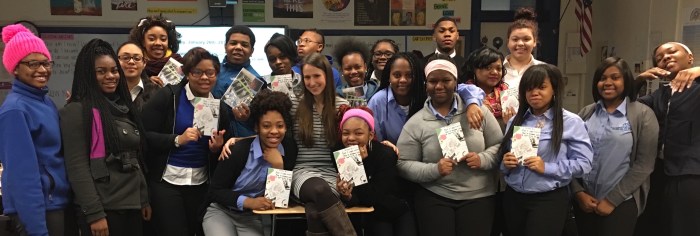
A note from Series Editor Sarah Marcus: Born from a powerful in-class discussion we had about gender, race, and the role of masculinity in rape culture, these poems are an analysis of gendered personal experience and a study of our intersectionality. This poetry series was inspired by a HuffPost essay I wrote called, “Why I Teach Feminism at an Urban High School.” The poets featured here are students from my 12th Grade Creative Writing class whose work I found to be brave, fearless, and progressive. Please help me support their crucial and influential voices.

*

Anaika Falcon is a senior in my creative writing class. She is 17 years old and will be attending Miami University in Oxford, OH in the fall. She will be majoring in AYA Integrated Language Arts Education in the hopes of teaching high school in the future. She is an avid reader and immerses herself in Asian culture, specifically Japanese and South Korean culture. Anaika’s inspiration for writing this poem was taken from the bullying that she went through when she was in elementary and middle school. She wrote this poem because she felt like many people do not fully understand the consequences of bullying. Not only that, but those who commit suicide are seen as taking the easy way out, and she wants to challenge that view because she does not believe killing yourself is easy; therefore, suicide is not an easy way out.

Meisha White is a senior at Saint Martin de Porres. She  She will be attending Spring Hill College in the fall on a full tuition scholarship. She plans to study Psychology and Early Childhood Development. Meisha has always loved writing music, poetry, and short stories. Her talent began to really blossom in her freshman English class and matured as she learned more in her creative writing class. The topic of bullying that leads to suicide was initially Anaika’s idea. When she brought it up, Meisha thought it was great but was nervous about her writings not being deep enough. She writes, “This project meant a lot to me because I included person experiences and I knew the topic was strong. I am very excited about this poem to be shared because it has the power to change people’s view and save a life or two.”

I chose to feature this deeply moving performance piece for its perseverance and persistence. It is devastating and relatable. It speaks to our collective experience of abuse and bullying. I encourage you to take the 13 minutes to witness these young women in action.

Video of Performance: https://youtu.be/MI7akkTB1c0

“We Had the Guns and You Gave Us the Ammo”
By Anaika Falcon and Meisha White

Anaika:
[Walk forward]
I had the gun and you gave me the ammo.
I see it in your eyes
And in the way you spout those lies.
You don’t know that every day I go home and cry.
I cry until the tears overflow into a small river.
I imagine stabbing myself in the liver,

Anaika and Meisha:
But I am not capable enough to be my own killer.

Anaika:
I use knives and cigarettes to feel fuller.
I take the blade and slowly ride it
Across my tender skin.
I watch as the blood trickles out
Leaving me in inexplicable bliss.

Anaika and Meisha:
It reminds me of the sweet kiss
My mother would plant
Across my cold cheek.

Anaika:
But now I am at my peak.
I am 5”3’ and I am not the prettiest.
I am bleak.
I am weak.
I am nothing but an empty carcass
Trying to speak.
I see it in your eyes
And in the ways you spout those lies.
I had the gun and you gave me the ammo.
Your words were my ammo.
How you let them caress my every fault.
You opened up my deepest darkest vault.
You opened up my wounded scar.
You didn’t have to look too far.
To you, I was another hooker at the bar.
I wasn’t a girl I was just another one
Of your women to be judged.
You knew I wouldn’t budge.
I wouldn’t even give you the time of day,
But that just made it all okay.
Now every time I walk the halls
People laugh and watch me fall
Fall into the abyss
Waiting for someone,
Anyone to call
Call my name and make it better,

Anaika and Meisha:
But now all that is left is that letter.

Anaika:
[sigh]
My suicide letter.
Leading me to the greener side of the land.
I walk into the bath listening to my favorite band.
The water encompasses my body
And breaks my bonds.
I was never fond of the heat,
But today it is how I will beat you.
With the serrated edge of my blade
And the heat to drown my sorrows away.

Anaika and Meisha:
I WILL WIN.

[Walk backwards]
I had the gun and you gave me the ammo.

————————————————————

Meisha:
[Walk forward]
I had the gun and you gave me the ammo.

[Same time] Meisha: 1…2…3…4   Anaika: 5…6…7…8

Meisha:
How hard is it to go to school and break through expected doors?

[Same time] Meisha: 5…6…7…8   Anaika: 1…2…3…4

Meisha:
You’re supposed to be a star, first generation great

[Same time] Meisha: 1…2…3…4   Anaika: 5…6…7…8

Meisha:
Once you lose your virginity you become a whore

[Same time] Meisha: 5…6…7…8   Anaika: 1…2…3…4

Meisha:
Pill after pill I contemplate
They say life is great
Live it to the fullest
But how can I be happy
When I’m expected to stay away from “bullshit”
(When I’m expected to be the coolest)
I ask myself…
How many times have you looked back on your life
And said wow
Realized that there’s not many moments
You cracked a smile
I’m supposed to do great in school
But if I complain it’s
“All you do is go to school”
For girls having sex even for the first time
Is a mark of impurity
But I’m supposed to be “the man” right?
It’s funny how friends stay tight
Only if the timing is right
When you’re doing better they put you down
And try to pick a fight

[Same time] Meisha: 1…2…3…4   Anaika: 5…6…7…8

Meisha:
Cam! Please open the door!

[Same time] Meisha: 5…6…7…8   Anaika: 1…2…3…4

Meisha:
What’s wrong with you?
Being negative
And having self-hate

[Same time] Meisha: 1…2…3…4   Anaika: 5…6…7…8

Meisha:
After all that I’ve done for you?!
All of those sacrifices and you want more?!

[Same time] Meisha: 5…6…7…8   Anaika: 1…2…3…4

Meisha:
[Walk backwards]
I had the gun and you gave me the ammo…
So now it’s too late.

———————————————————–

Meisha:
[Walk forward]
I had the gun and you gave me the ammo

Anaika and Meisha:
My breath is leaving my body

Meisha:
My lungs stretching out
Their hands reaching out
For my idle breath

Anaika and Meisha:
Their words of envy strangled my neck

Meisha:
They were an assault on my lungs
They pushed out my air

Anaika:
“She thinks she’s better”

Meisha:
“You have no respect for authority”

Anaika:
“When I first saw you I thought you were stuck up”

Meisha:
“Everything’s your fault”

Anaika and Meisha:
Judgement before a word of exchange

Meisha:
I laugh and it’s

Anaika:
“What’s the problem I thought it was over”

Meisha:
If I’m friends with their enemy I’m the enemy

It’ll be quick

Just stand in the chair

Anaika and Meisha:
Hold your breath

And be free

Meisha:
I loved me as much as I could

But I was hurt by the reciprocated hate

The struggle of being like the girls in the magazines is heavy

So heavy that I decided

Anaika and Meisha:
To drop the weight

Meisha:
Create an escape to escape the hate and release the fate

A fate I couldn’t take

I made my own to correct the mistakes of the ones that hate

I hug the rope
Tied the knot
Stood on the chair
And accepted the fate

Anaika:
The fate of a girl who was too much
So much that she had to escape

Meisha:
[Walk backwards]
I had the gun and you gave me the ammo

———————————————————–

Meisha:
[Walk forward]
[Anaika walk forward and stand behind Meisha]

I had the gun and you gave me the ammo.
Dear God, make me a bird
So I can fly far, far far away from here

Anaika:
[Peek out from behind Meisha]
I’ll make you a bird.
I’ll help you fly away.

Meisha:
His fingers hugged one of the most important parts of my body
And it was so powerful that it took my breath away
Make me a bird

Anaika:
[Peek out from behind Meisha]
You are a bird

Meisha:
Make me a bird

Anaika:
[Peek out from behind Meisha]
You have always been a bird

Meisha:
Is what I repeated but all that I heard was screams of passion
Vibrating my eardrums echoing in my head
It shook me… so I thought the only logical thought
And it was clear…
I’m dead

Anaika:
[Peek out from behind Meisha]
You’re not dead,
You are a bird.
You are a flightless bird.

Meisha:
Dear God, oh dear God, how was this happening?

Anaika:
[Peek out from behind Meisha]
I’ll help you fly away
I’ll take away your pain

Meisha:
Alone in my home with no voice

Anaika:
[Peek out from behind Meisha]
You do have a voice,
The voice of a flightless bird.

Meisha:
Not even the strength to give a whisper
So dry that in the midst of it all it went unnoticed but my face,
My face is where the screams of passion unfolded
Dear God, make me a bird so I can fly far, far far away from here

Anaika:
[Peek out from behind Meisha]
I’ll make you remember
That you are a bird

Meisha:
The wind that I didn’t have then felt great now that I’m so high up

Anaika:
[Peek out from behind Meisha]
Fly

Meisha:
The winter was approaching so I figured
Heading south in that V was enough

Anaika:
[Peek out from behind Meisha]
Fly

Meisha:
Voiceless it cries,

Anaika:
[Peek out from behind Meisha]
A flightless bird

Meisha:
Wingless flutters,

Anaika:
[Peek out from behind Meisha]
A flightless bird

Meisha:
Toothless bites,

Anaika:
[Peek out from behind Meisha]
A flightless bird

Meisha:
Mouthless mutters.

Anaika:
[Peek out from behind Meisha]
A flightless bird

Meisha:
I’ll be free…

Anaika:
[Peek out from behind Meisha]
You’ll be a true bird

Meisha:
It’ll be quick everyone will see how hard it hits
Where kisses go I have scars that will never heal
One wrong touch and I’m that scared little girl
Crying breaking down
Remembering this man of steel
How could this be happening?

Anaika:
[Peek out from behind Meisha]
I’ll help you fly

Meisha:
What was the angle?

Anaika:
[Peek out from behind Meisha]
The angle of flight

Meisha:
What little girl in the 7th grade
Could ever deserve to be strangled?

Anaika:
[Peek out from behind Meisha]
A flightless bird

Meisha:
I took the deep breath
That I couldn’t back then
Trying to pull out the little bird from within

Anaika:
[Peek out from behind Meisha]
You’ll be a true bird

Meisha:
Toes at the edge,
Dressed in camo.
I jumped.

[Meisha falls to her knees]

Anaika:
[Lift head and smile][Walk backwards]
Welcome to my murder of crows.

Meisha:
[Walk backwards]
Because I had the gun and you gave me the ammo.

———————————————————————

Anaika:
[Walk forward]
I had the gun and you gave me the ammo.
Every night
I would lay in my bed soaking in my fright.
When the night fell over my room like a warm blanket
Peace was shattered by the light.
It layered my room in bright hues.
It came in the form of a fuse.
Like the sunset his touch lingered on my skin.
Yellow     warmth
Orange   aggression
Red         penetration
Red like the blood that stained my face and clothes.
With a pace as fast as a wild cat tearing away at its prey.
All I did was lay.
Lay in pain.
Lay in fear.
Wishing he would pour me a beer,
A beer to wash away the fear.
To wash away the feel.
The feel of his body crushing mine
Like a landmine.
The feel of his ring
Touching my torso.
How I wish this was a one night fling.
How I wish the light would leave my sight.
How I wish I could hide his bites.
How I wish I could fight back,
But how could I.
How could I ruin them.
Ruin him like he ruined me.

Anaika and Meisha:
But men don’t get raped
And fathers don’t rape their sons.

Anaika:
I am done.
I am alone.
My secret, his secret has been found.
For every bruise my mother pounds her head against the wall.
She falls.
Falls for him.
For his lies.
Because I am a lie.
She yells I should just die.
I… should… just… die.
I walk away.
Away from the pain and the lies.
I take the gun.
This should be fun.
Now I will make him come.
I let myself become numb
And strum my fingers against the barrel of his gun.

I put it in my mouth just like he taught me to.

The barrel chills my tongue
And leaves my mind in a fuzz.
I can hear my ears buzz.
I pull the safety back.

Anaika:                                                                             Meisha:

I can’t do this.                                                                    You better

I can’t live like this.                                                             You better

No one will care if I die.                                                     You better

No one cares that I’ve already died inside.                       You better

I am a lie.                                                                           Make me

I am worthless.                                                                 Me better

I am pathetic.                                                                     Me better

I am a worthless piece of shit.                                         You better make me better

It doesn’t even matter if I kill myself now.                        You better

No one believes me.                                                         You better

I am a lie.                                                                         You better

I tried not to give up.                                                         You better

No, I didn’t give up…                                                       Make me                                

I didn’t, but you did.                                                          Me better

You gave up on me first.                                                 Me better

You chose him over me,                                                 You better make me better

You betrayed me.                                                            X2

Anaika:
I pull the trigger.

[Walk backwards]
Because you gave me the gun and all the ammo needed.

—————————————————————-

Anaika:
[Walk forward]
I had the gun and you gave me the ammo.

Meisha: 3:00 AM

Anaika: I wake to the sound of my slaughtered cries.

Meisha: 3:05

Anaika: The sweat rolls off my body like all of your lies.

Meisha: 3:06

Anaika: My mind begins to crumble and die.

Meisha: 3:07

Anaika: The binds that have kept me tied down release themselves from me.

Meisha: 3:08

Anaika:
I realized there is only one way to free my mind.
Free my mind of your destructive slurs.
They echo in my mind causing a blur.

Fag

Meisha: Pussy

Anaika: Fruit

Meisha: Fairy

Anaika: Nancy

Meisha: Pansy

Anaika and Meisha: Queer

Meisha: 3:09

Anaika:
My salvation lies on my bedside.
It weighs heavy on my mind and in my hands.

Meisha: 3:10

Anaika:
As I imagine a new kind of euphoria and a new land
My mind fades into the darkness.

Meisha: 6:00 AM

Anaika:
I awake to the sound of a harmless noise
That shows me the starless sky
In the heartless morning.

Meisha: 6:01

Anaika:
But today I will not be in mourning.
I will feel the sun across my face
And I will let a smile spread across my face

Anaika and Meisha: Because today is a good day.

Anaika:
Today salvation will follow me to school.
Today salvation will free me from ridicule.

Meisha: 7:15 AM

Anaika: The doors to the school feel cool against the push of my hands.

Meisha: 7:17

Anaika:
The cafeteria is crowded with students and teachers.
They are all make believe preachers.

Meisha: 7:18

Anaika:
My salvation is nestled in my pocket.
Questioning its power,
But no flower is going to stop my salvation.

Meisha: 7:19

Anaika: I pull out my salvation.

Meisha: 7:20

Anaika and Meisha: Everyone runs

Meisha: 7:21

Anaika:
But I am having fun
And no one can out run my salvation.

Anaika and Meisha: I found salvation in a gun.

Meisha: 7:22

Anaika:
Bodies hit the floor.
Their screams hit me at my core.
Their blood begins to pour.
My heart begins to soar.

Meisha: 7:23

Anaika:
I have found euphoria
And I won’t let them take that away from me.

Meisha: 7:24

Anaika:
And with a loud bang
I let salvation take me away…

Anaika and Meisha: Away to euphoria.

Anaika:
[Walk backwards]
I had the gun and you gave me the ammo.

——————————————————-

Anaika:
[Walk forward]
Your words cut us like knives.
Your stares blew through us and
Nested themselves within us.
Our guns were holstered at our sides
Ready to save us from all of you,
But only if you give us the ammo.

[Walk backwards]

Meisha:
[Walk forwards]
It only takes one bullet,
It only takes one round,
It only takes one shot
To break our souls
To shatter our hearts.

[Meisha and Anaika move to stand side by side]

Meisha and Anaika:
We are not strong,
But do not believe that what we did was weak.
Have you ever tried to kill yourself?
It takes time.
It takes thought.
It takes a broken person.
It was us.
We were the broken,
The irreparable.
We had the guns and you gave us the ammo.

[Meisha and Anaika walk backward and turn around]



SATURDAY POETRY SERIES PRESENTS: KELLY HANSEN MAHER

IMG_0480

CO-SLEEPING
By Kelly Hansen Maher


Accepting the rise and fall of boxcars heaving
across the city, our industrial neighborhood.
Old neighborhood, in which immigrants,
studying for citizenship exams,
named the streets in the order of the presidents.
Trains make their slow move uphill, Fillmore,
Pierce, Buchanan, measuring each breath taken,
the newborn on my chest. Her small head
in the dark room, nose and mouth open,
sleeping. We stir; we are steady as train yards, lids
flutter. I hear insects at the open windows, the out
and in of her breath, my husband’s
deep twitching, the dog’s snore. Our bed
smells of human milk, which is lean
of fat and protein so that she will wake frequently
and want me. She has this one country.
I’m on an incline, never fully prone,
kept my word, kept her head
above the blankets, on the pillow of my arm,
kept her face to the air of the room all spring, all
summer. It’s before dawn when the birds…
the light in the room doesn’t change, but the trains
have stopped rolling over the narrow
bridges… birds must know… the pale yellow
beyond the yard… what first birds? chickadees
or sparrow, or thrush? I have small dreams
all night, it’s a covenant to keep her
breathing. Her new system in delicate
crating at the rail of my clavicle,
she’ll track with me, start again after stopping.
I don’t miss depth, tuned from sleep, Lincoln,
Johnson, Ulysses, anything could happen
to her in that other room
without me, and god help me,
there will be no more death in this house.


Today’s poem was was previously published in the Blue Mesa Review and appears in the collection Tremolo (Tinderbox Editions, 2016, copyright Kelly Hansen Maher). It appears here today with permission from the poet.


Kelly Hansen Maher is originally from Minneapolis, Minnesota but now lives in Grinnell, Iowa. She is the author one book of poetry, Tremolo (Tinderbox Editions, 2016), and is currently working on a second collection, as well as a book of memoir/essays. Her poems have been published by the New Orleans Review, Briar Cliff Review, and others journals. She teaches creative writing courses with the Minnesota Prison Writing Workshop.

Editor’s Note: With its evocative imagery and haunting ending, today’s poem is motherhood poetry that resonates, that stays with the reader. There are truths here all mothers of infants know: “I have small dreams / all night, it’s a covenant to keep her / breathing.” Time is measured like breath. Breath is the promise that life will go on, one breath at a time. Sound functions on the level of the line, the scene, the moment, propelling the poem forward, pacing the reader to go on expectantly, breath slow, aware and uncertain.

Want to read more by and about Kelly Hansen Maher?
Kelly Hansen Maher’s Official Website
Buy Tremolo from Tinderbox Editions
New Orleans Review
Midway Journal
Tinderbox Poetry Journal

SATURDAY POETRY SERIES PRESENTS: NAN COHEN

nan cohen

A NEWBORN GIRL AT PASSOVER
By Nan Cohen


Consider one apricot in a basket of them.
It is very much like all the other apricots–
an individual already, skin and seed.

Now think of this day. One you will probably forget.
The next breath you take, a long drink of air.
Holiday or not, it doesn’t matter.

A child is born and doesn’t know what day it is.
The particular joy in my heart she cannot imagine.
The taste of apricots is in store for her.


Today’s poem was was first published on the Academy of American Poets website and appears here today with permission from the poet and publisher.


Nan Cohen is the author of Rope Bridge, a collection of poems. Her work has appeared in Gulf Coast, The New Republic, Ploughshares, Poetry International, and Tikkun, among other magazines and anthologies. She is the recipient of a Wallace Stegner Fellowship, a Rona Jaffe Writer’s Award, and a Literature Fellowship from the National Endowment for the Arts. A high school teacher and English department chair in Los Angeles, she is also the Poetry Director of the Napa Valley Writers’ Conference.

Editor’s Note: Simple, yet revelatory. A personal experience that belongs to one and to many. The day you will likely not remember. The apricot that is like all the others–unique. “The particular joy in my heart she cannot imagine.” The way that line bowls you over. How unadorned it is, yet how stunning. This poem. This poem. This poem.

Want to read more by and about Nan Cohen?
Rope Bridge
Nan Cohen’s Blog
“The Fear of the Dark” (with audio) at Slate
“Storm” at The New Republic
“Girder” at Verse Daily

High School Poetry Series: Gender, Identity, & Race – Bianca Capeles


IMG_1635

A note from Series Editor Sarah Marcus: Born from a powerful in-class discussion we had about gender, race, and the role of masculinity in rape culture, these poems are an analysis of gendered personal experience and a study of our intersectionality. This poetry series was inspired by a HuffPost essay I wrote called, “Why I Teach Feminism at an Urban High School.” The poets featured here are students from my 12th Grade Creative Writing class whose work I found to be brave, fearless, and progressive. Please help me support their crucial and influential voices.

*

Bianca Capeles is a 17-year-old senior poet in my Creative Writing class. Her future aspirations include a United States Presidency and many, many book publications. She is a member of the Poetry Club and the Drama Club. She enjoys writing and engaging in heated political debates on Facebook. She continues her fight for equality because she “doesn’t understand how someone could advocate for one life over another.”

Capeles’s poem is a re-imagination of biblical lore. Her second person point of view and her steady and engaging rhythm reveals and insists on a historical pattern on repeat.

I chose this poem because of its clear message: a woman’s value is incalculable and should not be determined by men. The moment I heard this poem performed, I knew it needed a larger audience. Please join me in enjoying this untamed, bold new voice!

Elysha

Jezebel,
Explain the glances in your direction.
I guess it doesn’t help to stand beside Elijah,
newly turned prophet,
felt called to bring you to church.

Jezebel,
It must be the skirt you chose to wear,
just tight enough to curve around your legs,
evoking lust, causing Christian men to sin:
Mesmerizing beyond faith to break a commandment,
to devalue the worth of wedding rings…

Jezebel,
It must be the leather you chose to wear,
zipped up to your neckline,
covering what you thought would label you temptation.
Instead, you become rebellious in the eyes of the priest:
He sees your eyeliner and deems you troubled,
criminalizes your modesty,
sends women to patronize:

They say, “God changed me,”
and shows you a picture of a happier woman.

Jezebel,
Explain the whispers in your direction:
Pastor mentions his lovely wife –
You only notice the shrinkage of a woman under constant scrutinization.
You notice her limbs are completely covered in the same church Jezebel is shamed.
She looks as if making up for Eve.

Jezebel,
You remain unconvinced.
Elijah looks over for affirmation,
mentions later that his congregation asked about you:
But you hear the intentions behind every invitation to go out.
They want to discern your spirituality through the clothes that you wear,
if your inherent reflex is to smile if a man is caught staring.
They want to compare your faith to your fashion sense,
despite never having sex, Jezebel.

Elijah,
You are committed to God first, and then wife 1, 2, and 3.
She stands beside you with her child,
the offspring of another man,
and you bask in the reverence that is your position right now:
What a respectable man of God you are
for taking over the responsibilities
of used goods.

Elijah,
You feel above reproach.
You will raise your daughter to shun women like her mother,
wear clothes that attract men like you,
and associate her worth with her virginity,
even while having sex with drunk women,
conceiving a child out of wedlock,
and denying her.

Elijah,
You enjoy the air that Jezebel gives you:
Men glare and envy you,
all unhappy in marriages you have been able to avoid up until now,
with children not claimed to be yours as of yet.

Elijah,
You convince yourself that your interest is her salvation:
That the conversations you have could never find themselves materializing into something more than seeking God,
positioned beside the riskiest threat introduced to church since implemented dress code,
because you’ve brought her to church.

Elijah,
Explain the thought process that makes you innocent beside her:
Your tightened tie and shaved face would not exclude you from rebellious titles,
the tattoo on your arm is similar to the criminalization of eyeliner in Pentecostal churches,
And yet you remain a higher stature than assumed Jezebel,
Because you are assumed to be Elijah, Elysha.

SATURDAY POETRY SERIES PRESENTS: GEORGE MOSES HORTON ON LIBERTY AND SLAVERY

George-moses-horton_at_aalbc
ON LIBERTY AND SLAVERY
By George Moses Horton

Alas! and am I born for this,
To wear this slavish chain?
Deprived of all created bliss,
Through hardship, toil, and pain!

How long have I in bondage lain,
And languished to be free!
Alas! and must I still complain–
Deprived of liberty.

Oh, Heaven! and is there no relief
This side the silent grave–
To soothe the pain–to quell the grief
And anguish of a slave?

Come, Liberty, thou cheerful sound,
Roll through my ravished ears!
Come, let my grief in joys be drowned,
And drive away my fears.

Say unto foul oppression, Cease:
Ye tyrants rage no more,
And let the joyful trump of peace,
Now bid the vassal soar.

Soar on the pinions of that dove
Which long has cooed for thee,
And breathed her notes from Afric’s grove,
The sound of Liberty.

Oh, Liberty! thou golden prize,
So often sought by blood–
We crave thy sacred sun to rise,
The gift of nature’s God!

Bid Slavery hide her haggard face,
And barbarism fly:
I scorn to see the sad disgrace
In which enslaved I lie.

Dear Liberty! upon thy breast,
I languish to respire;
And like the Swan upon her nest,
I’d to thy smiles retire.

Oh, blest asylum–heavenly balm!
Unto thy boughs I flee–
And in thy shades the storm shall calm,
With songs of Liberty!


(Today’s poem is in the public domain, belongs to the masses, and appears here today accordingly.)


George Moses Horton: (1798–1883) Born a slave on William Horton’s tobacco plantation, George Moses Horton taught himself to read. Around 1815 he began composing poems in his head, saying them aloud and “selling” them to an increasingly large crowd of buyers at the weekly Chapel Hill farmers market. Students at the nearby University of North Carolina bought his love poems and lent him books. As his fame spread, he gained the attention of Caroline Lee Whiting Hentz, a novelist and professor’s wife who transcribed his poetry and helped publish it in her hometown newspaper. With her assistance, Horton published his first collection of poetry, The Hope of Liberty (1829), becoming the first African American man to publish a book in the South—and one of the first to publicly protest his slavery in poetry. (Annotated biography of George Moses Horton courtesy of The Poetry Foundation.)

Editor’s Note: As Passover is coming up this week, I have been thinking about slavery and freedom. About histories of bondage and those who are still wandering in search of sustainable freedom today. As we remember our own slavery this Passover and celebrate our own redemption, may these words from another Moses help us to also remember the experiences of those who have likewise suffered, and to advocate for those who are wandering the world today in search of life and liberty.

Want to read more by and about George Moses Horton?
The Poetry Foundation
UNC Documenting the American South
Academy of American Poets

SATURDAY POETRY SERIES PRESENTS: D.H. LAWRENCE ON SPRING

DH_Lawrence_1906
THE ENKINDLED SPRING
By D.H. Lawrence

This spring as it comes bursts up in bonfires green,
Wild puffing of emerald trees, and flame-filled bushes,
Thorn-blossom lifting in wreaths of smoke between
Where the wood fumes up and the watery, flickering rushes.

I am amazed at this spring, this conflagration
Of green fires lit on the soil of the earth, this blaze
Of growing, and sparks that puff in wild gyration,
Faces of people streaming across my gaze.

And I, what fountain of fire am I among
This leaping combustion of spring? My spirit is tossed
About like a shadow buffeted in the throng
Of flames, a shadow that’s gone astray, and is lost.


(Today’s poem is in the public domain, belongs to the masses, and appears here today accordingly.)


David Herbert Richards Lawrence (1885 – 1930) was an English novelist, poet, playwright, essayist, literary critic and painter who published as D. H. Lawrence. His collected works, among other things, represent an extended reflection upon the dehumanising effects of modernity and industrialisation. Although best known for his novels, Lawrence wrote almost 800 poems, most of them relatively short. His first poems were written in 1904 and two of his poems, “Dreams Old” and “Dreams Nascent,” were among his earliest published works in The English Review. His early works clearly place him in the school of Georgian poets, a group not only named after the reigning monarch but also to the romantic poets of the previous Georgian period whose work they were trying to emulate. (Annotated biography of Yehuda Amichai courtesy of Wikipedia, with edits.)

Editor’s Note: Lyric gyrations, thick alliteration, words and images like blossoms and wildfire. D.H. Lawrence helps us welcome spring while questioning the I amidst such a season.

Want to read more by and about D.H. Lawrence?
The world of DH Lawrence
Biography.com
Academy of American Poets

SATURDAY POETRY SERIES PRESENTS: DIODE

Screen Shot 2016-04-02 at 11.12.42 AM
Editor’s Note: It has been my honor and privilege to write another omnibus review for Diode Poetry Journal, this time a review of four full-length poetry collections. Each of the poets that are the subject of this review have been featured here on the Saturday Poetry Series, and diode gave me the opportunity to expand my inquiries into these collections and to help share the gift of poetry with the world. Read selections from the review below, then hop on over to diode and read the full review and the incredible issue.


from SMALL PRESS FULL LENGTH COLLECTIONS OMNIBUS REVIEW
diode 9.1, by Sivan Butler-Rotholz

New from [Red Hen Press, Texas Tech University Press, Black Lawrence Press, and The (Great) Indian Poetry Collective] are four full-length poetry collections from four visionary writers. Whether crafted by award-winning artists or carefully curated, whether hand-selected or born of generous mentorship, these thoughtful and painstaking works gift the reader an exquisite unrest. Vivid, lyric, and evocative, the words and ideas proffered within these books enable the reader not only to question, but to reconsider, not only to reflect, but to be transformed.

Seemingly disparate, these collections grow from the fertile soil of common ground. Each one stems from the rich roots of questioning, and among their boughs are inquiries into science and religion, genesis, generations, and death, the infinite and the inevitable, history, humanity, and crossing over.

from Review | Histories of the Future Perfect, by Ellen Kombiyil
The (Great) Indian Poetry Collective, 2015

Imagine a world freed by the boundless realms of a child’s imagination. A child, that is, with a PhD and the resources of NASA at its fingertips. And a heart that has lived more than one lifetime. “Of the heart,” Kombiyil observes, “one might say that it slows,” and “love is / lava spilling out & cooling into rock.” From earth, she imagines the stars, and from space, she longs for earth. In “While Sipping Lemon Tea on Saturn’s Ice-Cloud Deck,” the poet experiences “Dizzy days and sleepless nights—elongated years,” wistful when admitting that “I’ve forgotten the outline of my body against you.”

from Review | The Glad Hand of God Points Backwards, by Rachel Mennies
Texas Tech University Press, 2014

The Glad Hand of God Points Backwards “cradle[s] a weight unasked of it.” This ambitious collection is laden with questions of religion and God, of Judaism as a uniquely weighted experience, of the tension between a lost matriarchy and a present patriarchy—“prayers as old as a thousand matriarchs;” “Sarah had Rebekah had Leah and Rachel had… no use for sarcasm but lived thick within God’s ironies…” Woven between the fibers of these themes are the intrinsic considerations of—and reflections upon—history and those relationships that are the genesis, generation, and continuation of life.

from Review | Decency, by Marcela Sulak
Black Lawrence Press, 2015

When the book considers history, that consideration is varied enough to encompass Cortés, the Holocaust, and the southern backyard of the poet’s own childhood. Sulak writes of La Malinche, a Nahau (Aztec) woman who was born noble, sold into slavery, and came into the possession of Cortés:

              They call me La Malinche,
              because I betrayed. Cortés called me
              Doña Marina. Our friends
              called us by the same name.
              You can call me mother,
              of course. But what I like most,
              is the unanswered calling in the sun
              and the corn and the coins, those luminous
              voices eternally seeking their gods

And of the poet’s own history:

              At the end of our marriage, I remember
              the raccoons of my childhood . . .
              how my brother set the spring-triggered steel jaw trap for the coons
              in the dim light of the barn floor; my cat stepped into it and caught her paw,
              and how she howled, her desperate twist, and when I bent to release her
              she bit my finger and it swelled ten times its normal size, how that’s what
                     happens,
              my father said, when you touch an animal in pain.

from Review | River Electric With Light, by Sarah Wetzel
Red Hen Press, 2015

The driving force and metaphor running through this work is water. Rivers carry words, ideas, people. “If I must choose a word for you, / let it be river,” the book opens, and in this way the poet conjures up a world in which water and the you of the collection become one. She then echoes these words with a shift that sets the stage for the ways in which water—and the you—shifts throughout the book, throughout life, and throughout both personal history and the history of the world: “If I must choose a word for you, / let it be the word / for what flows.”


Today’s selections are from diode 9.1. Read the full omnibus review here. Read the full issue here.


Diode: Diode publishes electropositive poetry. Poetry that excites and energizes. Poetry that uses language that crackles and sparks. The journal features poetry from all points on the arc, from formal to experimental.

Want to read more at the intersection of yours truly and diode?
Diode 9.1 – Small Press Full Length Collections Omnibus Review
Diode 8.3 – Accents Publishing Chapbook Omnibus Review

SATURDAY POETRY SERIES PRESENTS: THE BOOK OF ESTHER BY STACEY ZISOOK ROBINSON

me

By popular demand, in celebration of Purim we are re-featuring this stellar poem by Stacey Zisook Robinson, in conversation with your faithful editor at the crossroads of feminism and midrash.

By Stacey Zisook Robinson:


THE BOOK OF ESTHER

That blush on my cheek?
It’s paint,
And I have glittered my eyes
And robed myself in the finery
of silk and gossamer,
lapis and gold–
And whored myself for your salvation.

You asked for no thoughts.
You merely offered my body
to the king–
My life forfeit
If my beauty failed.

You asked for no ideas
And I gave you none,
Though I had a thousand,
And ten thousand more.

Diplomacy was played on the field of my body,
The battle won in the curve of my hip
And the satin of my skin,
Fevered dreams of lust
And redemption.

That blush on my cheeks?
It is the stain of victory
And of my shame.


Today’s poem was originally published on Stumbling Towards Meaning and appears here today with permission from the poet.


Stacey Zisook Robinson is a single mom. She sings whenever she can. She writes, even when she can’t. She worked in Corporate America for a long time. Now she works at her writing and looks for God and grace, meaning, connection, and a perfect cup of coffee, not necessarily in that order. Stacey has been published in the Summer 2013 issue of Lilith Magazine and in several anthologies including The Hope (Menachem Creditor, ed) and In Transit (BorderTown Press, Daniel MacFadyen, ed). Watch for her book, Dancing in the Palm of God’s Hand, forthcoming from Hadasah Word Press. Stacey has recently launched a Poet in Residence program designed to work with both adults and kids in a Jewish setting to explore the connection between poetry and prayer as a way to build a bridge to a deepened Jewish identity and faith.

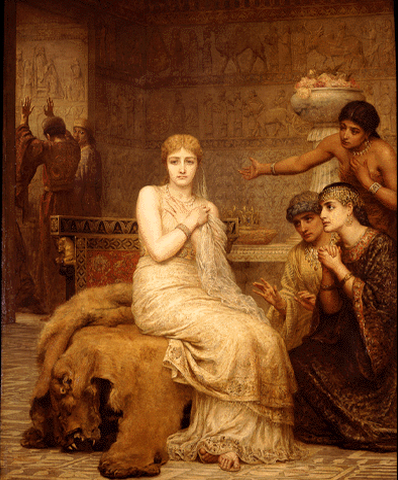
Editor’s Note: This week we celebrated Purim, a Jewish holiday that commemorates Queen Esther (5th c. B.C.E.) saving Persian Jews from genocide. Esther’s rise to power, however, was problematic. Her predecessor, Queen Vashti, was summoned to appear in her crown, ordered to display her beauty before the king and his nobles. The implication, according to many scholars, is that Queen Vashti was ordered to appear wearing only her crown. She refused, and it was suggested that she should be de-throned and replaced by a “worthier woman” so that “all wives [would] henceforth bow to the authority of their husbands, high and low alike” (Esther 1:19-20).

And there’s your daily dose of female oppression, Bible style.

"Vashti Refuses the King's Summons" by Edwin Long (1879). Public Domain image.
“Vashti Refuses the King’s Summons” by Edwin Long (1879). Public Domain image.


A search began for beautiful young virgins. Those who made the cut were subjected to twelve months of beauty treatments before the king would even deign to lay eyes on them. The hopefuls then appeared before the king, who did not see any of them ever again “unless he was particularly pleased by her” (Esther 2:12-14). King Xerxes liked Esther best of all the young virgins displayed before him, and crowned her queen in Vashti’s stead. Plot twist: the king did not know that Esther was Jewish, for she had deliberately kept that fact from him. In the end Esther was able to use her beauty to bend the king to her will, and when one of his henchmen sought to have all the Jews in the kingdom annihilated, Esther stood up for her people and they were spared.

While it is this end-result that is remembered and celebrated each year at Purim, it is Esther’s degrading rise to the throne—and what it cost her to to save her people—that is the subject of today’s poem.

To come to power, Esther had to take the rightful queen’s place and become the poster child for the idea that “all wives [should] bow to the authority of their husbands.” To catch the king’s eye she had to strip away her personhood until nothing was left but her physical beauty. “That blush on my cheek? / It’s paint, / And I have glittered my eyes / And robed myself in the finery / of silk and gossamer, / lapis and gold.” It was not her devotion to her people that allowed her to save them, but that she “whored [her]self for [their] salvation.” Nor did her people care who she was beneath her beauty, or whether she survived her attempt to save them: “You asked for no thoughts. / You merely offered my body / to the king– / My life forfeit / If my beauty failed.”

"Queen Esther" by Edwin Long (1878). Public Domain image.
“Queen Esther” by Edwin Long (1878). Public Domain image.


Queen Esther was a pawn in men’s games, as women of history have too often been. “Diplomacy was played on the field of my body, / The battle won in the curve of my hip.” She used her beauty and her sexual allure because, as a woman of her time and place, they were the only instruments of power available to her. But if she were given a voice, she might speak of inner conflict. She might tell us what it feels like to lack the ability to either refuse or consent. Queen Esther was a hero, but what did it cost her to package and sell herself in the name of the greater good? “That blush on my cheeks? / It is the stain of victory / And of my shame.”

Today’s poem does what all great feminist biblical interpretation and midrashot do: it examines, deconstructs, and reconstructs androcentric assumptions, biases, and perspectives in biblical literature, placing women, gender, and sexuality at the center of reinterpretation.

In a time when the Bible is still being used to justify the oppression of women, we need much more of the important work Stacey Zisook Robinson is doing with “The Book of Esther.”

Want more from Stacey Zisook Robinson?
Stacey Zisook Robinson’s Blog
Stacey Zisook Robinson’s Official Website
Personal Essays and Opinion Pieces on iPinion
ReformJudaism.org

SATURDAY POETRY SERIES PRESENTS: DECENCY


Decency


From DECENCY
By Marcela Sulak:


selections from SOLIDARITY

vi. Virginity

It’s not that you get tired, it’s that it starts to be the only thing,
starts to disappear you.

Your parents phone you at college to ask: how is your virginity
doing? Did your virginity have a good day?

What does it want to be when it grows up? Your virginity sounds
a little sad this morning. What kind of cake does your virginity want

for its birthday? your girlfriends saw the most amazing shoes
that your virginity would look terrific in!

Want to go shopping? your boyfriends—would your virginity like to see
a movie? What about dinner?


ix. witches

My daughter is named for my grandmother, a midwife
who attended the births of 90 babies in rural Texas

before they had cars and after they finished having witches
but before there were doctors. Now you may understand

what I mean when I say another woman
gave my daughter a book called “The witches and the rabbi”

for her birthday. Here is the plot: a village is terrorized by a plague
of witches who fly from their cave when the moon is full,

on brooms through the sky except when it’s raining. I’m not sure
what the witches actually do to the village, since no one

actually goes outside on those nights. Gary, Indiana, could use
an infestation of witches—no stabbings

or gunshot wounds on evenings of full moons.
But one full moon when it is raining the rabbi shows up

with twenty townsmen. The witches
are so delighted they make them a feast of all the good things

they have. The rabbi tricks them into dancing with him and
the vigilante men, out into the rain,

which kills them. I knew her father’s mother was secretly
glad when I started to hemorrhage. She didn’t want me

to have a homebirth with a midwife.
“What kind of rabbis are these?”

Says my rabbi, stopped by for a quick hello. My daughter
wanted to show him that we had a book about rabbis. “They’re

engaging the poor witches
in mixed dancing and leading them astray,” he says.

This is the broom which sweeps the sky of the stars you have
to be too drunk to write about, as Daisy put it.

This is the housework the princesses do disguised
as village maidens. These are the constellations that form

in the shadow of the stars.
Silent are the women in the village

who took their cloth packets of herbs and were silent
when their husbands rushed off to kill the witches in that story.


CHOCOLATE

The day I won the custody case my lawyer gave me a bitter chocolate
in black and silver paper. Once I saw cacao pods
drying in a Venezuelan village square

during Easter week; through the open church doors, peeling saints sniffed
        and were carried
like colicky children through night streets. The local hot chocolate
was thickened with cornmeal and canella bark

somebody tore from the trees. To reach that village we found a fisherman,
        plowed
through rows of porpoises, then hiked five kilometers
inland through banana and cocoa trees,

which like shade. Once only men could drink
chocolate. Women were permitted cacao beans as currency,
to buy meat or slaves or pay tribute. It feels good to imagine a single seed,

hidden in the forbidden mouth, the tongue
curled, gathering the strength to push. The Aztec king discarded
each gold-hammered cup after its initial use; his chocolate was red as fresh
        blood.

He was a god to them. It was frothy,
poured from great heights. When we bathed in the village river, girls
gathered around me, whispering, why is your skin so pale? Why is your
        hair so straight?

Can we braid it? Dime, eres blanca?
The judge, our lawyers, her father, and I decided the fate
of my child. The dark liquid we poured was ink, initialing our little
        negotiations.

Who can know the heart of another, the blood
spiced with memory, poured from one generation to the next
over great distances? The Mayan word for chocolate means bitter. The
        village

used to be a plantation; now it is a co-operative, owned by descendants
of the former slaves. At Easter Vigil the women lined up
behind the most beautiful, in a long sky

-blue dress adorned with gold stars. Between the decades of the rosary she
        called out,
while we shuffled our feet in merengue beat, bearing the saints
through the streets, someone shot off a Roman

candle. The men’s procession paused for rum. I know I’ll be paying for it
        the rest
of my life. The Mayan word means bitter water. The cacao
tree was uprooted from paradise.


HOW TO USE A NAPKIN

Understand the napkin
has been unnecessary
for most of human history.

Understand the world is filled with people
eager to bend
things to their will.
We shall practice on the napkin.
When you have finished eating
place your napkin loosely
next to your plate
.

It should not be crumpled or twisted,
which would reveal untidiness or nervousness;
nor should it be folded,

which might be seen as an implication
that you think your hosts
might reuse it without washing
.
.
It is a delicate affair.
Don’t argue with me
said my husband

who had called for my advice
about the apartment he was renting
when he didn’t want to live with me.

It is largely
symbolic today
except for barbecues.
Lightly dab the lips.

I suspect the word
argue is the space
in the mouth for things
to come apart in.

The napkin must not be left
on the chair, it might seem
as if you have an inappropriately

dirty napkin to hide
or even that you are trying
to run off with the table linens.

It takes great trust
to use a napkin.
It takes an act
of faith to leave
the table.


Today’s poems are from Decency (Black Lawrence Press, 2015), copyright © 2015 by Marcela Sulak, and appear here today with permission from the poet.


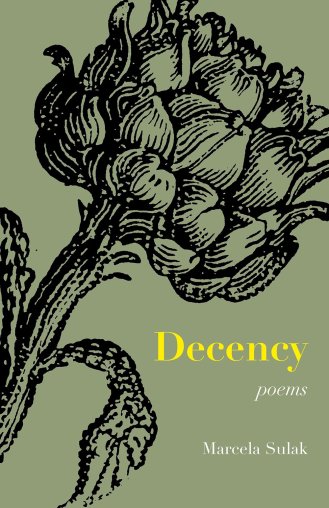
Decency: Poetry. Jewish Studies. Women’s Studies. Decency celebrates the spunky wenches, the unfortunate queens, the complicated translators, the wistful wives who have been hustled off the spotlit stages of history. Through the lens of Victorian manuals of etiquette, through the unfolding of religion from the Middle East to the American Southwest, Decency thinks through the brutal things we do to one another, recording the ways the individual operates in relation to society’s mores and harms. From the Sumerian queen Puabi to contemporary female recruits to the Israeli intelligence’s “Honeytrap” operation, Decency is a mix of the documentary and the lyrical, the wrathful and the joyful.


Marcela Sulak‘s poetry collections include Decency (2015) and Immigrant (2010), both with Black Lawrence Press. She’s translated four collections of poetry from the Czech and French, and, most recently, the Hebrew: Orit Gidali’s Selected Poems: Twenty Girls to Envy Me (University of Texas Press, July 2016). She’s co-edited the 2015 Rose Metal Press title Family Resemblance: An Anthology and Exploration of 8 Hybrid Literary Genres. Sulak directs the Shaindy Rudoff Graduate Program in Creative Writing at Bar-Ilan University. ​​


Editor’s Note: If there is a question driving the poems in Marcela Sulak’s sophomore collection, it is a question of the ways in which we are and are not decent to one another. As individuals and as countries. As intimates and strangers. Both within and across the (real or artificial) divides of race, creed, culture, and nationality. Sulak pursues the answers to this question with the keen eye of an academic and a researcher, then relays her observations and discoveries with the skilled and deliberate abandon of an artist. These questions of decency are considered and depicted through the lenses of history, relationship, and etiquette. The result is a brave yet dainty collection. A powerful yet vulnerable collage. A work that charms the reader with its quaintness so that its harsh truths and difficult revelations go down like chocolate–bitter yet sweet, delicate yet bold.

Among the many long poems in this collection is one that stopped me in my tracks when I heard the poet read it aloud at the book’s New York launch last year. “Solidarity” is a stunning inquiry into rape–its ramifications and its afterlife and the endless experiences that collide with sexual violence in concentric circles. Today, for example, are Sulak’s reflections on misogyny and witch hunts, virginity and agency. Of virginity she writes, “It’s not that you get tired, it’s that it starts to be the only thing, / starts to disappear you.” Determined that her daughter know the truth about the history of hysteria, misogyny, and women healers, she considers witches through the skewed twin lenses of history and scaremongering: “Silent are the women in the village // who took their cloth packets of herbs and were silent / when their husbands rushed off to kill the witches in that story.” If I could have, I would have reprinted this long poem in its entirety. But then, you really ought to buy the book so that you can read this breathtaking work for yourself.

Throughout this masterful collection the poet’s own experiences are coupled with the larger lenses of the book–history and etiquette, for example–so that what is gleaned by the reader is at once deeply personal and delightfully educational. “The day I won the custody case my lawyer gave me a bitter chocolate,” Sulak writes of her unique experience, then later, in the same poem, writes of the history of chocolate: “Once only men could drink / chocolate. Women were permitted cacao beans as currency, / to buy meat or slaves or pay tribute.” Yet these ideas are not disparate; they are finely woven together by the poet’s skilled hand. The genius of this interrelation is beautifully evidenced by moments like this, in a poem that appears to be about the history of the napkin, but is equally about the poet’s leaving her husband: “It takes great trust / to use a napkin. / It takes an act / of faith to leave / the table.” The art of the poem–like the collection that houses it–is enriched beyond experience and information by a powerful lyric: “It feels good to imagine a single seed, // hidden in the forbidden mouth, the tongue / curled, gathering the strength to push.”


Want to see more from Marcela Sulak?
Marcela Sulak Official Website
“Jerusalem” in the Cortland Review
Decency” and “Raspberry” in Haaretz
Buy Decency from Black Lawrence Press, Book Depository, or Amazon