SATURDAY POETRY SERIES PRESENTS: LEAH UMANSKY

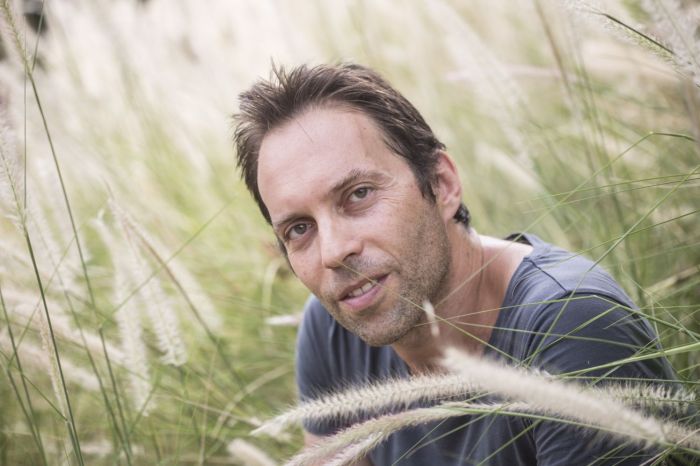
img_20170114_214625_974


By Leah Umansky:


HARD

It is hard to quiet the blackberrying pain.
The little chronicles, the streaks, and the intimate workings.

I will face this by red-winging my truths.
I will push my blues into orchids.


BALLAD

I decided to claim more space
         But I chose the opposite
What are the words I would go to: hunger// longing// love
         When you feel drawn to something you should.
Whatever your terrible is is up to you.
         The question is how you lead.
I lead myself to distress; I lead myself to happiness.
         This is the history of our times.
I claw my way to the surface.
         I get a hold of this world with my teeth
& wolf down what I thirst for.
         How do I take the I out of here?
(why should I take the I out?)

*

I am always hungry
         I am always thinking of my next meal
         Is it the preemie in me?
Is it just the want?

*

We all have our oddities.
         I am always trying to be practical, logical, rational,
but it doesn’t always add up.
         There is so much of my life that I am forever holding under the light.
What falls below the seam?
         What falls outside of this poem?

*

I want to put the happy in.
         I want to put the hard world in.
I want to say this is a ballad, and so it is.
         Let’s enter it differently.
Any mammal feeds a hunger
         Any heart needs oxygen.


CARNAGE

Everyone is saying no to me
Just as they do now
Just as they will
A kind of civil riot
A staged parade
It makes every kind of sense
That carnage that comes with falling hard,
That carnage that hassles and times,
That carnage that language picks up;
I am wanting to be picked up.
It is rarely an accident.
Elements are employed
Pounds are ranged
The number of possible routes are lost
All to force my foot door to door
To match the heart of my drive to
Coffee after coffee after coffee.
Take me as a whole,
Take these birds outside my window
Alive with the world’s chirp
Alive with the everyday thrill of
Worm or bug or crumb. Take them,
Then remember my thrills.
Everyone is saying no to me,
And I am flummoxed each time
I ask for more; or try for more.
I strive and I strive.
That’s the 21st century calling.
It’s doable. I travel great lengths
So I can match the heart
With the focus of each and every obstacle.
Can there be a rallying point?
This is not an accident.

(Is that what I should be learning here?)

Well, isn’t that magnificent.


“Hard” originally appeared in Thrush, “Ballad” originally appeared in The Inquisitive Eater, and “Carnage” originally appeared in Queen Mob’s. These poems appear here today with permission from the poet.


Leah Umansky is the author of the poetry collection, The Barbarous Century, forthcoming from London’s Eyewear Publishing in 2018, the dystopian-themed chapbook Straight Away the Emptied World (Kattywompus Press, 2016), the Mad Men–inspired chapbook Don Dreams and I Dream (Kattywompus Press, 2014), and the full length Domestic Uncertainties (BlazeVOX, 2012). She is a graduate of the MFA Program in Poetry at Sarah Lawrence College and teaches middle and high school English in New York City. More at www.LeahUmansky.com.

Editor’s Note: It seems I can’t read (or write) anything these days without seeing it through the lens of politics. Least of all poetry. Today’s poems — at once political and private — may or may not have been crafted to address the current moment. And yet they can be read as a direct address and used, accordingly, as a salve. What can we do, we ask? “I will face this by red-winging my truths,” says the poet; “I will push my blues into orchids.” Even in an ars poetica the poet’s words can function as a mirror: “The question is how you lead. / I lead myself to distress; I lead myself to happiness. / This is the history of our times.” No matter their intent, today’s poems are in the world now, speaking to us as they will. They might incite action or nurse wounds or take stalk of our humanity. “Take me as a whole,” they say, “Take these birds outside my window / Alive with the world’s chirp / Alive with the everyday thrill of / Worm or bug or crumb.”

Want more from Leah Umansky?
Border Crossing
Poetry Magazine
Jet Fuel
Minola Review
Quotidian Bee

SATURDAY POETRY SERIES PRESENTS: THE NEW COLOSSUS

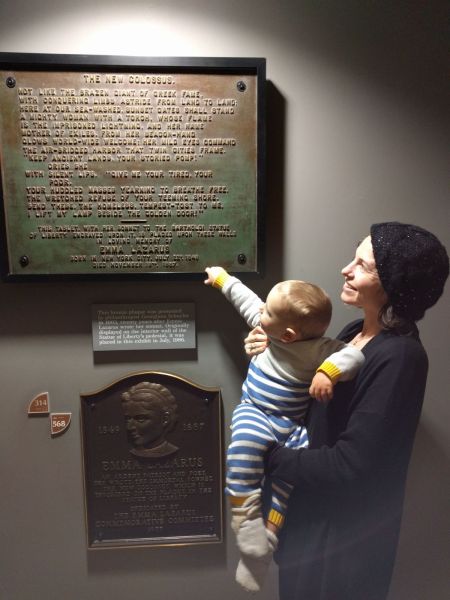
Yours faithful editor, with 14-month-old son in tow, visiting “The New Colossus” at the Statue of Liberty Museum, Liberty Island, NY

THE NEW COLOSSUS
By Emma Lazarus

Not like the brazen giant of Greek fame,
With conquering limbs astride from land to land;
Here at our sea-washed, sunset gates shall stand
A mighty woman with a torch, whose flame
Is the imprisoned lightning, and her name
Mother of Exiles. From her beacon-hand
Glows world-wide welcome; her mild eyes command
The air-bridged harbor that twin cities frame.
“Keep, ancient lands, your storied pomp!” cries she
With silent lips. “Give me your tired, your poor,
Your huddled masses yearning to breathe free,
The wretched refuse of your teeming shore.
Send these, the homeless, tempest-tost to me,
I lift my lamp beside the golden door!”


(Today’s poem is in the public domain, belongs to the masses, and appears here today accordingly.)


The New Colossus: “In 1883, a young writer, Emma Lazarus, donated a poem to an auction raising funds for the pedestal of the Statue of Liberty. ‘The New Colossus’ vividly depicted the Statue of Liberty as offering refuge from the miseries of Europe. The sonnet received little attention at the time, but in 1903 was engraved on a bronze plaque and affixed to the base of the Statue. Still, it was only in the late 1930’s, when millions fled fascism, that the poem became fully identified with the Statue.

“Between 1886 and 1924, 14 million immigrants entered America through New York. The Statue of Liberty was a reassuring sign that they had arrived in the land of their dreams. To these anxious newcomers, the Statue’s uplifted torch did not suggest ‘enlightenment,’ as her creators intended, but rather, ‘welcome.’ Over time, the Statue of Liberty emerged as Emma Lazarus’ ‘Mother of Exiles,’ a symbol of hope to generations of immigrants.”

— “Mother of Exiles” historical marker, Statute of Liberty Museum, Liberty Island, NY

Editor’s Note: Forget the wall. Lift the ban. Let Lady Liberty’s torch, once again, be a beacon of welcome. You want to make America great again?

Give me your tired, your poor, your huddled masses yearning to breathe free. Give me your tired, your poor, your huddled masses yearning to breathe free. Give me your tired, your poor, your huddled masses yearning to breathe free. Give me your tired, your poor, your huddled masses yearning to breathe free. Give me your tired, your poor, your huddled masses yearning to breathe free. Give me your tired, your poor, your huddled masses yearning to breathe free. Give me your tired, your poor, your huddled masses yearning to breathe free. Give me your tired, your poor, your huddled masses yearning to breathe free. Give me your tired, your poor, your huddled masses yearning to breathe free. Give me your tired, your poor, your huddled masses yearning to breathe free. Give me your tired, your poor, your huddled masses yearning to breathe free. Give me your tired, your poor, your huddled masses yearning to breathe free. Give me your tired, your poor, your huddled masses yearning to breathe free. Give me your tired, your poor, your huddled masses yearning to breathe free. Give me your tired, your poor, your huddled masses yearning to breathe free. Give me your tired, your poor, your huddled masses yearning to breathe free. Give me your tired, your poor, your huddled masses yearning to breathe free. Give me your tired, your poor, your huddled masses yearning to breathe free. Give me your tired, your poor, your huddled masses yearning to breathe free. Give me your tired, your poor, your huddled masses yearning to breathe free. Give me your tired, your poor, your huddled masses yearning to breathe free. Give me your tired, your poor, your huddled masses yearning to breathe free. Give me your tired, your poor, your huddled masses yearning to breathe free. Give me your tired, your poor, your huddled masses yearning to breathe free. Give me your tired, your poor, your huddled masses yearning to breathe free. Give me your tired, your poor, your huddled masses yearning to breathe free. Give me your tired, your poor, your huddled masses yearning to breathe free. Give me your tired, your poor, your huddled masses yearning to breathe free. Give me your tired, your poor, your huddled masses yearning to breathe free. Give me your tired, your poor, your huddled masses yearning to breathe free. Give me your tired, your poor, your huddled masses yearning to breathe free. Give me your tired, your poor, your huddled masses yearning to breathe free. Give me your tired, your poor, your huddled masses yearning to breathe free. Give me your tired, your poor, your huddled masses yearning to breathe free. Give me your tired, your poor, your huddled masses yearning to breathe free. Give me your tired, your poor, your huddled masses yearning to breathe free. Give me your tired, your poor, your huddled masses yearning to breathe free. Give me your tired, your poor, your huddled masses yearning to breathe free. Give me your tired, your poor, your huddled masses yearning to breathe free. Give me your tired, your poor, your huddled masses yearning to breathe free. Give me your tired, your poor, your huddled masses yearning to breathe free. Give me your tired, your poor, your huddled masses yearning to breathe free. Give me your tired, your poor, your huddled masses yearning to breathe free. Give me your tired, your poor, your huddled masses yearning to breathe free. Give me your tired, your poor, your huddled masses yearning to breathe free. Give me your tired, your poor, your huddled masses yearning to breathe free. Give me your tired, your poor, your huddled masses yearning to breathe free. Give me your tired, your poor, your huddled masses yearning to breathe free. Give me your tired, your poor, your huddled masses yearning to breathe free. Give me your tired, your poor, your huddled masses yearning to breathe free. Give me your tired, your poor, your huddled masses yearning to breathe free. Give me your tired, your poor, your huddled masses yearning to breathe free. Give me your tired, your poor, your huddled masses yearning to breathe free. Give me your tired, your poor, your huddled masses yearning to breathe free.

SATURDAY POETRY SERIES PRESENTS: “LET THEM NOT SAY” BY JANE HIRSHFIELD – A POEM OF SOLIDARITY & PROTEST

4764673605_4e929c953f_b


from LET THEM NOT SAY
By Jane Hirschfield:

Let them not say: we did not see it.
We saw.

Let them not say: we did not hear it.
We heard.

Let them not say: it was not spoken, not written.
We spoke,
we witnessed with voices and hands.


READ THE FULL POEM HERE and LISTEN HERE:


Today’s poem originally appeared via The Academy of American Poets Poem-a-Day series.


Poet’s Note: “This poem was written well before [the 2017] Presidential Inauguration and without this event in mind. But it seems a day worth remembering the fate of our shared planet and all its beings, human and beyond.” —Jane Hirshfield, via The Academy of American Poets

Editor’s Note: Today I defer to Jane Hirshfield and The Academy of American Poets. Listen to the poet read this important work of protest. Read the poem in its entirety.

Today’s poem is dedicated to those who are marching with the Million Woman March and those who stand with us in solidarity.

Think. Feel. Rise up. Resist.

SATURDAY POETRY SERIES PRESENTS: ALEX BEN-ARI

alex-ben-ari


I ASK FORGIVENESS
By Alex Ben-Ari
Translated by Vivan Eden


I ask forgiveness of all the poems
Born misshapen because of my desire to write them
I ask forgiveness of all the people
Whose lives were disrupted by my desire to influence
And of the world
For the superfluous things added to it
And those unnecessarily severed
Because of my lust for symmetry
And happy endings.

I ask forgiveness of my mother
For not knowing how to love her in her misery
Of my children
For the moments when I don’t want them
Of my wife for every time I was too small
To contain her love.

I am lighter than a falling leaf
I am softer than grass
Now a small bird could
Build its nest in me.


Today’s poem originally appeared in Haaretz and appears here today with permission from both the poet and translator.


Alex Ben-Ari is 43 years old. His debut volume of poetry, Concealed Seas (Yamim Samuiim), was awarded honorable mention at the 2008 Metulla Poetry Festival and the 2015 Helicon/Ramy Ditzanny Poetry Prize. His second book, The Gatepost (Korat Hasha’ar), published in 2015, is composed of his original Hebrew haiku. His third book, planned to be published during 2017, is a volume of conceptual poetry.
Alex is one of the six members of the “Waning Moon” blog and publishing house dedicated to Haiku in Hebrew. He is also co-editor (with poets Gilad Meiri and Noa Shkargy) of Nanopoetica, a literary journal of short form literature.

Editor’s Note: Part personal, part pastoral, part ars poetica, today’s poem is emotive, honest, and raw. The poem’s I approaches the reader — and the page — seeking forgiveness. Free from false modesty, free from pride, the poem’s I is humble, admitting failings as poet and father, husband and son. The confessional, narrative nature of the poem is carefully constructed within the framework of the lyric, while the elegant, gentle translation midwives the essence of the poem as it crosses the borders of language. As the reader, we cannot help but be moved — to compassion, to transcendence, to forgiveness and beyond.

Want more from Alex Ben-Ari?
“Ripe Peach,” a poem from Concealed Seas (bi-lingual version)
Haiku poems from The Gatepost (bi-lingual)
Alex Ben-Ari’s official blog (Hebrew)
Ben-Ari lectures (in Hebrew) on music covers
Alex Ben-Ari on Twitter

“Unveiling Jean Cocteau” by Hélène Cardona

helenecardonalis1200px

Unveiling Jean Cocteau

I emerge from painted panels
astride a panther, rapacious illusionist
rippling through mist, a sensual robe.

The cardamom storm weaves stampeding
unicorns, perfumes clouds in cinnamon
quickening the skin,

unsettles the moon at the edge of the mind,
flings hail and sleet in great spears,
reminds me it’s a wild place we inhabit.

***

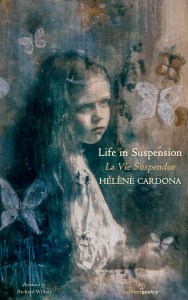
A citizen of the United States, France and Spain, Hélène Cardona is fluent in English, French, Spanish, German, Greek, and Italian. A poet, literary translator, actor, and dream analyst, Hélène is the recipient of numerous awards and honors, including a Hemingway Grant and the USA Best Book Award. Her books include three bilingual poetry collections, most recently Life in Suspension (Salmon Poetry, 2016) and Dreaming My Animal Selves (Salmon Poetry, 2013), and two translations, Beyond Elsewhere (by Gabriel Arnou-Laujeac, White Pine Press, 2016) and Ce que nous portons (by Dorianne Laux, Éditions du Cygne, 2014). With Yves Lambrecht she co-tranlsated Walt Whitman’s Civil War Writings for WhitmanWeb.

[The above poem appears in Life in Suspension and is reprinted here with permission of the author.]

SATURDAY POETRY SERIES PRESENTS: SUFGANIYOT BY RABBI RACHEL BARENBLAT

A version of this post was previously featured on the Saturday Poetry Series.

Sufganiyot homemade by your favorite Saturday Poetry Series editor
Homemade sufganiyot from the kitchen of your favorite Saturday Poetry Series editor


SUFGANIYOT
By Rabbi Rachel Barenblat

In oil, pale circles roll and flip,
doughy moons inflating.

The fun part: poking a finger
inside, giving a wiggle and twist,
pushing a dollop of jam
knuckle-deep, then two, ’til
the cavity gleams raspberry.

Latkes are pedestrian.
These puff like a breath held.

There, and here,
a million women finger
these cupped curves,
probe the soft center,
push the sticky treat inside.

We glance at each other, faces hot.
We lick the sweet from our hands.


(Today’s poem originally appeared in Zeek and was reprinted on the Saturday Poetry Series with permission from the poet.)


Rabbi Rachel Barenblat, named in 2016 by the Forward as one of America’s Most Inspiring Rabbis, was ordained by ALEPH: Alliance for Jewish Renewal as a rabbi in 2011 and as a mashpi’ah ruchanit (spiritual director) in 2012, and now serves as co-chair, with Rabbi David Evan Markus, of ALEPH. She holds a BA in religion from Williams College and an MFA in Writing and Literature from the Bennington Writing Seminars. She is author of four book-length collections of poetry: 70 faces: Torah poems (Phoenicia Publishing, 2011), Waiting to Unfold (Phoenicia, 2013),Toward Sinai: Omer poems (Velveteen Rabbi, 2016) and Open My Lips (Ben Yehuda Press, 2016), as well as several poetry chapbooks.

Editor’s Note: Each year for Hanukkah I make sufganiyot. Measuring out the ingredients from my mother’s recipe, I will myself to have the patience necessary to wait for yeast to rise. I knead the dough with equal parts pressure and love then apply more patience, more waiting, before rolling and cutting “pale circles,” transforming them in oil into “doughy moons inflating.” Each year I make sufganiyot, and each year when I do, I think of this poem. It has been four years since I first featured this poem on the Saturday Poetry Series, and it has been with me each year since, an indelible part of my Hanukkah tradition.

As sensual as this poem is — as hot — it is very much a poem about tradition, about ritual, and about the coming together of women. For it is women who have traditionally ruled the domain of the Jewish kitchen, and women who, year in and year out since time immemorial, have applied their pressure and patience, their love and their care, to wright the delicious sustenance that is Jewish holiday food. And what, really, brings us together in our rituals and traditions more than food?

Each year as my best friend and I make our sufganiyot together, my mother makes the same recipe 2,500 miles away. Meanwhile, women all over the world are doing the same: “There, and here, / a million women finger / these cupped curves.” Each year, today’s poem reminds me of that disparate togetherness of women. This year I reprint this poem in honor of the women all over the world who do the work necessary to make the holiday season what it is.

May this season of light be a beacon in the darkness, and may the new year be better than the last.

Want to read more by and about Rabbi Rachel Barenblat?
The Velveteen Rabbi – Rabbi Rachel Barenblat’s Official Website

Kelly Cherry: Three Poems and an Interview

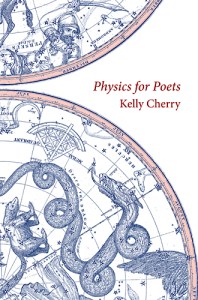
cherry-physics-for-poets-large

[The following poems appear in the limited edition hardback chapbook, Physics for Poets (Unicorn Press 2016), and are reprinted with permission of the author publisher. The interview was initially published in Inside Higher Ed.]

***

DNA

We scale a winding staircase
or swinging ladder like Jacob’s
in the Bible as if we might
ascend to eternity,

a state in which we’ll be
bionic and brainier,
with silicon chips. We’ll be
a new species: Homo

Wikipediens,
our minds digitalized,
able to access all
information and

we’ll persist forever,
or anyhow, not be dead,
not quite, though without
time, it must be said,

we also won’t be alive.
Yes, if you’re nostalgic
you may seek to disembark
from evolution, but

first, ask yourself whether
your child and spouse deserve
protection from disease,
death, and accident,

or can you let them go,
unique as they are,
irreplaceable,
into a place darker

than shadow?

***

SETI

Radio telescopes like massive elephant ears,
pricked to catch the least word or code
whispered across the universe, listening
in on the steady murmur of deep space, muffled
as if underwater. Do we hear the clash
of civilizations, formerly great nations
battling others for land, water, oil?
Oh wait—that’s Earth. Surely in outer space
we’ll find a species superior to our own.
Surely such beings are even now texting
urgent messages to us: We want
nothing to do with you. Humans, stay home.

***

Everything Lifted Off from the Earth

Everything lifted off from the earth.
Trees rose into the clouds, their roots trailing like bridal trains.
Buildings drifted starward.
A stampede of palominos flashed across the sky.

Then the people let go of whatever had held them back
and rose up, some slowly, some faster,
so that it was not unusual to pass or be passed by a friend or enemy,
but conversation confined itself to pleasantries.

The planet itself moved off its orbit, and many were afraid
that it might roll after them and knock them down like bowling pins,
but it dropped away in the opposite direction, becoming ever smaller,
a tumbleweed, a softball,

and the people kept leapfrogging into space
as if they were headed for heaven.

***

An Embarrassment of Riches

Kelly Cherry is the author of more than twenty-five books and chapbooks—including novels, story collections, nonfiction (essays, memoir, and criticism), translations, and eight full-length collections of poetry. For her short fiction, she has been included in Best American Short Stories, New Stories from the South, and has received an O. Henry Award, a Pushcart Prize, and has won the PEN/Syndicated Fiction Prize three times. Her poetry has been widely anthologized and has earned her the James G. Hanes Poetry Prize and a position as the Poet Laureate of Virginia. Despite this impressive list of publications and awards, and for reasons I don’t fully comprehend, her recognition has not reached the level of, for example, Margaret Atwood (to mention another woman writer of her generation who also writes in every genre, is likewise prolific, and who ranks among my favorite writers). Obviously, Cherry is well appreciated and has many avid fans, but as one of those fans, I can never quite forgive the world for not offering her even more acclaim and readers.

I first encountered Cherry’s work while I was an undergrad, sometime in 2001, if memory serves. I was living in North Carolina at the time and reading Fred Chappell and David R. Slavitt with something like an obsessive’s necessity. Being the spunky kid I was, I approached Chappell and Slavitt to do interviews with them, and both were kind enough to accept my request. Those encounters led to future professional interactions with both and a lasting friendship with Slavitt. It also led to both men separately suggesting that I read Kelly Cherry. I went to the university bookstore and found The New Pleiade: Seven American Poets, which included Chappell, Cherry, and Slavitt, as well as R.H.W. Dillard, Brendan Galvin, George Garrett, and Henry Taylor. These seven writers had been friends for years, shared certain writerly predilections, and were all authors at LSU Press (which put out the anthology).

I was immediately struck by Cherry’s poems, which I loved, but I was also struck by certain personal affinities she and I shared. (I am, I must admit, that sort of reader who is always trying to find myself in the work and lives of the authors I admire.) At the time, I was nearing completion of my BA in philosophy and German, and so I was pleased to learn that Cherry had done graduate work in philosophy at the University of Virginia. And her interests include more than philosophy, ranging from Russian literature to Latin American politics to scientific research and more. And here again, I was struck by our overlap in interests, given that I have traveled to Russia out of an abiding interest in Russian literature, spent months in Latin America studying the language and culture, and was a physics major when I first entered college. Without lingering too much on these similarities of interest, suffice it to say that I began reading her work with an eagerness that has been richly rewarded.

Kelly Cherry has published with big NYC presses as well as prestigious university and small presses, and she has had a glorious career by any sane measure—awards, teaching gigs at top universities, grants and writers’ residencies, and so forth. Her career is one most writers will never approach. If anything, Cherry suffers an embarrassment of riches. Had she published only books of poetry, I think she would be more lauded as a poet than she is today; had she published only short story collections and novels, she would be more lauded as a fiction writer than she is today; had she resisted the urge to write critical essays and to do translations, her creative work would get more attention; and so on. The issue here is not, I think, that she should have limited her intellectual and creative energies in such an unnatural way, but rather that the literary and academic worlds need to adapt themselves to her model—not she to theirs.

I hope you enjoy reading the following interview as much as I enjoyed conducting it, and I also hope that if you haven’t yet explored Cherry’s work, you will now.

***

Okla Elliott: You’re hard to pigeonhole as a writer, given that you’ve done fiction (both long and short), nonfiction (both creative and critical), poetry (both formalist and free verse), and translations. In what ways have each of these various enterprises informed the others? Do you think of yourself as having a dominant or primary genre, or do they all have an equal draw for you?

Kelly Cherry: I think of the genres as concentric circles, with poetry at the center. None is more important than the others, but poetry is the focal point, the heart. I’m also on record as saying that poetry reveals the actual world, fiction reveals the world of relationship, and nonfiction reveals the perceiving mind. And I’ve also said that the poem is about the line, the short story about the sentence, the essay about the paragraph, and the novel about the scene. These formulations are useful to me and I’m happy to offer them to students, but of course each of the genres differs from the others only in degree, and there are plenty of writers who delight in working at the borders. Yet emphasizing the differences makes transitioning from one to another easier for me.

I really love working in all these genres; I stay busy.

OE: Your poem “Lt. Col. Valentina Vladimirovna Tereshkova” brings together two currents I’ve found in your work—the Soviet Union (and/or Russia) and science. You have written variously on these topics, ranging from poems about Einstein to a science expedition in Siberia (once again merging the two currents) to a story about an American woman in love with a Latvian man (back when Latvia was part of the Soviet Union), and other works as well, such as the chapbook Songs for a Soviet Composer. Why and how do these two themes intertwine for you? Why the fascination with them, either together or separately?

KC: I did meet a Latvian man—in Moscow to hear rehearsals of a symphony he’d composed—and we tried to get married. (I should mention that the story you refer to, “Where the Winged Horses Take off into the Wild Blue Yonder From,” which is now in The Woman Who [Boson Books, 2010] is not autobiographical; much in it has been changed or reimagined.) In 1965 nobody took us seriously; in 1975 they had us under surveillance, threatened him, woke me in the middle of the night with intimidating phone calls. This narrative can be found in my memoir The Exiled Heart (LSU, 1991). I was in Moscow in the first place because I love Russian literature. I wanted to see where my favorite writers lived and the people and places about which they had written. I had no fondness for the Soviet Union and was philosophically opposed to Communism; that just happened to be where the country was at that time.

Similarly, I’ve always been interested in science and in college took quite a number of courses in science and math. Sputnik went up and my parents developed the idea that I should become a scientist. That didn’t work out; I already knew I wanted to study philosophy and write, but I gave my parents’ notion a shot. Of course, I was interested in science the way writers are interested in pretty much anything: as something to write about. Sometimes I think those first three years of college were a complete and sad waste of time: I wasn’t learning anything I really wanted to learn. Sometimes I think that’s just as well: If I didn’t learn much about science and math, I learned to appreciate the methods and accomplishments of science and math, and that has meant a lot to me.

Currently I am working on two poetry manuscripts, one a book-length poem about a scientist, the other a collection of shorter poems about math and science.

OE: You mentioned philosophy as an early interest, and I know you studied philosophy at the graduate level and have written a collection of poems, The Retreats of Thought, where you think through various philosophical problems in the sonnet form. In what ways do you see philosophy and literature interacting—in general and in your own work? And which philosophers have most influenced your thinking and writing?

KC: I don’t think anyone’s ever before asked me exactly this, Okla, and I’m delighted you’ve brought it up.

The philosophers who probably influenced me most were David Hume and Charles Sanders Peirce. I was doing research for a dissertation on Peirce’s epistemology when I dropped out of the program (not for academic reasons). Hume was a wonderful writer and clear thinker. I found Peirce’s ideas of firstness, secondness, and thirdness fruitful and useful and admired his views on scientific method. I did not read Peirce as a semiotician, as I understand literature teachers often do, though I do like some of his formulations about the nature of language.

Another influence was Augustine. Not because of his religion but because his Confessions, when I came to write The Exiled Heart, struck me as the perfect model of a memoir. I also found his thinking about time fascinating, as reflected in two of the sonnets in The Retreats of Thought.

It is harder for me to explain how I see “philosophy and literature interacting,” because I have always seen them as interacting. I like novels of ideas. I’m partial to German and Russian literature, despite loving many books neither German nor Russian, because they discuss ideas. The American dread of boredom seems to me to stem from a fear of thinking. (Thank god for Moby-Dick.) The novel I most would like to have written is The Magic Mountain, unless it is War and Peace or The Brothers Karamazov or Crime and Punishment. Or an ancient Greek tragedy!

In any case, philosophy seems to me inherent in life, inescapable. Every day one makes dozens of decisions, and the process of dealing with them is philosophy. My brother once told me the only question that interested him was How. I replied that the only question that interests me is Why. (Of course he then nodded with big-brother sagacity and male superiority and said that Why is a ridiculous question. And I suppose that from some points of view it can be a useless question, but that doesn’t make it any less interesting, at least not to me.) (You now have an idea of what kind of family I grew up in, and maybe it was that environment that made me want to study philosophy.)

To return to my brother, it was a book he gave me for my fourteenth birthday that made me want to major in philosophy. I confess I am no longer much interested in analytic philosophy. I had a fair amount of that in grad school and can appreciate the hold it has on some people, but writing sentences or lines all day long inclines me away from it.

Finally, so far as poetry goes, how can philosophy not be a part of it? Well, yes, I know some poets strive hard not to ask philosophical questions, but to the degree that they succeed, in my opinion, the poem fails.

OE: You’ve openly identified as a southern writer in essays and in interviews, yet you’ve written about (and/or lived in) the Midwest, Russia, Europe, England, The Philippines, and South America, in addition to working with traditionally southern themes. What does it mean for you to be a southern writer? What advantages or disadvantages do think that category has created for you?

KC: Of course I want my work to be gladly received everywhere. Who doesn’t want that? But I do admire the way Southern readers celebrate Southern writers. Southern readers are wonderfully and helpfully loyal to their writers. I admit I’m not especially Southern all things considered, but I am Southern in some specific ways. I was born in the South, spent part of my childhood in the Bible Belt, and my parents told stories about their families, who lived in the Deep South. I have a finished manuscript of short stories set in the South; I haven’t sent it out yet.

OE: You’ve published books with big NYC presses, university presses, and small presses—and you’ve done this over the course of a few decades now. How have you seen publishing change during your career? Which aspects are better and which are worse? (For example, what are your opinions about Kindles, online publishing, the proliferation of MFA and PhD programs in creative writing, etc?)

KC: Let’s see. I go where I have to go to get published. The dreadfulness of the contemporary publishing world dates back to the mid-sixties, but it was really around 1980 that corporate pressure drove the big houses into the smash or crash syndrome: books had to be hugely popular or were not worth promoting. Popular usually means less than serious, less than artistic. I know: lovers of genres will take issue with this, but I’m not denying that A Canticle for Leibowitz is a wonderful book. I’m saying that artistic merit is not what big publishers look for, nor can most big publishers today assess artistic merit, and certainly their sales divisions cannot. Nor can most big publishers even afford decent copy editors these days—or maybe they think grammar and punctuation don’t matter anymore. Now, I’m not dead against big houses—I wish one would take on my work and promote the hell out of it, because, like every writer, I would like more readers. But perhaps I know too much now: I know their promises are often empty, I know what matters to them is money, I know really excellent editors are rare and perhaps especially rare in a big-publishing environment hostile to the care and attention excellent editors want to provide.

The big publishing houses are primarily interested in young writers, but those young writers who fail to sell enough copies are then out on their collective ear. Is that any way to treat young talent?

University presses these days pretty consistently publish the best work. A majority of the writers I admire publish with them or with small publishers. I cherish the relationships I have with university presses.

Yes, I think MFA programs create certain problems, but I attended one and will always be grateful for the teachers who gave me time and interest and encouragement.

My husband has a Kindle and loves it. But he also reads real books. He reads whenever and wherever he can. I prefer holding a book in my hands but have no objection to somebody else’s preference for an eReader.

I don’t know what the future will be. I can’t guess at forthcoming technological advances. I do think we are in danger of a world in which every writer has to write, print, publish, promote, and maybe even write the reviews of his/her book. Just thinking about it exhausts me. As one friend has suggested, a serious, candid critic with a broad education who reads across big/small publishing lines might make a significant change in our culture. Let’s hope one such arises.

OE: There is constant debate over the best way(s) to become or improve oneself as a writer, with people variously championing or pooh-poohing MFAs and/or PhDs in creative writing. I, for example, have advised nearly every undergraduate writer I have taught to study abroad for a year and to take a wide range of classes from anthropology to philosophy to foreign literatures. What advice have you given or what advice would you give a young writer today?

KC: I second the advice you give to students, Okla. I also think students should know something about science and mathematics and history, and of course, they must be readers. Being a reader is more important than attending school, but it does help to attend school. I also encourage students to try their hand at different genres and forms and to make good friends who care about your writing, because there will be times when those friends will be lifesavers. And learn to revise. And learn to wait. Revising and waiting become easier as one ages.

OE: I know it is unfair to ask writers to assess their own work, but I am going to do it anyway. Which of your books do you think are your best and why? Also, a slightly different question: Which ones hold the nearest and dearest place in your heart?

KC: Like most writers, I think, I’m always most excited about what I am currently working on. I think my best fiction books are Augusta Played, In the Wink of an Eye, and We Can Still Be Friends (the title of which should have been either “American Minuet” or “Dancing with Ava Martel,” both of which were rejected by the editor). My favorites–because they were fun to write–are Augusta Played, In the Wink of an Eye, and The Society of Friends. Currently I have my completed story manuscript and am at work on the last story collection in my trilogy of story collections set in Madison, Wisconsin. A novel is in (slow) progress.

My best poetry books are probably God’s Loud Hand, Rising Venus, and The Retreats of Thought. But I think “Questions and Answers” in Natural Theology and “Requiem” in Death and Transfiguration are two of the best poems. Another collection is scheduled to appear in 2013 and two others are well underway. Right now those “two others” are my favorites (i.e., I am enjoying the process). The collection I most often read from these days is Hazard and Prospect: New and Selected Poems. In that book I assembled the poems according to theme and I’m glad I made that choice. But if I ever have a second opportunity to do a new and selected, I’ll construct the book chronologically, just to observe the difference. I think there would be a difference.

I feel fortunate and grateful to have had some of my nonfiction published in four books to date. I can’t really choose among those. The most recent was Girl in a Library: On Women Writers & the Writing Life. I am working on a nonfiction book about male writers (not to say that male and female writers are opposed but simply to carry through the structural composition). I have ideas for three more nonfiction books after that, but whether I can get to them remains to be seen.

The difficulty with this question is, of course, that time may change my response to it. But here, anyway, is how I assess my work at this particular point in my life.

SATURDAY POETRY SERIES PRESENTS: KELLY CRESSIO-MOELLER


Profile b/w scarf – aroho – Version 3


ON WHY I NO LONGER SIT AT THE WINDOW SEAT ON A TRAIN
By Kelly Cressio-Moeller


Germany was like a step-mother: utterly familiar, utterly despised. ~ Erica Jong


It’s a good day for a lie-down, overcast and
wet-wooled – even the rain wants to be horizontal.
I am day-dreaming of goose down when I
enter the train, scoot into an open seat,
press my cheek against the streaked window.
The station’s soothing voice announces,
Zurückbleiben bitte, someone runs in just before
the doors close, slams me against the side
of the compartment, takes a lungful of my air.
In an accent foreign as my own, he asks
my name, if I “want some fun” back
at his room. I buy time before the next stop,
tell him I’m “Whitney from America”
(anything but my real name in his mouth).
Now he locks his arm through mine and thick
fingers jab my ribs. His leg, an anchor –
his pocked face smirks like he’s already
notched his belt.

I imagine the defence move my brother
taught me where I smash my palm heel into
some asshole’s nose, shifting bone into brain.
(Where is my Siegfried in this country of the
“Nibelungenlied”. What would Kriemhild do?)
My eyes ransack the forest of businessmen,
cutpurses, hausfraus, the heroin chic: rows of
enameled faces, cow-dumb, indifferent as teeth.
Let the Ausländer fight it out!

Thigh-grab, elbow-jab, hand-slap – his broken
English splinters the air. Whitney Houston
in my head singing “I Will Always Love You” on
some godforsaken loop as I mentally run through
my list of German imperatives: Hilfe! Polizei!
Vergewaltigung! (a word that takes longer to say
than the act it defines). I backhand him across
the mouth, escape before the doors slam.
He’s waving (waving!) through the glass,
a blurry fat-lipped sneer retreating – the air
staccatoed with rasps of my breath. It begins
to hail marbles (even the gods are throwing stones),
feathers or lightening bolts would feel just the same.

Only later with candlelight und Butterkuchen,
do I re-surface to Vivaldi’s soaring strings on the radio.
I mention my morning combat-commute.
My host shrugs his shoulders before loading
the Meissen with another helping of Schadenfreude.
He says, Da muβ man durch : ‘one must go through it’ –
as if it were a tunnel, something to be run through.


** The line What shall I wish for myself? is a reworking Mary Oliver’s line What shall I wish for, for myself?

Today’s poem originally appeared online in Tinderbox Poetry Journal, Issue 1 and appears here today with permission from the poet.


Kelly Cressio-Moeller has new work forthcoming in Radar Poetry and has been previously published at Boxcar Poetry Review, burntdistrict, Crab Orchard Review, Gargoyle, Poet Lore, Southern Humanities Review, THRUSH Poetry Journal, Tinderbox Poetry Journal, Valparaiso Poetry Review, and ZYZZYVA among others. Her poems have been nominated for three Pushcart Prizes, Best New Poets, and Best of the Net. She is an Associate Editor at Glass Lyre Press. Visit her website at www.kellycressiomoeller.com.

Editor’s Note: During the dark days this November I delved into poetry as a kind of antidote, and in this way I arrived at today’s poem. Incredibly timely, it speaks to an experience that is all too common and far too marginalized. “I moved on her like a bitch,” America’s President-elect said, “I did try and fuck her,” he said, “Grab them by the pussy,” he said; “You can do anything.” And I thought, “anything but my real name in his mouth.” I thought, “even the gods are throwing stones.” I thought this poem. And those who have no idea what this poem is about, those who do not have to regularly question their safety, those who are unsympathetic to this experience– “one must go through it,” those people say. “[A]s if it were a tunnel, something to be run through.”

Want more from Kelly Cressio-Moeller?
Cha: An Asian Literary Journal
Escape into Life
THRUSH Poetry Journal
Tinderbox Poetry Journal
Valparaiso Poetry Review

SATURDAY POETRY SERIES PRESENTS: THE NEEDS OF THE MANY BY BRENDAN CONSTANTINE

Photo Credit: Michelle Felix


THE NEEDS OF THE MANY
by Brendan Constantine

On the days when we wept—
and they were many—we did it
over the sound of a television
or radio, or the many engines
of the sky. It was rarely so quiet
we could hear just our sadness,
the smallness of it
that is merely the sound of wind
and water between the many pages
of the lungs. Many afternoons
we left the house still crying
and drove to a café or the movies,
or back to the hospital where we sat
dumb under the many eyes
of Paul Klee. There were many
umbrellas, days when it refused
to rain, cups of tea ignored. We
washed them all in the sink,
dry eyed. It’s been a while,
we’re cried out. We collect pauses
and have taken to reading actual
books again. We go through them
like yellow lights, like tunnels
or reunions, we forget which;
the older you are the more similes,
the more pangs per hour. Indeed,
this is how we break one hour into
many, how healing wounds time
in return. And though we know
there will always be crying to do,
just as there’s always that song,
always a leaf somewhere in the car,
this may be the only sweetness left,
to have a few griefs we cherish
against the others, which are many.


Today’s poem first appeared via The Academy of American Poets’ ‘Poem A Day’ series, was then published in the collection Dementia, My Darling (2016 Red Hen Press), and appears here today with permission from the poet.


Brendan Constantine‘s work has appeared in Prairie Schooner, FIELD, Ploughshares, Virginia Quarterly, and Hotel Amerika, among other journals. His most recent collection is Dementia, My Darling (2016 Red Hen Press). He has received grants and commissions from the Getty Museum, James Irvine Foundation, and the National Endowment for the Arts. He currently teaches poetry at the Windward School and regularly offers classes to hospitals, foster homes, veterans, and the elderly.

Editor’s Note: I’m just going to come out and say it: You need this poem. Right now. At this moment. In the wake of tragedies too hard to hold and too heavy to bear. You have watched the sky fall. You have been broken by the debris of what you thought to be true, of what has and has not been shattered. All that you know in your heart about what is right and what is wrong, about human kindness and decency, about the kind of country you want to live and raise your children and grow old in, the kind of world you want this to be. It’s all fallen apart. And that sadness you feel? That resistance to getting out of bed in the morning? Those spontaneous tears you find yourself bursting into? You are not alone. You. Are. Not. Alone.

But this poem. This poem! This poem knows our suffering. This poem knows our shared grief. This poem knows that “On the days when we wept— / and they were many—we did it / over the sound of a television.” This poem knows that “Many afternoons / we left the house still crying.” And this poem knows, too, that there is a time beyond this time — for better or worse — that the day will come when we are cried out, when we will read books again and reach milestones, and yet. And yet this poem knows that some griefs we will carry with us. Held fast by markers like where you were when Kennedy was shot or when 9/11 happened. This poem knows that there are “a few griefs we cherish / against the others, which are many.” And we know that this moment in American history is one of those griefs we will cherish against the others, which will be many.

Want to see more from Brendan Constantine?
The LA Review of Books on Dementia, My Darling
Muzzle Magazine
The BlueShift Journal
Betty Sargent for Publisher’s Weekly
Video by Sarah Jensen, winner of Write Bloody’s Best Poetry Video award, 2013

SATURDAY POETRY SERIES PRESENTS: MANISHA SHARMA

sharma-image


Millions of girls continue to vanish pre-birth in India simply because they are girls. The following poems imagine these vanished girls.


DEAR DAUGHTER

In my mind I cradled you in my arms
            I didn’t cage you
you latched onto my breasts
             I didn’t siphon life into you
you mumbled bilabial sounds, m…p
yet my ears did not hear you speak
I know you exist
              waiting to be reborn as my son
then, I will cradle you in my arms
              let you latch onto my breasts
              siphon life into you
              hear you mumble Ma, Pa
              welcome you as the heir
              who will carry your father’s name


WOULD YOU STILL BLAME ME?

You were like circles of incense
It wasn’t that we couldn’t feed another mouth
It was the kind of feeding we would do
For every roti soaked in ghee for your brother
You would get only one not soaked
Every glass of milk that went down his throat
You would drink chai with a hint of milk
Every pair of new clothes he would get each month
You would only get one pair a year
He would utter complex phrases in English
You would say soft words in Hindi and the local tongue
He would earn fancy degrees to do something great
You would master fine skills to please others
He would walk with his head held high
You would walk with your head bent
For you are leased property
Returned to its rightful owner in two decades


Today’s poems appear here today with permission from the poet.


Manisha Sharma: Born and raised in India, Manisha Sharma earned an MFA in Creative Writing from Virginia Tech. A graduate of the Bread Loaf Writers’ Conference, she was a Spring 2016 poetry mentee in AWP’s mentorship program, where Shikha Malaviya mentored her. Her recent poetry and writing has appeared in or is forthcoming from TAB, a journal of poetry and poetics, New Asian Writing, The Bombay Review and The Huffington Post. More of her work can be seen at www.genderedarrangements.com.

Editor’s Note: Between 2000 and 2011 seven-to-ten million girls in India were prevented from being born simply because they were girls. With her important poetry and collaborations, Manisha Sharma tells research-based stories of these girls-who-never-were. Her work goes a step beyond giving voice to the voiceless. Sharma literally gives life — through her art — to those who never came into being because of their sex.

In today’s poems Sharma imagines these “vanished girls” from the perspective of the mothers who carried, but never birthed them. “I know you exist,” one such mother reflects, “waiting to be reborn as my son.” Another considers the gender inequity she wanted to spare her would-be-daughter: “It wasn’t that we couldn’t feed another mouth / It was the kind of feeding we would do/ For every roti soaked in ghee for your brother / You would get only one not soaked / Every glass of milk that went down his throat / You would drink chai with a hint of milk.”

It is heartbreaking to think of the lost souls whose sex alone prevented them from having a chance at life. But it is perhaps more challenging to consider the mothers who conceived, who carried the seeds of life inside them, and who made the choice — if they were given a choice at all — to terminate their pregnancies when they discovered they were carrying girls. One mother harbors no illusions as to the kind of life a girl child in India would have had to lead, while the other acknowledges that, despite the choice made, she suffered a great loss: “In my mind I cradled you in my arms.”

Want to see more from Manisha Sharma?
Gendered Arrangements
“Indian Girl Crumbling” in New Asian Writing
“#17”, “#18”, “#22”, “#23”, and “#25” in The Bombay Review