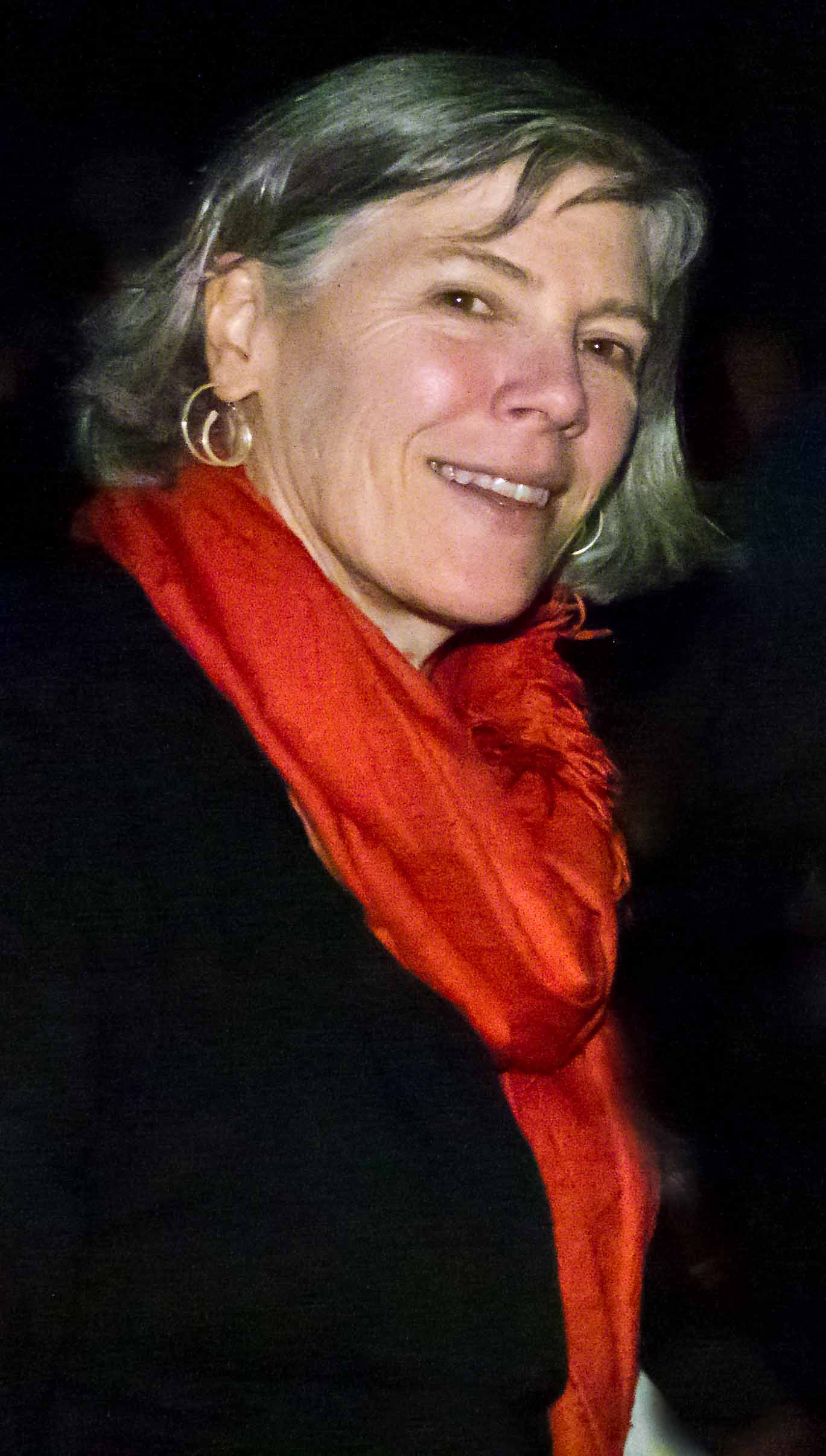
SATURDAY POETRY SERIES PRESENTS: OMNIDAWN POETS: KATHRYN L. PRINGLE

FROM FAULT TREE
By kathryn l. pringle

a perforation appearing, i,
wrenched in pain, spoke words
each one dropping from my new hole
with mass
and sound

soon the atoms of other’s words fell

but no one saw

this happened in the future

in the future when i am alive

the words were elements
each atom making up the word was the word itself

so if one spewed of hate

one built hate

and if another spewed of immobility

one was static


i spewed time

and time became itself


(Today’s selection will appear in fault tree (forthcoming from Omnidawn, 2012), and appears here today with permission from the poet.)


kathryn l. pringle is the author of one book: RIGHT NEW BIOLOGY (Factory School) and two chapbooks: The Stills (Duration Press) and Temper and Felicity are Lovers.(TAXT). Her work can also be found in the anthology Conversations at the Wartime Cafe: A Decade of War (Conversations at the Wartime Cafe Press/ WODV Press) and in the forthcoming anthology I’ll Drown My Book: Conceptual Writing by Women (Les Figues).

Editor’s Note: kathryn l. pringle is the winner of Omnidawn’s 2011 First/Second Poetry Book Contest. Previous winners include Paul Legault and Michelle Taransky. Today’s selection grapples with what it is to be a creator of the written word, with the price one pays in the currency of oneself in the act of writing, and the elements that comprise the written word: those of matter and of time.

A Note About the Omnidawn Series: Today’s post concludes the Omnidawn Series here on the Saturday Poetry Series on As It Ought To Be. It has been a pleasure to share these forward-thinking poets with you. I hope you will support this important press by buying their books and reading the cutting-edge work that they are sharing with the world.

Want to see more by and about kathryn l. pringle?
kathryn’s blog – :: END PUNKTURE ::
Temper and Felicity are Lovers
The Stills
The Fanzine – Excerpt from RIGHT NEW BIOLOGY

SATURDAY POETRY SERIES PRESENTS: OMNIDAWN POETS: MARTHA RONK

Photo by Marcel Shain

THE BOOK
By Martha Ronk

On the other hand, take a book, and you will find it offering, opening itself. It is this openness of the book which I find so moving. A book is not shut in by its contours, is not walled up as in a fortress. It asks nothing better than to exist outside itself, or to let you exist in it. In short, the extraordinary fact in the case of a book is the falling away of the barriers between you and it. You are inside it; it is inside you; there is no longer either outside or inside. – George Poulet, Criticism and the Experience of Interiority

1.
The word in the sentence has been smudged, the ink blotted, the paper overfolded, the meaning derailed; the sentence now pale, missing its force and import, languishing as the characters in La Boheme, sickly as music without its words. The others, the ones intact, try to make up for the missing word and proliferate a range of meanings consistent with the vocabulary and syntax, yet still it is the realm of guesses, guesses as to the missing, as to the alteration in meaning, as to the endless possibilities contained in what would otherwise have been a quite mundane sentence leading to the next in the paragraph, but which now has taken over completely given the aggressive force of the uninvited guest.

2.
For a writer, the intimacy of the image is in submitting completely to what one has imagined and put on the page, to oneself one might say and yet not oneself, an onanism without guilt, the subsuming embrace of an image abstract enough as not to flush the skin, yet vivid enough to cause a collapse into the lilies as if trying to remember the names of the angels and archangels and all the company of heaven, although one never can, just the overwhelming smell of them at the side of the greenhouse door—so much white odor, dusty stamens, the moment of her modest rapture as she saw him appear in the archway with the single flower, the ceiling a complex mosaic of blue and stars, ave gratia plena dominus tecum.

3.
Intimacy in its purest form seems most often encountered in writing, and yet one must recognize the ways in which one is necessarily pulled from the actual possibilities for intimacy, the eyes that catch yours, the peculiar angle of a hip, the trading of quips as if one could never get enough salt under the tongue, into an secondary form of intimacy on the page that nonetheless during the time of involvement seems to be more profound than any other encounter. Such profundity is undercut, however, often and repeatedly, during the time spent in this linguistic solitude by a random pass by a mirror as, unable to concentrate, one paces the room first to this side and then that, catching a glimpse of a person one would never want to have on intimate terms.

4.
The book lies open and prone as it disappears even as the snow in the alps I’ll never see but in the film of the monks of the Grande Chartreuse. It keeps closing as a fan if the body beneath shifts position from side to side. Its pages are without obvious texture yet the feel of them is just enough to remind one where one is. The paper is there; the fingers are there. Yet immersion in one of these things is not an encounter with the thing resting on one’s lap. It is a tyranny of sorts, a take-over, a haunting into the next hours as a character whom one has never met comes closer, not inhabiting exactly, not taking over thoughts and gestures, but warmer than a fictional character ought to be, walking in an internal landscape where it seems to be snowing a kind of snow closer to paper confetti than rain and far more familiar.

6.
What one is seeking is the loss of oneself, not in the sense of terror or anxious concern, but in the sense of being seized out of oneself and therefore fully oneself as one sees or hears most profoundly with obliterated eyes and ears, and it is often by the juxtaposition in writing of the abstract with the specific that such seizure occurs. No matter if the image seems exactly fitting or to come astonishingly out of nowhere, it wrests one; and for one split second, it is what is, and the trajectory forward is halted. It runs athwart time, not in actuality, of course, but in the structure of the piece itself and one locates one’s absence with erotic relief.

7.
It is useful to sit on if you’re small; the side to side squirm on top of a large-sized book slides into one’s adult mind. Someone says to put a dictionary under foot while working at the computer. It is useless for looking up words—the print is miniscule, the on-line OED more efficient. Oversized have a special roped off section in the library stacks; they are heavy to lift, to take home, to use. Often beautiful, with drawings of orioles and beetles, camellias and vein lines, these oversized are also awkward to hold. Their spread requires the expanse of a library table. The power of uselessness spreads itself across this surface into the feathers of the Audubon wingspread into the moldy but preternaturally extended afternoon—it seems to go on and on—reminiscent of a far earlier era.

(“The book” appears here today with permission from the poet.)

Martha Ronk has published 8 books of poetry, most recently Vertigo, a National Poetry Series selection 2008. Her forthcoming book Partially Kept is forthcoming from Night Boat books; she also has published a selection of fiction: Glass Grapes and other stories from BOA Editions 2008. She teaches Shakespeare and creative writing at Occidental College in Los Angeles.

Editor’s Note: Part contemplation, part meditation, part manifesto, today’s poem considers the world of the word, the sentence, and the book. Here we have a body constructed upon the bone structure of Language poetry, shrouded in prose form and driven by syntax, sharing its spine like a Siamese twin with the idea of the book. Dense with ideas and littered with intimacy, eroticism, and nature in all her reproductive glory, journey through the mind of the poet with today’s exploration of “The book.”

A Note About the Omnidawn Series: Recently I attended a reading of Omnidawn-published poets at New York’s Poets House. The evening was filled with incredible talent and a palpable dedication to the craft of poetry that I wanted to share with you. I am honored that Omnidawn was willing to partner with me for this series, and am thankful to the poets who have agreed to share their work here so that I may help spread the word both about Omnidawn Publishing and about the talented writers they support.

Want to see more by and about Martha Ronk?
Buy In a landscape of having to repeat from Omnidawn Publishing
Poets.org
Poetry Daily
“In a landscape of having to repeat” via the Poetry Foundation

SATURDAY POETRY SERIES PRESENTS: OMNIDAWN POETS: ALICE JONES

By Alice Jones:

Parting the grass to find snakes

We wanted up and they went down
                  wandering into the core
                  they always wanted
to go there, it’s the journey
                  you never pretended to take
                                inward, fruitful
        and winding


Cradle the moon on your belly

Held like a baby, a basket
                  of bruisable fruits
        germinate
                  unpronounced ones
sweeter than you imagined
                           indefensible rind
                                we like peeling
                  we like thinking of eating


Black dragon swishes tail

Time catches up
                  and he’s bruising
keep dancing, you’ll charm him
                                he’ll watch


Lion shakes head

                  Are you sorry or hungry?
we gather whatever
finds us, gazelles
                  stronger than they look
                           sudden, the nightfall around here


Wild horse leaps the creek

Fly along and somebody
                  won’t catch you, skyborn
                            going out
the ears curved pathways
                           have you heard this before
                                a fairy tale
                  is always retold

(Today’s poems originally appeared in Extreme Directions: The 54 moves of Tai Chi Sword (Omnidawn, 2002), and appears here today with permission from the poet.)

Alice Jones’ books include The Knot and Isthmus from Alice James Books, Extreme Directions from Omnidawn, and Gorgeous Mourning from Apogee Press. Poems have appeared in Ploughshares, Volt, Boston Review, Colorado Review, and Denver Quarterly. She is a co-editor of Apogee Press.

Editor’s Note: Intimate, simple, and elegant, the poems in Alice Jones’ Extreme Directions: The 54 moves of Tai Chi Sword are reflections on the practice of Tai Chi Sword, Chinese brushstroke painting, and human experience. Reminiscent of the peaceful quiet of Haiku, Jones’ poetry contemplates large ideas from a meditative space, asking questions such as “Are you sorry or hungry?” and breathing through answers with a Zen-like acceptance; “we gather whatever / finds us.”

A Note About the Omnidawn Series: Recently I attended a reading of Omnidawn-published poets at New York’s Poets House. The evening was filled with incredible talent and a palpable dedication to the craft of poetry that I wanted to share with you. I am honored that Omnidawn was willing to partner with me for this series, and am thankful to the poets who have agreed to share their work here so that I may help spread the word both about Omnidawn Publishing and about the talented writers they support.

Want to see more by and about Alice Jones?
Buy Extreme Directions from Omnidawn
“Spell” in Narrativce Magazine
Interim Magazine
Excerpt from Gorgeous Mourning (Apogee Press)
Buy Gorgeous Mourning from Apogee
“Idyll” in Boston Review
“Vault” in Boston Review
Alice James Books

SATURDAY POETRY SERIES PRESENTS: OMNIDAWN POETS: MAXINE CHERNOFF

A BED ON FIRE
By Maxine Chernoff

the smiling assassin

isn’t a dream

what is embodied

asks us to listen

beyond rooms

the doctor has scissors

the hour, confessions

a lingering fable

serves up

its ghosts

intention burns

like any ember


(“A Bed on Fire” originally appeared in To Be Read in the Dark (Omnidawn, 2011), and appears here today with permission from the poet.)


Maxine Chernoff is the author of 6 books of fiction and 13 books of poetry, most recently To Be Read in the Dark (Omnidawn), A House in Summer (Argotiste), and Without (Shearsman, forth. 2012). She chairs the Creative Writing Program at SFSU, edits New American Writing, and with Paul Hoover translated The Selected Poems of Friedrich Hoelderlin, which won the 2009 PEN USA Translation Award.

Editor’s Note: Today’s poem reads like a treasure map. Follow the clues to discover what is hidden “beyond rooms;” listen to “what is embodied” and discover the story living in the caverns between words and white space. X marks the spot in which a light bulb burns above you; the riches of language are waiting.

A Note About the Omnidawn Series: Recently I attended a reading of Omnidawn-published poets at New York’s Poets House. The evening was filled with incredible talent and a palpable dedication to the craft of poetry that I wanted to share with you. I am honored that Omnidawn was willing to partner with me for this series, and am thankful to the poets who have agreed to share their work here so that I may help spread the word both about Omnidawn Publishing and about the talented writers they support.

Want to see more by and about Maxine Chernoff?
Conjunctions
Omnidawn Reading at City Lights in San Francisco (VIDEO)
“Embedded in the Language” – Washington Post
Shearsman Books

SATURDAY POETRY SERIES PRESENTS: OMNIDAWN POETS: MICHELLE TARANSKY

A STUTTER, FOLLOWING
By Michelle Taransky

A stutter, number after number, apologies, the resemblance of the forest
To the axe’s handle, one tree, how many lions can be carved from it,
Whose hand you held at the investigation, the funeral, the dedication, as
Evidence is placed in a glass case to be considered, see the sorry teller
Counting change, a crime and a crisis recounted in the same breaths,
Bird eating bird bones, the will to witness what you have been
Saving up, a robber behaving like a fallen fence, two streams that go
By one name, a condition developed in turn, in chorus with the crying
Hoarded eggshells that will rot, no matter how long, they spelled this
May change, into ways you consider it, which is to say, how not to feel
Broken, wings are the sum, and counting, and counting the present state,
A disaster is, waiting to happen, because the pile was made up, of branches
Not yet dead, and you refusing, to say tinder, to admit, potential for tender
There, I said it, said please ask who is about to tell, the particular was impossible,
To keep up, doing this, and this to our hiding place


(Today’s poem originally appeared in Barn Burned, Then (Omnidawn, 2009), and appears here today with permission from the poet.)


Michelle Taransky is the author of Barn Burned, Then, selected by Marjorie Welish for the 2008 Omnidawn Poetry Prize. Taransky works at Kelly Writers House, as Reviews Editor for Jacket2 and teaches writing and poetry at University of Pennsylvania. A chapbook, No, I Will Be In The Woods is just out from Brave Men Press.

Editor’s Note: Today’s poem is as dense and rich as a forest. Peel back each leaf to reveal more leaves. See how each branch is connected, how the earth is blanketed beneath your feet. Give yourself over to the relation of wood to what is carved from it, to what is small enough to be burned, to what lives and dies within.

A Note About the Omnidawn Series: Recently I attended a reading of Omnidawn-published poets at New York’s Poets House. The evening was filled with incredible talent and a palpable dedication to the craft of poetry that I wanted to share with you. I am honored that Omnidawn was willing to partner with me for this series, and am thankful to the poets who have agreed to share their work here so that I may help spread the word both about Omnidawn Publishing and about the talented writers they support.

Want to see more by and about Michelle Taransky?
Buy Barn Burned, Then
beginning “the”
Q&A: American Poetry via Poetry Society of America
A conversation about “Barn Burned, Then” via The Offending Adam
New poems in Milk magazine

SATURDAY POETRY SERIES PRESENTS: TOM HOLMES

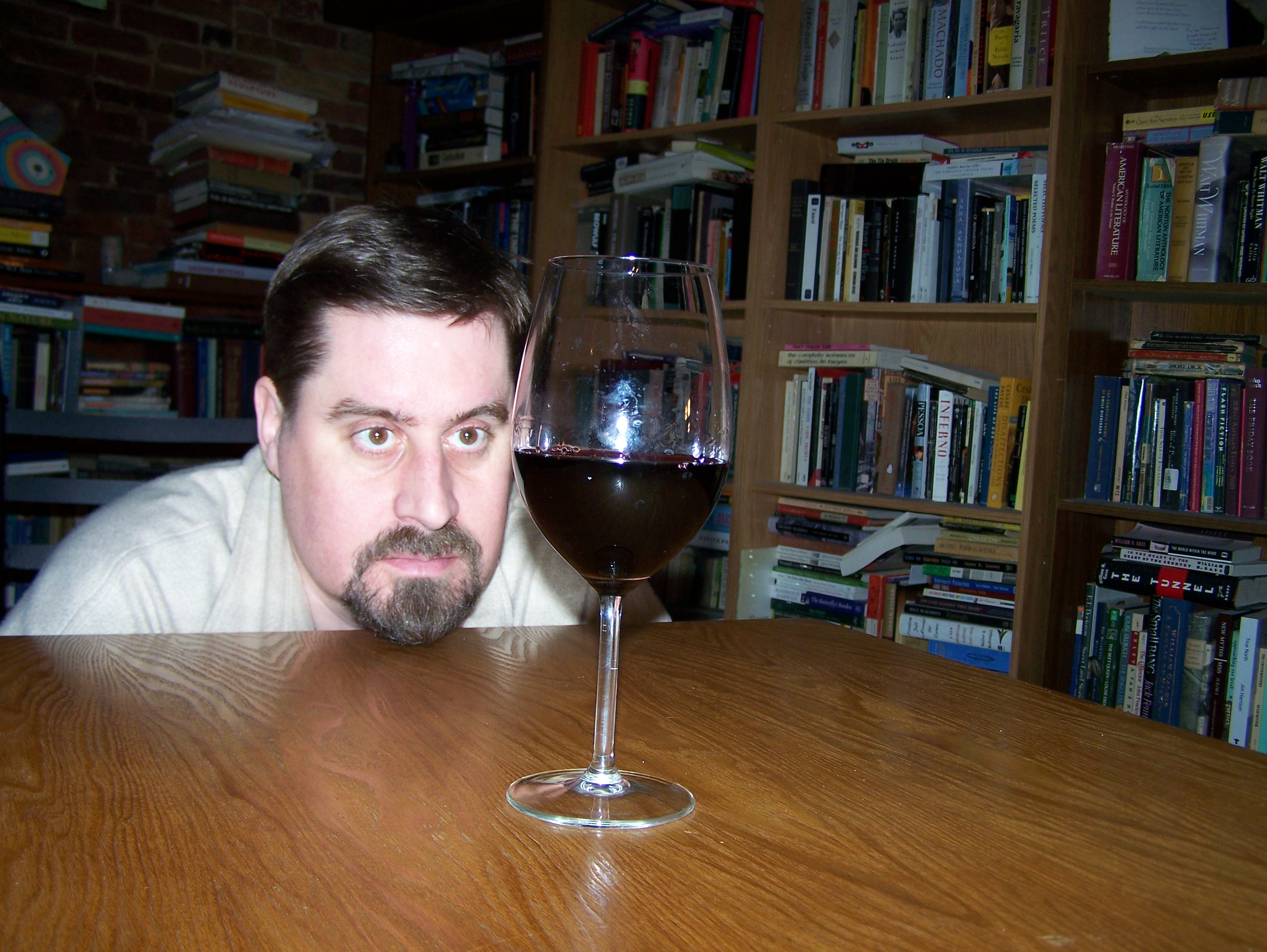
Photo: “Wine Never Blinks”


THE FIRST PAINTING
By Tom Holmes

I had no urge except to sleep
with her in the cave, but I felt
sympathy. I cared. I sensed
intelligence in a crevice. I saw

life. I saw a bison’s back
in a crack. I saw
the whole world, the whole sky
all of night. The night

was alive, here, underground
with the bisons, the horses, and rhinos
before me, before my eyes — I saw
a backdrop with all the beasts.

I saw blood on my finger.
The arc of a bison’s back
appeared with one stroke.
The second urge arrived.


(Today’s poem originally appeared in the Stone Highway Review, and appears here today with permission from the poet.)


Tom Holmes is the editor of Redactions: Poetry & Poetics. He is also author of Poems for an Empty Church (Palettes & Quills Press, 2011) which was recently nominated for the Pulitzer Prize, The Oldest Stone in the World (Amsterdam Press, 2011), Henri, Sophie, & the Hieratic Head of Ezra Pound: Poems Blasted from the Vortex (BlazeVOX Books, 2009), Pre-Dew Poems (FootHills Publishing, 2008), Negative Time (Pudding House, 2007), After Malagueña (FootHills Publishing, 2005), and Poetry Assignments: The Book (Sage Hill Press, forthcoming). He has thrice been nominated for the Pushcart Prize. His work has appeared a number of times on Verse Daily and has also appeared in Blue Earth Review, Chiron Review, Crab Creek Review, The Delmarva Review, The G. W. Review, Mississippi Review, Mid-American Review, New Delta Review, New Zoo Poetry Review, Orange Coast Review, Portland Review, Rockhurst Review, San Pedro River Review, Santa Clara Review, South Carolina Review, Sugar House Review, Swarthmore Review, and many other journals that don’t have “Review” in their name. His current prose writing efforts about wine, poetry book reviews, and poetry can be found at his blog, The Line Break.

Editor’s Note: Today’s poem contemplates what it is to be human, to have human urges and desires, and how original those desires are. How instinctual, how elementary, is love, sex, art, the hunt and the kill? How can poetry bring us back to that other version of ourselves that exists in an ancient cave, and what elements of our prehistoric selves remain a part of us now?

Want to see more by and about Tom Holmes?
The Line Break
Redactions
Buy Poems for an Empty Church
Buy Henri, Sophie, & the Hieratic Head of Ezra Pound: Poems Blasted from the Vortex
Some of Tom’s book, journal, and poster designs

SATURDAY POETRY SERIES HALLOWEEN EDITION PRESENTS: KATE DURBIN

Editor’s Note: Welcome to the special Halloween edition of the Saturday Poetry Series here on As It Ought To Be. Today’s haunting is by the incredibly talented Kate Durbin, who inspires me to live every day in costume. Featuring Ms. Durbin on this series would be an honor for me any day of the year, but I couldn’t think of a more perfect occasion than Halloween. Her book The Ravenous Audience gives a nod to zombies, and Durbin herself can often be found inhabiting others and reanimating the dead.

Be afraid. Be very afraid. And like it.


LITTLE RED’S RIDE
By Kate Durbin

Spring-stink, the world heaves with lust.
Mother sniffs sex from the kitchen window:

Woodsmen stripping trees,
Housewives mounting stallions.

Not a world for little girls, she says,
Turning and smiling

Without teeth
(We are not sure Mother has any).

Little Red of the big eyes and tremulous lips,
Of the fox-fur stole Grandma sewed,

When will you tell Mother
Spring is slinking its way home?

Fleshnubs sprout under your clavicle;
A stealth forest slips across your secret holes.

Praying into flames,
You solicit hearth fire to singe this new fur,

Settle the stench of bright blood.
Some prayers are half-assed.

In the violet before-dawn,
You woke to stains on the sheets,

Vampire faces in your bedroom window,
Cheering you on with friendly fangs.

You were scared.
You weren’t really afraid.

Now, Mother orders you into the trees,
To deliver eggs and milk to Grandma,

Who too old, too useless to locate
Chicken crevices, clutch cow teats.

Will you follow the path, or will you stray?
Of course you stray, disoriented one—

Encounter your wolfprince,
Crash into his exposed teeth.

When you do, you don’t give it
All away, only whet his taste.

(You knew this by instruction?
You knew this by instinct?)

But what’s this?
At Grandma’s front door,

You coy smile up from the page,
Middle finger splayed.

Little Red, big bitch—clever, with that 60/40 animal sight,
A half-mile back spotting the paw in the window, beckoning,

And that doorknob no doorknob, Grandma’s tendons,
Whetted your taste.

Bloodthirsty, skinstarved, tantalizing reek of earthhairmeat—
Whose belly is howling?

We aren’t coming in,
Are we


(“Little Red’s Ride” is from The Ravenous Audience (Black Goat/Akashik Books 2009) and appears here today with permission from the poet.)


Special Halloween Q & A

Sivan: The Ravenous Audience is, in part, a zombie reference, and the book features original zombie art by Marnie Weber on the cover. What are your thoughts on zombies and their role in your work?

Kate: These ancient archetypes of women that are constantly resurrected and projected upon women in our society—celebs in particular—are very much zombies. We re-animate dead ideas all the time. I say dead ideas namely because many of these notions of what a woman is and can be should be over and done with, as far as I’m concerned (such as the doting housewife—I mean, come on), but they aren’t. And not only are they not “over,” when they resurrect, things are bound to get as ugly as a zombie attack. I mean, just look at Lindsay Lohan, Anna Nicole Smith, Britney Spears, etc. And yet, zombies can do a lot of necessary destruction to a culture that is in desperate need of mutation and evolution. So bite on, zombie babes. Maybe we need you to destroy us.


Kate Durbin is a Los Angeles-based writer and artist. She is author of The Ravenous Audience (Akashic Books, 2009), E! Entertainment (Blanc Press, diamond edition, forthcoming), ABRA (Zg Press, forthcoming w/ Amarant Borsuk), as well as the conceptual fashion magazine The Fashion Issue (Zg Press, forthcoming), and five chapbooks: Fragments Found in a 1937 Aviator’s Boot (Dancing Girl Press, 2009), FASHIONWHORE (Legacy Pictures, 2010), The Polished You, as part of Vanessa Place’s Factory Series (oodpress, 2010), E! Entertainment (Insert Press, forthcoming), and Kept Women (Insert Press, forthcoming). She is founding editor of Gaga Stigmata, which will be published as a book from Zg Press in 2012. She co-curated a forum on women writers and fashion for Delirious Hem, SEAM RIPPER. Her performance Prices Upon Request was performed at Yuki Sharoni Salon in Beverly Hills, and Pardonmywhoremoans at BELLYFLOP gallery in L.A. She writes for Hollywood.com.

Want to see more by and about Kate Durbin?
KateDurbin.com
My review of The Ravenous Audience in Mayday Magazine

SATURDAY POETRY SERIES PRESENTS: POETS HOUSE

Editor’s Note: Every once in a while on this series I like to give a shout out to an organization that is furthering poetry in contemporary America, and today is one of those days. Located in New York, Poets House “is a national poetry library and literary center that invites poets and the public to step into the living tradition of poetry.” Some poets inhabit this space daily and consider it their office. For me, it is my church. A space where I go to worship at the alter of poetry. Whether I am reading a book of poetry from their extensive library of approximately 50,000 books, writing poetry of my own within sanctified walls, or attending a reading or lecture, when I am within the walls of Poets House I am dedicated to nothing but poetry, and that is a truly unique and beautiful thing.

If you live in New York, head downtown and partake in the milk and honey. If you live elsewhere, I would argue that Poets House alone is worth a visit to New York City. No matter where you are, if you are an advocate for and supporter of poetry, please support this institution that is a rare gem in today’s Capitalist world economy.

Want to read more about Poet’s House?
poetshouse.org

SATURDAY POETRY SERIES PRESENTS: PAUL LEGAULT

MADELEINE AS WHITE COUNTRY
By Paul Legault

At least
you can sleep by
the American names for loneliness:
Iowa, Nebraska, Memphis, like snow
that we had to talk about
when it refused to go away.
Give it names,
names for names’ sake:
ashes, the winter, the white earth.

To build a man up from it
is to want for him
to rid us from what he is made of
by leaving on a horse of snow

into spring, even now.
The land exists. Ruin.
Snow. He will stay.
The patterns of milk, of place

like a fluid, snowmen that know nothing
of competition, of men made
of red and not water,
of blood that keeps through summer.

You may as well make him a home by now
from snow and a wife
of sorts from snow and a mouth,
because they will make a name for themselves
from snow and the means to wait
from ice, from carrots and coal,
their wide language derived from the weather
without a single word for you,
ten for the sea,
nothing for the cold.


(Today’s poem originally appeared in The Madeleine Poems (Omnidawn 2010), and appears here today with permission from the poet.)


Paul Legault was born in Ontario and raised in Tennessee. He holds an M.F.A. in Creative Writing from the University of Virginia and a B.F.A. in Screenwriting from the University of Southern California. He is the author of two books of poetry, The Madeleine Poems (Omnidawn, 2010, winner of the 2009 Omnidawn First/Second Book Award) and The Other Poems which is forthcoming from Fence Books in 2011. He co-founded and co-edits the translation press Telephone Books.

Editor’s Note: I had the pleasure of seeing Paul Legault read last night, for the second time. He did not disappoint. I owe my initial exposure to Mr. Legault to Ms. Lezlie Mayers, editor of this site’s “Friday Poetry Series,” where Mr. Legault first came onto my radar. Since the initial exposure, it’s been nothing but good times had by all.

Of today’s poem I will say only that it is brilliant in its subtle manipulation of language, that you as the reader are being manipulated and you don’t even know it, and that if you do, you are saying “thank you” and asking for more. When I spoke with him at his reading last night, Paul told me that he would be judging me based on the poem I chose to share today, to which I say “bring it on;” I stand enthusiastically by my choice.

For a good read, order a copy of The Madeleine Poems. For a multi-pleasurable experience, pre-order a copy of The Other Poems. You will not be disappointed.

Want to see more by and about Paul Legault?
Paul Legault’s Official Blog
Buy The Madeleine Poems
Bomblog: The Madeleine Poems interview
Pre-Order The Other Poems
Boston Review: Selections from The Other Poems
The Other Poems trailer (youtube)

Robert McAlmon: A Lost Voice of the Lost Generation

Robert McAlmon: A Lost Voice of the Lost Generation

By Chase Dimock

A writer, publisher, and a connoisseur of the Parisian nightlife, Robert McAlmon was a fixture of the Lost Generation’s expatriate community in Paris in the 20s and 30s. McAlmon took Hemingway out to the bullfights in Spain that he would immortalize in The Sun Also Rises. He typed proofs of James Joyce’s monumental novel Ulysses, and due to the convoluted system of notes and addendums in Joyce’s manuscript, the voice of Molly Bloom that the first generation of readers received was actually McAlmon’s interpretation of Joyce’s. Through his publishing company Contact Editions, he was the first to publish works by such luminaries of the modernist movement as Gertrude Stein, Ernest Hemingway, William Carlos Williams, Djuna Barnes, H.D., and Nathanael West. Yet, his own reputation as a writer never reached the heights of those that he helped.

In past couple of decades, a few scholars have begun to rediscover McAlmon’s work and wrest it from the dusty margins of the archives. Three of his works of fiction (Village, Post-Adolescence, and Miss Knight) were republished in 1991 for the first time since the 20s and accompanied with a forward by Gore Vidal. McAlmon grew up with Vidal’s father in the Midwest and subtly hinted in the semi-autobiographical Village that he had an adolescent attraction to him. McAlmon’s memoir Being Geniuses Together and the newly rediscovered novel The Nightinghouls of Paris provide new insight, caustic commentary, and fresh gossip into the lives of the icons of the expatriate community. McAlmon was an avid gossiper and twice got into fights with Hemingway and F. Scott Fitzgerald for spreading rumors that they were pansies. McAlmon himself was a bisexual and although he never declared this side of his sexuality in his work, he nonetheless had brief flings with writers like John Glassco and Claude McKay among others.

Beyond the gossip, McAlmon’s work provides a rare glimpse into the lives of gay and lesbian writers and artists in the 20s. In The Nightinghouls of Paris, he portrays the relationship between Glassco and Graeme Taylor as the two young Canadian writers struggled to understand their attraction to one another in a culture that had not yet developed the vocabulary we have today for expressing and realizing these queer desires. He also fictionalizes the stormy relationship between Djuna Barnes and Thelma Wood, who was the inspiration for Robin Vote in Nightwood. Wood also makes an appearance as “Steve Rath” along with Marsden Hartley, and Dan Mahoney (the inspiration for Dr. Matthew O’Connor in Nightwood) in McAlmon’s collection of short stories Distinguished Air: Grim Fairy Tales, which chronicles the underground, queer cabaret culture of Berlin in the early twenties. McAlmon’s Berlin stories predate those of Christopher Isherwood by a decade and go much deeper into lurid details about drugs, prostitution, and the sexual dissidence of the expatriates who emigrated there to find a space in which their persecuted desires could flourish.

Below, I have included a few poems from McAlmon’s 1921 collection Explorations. In McAlmon’s first book, we see the young writer experiment with modernist techniques and themes. He revels in innovation, irreverence, and liberation from the stuffy verses and bourgeois sensibilities of the American tradition. In the first poem, McAlmon finds all three themes trumpeted through the chaotic notes of Jazz music. For McAlmon and his contemporaries, the Jazz Age was the post-war generation’s moment to radically reinvent American culture, even if they had to do it from inside the bars and bistros of Montmartre. In “Jazz Opera Americano”, McAlmon turns to stream of consciousness writing to keep pace with the frantic tones and rhythms of jazz music. For modernists like McAlmon, Jazz music was part of a wide-sweeping interest in primitivism—an artistic fascination with reinvigorating the west’s long repressed primal urges by appropriating non-western art to inspire cubism, surrealism, and other non-realist expressions. While well intentioned, this interest in the primitive came at the cost of stereotypical constructions of minority cultures, even though these artists thought they were promoting these cultures and saw their patronage of the Harlem clubs and the racially integrated bars of Paris as a sign of their racial inclusiveness. Though splintery with immaturity, these lines of poetry capture the urgency of the Jazz Age and the Lost Generation’s mantra to “make it new”.

Jazz Opera Americano

Come now, come now.   For Gawd’s sake, shiver your spine.
Syncopate  the  spectrum. French  horn  blast, potato
whistle shriek.

One ancestor was a boar tusked dog wolf who howled mad
bayings at the moon—a lonely wolf—a vicious hound—a
sad brute—but a hell hound for noise :

Show us how you spend the money, spend the money.
God, man, feel my pulse, dear God—I’m a liar—it is
spurting Semitic Blood. Niagara rush in my veins with
Semitic caution. Show me how the money is spent. Magnifi-
cently gorgeously. Highcolors. Peacocks, humming-birds,
pheasants?  Nature, bah!  Spend big money.

In the line was a bull moose who bellowed mating calls
forever and ever, mate or no mate, he still had hungers deep
an impalpability not to be torn from him however he
bellowed—tom tom, a hunter’s horn, with a high yodel and
the rattle of a string of missionary teeth—all in the high
wind shriek and the moon splintered to white and ver-
milion orange dripping, green swirling and a dizzy spectrum
and I fainting but never fainted in a swirling vortex of
colored rhythms, uneven dissonant and tragic—wild, wild,
wild man, why are you shouting wild man?  Dance jazzo,
swirl me—my legs are buoys on an unsteady ocean of sound.

Young, young—hell no, not youth but energy, and what,
sweet blood tattooed Jesus, do we do with energy ?  Strong
rushing red blood—whatt’hell’s to be done with it ?  Desire ?
Growing sophisticated ? . . .  My thoughts will not be sup-
pressed however.  Set that to music, kid.  Reality.  Give
it a shivery tune.  Jewish, Chinese, East Indian.  Shakety
shake, shakety shake—Jazz, Jazz, whirl, wild women,
whirl.

Sucked into sound—thrilled voluptuous—and the waves of
rhythm carry me away, lap sensuous rhythm tongues about
me  soul-body-mind,  push me,  seduce me.  And I am
willing—anxious for the seduction, Jazzo, Jazzo swirled
and swung into the vermilion, the purple, swinging, sway-
ing, bending, tones—not in the feet moving, not in the body
bending, but in the blood leaping to a syncopated rhythm.
High recklessness. What comes after what comes after ?
Be careless. Sensible cautious—damnfoolishness—with a
half pint bottle for six—O yo ho—O yo ho—my ancestors
were savage brute vicious ones—the line’s diluted—
Crack—crackle—lights out—the bulls.

Obsequy

There is inestimable companionship in graveyards
Where the unavailing gestures of impotent hopes
Are sealed in earth overset with rock, and many dead
No longer fret and fume, but rest ;  while the knowledge
Of the life their corpses once have housed
Is breathing on the granite and the marble slabs
When the atmosphere about is conscious, if with vainest grief.

History Professor

“Now, in the interests of scholarships—uh huh—yes—
in the interests of scholarship” he’d lecture, asking for
bibliography, collateral reading, and annotations, which
requests never interfered with students’ thoughts on
Saturday night dances, or Monday night drunk ons.

It’s a shame, kiddo, I’ll tell you it’s a shame that jazzy
people like Alexander, Cleopatra, Hannibal, and Henry
the Eighth should be annotated thus by a male pedagogue
who wears his winter underwear through June, and uses a
Pinkham pill for a laxative twice a week to keep his system
in order.

Burial

Geometry is a perfect religion,
Axiom after axiom :
One proves a way into infinity
And logic makes obeisance at command.

Outside of the triangle, cubes, and polystructures
There is restless pummeling, pounding and taunting.
The end is diffused into channels
Every step into eternity—and steps are endless.

Versailles Guide

He told me historic scandals :
Of how various queen-wives
Died of broken hearts
Because their kings
Had so many mistresses,
That Louis XIV. and that the XV.
He spoke of Le Duc Phillippe
Who painted his cheeks—
Also his eyebrows—
And rode in the streets
Regardful only of men,
Who poisoned his wife
Or in somewise rid himself of her.

If the guide would only be contemporary
With his scandalous information
He would not need to be a guide.

But he had rosy cheeks himself,
And perhaps a romantic nature.