A Review of Alone in the Burning by Wendy McVicker

Jennifer Schomburg Kanke Reviews
Alone in the Burning
by Wendy McVicker

Wendy McVicker’s work is often known for its meticulous attention to the miraculous details of everyday life. We see this aspect of her work in earlier poems such as “Into the Dark,” which appeared in The Journal of Mythic Arts in 2008 and thrills us with lines such as “Summer evenings on the terrace / as the risen dark / flowed in, phosphorescence / of fireflies, and heat / lightning startling / the horizon” and “the tall shapes / of the thunder gods /tramping through the dark.” But there was always something lurking there in her work, something not quite said. McVicker’s latest collection, the chapbook Alone in the Burning from Sheila-Na-Gig Editions, gives readers a glimpse into those quiet secrets that have been beneath all of her previous work. 

Still firmly rooted in the domestic, McVicker utilizes a haunting tone as she allows her poems to imitate the slippery and hazy nature of traumatic memories while sharing childhood stories of family dysfunction. Even the titles of the poems reinforce this, as many of them are titled “When I was alone.” Because of this echoing, the reader is caught up in the way traumatic memories repeat themselves and begin to blur into one another. Lines from the poem on page 27, such as “I felt that forked fire// all the way/ through my body” and those from the one on page 10, such as “leaves in the trees/ breathed/ through my dreams” could be from the same poem, so cohesive and unified is this collection. 

My favorite poem in Alone in the Burning is the “When I was alone” from page 13 which beautifully renders primal instincts. Lines such as “I knew how to wait: / one way to be safe // Running is another: / not my way” and “In the story the doe / broke and ran / across the clearing // That’s when the gun / found her // That’s how I learned to be still” remind the reader that there is more than just the fight or flight response to danger, there is also freeze. 

But the collection also offers an answer to how we break that freeze, how we find ourselves again: language and imagination.  In the first piece in the book, the modified haibun “Lost,” McVicker establishes the important (and sometimes dangerous and elusive) role language will play in the work: 

                     The alphabet a rope
slipping through my hands
each word a knot, burning

The penultimate piece in the book is also a modified haibun and counters the earlier “Lost” with “Found.” “This is a story about a girl who learned to live in books,” it begins. Its ending brings us into that life in books:

                       Language held the key
Long strings of letters flying
off the page took her with them

We are never alone, the collection seems to say, so long as we have books, so long as we have writing. In this way, Alone in the Burning begins to serve as an ars poetica of sorts. It presents tight and clever turns of phrase reminiscent of Diane di Prima while wrapping them in a meditative confrontation of the domestic similar to the later work of Sharon Olds. I have long been a fan of McVicker’s work and this slim volume makes me excited to see where else her poems will go. As she says in the final “When I was alone,” “This has been / a long journey” and I, for one, am grateful she has brought the reader along on it with her.

Alone in the Burning
by Wendy McVicker
Sheila-Na-Gig Editions, 2024
ISBN: 9781962405072
$14.00

About the Author: Jennifer Schomburg Kanke’s work has appeared in New Ohio Review, Massachusetts Review, Shenandoah and Salamander. She is a winner of a Sheila-Na-Gig Fiction Award and her poetry collection, The Swellest Wife Anyone Ever Had, is now available from Kelsay Book. Her poetry collection centered on her experiences with ovarian cancer, Little Stone, Little Stone, is forthcoming in 2026 from Sheila-Na-Gig Editions. She can be found on YouTube as Meter&Mayhem.
Mike James: “tim Peeler and the Life of the Poem”

Tim Peeler and the Life of the Poem

By Mike James

Frank Bidart once commented in an interview that an emphasis on voice isn’t fashionable
in contemporary poetry. That idea might go a long way towards explaining the lack of
appreciation for Tim Peeler’s work since Peeler’s poetry is emphatically about southern
voices and southern characters. Peeler is more original than fashionable. He is of the
DIY, autodidact, mountain bred, and baseball referencing, fried bologna school of
American poetry. He is also the only member.


Some books don’t fit into categories. And some poets don’t. For a number of years now,
Tim Peeler has been creating unique, character driven poetry sequences about folks who
are neither proud nor ashamed of their poverty. Peeler doesn’t make a fetish of the blue
collar. Poverty and wealth are just reference points. Economics is part of what defines his
characters, but it is not the whole definition.


The emphasis on character is why Peeler is so hard to categorize. Though he is as
southern as moonshine, pine trees, and molasses, his character-driven writing is closer to
Chekhov than Dickey. He begins and ends with a person in a specific situation. There
may not be a problem to solve, but there is definitely an incident to examine.


There is a texture to Peeler’s poetry which comes from his deep knowledge and
appreciation of vernacular. He can use words like “whatnot” and “fixin” and make them
an integral part of the poem without drawing attention. He is not a flashy poet, but a
subtle one. He draws the reader in and pulls rabbits out of every hat he comes across. He
does this while making the reader care for characters who are often either left out of
poetry or reduced to stereotypes. There are no “types” in Peeler’s poetry. There are only
people.


Many poets are addicted to the idea of the blazing line. They are in love with anthology
pieces. Tim Peeler is not that type of poet. In his work, poetry happens as part of the
everyday. It seems to be dictated from characters at a diner, rather than created by a
solitary individual. This is not to say that the accessibility of Peeler’s sleight-of-hand
poetics is easy. He simply makes it look that way. His poems are as clear as mountain air
and just as easy to take in.


About the Author: Mike James makes his home outside Nashville, Tennessee. He has published in numerous magazines, large and small, throughout the country. His poetry collections include: Leftover Distances (Luchador), Parades (Alien Buddha), Jumping Drawbridges in Technicolor (Blue Horse), and Crows in the Jukebox (Bottom Dog.) In April, Red Hawk published his 20th collection, Portable Light: Poems 1991-2021.

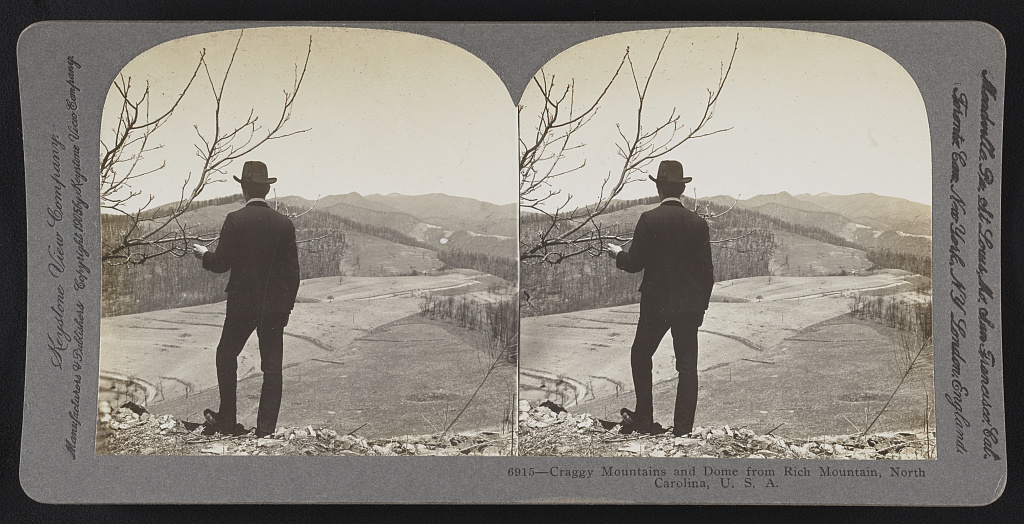
Image Credit: “Craggy mountains and Dome from Rich Mountain, North Carolina, U. S. A.” (1905) public domain image courtesy of the Library of Congress

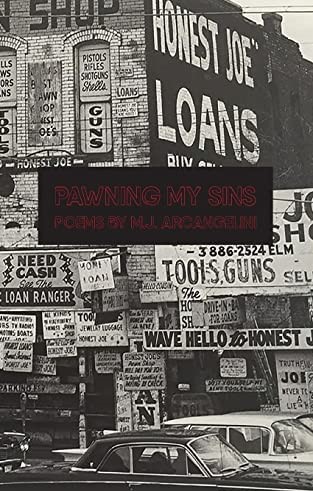
Evan Myquest Reviews Pawning My Sins By M.J. Arcangelini

A Review of

Pawning My Sins

By M.J. Arcangelini

..


The depth and breadth of Joe Arcangelini’s life must make his confessional appearance in this volume of poetry one bad-ass day in the publishing world. The eponymous first poem has his first confession of the book—that he wouldn’t get much of a return at his mystical sin pawnshop. And this is his first sin of a lie to confess to the reader. Going by the sins in this book, I’m thinking Joe’s got a damn good pawn stub in his mitts.


Joe takes us through his experiences: weed patch sentry duty, the booze, and the seedy North Beach hotel stays, and even more life on the “interesting” side of town. We definitely have some librarians clutching pearls and clucking tongues going on here. Fret not, librarians, we have no full-monty tell-all here. What we have is an honest accounting of a wild life told in poetry—because that is what Joe Arcangelini is good at these days.


Especially at lines like these about the clearing out of his Dad’s place, “The bed that witnessed such tender gymnastics” not kept, but keeping the “1920s straight razor, a 1903 Colt .38 revolver, a decayed molar.” All those embedded memories offloaded to the page.


You don’t have to read very far to see that once past the deprecation of the first poem, the reader is off and running on what would singe the local padre’s “heard it all” ears in a confessional. Sure that the ears listening nearby are perked toward that booth.


Yes, Joe is raising the shades in Pawning My Sins. He is confessing to the angels (and us), but he wants the pawnbroker’s cash, not some nebulous absolution. I love the stark, honest, eloquent writing going on here. We get treated to both the significance and the insignificance of a life in these pages. The midnight quill scritching Joe is sharing has the oldest of intentions “not to do what I have done.” The thing I dig with this book of poems is that there is not a lot of resignation and sadness here. It is even hard to see apologetic regret. You know Joe will write another great book and move on from the fizzled fireworks, the hitchhiking, the rehabs, and lost friends and lovers—because in the clarity of his writing there is a survivor here, and we sure count on this loveable gentleman to go on “pawning” more of these wonderful poems off on us.


Collect those tickets, Joe, and get every last dime you are entitled to, because surviving and becoming the gentle artist we finally meet here is well deserved.

.

Pawning My Sins
M.J. Arcangelini
Luchador Press 2022
Big Tuna, TX (cool) –98 pages

About the Author: Evan Myquest lives in the Sierra foothills near Sacramento, CA. He has been married to his wife, Eva, for 47 years. His poetry has appeared alongside Jack Hirschman, Patti Smith, Leonard Cohen, Jim Carroll, and many others across the US and in Italy as well as translated and performed on video by Rome’s maestro Beppe Costa. His latest poetry collection, Cold Blue Roses, is available at Amazon in print and Kindle editions. This is his second book review, his first appeared in Ingrid Swanberg’s “Abraxas” about “Dorsey/Wagner.”

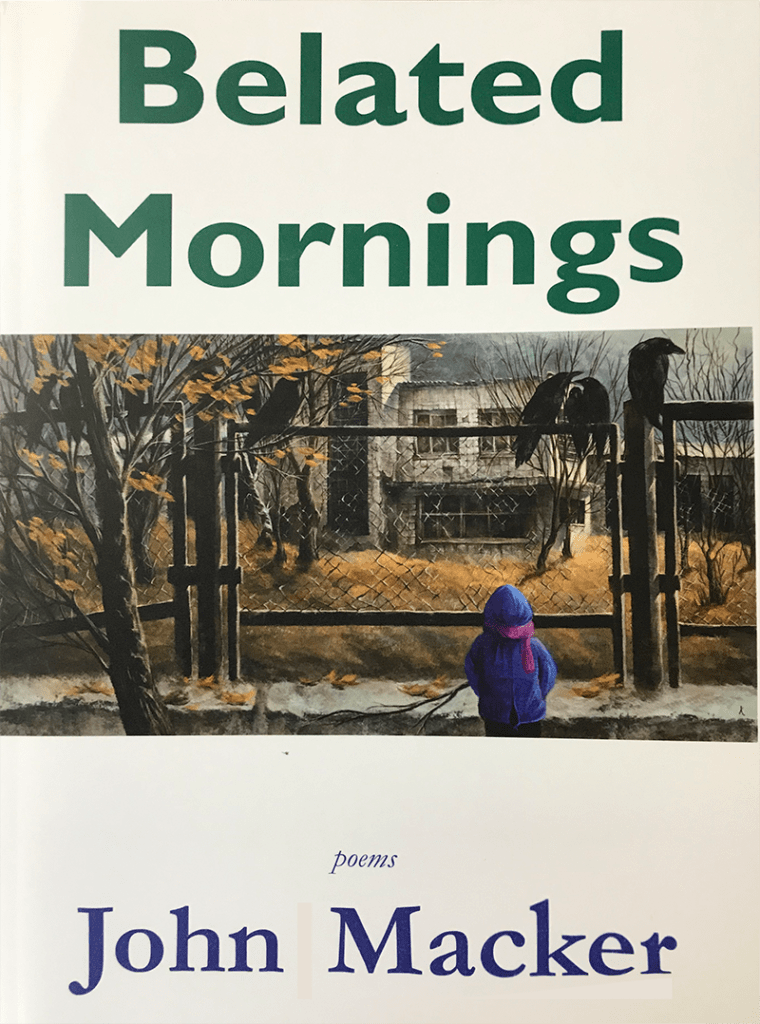
A Review of Belated Mornings By John Macker

Lenora Rain-Lee Good Reviews

Belated Mornings

By John Macker

Turkey Buzzard Press

2022

ISBN: 978-0-945884-16-3

44 pages

$10.00 at time of this review

5 Stars

A small book, filled with large poems. I don’t mean the poems take up physical space, they take up brain space. Each one needs to be read, cogitated, chewed, swallowed, and digested, starting from the books’ epigraph, “That is my profession. / I am an archaeologist of morning.” —Charles Olson.

Our odyssey begins with Indian Summer, “Autumn as much a notion as it is / warm day, wind-drawn red crayon / moon above the canyon in slow motion, / a crisp yellow leaf afloat in its singularity / flows down a shadowed stream / into the Roaring Fork, is peace”

Macker takes us through mornings as night becoming light and mornings of memory. We are brought into the confessional in places, as he tells us about his first confession in the poem, St. Louis Blues. 

Every poem is a picture, every poem has language and lines that resonate, biophilia ends with, “or hosanna Greta Thunberg’s name / in the church of feral light” and solstice ends with “I fear the longest night of the year / will last until spring” Oh, how many times have I thought that, only without such simple beauty!

The title poem, Belated Morning is a showstopper.  “Last night starry-eyed blue whales / swimming over a yellowed desert appeared” and later, “…if you / don’t shine your morning light on the world / you aren’t listening, you aren’t breathing /”

These poems are musical, and accessible to anyone who wants a good story. One does not have to dig deep into hidden meaning and metaphor, one can simply read, and the best way to read any poem is to read it out loud! These poems stopped me several times, just for the sheer beauty of the words and the image they convey.

Stars Born Reaching begins “A rare hard rain at night on a flat / roof sounds like a jazz drummer’s / wet dream or palpitating steps late for / a flight…” I had to stop and remember all the times when it would rain and my grandfather and I would grab a book and go out to the travel trailer, stretch out and read until we went to sleep. And how many times I had to run to catch a connecting flight at the other end of the airport!

The book ends with the gentle hours. A gentle poem in Macker’s kitchen as he’s up and “shedding the shortened sleep” The last words, the words he leaves us with are words we can all hear in our minds, lean back in the chair with a cuppa, and cogitate, no matter our age. “…At my age I / become something I’m not all over again / and it fits me like a glove. Fate is a direction / that won’t let me lose my way.”

I recommend this book to any lover of poetry, as well as those who aren’t quite sure about poetry. Buy this book, it will be a treasure to read and a beacon on your bookshelf reminding you to live—and enjoy your mornings, no matter how you find them. 


To purchase this book, please contact the author, John Macker at mackerjohn@yahoo.com. The cost is $10.00 plus s/h of $3.50.

About the Author: Lenora Rain-Lee Good, a Vietnam-era veteran of the WAC was born & raised in Portland OR and now lives in Kennewick, WA. Lenora is the author of three and a third published books of poetry—Blood on the Ground (Redbat Books, 2016), Marking the Hours (Cyberwit.net 2020)and The Bride’s Gate and Other Assorted Writings (Cyberwit.net, 2021). She co-authored Reflections: Life, the River, and Beyond (KDP 2020),with Jim Bumgarner and Jim Thielman, hence “the third.” She may be reached through her website https://coffeebreakescapes.com

Mike James: “Howie Good’s Path of Most Resistance: An Appreciation”


Howie Good’s Path of Most Resistance:

An Appreciation

By Mike James

“It’s not dark yet, but it’s getting there.”
     - Bob Dylan

During his brilliant and destructive youth, Steve Earle (singer-songwriter extraordinaire) once proclaimed, “Townes Van Zandt is the best songwriter in the whole world, and I’ll stand on Bob Dylan’s coffee table in my cowboy boots and say that.” Later, older and sober. Earle recanted such unorthodoxy and admitted that Van Zandt was not as good as the forever mutable Dylan.

What does this story, which sounds almost apocryphal, have to do with the prose poetry of Howie Good? Well, like Steve Earle talking about Van Zandt, Good’s prose poems summon similar hyperbolic and unorthodox statements. In his varied landscapes which encompass the political, the personal, the pop, the historical, and the surreal, Good’s prose poems are unique in American literature. 

Unlike the masterful prose poems of Robert Bly and James Wright, his work is seldom vatic. The characters which occupy his poems believe in horror more than transcendence. The god he comes across is “absorbed in his own thoughts” and acts “like he didn’t believe he ought to exist.”  Within these poems, as in life, the mundane and the awful happen side-by-side. People die or climb a tree to survive, but hope left on a train to an unnamed camp long ago. 

The world Good creates is both visual (he loves to reference painters) and apocalyptic. His work does not re-state the commonplace. A reader will not think, “I have also felt this way.” Instead, Good offers a kaleidoscope view of another reality which often bleeds into our own. 

None of this is to imply that his work is without humor. Good often laughs at himself, but his humor is not like vaudeville. It is like the existential jokes of Steven Wright or the ironic jokes of Franz Kafka or the exit door jokes of the patient in the cancer ward. Even his many book titles like The Bad News First, The Titanic Sails at Dawn, and The Death Row Shuffle display his dark humor. Sometimes Good’s characters laugh until they cry and then they keep crying. 

It’s important to say characters since these poems are occupied by various figures. There’s no self-willed persona in Good’s work as there is in the work of Bukowski and his acolytes. Only the constancy of themes (fear of the unknown, the certainty of pain and death, the cruelty of existence, and the occasional redemption of art) reveal anything about the man behind the writing.  

In his essay, “A Small Note on Prose Poetry”, Good wrote, “All poetry worthy of the name exists in opposition to the churn of mass culture.” The idea of opposition is the force behind Good’s work and aesthetic. He writes as an outsider who makes arguments against the easy and expected.  

Good’s background in journalism gives a clarity to his work even when he seems to take notes from a made up country. Journalism taught him the value of a strong declarative sentence and he is a solid student of the ways a sentence can be shaped.

Good’s outsider status is confirmed in his life and in his poetry. He’s a bit like Alfred Starr Hamilton: tied to no group or school he has few readers and fewer supporters, but many fine poems. His writing career includes approximately 40 books from small and tiny presses in the United States and England, but involves neither a MFA program nor a WPA conference. Since no one told Good what kind of poems he should write, he went off and wrote like no one else. 

Uniqueness is both difficult and rare. Howie Good’s work is not difficult, but it is rare in the quality of the language, the vibrancy of the images, and the challenges of the worldview. What he offers the reader is a tilt-a-whirl ride where the landscape is always changing and where frogs rain in abundance.

For more of Howie Good’s poetry on AIOTB Magazine, check out our archives.

About the Author: Mike James makes his home outside Nashville, Tennessee. He has published in numerous magazines, large and small, throughout the country. His most recent book, Portable Light: Poems 1991-2021, was published by Red Hawk in April 2022. Mike’s previous poetry collections include: Leftover Distances (Luchador), Parades (Alien Buddha), Jumping Drawbridges in Technicolor (Blue Horse), and Crows in the Jukebox (Bottom Dog.) 

Image Credit: Chase Dimock “Desert Bloom” (2022)

A Review of Escape Envy By Ace Boggess

.

57751186

.

Mike James Reviews

Escape Envy

By Ace Boggess

.

There are a few facts to consider in regards to Ace Boggess and his work. First fact: He spent five years in a West Virginia prison. This is a key part of his biography and a sometimes subject of his poems.  (Poets serving prison time is nothing new. For famous examples, go all the way back to Villon or look recently at Etheridge Knight. Place Oscar Wilde, sad, strong, and fabulous, somewhere in between.)

The second fact is more important than a prison time blip. Reality for Boggess exists as a subject for poetry. Poetry is how he processes the world. He writes about traffic jams and family visits, awful jobs and bad lunches, historical artifacts and growing old all with the same high level of empathy, skill, and interest. Any subject might be “inspirational / even when it’s cruel.”

In one poem, he writes, “I’m a failure & a god.” That duality is clear throughout this collection. His speakers are often conflicted and pockmarked with guilt as if each is a “visionary weighted down from years of longing.” They are neglectful adult children who visit their fathers “as though preparing / for the last distance to come.” They are adults who watch teenagers “providing new ways to curse & regret.”

The title links the entire collection. All of the speakers are trying to escape something. They are running from memories or from bad jobs. All want what they don’t possess. More than greed, gluttony, pride, or lust, the characters within these poems are all defined by envy. They map situations by absences rather than inclusions.

In what might be the best poem in the collection, “You Salvaged What Was Left of Me,” Boggess outlines a life in 29 perfectly measured lines. He begins with a great opening, “The year I stopped caring.” Then he adds details of place, but throws in humor along the way. He writes, “It got so bad I started reading Sartre for fun.” Line-by-line the poem surprises. The ending is not cheap, easy, or expected.

Throughout the collection, Boggess enthralls the reader with his confident mastery. He is like Merlin doing card tricks. Samuel Johnson said that although he loved poetry, he seldom read all the way to the end of a poem. These are poems Dr. Johnson would finish reading. They are skillful, heartfelt, and real.

.

Escape Envy by Ace Boggess
Brick Road Poetry Press, 2021
Poetry, $15.95

.

About the Author: Mike James makes his home outside Nashville, Tennessee. He has published in numerous magazines, large and small, throughout the country. His 18 poetry collections include: Leftover Distances (Luchador), Parades (Alien Buddha), Jumping Drawbridges in Technicolor (Blue Horse), and Crows in the Jukebox (Bottom Dog), He has received multiple Pushcart and Best of the Net nominations.

.

More Reviews by Mike James:

Mike James reviews Mingo Town & Memories by Larry Smith

Mike James reviews “Dead Letter Office: Selected Poems” By Marko Pogacar

Mike James reviews Beautiful Aliens: A Steve Abbott Reader and Have You Seen This Man? The Castro Poems of Karl Tierney

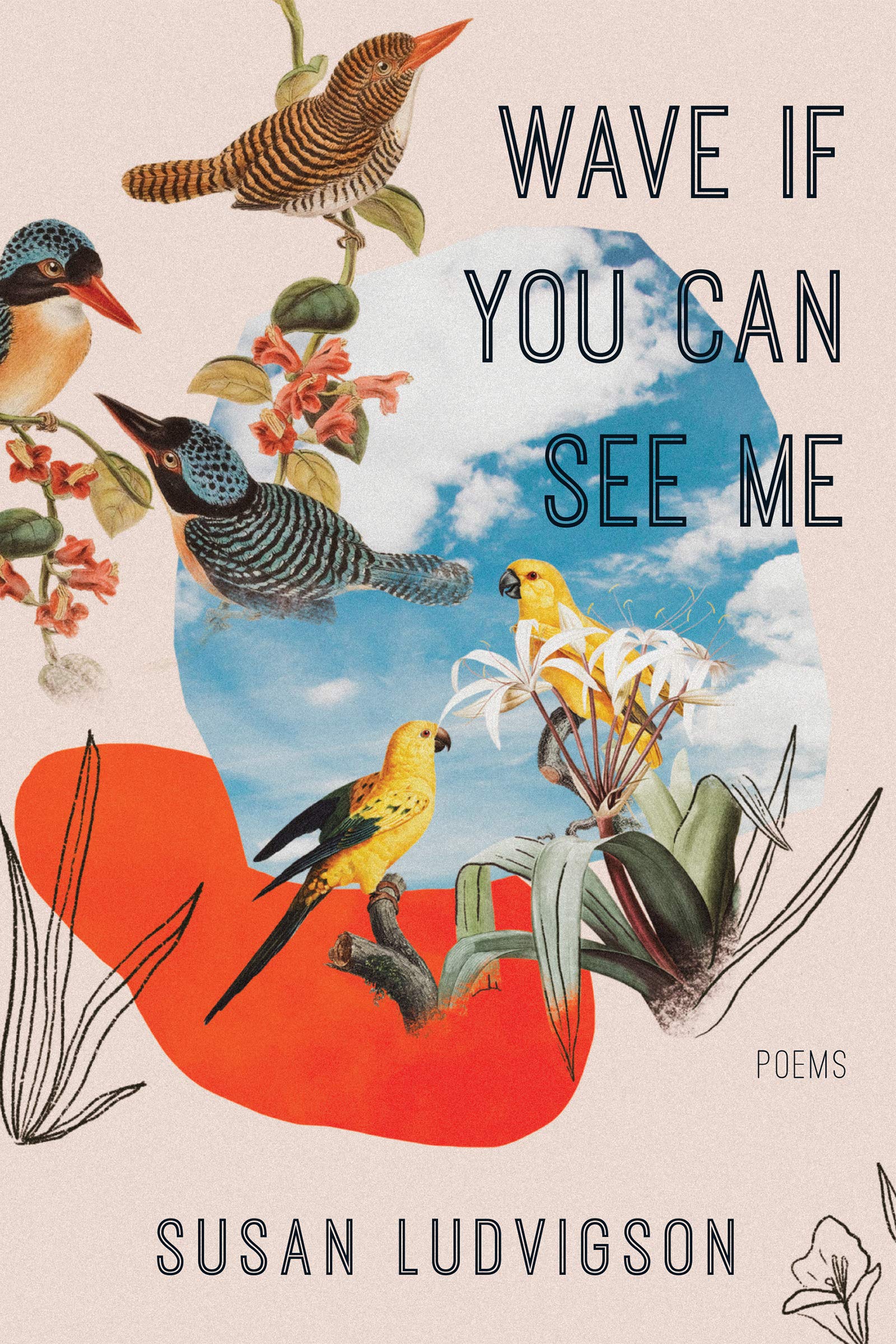
Mike James Reviews Wave If You Can See Me By Susan Ludvigson

.

91UqNQ1MB-L

.

Mike James Reviews

Wave If You Can See Me

By Susan Ludvigson

.

In “How It Can Happen,” one of the first poems in this fine new collection, the narrator imagines death as Shakespeare’s “other country.”  She writes, “I go with you, / but not all the way to your destination. / I wait in a dark house while you are taken / to a secret location. / We knew this could happen.”

The last line is instructive because it hints at a foreshadowing which haunts so many of these poems. In poem-after-poem the narrator is never sure of what’s across the river, but she’s certain it’s bad. A bridge will suddenly give way. Flood waters will rise too quickly. The villagers at the next exit won’t be friendly.

The dread is natural since so many of the poems are concerned with the death of the poet’s spouse, novelist Scott Ely. Many are not elegies as much as they are re-imaginings of an old life and dream-like restructurings of the current one. In the wonderfully titled “You Could Be Drinking Faulkner’s Bourbon,” she pictures what her husband might be doing in that other country. The poem moves from image to image, then concludes with a leap of transcendence: “we tell ourselves we’d like to know / but knowing / puts a period on speculation / and we are opposed / even in esoteric theory / to endings.”

From a technical standpoint, the addition of the four words “even in esoteric theory” deepens the poem. If good writing is about surprising the reader, those words surprise by their placement. “Esoteric theory” may not be the most sonically pleasing phrase, but it serves well to play off the narrator’s “speculations” and to strengthen the poem’s conclusion. The narrator is not just opposed to death and all the sorrows death brings. The narrator is opposed to all finality, even of the most far flung variety.

For Ludvigson, mourning is not relentless. Death is to be accepted. If Ludvigson never imagines death as gentlemen caller the way Emily Dickinson did, neither does she shy away from placing a spot at the table for him to sit. The narrator in “Too Late” tries to take in both her dream life and her new life as she travels without fear. “In the new country, / I try to ask directions, tell someone / how far we are from home. / The man behind the counter nods / as if he understands.”

Throughout the collection, over many roads and many nights, an understanding is always sought. Some poems end with an epiphany. Other poems end with an image like a cocked gun.

Though the subjects are often wrenching, there’s a steadiness throughout this collection which is appealing. The poems are tough and sensuous, subtle and clear. And the book is structured so that each poem adds resonance to the one before it.

This is Ludvigson’s first collection in 14 years. That’s a long time for a poet who has published many books, with most appearing in three to four year intervals. What has she done during her long silence? Well, she has continued to appear in magazines like Poetry, Atlantic Monthly, and Georgia Review. She has taught and judged book contests and taken up painting after a lifetime of watching. And she has said goodbye to friends and to her husband all while taking note of, “stars / burning through the debris of history / like love burning through the dark of loss.”

Wave If You Can See Me, by Susan Ludvigson
Red Hen Press, 2020
Poetry, $15.95

.

About the Author: Mike James makes his home outside Nashville, Tennessee. He has published in numerous magazines, large and small, throughout the country. His 18 poetry collections include: Leftover Distances (Luchador), Parades (Alien Buddha), Jumping Drawbridges in Technicolor (Blue Horse), and Crows in the Jukebox (Bottom Dog), He has received multiple Pushcart and Best of the Net nominations.

.

More Reviews by Mike James:

Mike James reviews Mingo Town & Memories by Larry Smith

Mike James reviews “Dead Letter Office: Selected Poems” By Marko Pogacar

Mike James reviews Beautiful Aliens: A Steve Abbott Reader and Have You Seen This Man? The Castro Poems of Karl Tierney

Ten Big Things to Know About Roy Bentley: A Review of My Mother’s Red Ford: New & Selected Poems, 1986-2020  By Mike James

Ten Big Things to Know About Roy Bentley:

A Review of

My Mother’s Red Ford: New & Selected Poems, 1986-2020 

By Mike James


1.

Roy Bentley started out as a poet concerned with his own life and his Appalachian and Ohio upbringing. In those early poems about his fire-lipped mama buying a car and an uncle who joined the navy when his wife sent him out to purchase bread, he wrote like a great and natural conversationalist. Those early poems are handled with subtlety, humor, and clear-eyed toughness.


2.

At some point, Bentley decided he could write about anything. As the book progresses from the earliest work, Bentley’s subjects broaden while he deepens his skill. He has poems about Jim Morrison, Robert E. Lee, and F. Scott Fitzgerald. He has a poem about losing his virginity in a whorehouse and a poem about listening to a boxing match on the radio. Whenever he is writing about a subject he fully occupies it. He’s not a poet who believes in sprinkling. He is a poet of submersion.


3.

Roy Bentley knows how to end a poem. Here are a few random last lines. “The only rising we do is out of the body.” “That awful need to believe in God or nothing at all.” “The hardest part is living without hope.” “Something a boy says to no one in the night.” “Even shadows want to leave here.” (It’s good to be able to quote lines which speak for themselves and need neither footnotes nor back stories.)


4.

His last lines can wallop or kiss, but he never takes short cuts to get there. Bentley might be a good guy to play cards with because he doesn’t seem to know how to cheat.


5.

He is an Ohio poet. There must be something good in the Ohio water. Other Ohio poets include Kenneth Patchen, Rita Dove, Larry Smith, James Wright, Sherwood Anderson, Jeff Gundy, Hart Crane, Paul Laurence Dunbar, Mary Oliver, Paul Zimmer, and George Starbuck. That’s a partial list. There must be something in the Ohio water.


6.

This is poetry without pose. His beer poems and pharmaceutical poems are matter-of-fact. He follows the poem wherever it takes him. He never sounds like anyone other than himself. His voice is distinct and only muddied when he is gargling with river water.


7.

Filmmaker genius/artist/raconteur Jack Smith once wrote, “The title is 50% of the work.”

Based on that, Bentley’s poems are half-way successful at the start since he never provides boring or lazy titles. Some invoke curiosity about happenings, such as “Why William Earl “Bill” Hagerman Carried the Casket” or “Coal Town Saturday Night.”  Some place the reader in a landscape, such as “Body of a Deer by a Creek in Summer.” Others are more musical like, “Eggs and Butter and Milk and Cheese.” (Do you notice how that title starts and ends on the “e” sound? Do you notice how a grocery list becomes a short litany a child might chant to her mother as she helps put groceries away?)


8.

Most of these poems either relate or create an anecdote for the reader. To call them narratives might indicate they are longer than they are. (His average length is one or two pages.) Some don’t so much tell a story as create a scene where a story might take place. Think of an Appalachian David Lynch driving through small towns, past closed drive-ins.


9.

Bentley’s references are wide ranging and fun. He loves Jerry Lee Lewis as much as he loves Salvador Dali. He likes Walt Whitman and Arthur Rimbaud. He loves Elvis (who doesn’t?) and Batman and zombies. Did I mention strippers? He loves those too.


10.

Bentley has not only grown more skillful with age, but also more productive. Six years passed between his first and second books. Then fourteen between his second and third. Then seven more to the next. Then only five passed to the next two! And now this robust selected appears two years after the last two collections. Bentley is bending time in his direction these days with his well-told reckonings and his joyful, verbal leaps.


My Mother’s Red Ford: New & Selected Poems, 1986-2020
Lost Horse Press, 2020
Poetry, $24


About the Author: Mike James makes his home outside Nashville, Tennessee. He has published in numerous magazines throughout the country in such places as Plainsongs, Gargoyle, Birmingham Poetry Review, and Chiron Review. His fifteen poetry collections include: Journeyman’s Suitcase (Luchador), Parades (Alien Buddha), Jumping Drawbridges in Technicolor (Blue Horse), First-Hand Accounts from Made-Up Places (Stubborn Mule), Crows in the Jukebox (Bottom Dog), My Favorite Houseguest (FutureCycle), and Peddler’s Blues (Main Street Rag.) He served as an associate editor of The Kentucky Review and currently serves as an associate editor of Unbroken.


More Reviews by Mike James:

Mike James reviews Mingo Town & Memories by Larry Smith

Mike James reviews “Dead Letter Office: Selected Poems” By Marko Pogacar

Mike James reviews Beautiful Aliens: A Steve Abbott Reader and Have You Seen This Man? The Castro Poems of Karl Tierney

SATURDAY POETRY SERIES PRESENTS: NOME EMEKA PATRICK

By Nome Emeka Patrick:


MONOLOGUE IN A ROOM WITH THE PORTRAITS OF MY DEAD BROTHER

You were my brother until your eyes wore a dragon’s breath until your hands grew into an orchard of blood until your mouth unwound into a coffin. May the blood that hums in our veins like a river knifing past a dark forest bear me witness. I love you brother with all the birds psalming in my bones. I love you o brother. In this sanctuary that’s my mouth, brother there’s a prayer burning wild –a lamp in the wrinkled hands of a monk searching God in a dark room. You were my brother until the ten o’ clock news says a young man walks into a market with explosives strapped to his body like a life jacket. On the TV your face appears like a surprise & so it is. A scar glitters like a promise on your neck & so it is. How you got the scar: we were god’s descendants in a garden one afternoon when you said let’s play a game –a game of stones. Everything always started with you even the morning fajr. You hurled your stone but I ducked. Mine stabbed your neck into spittle of warm blood. We both knelt like two unfurling hibiscuses. We both cried like a night wind behind a chariot until the ambulance came. & today the scar glitters on every neighbour’s screen. That’s your lips o brother where prayers & ablutions grew wings & flew into the heavenly nest of a whistling God beyond. O brother the dancing firefly in a dark museum. O brother the lonely lamb where the forest is wildest. Until your eyes wore the skin of night & your hands grew into a garden of cold fallen leaves, you were the vision I never had. You were all the places I always dreamt of. You were the only prayer I learnt to keep in my heart before opening it into Allah’s eyes. O you were my only dear brother. How do I pray for your soul when every song that leads me to you is a dirge stuck on a raven’s beak?


Reprinted with permission from the author. This poem first appeared in the Winter 2019 issue of Flapperhouse.


Nome Emeka Patrick is a blxck bxy and student in the University of Benin, Nigeria, where he studies English language and literature. A recipient of The 40th edition of Festus Iyayi award for excellence (Poetry) in 2018. His works have been published or forthcoming in Gaze journal, Beloit poetry journal, FLAPPER HOUSE, Crannóg magazine, Puerto Del Sol, Mud Season Review, The Oakland Review, Notre Dame Review, Gargouille, Barnhouse journal and elsewhere. His manuscript, We Need New Moses. Or New Luther King, was a finalist for the 2018 Sillerman First Book Prize for African poets. Say Hi on twitter @paht_rihk

Guest Editor’s Note: In this poem, a river knifes past a dark forest, and a scar glitters; memory of shared experience becomes love, and a brother questions his own mourning in the wake of a terrible devotion in “a prayer burning wild.” The speaker addresses his brother and cries out for meaning in a senseless world that broadcasts the terror and disregards the humanity. The speaker talks of their kinship in the past, signaling its destruction at the moment the bomb exploded, leaving the speaker with an unresolved grief.

Original similes are sometimes hard to come by, but this poem surprises with each comparison that contains images igniting all of the senses and lines delving deeper into the emotions associated with a brother’s death. Remembering how they dealt with tragedy in their youth, the speaker compares them to “two unfurling hibiscuses,” kneeling and crying. The poem is a visual and musical lament that uses personal memory and imagery to convey intimate sorrow and grief, universal human feelings that rely on recollection to commemorate loved ones and keep close those times that define life in the living and not in its end.

Want to read more by and about Nome Emeka Patrick?
Gaze Journal
FLAPPERHOUSE
Vagabond City


Contributing Editor Anne Graue is the author of Fig Tree in Winter (Dancing Girl Press), and has published poems in literary journals and anthologies, including The Book of Donuts (Terrapin Books), Blood and Roses: A Devotional for Aphrodite and Venus (Bibliotheca Alexandrina), Gluttony (Pure Slush Books), The Plath Poetry Project, One Sentence Poems, Random Sample Review, Into the Void Magazine, Allegro Poetry Magazine, and Rivet Journal.


A NOTE FROM THE MANAGING EDITOR:

After nearly ten years as Contributing Editor of this series, it is an honor and a unique opportunity to share this space with two new Contributing Editors, including the one featured here today. I am now thrilled to usher in an era of new voices in poetry as the Managing Editor of this series.

Viva la poesia!
Sivan, Managing Editor
Saturday Poetry Series, AIOTB


SATURDAY POETRY SERIES PRESENTS: F. E. CLARK

“Daily Painting, 12th June 2017” by F. E. Clark


By F. E. Clark:


MYOPIA

We lost the far away from our eyes
peering at our precious tiny screens.
Addicted to the chatter in the blue light
we spat and growled at the slam, slam, slam,
of constant crisis, constant cries.
We marched figuratively through our newsfeeds,
wound tighter and tighter—blinded,
to that which was not inside our screens.
And all the while the earth was turning,
away, away, away.
Until we could see her
no more, and we were gone.


TO BRING THE SKY DOWN

A scared flame of violet – burnt from a found bone,

The indigo of your first lover’s jeans,

High sky blue of a day in spring when the larks sung,

Green fired algae from the dead pond’s ditch

Yellow of the belly of the one who cowers,

Orange from the fungi that grows under the dead fox,

The red of a berry that poisons.

Plait the rainbow – red over orange, yellow over green, blue over indigo,

Tie with violet at the deepest hour of black,

Make sure you bind the rainbow’s ends tight,

When required, cast from a clifftop on a dark moon night.


“Myopia” previously appeared in Burning House Review, and “To Bring the Sky Down” previously appeared in Luna Luna Magazine. These poems appear here today with permission from the poet.


F. E. Clark lives in Scotland. She writes, paints, and takes photographs—inspired by nature in all its forms. A Pushcart, Best of the Net, and Best Small Fictions nominee, her poetry, flash-fiction, and short stories can be found in anthologies and literary magazines.

Contributing Editor’s Note: In “Myopia,” F. E. Clark takes an existential view of what has become second nature to all of us: looking at our phones while ignoring the world around us. The poem is written in the past tense and reveals the sad outcome of having lived our lives through a few inches of screen. She exposes the profound sadness when, “We lose the far away from our eyes” and are exposed to “constant crisis, constant cries” as we respond and read social media and news feeds, while the world continues its routing rotating When we “away, away, away.” And at the same time turning its back on us. Her dystopic conclusion is that the less we participate in the world, the less we ourselves exists.

Clark regains her vision of what life can be in her poem, “To Bring the Sky Down.” Her remedy for the blindness she encountered in “Myopia” is keen observation reinforced by incantatory rhythms. What she sees when she looks closely at the world around her is remarkable. Clark finds antidotes in vivid technicolor, among the discarded, “The indigo from your first lover’s jeans”; the decayed, “Orange from the fungi that grows under the dead fox”; and the dead, “Green fired algae from the dead pond’s pitch”. She collects strands of color, plaiting them into a rainbow for eventual use in the darkest times.

Want to read more by F. E. Clark?
F. E. Clark’s Official Website
Twitter: @feclarkart
Umbel & Panicle
Mojave Heart Review
Luna Luna Magazine


Contributing Editor Alan Toltzis is the author of The Last Commandment. Recent work has appeared in print and online publications including Hummingbird, Right Hand Pointing, IthacaLit, r.k.v.r.y. Quarterly, and Cold Noon. Find him online at alantoltzis.com.


A NOTE FROM THE MANAGING EDITOR:

After nearly ten years as Contributing Editor of this series, it is an honor and a unique opportunity to share this space with a number of contributing editors, including the one featured here today. I am thrilled to usher in an era of new voices in poetry as the Managing Editor of this series.

Viva la poesia!
Sivan Butler-Rotholz, Managing Editor
Saturday Poetry Series, AIOTB