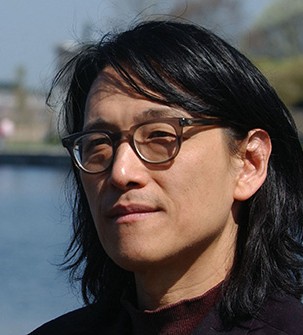
SATURDAY POETRY SERIES PRESENTS: LI-YOUNG LEE

lee_si-303x335


By Li-Young Lee:


from ALWAYS A ROSE

Not for the golden pears, rotten on the ground—
their sweetness their secret—not for the scent
of their dying did I go back to my father’s house. Not for the grass
grown wild as his beard in his lasts months,
nor for the hard, little apples that littered the yard,
and vines, rampant on the porch, tying the door shut,
did I stand there, late, rain arriving.
The rain came. And where there is rain
there is time, and memory, and sometimes sweetness.
Where there is a son there is a father.
And if there is love there is
no forgetting, but regret rending
two shaggy hearts.
I said good-bye to the forsythia, flowerless for years.
I turned from the hive-laden pine.
Then, I saw it—you, actually.
Past the choked rhododendrons,
behind the perishing gladiolas, there
in the far corner of the yard, you, my rose,
lovely for nothing, lonely for no one,
stunning the afternoon
with your single flower ablaze.
I left that place, I let the rain
mediate on the brilliance of one blossom
quivering in the beginning downpour.


VISIONS AND INTERPRETATIONS

Because this graveyard is a hill,
I must climb up to see my dead,
stopping once midway to rest
beside this tree.

It was here, between the anticipation
of exhaustion, and exhaustion,
between vale and peak,
my father came down to me

and we climbed arm in arm to the top.
He cradled the bouquet I’d brought,
and I, a good son, never mentioned his grave,
erect like a door behind him.

And it was here, one summer day, I sat down
to read an old book. When I looked up
from the noon-lit page, I saw a vision
of a world about to come, and a world about to go.

Truth is, I’ve not seen my father
since he died, and, no, the dead
do not walk arm in arm with me.

If I carry flowers to them, I do so without their help,
the blossoms not always bright, torch-like,
but often heavy as sodden newspaper.

Truth is, I came here with my son one day,
and we rested against this tree,
and I fell asleep, and dreamed

a dream which, upon my boy waking me, I told.
Neither of us understood.
Then we went up.

Even this is not accurate.
Let me begin again:

Between two griefs, a tree.
Between my hands, white chrysanthemums, yellow
      chrysanthemums.

The old book I finished reading
I’ve since read again and again.

And what was far grows near,
and what is near grows more dear,

and all of my visions and interpretations
depend on what I see,

and between my eyes is always
the rain, the migrant rain.


Today’s poems were published in Rose (BOA Editions, 1986) and appear here with permission from the poet.


Li-Young Lee is the author of four books of poetry, including, most recently, Behind My Eyes. His earlier collections are Book of My Nights; Rose, winner of the Delmore Schwartz Memorial Award; The City in Which I Love You, the 1990 Lamont Poetry Selection; and a memoir entitled The Winged Seed: A Remembrance, which received an American Book Award from the Before Columbus Foundation and will be reissued by BOA Editions in 2012. Lee’s honors include fellowships from the National Endowment for the Arts, The Lannan Foundation, and the John Simon Guggenheim Memorial Foundation, as well as grants from the Illinois Arts Council, the Commonwealth of Pennsylvania, and the Pennsylvania Council on the Arts.

Editor’s Note: Because it has been three years since my father died. Because three years ago, Li-Young Lee’s Rose was the labyrinth I walked to access my grief. Because “Truth is, I’ve not seen my father / since he died.” And while rereading this collection forces me to confront this reality, it also reminds me that “if there is love there is / no forgetting.”

Want more from Li-Young Lee?
Blue Flower Arts
The Poetry Foundation
Academy of American Poets

SATURDAY POETRY SERIES PRESENTS: KAREN ALKALAY-GUT

karen2014


By Karen Alkalay-Gut:


HER STORY

I have never been able to tell her story
Sometimes it escapes me, sometimes I am not sure
It could really have happened, sometimes I read
Different accounts of her demise, or a paragraph
From some testimony jogs my memory and the terrible days
When I first heard what happened to her return.

This much is in my blood:
I was conceived on the day she died.
This much is in my blood.
She blew up trains.
The courage came from her uplifted chin
And the two infants she watched
Dashed against the wall of their home.
Avram twelve months old and Masha two years.
My first cousins.
They too – in my blood – all that is left.

If I can write of these babies,
I can manage the rest –
Following her path as she escaped
The prison camp with her husband
And joined the Otrianski Otriade
Lenin Brigade, Lipinskana Forest.

I can feel her mouth, her narrow lips clamped
As she bends over the delicate mines,
Solemn as in the photo when as a child
She sat for with the rest of the choir
Unsmiling amid the festive singers
Unwilling perhaps to feel poetic joy
Perhaps destined for so much more.

There are at least three accounts of her death:
The partisan Abba Kovner told me she was caught
In a mission and hung. He looked away when he spoke,
Not piercing me as always with his tragic eyes,
And I knew there was more he would not say.

Another book says she lagged behind the platoon
Escaping an attack, perhaps pregnant,
And was imprisoned in Zhedtl.
The jail was ignited, perhaps by accident,
And she was just one of the victims.

When mother first told me the story
She had just heard at the hairdresser’s,
I must have been fifteen, and outraged
That she was weeping, tears
Rolling down her face. She knew
All I cared for was my own life,
And her latest discovery
Of the fate of her youngest sister
A disruption.
But who else could she tell?

The loft in the barn, she said,
They were hiding there – three women,
Her husband and her. They came
And set the barn afire. He helped
The women first, and his wife came last
But didn’t come, was burnt alive.

Malcah Malcah who saved all our lives
Malcah who was waiting for them
When the ship brought them back to Danzig
After they were barred from the Holy Land,
Who found them the agricultural visas to England
And saw them off the night that Hitler invaded.
But there is no real story.
All that remains is a faded snapshot
A few sentences in unread memorial tomes,
And me, who cannot tell any story for sure.


Today’s poem was originally published in Prairie Schooner and appears here with permission from the poet.


Karen Alkalay-Gut is now easing out of a fifty-year academic career at Tel Aviv University and beginning to concentrate on writing. Born in London during World War II, she was raised in Rochester, New York and moved to Israel in 1972. She has published almost 30 books in English, and Hebrew, Spanish, and Italian translation, and has collaborated on half a dozen music CDs.

Editor’s Note: Is it possible to read today’s poem without being moved to tears? To wax poetic (this is the place for that, after all), when I read today’s poem the first words that come to mind are “How do I love thee? Let me count the ways.” No, really. Let me.

1) Parallelism, as both an incantatory device and as a conversation between the poem and biblical poetry. “This much is in my blood: / I was conceived on the day she died. / This much is in my blood.” “Malcah Malcah who saved all our lives / Malcah who was waiting for them.” This parallelism is working on more levels than we might imagine. To echo the Bible in this way is a tradition that dates back to the earliest World War II and Holocaust poetry. But, in fact, it dates back to long before the Holocaust, finding rich roots among the varied history of all Jews in exile, and particularly those in Spain’s Golden Age and the time of the expulsion.

2) Vivid imagery that does not let us forget the many tragedies of “her story.” “[T]he two infants she watched / Dashed against the wall of their home,” “I can feel her mouth, her narrow lips clamped / As she bends over the delicate mines,” “He helped / The women first, and his wife came last / But didn’t come, was burnt alive.” This poem is rife with what Aristotle termed Pathos, the emotional connection to the audience. This is not a poem that you can read without feeling, deeply.

3) The poet herself shines through as a character, real and flawed and human. We know her struggles and her failings, and we experience them with her. “If I can write of these babies, / I can manage the rest,” “When mother first told me the story… I must have been fifteen, and outraged / That she was weeping… She knew / All I cared for was my own life, / And her latest discovery / Of the fate of her youngest sister / A disruption.”

4) Malcah, on the other hand, is made a hero through raw nostalgia. Malcah means “queen,” and while the poet did not invent her lost aunt’s name, bringing her name into the poem elevates the heroine to near-godly proportions. “She blew up trains. / The courage came from her uplifted chin,” “Malcah who saved all our lives / Malcah who was waiting for them / When the ship brought them back to Danzig / After they were barred from the Holy Land, / Who found them the agricultural visas to England / And saw them off the night that Hitler invaded.” Malcah the martyr, who did not die before first ensuring that the poet and her family would live.

5) “Her Story.” It is no secret that I am a big fan of herstory. I created a project to revive and celebrate it. But herstory, as today’s poem makes clear, is multi-faceted. It is women’s history, it is one woman’s history, it is women’s stories, and it is one woman’s story. But in today’s poem it is also the admission that there is no one story. (An idea I am incredibly interested in, as I spent the fall of 2013 researching my own family’s history through the lens of varying versions of the same story, much as today’s poem does.) In today’s poem we are given every known version of Malcah’s story, but the poet twins the telling of “her story” with the idea that “there is no real story” to tell. This is as true to an accurate historical retelling as anyone can come.

Want more from Karen Alkalay-Gut?
Karen Alkalay-Gut’s Official Website
Interview in The Madison Journal of Literary Criticism
Tel Aviv Radio
Buy The Encantadas: Evolution and Emotion from Amazon
The Bridge at Raqqa (eBook)
Youtube

SATURDAY POETRY SERIES PRESENTS: HANNAH BESSINGER

Hannah Bessinger Photo


FUGUE
By Hannah Bessinger

I remember the sunset pooling into the hollows
of your collarbones.

Your sweater was plum-colored and torn
near the neck.

I could hear the beat of flywings
after you left me

alone on our green porch swing at dusk. Every time
I returned,

I watched their black bodies gleaming in the air
like bits of iron.

I remember our mother crumpling onto the kitchen
floor. The phone’s

battery falling out and hitting the tile.

The kids next door got a BB gun for Christmas. The older
one shot a ring-necked dove.

Our cat dragged it to the porch, and I found it the next
morning,

its white feathers piercing the air.

The flies had settled into the holes in its body.

You were dressed in purple when they buried you.

I felt October folding into itself
like a paper boat,

the leaves spinning madly towards the earth.

The hard wood of the piano bench
etched lines into my thighs.

I played only Bach the entire year. By the end
I did not think,

and my hands moved from memory
through the pages of counterpoint,

one melody announcing itself to the world
with my left hand,

the other curling into itself at first, then rising,
lifting its voice to meet the air,

the night, the sky.


Today’s poem was originally published in Thrush Poetry Journal, and appears here with permission from the poet.


Hannah Bessinger is currently an MFA student at North Carolina State University. She grew up in Georgia, and finds that the landscape of the South influences her writing. She is currently working on a poetry thesis, and she plans to apply to medical school after graduation from her MFA program.

Editor’s Note: I was once told by an editor that a poem of mine was “curly.” Now, mind you, this editor’s feedback was in translation. Nonetheless, I have wondered at the essence of that comment for some time. Today’s poem helps me to understand what was meant. In English, we would not typically say “curly” about a poem. But we would say “shifting.” We would say “transformative.” We would focus on the poem’s movement—how it turns, how it moves like waves lapping the shore and returning to sea. How it moves like a dancer, both committed to form and inspired to unique expression. These are the ways today’s poem moves.

Begin in memory. Remember a person. Remember someone you loved. Turn from that person to decay, to “the beat of flywings / after you left me,” “their black bodies gleaming in the air / like bits of iron.” Turn next to loss. To mother. To the kids next door, their BB gun, destruction. Return to loss. To decay. Turn to burial. Poem, be a scavenger bird, circling. Then break the circle. Step outside. Into October, “the leaves spinning madly towards the earth.” Step farther out. Into music, “one melody announcing itself to the world.” Then rise. Rise from the palpable, the comprehensible, the “hard wood of the piano bench” to the observable yet inconceivable, to “the night, the sky.”

This is the dance of today’s poem. This movement its ocean. And all the while we are grounded in concrete detail. In vivid imagery. The particular experience of the poet so distinct it becomes our own. The title sets the stage, and the performance unfurls before us. Writhing. Twisting. Curly, if you will.

SATURDAY POETRY SERIES PRESENTS: MARCI CALABRETTA

MarciCalabretta


By Marci Calabretta:


CATERPILLAR SEASON

Wild strawberries were blooming
as we ambled toward the cottonwood shade.

You were examining the prophecy of snowfall
in the measurements of woolly caterpillars

and I asked your opinion on the nature of happiness,
perhaps because you called me sister

or because I called you brother and stranger.
Tiger-banded dragonflies skimmed the grass.

Fern and myrtle, downy brown and black.
You laid the larvae on my palms without speaking.

I never knew you had such silences.
Overhead, wires heavy with starlings or crows―

I couldn’t tell against the steel sky. But I remember
later that night, the steam from our tea

curling above us and into our mouths, as though
the answer could last us a whole season of snow.


BROTHER RETURNS AS CHRYSANTHEMUM

Didn’t we think we were more than this―
little suns unfurling above the earth?

We thought we were constellations
in soil, entire galaxies anchored to dust.

Ravenous, we believed our thousand
arms could hoard the horizon―

eclipsing ourselves even as we waned,
bereft of all but shadow.


Today’s poems were originally published in Thrush Poetry Journal, and appear here with permission from the poet.


Marci Calabretta is the recipient of poetry fellowships from Kundiman and the John S. and James L. Knight Foundation. Her work has appeared most recently in Thrush, Lunch Ticket, American Letters & Commentary, and Chautauqua. Her chapbook, Last Train to the Midnight Market, was published by Finishing Line Press. She is co-founder and managing editor for Print-Oriented Bastards, an assistant editor for Jai-Alai Magazine, and a contributing editor for Florida Book Review.

Editor’s Note: Today’s poems are wildly vivid and pleasantly unexpected. In “Caterpillar Season,” the poet couples the lush of wild strawberries with the oracular act of “examining the prophecy of snowfall.” The poem is like a parable in which the nature of happiness might be gleaned from the wonders of a nature so vibrant it feels at times as if it might fly or blossom from the page. “Brother Returns as Chrysanthemum” is anchored in the metaphysical, grappling with human existence and our role in the universe. The culmination of the poem, “eclipsing ourselves even as we waned, / bereft of all but shadow,” is a gorgeous finale that grounds us in the observable while inviting us to contemplation. Both poems indulge in delicious alliteration, fervently celebrating language and the poetic act.

Want more from Marci Calabretta?
Marci Calabretta’s official website
Lunch Ticket
Purchase Last Train to the Midnight Market from Finishing Line Press
Co-founder and managing editor for Print-Oriented Bastards

SATURDAY POETRY SERIES PRESENTS: KELLY CRESSIO-MOELLER

Photo on 2014-12-29 at 18.20_2_2


By Kelly Cressio-Moeller:


ITHAKA

Dear Penelope, do you now sleep among the catacombs?

Scarves of white drift over the Aegean – an altar of bottomless blue.

I have gone to the edge of the world and still cannot find you.

Even the olive trees raise their spangled limbs skyward in longing.

Mother Earth slides her abacus beads, conjures storms quick as curses.

When lightning struck, did the boat protect or beckon the bolt?

Island flowers shut their eyes only when the stars disrobe – hope and sorrow held
within the same root.

She imagines him bright-toothed & swarthy, but her husband is just sunburned & homesick.

So many suitors holding her skeins – she’s woven a trail for her waylaid mariner, long
as his beard and her undoing.

In twenty years she has never asked, What shall I wish for myself?

Odysseus wonders, Do I have the right to return?

Maids cast offerings to the sea: red rose petals and grape leaves, love and wine all that remain.


** The line What shall I wish for myself? is a reworking Mary Oliver’s line What shall I wish for, for myself?


Today’s poem was originally published in Thrush Poetry Journal and appears here with permission from the poet.


Kelly Cressio-Moeller’s poetry is forthcoming in burntdistrict and has previously appeared in Crab Orchard Review, Gargoyle, Poet Lore, Rattle, Spillway, ZYZZYVA and elsewhere as well as the anthology First Water: Best of Pirene’s Fountain and Diane Lockward’s book, The Crafty Poet. Three of her poems have been nominated for the Pushcart Prize. She shares her fully-caffeinated life with her tall husband, two ever-growing sons, and their immortal basset hound in Northern California.

Editor’s Note: “Ithaka” exists in the eye of the storm of the epic. Address and persona are interwoven with the personal, the poet’s experience becoming one with Penelope’s need and Odysseus’ long journey home. Against the backdrop of the familiar, we find ourselves adrift on a sea of the unexpected, where lyricism is heroic and longing is complex. Similes and metaphors are seamlessly stitched into the poem’s fabric: limbs are spangled, clouds are “scarves of white,” the ocean is an altar. When the poet enters, the simple is made profound: “I have gone to the edge of the world and still cannot find you.” When we arrive, the shores are shaped like questions: “Do I have the right to return?” “What shall I wish for myself?

Want more from Kelly Cressio-Moeller?
Boxcar Poetry Review
Cultural Weekly
Escape Into Life
Rattle
Valparaiso Poetry Review

SATURDAY POETRY SERIES PRESENTS: DES LIENS INVISIBLES, TENDUS / TAUT, INVISIBLE THREADS


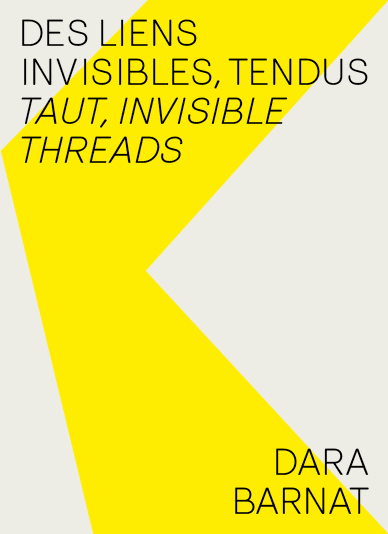
Liens


From DES LIENS INVISIBLES, TENDUS / TAUT, INVISIBLE THREADS
Poems by Dara Barnat; Translations by Sabine Huynh:


A BRILLIANT FISH

We must choose each other
again and again.

The feeling is a brilliant fish
you catch a thousand times.

We must carry each other
like smooth stones
in the palms of our hands –

a familiar feel,
a roundness.


UN POISSON MOIRÉ

Un poisson moiré
Se choisir l’un l’autre, s’y reprendre
à plusieurs fois.

Cet émoi ressenti face à un poisson moiré
qu’on pourrait attraper des milliers de fois.

Transportons-nous
tels des galets lisses
dans le creux de la paume –

toucher familier,
rondeur.


GROWING VEGETABLES

Her wide hips remind me
that I was born,
because in photos at twenty
they are still narrow
and slim.

Bending over
and planting roses
she gathers immense joy
from the dirty pebbles
and the new petals.

I hold her basket
like a daughter should
and almost pretend
to smile and be grateful
for the fresh, ripened tomatoes.

Is it with age
that happiness can be found
in growing mint
and drinking ice water
that has collected tiny bugs?

My mother shares soap
with a man who is not my father
but a good man,
waiting inside
to make our sauce.

The basket is now full
and since her joy
takes up the whole garden
there is no room
for my joy.

But she says daughter,
you will have your own life,
and your own garden,
just pray for rain,
and grow your vegetables.


CULTIVER SON POTAGER

Ses hanches généreuses
me rappellent ma naissance
– dans des photos d’elle à vingt ans
elles sont encore étroites
elle est encore mince.

Penchée
sur les roses mises en terre
elle recueille une joie immense
des cailloux sales
et des jeunes pétales.

Je lui tiens son panier
telle une fille dévouée
et réussis presque
à sourire de gratitude
pour ces tomates mûres.

Est-ce avec l’âge
que l’on trouve du bonheur
à faire pousser de la menthe
à boire de l’eau glacée
où surnagent des petites bêtes?

Ma mère partage son savon
avec un homme qui n’est pas
mon père, un homme bon,
il attend à l’intérieur
de préparer notre sauce.

Le panier est plein
la joie de ma mère
remplit le jardin
plus de place
pour la mienne.

Alors elle me dit : tu sais ma fille,
tu auras ta propre vie
et ton propre jardin,
prie pour qu’il pleuve
et cultive ton potager.


PRAYER I DO NOT KNOW

No one is here, just me,
alone. I close

my eyes and try
to remember your face,

its light, your
fingers, their light

touch, your laugh,
the lightness. I recite a prayer

that is my own:
May we live

a thousand years together
in another life.


PRIÈRE OBSCURE

Comment prier
pour toi ? Personne

ici, moi
seule. Je ferme

les yeux, tente de voir
ton visage,

sa lumière, tes doigts,
l’affleurement,

ton rire,
la légèreté. Je récite une prière

qui est mienne:
Puissions-nous vivre

mille ans ensemble
dans une autre vie.


Today’s poems are from Des liens invisibles, tendus / Taut, Invisible Threads, published by Recours au poème éditeurs (2014), and appear here today with permission from the poet.


Des liens invisibles, tendus / Taut, Invisible Threads is a bilingual collection of poems by the American poet Dara Barnat, translated to French by Sabine Huynh. Dara Barnat explores migration (between New York, where she was raised, and Tel Aviv, her adopted city), the experience of being an English-language poet in Tel Aviv, intimate familial relationships, her father’s long illness and passing, as well as secrets, history, and memory. Loss is certainly at the core of the poems; although she succeeds in guiding her readers to comfort, even joy, with wisdom she has learned from enduring grief. In the last poem of the book, the speaker addresses her father in the afterlife, and they are both happy to be “alive.” This exhilarating vision demonstrates how Walt Whitman informs the poet’s elegies. She imagines herself walking down the street with Whitman. It is also not surprising to encounter Emily Dickinson or Robert Frost, since the power of Dara Barnat’s poetry resides in its capacity to observe our solitude with grace and honesty.


Dara Barnat was born in 1979. Her poetry appears widely in journals in the United States and Israel. She is the author of the chapbook Headwind Migration (2009), as well as poetry translations and scholarly essays. Dara holds a Ph.D. from the School of Cultural Studies at Tel Aviv University. Her dissertation explored Walt Whitman’s influence on Jewish American poetics. She teaches poetry and creative writing.


Sabine Huynh was born in 1972. She holds a Ph.D. in Linguistics (Hebrew University of Jerusalem), has authored poetry and prose books (novel, short stories, academic book, literary essay, diary), and has edited an anthology of modern French poetry, which were published by Galaade Editions, Voix d’encre, La Porte, éditions publie.net, Recours au poème éditeurs, E-Fractions Editions, among other French publishers. She writes in English and French, translates daily, occasionally teaches creative writing classes, and regularly contributes to the French literary journals Terre à ciel, Terres de femmes, and Recours au poème. Her website: http://www.sabinehuynh.com


Editor’s Note: The opening poem in Dara Barnat’s debut collection begins, “Please know that taut, / invisible threads / tethered us / to those years.” Threads that bind the speaker to mother and home, to father and illness, to time, to what comes into being and what inevitably slips away. And so Des liens invisibles, tendus / Taut, Invisible Threads invites us into a deeply personal yet resonant world of life and death, love and loss, relationship and the human experience.

Nestled within the honest, reflective, beautiful lyric of these poems are the moments poetry was made for: “maybe / we should part now, because oceans / dry up in time, / even the whitest bones / turn to ash.” Equally powerful are so many of the poems’ closing stanzas and end-lines: “daughter, / you will have your own life, / and your own garden, / just pray for rain, and grow your vegetables;” “May we live // a thousand years together / in another life.”

Throughout the book we are welcomed into a private, sacred space. Into kitchens and gardens, hospitals and homelands. We are invited to bake bread and receive intimate moments like sacrament. Crossing the wide span between memory and horizon, Taut, Invisible Threads is like a migrating bird that “fights the seasons, / and lands wherever / there are seeds, / water, and soft earth, // until it arrives.”

I wish that I were well-versed in French and thereby able to comment on the translations by Sabine Huynh housed within this moving bilingual collection. Falling far short of that wish, I can only say that I have had the pleasure of hearing the translator read some of her poetry translations aloud in French, and it was a transformative experience. Her voice is emboldened by its quiet humility, and the passion she has for translation is well-known amongst the numerous writers who seek to have their work translated by this gifted writer and translator.

I have had the pleasure of featuring both Dara Barnat and Sabine Huynh on this series, and am thrilled to see these two incredibly talented writers and translators brought together in one stunning collection. This book—and this collaboration—is a gift to the poetry world that should be read, shared, and celebrated.


Want to see more by Dara Barnat?
Buy Des liens invisibles, tendus / Taut, Invisible Threads from Recours au poème éditeurs
Dara Barnat’s Official Website
Dara Barnat’s Official Blog
“At Least Forward Now” in Haaretz

SATURDAY POETRY SERIES PRESENTS: MOTHER NIGHT

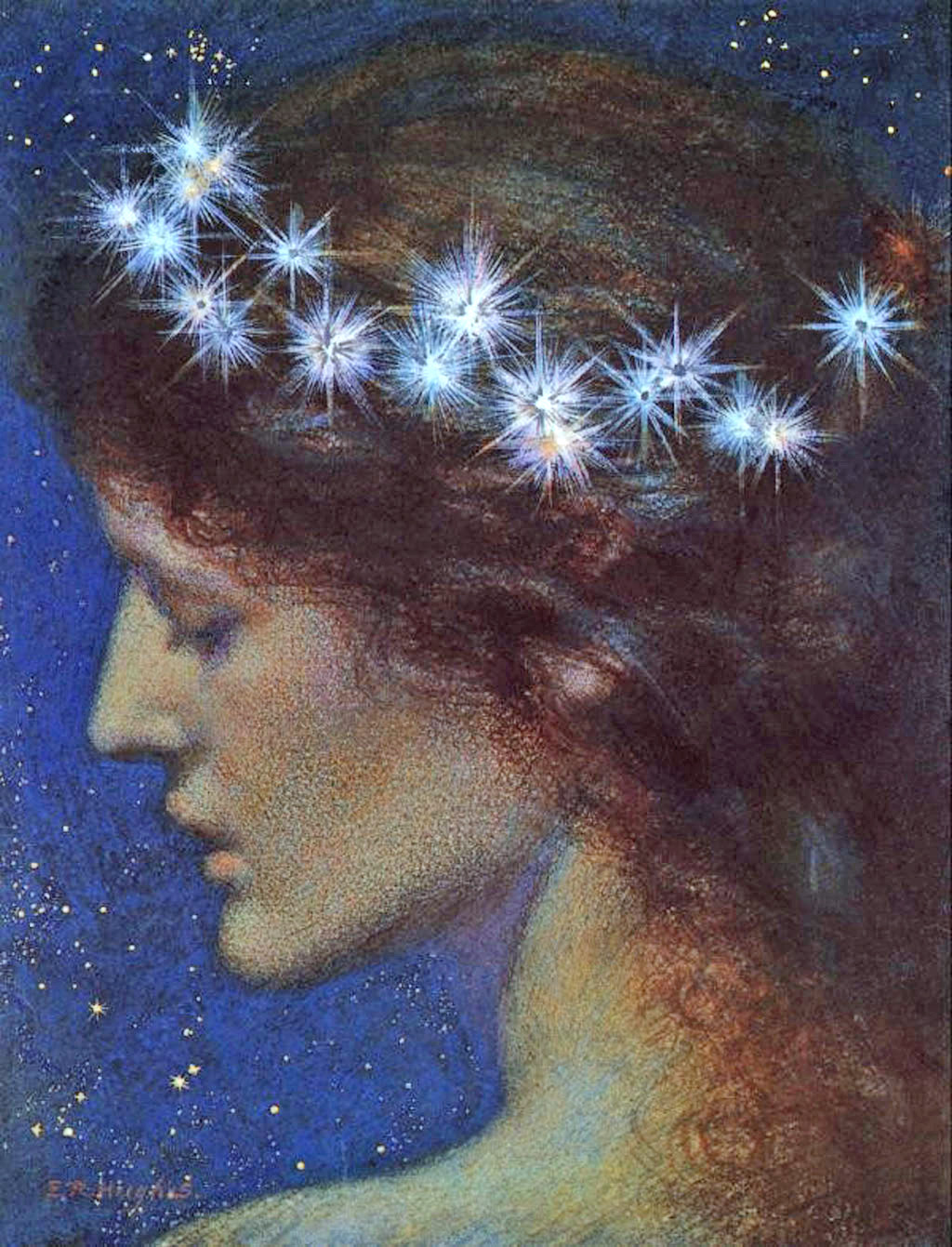
Edward-Robert-Hughes-Painting-003

MOTHER NIGHT
By James Weldon Johnson

Eternities before the first-born day,
Or ere the first sun fledged his wings of flame,
Calm Night, the everlasting and the same,
A brooding mother over chaos lay.
And whirling suns shall blaze and then decay,
Shall run their fiery courses and then claim
The haven of the darkness whence they came;
Back to Nirvanic peace shall grope their way.

So when my feeble sun of life burns out,
And sounded is the hour for my long sleep,
I shall, full weary of the feverish light,
Welcome the darkness without fear or doubt,
And heavy-lidded, I shall softly creep
Into the quiet bosom of the Night.


(Today’s poem is in the public domain, belongs to the masses, and appears here today accordingly.)


James Weldon Johnson (1871-1938) was an American author, educator, lawyer, diplomat, songwriter, and civil rights activist. In addition to being known for his leadership of the NAACP, Johnson was known during the Harlem Renaissance for his poems, novels, and anthologies collecting both poems and spirituals of black culture. (Annotated biography of James Weldon Johnson courtesy of Wikipedia, with edits.)

Editor’s Note: This Yuletide season I have been thinking—and writing—about ancient holiday traditions that we still practice, and how we received them. So when I came across today’s poem I was struck by the homage it seems to pay to the ancient festival of Mothers’ Night. This winter celebration was held on the eve of Yule, and celebrated The Mothers (goddesses) giving birth to the sun and the new year.

Beyond its title, today’s poem is rich with images of this ancient holiday: the night of labor, the birth of the sun, and the cycle of a year, when “whirling suns shall blaze and then decay.” Yet just as winter is a kind of death, in the second stanza the poet turns “Mother Night” into a metaphor for his own eventual death, imagining that when his time comes he will “Welcome the darkness without fear or doubt” and “softly creep / Into the quiet bosom of the Night.”

Want to see more by and about James Weldon Johnson?
The Poetry Foundation
Poets.org

SATURDAY POETRY SERIES PRESENTS: THE GLAD HAND OF GOD POINTS BACKWARDS

9780896728547


From THE GLAD HAND OF GOD POINTS BACKWARDS
By Rachel Mennies:


HOW GRANDMOTHER PAID HER PASSAGE TO NEW YORK

One by one her mother sold her silver spoons
and heirloom bracelets; goodbye, porcelain bear,
silk blouses, patent-leather Mary Janes, the scarves
and stud earrings for newly pierced ears, the red wool coat
spotted walking on another tiny body’s shoulders
down Wittenbergplatz. Goodbye, books bound
in leather, bone china, even the hangers, the goblets
and cabinets; goodbye to the Torah buried in the backyard,

the neighbors, the schoolmates, the mothers dressed so well
at services, the men with businesses who stayed behind
one week, two weeks more. What stylish
objects they became: the coins from fillings
and wedding rings, the soap, the wigs, lamp
after lamp to light a thousand decorated homes.


PHILADELPHIA WOMAN

The old sisters spoke with the wild gestures of trapped birds, snared or
cooped, their wings working toward an impossible escape. They stood
on street corners in Germantown and gesticulated the full span of their
arms. They argued over coffee, over books, over the dinner table, food
chilled to the temperature of the air. They hewed their beliefs for the
sake of debate. Soft-handed and pale-skinned, they lived mostly inside.

They took the trolley to Center City when they were in their twenties,
living in Logan with the rest of the refugee Jews. They told wild stories
of their childhoods, never explored or questioned. They worked as
bookkeepers, secretaries. They went to Girls’ High School, classrooms
filled with young women speaking foreign tongues, caught and released,
caught and released each day, back when men and women were kept
separately until marriage, fine china and daily dishware.

The oldest of the three married a soldier (never explored) who loved her
dearly (never questioned). When he died his mouth made words that
opened her chest like shrapnel. Tell them whatever you want, he said,
but I need you to know. I need you to know. Her hands stayed slack at her
side. Her name was. It was. She left his bedside and paced a block of Old
York Road, north and south, east and west, as if a cage around her kept
her close.


YAHRZEIT

Here the eye of God opens, unblinking,
at the throats of our grandmothers. The small pale
candle flickers on the windowsill, making
constellations of all our deaths.

How long a wick, how short a year. And here,
the family site, the only real estate
that’s mine—how clever, the way earth
makes us into mud—how heavy

the feet of our commemorators, how white
the knuckles that clasp their books of prayer.


Today’s poems are from The Glad Hand of God Points Backwards, published by Texas Tech University Press, copyright © 2014 by Rachel Mennies, and appear here today with permission from the poet.


The Glad Hand of God Points Backwards: In her first poetry collection, Rachel Mennies chronicles a young woman’s relationship with a complicated God, crafting a nuanced world that reckons with its past as much as it yearns for a new and different future. These poems celebrate ritual, love, and female sexuality; they bear witness to a dark history, and introduce us to “our God, the / collector of stories / and bodies,” a force somehow responsible for both death and liberation. Here, Mennies examines survival, assimilation, and intermarriage, subjects bound together by complex, if sometimes compromised, ties to the speaker’s Judaism. Through wit and careful prosody, The Glad Hand of God Points Backwards lays bare the struggles and triumphs experienced through a teenage girl’s coming of age, showing the reader what it means to become—and remain—a Jewish woman in America. —TTUP


Rachel Mennies is the author of The Glad Hand of God Points Backwards, winner of the Walt McDonald First-Book Prize in Poetry (Texas Tech University Press, 2014), and the chapbook No Silence in the Fields (Blue Hour Press, 2012). Her poems have appeared in Hayden’s Ferry Review, Poet Lore, The Journal, and elsewhere, and have been reprinted at Poetry Daily. She teaches in the First-Year Writing Program at Carnegie Mellon University.


Editor’s Note: The Glad Hand of God Points Backwards is an absolutely stunning collection. It is that rare breed of poetry book that you cannot help but read cover to cover, knowing all the while that you will return to it again and again. There is magic in this work. Ritual. Tradition. Its stories rise from the page in painstaking detail—vivid, emotive, and all too real. History is both honored and excavated; bones and memories are buried in the backyard. Time is not linear, but fifth dimensional; the past, present, and future unfold more like a snowflake than a line. The soundscape is rich and evocative, the themes resonant and deeply lyric, the entirety layered and striking.

And then there are these moments. These perfect, brilliant, heartbreaking moments. Reveals like the volta in “How Grandmother Paid Her Passage to New York,” when we discover what became of “the men with businesses who stayed behind / one week, two weeks more.” Lines like “When he died his mouth made words that / opened her chest like shrapnel.” Like every freakin’ moment of “Yahrzeit.”

Easy to invest in, the rewards of The Glad Hand of God Points Backwards are “as numerous as the stars in the sky and the sand on the seashore.”


Want to see more from Rachel Mennies?
Rachel Mennies – Official Website
Buy The Glad Hand of God Points Backwards from Texas Tech University Press
Buy The Glad Hand of God Points Backwards from Amazon
Linebreak
Thrush Poetry Journal

SATURDAY POETRY SERIES PRESENTS: SALLY BLIUMIS-DUNN

SallyFrontPageResized


By Sally Bliumis-Dunn:


THEIR NAMES

Like a rain I feel but cannot see,
the names of the dead, falling.
Silences I hear between
first names, middle, last

are slivers of empty air between
lines of rain. I want
to be in these tiny silences
that cannot hold their deaths

but join them to all silence ––
rests in a piece of music,

the quiet beneath a rock,
the feather on a crow,
beak closed, wings
perfectly still.


THE VIETNAM MEMORIAL

I was reading the names,
carved in the black marble
as rows that rose
like a strange city’s skyline.

The columns of their names,
tall, skeletal
buildings with no walls,

rows of letters standing
like scaffolding in the stony

night of the black marble.

I walked along the path;
the grayish-white of my body

floated beside me ––
reflected on the wall,
sliding over their names
like a veil or ghost.

The wall grew taller,
burying me, it seemed,
in the bright noontime air.

I could feel the joining:
the alive and
the not alive.


Today’s poems were previously published in Talking Underwater (Wind Publications, 2007) and appear here with permission from the poet.


Sally Bliumis-Dunn’s poems have appeared in The Academy of American Poets’ Poem-a-day series, Bellevue Literary Review, From the Fishouse, The Paris Review, PBS NewsHour, PLUME, Poetry London, the NYT, Terrain.org, and The Writer’s Almanac, among others. In 2002, she was a finalist for the Nimrod/Hardman Pablo Neruda Prize. Her two books, Talking Underwater and Second Skin, were published by Wind Publications in 2007 and 2009, respectively.

Editor’s Note: Poetic meditations on death are an ancient art. In today’s pieces Sally Bliumis-Dunn contemplates the micro and the macro, “the dead” representing lost individuals and the masses alike. Her poems mirror the Vietnam Memorial of which she writes, etching into the lyrical landscape an act of remembrance and mourning. These poems are beautiful, heartbreaking, and reflect the longing of those left behind: “I want / to be in these tiny silences / that cannot hold their deaths.”

Want more from Sally Bliumis-Dunn?
Plume
Rattle
Academy of American Poets
Buy Talking Underwater from Barnes & Noble

SATURDAY POETRY SERIES PRESENTS: NICOLE ROLLENDER

_59A1171-Edit


THE FORMS OF SEEKING
By Nicole Rollender

Behind my father’s house, the lake is stained
with floating water lilies, where deep marsh grass smells

like want. Where we’re always returning. Swan wings extended,
a flash of white and water. My father, now blind in one eye,

doesn’t know what chartless world he’ll enter tomorrow.
These flowers, here now, will die by week’s end. I understand why at night

they close so slowly, sinking under moon drift and leaf fall. He watches
a snapping turtle cross the lake, a slow, even trailing – its weighted body

knows how to cross waters, unsinking. Yet, my father’s journey
still ripens. Unmoored, he walks the yard, seeking the self

who has already walked up the mountain path toward a village,
its gate festooned with red flags and bells. And a woman holding a wash

basin filled with oil and flowers, a bread basket. He creates and creates
these streets, hung with paper lanterns, windows open, fountains flowing

with the passage of time. From the gates, what man will emerge?
Will he always wonder how his life was chosen for him?

Underwater, the lilies’ stalks will curl up, submerging and holding
the pollinated flower heads. As something beautiful dies,

it makes another kind of rapture: From bees’ flight, the flower petals
browning into thick seed pods (oh, the memory of their fragrance) will burst

into the lake, the old lily falling apart and drifting. His chance
for survival is remembered joy: Live your life as if pulling from a well

inside yourself. For you are alone, and within you is all of your past
and all of what will come. Live your depths over and over with gratitude.

Behind the shed, he finds a deer skull resting on moss, stippled
with evening light, and then rain. Here now, he’s swept away,

swept away.


“The Forms of Seeking” appears here with permission from the poet.


Nicole Rollender is the author of the poetry chapbooks Absence of Stars (forthcoming July 2015, dancing girl press & studio), Little Deaths (forthcoming November 2015, ELJ Publications) and Arrangement of Desire (Pudding House Publications). She is the recipient of CALYX Journal’s 2014 Lois Cranston Memorial Prize, the 2012 Princemere Journal Poetry Prize, and Ruminate Magazine’s 2012 Janet B. McCabe Poetry Prize for her Pushcart Prize-nominated poem “Necessary Work,” chosen by Li-Young Lee. Her poetry, nonfiction and projects have been published or are forthcoming in The Adroit Journal, Alaska Quarterly Review, Creative Nonfiction, Radar Poetry, Ruminate Magazine, PANK, Salt Hill Journal and THRUSH Poetry Journal, among others. She received her MFA from The Pennsylvania State University, and currently serves as media director for Minerva Rising Literary Journal and editor of Stitches Magazine, which recently won a Jesse H. Neal Award.

Editor’s Note: I suggest you curl up with today’s poem as you would with a good book. Read and reread until its thick layers enfold you. Read once for sound. For music and alliteration. Read once for story. For the father and the momentary windows that open into his life. Read once for structure. For form. Then read several times for beauty. Because “As something beautiful dies, // it makes another kind of rapture.” Because this poem wants you to “Live your life as if pulling from a well // inside yourself.” Give this poem enough of yourself to discover all that it offers in return. Then go forth and “Live your depths over and over with gratitude.”

Want more from Nicole Rollender?
Nicole Rolldener’s Official Website
CALYX
Heron Tree
Thrush
Quail Bell Magazine
Hermeneutic Chaos