
Saint Turing:
A Few Reflections on Gay Iconography and Martyrdom
on the Occasion of Alan Turing’s 100th Birthday
By Chase Dimock
This weekend marks the 100th anniversary of British mathematician Alan Turing’s birth. In celebration of his enormous contributions to the fields of mathematics, computational science, cryptology, and artificial intelligence, the scientific community has dubbed 2012 the “Alan Turing Year”, commemorating the occasion with numerous conferences, museum exhibitions, a series of articles on his life in the Guardian and BBC, a Google doodle, and even a functional model of his famous Turing Machine made of Legos. By his mid 20s Turing developed his theory of the “Universal Machine”, thus ushering in the age of modern computer science. A decade later, Turing devoted his studies in cryptology toward cracking the German naval enigma. By developing machines known as “bombes” that could decrypt the messages the Nazis relayed to their U-boats, Turing’s intelligence gathering re-shaped World War II. Historians have argued that cracking the Nazi code shortened the war by two years and saved millions of lives.
Such accolades coming 58 years after his death evidence not only his importance as a historical figure, but also how his ideas continue to influence contemporary research and debate on computer science in our increasingly digitized society. As the “Father of Artificial Intelligence”, Turing’s 1950 article “Computing Machinery and Intelligence” foresaw how rapid advances in information science would produce a future in which the line between human intelligence and artificial intelligence would become blurred. Asking, “can machines think”, Turing postulated that ultimately the true mark of artificial intelligence would be whether or not one could tell the difference between communication with a human versus a machine. Turing’s standards for evaluating artificial intelligence have not only framed the scholarly and ethical debate in the scientific community for the past six decades, but they have also proven to be a prophesy of daily life in the 21st century. Living amongst automated phone banks, internet chatterboxes, GPS navigators, and Apple’s Siri app, everyday life has become a series of Turing tests as we increasingly rely upon forms of artificial intelligence and speak to it as if it were real.
Yet, less emphasis has been placed on the tragedy of his untimely death. In 1952, Turing was arrested and convicted of gross indecency for a consensual sexual relationship with another man, the same 1885 statute under which Oscar Wilde was imprisoned more than half a century earlier. Instead of serving prison time, Turing chose to undergo an experimental hormonal treatment prescribed by the British government. While this chemical castration via a synthetic oestrogen hormone curbed his sex-drive, it had dire side effects. Turing began to grow breasts and developed a deep depression. His conviction also caused him to lose his security clearance, thus barring him from continuing to work with the British intelligence agencies. The man who did as much from inside a laboratory to defeat the Nazis as any general did on the battlefield was now considered a threat to national security solely by virtue of his sexuality. Two years later, on June 8th, 1954, Turing took a few bites from a cyanide-laced apple–an elaborate end designed to let his mother believe that his suicide was actually an accident due to careless storage of laboratory chemicals. In 2009, British Prime Minister Gordon Brown issued an official apology for Turing’s “appalling” treatment, but a 2011 petition to pardon Turing’s conviction was officially denied by the British Government.
While infinitely more qualified scientific minds have written amazing tributes to Turing’s contributions to computer science and mathematics this year, I am interested in what Turing’s life and legacy mean to gay history and queer thought. I first heard of Alan Turing when I was 14 years old and just starting to reconcile my sexuality with the images and stereotypes of gay men in the media. He was mentioned in Time Magazine’s list of the “100 Persons of the Century” and with just a brief blurb on his life and death my concept of what a gay man could achieve and contribute to the world was forever changed. I came of age in an era of unprecedented gay visibility, but the Elton John and “Will and Grace” imagery of an ostentatious, campy gay world did not seem to fit my shy, nerdy bookishness. Although I never excelled in math and science, Turing became one of my first gay heroes because he proved to me that a gay man—a nerdy man, can change the world through the power of his intellect, invent the future, defeat the Nazis, and stand up for his rights.
This brings me to the first of my appeals for Turing’s importance to the modern gay rights movement: Gay nerds deserve a gay icon. In this month of June, the month of LGBT pride, I am reminded of our community’s production of iconography. From Mae West to Lady Gaga, we have been inspired by strong, sexually transgressive women that challenge gender roles and have supported their gay followers. Entertainers have Freddie Mercury, Ian McKellen, and a new generation of young talent like Neil Patrick Harris to look up to. Literary gays like me have Oscar Wilde. Gus Van Sant’s film Milk sold Hollywood on the idea that Harvey Milk was the gay Martin Luther King Jr. and Dan Savage’s “It Gets Better” campaign has launched him as the digital gay guidance counselor for queer teenagers. Yet, no place in the world of gay iconography has been carved for Alan Turing.
As I stood two weeks ago and watched a heavily commercialized gay pride parade trumpet reality TV stars, shill major beer companies, and celebrate banks that crashed our economy, I realized that the notion of gay pride has become more about celebrating the materialism of the present than honoring the past and galvanizing the community toward the cause of social justice for all individuals. This is not to say that we should cut down on the frivolity, merriment, and general debauchery of Pride. One of the most important liberties that the LGBT movement has helped to realize is an expanded right of the individual over the use of his or her own body, including pleasure and bodily expression. Rather, I am arguing for the de-commodification of pleasure (i.e.: using sex to sell) and the integration of the intellectual into sexual. If knowledge is power, and power is sexy, then we must renew our focus on how sexuality informs the genius of an individual like Turing. What made Turing gay and what made Turing a brilliant scientist were not exclusive or accidental traits; they informed and nurtured one another. It is not an accident that the defining essay on artificial intelligence was written by a man who inhabited a human mind that some psychologists and biologists would have deemed degenerate or corrupted by human vice. Rather, it is outsider status—the ability to demystify the “normal” as a gay man, as a nerdy man, that fortified Turing’s genius.
For the balance of this essay I have four arguments for the importance of Turing as a gay icon. The first two are from his biography, what we can learn historically from his persecution as a gay man, and the second two are ways in which his philosophy of determining artificial intelligence have prophesized issues of gender and sexuality in the 21st century. In short, Alan Turing is part martyr, part theorist and an inspiration beyond the sum of those parts.
Turing’s Hormonal Treatment and Sexual Orientation
As mentioned earlier, Turing opted to take hormonal injections as a treatment for his homosexuality in order to avoid a prison sentence. Although the injections curtailed his sex-drive because they amounted to a chemical castration, they did nothing to treat the real root of his homosexuality. The rationale behind the injections conflates homosexual acts with homosexual identity, assuming that annihilating the libidinal desire for sex somehow freed the individual of the effects of homosexuality. In the 1950s, the concept of a sexual orientation independent of all other behaviors was still yet to become universal knowledge. Previously, homosexuality was widely considered a gender disorder. Gender identity was so tied to desire for the opposite sex that it was naturally assumed that a man who would desire another man would have to somehow be a woman on the inside. Homosexuals were often called “inverts”, individuals with the body of a man, but the soul of a woman. Turing, was by most accounts, not particularly feminine and thus he was not legibly homosexual according to the standards of his era. His guilty plea to gross indecency came as a surprise to many because he did not fit the accepted profile of the homosexual.
What we understand today is that a homosexual orientation is more than just an act or an urge. While we know that there is a biological component that predestines most to a proclivity toward attraction to the same sex, gay identity also includes one’s individual history. Same sex desire may be in-born, but the way in which that desire is channeled, what types of men, what kinds of acts, how one thinks of one’s self in relation to other men, and all of the infinite characteristics of our sexuality are products of attachments and affects that we develop over the course of our lives. While the injections may have curbed Turing’s interest in a sexual act, they did nothing to reverse his attachment to men as figures of desire that informed his sense of self and world around him. Turing’s case is a reminder of both the resilience and malleability of sexual orientation and the dehumanization that ensues when we reduce the human mind to a mere organ running on hormones.
Cold War Paranoia and the Problems of Queer Citizenship
Due to his conviction, Turing was stripped of his security clearance and thus he was barred from his work on cryptography with the British intelligence agencies with which he collaborated during World War Two. This revocation of his clearance was not due to having a criminal record, but instead because of fear that his homosexual identity would make him easily corruptible. It is important to remember that Turing’s conviction happened at the dawn of the Cold War. The British government worried that Soviet spies could easily blackmail government agents with shady personal lives. This fear was not unfounded, at least not as a fact. Turing’s conviction came on the heels of the discovery of Guy Burgess and Donald MacLean (both gay) as spies for the KGB. This paranoia was echoed in America with the Red Scare ushered in by the McCarthy hearings and the House Committee on Un-American Activities that sought to root out communists from government positions, the media, and Hollywood. The Red Scare was paralleled by what David K. Johnson terms “The Lavender Scare”, characterized by a series of purges of homosexuals from government offices and renewed enforcement of sodomy laws. Johnson writes:
In popular discourse, communists and homosexuals were often conflated. Both groups were perceived as hidden subcultures with their own meeting places, literature, cultural codes, and bonds of loyalty. Both groups were thought to recruit to their ranks the psychologically weak or disturbed. And both groups were considered immoral and godless. Many people believed that the two groups were working together to undermine the government.
During the Cold War, to be homosexual was not just contrary to social standards or vice laws, but many considered it treason. The homosexual’s morality and physiology had always been in question and now his very citizenship was questioned as well.
Turing’s descent from war hero to potential traitor in less than a decade solely on the basis of his sexual identity dramatically illustrates how deeply society had come to see sexual practices as constitutive of one’s essential identity. Homosexuality signified the complete break from any moral fortitude, leaving the individual not only susceptible to, but also craving of corruption and destruction of all forms, including treason. Turing’s treatment during the Cold War also sheds light on why the modern gay rights movement that developed 15 years after his death was perceived as so radical. If the homosexual’s allegiance to his own nation was in doubt, then seeing gay men exercise their civil liberties as a citizen seemed to be a radical departure from the accepted image of the homosexual. Harvey Milk’s “radical” gay activism, which consisted of public gatherings and running for elected office appeared radical because he was using classic, democratic measures protected by the constitution in order to campaign for civil rights. Turing’s story reminds us that not long ago, the question was not if homosexuals should be granted equal rights to marriage, adoptions, etc., but whether or not they could even be considered loyal citizens.
Gender, Closeting, and Online Communication
In an article from 2010, I used the Turing Test as a way to make sense of a job I once had posing as a female sales agent on an online retail store. What I found fascinating was how when customers typed their questions to me, they conducted their own Turing test to determine if I was real or just a computer program. The fact
that my chats were accompanied by the image of a blonde woman named Jessica attempted to use gender to not only assure them of my humanity, but to use femininity to “soften” internet retail. In reality, “Jessica” was a real person, a marketing ploy, and a computer program all rolled into one. What Turing’s essay on artificial intelligence made me realize is that the difficulty of telling the difference between man and machine resides in the fact that so much of our human responses are practically mechanical—rehashed clichés, talking points, and stereotypes that we employ to make our ideal self legible to and validated by others. Humans try just as hard as machines and in equally artificial ways to prove our humanity. “Jessica” ultimately signifies the co-operation of human and machine to prove “human” to others so as to seem trustworthy and to ease the consumer on the other end into purchasing a product.
Turing’s inspiration for his determination of artificial intelligence was based on a parlor game called “The Imitation Game” in which individuals guess the gender of a hidden individual based on responses to questions. Turing defines it by the following:
“It is played with three people, a man (A), a woman (B), and an interrogator(C) who may be of either sex. The interrogator stays in a room apart from the other two. The object of the game for the interrogator is to determine which of the other two is the man and which is the woman. He knows them by labels X and Y, and at the end of the game he says either ‘X is A and Y is B’ or ‘X is B and Y is A. The interrogator is allowed to put questions to A and B thus:
C: Will X please tell me the length of his or her hair?
Now suppose X is actually A, then A must answer. It is A’s object in the game to try and cause C to make the wrong identification. His answer might therefore be:
“My hair is shingled, and the longest strands are about nine inches long.”
In order that tones of voice may not help the interrogator the answers should be written, or better still, typewritten. The ideal arrangement is to have a teleprinter communicating between the two rooms. Alternatively the question and answers can be repeated by an intermediary. The object of the game for the third player (B) is to help the interrogator. The best strategy for her is probably to give truthful answers. She can add such things as “I am the woman, don’t listen to him!” to her answers, but it will avail nothing as the man can make similar remarks”.
Turing’s model relies upon the subject of speculation being closeted. This closet, which can be seen by the interrogator, presupposes the content of either a female body, a male body, or in the case of the AI test, a machine or computer of some sort. The ability to detect the contents of the closet depends on the player’s ability to visualize a presence, knowing that something must be there to send the notes. Even when the machine is nothing but a box that can produce a tickertape, we project our sense of agency upon it. Because the mind works with sound images and visual signifiers, we cannot possibly imagine pure information without a visualization of authorship or some origin of the words. Therefore, we must attribute some sense of our selves via personification onto the product that produces the information in order to understand it
With the goal of the game as to fool as many people as possible, gender performativity becomes the ultimate modus operandi for victory. Without the context of voice or handwriting due to a neutral individual or teleprinter reading the responses, the only way to prove gender results from the content and phrasing of the information given. Per Turing’s example, if a woman were to have short hair, it would be in her best interest to lie and talk of long hair if she believes that the audience would expect a woman to have long hair. Therefore, the actual woman may not be bodily woman enough to correspond the signifier of woman formulated in the mind of the interrogator and must perform to what the interrogator pictures as a woman so as to prove her own authenticity
Just as artificial intelligence uses repeated programmed responses contoured around the expectations of the user to appear natural, so too does a woman’s gender appear natural as it countlessly repeats the same gestures and affects that we have come to associate with authentic femininity. The more a gesture is repeated, the more natural it feels until that gesture becomes ingrained in the unconscious as instinctual when it is in fact learned behavior. Thus, gender performance is both an unconscious involuntary process and a tactical employment of signifying acts of masquerade
As a final point, what I find additionally fascinating about the Turing test and the gender imitation game that inspired it is how closely it resembles the forms of online communication that we use to meet others on social networking sites. This is especially true for gay men because we increasingly use gay-targeted sites to meet other gays due to the stigma of meeting in public. Just as the gender imitation game occurs in a closet, so too do chats on a gay social networking site happen in a digital closet. We must make our ideal ego (or at least what we think the other man may want) legible and attractive via online communication. We can send textual descriptions, pictures, and even live chat via Skype, but the interaction we have is always managed to present the self in the most flattering light possible and supported by various forms of (soft) artificial intelligence such as the computer programs that broadcast us and the digital manipulation of photos. The person in Turing’s gender imitation game must prove he is male. In the online game of cyber courtship, we must prove through technology that we are a specific type of male that the other would want.
Turing’s Onion Model and the Queer Mind
One of Turing’s most startling, yet overlooked arguments in the aforementioned article “Computing Machinery and Intelligence” is his questioning of how we define human intelligence and the human mind in opposition to artificial intelligence:
In considering the functions of the mind or the brain we find certain operations that we can explain in purely mechanical terms. This we say does not correspond to the real mind: it is a sort of skin that we must strip off if we are to find the real mind. But then in what remains we find a further skin to be stripped off, and so on. Proceeding in this way do we ever come to the “real” mind, or do we eventually come to the skin which has nothing in it? In the latter case the whole mind is mechanical.
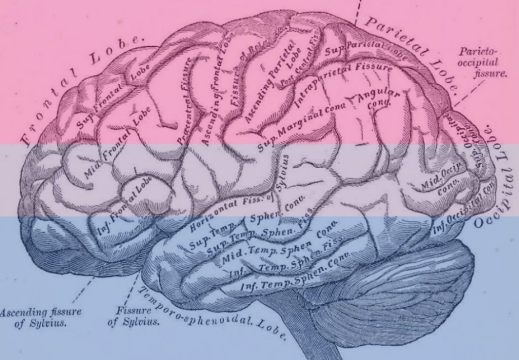
Here, Turing creates a distinction between the anatomy of the brain and its compartmentalized functions and what we may call the “mind” as the psychology of the individual composed of thoughts, emotions, memories, etc. The mechanical functions of the brain resemble the capacities of information storage and the mechanical operations of a machine like a computer. Just like how we know which parts of the brain control certain motor functions, so to do we know the role of each part of a machine and where information is stored on it. Yet “the mind”, which we presume a machine not to have, is not merely the sum of these motor functions and stored information in the brain. The mind is metaphysical; it is a social construction, a product of individual consciousness, and a subjective experience. The mind is an onion because it has no true core; just mutually informing layers of consciousness.
What I am arguing here is that Turing justifies his subjective model of determining artificial intelligence by reminding us that the “mind” that we all have that separates us from the artificial is itself a mysterious, socially constructed concept. The brain is naturally organic, but the mind is as artificial as the language, ideology, and various embodied states of subjective consciousness that we use to understand it and inhabit it. In this process, Turing “queers” the mind. Turing reminds us that there is no such thing as a normal or stable mind that we can access or locate if we just peel away the layers of subjectivity. Instead, this subjectivity defines the mind itself and defines our humanity.
For a gay individual, the demystification of a “normal” or a “real” mind is the key toward dismantling the notion that heterosexuality is the natural state of human sexuality and that homosexuality is an unnatural degeneration. As a function of the mind, homosexuality is as much of an invention of the cultural as heterosexuality (both words that did not exist prior to 1869) and thus both are “artificial” or “unnatural” because they are categories we fabricated to describe and categorize human psychology. To call one man’s mind natural and the other unnatural is to attempt to take human constructions and concepts and somehow force the rules of nature to comply with ideology. In featuring subjective judgment as the determining factor between artificial intelligence and human intelligence, Turing opens the door for an argument that all forms of intelligence and all faculties of the human mind including sexuality are products of subjective reasoning and individual consciousness.
 .
.



 As It Ought To Be