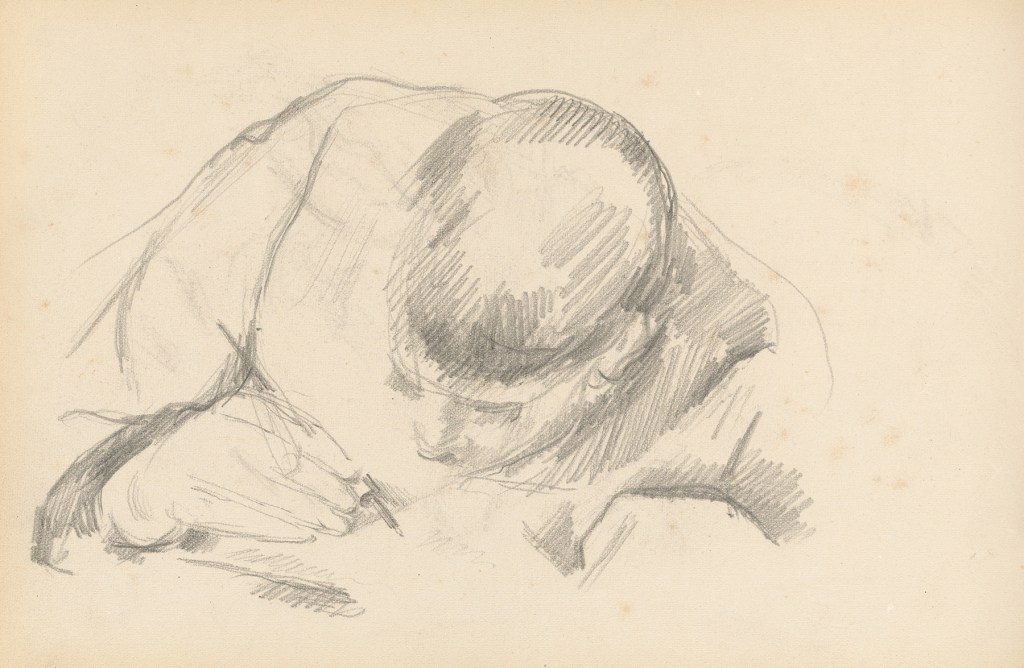
Howie Good: “In Defense of Prose Poetry”

In Defense of Prose Poetry

By Howie Good

.

In Defense of Prose Poetry

Occasionally –  very occasionally – a relative or acquaintance will look up long enough from their phones to ask what a chapbook or a prose poem is. Their unfamiliarity with the terms suggests the general irrelevance of my writing to even people I’m related to. This shouldn’t be a surprise to anyone, and it isn’t to me, but it is dispiriting. 

According to my research (OK, Wikipedia), the tradition of chapbooks arose in the 16th century, as soon as printed books became affordable, and reached its height during the 17th and 18th centuries. 

Many different kinds of ephemera and popular literature were published as chapbooks: almanacs, folk tales, ballads, nursery rhymes, poetry, and political and religious tracts. Usually between four and twenty-four pages long, and produced on rough paper with crude woodcut illustrations, chapbooks were the reading material of the poorer classes. “Twenty-volume folios will never make a revolution,” Voltaire said. “It’s the little pocket pamphlets that are to be feared.

The term “chapbook” for this type of cheap literature was coined in the 19th century and is still in use today for short, inexpensive booklets. I’ve had something more than 40 chapbooks of poetry published since the early 2000s. It’s very much like me to succeed in an area of publishing that most people have never heard of.

Continue reading “Howie Good: “In Defense of Prose Poetry””
John Dorsey: “Eating Gus’s World Famous Fried Chicken with Larry Gawel”

Eating Gus’s World Famous Fried Chicken with Larry Gawel

this is life how it’s supposed to be
larry with a long dangling mop of silver hair
just off the highway
resting his arm
on a rainy friday afternoon
talking about alaska denver
spain & tokyo
& this garage has never felt so small
a leaky freighter
of all the things i’ll never do now
as hummingbirds wait out the weather
by my window
we run into town for stamps & chocolate ice cream
my friend brian felster’s life
began & ended on a boat in alaska in 1982
before he died at 48 surrounded by love
richard hugo laughed by a stream with buddha
on a deserted montana hiking path
in the middle of the afternoon
larry’s glasses are drenched in rain
as we come in from outside
he is a springsteen song
always born to run
& he will never die
or run out of chicken.

About the Author: John Dorsey is the former poet laureate of Belle, Missouri and the author of Pocatello Wildflower. He may be reached at archerevans@yahoo.com.

.

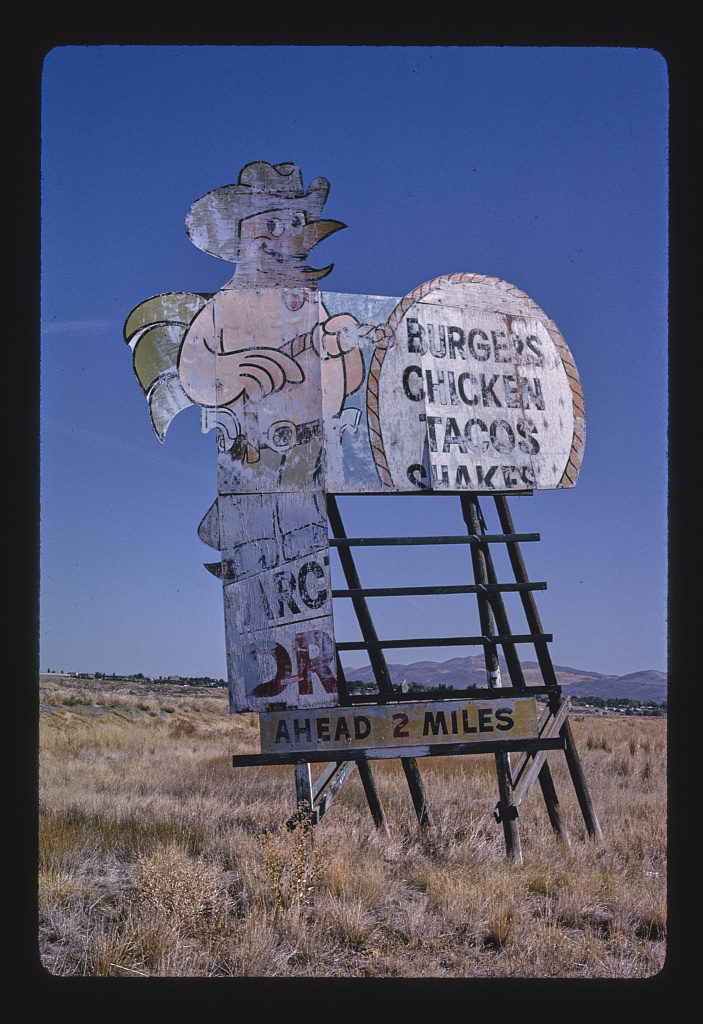
Image Credit: John Margolies “Chicken cowboy billboard, Elko, Nevada” (1991) Public domain image courtesy of the Library of Congress

Victoria Melekian: “Who Dreams Up This Stuff”

Who Dreams Up This Stuff

Broken pull tabs, easy-open bottles that aren’t,
having more hot dogs than buns. There must be

a Supreme Being of Frustration who dreams up this stuff.
A deity who creates SUV’s and small parking spaces,

smoke alarms that die in the dark of night.
An entity responsible for plastic packaging that slices fingers,

and tab A that does not, by the way, fit into slot B.
Maybe an ad hoc committee, the same people who serve

on HOA boards policing patios, ensuring no plant matter
touches wood or stucco. They wrote the “i” before “e”

except after “c” rule and perfected the odds of a car battery
failing three days out of warranty. They’ve moved over

to the customer support phone line. You can hear them now:
“Please hang on. Your call is very important to us.”

About the Author: Victoria Melekian lives in Carlsbad, California. Her stories and poems have been published in print and online anthologies. She’s twice been nominated for a Pushcart Prize. For more, visit her website: https://victoriamelekian.com/

.

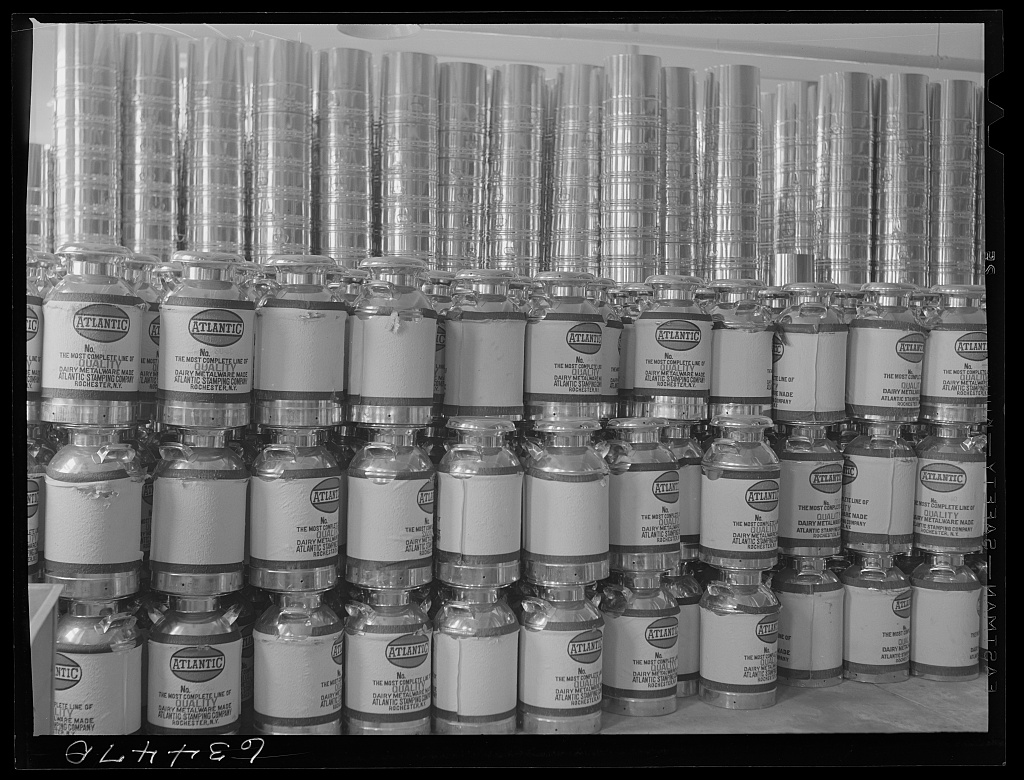
Image Credit: John Vachon “Cream cans. Antigo, Wisconsin” (1941) Public domain image courtesy of the Library of Congress

Paul Jones: “Snake”

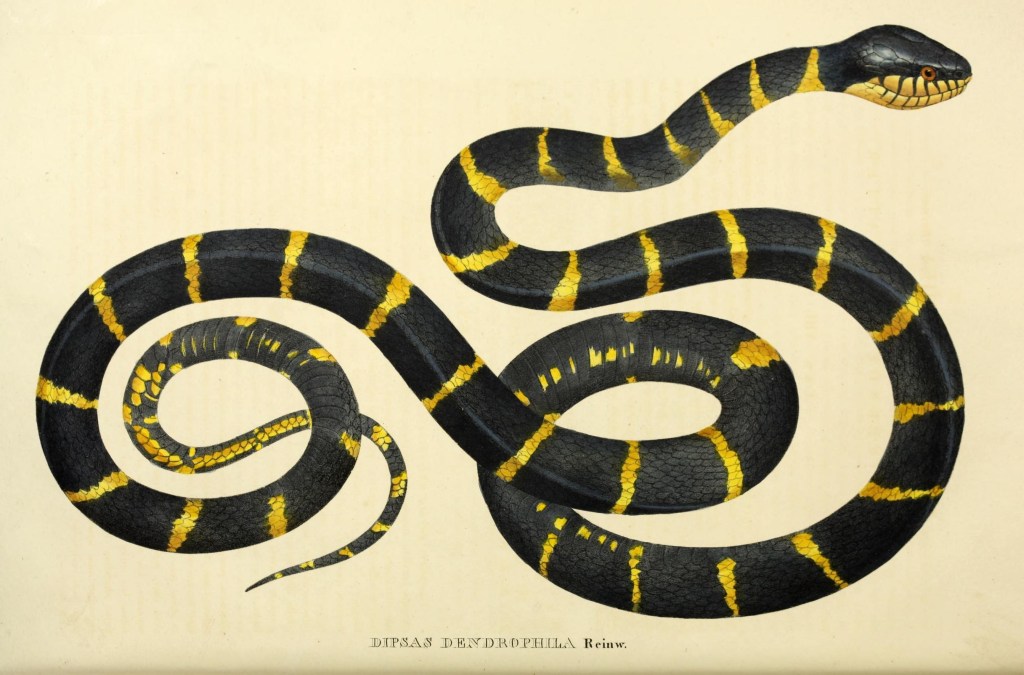
Snake

I used to be afraid in other ways.
When one fear comes another goes away,
I should count myself lucky in that way.
My fear of apes at night just fell away
when I saw a snake put a rat away.
Those fanged apes were dream creatures anyway.
The snake coiled and crushing. Death underway.
Those sounds. The hissing. A shriek. They outweigh
sleep's imagined deaths. They won't fade away
at dawn. Experience smooths night's highway.
Like rockets, fears race down the straight-away.
Then they take my head for their hideaway.
I used to be afraid in other ways.
But then I saw the black snake's weave and sway.

About the Author: Paul Jones poems have recently appeared in Hudson Review, Grand Little Things, Tar River Poetry, and not so long ago here in As It Ought To Be. His book, Something Wonderful, came from RedHawk Publications in 2021. In 2019, a manuscript of his poems crashed into the lunar surface carried in Israel’s Beresheet Lander. In 2021, he was inducted into the NC State Computer Science Hall of Fame.

.

Image Credit: Image originally published in Descriptiones et icones amphibiorum. Monachii, Stuttgartiae et Tubingae, Sumtibus J.G. Cottae1833. Public domain image courtesy of the Biodiversity Heritage Library

Rose Mary Boehm: “Another ordinary story”

Another ordinary story

Spring, it seems, has changed
its mind. Like a disenchanted lover.
Pink, white, purple and tender greens
encased in winter-hardened water
topped with powdered sugar.
Fulgent in that white winter sun.

One harsh spring morning you
turned. No last glistening glory,
no last display of what
could have been.

About the Author: Rose Mary Boehm is a German-born British national living and writing in Lima, Peru, and author of two novels as well as seven poetry collections. Her poetry has been published widely in mostly US poetry reviews (online and print). She was twice nominated for a Pushcart. Her latest: DO OCEANS HAVE UNDERWATER BORDERS? (Kelsay Books July 2022), WHISTLING IN THE DARK (Ciberwit July 2022), and SAUDADE (December 2022) are available on Amazon. https://www.rose-mary-boehm-poet.com/

.

Image Credit: Chase Dimock “Spring Blossom” (2022)

Tom Gengler: “With Stephen to an Inside Place”

With Stephen to an Inside Place

I finally figured out you were living in the alley.
You were up at daylight and gone
before I got up.

It hurt me to see that you had to use a walker
to get around—to go more than
three or four steps.

It was far into winter when I got to know you
and found out you were a veteran.
Your story told me

that the boy from the Pennsylvania woods
was trained to stand in harm’s way
for the puppet masters,

for the Hydra of uber-wealthy who are
thieves by any other name.
For them war

is only a means to an end. Men like Stephen
are used. They are used up and thrown
away.

You were the 1958-made fragile Christmas
ornament run over by a half-track.
You were left

to put the thousand thin glass pieces back together.
You had a stroke that crippled you.
Your body clenched.

I have felt your frozen hands when you slept outside
on concrete in the blanket bag in the snow
on top of cardboard.

Today I took you to an inside place.
Sleep, Stephen, sleep in your bed.
Let the shards

come back together as you dream.
Let the beloved boy come back,
and we’ll have coffee again.

About the Author: Tom Gengler was born and raised in Oklahoma. His degrees are in classics/philosophy (undergraduate) and theology (graduate). Among his favorite poets are Seamus Heaney, Thom Gunn, Lyn Lifshin, Marge Piercy, Charles Bukowski, Annabelle Moseley, Simon Perchik and Timothy Steele. He has had poetry published in ProgenitorBlue Collar ReviewExit 13, and The Worcester Review. His poems are forthcoming in ONE ARTStreetlight, and Westview

.

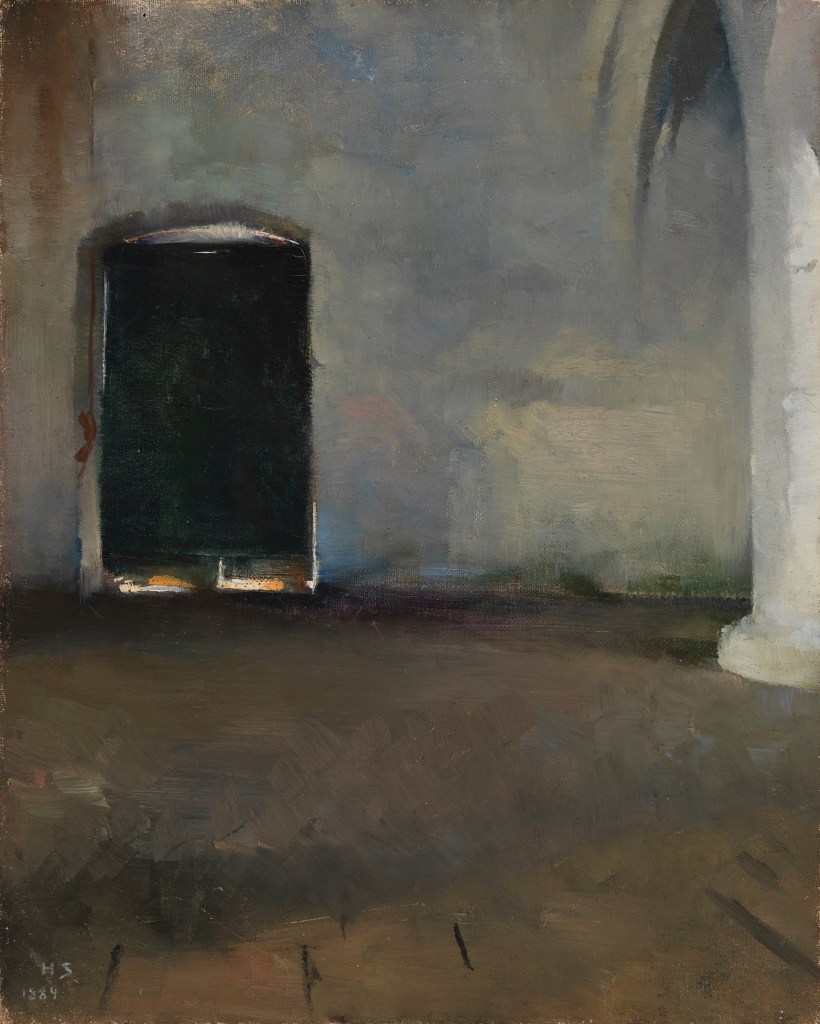
Image Credit: Helene Schjerfbeck “The Door” (1884) Public domain image courtesy of Artvee

CL Bledsoe: “A Lightness of Feathers”

A Lightness of Feathers

Who among us hasn't broken a collarbone falling
out of a tree after we climbed into a bird's nest
and pretended to be an egg? The ghost of omelets
gone wrong. Something with feathers condemned
to a passing glance. A side table. Somewhere dust
calls home. I’ll rebuild my life with doilies
and photos of surgeries I’d like to have. Did I mention
so-and-so died after a lifetime of regret and forced
choices? Never forget your name is on someone’s
Do Not Love Again list. No matter how you measure
it, you’ll never have what you’ve lost again. Another
name for insouciance. At least you’re not the kind
of bird that kicks the other eggs out of the nest
when you settle in. It’s the small victories keep
us going and coming. That’s how they get you.
I don’t even know what kind of tree it was.

About the Author: Raised on a rice and catfish farm in eastern Arkansas, CL Bledsoe is the author of more than thirty books, including the poetry collections Riceland, The Bottle Episode, and his newest, Having a Baby to Save a Marriage, as well as his latest novels Goodbye, Mr. Lonely and The Saviors. Bledsoe lives in northern Virginia with his daughter.

.

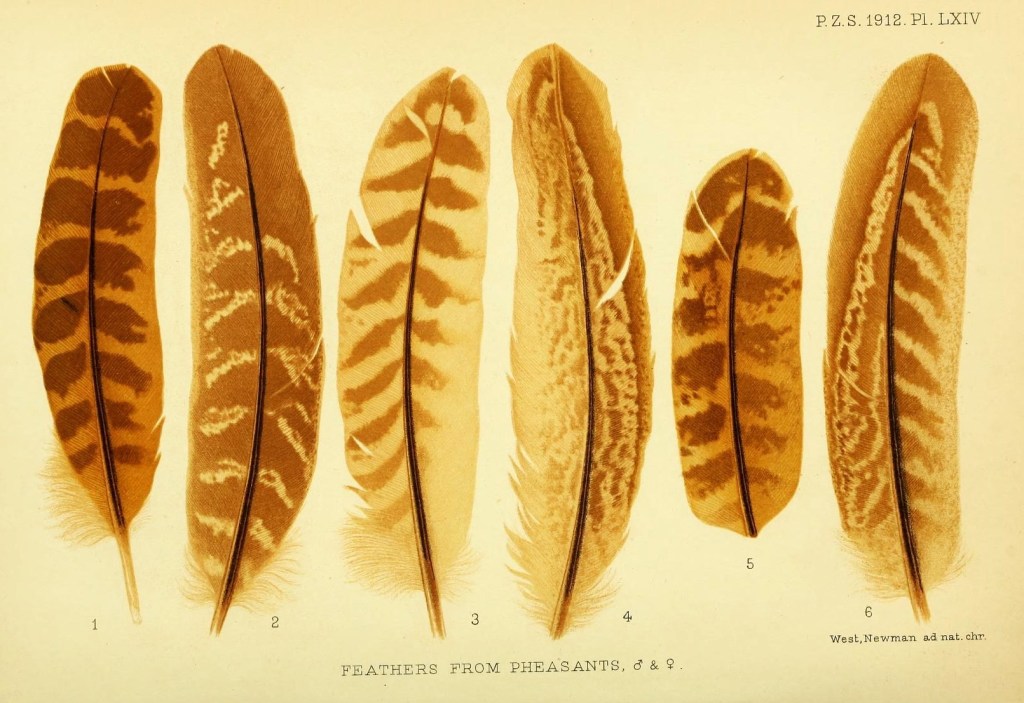
Image Credit: Public domain image originally published in Proceedings of the Zoological Society of London, London : Academic Press. Image courtesy of the Biodiversity Heritage Library

Ted Jackins: “After Wayne Shorter”

After Wayne Shorter

Your fierce tone
Moved in silent ways,
Ambient jazz soldier,
Your ghost hangs
Like a long held note,
Like some slow breath
Over me tonight,
As I spin your
Records in
Funeral wake,
Remembering,
Remembering,
As your carefully
Chosen lines
Etch out a small
Piece of sky
Where you sit,
Now,
Perhaps sipping
Tea,
Or blowing
With 'Trane,
Ayler,
Sanders and
Many more
Saxophone poets,
Gone now,
Yet eternally
Here.

About the Author: Ted Jackins is a poet and musician living in a small town in North Carolina with his wife and 17 year old cat. They’re work has previously appeared in Red Fez, Zygote In My Coffee, Blotterature, Citizens For Decent Literature, Black Out Zine, and Outlaw Poetry. He is the author of the chapbook Psych Ward Blues (Alien Buddha Press).

Image Credit: Digitally altered public domain image of a saxophone, courtesy of Wikimedia.

Alexander Perez: “On Sin”

On Sin

In proper time
In shadows 
Outline the shape
Of human monsters
So as to leave no distinct traces

Leave vacancies in the body
Separate the soft parts
As a dog does
Feeling awakened
To tinge its teeth with blood

We hold a festival
For our conversion 
Into killers 
Or accomplices
Escorting force

The nature of drift 
Of the wind, the tongue 
To hiss 
The distance 
At which my voice may be heard

To arrange 
In the form of a labyrinth
Names of things
Far-reaching
Turned to stone

A pilgrim pursuing
Divine luster
In the binding of a lamb
Charred offering
Purificatory rite

Lead forth
Guide them 
To the taker’s use
Which engraces
Nourishes or rears

About the Author: Alexander Perez began writing and publishing poetry in 2022 at age forty-eight. He has a chapbook coming out and hopes to publish a full collection soon. Alexander is an Albany, NY native and currently lives with his longtime partner James. Come visit him for more poetry: perezpoetrystudio.com.

Image Credit: Edvard Munch “The Sun” (1910-1912) Public domain image courtesy of Artvee

Dave Newman: “Lilly Works the Late Shift”

Lilly Works The Late Shift

at the VA hospital as a janitor
	what they call housekeeping
in the hospice wing with veterans 
who cannot afford to die anywhere else.

She went to a two-year college
to become a baker and a chef
but the degree was useless.
At her first job the other chef
chewed oxycodone pills 
and had an 8th grade education.

Now she touches the shoulder 
of a nurse from the Vietnam era
           with ovarian cancer.

They talk about the Pirates
who are as terrible as ever
after a couple decent seasons.

Lilly says “It’s the owners.
They won’t pay for a pitcher”

and the woman says
“I always thought I’d live
to see the Pirates
make another World Series”

and Lilly says “You may”

and the woman says
“The doctor said six weeks
            not one hundred years” 

and they both laugh but small
	   tiny slivers of ice
	   to help cool death.

Most of the soldiers she cleans for
          never saw any combat
          or even speak of their service.
It surprised Lilly but not anymore. 

Now she puts on her gloves
and finishes the trash
then takes off her plastic gloves

and says “Good night”

and the woman says “Good night”
because it is, somehow.

Lilly loves her work, loves hospice.
She never thought she could love death
           but maybe she does 
           because someone should. 

She knows when each person will die 
because she breathes their smells 
and hears the rasps in their lungs.
She puts more hours in the wing
           than any doctor
           any surgeon or shrink.

She knows the names of the patients’ kids.
She knows the names of their grandkids.

She brings Hershey’s Kiss and for the ones 
         who can’t have chocolate 
         she says “You get a real one” 
and places her lips on their foreheads.

After Lilly punches out, she drives home
to her small house in Penn Hills
where she lives with: 

        her husband
	who lost his job
	when Carbide 
        shut down

        her son
	who lost his job
	when he slid 
        on wet shingles 
        and cracked 
        his spine

        her brother 
	who lays cable
	and is going 
        through 
        a divorce
	and trying 
not to be bitter.

The men in her life are warm rocks: 
they know how to love but seldom speak.

        Lilly doesn’t mind:
she talks all day and is happy for the silence.

She will nudge her husband 
until he starts to look for a job again. 

The settlement will arrive 
and the doctors will fix her son’s back.

Her brother will quit swearing into flowers
        and find romance. 

She thinks she should get some food
	maybe a pizza and a salad
        because the men do not cook
	          or do not cook well

but she is too tired to stop
and is fine with eating cereal or some nuts.

From the driveway the house
is darker than the night but that’s January. 
The men have either turned in early
or moved to the basement to watch sports. 

When she steps into the house
and flips the living room light switch
the men appear from the darkness
         in party hats  

because it is her half birthday
something she did not even know.

Her son hands her a glass of wine.

Her husband gumbands a hat to her head.

Her brother tells her to make a wish
and holds out a cake burning with candles. 

She blows out the fire 
then everyone sings
“For she’s a jolly good fella”
and they take her in their arms

         and she is so happy 
to be with those who love her
in the most unexpected ways.

On the dining room table sits
         5 bottles of wine
         and what appears to be
a plate of burnt grilled cheeses. 

About the Author: Dave Newman is the author of seven books, including the novel East Pittsburgh Downlow (J.New Books, 2019) and The Same Dead Songs: a memoir of working-class addictions (J.New Books, 2023). He lives in Trafford, PA, the last town in the Electric Valley, with his wife, the writer Lori Jakiela, and their two children. He spent the last decade working in medical research at the VA in Pittsburgh and currently teaches writing. 

Image Credit: Carol M. Highsmith “Hospital operating or image examination room” Public domain image courtesy of The Library of Congress