Gordon Massman: An Interview and Four Poems

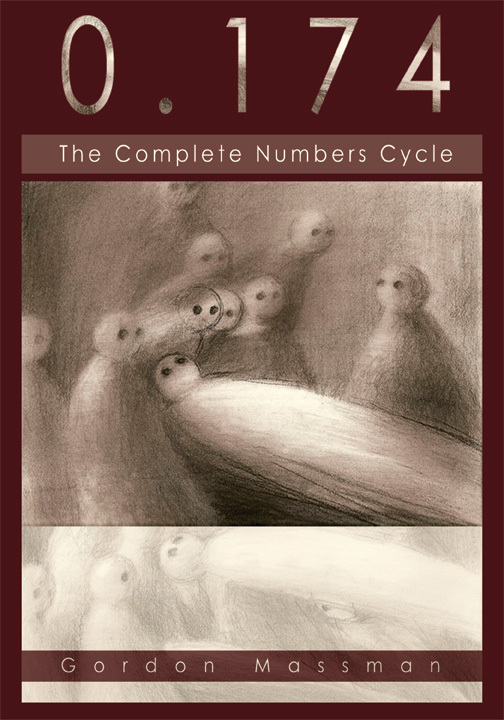
0.174

Gordon Massman is the author, mostly recently, of the companion volumes Death and Love, both out from NYQ Books this year. His work has appeared in Antioch Review, Another Chicago Magazine, Georgia Review, Harvard Review, The Literary Review, and RATTLE, among others. He teaches writing and literature at The Massachusetts College of Liberal Arts. The poems below are reprinted from 0.174: The Complete Numbers Cycle (NYQ Books, 2011) with permission of the author.

***

Okla Elliott: 0.174: The Complete Numbers Cycle represents over twenty years of working on a single project. How did the project present itself to you? How did it mutate and grow over the years? And, with a project like this, I have to wonder how you can know when it’s done. The numbers could literally go on ad infinitum.

Gordon Massman: I was around forty when I lost faith in formal titles which to me monumentalize a work into a monolith, looping the last line up to the title in a never-ending closed circle, removing the work from relationship with past or future pieces. Freeing the work of the conventional title in favor of numbering it in the order written among cohorts places it in a context and continuum—as a step in an evolutionary process. So, this project presented itself, consciously and philosophically, through an intellectual callisthenic. Suddenly I liberated my pieces from standing alone and allowed them to be part of something larger than themselves. I think of 0.174: The Complete Numbers Cycle as a single—I hesitate to use the word for reasons stated below—poem.

Spiritually my subject—making visible my subconscious longings, urges, fantasies in naked, visceral, glaring terms—came to me in the way a seed is naturally programmed to become a tree of its species. I was a hyper-sensitive child in the hands of monsters who compressed me into a certain kind of seed programmed to blossom into a raging twisted tree. I did not select my lineage; my lineage selected me. During and for ten years following an emotional crisis which occurred at age thirty-five, I pursued Freudian and Jungian psychoanalysis which opened a crucial field of examination—the subconscious. I felt then that my writing, heretofore consisting of stale programmable subjects was derivative and lacking. To my mind, all frontiers had been written by past masters to perfection save one: the human interior turned inside-out. In this, there are few, in any, antecedents. (Only Ted Hughes’ magnificent book Crow comes to mind with Anne Sexton, John Berryman, and Robert Lowell, wonderful writers though they were, following tepidly behind.)

All that remained for me–the most difficult part of this project–was to find the courage to strike genuine ore regardless the consequences. The mutation you speak of is the mutation of gazing more and more deeply, bringing up in particularized imagery that which drives me, and presumably, what drives most human males. Oddly, women like my work more than men as I think it confirms what women have always known about men, but which men want to deny.

The four hundred pages of 0.174 represent a handful of the entire project which is over three-thousand pages. It could, indeed, go on ad infinitum as you suggest, and I think that I will take it up again after I finish the third volume in a trilogy of books NYQ is publishing (Love, Death, and God.) I would like this numbers cycle to extend into late middle and old age—I am sixty-five—to record what maturity brings.

OE: I see an affinity between your poems and the fiction of William H. Gass. Both are experimental and postmodern in certain ways, and both seem interested in delving into the uglier and more uncomfortable or untoward aspects of human life and thought. What drew you to the formal aspects and contents of these poems?

GM: This is a core question and forces a hand. The term “formal aspects” implies non-porous walls between genres, a concept I reject for my own writing. The truth is that I do not believe in the concept of poetry distinct from prose as if each contained a separate circulatory system, an exclusive blood flow. I believe that “poetry” and “prose” are the same being named writing, and that some writing is more powerful than other writing. Some writing which we commonly call prose is the highest order of what we commonly call poetry I have ever read—Virginia Woolf, George Konrad, Hermann Broch, William Faulkner, Victor Hugo, come to mind. While some writing which we commonly call poetry is the lowest order of prose I have ever read, sanitized—I won’t name names. I consider myself a writer, not a poet, who formalizes on an instinctual level and who believes more in the power of words than in the power of form. Honesty will design and occupy its own vessel. We have evolved past what once served us well: strict academic boundaries. We are past the notion of fortress identity. The messages in 0.174 made square brick-like formations that cracked off lines jarringly to maintain smooth edges. They just wanted it that way for no rational reason.

I dislike labels such as “experimental” or “postmodern” because they imply the critical world’s lack of imagination. Writing is experimental or postmodern only because the reader/critic before encountering it could not imagine it. The terms essentially arise out of a failure in the public imagination and are irrelevant to the creating artist.

Likewise, what are untoward and ugly but a culture’s failure to include them in what they want to believe beautiful in human existence. Rage is beautiful. Envy is beautiful. Self-hatred is beautiful. Shame is beautiful. These terms “ugly”, “untoward”, “uncomfortable” and the like, (“vulgar”) accept as justifiable a mass lack of imagination, an unwillingness to accept as intrinsically valuable, even beautiful, the many facets within us. I am not speaking, of course, of what causes harm to others, of psychopathologies, but of the commonplace and universal egotisms which rampage through all.

I am, therefore, comfortable making visible and owning publicly that I possess these turbulent virtues which drive me and interest me more than the placid ones. By doing so, I reason, I can baptize and make them legitimate upstanding citizens. To closet and cloak them in shame is to deny fundamental truths about one’s self and to create a flammable pressure in the heart.

OE: Your newly released companion volumes, Love and Death, are also a large project. Could you tell us a bit about them and how they came about?

GM: One of my legs is filled with death, the other love. When I walk they flash and cut like scissors. Death was easy. Since an early age I’ve hated the reality of death and every day I awake with its heaviness on my chest. A few years ago within the span of nine months both my parents died with me standing helplessly bed-side. When death has one’s throat death is implacable. A few months after the second death the poems poured forth, immediate present tense snapshots and long contemplative incantations, the final being a twenty page rock riff. Death required from me this exorcism. During this process my psychotherapist dared me to write a book on love, romantic and otherwise. But being heavily invested in despair I balked for a long time until finally grudgingly writing a love poem, then grudgingly writing another, then grudgingly another until an avalanche happened and I found myself mirroring death with love: immediate present tense snapshots and long rock riff incantations. The two books were published as companions, or perhaps as scissoring legs. On the rare occasion I do a reading I alternate death with love, love with death until the two blur into a single experience, which they are. Each compressed the other into a rich and tragic existence.

I am now finishing the third book making this project not twins but triplets, this last one titled God. Now I have three legs, or perhaps, more accurately, two legs with that smaller one in the middle!

***

43
Am I more like steel or fruit inside? If you drilled deep
through me would I fi nally break your bit or ooze pear-meat
and weep like a godless Jesus of Nazareth? I want to know.
Drill me to the core. Screw out big chunks of me in your deep
steel grooves and spit me free, you with your blindness and
vulnerability. Make me spasm and curl with your all-nighters
and narcomania my teenage son. Find my vanadium or peachpear-
plum blood. You have drilled through my fl esh, it fl ew
apart like a burn, and several inches into the beams in my
bones, but I’m still steadily beating. Push hard on your tool.
Drill through my collar past my lungs into my heart pushing
with all your weight, feet off the ground, grinding out meat;
fi nd what’s there. Get to my mettle. Drop out. Coke up.
Fuck the syringe. Find your own gore in vehicular winter. Am
I cold? Am I mechanical? Can I walk through closed windows?
If you peel back my surfaces do I glisten? This is your mission.
Let me see from a distance the crack pusher’s wing fold
over your shoulder and usher you forward, your two backs
fusing. Let me witness dissolution. It is the father’s privilege. To
strip off my sirloin like meat off a prey to fi nd what’s lying
inside my cage. Let me see graphically what your brain isn’t
getting: high school teacher’s spittle, orange lunch room chile,
that geeky conventional gangly camaraderie, auditorium pep
rallies, an appropriate foreign language, stupidity, time, time, time.

***

56
And this little piggy squealed “no,no,no,no,” all the way home.
And then all the toes were accounted for: the big, the middle, the
nondescript, nondescript’s neighbor to the East, the itty-bitty
which made baby laugh like a nautilus. And then the toes blinked
out like a disappearing photograph, and baby went on a miniature
vacation to Puerto Vallarta where a lion almost devoured
him like a fortune cookie, but he escaped and wind rattled the
blinds like dangling bones, and he whimpered and whispered a
prayer-precursor to the Divine Death Overture, something about
soft protrusions and blue rain. And baby Carroll decided he
was having none of it and shattered two panes in the living
room belonging to Daddy and his entourage one of whom played
the Ace of Spades and raked in the kitty while on the artery a
fl ying mechanical scream engulfed horizontal human moans
in a white steel cube smudged with a red intersection and far,
far away two events happened simultaneously: an imaginary
Holstein jumped over an idiot moon keeping constant vigil on
the continuous catastrophe, and in the silo accompanied by
secret platoons of yellow arthropods Jack fi nally found Jill’s
gooey ooze representing nucleic acid’s undeniable invincibility.

***

134
Testimony of the best pig in the sty. I’m king mounter. I
shove it in. Gertrude craves me. Matilda moans for me.
I grunt and eat slops pushing away others. I get mash.
Dark splotchy pink, stout nose, neckless, number 77
tagged to left ear, luckiest number around. Rump like
a cement mixer nobody kicks, squiggly fi rm tail, blood
to tip. Super Pig, pig literati, nineteen hundred twenty
six pounds, hog literally, the Indiana hogs, borne of
Chester and Duchess, Chester Iowa State Fair Champion
Derby Hog, Duchess six hundred pound 4-H Purebred
Champion, daddy shot me into her like a roman
candle. I burst forth like Ben Hur. Sunburnt from so
much fucking, out from mud, into mud, ear tag jangling
like revolutionary, Illini nights reclining under
stars, contemplatively smoking, pink eyelids, lavish
lashes, back legs crossed, I love everything, fences,
twigs, friendship, water trough, soft breezes drawing
across skin, the smell of piss, I, Davy Crockett pig,
adventuresome, undaunted, courageous, proud, out
to farthest post, to gate, scratching along wire, sniffi
ng earth-untrodden, snorting intoxication-liberation,
left-and-right pig, pig of The Nation and The New
Republic, chest-out puffed-up herd-guardian wise
warrior pig, pugnacious purple irremovable squealer.

***

247
The whole thing goes kablooy, hypochondria torments sister;
dementia creams Daddy; mortality frightens but cruelty
out Mother’s skin; forty years of tolerance collapse under
Larry; BDD splinters me in circus mirrors; preemie lungs
asphyxiate Kevin; Depakote sloshes Bradley’s brain; Hep
C like a rabbit nibbles cabbage of Allan’s liver; genocides
cook and serve severed leg; have another chilled eclair,
sweaty chocolate, chewy shell; oh baby; testicles strike
like factory workers, tongues fall mute; rocks clog urethra,
plaque arteries; well, smasheroo; brisket, lamb, claw, stew
slide off table into Magical Mystery Tour performed by
nutcases at Unity Church; refugees land in black fog of
dereliction and fl ies bite beautiful faces near McFadden’s;
Witcomb crawls into death’s bomb shelter everything rips
through: guilt, shame, dejection, despair, paralysis, rage.

SATURDAY POETRY SERIES PRESENTS: ALLIE MARINI BATTS

Allie Back_Photo

By Allie Marini Batts:


breeding, trumpet flowers out of the dead ash


a cautious unfurling, petals, these fragile fingers,

extended through layers of silt and salt,

the battle-blown lands where once a city stood.

these vines, they labor furiously,


expanding and dividing beneath the dust of nations

nightshades in mitosis, their toxins lovely, bright and narrow

set against a land destroyed.


likewise myself and my skin,

a playground for dead things

and invasive plants to rise from,

a phoenix, in botany.


the mythology of the night skies


you were once a man

square but bright

incense in the dark


your story, told by Greeks

naïve, the way we

lit sticks of incense and prayed


wantonly to false hopes and square gods

and stars, naïve offerings

and devotions meant to keep us safe


protections and punishments

remembered in the

rotations of the planet


naïve, how we thought

you loved us

and would keep us safe


“breeding, trumpet flowers out of the dead ash” previously appeared in quarter after and “the mythology of the night skies” previously appeared in Symmetry Pebbles. These poems appear here today with permission from the poet.


Allie Marini Batts holds degrees from both Antioch University of Los Angeles and New College of Florida, meaning she can explain deconstructionism, but cannot perform simple math. Her work has been a finalist for Best of the Net and nominated for the Pushcart Prize. She is managing editor for the NonBinary Review and Zoetic Press, and has previously served on the masthead for Lunch Ticket, Spry Literary Journal, The Weekenders Magazine, Mojave River Review & Press, and The Bookshelf Bombshells. Allie is the author of the poetry chapbooks, You Might Curse Before You Bless (ELJ Publications, 2013) Unmade & Other Poems, (Beautysleep Press, 2013) and This Is How We End (forthcoming 2014, Bitterzoet.)

Editor’s Note: “breeding, trumpet flowers out of the dead ash” is so stunning that the poem speaks for itself. I am loathe to feature a favorite line in the face of so many beautifully wrought images emerging one after another. The subject matter is as rich as the soil the poem’s flowers rise from. The world revealed is post apocalyptic, brimming with nature’s resilience and with death nurturing new life, “a phoenix, in botany.”

“the mythology of the night skies” turns our eyes upward to the heavens and our minds to the gods. While pressing against the idea of worship in antiquity, the poem’s echo seems to question deity worship altogether. “naïve, how we thought / you loved us / and would keep us safe.”

Want more from Allie Marini Batts?
Find her on the web
Follow her on Twitter @kiddeternity

SATURDAY POETRY SERIES PRESENTS: PAPER COTTON LEATHER

Paper_Cotton_Leather_cover


From PAPER COTTON LEATHER
By Jenny Sadre-Orafai:


RETRACT OR RECANT

This accordion love expands or exhales,
retracts or recants. It is only as much
as we allow. It squeezes out warnings
of cardboard walls closing in.

Its wheezing fills a willful tide
with dread. I turn to this gone
love. I was taught curve into the slide
when spinning on frozen road.


CUTTING YOUR HAIR

When I was done, a ring of hair
or a halo curved your hunched
shoulders. Your broad back didn’t
flinch when the scissors’ legs twitched,
when I wanted to cut more than you mimed.


PREMATURE OBITUARY

I pretend you’re dead.
I don’t let them say your name.
I was taught it’s impolite
to talk behind a dead man’s back.

I wear black four months and ten days.

I smell your clothes before
hand washing, bagging,
and then giving them away.
I don’t give your mother a thing.

I pray for what’s left of you.

I stack the wedding ring, all the rings
you gave me on my right hand,
my proclamation that you are no longer
with us or like us, the living, listening.

I tell myself what I tell myself
to keep from going back.


Today’s poems are from Paper, Cotton, Leather, published by Press 53, copyright © 2014 by Jenny Sadre-Orafai, and appear here today with permission from the poet.


PAPER COTTON LEATHER: “The specter of divorce haunts Sadre-Orafai’s debut, although Paper, Cotton, Leather is much more than a lyrical response to loss. Paper, Cotton, Leather is an instruction manual for the amateur anthropologist, the domestic ghost-hunter, and the doomsday prepper. In ‘Retract or Recant,’ Sadre-Orafai writes: ‘I was taught curve into the slide/when spinning on frozen road.’ This is exactly what Paper, Cotton, Leather can teach us: how to navigate the heart’s switchbacks, how to survive a spin-out on its loneliest back roads.” —Shelley Puhak, author of Guinevere in Baltimore (From the Press 53 website.)


Jenny Sadre-Orafai is the author of four poetry chapbooks—Weed Over Flower (Finishing Line Press), What Her Hair Says About Her (H_NGM_N Books), Dressing the Throat Plate (Finishing Line Press), and Avoid Disaster (Dancing Girl Press). Her poetry has appeared in H_NGM_N, Gargoyle, Rhino, Redivider, PANK, Mount Hope, Sixth Finch, iO: A Journal of New American Poetry, and other journals. Her creative nonfiction has been published in The Los Angeles Review, South Loop Review, and The Rumpus. She co-founded and co-edits the literary journal Josephine Quarterly. She lives in Atlanta and is an Associate Professor of English at Kennesaw State University.


Editor’s Note: Reading Paper, Cotton, Leather is like reading a diary written in achingly executed lyric. The compact, controlled poems function almost ironically; tiny scaffolding straining beneath the pressure of massive weight and breadth. The poems are honest. Fiercely, unapologetically honest. Surely it took no small amount of courage for the poet to sift through the wreckage of her failed marriage and catalogue its failures for us in verse.

In the poem “Fortune,” Sadre-Orafai writes, “Our pictures live in a box marked / THE PAST in my parents’ garage.” Each poem reads like its own discreet picture from that box. Vignettes of trying, failing, moving on, and learning to let go. Together those pictures—these poems—tell a story. This book is carefully held by a narrative arc that gives the illusion that we might piece together the end of this marriage like a puzzle. And yet, You know nothing, Jon Snow. This is an expertly crafted book of poems, not a memoir. We are left only with what the poet chooses to reveal. With what poetry is perhaps best at conveying. A selection of life’s moments as if through lens and shutter. Emotion. Regret and loss and heartache. Experience that finds a kindred spirit in the reader. This is a book that one reads to remember that life’s trials are universal, that we are not alone.

We are not alone. So many of us know, or have known, love like an accordion, squeezing out warnings, wheezing and transforming into gone love. “Cutting Your Hair” recalls Delilah, in all her power, destroying her lover. So, too, does that recollection call forth Regina Spektor (who is quoted in one of the book’s epigrams) in her song “Sampson”: “I cut his hair myself one night, a pair of dull scissors in the yellow light.” In this manner one can read Paper, Cotton, Leather like an archaeologist, dusting away layers to discern history, or, as Shelley Puhak suggests, like an anthropologist, observing humanity, past and present. So how does the poet pick herself up, dust herself off, and move into the future? In the most human way imaginable: striving and imperfect. “I pretend you’re dead. / I don’t let them say your name.” “I smell your clothes before / hand washing, bagging, / and then giving them away.” “I tell myself what I tell myself / to keep from going back.”


Want to see more from Jenny Sadre-Orafai?
Buy Paper, Cotton, Leather from Press 53
Jenny Sadre-Orafai’s Official Website
Jenny Sadre-Orafai on As It Ought To Be

SATURDAY POETRY SERIES PRESENTS: JACKIE TREIBER

Jackie Trieber


from ‘A DANCER’
By Jackie Treiber


And from eternal life found in the eyes came the truth: she was one witch. She was from Atzlan. Of Avar, wore the bridal relic, sat at the heels of mother fire. Mary A. of Massachusetts, little unclear Mary. Celine of Normandy, sick on milk. Joan of Arc. Strega. Lost in the woods in her red shoes. Caught in the rain at the base of a mountain. No survivor of death, survivor of transcendence. Torched, entombed, excised. Acrid climate, cupidity, war, drought. In lieu of an oral lineage, in lieu of explanations, there came the gift of death to her. When death was collective, she was anonymous. When death became individual, she died with little handfuls of dirt on her chest, thrown with purpose and care. Her conclusion was more than physical death now, and her body nothing more than a reed carved to sing its masterful song. This is why she stood resolute—she had known a thousand floods of death. This, out of all of them, was nothing.


Today’s excerpt appears here with permission from the author.


Jackie Treiber writes, reads and edits in Portland, Oregon. She is drawn to conflicted and damaged characters. Dualities such as profane/magical, masculine/feminine and stability/chaos thrill and inspire her. Her poems will be published in an anthology of Kansas City poets in Spring 2015 (UnHoly Day Press). Her most recent work was featured in Smalldoggies Reading Series Chapbook (2011).

Editor’s Note: Today’s excerpt is part of a larger work of fiction, though it stands on its own as a poem, blurring the line between prose and prose poetry. From within its almost choral narration (despite its third person narrative perspective) emerges one woman who is also every woman. She is a witch, a bride, Joan of Arc. She is our collective suffering, our recurring death. And yet her story is epiphanous. Because she has suffered, she knows that she can rise above. She has lived—and died—often enough to know that death is nothing more than metamorphosis.

Want to read more by Jackie Treiber?
Work poems
How Do We Look?
#23
#11 Socially Acceptable Cannibalism
We burned John Wayne’s favorite yacht

SATURDAY POETRY SERIES PRESENTS: KAITLIN DYER

2011-12-09 15.02.19

By Kaitlin Dyer:


LEAVING JERUSALEM

Screen Shot 2014-08-15 at 3.11.36 PM


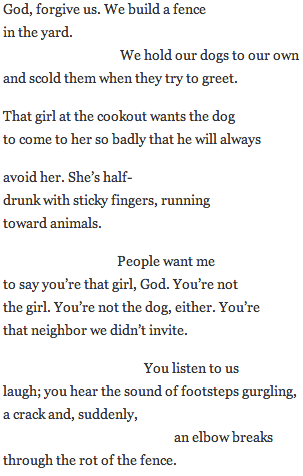
ON THE FOURTH OF JULY, I HEAR THE NEIGHBOR’S MUSIC

Screen Shot 2014-08-15 at 3.12.48 PM


Today’s poems were originally published in the Hawai’i Pacific Review, and appear here today with permission from the poet.


Kaitlin Dyer is a founding editor of Harlot: A Revealing Look at the Arts of Persuasion. Her work has appeared in PANK, Potomac Review, Hawaii Pacific Review, and The New Welsh Review among others. These poems will be included in her chapbook Alter Lives of Alter Egos which is forthcoming from Dancing Girl Press in Feb/March of 2015. She loves dogs, hates caramel, and contains multitudes.

Editor’s Note: Today’s poems take on big issues. Politics and God. Ownership, land rights, and humanity. “God, forgive us. We build a fence / in the yard.” Who are we to lay claim to the earth, to carve out our little sections and plant our flags? And what god are we living with after we have staked our claims? These are the questions today’s poems pose. Questions that at once seem to take a stance and yet feel rhetorical. We don’t know where our birds have gone: “Perhaps / to the desert. / Perhaps, the morgue.” And instead of a God who is reflected in children and animals, we are left with an image of a biblical God who breaks through man-made fences.

Want to read more by Kaitlin Dyer?
Kaitlin Dyer Official Website
Kaitlin Dyer on Twitter
Harlot Magazine

SATURDAY POETRY SERIES PRESENTS: ALLIE MORENO

photo (1)

TOO MUCH OF A GOOD THING
By Allie Moreno

I have been stretched like
skin to dry in the sun
I am a blanket
I’m a tightrope
a staircase
a palace of forgotten
photographs
a sandcastle exposed in the wind
I love and
cover you

I have filled all the glasses
on the table
I have eaten what is
left on every plate
to be free of it

I have swallowed your
skeletons on cue
I should probably apologize
for complaining
but I’m the parade and the rain


“Too Much of a Good Thing” appears here today with permission from the poet.


Allie Moreno spends her daytime hours writing for a large tech company in the San Diego area. She received an MFA in Writing from UC San Diego and sometimes writes poetry from the confines of her cubicle. Allie tends to write about identity, belonging, and her experience as a trans-racial adoptee.

Editor’s Note: Simple, straightforward, and full of evocative imagery, today’s poem takes us inside the world of one who has lived for another. Stretched tight, walked upon, now disappearing grain by grain, “a sandcastle exposed in the wind.” To give love is not enough, when in so doing we give too much of ourselves. In end end we are almost left with a woman’s tendency to apologize for herself, but instead we are left with a counterweight. A provocative image slightly obscured. What is a woman when she is “the parade and the rain”?

Want to read more by Allie Moreno?
Allie Moreno’s Blog
Interview: Allie Moreno’s Adoption Experience

SATURDAY POETRY SERIES PRESENTS: SHARON SUZUKI-MARTINEZ

ssm author pic

By Sharon Suzuki-Martinez:


ONE HUNDRED BRIDGES

1.

One day
I gave myself a gift certificate
because who knows what I want?

One night
without thinking
I traded it for one hundred bridges.

2.

We turn the house upside-down
in search of our passports.

A century passes
before we find them in the pages
of our children.

3.

Too many bridges to cross.

Paths like rotting smiles, rat-kissed
tatters swinging loose
in the maw of some river god.

4.

It has always been this way–only
your voice carries me to the other side.


GOODBYE ISLAND

Then Marie said, “I’m in love with a man
who is an island.” Of course,

many of us had our doubts.
This did sound familiar.

We said, “Which of our legs
are you trying to pull?”

She stared at us like we were insects
from the future.

Our metaphysical existence
(vis-à-vis Marie)

grew negligible: tenuous, at best.
Further on down the road, we saw the man

for ourselves. We couldn’t help but
admire his thick vegetation,

his long languid beaches, his centuries
of blue-eyed solitude.

We desperately wanted to bear his young,
even the males among us.

Thus we engulfed
his shores with sweet lingering visits.

Soon, Marie saw the man
was no longer her own.

Sadly thereafter, she realized he never was.


“One Hundred Bridges” originally appeared in CURA and “Goodbye Island” originally appeared in Spooky Boyfriend. These poems appear here today with permission from the poet.


Sharon Suzuki-Martinez is the author of The Way of All Flux (New Rivers Press, 2012). She grew up in Hawaii and now lives in Tempe, Arizona where she created/curates the music/poetry website, The Poet’s Playlist and blogs about strange animals and the even stranger poet’s life at Sharon Planet.

Editor’s Note: Today’s poems are thinking poems. We are asked to slow down, to be present, and to really consider the ideas and imaginings the poet has carefully crafted for our contemplation. “One day / I gave myself a gift certificate / because who knows what I want?” “We turn the house upside-down / in search of our passports. // A century passes / before we find them in the pages / of our children.” I could read these lines again and again and meditate on the depths of their meaning.

In “Goodbye Island,” the poet pushes the boundaries of metaphor, painting us a picture of what a man might look like if he really were an island: “We couldn’t help but / admire his thick vegetation, // his long languid beaches, his centuries / of blue-eyed solitude.” As if this is not enough, she takes us a step further, deep into reflecting upon what it is to love a man who is an island: “Marie saw the man / was no longer her own. // Sadly thereafter, she realized he never was.”

Want to read more by Sharon Suzuki-Martinez?
The Poet’s Playlist
Sharon Planet

SATURDAY POETRY SERIES PRESENTS: JOANNA FUHRMAN AND TONI SIMON

Screen Shot 2014-07-25 at 2.52.06 PM


By Joanna Fuhrman and Toni Simon:

from FRIEND OF THE DEAD


Screen Shot 2014-07-25 at 2.55.05 PM


Screen Shot 2014-07-25 at 2.54.49 PM


Screen Shot 2014-07-25 at 2.53.53 PM


from HOW MANY TIMES DO I HAVE TO TELL YOU?


Screen Shot 2014-07-25 at 3.06.29 PM


Screen Shot 2014-07-25 at 3.06.12 PM


from THE RULER OF RUSTED KNEES


Screen Shot 2014-07-25 at 3.03.57 PM


Screen Shot 2014-07-25 at 3.11.21 PM


Selections from “Friend of the Dead” originally appeared in Paperbag, selections from “How Many Times Do I Have to Tell You” originally appeared in Talisman, and selections from “The Ruler of Rusted Knees” originally appeared in Posit. These selections appear here today with permission from the poet.


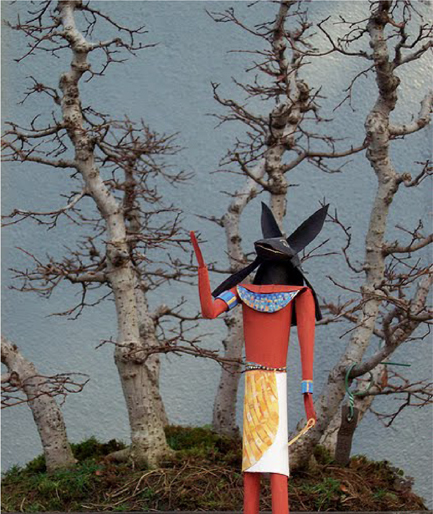
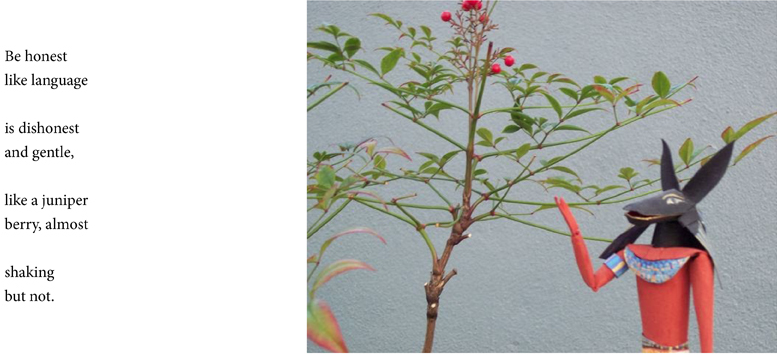
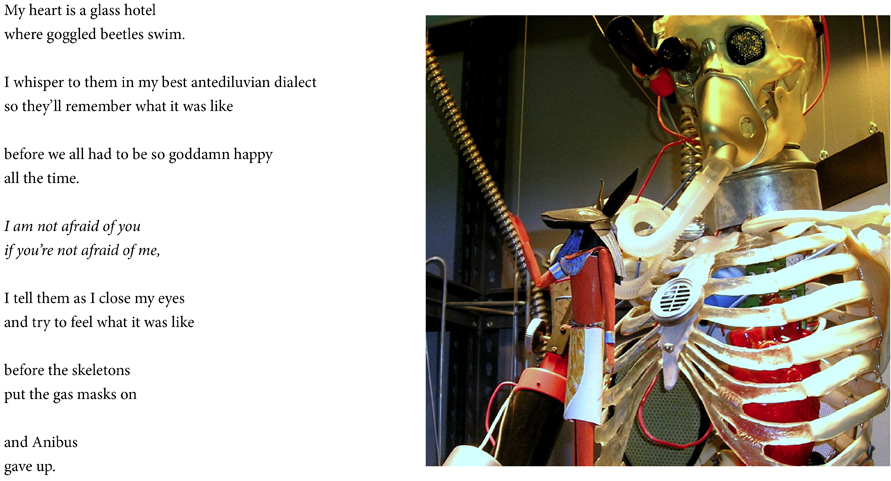
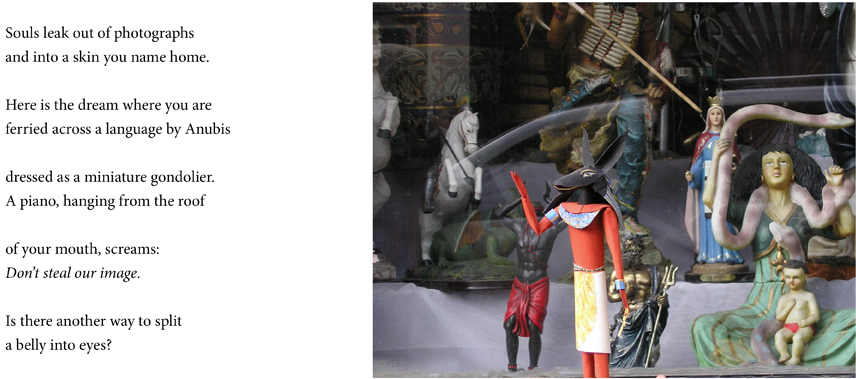
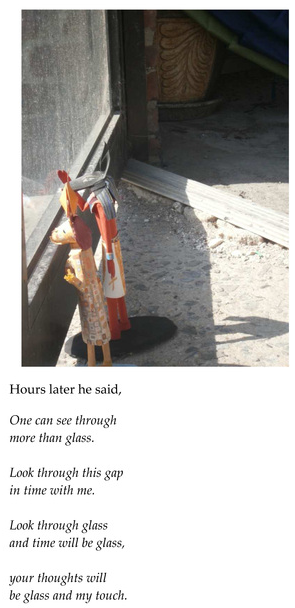
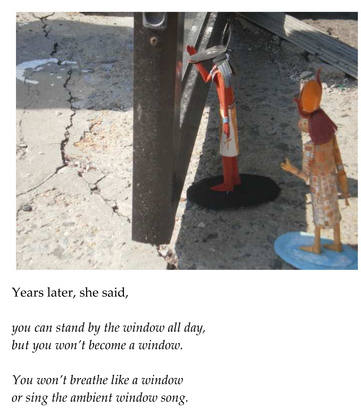
Artists’ Statement: In our mixed-media literary project, Egyptian gods, stripped of their context and role, wander various New York City neighborhoods trying to figure out where they belong, how to make sense of what they have lost, and how to get along with one another.

In the first step of our project, Toni Simon constructs three-dimensional, small-scale figurines out of paper, modeled on Egyptian gods. She then paints them with abstract, graphic details. We then take the little gods out into different neighborhoods and take hundreds of photographs of them. We select eight to ten images, which become the basis for a series of poems written by Joanna Fuhrman.

So far, we have created picture/poem serial combinations in Park Slope, Windsor Terrace, Chinatown, the Reversible Destiny Studio, Red Hook and Gowanus. Parts of the project have appeared online in Paperbag, Talisman, and Posit, and in print in the 100th issue of Hanging Loose.


Joanna Fuhrman is the author of four books of poetry, most recently Pageant (Alice James Books 2009). Her fifth book, The Year of Yellow Butterflies, is forthcoming from Hanging Loose Press in 2015. Recent poems appear in The Believer, Court Green, The Brooklyn Rail, and Puerto del Sol. In 2011, Least Weasel published a beautifully printed chapbook, The Emotive Function. She teaches poetry writing at Rutgers, SLC Writer’s Village and in private workshops. Her essays on teaching appear regularly in Teachers & Writers Magazine.


Toni Simon is a multimedia artist living in Brooklyn. Her illustrated book of prose poetry, Earth After Earth, was published by Lunar Chandelier Press in 2012. Over 80 of her illustrations appear in Contradicta: Aphorisms (Green Integer, 2010) by Nick Piombino. She has exhibited her drawings at the Drawing Center and at the AIR Gallery in NYC.


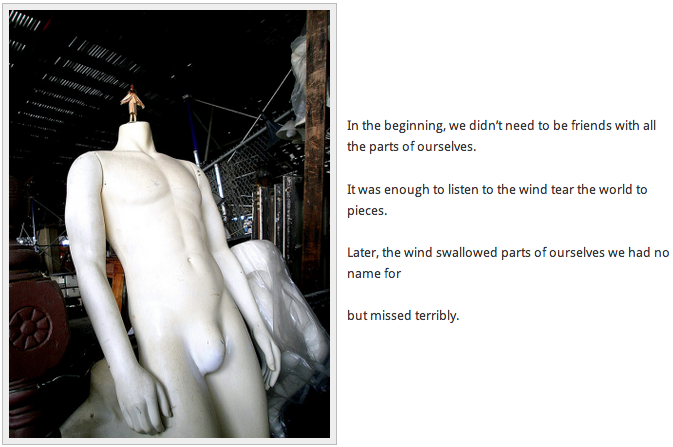
Editor’s Note: What’s not to love? Two stellar artists in collaboration, pairing visual art and poetry. Egyptian gods wandering the streets of New York, searching for life’s meaning. Unique, hand-crafted images. And the words. Yes. The words. After all, this is the Saturday Poetry Series, and as unique as this concept is, it would not be here if it weren’t for the words. “Be honest / like language // is dishonest.” “I am not afraid of you / if you’re not afraid of me.” “One can see through / more than glass.” “You can stand by the window all day, / but you won’t become a window.” “In the beginning, we didn’t need to be friends with all / the parts of ourselves.” These reflections, offered in the guise of meditations of fallen gods, are truly a reflection of ourselves.


Want to read more by Joanna Fuhrman and Toni Simon?
Joanna Fuhrman Official Website
Toni Simon Official Blog
Paperbag
Posit
Talisman

SATURDAY POETRY SERIES PRESENTS: KATIE WOODZICK

Flirting_with_Danger


YEARNING
By Katie Woodzick

She delivers my sloe gin fizz
and her slim hips testify
to an ecstasy that has
not yet been experienced.

I want to trace
the subtle protuberances
of her hip bones
(ghost-like, merely a suggestion
of bone pressing against her tender skin)

I sip my gin
instead of
tracing her hips.

Because she is forbidden.
Because my jaw locks.
Because I don’t know how.


“Yearning” originally appeared in woodzickwrites, and appears here today with permission from the poet.


Katie Woodzick is a writer, actress, director, feminist and External Relations Manager for Hedgebrook. She considers herself a smattering of Rogue from X-Men, Mae West and Tina Fey, among others. She holds a strong belief that leopard print is a neutral. Publications include Floating Bridge Press (Fall 2014 Issue) and Writer’s Digest Short Short Story contest (7th place, 2012 competition.)

Editor’s Note: Ahhhh… alliteration. The “sloe gin fizz,” the “slim hips,” the “ecstasy… not yet… experienced.” And the joyous interplay of alliteration and content! That we, the reader, are treated to gratification and pleasure with this sensual alliteration, and yet the words themselves insist that ecstasy has not been experienced. While the playful nature of the poem’s acoustics arouses our senses, the poem’s narrative unfolds, equally alluring. And in the end we are treated to a glimmer of honesty an introspection, even defeat. Despite all the attraction, all the fantasy, in the end, “I sip my gin / instead of / tracing her hips.” Why? “Because I don’t know how.”

Want to read more by Katie Woodzick?
Katie Woodzick – Theatrical Mustang
woodzickwrites – At the intersection of theatre and poetry
Floating Bridge
Whidbey Life Magazine

SATURDAY POETRY SERIES PRESENTS: RACHEL MENNIES

alisonsteve02327c

By Rachel Mennies:


AMIDAH FOR TEENAGE GIRLS

We said it Friday nights in unison: blessed
is Abraham, Isaac, patriarchs whose weight
we felt against our chests, Jacob, whose brother

filled his mouth with the sand of hate,
who split sisters with his body
of patience. The God of History, reads

the Siddur, nothing more dangerous
than this sort of God. Any good girl
will tell you so: ask Leah, who watched

as her betrothed tilled fields in agony,
rutted at her nightly, his pious bride, as he dreamed
for seven years of younger Rachel’s face. God,

our brute teacher. God, whom we thank
and thank for these big men. You are mighty forever,
my Lord. You resurrect the dead. My Lord, open

my lips, that my mouth may declare
Your praise.
Imagine the shock, that first boy
or man inside us for mere seconds, the tremor

of realization — some smaller God at our clavicle
thrumming in awareness. The creator of all things. And so
when I lie with him, my body already knows what to do

while he shifts his weight, moves his hips. You cause
the wind to blow and the rain to fall.
The hard ram’s horn,
the arms thrust high, parting a sea of salt. The open mouth

of incantation. O King, helper, savior and shield. And what of our
pleasure, that quiet subtext, that patient search against
our partners’ sweaty brows, near to finished? We already

know the phrase: bestow, bestow.


BUMPER CROP

Wet pink shock of a sliced-open
peach, pit hard between our teeth,
reached in a liquid, honest hurry.
Peach in the fingers of a certain lover’s hand.
Peach juice sliding down the wrist of a man
with assertive hungers. Peach, bringer
of rapture: the climax, but not
the fall. Peach sky rising up and up, free
of consequence. Impossible, but for
our chase of it. Peach in the crisper drawer,
softening. We hear stories of the pastor
and his book, so certain of fire, his biblical
calculus. Peach hot, sugared in an oven.
The mouth of red around the brain-
shaped, dumbstruck stone. Peach the very taste
of sin. Peach that sends the crows circling,
rapture here and gone. Peach God, rapt for carrion,
turning above us in the heavens, waiting for
us, ripening, to satisfy ourselves;
come to him pitted, come to him
finished, made rotten by
your sweet time in his sun.


“Amidah for Teenage Girls” was originally published in Witness, and “Bumper” was originally published in Linebreak. These poems appear in the collection The Glad Hand of God Points Backwards (Texas Tech University Press 2014) and appear here today with permission from the poet.


Rachel Mennies is the author of The Glad Hand of God Points Backwards, winner of the Walt McDonald First-Book Prize in Poetry (Texas Tech University Press, 2014), and the chapbook No Silence in the Fields (Blue Hour Press, 2012). Her poems have appeared in Hayden’s Ferry Review, Poet Lore, The Journal, and elsewhere, and have been reprinted at Poetry Daily. She teaches in the First-Year Writing Program at Carnegie Mellon University.

Editor’s Note: I really love today’s poems. Discretely and in conjunction. For the ways they press against the same themes, and for the ways they diverge. “Amidah for Teenage Girls” had me at “patriarchs whose weight / we felt against our chests,” and held me there, exalting, with “Jacob, whose brother // filled his mouth with the sand of hate, / who split sisters with his body / of patience.” Yes. Yes and yes. I could write pages about the first two stanzas of this poem alone. Instead, I urge you to read and reread it, to savor what stews and what simmers.

When I think of peaches and poems, I think of Li-Young Lee. And while “Bumper Crops” and “From Blossoms” each make their own unique contribution to the poetic landscape, I think Li-Young Lee would meditate along with Rachel Mennies on God and humanity, and that he would relish the poem’s sweet sensuality. As, I believe, would Anya Silver and Rabbi Rachel Barenblat, whose “French Toast” and “Sufganiyot” would, along with Mennies’ peaches, make up a picnic that would give Fifty Shades of Grey a good blush.

Want to read more by Rachel Mennies?
Rachel Mennies – Official Website
Buy The Glad Hand of God Points Backwards from Texas Tech University Press
Buy The Glad Hand of God Points Backwards from Amazon
Poetry Daily
Sixth Finch