Carson Pytell: “Frequencies”


Frequencies

I’m down now to Doppler affairs:
A frequency flicks my ear,
Approaches, grows, arrives,
Raises to rattling relations,
Departs, diminishes, disappears
Like it was never even there,
And leaves me listening again.

These decibels have yet to deafen,
Sheaths are cheap, the clinic’s free
And the bony finger of psychiatry
Scares the living shit from me.


About the Author: Carson Pytell is a poet living in a very small town outside Albany, NY. His work has appeared in numerous venues online and is currently available or forthcoming in print from such publications as Vita Brevis Press, The Virginia Normal, NoD Magazine, Blue Moon Lit & Art Review, Spank the Carp, Crack the Spine, Futures Trading, Down in the Dirt Magazine, Gideon Poetry Review and Children, Churches & Daddies, among others.


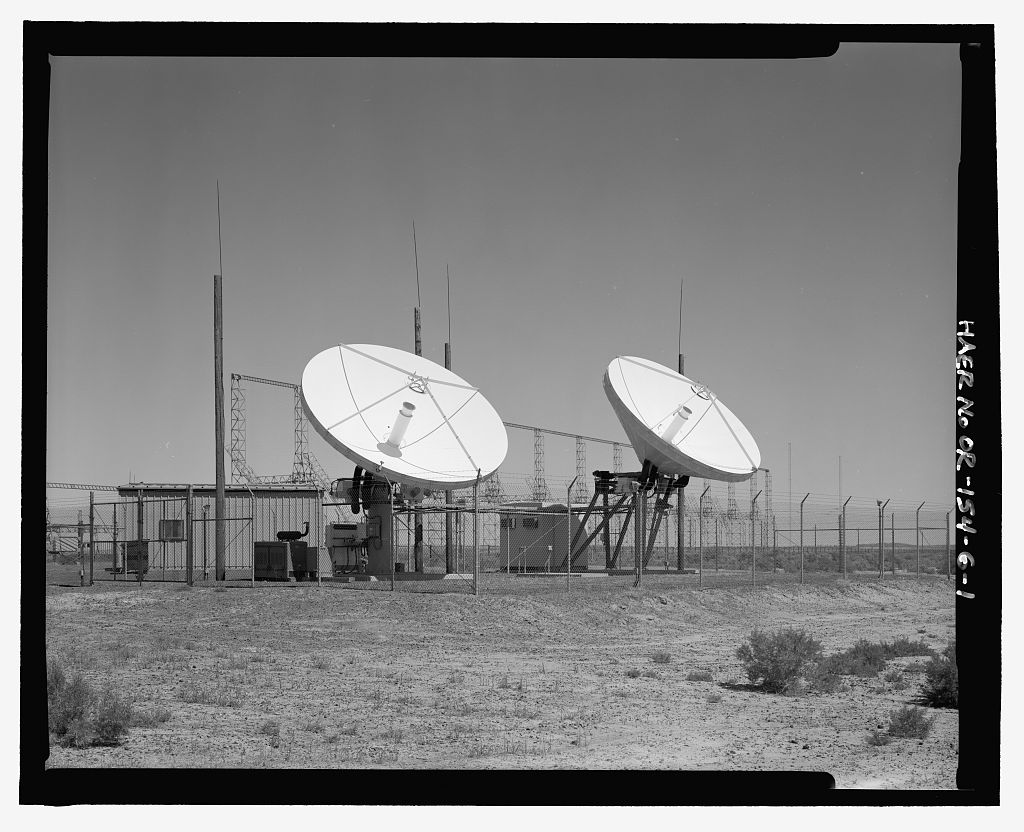
Image Credit: Robert Hicks “View to the north of the Two Communications Antenna – Over-the-Horizon Backscatter Radar Network, Christmas Valley Radar Site Transmit Sector Four Communications Antennas, On unnamed road west of Lost Forest Road, Christmas Valley, Lake County, OR” (2005) The Library of Congress.
Matthew Borczon: “The Question Is”


The question is

In Afghanistan
we saw almost
three thousand
patients with
a 97 percent
survival rate

in two
months in
New York City
we saw
another 12
hundred covid
patients helping
nearly all
get from
the hospital
back to
their homes

so how
come I
only ever
see the
faces of
the dead
only hear
crying children
and the
last gasp
for air

when anyone
thanks me
for my
service.


About the Author: Matthew Borczon is a nurse and Navy sailor from Erie pa. He has written 14 books of poetry; the most recent, Prison Nurse poems, is available from Analog Submissions press. He recently returned from being deployed to New York City where he was working in an ICU to take care of Covid positive patients. When he is not working for the Navy he is a nurse to adults with developmental disabilities.


More by Matthew Borczon

In 2010


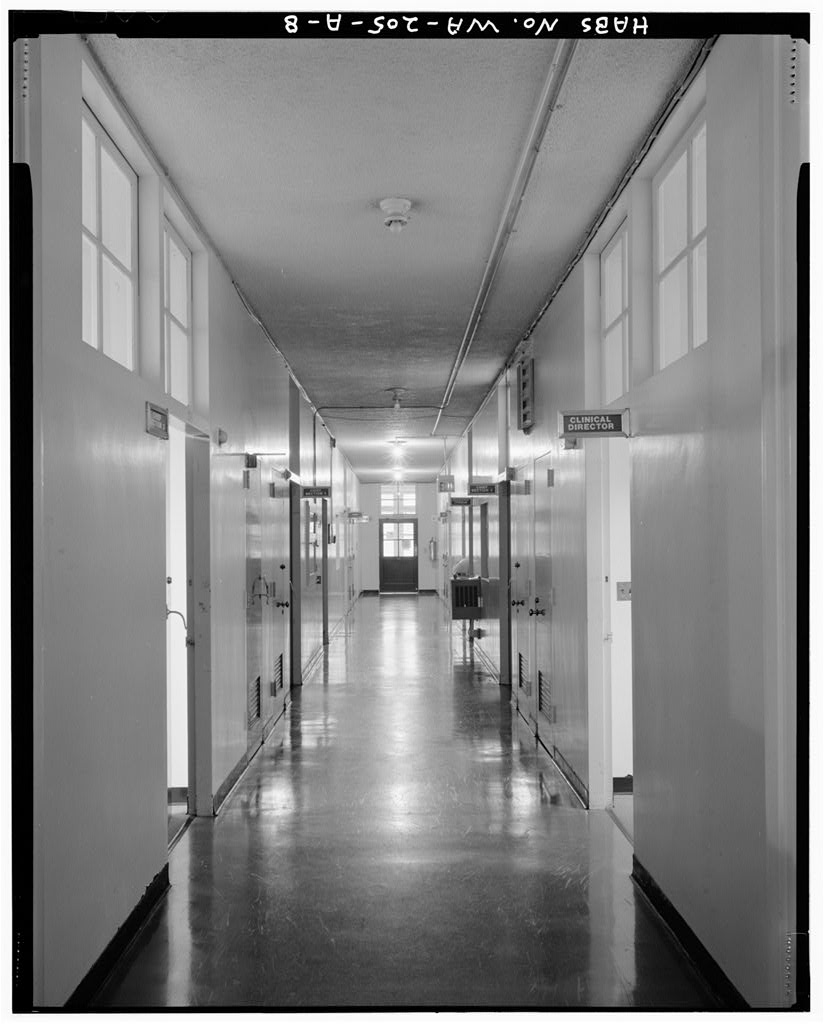
Image Credit: “Second floor hallway running NW-SE in SW wing of building. Clinical Director’s office on right. – Fort Lewis, Post Hospital, Near Ninth Division Drive & Idaho Avenue, DuPont, Pierce County, WA.” The Library of Congress

Jason Baldinger: “cape henlopen blues”


cape henlopen blues

among the coastal pine
the herons, the fescues
I look up on a sky
that hangs heavy
with words unsaid

horizon catches fire
standing on a sandbar
washed in red and lighthouse
tide roars the other side of the cape
I say a prayer for a friend
and his wife, I say prayers
then throw them in the ocean

north star hangs above
thumbnail moon
miles davis “shhh peaceful”
fills the car, my niece
asked my resolution
I told her I didn’t believe that
I told her time is not linear
that the narratives
the timelines we follow
don’t kowtow to calendars
it’s something understood
better as you get older

no fireworks tonight
warm december
I escape light pollution
to hail orion’s stars
a joint on my lips
gulls fight the noise
of an approximately
infinite ocean. alone
on the dunes
time has passed


About the Author: Jason Baldinger is a poet from Pittsburgh, Pennsylvania.  He was recently a Writer in Residence at Osage Arts Community, and is founder and co-director of The Bridge Series. He has multiple books available including the soon to be released The Better Angels of our Nature (Kung Fu Treachery) and the split books The Ugly Side of the Lake with John Dorsey (Night Ballet Press) as well as Little Fires Hiding with James Benger (Kung Fu Treachery Press). His work has been published widely in print journals and online. You can listen to him read his work on Bandcamp on lps by the bands Theremonster and The Gotobeds.


More by Jason Baldinger:

“I forgot the earth and heaven”

“When Cancer Come to Evansville, Indiana”

“blind into leaving”


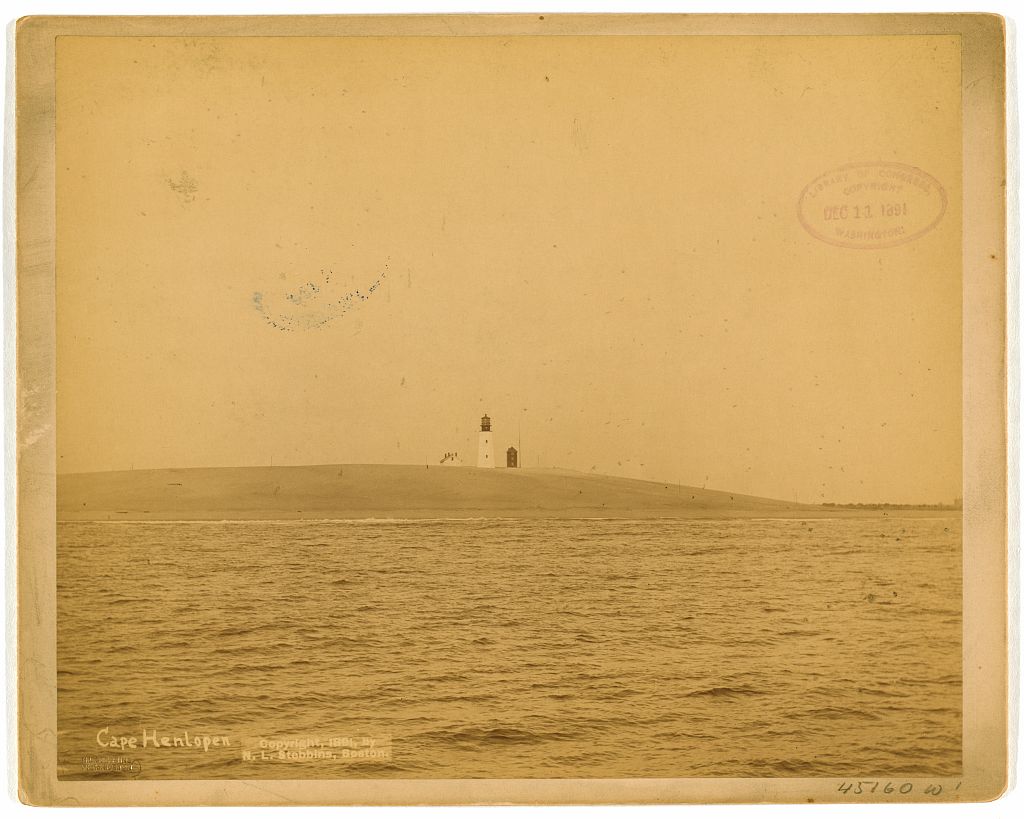
Image Credit: “Cape Henlopen” (1891) The Library of Congress

Timothy Tarkelly: “Hastings: A Remembrance”


Hastings: A Remembrance

Ashley Judd graces the cover
of another thriller.
A two-hour testament
to the lengths men will go to for attention.
Two-day rental, just a few dollars.

It’s the act of course,
of perusing, compromise,
and finally the selection.

And the beauty in that green stamp
at the base of the books’ spines:
used.
Gently, but a real past,
a whole life of shelves and suitcases,
the pocket on the back of an airliner seat.
But I am not a jealous lover.
I will caress the creases
as if I made them myself.

A whole section devoted to dice,
twenty-sided windows into the future,
an eternity of game nights
and the compendium of canonical monsters
to guide us.
Plastic-wrapped, Fifth Edition, 
the best chapter of our lives.

And this was Friday evenings,
or the awkward hour between dinner’s end
and the movie’s beginning. The after-work walks
when you just can’t bear to go home yet.

The holy payday pilgrimages
of new books and novelty drinking horns,
of Pacific Rim posters for Christmas
and the perfect Frodo action figure
to live forever at your desk,
watching you write,
watching you live and record 
your most predictable adventures.

And now, Fridays have worn to antsy dust,
and a faded sign hangs from an empty husk
over a wasted parking lot. 

Except for every October
and its pop-up Halloween store. 


About the Author: Timothy Tarkelly’s work has appeared in From the Depths, Philosophical IdiotBack Patio PressRusty TruckCauldron Anthology, and other magazines, online journals, etc. He has had two books of poetry published by Spartan Press: Luckhound (2020) and Gently in Manner, Strongly in Deed: Poems on Eisenhower (2019). He also runs Roaring Junior Press, a chapbook publisher that specializes in small runs of sci-fi/fantasy, horror, and pop-culture infused poetry. When he’s not writing and publishing, he teaches in Southeast Kansas.


Image Credit: A digital rendering of a public domain photo by Chase Dimock

Ace Boggess: “Rain/Snow Mix”


Rain/Snow Mix

Don’t know whether to wear my gloves
or grab the cobalt umbrella 
with its one bent, awkward arm.

I’ll get wet, but maybe it’s one of those dry wets.

If the temp were ten degrees cooler,
every question would have an answer
rather than another question:
should I stay home? risk it for a quick trip to the store?

The meteorologist mocks & prattles, 
goofing like an Auguste clown.
I think it’s funny we never see his shoes.


About the Author: Ace Boggess is author of five books of poetry—MisadventureI Have Lost the Art of Dreaming It SoUltra Deep Field, The Prisoners, and The Beautiful Girl Whose Wish Was Not Fulfilled—and the novels States of Mercy and A Song Without a Melody. His writing has appeared in Harvard Review, Notre Dame Review, Mid-American Review, Rattle, River Styx, and many other journals. He received a fellowship from the West Virginia Commission on the Arts and spent five years in a West Virginia prison. He lives in Charleston, West Virginia. His sixth collection, Escape Envy, is forthcoming from Brick Road Poetry Press in 2021.


More by Ace Boggess:

Rock Garden

And Why Am I A Free Man?

Why Did You Try To Sober Up?


Image Credit: “Unidentified man with umbrella standing in street with building in background” (1921) The Library of Congress

Tony Pena: “Birds of a Feather”


Birds of a Feather

The black birds caw
as I hobble to my Honda
CRV noir like Mister
no meniscus on the lam
from hard boiled critics
who put Clarice Starling
on my case for killing
so many of my darlings.
In my standard literary
issue of charcoal satin
shirt and dungarees,
I ask of the evening
in iambic slang,
if the crows consider
me an accomplice
to their murder
or just another
Edgar Allan wannabe.


About the Author: Tony Pena was formerly 2017-2018 Poet Laureate for the city of Beacon, New York.  His work has appeared in several publications over the years. Recently, poems have appeared in 1870, Museum of Poetry, and the Rye Whiskey Review. A volume of poetry and flash fiction, “Blood and Beats and Rock n Roll,” is available at Amazon.  A chapbook of poetry, “Opening night in Gehenna,” is available from author. Colorful compositions and caterwauling with a couple of chords can be seen at:

.
.
Image Credit: illustration from A synopsis of the birds of Australia, and the adjacent Islands. London: John Gould, 1837. Courtesy of the Biodiversity Heritage Library

Leslie M. Rupracht: “Brothers”


Brothers 

The phone call behind him,
shock still fresh in his ears,  

the surviving brother    
reaches for memories 
long archived in the depths 
of a cerebral vault, 

untapped for a half-century 
and more until this unending night

Images of two laughing brothers 
upon hand-built rafts forged of scrap 
barn wood, frayed ropes and faith, 
floating on creek waters 

into the rapids of his 
consciousness—

a pair of young captains, 
made of invincible braveness, are
summoned into this sobering moment 
to placate a suddenly lonesome man’s 

shattered hope to bond and build 
more durable craft with his brother

In irretrievable youth 
as in this irreversible hour 
and the tomorrows of his mourning, 
he realized 

he always wanted more 
of his big brother’s time


About the Author: Leslie M. Rupracht is an editor, poet, writer, and visual artist living in the Charlotte/Lake Norman region of North Carolina since 1997. Her words and artwork appear in various journals (most recently Gargoyle), anthologies, group exhibits, and a chapbook, Splintered Memories (Main Street Rag, 2012). Longtime senior associate editor of now-retired Iodine Poetry Journal, Rupracht also edited NC Poetry Society’s 2017 and 2018 Pinesong anthology. Swearing off a corporate work relapse, Rupracht co-founded and hosts Waterbean Poetry Night at the Mic in Huntersville, NC.


Image Credit: “Portrait of Two Seated Boys” (1850s) Digital image courtesy of the Getty’s Open Content Program.

Scott Silsbe: “Reading Rich Gegick’s Greasy Handshakes at Neighbors Tavern in Jeannette, Pennsylvania”


Reading Rich Gegick’s Greasy Handshakes at Neighbors Tavern in Jeannette, Pennsylvania

Since it’s my first time at Neighbors, I don’t know what I want
to drink. Call me a snob, but none of the drafts look appealing 
to me. But I order one anyway. I can’t recall the last time that 
I had me a Coors Banquet beer. And it doesn’t taste bad. But it 
doesn’t taste great either—perhaps one of the worst things you 
can say about a beer. But I’ve got a copy of Greasy Handshakes 
and that is something. At the art gallery, Newman gave me a big 
box of them to take to Rich, his author copies. And I pulled one 
out of the box to have as a companion at the bar, promising I’d 
replace it after my brief stop off at Neighbors. Thinking maybe 
I’d only have to have one Coors Banquet if Bobby would be up 
for company once I am back in Allegheny County, and across
the Westinghouse Bridge, where I feel at home, close to my lady 
and my friends and my collection of books and records, cassettes
and compact discs and 8-tracks, DVDs and VHS tapes. I know 
I’m a sucker for crap. I fucking love crap. Maybe older crap 
especially, but any crap’ll do. My crap. All that crap that I own.
That crap almost makes you feel immortal, you know? I’m going
to own all this crap forever. These records. These old-ass books.
I didn’t spill any of my Banquet on the book I borrowed, Rich.
Next time I go to Neighbors, I think I’ll get a bottle of High Life.
Or else maybe I’ll just stick to going to Johnny’s Wife’s Place.


About the Author: Scott Silsbe was born in Detroit. He now lives in Pittsburgh. His poems have been collected in three books—Unattended FireThe River Underneath the City, and Muskrat Friday Dinner. He is also an assistant editor at Low Ghost Press.


More By Scott Silsbe:

Double Downriver


Image Credit: John Vachon “Bartender in Catholic Sokol Club. Ambridge, Pennsylvania” (1941) The Library of Congress


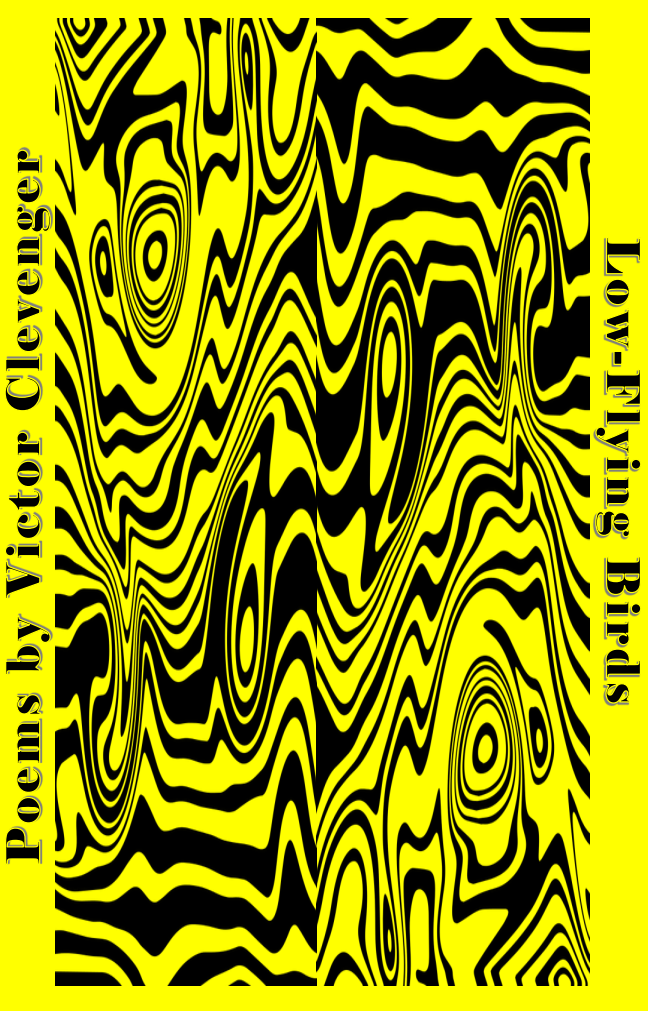
Victor Clevenger: “Low-Flying Birds”


As It Ought To Be Magazine, in a partnership with River Dog Press and Temple of Man, is proud to feature Victor Clevenger’s Low-Flying Birds, as a free downloadable chapbook of poetry.

River Dog is a small press from Missouri creating chapbooks, broadsides and zines. They are not any sort of commercial enterprise, but simply two friends who wanted to get back to basics, to why they got into all of this to begin with, to offer something from the heart. For more information on River Dog’s publications, inquire at thezineriverdog@yahoo.com


About the Author: Victor Clevenger spends his days in a Madhouse and his nights writing poetry.  Selected pieces of his work have appeared in print magazines and journals around the world.  He is the author of several collections of poetry including Sandpaper Lovin’ (Crisis Chronicles Press, 2017), A Finger in the Hornets’ Nest (Red Flag Poetry, 2018), and Corned Beef Hash By Candlelight (Luchador Press, 2019).  Together with American poet John Dorsey, they run River Dog.


More By Victor Clevenger:

Milkman’s Mustache

$5.00 Wok

John Haugh: “Thanksgiving Hurt”


Thanksgiving Hurt  

Twelve of us stand, hands encircling 
your granite-topped kitchen island. 
Eleven offer prayers of Thanksgiving, 
while you weep. 

Medicine’s cornucopia failed you. 
Now it’s pain and acupuncture, brutal, 
additive opioids or brain stem injections. 

Later, I take our four sons of two families 
romping through leaves from winter-bare oaks, 
to build driftwood forts by the Flatrock River. 
I can’t remember, in our decades as siblings, 
any prior moment when you openly wept. 

Our four boys imagine riverside wars, 
negotiate play-battle near a small pool 
of Rosyface Shiner minnows, 
separate from the Flatrock’s main body. 
You’re thinning toward gaunt, and tried 
to warn me by phone about your crying, 
but I had no concept. 

The Flatrock chuckles, November empty. 
Minnows flash over rotting leaves in just 
one pool, cut from Mother River by a fallen 
chestnut tree. Now, I admire courage, 
with an Irish respect for all things addictive, 
but please mind the cost of pain. 

One hard freeze or hungry bird 
could kill all those lovely minnows. 
Perhaps we could dig 
a channel from pool to river. 

I check my watch and shout, 
our boys settle final treaties. 
We can wish minnows 
had the life they deserve, 
but it is time to go.


About the Author: John Haugh lives in Greensboro, NC where he works in finance and is trying to assemble his first chapbook, Repurpose Those Ghosts.  Recent other publishing credits include poems appearing in Main Street Rag, Kackalack, the Roanoke Review, Peregrine, North Carolina Literary Review, and The Tipton Poetry Review.  Mr. Haugh was a finalist for the Applewhite poetry award recently, was a NCAA national champion in fencing years ago, and spent untold hours browsing Oxford Books in Atlanta and Powell’s City of Books in Oregon when young.


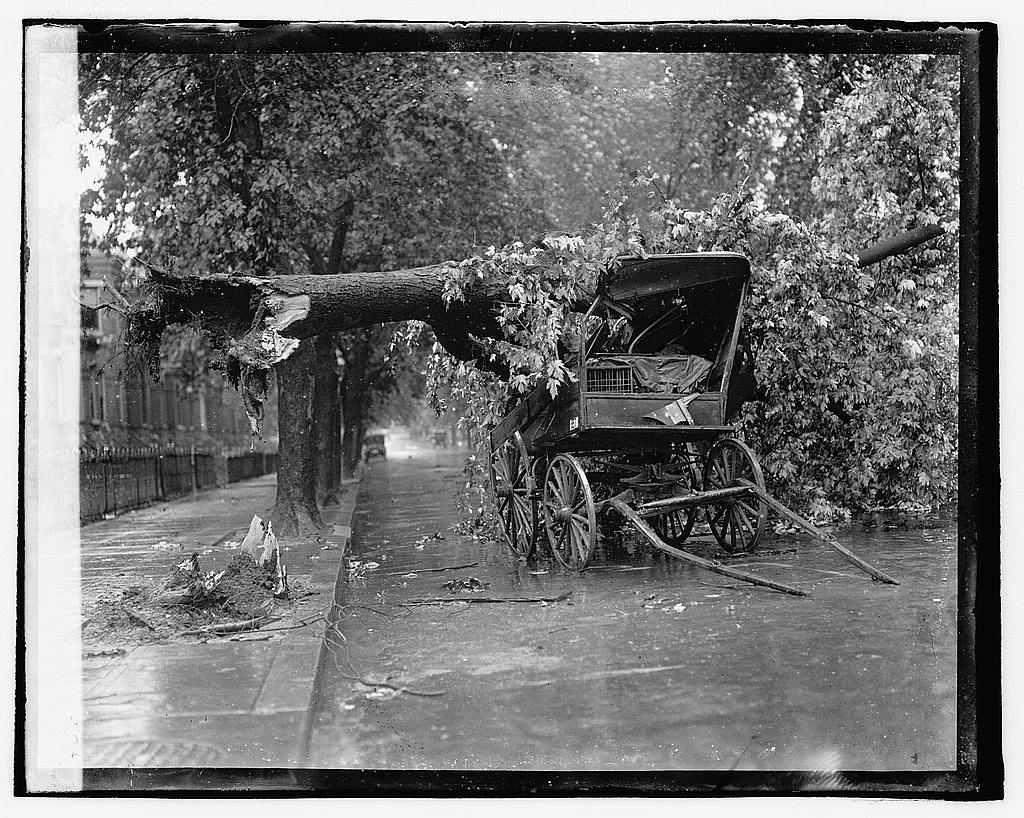
Image Credit: “Wagon hit with fallen tree” (1922) The Library of Congress