Sue Blaustein: A Horse Named “Can-Ball-the-Flowers”


A Horse Named “Can-Ball-the-Flowers”

…we can tentatively define information as the communication of relationships
– Hans Christian Von Baeyer in “INFO, Information, the New Language of Science”

When I was five or six,
I was crazy for horses
            and words.
My mother told me
about Thoroughbreds
and the meaning of pedigree –
why owners gave them

long and pompous names. She’d
open the New York Times to find
the line-up at Belmont, read
us the silliest ones out loud
            and we’d laugh.
Something only we shared… As
years passed, I’d remember, or

mis-remember a name.
Was there a horse
named “Can-Ball-the-Flowers”?
I let it drop, but then the Internet was invented.
Forty-three when I got connected, my first
burning question for the web:
Was there ever a horse named

“Can Ball the Flowers”?
DOS search engines in the 90’s
didn’t think for you like Google.
Courier type on a black
background…I strategized
keywords: I was five or six.
So, 1961, ‘62. Races in New York – 

would be Aqueduct or Belmont.
I had to tweak my terms
repeatedly, but finally I learned –
there was a chestnut
stallion named “Candy Spots”,
and a fast mare whose name
was “Bowl of Flowers”!


About the Author: Sue Blaustein is the author of “In the Field, Autobiography of an Inspector”. Her publication credits and bio can be found at www.sueblaustein.com. Sue retired from the Milwaukee Health Department in 2016, and is an active volunteer. She blogs for ExFabula (“Connecting Milwaukee Through Real Stories”), serves as an interviewer/writer for the “My Life My Story” program at the Zablocki VA Medical Center, and chases insects at the Milwaukee Urban Ecology Center.


More by Sue Blaustein:

A Song for Harvest Spiders

A Song for Noise

The Old Ways


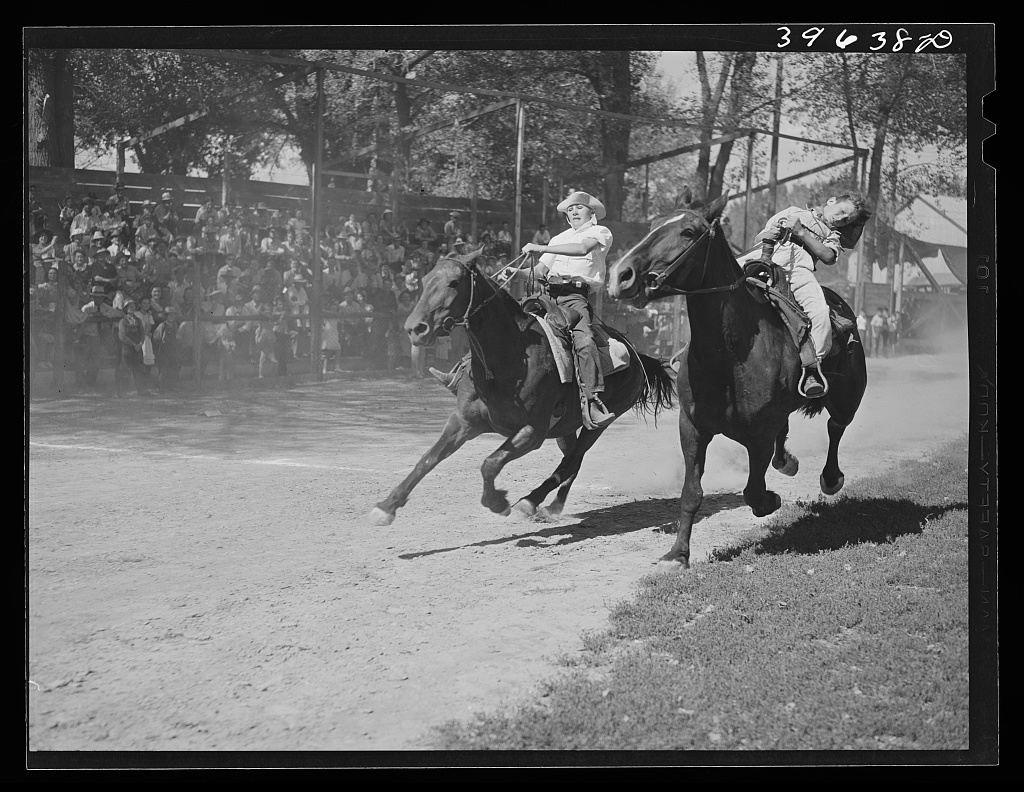
Image Credit: Russell Lee “Finish line of farm boys’ horse race. Vale Oregon. This was supposed to be a boys race but the girls wanted to be in it too so they were included ” (1941) The Library of Congress
Howie Good: “Reason to Believe”


Reason to Believe

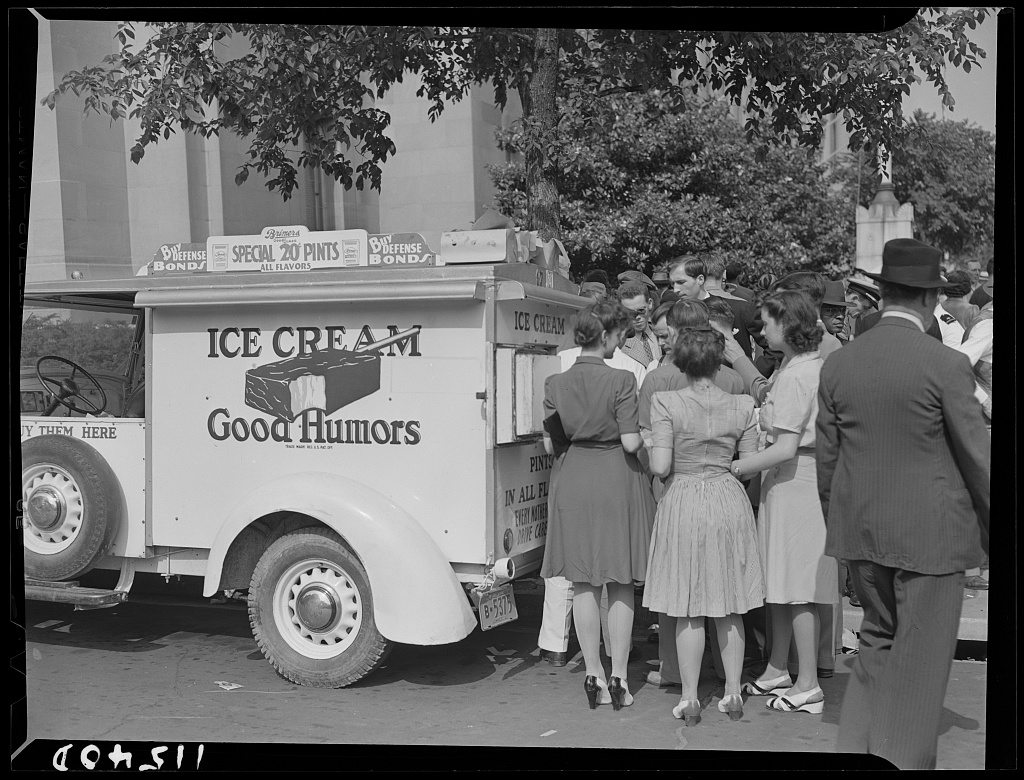
By late March, tens of thousands were about to die from the virus. I was sad, so sad. Then the sun would come up and the buds open a little more each day. You could hear the music – the Mister Softee truck was out. You just had to watch for it.

&

As I go around town, I see people wearing face masks all wrong, under their noses or even their chins. I don’t want to get into it with them. I just want to get away. Given a choice, I’d live somewhere civilized and safe, somewhere like Switzerland, but without all the cows and glaciers.

&

It’s important to pay attention to possible omens. Like the tall weed growing across the street, whose milky white sap is said to relieve pain. Do you have 30 seconds? I swear sometimes it glows.


About the Author: Howie Good is the author of THE DEATH ROW SHUFFLE, a poetry collection forthcoming from Finishing Line Press.


More by Howie Good:

People Get Ready

Maiden Voyage


Image Credit: John Ferrell “Washington, D.C. Good Humor ice cream truck” (1942) The Library of Congress

Chase Dimock: “Imitation Unicorns”


Imitation Unicorns
– For Nellie

When I first held you
I watched Unicorns prance
in soft fleecy pink across
your onesie as your dreaming
breathing belly rose in and out
lifting them off into the infinite
pastel possibilities of infancy.

I wondered when you’ll start
sorting your fairy tale menagerie
into fact and fiction, when Z
will still be for Zebra, but U
will have to settle for Urchin
or the Unspotted Saw-whet Owl
the Unlined Giant Chafer Beetle
the Unstreaked Tit-Tyrant
or any number of animals
defined by what they lack.

Will you still marvel at
the Unadorned Rock Wallaby
despite his lack of adornment?

Will you still respect
the Unarmored Threespine Stickleback
despite her vulnerability?

Will you accept substitutes?

The fencing Narwhal
swashbuckling the Baltic
more weaponized than majestic

The Hornbill who flies like pegasus
but shrieks, fighting for figs in the trees

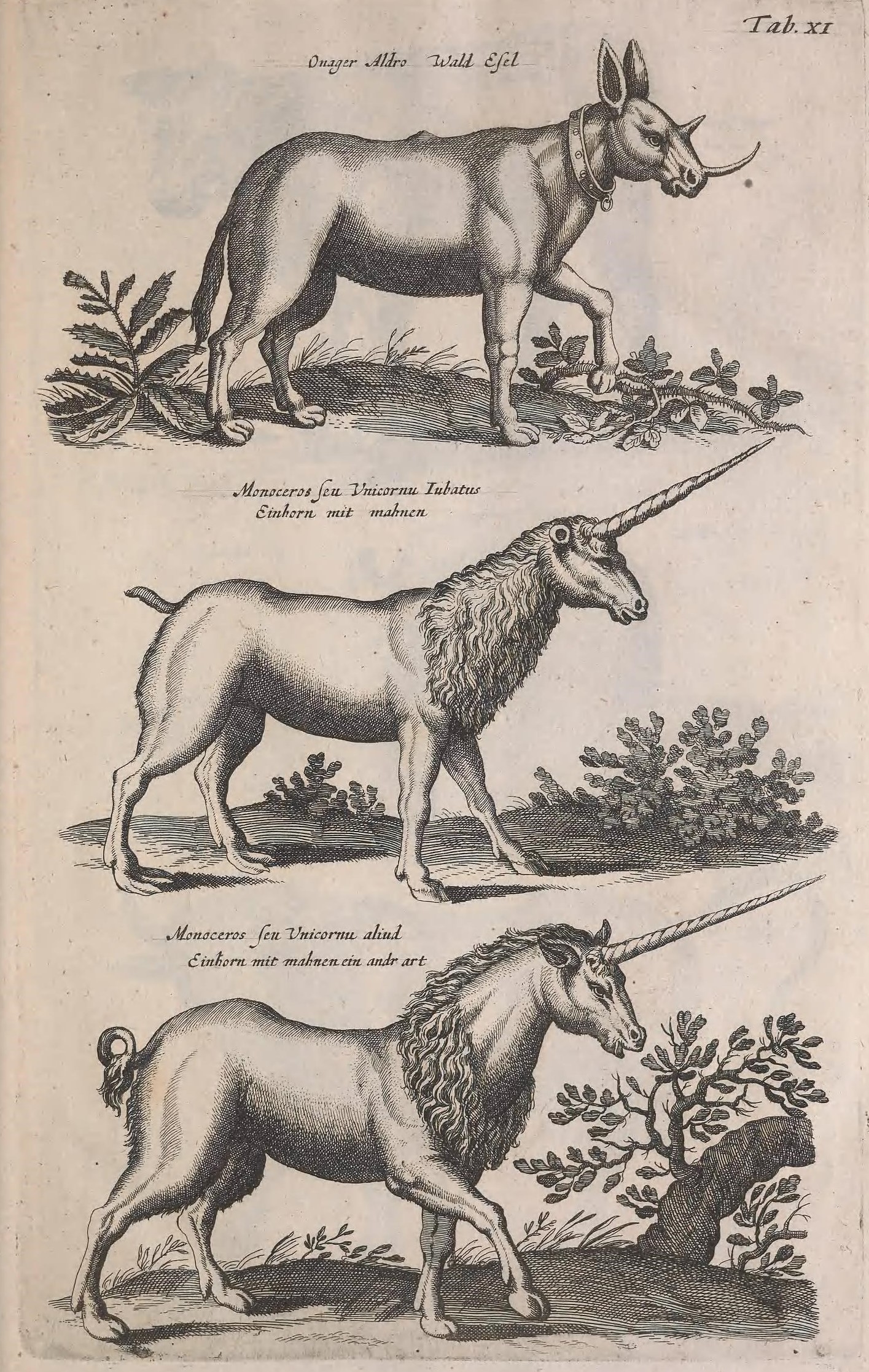
When Marco Polo first laid eyes
on a Rhinoceros in the land of Basma
he wrote, Unicorns are
           altogether different from what we fancied.

He bemoaned, Unicorns are
……..not in the least like that which our stories tell of.
           They delight much to abide in mire and mud.
           Tis a passing ugly beast to look upon.
I hope you never use myth as your measure.

When you gaze at the Unicorn trotting through
the frosted cupcake mountains on your Lisa Frank
Trapper Keeper, know that fantasy is a projection
of our inner colors, on a world both grey, and yet
so brilliant, we can’t see all the light in the spectrum.

And most of all, humor your uncle
when he pulls a mule to your birthday party,
straps a rainbow painted corn cob to its head.
When you ride old Wilbur into a sunset that stops
at the fence in your backyard, know he did the best
Unicorn impersonation his old bones could carry.


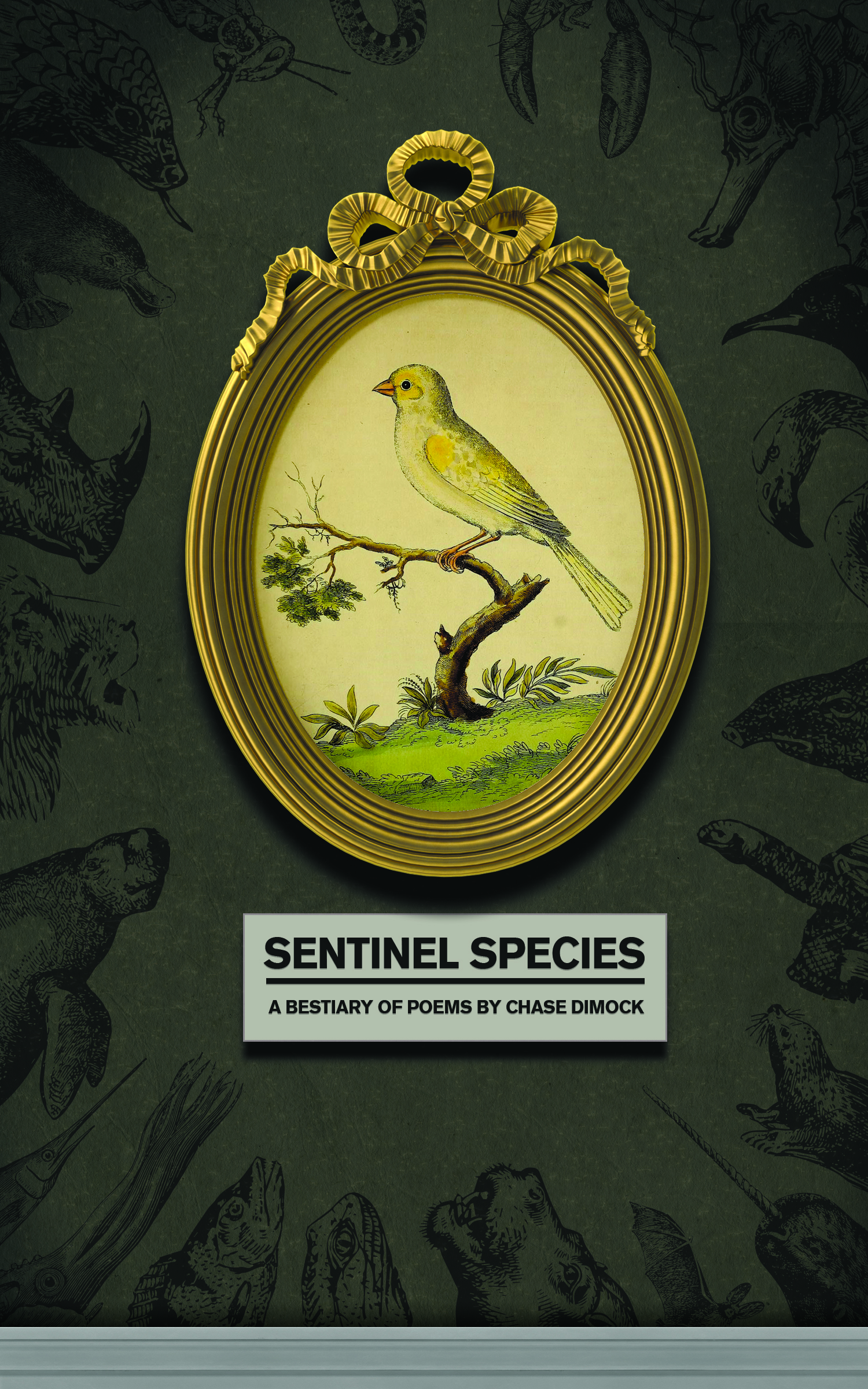
Imitation Unicorns appears in Sentinel Species, now available from Stubborn Mule Press on most online bookstores.


About the Author: Chase Dimock lives among mountain lions and coyotes in an undisclosed location between Laurel Canyon and the Hollywood Hills of Los Angeles. He serves as the Managing Editor of As It Ought To Be Magazine and makes his living teaching literature and writing at College of the Canyons. His poetry has been published in Waccamaw, Hot Metal Bridge, Faultline, Roanoke Review, New Mexico Review, and Flyway among others. He holds a PhD in Comparative Literature from the University of Illinois and his scholarship in World Literature and LGBT Studies has appeared in College Literature, Western American Literature, Modern American Poetry, The Lambda Literary Review, and several edited anthologies. For more, visit chasedimock.com


Image Credit: from “Historiae naturalis de quadrupedibus libri” (1657) Image Courtesy of the Biodiversity Heritage Library

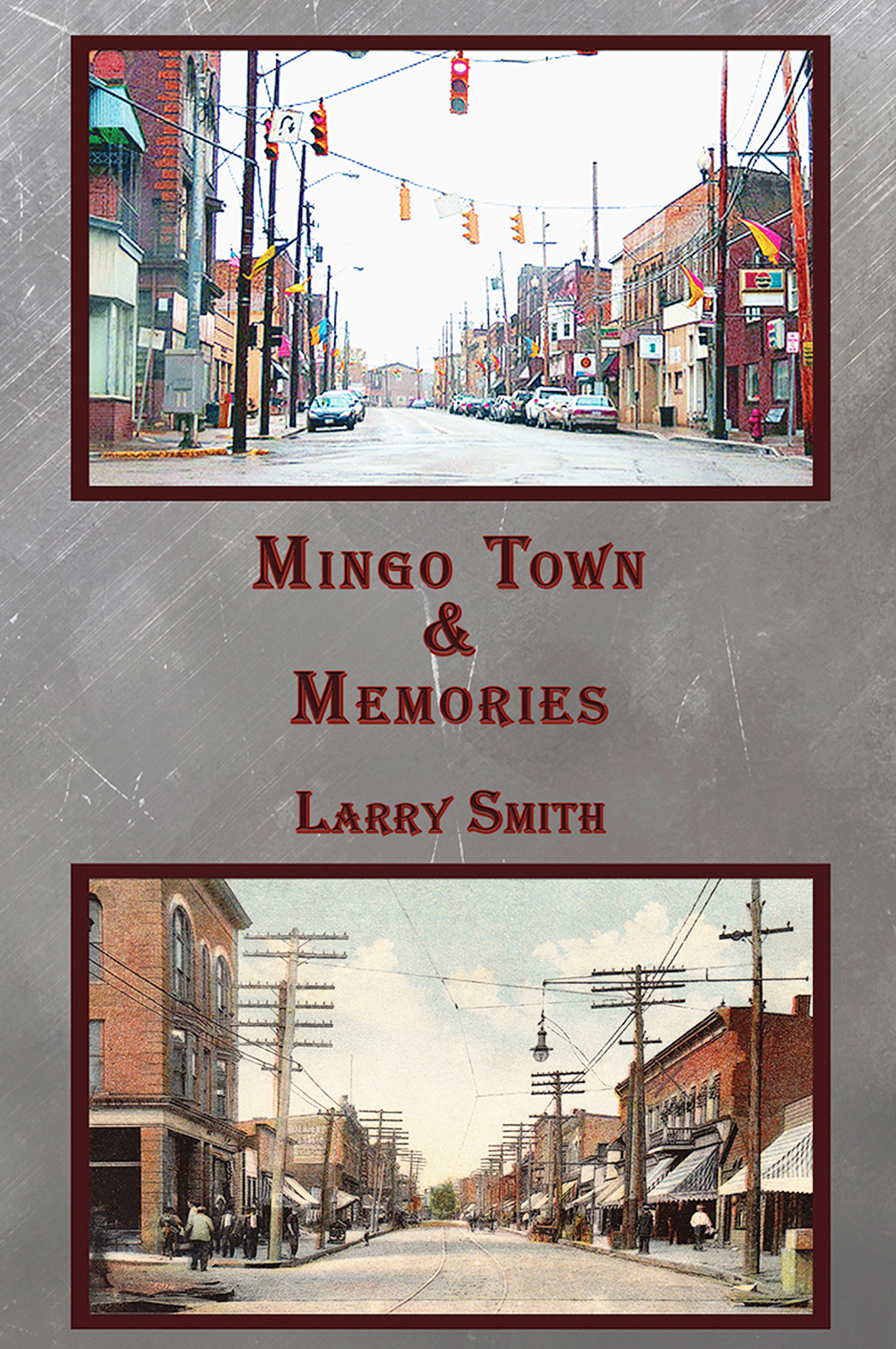
A Review of Larry Smith’s Mingo Town & Memories by Mike James


A Review of Larry Smith’s

Mingo Town & Memories

By Mike James


Larry Smith knows what a penny tastes like. I kept thinking that while reading his fine new collection of poems, not because he says that but because his poems are so concerned with the absence of money.

Neither Eugene Debs nor Sherwood Anderson are mentioned in any poem, but any reader might notice them at the book’s periphery. Like Debs, Smith is concerned with the underclass and with how class can go a long way towards shaping destiny. And, like Debs, he has an almost mystical faith in the goodness of collective humanity.  Like Anderson, Smith is focused on day-to-day, small town, Ohio life. Also, just like Anderson, Smith is concerned with language spoken in diners and factories. There’s nothing ornamental in these poems. They are as sturdy and as practical as Amish furniture. His characters don’t always do right, but they seem to always recognize when they’ve done wrong.

Smith is an Ohio writer who has been publishing widely since the 1970’s. His books include poetry, novels, translations, biography, and non-fiction.  For his many readers, this new collection will arrive like an old friend. The things he’s always done well he continues to shine with.

Here’s a sample to illustrate what Smith is really good at, from his poem, “Wages.”


When I break a plate, Mom cries,
“Oh shit. Look what you’ve done.”
You can hear the sound of wind.
Then Mom hands Dad a fist full of bills,
and we kids go off to our rooms.
Tomorrow will mean our old clothes again
and the counting of our coins. 


Now poetry is about structuring language as much as it is about anything. Look at what Smith does with the endings of those lines. Only one word (again) is more than one syllable. Smith not only sticks to the vernacular here, but he also uses monosyllables to emphasize harshness and what it’s like to just get by. At the same time he allows the lines to play upon one another with off rhymes of wind/again and rooms/coins. This is an artful way to not draw attention away from the scene. Smith does a fine job of saying just enough in his poems.

These poems are often about the moments of just enough. Smith’s characters do a lot of waiting. Factory workers wait around to see if they will stay employed. Boys wait along the river. Old couples wait to talk. They are ordinary people killing time. Now and then a couple of his characters get together and are like, “two boats mooring along the shore.”


Mingo Town & Memories by Larry Smith
Bird Dog Publishing, 2020
Poetry, $15


About the Authors:

Mike James makes his home outside Nashville, Tennessee. He has published in numerous magazines throughout the country in such places as Plainsongs, Gargoyle, Birmingham Poetry Review, and Chiron Review. His fifteen poetry collections include: Journeyman’s Suitcase (Luchador), Parades (Alien Buddha), Jumping Drawbridges in Technicolor (Blue Horse), First-Hand Accounts from Made-Up Places (Stubborn Mule), Crows in the Jukebox (Bottom Dog), My Favorite Houseguest (FutureCycle), and Peddler’s Blues (Main Street Rag.) He served as an associate editor of The Kentucky Review and currently serves as an associate editor of Unbroken.

Larry Smith is the editor-publisher of Bottom Dog Press in Ohio, also the author of 6 books of fiction and 8 books of poems, most recently The Pears: Poems. A retired professor of humanities, he lives and works along the shores of Lake Erie in Huron, Ohio.


More Reviews by Mike James:

Mike James reviews “Dead Letter Office: Selected Poems” By Marko Pogacar

Mike James reviews Beautiful Aliens: A Steve Abbott Reader and Have You Seen This Man? The Castro Poems of Karl Tierney

Loisa Fenichell: “I know now I did not fabricate the sky”


I know now I did not fabricate the sky 

Or how sunset grows in resemblance to a child’s
arm. In one home, a boy learns to walk like his grandfather.
Outside, the Elephant Tree strengthens itself out over
the desert: all people are not lost: water spreads little here;
when it does, citizens remember to celebrate. I walk
with fingers peeled apart, to gaze with care at the goodness
of the wren alighted atop the Saguaro. I imagine it to be
protecting its eggs, like how I know I must protect my
own infant, though she is still only a fragment
of my imaginings: how well daughters protect daughters,
the lines of heritage a woven sea; flocks of sandhill cranes
moving to Nebraska. In my own home, I still drink tea —
honey-less, unlike my mother. I have learned that the best
form of prayer is to wait as the tea steeps, gentle, with
the knowledge that the liquid stays liquid. Later I sleep,
clothed in darkness, recalling my obsession with myth,
the looks I once gave to the mirror, when I felt my stomach
had not obeyed my own narrative. Yet I am here, trusting
in all I cannot see, cannot fathom, to blow out the dustings
I for so long allowed to rest atop my bureau: photographs
of ancestors who believed in a God, & saw that even when
all seemed to wane, great fields still existed with care.


About the Author: Loisa Fenichell holds a BA from SUNY Purchase College, where she studied Creative Writing and Literature. Her work has been featured or is forthcoming in various publications, such as The Winter Tangerine Review, The Rising Phoenix Review, No Contact Mag, and The Nervous Breakdown. Her debut collection, ‘all these urban fields,’ was published by nothing to say press. She is currently an MFA candidate at Saint Mary’s College of California.


Image Credit: Carol M. Highsmith “Saguaro Cactus near Tucson, Arizona” (2008) The Library of Congress

Mickey J. Corrigan: “Welcome to Paradise”


Welcome to Paradise

Tired of treading
deep water,
tight-roping
your stretched thin life?
Move south,
then keep going.

Welcome to hell.

Weather report:
brutally sunny
today
and every day.

There are so many ways
to get lost
in this town.

Here we speak the language
of shore birds,
the word for yesterday
the same
as tomorrow.

Enter the brightness:
it is not
as you expected.
Now your new life
begins.

Listen to the
scrtich scratch scritch
of the fresh dirt
on the closed lid
of your casket.

Note that you shine
in the moonlight
less and less
than you will ever
be
again.

No worries:
everyone you know
is here.


About the Author: Originally from Boston, Mickey J. Corrigan writes Florida noir with a dark humor. Poetry has appeared in Fourth & Sycamore, Flatbush Review, Penny Ante Feud, ink sweat and tears, r.kv.r.y quarterly literary journal, New Verse News, Dissident Voice, Synchronized Chaos, Mobius: The Journal of Social Change, The Rye Whiskey Review, and elsewhere. Chapbooks include Final Arrangements (Prolific Press, 2019) and the disappearing self (Kelsay Books, 2020). Newest novels: Project XX, satire about a school shooting (Salt Publishing UK, 2017) and What I Did for Love, a spoof of Lolita (Bloodhound Books UK, 2019).


Image Credit: George Barker “Live Oaks and Palmetto, Everglades, Florida” (1886) Digital image courtesy of the Getty’s Open Content Program.


William Taylor Jr. “Mr. Sanchez”


Mr. Sanchez

Mr. Sanchez was my hospital roommate for three days
when I had to go and have my aortic valve replaced.

He was 83 years old, deaf in one ear,
and scheduled for a triple bypass.

He had near constant minor pains
and was always pressing the nurse call button
and describing his current level of discomfort:

It’s a one, now…or a two…wait…three…definitely a three…

A nurse would come and give him handfuls
of little pills that dissolved beneath his tongue.

Oh…it’s back down to a two, now…one…zero, it’s zero now, thank you…

The nurse would go away and within a few minutes
Mr. Sanchez would be pressing at the button again.

Nurse, it’s back to a two…maybe two and a half…

The nurse would return with more little pills
and it went on like this throughout the day.

Whenever the nurses changed shifts
the new nurse would have to check Mr. Sanchez’ vitals
and ask him the same series of questions:

Did you used to smoke, Mr. Sanchez?

Oh yes, too much.

For how many years did you smoke?

I started at 16, so about 60 years I guess.
I usta smoke about 3 packs a day.

Really?

Oh yes, I was a merchant marine, and that’s what we did –
smoke and drink, smoke and drink…

You have a tattoo, Mr. Sanchez?

I sure as hell do.

Mr. Sanchez  pushed up the sleeve of his gown
to reveal the face of a pretty young woman
and a faded name scrawled beneath.

I got this in Okinawa in 1963.

Mr. Sanchez sat up and started
to tell the story of the woman’s face
upon his arm but the nurses only
wanted to know what color of jello
he preferred for lunch.

He always asked for red
but they only had yellow
or green.


About the Author: William Taylor Jr. lives and writes in the Tenderloin neighborhood of San Francisco.  He is the author of numerous books of poetry, and a volume of fiction. His work has been published widely in journals across the globe, including Rattle, The New York Quarterly, and The American Journal of Poetry. He is a five time Pushcart Prize nominee and was a recipient of the 2013 Kathy Acker Award. Pretty Words to Say, (Six Ft. Swells Press, 2020) is his latest collection of poetry.


More by William Taylor Jr.

“The Fire of Now”

“One of Pessoa’s Ghosts”


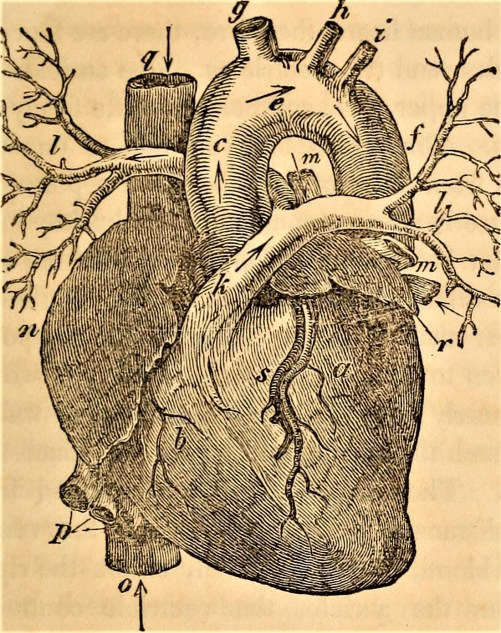
Image Credit: drawing from Outlines of Human Physiology by George Hayward (1834) public domain

Jason Baldinger: “this ghostly ambience”


this ghostly ambience

stop me if you’ve heard the one
about the pregnant waitress
and the zamboni driver

yeah, I can’t think of the punchline
either

what would you expect, holding
my breath and drinking a beer
at the same time is a new skill
like spiritualism, I practice it sparingly

I’m trying not to think about the soul
of the prime rib in front of me
or to notice past myself waiting
at the bar, another beer
and a photo of an illuminated
zippo sign before I shuffle
up to buffalo, catch a predator

ever wonder if leon czolgosz
got into heaven?

I overhear the pregnant waitress
say she still hopes they’re here
in twenty years, the sentence
was innocent in her mind
now it’s dead on the floor

I would go through the stacks
for another conversation piece
but fuck all, sometimes
it’s best to leave it there

dead. I’ve got my mask
there’s a sunset out there
where american flags
outnumber people
I should strike up conversation
with my addled sense of wonder instead

pregnant waitress returns
offers me another beer
suddenly dusk is nonsense
suddenly american flags are nonsense

I missed this ghostly ambiance
mask off, yes to beer
i suppose I spend more time than
I thought talking to the dead


About the Author: Jason Baldinger is a poet from Pittsburgh, Pennsylvania and  former Writer in Residence at Osage Arts Community. He has multiple books available including the chapbook Blind Into Leaving (Analog Submission Press) as well as the forthcoming Afterlife is a Hangover (Stubborn Mule Press) & A Threadbare Universe (Kung Fu Treachery). His work has been published widely in print journals and online. You can listen to him read his work on Bandcamp and on lps by the bands Theremonster and The Gotobeds.


More Poetry by Jason Baldinger:

When Cancer Comes to Evansville, Indiana

It was a Golden Time

Beauty is a Rare Thing


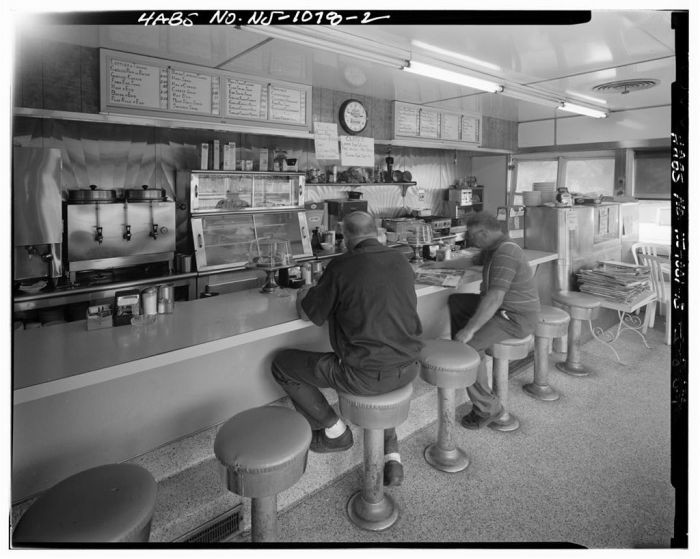
Image Credit: ” INTERIOR VIEW LOOKING EAST – White Crystal Diner, 20 Center Avenue, Atlantic Highlands, Monmouth County, NJ” The Library of Congress (public domain)


Andres Cordoba: “The Summer The Apricot Tree Died”


the summer the apricot tree died

I had been asked to tend to the still ripening
apricots that hung as small green bulbs
from the branches of a young tree
in its first flower.

Sown two falls ago.

Father pat the earth with hesitance
as he first lay the seeds to rest.
He smiled before pressing up his glasses
with a dirt covered finger tip.
It then began to rain.

Steady mercies.


About the Author: Andres Cordoba is a Massachusetts born writer. He has received honors such as the Ginny Wray Poetry prize, the Thayer Fellowship For the Arts, the Patricia Kerr Ross Award, and was named a 2019 Breakout 8 Writer in poetry by Epiphany: A Literary Journal. His work has appeared in Italics Mine, The Gandy Dancer, Gravitas, and Epiphany Journal. A real self-starter, a go-getter– a team player, if you will– his mother refers to him as the Michael Jordan of mutual losses.


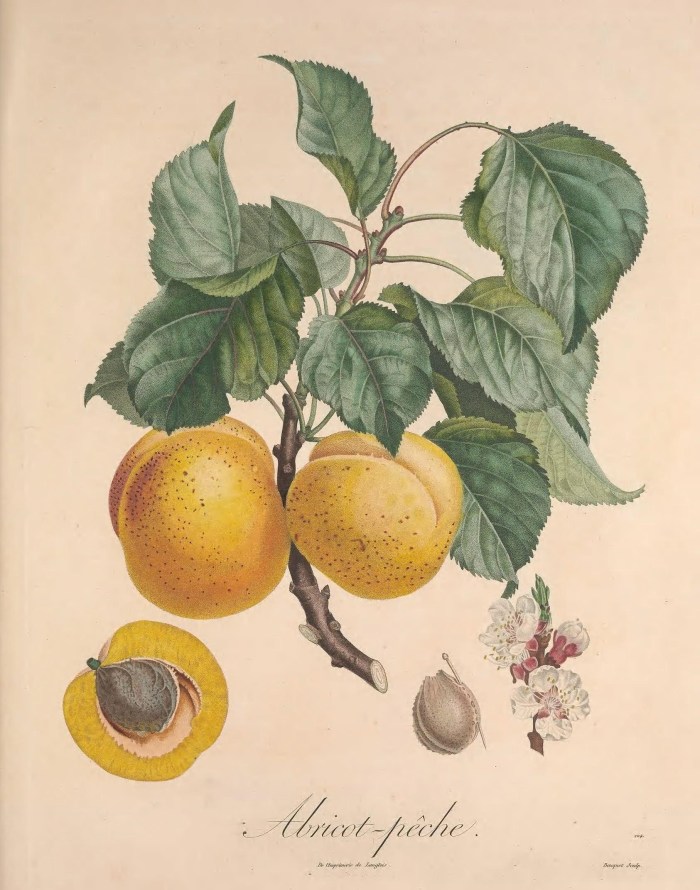
Image Credit: Pomologie française: Paris, Langlois et Leclercq,1846. (Public Domain) Image courtesy of the Biodiversity Heritage Library

Jon Bennett: “Roundabout”


Roundabout

He was looking at a traffic map
thinking about his son
“Put a roundabout here,” he said
An anarchist in college
he read about the Paris Commune,
Mutual Aid, a lot of George Orwell
Then he had kids
“…those roundabouts take
some getting used to…”
and his son was named
after Jack London, but
now he was a Republican
a good kid though
He bought a house
and had a mortgage,
and was often
almost satisfied
“…in the end
it will work out better
for everyone.”


About the Author: Jon Bennett writes and plays music in San Francisco’s Tenderloin neighborhood. You can find more of his work on Pandora, Spotify and other streaming websites, or by connecting with him on Facebook at http://www.facebook.com/jon.bennett.967.


Image Credit: Wassily Kandinsky: “Circles in a Circle” (1923) public domain