An Interview with Dale Bridges

OLYMPUS DIGITAL CAMERA

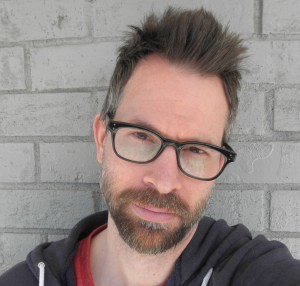
Felix Morgan sat down with Dale Bridges over pancakes to discuss his current projects, writing processes, and the rather gloomy state of the world in general.

Felix: Tell me about your work as a journalist.

Dale: I had come back from Prague and was sleeping on my friends couch in Colorado. I had failed to write a novel and needed a job, but also didn’t really want to work. I had never done any journalism, I hadn’t even done yearbook in high school. But I had a couple of freelance articles in a Canadian magazine and a few other random things so I put together a portfolio and sent them to a couple local places. Boulder Weekly had just had someone quit and they needed someone right away.

I had lied about all my experience so when I started out just editing, I was googling terms I didn’t know. Somehow this turned out okay and I got a food editor position. Which is hilarious because I don’t know anything about food. But I was mostly just editing and I must have done okay because I managed to get a weekly beer column. That was a great gig, I’d leave the office to get free beer and start my weekend a bit early.

I eventually angled for a humor and pop-culture column where I was allowed to write pretty much whatever I wanted and that worked out really well for everyone.

Felix: How do you get your ideas?

Dale: Getting ideas is the only part of writing that is easy for me. I have ideas all the time. Especially when it comes to satire. We live in a ridiculous world were Donald Trump is running for president. The ideas are all over. That can be hard, though. I used to have a problem where I’d have a great idea and I’d sit down and write a few paragraphs and then it would get bogged down. And there was always another idea I could jump on to. I had so many unfinished things. At a certain point I just had to force myself to finish things.

These days I sit on ideas a lot longer than I used to. Like if an idea keeps coming back there’s really something to it. I explore more parts of it, characters that would be part of it, and let it grow legs. The longer I let it marinate, the easier it is to commit to it and follow through. But I seldom know how it will end. Even when I think I know, I’m usually wrong.

Felix: What are you working on now?

Dale: I recently wrote a manuscript for a Sci-Fi novel in just seven days but I’m not sure it’s salvageable. It was important to me to finish because I’ve failed at novel writing three other times. But I’ve already moved on to another novel and I’m about 50,000 words into that one. It’s very different. More literary fiction with a comedic edge.

It’s based on a guy living in Colorado and working for a newspaper so there’s a lot of real world-experience there.

Felix: Is there any thread that ties all your work together?

Dale: The humor. There always has to be a comedic element. I can’t write without that. I can’t really even live without that because it’s the way I process and cope with the world. The world itself, and most of my stories, can be pretty depressing. Without being able to inject humor into situations I would have a lot of trouble producing anything.

But each project is different too. You take something like Sci-Fi and it’s going to be a lot more broad, a lot more about larger social issues. There are personal relationships too, of course, but the larger idea is where I start with something like that. Literary stuff is the opposite. The personal relationships are going to be at the forefront and they might cast some light on larger societal issues.

I like having multiple things going at a time so I can switch back and forth. Using different tools and having a different focus can help me avoid getting burnt out.

Felix: Is there any genre or topic that you would never write?

Dale: I used to be a lot snootier when I was young. I didn’t even want to do journalism. I really like to think that I have to be passionate about a story to be able to work on it. To be able to sustain interest in it long enough to finish. I can’t imagine having that level of passion and interest in a genre like romance or mystery. But, then again, it’s all a matter of perspective. If someone threw $50,000 at me I’d sure as hell come up with 50,000 words of a romance novel.

Felix: What’s your favorite part of being a writer?

Dale: Not the writing process itself, thats full of fear and self-doubt and loathing. But the publishing process is great. Finding out after all your hard work that someone liked what you did, seeing review and ratings. Hearing that half shock in your friends voice when they say something you wrote is actually good. But I don’t think all those good things weigh out over the bad and so ultimately writing is at least a good bit masochistic. Some people say they enjoy every part of the process. I hate those people. I have to write, it’s how I process and deal with the world around me. It’s like forcing your loathing and your depression about the world into a constructive form.

Notes on the Women’s March by Leslie McGrath

leslie

Notes on the Women’s March

By Leslie McGrath


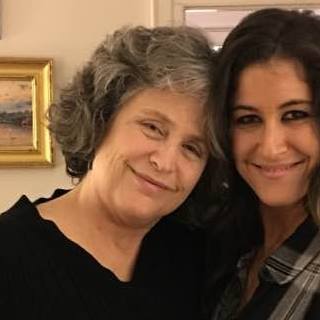
It’s the day after Trump has taken office and I’ve just marched for the first time. I didn’t make it to Washington D.C. or New York City. I just drove ten minutes from my well-heeled, overwhelmingly white town on the Connecticut River to another small town, where I met my friend, the poet Marilyn Nelson. Together we walked—she wearing her “Make Racists Ashamed Again” cap and me my “Make Racists Afraid Again” t-shirt—to the Old Saybrook town hall.

Marilyn and I were counted as protesters #610 and #611 of what would eventually become a protest march of nearly 1100 people. It’s a drip compared to the hundreds of thousands of marchers in cities across the U.S. and the globe, but 1100 people marching up and down the sidewalks of a small town feels like a lot. Marilyn’s was the only Black face.

I’ve never marched before. Not for the environment, not for the Equal Rights Amendment, not for Planned Parenthood. I’ve wanted to. I’ve come close. But I live with chronic PTSD and depression from childhood sexual abuse that often make it difficult for me to leave the house, much less join a chanting crowd of protesters. I just haven’t been able to muster whatever it is that people need in order to not feel overwhelmed and panicked.

When Marilyn mentioned that there’d be a “sister march” close by, I wondered if I were chickening out by not driving to the larger events in Hartford or New Haven. There, the crowds would be larger and more racially and economically diverse. Then I thought “Why not? This is where I live. It’s my community.”  So we joined the group of women old and young, some pushing strollers, others holding signs calling for impeachment,  supporting Planned Parenthood, the NEA, environmental protection, and more. And there were men, yes. A young man wearing a wool cap and a bushy beard told me my shirt was awesome and asked for a hug. It was at that moment that I realized that I, a gray haired woman about to turn sixty, was an elder in his eyes. It had taken me this long to make it to a march.

I drove home a couple of hours later and posted the few photos on Facebook I’d taken that I hadn’t ruined with close-ups of my thumb. I was flush with a small flame of accomplishment at this ordinary act of civic mindedness. As the likes and supportive comments began to appear, I scrolled through my feed reading posts from friends. Many were marching in D.C., Chicago, New York City and elsewhere. Others watching live news feeds from around the world expressed enthusiasm and wonder. But here and there I came across posts by younger feminists calling out white women who, like me, were marching for the first time. Where were we all these years when Black men and women were protesting and risking physical harm on the streets? Our white privilege had allowed us to ignore their pain. Our white fragility was now the reason for our whining, er, protesting.

I’ve heard these criticisms before. They’re legitimate questions and legitimate issues for thorough, thoughtful discourse. But to toss them into the global protests on the very day they’re occurring is like tossing a concussion grenade into a crowd—it’s a painful distraction. No one owes an explanation for the nature of their activism.


SATURDAY POETRY SERIES PRESENTS: “LET THEM NOT SAY” BY JANE HIRSHFIELD – A POEM OF SOLIDARITY & PROTEST

4764673605_4e929c953f_b


from LET THEM NOT SAY
By Jane Hirschfield:

Let them not say: we did not see it.
We saw.

Let them not say: we did not hear it.
We heard.

Let them not say: it was not spoken, not written.
We spoke,
we witnessed with voices and hands.


READ THE FULL POEM HERE and LISTEN HERE:


Today’s poem originally appeared via The Academy of American Poets Poem-a-Day series.


Poet’s Note: “This poem was written well before [the 2017] Presidential Inauguration and without this event in mind. But it seems a day worth remembering the fate of our shared planet and all its beings, human and beyond.” —Jane Hirshfield, via The Academy of American Poets

Editor’s Note: Today I defer to Jane Hirshfield and The Academy of American Poets. Listen to the poet read this important work of protest. Read the poem in its entirety.

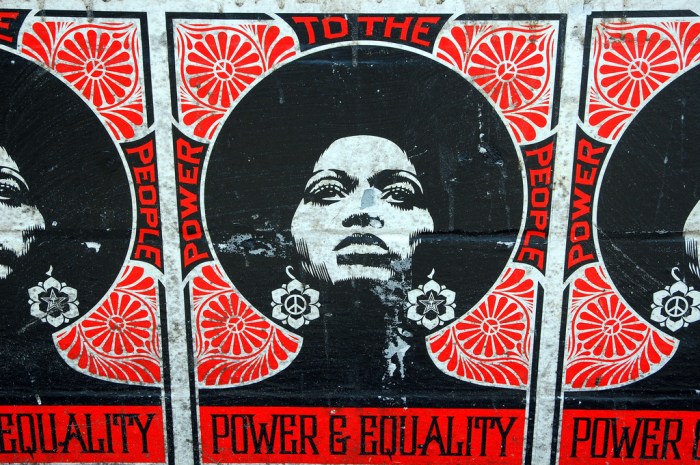
Today’s poem is dedicated to those who are marching with the Million Woman March and those who stand with us in solidarity.

Think. Feel. Rise up. Resist.

SATURDAY POETRY SERIES PRESENTS: ALEX BEN-ARI

alex-ben-ari


I ASK FORGIVENESS
By Alex Ben-Ari
Translated by Vivan Eden


I ask forgiveness of all the poems
Born misshapen because of my desire to write them
I ask forgiveness of all the people
Whose lives were disrupted by my desire to influence
And of the world
For the superfluous things added to it
And those unnecessarily severed
Because of my lust for symmetry
And happy endings.

I ask forgiveness of my mother
For not knowing how to love her in her misery
Of my children
For the moments when I don’t want them
Of my wife for every time I was too small
To contain her love.

I am lighter than a falling leaf
I am softer than grass
Now a small bird could
Build its nest in me.


Today’s poem originally appeared in Haaretz and appears here today with permission from both the poet and translator.


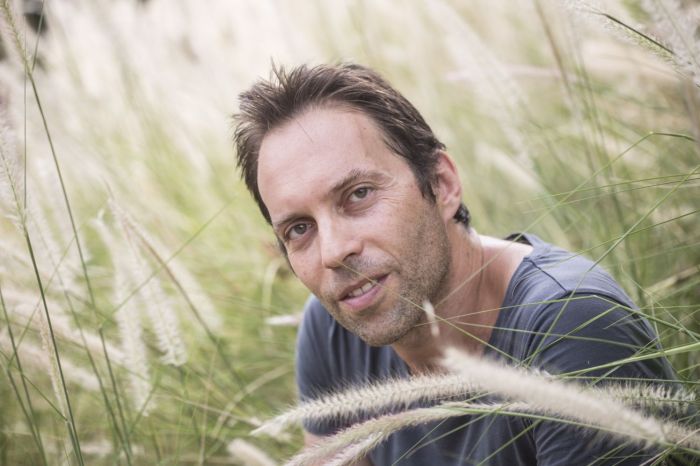
Alex Ben-Ari is 43 years old. His debut volume of poetry, Concealed Seas (Yamim Samuiim), was awarded honorable mention at the 2008 Metulla Poetry Festival and the 2015 Helicon/Ramy Ditzanny Poetry Prize. His second book, The Gatepost (Korat Hasha’ar), published in 2015, is composed of his original Hebrew haiku. His third book, planned to be published during 2017, is a volume of conceptual poetry.
Alex is one of the six members of the “Waning Moon” blog and publishing house dedicated to Haiku in Hebrew. He is also co-editor (with poets Gilad Meiri and Noa Shkargy) of Nanopoetica, a literary journal of short form literature.

Editor’s Note: Part personal, part pastoral, part ars poetica, today’s poem is emotive, honest, and raw. The poem’s I approaches the reader — and the page — seeking forgiveness. Free from false modesty, free from pride, the poem’s I is humble, admitting failings as poet and father, husband and son. The confessional, narrative nature of the poem is carefully constructed within the framework of the lyric, while the elegant, gentle translation midwives the essence of the poem as it crosses the borders of language. As the reader, we cannot help but be moved — to compassion, to transcendence, to forgiveness and beyond.

Want more from Alex Ben-Ari?
“Ripe Peach,” a poem from Concealed Seas (bi-lingual version)
Haiku poems from The Gatepost (bi-lingual)
Alex Ben-Ari’s official blog (Hebrew)
Ben-Ari lectures (in Hebrew) on music covers
Alex Ben-Ari on Twitter

Kristy Bowen & Cynthia Manick: A Conversation

CM: So what does the word “Salvage” mean to you and how did it become the title of the collection?

KB: I had been thinking terribly literal (as I always maddeningly do…lol) about “salvage” as the things that get taken from a wreck, the leftovers of a disaster. I guess I didn’t even think about the second meaning — that it also means “to save” until I read the blurb that Laura Madeline Wiseman wrote for me that mentioned it. Since mermaids featured prominently, “salvage” was obviously a sound choice, but other sections of the book, that are definitely more landlocked, sort of resonate with both definitions, whether it’s the “wreck” of illness or bad relationships or just situations that don’t work out in an ideal way.

CM: Both of our books have a strong connection to “body” whether it’s a mermaid in fo0bowenamy lingerie, a woman growing birds in her chest, or the realization that body can be armor or a pathway. How does “body” inform your work and what impression of “body” should readers leave with?

KB: I feel like this whole book is about the body that is endangered, whether it’s the illness-guided poems in the first section or the mermaid guide poems in the last section. There’s endangerment, but also transformation, sometimes through that very same endangerment, particularly in the “ghost landscape” series. I feel like the body in these poems is always at odds with everything, the mind, the language, the environment, probably more so than anything else I’ve ever written.

KB: When I’m reading, I keep thinking your concept of “body” is almost inseparable from language and history, more maybe more of a deep entanglement..I’d also be interested to know how would you describe the “body” in your work as well.

CM: For me body is the first thing people see when they look at you; its color, shape, height, and from there they judge you. Now sometimes the judgment is innocuous – oh she’s a woman, oh she’s brown, oh she reminds me of xyz but at the other times it can be harsh – oh she’s too brown, she’s not that attractive, she has nothing of importance to say, etc. Then the body becomes how you judge yourself, – you walk taller, you slump, you know your best outfit, you model behavior based on levels of safety, and you’re uniquely aware of every exit in a room. In my book, the body is endangered but is aware of its endangerment. So in the poems, the body questions, posits, celebrates, and it mourns.

KB: When reading BH, I was struck so intensely by the lush sensuousness of the first section of poems, the writing so bodily present, but also swimming amidst history, both on a grand scale and a more familial scale. As I moved through the book, I almost got the 0kristysense of a widening lens—first the body and the individual, the sensory, out on through the family and society and history. By the end of the book, you are dealing with larger universal questions and epistemology. Was this intentional? How did you decide the order in which the sections occur? How did you decide on the overall organization of the manuscripts?
CM: When I writing Blue Hallelujahs, I didn’t know I was writing Blue Hallelujahs (lol, if that makes sense). So the poems came first and arrangement came second. I was writing poems sparked by some thing, phrase or memory and then as time went by I was thinking of the speaker’s place in the world. So the poems contain multiple geographies and lenses. And you’re right, in the beginning our world is so small, we only know what surrounds us. But then you look to your senses and that expands, then what expands, expands again to witness. I definitely learned from poets like Lyrae Van Clief-Stefanon and Nikky Finney who taught me to think of the speaker and what’s outside the speaker as two parts happening simultaneously. When organizing the book, it really came down to which poems talked to each other but I knew I wanted to end on “Blue Hallelujahs from the Hands.” Surprisingly the order of the sections came easily like plot points along a curved line, but order within the sections was more difficult. I have to thank Leigh Stein and Brooklyn Poets for their helicopter view because at one point I was just too close to it. Having other poets read it in its entirety helped me decide the organization and remove poems that tripped when reading.

CM: It was difficult for me to think of my work visually when it came to my cover art. What about you? Was your cover art a journey and what was thinking behind it?

KB: Since I bounce back and forth between writing and visual art and do so many cover designs for dancing girl press, it’s usually almost second nature to me, but weirdly, I was drawing a total blank on this project. I thought about just a lot of blue, watercolor abstract seascapes, something oceany. I initially didn’t want a mermaid at all because it seemed so literal. Around the time we started thinking about the cover, also been totally jonesing to get an old-school Sailor Jerry mermaid tattoo somewhere on me (it would be my first, so I’m still procrastinating even now.). When Diane asked me what I was thinking, I sort of offered it off the cuff but was totally convinced when she sent me some options. I mean, really, what is more bodily than a tattoo? She did amazing work with the text and the banner and the whole thing turned out more beautiful than I could have imagined.

KB: Your cover design is so beautiful and so perfect. How did you decide to use that particular piece?

CM: I’ll admit it was tough. I knew I wanted a woman because the books’ identity is formed around woman, body, memory, and race. I wanted a woman looking toward or away because there’s a duality in the word Hallelujah – its praise and its lament and you can’t have one without the other, and you can’t go forward without knowing how to go back. Diane gave me the option of finding my own cover art or having Black Lawrence design something. So I was researching and I had to come to terms with the fact that Blue Hallelujahs isn’t a “light” book (lol) There is definitely levity and joy, but I knew the cover color palette couldn’t be purple, yellow or pink – it just didn’t fit 😉 Then I found the artist Ify Chiejina and she had a gorgeous piece that stopped me in my tracks and it was unavailable (gasp) but she was willing to draw me something similar. So I sent her a picture of my Mom in her 20’s and a couple of chapters from the book. She created silhouette and pattern that’s on the cover. But then Diane, Amy and had to agree on the color palette which took a couple of weeks. I know appreciate all shades of blue!
CM: Tell me about the making of house made of mothers
Sometimes, mother is a nesting doll, a doll-faced mess,
feral beneath her skin and skimping on potatoes.
Sometimes she’s a hotel fire, and I’m on the wrong side
of the door.

KB: The series of poems about houses is very much about houses as actual location, as place, and as a more abstract concept of “home”. So many of us have complicated relationships with our mother’s in terms of body image and eating, so this poem stems from that. The image of the nesting doll at the beginning seemed perfect, how the larger body can be reduced and made smaller and yet somehow still live inside the larger, almost as if women, especially those who have fluctuations in body weight, can have all of these smaller women existing simultaneously inside her. My own mother once stood in front of mirror and admitted that she had never in her whole life been happy in her own body and it kills me. This poems is sort of a dialogue with that.

KB:I feel like place plays such an important role in this book… Can you talk a bit about where you grew up? Where you write from? Places that inspire your work? (past or current)

CM: The poems are set in different parts of the North and South. I was born and raised in Brooklyn, New York, but my parents and relatives are all from South Carolina. So I remember traveling down South on the greyhound bus with my mother. And even though my parents are separated, when they see each other, they always end up talking about who’s alive or dead from back home. (lol) So in a lot of the poems the speaker is looking back, trying to create a tapestry or trace an origin story from overheard conversations, imagined events, recipes, and music. In other poems, the speaker is in Brooklyn or up north and the actions in those poems follows the geography. Also kitchens appear a lot in my work, you’d be surprised at how many things come together and break apart in kitchens.

CM: In the poem codex the love of language is apparent to the reader as you describe perfect words. “I write glottal but I mean goldfish . . Butterfly becoming butter knife becoming flying buttress.” What are some your personal perfect words? Are their words you avoid? One of mine was peaches . . . I used it all the time until someone pointed it out me.

KB: I have certain words I use way too much—girl, dress(es), dark, throat, water. I am conscious of them now and try to be sparing, but they’re still there in places. One of my favorite words is “dulcet” which I use as a name for my online shop, but have never used in a poem because it seems weirdly pretentious and too “poetic.” I think as I get older, I have more and more odd mental misfirings where I can’t recall the perfect word for things, which is where the boggled language in the radio ocularia section stems from.

CM: Your book is a mixture of the physical and the ethereal with lines like “my mouth spewing wildflowers” in contrast to “if only I can sleep late and break shit” (which I love by the way!). How do a balance the real with the fantastical? Is it a conscious decision?

KB: I sometimes say I’ve spent the last 20 years writing poetry that is attempting to get away from, well, poetry. My initial impulse is to fill every piece with as much image as I can layer on, and the prettier the image, the better. Since I have a tendency to do that, I try to balance it with the opposite as much as I can. If I can strike a balance between the “poetic” and the sort of normal stuff that comes out of my mouth on a daily basis, as mundane or crude as it may be, I find I’m happier with the work.

KB: There is so much music here, some of which I’m familiar with and some I went of searching for as I was reading. A publisher I worked with a couple years back (Sundress Publications) had their authors make a mix-tape of musical influences, a sort of soundtrack for our books after publication. I’d be so curious to see your list for this project, including both things already explicitly named and others behind the scenes.

CM: Music is such a big part of my writing life. I usually have it on while I’m writing and when I think of life events, it’s music that I remember first. There are a couple of artists and songs mentioned in the book: Etta James “Groove Me”, Koko Taylor “I’m a Woman”, Louis Jordan “Ain’t You My Baby,” Ella Fitzgerald “Summertime”, Cab Calloway “Minnie the Moocher,” and “Down Down Baby” is chant we used to sing in elementary school; it’s a clapping game. In passing I mention Lena Horne, Diane Ross, Dizzy Gillespie, Charlie Parker because those are the artists I’d hear on the radio when the elders got together. But there are also phrases that are sung but aren’t necessarily song like I’ll be your Clementine which is play on “Oh My Darlin Clementine”.

KB:I find the rhythm and internal music so beautifully wrought in your work. Do you compose out loud or more visually when you form your lines?

CM: I actually don’t compose out loud; it’s always via paper from one image to the next. In real life I’m a fast talker (I think I get that from my mom). So I’m careful with line breaks, so that when I’m reading the poem, I know not to read it too fast. Visually I’m also looking at line length because that can inform the breath. For me couplets equals fast past, blocks of texts means “I’m working stuff out” and tercets are usually a rolling narrative. After a poem is page ready, then I’ll start reading out loud and realize yes this part works or no this line feels uneven, or this word feels too rough for a particular line. Luckily the actions of my poet brain equals a poem with rhythm.

CM: I always consider every poem I’ve written a part of me, almost like a baby and you can’t have a favorite baby 😉 That being said, what’s your favorite poem in Salvage? Is there a lynchpin poem; the poem that made you nod and say “this is definitely a collection?”

KB: Oh yeah, that’s tough. I think I can look at older books and say that this or that poem is something that I like better than others, but that’s only after time. My first book, the fever almanac, which was published in 2006 has only a couple of pieces I look at now and think they are solid and the rest are annoying in some way. With SALVAGE, it’s all still pretty new, the majority of those poems having been written in the past 4 or so years, so I’m not sick of them yet.lol. I think the “care and feeding of mermaids” segments in the last section are my favorites though, and the entirety of that section holds the entire book together. I tend to work in small series that I usually publish in small edition zines alongside visual components, so the majority of my longer projects are these small projects stitched together based on similar themes and feel. Only when these smaller projects start to constellate somehow, do I start thinking about pulling them together.

CM: This is your second book with Black Lawrence Press, so I’m curious about your writing practice. I recently attended a talk with the talented Shonda Rhimes who said that you have write everyday and writing is a muscle. Do you agree?

KB: Definitely But like exercising daily I don’t manage to do that very well..lol.. Writing takes a backseat to all the other things I have to do in a day, be they the things required to make a living (I work full-time in an academic library) or other things I do out of passion but that require a big time commitment (like running dancing girl press as a one woman operation). Add in errands, bus commutes to and fro, sleep, etc, writing is the bottom priority and sometimes at the end of the day I’d just rather go to sleep. I had some good momentum going when I wrote the first book Black Lawrence (it was my MFA thesis and, at the time, the third full-length I’d completed.) The books since then have been slower going..I’ll go through spurts where I’m writing and finishing projects, and then months of writing very little. But even if I’m not writing myself, do get to spend a lot of time with the press immersed in other people’s work. I also am usually working visually (I dedicate my weekends to art-related projects, usually collage, but lately painting) so I keep the creative impulses flowing even if I’m not getting things down on paper.

KB: Can you also tell me a bit about your processes as a writer? Do you write daily? What is the spark that sets a poem in motion? How much revision tends to happen after that spark, or do things arrive more or less intact? Has your process changed over time?

CM: I know we’re supposed to have as many hours as Beyoncé but maybe poets need extra hours? I don’t write creatively daily. By day I work at a nonprofit, where I edit and do critical writing. I’m also involved with Jamii publishing and the Soul Sister Revue reading series. So when I’m not writing, I’m engaged creatively. I honestly write best when I’m in workshop or I have a deadline, without a deadline I think I’d over edit and no poems would get finished (lol). In terms of what sets a poem in motion – it’s usually a word or idea that I can’t shake. Images arrive intact but arrangement and focus can take awhile to come together. I have learned to put a poem away after its done. Many of time’s I’ve written something and thought it was great, 24 hours later I realized that it doesn’t work because of a, b or c. My process hasn’t changed that much, but I do send poems for feedback more than I used to; poems can’t live in a vacuum,

CM: As a writer, what experiences have shaped you the most? Is there advice from a writer that served as light bulb moment?

KB: In 1998, I was 23 and taking lit seminar in 20th Century British authors and got to spend a good amount of time with Eliot’s The Wasteland. I had been writing for several years at that point, but not very well, and while I was a grad student in lit and could talk to you endlessly about Bronte novels and feminist theory, outside of a bit of Plath and Sexton, I wasn’t all that acquainted with more contemporary poetry at all and it showed. I had only that spring began reading more current women writers–Louise Gluck, Jorie Graham, Rita Dove, Anne Carson–and those influences combined with the Eliot, sort of formed my poetics for a time and actually made me much, much better as a writer. It was still a few years before I started publishing on the regular and another 5 years until my first book was accepted, but I think of that period as setting the groundwork for whatever my “voice” became as a writer.

KB: What are your three greatest influences (writing, other arts, etc.)? What are 3 current authors or books you are loving now?
CM: In terms of a single writer, I’d have to say Lucille Clifton because she was so great a filling small spaces with infinite emotion. In terms of writing, the workshop experience has really influenced me because I’ve taken workshops with great teachers along with other poets, who were eager to learn and create communities within communities. You forget that people can be magic until you’re in a room and things click. I’ve been lucky to have a lot of clickable moments. Lastly, I want to buy a round for libraries because that’s where I discovered books. I also learned it was okay to be quiet and think because with words you can go anywhere (okay now the theme to Reading Rainbow is in my head lol). Authors I’m loving right now – Hanif Willis-Abdurraqib, Robin Coste-Lewis, and just started reading the graphic novel adaptation of Octavia Butler’s Kindred.

KB: What are you working on currently?

CM: I have such a backlog of poems that I started and I need to finish. I just finished a poetry fellowship at the Poets House, so I have poems from that class that are on the editing block and an entire page of prompts given to me by Adam Fitzgerald. I have about 45 to 50 poems outside of Blue Hallelujahs, and I think I was in denial, but I’m pretty sure these poems are on the way to being book number 2. I’m still waiting for the light bulb moment. A while ago I found a 1940 census report that listed my grandmother in her early 20’s, so I’m interested in poems serving as a type of census report or found literature focusing on identity and femininity. Maybe poets are really under cover anthropologists. If people 100 years from now, found our poetry, I wonder what they would say?

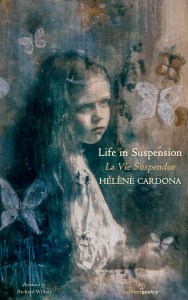
“Between Klimt and Giacometti” by Hélène Cardona

helenecardonalis1200px

Between Klimt and Giacometti

A room inhabited by paintings
seizes my mind, fluid unpredictable
lives, their secret eliciting
attention, Klimt’s innate aesthetic,
linear statements without tonality.
Their spontaneity transmits essential wisdom.
Dark eye shapes, dominant lip lines, upturned
corner of mouth, eyelashes and iris
connected, vine charcoal ready to tumble
like a Giacometti. Soft focus and impressive
looseness enhance anatomy,
allow latitude for creativity.
Every wall is a beginning.

***

A citizen of the United States, France and Spain, Hélène Cardona is fluent in English, French, Spanish, German, Greek, and Italian. A poet, literary translator, actor, and dream analyst, Hélène is the recipient of numerous awards and honors, including a Hemingway Grant and the USA Best Book Award. Her books include three bilingual poetry collections, most recently Life in Suspension (Salmon Poetry, 2016) and Dreaming My Animal Selves (Salmon Poetry, 2013), and two translations, Beyond Elsewhere (by Gabriel Arnou-Laujeac, White Pine Press, 2016) and Ce que nous portons (by Dorianne Laux, Éditions du Cygne, 2014). With Yves Lambrecht she co-tranlsated Walt Whitman’s Civil War Writings for WhitmanWeb.

[The above poem was originally published in The Warwick Review and appears in Life in Suspension. It is reprinted here with permission of the author.]

“In Defense of Memory” by Michael T. Young

In Defense of Memory

by

Michael T. Young


The Oxford Dictionary’s word for 2016 is “post-truth.” CNN commentator and Trump supporter Scottie Nell Hughes both claimed the absurd and grated my linguistic nerves when he said in an interview, “there’s no such thing, unfortunately, anymore of facts.” And, as if he sprinkles pixie dust before the cameras with every appearance, Trump himself magically gets away with denying things he’s said or done and for which there are verifiable records. I find this atmosphere more frightening than the blatant hatefulness, racism, misogyny, and xenophobia of the incoming administration. It’s not because these other things are in any way acceptable but because in a world where truth and fact are flatly rejected, there is no basis for battling those other outrages to humanity.

The burden of proof is banished from the land and we are prisoners of a world where there is no narrative thread, no memory, and the only history is what those in power conjure. The enemy of this world is anyone daring enough to pursue reality, to insist on fact, to assert that there is truth.

In his Nobel lecture, the Polish poet Czeslaw Miłosz said, “whoever wields power is also able to control language and not only with the prohibitions of censorship, but also by changing the meaning of words.” That manipulation of meaning is precisely what we are witnessing in every action and word of Trump and those filling his cabinet. The American public is being forced to question its reality, to doubt its perception and understanding of facts. Miłosz, in that lecture, goes on to explain, “the language of a captive community acquires certain durable habits; whole zones of reality cease to exist simply because they have no name.” Our current situation suggests this by the ever-present assertion that we live in a “post-truth” world. How can “we hold these truths to be self-evident” in a “post-truth” world? Those rights outlined in our founding documents are now ungrounded; what were once rights assumed as self-evident truths, will need to be defended against denigration into mere free-floating mercies granted at the whim of those in power. I don’t mean to be alarmist; I intend only to make the most obvious connections between the language of the incoming administration and the language upon which our republic is founded. If such connections are eschewed, i.e., connections between their language and the language of our country’s principles, then there is no basis for governance. Silence regarding them would create a vacuum filled only by the wielding of power. And it isn’t a stretch to assert convincingly that the language of the incoming administration doesn’t mesh with a free republic. This is not a haphazard suggestion but is a reasonable consequence of what other writers have expressed about totalitarian states, writers such as Miłosz and Joseph Brodsky. Their writing, and that of others, their reflections on the oppressive worlds they experienced in the early and mid-20th century, stand as warnings.

Miłosz won the Nobel in 1980. In that Nobel lecture, he warned even then, that the world “with its fantastic proliferation of mass media, is witnessing a process that escapes definition, characterized by a refusal to remember.” That refusal to remember has been exacerbated by the internet and social media. Some have argued that social media, such as Facebook and Twitter, coupled with people’s susceptibility to the confirmation bias (a tendency to select information that confirms one’s preconceptions while ignoring evidence that contradicts them), is to a large degree responsible for Trump’s victory. People spread articles based on headlines that agree with their views, even if they are not verifiable and, once disseminated to millions of readers, even if debunked, those articles infect like an incurable plague. We repost a news article without checking it against multiple sources or digging into its reliability, or reflecting on how the information is worded to influence.

What Miłosz noticed in his day was the beginning of what we call “the information age.” It’s a term intended to describe the rise of certain technology, but it’s become the zeitgeist of modern culture. I would suggest that the term is dangerously general. Opinions and facts are both information, but not the same type, which is a distinction fewer and fewer seem to make. It no longer matters that scientific data shows a trend in the global climate getting warmer. What is seized by some and disseminated as truth is that a miniscule 3% of scientists don’t believe those facts prove global warming or believe it is caused by human activity. The other 97% of scientists worldwide that believe both these things are dismissed as expressing an opinion equal to the other 3%. The data confirming the trend is no longer important, only the data interpretation. Miłosz pointed out an equivalent absurdity in 1980, “The Los Angeles Times,” he wrote, “recently stated, the number of books in various languages which deny that the Holocaust ever took place, that it was invented by Jewish propaganda, has exceeded one hundred.” He then wonders, “If such an insanity is possible, is a complete loss of memory as a permanent state of mind improbable?” We seem to be witnessing that improbable occurrence with the election of Trump. Fake news may have had a large hand in Trump’s victory. More unnerving still, Trump’s behavior proves that what was recorded yesterday can be denied today and the denial spread throughout the internet at the speed of light, transforming the record into a mere allegation that dissipates in the endless informational noise. Before such a power to deny reality, the refusal to forget is an act of rebellion. One wonders if it will soon be an act of treason.

I once wrote, “When a poet or other artist makes something up it is for another kind of honesty, a truth that sometimes is concealed by fact.” The nuance of this point is a privilege of the poet or even, I would grant, the philosopher. But it has no place in the language of politics and policy, no seat at the table of government. Now that our incoming administration is taking the privilege of the poet as its own, it will be necessary for poets to assert the importance of fact. We must be like that shrewd man of letters, Samuel Johnson, who refuted George Berkeley’s assertion regarding the non-existence of matter by kicking a stone. Facts matter and language matters. Opinion and individual expression may play into a line of poetry or even a line of journalism, but they share a commitment to reality, one to emotional reality and the other to historical reality. However, a faithfulness to reality makes them allies against any denial of it. Miłosz also pointed out, “Only if we assume that a poet constantly strives to liberate himself from borrowed styles in search for reality, is he dangerous.” The wording of that sentence is quite important. Styles, opinions, expressions of individuality, can blind us to reality. They are a method. Trump’s style of campaigning was itself a series of denials of reality. But writers entering the “post-truth” age must choose to oppose that age and its administration in a relentless search for reality. Style must serve that search or be complicit in acts of erasure.

Murial Rukeyser said that we corrupt our consciousness when we replace what we do feel with what we are told to feel or what we think we should feel. This happens on a national scale as we replace what we know with what we are told to think about what we know. In a free republic, it is the responsibility of citizens to take information, interpret it and articulate their desires for governance to those in authority. In a tyranny, that order is reversed: a readymade interpretation of information is handed down to justify the decided methods of governance. Joseph Brodsky said as much in his essay on the subject, “A tyranny does just that: structures your life for you.” Wittingly or unwittingly, the more removed we are from interpreting the facts for ourselves, the closer we are to a totalitarian state. The redefining of our world as “post-truth” is a drive to restructure our national consciousness. It redefines the language of the public so it loses the capacity to articulate an opposition. Through manipulation of language, the potential to name and, therefore, perceive shared realties is curtailed. And I emphasize the point of “shared realities.” Isolating us through manipulation of language and the meaning of words, it is easier for authority to insinuate doubt regarding perceived realities. Because of our species susceptibility to the confirmation bias, the internet has only intensified this tendency. We cluster into virtual cliques according to pre-existing prejudices. This only makes us easier to herd. We need to counter this with a calculated, patient evaluation of all information that comes to us, especially that information we agree with. In the concluding words of Harold Pinter’s 2005 Nobel lecture, we need “unflinching, unswerving, fierce intellectual determination, as citizens, to define the real truth of our lives and our societies.”

George Oppen said, “Actualness is prosody, it is the purpose of prosody and its achievement, the instant of meaning, the achievement of meaning and of presence, the sequence of disclosure which comes from everywhere; life-style, angers, rebellions.” That actualness, its sequence of disclosure, its achievement of meaning, is being dismantled by Trump and his followers. It is what will make something as simple as narrative poetry or a poetry of witness, an accusation and criticism of the incoming administration because it denies the right of that administration to create its own reality. A sequence of disclosure implies a past, implies cause and effect, implies memory, which is the mother of the Muses. This responsibility to remember, to hold fast to perceived facts and then connect them to others will not be easy. It runs counter to our age’s culture, counter to its desultory, headline-skimming, virtual mentality. It will require being meticulous. We may be entering the days when it’s dangerous to be a poet that pursues meaningful cohesion, that records the world around him, that insists on remembering and bearing witness, that insists there are facts and there is a truth, that there is history and a consequence of actions and words. But if we shirk this responsibility, if we betray memory, we betray the mother of all poets, and, larger still, the primary weapon in defense of a free republic.

***

Michael T. Young’s fourth poetry collection, The Beautiful Moment of Being Lost, was published by Poets Wear Prada.  He received a Fellowship from the New Jersey State Council on the Arts, the Jean Pedrick Chapbook Award, and the Chaffin Poetry Award.  His poetry, essays, and reviews have appeared in or are forthcoming numerous journals including The Ashville Review, Cimarron Review, The Cortland Review, Main Street Rag, Prick of the Spindle, and The Potomac Review.

“Unveiling Jean Cocteau” by Hélène Cardona

helenecardonalis1200px

Unveiling Jean Cocteau

I emerge from painted panels
astride a panther, rapacious illusionist
rippling through mist, a sensual robe.

The cardamom storm weaves stampeding
unicorns, perfumes clouds in cinnamon
quickening the skin,

unsettles the moon at the edge of the mind,
flings hail and sleet in great spears,
reminds me it’s a wild place we inhabit.

***

A citizen of the United States, France and Spain, Hélène Cardona is fluent in English, French, Spanish, German, Greek, and Italian. A poet, literary translator, actor, and dream analyst, Hélène is the recipient of numerous awards and honors, including a Hemingway Grant and the USA Best Book Award. Her books include three bilingual poetry collections, most recently Life in Suspension (Salmon Poetry, 2016) and Dreaming My Animal Selves (Salmon Poetry, 2013), and two translations, Beyond Elsewhere (by Gabriel Arnou-Laujeac, White Pine Press, 2016) and Ce que nous portons (by Dorianne Laux, Éditions du Cygne, 2014). With Yves Lambrecht she co-tranlsated Walt Whitman’s Civil War Writings for WhitmanWeb.

[The above poem appears in Life in Suspension and is reprinted here with permission of the author.]

SATURDAY POETRY SERIES PRESENTS: SUFGANIYOT BY RABBI RACHEL BARENBLAT

A version of this post was previously featured on the Saturday Poetry Series.

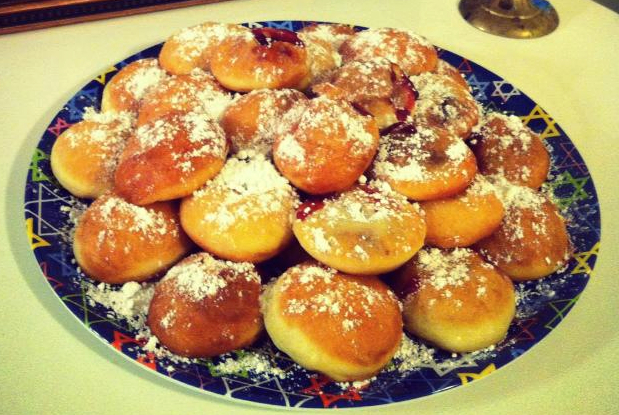
Sufganiyot homemade by your favorite Saturday Poetry Series editor
Homemade sufganiyot from the kitchen of your favorite Saturday Poetry Series editor


SUFGANIYOT
By Rabbi Rachel Barenblat

In oil, pale circles roll and flip,
doughy moons inflating.

The fun part: poking a finger
inside, giving a wiggle and twist,
pushing a dollop of jam
knuckle-deep, then two, ’til
the cavity gleams raspberry.

Latkes are pedestrian.
These puff like a breath held.

There, and here,
a million women finger
these cupped curves,
probe the soft center,
push the sticky treat inside.

We glance at each other, faces hot.
We lick the sweet from our hands.


(Today’s poem originally appeared in Zeek and was reprinted on the Saturday Poetry Series with permission from the poet.)


Rabbi Rachel Barenblat, named in 2016 by the Forward as one of America’s Most Inspiring Rabbis, was ordained by ALEPH: Alliance for Jewish Renewal as a rabbi in 2011 and as a mashpi’ah ruchanit (spiritual director) in 2012, and now serves as co-chair, with Rabbi David Evan Markus, of ALEPH. She holds a BA in religion from Williams College and an MFA in Writing and Literature from the Bennington Writing Seminars. She is author of four book-length collections of poetry: 70 faces: Torah poems (Phoenicia Publishing, 2011), Waiting to Unfold (Phoenicia, 2013),Toward Sinai: Omer poems (Velveteen Rabbi, 2016) and Open My Lips (Ben Yehuda Press, 2016), as well as several poetry chapbooks.

Editor’s Note: Each year for Hanukkah I make sufganiyot. Measuring out the ingredients from my mother’s recipe, I will myself to have the patience necessary to wait for yeast to rise. I knead the dough with equal parts pressure and love then apply more patience, more waiting, before rolling and cutting “pale circles,” transforming them in oil into “doughy moons inflating.” Each year I make sufganiyot, and each year when I do, I think of this poem. It has been four years since I first featured this poem on the Saturday Poetry Series, and it has been with me each year since, an indelible part of my Hanukkah tradition.

As sensual as this poem is — as hot — it is very much a poem about tradition, about ritual, and about the coming together of women. For it is women who have traditionally ruled the domain of the Jewish kitchen, and women who, year in and year out since time immemorial, have applied their pressure and patience, their love and their care, to wright the delicious sustenance that is Jewish holiday food. And what, really, brings us together in our rituals and traditions more than food?

Each year as my best friend and I make our sufganiyot together, my mother makes the same recipe 2,500 miles away. Meanwhile, women all over the world are doing the same: “There, and here, / a million women finger / these cupped curves.” Each year, today’s poem reminds me of that disparate togetherness of women. This year I reprint this poem in honor of the women all over the world who do the work necessary to make the holiday season what it is.

May this season of light be a beacon in the darkness, and may the new year be better than the last.

Want to read more by and about Rabbi Rachel Barenblat?
The Velveteen Rabbi – Rabbi Rachel Barenblat’s Official Website

Kelly Cherry: Three Poems and an Interview

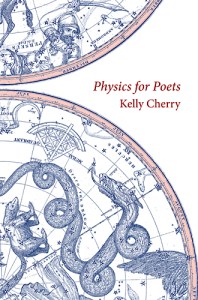
cherry-physics-for-poets-large

[The following poems appear in the limited edition hardback chapbook, Physics for Poets (Unicorn Press 2016), and are reprinted with permission of the author publisher. The interview was initially published in Inside Higher Ed.]

***

DNA

We scale a winding staircase
or swinging ladder like Jacob’s
in the Bible as if we might
ascend to eternity,

a state in which we’ll be
bionic and brainier,
with silicon chips. We’ll be
a new species: Homo

Wikipediens,
our minds digitalized,
able to access all
information and

we’ll persist forever,
or anyhow, not be dead,
not quite, though without
time, it must be said,

we also won’t be alive.
Yes, if you’re nostalgic
you may seek to disembark
from evolution, but

first, ask yourself whether
your child and spouse deserve
protection from disease,
death, and accident,

or can you let them go,
unique as they are,
irreplaceable,
into a place darker

than shadow?

***

SETI

Radio telescopes like massive elephant ears,
pricked to catch the least word or code
whispered across the universe, listening
in on the steady murmur of deep space, muffled
as if underwater. Do we hear the clash
of civilizations, formerly great nations
battling others for land, water, oil?
Oh wait—that’s Earth. Surely in outer space
we’ll find a species superior to our own.
Surely such beings are even now texting
urgent messages to us: We want
nothing to do with you. Humans, stay home.

***

Everything Lifted Off from the Earth

Everything lifted off from the earth.
Trees rose into the clouds, their roots trailing like bridal trains.
Buildings drifted starward.
A stampede of palominos flashed across the sky.

Then the people let go of whatever had held them back
and rose up, some slowly, some faster,
so that it was not unusual to pass or be passed by a friend or enemy,
but conversation confined itself to pleasantries.

The planet itself moved off its orbit, and many were afraid
that it might roll after them and knock them down like bowling pins,
but it dropped away in the opposite direction, becoming ever smaller,
a tumbleweed, a softball,

and the people kept leapfrogging into space
as if they were headed for heaven.

***

An Embarrassment of Riches

Kelly Cherry is the author of more than twenty-five books and chapbooks—including novels, story collections, nonfiction (essays, memoir, and criticism), translations, and eight full-length collections of poetry. For her short fiction, she has been included in Best American Short Stories, New Stories from the South, and has received an O. Henry Award, a Pushcart Prize, and has won the PEN/Syndicated Fiction Prize three times. Her poetry has been widely anthologized and has earned her the James G. Hanes Poetry Prize and a position as the Poet Laureate of Virginia. Despite this impressive list of publications and awards, and for reasons I don’t fully comprehend, her recognition has not reached the level of, for example, Margaret Atwood (to mention another woman writer of her generation who also writes in every genre, is likewise prolific, and who ranks among my favorite writers). Obviously, Cherry is well appreciated and has many avid fans, but as one of those fans, I can never quite forgive the world for not offering her even more acclaim and readers.

I first encountered Cherry’s work while I was an undergrad, sometime in 2001, if memory serves. I was living in North Carolina at the time and reading Fred Chappell and David R. Slavitt with something like an obsessive’s necessity. Being the spunky kid I was, I approached Chappell and Slavitt to do interviews with them, and both were kind enough to accept my request. Those encounters led to future professional interactions with both and a lasting friendship with Slavitt. It also led to both men separately suggesting that I read Kelly Cherry. I went to the university bookstore and found The New Pleiade: Seven American Poets, which included Chappell, Cherry, and Slavitt, as well as R.H.W. Dillard, Brendan Galvin, George Garrett, and Henry Taylor. These seven writers had been friends for years, shared certain writerly predilections, and were all authors at LSU Press (which put out the anthology).

I was immediately struck by Cherry’s poems, which I loved, but I was also struck by certain personal affinities she and I shared. (I am, I must admit, that sort of reader who is always trying to find myself in the work and lives of the authors I admire.) At the time, I was nearing completion of my BA in philosophy and German, and so I was pleased to learn that Cherry had done graduate work in philosophy at the University of Virginia. And her interests include more than philosophy, ranging from Russian literature to Latin American politics to scientific research and more. And here again, I was struck by our overlap in interests, given that I have traveled to Russia out of an abiding interest in Russian literature, spent months in Latin America studying the language and culture, and was a physics major when I first entered college. Without lingering too much on these similarities of interest, suffice it to say that I began reading her work with an eagerness that has been richly rewarded.

Kelly Cherry has published with big NYC presses as well as prestigious university and small presses, and she has had a glorious career by any sane measure—awards, teaching gigs at top universities, grants and writers’ residencies, and so forth. Her career is one most writers will never approach. If anything, Cherry suffers an embarrassment of riches. Had she published only books of poetry, I think she would be more lauded as a poet than she is today; had she published only short story collections and novels, she would be more lauded as a fiction writer than she is today; had she resisted the urge to write critical essays and to do translations, her creative work would get more attention; and so on. The issue here is not, I think, that she should have limited her intellectual and creative energies in such an unnatural way, but rather that the literary and academic worlds need to adapt themselves to her model—not she to theirs.

I hope you enjoy reading the following interview as much as I enjoyed conducting it, and I also hope that if you haven’t yet explored Cherry’s work, you will now.

***

Okla Elliott: You’re hard to pigeonhole as a writer, given that you’ve done fiction (both long and short), nonfiction (both creative and critical), poetry (both formalist and free verse), and translations. In what ways have each of these various enterprises informed the others? Do you think of yourself as having a dominant or primary genre, or do they all have an equal draw for you?

Kelly Cherry: I think of the genres as concentric circles, with poetry at the center. None is more important than the others, but poetry is the focal point, the heart. I’m also on record as saying that poetry reveals the actual world, fiction reveals the world of relationship, and nonfiction reveals the perceiving mind. And I’ve also said that the poem is about the line, the short story about the sentence, the essay about the paragraph, and the novel about the scene. These formulations are useful to me and I’m happy to offer them to students, but of course each of the genres differs from the others only in degree, and there are plenty of writers who delight in working at the borders. Yet emphasizing the differences makes transitioning from one to another easier for me.

I really love working in all these genres; I stay busy.

OE: Your poem “Lt. Col. Valentina Vladimirovna Tereshkova” brings together two currents I’ve found in your work—the Soviet Union (and/or Russia) and science. You have written variously on these topics, ranging from poems about Einstein to a science expedition in Siberia (once again merging the two currents) to a story about an American woman in love with a Latvian man (back when Latvia was part of the Soviet Union), and other works as well, such as the chapbook Songs for a Soviet Composer. Why and how do these two themes intertwine for you? Why the fascination with them, either together or separately?

KC: I did meet a Latvian man—in Moscow to hear rehearsals of a symphony he’d composed—and we tried to get married. (I should mention that the story you refer to, “Where the Winged Horses Take off into the Wild Blue Yonder From,” which is now in The Woman Who [Boson Books, 2010] is not autobiographical; much in it has been changed or reimagined.) In 1965 nobody took us seriously; in 1975 they had us under surveillance, threatened him, woke me in the middle of the night with intimidating phone calls. This narrative can be found in my memoir The Exiled Heart (LSU, 1991). I was in Moscow in the first place because I love Russian literature. I wanted to see where my favorite writers lived and the people and places about which they had written. I had no fondness for the Soviet Union and was philosophically opposed to Communism; that just happened to be where the country was at that time.

Similarly, I’ve always been interested in science and in college took quite a number of courses in science and math. Sputnik went up and my parents developed the idea that I should become a scientist. That didn’t work out; I already knew I wanted to study philosophy and write, but I gave my parents’ notion a shot. Of course, I was interested in science the way writers are interested in pretty much anything: as something to write about. Sometimes I think those first three years of college were a complete and sad waste of time: I wasn’t learning anything I really wanted to learn. Sometimes I think that’s just as well: If I didn’t learn much about science and math, I learned to appreciate the methods and accomplishments of science and math, and that has meant a lot to me.

Currently I am working on two poetry manuscripts, one a book-length poem about a scientist, the other a collection of shorter poems about math and science.

OE: You mentioned philosophy as an early interest, and I know you studied philosophy at the graduate level and have written a collection of poems, The Retreats of Thought, where you think through various philosophical problems in the sonnet form. In what ways do you see philosophy and literature interacting—in general and in your own work? And which philosophers have most influenced your thinking and writing?

KC: I don’t think anyone’s ever before asked me exactly this, Okla, and I’m delighted you’ve brought it up.

The philosophers who probably influenced me most were David Hume and Charles Sanders Peirce. I was doing research for a dissertation on Peirce’s epistemology when I dropped out of the program (not for academic reasons). Hume was a wonderful writer and clear thinker. I found Peirce’s ideas of firstness, secondness, and thirdness fruitful and useful and admired his views on scientific method. I did not read Peirce as a semiotician, as I understand literature teachers often do, though I do like some of his formulations about the nature of language.

Another influence was Augustine. Not because of his religion but because his Confessions, when I came to write The Exiled Heart, struck me as the perfect model of a memoir. I also found his thinking about time fascinating, as reflected in two of the sonnets in The Retreats of Thought.

It is harder for me to explain how I see “philosophy and literature interacting,” because I have always seen them as interacting. I like novels of ideas. I’m partial to German and Russian literature, despite loving many books neither German nor Russian, because they discuss ideas. The American dread of boredom seems to me to stem from a fear of thinking. (Thank god for Moby-Dick.) The novel I most would like to have written is The Magic Mountain, unless it is War and Peace or The Brothers Karamazov or Crime and Punishment. Or an ancient Greek tragedy!

In any case, philosophy seems to me inherent in life, inescapable. Every day one makes dozens of decisions, and the process of dealing with them is philosophy. My brother once told me the only question that interested him was How. I replied that the only question that interests me is Why. (Of course he then nodded with big-brother sagacity and male superiority and said that Why is a ridiculous question. And I suppose that from some points of view it can be a useless question, but that doesn’t make it any less interesting, at least not to me.) (You now have an idea of what kind of family I grew up in, and maybe it was that environment that made me want to study philosophy.)

To return to my brother, it was a book he gave me for my fourteenth birthday that made me want to major in philosophy. I confess I am no longer much interested in analytic philosophy. I had a fair amount of that in grad school and can appreciate the hold it has on some people, but writing sentences or lines all day long inclines me away from it.

Finally, so far as poetry goes, how can philosophy not be a part of it? Well, yes, I know some poets strive hard not to ask philosophical questions, but to the degree that they succeed, in my opinion, the poem fails.

OE: You’ve openly identified as a southern writer in essays and in interviews, yet you’ve written about (and/or lived in) the Midwest, Russia, Europe, England, The Philippines, and South America, in addition to working with traditionally southern themes. What does it mean for you to be a southern writer? What advantages or disadvantages do think that category has created for you?

KC: Of course I want my work to be gladly received everywhere. Who doesn’t want that? But I do admire the way Southern readers celebrate Southern writers. Southern readers are wonderfully and helpfully loyal to their writers. I admit I’m not especially Southern all things considered, but I am Southern in some specific ways. I was born in the South, spent part of my childhood in the Bible Belt, and my parents told stories about their families, who lived in the Deep South. I have a finished manuscript of short stories set in the South; I haven’t sent it out yet.

OE: You’ve published books with big NYC presses, university presses, and small presses—and you’ve done this over the course of a few decades now. How have you seen publishing change during your career? Which aspects are better and which are worse? (For example, what are your opinions about Kindles, online publishing, the proliferation of MFA and PhD programs in creative writing, etc?)

KC: Let’s see. I go where I have to go to get published. The dreadfulness of the contemporary publishing world dates back to the mid-sixties, but it was really around 1980 that corporate pressure drove the big houses into the smash or crash syndrome: books had to be hugely popular or were not worth promoting. Popular usually means less than serious, less than artistic. I know: lovers of genres will take issue with this, but I’m not denying that A Canticle for Leibowitz is a wonderful book. I’m saying that artistic merit is not what big publishers look for, nor can most big publishers today assess artistic merit, and certainly their sales divisions cannot. Nor can most big publishers even afford decent copy editors these days—or maybe they think grammar and punctuation don’t matter anymore. Now, I’m not dead against big houses—I wish one would take on my work and promote the hell out of it, because, like every writer, I would like more readers. But perhaps I know too much now: I know their promises are often empty, I know what matters to them is money, I know really excellent editors are rare and perhaps especially rare in a big-publishing environment hostile to the care and attention excellent editors want to provide.

The big publishing houses are primarily interested in young writers, but those young writers who fail to sell enough copies are then out on their collective ear. Is that any way to treat young talent?

University presses these days pretty consistently publish the best work. A majority of the writers I admire publish with them or with small publishers. I cherish the relationships I have with university presses.

Yes, I think MFA programs create certain problems, but I attended one and will always be grateful for the teachers who gave me time and interest and encouragement.

My husband has a Kindle and loves it. But he also reads real books. He reads whenever and wherever he can. I prefer holding a book in my hands but have no objection to somebody else’s preference for an eReader.

I don’t know what the future will be. I can’t guess at forthcoming technological advances. I do think we are in danger of a world in which every writer has to write, print, publish, promote, and maybe even write the reviews of his/her book. Just thinking about it exhausts me. As one friend has suggested, a serious, candid critic with a broad education who reads across big/small publishing lines might make a significant change in our culture. Let’s hope one such arises.

OE: There is constant debate over the best way(s) to become or improve oneself as a writer, with people variously championing or pooh-poohing MFAs and/or PhDs in creative writing. I, for example, have advised nearly every undergraduate writer I have taught to study abroad for a year and to take a wide range of classes from anthropology to philosophy to foreign literatures. What advice have you given or what advice would you give a young writer today?

KC: I second the advice you give to students, Okla. I also think students should know something about science and mathematics and history, and of course, they must be readers. Being a reader is more important than attending school, but it does help to attend school. I also encourage students to try their hand at different genres and forms and to make good friends who care about your writing, because there will be times when those friends will be lifesavers. And learn to revise. And learn to wait. Revising and waiting become easier as one ages.

OE: I know it is unfair to ask writers to assess their own work, but I am going to do it anyway. Which of your books do you think are your best and why? Also, a slightly different question: Which ones hold the nearest and dearest place in your heart?

KC: Like most writers, I think, I’m always most excited about what I am currently working on. I think my best fiction books are Augusta Played, In the Wink of an Eye, and We Can Still Be Friends (the title of which should have been either “American Minuet” or “Dancing with Ava Martel,” both of which were rejected by the editor). My favorites–because they were fun to write–are Augusta Played, In the Wink of an Eye, and The Society of Friends. Currently I have my completed story manuscript and am at work on the last story collection in my trilogy of story collections set in Madison, Wisconsin. A novel is in (slow) progress.

My best poetry books are probably God’s Loud Hand, Rising Venus, and The Retreats of Thought. But I think “Questions and Answers” in Natural Theology and “Requiem” in Death and Transfiguration are two of the best poems. Another collection is scheduled to appear in 2013 and two others are well underway. Right now those “two others” are my favorites (i.e., I am enjoying the process). The collection I most often read from these days is Hazard and Prospect: New and Selected Poems. In that book I assembled the poems according to theme and I’m glad I made that choice. But if I ever have a second opportunity to do a new and selected, I’ll construct the book chronologically, just to observe the difference. I think there would be a difference.

I feel fortunate and grateful to have had some of my nonfiction published in four books to date. I can’t really choose among those. The most recent was Girl in a Library: On Women Writers & the Writing Life. I am working on a nonfiction book about male writers (not to say that male and female writers are opposed but simply to carry through the structural composition). I have ideas for three more nonfiction books after that, but whether I can get to them remains to be seen.

The difficulty with this question is, of course, that time may change my response to it. But here, anyway, is how I assess my work at this particular point in my life.