LEAD


From the journal Metallurgical and Chemical Engineering, Vol XVII, 1917

Lead

By Daniel Crocker

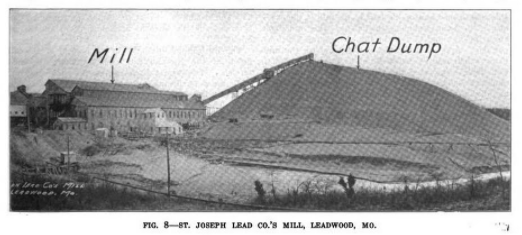
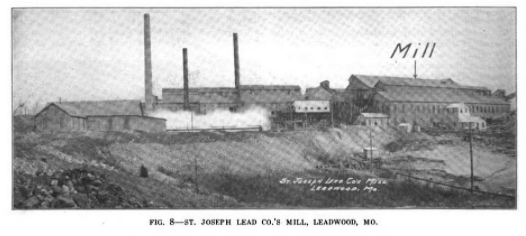
In a 2016 MSNBC opinion piece,  Hillary Clinton wrote, “Flint isn’t alone. There are a lot more Flints out there — overwhelmingly low-income communities of color where pollution, toxic chemicals and staggering neglect adds to families’ burdens.” She is right. There are too many Flints. I come from a town called Leadwood that resides in an area in Missouri commonly known as the Lead Belt. As you might guess from those names, we have a lead problem. Most of them have been knocked down and covered with rocks now, but until recently Leadwood (population about 1,000) and the small towns surrounding it had “chat dumps”–huge mounds of sand mixed with lead waste. The one in Bonne Terre, MO for example was about 160 feet high and 32 acres. I would guess the one in Leadwood was slightly bigger.

The giant mounds have been flattened, but the chat is still there. Miles of it. I’m in my 40s, and we’ve known since I was a kid that the water isn’t safe (though not the toxic levels Flint has at the moment). A few years ago, we got the attention of Erin Brockovich. She came to the area. Her team called it the worst thing they’d ever seen. Tests were run. The dirt in some people’s back yards had 10,000 times more lead than what is considered safe. Promises were made, but not a lot has gotten done.

The biggest detractors of Clinton’s article made two main points—that Clinton is only interested in Flint for political reasons and that her article is race-baiting. It would be naive to think that race doesn’t play a part in Flint and other areas, just as Clinton said. Facts are facts and anyone who says otherwise is just trying to detract from the actual problem. The economy plays a part as well. The Lead Belt is a mostly white,  poor area. I don’t think we talk enough about the similar problems the urban poor and the rural poor face. In fact, we too often separate the two for no other reason than political ideology. Environmental problems like the ones in Flint and Leadwood are not political. They are man-made disaster areas that overwhelmingly affect poorer communities. On this, we should be united.

There are, of course, different circumstances. The lead mining companies from where I live provided good jobs for people for a lot of years (my dad was a miner), but when it stopped being profitable they left a toxic mess and said they didn’t have the money to clean any of it up. This was decades ago, but a lot of people there still have fond memories of those good jobs. Some folks were actually upset that the chat dumps were knocked down. When I was a kid, we used to go play on them.  Finally, however, people there are starting to get it.

From the journal Metallurgical and Chemical Engineering, Vol XVII, 1917

When you come from a very poor community, it’s hard to get anyone with any power to listen, and the people who do have power think they can do what they want because of it. Luckily for Flint (if you can say there’s anything lucky about this disaster at all) is that Michael Moore was able to give them a national voice, and Rachel Maddow’s coverage had been fantastic, but quickly dropped off after Trump was elected. Continue reading “LEAD”

SATURDAY POETRY SERIES PRESENTS: JANET R. KIRCHHEIMER

Wonder Beans
By Janet Kirchheimer

My father went each morning to his garden.
He taught me to smell the soil to see if it was good,
to feel the dirt slide across my hands, to never
wear gloves, to stay in the middle of the row when planting seeds.
We’d look for work to do in the garden,
and sometimes there was nothing more to do
than watch the garden grow, wait for the harvest.
He thought that haricot vert were the dumbest thing he’d ever seen–
he liked his Kentucky Wonder beans, big and bursting with seeds, leaving
them to grow in the summer sun as long as possible.
Last winter he told me we couldn’t save
the parsley from the snow and ice, even though
we put blankets over it.
He got pneumonia in February.
In April, he asked me if I thought he’d get to his garden, and I told him yes.
By the end of May I brought him
cherry tomato plants to keep on the deck.
He no longer had the strength to pick
the first tomatoes that ripened in June.
August: I bring dirt from the garden
to his grave and scatter grass seed.


“Wonder Beans” previously appeared on String Poet and appears here today with permission from the poet.

Janet R. Kirchheimer is the author of How to Spot One of Us, (Clal, 2007). A Pushcart Prize nominee, her work has appeared in several journals including Young Ravens Literary Review, Atlanta Review, String Poet, Connecticut Review, Kalliope, Common Ground Review, and several anthologies and online journals. Currently, she is producing a poetry performance documentary, After, exploring poetry written about the Holocaust.

Editor’s Note: Today’s poem is a celebration of life and a poignant reminder that one day we may be remembered by what we love. Through a daughter’s eyes we see a father, watch him plant and grow, watch him love and tend the earth. Through the poet we know what it is for this daughter to love her father, and what it is to lose him. How touching her remembrance, how bittersweet the sting at poem’s end when father is returned to earth.

Want to read more by and about Janet Kirchheimer?
After – A Poetry Film
Young Ravens Literary Review
Collegeville Institute
Podium Literary Journal
Forward’s Schmooze

“Language and Loss” By John Guzlowski

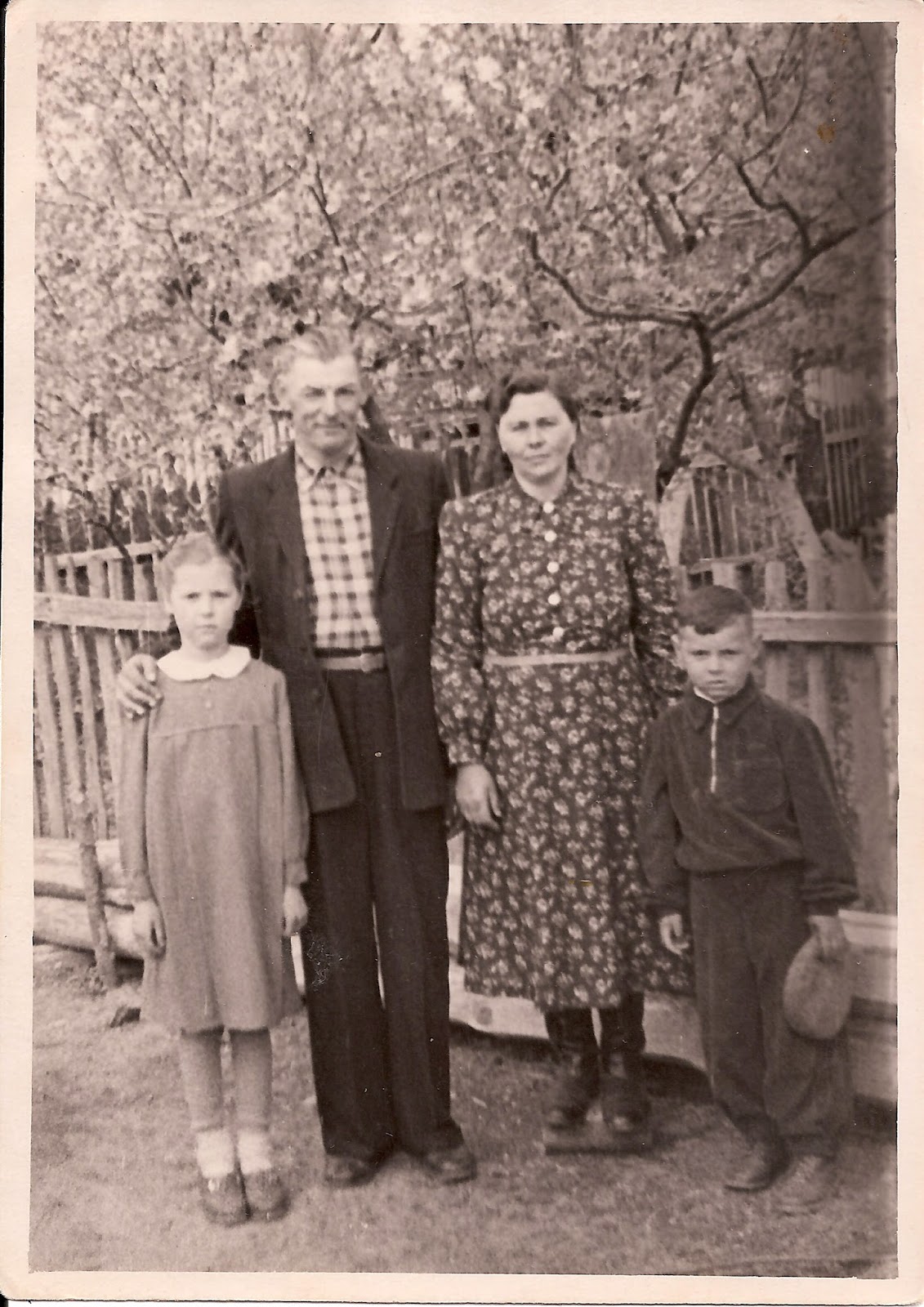
The ones we left behind. My mother’s brother and his family. The Soviet Union


Language and Loss

By John Guzlowski

My friend the writer Christina Sanantonioand I have been having a conversation about writing about loss. It’s a conversation fueled in part by the suicide of the novelist David Foster Wallace back in 2008. She wrote me a long letter about how we use or don’t use language to talk about loss, and about how hard it is to write about loss.

One of the things in her letter that really resonated with me was something she said about one of my favorite writers, Primo Levi, the Holocaust survivorand author of Survival in Auschwitz, who, like Wallace, apparently took his own life. Primo Levi frequently talked about the frustration of trying to write about loss and suffering, especially the loss and suffering he and so many othersexperienced in the Nazi camps. He felt we needed a new kind of language to talk about what happened there. Christina wrote that we ache for a language that doesn’t exist.

I’ve spent the last 35 years trying to find words to describe what happened to my Polish-Catholic parents in the German concentration and slave labor camps and what those experiences make me feel. I write about this event or that image; and no matter how powerful the original event described by my mother or father I can’t really describe it, explain it, bring it out of the past. I can’t bring it out of memory into this life. Instead, I’m left pushing around some words, trying to make myself feel what I felt the first time I heard that story when I was a child. Sometimes I think I almost succeed, but most of the time I know I’m not even close.

For me the poems that work best are the ones with my parents’ actual words in them. Those words are the real thing. In my poem “Here’s What My Mother Won’t Talk About,” my mother refuses to tell me anything about the murder of her mother and her sister and her sister’s baby and her own rape. All she will say to me is “If they give you bread, you eat it. If they beat you, you run.Likewise in my poem “The Work My Father Did in Germany,” my dad tells me what he said to the German guards who tormented and beat him and blinded him, “Please, sirs, don’t ever tell your children what you’ve done to me today.” There are bits and pieces of their words scattered throughout my poems, and when I read these words out loud my parents are there with me. I’m again a kid listening to my dad tell me about the day he saw a German soldier cut off a woman’s breast or listening to my mom tell me about the perfect house she lived in in the perfect woods in eastern Poland before the Germans came. My parents’ words are a kind of magic for me.

Continue reading ““Language and Loss” By John Guzlowski”

SATURDAY POETRY SERIES PRESENTS: HOLLY KARAPETKOVA

Song of the Exiles
By Holly Karapetkova

There never was a garden
only a leaving:
miles and miles
of footprints in the dirt.

In the beginning–
the shattered sun, the wind,
and nothing left but our shadows
sifting through the dust behind us.

When we turned
we did not turn to salt.
When we turned
there was nothing behind us to burn,

nothing to return to,
though who could blame us for turning
with only the long days ahead,
tongues tripping in the dirt.

They said we didn’t belong.
They blamed us
for leaving the garden
which never was or would be.

Where could we go,
we who had come from nowhere
and hence could not
return?


“Song of the Exiles” previously appeared via Split This Rock and appears here today with permission from the poet.

Holly Karapetkova’s poetry, prose, and translations from the Bulgarian have appeared recently in Alaska Quarterly Review, Prairie Schooner, North American Review, Drunken Boat, and many other places. Her second book, Towline, won the Vern Rutsala Poetry Contest and is just out from Cloudbank Books.

Editor’s Note: After a moment of silence following the loss of AIOTB’s Managing Editor, the Saturday Poetry Series returns this week with a poem worth breaking silence for. Holly Karapetkova’s “Song of the Exiles” begins in Eden. At once biblical and real, this Eden is a “garden / which never was or would be.” In this world we are storyteller and reader, mythological figure and landless refugee. This is world news, this is human interest story, this is myth in the truest sense of the word. And this, above all, is poetry. Expertly crafted, delicately wrought, brilliant poetry. “When we turned / we did not turn to salt. / When we turned / there was nothing behind us to burn.”

Want to read more by and about Holly Karapetkova?
Holly Karapetkova’s Official Website

As It Ought To Be Announces New Managing Editor

We here at As It Ought To Be are honored to announce that Chase Dimock will be assuming the role of Managing Editor. We suffered a great loss this spring with the passing of Okla Elliot, our Managing Editor of ten years. We know that Okla’s are no small shoes to fill, and so it was with careful consideration that we selected Chase for this role. Chase was a comrade of Okla’s who has Okla to thank for inspiring his writing and publishing. Having been championed by Okla as a writer is an experience so many of us in today’s literary world share, and so this succession is a nod to a man whose greatest legacy, in Chase’s words, “will be how he delighted in providing a forum for others to articulate their voices.” We know in no uncertain terms that Okla would have wanted AIOTB not only to live on but to thrive, and we know of no one Okla would have been happier to pass this torch to than Chase.

Chase Dimock is an English Professor at College of the Canyons in Santa Clarita, California. He holds a PhD in Comparative Literature from the University of Illinois Urbana-Champaign. His scholarly interests include queer studies and transnational modernist literatures. Chase’s research has been published in the journals College Literature and Western American Literature and he has written chapters about modern and contemporary authors for academic books on subjects such as American writers in Paris, Black Existentialism, and German Women writers. His literary criticism has been published in online venues including The Lambda Literary Review, Modern American Poetry, and Dissertation Reviews. He has previously worked as an editorial assistant on MAYDAY MAGAZINE, Oxford’s Anthology of Modern American Poetry and Approaches to Kurban Said’s Ali and Nino.

Chase is eager to roll up his sleeves and help AIOTB thrive. To that end, he is actively soliciting contributions to the magazine, and welcomes submissions via email at inquiries.asitoughttobe@gmail.com. We look forward to this next chapter, and to sharing our passion as readers and writers.

SATURDAY POETRY SERIES REMEMBERS OKLA ELLIOT WITH JOHN GUZLOWSKI

By John Guzlowski:


LISTENING TO DEATH

How do we listen to death?

We listen to the sound of death
The way we listen to the sound of the sea
To the message the waves pound against the shore
Their soft rush of foam upon the sand

We hear the things we forgot to tell the dead
The questions we forgot to ask them
The enigmatic dreams they will never explain
The useless arguments we will neither win nor lose
The mutual misunderstandings
That will never be clarified
The lies for which we forgot to ask forgiveness
The problems death defers
The unresolved quarrels with the dead

And what can we do in the face of death?

We can leave this house
And keep going
Never to return

We will not even take
The things that have meant
The most to us, our books
The plants we have nursed
The children we have raised
Punished and praised
The clothes (the dark
Blue ties, the tweed jackets
The rakish wool caps)
That make us look
More the man
More the woman
More the hero
More the young lover
Searching for love

We can leave this house
And keep going
Never to return

And what is death?

It is the hand of God
The meal prepared with love
Flowers from the pierced breast
Of the Blessed Virgin
The shore that smells of widows
Studying the foam

And should we fear death?

No, we shouldn’t fear death
We should fear the loud man’s coming

The pain of cancer
That does this or that
To the body

That pain that is longer than sorrow
Stronger than love

The tumor that grows like
A child who then learns
To hate you

A child who will not take
The love and joy you give her

What is as difficult as death?

Nothing

Nothing

Nothing


POET’S NOTE: I met Okla on Facebook.

One day maybe 7 years ago, I got a friend request from him. I didn’t know a thing about him. He was just another fellow asking to be my friend. I said sure.

I’ve never been sorry I did.

Reading Okla’s posts, his status updates, his responses to other people has always been inspiring. What he wrote was smart and funny and engaging. Sometimes he sounded like Jean Paul Sartre, and sometimes he sounded like a kid in love with literature and life and friendship and thinking and dreaming. Both Oklas were wonderful.

And even more wonderful was the Okla I discovered when I started reading his poems and his essays and his fiction.

Okla was the real thing.

He was all the writers I ever admired, and he was right there with me on Facebook.

When I heard he was dead, I couldn’t believe it. He was too filled with life, too good, too dreaming, to be dead.

But he was dead.

But I will not let go of him.

Here [above] is a poem for Okla.


ONLINE MEMORIALS AND TRIBUTES
As It Ought To Be Mourns the Loss of Our Founder
“Some testimonies to Okla Elliott, 1 May 1977 – 19 March 2017” – Days and Memory
“Requiescat in pace: poet, novelist, translator Okla Elliott, 1977-2017” – Book Haven
“Go Read Okla Elliott’s Stuff, Please. (A Remembrance)” – Great Writers Steal
“Remembering Okla Elliott” – Mildred Barya’s House of Life


REMEMBER OKLA WITH AS IT OUGHT TO BE
As It Ought To Be welcomes art and writing in Okla’s memory. Please email sivan.sf [at] gmail [dot] com with your submissions.


REMEMBERING OKLA ELLIOT WITH MICHAEL YOUNG

By Michael Young:

Okla Elliott died in his sleep last night. I still haven’t fully comprehended this reality. His absence hasn’t filled the days to make me believe it. But the news is everywhere echoed through FB.

There are a few people on FB that I know almost exclusively through FB or met only a few times and yet I consider them friends and not just acquaintances. There is a kindship of mind and conscience that binds us. Okla was such a person. There was a mutual admiration and respect for …each other’s work. He was always welcoming of my work for As It Ought To Be and encouraging of my writing. And I had the pleasure of interviewing him and reviewing his collection The Cartographer’s Ink. The diversity, quantity, and quality of his literary output was amazing. I was so looking forward to reading his next poetry collection, which will now, sadly, not be coming. I enjoyed just hearing what he was teaching his classes. It was a pleasure to hear him take such joy in teaching, sparking conversation among his students, or just rhapsodize about the deliciousness of tacos. He was a brilliant and kind person. In online conversations, he strove always for fairness and inclusion that never compromised intellectual honesty. He seemed to face setback with determination and optimism. I saw this most clearly in the recent election outcome, always advising people to focus on state and local elections, and clear actions to take, rather than falling into doubt and bitterness. His intelligence and voice will be terribly missed. The silence it leaves will fill the coming days with something embodied in certain winter landscapes, a kind of waiting that isn’t answered but fades like an echo. But if you haven’t read any of his work, buy some: his poetry, his translation, the novel he co-authored with his good friend, Raul Clement.


ONLINE MEMORIALS AND TRIBUTES
As It Ought To Be Mourns the Loss of Our Founder
“Some testimonies to Okla Elliott, 1 May 1977 – 19 March 2017” – Days and Memory
“Requiescat in pace: poet, novelist, translator Okla Elliott, 1977-2017” – Book Haven
“Go Read Okla Elliott’s Stuff, Please. (A Remembrance)” – Great Writers Steal
“Remembering Okla Elliott” – Mildred Barya’s House of Life


REMEMBER OKLA WITH AS IT OUGHT TO BE
As It Ought To Be welcomes art and writing in Okla’s memory. Please email sivan.sf [at] gmail [dot] com with your submissions.


SATURDAY POETRY SERIES REMEMBERS OKLA ELLIOT WITH PAUL CRENSHAW

Photo Credit: Brandon Pierce

By Paul Crenshaw:

FOR OKLA

All that late-night talk of light, and life,
all those words, which became like worlds.
Which we both know were.
If you even need words anymore,
wherever you are, what world
you find yourself in.

Let me just say I hope there’s light.
Let me say I want to send this to you
so you know all the poetry was enough.
That the porch light is still on
in my mind. That the windows are open,
and the songs from inside the house still play.
You are still sitting in the overstuffed chair.
You are still smiling. Let me say
the lighting of a cigarette or
clink of ice in a glass is as much poetry
as anything we ever said.
Let me remind myself I remember all the words,
even if I’ve forgotten how to say them.


ONLINE MEMORIALS AND TRIBUTES
As It Ought To Be Mourns the Loss of Our Founder
“Some testimonies to Okla Elliott, 1 May 1977 – 19 March 2017” – Days and Memory
“Requiescat in pace: poet, novelist, translator Okla Elliott, 1977-2017” – Book Haven
“Go Read Okla Elliott’s Stuff, Please. (A Remembrance)” – Great Writers Steal
“Remembering Okla Elliott” – Mildred Barya’s House of Life


REMEMBER OKLA WITH AS IT OUGHT TO BE
As It Ought To Be welcomes art and writing in Okla’s memory. Please email sivan.sf [at] gmail [dot] com with your submissions.


SATURDAY POETRY SERIES REMEMBERS OKLA ELLIOTT

A version of this post was featured on this series in December of 2010. It is being shared here today as As It Ought To Be mourns the loss of our founder.


By Okla Elliott:

THE IDIOT’S FAITH

Three lanterns floated in the dream she told him, but he didn’t want to hear about lanterns. He wanted factories unbuilt, windows smashed open. He wanted libertine wailings. She denied being a builder of factories, but he knew her reputation. A wind blew in from Montreal, or she said it was from Montreal, said she could smell the bars of Rue St Laurent. He was skeptical but didn’t want to argue. What good are arguments on a Saturday night? What good are arguments at all? She told him again about her love of the French language, and he thought maybe they were getting somewhere. The modern sunset outside her window was spilled wine tinged with pollution. They went down the mountain to town, found the trouble she had decided they wanted. She called a homeless man a fallen Chinese god, and they mourned his sad descent, forgetting (almost) their own. That is the power of generosity, one use of our idiot faith in human love.


THE LIGHT HERE

It sets a mood
of clownish tragedy,
of ecstatic failure waiting to happen.

It is not a static blue light
nor the throb of a strobe.

It is not a light to read by
nor to be naked in,
unless you are desperate
or barbarously horny.

I would use it to look for you
in a cave or catacomb
or an ossuary crowded by the famous dead–
that is, if you were in such a place,
I would use this light to find you.

It is a light that yellows the periphery.
It is not a light that brightens the center.

It is mixed from an overcast morning
and the electric urban dusk.

It is a light I could live in
if I came to terms with certain failings
in my character
and the character of others.

I know you have light where you are,
better light even,
but I wanted you to know
about the light here.

 
Okla Elliott (1977 – 2017) passed away in his sleep last weekend. The Misicordia University professor, a prolific novelist, poet, short fiction writer, and translator, would have turned 40 this year. Those of us who knew him – and his circle of acquaintance and friendship was very wide indeed – are in shock from this wholly unanticipated death. He was kind, generous with his time, and indefatigable in his writing. He was much loved.

His work appeared in Harvard Review, The Literary Review, New Ohio Review, Prairie Schooner, A Public Space, Cincinnati Review, Indiana Review, Subtropics, and elsewhere, as well as being included as a “notable essay” in Best American Essays 2015. His books included From the Crooked Timber (short fiction), The Cartographer’s Ink (poetry), The Doors You Mark Are Your Own (a novel), Blackbirds in September: Selected Shorter Poems of Jürgen Becker (translation), Pope Francis: The Essential Guide (nonfiction), and Pope Francis: The Essential Guide (nonfiction, forthcoming). — David Bowen, The Book Haven (with edits)


Editor’s Note: Today I am honored to present to you the work of As It Ought To Be‘s managing editor. His work speaks for itself, as does the significant body of publications in which his work has appeared. Okla is an impressive scholar, a fearless leader, and a wonderful person to know in the writing world. He believes strongly in the idea of building and sustaining a community of writers, and I am honored to be a member of that community. Regarding today’s pieces I will say that Mr. Elliott effortlessly combines vignettes of straightforward narrative with crisp images and moments of simple yet brilliant language such as “What good are arguments on a Saturday night? What good are arguments at all,” “if you were in such a place, I would use this light to find you,” and this kicker of an ending, “It is a light I could live in / if I came to terms with certain failings / in my character / and the character of others. / I know you have light where you are, / better light even, / but I wanted you to know / about the light here.” Simple. Elegant. Stunning.

UPDATE: “The Light Here” appeared on the back cover of Okla’s memorial liturgy booklet at his funeral held at Misicordia University on Friday March 24, 2017.


ONLINE MEMORIALS AND TRIBUTES
As It Ought To Be Mourns the Loss of Our Founder
“Some testimonies to Okla Elliott, 1 May 1977 – 19 March 2017” – Days and Memory
“Requiescat in pace: poet, novelist, translator Okla Elliott, 1977-2017” – Book Haven
“Go Read Okla Elliott’s Stuff, Please. (A Remembrance)” – Great Writers Steal
“Remembering Okla Elliott” – Mildred Barya’s House of Life

AS IT OUGHT TO BE MOURNS THE LOSS OF OUR FOUNDER

“O Captain! My Captain!”

It is with a heavy heart that I write this post. Okla Elliot, longtime managing editor, champion, and co-founder of As It Ought To Be died unexpectedly this past weekend. He was far too young, and the depth of this loss is incalculable. The contributions he made while on this earth were of superheroic proportions, and the contributions this ambitious, talented, exceedingly capable man would have made had he lived to a ripe old age are beyond our wildest dreams.

Remembrances are pouring out from the many communities Okla inspired, alongside unimaginable grief from the countless individuals whose lives he changed for the better. From an obituary by David Bowen: “The Misicordia University professor, a prolific novelist, poet, short fiction writer, and translator, would have turned 40 this year. Those of us who knew him – and his circle of acquaintance and friendship was very wide indeed – are in shock from this wholly unanticipated death. He was kind, generous with his time, and indefatigable in his writing. He was much loved.”

He was much loved. Indeed. He was many, many things, and should have had the chance to be so many more. But not least among them, this exceedingly generous, one-of-a-kind human being was much loved.

Below are a few ways the world is remembering him.


VIA HIS POETRY

Entrances and Exits

When I was a younger man, a boy,
the intrigue of washing machine doors

trunks, windows, manholes–secret passages
of all sorts–possessed me. I spent hours

passing through and back through
a simple hole in the wall of a condemned house

careful to step with the other foot
or at a new angle each time,

conducting experiments that might foretell
how the world would receive me

and how I would leave.


Tilting Toward Winter

The air is gray and quiet as the sea’s
wet-dying warmth. A blackbird
screams out from memory and, pleased
with its sour chirping, keeps at it undeterred
by the browning season. I have everything
I could wish for —this air, this sea, this night.
We tilt toward winter, though the sand is spring
sand, erotic and youthful. Spirits are light
as May lasciviousness. But blood swells
to shore in cool disintegrating waves—
gone summer and gone winter aren’t real.
I walk into the unwarm froth, say farewell
to my selves that have died and pray for those still
to die — their wet wombs, their thick-salt graves.


WITH THE SONG HE WANTED PLAYED IN HIS MEMORY


WITH THE WORDS OF ONE OF HIS HEROES


WITH ONLINE TRIBUTES AND MEMORIALS

“Some testimonies to Okla Elliott, 1 May 1977 – 19 March 2017” – Days and Memory
“Requiescat in pace: poet, novelist, translator Okla Elliott, 1977-2017” – Book Haven
“Go Read Okla Elliott’s Stuff, Please. (A Remembrance)” – Great Writers Steal
“Remembering Okla Elliott” – Mildred Barya’s House of Life


BY WRITING POEMS IN MEMORIUM

“Okla’s Last Emails” by Lynn Houston
“For Okla Elliot” by Jay Sizemore


REMEMBER OKLA WITH AS IT OUGHT TO BE

As It Ought To Be welcomes art and writing that remembers, eulogizes, and celebrates Okla. We would also love to include any additional tributes and memorial pieces that have been published elsewhere here in this memorial post. Please email sivan.sf [at] gmail [dot] com with your submissions.


MEMORIAL SERVICES

A service to remember Okla Elliott will be held at 11:00am this coming Friday, March 24, in the chapel located in Mercy Hall of Misericordia University:

301 Lake Street
Dallas, PA 18612
(570) 674-6400

There will also be a memorial at 2:00 pm on Friday, March 31, in the Lucy Ellis Lounge, FLB, UIUC campus, Urbana, IL.