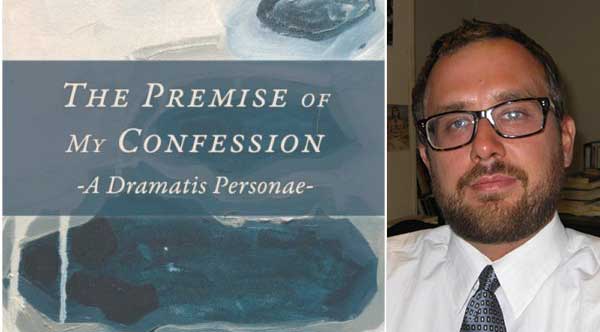
Brian Rihlmann: “Certainty”


CERTAINTY 

as I sweep the garage this morning, I
pause to watch the dust twirl in a
beam of sunlight streaming through the
window.  I remember pounding the
floral print cushions of our couch when I
was five, just to enjoy this same dance,
as Saturday morning cartoons droned
unobserved in the background.  then 
again, 20 years later, at seven a.m. 
on a Sunday morning, after putting all the 
stools up, and sweeping the broken 
glass and cigarette butts off the floor, 
while the last of my regulars snored 
off his whiskey with his head on the bar.
I’d lean on my broom and watch the day
pour in through the grimy window, 
revealing just how filthy a dive it really was, 
no matter how you scrubbed it…but the 
light itself, and how the dust swirled…
I smile at the continuity, the certainty—
there will never come a time when 
this mundane occurrence ceases 
to be also magical.


About the Author: Brian Rihlmann was born in New Jersey and currently resides in Reno, Nevada. He writes free verse poetry, and has been published in The Blue Nib, The American Journal of Poetry, Cajun Mutt Press, The Rye Whiskey Review, and others. His first poetry collection, “Ordinary Trauma,” (2019) was published by Alien Buddha Press.


More By Brian Rihlmann:

The Whole Point of the Game

Unknown Soldiers


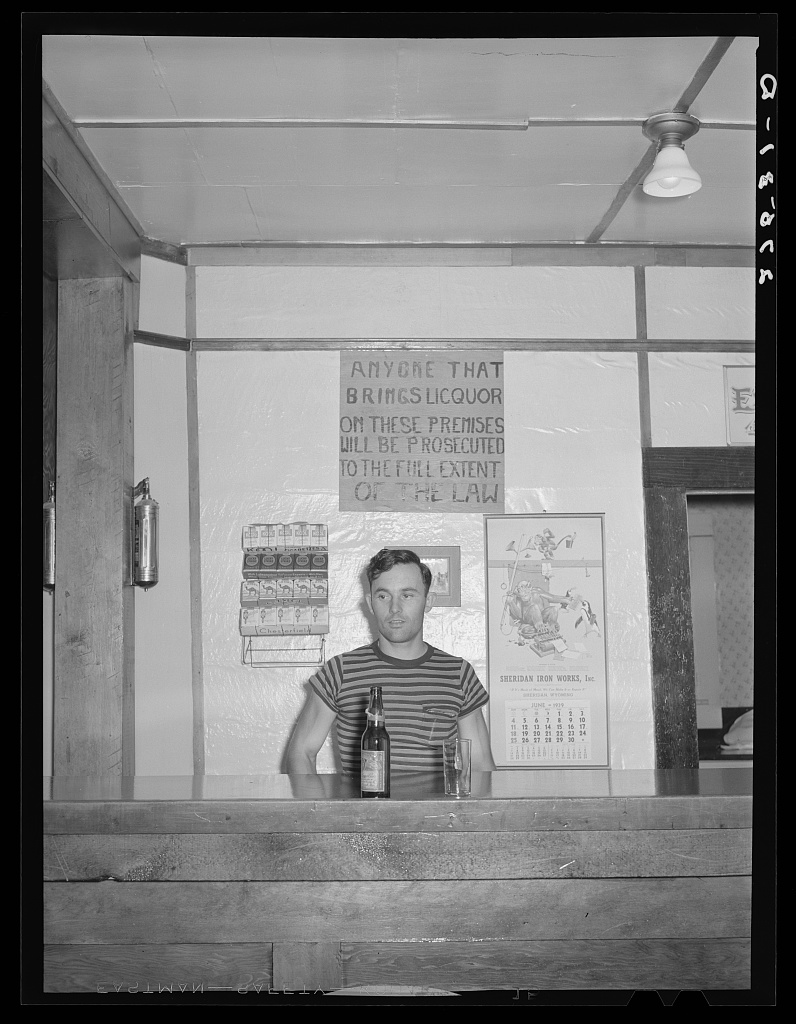
Image Credit: Arthur Rothstein “Bartender. Birney, Montana” (1939) The Library of Congress

John Macker on Stuart Z. Perkoff

.

.

Stuart Z. Perkoff

By John Macker

The Poet is the world’s remembrancer.” [1]
 -Lawrence Lipton

“He told of taking acid in situations that would terrify me,
for instance, a jail cell in Terminal Island.”
-Robert Creeley on Stuart,
from his foreword to Voices Of The Lady: Collected Poems, Stuart Z. Perkoff

Stuart Z. Perkoff was the Southern California Beat Generation’s tortured over soul who gave that movement a lot of its spirit, its sense of place and its relevance. By the end of his life, Stuart would manifest everything that was righteous, precociously outlaw and sui generis about Venice, CA before the bad press and the cops cracked down on the bikers and drug dealers. He was friend and mentor to a generation of wild, original bohemian wordslingers who were (mostly) accepted into the larger extended family of the Beat Generation, in the 1950’s. 

     Early on, Stuart was befriended by the L.A. intellectual cum hipster/novelist Lawrence Lipton, who hosted “salons” that attracted the hip, the disenfranchised, the poets and painters, the poseurs, the dilettantes. Poets like David Meltzer, Tony Scibella, John Thomas, Philomene Long, Bruce Boyd, Robert Alexander, Alexander Trocchi, Stuart, and others, sought out kindred spirits within Lipton’s ever-evolving sphere. (Jack Kerouac had even showed up at one point, with Steve Allen, all surly and swollen and drunk to his core). The Holy Barbarians, Lipton’s best-selling account of this era and its characters was published in 1959 and is now highly collectible in hardcover.

     Stuart appeared as a successful contestant on Groucho Marx’s You Bet Your Life. He also realized the poet’s vulnerability in the media eye once national word got out about Venice’s role as a harbor for the beatniks’ dark side. The poets and artists (such as Wallace Berman, Ben Talbert, George Herms and John Altoon) of Venice West were suddenly catapulted into the spotlight for most of the wrong reasons, and, subsequently, became objects of ridicule and satire in the press. He disdained such displays and in Jack Hirschman’s generous words, “preferred anonymous best of all.” [2]

     Despite all this he and Lipton were the subjects of John Arthur Maynard’s respectful biography Venice West: The Beat Generation in Southern California. (Rutgers Univ. Press, 1991.) Much of Stuart’s close friend Tony Scibella’s contribution to that book was through an interview I did with him in Denver, in 1986 and originally published in the magazine, Moravagine.3.

     Stuart appeared along with the best poets America had to offer in Donald Allen’s historic anthology, The New American Poetry, 1945-1960. In its scope, originality and audacity it has yet to be rivaled. Although many of the poets included were Stuart’s good friends, he ended up changing the lives of his closest poet-companions, the painter/collagist Tony Scibella, New York gangster/poet-with-portfolio Frank T. Rios and poet/publisher James Ryan Morris.

His rogue early books appeared in mostly soft cover, small press editions lovingly produced by publisher friends. He spent some time in prison for drug offenses in the late 60’s-early 70’s which he never really recovered from and which truncated his publishing “career”. Kowboy Pomes, Eat The Earth, Alphabet, Only Just Above The Ground, some of his best writing— after he had morphed into a great, grey-bearded long-haired bear of a poet— came out in the short span between prison release and his untimely death from cancer at 43 in 1974. Jonathan Williams had published Perkoff’s seminal and haunting, The Suicide Room, in 1956. 

In the mid 90’s, Stuart’s older brother Gerald approached Tony Scibella and others about collecting Stuart’s work into one volume. Later, Gerald contacted Allen Ginsberg about publication of this manuscript and Allen led him to Maine’s National Poetry Foundation, partially funded by Stephen King. In 1998, Voices Of The Lady: Collected Poems appeared with an honorable and insightful  preface by Robert Creeley. It covers all of Stuart’s published work. A substantial tome by any standards and an outlaw masterpiece by a true rebel –Jewish mystic, ex-con, wordslinging junkie genius whose influence is still being felt.

    For 20 years now, I’ve considered Stuart Perkoff a kind of guardian angel riding point  into America’s voodoo bone darkness. I still on occasion sit my wife down by candlelight with two shots of Herradura, and read some of Stuart’s words out loud. They can still send chills up my spine just like they did when the late Denver poet Larry Lake first handed me a copy of Perkoff’s Visions for the Tribe. I couldn’t seek the muse’s touch without encountering Stuart Perkoff’s shadow on the trail. His language, its musicality, its exhortative cadence and jazz rhythms: as Robert Creeley wrote in the preface to Voices of the Lady, “Bobbie Louise Hawkins says that Stuart Perkoff was the only one she knew who could use the common street talk, the then hip phrasing, in a way that felt undramatic, natural, not just an attempt to be like some other side of life or person.” [3]  

Like it or not, being alive finds its own way to live of necessity.” [4]

                                                                   -Robert Creeley

Friends, lovers, muse, children, countrymen, peers, Meltzer, Tristan Tzara, Gary Cooper, Charles Mingus, John Garfield, John Thomas, Thelonious Monk, Kirby Doyle, Dylan Thomas, Abbot Kinney (founder of Venice, CA.), Philomene Long, Ben Talbert, Stuart wrote poems to them all, in all shapes and sizes: hip theatrical dialogue, short prose, spontaneous short line, invocation, many without titles, just Stuart riffing to the earth and sky, praying the poem gets riffed back to him by the gulls, the waves of his beloved “moonwash sea”, echoing off the voices of brother poets, guided by the sound emanating from the Lady’s lips. Stuart’s muse was external, an out of body experience, the “Lady” of his life, cosmic goddess she-fire chanted down to earth and into his soul by the uncharted intensity of his poetics.

     As Tony Scibella has said, as close as the Venice 3 were, none of them sounded like the other and Stuart didn’t sound like anybody. His readings were legendary for his basso profundo voice and intonation, very formal, rabbinical even. 

     As far back as 1951, poet Charles Olson, on the occasion of Stuart’s poems being published in Cid Corman’s Origin 2, recognized his impact:  “i have just been telling creeley how very moved i was last night to find you there (origin 2) with us

                                            That those
two poems of yrs belong with us; and are something neither of us,
or anyone else, can visit as you can such another hell . . .” [5]

Stuart’s “another hell” was on earth, within a dysfunctional family, in the derangement of his senses by heroin and other drugs, the expectations of a soul- destroying, “responsible” society spawned by victory over Japan and Germany, and a cold war that had addicted itself to world arms escalation and the grim potentiality of nuclear annihilation. Stuart recognized the shadow of fear but refused to reside within it. Death was always available, every day, another shadow, kin. But he wrote the Hell out of it, the sweating threat of it, every day, his health and blood on the line, one word ahead of another, in the Lady’s light.

     On his deathbed, he was attended by two Ladies, his muse, ever hovering, feeding him lines until the end and one of flesh, his last love, the fine poet, convent renegade and self-proclaimed “queen of bohemia”, Philomene Long, who captured, on tape, his final words. For the rest of us there is the last poem in Voices Of The Lady, another untitled, handwritten, taken off Stuart’s wall shortly before his death:

So black, the visions. That’s why they
Linked gaunted arms & stumbled towards
the flames in a feeble dance of celeb-
rations. For the visions cannot be
denied, reality is irrevocable &
so, precisely there they found joy
& song.
              Grant me that strength
he who must remain
unnamed. [6]

Notes:

  1. Lipton, Lawrence The Holy Barbarians  NY: Julian Messner, 1959.
  2. Hirschman, Jack  Privately printed broadside poem, 1998. Used by permission
  3. Perkoff, Gerald T. editor. Voices of the Lady: Collected Poems Stuart Z. Perkoff. Maine: The National Poetry Foundation, 1998. From introduction by Robert Creeley.
  4. Ibid. pg. 12
  5. Ibid. pg. 11
  6. Ibid. pg. 462


About the Author: John Macker’s latest books are Atlas of Wolves (Stubborn Mule Press, 2019) and The Blues Drink Your Dreams Away: Selected Poems 1983-2018 (Stubborn Mule Press, 2018 and a finalist for a New Mexico/Arizona Book Award.) Macker has lived in Northern New Mexico for 24 years.

Michael T. Smith: “Revolution in a Dress”


Revolution in a Dress

The revolution was not begun to be new.
It was not meant to be a treatise 
between word and vigor,
dripped onto the page from a drooling pen.
It was not what your parents had known.
It was not giving a damn, left to kill itself by day’s end,
nor was it a dress meant to appear flattering.
It was – full stop, was in every sense of ‘to be,’
‘to have been,’ for it was more architectural
than a mere wisp of the abstract,
sorting a foundation of the clouds we wish we
were upon.
Living in a perpetual concussion,
the masses have looked up
and finally turned their eyes back onto themselves to say
‘beautiful.’


About the Author: Michael T. Smith is an Assistant Professor of English who teaches both writing and film courses.  He has published over 100 pieces (poetry and prose) in over 50 different journals.  He loves to travel.


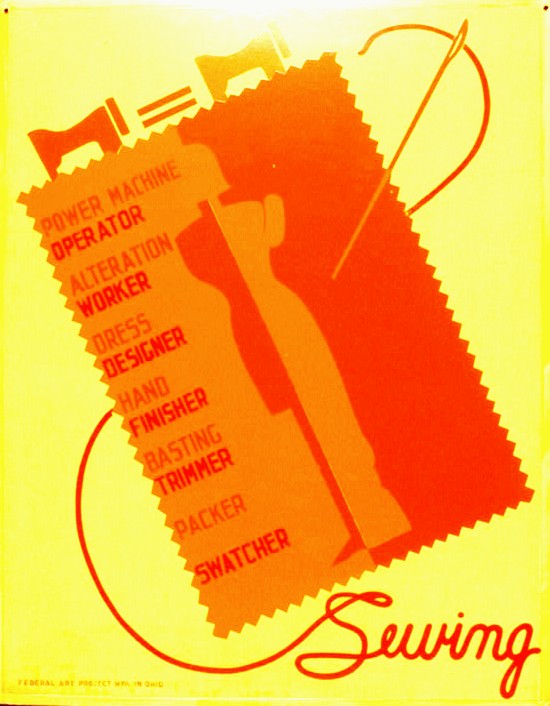
Image Credit: Blanche L. Anish “Sewing” (1937) The Library of Congress

John Dorsey: “Belle, Missouri, During the Pandemic on a Wednesday”


Belle, Missouri, During the Pandemic on a Wednesday 

here nothing has changed
everyone thinks we’re overreacting 
angry parents talk about the prom 
& missed school trips

young lovers have always died for pageantry 

but the truth is 
kids will still make babies 
in the back of parked cars without 
all of the ceremony

the news is a reminder that
the atomic bomb didn’t exist 
until we built it

someone says
if we can survive that
we’ll certainly 
get through this

with or without toilet paper.


About the Author: John Dorsey lived for several years in Toledo, Ohio. He is the author of several collections of poetry, including Teaching the Dead to Sing: The Outlaw’s Prayer (Rose of Sharon Press, 2006), Sodomy is a City in New Jersey (American Mettle Books, 2010), Tombstone Factory, (Epic Rites Press, 2013), Appalachian Frankenstein (GTK Press, 2015) Being the Fire (Tangerine Press, 2016) and Shoot the Messenger (Red Flag Press, 2017) and Your Daughter’s Country (Blue Horse Press, 2019). His work has been nominated for the Pushcart Prize, Best of the Net, and the Stanley Hanks Memorial Poetry Prize.He was the winner of the 2019 Terri Award given out at the Poetry Rendezvous. He may be reached at archerevans@yahoo.com.


More By John Dorsey:

Anthony Bourdain Crosses the River of the Dead

Punk Rock at 45

Perpetual Motion


Image Credit: Carol M. Highsmith “Jalopy that has seen better days” The Library of Congress. Photographs in the Carol M. Highsmith Archive, Library of Congress, Prints and Photographs Division.

Leslie M. Rupracht: “Hess Trucks and the End of the Double Standard”


Hess Trucks and the End of the Double Standard

Dad’s inner child 
drove him to the Hess Gas Station 
weeks before Christmas. It was his yearly 
excursion to buy his son a toy truck—

the kelly-green-and-white kind that takes two C’s, 
double-A’s or 9-volt to set head- and taillights flashing, 
sirens wailing, and guarantee a young boy’s delight 
with Santa’s perfect selection. 

The son collected an array of models 
with varying numbers of axles for a few years 
before his older sister received her first.
“I thought it only fair,” 

explained Dad to his daughter 
on that milestone Christmas—she, 
old enough to know about Women’s Lib, 
Equal Rights, and seventy cents on the dollar, 

and he, thinking she’d want a Hess model truck 
over Breyer model horses or a bright orange 
Easy Bake Oven. Three decades later, 
in a long distance call, 

Dad tells her he just visited Hess, bought 
the special 40th anniversary edition truck 
for her brother—sibling equity 
now a notion forgotten. 

Only weeks before, 
he proudly announced buying collectible 
model cars for his four grandkids—
all sons of his son.


About the Author: Leslie M. Rupracht is an editor, poet, writer, and visual artist living in the Charlotte/Lake Norman region of North Carolina since 1997. Her words and artwork appear in various journals (most recently Gargoyle), anthologies, group exhibits, and a chapbook, Splintered Memories (Main Street Rag, 2012). Longtime senior associate editor of now-retired Iodine Poetry Journal, Rupracht also edited NC Poetry Society’s 2017 and 2018 Pinesong anthology. Swearing off a corporate work relapse, Rupracht co-founded and hosts Waterbean Poetry Night at the Mic in Huntersville, NC.


Image Credit: Carol M. Highsmith “Old gas station and pumps outside tiny Kent in Central Oregon” (2018) The Library of Congress

Victor Clevenger: “$5.00 Wok”


Editor’s Note: This is the 2nd in a series of poems by Victor Clevenger about his son, nicknamed “The Milkman”


$5.00 Wok

a $5.00 wok was a helluva steal
an after christmas deal

sitting over the flame 
for the first time 
on new year’s morning

it’s the milkman’s birthday breakfast

three pounds of pork sausage
browned crumbled glistening in grease

i antique it with flour
stir it until coated 

reach over 
take the eggs off the griddle

biscuits out the oven 

grab the milk &
dump two cups on the meat

goddammit!

white liquid hit the bottom
& as soon as the plastic spoon 
made its first clockwise rotation
the black coating on the pan
floated in flakes to the top
goddammit! 

black flakes now bigger
than sausage crumbles

i call the milkman to the kitchen
& show him the gravy

whatcha gonna do he asks
& i think about it

then tell him
it’s like the ol’ sayings

. . . . like a turd in a punchbowl
                        or
. . . . like a trump in the white house

some things just aren’t salvageable

so i guess 

we throw it out 

            & begin again


About the Author: When not traveling on highways across America, Victor Clevenger spends his days in a Madhouse and his nights writing poetry.  He lives with his second ex-wife, and together they raise children in a small town northeast of Kansas City, MO.  Selected pieces of his work have appeared in print magazines and journals around the world, as well as at a variety of places online.  He is the author of several collections of poetry including Sandpaper Lovin’ (Crisis Chronicles Press, 2017), A Finger in the Hornets’ Nest (Red Flag Poetry, 2018), and Corned Beef Hash By Candlelight (Luchador Press, 2019).


More By Victor Clevenger:

Milkman’s Mustache


Image Credit: Ann Rosener “”Share The Meat” recipes. Baked bean loaf.” (1942) The Library of Congress

Ronnie Sirmans: “Sloughing Words”


SLOUGHING WORDS

They say a single pencil
can write about 45,000 words. 
When I was a kid and wanted
to sharpen a pencil at home, 
I would always turn to Daddy  
and his handy pocket knife.
I didn’t realize each sloughing 
meant words falling to the floor.
Synonyms, antonyms, homonyms
drifting among the dusty motes.
I had persuaded my parents 
to buy a Crayola big box
with the built-in sharpener—
which didn’t work on pencils, 
I would discover while I marveled
at the 64 colors before they dulled.
I was the kid who would wear out 
burnt sienna, maize, peach, mahogany,
goldenrod, bittersweet, and even silver 
for use as flesh tones when I colored. 
I stayed dutiful with homework,
numerals in addition to words, 
and so I’d often ask Daddy
(that’s what I called him at first
before trying synonyms like Father,
palindromes Dad and Pop, finally 
settling on Pa, as utilitarian as pi or po) 
to sharpen, unblunt, dedull my pencil. 
If you’re more a geometer rather
than a wordsmith, did you know
a pencil can draw a 35-mile line?
I could never make it that far:
Daddy’s small blade conjured gray dust,
infinite points falling off a straight course.


About the Author: Ronnie Sirmans is a digital editor at an Atlanta print newspaper, and his poems have appeared in The South Carolina Review, Tar River Poetry, Deep South Magazine, The American Journal of Poetry, Sojourners, America, and elsewhere.


More By Ronnie Sirmans: 

The Word with the Schwa that’s Really a Short U

Remembering the Great Flood in the Frozen Food Aisle


Image Credit: Odilon Redon “Conque marine” Public Domain


cropped-as-it-ought-to-be-magazine-4.png

Sheila Saunders: “April Visitor”


April visitor 

High water but now calm.
A gentle Irish Sea pushes in 
halted by jumbled rocks of alien limestone
holding long dead  sea-lilies and shelled creatures
marooned  here.

And  now – the first wheatear
motionless
sharp-suited in black, white
and the purest of greys

flaunting his visibility and etched lines 
just a momentary breeze 
lifting  peach breast feathers.

Rested, after flight of oceans and continents
leaving,  swift as his coming
for inland moors

to startle with ‘whee-chak’ from drystone walls,
tail flicking, never still.    


About the Author, Sheila Saunders: An Oxford graduate in English Language and Literature, Sheila worked on local newspapers and after marriage to fellow reporter Peter, while bringing up their three children, turned to feature and freelance writing. She has always been involved in community activities, and addicted to novels, music, art and theatre. Her poetry is especially inspired by her love of natural history, and life on the Wirral coast in Hoylake.


Image Credit: Page from Naturgeschichte der Vögel Mitteleuropas, courtesy of the Biodiversity Heritage Library

Gwil James Thomas: “Passing by Polloe/A Slice of Life”


Passing by Polloe/A Slice of Life. 

On the top of the hill  
crickets hop and chirp   
around the entrance of Polloe,
emulating miniature guard dogs –
their barks sounding as silence 
when the living stroll by.  

Strong but naive spring flowers 
rise up through the cracks 
in the concrete. 

Etched into the sturdy sandstone 
entrance of Polloe Cemetery 
a message in Spanish roughly 
translates to:  
‘Soon they will say about you 
what they say about us – 
they died!’

Sometimes it feels like the dead 
are as talkative 
as the living –
but if you talk to the dead enough, 
after a while you’ll only 
hear them say one thing – 
live. 

Come lunch warm aromas 
are carried up the hill 
from the pizzeria and each day 
they only serve one pizza, 
but each day also 
brings a totally different pizza.

Some slices may contain 
traces of déjà vu.


About the Author: Gwil James Thomas is a novelist, poet and inept musician originally from Bristol, England. He’s recently been published in The Bees are Dead, GOB zine, Expat Press, Paper & Ink and The Dope Fiend Daily. His sixth poetry chapbook Cocoon Transitions is available here. He currently lives in San Sebastián, Northern Spain.’


More By Gwil James Thomas:

Blend


Image Credit: Willoughby Wallace Hooper “Cemetery, Secunderabad” (1870) Digital image courtesy of the Getty’s Open Content Program.


R.T. Castleberry: “Down Cold Lanes”


DOWN COLD LANES

Ending a blue-sky day–
serrated winter clouds edging into dusk,
the car’s engine responds, slips shaded curves, 
raked leaves trailing into gutters, 
veiling macadam and asphalt tar.
I follow lanes of eroding light,
high, flowing bayou stream 
glimmering to the west.
Five white SUVs break traffic laws,
speed and refuse to yield.
King’s guitar on CD stings the people’s chord,
vibrato loud from open windows.
Aromas from family dinners, scents of
burning pine or oak silt the air.
I remember laughter, her hands 
sorting music for the road, 
remember warming each other 
walking from the car.
At end of chilly days, smoky cat
never answers greetings.
Longing and memory never cease.


About the Author: R.T. Castleberry is a widely published poet and critic. His work has appeared in Roanoke Review, Trajectory, Blue Collar Review, White Wall Review, The Alembic and Visitant. Internationally, Castleberry’s work has been published in Canada, Wales, Ireland, Scotland, New Zealand and Antarctica. Mr. Castleberry’s work has been featured in the anthologies, Travois-An Anthology of Texas Poetry, The Weight of Addition, Anthem: A Tribute to Leonard Cohen and You Can Hear the Ocean: An Anthology of Classic and Current Poetry.


Image Credit: John McWilliams “VIEW EAST ON THE SOUTHEAST/SOUTHWEST FREEWAY (IN THE HISTORIC F STREET CORRIDOR) FROM THE TENTH STREET PROMENADE, SW – L’Enfant-McMillan Plan of Washington, DC, Washington, District of Columbia, DC” Library of Congress