Timothy Tarkelly: “Hastings: A Remembrance”


Hastings: A Remembrance

Ashley Judd graces the cover
of another thriller.
A two-hour testament
to the lengths men will go to for attention.
Two-day rental, just a few dollars.

It’s the act of course,
of perusing, compromise,
and finally the selection.

And the beauty in that green stamp
at the base of the books’ spines:
used.
Gently, but a real past,
a whole life of shelves and suitcases,
the pocket on the back of an airliner seat.
But I am not a jealous lover.
I will caress the creases
as if I made them myself.

A whole section devoted to dice,
twenty-sided windows into the future,
an eternity of game nights
and the compendium of canonical monsters
to guide us.
Plastic-wrapped, Fifth Edition, 
the best chapter of our lives.

And this was Friday evenings,
or the awkward hour between dinner’s end
and the movie’s beginning. The after-work walks
when you just can’t bear to go home yet.

The holy payday pilgrimages
of new books and novelty drinking horns,
of Pacific Rim posters for Christmas
and the perfect Frodo action figure
to live forever at your desk,
watching you write,
watching you live and record 
your most predictable adventures.

And now, Fridays have worn to antsy dust,
and a faded sign hangs from an empty husk
over a wasted parking lot. 

Except for every October
and its pop-up Halloween store. 


About the Author: Timothy Tarkelly’s work has appeared in From the Depths, Philosophical IdiotBack Patio PressRusty TruckCauldron Anthology, and other magazines, online journals, etc. He has had two books of poetry published by Spartan Press: Luckhound (2020) and Gently in Manner, Strongly in Deed: Poems on Eisenhower (2019). He also runs Roaring Junior Press, a chapbook publisher that specializes in small runs of sci-fi/fantasy, horror, and pop-culture infused poetry. When he’s not writing and publishing, he teaches in Southeast Kansas.


Image Credit: A digital rendering of a public domain photo by Chase Dimock

Anna Saunders: “Thirteenth week of Lockdown- woke wondering if I were a ghost”


Thirteenth week of Lockdown- woke wondering if I were a ghost.

I am too diffuse, fill the air like smoke
glide around empty rooms, feeling immaterial .

You would think it would be easier existing as ghost, 
airborn, iridescent as summer rain, 
but I am weightless only in mass -my psyche is ballast. 

To be a ghost means to live with the self undiluted.
Imagine who you are, but magnified.

I am too much at times, 
the condensed quick of myself,  
like a perfume oil or a 100 percent rum.  

Nothing touches me, and no-one.
And if they did, I am so tissue skinned 
their fingers would go right through me. 

At best I am inspiration, contain light,
but adrift and nebulous, like mist
all abstract antipathy and desire, 

and  invisible 
(who sees the ghost but the haunted?) 

I pull desperately at my own arm with this poem 
and claim 
I am here, I am here.


About the Author: Anna Saunders is the author of Communion, (Wild Conversations Press), Struck, (Pindrop Press) Kissing the She Bear, (Wild Conversations Press), Burne Jones and the Fox (Indigo Dreams) and Ghosting for Beginners (Indigo Dreams, Spring 2018). Anna has had poems published in journals and anthologies, which include Ambit, The North, New Walk Magazine, Amaryllis, Iota, Caduceus, Envoi, The Wenlock Anthology, Eyeflash, and The Museum of Light. Anna is the CEO and founder of Cheltenham Poetry Festival. She has been described as ‘a poet who surely can do anything’ by The North and ‘a poet of quite remarkable gifts’ by Bernard O’Donoghue.


More by Anna Saunders:

The Delusion of Glass

In The Drowned Woods


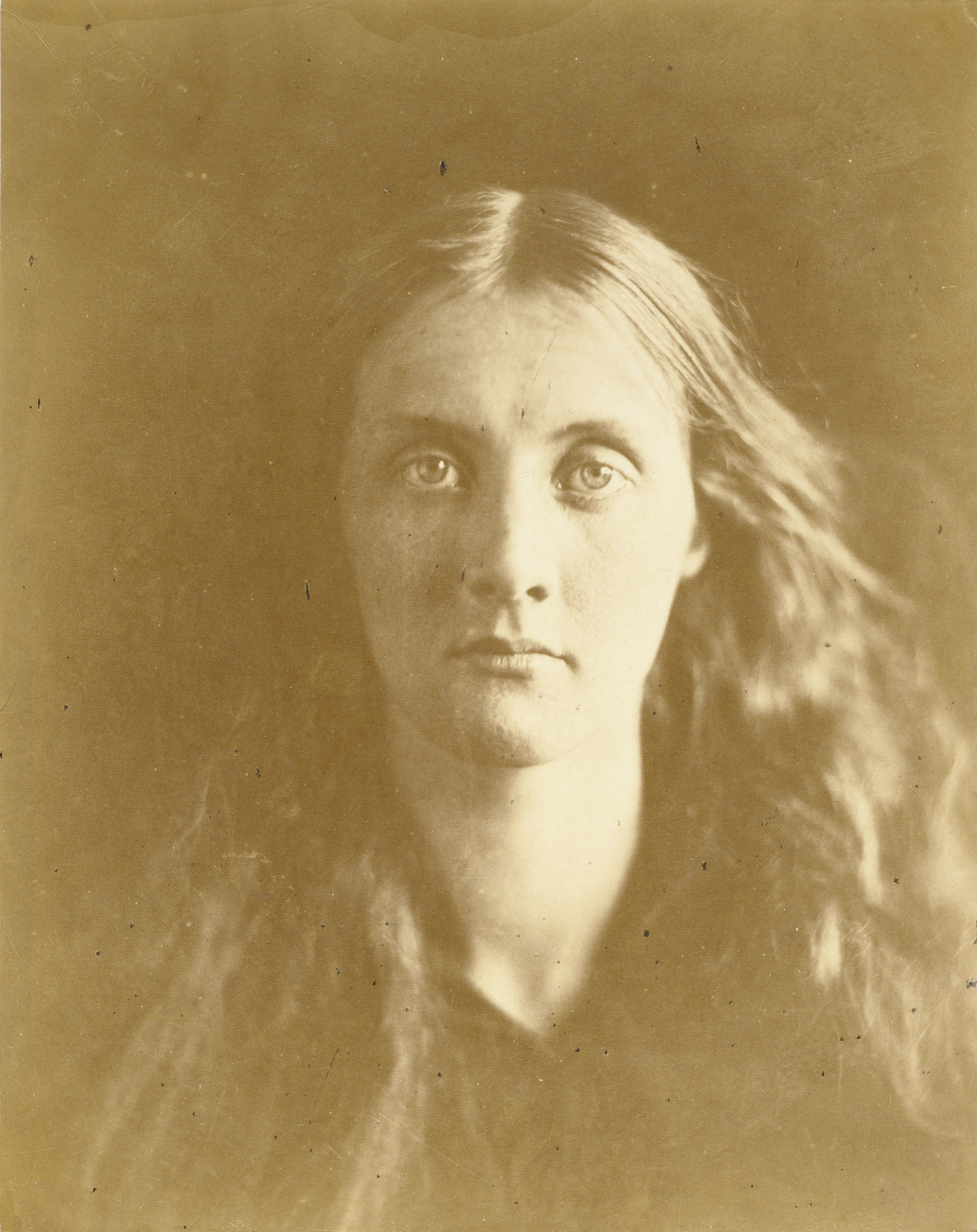
Image Credit: Julia Margaret Cameron “Julia Jackson” (1867) Digital image courtesy of the Getty’s Open Content Program.

Ajah Henry Ekene “Of Aging”

IMG_20191210_130322555_HDR


Of Aging

Ma, your adult son is home. Things are not the way they look.
I have put a foot backwards. Many feet backwards. 
I have fried my dreams. My eyes are teary from smoke.
Ma, I cough. Bouts of sneezes. My internal rooms are hazy.
The dreams were large, too many. And when they burnt
They made enormous fire.
Growing up has been walking on hot oil. Each step tells me to hurry.
But hurry didn’t do ma. The sole peeled and peeled. 
Then I saw new skin and smiled.
Then it blistered ma!
My memory is turning. It cannot remember. 
Or it remembers too much; too much uncertainty. 
So, I do not know what I want to tell you:
Whether a confession of weakness; an acknowledgement of sorrow;
An admission of failure; or the subtle regret of not being enough. 
As I return to you, like we all do to dust, I know you will recognize me.
The familiarity of origin will absorb me home.
And should I have a choice in these things;
I will return to you once after this journey and refuse to be born again.


About the Author: Ajah Henry Ekene lives and writes from Nigeria. Some of his works are on Brittle Paper, New Contrast, AfricanWriters and The Kalahari Review.
He won 2nd place in NSPP (2017) and partly enjoys practising Medicine.


Image Credit: Chase Dimock “Tahquitz Canyon” (2019)


John Grey: “I Read It Here First”


I READ IT HERE FIRST

This copy of “Moby Dick” is repulsive.
I left it by the humidifier 
and now the pages are like sponge.
I bought that stupid machine 

because of this fixation I had
that my skin was drying out.
I never went anywhere.
I didn’t do anything

but sit in the parlor
in all that wretched humidity 
while one-legged Ahab 
went after that insufferable white whale. 

I’d ended up feeling like a stinking orchid.
But you see, I had to do something.
I couldn’t just let myself 
crumple up like old parchment.

But now the pages of the novel 
are stuck together.
I overreacted as I always do. 
In my own way, I was Ahab.

But now, thankfully, I’m Ishmael,
the guy who survives to tell the tale. 
I ditched the humidifier.
My skin is just fine.

Now I’ve taken up with yogurt
because of some concern 
about not getting enough B12.
Besides, I haven’t read “The Andromeda Strain”
        in years.


About the Author: John Grey is an Australian poet, US resident. Recently published in
Hawaii Pacific Review, Dalhousie Review and Qwerty with work upcoming
in Blueline, Willard and Maple and Clade Song.


More By John Grey:

Maud

Downsizing

Move On


Image Credit: “Stack of Old Books” Chase Dimock

Ace Boggess: “Rain/Snow Mix”


Rain/Snow Mix

Don’t know whether to wear my gloves
or grab the cobalt umbrella 
with its one bent, awkward arm.

I’ll get wet, but maybe it’s one of those dry wets.

If the temp were ten degrees cooler,
every question would have an answer
rather than another question:
should I stay home? risk it for a quick trip to the store?

The meteorologist mocks & prattles, 
goofing like an Auguste clown.
I think it’s funny we never see his shoes.


About the Author: Ace Boggess is author of five books of poetry—MisadventureI Have Lost the Art of Dreaming It SoUltra Deep Field, The Prisoners, and The Beautiful Girl Whose Wish Was Not Fulfilled—and the novels States of Mercy and A Song Without a Melody. His writing has appeared in Harvard Review, Notre Dame Review, Mid-American Review, Rattle, River Styx, and many other journals. He received a fellowship from the West Virginia Commission on the Arts and spent five years in a West Virginia prison. He lives in Charleston, West Virginia. His sixth collection, Escape Envy, is forthcoming from Brick Road Poetry Press in 2021.


More by Ace Boggess:

Rock Garden

And Why Am I A Free Man?

Why Did You Try To Sober Up?


Image Credit: “Unidentified man with umbrella standing in street with building in background” (1921) The Library of Congress

Fabrice Poussin: “Getting Old”


Getting Old

She stared into a worn-out mirror
familiar motion of early morning rises
seeking the imperfection born of the darkness.

Uncertain in the first hours of early frosts
she Passed her personal inspection
with the gaze of an unmatched surgeon.

Robed in the purity of the soft cotton
she caresses the gentle envelope of the years
complete in the glee that life still loans.

Remembering birthdays of another century
she wonders at the purity of the white satin
where not a line yet has written a somber destiny.

The certainty of time has gone into another realm
where dimensions come together into space
and she smiles even when they call her granny.


About the Author: Fabrice Poussin teaches French and English at Shorter University. Author of novels and poetry, his work has appeared in Kestrel, Symposium, The Chimes, and many other magazines. His photography has been published in The Front Porch Review, the San Pedro River Review as well as other publications.


Image Credit: Jacob Byerly “Portrait of an Elderly Woman in Matron Cap” (1844) Digital image courtesy of the Getty’s Open Content Program.

Geoffrey Heptonstall: “One for Sorrow, Two for Sorrow”


ONE FOR SORROW, TWO FOR SORROW

The bird that sings a stolen song 
leaves echoes of another sound 
from a tongue bereft of voice.
‘Pica, pica,’ the magpie cries, 
naming its nature in air.
Joytaker, heartbreaker, 
what it sees it steals 
in glistening desire, 
feathered with wildness 
to plunder the beauty of things.
The joker in a pack of lies, 
it lives on sorrow alone.


About the Author: Geoffrey Heptonstall is the author of a novel, Heaven’s Invention [revised paperback edition Black Wolf, 2017] and a collection of poetry, The Rites of Paradise [Cyberwit 2020].


Image Credit: Australian Magpie courtesy of the Biodiversity Heritage Library

Tony Pena: “Birds of a Feather”


Birds of a Feather

The black birds caw
as I hobble to my Honda
CRV noir like Mister
no meniscus on the lam
from hard boiled critics
who put Clarice Starling
on my case for killing
so many of my darlings.
In my standard literary
issue of charcoal satin
shirt and dungarees,
I ask of the evening
in iambic slang,
if the crows consider
me an accomplice
to their murder
or just another
Edgar Allan wannabe.


About the Author: Tony Pena was formerly 2017-2018 Poet Laureate for the city of Beacon, New York.  His work has appeared in several publications over the years. Recently, poems have appeared in 1870, Museum of Poetry, and the Rye Whiskey Review. A volume of poetry and flash fiction, “Blood and Beats and Rock n Roll,” is available at Amazon.  A chapbook of poetry, “Opening night in Gehenna,” is available from author. Colorful compositions and caterwauling with a couple of chords can be seen at:

.
.
Image Credit: illustration from A synopsis of the birds of Australia, and the adjacent Islands. London: John Gould, 1837. Courtesy of the Biodiversity Heritage Library

Brian Connor: “Baseball Bastardized”


Baseball Bastardized:

How the Bungled Response to Covid-19 Reveals Baseball’s Inability to Evolve in a Changing Culture

By Brian Connor


Nothing could be done with the timing. Baseball happened to be the most heavily affected domino that fell among the cancelled major sports, unable to cancel a postseason or come up with a video game-esque return to play tournament format. The NBA, NHL, and Premier League soccer all shifted towards finishing up what little of the season remained or moving right to postseason play- in other words, the best part of the year for all of them. The MLB, meanwhile, had to get everyone out of Arizona and Florida and figure out how to come close to salvaging the 2,430 games they would have otherwise played.

Baseball was never a sport designed to make everyone happy. If you do your job right 3 out of 10 times, you likely get put on a performance review; if you’re a major leaguer who gets a hit 3 out of 10 at-bats, you likely get put on the All-Star team. If you go to bed with your favorite team having lost that day 62 times a year, you probably root for one of the best teams in the league and went to sleep happy the other 100 times. Whether a casual fan or an absolute fanatic, your favorite type of games are likely fast games (i.e. under 3 hours) featuring a lot of homers and runs scored- in other words, games that almost never happen. 

So it was likely wrong for us to assume that we were going to be happy with whatever makeshift version of a Major League Baseball season was going to be proposed, especially as it became reality that our usual summer of a hot dog and a cold beer in the bleachers, a walk by a sports bar with the game feed audible, and a game on the TV as background noise to a family party was less and less likely to happen. And as the transition of winter to spring and, now, spring to summer came without the glistening feel of Opening Day, the rawness of the world suspended the joy of the turn of the seasons as all came to a halt. There was no joy in Mudville, for they were all indoors.

Baseball then tried, in earnest I suppose, to try to come up with a plan to return, because America’s pastime, damnit. Forget that boring old soccer or that ice hockey thing I could never really understand, we need baseball back to heal this nation, for Christ! And yes, there are much bigger things for everyone both on a societal and personal level and many lives to be saved in the time of a pandemic. But I get it, though baseball junkie I am: emblematic of both the daily grind of the American worker and the daydream summer’s day that gets over half the country through its brutal winter, the sport hits differently than others. World wars couldn’t stop it; 9/11 merely delayed it; there’s an invincibility surrounding it, as sure as summer comes, so does baseball.

So where are we, then, as we approach almost three months since the originally scheduled Opening Day? Mainly, prorated salaries for players were proposed by team owners, agreed to by those players, then taken back for further pay cuts by those owners. This is likely because it simply won’t be feasible to play in front of fans this year, and ticket sales, concessions, etc. are the money makers for teams.  The losses expected are, exact words from Cubs owners Tom Ricketts, “biblical” for this year for MLB. No crosstown rivalry here: he and Jerry Reinsdorf mark the Chicago owners worth $1.8 billion who likely won’t see a dime of ticket sales between their two baseball teams this year. At least they have a better fate than the five poor bastards in the group of owners worth less than a billion- how else would they sleep at night? (Bringing up the rear is supposedly Reds owner Bob Castellini, with a net worth of a chump change $400 million)

But who wants that pressure of owning a team and striking a deal, anyway? I just want to take my family of four to a baseball game, just like when I was a kid. In 2019 this came out to an average of $32.99 a person just for the privilege of being in the park (damn Yankees driving those price up). Pops need a cold beer, of course, and a dollar saved is a dollar earned, kids, so I’m getting this light beer for $10 instead of a craft beer for $12. You kids need a hot dog, too, and thank goodness for that family deal for a hot dog and a drink- cheaper than sold separately! This Bud’s for me, so honey, you can have my fountain drink and we all come out ahead at $11.75 apiece! You look like you could use a $20 hat, Junior- my dad got me one when I was your age- and your brother needs a souvenir bat for another $25. We’ve got all that, so let’s strap in for at least 3 hours and watch .006% of the regular season!

Unrelated, baseball’s popularity is decreasing nationwide but had a revenue of $10.37 billion dollars last year. If only owners had made their coffee and avocado toast at home, maybe they would’ve saved some money for the players this year.

Two things are true for me at once, as things often are now: baseball is my favorite sport, and I can no longer justify why anyone would take a rooting interest in it. I called it America’s pastime earlier, but it isn’t anymore: five NFL regular season games drew higher TV ratings than Game 7 of the World Series last year, and never mind trying to follow a team for 162 days of the year as opposed to 16 Sundays. Soccer’s boring and low scoring? Check the fans in the 80th minute of a 1-0 Premier League game compared to the 8th of a 1-0 baseball game. Best live experience? Be there in person for a 2-1 hockey game. Most exciting sport? Same hockey game, only playoffs. How often have you seen a Steph Curry 3 or a LeBron dunk on Twitter? Every other winter day for about five years, right? What about a Mike Trout highlight of any kind? Whenever the official MLB account decides to tweet about it, I’m guessing? And don’t even think about giving baseball or the modern day Babe Ruth that free publicity on YOUR account, that’s against the rules! If James Harden does anything funny, go viral, you millennial hippie, but don’t ruin the sanctity of baseball with that vine of a home run!

These were my gripes before coronavirus, usually countered with “can’t beat being there on a nice day” and “you never really see the same thing twice”. Now we likely won’t be able to watch it in person at all this year, again destined for a boring summer due to a labor dispute, again making the same mistake that doomed the sport back in 1994.  The owners who supposedly cannot cope with the idea of lost revenue have nixed the player’s proposal of a 114 game season with a final offer of 50 games, as if the increased per game importance will salvage the sport. 

This is where we stand, then, summer nearly in full. We are days away from a no contact sport with bases 90 feet apart not being able to figure out how to handle coronavirus, with variations of it currently being played elsewhere in the world and all other major sports leagues either starting or finalizing plans to start.  In a country with millions out of work, 30 owners have its most traditional sport at a standstill out of caution of paying their players risking exposure to a virus in a worldwide pandemic a little bit more than they’d like. As places gradually start to return to normal, the best case scenario for a Major League Baseball season is a bastardized, bite-sized, 50 game sprint despite the wishes of fans and players alike.  Baseball is, and should be, taking a backseat to the much more important things that affect our day to day lives more than any game ever could (unless you want to add it to the list of things that need racial reform: only 7% of MLB players are Black). But in a time when we just need it to be a three hour distraction in any iteration, it can’t even be that. 

Nothing could be done with the timing. So much more could have been done with the time that immediately followed.


About the Author: Brian Connor writes on a number of topics, though most consistently about baseball on a fan site covering the White Sox during the season. Some further readings can be found at discodemolished.blogspot.com, which lately has been a similar screaming in the void nature of MLB coverage.


Image Credit: “Detroit ball player slides safely into third base as fielder reaches to the left for ball on the ground during baseball game” The Library of Congress

Leslie M. Rupracht: “Brothers”


Brothers 

The phone call behind him,
shock still fresh in his ears,  

the surviving brother    
reaches for memories 
long archived in the depths 
of a cerebral vault, 

untapped for a half-century 
and more until this unending night

Images of two laughing brothers 
upon hand-built rafts forged of scrap 
barn wood, frayed ropes and faith, 
floating on creek waters 

into the rapids of his 
consciousness—

a pair of young captains, 
made of invincible braveness, are
summoned into this sobering moment 
to placate a suddenly lonesome man’s 

shattered hope to bond and build 
more durable craft with his brother

In irretrievable youth 
as in this irreversible hour 
and the tomorrows of his mourning, 
he realized 

he always wanted more 
of his big brother’s time


About the Author: Leslie M. Rupracht is an editor, poet, writer, and visual artist living in the Charlotte/Lake Norman region of North Carolina since 1997. Her words and artwork appear in various journals (most recently Gargoyle), anthologies, group exhibits, and a chapbook, Splintered Memories (Main Street Rag, 2012). Longtime senior associate editor of now-retired Iodine Poetry Journal, Rupracht also edited NC Poetry Society’s 2017 and 2018 Pinesong anthology. Swearing off a corporate work relapse, Rupracht co-founded and hosts Waterbean Poetry Night at the Mic in Huntersville, NC.


Image Credit: “Portrait of Two Seated Boys” (1850s) Digital image courtesy of the Getty’s Open Content Program.