M.J. Arcangelini: “An Elephant in Every Room”


An Elephant in Every Room

Different elephants in every room,
occasionally trumpeting to each other with
full throated roars, solicitous quiet plaints.
Swatting metaphoric flies with their tails.
Trunks like alien beings searching for water,
for straw; tusks snagging on the furniture.

I squeeze past them when moving from
room to room, making myself
smaller to avoid direct contact.
I gather their droppings for the
compost pile with a coal shovel,
wondering who keeps feeding them.

There is no one here with whom
to avoid talking about them.
So I creep around by myself,
taking any excuse to go outside.
Hoping that someday Tarzan will yodel
from a nearby tree and lead them all away.


About the Author: M.J. (Michael Joseph) Arcangelini was born 1952 in western Pennsylvania. He has resided in northern California since 1979. He has published in a lot of little magazines, online journals, & over a dozen anthologies.  He is the author of five collections, the most recent of which is “A Quiet Ghost,” Luchador Press 2020. Arcangelini has been nominated for a Pushcart Prize. He can be reached at poetbear@sonic.net


More by M.J. Arcangelini:

A Few Random Thoughts

Ten Movies


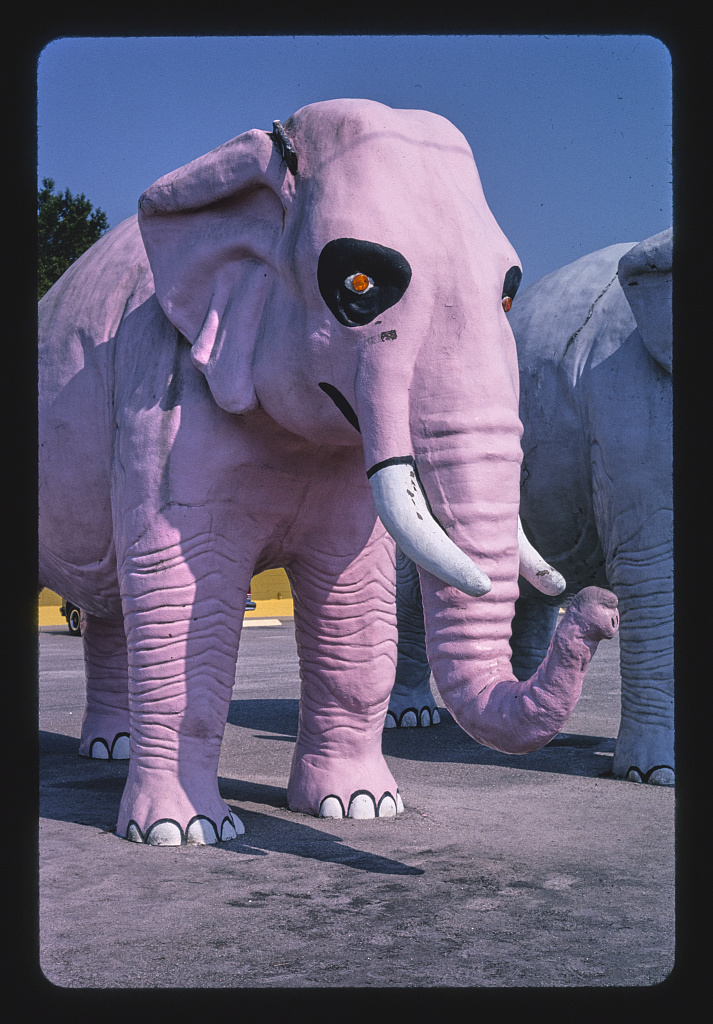
Image Credit: John Margolies “Papa Joe’s Fireworks pink elephant, Route 17, Hardeeville, South Carolina” (2004) The Library of Congress

John Grey: “An April Wet”


An April Wet

April makes a cold call.
The sun is not involved.
Drizzle on the birds’ backs
and flowers opening unwillingly.
The roof repeats something it heard
spoken back in February.
Trees spread their soppy boughs
with nothing to show for it.
The woman at the window
watches grass grow just enough
to make it worth the maggots while.
Her husband appreciates the nothingness
for what it is,
an incessant, slow breakup of the clouds,
a dimming of the view from anywhere.
On a flight of stairs,
the children fight over the next raindrop.
The baby leans out of its hunger
to bawl enough to wake the dead.
It works.
April is gray and rotting.


About the Author: John Grey is an Australian poet, US resident, recently published in Soundings East, Dalhousie Review and Connecticut River Review. Latest book, “Leaves On Pages” is available through Amazon.


More By John Grey:

Maud

Downsizing

Move On


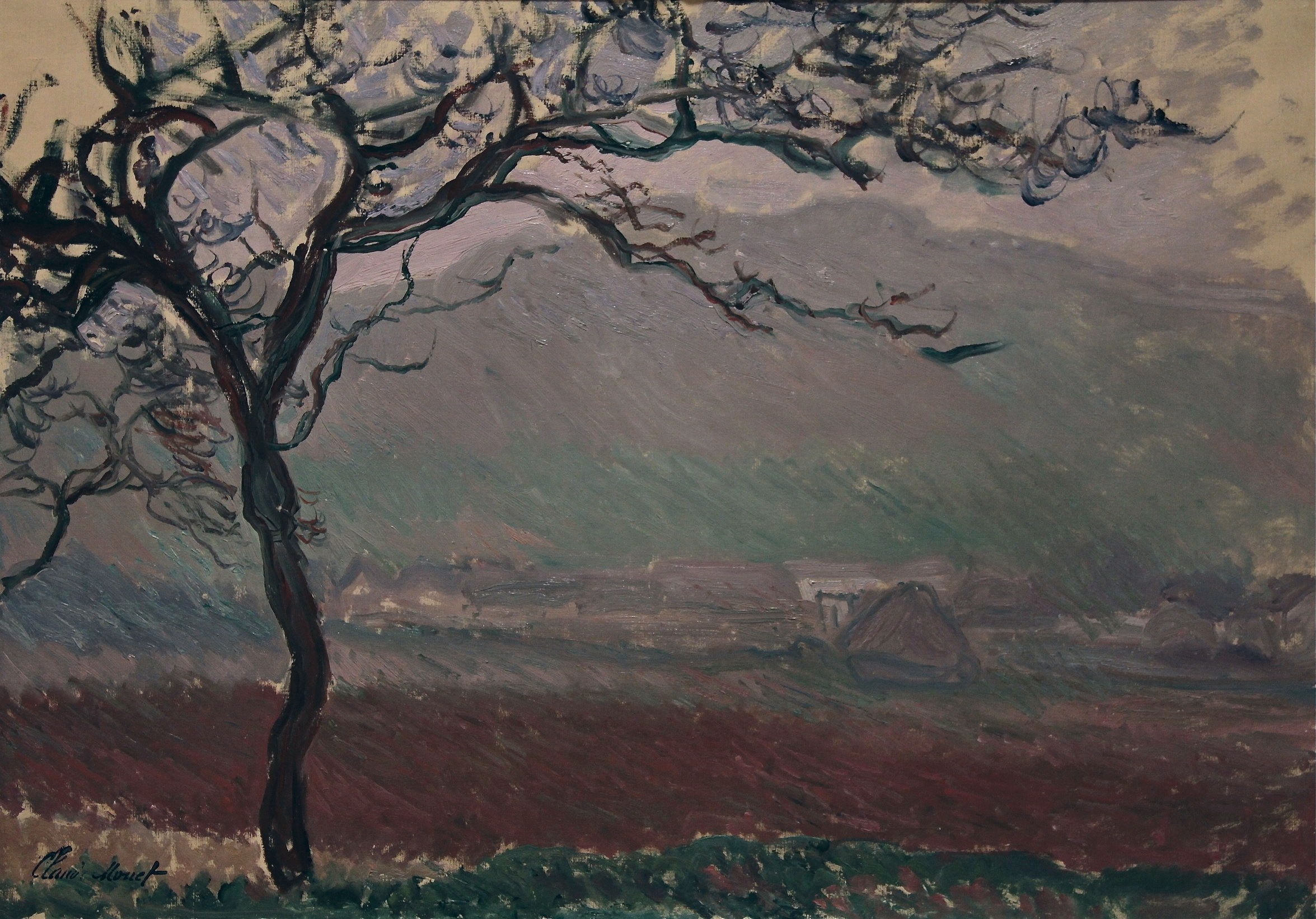
Image Credit: Claude Monet “Landscape at Giverny” (1887) Public Domain

Sue Blaustein: The Fifty-Year Anniversaries are Almost Over


1968, ‘69
2018, ‘19:
The Fifty-Year Anniversaries are Almost Over


On the back porch
at sunrise,
I hold my toaster oven
over the rail. I
pop the bottom
tray, brush crumbs
onto the grass
then stay
to listen to crickets.
To their uninterrupted
    chirping,
then to chirp-imitating
beeps, as the kneeling floor
of the #15 bus
is lowered to the curb
on Holton Street.

    My tiny portion –
        my due –
    of the brunt of your war
    has been arriving.
    Ramifications traveling
    in steady waves,
    rolling in for fifty years
    and more
    come faster now.

It’s only fit
that I kneel like the bus
to meet them.


About the Author: Sue Blaustein is the author of “In the Field, Autobiography of an Inspector”. Her publication credits and bio can be found at www.sueblaustein.com. Sue retired from the Milwaukee Health Department in 2016, and is an active volunteer. She blogs for ExFabula (“Connecting Milwaukee Through Real Stories”), serves as an interviewer/writer for the “My Life My Story” program at the Zablocki VA Medical Center, and chases insects at the Milwaukee Urban Ecology Center.


More by Sue Blaustein:

A Song for Harvest Spiders

A Song for Noise

The Old Ways


Image Credit: Chase Dimock “Sunset at Grover Beach” (2020)

Tim Peeler: “Scrap Dog 27”


Scrap Dog 27

When a nearly 79 year old man
Dies with a .26 blood alcohol level,
The angels of the old country
Swoop down to carry him high
Above the fir trees and the hills
Over the mini-mansions
And the condo riddled ski slopes
Past the eagle nests
And caves full of wintering bears.
Having sparred with indifferent
Doctors, callous insurance providers,
Having shed abandonment
And heartlessness,
Having opted for vodka
To wrestle misdiagnosis,
Looking one more time
Across the cabin deck
Into the darkness
Where the angels
Dangled their legs
From the roof of the sky.


About the Author: A past winner of the Jim Harrison Award for contributions to baseball literature, Tim Peeler has also twice been a Casey Award Finalist (baseball book of the year) and a finalist for the SIBA Award. He lives with his wife, Penny in Hickory, North Carolina, where he directs the academic assistance programs at Catawba Valley Community College. He has published close to a thousand poems, stories, essays, and reviews in magazines, journals, and anthologies and has written sixteen books and three chapbooks. He has five books in the permanent collection at the Baseball Hall of Fame Library in Cooperstown, NY. His recent books include Rough Beast, an Appalachian verse novel about a southern gangster named Larry Ledbetter, Henry River: An American Ruin, poems about an abandoned mill town and film site for The Hunger Games, and Wild in the Strike Zone: Baseball Poems, his third volume of baseball-related poems.


More By Tim Peeler:

Modernist Hay Making

Paramnesia 2

Ballers 2, the Star’s Monologue 3


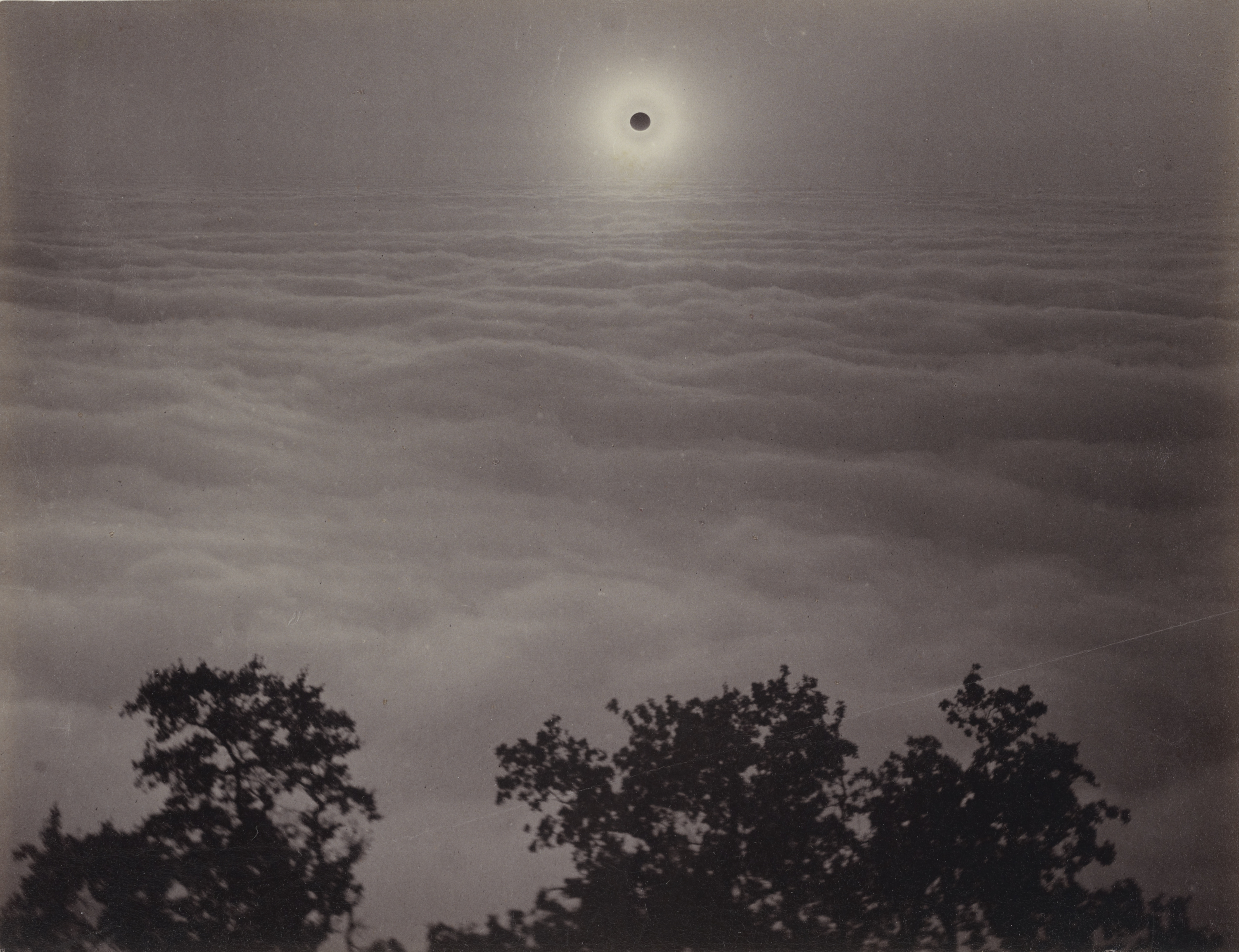
Image Credit: Carleton Watkins “Solar Eclipse” (1889) Digital image courtesy of the Getty’s Open Content Program.

Ace Boggess: “Flight Risk”


Flight Risk

Prosecutor spoke two words,
froze me with outrage
as if I had won the dirty lottery &

didn’t want the prize: a slow-drip death.
I had no passport, money, friends
living abroad like celebrities—

my world so small it could be a cell.
I locked myself in a room
with anxieties, rarely left the house

except to score dope or cigarettes.
No god opened his doors for me
except the god of powder-white pills

who offered space &
a hard bed, said, Stay here &
 always be close to home.


About the Author: Ace Boggess is author of five books of poetry—MisadventureI Have Lost the Art of Dreaming It SoUltra Deep Field, The Prisoners, and The Beautiful Girl Whose Wish Was Not Fulfilled—and the novels States of Mercy and A Song Without a Melody. His writing has appeared in Harvard Review, Notre Dame Review, Mid-American Review, Rattle, River Styx, and many other journals. He received a fellowship from the West Virginia Commission on the Arts and spent five years in a West Virginia prison. He lives in Charleston, West Virginia. His sixth collection, Escape Envy, is forthcoming from Brick Road Poetry Press in 2021.


More by Ace Boggess:

Rock Garden

And Why Am I A Free Man?

Why Did You Try To Sober Up?


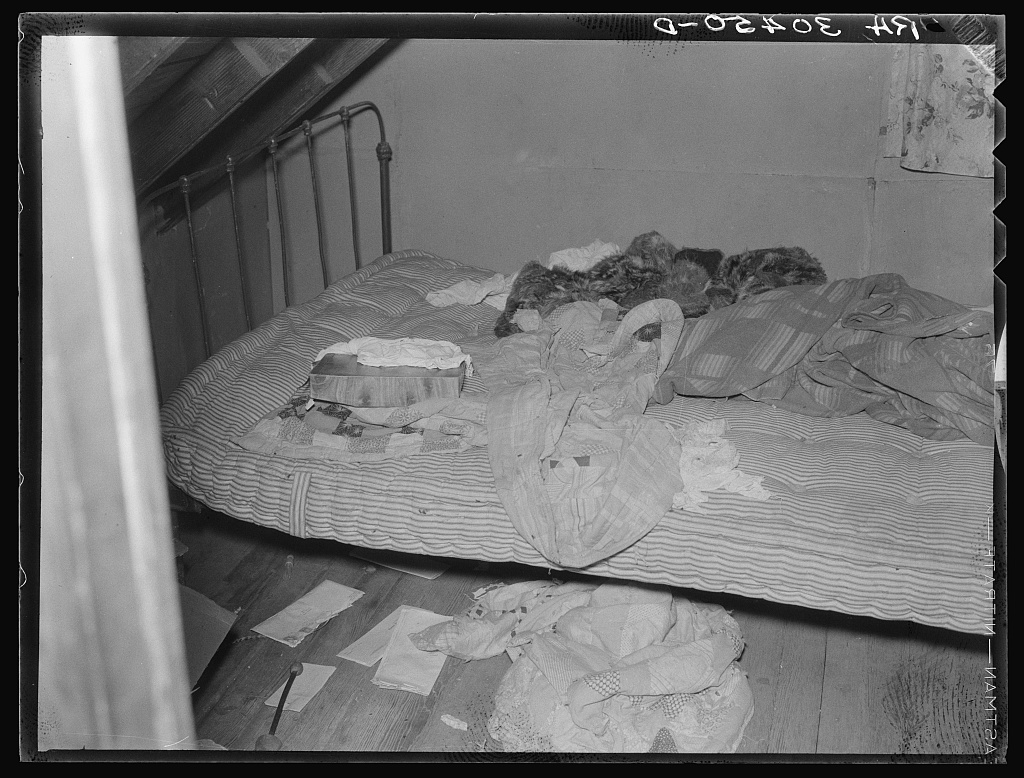
Image Credit: Russell Lee “Corner of attic bedroom in farmhouse. Williams County, North Dakota” (1937) The Library of Congress

Ryan Quinn Flanagan: “Newman’s Own Goons”


Newman’s Own Goons

Remember that guy at the end
of the movie Slap Shot
that does a strip tease on ice
while everyone else is fighting
around him?

That’s how I feel most the time.
But no one gives me a trophy
or parade at the end.

Which is fine with me,
I just want to dance.

Throw off my shirt
and kick off these tiresome
socks.

In the movie,
the high school band
provides the serenade.

I don’t need all those instruments.

This is a strip tease,
not an operating table.

And Newman’s Own goons
from that tiny nowhere
factory town.

All with glasses so thick
you can’t imagine anyone ever
saw the puck.


About the Author: Ryan Quinn Flanagan is a Canadian-born author residing in Elliot Lake, Ontario, Canada with his wife and many mounds of snow.  His work can be found both in print and online in such places as: Evergreen Review, As It Ought To Be Magazine The New York Quarterly, Cultural Weekly, In Between Hangovers, Red Fez, and The Oklahoma Review.


More by Ryan Quinn Flanagan:

Artisanal Birds

Before Evening Med Pass

He Brought His Canvases Over


Image Credit: “Hockey team – P. Shea, De Barr, Myers, Brooks, Comer, Osmum, Smith, Sharp, and Jesson” The Library of Congress

Emalisa Rose: “that stuff that gets passed down that no one wants anyhow”


that stuff that gets passed down
that no one wants anyhow

housed in those boxes
were half scribbled love
letters, the fine china cups
from Grandmother Jean
with chips in Virginia’s ridge
mountains, Lena’s acceptance
speech, the silver plate baby
shoes that mother passed
on from her mother..etc..an
old school monopoly board,
sixteen scrubbed silver dollars
and endless embroidered
purple rose parasols, plus Uncle
Nate’s war stamps collection

the memoirs you fear to throw
out..the stuff that’s passed
third cousin hands and fourth
generation aunts that you never
met anyhow..all kinds of trinkets
and wrinkled up memories that
no one had wall space for, or felt
any urge to put in a curio that
they’d have to go out and purchase.


About the Author: Emalisa Rose is a poet, macrame artist and animal rescue volunteer.  She lives by a beach town, which provides much of the inspiration for her art.  Her current passion is birding, which looks forward to weaving into her work.


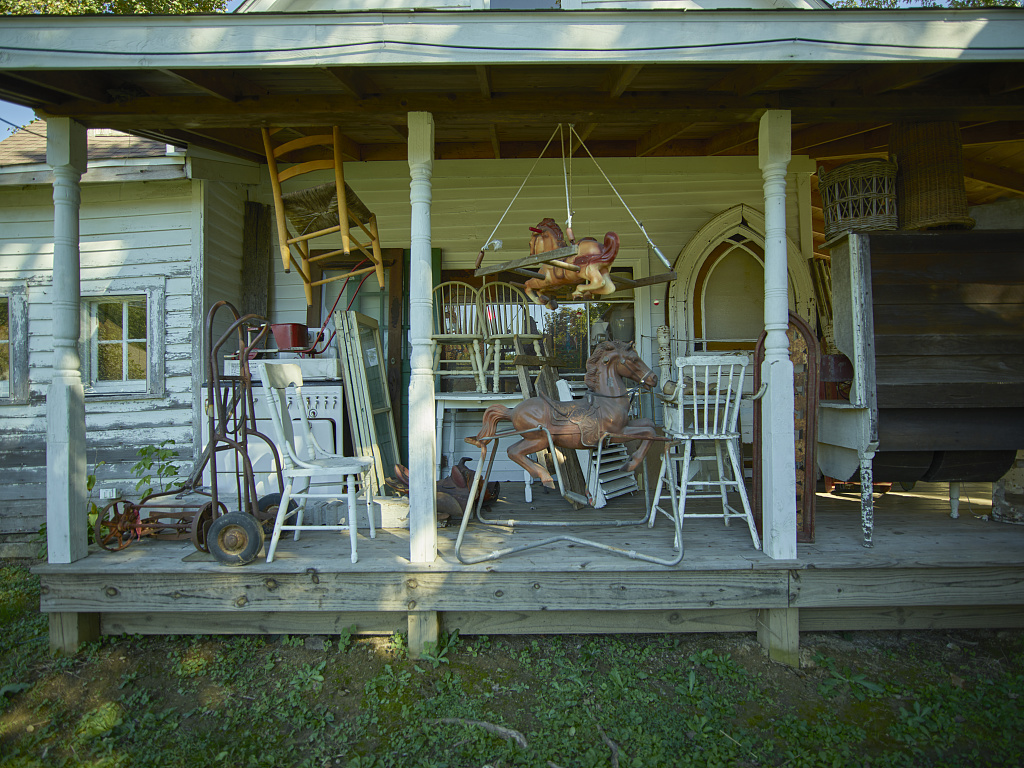
Image Credit: Carol M. Highsmith “The porch that confirms the premesis’s name, Old Stuff Antiques, in Nashville, a small south-central Indiana city with a growing reputation as an art and collectibles center” (2016) The Library of Congress

R.T. Castleberry: “Stopping to Leave”


Stopping to Leave

Dire drift, the afternoon lurks—
flood forecast, prayers rising
from upraised hands, open text.
Rain passes over,
seedlings, oak and elm stirred
by South Coast wind.
Cell phone walkers stretch a crosswalk light.
Food trucks pack for dinner destination.
Pocket park slowly closes—
cigarettes smoked, office lunches done.
Coming off the bridge,
an Audi slips left lane to right,
driver dreaming at the wheel.
Yellow vest workmen scuff
to Ram and Silverado,
helmets and coolers thumping at hips.
Parking lots empty to open arid space,
to painted white lines and chain link.
Captured bags flutter like half-mast flags.
Metal doors and lights lowered,
we are locking down to leave.


About the Author: R.T. Castleberry is a widely published poet and critic. His work has appeared in Roanoke Review, Trajectory, Blue Collar Review, White Wall Review, The Alembic and Visitant. Internationally, Castleberry’s work has been published in Canada, Wales, Ireland, Scotland, New Zealand and Antarctica. Mr. Castleberry’s work has been featured in the anthologies, Travois-An Anthology of Texas Poetry, The Weight of Addition, Anthem: A Tribute to Leonard Cohen and You Can Hear the Ocean: An Anthology of Classic and Current Poetry.


More By R.T. Castleberry:

Down Cold Lanes

July, Roadhouse Dinner


Image Credit: “Detail of east side of overpass, showing spandrel beam, piers, roadway and guardrails. View to southwest. – 86th Street Overpass, Spanning Interstate 35 & 80 at Northwest Eighty-sixth Street, Urbandale, Polk County, IA ” The Library of Congress

Announcing AIOTB Magazine’s Pushcart Nominees


As It Ought To Be Magazine is proud to announce our nominees for this year’s Pushcart Prize


Mike James: “Saint Jayne Mansfield”

Hilary Otto: “Show Don’t Tell”

Diana Rosen: “Hollywood Freeway”

Ronnie Sirmans: “Sloughing Words”

Bunkong Tuon: “Lisel Mueller Died at 96”

Agnes Vojta: “Everybody Loves the Person Who Brings Muffins”


Congratulations to our nominees and a big thanks to all the writers who shared their work with AIOTB Magazine this year!


-Chase Dimock
Managing Editor


Image Credit: Chase Dimock “Grover Beach Sunset” (2020)

Ten Big Things to Know About Roy Bentley: A Review of My Mother’s Red Ford: New & Selected Poems, 1986-2020  By Mike James

Ten Big Things to Know About Roy Bentley:

A Review of

My Mother’s Red Ford: New & Selected Poems, 1986-2020 

By Mike James


1.

Roy Bentley started out as a poet concerned with his own life and his Appalachian and Ohio upbringing. In those early poems about his fire-lipped mama buying a car and an uncle who joined the navy when his wife sent him out to purchase bread, he wrote like a great and natural conversationalist. Those early poems are handled with subtlety, humor, and clear-eyed toughness.


2.

At some point, Bentley decided he could write about anything. As the book progresses from the earliest work, Bentley’s subjects broaden while he deepens his skill. He has poems about Jim Morrison, Robert E. Lee, and F. Scott Fitzgerald. He has a poem about losing his virginity in a whorehouse and a poem about listening to a boxing match on the radio. Whenever he is writing about a subject he fully occupies it. He’s not a poet who believes in sprinkling. He is a poet of submersion.


3.

Roy Bentley knows how to end a poem. Here are a few random last lines. “The only rising we do is out of the body.” “That awful need to believe in God or nothing at all.” “The hardest part is living without hope.” “Something a boy says to no one in the night.” “Even shadows want to leave here.” (It’s good to be able to quote lines which speak for themselves and need neither footnotes nor back stories.)


4.

His last lines can wallop or kiss, but he never takes short cuts to get there. Bentley might be a good guy to play cards with because he doesn’t seem to know how to cheat.


5.

He is an Ohio poet. There must be something good in the Ohio water. Other Ohio poets include Kenneth Patchen, Rita Dove, Larry Smith, James Wright, Sherwood Anderson, Jeff Gundy, Hart Crane, Paul Laurence Dunbar, Mary Oliver, Paul Zimmer, and George Starbuck. That’s a partial list. There must be something in the Ohio water.


6.

This is poetry without pose. His beer poems and pharmaceutical poems are matter-of-fact. He follows the poem wherever it takes him. He never sounds like anyone other than himself. His voice is distinct and only muddied when he is gargling with river water.


7.

Filmmaker genius/artist/raconteur Jack Smith once wrote, “The title is 50% of the work.”

Based on that, Bentley’s poems are half-way successful at the start since he never provides boring or lazy titles. Some invoke curiosity about happenings, such as “Why William Earl “Bill” Hagerman Carried the Casket” or “Coal Town Saturday Night.”  Some place the reader in a landscape, such as “Body of a Deer by a Creek in Summer.” Others are more musical like, “Eggs and Butter and Milk and Cheese.” (Do you notice how that title starts and ends on the “e” sound? Do you notice how a grocery list becomes a short litany a child might chant to her mother as she helps put groceries away?)


8.

Most of these poems either relate or create an anecdote for the reader. To call them narratives might indicate they are longer than they are. (His average length is one or two pages.) Some don’t so much tell a story as create a scene where a story might take place. Think of an Appalachian David Lynch driving through small towns, past closed drive-ins.


9.

Bentley’s references are wide ranging and fun. He loves Jerry Lee Lewis as much as he loves Salvador Dali. He likes Walt Whitman and Arthur Rimbaud. He loves Elvis (who doesn’t?) and Batman and zombies. Did I mention strippers? He loves those too.


10.

Bentley has not only grown more skillful with age, but also more productive. Six years passed between his first and second books. Then fourteen between his second and third. Then seven more to the next. Then only five passed to the next two! And now this robust selected appears two years after the last two collections. Bentley is bending time in his direction these days with his well-told reckonings and his joyful, verbal leaps.


My Mother’s Red Ford: New & Selected Poems, 1986-2020
Lost Horse Press, 2020
Poetry, $24


About the Author: Mike James makes his home outside Nashville, Tennessee. He has published in numerous magazines throughout the country in such places as Plainsongs, Gargoyle, Birmingham Poetry Review, and Chiron Review. His fifteen poetry collections include: Journeyman’s Suitcase (Luchador), Parades (Alien Buddha), Jumping Drawbridges in Technicolor (Blue Horse), First-Hand Accounts from Made-Up Places (Stubborn Mule), Crows in the Jukebox (Bottom Dog), My Favorite Houseguest (FutureCycle), and Peddler’s Blues (Main Street Rag.) He served as an associate editor of The Kentucky Review and currently serves as an associate editor of Unbroken.


More Reviews by Mike James:

Mike James reviews Mingo Town & Memories by Larry Smith

Mike James reviews “Dead Letter Office: Selected Poems” By Marko Pogacar

Mike James reviews Beautiful Aliens: A Steve Abbott Reader and Have You Seen This Man? The Castro Poems of Karl Tierney