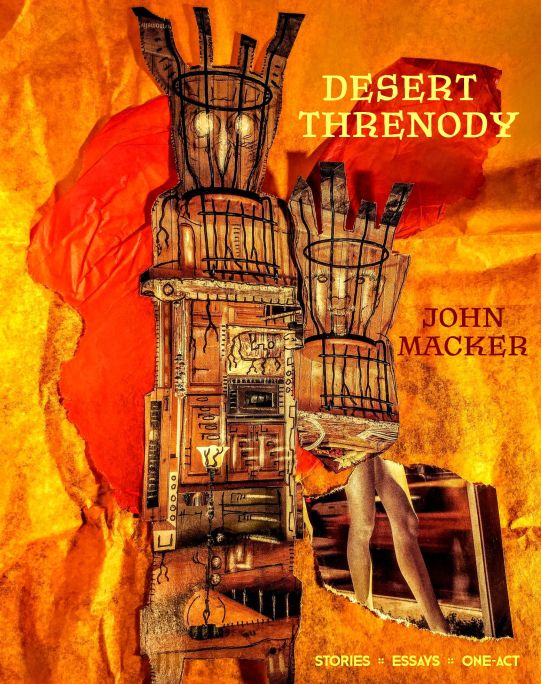
Padma Thornlyre Reviews Desert Threnody by John Macker

.

one

.

Padma Thornlyre Reviews

Desert Threnody

By John Macker

.

.

John Macker has long been among my favorite living American poets and several of his titles—Woman of the Disturbed Earth, Underground Sky, and Disassembled Badlands—have confirmed that high regard. Desert Threnody is unique in his oeuvre in that it collects, not his poetry, but his literary essays, a short play, and short stories. It is a worthy read, displaying as it does a measure and range of the writer we have not seen before. My assignment of 4 stars instead of 5 reflects no real criticism of this fine work, but simply a perceived unevenness in the opening section, his Essays.

Macker does not concern himself with establishment writers; like other wordslingers I admire, he’s drawn more to the fringes than the commonplace. Indeed, his literary essays, which examine poets he has considered mentors and friends, do not address the “academy” but in a grand tradition more often associated with the visual arts, illuminate instead the outlaws and outsiders: Ed Dorn, Michael Ondaatje, Stuart Z. Perkoff, Kell Robertson, Tony Moffeit and Tony Scibella. Every essay is interesting, and his essays on Dorn and Moffeit are especially intriguing. Considering his acknowledged debt to Perkoff and his decades-long friendship with Scibella, I had expected more passion, but those expectations may have been projections of mine. Still, it is the weakest section in the book, but only because the essays are not as stylistically cohesive as the remainder of the book.

Section 2 is devoted to Macker’s marvelous short play, Coyote Acid, concerning an elderly woman in mental decline and her troubled son, recently released from the hoosegow and desperate for a hidden treasure he believes is buried somewhere on his mother’s land. Meticulously wrought, with Macker’s keen sense of the American language, every word rings true, and the ending does not disappoint—especially as I had anticipated a conclusion that I am delighted to say did not materialize.

The eight short stories composed in Section 3 made me wonder why John has not been writing fiction all along, for these are in no way tentative or pretentious, and in no instance does he bite off more than he can chew. Of course, as a poet who’s been published for the last 40 years, with well-established chops, he’s cut his teeth on a hard-edged duende that merges mysticism and injustice and exposes the grotesqueness that underlies American civilization. And don’t get me wrong, his poems are not polemics, but meditations—one could never accuse Macker of being a propagandist; in this regard, he reminds me most of the novelist Cormac McCarthy. Race, class, privilege are realities, but the real spotlight remains fixed on the human soul. The stories collected here are well-marinated in the lyrical integrity one expects of John Macker. His prose is flecked by his poetic sensibilities, like virga rain that evaporates mere feet from the parched soil, meaning that his stories, while not saturated by the incantatory power so vibrant and so defining in his poems, are yet driven by the same thirst, walking as they do through the harsh landscape of elemental forces that gather not only in the clouds but in the hearts of men. Of the eight stories gathered here, I am especially fond of “Diablo Canyon” and I open at random to this passage:

“The mankiller wind lashes itself to the landform smells of debauchery, extinction, his desert sizzles like a fuse; this is where the clouds break off from the distant humpbacked hills and float unambiguously towards Mexico. Each shape is an obscure species of shadow animal that drifts in rigorous silence high over the border; each cloud is shape-shifted with meticulous abandon by the volcanic breeze. Loco knows each of their Spanish names.”

John was raised on jazz and the blues, which explains somewhat the musical force propelling his prose. His vocabulary is vast and flawless. Enough said.

.

Desert Threnody
Essays, Stories, One-Act Play
By John Macker
Carthage, MO.: Auxarczen Press, 2020
135 pages. ISBN #9798675661893

.

.

About the Author: Padma Thornlyre, having spent most of his 61 years in Colorado, now lives in NE New Mexico with three feline females, surrounded by 5000 books, the art of his friends and, beyond his windows, mesas to the east, extinct volcanoes to the south, and the Rocky Mountains to the west and north. A confirmed Fire Giggler, he designs books for Turkey Buzzard Press and publishes the underground magazine, Mad Blood. His own titles include Eating Totem, Mavka: a poem in 50 parts, and The Anxiety Quartet (all poetry), and the unpublished novel, Baubo’s Beach, a braiding of dreams and other manifestations of the unconscious (no wonder he can’t find an agent!). He believes the writer, Linda Hogan, is right about most things; he tries to read Homer every other year and has exhausted the complete works of Nikos Kazantzakis, H.D., Amos Tutuola and Rikki Ducornet, but is still working on his collection of Ursula K. LeGuin.
Aarik Danielsen: “Prefilled Communion Cup”

.

gri_850998_b004_f001_001

.

.

Prefilled Communion Cup

I break the seal
constraining the body of Christ,
finger the wafer like a gambler
handles his last chip.
This one’s gonna payout
or bust me for good.

“Do this in remembrance of me …”
I let it ride.

“In the same way Jesus took the cup …”
I finish the juice in a single swallow,
and feel the blood of Christ
pass greedy lips,
skate across stale breath,
settle in my purgatory gut.
Shot, meet chaser.

Liquid courage
to walk out into the world and bet it all,
believing in something
—anything—
for another day.

.

.
About the Author: Aarik Danielsen is the arts editor at the Columbia Daily Tribune in Columbia, Missouri and teaches at the University of Missouri School of Journalism. He writes a weekly column, The (Dis)content, for Fathom Magazine, and has been published at Image Journal, Plough, Entropy, EcoTheo Review, and more.

.

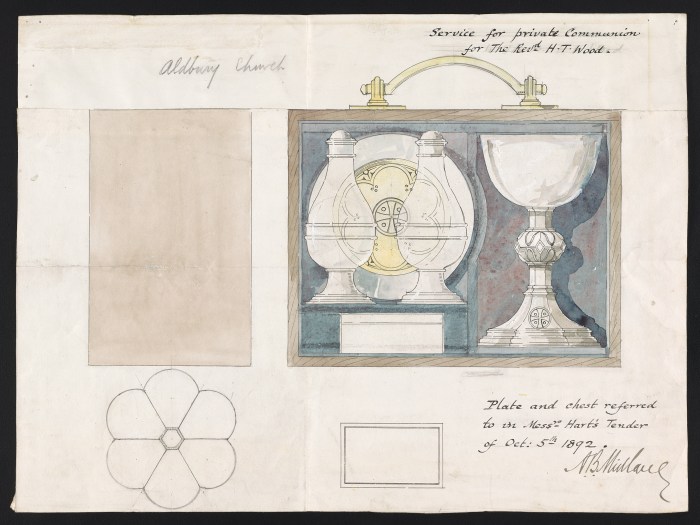
Image Credit: William Butterfield “Qu’Appelle Church: communion plates and chalices” [Canada], 1892. Digital images courtesy of the Getty’s Open Content Program.

Cody Sexton “Diary in Reverse: Boys Will Be Boys”

.

service-pnp-habshaer-ca-ca2700-ca2747-photos-327445pv

.

.

Diary in Reverse: Boys Will Be Boys

By Cody Sexton


“Are you going to cry?”

“No.”

“You know you are.”


The boy sat in silence not knowing what to say or do in response to this comment. He had fantasized about hitting the boy, several times, or any of the other children who made fun of him, but he knew he wouldn’t do it. Not really.

Another runner was batted home and took his place on the bench among his peers, being sure not to sit too close to the boy — the “pussy” — wearing the off-brand cleats.

He felt alone. He was alone. But it was the kind of alone where nothing anyone could have done would have changed anything, would have made a difference. He was just different, and how do you change that?

That boy was me. And this was the summer I, for whatever impulsive reason, decided it would be “fun” to play on our local little league team.

I’m still not sure why I decided to play. At the time the school I attended didn’t even have a little league team so I had to go to the next school over to sign up. I guess it just seemed like a good idea at the time, it’s what my “friends” were doing. I wanted to quit practically as soon as I started. 

“You start something you finish it.” My father told me.

I’m guessing he thought that it would help build or reinforce strong character traits? He couldn’t have been more wrong however. The experience taught me precisely nothing, except maybe how to hate someone properly.

Even the coaches seemed to not like me. I obviously wasn’t like any of the other boys, introverted, perhaps even a little shy, so they never understood know how to interact with me. Either because they didn’t know or simply didn’t care to know. With the other boys it was easy, with me it was hard. So they ignored me as much as they possibly could, silently wishing I’m sure, that I would quite the team.

Once during a particularly bad game for the opposing team, the pitcher had managed to walk the first two batters at plate, I was one of them, and as the next batter stepped up to the plate he caught a low one inside grounding it out to right field. That’s when I got the signal from the third base coach to run home so I took off, and crossing the home plate, managed to actually put another point on the board for our team.

However, back inside the dugout I was met with silence. My other teammates had ran the exact same play as I had, several times over throughout the season, making it across home plate either by hitting a home run themselves or were batted in as I was and whenever they did they were without fail met with applause from both the team and the teams coaches. Triumphantly greeted as hero’s with high fives and ass slaps. But there I was sitting at the end of the bench like an uninvited guest at a bridal shower. I actually began to question if I even made it home:

Did I even score?

Did I imagine the whole thing?

Had I never left the bench? 

As my doubt grew I sought to release it by asking our teams statistician if I had in fact made it across home plate, putting us ahead by another two points. She pulled herself away from the game long enough to say:

“Yeah”

And then promptly returned to cheering for her son. (Who, surprise, surprise, was also our teams pitcher). She never even turned her head to look at me.

So much for team building.

So much for camaraderie.

I got the hint and found my spot on the bench again. I had expected as much from my teammates, but at that age was still too naive enough to expect it from the adults.

I’ve likewise been told for years to “be the better person” towards people who’ve treated me like this, like shit, most of them have been relatives. I get told this because they of course know the other person won’t do it for me. (And why is it that we always demand introverted children to be more outgoing? Why can’t the extroverts at least meet us half way for a change?)

Still, I stuck it out and when the season was finally over I was more relieved than I’d ever been in my life. As I said I learned nothing and never meet anyone that later became a “lifelong friend” as my father had assured me would happen. One of those friends with which to share a few beers and talk about the “good ole’ days” when we played out on the same field as our fathers had before us and as our sons would after us.

You might remember the quote about how parents will usually let their children become anything they want, except themselves? I think about this a lot. And I think this is maybe why I was always so ashamed of who I was as a kid. I was never allowed to be myself. As you might imagine this can lead to ever varying amounts of resentment over time and as a result anger has been one of the only guiding sources of encouragement in my life. I could always count on anger. Anger was the only thing that made me strong enough to leave the only home I knew. I held onto it and nurtured it every night, reciting the litany of offenses over and over into the darkness of my room. I needed to leave. I needed my anger to help me leave. Anger has been the only thing of use my father has ever given to me. (And I’ll be damned if I ever let anyone take that away from me).

Nevertheless, I never again played any other team sport, having decided instead to dedicate my life to more bookish pursuits so that one day I might be able to live life as I am.

.

.

About the Author: Cody Sexton is the managing editor for A Thin Slice of Anxiety. His work has been featured at The Indie View, Writer Shed Stories, The Diverse Perspective, Detritus, Revolution John, Due Dissidence, and As It Ought To Be Magazine where he is a regular contributor. In addition he is also a 2020 Best of the Net Nominee for his essay: The Body of Shirley Ann Sexton.

.

More by Cody Sexton:

The Body of Shirley Ann Sexton

Heathen

.

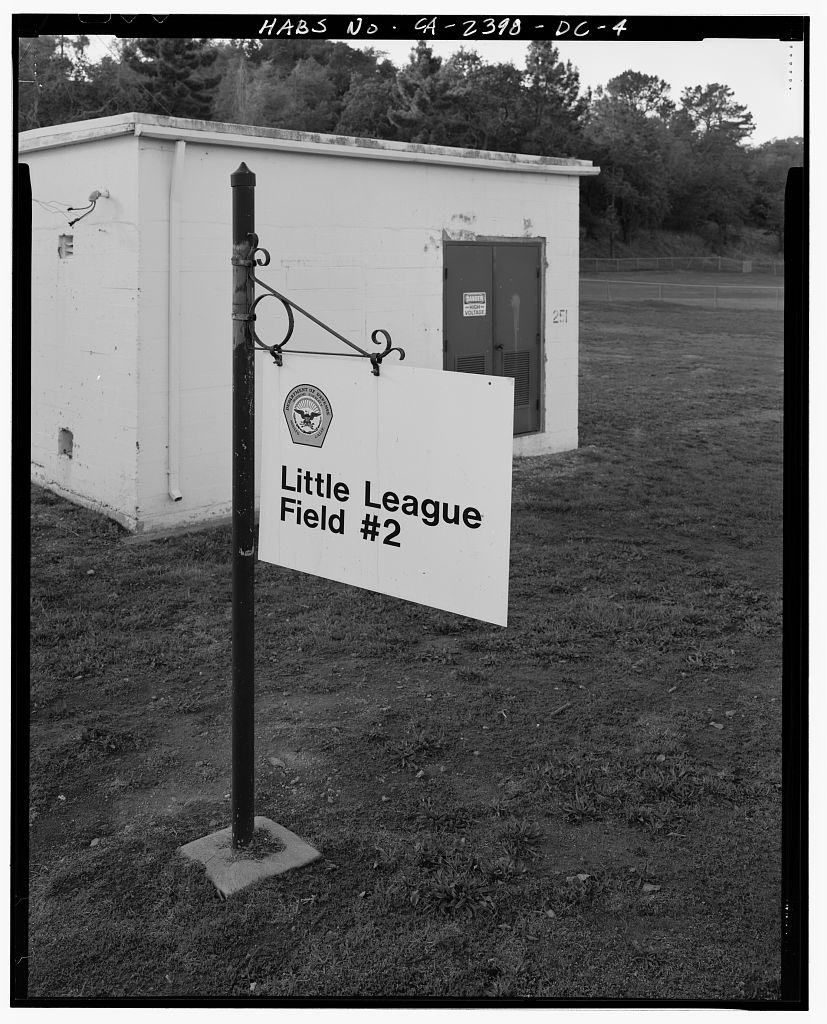
Image Credit: “SINGLE BRACKET SIGN: “LITTLE LEAGUE FIELD #2.” – Hamilton Field, Base Street Signs, East of Nave Drive, Novato, Marin County, CA” (Library of Congress)


Jason Ryberg: “Dreams of Empty Houses”

.

service-pnp-habshaer-ca-ca2200-ca2263-photos-182931pv

.

.

Dreams of Empty Houses

Time is always calling
or dropping by (without calling)
at all the wrong goddamn times,

always unexpectedly just coming around
and turning up at the absolutely most
inconvenient and inappropriate moments,

inviting itself in and over-staying its welcome,
bumming all your cigarettes and beers,
using up the minutes on your phone and finally

leaving you, this time, with nothing but
a useless ring of keys, a head full of
crack-pot schemes, a vague sense of having
forgotten or misplaced something, and,

for some strange reason, dreams of empty
houses and apartments where you just can’t
be sure you’ve ever been in, let alone
maybe even lived once.

.

.

About the Author: Jason Ryberg is the author of thirteen books of poetry, six screenplays, a few short stories, a box full of folders, notebooks and scraps of paper that could one day be (loosely) construed as a novel, and, a couple of angry letters to various magazine and newspaper editors. He is currently an artist-in-residence at both The Prospero Institute of Disquieted P/o/e/t/i/c/s and the Osage Arts Community, and is an editor and designer at Spartan Books. His latest collection of poems is The Ghosts of Our Words Will Be Heroes in Hell (co-authored with Damian Rucci, John Dorsey, and Victor Clevenger, OAC Books, 2020). He lives part-time in Salina, KS with a rooster named Little Red and a billygoat named Giuseppe and part-time somewhere in the Ozarks, near the Gasconade River, where there are also many strange and wonderful woodland critters.

.

More by Jason Ryberg:

Beef, It’s What’s for Dinner

Sometimes the Moon is Nothing More than the Moon

All of the Above

.

Image Credit: Robert Hicks “VIEW OF BUILDING 54. BEDROOM. FACING NORTH. – Winehaven, Rectangular Three-Bedroom-Plan Residence, Point Molate Naval Fuel Depot, Richmond, Contra Costa County, CA” (1996) The Library of Congress

Lisa Creech Bledsoe: “The Magician’s Handbook

.

.

.

The Magician’s Handbook


1.

Twelve years old, heads together. Impatiently unbraiding the twisted paper fuses of a Black Cat half brick, fingers smeared with charcoal. Then: mailbox, culvert, tin can, matchbox cars exploded. We sliced open smoke bombs and bottle rockets, argued Spy vs Spy, dueled with matches. We smelled of saltpeter and sulphur and pumped the air with both fists, exactly who we dreamt of being.


2.

The spies. Costumes, possibly dresses. Funny, mad, bold. Could have been anything. Amazing recuperative powers.


3.

In the basement below the silversmith’s shop was a magician’s working studio. I would have sneaked down, too. When the Great War was over, the sneak sawed a woman in half. Everything changed.


4.

The woman. Tied by wrists, ankles, and thin, pale neck, locked into a coffin, holy blessed mother.


5.

“As an effect it has a neatness about it,” said a magician-in-residence at Imperial College’s department of surgery.


6.

They begged to see the pretty lady dismembered live. “Watch her face closely; even she doesn’t mind! Perhaps it only tickles.” Suddenly everyone wanted a woman to be the one subjected to ropes, saws, knives, bullets. She wore less and less, smiled more and more.


7.

He once famously invited a well-known military leader and suffragette to be the woman sawn in two. She had studied law but wasn’t allowed to practice. She had been imprisoned for shouting for voting rights for women. Imprisoned over and over again. She declined to be roped and tied, locked up and sawn in two. She knew about war.


8.

The spies alternated winning and losing.


9.

Some of them had feet of dazzling turquoise, or red. Landing on decks of sailing ships, they were easily captured and eaten. The English name booby was based on the Spanish slang bobo, meaning stupid.


10.

Of all the heavens and the earth, there are no animals that live always and only in the air. We must land somewhere. At sea, few choices.


11.

Pills, screens, couples, marathons, atoms. Things get divided, sometimes with illusions maintained. It has been a season of loss. You & I: we are still here.


12.

Unable to escape, a magician sawed himself in half.

.

.

About the Author: Watched by crows and friend to salamanders, Lisa Creech Bledsoe is a hiker, beekeeper, and writer living in the mountains of Western North Carolina. She is a Pushcart Prize nominee and the author of two full-length books of poetry, Appalachian Ground (2019), and Wolf Laundry (2020). She has new poems out or forthcoming in The Blue Mountain Review, American Writers Review, Sky Island Journal, Pine Mountain Sand & Gravel, Red Fez, and River Heron Review, among others.

.

More by Lisa Creech Bledsoe:

Some Revelation is at Hand

.

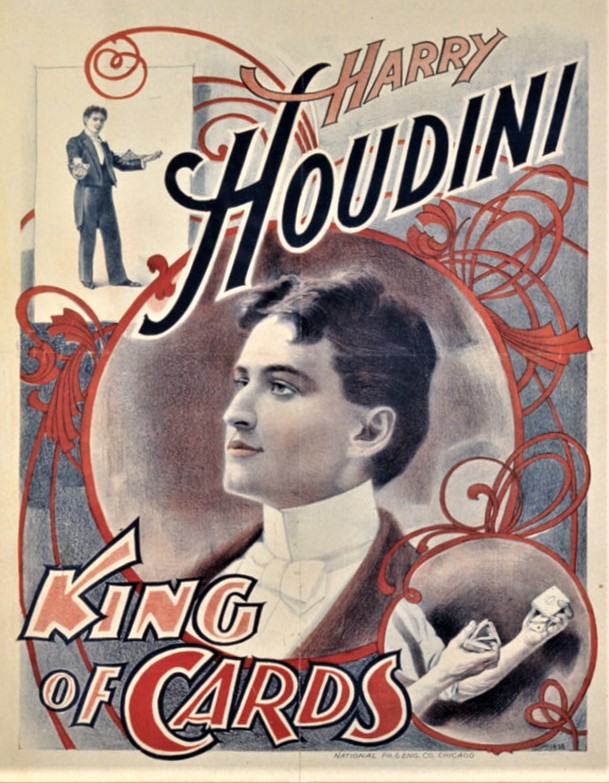
Image Credit: “Harry Houdini, king of cards” Chicago : National Pr. & Eng. Co., [1895] Image courtesy of The Library of Congress

David J. Frost: “The Dangers of Credulity”

.

.

.

THE DANGERS OF CREDULITY

By David J. Frost

.

.

On January 6th, we witnessed the extraordinary danger credulity poses to democracy. One wonders whether or not we possess the critical thinking skills required by our era.

I propose a test. Let’s see if our critical thinking skills are up to the challenge of interrogating the Golden Rule. Wait, you say, what? What could possibly be wrong with the Golden Rule? What critical thinking could we need to do there?

Because many people do bad things for reasons they falsely believed were good, the application of critical thinking is vital not just for ideas that strike us as bad. It is just as necessary for ideas that prima facie strike us as good. The same line of logical reasoning that shows under what circumstances critical thinking is required applies equally to ostensibly bad ideas as well as ostensibly good ideas.

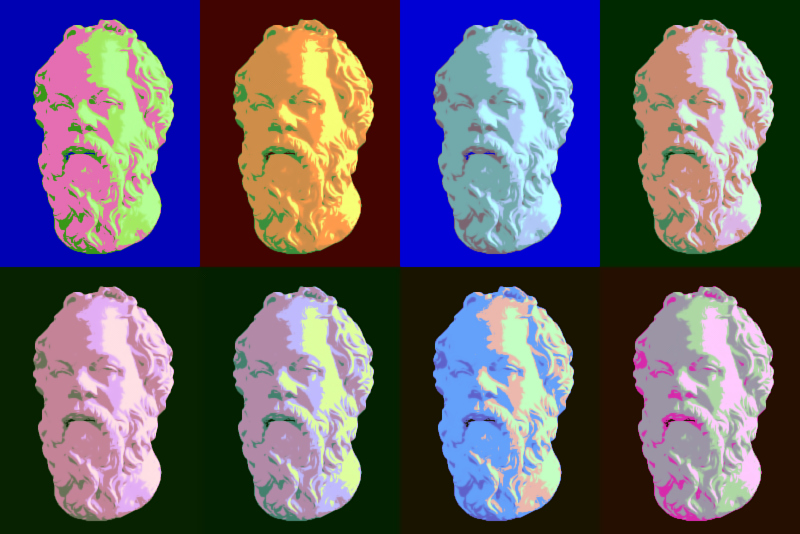
After all, are the propositions we were taught moral because we were taught them or were we taught them because they’re moral? For my money, it has got to be the latter. When a Greek citizen of ancient Athens named Euthyphro defined “piety” under Socrates’ persistent questioning as “Piety is what the gods love,” Socrates applied the line of reasoning I’m talking about, which has come down to us as “the Euthyphro dilemma.” Socrates replied that even on the assumption that the gods love pious actions, an as-yet-unanswered question remains: Are the pious actions pious because the gods love them or do the gods love them because they are pious? If something is moral just because God says so, then murder could have been moral if God had chosen to sprinkle it with piety dust. We must resist that way of thinking, which goes under the label “Voluntarism” for the role of will in determining what is good. Rationalism, on the other hand, says that any true and good moral proposition in the Bible—for instance—is in the Bible because it’s true and good, not the other way around; it’s not true and good merely because it’s in the Bible.

But, then, what makes something good? At least Voluntarism tells us that bit clearly; what makes it good is God’s say-so. When we deny Voluntarism, we assert that whatever the standard of truth and goodness turns out to be, it will be independent of the Bible, tradition, and of authority in general.

If the Bible said jump off a bridge, wouldn’t we pause and think on our own if jumping off the bridge was a good idea? And wouldn’t this thinking we do be best characterized as “non-Bible dependent thinking,” since the Bible just told us to jump off a bridge and we are now thinking about whether or not to do that? If we decided to not jump off the bridge—my recommendation, by the way—then we would necessarily have come to that choice by a decision-making process independent of the Bible itself. Continue reading “David J. Frost: “The Dangers of Credulity””

K. Andrew Turner: “We still call it the Strawberry Patch”

.

unnamed

.

.

We still call it the Strawberry Patch

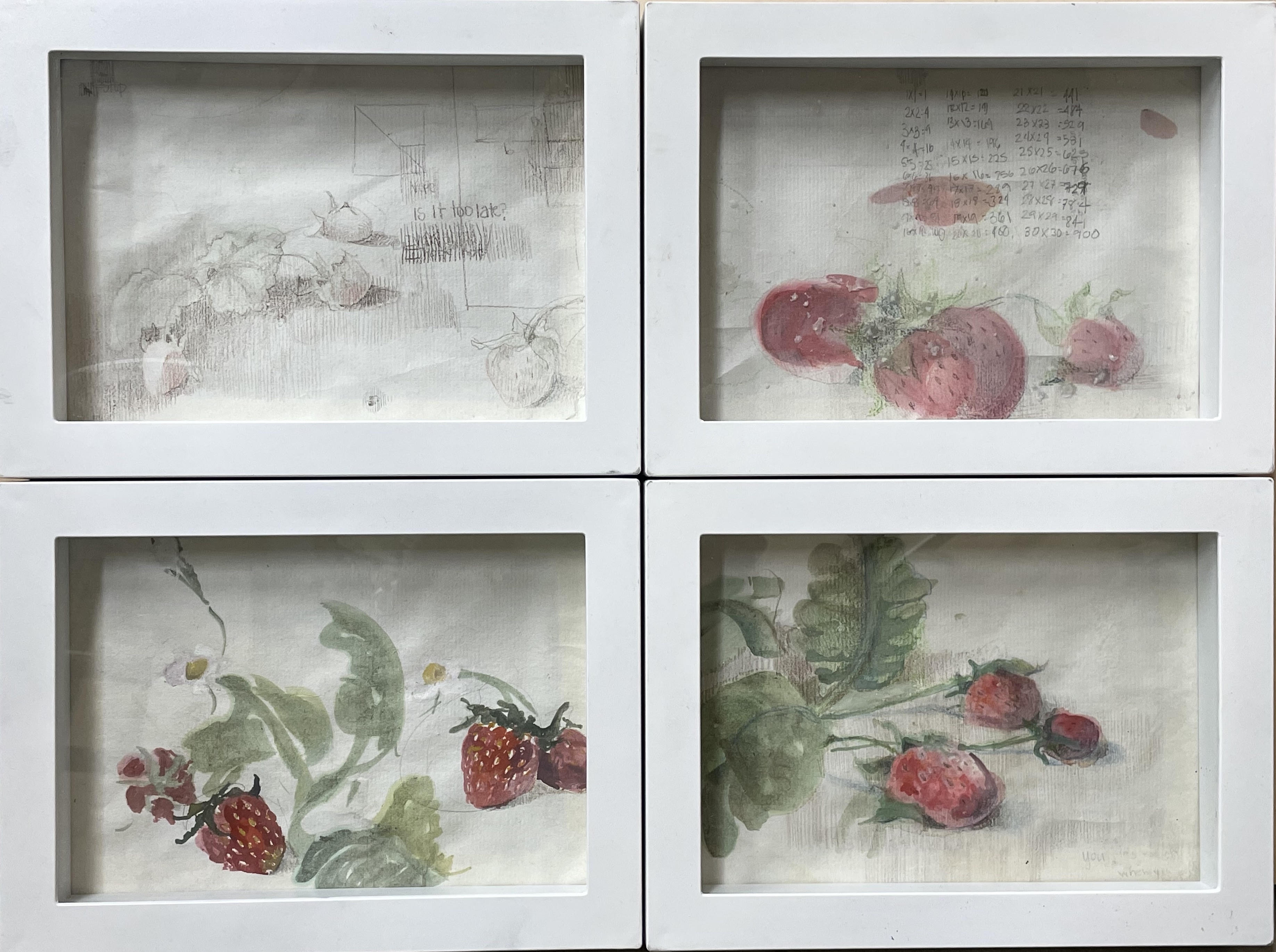
Sketches of fruit succulent
half-remembered
    like picking strawberries
    in the summer with Mom
the cool New England breeze
perfect and each berry
ripe, juicy, and sweet.

Math, calculations adjacent
to red, faded like the fields
south of the 210—now an
outdoor strip mall.
    Numbers like ledgers of
sales, the taxes more money
than strawberries can bring.

for the art Strawberry Fields by Melissa Macias

.

.

About the Author: K. Andrew Turner writes literary and speculative fiction, poetry, and nonfiction. He teaches and mentors creative writers near Los Angeles, where he lives, works, and writes in the San Gabriel Valley. He is the Publisher of East Jasmine Review and a freelance editor. You can find more at his website: http://www.kandrewturner.com

.

Image Credit: Melissa Macias “Strawberry Fields”

Poetry Soundbite: A Reading and Interview with Agnes Vojta

.

Agnes Vojta author photo 2

.

.

Welcome to AIOTB Magazine’s fifth Poetry Soundbite, an on-going series of poetry readings and interviews. For this edition, we welcome Agnes Vojta, a poet who grew up in Germany and now lives in Rolla, Missouri where she teaches physics at Missouri S&T and hikes the Ozarks. She is the author of Porous Land (Spartan Press, 2019) and The Eden of Perhaps (Spartan Press, 2020), and her poems have appeared in a variety of magazines.

.

.

More By Agnes Vojta:

Legend

Sisyphus Calls It Quits

Flotsam

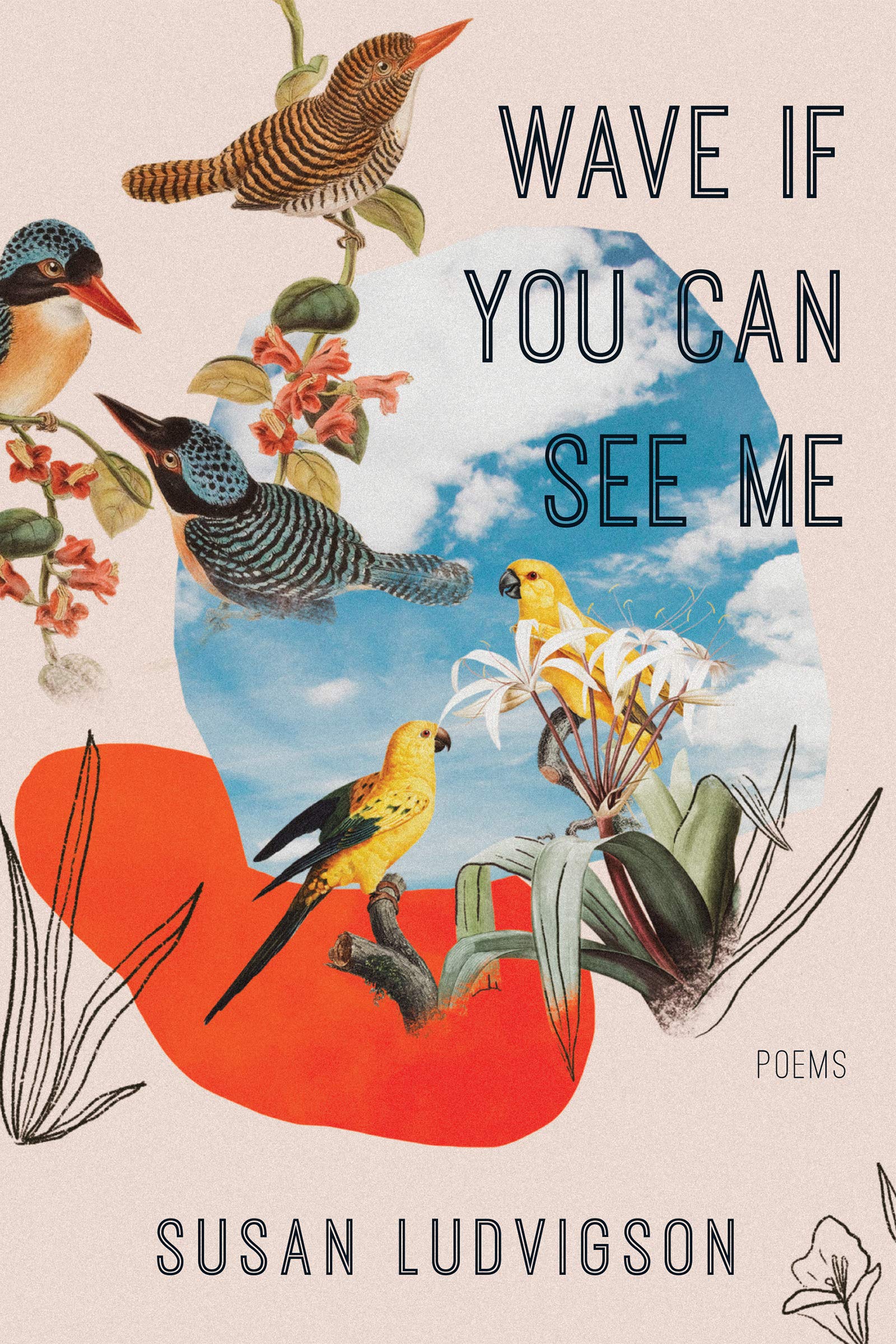
Mike James Reviews Wave If You Can See Me By Susan Ludvigson

.

91UqNQ1MB-L

.

Mike James Reviews

Wave If You Can See Me

By Susan Ludvigson

.

In “How It Can Happen,” one of the first poems in this fine new collection, the narrator imagines death as Shakespeare’s “other country.”  She writes, “I go with you, / but not all the way to your destination. / I wait in a dark house while you are taken / to a secret location. / We knew this could happen.”

The last line is instructive because it hints at a foreshadowing which haunts so many of these poems. In poem-after-poem the narrator is never sure of what’s across the river, but she’s certain it’s bad. A bridge will suddenly give way. Flood waters will rise too quickly. The villagers at the next exit won’t be friendly.

The dread is natural since so many of the poems are concerned with the death of the poet’s spouse, novelist Scott Ely. Many are not elegies as much as they are re-imaginings of an old life and dream-like restructurings of the current one. In the wonderfully titled “You Could Be Drinking Faulkner’s Bourbon,” she pictures what her husband might be doing in that other country. The poem moves from image to image, then concludes with a leap of transcendence: “we tell ourselves we’d like to know / but knowing / puts a period on speculation / and we are opposed / even in esoteric theory / to endings.”

From a technical standpoint, the addition of the four words “even in esoteric theory” deepens the poem. If good writing is about surprising the reader, those words surprise by their placement. “Esoteric theory” may not be the most sonically pleasing phrase, but it serves well to play off the narrator’s “speculations” and to strengthen the poem’s conclusion. The narrator is not just opposed to death and all the sorrows death brings. The narrator is opposed to all finality, even of the most far flung variety.

For Ludvigson, mourning is not relentless. Death is to be accepted. If Ludvigson never imagines death as gentlemen caller the way Emily Dickinson did, neither does she shy away from placing a spot at the table for him to sit. The narrator in “Too Late” tries to take in both her dream life and her new life as she travels without fear. “In the new country, / I try to ask directions, tell someone / how far we are from home. / The man behind the counter nods / as if he understands.”

Throughout the collection, over many roads and many nights, an understanding is always sought. Some poems end with an epiphany. Other poems end with an image like a cocked gun.

Though the subjects are often wrenching, there’s a steadiness throughout this collection which is appealing. The poems are tough and sensuous, subtle and clear. And the book is structured so that each poem adds resonance to the one before it.

This is Ludvigson’s first collection in 14 years. That’s a long time for a poet who has published many books, with most appearing in three to four year intervals. What has she done during her long silence? Well, she has continued to appear in magazines like Poetry, Atlantic Monthly, and Georgia Review. She has taught and judged book contests and taken up painting after a lifetime of watching. And she has said goodbye to friends and to her husband all while taking note of, “stars / burning through the debris of history / like love burning through the dark of loss.”

Wave If You Can See Me, by Susan Ludvigson
Red Hen Press, 2020
Poetry, $15.95

.

About the Author: Mike James makes his home outside Nashville, Tennessee. He has published in numerous magazines, large and small, throughout the country. His 18 poetry collections include: Leftover Distances (Luchador), Parades (Alien Buddha), Jumping Drawbridges in Technicolor (Blue Horse), and Crows in the Jukebox (Bottom Dog), He has received multiple Pushcart and Best of the Net nominations.

.

More Reviews by Mike James:

Mike James reviews Mingo Town & Memories by Larry Smith

Mike James reviews “Dead Letter Office: Selected Poems” By Marko Pogacar

Mike James reviews Beautiful Aliens: A Steve Abbott Reader and Have You Seen This Man? The Castro Poems of Karl Tierney

Howie Good: “Red Rosa”

.

Rosa_Luxemburg-3.4

.

Red Rosa

In memory of Rosa Luxemburg (1871-1919)

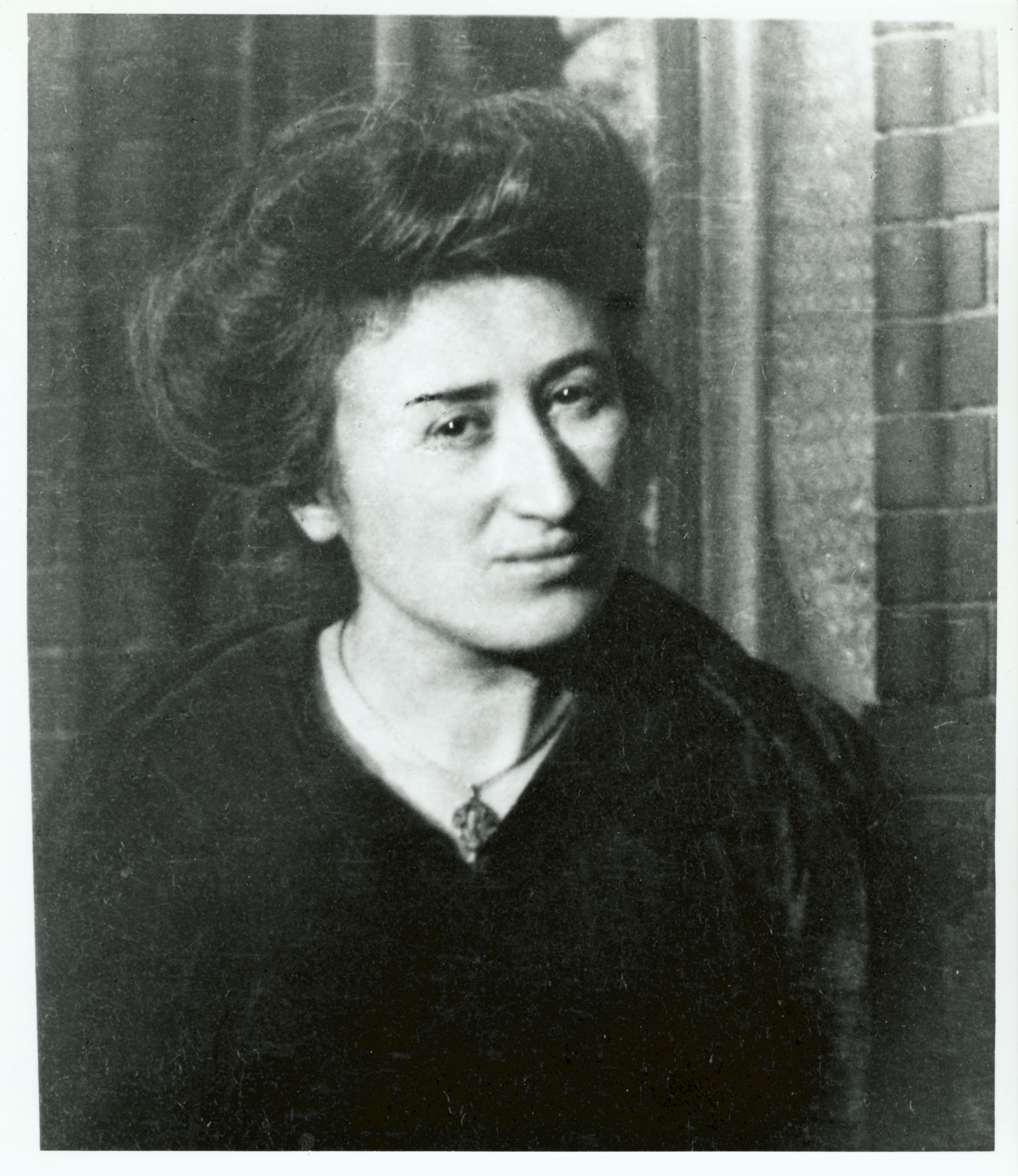
She lost a shoe as the political police were dragging her from the Hotel Eden to the waiting car. Lieutenant K. Vogel, the commander of the unit, shouted insults (“Whore!”) and spat at her. She was bleeding from a blow to the head with a rifle butt, but could still see with the eye that didn’t have blood in it. As they pushed her into the back seat, she saw the dark breath of crematoria, Berlin burning, rubble everywhere. Then she passed out. They would take her to the hospital only when they were sure she was already dead.

.

.

About the Author: Howie Good’s latest poetry collection, Gunmetal Sky, is due in February from Thirty West Publishing

.

More By Howie Good:

The View from Here

Reason to Believe

People Get Ready

.

Image Credit: “Portrait of Rosa Luxemburg in 1910″ Public Domain