Where Is the Million Hoodie March for Renisha McBride?

Credit: Timothy Krause www.flickr.com/photos/timothykrause
Credit: Timothy Krause
http://www.flickr.com/photos/timothykrause

Where Is the Million Hoodie March for Renisha McBride?

by Zerlina Maxwell

It’s been two weeks since the unnecessary and untimely killing of Renisha McBrideOn November 2, the unarmed 19-year-old who was in search for help after a car accident in the Detroit suburb of Dearborn Heightswas shot in the face by Theodore Wafer, whose porch she had walked onto. The parallels between Trayvon Martin’s tragic killing and McBride’s are resonating in a national psyche rife with story after story of Black men and women gunned down as if their Black bodies have little or no value. And while we don’t know what will happen to Wafer as a result of the killing (George Zimmerman, the man who killed Martin, was acquitted) we know this pattern of violence must end.

Reports that have surfaced since the tragic killing note McBride was intoxicated at the time of the incident, implying that somehow she was responsible for her own death. McBride crashed into a parked car and walked a short distance to knock on Wafer’s door for help. Instead of, say,inviting her in to call 9-1-1 to report the car accident, he shot her in the face. Originally, Wafer claimed the shotgun fired accidentally, and he wasn’t arrested immediately after the shooting based on this version of events—reminiscent of the Zimmerman case.

Now that more evidence has surfaced, Wafer is claiming that he shot McBride in self-defense, even though the door to his home was locked and reports show that she was shot through this locked screen door and from a far enough distance that she didn’t pose an immediate threat. On Friday, Wafer was finally charged with second-degree murder and manslaughter and instructed to turn himself into the authorities. Wafer was arraigned, with his bail set at $250,000.

Beyond these facts, it appears McBride was killed in a manner more appropriate for a rabid animal trespassing on someone’s property than a human being with a full cadre of rights. Her life, like so many others in the Black community, was ended prematurely, for inexplicable reasons that defy logic about self-defense, guns, racial discrimination, and the criminalization of Black bodies.

This narrative is all too familiar. Zimmerman made similar claims after the killing of Trayvon Martin in 2011. Zimmerman claimed Martin posed a threat to his community, in part because Martin was wearing a hoodie. Zimmerman claimed that Martin—who was “armed” with Skittles and an iced tea—was a threat because he didn’t respond to being followed by a strange man, with the “yes, sir” head down humility expected by Black people being interrogated by those who believe they are somewhere they are not permitted to be. Martin’s death and the failure to immediately arrest Zimmerman caused the nation to take notice and Million Hoodie marches were organized across the country, garnering national attention. (Even Beyonce and Jay Z attended one in New York City after the verdict.)

So where is the Million Hoodie march for Renisha McBride?

While there are certainly activists organizing vigils across the country for McBride, they are noticeably smaller at this early stage in the case than the ones organized for Martin. Like Martin, McBride was gunned down inexplicably, and then labeled a threat by the shooter to justify the killing.

There is no question that Black men are under attack by a racist criminal justice system and a society that forever suspects them to be criminals. But when a young Black woman suffers the same fate as Trayvon Martin, the outrage appears to be concentrated among Black women, instead of a universal outrage with mass protests. That has got to change. Black women consistently show up for Black men, and yet the opposite is not true when Black women are the victims of injustice.

That Black bodies cannot simply exist and move about unmolested, without the threat of violence for little to no reason, links us back to the Jim Crow South, when Black bodies were labeled threatening and lynched in front of white communities. As Professor Jelani Cobb wrote in the New Yorker, “African-Americans are both the primary victims of violent crime in this country and the primary victims of the fear of that crime.” Both Renisha McBride and Trayvon Martin died as an apparent reaction to this discriminatory—and common—mindset.

There must be justice for Renisha McBride, for her family, and for her community. Black America is in a constant spin cycle of pain. The reasons given to justify the deaths of Black children are steeped in America’s checkered racial history and white supremacy.

The callousness with which Martin and McBride were killed should compel a national dialogue on race, inequality, profiling, and gun safety, but as long as white Americans refuse to acknowledge that Black people are not inherently a threat, and are capable of innocence deserving justice, the pain will continue. For a nation that claims to have a foundation of freedom and liberty, these killings are evidence of a nation lost and in denial, unable to find its way until all Americans can walk up to a home seeking help after an accident, and not receive a fatal shot to the face.

This article originally appeared in RH Reality Check and is reprinted here with permission of the publisher.

A Review of Kathryn Levy’s Reports

Kathryn Levy Reports Poems

A Review of Kathryn Levy’s Reports

by Susan Hankla

In her first book of published poems, Losing the Moon, Kathryn Levy devised settings for each of her speakers to inhabit, so that we saw the edginess of a rooftop, right before the ballerina plunged to her end, we saw a chilly character jury-rigging blankets to her windows to block out something colder than ice, we saw birds “singing beyond themselves” out there, where the poet masterminded her “nocturnes.” These turns were filled with dramatic presence, sharing the stage with Hamlet as he delivers that speech on quiddity. But here, in Levy’s second collection, Reports, the backdrops all fall away, and we are rawly mise-en-scène in contemporary horrors—there is no furniture to hide behind.

These really are reports. And when Levy shares them at readings, she delivers her lines from memory and not from the page, because she is reporting. These poems have marinated in a growing world-crisis but somehow avoid sounding like journalism. A New Yorker, Levy can write with intimacy and authority about 9-11 and post 9-11, seamlessly suturing the personal to the political in these artfully made poems. With the personal, we learn of a crazy mother and inept father and, even worse, we learn that they are dead. Though this can be crippling in the hands of a less perceptive and skillful writer, instead of confessional tropes, Levy offers us Reports.

When she and I were once together at a writers’ colony, I heard her report that for her, writing is “like sticking your finger in a light socket all day.” That scary image has stuck, so that when I am working, I always ask myself if I have done the same. And true to that, Kathryn Levy’s Reports will galvanize her readers, because this author risks everything. She is our soul sister, and we can trust that her Reports need no fact-checks.

Kathryn Levy, Reports, New Rivers Press, 2013: $14.95.

***

Susan Hankla is a faculty member of the Virginia Museum of Fine Art’s Studio School, where she is adjunct professor in creative writing. Hankla’s published works appear in Poetry Northwest, Southern Poetry Review, Beloit Fiction Journal, New Virginia Review, Michigan Quarterly Review, The Sun, Laurel Review, and others and in chapbooks published by Burning Deck Press and Mill Mountain Press. A recipient of the Virginia Prize for Fiction from the Virginia Commission for the Arts, she has been a fellow at Virginia Center for the Creative Arts and at the Robert Frost Poetry Festival and Conference. An exhibiting visual artist, she collaborated in a show at Randolph-Macon College called “Artists and Writers” with her husband, Jack Glover.

SATURDAY POETRY SERIES PRESENTS: KRISTIN GEORGE BAGDANOV

Kristin-George-Bagdanov

WE DISSOLVE SEPARATELY
By Kristin George Bagdanov

In the beginning was the word, was the
breath that shaped it, the mouth
that cupped the breath and the body
that made it. I am merely flesh, remaking

myself every seven years. I breathe to escape
my origin, caressing the unseen
with syllable like rings of smoke
that open to dissolve. Trust me, you will

always be alone. We will always be separate in time,
the distance between our bodies in bed
the distance between your death and mine.

We come together at night to pretend
that loneliness is an animal we can cull. But
I watch you sleep, hair splayed across your pillow,
slack mouth breathing for your singular life.


(Today’s poem originally appeared in Thrush Poetry Journal and appears here today with permission from the poet.)


Kristin George Bagdanov is an M.F.A. candidate in poetry at Colorado State University, where she is a Lilly Graduate Fellow. Poems of hers have recently appeared in or are forthcoming from The Los Angeles Review, 32 Poems, CutBank, Redivider, and Rattle. Her chapbook We Are Mostly Water was published by Finishing Line Press in 2012 as part of the New Women’s Voices series.

Editor’s Note: If I had to sum up today’s poem in one word it would be “powerful.” With this piece Kristin George Bagdanov takes on the heavy and the deep; without fear, without apprehension. “Trust me,” she tells us bluntly, “you will / always be alone.” We can love, but “We will always be separate in time, / the distance between our bodies in bed / the distance between your death and mine.” From its biblical entry—as captivating as the origin story it evokes—to its repeated waves of brutal honesty, today’s entry is as well-wrought as the human body in all its striking, singular existence.

Want to read more by and about Kristin George Bagdanov?
Kristin George Bagdanov’s Official Website
32poems
Flyway Journal
Rattle
Buy We Are Mostly Water from Finishing Line Press

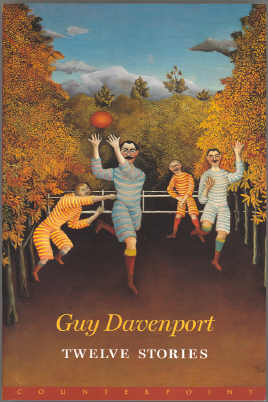
Guy Davenport: A Tribute

12-Stories

Guy Davenport: A Tribute

by

Vincent Czyz

Dropping Guy Davenport’s name—even among the literati—often results in little more than “Sounds familiar …” or “Didn’t he write …?” To me, that is almost as tragic as the loss of the author himself to cancer on January 4, 2005. A MacArthur Foundation Fellow, Davenport bequeathed to us more than half a dozen collections of fiction, several books of essays, two volumes of poetry, assorted translations of Greek poets and philosophers, as well as an edition of drawings and paintings. How to account for the obscurity of a writer whom critics almost universally acclaim a creative genius? America, it seems, long ago lost its taste for the new and unusual in literature and has little patience for work that doesn’t hold itself upright with a backbone of what-happens-next.

Combining structural elements of essay, poetry, and narrative, Davenport virtually reinvents fictive form as he makes forays into various fields—history, aesthetics, physics, botany, philosophy, and religion among them. Made up of fragments, progressing by allusion and inference, his fanciful tales are nonetheless discernible wholes, lyrical mosaics in which language itself is as important as what it conveys.

“All at first was the fremitus of things, the jigget of gnats, drum of the blood, fidget of leaves, shiver of light, boom of the wind.” Here is a handsome illustration of Davenport’s style. I had to look up fremitus, but of course it was implied by the context. Jigget, however, doesn’t show up in any dictionary I could find. But we think of jagged, we think of jiggle and, since we are dealing with gnats, probably settle for jerky flight or perhaps erratic buzz. There are other words of this ilk: bodger, vastation, conder. And words that seem to be neologisms but aren’t (guidon, quitch, awn). Davenport isn’t showing off; he’s having fun—frolicking in language and inviting us to join in.

“C. Musonius Rufus” (out of Da Vinci’s Bicycle, now a New Directions Classic), from which the above line was taken, is one of the most beautifully written short stories I’ve ever read. In one thread of the narrative, Davenport imagines the Roman Emperor Balbinus speaking from the grave: “Then I went down to where iron grows. Down past root seines in loam like condered oakgall and down past yellow marl hard with quartz the splintered ores begin. Green, edged, with the black metal horses hate and wine sours next to, and which thunder has entered. Chill, sacred iron, bitter with lightning.” The dead ruler offers one gorgeous meditation after another while the other thread of the narrative follows the plight of the stoic philosopher Caius Musonius Rufus, who has been sent to a prison camp in Greece.

Da Vinci’s Bicycle is an excellent introduction to Davenport’s impressive oeuvre. Taking historical figures—James Joyce, Richard Nixon, Gertrude Stein, and Robert Walser—as points of departure, often weaving between eras centuries apart, Davenport dazzles page after page. In “Au Tombeau de Charles Fourier” he writes “All of nature is series and pivot, like Pythagoras’ numbers, like the transmutations of light. Give me a sparrow, he said, a leaf, a fish, a wasp, an ox, and I will show you the harmony of its place in its chord, the phrase, the movement, the all.”

Harmony is perhaps the key to entering Davenport’s writing: nothing in existence is separate, each is related, and Davenport not only perceives the connections but also communicates them; they are ours if only we are willing to sit for the performance.

The four longest stories in The Jules Verne Steam Balloon create a sort of novella. Hugo Tvemunding and his girlfriend, Mariana, lead a life both idyllic and ideal: there are simple repasts laid out like still-lifes, meticulous descriptions of the meadows and forests through which they wander, innovative and prolonged sexual encounters. Davenport presents, in sumptuous detail, the Greek concept of arête—excellence of mind, body, and spirit. Mariana, addressing Hugo, eloquently sums up this life in “absolute kilter”: “…your eyes fly open at six, you hit the floor like an Olympic champion, hard-on and all … jog three kilometers, swim ten lengths of the gym pool, nip back here for wheatgerm carrot smush while reading Greek, communing with your charming freckle-nosed kammerat Jesus, shower with unreasonable thoroughness while singing hymns, … teach your classes, Latin, gym, and Greek, meet me, bring me back here for wiggling sixtynine on the bed, tongue like an eel … race off and instruct your Boy Scouts in virtue, knots, and nutritive weeds, sprint back here … teach me English while fixing supper, show me slides of Monet and Montaigne …” and, after another roll or two in the hay, it’s time to start all over again.

The collection takes its name from three daimons (“spirits who possess or guide or tempt”) or perhaps three quantum particles (one of them is named Quark) incarnated as young boys who are spotted floating over modern Denmark in an antique balloon. Bearing a message from the Consiliarii, Davenport’s concept of elohim or some other divine council, they are clever, polyglot, and charming.

 A Table of Green Fields, a collection of 10 short stories—including a veritable prose poem inspired by a single line from Dorothy Wordsworth’s journal—continues in the vein of The Jules Verne Steam Balloon. Nature, sexuality unimpeded by social constraints, and Davenport’s own tireless wonder, his (implied) insistence that everything we need to be happy is pretty much within arm’s reach, run like currents through this book as well. Fremitus? Indeed, frisson, palpable thrill, sail shook so hard by the wind it sings in a kind of vibrato. Time and again in his writing, Davenport intimates that art possesses a beauty no less astounding than nature’s—he recommends both in large quantities, and woe to him who sacrifices up one in the name of the other.

Let Davenport’s writing also be recommended unreservedly. The truth is, if an author like Guy Davenport is allowed to sink into oblivion, then not only is the American soul unlikely to be spared “the inert violence of custom” (Emerson’s phrase), but it’s also unlikely that it’s worth saving.

An Open Letter to Charlotte Raven about My Footwear and My Feminism

I contain multitudes.

An Open Letter to Charlotte Raven about My Footwear and My Feminism

By Kirsten Clodfelter

Dear Charlotte,

I appreciate that you have words of wisdom to share with the next generation of “hip” young feminists as we get dressed each morning, but the truth is, I don’t want you in my closet any more than I want Republican legislators in my vagina.

Admittedly, I am not exactly the poster girl for “girly.” Aside from the two days a week that I’m on campus to teach, I write from home, where I hang out with an awesome but not quite fashion-adept toddler. (Yes, you read that right. I have a Master’s degree and did not seek full-time employment in order to stay at home with my kid—BY CHOICE!) Most of the time, I live in yoga pants, rarely brush my hair, and sometimes go three entire days without showering—like, in a row. But I do own a pair or four of high heels, and occasionally I even wear them.

As someone who didn’t win the genetic lottery as far as grace and poise are concerned, it is true, as you argue, that I sometimes look silly when I put on said high heels. But no part of that silliness is due to the fact that while wearing them I also identify as a feminist.

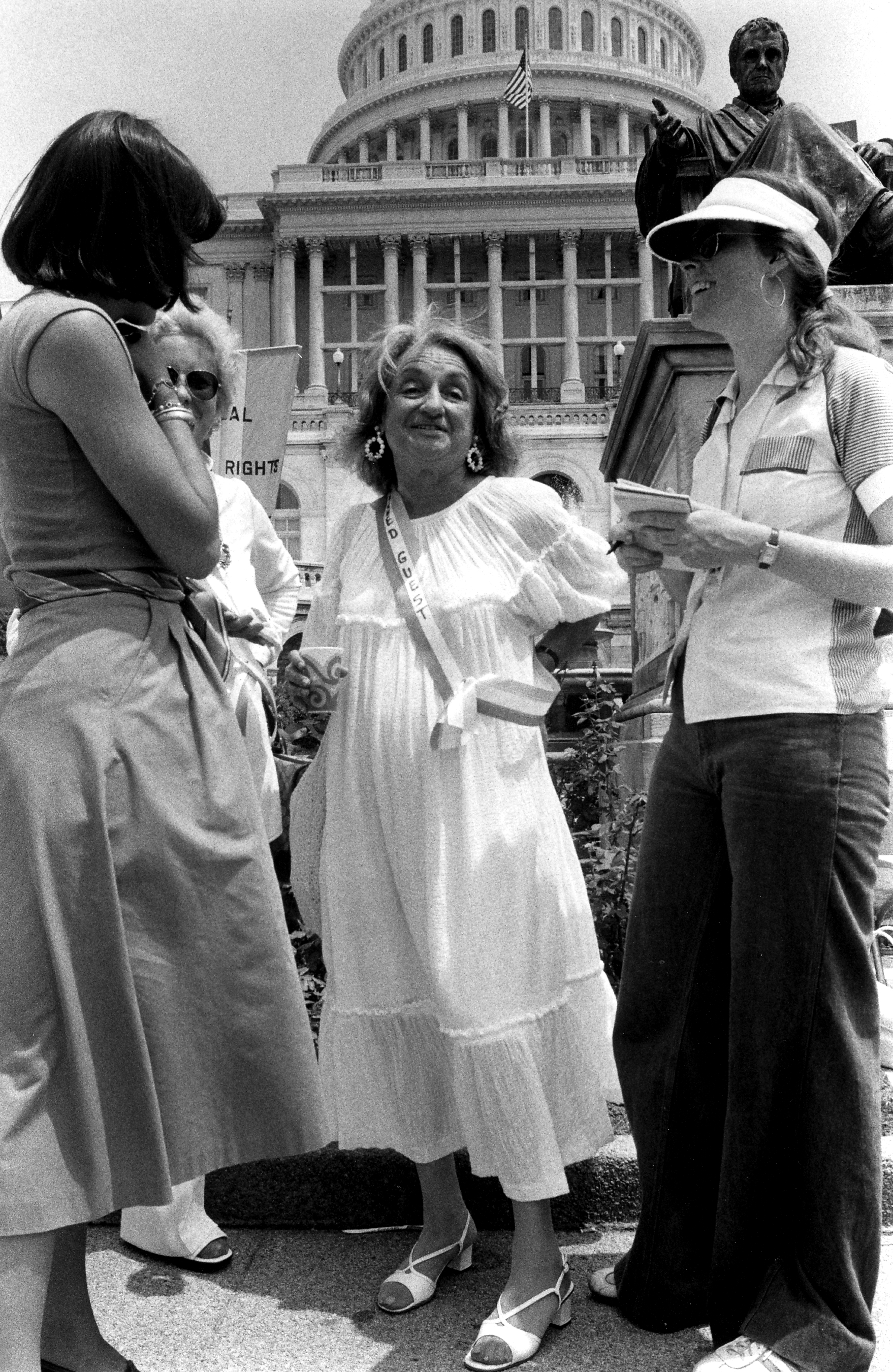
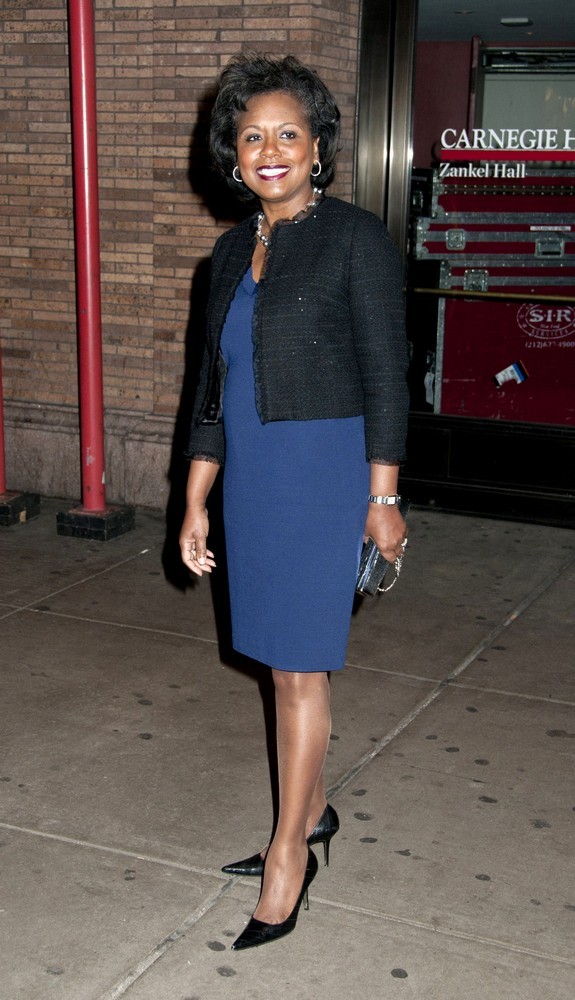
I imagine many other women might agree, like, I don’t know, Hillary Clinton. Or Betty Friedan. Or Eve Ensler. Or Anita Hill. If Wendy Davis had rocked pink peep-toed Christian Louboutinis instead of her iconic pink sneaks during that heroic filibuster, she would be no less of a champion for women’s reproductive freedom. And though it might only be the very highest stripper heels causing the self-harm you mention, it seems that the bigger concern is the idea that women wear heels because female sexiness is interpreted—by men and women alike—predominately through an oppressive male gaze.

And I get that. I do. But I also wonder if in many ways that male gaze isn’t already broken by the act of acknowledging it, by a feminist—or anyone—stopping to practice genuine self-awareness when considering what’s attractive or interesting or fulfilling outside of the boundaries established by those patriarchal norms.

In this space, we might find that kick ass, grrl power Doc Martens are sexy or awesome or strong, but so too are pleather high heels. Or crocs. Or whatever. (For the record, Dr. Marten was a nazi before he staked his claim in the footwear market, so I’m just going to stick to my Rocketdogs.)

If you can’t believe this inclusive view of feminism is possible, then I’m curious to know what other behaviors I engage in that would draw criticism or ridicule. The Belle Jar has already come up with a pretty decent list, but I’m still looking for a handbook or something to clarify the following: Is it anti-feminist to tweeze my eyebrows? Wear my hair in a high, tight ponytail? Don pantyhose and pointy-toed flats? Gorge on holiday cookies? Birth a child? Go to the dentist? These intentional actions could be considered forms of self-harm too—they’re at times uncomfortable, restrictive, or bad for our bodies, and some are done solely for aesthetic value. But do you know what seems much sillier than a feminist wearing heels? One who says that other women are less feminist because of how they dress.

I agree, whole-heartedly, that in the context of feminist discourse, asking if a feminist can wear high heels is a tired, trivial question. But rather than dismiss it in the moment with a witty one-liner or, better yet, just ignore it completely in favor of talking about something more meaningful, you dedicated an entire column to parsing what a feminist looks like—to you. Fortunately, many of us already know that feminists can look like a lot of different things.

But what about the people who don’t? By anointing yourself Dress Code Monitor of the entire movement, you give permission to non-feminists to continue to objectify women and to make value judgments based on a person’s attire. These ideas perpetuate the terrible myth that a woman can’t be intelligent or taken seriously (by either gender) if men find her attractive, that the way a woman dresses or behaves makes her responsible for her sexual assault, that we need not look farther than a woman’s ankles to determine her worth. This is irresponsible and dangerous, and it definitely isn’t feminism.

As far as respecting the human body is concerned, there is a pretty significant leap between, say, wearing heels and female genital mutilation (SFW, no photos)—a type of self-harm on which our attention and concern might be better spent. And as someone who was previously married to a verbally and emotionally abusive spouse, let me be very clear in assuring you that there is absolutely no—as in fucking zero—similarity between putting on high heels and regularly being devalued, manipulated, or intimidated by someone who claims to love you.

The most troubling part of your piece, though, comes in the moment that you narrow your definition so that “[f]eminism emphatically isn’t about making women feel comfortable about bad or harmful decisions or choices.” But what you’ve missed is that feminism is emphatically about no longer universally dictating what constitutes a “bad” or “harmful” decision for another woman.

In her book, Gender Communication Theories and Analyses, Charlotte Krolokke elaborates:

Third-wave feminism manifests itself in “grrl” rhetoric, which seeks to overcome the theoretical question of equity or difference and the political question of evolution or revolution, while it challenges the notion of “universal womanhood” and embraces ambiguity, diversity, and multiplicity in its transversal theory and politics.

This is the reason that it isn’t acceptable to revoke Alisa Valdes’ feminist card because it took her awhile to recognize her abusive relationship, why it isn’t acceptable to slut-shame Miley Cyrus or Danica Patrick because of what they are or aren’t wearing, why it isn’t acceptable to make a blanket statement positing that wearing heels is a stupid decision, to offer a battle rally that “fear of seeming judgmental” shouldn’t stand in the way of others being, well, super judgmental about a person’s wardrobe.

Here’s the cool and actually not at all annoying thing about feminism that your piece left out: Women get to practice it wearing whatever the fuck we want. I can identify as a feminist while wearing a flannel button-down or stilettos. I can call myself a feminist with glittered curls or a purple mohawk, while listening to Tori Amos or Taylor Swift or Ke$ha. I can be a feminist with a baby on my hip or while getting cozy in the kitchen baking cupcakes for my feminist boyfriend, and I can do it without narrow, divisive views like yours boxing me in with the static vision of what a “real” feminist looks like.

Love ya like a sister, maybe,

Kirsten

***

Kirsten Clodfelter holds an MFA from George Mason University. Her writing has been previously published in The Iowa ReviewBrevity, and Narrative Magazine, among others. A Glimmer Train Honorable Mention and winner of the Dan Rudy Prize, her chapbook of war-impact stories, Casualties, was published this October by RopeWalk Press. Clodfelter teaches in Southern Indiana, where she lives with her partner and their awesome, hilarious daughter. KirstenClodfelter.com@MommaofMimo

A Review of Matt Fraction’s Sex Criminals

Sex Criminals 1

A Review of Matt Fraction’s Sex Criminals

By Tini Howard

Comics are a brave medium through which to tell an adult story. While some of us know of Alan Moore’s Watchmen as comic literature and saw Chris Nolan turn Batman into Oscar bait, for plenty of people comic books still bring to mind stunted writers and readers who can’t handle real books.

Sex Criminals, written by Marvel veteran Matt Fraction and with art by Chip Zdarsky, is a real book. One of the realest and bravest books out this year. Sex Criminals addresses the shame, thrill, and occasional loneliness that come with sexual awakening via a bitingly clever metaphor that lends itself to fast-paced storytelling.

Lest readers think the title’s purely referential, allow me to educate. This is a comic where one character refers to his power as “Cumworld,” and there’s a panel illustrating “brimping,” undoubtedly the silliest sex act one will ever see. Make no mistake, Sex Criminals is about sex. Strange, silly, lonely, polarizing sex. Protagonists Jon and Suzie have both gone their whole lives feeling different. While it’s bad enough feeling like a weird teenager brimming with hormones, when Suzie and Jon independently discover masturbation as adolescents, they learn of an additional magic: the ability to stop time when they orgasm. Yes. Still reading? Hang on.

Their paths don’t cross until later in life, when they meet at a party and hook up. In that space after sex, where they’ve both always felt alone and strange, they find each other – joined in their time-stop continuum. (Remember “Cumworld?” Suzie isn’t a fan of the name either.) So, like any young, hot-blooded couple would, they use their newfound technique to commit crimes.

Sex Criminals isn’t porn, but it is full of sex. Apple has actually refused to sell it via the iOS ComiXology app due to its graphic content. (A somewhat hilarious choice, as there’s nothing in this book that isn’t in the lyrics of plenty of popular songs.) Criminals isn’t graphic novel literature, and it isn’t trying to be—but it’s far more than just a comic book. It’s both irreverent and deep; it stares in the face all of our weird societal feelings about sex and does something interesting with its tongue—maybe a raspberry or maybe a big French kiss. It’s unafraid and hilarious and real.

In issue 1, Suzie tearfully explains to readers that she uses the time stopped by her orgasm to dress and go downstairs, to say to her alcoholic mother all of the things she can’t say when time is moving normally, while Jon describes the loneliness of not understanding sexual desire for most of his young life. And then they bang and rob a bank. These people are real. Artist Chip Zdarsky never loses sight of that for a second, portraying them as beautiful and flawed, real and cartoony all at once. Every panel is stuffed full of visual jokes and commentary that encourages a laugh right when the awkward part might start. Just like the best sex.

Criminals is the story we all need—it isn’t afraid to address how we view sex workers in the same panel that it picks on the ludicrous names they sometimes choose. Is there a more perfect way to comment on we feel about sex? Perhaps not—as of early last week, Time Magazine named Matt Fraction’s Sex Criminals its number one graphic novel of the year.

Sex Criminals is a comic book for literary fiction fans, something that’s not always easy to find, and hopefully not the last of its kind.

Matt Fraction, Sex Criminals, Image Comics, 2013: $3.50 (print)/free-$2.99 (digital)

***

Tini Howard lives and writes in Wilmington, NC because she got the idea life would be better there. So far, she’s not wrong. For more of her writing on comics, check out her blog or follow her @tinihoward.

SATURDAY POETRY SERIES PRESENTS: JOAN PRUSKY GLASS

Front Camera

THE BATHING SCENE FROM MARGUERITE DURAS’S THE LOVER
By Joan Prusky Glass

“Very early in my life it was too late.”
                          – M. Duras, The Lover

I read The Lover when I was fifteen.
The girl’s red doll lips became my own.
The power she had over
the Chinese man mine too.
His weakness became fuel
for a journey I was preparing for.
I needed him and despised him
before I knew why.

There is a scene in which
the man, on his knees,
bathes the girl’s slender body,
barely pubescent.
She looks down at him coolly,
braids hanging over her shoulders.
Immodest on purpose.

The lover draws a washcloth
across her hips tenderly,
with grief in his eyes.
Perhaps he is trying to wash
away the power he gave her.

She notices him loving her
the way you might notice
a penny tossed into the well
when your pockets
are filled to the brim.

(Today’s poem originally appeared in TRIVIA: Voices of Feminism and appears here today with permission from the poet.)

Joan Prusky Glass lives with her husband and three children in Derby, Connecticut. She is an educator and child advocate by profession. Her poetry has been published or is upcoming in Decades Review, TRIVIA: Voices of Feminism, Bone Parade, Milk Sugar, Harpweaver, Pyrokinection, Literary Mama, University of Albany’s Offcourse, The Rampallian, Visceral Uterus, Up the River, Haggard & Halloo, vis a tergo and Smith College Alumnae Quarterly among others.

Editor’s Note: What draws us into today’s piece, and what makes us resist against it? Where does the reader’s experience end and the poet’s begin? Where does the poet dissolve into the girl; where does the girl begin and her author end? Is today’s feature about power? Scandal? Sex? Love?

Today Joan Prusky Glass blurs the lines between perception and art, between experience and literature, between revulsion and beauty. The poet paints a watercolor of words, one vivid pigment bleeding into the next, so that we are both moved and unsteady. We are left not knowing where we stand; unsure of the medium, of the players, of ourselves.

Want to read more by and about Joan Prusky Glass?
“Inanimate Objects,” Bone Parade
Three poems, Offcourse
“Boredom Never Killed Anyone,” Visceral Uterus
“On the Death of a Neighbor,” Haggard and Halloo
“The Poet as a Young Girl,” Decades Review

VBAK Interview

vbak

[Before you read this interview, I strongly suggest you go listen to Vishal Bakshi’s music (put out under the name VBAK). I advise starting with “Breathe.” Here is the link where you can find him on SoundCloud.]

Okla Elliott: Could you tell us a bit about your upbringing and background? Where are you from, what kind of family were you raised in, and so forth?

Vishal Bakshi: I was born in Maryland on the outskirts of Washington D.C. but was raised in the small town of Fairfield, Iowa from the age of four. I grew up in a traditional Gujarati-Hindu family with parents who were concerned about the preservation of our culture while living in a rural Midwestern town. I am the youngest of three children and have thus witnessed a variety of different life experiences just by observing my older brother and sister. We owned a family restaurant so from a very young age my natural habitat was the kitchen. As a result, the emphasis on a disciplined work ethic was part of our daily lifestyle. Both my mother and my father have masters degrees so the expectations of a professional education were very strongly enforced throughout my childhood.

OE: You mentioned professional education. You’re about to complete your degree in structural engineering at the University of Illinois (generally considered one of the two best schools for the field on the planet). How did you get interested in the subject? What excites you about it? And, to begin tying this into your music, what inspiration do draw from it?

VBAK: I was always interested in science, mathematics and physics in high school. Originally I aspired to be a high school physics teacher but was shepherded into the field of engineering as a more financially secure alternative. My journey with engineering has gone through an odd path. I started out as an undeclared engineering student after which I chose Mechanical Engineering as my focus. A couple semesters into it I started to lose my initial passion and was considering a switch to Architecture, being inspired by both my father and brother, who were architects. Instead I remained on the technical side of building design and thus added on a second major of Civil Engineering and that led me to pursue the current Masters degree. My excitement for Structural Engineering comes from the fact that it is the act of creating something that has both functionality and aesthetic. I saw it as form of art derived from the laws of physics.

I have written and recorded some form of poetry and rap since I was in 7th grade. Some of the pieces were used as literary academic assignments and others for recreation. In my junior year at Iowa State I took an honors elective focusing on Slam Poetry where my passion for writing was rekindled. The first poem I wrote with a serious intent was titled “New York City Structural Engineer”, written after I had job shadowed at three of my dream firms in NYC. During the winter break before starting my graduate degree I wrote a few raps and recorded them using a basic computer microphone. From that point on I saw potential in my art and continued writing and recording, having accumulated about fifty songs over this past year.

OE: Why did you gravitate toward hip-hop as your choice of musical production? Do other genres interest you? Some of your recent work involves traditional Indian songs. Do you see yourself doing more blending of musical traditions in the future?

VBAK: My interest in hip-hop was birthed from an identity crisis. My family followed strict Hindu-Indian traditions and paradigms but my school day was filled with mainstream American culture. As a result, music become a third party escape that did not judge my lifestyle or habits. I grew up listening to a heavy dose of hip-hop and conscious rap as well as a steady interest in heavy metal, alternative rock and devotional Indian music. I fell in love with rap due to the ability of lyricism to deliver emotions and experiences with an attractive rhythm and attitude. My lyrics and my music are the artistic form of my life, and since my experiences have many cultural influences I seek to blend many musical traditions in my work. The further I develop the understanding of my own morals and principles, the more seamless that blend of traditions will become.

OE: You mentioned morals and principles. Your songs often have a moral element or are lyric depictions of your own convictions. Would you share with us some of your principles — be they work principles or ways to live your life day to day or whatever. And one thread in your recent work is religion and atheism, or as you phrase it “becoming your own god” instead of following one promoted by any of the established religions. How does this intersect with your thoughts on morality?

VBAK: In terms of choosing a direction in life, in the form of a profession, the most uncomfortable question I asked myself during my undergraduate career was “what is my purpose?” My parents rose from poverty in their childhood to achieve a strong middle class lifestyle so I always felt a sort of debt to them for giving me a healthier and more stable upbringing than they had. It is of course impossible to repay them so I intended to use my professional career to pay it forward and help those in need. The application of this purpose to make life decisions was not as clear. The fundamental core of any education system that is built to make someone successful in a capitalist industry is to train them to instrumentalize their skills to fulfill the clients needs and make a profit for themselves and their employer. The principle of humanitarianism is not a central component of any commonly taught engineering academic curriculum. So while my interests in math and physics were being fulfilled by engineering, the purpose that I lived for was being neglected.

At the same time I was reevaluating my own morals in life, more prevalently in the last couple of years. I am raised as a Hindu but my fundamental disagreement with the belief in God is the lack of ownership for one’s actions. If a positive event occured in my life, I was trained to thank God for creating that occurrence. If a negative event occurred, I was trained to defer its cause to the the theory of Karma. I began to see that the result of this type of thinking was that good people were not being credited for their good deeds, and evil individuals were not being held responsible for the harm they caused. So I was using two arbitrary ideas, God and past life Karma, which were outside of the realm of action that I could control, to justify my life experiences.

There are practical explanations to most events that happen in our life which can be traced back to specific decisions we took in the past. In order for me to progress I have to accept responsibility for my mistakes, analyze them, and learn from them. In order to improve my mental health I have to appreciate and celebrate the positive things that I do which bring me success. Instead of appreciating an imagined God for its prowess and admirable characteristics I want to reflect on my own flaws and pursue the necessary improvements needed for me to become a better human being. Instead of worshipping an external God I want to focus on becoming a highly efficient and productive human being who uses a diverse set of skills to improve the wellbeing of other humans.

OE: Tell me about the inspiration of the new mixtape. Tell me about the goals of your work.

VBAK: The inspiration for the mixtape came from the fact that my morals have changed significantly over the last year and I wanted a set of songs to act as a sort of biography or introduction to who I am and what my fundamental principles are at this point in time. I am in the middle of an ongoing effort to lose my dependency on other people’s validation and realize that there are no ultimatums in life other than death.

The goal of my work is to use my lyrical and musical abilities to inspire my generation to view themselves as great forces of change and apply themselves in life to reach their maximum potential. My goal is to spread truths about the state of society through analyzing social and political phenomena in my songs. I want my listeners to think more and believe less. The more attractive I can make that message sound, the better I can reach young minds like mine. In order to solve societal problems we must first reveal them. Societal issues will be revealed only through analysis and not with faith or belief, since they don’t use reasoning based on evidence. My goal is to analyze life and pass on my observations in lyrical form so that we can start thinking on how to resolve the issues we reveal.

OE: Last question. Where are you heading now and why?

VBAK: I am fortunate enough to have been accepted by Teach For America and will be teaching secondary mathematics in Detroit starting this August. I have always sought to find a career where I can make a positive difference in the lives of those who are under-privileged, and this is the first milestone towards that goal. My initial dream of becoming a teacher took a path that traversed through six years of engineering, and as with all life experiences that challenge us, I’ve become a better human being because of it.

Musically I’m starting to gain a feel for my style and I plan to release another mixtape sometime this summer. My focus is to dive into the trenches and thoroughly analyze the social issues that are of great importance to me and the people I love. I want to discuss the uncomfortable realities of sexism, classism, and racism that inconspicuously find their way into our everyday lives. I want to use reason and logic to cut through the fog of religion and faith that have blurred the decision making capabilities of the human race. I also feel a great amount of responsibility and obligation to my parents, grandparents, and ancestors to share my Gujarati heritage by incorporating its cultural music into my tracks.

Intellectually I am starting to build a framework of philosophical thought by studying the works of Bertrand Russell, Sam Harris, and other beautiful minds. My formal education lacked a sufficient training in the liberal arts, so I do as much as I can by reading on my own time. Why am I doing all of this? I think it’s crucial to understand how to interpret the world around me before I can make any significant contribution to improving it. I need to learn how to identify morals that help human well being, and those that harm, since they are often veiled by those with ill intentions. There is no destination of intellectual competence that I seek to obtain, I simply want to improve my ability to analyze the world around me every day so that I can help those who suffer from injustice, and prevent those who spread it.

A Review of John Rybicki’s When All the World is Old

Rybicki3dforweb

A Review of John Rybicki’s When All the World is Old

By Kirsten Clodfelter

John Rybicki opens each section of When All the World is Old, his third poetry collection, with excerpts from journal entries written by his late wife, the poet Julia Moulds. Her voice echoes in brief flickers so that as we move forward into Rybicki’s own language, we hear her still: “I worry again and again about him losing me.” The weight of that loss—of knowing what trauma is coming before it’s yet arrived, and then, when it finally has, of learning how to navigate a way through it—is explored with candor and power in his stunning writing. Rybicki honors Moulds by building this book not just to her or for her or about her but also, in using her voice in the pages, literally of her—ensuring that his devastation becomes ours as well, a burden that weighs us down as we read, but maybe, in the tiniest way, is also one that we can help shoulder.

My mother was 41 when she died, just a handful of years younger than Rybicki’s wife, but they prepared differently. For my sisters and I, there was no tender last love note, no post-bath, steam-written secret message, no treasure to decode across the mirror or window or anywhere, later, no matter how willing we would have been to “place our mouths close to the glass” and “fog it with our breath / after she is gone.”

Rybicki writes about the kind of day-to-day living shaped by the long-shadowed awareness that the minutes we have left are diminishing; he admits, “It has been too much for too long and we know it / is time to take hold of the lightening and let it kill her…” and it’s cruel, the way we are tasked with somehow being our best, or happiest, or most loving selves in that final interim before the goodbye—if we are lucky or unlucky enough to have that kind of warning—while at the same time facing down the very worst things we can imagine. Rybicki asks, “Why can’t I say yes to the laughter in my chest?” But of course we already know why. It’s because we understand, as Rybicki understands, that his “wife is the center of it all. Everything grows / from her.”

So Rybicki does not laugh, but he does put on his bravest face. At her request: “Keep me safe,” he “is on his watch,” is “trying to smuggle her / out of a burning city,” careful to offer his reminder gently, “…Whatever you do, / love, don’t look back,” the way we might pull a blanket over the folded body of a person in our care when we find that they’ve fallen asleep on the couch. But Rybicki cannot shelter us from the truth—even the most impressive love we are capable of giving is not always enough to keep someone from leaving, and in the pages of this book we are asked to stand shoulder to shoulder with Rybicki and look back with him as the city smolders, to bear witness to the depth of his adoration and anguish, watching for the moment when he finally feels ready to “stand in defiance / of our parting and go to war to make you live again.”

In the months after her diagnosis, I used to catch my mother sneaking cigarettes in the bathroom. Smoke would leak through the door when, after wandering through the entire house, I’d finally think to crack it open and look for her there, interrupting—in the sudden and unceremonious way that children are always doing—her meager attempt at disappearance. She would fan her hand in front of her face frantically—the worst fucking magician you’ve seen in your life—and after the pinched, “Shit, shit,” and the tell-tale flush, she’d study me slyly and say, “Don’t tell your father.” Maybe in those moments she was thinking of our history, of the innocuous secrets we already shared and also of all the ones we wouldn’t, the things that at some point she must have realized she’d now never get to know—the first time I kissed a boy, had my heart broken, screwed up a friendship, found my footing and felt sure of the way forward, fell in love. Her voice was always very serious when she’d say this, or maybe it only appeared that way because of how easy it was by then to see the bones of her face—but those words weren’t a warning, they were a plea.

At ten, I was too young to understand why I should have been outraged to find my mother layering this extra poison into her body—cigarettes on top of radiation on top of chemo on top of cancer on top of cigarettes, but then, by the time I was old enough to reason that this action was selfish or ignorant, I was too young to understand that sometimes these little rebellions are a small pleasure, an anchor. When you’re dying, there are still things that need doing. There’s milk that needs to be bought, litter in the cat box that needs changed, lunches to pack before school, math homework that needs checking. So from time to time she snuck a cigarette—one of only a few choices she could still control, a type of ownership of her body’s betrayal. Who cares?

It’s the smallest things that we gather into our pockets and carry with us as daily reminders. In “On a Piece of Paper You Were About to Burn,” Rybicki recounts his desperate missing in glimpses and asks us not to look away: “You rock on the kitchen floor hugging your own legs, / weeping and kissing a face so tiny / you could cover it with a penny.” He’s seeking an answer, “How do you hold the dead,” and we don’t know either, so we keep reading to figure it out with him.

My daughter, 20 months old, loves to stand beneath a certain picture collage in our living room and hold her hands above her head, calling, “Up, up,” so that she can be lifted to honk the nose of each subject in the photographs, proudly naming us as she points, “Momma, Dada, Bebe.” When I am the one doing the holding, she is the most interested in pictures of her father, and I offer tiny, sing-song consolations, “Daddy’s at work,” “… at the store,” “…will be home right after nap.” But I am capable of imagining, in a different circumstance, the exact way it would break me right open to hear the squeal of this question each morning as we looked at those photographs and not have a single way to explain that Dad won’t be home at 4:30 or with hugs or groceries or ever again, and to think of it always leaves me in tears, the pain of that loss—just the idea of it—fresh and immediate and real even when my partner is in the next room watching television or asleep beside me in our bed.

In a collection that easily calls to mind other aching and beautiful homages to the way we survive after loss, like Mary Jo Bang’s Elegy and Donald Hall’s Without, John Rybicki’s poems in When the World is Old force us toward these moments of consideration with urgency—a reminder, perhaps, to keep our perspective or practice gratitude for the collection of small, warm moments we are gifted to share with others, because eventually the people we love are going to leave us—and no matter when that is, no matter how long we’ve had to prepare—it’s going to be too soon.

John Rybicki, When All the World is Old, Lookout Books, 2012: $13.50 (direct)/$16.95.

***

Kirsten Clodfelter holds an MFA from George Mason University. Her writing has been previously published in The Iowa ReviewBrevity, and Narrative Magazine, among others. A Glimmer Train Honorable Mention and winner of the Dan Rudy Prize, her chapbook of war-impact stories, Casualties, was published this October by RopeWalk Press. Clodfelter teaches in Southern Indiana, where she lives with her partner and their awesome, hilarious daughter. KirstenClodfelter.com, @MommaofMimo

SATURDAY POETRY SERIES PRESENTS: KAREN CRAIGO

1481411_10101596793016000_248693651_n

DEATH BY WATER
By Karen Craigo

You imagine the ark
from the outside, the way
most people saw it—shuttered,
huge, already starting to stink.
And there you are beside it,
treading water, reaching out
to touch the unsanded hull,
throat raw from pleading.
Most of us lead dry lives
with a few moist moments
we live for. Which is why
this death is the one
we were born to. Inside
we’re water and bones,
and so we bob on the waves
like a bag of sticks. Once,
all humanity was a forest, felled.
You can put your head under
and remember: didn’t you surge
into this world on a wave, crying,
your mouth full of salt?

(Today’s poem originally appeared in Prairie Schooner and appears here today with permission from the poet.)

Karen Craigo teaches English to international students at Drury University in Springfield, Missouri. A chapbook, Someone Could Build Something Here, was just published by Winged City Chapbook Press, and her previous chapbook, Stone for an Eye, is part of the Wick Poetry Series. Her work has appeared in the journals Atticus Review, Poetry, Indiana Review, Prairie Schooner, Puerto del Sol, The MacGuffin, and others.

Editor’s Note: Against a backdrop of biblical associations, Karen Craigo uses startling, hauntingly beautiful, idiosyncratic imagery to offer incredible insight into the human experience. As readers we are enveloped in that which is at once as old as time and as present as the moment at hand. With Craigo’s words, we are flooded. We, as individuals and as a people, are drowning. But so, too, are we called upon to confront the memory that we surged “into this world on a wave, crying,” our mouths “full of salt.”

Want to read more by and about Karen Craigo?
Buy Someone Could Build Something Here from Winged City Chapbook Press
Atticus Review
Blue Lyra Review
Hobart